Why Landscape Architects Are the Unsung Heroes of the Design World
CategoriesArchitecture

Why Landscape Architects Are the Unsung Heroes of the Design World

Browse the Architizer Jobs Board and apply for architecture and design positions at some of the world’s best firms. Click here to sign up for our Jobs Newsletter. 

Now more than ever our cities need landscape architects. Whether to help revitalize downtown communities with pedestrian-first green spaces or to restore biodiversity to local parks, the countless benefits that landscape architects bring us can no longer be overlooked. Earlier this month, Architizer unveiled the winners of the 2022 A+Awards. Among the dozens of awards celebrating contemporary architecture, it was easy to miss the handful of prizes highlighting landscaping. Yet, the A+Award-winning designs demonstrate the crucial role that landscape architects play in adapting our cities for the future.

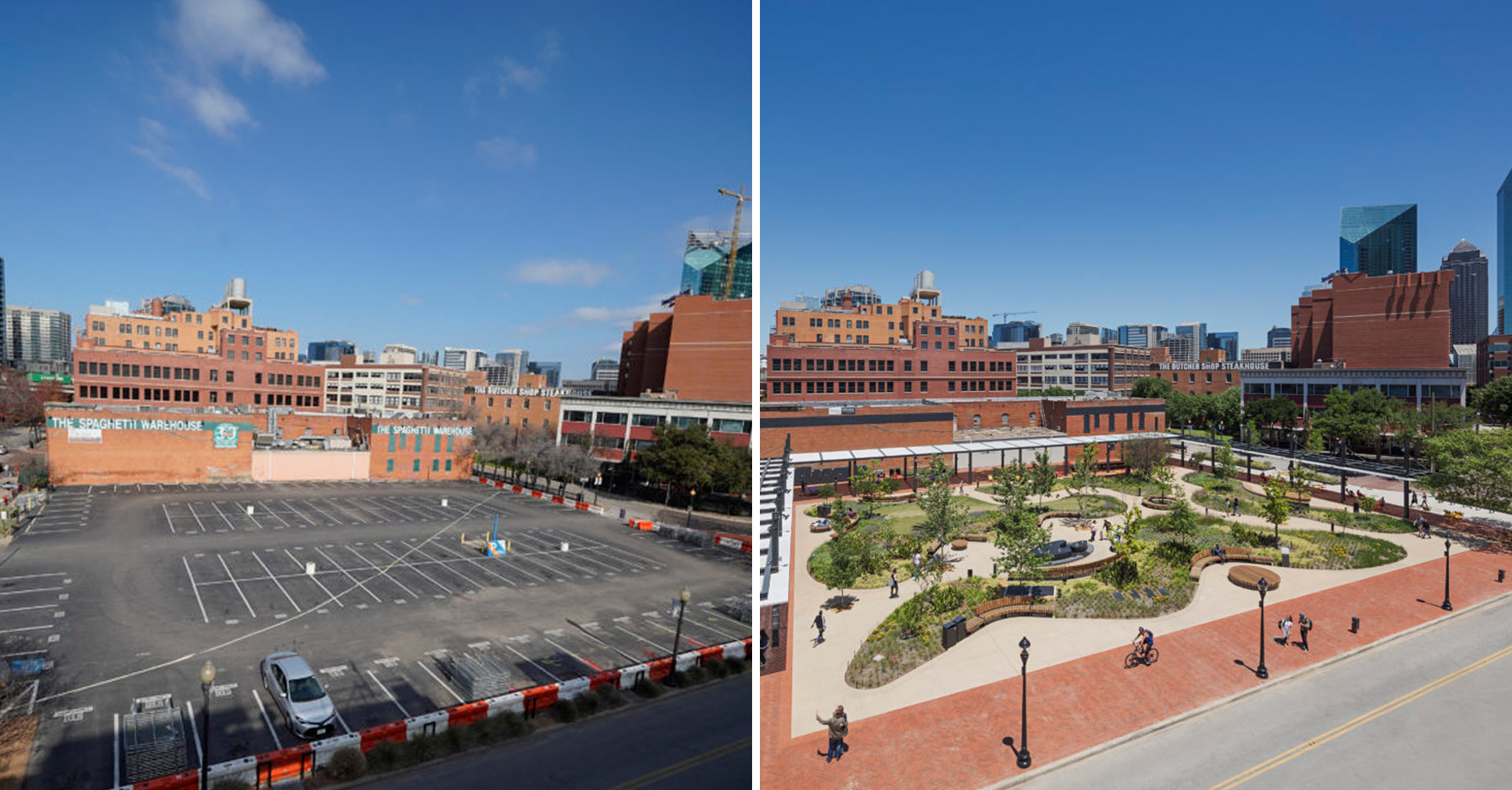
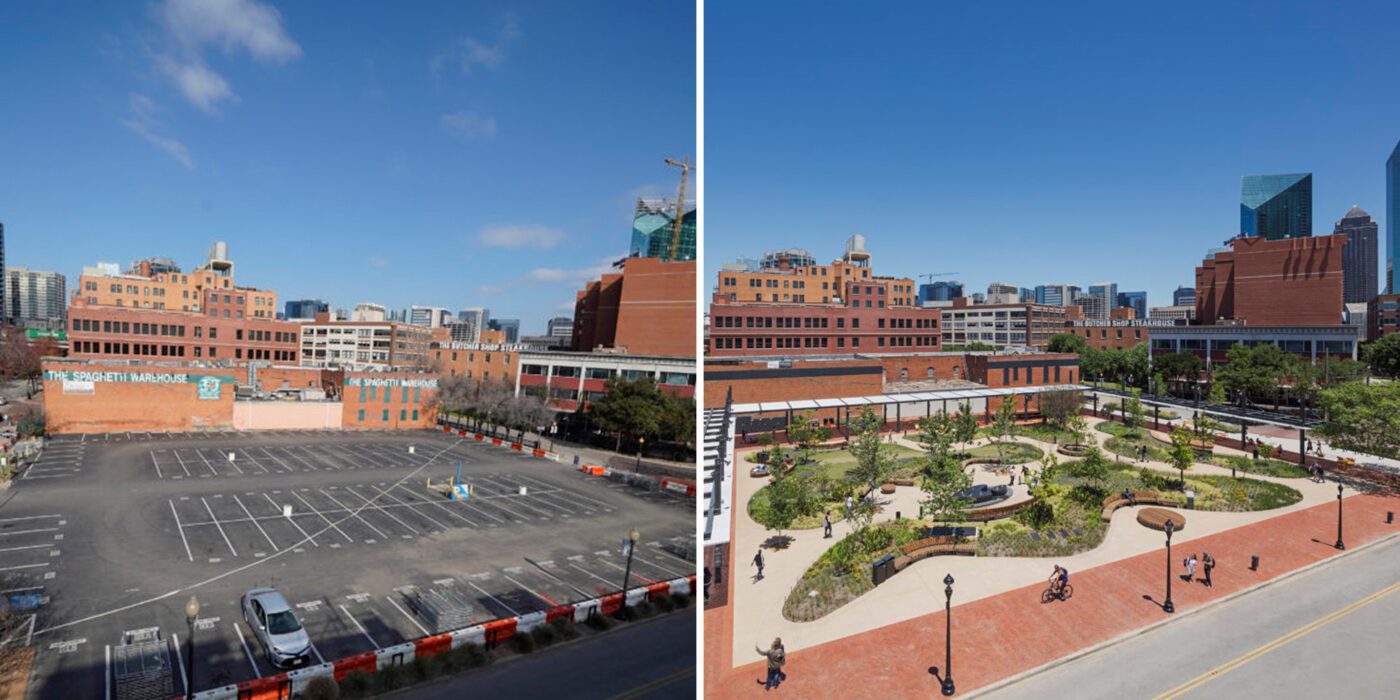
Photos by Sam Oberter (left) and by David Woo (right)

Take for instance the West End Square in Dallas, a 2022 A+Award popular winner for Landscape & Planning. The design by James Corner Field Operations replaces a former parking lot with a dynamic combination of green spaces and public utilities. Growing greenery in a concrete jungle is no simple feat. The ambitious intervention has transformed a dead-end city block into an anchor for the community, where the neighborhood’s growing population can enjoy salsa dancing classes, a vendor’s market and various interactive art installations. The green oasis makes a bold statement about a future where cities can be oriented less towards cars and more towards pedestrians and community.

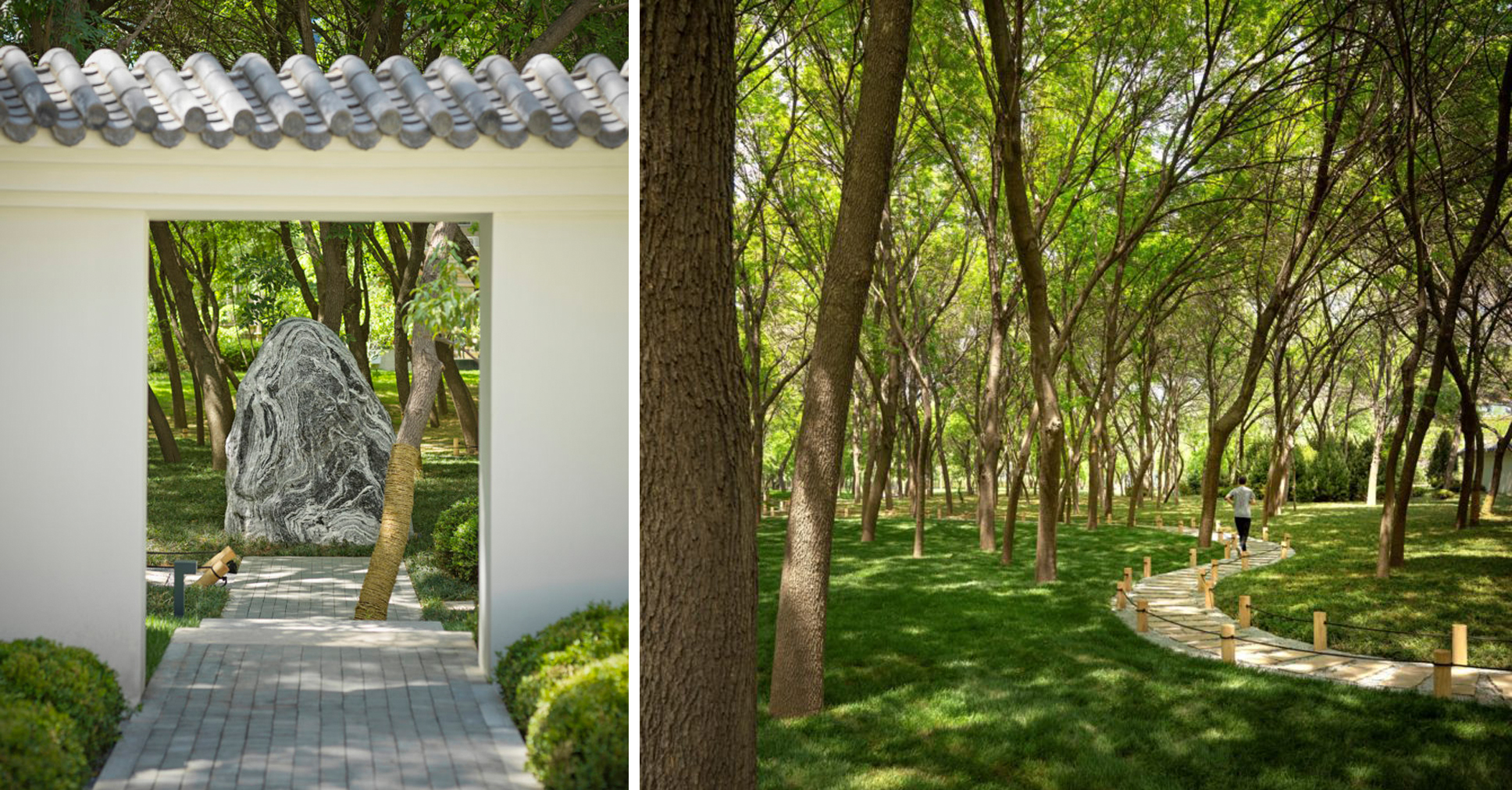
Meanwhile, the Xiaoyunlu 8, MAHA Residential Park project by Ballistic Architecture Machine in Beijing, another A+Award popular winner this year, weaves together disparate sections of the site of various eras and styles into one seamless and soothing green space. Residents can now fully access and enjoy the park’s gardens, historical sites and communal areas.

The project brings together culturally significant heritage with an expansive and beautifully maturing man-made forest, physically manifesting the fact that landscapes, even more so than buildings, cannot be realized overnight. Greenery takes time to grow, and though we like to imagine our urban parks as natural spaces, they must be cultivated and maintained by man. The design expresses this passage of time, drawing attention to it.

These projects are a mere snapshot of why at Architizer, we believe that landscapers are the unsung heroes of the design world. It’s why this week we are highlighting jobs in the sector.

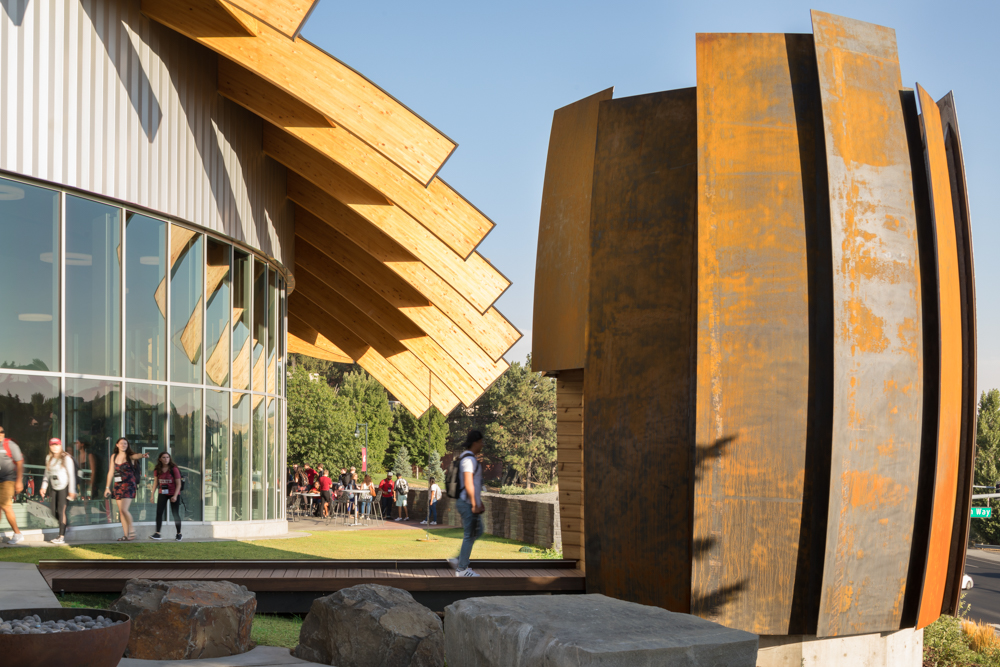
The award-winning architecture and design firm based in Seattle GGLO is currently hiring for a landscape designer to join their team of architects and designers that work on community-oriented projects. A GGLO project like the Elson S. Floyd Cultural Center in Pullman, Washington is a good example how of an acute knowledge of native fauna, local history and people-oriented landscaping can create lively cultural spaces.

Additionally, Stoss, an urban design firm based in Boston with an office in Los Angeles, is also looking to hire landscape architects in both studios. The firm works on large, neighborhood-scale projects that sensibly mix natural and urban elements to revitalize local communities.

Browse the Architizer Jobs Board and apply for architecture and design positions at some of the world’s best firms. Click here to sign up for our Jobs Newsletter. 

Reference

An App for Everyone: Spaces Is the Conceptual Design Tool Architects Always Needed
CategoriesArchitecture

An App for Everyone: Spaces Is the Conceptual Design Tool Architects Always Needed

The key to a successful architectural project is the development of a strong conceptual model. Conceptual design is the foundation of architecture and oftentimes, determines the future success of a project. Architects are forever in search of reliable and effective design tools that will aid in bringing their ideas to life. However, finding the right tool isn’t always easy. Many applications available today are complicated, costly and don’t always align with the designer’s working rhythm. For the average on-the-go architect, reliable and straightforward tools are key. Thankfully, Cerulean Labs has delivered just what every architect is after: the Spaces iPad app.

Cerulean Labs comprises a global team that is dedicated to improving the conceptual stage of architecture. Back in October of 2021, the company released Spaces: a parametric conceptual design tool made for the iPad. Today, the brand celebrates its continual effort in improving the conceptual design stage with a new and improved version of the app: Spaces version 2.

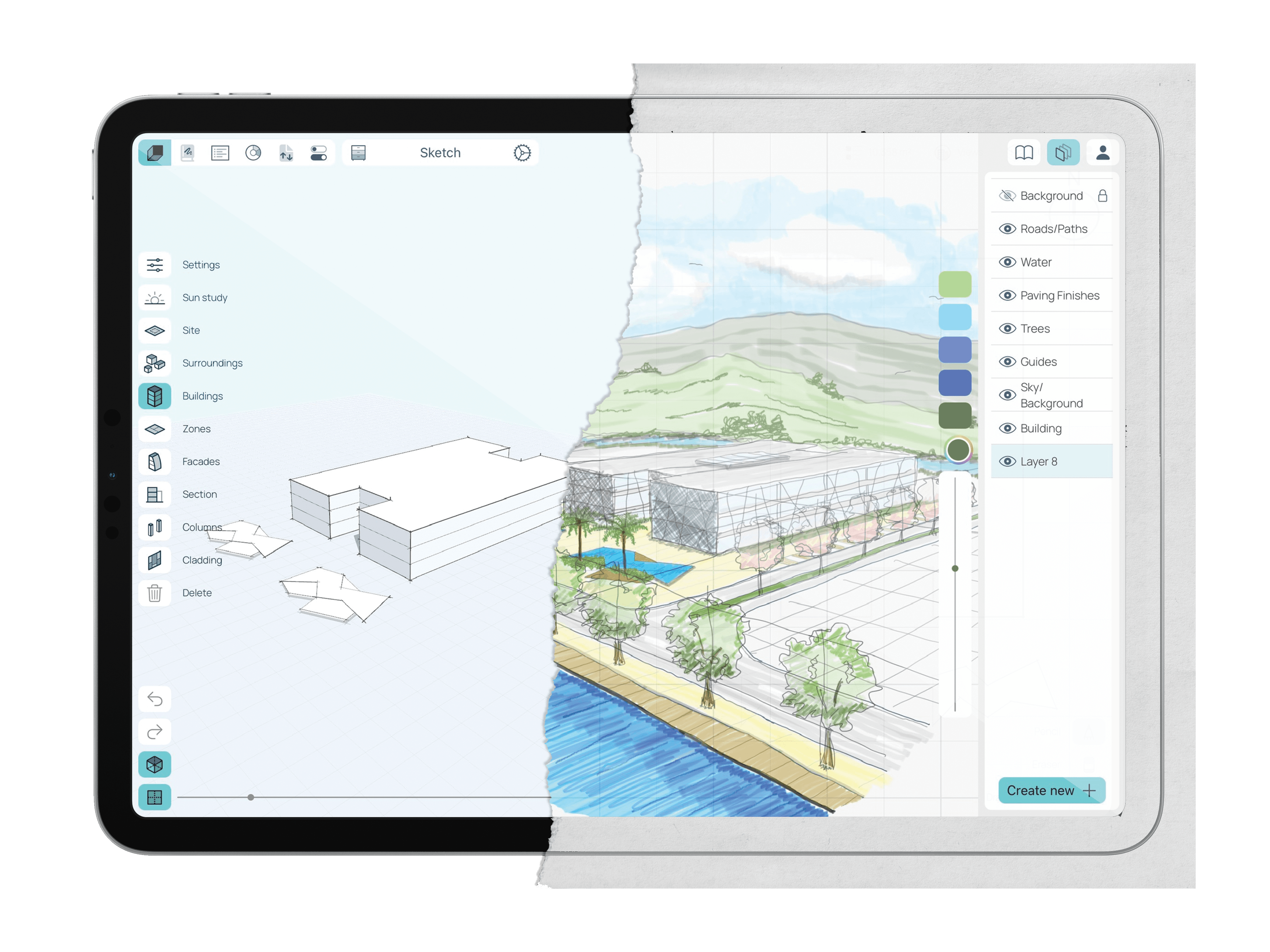
This updated application has recently hit the market and boasts a comprehensive list of tools fit for architects of all levels and experiences. Spaces version 2 comes complete with improved editing tools, increased 2D viewing options, new sun studies, new sketching capabilities and additional workflow integration options. This application is well and truly built for the masses.

The Spaces version 2 app boasts an easy-to-use yet comprehensive set of design tools. The app merges old-school drawing techniques with modern-day computing technologies into a user-friendly interface. Its clean and clutter-free layout makes it especially useful for those designers who are constantly on the move.

The new digital sketchbook feature lets users swiftly document their ideas whenever — and wherever — they come to mind. The sketchbook encompasses new technologies, such as the Apple pencil, and allows designers to test their ideas out by sketching and note-taking. Moreover, users can send snapshots of their models directly to the sketchbook and trace them using the Apple pencil. This app celebrates architecture’s oldest and most useful tools – a simple pencil and paper.

The improved interface allows users to switch their screen between the Sketch and Modeling modes with ease.

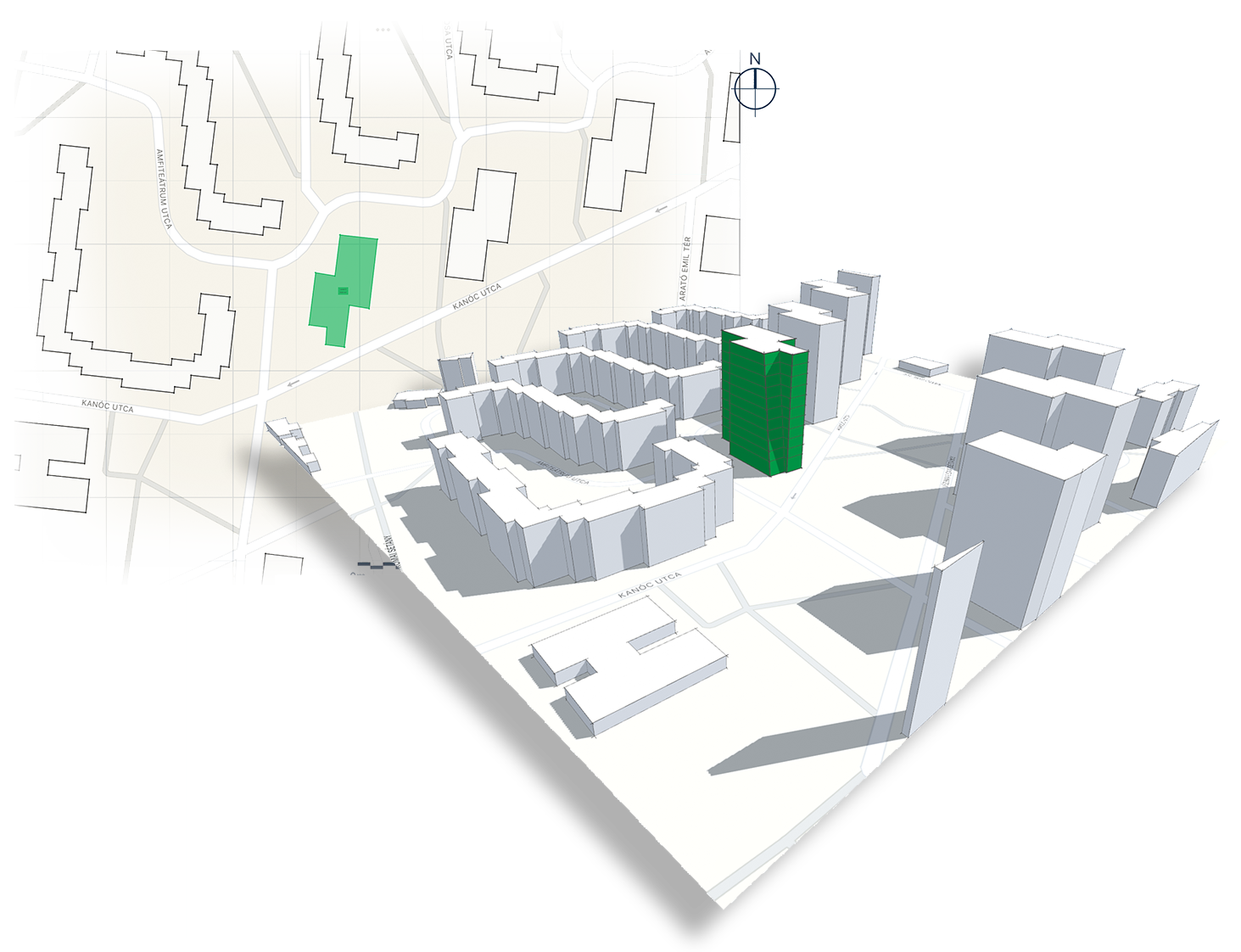
Another fresh addition to Spaces version 2 is the sun study feature. Recognizing how invaluable solar analysis is to the conceptual design process, Cerulean Labs has developed a tool that allows users to specify the exact location and time of day for their model, and instantly see how shadows cast by their project might impact neighboring buildings. Users can impose an animated sun study directly onto their models in real-time, helping them to better understand how their design responds to its surroundings.

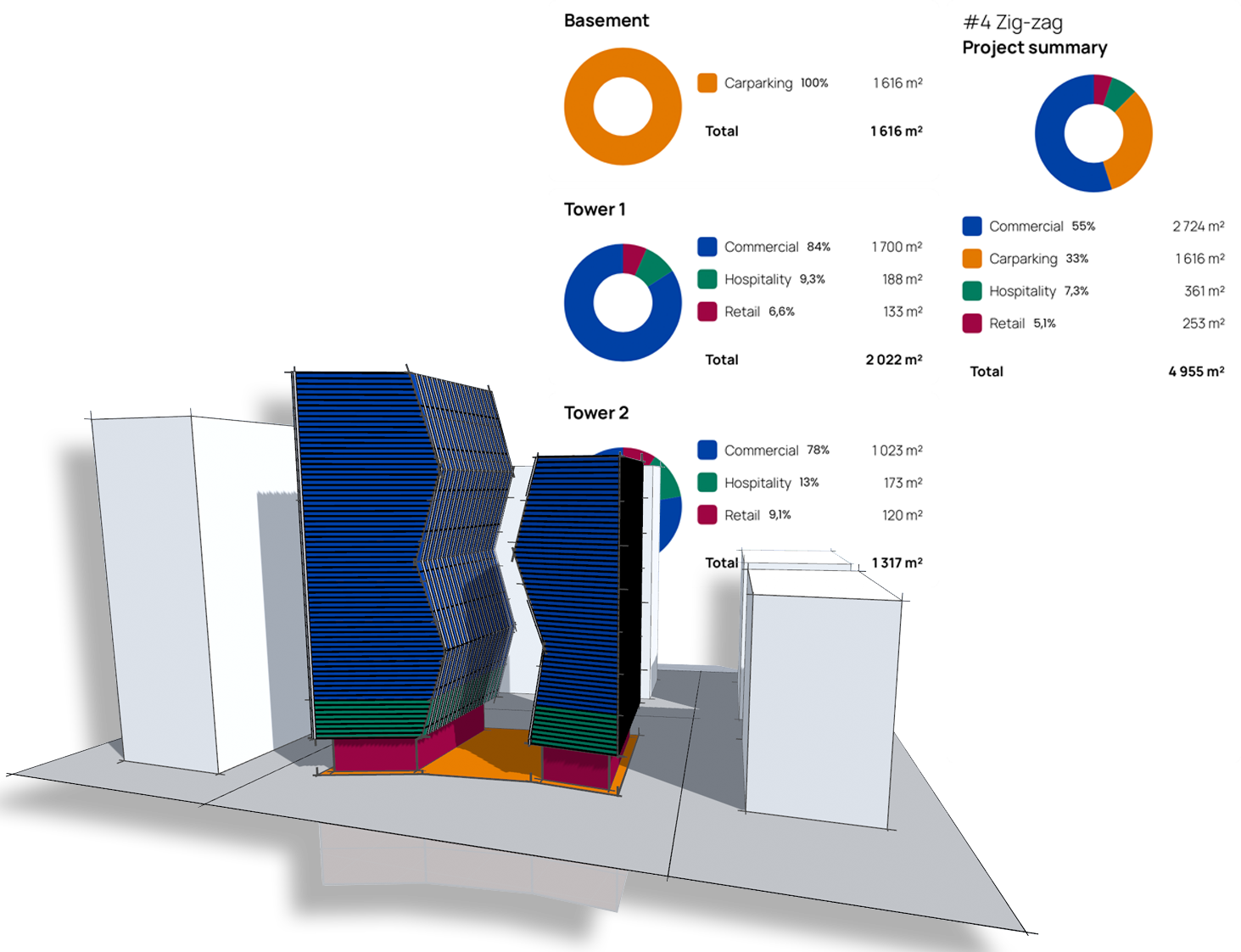
Additionally, Spaces version 2 has introduced IFC and OBJ exporting, which means that models can be exported and furthered in a secondary BIM tool. Moreover, the new space planning feature allows users to manage design briefs, create reports and develop project concepts directly on the app. The improved export options and new space planning features ensure that all models come out professional and presentable. In addition, users can import key site data to their design, thus producing a more precise and site-specific model.

Cerulean Labs is committed to growing and developing its Spaces app. iPads are continuing to dominate the AEC world and professional applications like Spaces version 2 offer increasingly powerful platforms to sketch, model and manage conceptual projects. The spaces app is available in both free and paid versions, with a new subscription recently becoming available: the Spaces Pro. Priced at $75 USD per month, the Spaces Pro subscription offers unlimited projects and comes with new and improved export features, reporting tools and modeling capabilities. The application can be downloaded via the Apple App Store and subscriptions can be managed directly through the Spaces website

Spaces by Cerulean Labs demonstrates the vast capabilities of iPad use in parametric conceptual design. The application offers great depth and flexibility, all the while remaining transportable and accessible. It celebrates traditional design tools while implementing the best modern-day technologies out there. The result is a brilliantly straightforward application suitable for all architects and designers.

Cerulean Labs is currently offering an extended free trial for the app, allowing users to try it out for 3 whole months — click here to find out more and download it (offer ends June 30th). To learn more about the Spaces application and all its offerings, check out the Spaces website.

Reference

Architects are Making Heroes of Hexagonal Forms
CategoriesArchitecture

Architects are Making Heroes of Hexagonal Forms

Architects: Want to have your project featured? Showcase your work through Architizer and sign up for our inspirational newsletter. 

From molecules to beehives to large basalt columns, the hexagonal shape is commonly found in both organic and inorganic objects. The shape is also considered one of the most efficient ways of covering a surface, given that a hexagonal grid uses the least amount of separating walls. Using nature as inspiration, architects are now designing with hexagonal forms in both horizontal and vertical planes.

Some embrace these six-sized shapes as a foundation for planning and others to create decorative walls. The hexagon allows radial organization as well as flat surfaces. A honeycomb-like grid can also be built upon or broken down into a triangular grid, while a hexagonal shape also lends itself to a larger number of external surfaces. While not the most conventional form, some architects have shown how the shape can be used to plan and transform spaces.

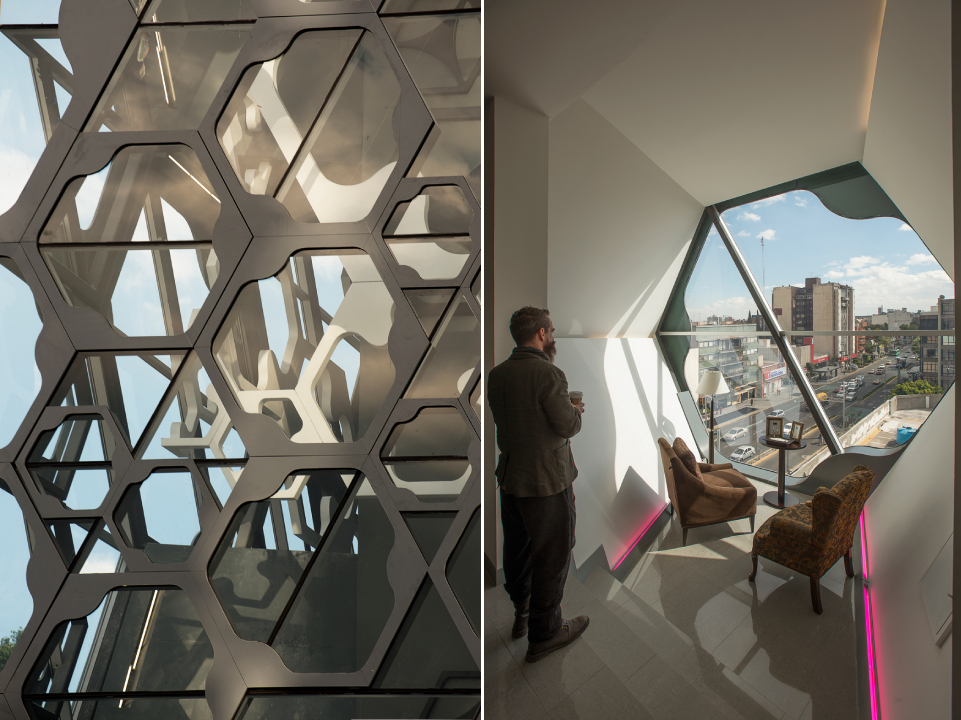
Images by Jaime Navarro

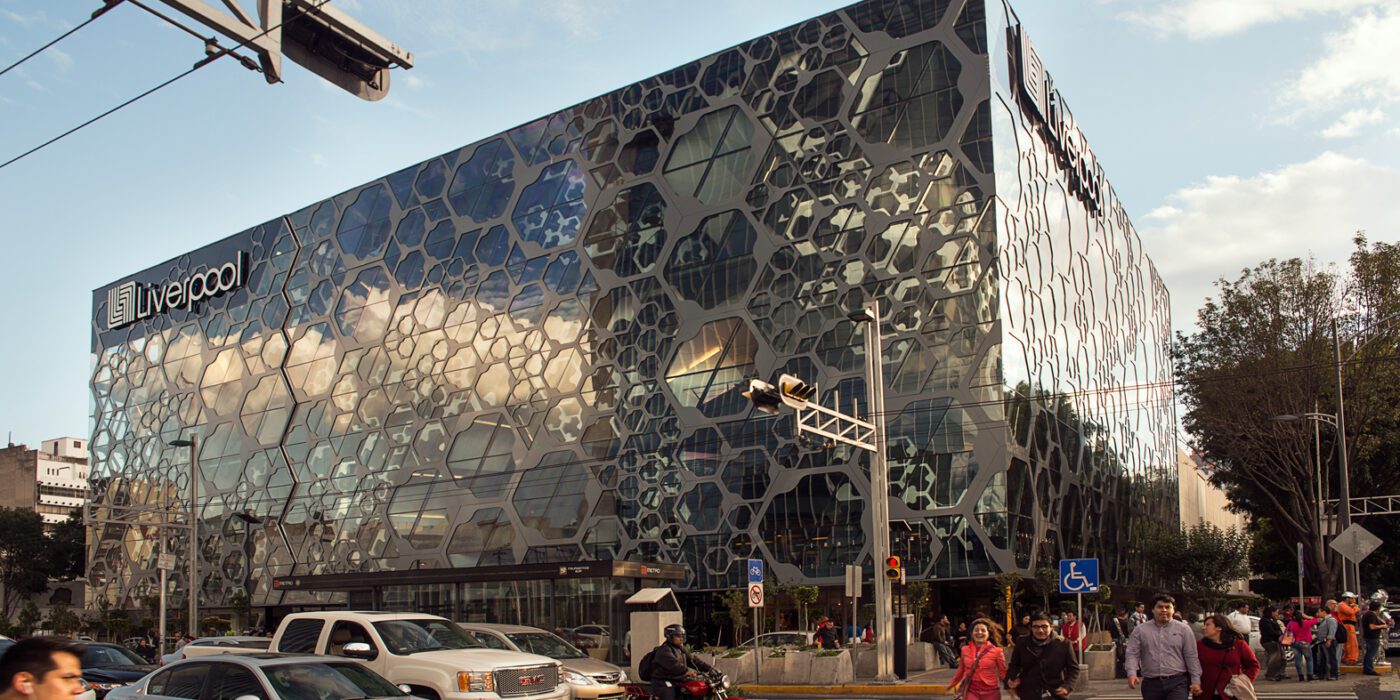
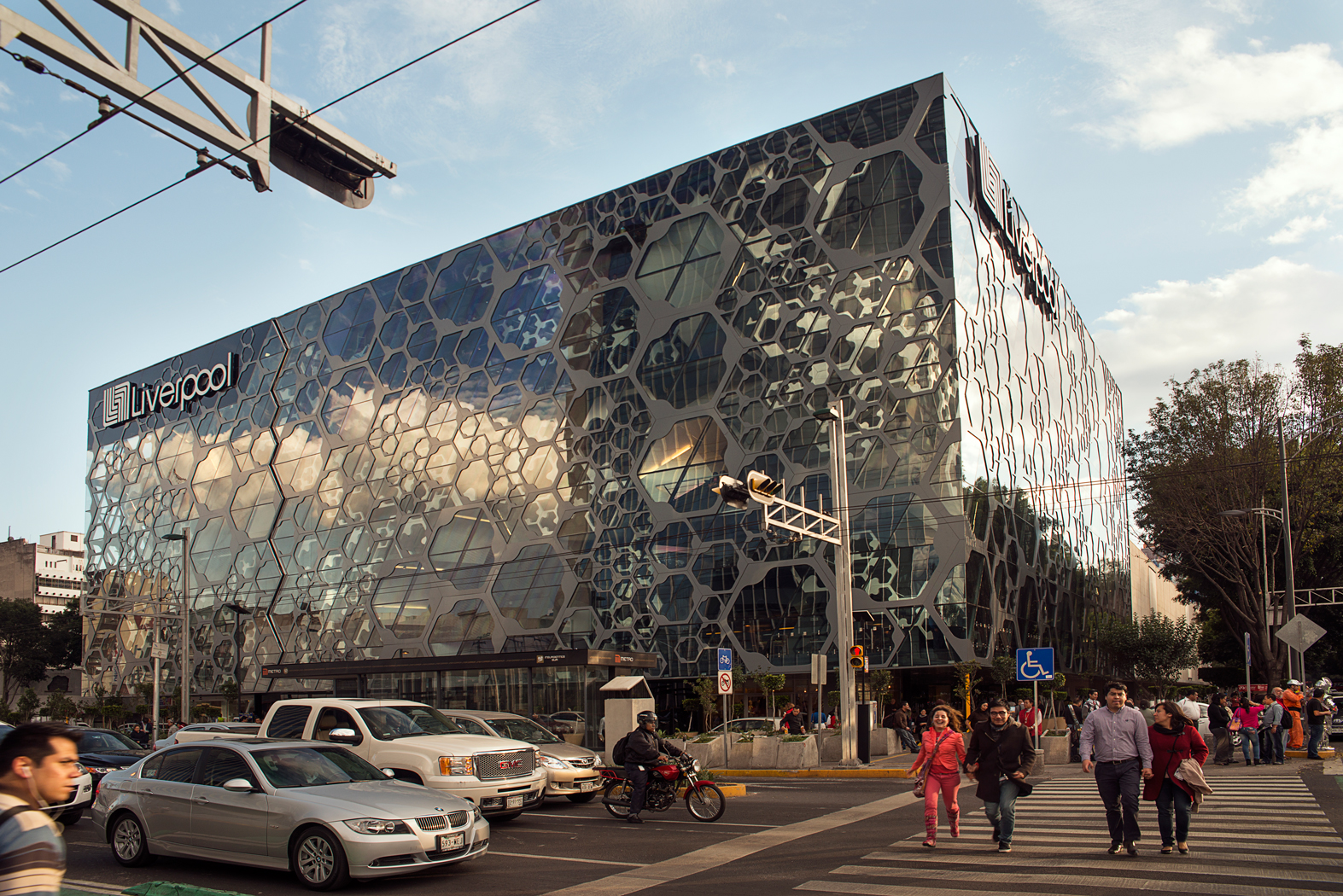
Liverpool Insurgentes Department Store by Rojkind Arquitectos, Mexico City, Mexico

When expanding, a department store in Mexico City has to reconsider the traditional big-box model in order to attract more traffic and make a bolder statement. To do so, Rojkind Arquitectos created a façade that interacts with the environment around and lets passersby look into the building. The new scheme includes a network of differently sized hexagons that overlap, combine and open up to create a pattern that looks like it is animated. Made using fiberglass, steel, aluminum and glass, the arrangement plays with transparency to create translucent walls in spaces as well as large openings to show parts of certain stores.

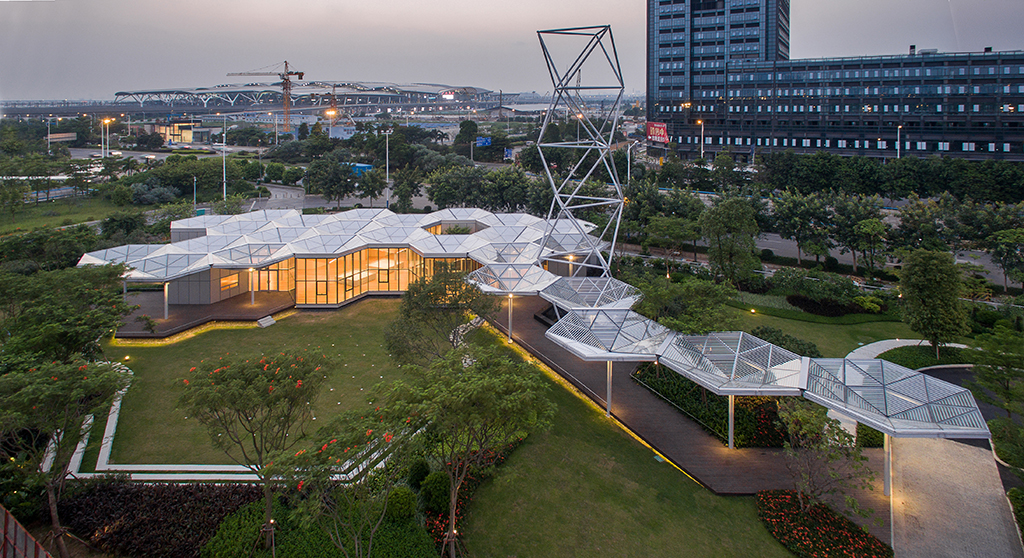
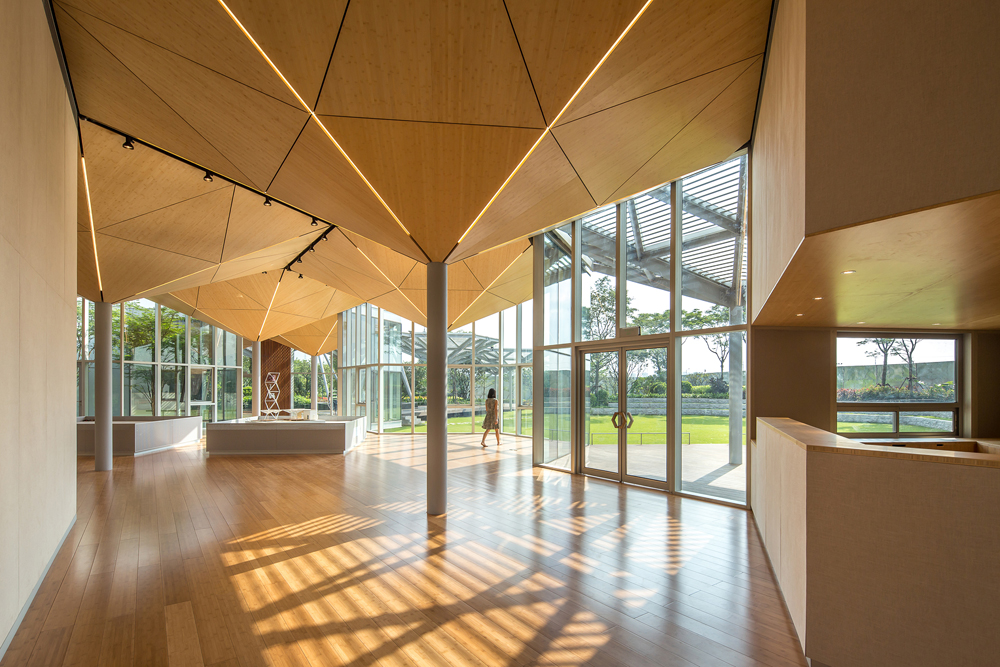
Images by Zhang Chao

HEX-SYS by OPEN Architecture, Guangdong, China

Given the need for short-term real estate show spaces, the firm conceptualized a sustainable typology that can grow to adapt to different programs; it can also be dismantled after use or transported and assembled again. The form takes inspiration from traditional Chinese wooden building systems. The system comprises 430 square feet hexagonal cells that can be arranged into different configurations based on the program. The inverted umbrella-like roofs also collect rainwater for use on-site. Within the cells there are three typologies — transparent, enclosed and peripheral cells — to cater to different functions.

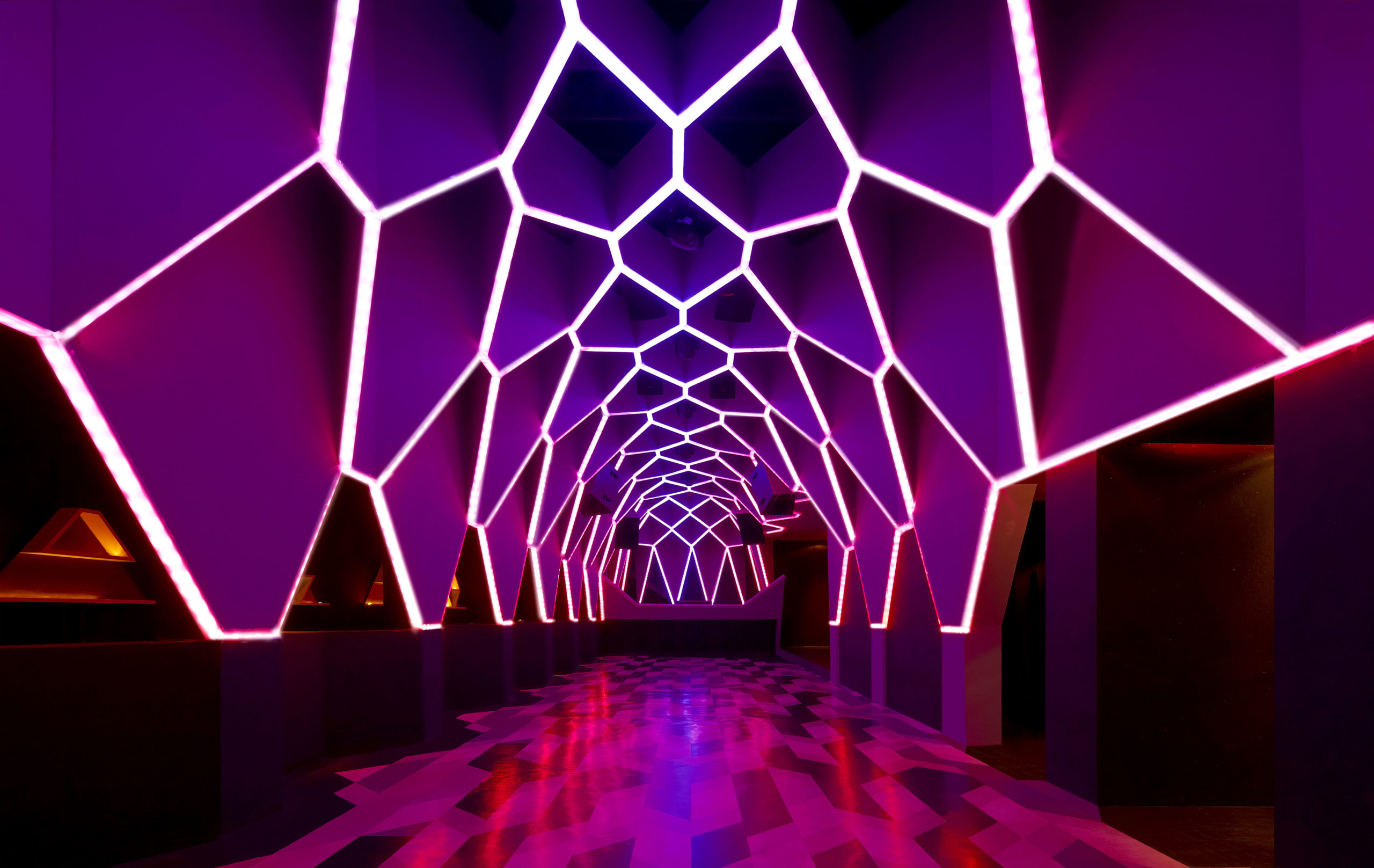
Josefine/ Roxy Club by Fred Mafra, Belo Horizonte, Brazil

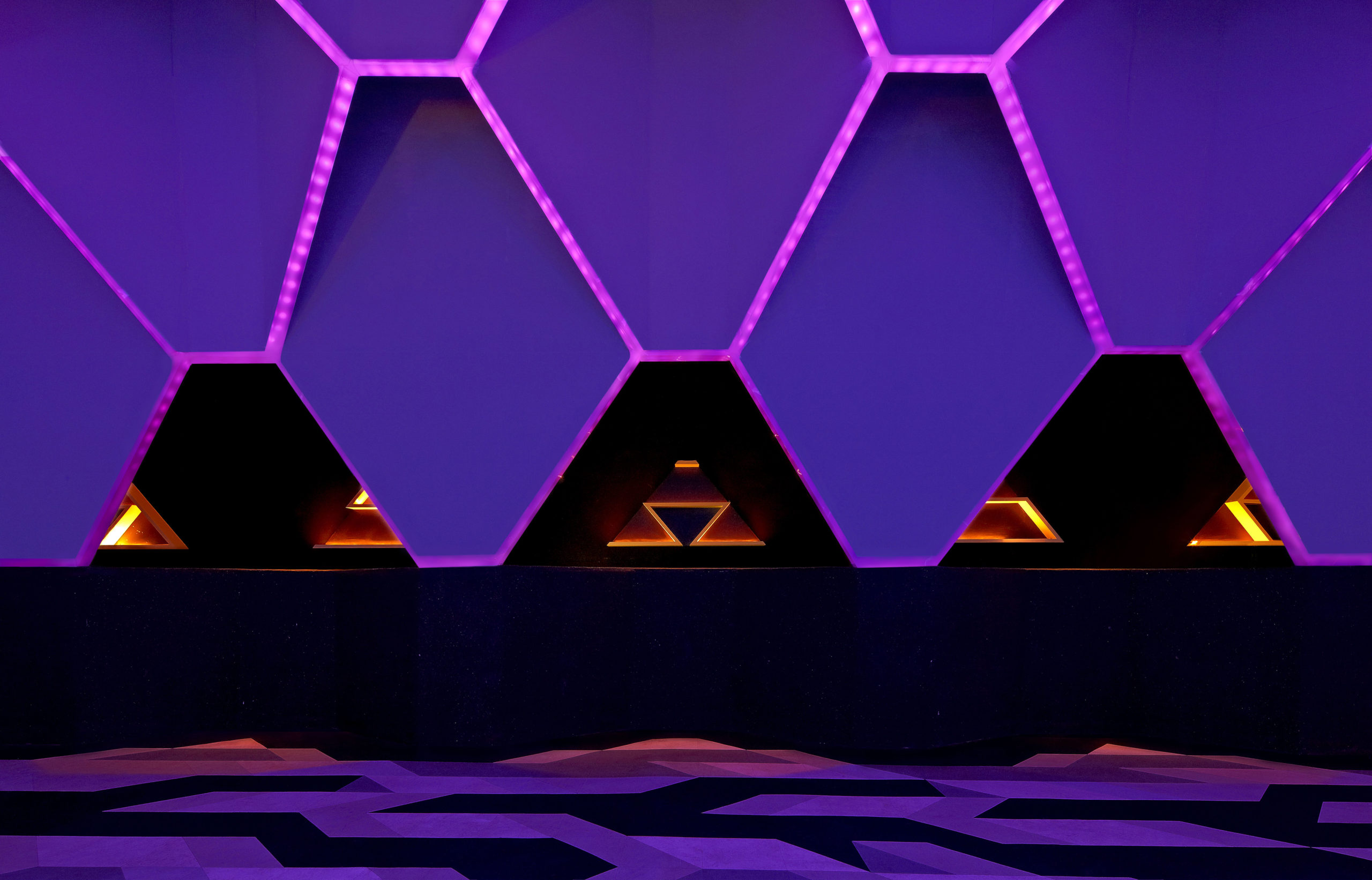
Fred Mafra moved away from regular hexagons to a more elongated version to create dramatic walls for this nightclub. The shape is also used in different versions and sizes along with other prismatic elements throughout the two fools of the club. The 100+ hexagons not only hide the structural framework supporting them but also act as an illuminating element. The embedded LED system is connected to a video pixel mapping program that helps change the colors of these lights.

Image by Sergio Gomez

Image by Iwan Baan

Orquideorama by plan:b, Medellín, Colombia

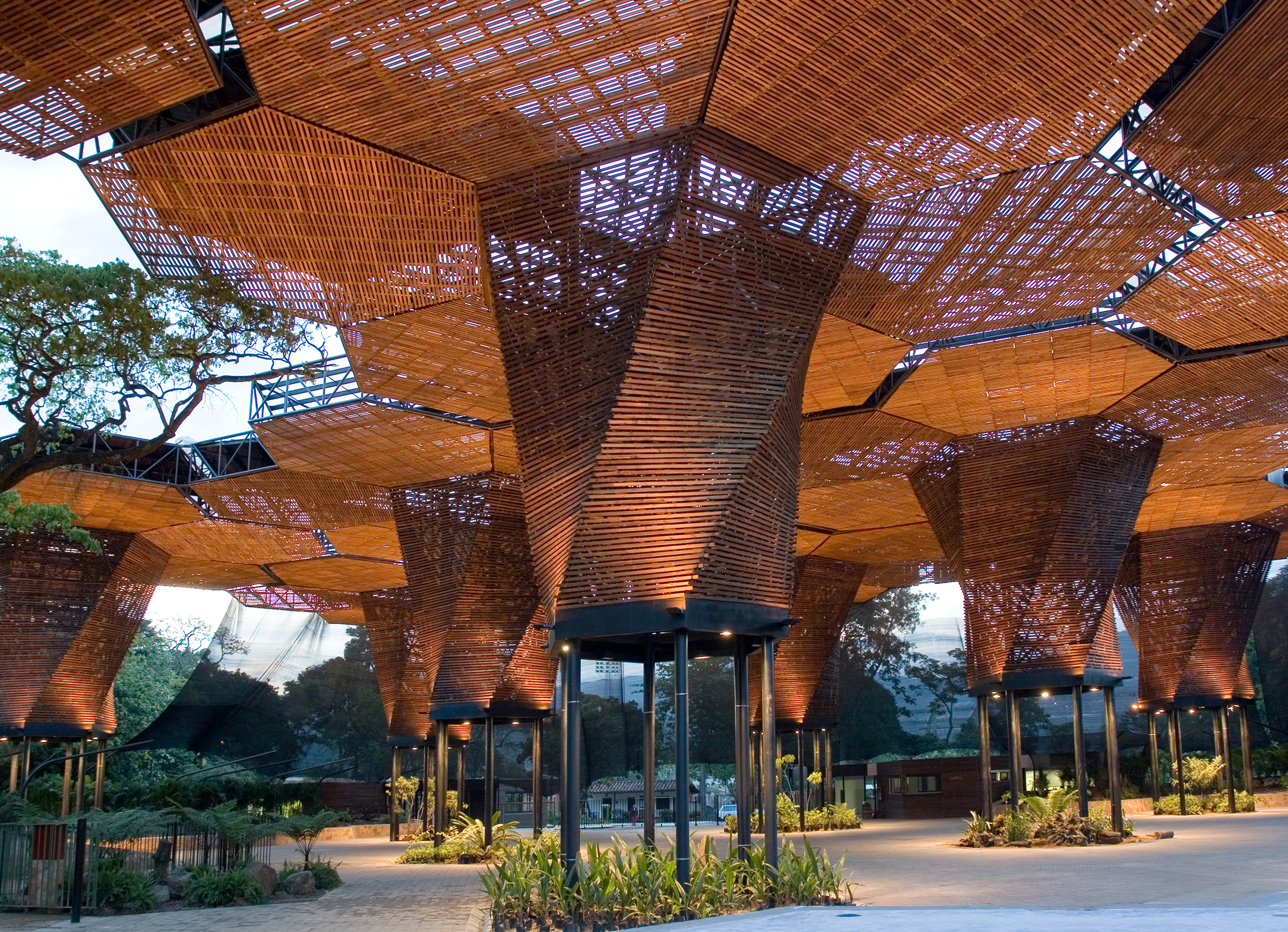
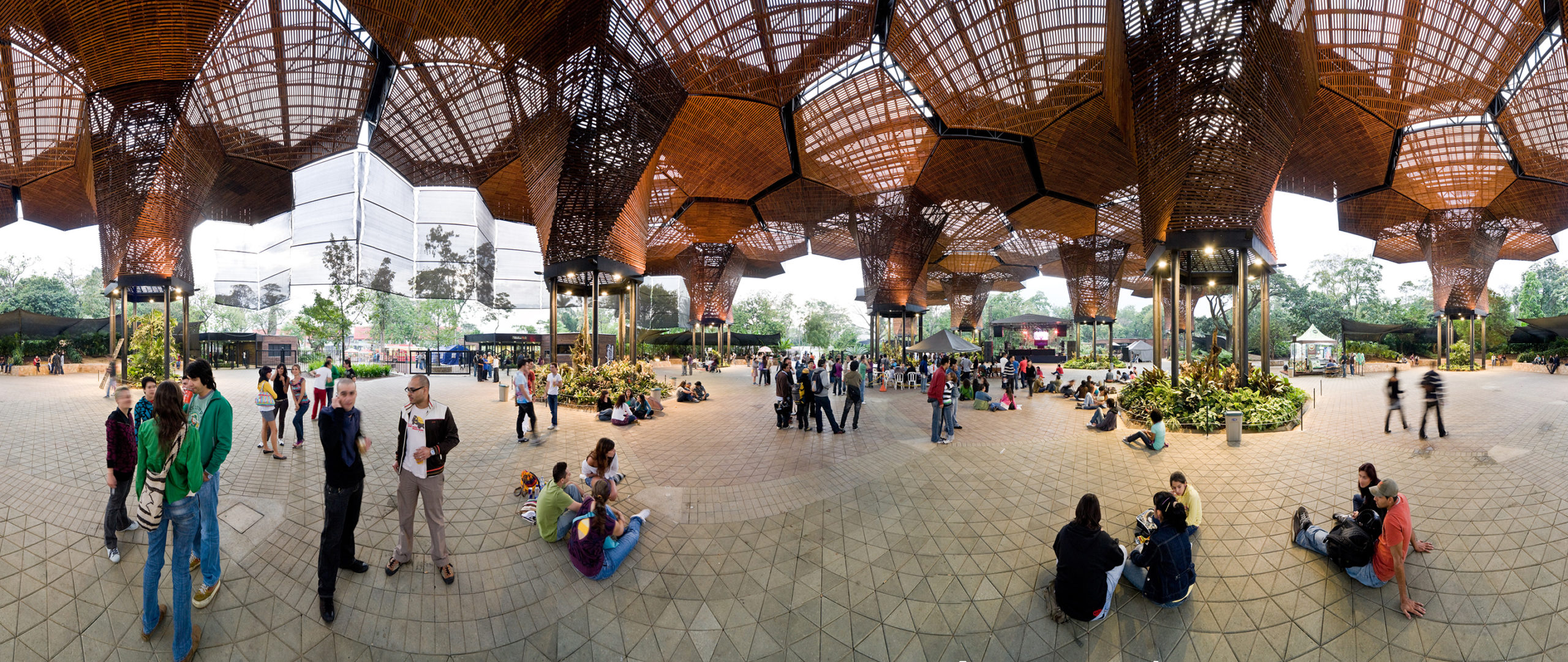
Much like a tree, this project is a series of hexagonal canopies that contain a central module with six other modules growing from it. Its spread makes it seem like an organic design despite its geometric nature. The central module stands on a twisted column that expels hot air and funnels rainwater. The system allows repetition, growth and the ability to build around the trees on the site to avoid damaging them. The layering of wooden strips also gives it lightness and transparency.

Images by Purnesh Dev Nikhanj

Hexalace by Studio Ardete, PB, India

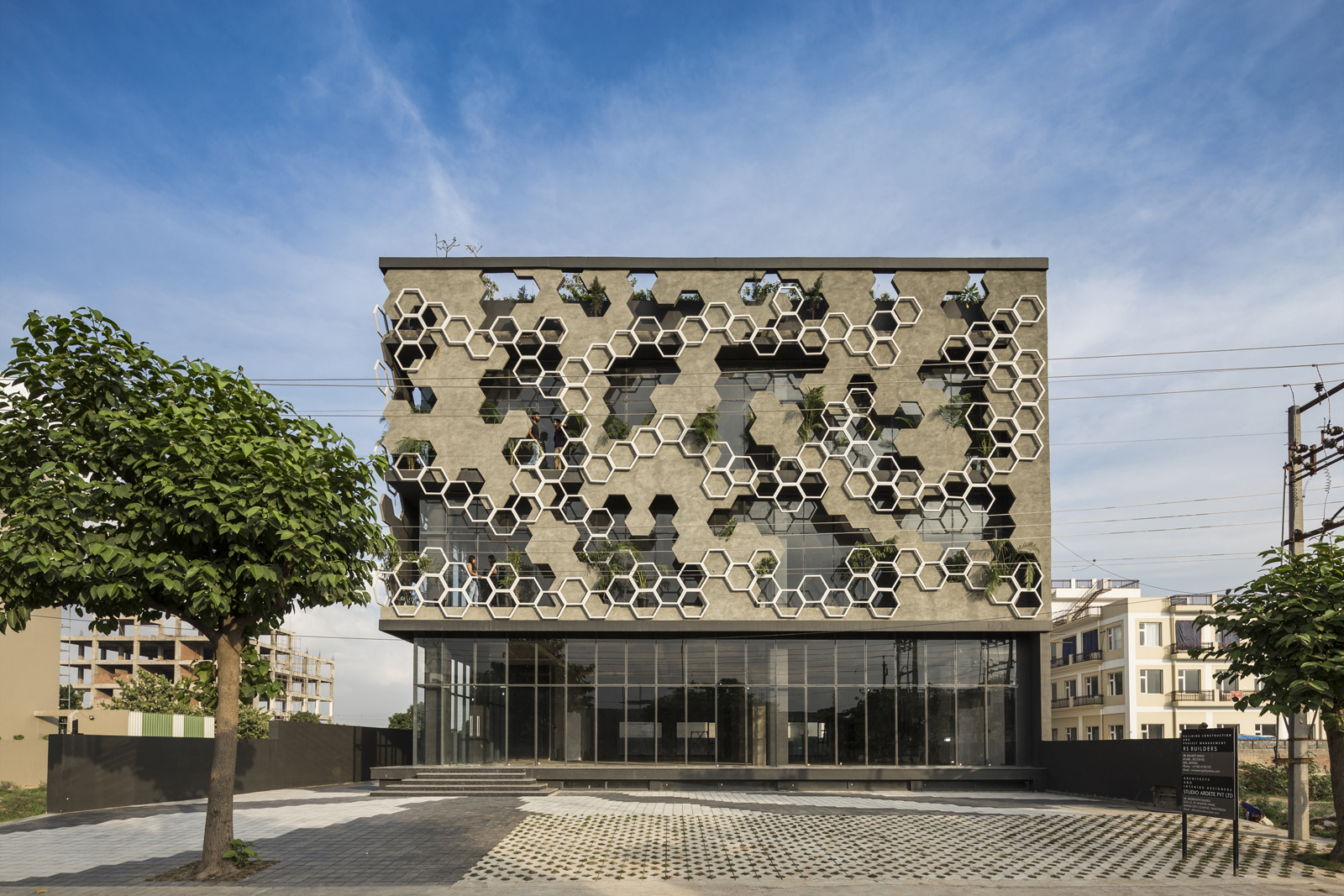
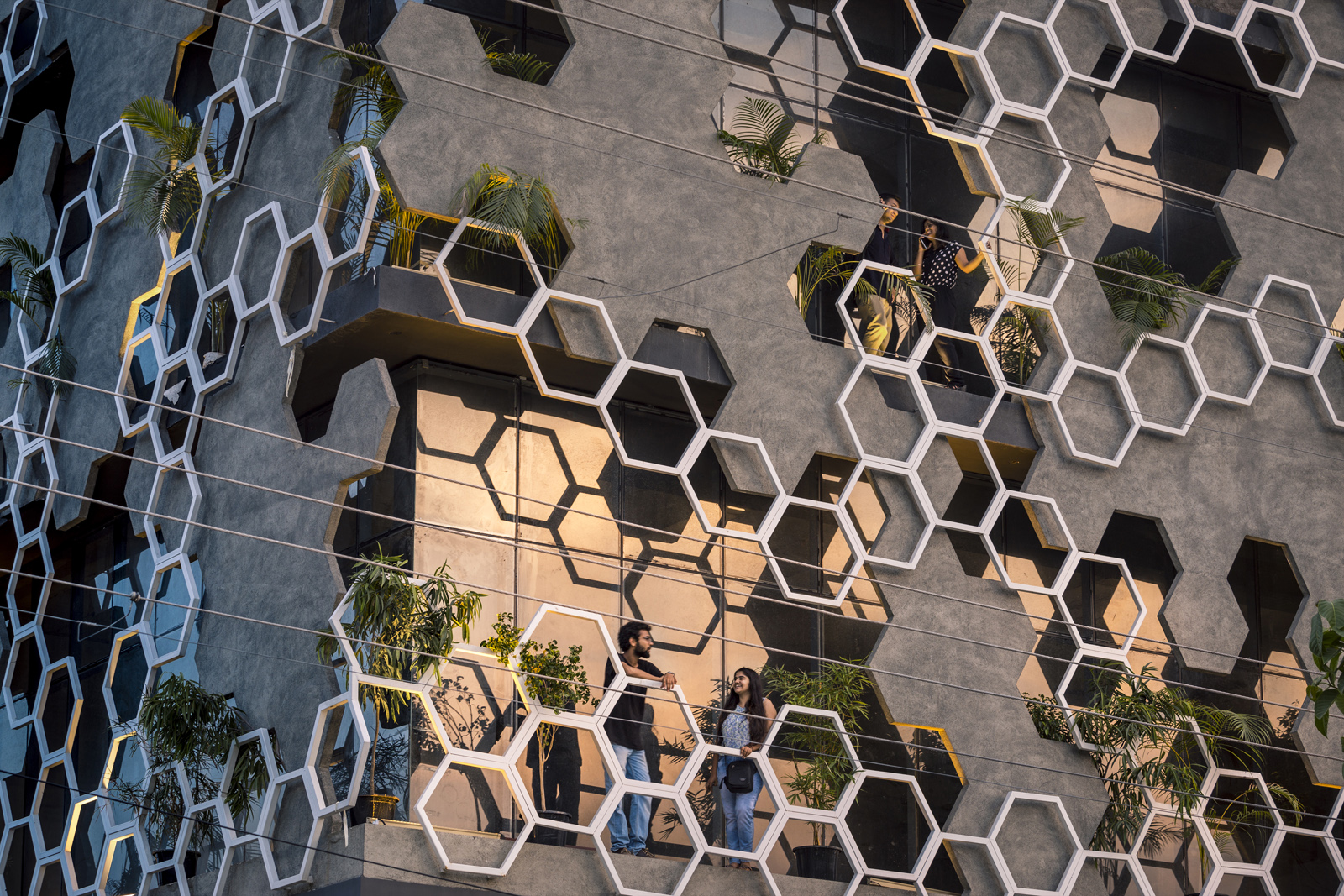
The building’s unique façade was a way to exercise creatively when the restrictive plan prevented the team from doing so. In addition to being a showstopper, the exterior also serves as a buffer from the extreme climate. The façade comprises a 3-inch later of concrete with hexagonal cutouts to create shaded balconies and windows. Over this base is a network of white hexagonal frames that act as balcony railings in certain parts of the surface. The introduction of plants on these balconies adds pops of color to this system and makes the concrete slab come to life.

Aron R&D Center by Osamu Morishita Architect & Associates, Aichi, Japan

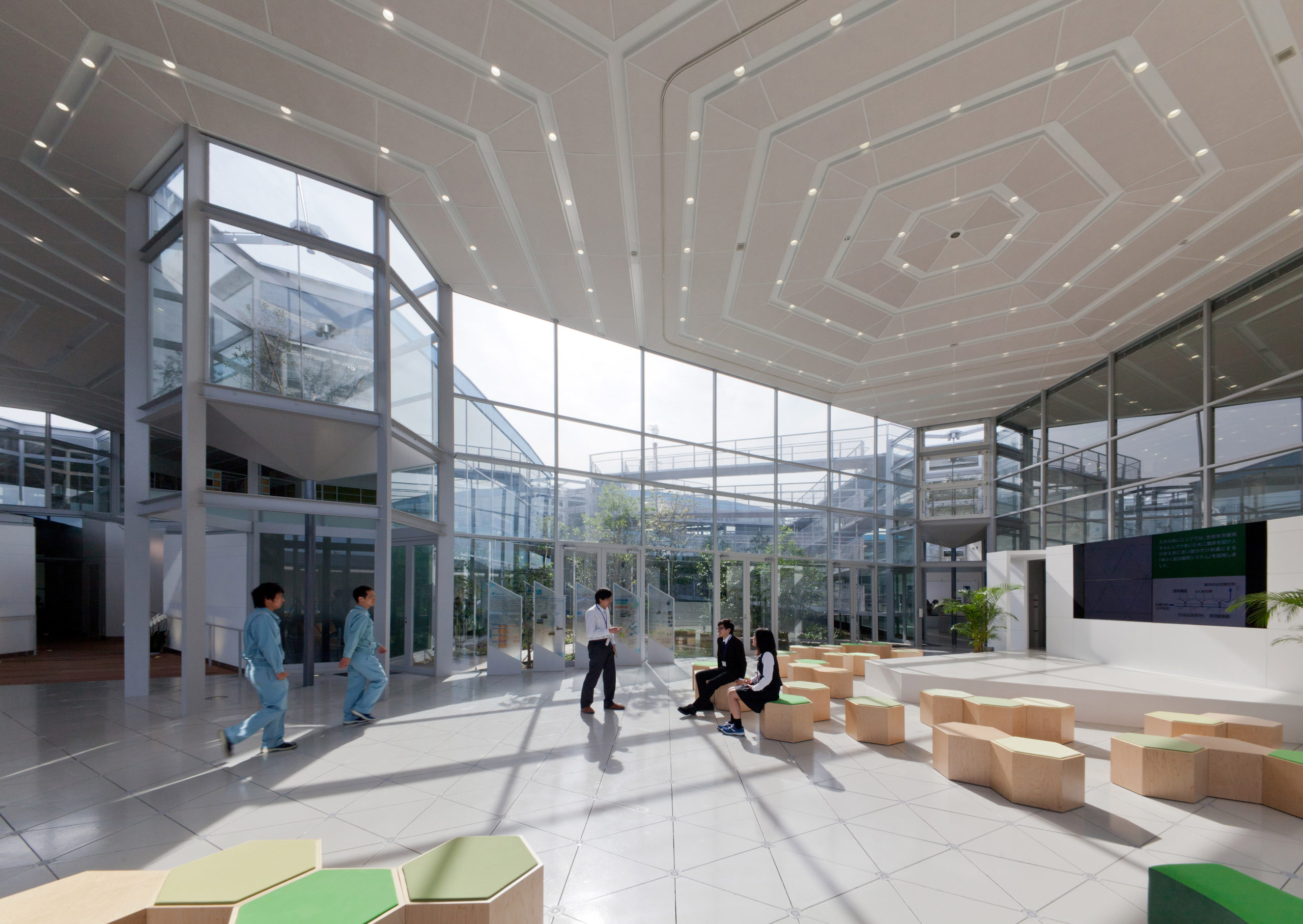
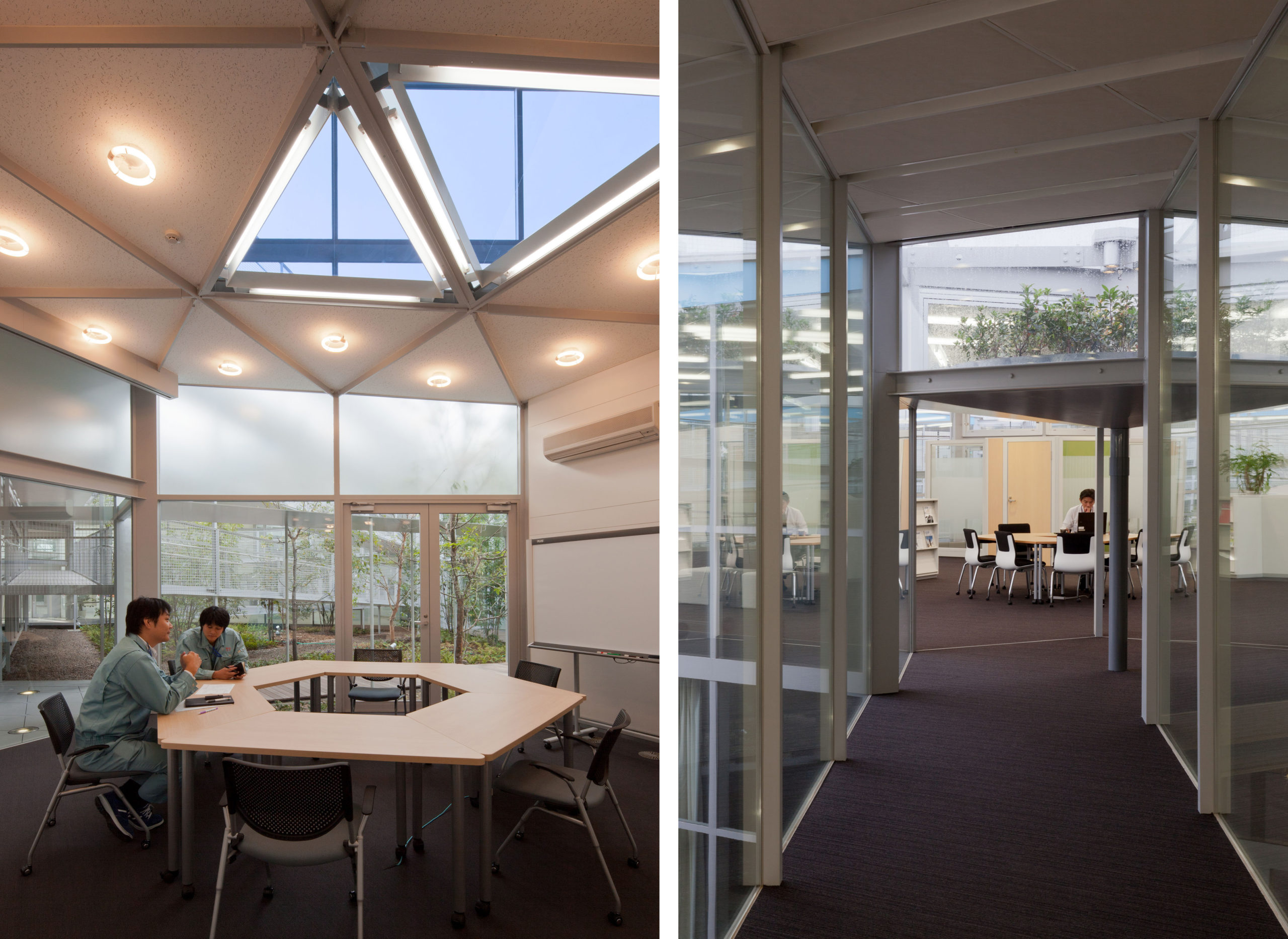
The brief was to create a space that acts as a research lab and also promotes new ideas. Drawing inspiration from the cloud and virtual networks, the studio envisioned a hexagonal grid that facilitates the easy connection of internal spaces. This framework allows users to transform interior spaces according to their needs. The 27 hexagonal towers placed on equally spaced vertices in the grid act as green pockets and introduce light and fresh air into the interior spaces. Additionally, the building features a solar energy system, heat reservoirs, passive cooling systems and rainwater collection mechanisms. The hexagonal form is also replicated in furniture throughout the building.

Hive by OPENIDEAS ARCHITECTS, Surat, India

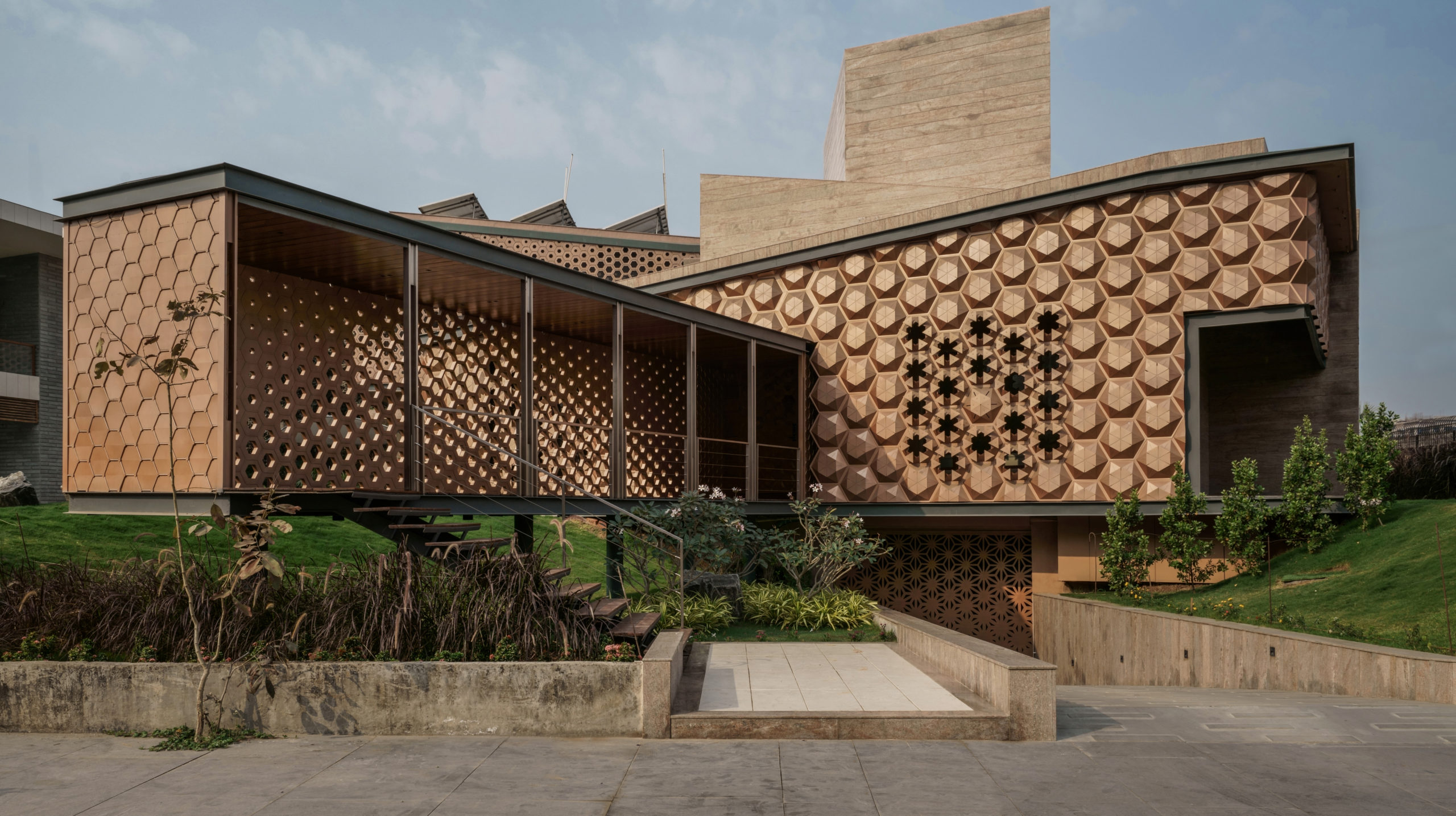
A variety of different hexagonal patterns strategically placed on the walls of this home turn it into a sensorial delight. The sun’s path and climate were some of the governing factors in this design. The v-shape opening up towards green spaces as well as a green oof that provides thermal insulation are just two such examples. The star of the show is a solar-sensor-based honeycomb façade. Some hexagons in the 3D lattice automatically open and close to maintain ideal thermal conditions within the home. To complement these walls, hexagonal patterns at different scales are also incorporated on other exterior surfaces across the home.

East China Normal University Affiliated Bilingual Kindergarten by Scenic Architecture, Shanghai, China

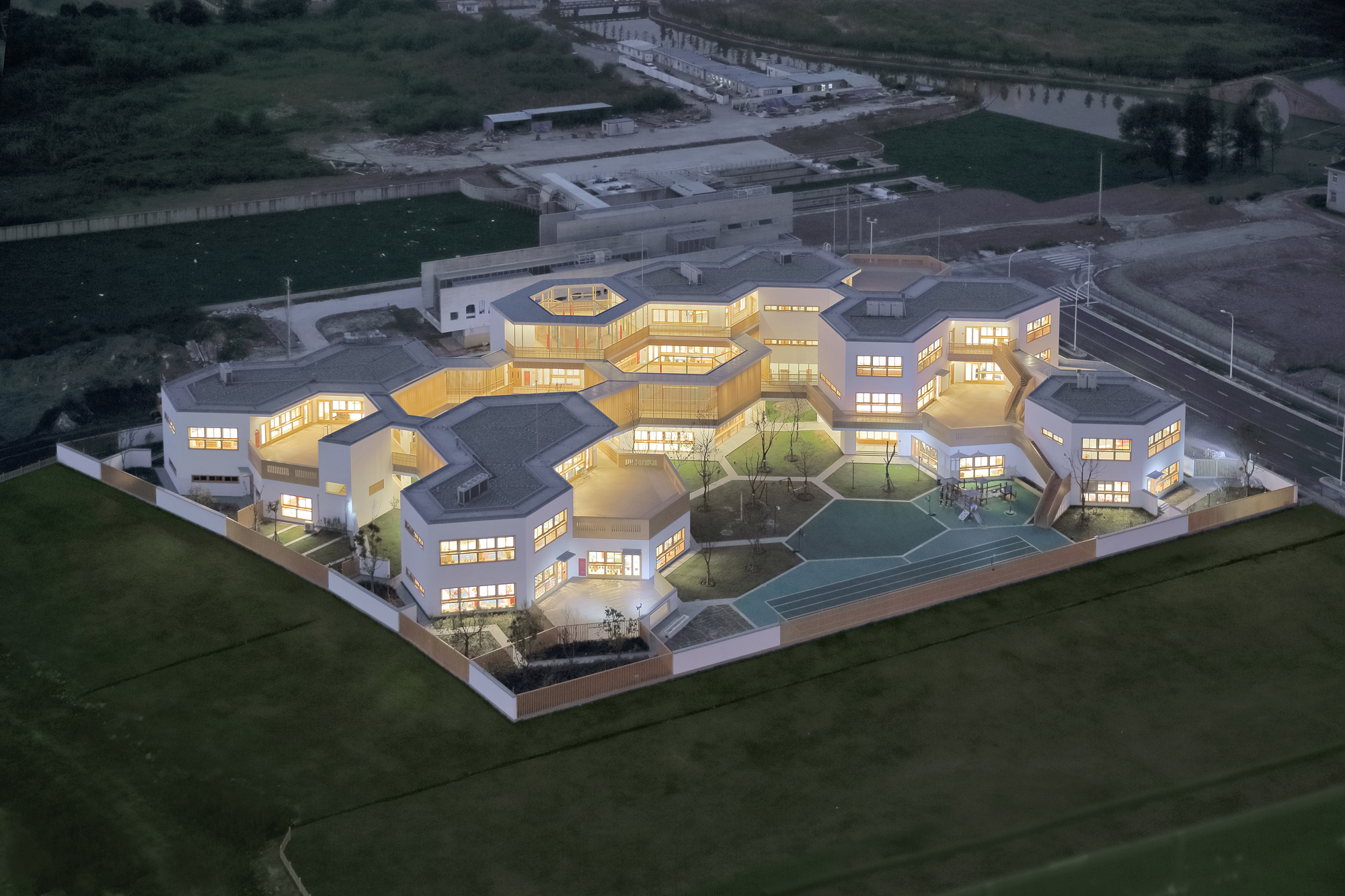
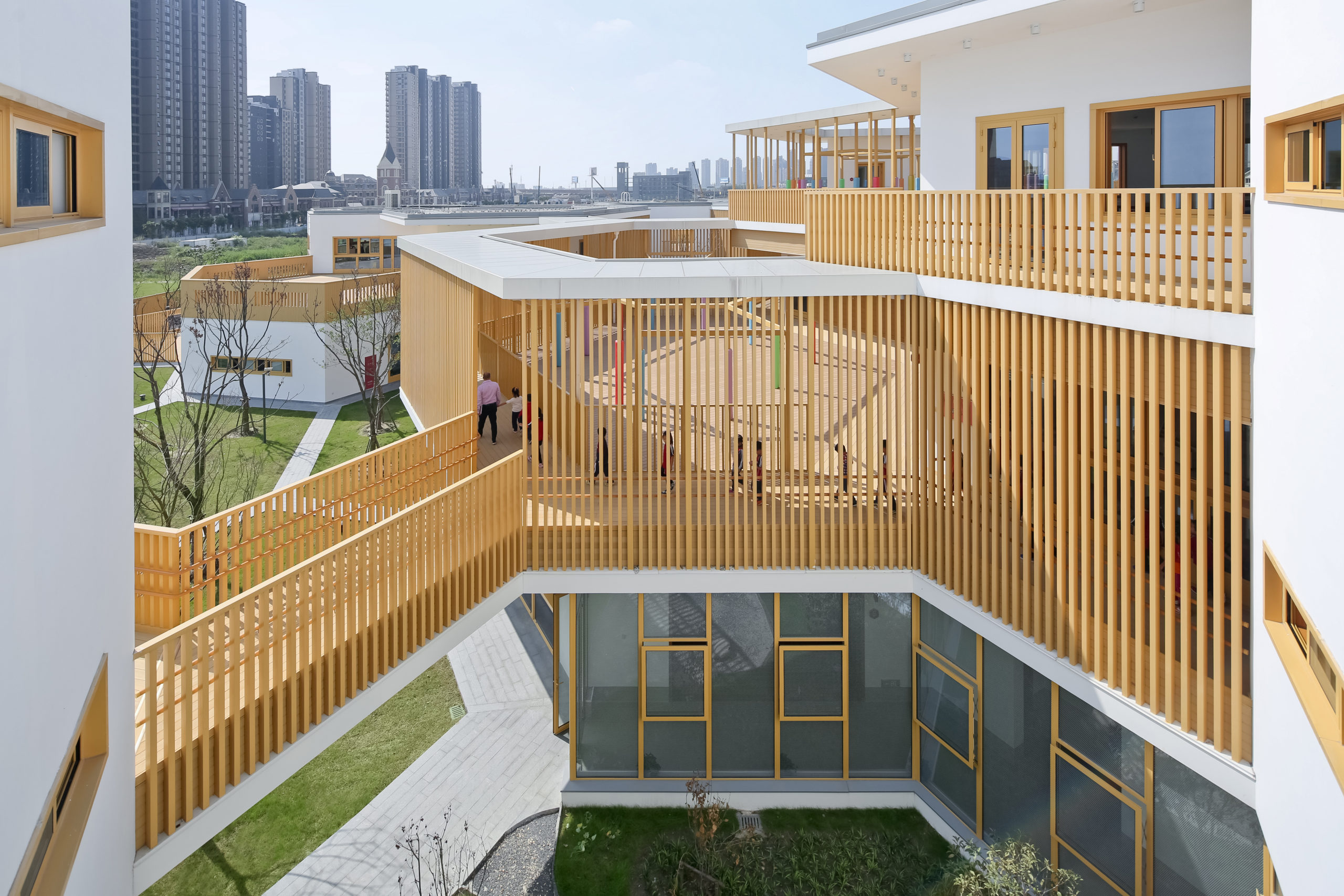
The courtyard is a very significant element in traditional Chinese architecture. It stands as a space for the family to gather and connect and also brings in fresh air and light into the home. The firm wanted to provide this element of comfort and a connection with nature to the children in this kindergarten. Following the sun’s path, the team added hexagonal shapes to the western side to maximize natural light within. A honeycomb pattern follows along the site with a series of courtyards and terraces breaking up the mass. The greater number of surfaces in every independent module also helps bridge the connection between the interior and exterior throughout the structure.

Architects: Want to have your project featured? Showcase your work through Architizer and sign up for our inspirational newsletter. 

Reference

FMG’s New Stoneware Surfaces Deliver Incredible Design Flexibility for Architects
CategoriesArchitecture

FMG’s New Stoneware Surfaces Deliver Incredible Design Flexibility for Architects

One of the most challenging aspects of design is bridging the gap between concept and reality. Architects and interior designers are first and foremost creatives; they are visionaries who at times struggle to find the perfect material that will bring their concept to life without some form of compromise. Whether it be a change in budget, an unforeseen roadblock or a disconnect between designer and developer, using materials that can easily adapt to a modified design ensures a successful outcome.

Fortunately, Italian stoneware Brand FMG Fabbrica Marmi e Graniti, part of Iris Ceramica Group, has developed a new product with creatives in mind. After extensive research and a thorough development process, FMG’s new full-body porcelain stoneware surfaces offer a comprehensive selection of durable, flexible and color-forward stone composites. Through a combination of raw materials, pigmented powders and random mix of hues, a robust line of handmade-like, unrepeated stone effect surfaces have recently hit the market. Among the most distinctive stone composites from the collection are the Palladio, the Venice Villa and the Rialto.

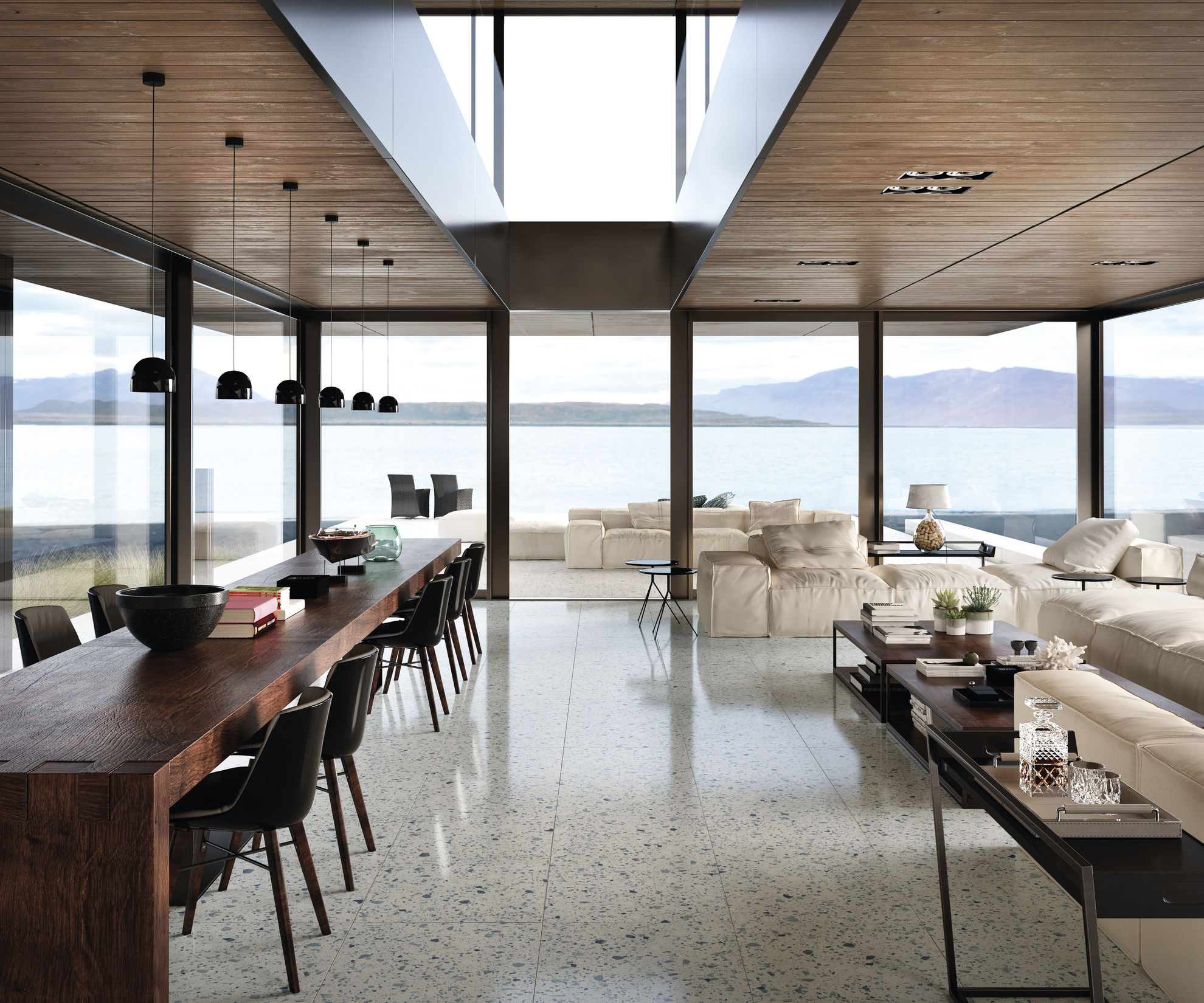
Project featuring FMG’s “Venice Villa” full-body porcelain stoneware

FMG boasts a unique production system that presses toxic-free powders with raw materials into an extremely durable material. The result is a compact stoneware that is non-absorbent, resistant to atmospheric agents and frost-free. Such a product can be easily implemented in both indoor and outdoor spaces as well as in private and commercial settings. Due to its extreme durability, it can withstand high-traffic environments without compromising aesthetics and functionality.

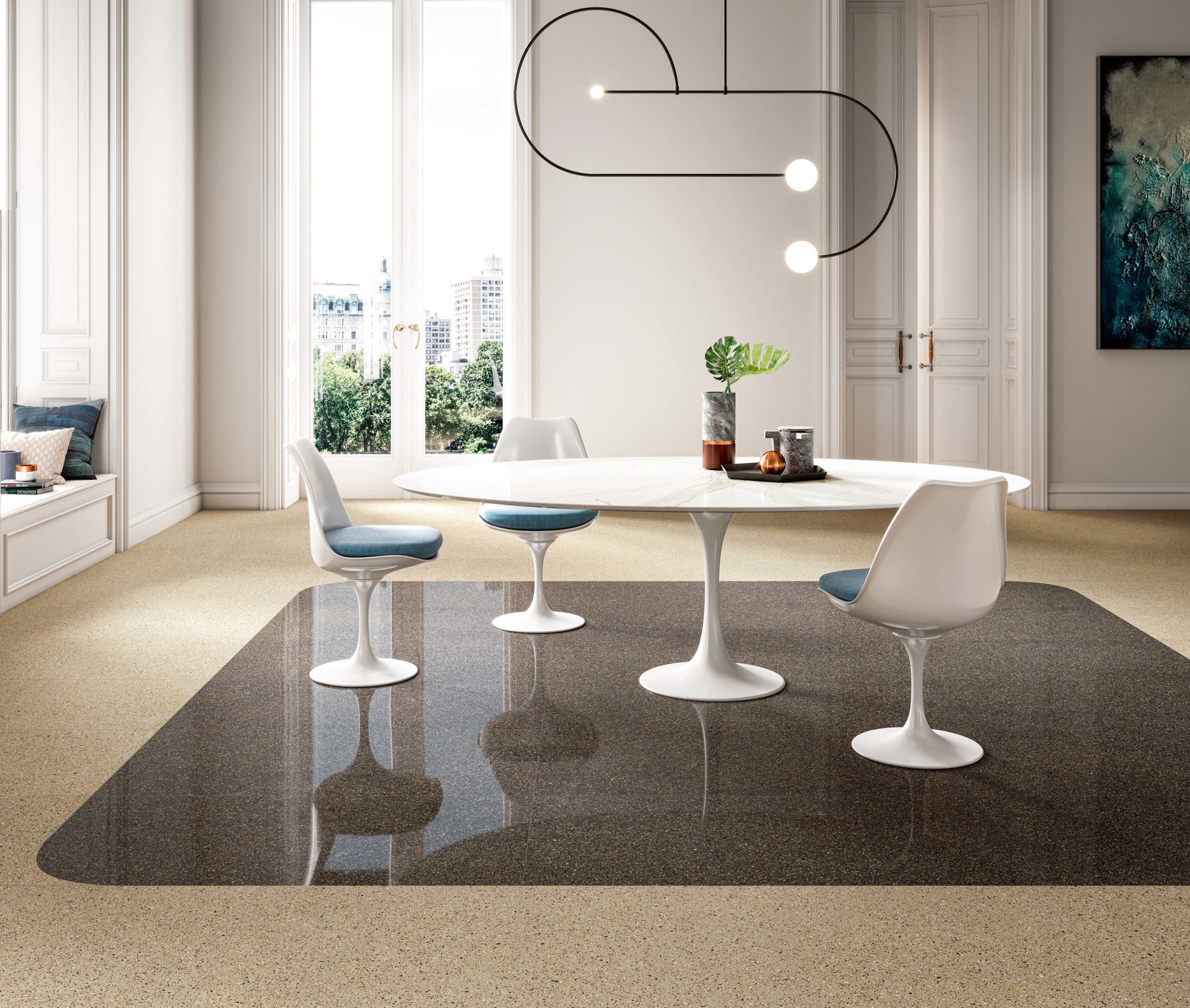
What further makes full-body porcelain stoneware stand out is its special processing abilities, enabling this stoneware to be manufactured for each designer’s bespoke needs. Whether the design requires rounded, beveled or central curved edges, the stoneware can be cut to deliver the required shape.

Project featuring FMG’s “Palladio” collection

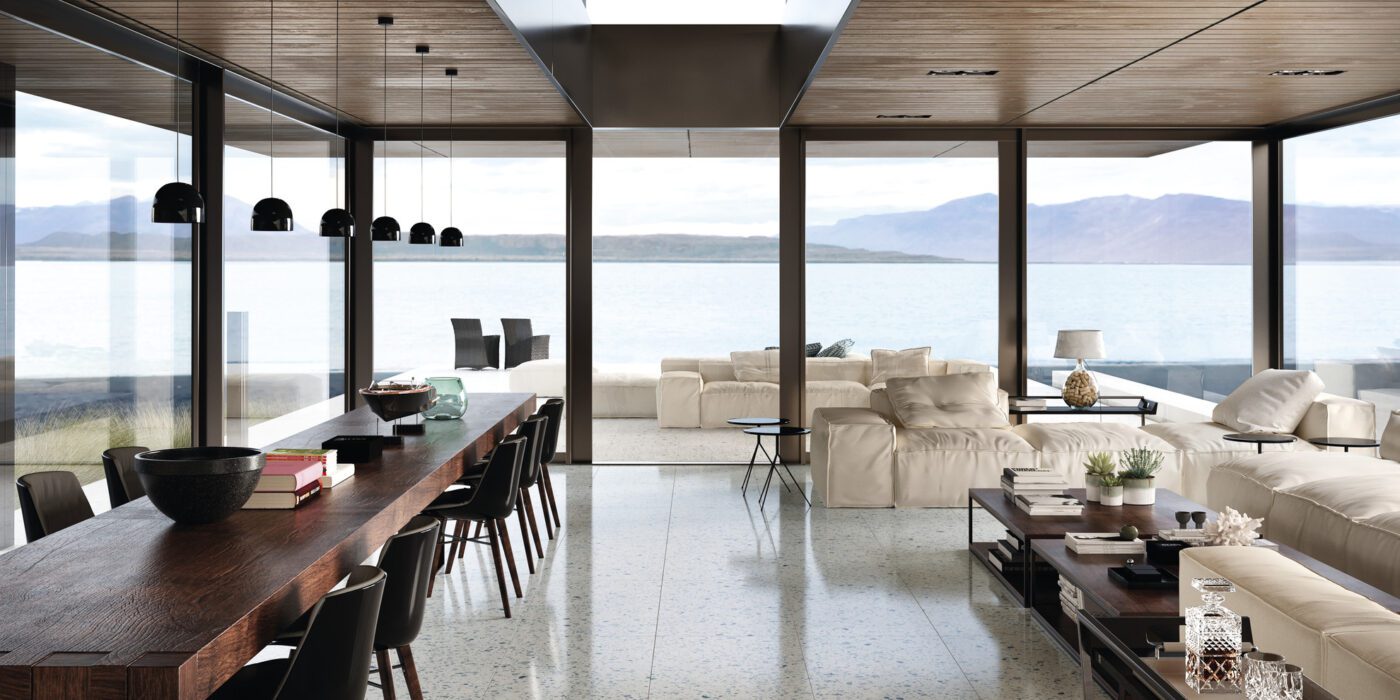
FMG’s collection pays tribute to the Brand’s Italian origins through its experimentation and interpretation of the traditional and well-loved Venetian terrazzo flooring. Terrazzo has been around for centuries and has managed to remain a popular floor treatment to date. From its Venetian origins to its wide popularity in the Art Deco movement – it maintains its relevance in today’s dynamic design world.

A common complaint of terrazzo is its susceptibility to cracks if not properly maintained or if installed on a poor structural base. The full-body porcelain stoneware’s durable surface ensures a long-lasting, crack-free product that achieves the beloved terrazzo aesthetic. This built-to-last product can be implemented in a plethora of surface types – kitchen countertops, chairs, and shower trays – thus offering a product that is multifunctional and in many ways more versatile than traditional terrazzo.

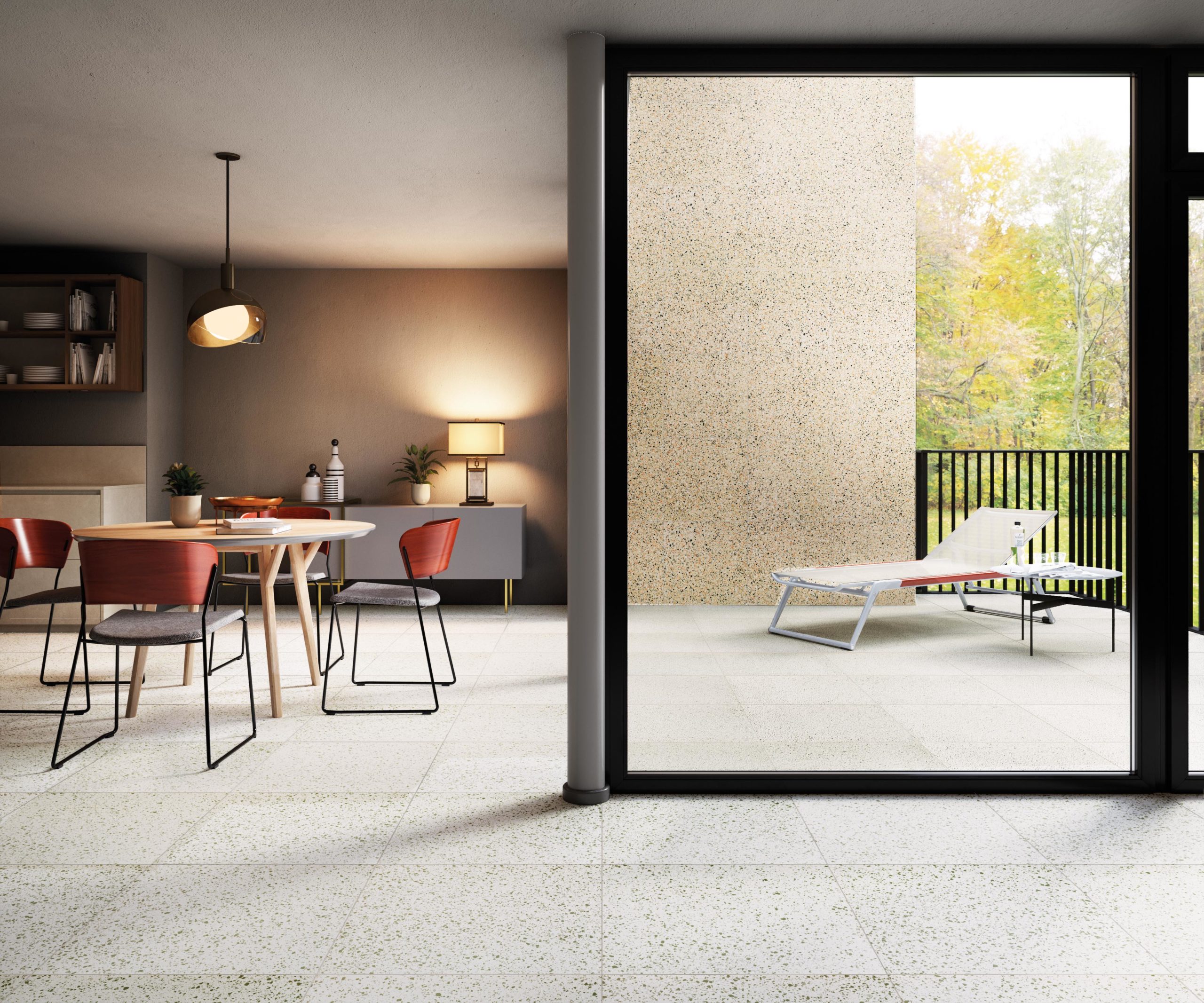
Project featuring FMG’s “Rialto” full-body porcelain stoneware in zinc

Such versatility is not only seen in its physical makeup but in its pronounced and adaptable aesthetic. Through a thoughtful mix of marble fragments, grit sizes and stones, this line offers perfectly textured and decorative surfaces. Each style boasts a terrazzo-esque design, and whether the preference is a tighter pattern or a looser look, there are various options to choose from.

The line comes complete with 30 color offerings, ranging from ivory to graphite. The variation of finishes ensures the designer’s ideal aesthetic can be achieved, from Naturale, Levigata (smooth) and Strutturata (structured) to Sabbiata (sandblasted). The Palladio, Venice Villa and Rialto all come with a 10 mm (0.4 inch) thickness, with eight different sizes available. Among the Brand’s typical size offerings — 120×60, 60×60, 60×30 and 20×20 cm — three new formats join this collection: 150×75, 120×120 and 75×75 cm.

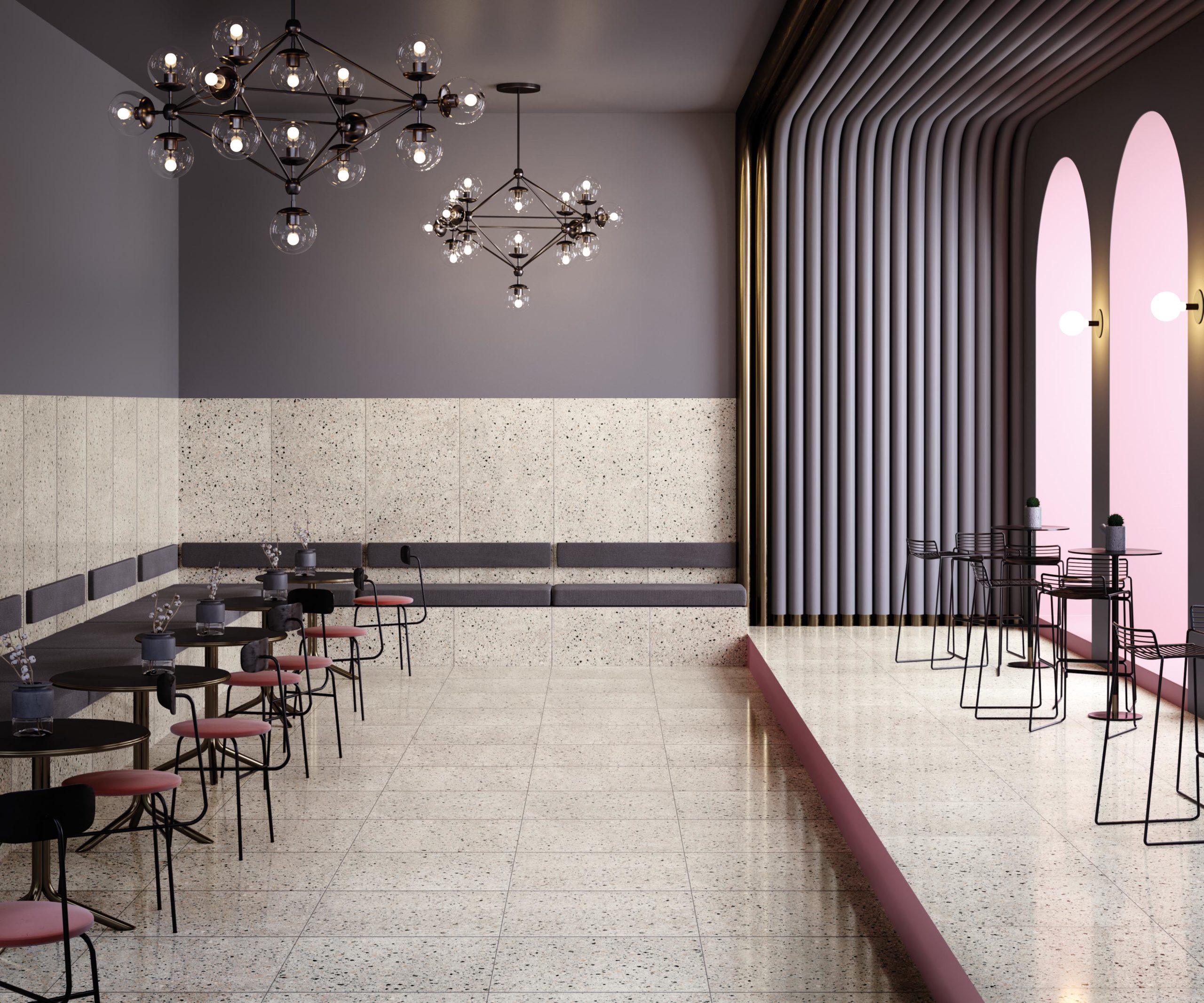
Project featuring FMG’s “Rialto” in pink

FMG’s full-body porcelain stoneware truly celebrates the spirit and colorful architectural history of Venice. Even its products’ names — Palladio, Venice Villa and Rialto — pay tribute to Venetian architecture. Rialto echoes the bustling Venetian commercial district and Venice Villa pays tribute to the region’s astounding mansions, while Palladio references the prominent Italian Renaissance architect, Andrea Palladio.

Very few products can offer such flexibility all the while ensuring a long-lasting, high-quality finish, with the need to compromise on aesthetics. As a modern-day interpretation of classic terrazzo flooring, combined with highly resilient material qualities, FMG’s latest stoneware collection is one that architects and designers can rely on to realize their creative vision.

To learn more about full-body porcelain stoneware and explore all of FMG’s offerings, check out their website.

Reference

Why Architects Should Never Stop Drawing By Hand
CategoriesArchitecture

Why Architects Should Never Stop Drawing By Hand

James Wines is a renowned American artist and architect associated with environmental design, and is founder and president of SITE, a New York City-based architecture and environmental arts organization chartered in 1970. He’s also on the jury for Architizer’s One Drawing Challenge, architecture’s biggest drawing competition, which offers $2,500 to its winners and publication opportunities for participants. In this essay, originally published in Blueprint Magazine with the title “From Hand to Mouse and Back Again”, Wines makes the argument for hand drawing as a means of architectural representation in the digital era.

It may seem strange to champion hand drawing, especially in view of the universal triumph of digital graphics, when every progressive architect in the world seems obsessed with elevating computerized delineation to new heights of illustrative supremacy. At the same time, as the software revolution has taken precedence, there appears to be a fresh incentive among many architecture students and emerging professionals – actually, a kind of quiet revolution – based on a new-found desire to hone their manual skills and learn to draw in the old way.

I have been a long-standing supporter of dual skills, encouraging young designers to maintain equal graphic abilities on paper surfaces and computer desktops. This advocacy is based on a deeply felt conviction that, by focusing exclusively on computer generated illustration alone, something conceptually profound is forfeited in the design process. When electronic response mechanisms replace the filtration of idea development through tactile means and guiding fingertips, the fertile territory of “subliminal accident” is lost. This refers to marginal calligraphy that dribbles off the edge of the paper, the inadvertent congestion of squiggly lines with no apparent meaning, the unwelcome blobs of ink that drop off a pen tip, or the inclusion of seemingly irrelevant visual references that have nothing to do with initial intentions.

On innumerable occasions over the years, I have been the creative beneficiary of my own graphic musings and the chaotic trail of ambiguities left behind by random charcoal smudges and watercolor washes. In other words, this pictorial detritus inscribed on paper, without any pre-determined architectonic mission, has often become the springboard for new ideas.
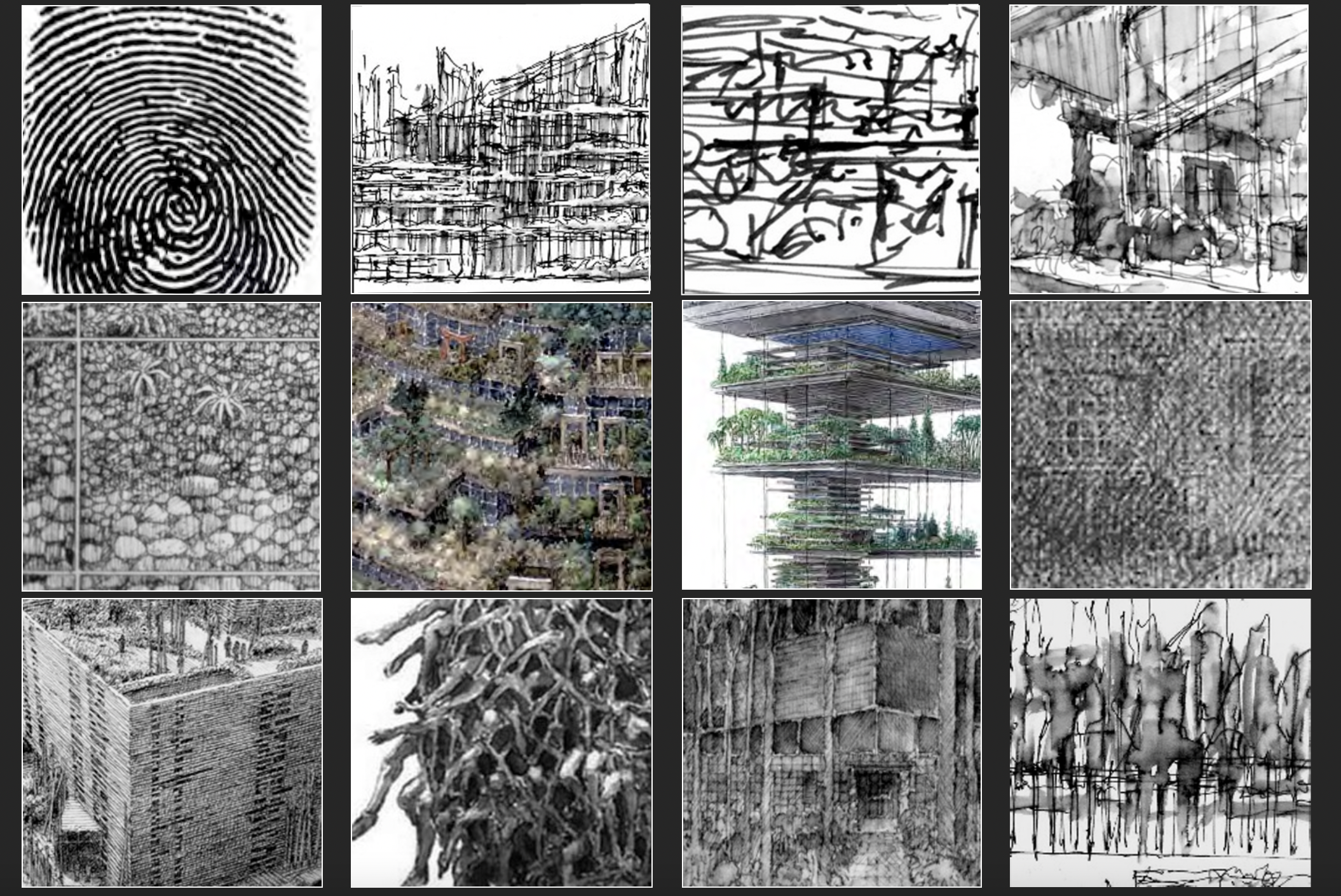
A selection of Wines’ sketches. Slide from James Wines’ “Mind to Hand” presentation, 2021; images courtesy James Wines

Frequently, when watching some seemingly pre-pubescent computer whiz use software to whip out multi-dimensional views of a complex structure in a matter of minutes, I feel as though I may be pushing a hopelessly old-fashioned aesthetic ritual, as a consequence of some deep-seated psychological resistance to the cybernetic world. I recall, two decades ago – when proficiency in computer rendering was being applauded as some kind of transcendental feat – how impressed I was with the photo-fidelity of digital drawing. Everything churned out in those days looked too good to be true . . . and it was. As my eyes became accustomed to sorting out slickness from substance, I gradually acquired a highly refined aptitude for detecting mediocrity (or outright crap) lurking under the pictorial gloss – to a point where I can now spot digital dazzle, camouflaging conceptual vacuity, at a distance of fifty feet from the monitor screen.

In addition to the inspirational merits of those idea generating graphic accidents credited earlier, one advantage the computer can never offer is the kind of calligraphic proficiency needed to draw really well. As I often try to explain to architectural students, this elevated status is a combination of aesthetic instinct and responsive rendition that goes considerably beyond the conventional ability to produce photo-like images with great fidelity . . . a commonplace talent in architecture, which is frequently mistaken for genuine drawing. Mechanical reportage also forms the basis of computer graphics and it is the primary reason that digital tools will always be best employed as an efficient means of confirmation (describing the big idea after it has been conceived), but never a deeply resonant art experience in itself.

When teaching drawing to young designers, their most noticeable deficit is a lack of understanding of the complex aesthetic challenges in accomplished draughtsmanship. These include knowledge of the origins of written language, the evolution of calligraphy, the nature of signification and the abstract dimension that unites positive and negative visual elements on a picture plane. In this context, I am speaking mainly of drawing in its subsidiary role as a recorder of thought process within the larger goal of building design. But, like the artist’s study for a painting or sculpture, the calligraphic nature of the conceptual sketch is always a decisive factor in its ultimate qualification as art.

Particularly among design students, the tradition of illustrative purpose often seems to hinder their grasp of what might be called the “deep structure” of drawing, with its multiple layers of art value and sources of content. For this reason, it can be a revelatory experience – especially in the computer age – to review the history of graphic invention and its relationship to the fusion of signs, symbols and aesthetic choices.
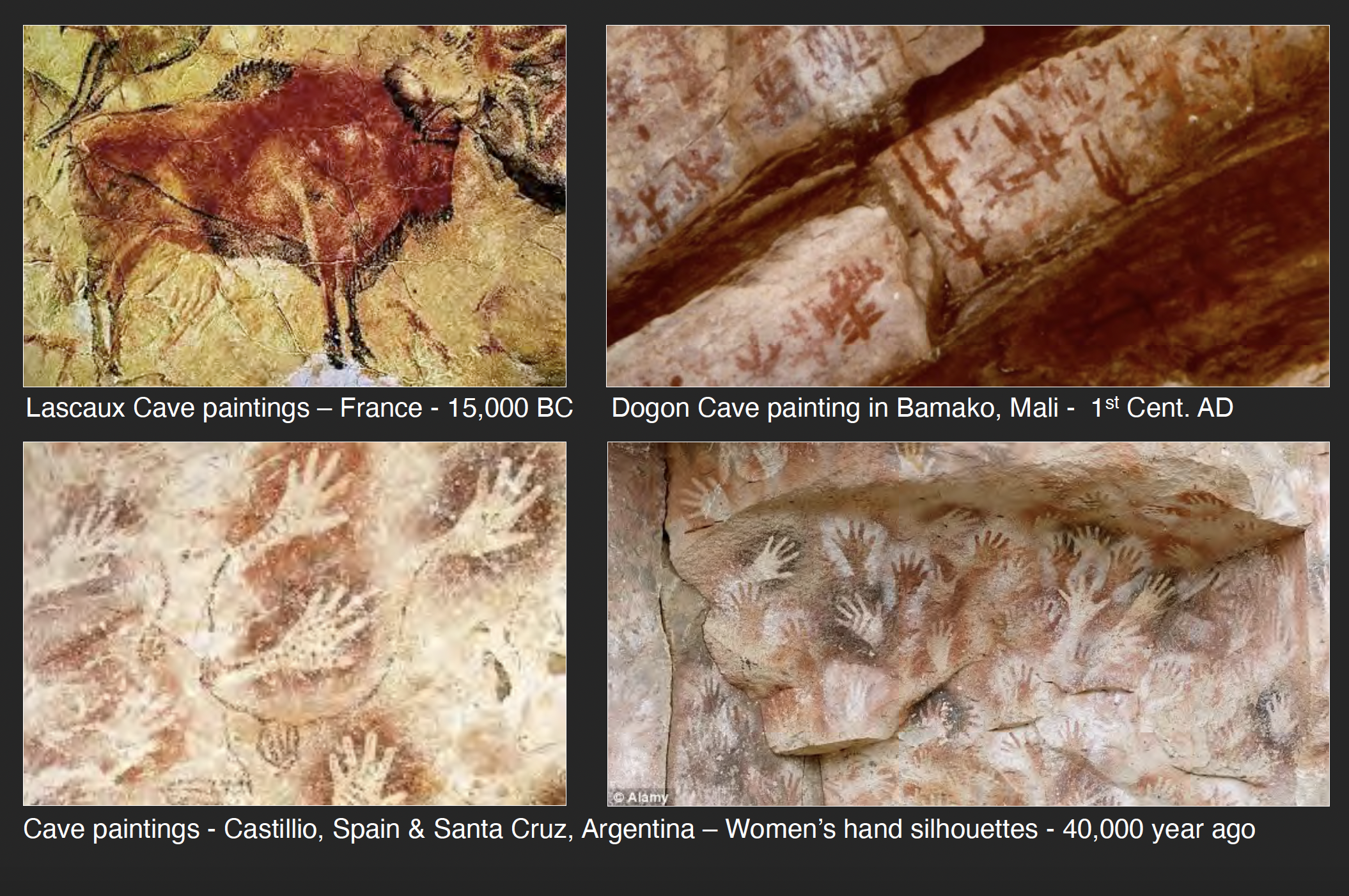
Slide from James Wines’ “Mind to Hand” presentation, 2021; images courtesy James Wines

The discovery in of the Altamira and Lascaux cave paintings (in 1879 and 1940 respectively) confirmed the fact that Paleolithic cultures as far back as thirty thousand years ago had mastered the art of drawing and established the foundations for all subsequent graphic selection in the formation of written language. Contrary to the previous view that Cro-Magnon people were simply meandering hunter/gatherers, these communities obviously absolved a privileged minority of visually skilled individuals – perhaps as designated religious shamans – from their food-harvesting obligations. It is clear, given the consummate artistic quality of the cave murals, that this level of mastery was probably the result of centuries of stylistic refinement.

Without going into myriad speculations on the how and why of Lascaux and Altamira, it is sufficient to view the reality and conclude that nothing this aesthetically resolved could have occurred without a profound investment in both the urgency of communication and its translation into culturally endorsed nuances of line, tone and color. The illustrative factor was certainly part of the purpose of cave art; but those Magdalenian masters also knew that the profundity of visual language resided in its abstract elements – in essence, the connections linking symbolism and philosophy – apart from any reportage intentions.

It is reported that Picasso wept when he first viewed the Spanish cave paintings, exclaiming that, “After Altamira, all is decadence.” As one of history’s greatest draughtsman, he understood that prophetic Neolithic artists had anticipated not only the development of Egyptian hieroglyphics and Chinese calligraphy thousands of years later, but also the signifier/signified basis of linguistics and the role of mind and hand in the evolution of visual ideas. Historian Andrew Robinson refers to Magdalenian art as “proto-writing;” seemingly based on the assumption that Ice Age people did not yet have a legitimate alphabet. On the other hand, there are enough abstract symbols punctuating the cave murals to suggest that these Cro-Magnon painters had already laid major groundwork for the development of written language . . . as well as all subsequent calligraphic innovation in art and design.
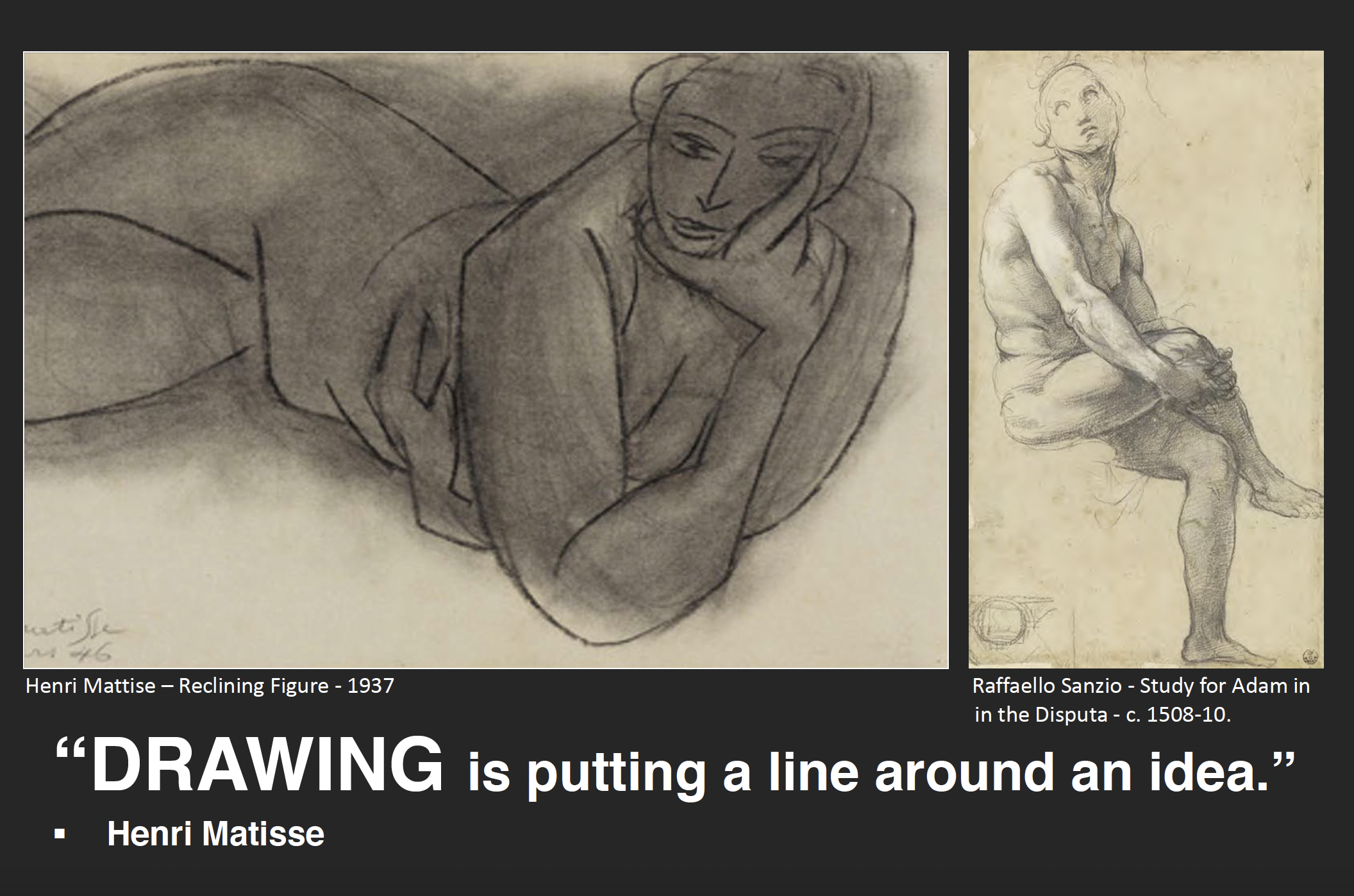
Slide from James Wines’ “Mind to Hand” presentation, 2021; images courtesy James Wines

Supporting this argument, there is also the remarkable stylistic consistency linking the art of Lascaux and Altamira with innumerable other cave paintings in Chauvet and La Marche in France, as well as those found in Africa and Australia. For example, bison, deer and wild boar are represented with an extraordinary sensitivity of rendering techniques – particularly in terms of linear and tonal choices – which are parallel to those same skills found in the drawings of Da Vinci. Rembrandt, Van Gogh, Matisse and Giacometti and, in architecture, Alberti, Piranesi and Frank Lloyd Wright. In the context of prehistoric times, it was only a small aesthetic and linguistic leap to associate the gracefully tapered legs of a bison with all forms of stability and movement in nature. The next logical step was to abstract this fragment of anatomy into a pictographic symbol, refine it into a cuneiform inscription and, finally, amplify its meaning by phonetic markings and syllabary alphabets. With progressive logic, the extended legacy of this process eventually evolved into the serviceability of e-mail on one hand and the expressive pathos of Picasso’s drawings for Guernica on the other.

Observing the bridge from Magdalenian culture’s deep sense of symbolism and lyrical representation in the depiction of mammal prey to the advent of written language in Asia pretty much says it all concerning the value of graphic invention. By following a similar route four thousand years ago, China had already developed calligraphy to a degree where fragments of the first alphabet still remain a part of contemporary Chinese writing. This interface between language development and the aesthetics of drawing is at the core of graphic expression.

It is also a cyclical and continuously evolutionary form of communication, thriving on renewal and re-invention. As described by linguist Noam Chomsky; “Language is a process of free creation; its laws and principles are fixed, but the manner in which the principles of generation are used is free and infinitely varied. Even the interpretation and use of words involves a process of free creation.” To his “use of words” must be added the “use of line.”

Slide from James Wines’ “Mind to Hand” presentation, 2021; images courtesy James Wines

Chinese writing and drawing have remained synonymous skills in the hands of Asian calligraphers since the first pictographs emerged – which, in later dynasties, included “ideographs” to embody fully developed narratives. Like all languages, Chinese underwent a logical development from the faithful contour depiction of such images as “man, sun, ox, water, etc., toward a more complex system of signs needed for phonetic/semantic functions. But, the continuing beauty of Chinese characters is their metamorphic quality . . . moving gracefully back and forth between representational and conceptual realms of signification.” This “art of language” has kept Asian painters and poets continuously supplied with renewable source material and has perpetuated the performance role of master calligraphers. It is the kind of drawing that becomes a true fusion of theater, communication and graphic style. It is also extremely instructive to anyone seriously committed to understanding what the successful coordination of mind and hand can accomplish.

At the core of Chinese calligraphic aesthetic is the gestural rhythm of the pen or brush stroke and the manual control demonstrated by the flow of thick and thin lines. However, it is the raggedness of edges, the spontaneous splatters, the inadvertent drips and their collective interaction with negatives spaces – reinforcing that all-important element of “subliminal accident” mentioned before – which I personally consider essential ingredients in the multi-layered practice of drawing. For the master Chinese calligrapher, these indeterminate factors are usually captured in bold gestures; but the same spontaneity and fragmentation (and this includes architectural drawings) can be manifested in the smallest and most search-oriented lines on paper.
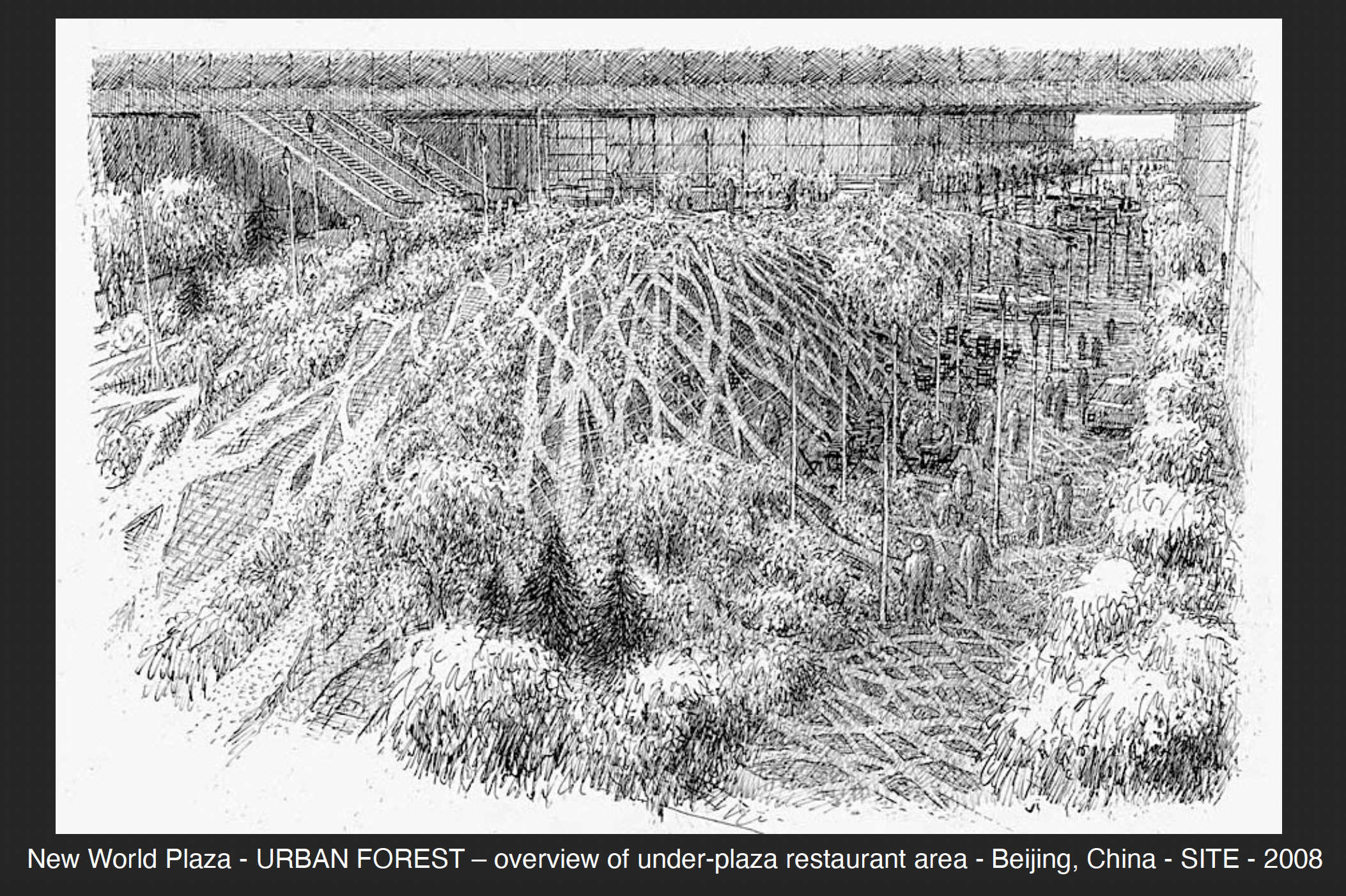
Slide from James Wines’ “Mind to Hand” presentation, 2021; images courtesy James Wines

I want to summarize a few of these observations on calligraphic values by discussing the contemporary efforts of SITE in this direction. From the beginning of the studio in 1970, our work has been a fusion of art, architecture and landscape. The philosophy of the firm is based on a view that communicative content in the building arts can be based on sources outside the traditions of formalist/functionalist design. These include the social, psychological and ecological implications of a post-industrial era.

SITE’s buildings and public spaces are frequently interpreted as “filtering zones” for receiving and communicating information about the environment, rather than designed as hermetic objects sitting in the environment. For example, in certain graphic works this proposes a narrative function of architecture. It suggests that a building’s wall surfaces, volumes, and adjoining spaces can be seen as absorptive, sponge-like conveyors of messages that go considerably beyond conventional sculptural relationships – suggesting a function of “architecture as the inversion of architecture.” It is a means of converting the familiar ingredients and processes of construction technology – plus the public’s subliminal acceptance of certain kinds of archetypal buildings – into a form of critique and/or commentary about architecture. By prioritizing these reflex identifications (rather than focusing on compositions of abstract shapes) my own sketches tend to view architecture as a “subject matter for art,” rather than the objective of a conventional design process.
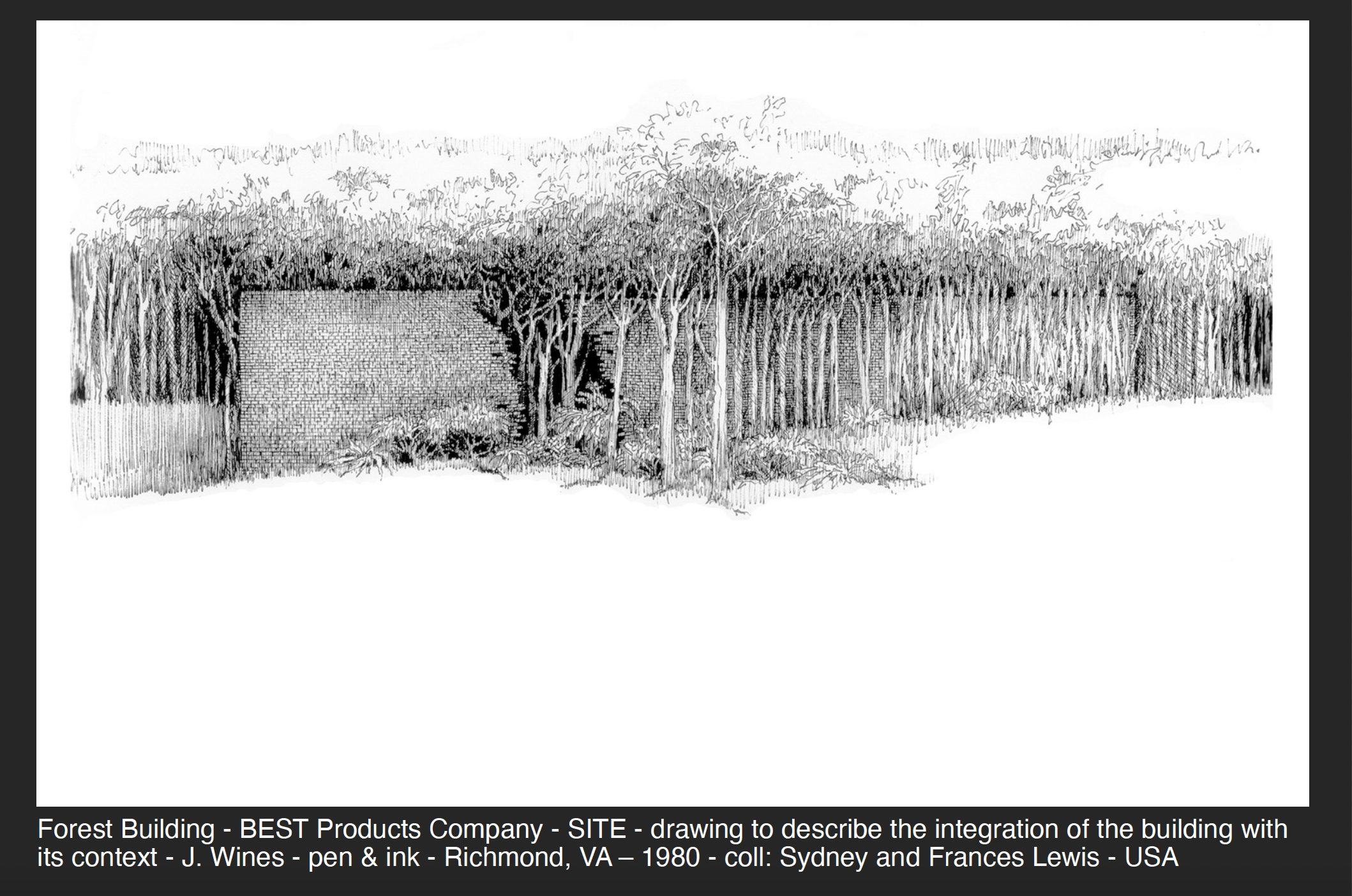
Slide from James Wines’ “Mind to Hand” presentation, 2021; images courtesy James Wines

A number of my recent drawings explore the integration of architecture and landscape. This approach is often responsive by a situation where the building is located in a natural site and the objective is to preserve as many trees as possible. As a result, architecture appears to be consumed by its own environment – or, seen more perversely, as a victim of “nature’s revenge.” In other examples, the renderings describe the need for more forested areas, water sources and urban agriculture in the cityscape. The primary purpose is to explore the integration of architecture with context to a degree where it becomes difficult to discern where a building ends and the environment begins. Also, in this way, vegetation can become as much a part of the aesthetic fabric of a structure as masonry, glass, and steel.

From the perspective of fusing computer graphics with hand drawings, SITE has developed an extremely fluid interface between multi-media and conceptual development. For example, our studio’s “Residence Antilia” for Mumbai, India offers a clear sequential demonstration of this creative process, realized through a combination of interactive hand + digital drawing techniques. It shows the basic stages of source referencing, search-for-idea sketches, design clarification and renderings for pure aesthetic experience. The proposal also demonstrates the calligraphic underpinnings as they appear in multiple formats, scales and comparative qualities of line, tone and color. This residential tower, designed in 2003 for industrialist Mukesh Ambani, is located on a very restrictive hilltop site, overlooking the entire city of Mumbai.
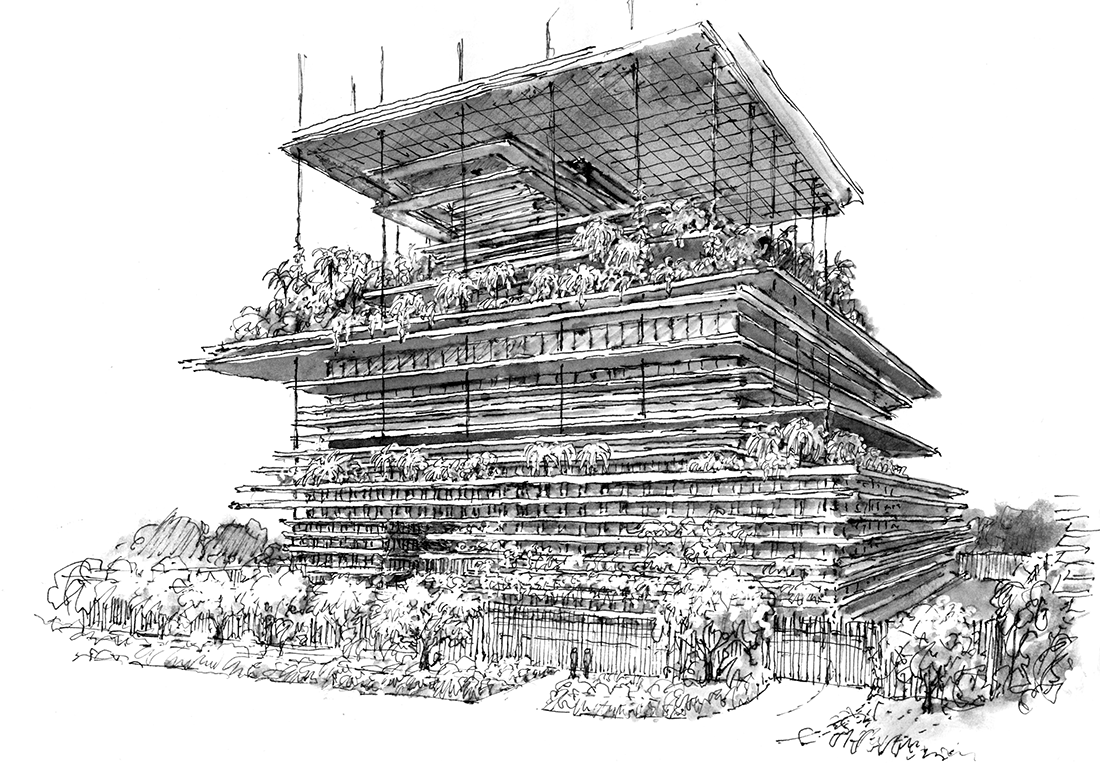
Antilia “Vertiscape” Tower proposal, Lower Levels, 2003, Image © SITE

The concept responds to the client’s desire to have a multi-tiered, heavily landscaped structure, similar to (his wife’s preference) the ancient Hanging Gardens of Babylon. For this reason, the entire building is conceived as a “Vertiscape” garden in the sky, freeing park spaces from their normal earthbound confinement. The concept responds to Vastu principles in Hinduism, wherein the spine is regarded as the main source of support, leading upward toward enlightenment. The seven levels of the residence are supported by a stratified structural spine, stabilized by the core and a series of steel cables that support five “floating” floor planes and a variety of interim garden terraces, verandas, trellises, viewing platforms, water features, and recreational facilities.

All horizontal projections emerge from the core structure, similar to the role played by vertebrae in the spine. In accordance with Chakra meanings in architecture, the zones of this building are linked to the themes of earth, water, fire, air, sound, light and information. The main residence, located on a crowning 4000 square meter platform, continues the visually unifying theme of stratification. All of the Vertiscape references, sources and interpretations are accounted for in my related series of drawings, which range from tentative pen lines, to amorphous washes, to hard-edged media combinations. And finally, most importantly for making conceptual choices, these depictions invariably explore what I refer to as the “ambient sensibility” of a place, the role of light and shadow and architecture’s capacity to transform context into content.
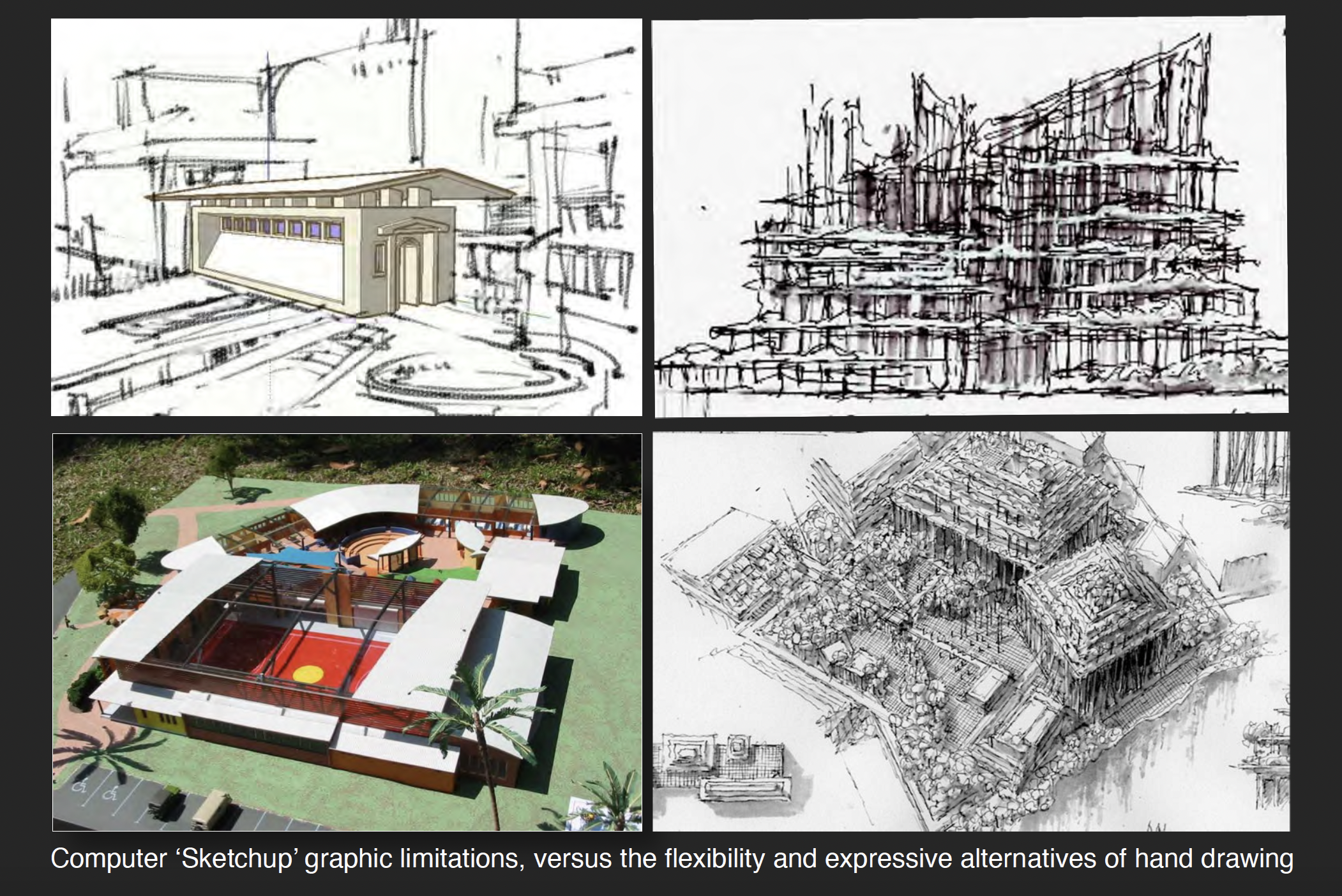
Slide from James Wines’ “Mind to Hand” presentation, 2021; images courtesy James Wines

My continuing advice to young architects seeking to draw for reasons of idea development (or pure pleasure) is to follow Picasso’s obsessive example; “I draw like other people bite their nails.” In his enthusiasm for the power of the hand, the great Spanish artist is also purported to have taken a dim view of the digital revolution by commenting; “Computers are useless. They can only give you answers.” While overstating the case – and probably reflective of a certain 1960’s naivety concerning the importance of an emergent computer age – Picasso correctly prophesized the current revival of interest in hand drawing and the widening acknowledgement that there are conceptual and aesthetic territories that the software of Form Z, AutoCAD and Sketchup can neither equate, nor replace.

When I watch masses of architectural students locked into computer monitors as prosthetic extensions of their bodies and churning out facile simulations of buildings, I recall Baudrillard’s eerie assessments of Post-modern culture. Particularly resonant are his views of media phenomena – as illusion replacing reality; where substitution ultimately becomes the reality. In his world of “simulacra” I personally find that signs scratched on paper with a pen or pencil do have a way of restoring the authenticity of representation, as well as the nature-centric validity and socially relevant value of symbolic content in the subject described.

As Baudrillard astutely observed, the illusions created by media tend to remove people from the organic and tactile world around them. Retaining this connection between mind and hand seems just as valid now as it was for the cave art masters who immortalized the hunt in Lascaux and Altamira. The quest for calligraphic quality is no less relevant as well. It is an objective perfectly described by by the writer/animator, Walter Stanchfield; “We all have at least 10,000 bad drawings inside of us. The sooner we get them out and onto paper, the sooner we’ll get to the good ones buried deep within.”

Sign up to be informed when the next One Drawing Challenge competition opens for submissions. Be sure to check out the rest of this year’s extraordinary Winners and Commended Entries.

Reference

Avian Architecture: To Coexist, Architects Must Embrace Multi-Species Design
CategoriesArchitecture

Avian Architecture: To Coexist, Architects Must Embrace Multi-Species Design

Judging is now underway for the 10th Annual A+Awards Program! Want to earn global recognition for your projects? Sign up to be notified when the 11th Annual A+Awards program launches.  

In urban environments, one could argue that birds are typically viewed through two diametrically opposed lenses. On the one hand, they are idealized objects of desire, occupying central symbolic roles in language, literature, art and religion. The idea is ancient, visceral and undeniable; manifested through religious rituals and rites of passage across the world. At the same time, birds are viewed as a nuisance and, in many cases, are seen as “pests” that need to be managed within our cities. While urban city-dwellers might appreciate the presence of birds in their neighborhood park or nesting in a backyard tree, the notion of actively sharing buildings and structures with these animals is currently not widely accepted. 

Simultaneously, the climate crisis and the pandemic outbreak have collectively forced us to rethink how we interact with other forms of life within our urban environments, on both a micro and macro scale. As we have continued to rapidly urbanize areas all across the globe, animals that originally called these environments home have been displaced, forced to find other means of refuge, or have learned to coexist with humans in primarily antagonistic ways. In response to the status quo, how might architecture play a role in defining and mediating the varying shades of “middle ground” in between spectacle and maintenance that typically define animals like birds in the built environment? What can forms of inter-species architecture teach us about how to live more sustainably with all species?

Mosaic of Scene with Egyptian Columbarium for Breeding Pigeons, First Century B.C. Rome © WikiCommons

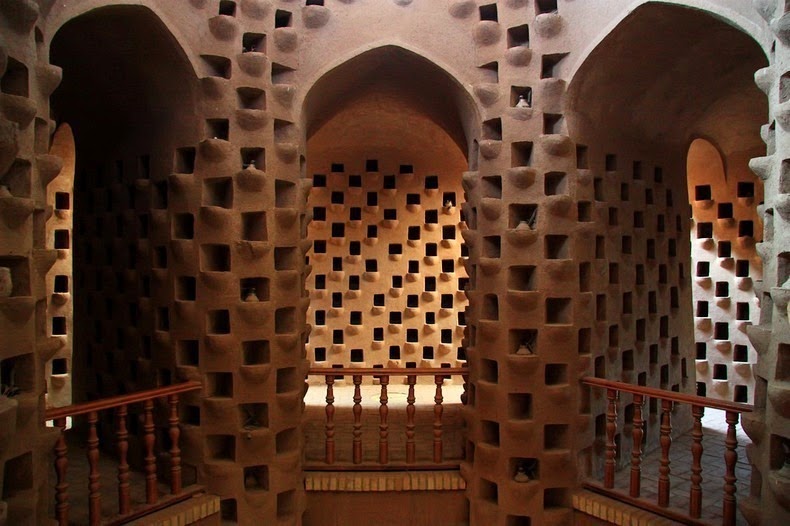
For centuries, birds such as pigeons played a significant role in the economies and culture of ancient civilizations like Persia, the historic region of southwestern Asia that is now modern day Iran. Pigeons have been part of the Middle East since the dawn of agriculture, as the world’s oldest domesticated bird, with research suggesting that they lived in captivity stretching back over 10,000 years ago. As agrarian practices began to evolve in ancient Persia, farmers realized that pigeon droppings made excellent fertilizer and subsequently began to build towers to breed and house these birds. Rich in phosphorus, potassium and nitrogen, pigeon droppings provided much-needed fertilizer for melons, cucumbers, wheat and other nitrogen-demanding crops — all cornerstones of Persian cuisine

Once the value of these birds became clear, pigeon towers proliferated as the region’s agricultural output began to improve and humans worked to construct symbiotic and mutually beneficial relationships with these feathered creatures. Typically built from molded mud, lime, earth, or salt — depending on the material resources of the region — these towers could house up to as many as 15,000 birds at a time, subsequently generating 15 tons of annual fertilizer for a local region. 

Dovecotes (Pigeon Towers) are plentiful in the agricultural vicinities of Isfahan. © WikiCommons

Isfahan is famous for its rich tradition of pigeon towers. Most of the structures still in existence today date back to the 17th century. The architecture of these towers adapts the vernacular architecture of Iran to suit avian needs; majestic vaulted towers with an internal honeycomb structure rise up to six stories high and 50 to 75 feet in diameter. The birds can access their nests through small, narrow passages that protect them from predators such as snakes or larger birds. Once a year, farmers access these small sockets to extract their droppings, simultaneously providing safe refuge for these animals while benefiting the agricultural production of the local community.

The resilience of this bird-based architecture, which has been constructed by cultures across history and geographies demonstrates that urban infrastructure can utilize ecological materials, mostly salt and earth, to help sustain populations of up to 20,000 people at a time. While many of the pigeon towers that used to dot the landscapes of countries like Iran unfortunately lie in disrepair today, they stand as monuments to the enduring importance of low-tech cooperative architectural solutions to contemporary crises. 

Interior, Isfahan Pigeon Tower. ©WikiCommons

Today, due to the widespread use of chemical fertilizers, active pigeon towers are few and far between, as these unique buildings convey memories of a past long forgotten. Our architectural relationship with these animals primarily endures through various DIY forms, as birdhouses for aviary enthusiasts or rooftop pigeon coops. Recognizing the intelligence of pigeons, bird enthusiasts in cities like New York have taken to housing these animals in order to train them to become champion flyers and racers, periodically releasing their flocks in spectacular displays of choreographed flight. Pigeons also have an incredible biological sense called magneto-reception, allowing them to navigate vast terrains and find their way home or deliver messages from as far as 2,300 miles away, a skill that has periodically been exploited by humans throughout history. 

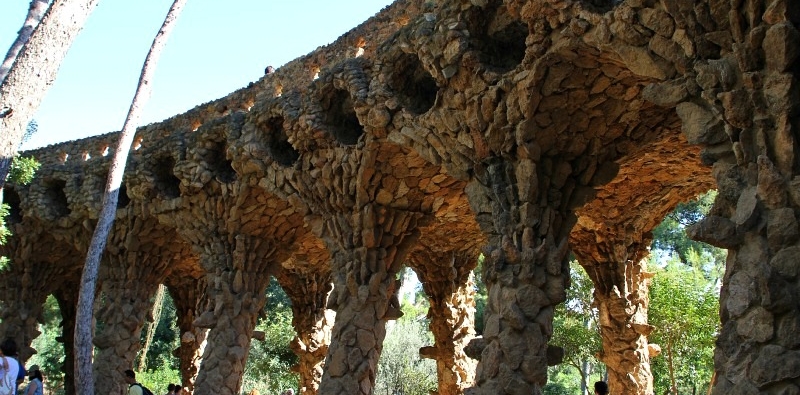
While few forms of architecture today truly embrace the potential of these animals, the desire to experiment with this architectural typology in an effort to provide safe refuge for avians was not lost on all contemporary architects, as birds have become an undeniable part of life in almost any urban environment. In Barcelona’s Parc Güell, Antoni Gaudí intentionally designed architectural elements that would allow for birds and pigeons to nest. He constructed long terraced walls and turrets that incorporated nests for pigeons and a variety of other avians to reside in, encouraging their interaction with the architecture as opposed to trying to prevent it. 

A walkway below and roadway above mirrors the organic shapes of trees and provides nests for park birds, Parc Güell (1914). ©WikiCommons

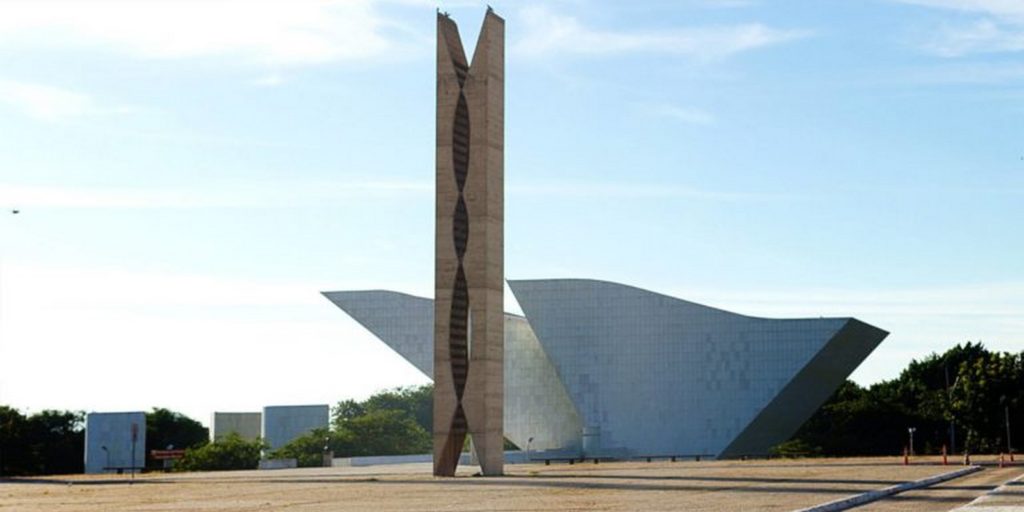
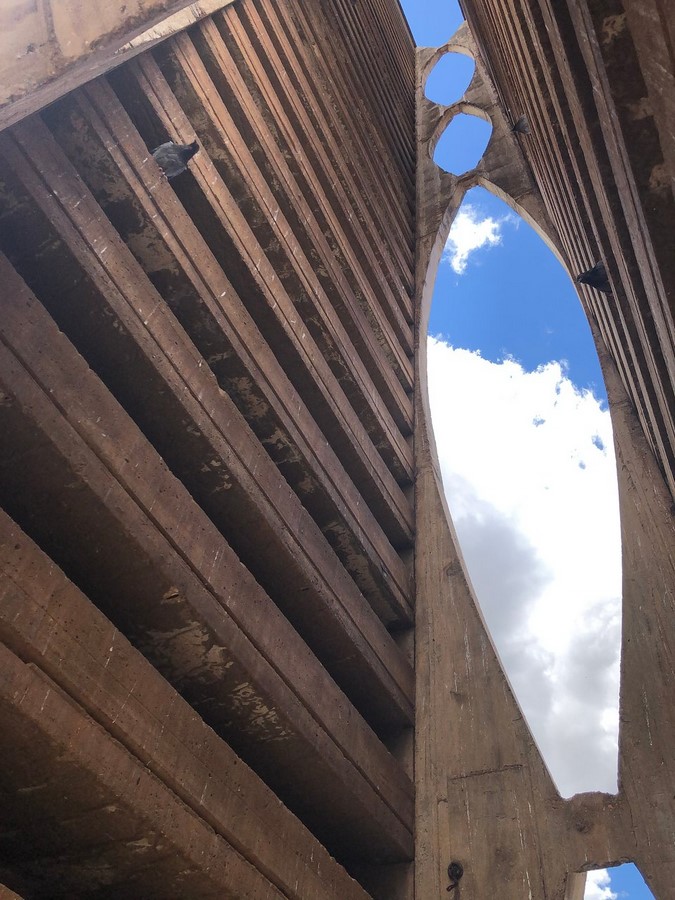
Oscar Niemeyer’s O Pombal Pigeon House (1960) in Brasília may be the most recognized pigeon tower in recent times. With mirrored oblong openings on either side, this giant concrete tower stands in the center of the Praça dos Três Poderes, at the heart of Brazil’s capital. Its interior is constructed with thin rows of horizontal concrete shelves that allow for hundreds of pigeons to perch and roost in. While the tower is purely sculptural and doesn’t engage in the beneficial agricultural practices that pigeons can help to implement, architectural symbols like this one are important in terms of shifting the collective sentiment that birds are a nuisance to be tolerated within urban environments. 

O Pombal, Oscar Niemeyer (1960). @WikiCommons

O Pombal, Oscar Niemeyer (1960). @WikiCommons

For the vast majority of urban spaces, current architectural practices make life extremely difficult and often deadly for birds all across countries like the United States. The astronomical increase in buildings that utilize fully glazed facades has resulted in the estimated deaths of at least a billion birds across the country each year. Shiny glass exteriors, interior plants near windows, and landscaping near buildings can all be deadly to birds as they are unable to distinguish reflections in the glass from open sky. Following habitat loss, this is the second largest man made threat that birds face each year. In response, urban areas like New York City have introduced Local Laws to update building codes to make new glass structures safer for birds, resulting in frit patterns and other designs that can be commonly be found on exterior glazing today. While these measures are an important step forward, architects should think bigger and not only opt for bird-friendly designs in their projects but work to help the avian community thrive.

As we continue to build at unprecedented rates in both urban and rural areas, we must take a harder look at whether we design with other species in mind. To be sure, solutions that may have worked throughout history in places like Isfahan — a rural community without the technical capabilities for large scale agriculture — may not be as replicable in large metropolitan areas like New York City. That being said, how can historic works of co-species architecture as a whole contribute to the re-examination of our relationship with nature, which is so sorely needed? Birds like pigeons have proven countless times throughout history that they are beneficial to our biosphere and can help us be more productive stewards of the planet, if only we would listen.

Judging is now underway for the 10th Annual A+Awards Program! Want to earn global recognition for your projects? Sign up to be notified when the 11th Annual A+Awards program launches.  

Reference

Will Architects Prioritize Passenger Experience in the Post-Pandemic World?
CategoriesArchitecture

Will Architects Prioritize Passenger Experience in the Post-Pandemic World?

Have your say in which architects will take home Architizer’s prestigious A+Awards: Public Voting opens this spring. Interested in next year’s program? Subscribe to our newsletter for updates.  

Traveling is an exhilarating endeavor. Whether it be by bus, train or air, successful travel requires stamina, organization and the ability to adapt. When traveling by plane, the initial leg of the journey often causes stress. From document checks to security lines, the entire airport process can feel arduous; however, when you touch down at your destination, the exhausting journey begins to feel worthwhile.

With the added complexities of the pandemic, flying feels more like a burden than it does a favorable experience. The excitement to board a plane is replaced by a fierce worry that something will go wrong. Today, passengers are greeted with long lines, rigorous document controls and a heightened stressful atmosphere. It is hard to predict when the return to normalcy will be — or if that will ever happen — but what is certain is that stress goes hand-in-hand with travel. Will the pandemic change the ways in which architects design transport interiors? Can architecture act as a mediator between stress and calm? Can it facilitate relaxed movement while not compromising practical requirements?

The check-in and administrative side of air travel are likely not to change, and airport security checks will likely remain long and unfavorable; however, once headed to the gate, the energy in the airport can shift. The second leg of the journey can be more relaxing, and architects can have a hand in that.

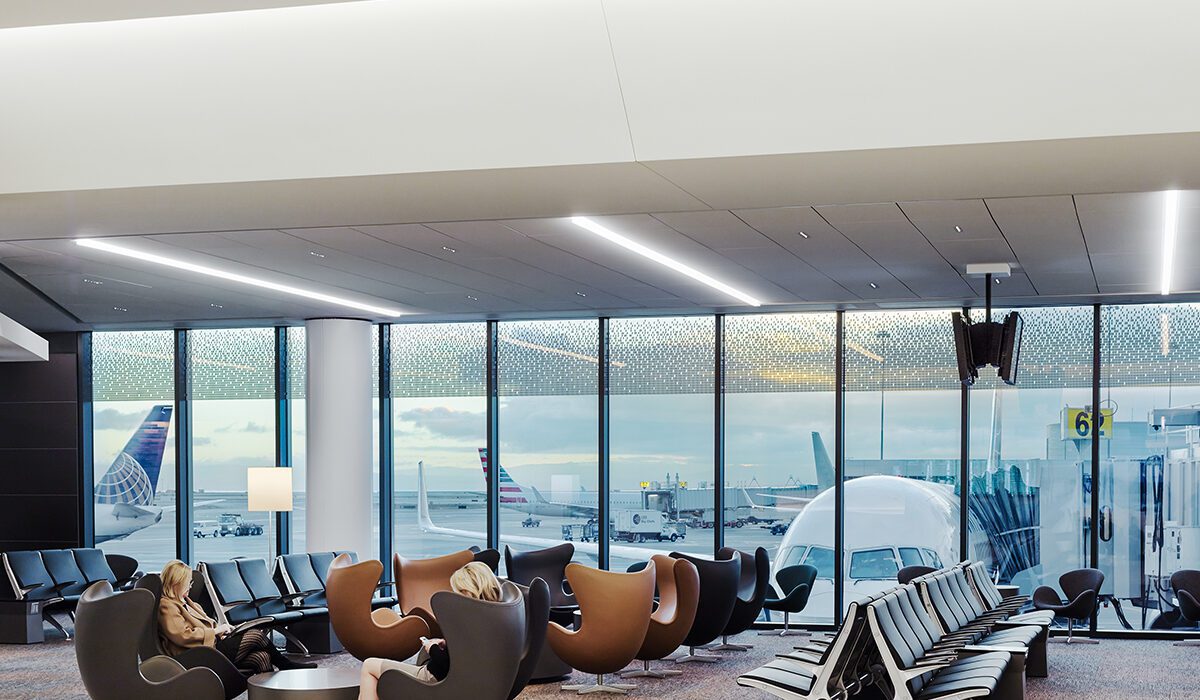
San Francisco International Airport, Boarding Area E by Gensler, San Francisco, CA, United States. Popular Winner, 2015 A+Awards, Transportation – Airports. © Joe Fletcher Photography

One way to help alleviate travel-related anxiety is through access to outlets. As society turns to digital solutions, passengers are required to arrive at the airport with their documents ready to go and as a result, many rely on their personal electronics to store travel documents. From boarding passes, immunization proof, to test results, electronic devices have become essential for air travel – especially during the COVID-19 pandemic. Most airports were built before the digital era and as a result, are only equipped with a mere number of accessible outlets. Airports travel will likely continue within this digital realm and aviation architects are beginning to catch on and ensure their designs are fitting of the times.

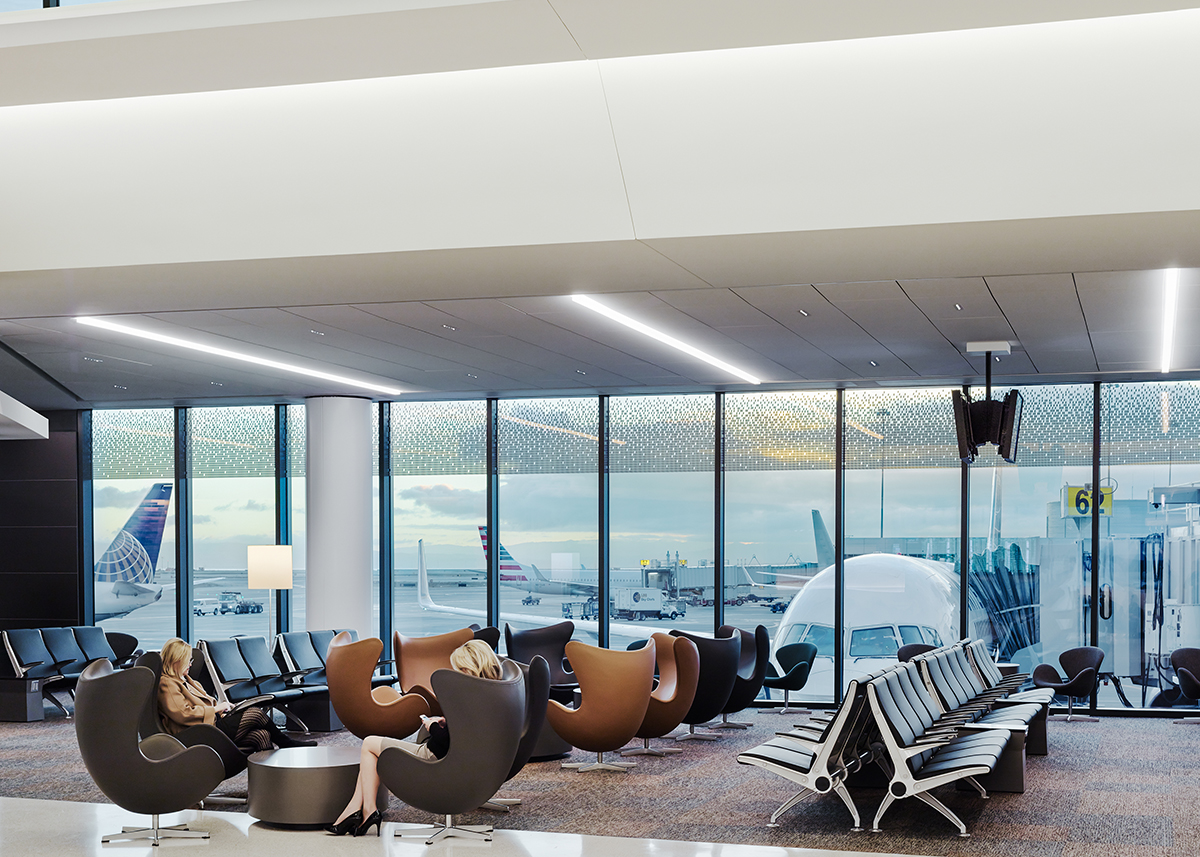
San Francisco International Airport, Boarding Area E by Gensler, San Francisco, CA, United States. Popular Winner, 2015 A+Awards, Transportation – Airports. © Joe Fletcher Photography

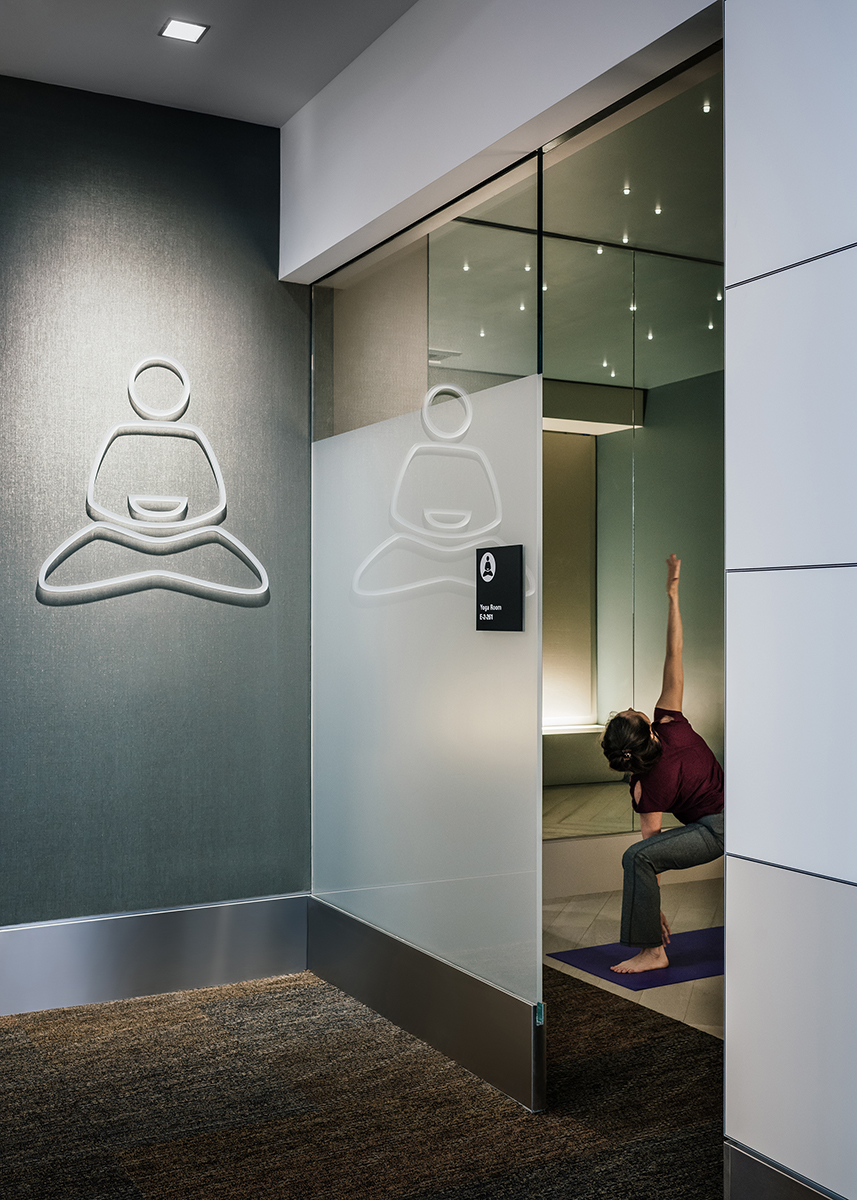
While aviation architecture continues to evolve, some designs were ahead of their time. Take San Francisco International Airport, Boarding Area E renovation for example. Back in 2014 design team, Gensler was commissioned to transform the airport’s Boarding Area E into a travel oasis — and they did just that. The design features passenger spaces that are not typically found in most airports. From private dressing rooms to yoga centers, this airport terminal truly encourages its passengers to unwind and take a moment for themselves.

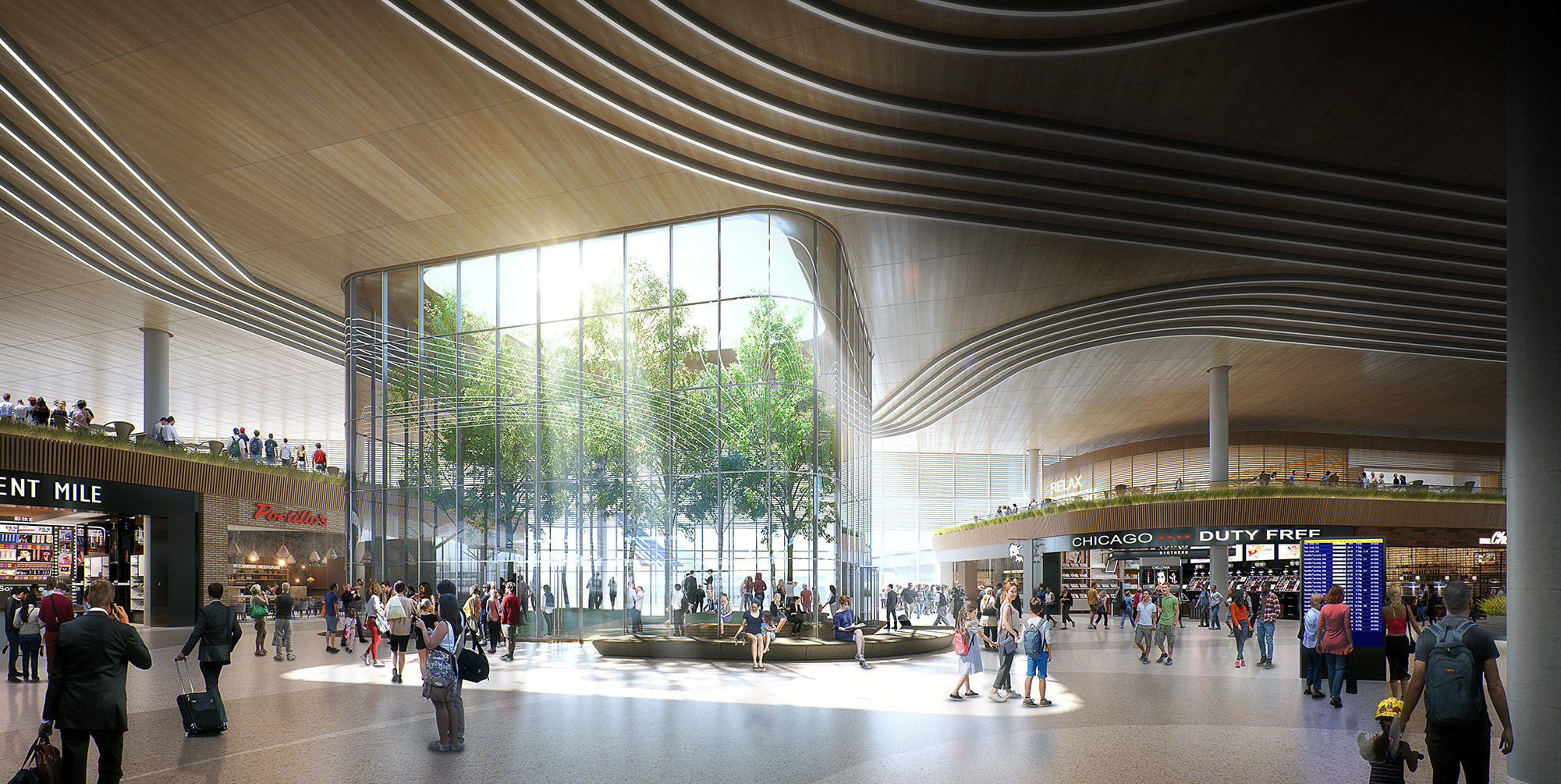
O’Hare Global Terminal by Skidmore, Owings & Merrill (SOM), Concept.

Meanwhile, the recently conceptualized Chicago O’Hare Global Terminal design revives the city’s spirit while prioritizing the passenger’s experience. In a collaborative effort by SOM, Ross Barney Architects and Arup, the team designed a terminal that incorporates atypical airport spaces: the outdoors. The gate’s dining, shopping and entertainment options reflect Chicago’s dynamic art and culinary scene. Meanwhile, passengers can unwind inside or outdoors. An open-to-the-sky concourse garden offers guests a chance to connect with the outdoors before boarding their plane. Surrounded by trees and hammocks, this atypical use of the outdoors facilitates relaxation by offering passengers a chance to breathe after making it past the stressful check-in and security lines.

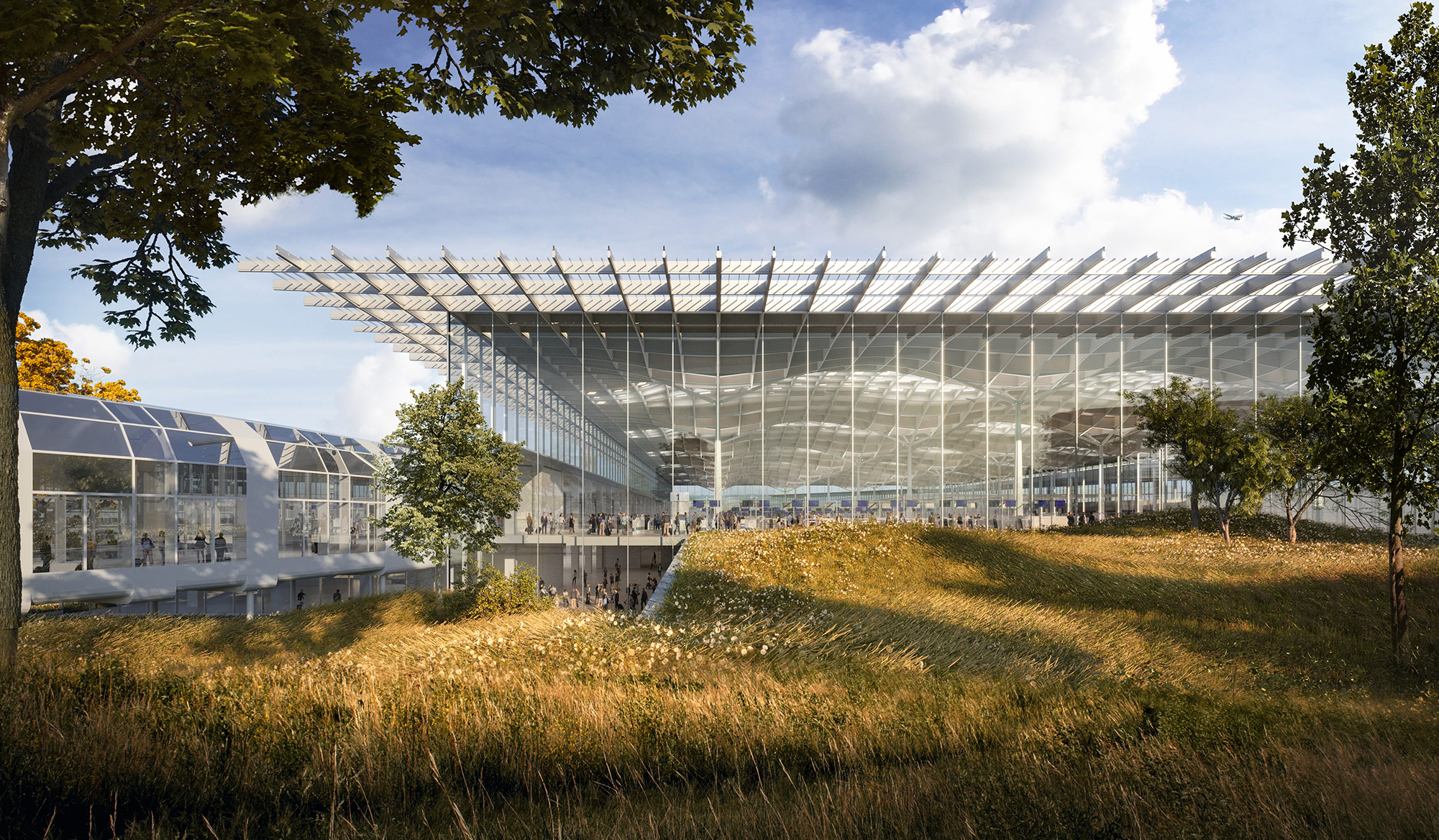
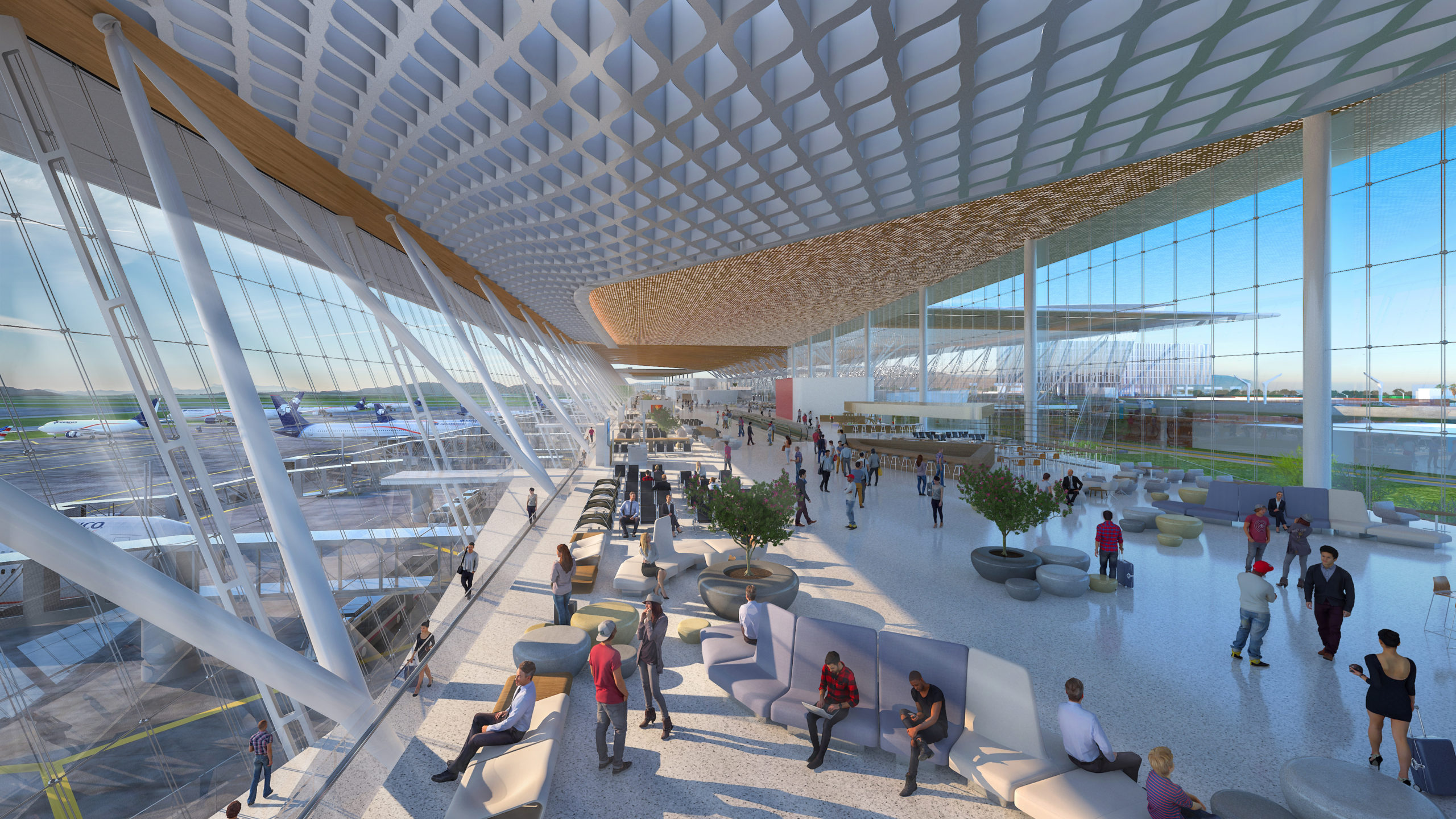
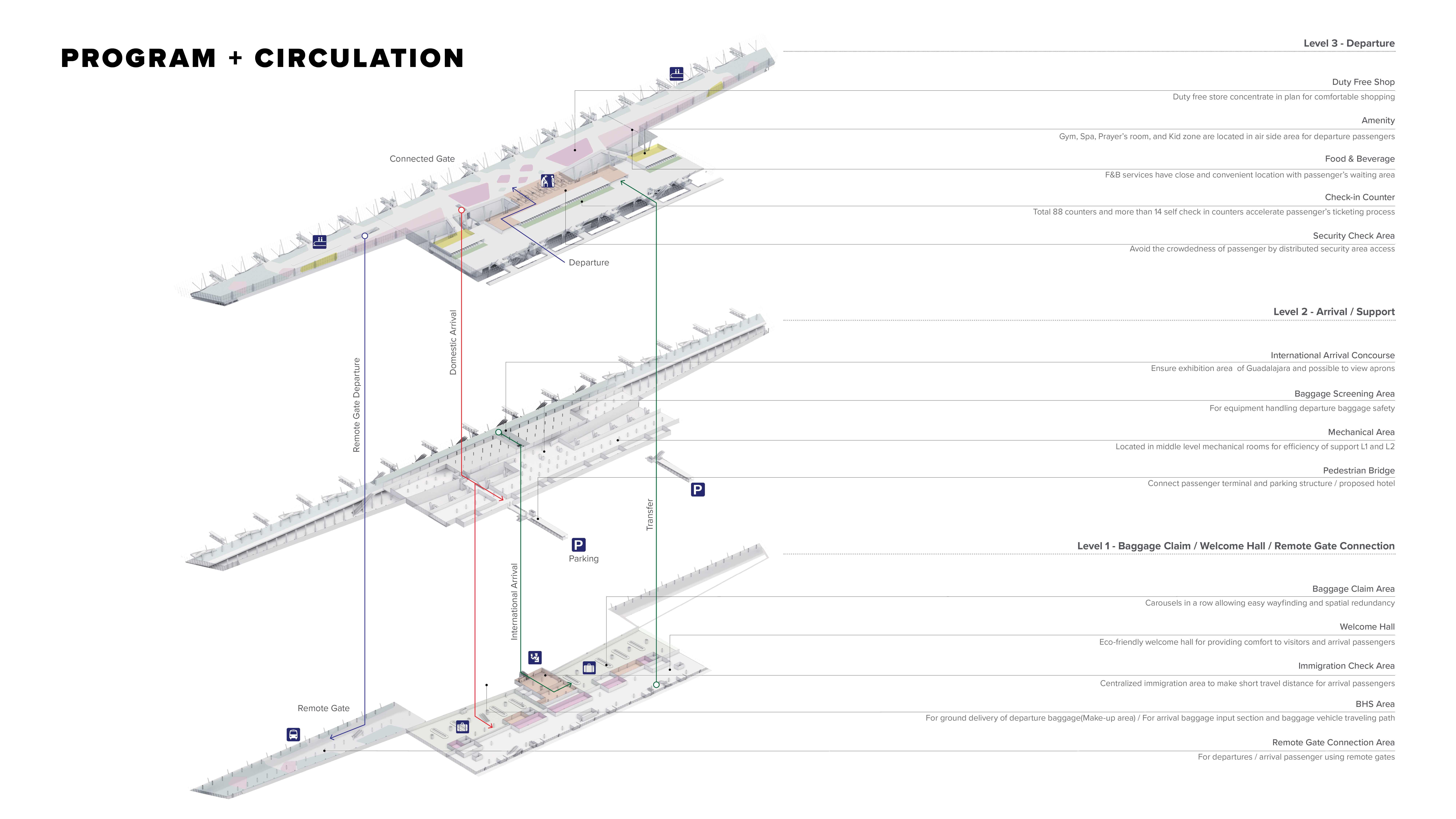
Guadalajara International Airport, Terminal 2 Concept by CallisonRTKL. Finalist, 2021 A+Awards, Transportation – Unbuilt Transportation

The Guadalajara International Airport Terminal 2 design concept equally promotes passenger experience. Conceptualized by CallisonRTKL, this design enhances the local Mexican culture and cuisine. Interior gardens, comfortable waiting lounges, pet care centers and family facilities – this airport was conceptualized to cover any and all possible passenger requests. The arts are also celebrated in this design. Virtual art galleries and live performance spaces house local dancers and offer passengers a chance to unwind through visuals displays.

Most airports were built before the digital era and prior to the COVID-19 pandemic. Upgrading and renovating old terminals and airport spaces is a massive undertaking and costs a pretty penny. But the pandemic has offered a moment to pause, and as large-scale projects start up once again, we see a shift in aviation architecture practices and a newfound prioritization towards enhancing the passenger experience. Ultimately, such shifts in design practices will help mitigate travel-related stresses and encourage passengers to relax whilst waiting to board.

Have your say in which architects will take home Architizer’s prestigious A+Awards: Public Voting opens this spring. Interested in next year’s program? Subscribe to our newsletter for updates.  

Reference

A guest bedroom in a London attic
CategoriesInterior Design

Loft conversions by architects that maximise usable space

Our latest lookbook shines a light on residential loft conversions from Dezeen’s archive, including rooftop extensions on existing dwellings and apartments built in underused attics.

Opening up the volume beneath the roof is a popular way of squeezing more space out of a dwelling or building. The new spaces often feature unusual geometries, which a skilled architect can exploit to create dramatic and characterful new rooms.

This is the latest roundup in our Dezeen Lookbooks series providing visual inspiration for the home. Previous articles in the series feature plant-filled interiors, colourful kitchens and stylish home-working spaces.


A guest bedroom in a London attic

West Heath Drive, UK, Alexander Martin

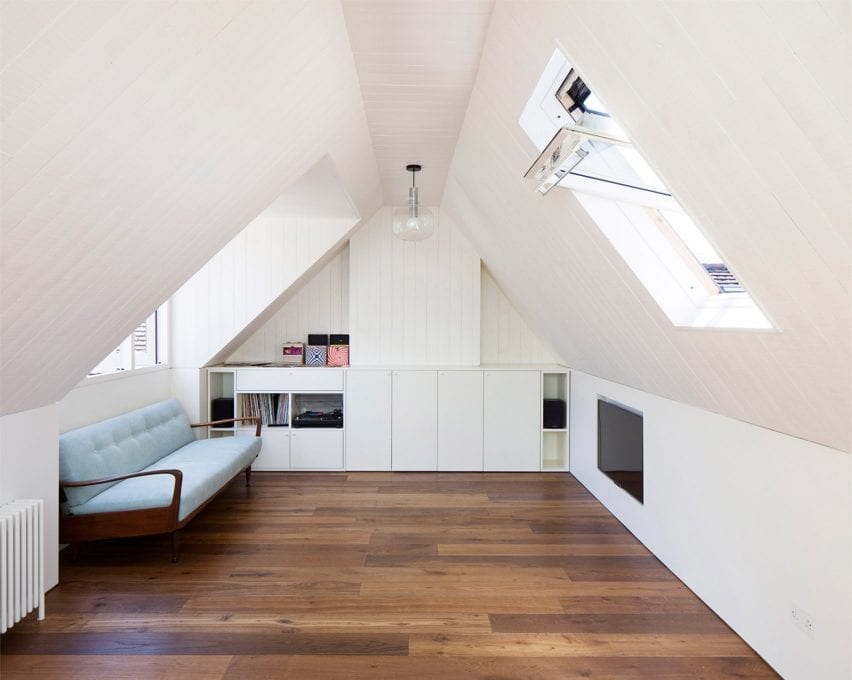
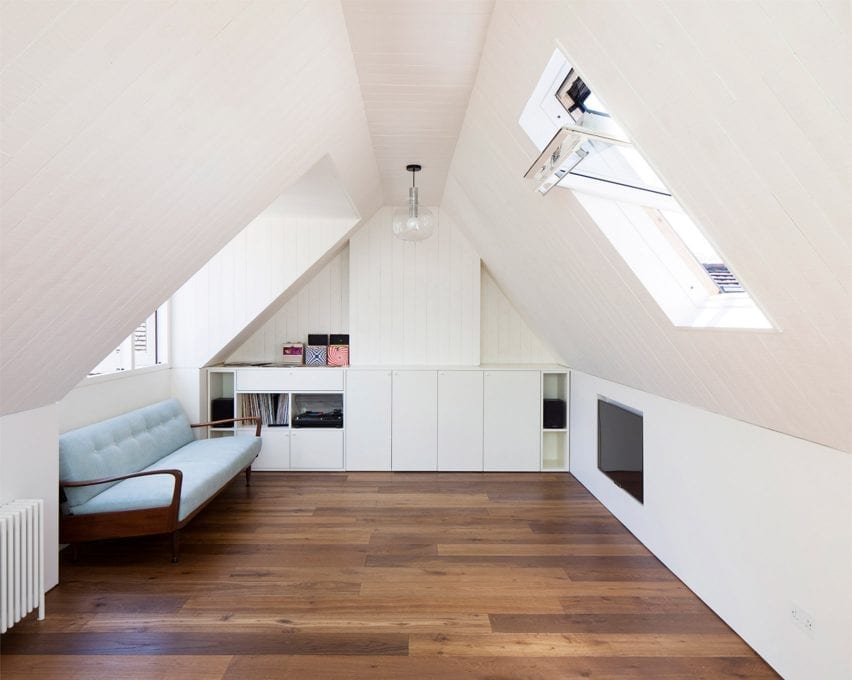
London architect Alexander Martin converted the disused loft of an Arts and Crafts-style house in Hampstead to create this pared-back and light-filled guest room and study.

It has a T-shaped plan and was therefore divided into three rooms – one of which is hidden behind a moving wall that is disguised as an integrated bookcase. The guest room is finished with white walls, a dark wooden floor and a vintage Greaves and Thomas teak sofabed.

Find out more about West Heath Drive ›


A bed deck in a loft apartment by Dodi Moss

House for a Sea Dog, Italy, by Dodi Moss

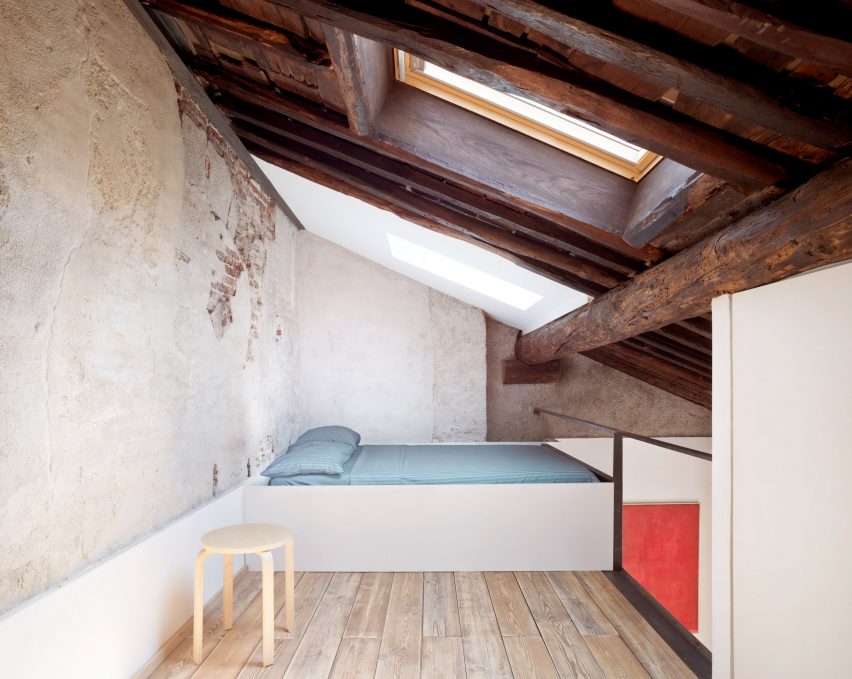
While renovating the loft of a 17th-century apartment block in Genoa, architecture and engineering studio Dodi Moss inserted a mezzanine floor that serves as a bed deck to maximise usable floor space under the eaves.

It has a rustic finish, characterised by an exposed wooden roof structure, unvarnished wooden floors and a rough plaster wall, and is furnished with a simple IKEA stool for use as a bedside table.

Find out more about House for a Sea Dog ›


A home office in a London loft

Dormore, UK, by Con Form Architects

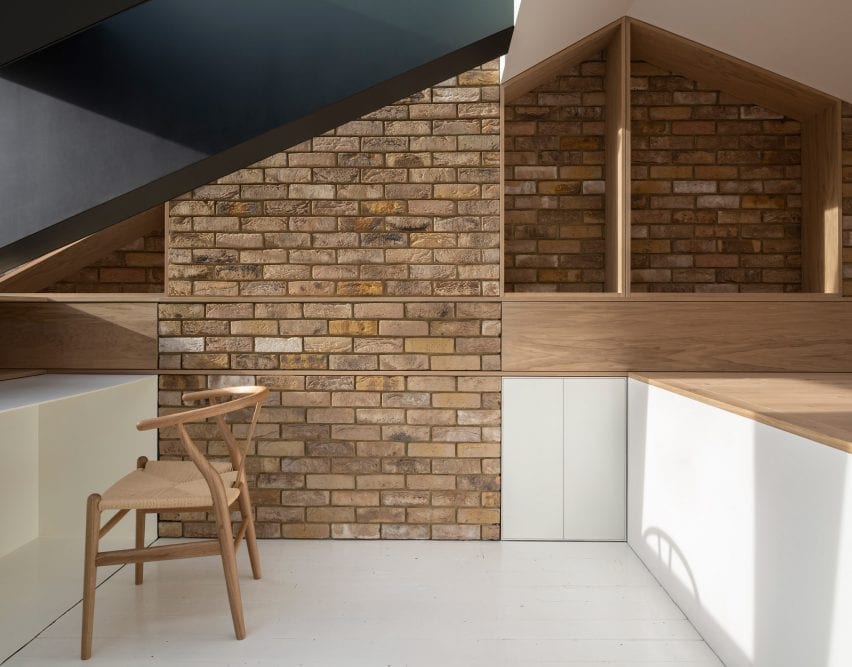
Dormore is a bright home office nestled within the small attic of a house in London, which was converted for a client who needed a space to work from home. A large slice was cut out of the original roof and filled with glazing and a large dormer window to bring light inside.

It is accessed by a compact folded steel staircase and finished with oak joinery and a whitewashed floor, alongside exposed brick walls and a Hans Wegner Wishbone Chair.

Find out more about Dormore ›


A loft apartment in Prague

Rounded Loft, Czech Republic, by A1 Architects

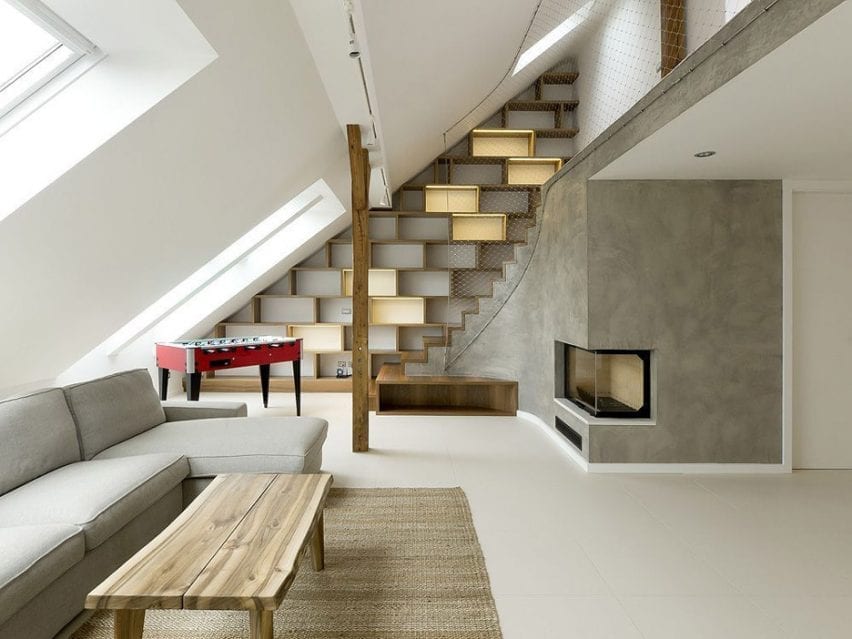
Czech studio A1 Architects built a two-storey apartment within the attic of an apartment block in Prague. Its living room, which occupies the lower level, is lit by windows slotted within the attic’s sloping roof and finished with tactile wooden furnishings and grey plaster walls.

The lower level also contains bedrooms and is linked to a guest suite on the small upper floor by a staircase lined with wooden bookshelves and a steel net that takes the place of a bannister.

Find out more about Rounded Loft ›


A plywood-lined bedroom in the loft of a London home

Maynard Road, UK, by Widger Architecture

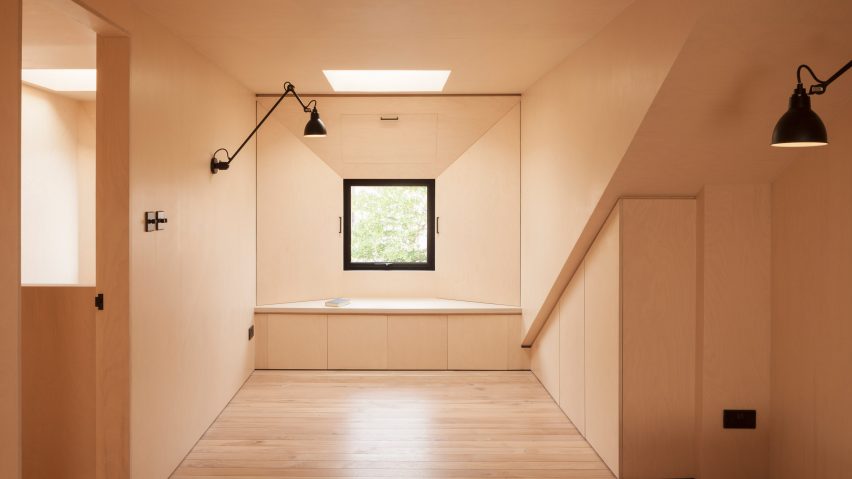
A pair of minimalist bedrooms lined with plywood occupy the old attic of this first-floor flat in Hackney, which was converted by London studio Widger Architecture.

As the attic had a sloped roof with limited head height, the architect introduced a flat roof dormer that spans the entire width of the property. While maximising headroom, it also allowed the studio to introduce more windows to invite more light inside.

Find out more about Maynard Road ›


A white-walled loft apartment

Alpine Apartment, Slovenia, by Architektura d.o.o.

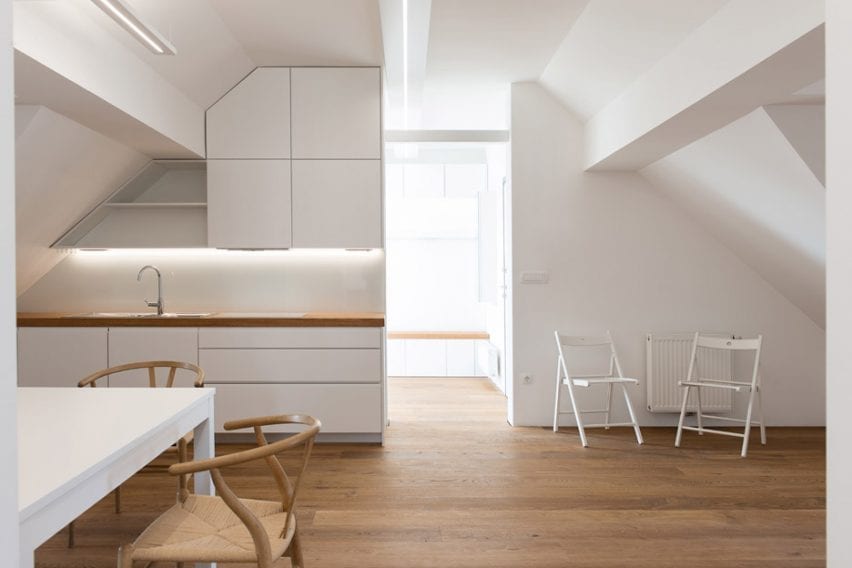
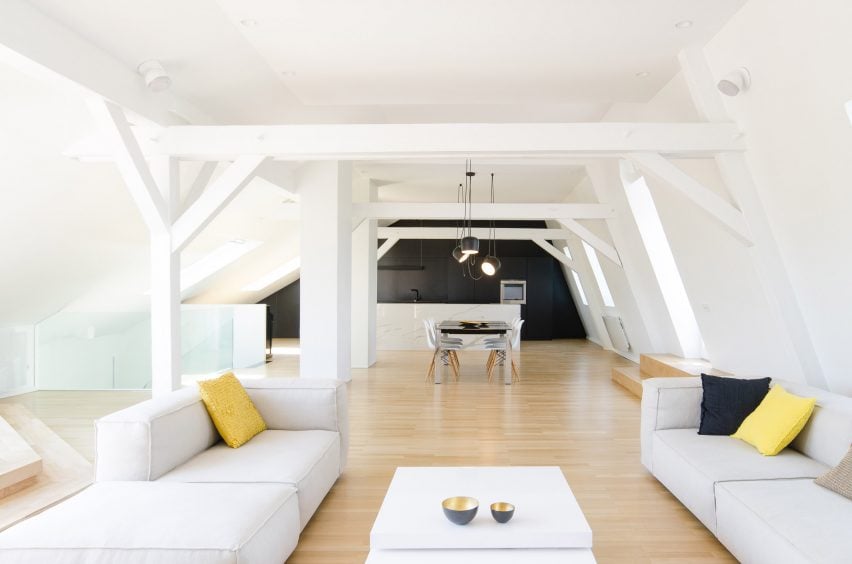
This loft space was converted into a two-bedroom apartment by Slovenian studio Architektura d.o.o. for the client to use as a family holiday home in the lakeside town of Bled.

At the centre is a kitchen, flanked by two bedrooms, a living room and an entrance hall. As the kitchen has no exposure to natural light the living room entrance has no door, in order to help illuminate the space.

The home is complete with white custom-built furniture that aligns with the irregularly shaped attic ceiling, while pale wooden floorboards nod to the home’s Alpine setting. These finishes are complemented by wooden Wishbone Chairs by Hans Wegner and white folding chairs from IKEA.

Find out more about Alpine Apartment ›


A plywood-lined reading room

Gallery House, UK, by Studio Octopi

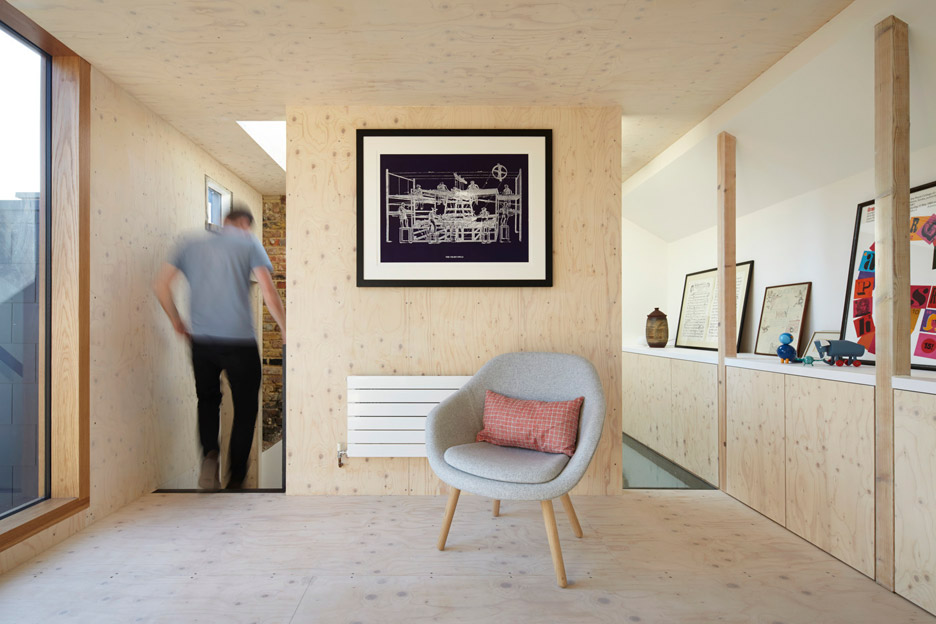
London architect Studio Octopi renovated and extended the dead space below the pitched roof of this terraced Victorian house in Battersea to create a separate reading room and study.

The two rooms are unified by a perforated black steel staircase and their matching spruce plywood walls and floors. Pared-back furnishings are dotted throughout, including a pair of About A Lounge Chairs by Hay in the reading room.

Find out more about Gallery House ›


A bed in a converted attic in Belgium

Attic conversion in Antwerp, Belgium, by Van Staeyen Interieur Architecten

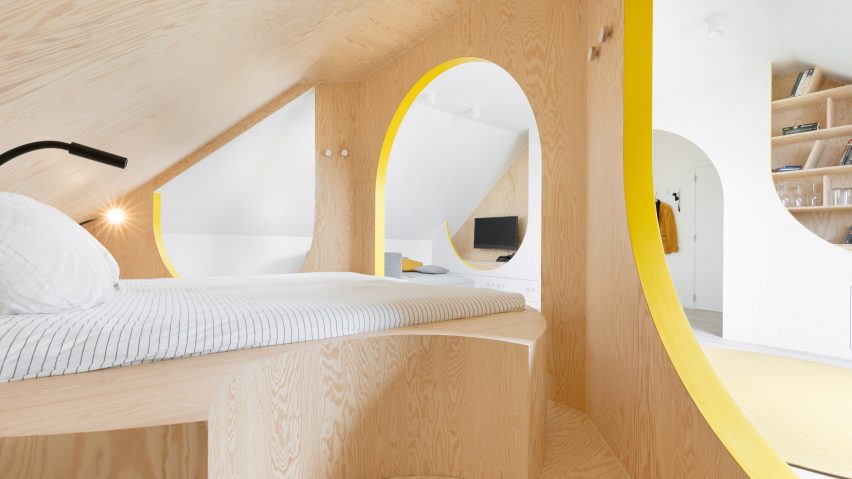
A dark attic that was used for storage was converted into this bright multi-functional room at a house in Antwerp. It contains a bed, seating area and bathroom defined by spruce-clad partitions with arched portals, curved seating and yellow detailing.

It was designed by Van Staeyen Interieur Architecten for the clients to use as a guest room and a social space for their daughters to spend time with their friends as they get older.

Find out more about Attic conversion in Antwerp ›


A reading room in a dormer extension

Project Escape (to the Roof), UK, by A Small Studio

Architecture practice A Small Studio created a reading room, bedroom, dressing room and bathroom for a family within the loft of their Victorian home in south-east London.

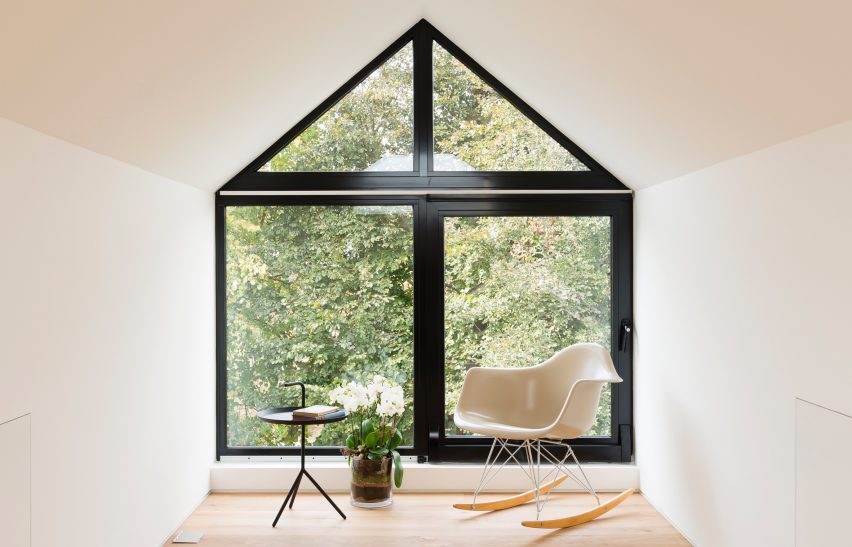
Between the bathroom and reading room, there is also a new free-standing solid oak stair that helps bring light into the lower levels of the home. Three large dormer windows on one side of the loft frame views of the back garden.

The conversion’s focal point is its reading room, which is complete with a Plastic Armchair RAR by Charles and Ray Eames and a black DLM side table by Hay.

Find out more about Project Escape (to the Roof) ›


A white-walled attic conversion in France

Attic conversion, France, by F+F Architects

This spacious light-filled apartment was built by Parisian studio f+f architects by converting the attic of an art nouveau building in Strasbourg. Over two levels, it comprises bedrooms, bathrooms and an office, alongside an open-plan living space with a kitchen, dining area and terrace.

The attic’s original pine flooring was preserved and treated with lye, an alkali used to lighten wood, while existing trusses have been painted white and left exposed throughout.

Find out more about this attic conversion ›


This is the latest in our series of lookbooks providing curated visual inspiration from Dezeen’s image archive. For more inspiration see previous lookbooks showcasing colourful interiors, calm living rooms and colourful kitchens.

Reference

First floor window seat in Puppeteers House by REDO Architects
CategoriesInterior Design

REDO Architects creates new interior for Puppeteers House in Sintra

REDO Architects had stage sets in mind when redesigning the interiors for a pair of houses in the former Puppeteers’ Quarter in Sintra, Portugal.

The two homes, now known as Puppeteers House, are part of a series of buildings that were originally built for a local puppeteer’s family, but had more recently been used as storage for farming tools.

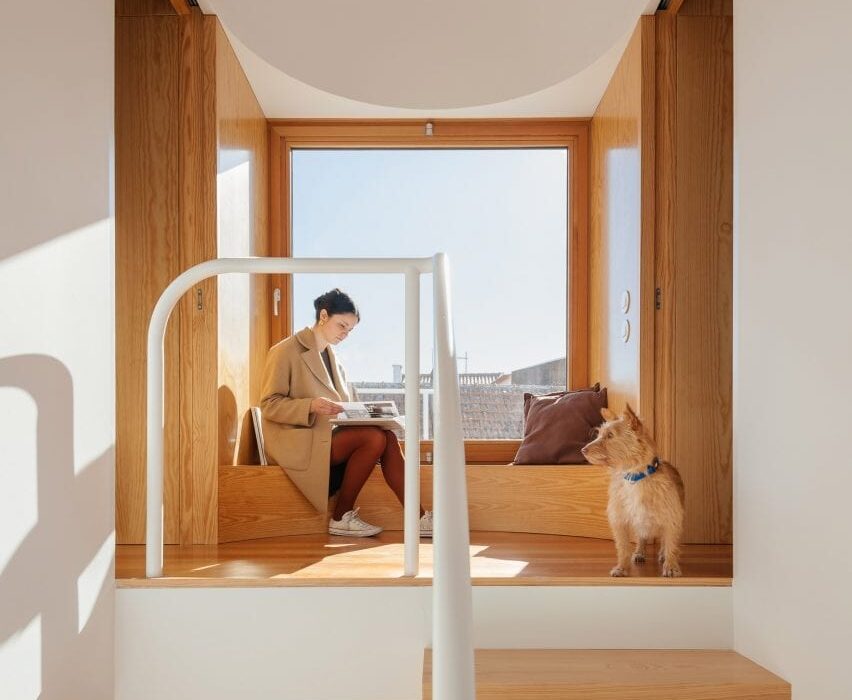
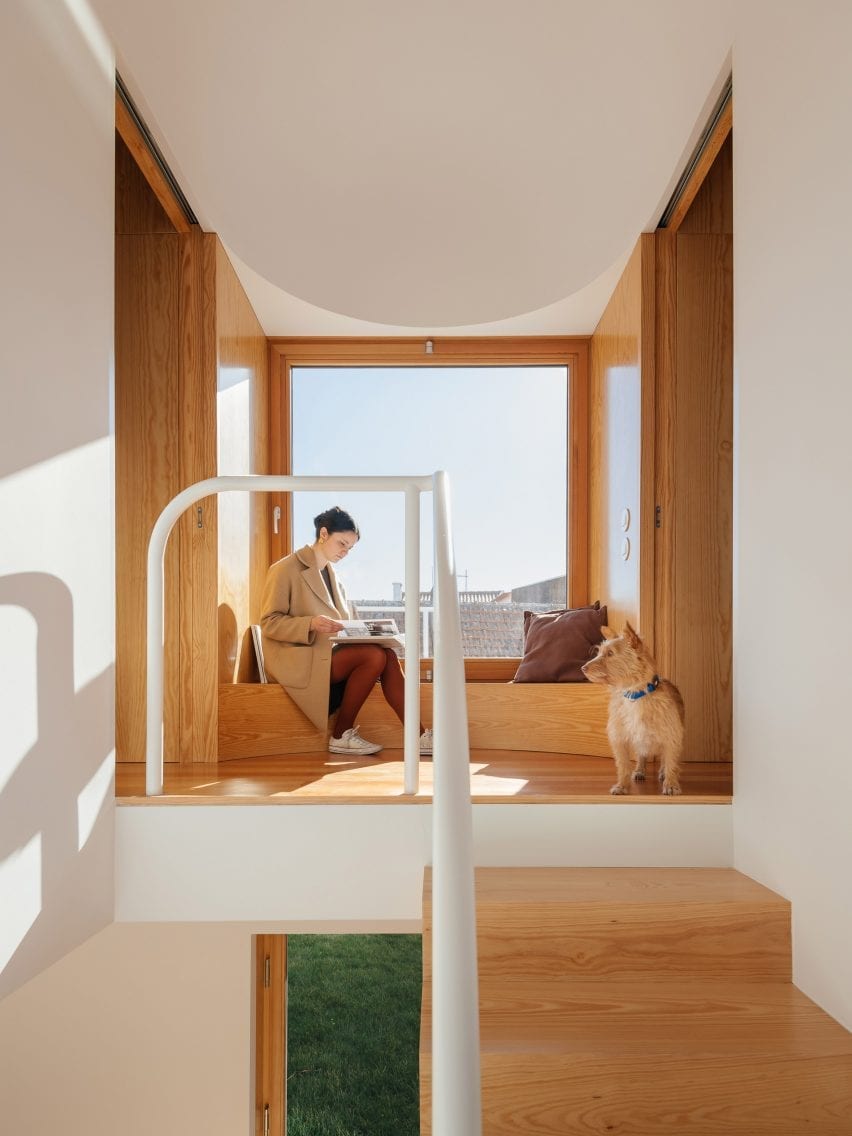
First floor window seat in Puppeteers House by REDO Architects
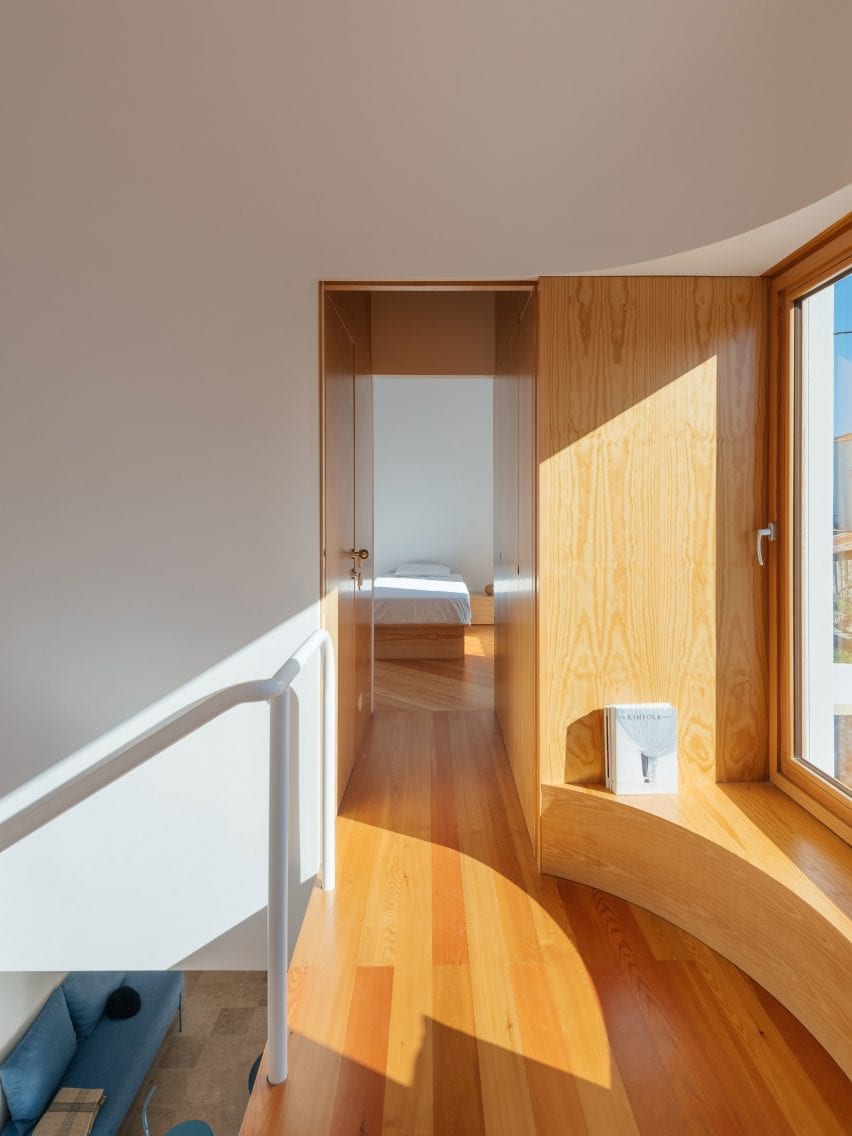
A curved wooden bench creates a window seat on the first-floor landing

With its renovation, Lisbon-based REDO Architects has brought the buildings back into residential use as homes for two of the puppeteer’s great grandchildren.

The revamped buildings are designed to capture the spirit of their heritage, with lightweight wooden joinery constructions that evoke theatrical scenography and circular details that suggest a playful character.

Window seat in Puppeteers House by REDO Architects
Bathrooms are concealed within the wooden joinery

An all-new interior layout was needed, so this was designed to reinforce the theatrical feel.

Elements like the staircase and first-floor window seat have a stage-like quality, while secondary spaces like bathrooms are concealed within the walls.

Puppeteers House by REDO Architects
The larger house contains a dedicated kitchen and dining space

“The relation between the existing external walls and the new interior walls – two different skins – was explored and dramatised throughout the project on different scales,” explained studio founder Diogo Figueiredo.

“This friction generated misalignments, which are expressed in the windows as opaque panels,” he told Dezeen, “and it also created in-between spaces for built-in furniture and bathrooms, like a back-of-stage area.”

Courtyard in Puppeteers House by REDO Architects
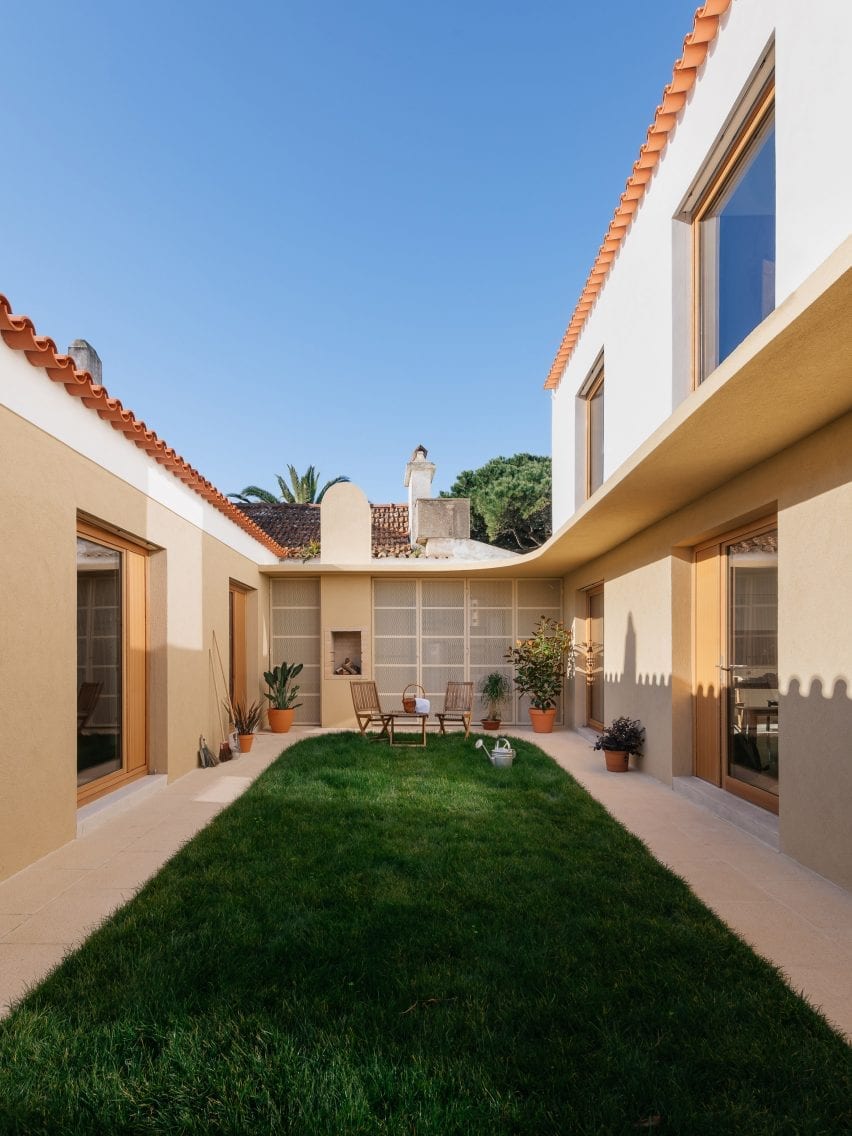
The homes sit on opposite sides of a garden courtyard

One of the houses is single-storey, the other is double-storey, and they are located either side of a private courtyard.

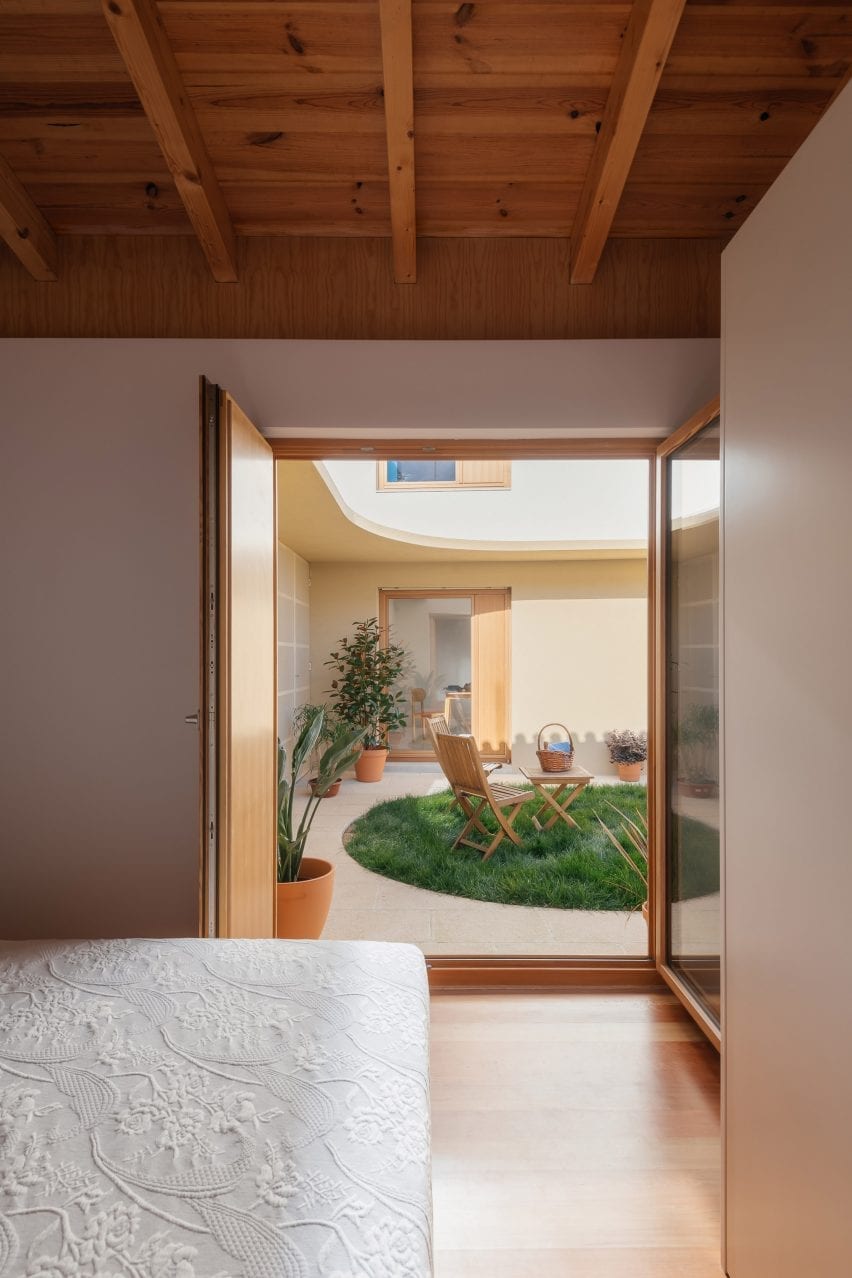
The buildings are designed to function as self-contained properties, but they are also very open to one another, with large windows fronting the shared courtyard garden.

Bedroom in Puppeteers House by REDO Architects
The smaller property contains one bedroom on the ground floor

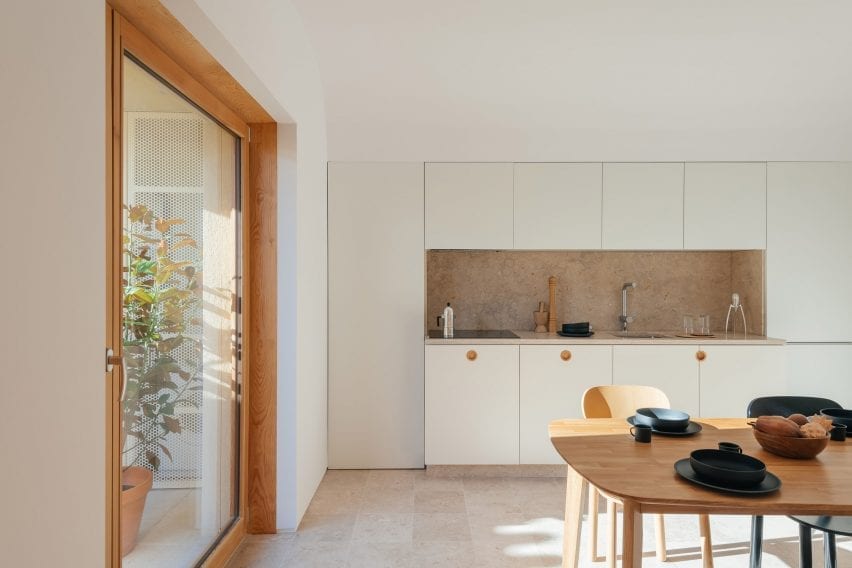
The smaller of the two homes contains a living space with a kitchenette, a separate bedroom and a bathroom.

The other home has a similar layout, with a living room and a separate kitchen and dining space on the ground floor, and two en-suite bedrooms upstairs.

Curved wall in Puppeteers House by REDO Architects
Living spaces feature lioz stone flooring

A consistent materials palette features throughout. An ivory-toned regional stone known as lioz was used flooring in the main living spaces and surfaces for the kitchen and bathrooms.

Flooring in the bedrooms is wood, matching the doors, furniture and shelving that feature throughout the two homes.

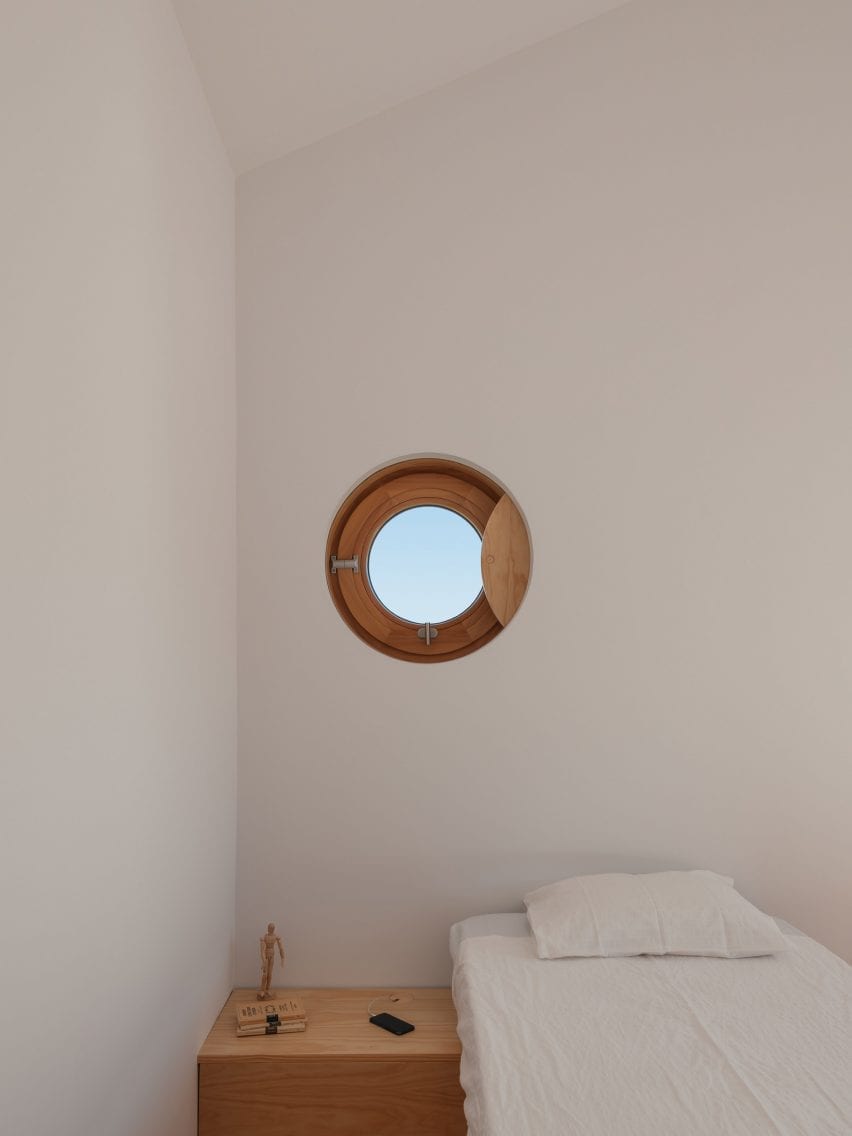
Circular details feature throughout the interiors, at a range of scales. Some are full circles, like the porthole window and cabinet handles, while others are large curves, like the window seat or the rounded wall partitions.

“We used a precise quarter of a circle as a tool – like a compass – in different radii, orientations, combinations and materialities,” explained Figueiredo.

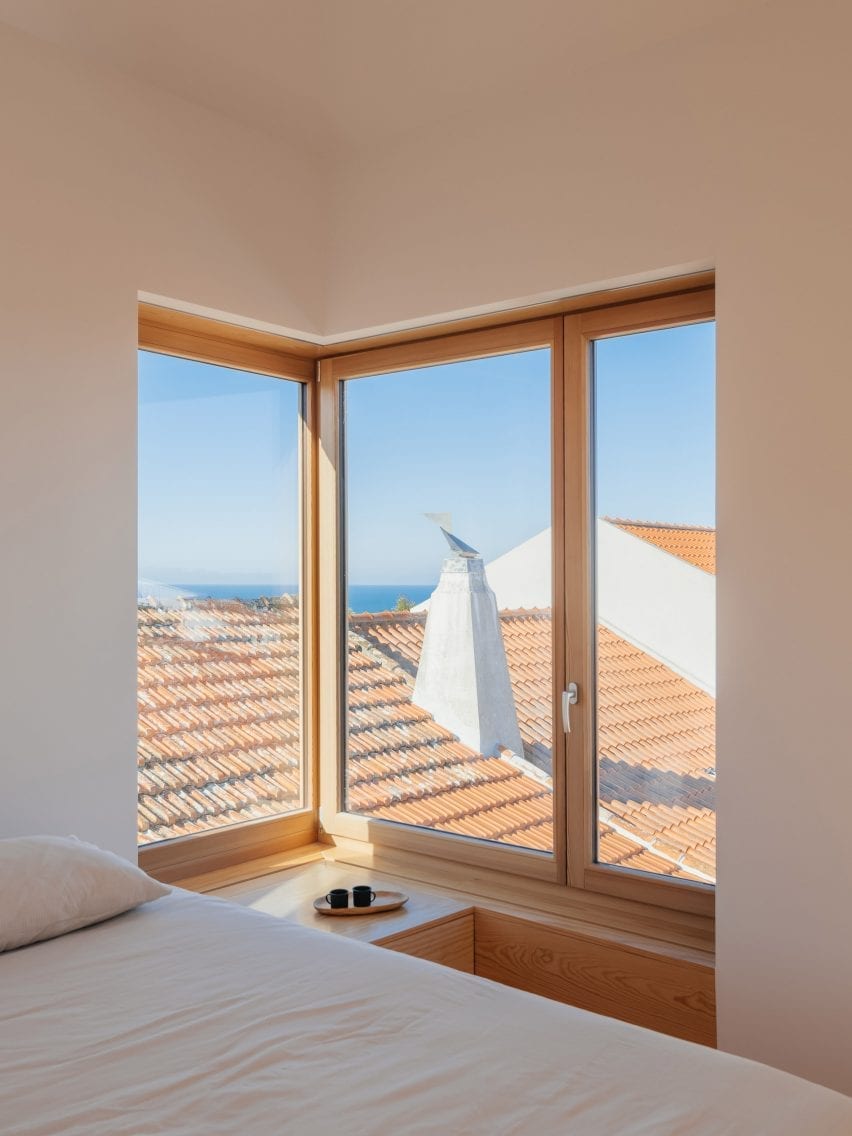
Bedroom in Puppeteers House by REDO Architects
The main first-floor bedroom features a corner window

“It was explored in different moments of the project: to differentiate and disconnect the new internal layer from the existing walls, to connect different rooms, and to create smooth circulation routes,” he said.

Many of these curves are mirrored in ceiling details directly overhead, which contrast with the linearity of the exposed roof beams.

Porthole window in Puppeteers House by REDO Architects
The second first-floor bedroom features a porthole window

Other recent examples of house renovations in Portugal include House in Fontaínhas, a home with candy-coloured details, and Rural House in Portugal, a house created in an old granite community oven.

Photography is by Do Mal o Menos.


Project credits

Architect: REDO Architects
Project team: Diogo Figueiredo, Pedro França Jorge

Reference

White Brooklyn apartment kitchen renovation with tiles
CategoriesInterior Design

Schissel Montgomery Architects renovates Brooklyn flat for art gallerist

New York City-based architecture office Schissel Montgomery has completed a minimalist renovation of a three-bedroom apartment in the Park Slope neighbourhood.

Named Wendy’s, the studio decluttered the 1,300-square-foot (120-square-metres) apartment’s living spaces to create “a quiet, generous background for art and life”.

Schissel Montgomery Architects also converted one of the bedrooms facing the street into a study.

White Brooklyn apartment kitchen renovation with tiles
The kitchen uses only lower cabinets to create a sense of openness

The renovation centres around a new kitchen, which is partially open to the living and dining space. Previously, these two areas were separate.“The intervention focuses on creating connections between the shared spaces of the apartment and selectively removing materials accreted over time,” said the studio.

Brooklyn apartment living room with minimalist furniture
A key move was to declutter the apartment’s living room

A new banquette along the wall integrates storage beneath the seat while consolidating the previously separate spaces.

At the end of a corridor, the studio repurposed an existing bedroom to create a study for the owner. Furniture selections here include a table by midcentury designer Eileen Gray and a Barcelona Daybed by Ludwig Mies van der Rohe.
Since the apartment is at street level, Schissel Montgomery designed sheer fabric curtains to cover the bottom portion of the windows.

This gives residents more privacy, while still admitting light into the space.

Office with Mies van der Rohe Barcelona daybed
The new study occupies a former bedroom at the far end of the apartment

The project has a restrained palette with light wooden floors, white painted walls and selectively curated furnishings and artwork.

“The intervention focuses on creating connections between the shared spaces of the apartment and selectively removing materials accreted over time,” Schissel Montgomery explained.

Brooklyn apartment foyer with built-in closets
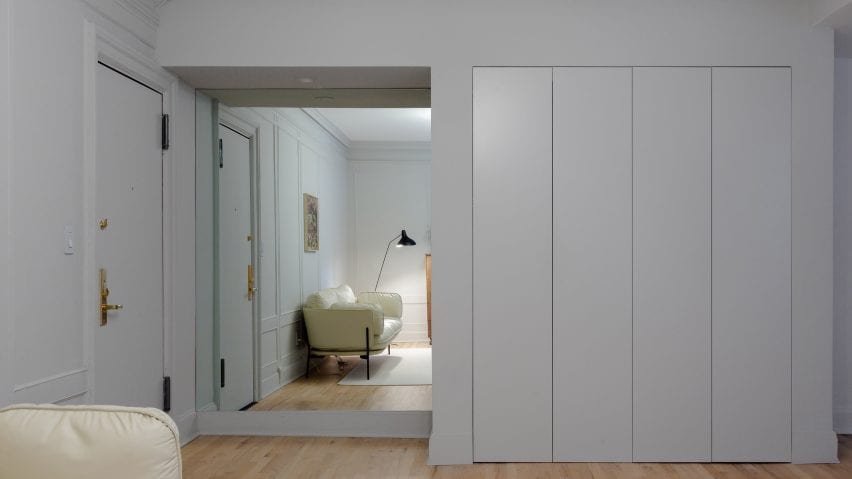
The entrance includes a full-height mirror and built-in storage

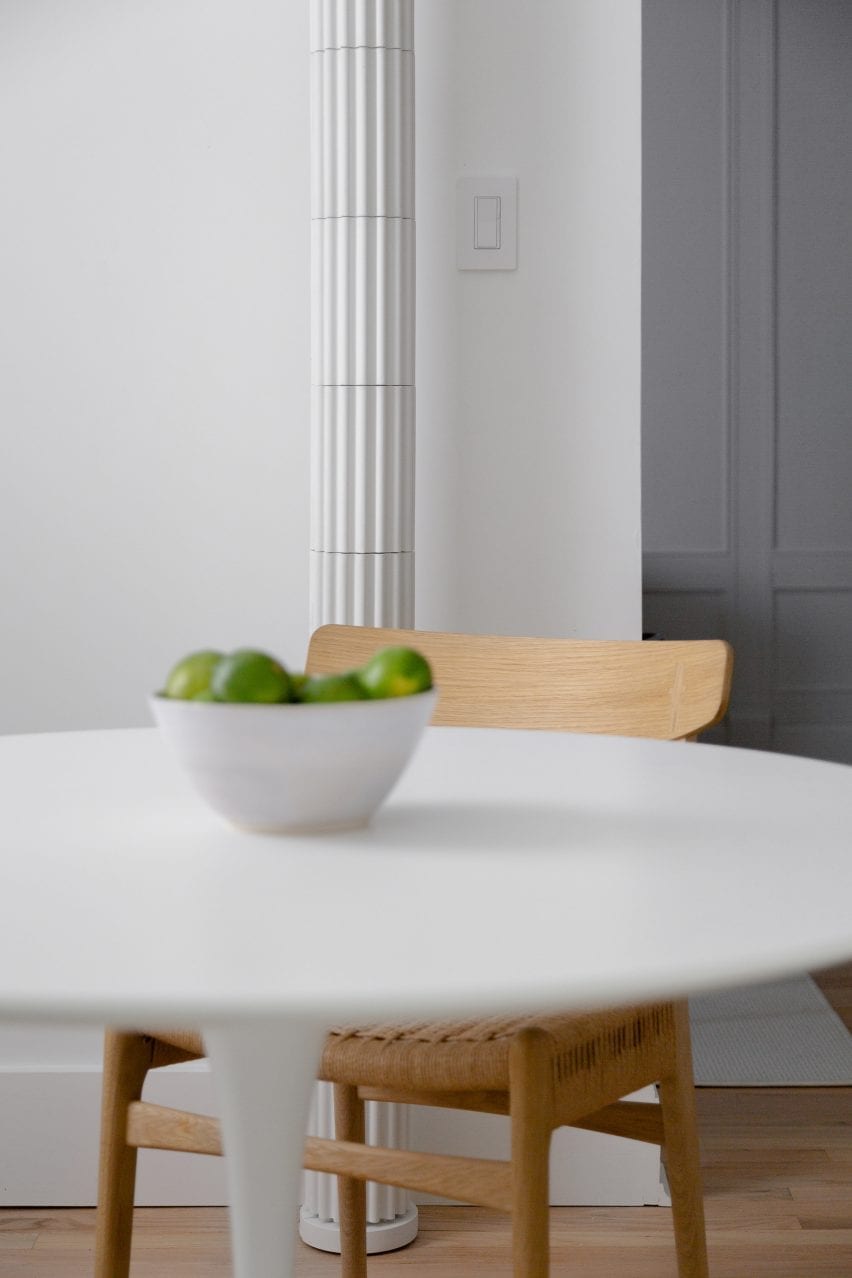
Custom details include a handmade concrete enclosure to protect the building’s steam pipe.

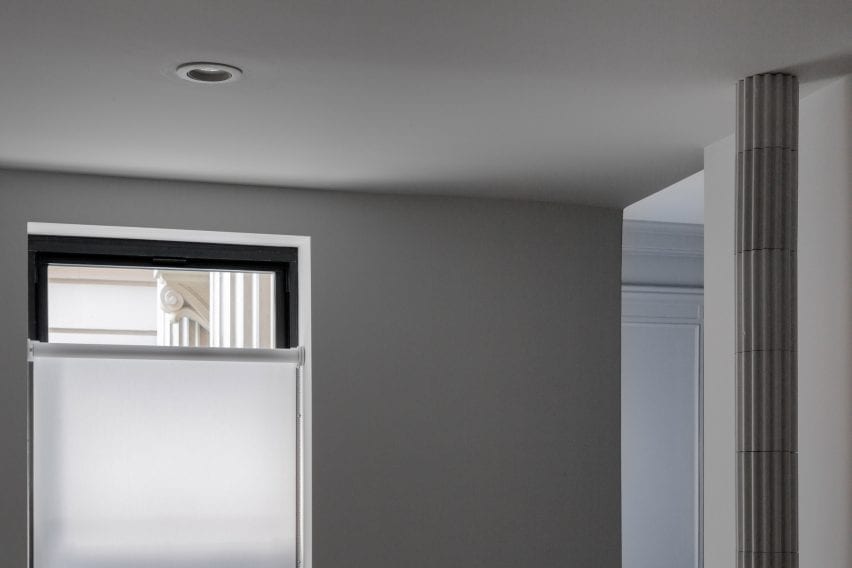
It is made of stacked, textured cylinders that resemble a classical column’s fluting motif.

Brooklyn kitchen dining table with custom pipe cover
Custom details include a concrete sleeve to cover the building’s steam pipe

Another additional at the apartment’s entrance is a floor-to-ceiling mirror that was to expand the space and brings more light to a darker area of the apartment.

“The intervention uses painted surfaces, whitewashed floors and window sheers to maximise bounced light in the space,” explained Schissel Montgomery.

Renovated Brooklyn apartment with custom classical details
The pipe enclosure nods to similar classical columns visible from within the apartment

These pipes are left exposed in many New York City apartments and can become so hot that they are hazardous to residents, in addition to being unsightly.

Schissel Montgomery was established in 2019 and is led by two graduates of Columbia University’s architecture school, Michael Schissel and Talene Montgomery.

Other apartment renovations in the Brooklyn area include a townhouse by GRT Architects that is filled with eclectic art objects and a monochrome interior renovation by local firm Arnold Studio.

Photography is by Daniel Terna.


Project credits:

Architect: Schissel Montgomery Architects
Construction: WK Renovation

Reference