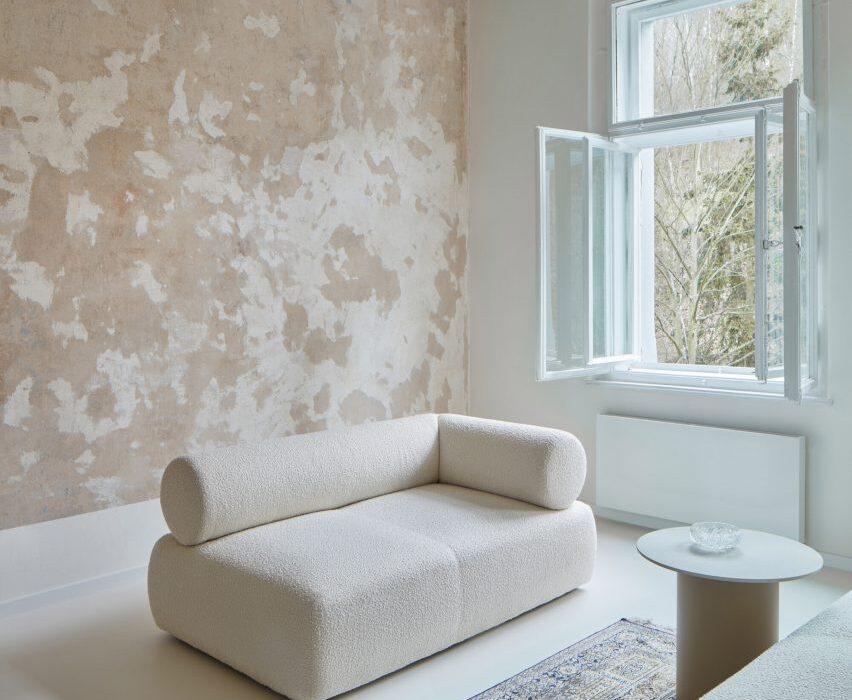
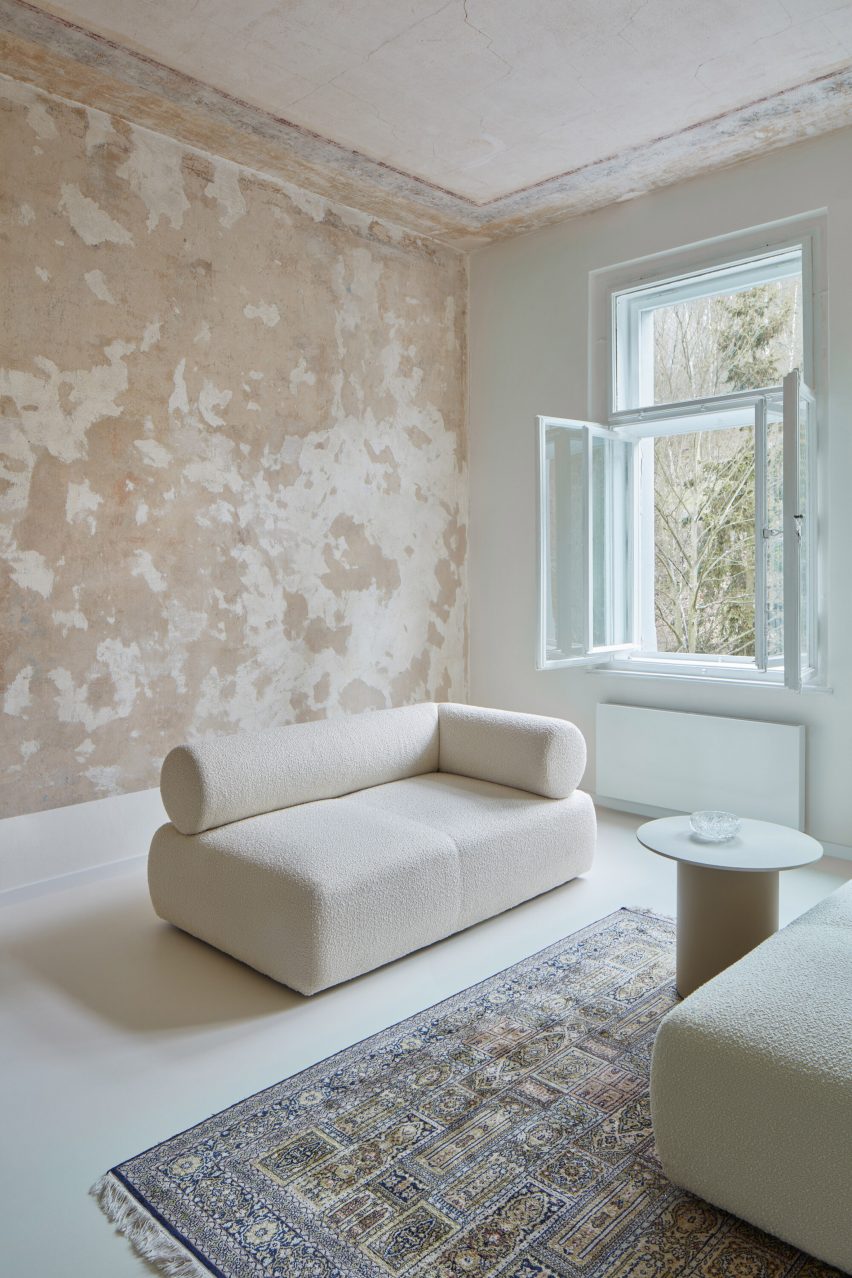
Living room with patchy brown and beige paintwork
CategoriesInterior Design

Plus One Architects uncovers paintwork of century-old Czech apartment

Prague studio Plus One Architects has restored the “original splendour” of this 1902 apartment in Karlovy Vary, Czech Republic, by reinstating some of its original features.

Located in a turn-of-the-century apartment block, the two-bedroom flat was renovated by Plus One Architects, who exposed the original paintwork present on the walls and ceilings.

Living room with patchy brown and beige paintworkLiving room with patchy brown and beige paintwork
The Karlovy Vary Apartment features minimal furnishings

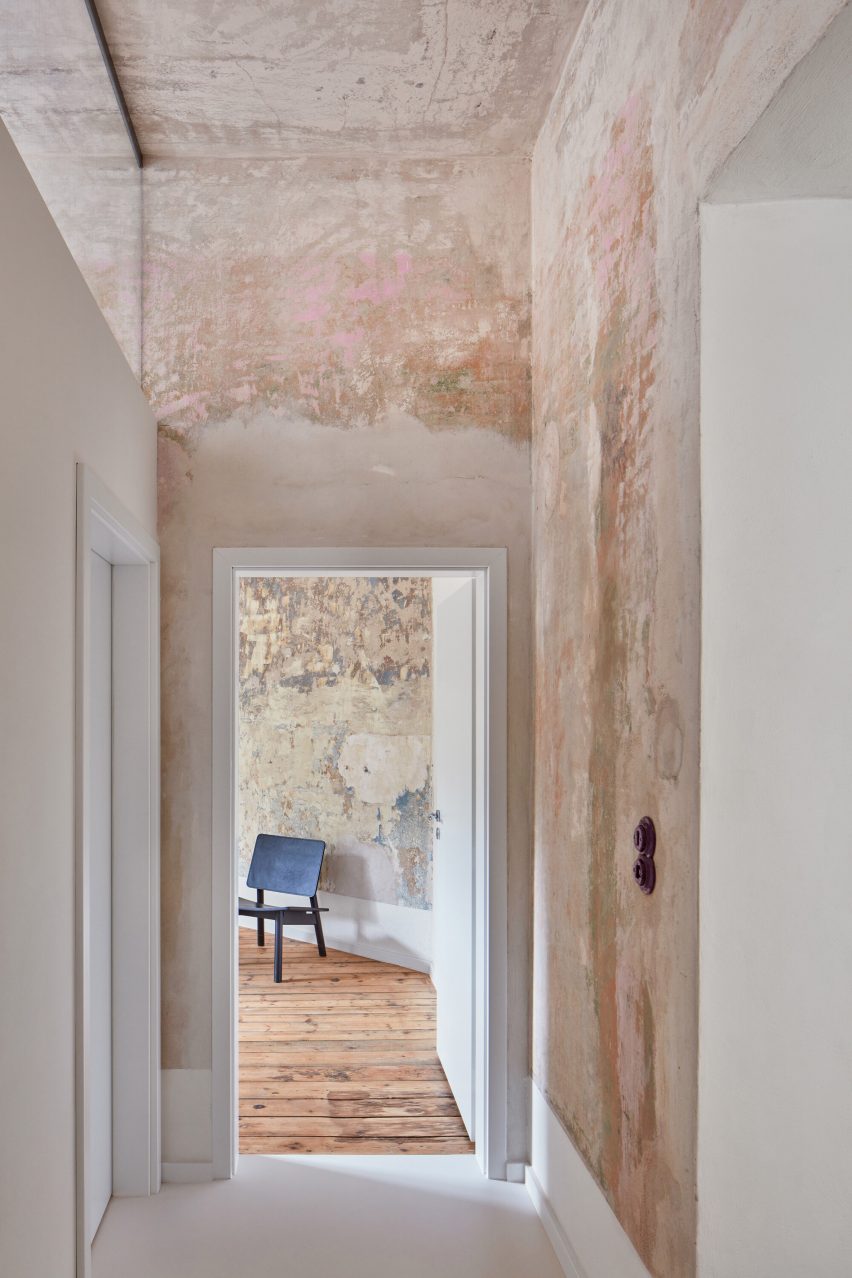
The studio also streamlined the circulation inside the apartment by removing doors to open up pathways, as well as undoing dated additions that had been installed over the top of the original walls and floors.

“We think the first renovation was probably done in the late 70s,” architect Kateřina Průchová told Dezeen. “It was full of wooden cladding on the walls, a lot of doors and carpet that covered the original floors.”

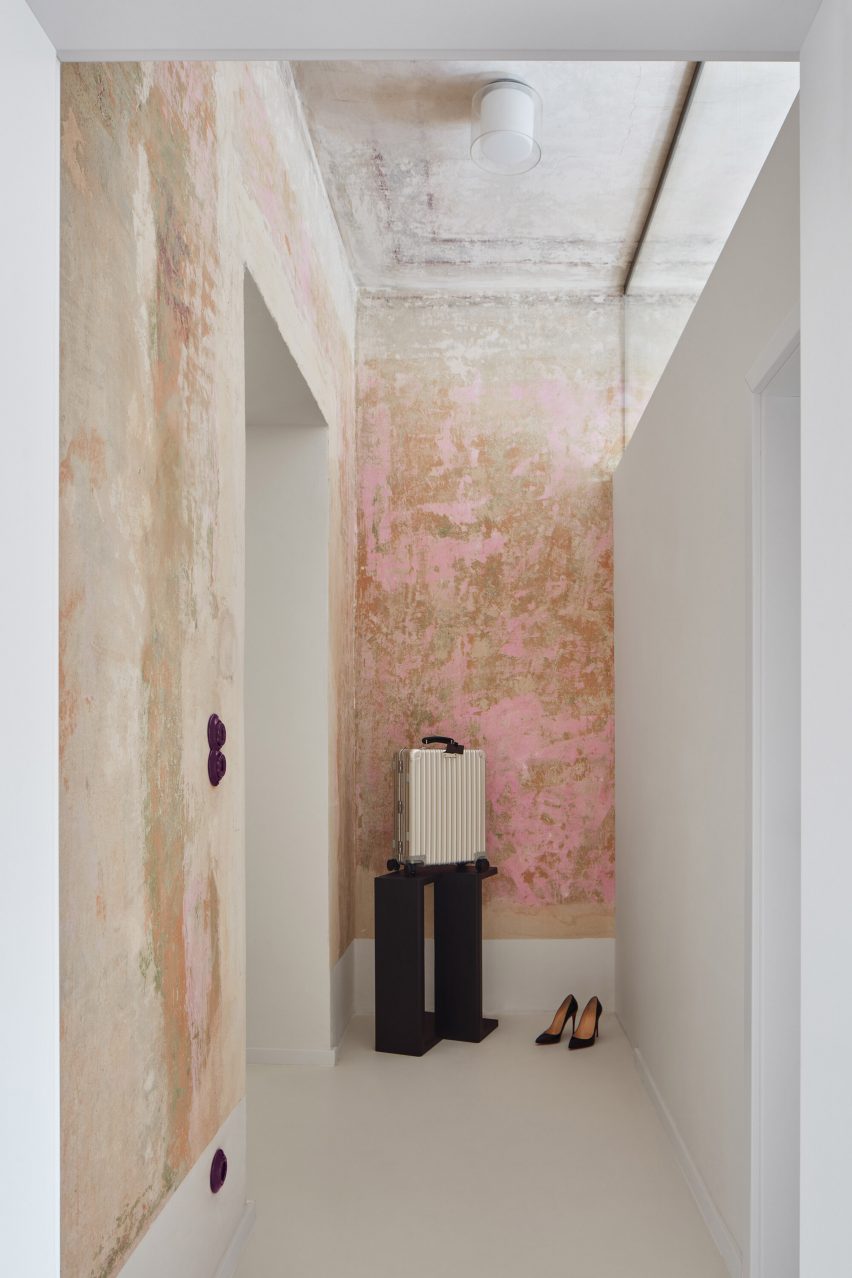
Corridor with flaky pink paintworkCorridor with flaky pink paintwork
Transom windows let light flood through the rooms

The revamped interior has a bright, airy atmosphere, as natural sunlight comes in through the large unobstructed windows and continues deeper into the rooms thanks to the addition of transom windows on some of the interior walls.

Remnants of colourful mottled paintwork appear on the walls and ceilings alongside brown and beige sections of plaster.

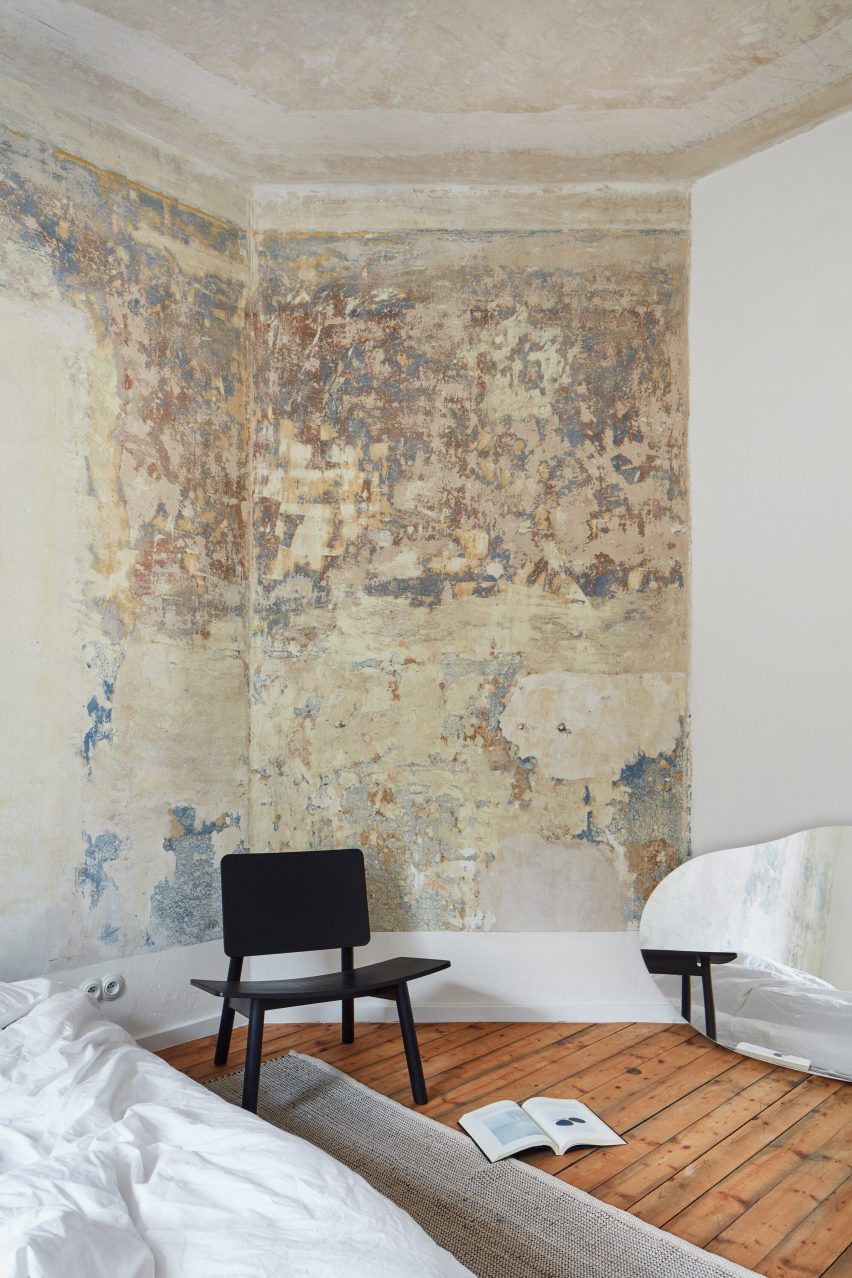
Chair in front of mottled painted wallChair in front of mottled painted wall
Mottled blue and yellow paintwork decorates the primary bedroom

Neutral-coloured paint and plasterwork feature in the kitchen and living room, where Plus One Architects retained the apartment’s original masonry heater clad in glossy brown tiles.

Painted details are also apparent on the ceiling, with concentric bands of red, blue and yellow delineating the perimeter of the room.

Doors were removed to improve the flow between spaces

Pink paint appears in the corridor and smaller bedroom while blue paintwork can be seen in the primary bedroom, complementing the restored wooden floorboards.

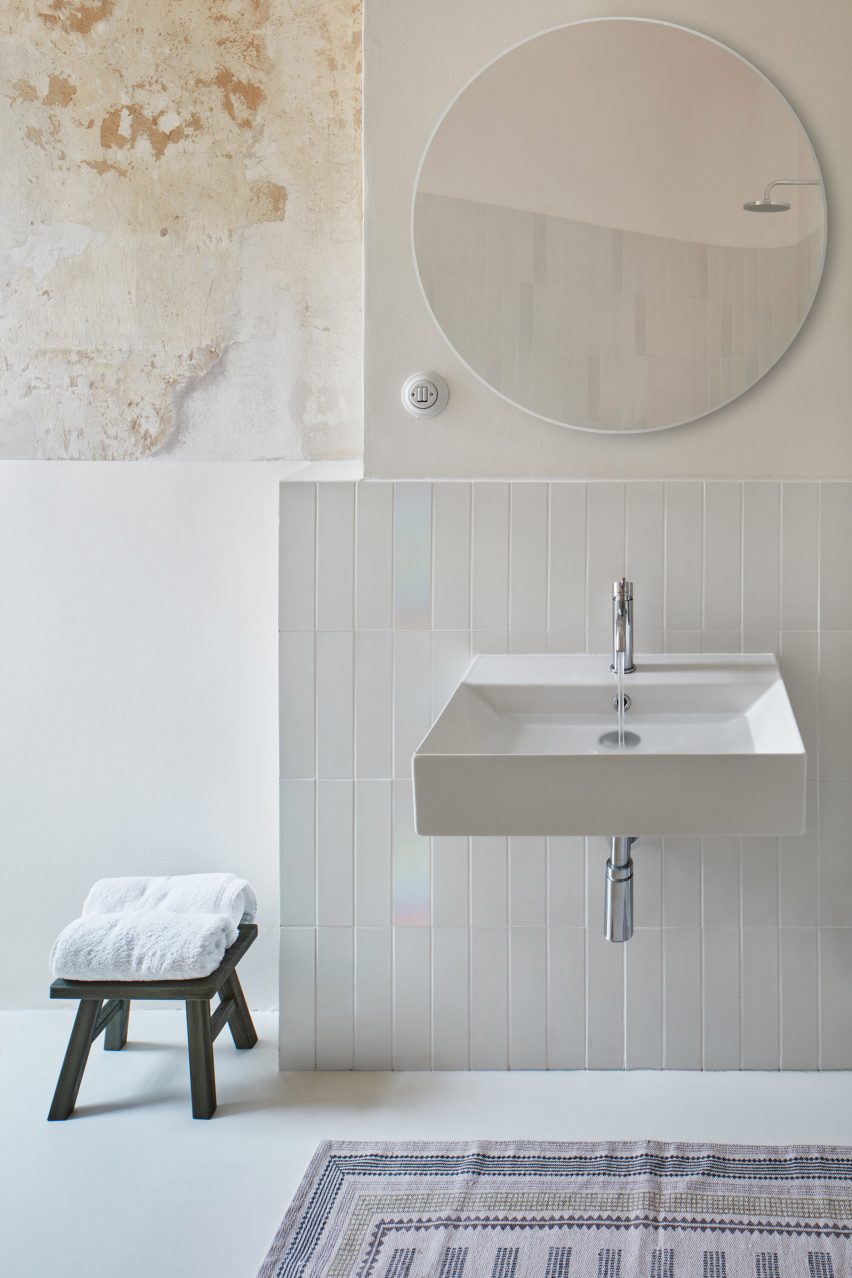
In the bathroom, white tiling lines the walls, interspersed with iridescent tiles and sections of exposed paintwork.

The rooms are sparingly furnished, allowing the paintwork to be the interior’s focal point.

Plus One Architects brought in furniture with minimalist forms by Czech design studio Janský & Dunděra alongside decorative pieces from local design brand Todus.

Photograph showing sink in bathroom with round mirror abovePhotograph showing sink in bathroom with round mirror above
The bathroom is fitted with white flooring, tiling and fixtures

“I hope we managed to return the apartment to the original splendour of the period, in which the house was built,” said Průchová.

“You can feel how the building looks from the outside – it is an old house in the historic part of a spa town.”

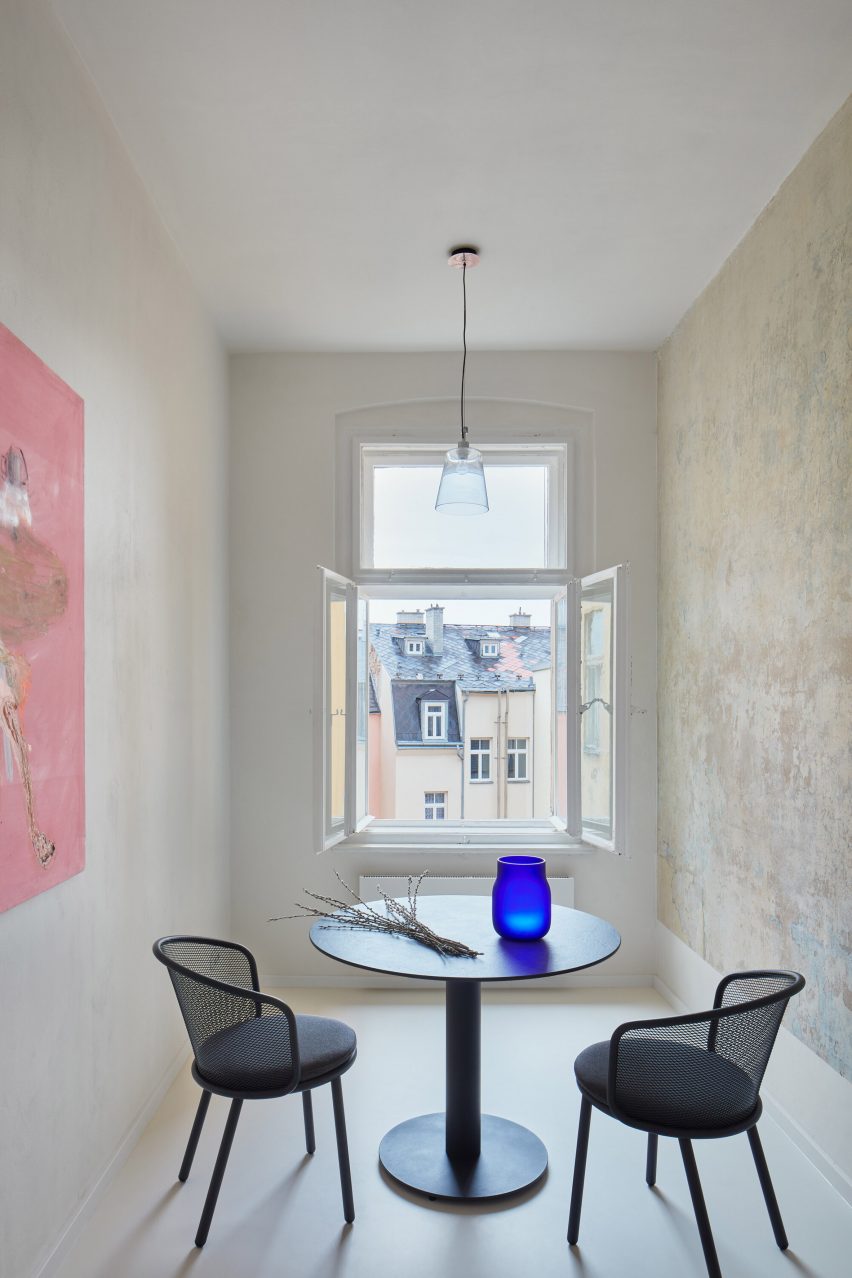
Round dining table and chairs in front of open window in narrow roomRound dining table and chairs in front of open window in narrow room
The kitchen and dining room overlook neighbouring rooftops

Kateřina Průchová and Petra Ciencialová founded Plus One Architects in 2019. The studio is based in Prague and works on projects across the Czech Republic.

Other apartment interiors that have recently been featured on Dezeen include a home in Milan centred around a monolithic green marble partition wall and a pastel-decorated apartment in Kraków.

The photography is by Radek Úlehla.


Reference

Entryway of Hidden Garden House by Sam Crawford Architects
CategoriesInterior Design

Sam Crawford Architects tops Sydney home renovation with “garden oasis”

A private roof terrace enclosed by greenery features in Hidden Garden House, a Sydney home reconfigured by Australian studio Sam Crawford Architects.

Situated within a conservation zone, the home has been updated by Sam Crawford Architects to brighten its dark interior and transform it into an urban “sanctuary”.

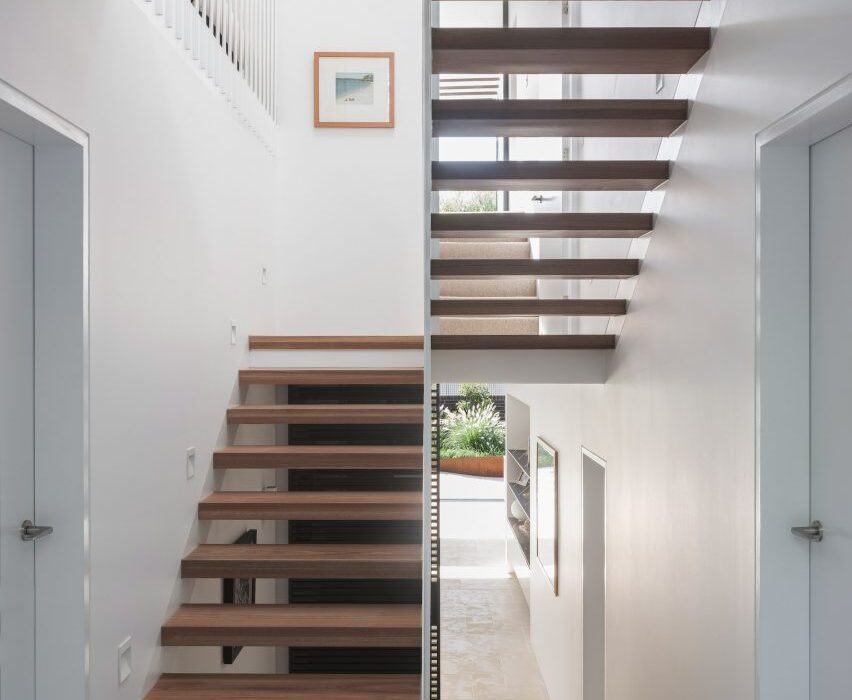
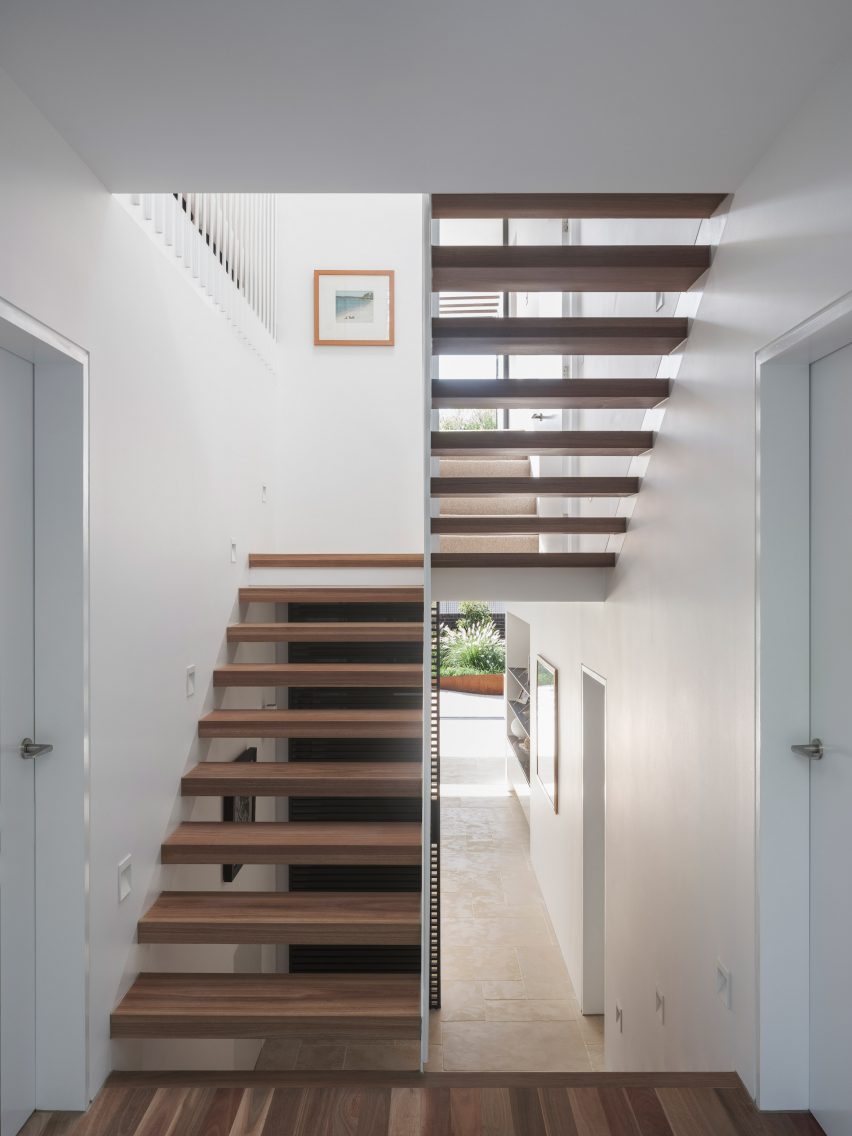
Entryway of Hidden Garden House by Sam Crawford ArchitectsEntryway of Hidden Garden House by Sam Crawford Architects
An open-tread staircase has been added to the hallway

Alterations to the 198-square-metre home’s interior are first seen in its entrance, where a stair with open treads and a white-steel balustrade replaces a solid timber structure that previously restricted light from a skylight above.

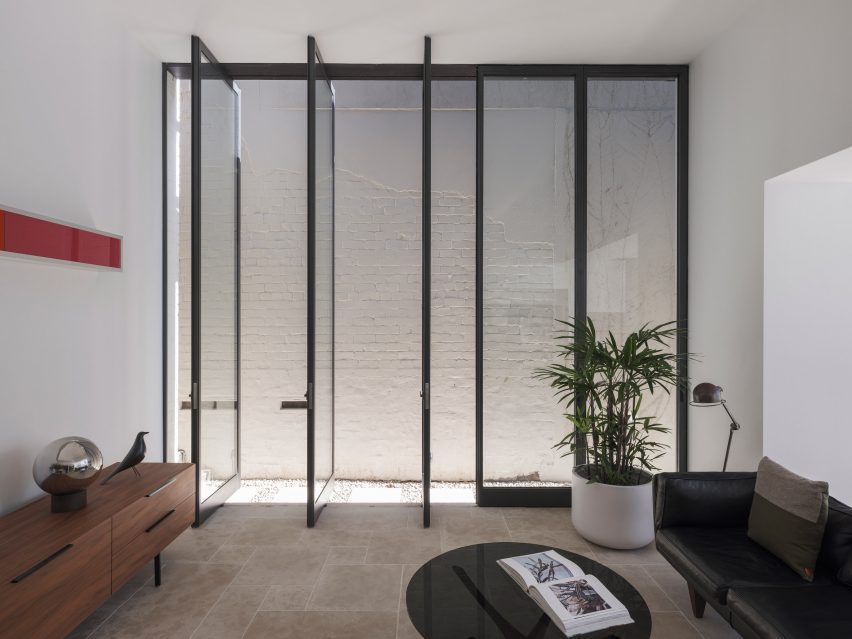
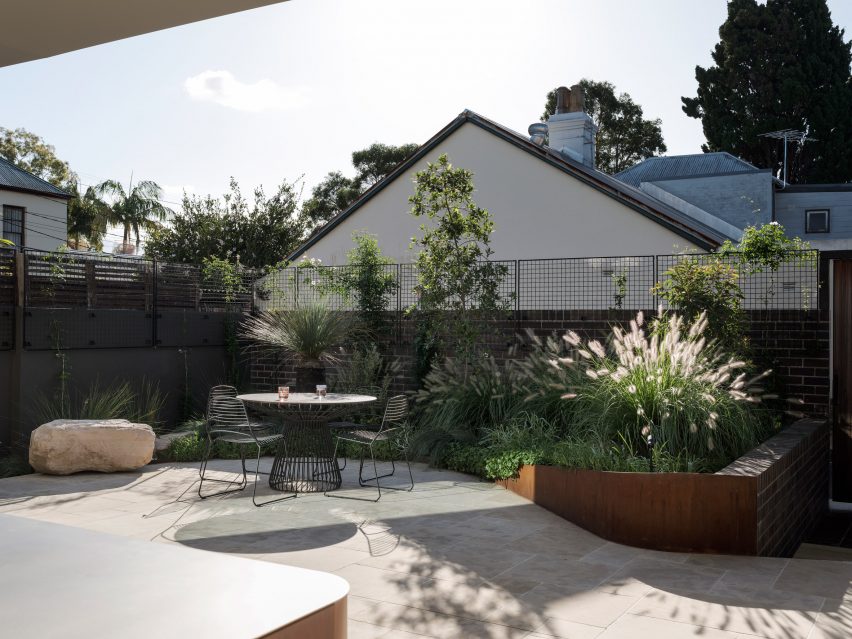
Down from the entry hall is a spacious ground-floor kitchen and dining area, which is illuminated by 4.5-metre-high glass openings that lead out to a landscaped patio. The patio is paved with limestone tiles that extend out from the interior.

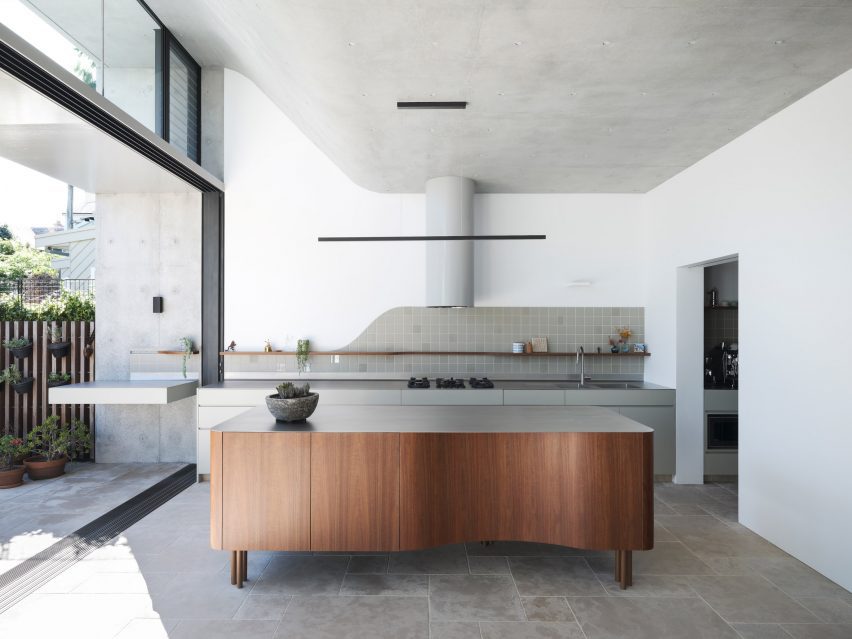
Renovated kitchen and dining area in Sydney home by Sam Crawford ArchitectsRenovated kitchen and dining area in Sydney home by Sam Crawford Architects
A curved concrete roof features in the kitchen

“By extending the ground floor finishes through the full-width doors into the rear yard, the garden and high-level green trellises at the rear of the site form the fourth wall to the rear wing,” studio director Sam Crawford told Dezeen.

“They create a sense of enclosure that draws the occupant’s eye up to the expanse of the sky rather than surrounding suburbia.”

Bathroom interior at Hidden Garden House in AustraliaBathroom interior at Hidden Garden House in Australia
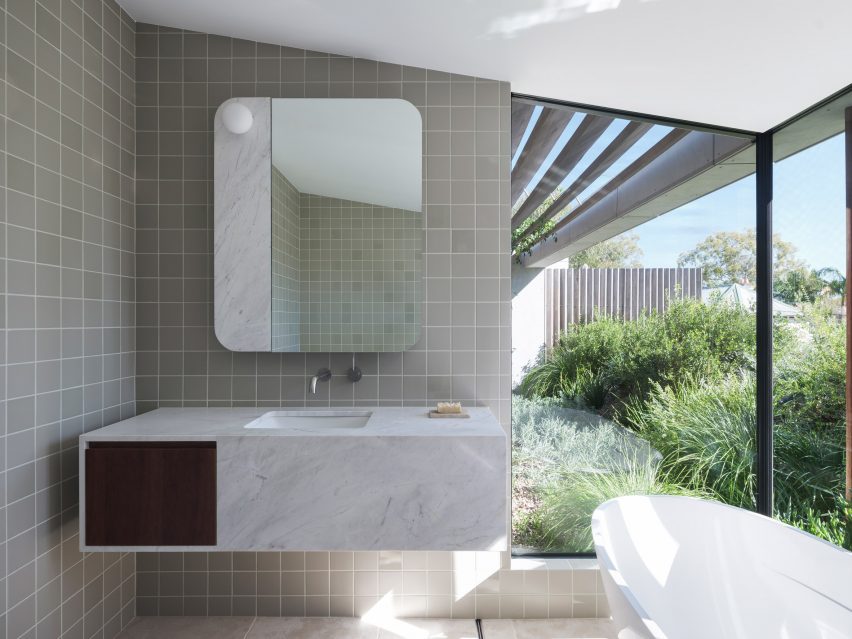
Angled timber screens and greenery ensure privacy for the bathroom

A concrete ceiling in Hidden Garden House’s kitchen curves upwards to help draw in the winter sun and provide summer shading, while operable clerestory windows allow natural ventilation.

Above, this curved ceiling forms a sloped roof terrace filled with plants, which is situated off the main bedroom on the upper floor.

An ensuite bathroom, also lined with limestone floor tiles, has expansive openings offering a scenic yet private bathing experience enabled by angled timber screens and the terrace’s greenery.

“The rolling green roof serves as a visual barrier to the surrounding suburb, whilst allowing the occupants to occupy their private garden oasis,” added Crawford.

Living space interior of Hidden Garden House in SydneyLiving space interior of Hidden Garden House in Sydney
White walls and wooden furniture feature throughout the interior

Hidden Garden House’s consistent material palette of bright white walls and wooden furniture ties its living spaces together, while decorative square tiles line both the kitchen and bathrooms.

Curved details, such as the patio’s shape and the kitchen island and splashback, also feature throughout.

Terrace of Hidden Garden House in Sydney designed by Sam Crawford ArchitectsTerrace of Hidden Garden House in Sydney designed by Sam Crawford Architects
The home aims to be an urban “sanctuary”

Other alterations that were made to improve Hidden Garden House’s layout include the relocation of entrances to the ground floor laundry room and bathroom.

Elsewhere, Sam Crawford Architects has also created a restaurant topped with an oversized steel roof and a bridge modelled on the curving shape of eels.

The photography is by Tom Ferguson.


Project credits:

Architect: Sam Crawford Architects
Builder:
Toki
Structural engineer: Cantilever Engineers
Civil & hydraulic engineer: Partridge
Acoustic engineer: Acoustic Logic
Heritage consultant: Damian O’Toole Town Planning
Quantity Surveyor: QS Plus
Landscape design: Gabrielle Pelletier, SCA
Roof garden supplier: Fytogreen Australia

Reference

Paper planes by Architects Climate Action Network
CategoriesSustainable News

Architects urged “not to work with” British Museum due to BP partnership

Activist collective BP or not BP? has called on architects not to work on the British Museum’s recently announced redevelopment masterplan as it will be funded by oil company BP.

In an Instagram post on Friday, the organisation, which seeks to end oil sponsorship of culture, said: “Architects: we invite you to pledge not to work with the British Museum until their new partnership with BP is dropped.”

“The British Museum recently accepted the biggest single corporate donation to the arts in the UK,” it added.

“£50 million from oil giant BP, over the next ten years to ‘help deliver the museum’s redevelopment masterplan’. This donation, amidst an escalating climate crisis, has also been described as ‘one of the biggest, most brazen greenwashing sponsorship deals the sector has ever seen.'”

BP or not BP? urged architects to not apply for the job in an Instagram post

In December, the British Museum announced plans for an architectural competition to redevelop around 7,500 square metres of gallery space at its central London location, with applications set to open in spring.

This would be supported by the decade-long partnership with BP.

“A new multi-year partnership with BP will support the future transformation of the museum by contributing £50 million over 10 years,” the museum said.

“The partnership will also help deliver on plans to maintain public access for generations to come. The museum is very grateful for BP’s support at this early stage of the masterplan.”

“Architects can’t in good faith work with The British Museum”

However, BP or not BP?, said that working on the redevelopment would go against guidance from climate network Architects Declare on how to approach projects.

“Guidance from @architectsdeclare_uk encourages firms to approach projects by evaluating their contributions to mitigating climate breakdown,” it stated.

“This redevelopment will do the opposite: allowing BP to continue its extraction and harm Global South communities across the world who face the worst impacts of the climate crisis.”

“Architects can’t in good faith work with The British Museum until this deal is dropped. Join us and tell the museum to #dropBP!” the organisation added.

Architects Declare also stated that it believed it would be consistent with its declaration for architects to turn down the job.

“UK Architects Declare is committed to moving the design of our built environment towards fully regenerative solutions to the planetary emergency,” the organisation told Dezeen.

“As such, the AD Steering Group do believe it would be consistent with our Declaration’s point 5 for architects to turn down this opportunity because of BP’s sponsorship: ‘Evaluate all new projects against the aspiration to contribute positively to mitigating climate breakdown, and encourage our clients to adopt this approach’.”

“A number of companies have publicly declared they will not work on fossil fuel infrastructure and most of the big cultural institutions have now broken links with fossil fuel sponsorship,” it added.

“It is particularly important that when some organisations show such leadership, they are supported by the broader industry.”

British Museum “squarely on the wrong side of history”

BP or not BP? told Dezeen that it believes there are other sponsorship alternatives for the British Museum and that letting BP use its well-known London building for events “continues a neocolonial legacy of extractivism”.

“Just as there are alternatives to fossil fuels, there are also alternatives to taking dirty sponsorship money from fossil fuel producers like BP,” BP or not BP? member Francesca Willow said.

“The British Museum’s decision to keep backing one of the architects of the climate crisis – for a further 10 years – has put the museum squarely on the wrong side of history,” she continued.

“For years, BP has used the iconic museum building as the backdrop for lobbying politicians and burnishing its brand, continuing a neocolonial legacy of extractivism and oppression,” she added. “Architects should refuse to play any part in BP’s planet-wrecking agenda.”

Museum disappointed by call for boycott

In response, the museum said that the campaign was “disappointing” as the redevelopment was aimed at creating a net-zero estate.

“The British Museum is in urgent need of renovation and the masterplan will be one of the most significant cultural redevelopments ever undertaken and private funding is essential,” a spokesperson for the British Museum told Dezeen.

“It’s disappointing campaign groups are calling for a boycott when we’ve said we will be looking at design proposals with a particular focus on sustainable and environmental expertise, working with us responsibly to create a net-zero estate,” it added.

“We look forward to seeing submissions that aim to restore the highly significant and celebrated listed buildings on the site.”

The architectural competition would look to introduce “contemporary architecture and innovative gallery displays” to the museum’s “Western Range”, which contains collections from Ancient Egypt, Greece and Rome.

Architects Declare has previously condemned architecture studios for refusing to stop designing airports.

The issue of sustainability in architecture was also highlighted by the climate action group Architects Climate Action Network in 2022, when it claimed that the Royal British Institute for Architects’ Stirling Prize shortlist “promotes architecture that pollutes the planet”.

The image is by Shutterstock.


Reference

New Year, New You? 8 Inspirational Resolutions for Architects in 2024
CategoriesArchitecture

New Year, New You? 8 Inspirational Resolutions for Architects in 2024

The latest edition of “Architizer: The World’s Best Architecture” — a stunning, hardbound book celebrating the most inspiring contemporary architecture from around the globe — is now available. Order your copy today.  

The story of the New Year’s resolution began over 4,000 years ago in ancient Babylon. From what we know, at the end of each year, the pious and virtuous, polytheistic Babylonians made promises to their various gods, pledging to settle outstanding debts and return any borrowed goods. It was their way of starting the coming year on a right and moral footing.

Our reasoning for making resolutions might not be as serious as returning your neighbor’s grain barrel before you curse your crops for the rest of the year; however, four millennia later, the purpose remains true. Bringing in the new year always feels like the right time to cast off old habits, reset and wipe the slate clean as best we can — I’m pretty sure the Babylonians could have related to that phrase, actually.

New Year, new you? Well, no, probably not. New Year, a slightly improved you? We can get on board with that one. So, recognizing that we are not Bablyonians and that resolutions no longer need to be life or death, Architizer has outlined eight manageable resolutions that employ minor changes that will hopefully inspire you to make the most of 2024. They might even make you a better architect if you’re lucky.


Read more.
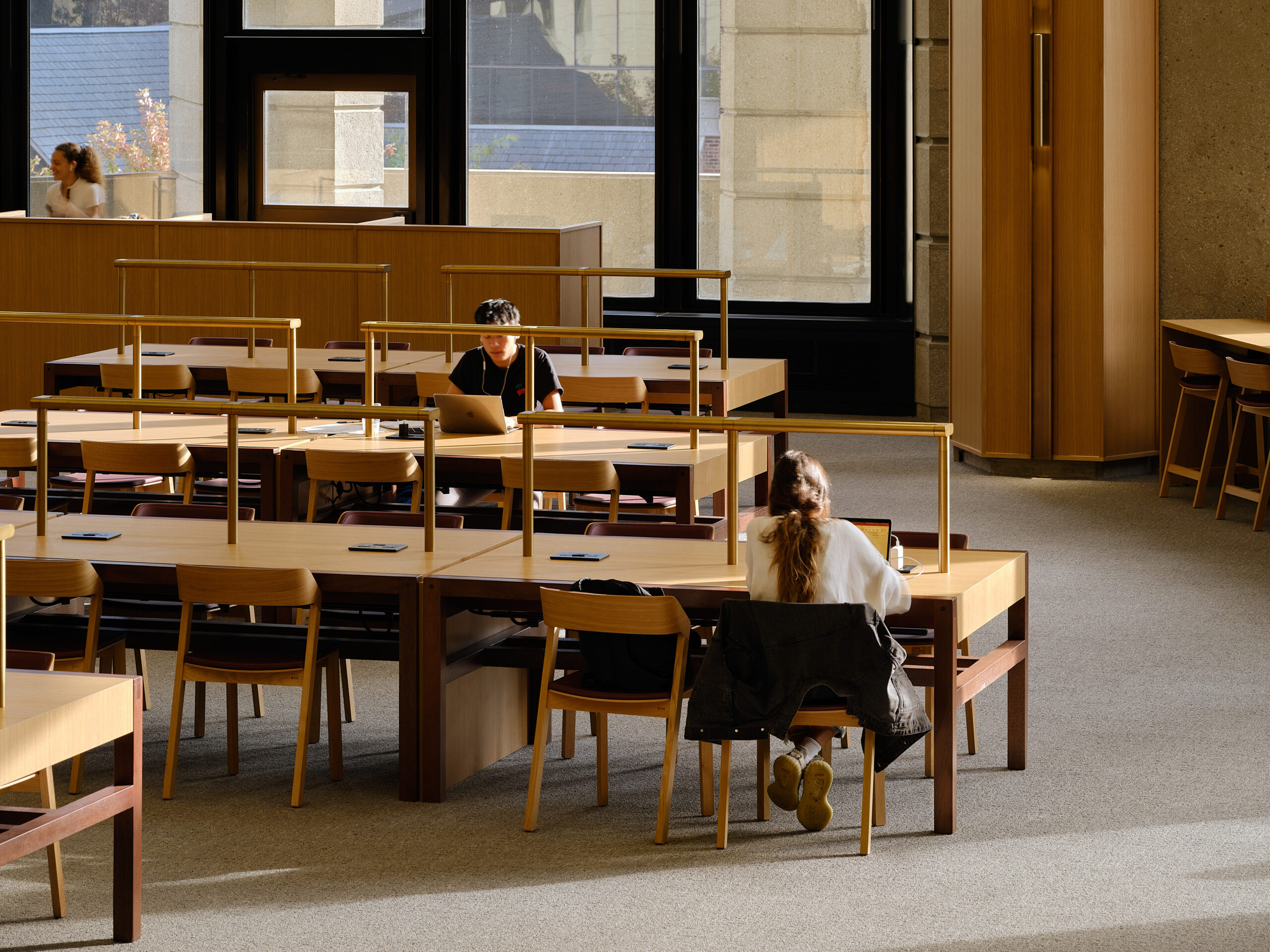
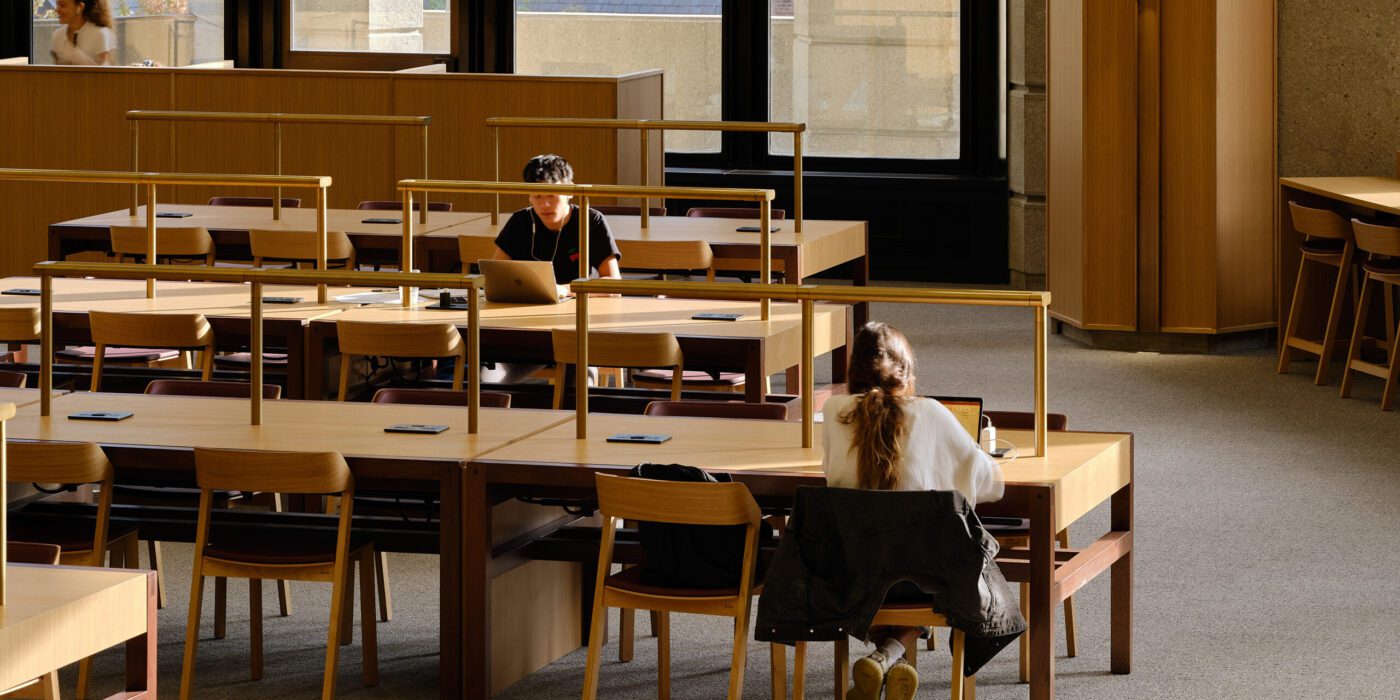
Robarts Library Reading Room by Superkül, Toronto, Canada Photograph by doublespace photography inc. Jury Award Winner, 11th Annual A+Awards, Institutional, Educational Interiors

Of course, you cry with a big eye roll at the lack of inventiveness. Wait —hear me out. Don’t close your tab just yet. There’s a reason “read more” is one of the most common resolutions people make. It’s because we never, ever, stick to it. We all read so much every day, but unfortunately, I don’t think Instagram captions and TikTok text overlays count. So here we are again: “2024 — Read more” (you can’t deny it’s got a ring to it).

We all know knowledge is the key and all that, so this year, why not try a different approach; what about starting or joining a book club? You could even focus it on architectural books if you wanted to double down. You could switch it up, a technical, a historical, and then a fictional, to stop things from getting too repetitive. You could choose to host it at your local library; they really need support, and they were literally made for book clubs, so it’s a win-win. What’s more, it’s my understanding that book clubs have biscuits, so what’s not to love, really?


Draw more.
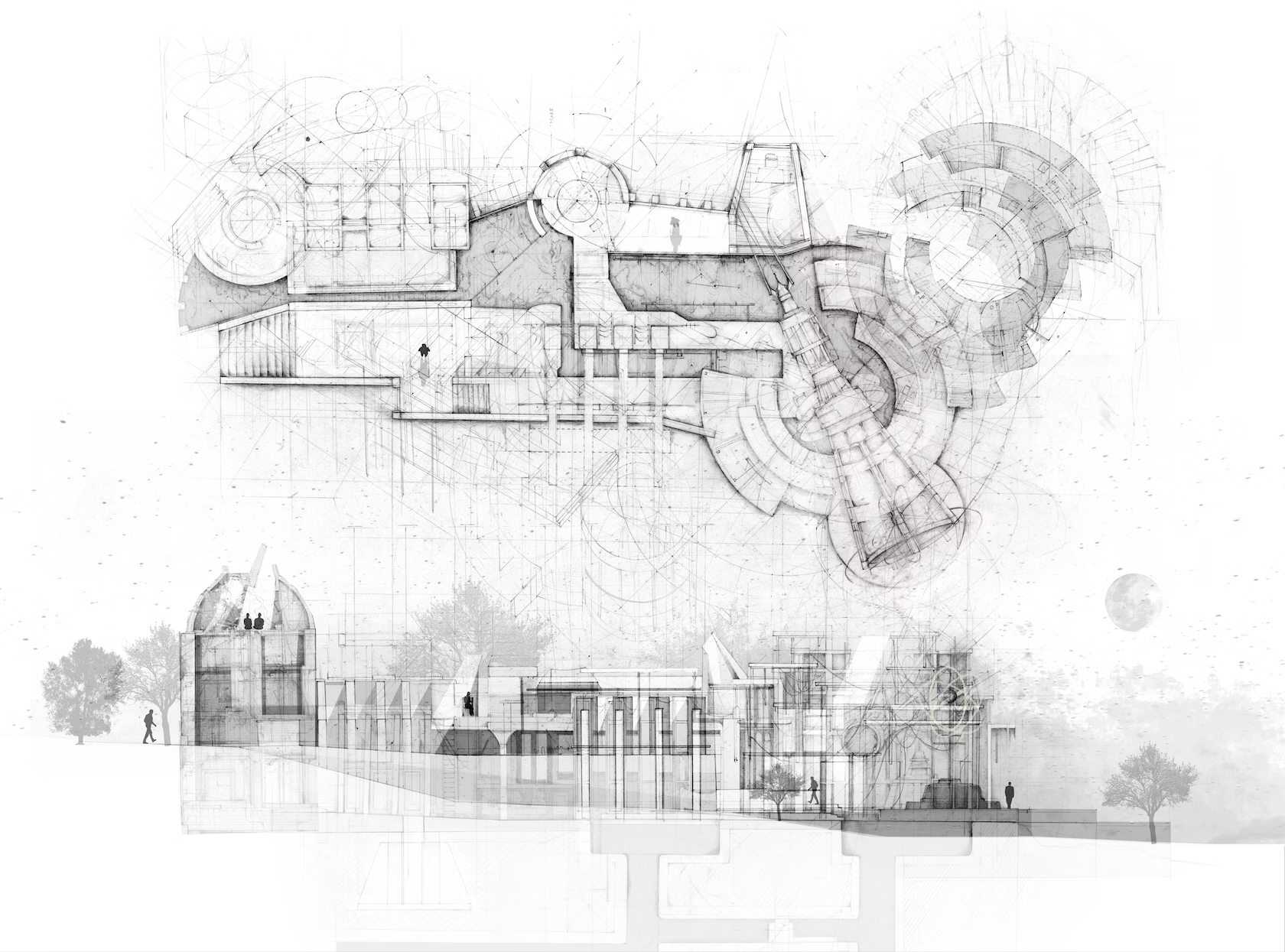
The Last Resort by Nikhita Sivakumar, Student Winner, A+Vision Awards 2023, Drawing, Hand Drawn Drawing.

This is one for the people whose sketches look more like Minecraft models than multi-lined masterpieces.

Sketching is a skill; yes, some people are naturally good at it, others not so much. But skills can be learned, and that means practice. So, if you want to improve your illustration, sharpen your shading, and hone your hatching, make it your mission to fill an entire sketchbook by the end of the year with spontaneous architectural doodles, ideas and musings.

Or if carting around a sketchbook all day every day feels a little too “Renaissance painter trying to find a muse” for this century, why not sketch your ideas on anything but traditional paper? Napkins, walls, banana peels — get creative with your mediums. Collect them all up, and at the end of the year, you’ll have a unique timeline of precious “junk” that tracks your progress.

Both are a great way to keep the creative juices flowing daily, and who’s to know, we might even be looking at the next Le Corbusier (probably not, but it’s important to dream).


See more.
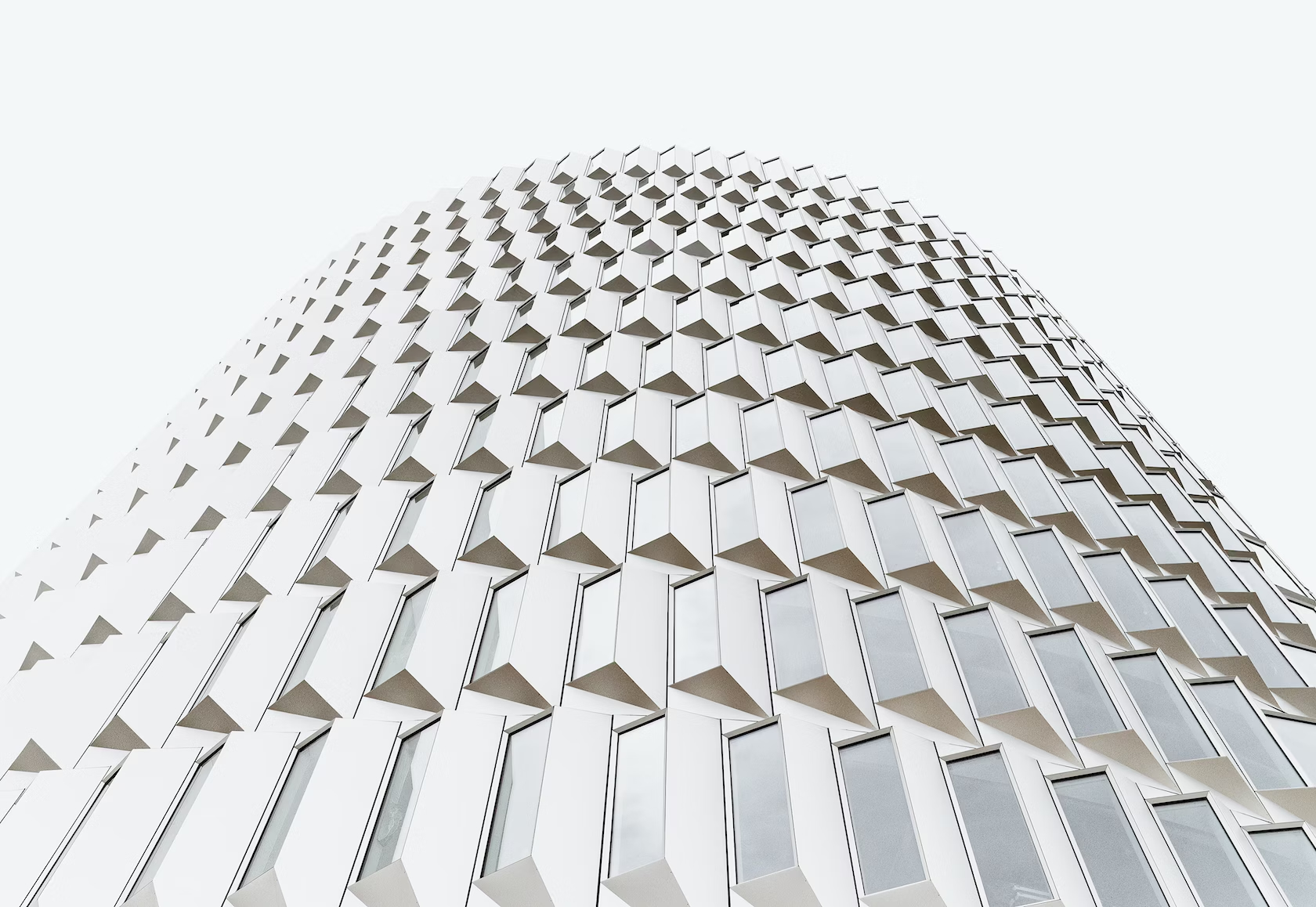
Francisco Tirado – Cobe Architects, Studio Winner, A+Vision Awards 2023, Best Of The Year, Architectural Photographer Of The Year 

There’s a Bart Simpson-esque joke in there somewhere, but let’s keep it professional…

Honestly, seeing more doesn’t always mean spending lots of money, booking lots of trips, and traveling around the world — as much fun as that can be. Seeing more can also mean taking notice of your immediate surroundings. We are almost all somewhere someone else wants to visit. So, be a tourist in your own town. Wander, explore and uncover the story of the architecture around you. Or, if you’re a fan of a plan, you could take it one step further and make a list of buildings you haven’t seen yet, or you’d like to see again and map out a route to visit them.

Explore where you are, and while you are at it, you can develop your photography skills by challenging yourself to take at least one photo a week of a building, a material or architectural detail that inspires you. By the end of the year, you’ll have fifty-two images that are a timeline of 2024.

You never know. You might even take a photograph that wins Architizer’s 2024 A+Awards.


Find Inspiration.
Finding new ways to be inspired is a year-round challenge. So, how about setting yourself a resolution that will give you the creative boost you need this year?

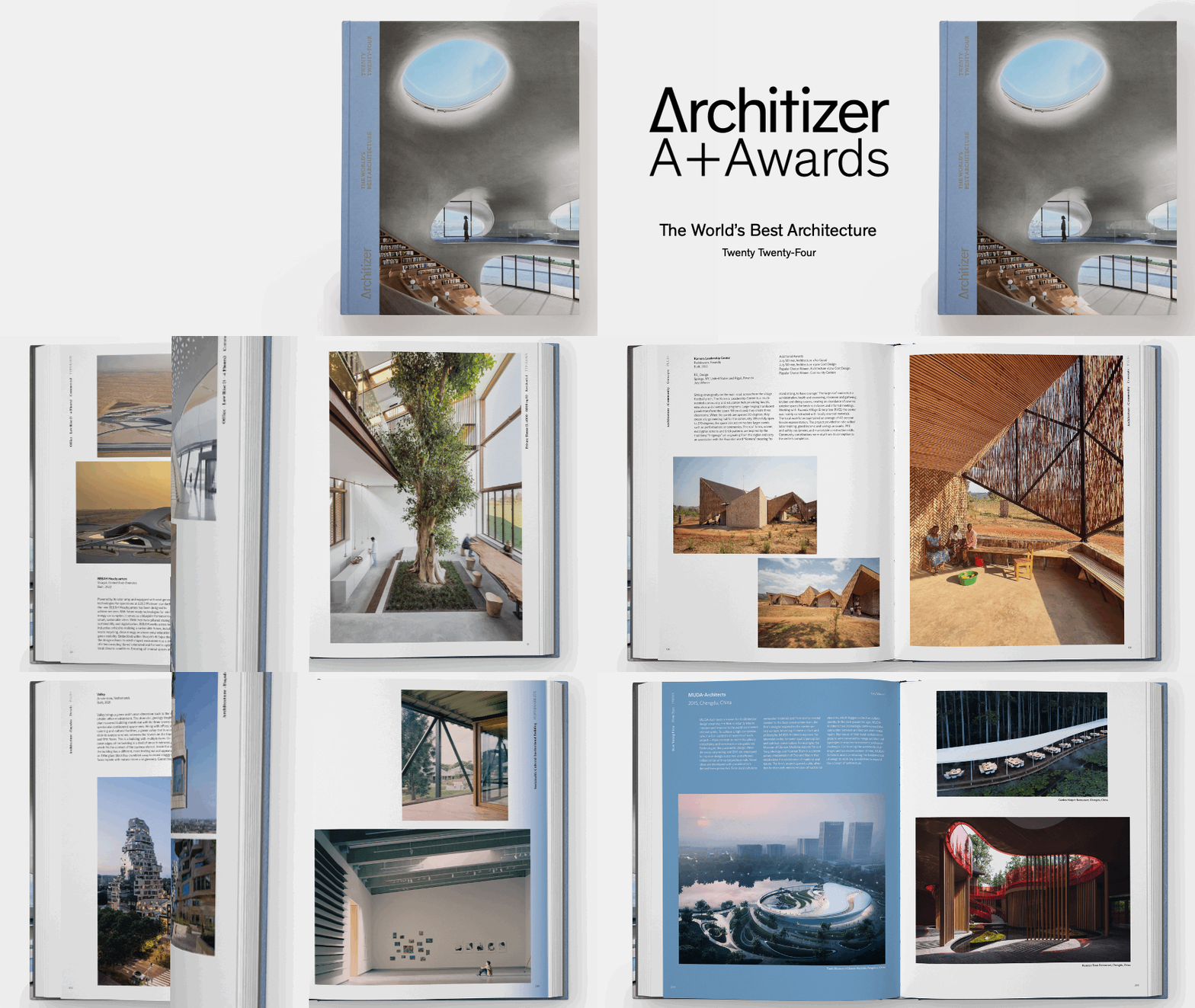
You could pick a country, one for each of the twelve months of the year, and commit to learning about its architectural heritage, its most recognized style, or its most well-known architect. You can find some great examples in Architizer: The World’s Best Architecture. By the end of 2024, you’ll have a knowledge of global architecture that could rival anyone in the office, and I bet you’ll be surprised at how much more diverse and exciting your projects become after just a few months.

Or if international architecture seems like too broad and overwhelming before you’ve even begun (this is always a pitfall with resolutions. They should be something you could actually achieve), why not work your way through the alphabet instead? A for Atrium, B for Balcony, C for Columns and so on? It’s a quick and easy approach to expanding your design horizons, and the topics can be as broad or as specific as you choose.


Go Green.
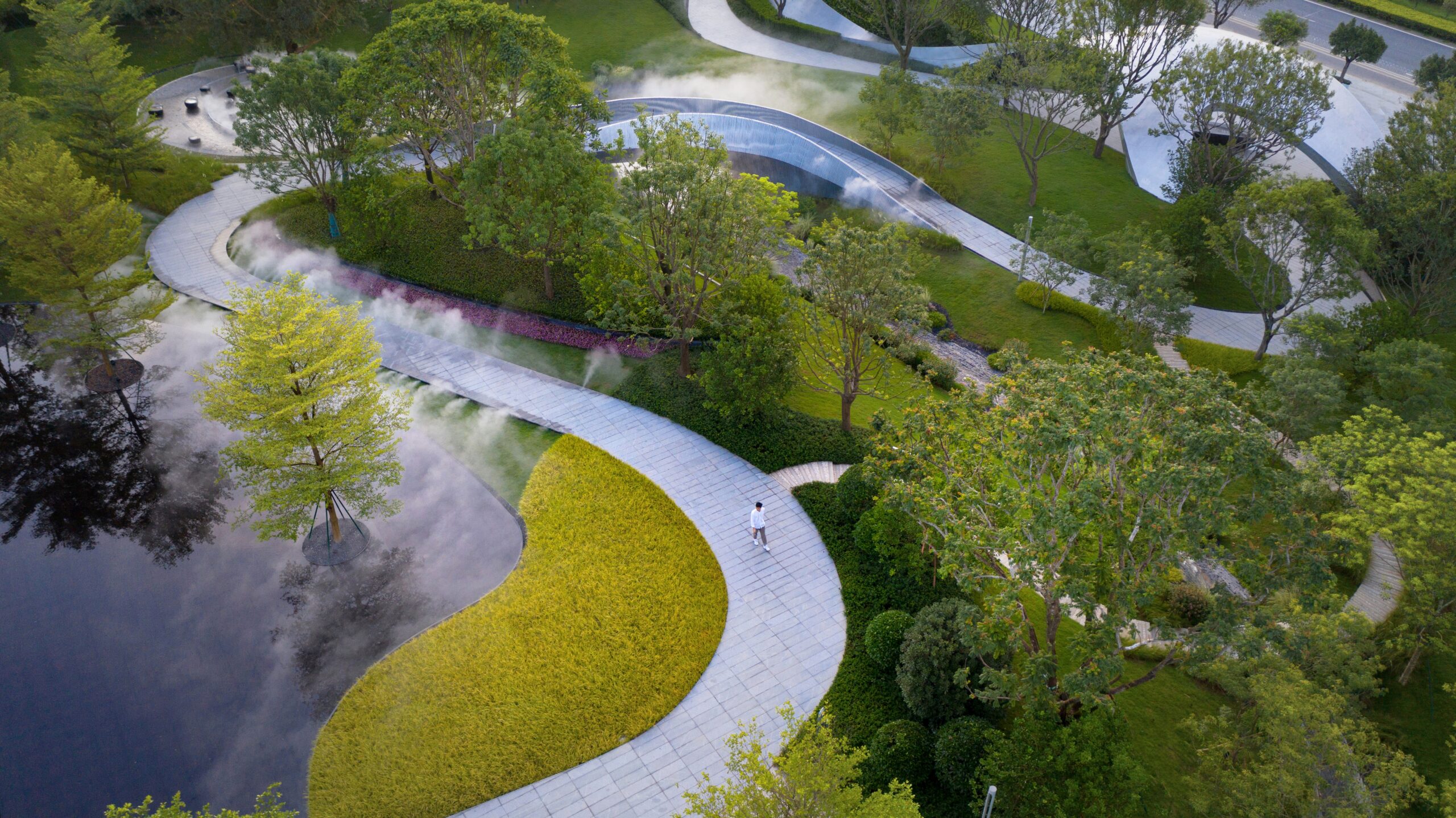
Eucalyptus Society Garden by SWA GROUP / Los Angeles, Guangzhou, China. Popular Choice Winner, 11th Annual A+Awards, Public Parks & Green Spaces 

I think it is safe to assume this one is on pretty much every architect’s list for 2024. Be more eco-conscious, be less wasteful and design smarter for the planet and its people. However, you frame it —this one is a biggie. Oh, but what to do? How about pledging to incorporate at least one additional sustainable design element in every project? This could range from using a recycled material to adding an innovative energy-saving product. But the catch is that it has to be one you added above and beyond your initial proposal; that way, you’re boosting your impact. Start with one and see how many you can add.

Or, if you’re the type of person who responds better to financial penalties, what about implementing a personal swear jar? Instead of being penalized for cursing, you need to cough up every time you specify using non-sustainable material. It’s a great way to keep yourself accountable for your choice, and at the end of the year, you can donate the cash to a worthy cause.


Prepare for the future.
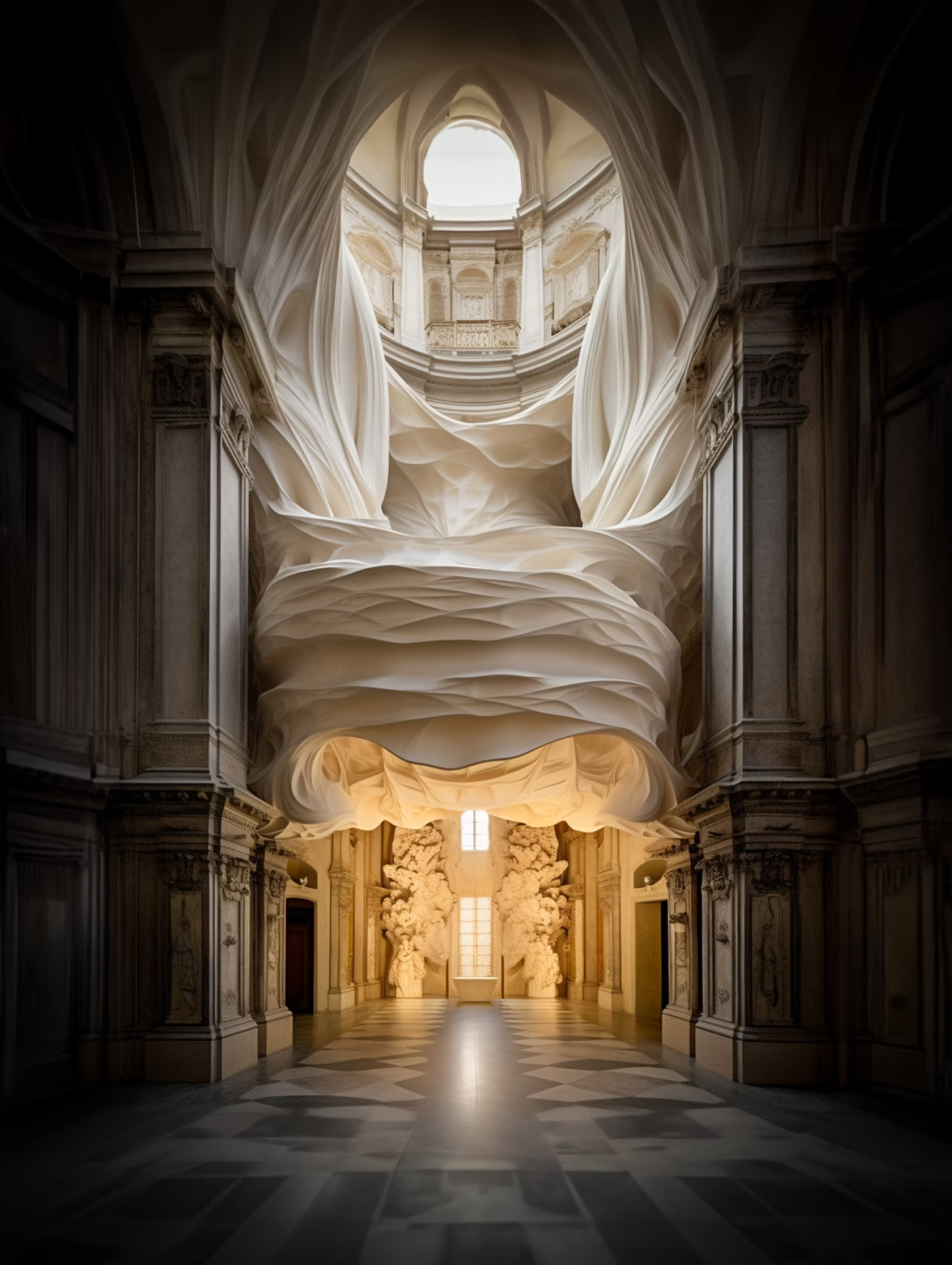
Silk & Stone by Mohammad Qasim Iqbal. Student Winner, A+Vision Awards 2023, Visualization, Ai Assisted Visualization.

The future is here, and there is no denying it. AI, VR, and all the other acronyms you can think of are here to stay. So, this year, your resolution could help you prepare and keep you at the forefront of the monumental changes we are witnessing.

Get going with virtual reality. Whether it’s using VR for client presentations or exploring virtual construction, stop messing with the 2D and get yourself involved in the virtual world. Not only will you have a blast messing about in your models, but your clients will also thank you for making understanding space planning so much easier.

Or get ahead of the game in AI. If you still need to, resolve to learn what it is and how it’s going to help you as an architect. You can make it your mission to listen to every episode of Evelyn Lee’s Practice of Architecture podcast, or you can sign up for something like wordsmith Nikita Morell’s ChatGPT for Architects Masterclass.

You could even stick your alerts on for LinkedIn posts from our very own Editor-in-Chief Paul Keskeys and read the reviews on Architizer Tech to get updates on the latest applications, innovations and tips that will keep you up to date on what’s hot and what not in the tech-o-sphere. (we think you should do this either way).


Rein it in.

As architects and designers were often told, our industry is complicated, exclusive and inaccessible. And in some cases, they would be right. So, this year, why not simplify things? Ditch the dialogue. Challenge yourself to stop using architectural jargon, be direct and to the point and say exactly what you mean. At the end of the day, you might find it improves your business when people actually understand what you are talking about.

Or if thats not your problem, what about committing to downscaling overly ambitious ideas? We often get carried away, going smidge overboard every now and again. In all fairness, it’s often part of the fun. I do not deny there is a time and place for glass columns and gold-plated beams, but how about, if you find you’re one of those architects who spends more time scaling back than scaling up, that this year you challenge yourself to rein it in and refocus your precious time on to yourself instead of arguing the necessity of triple height ceilings in the guest bathroom that no one asked for?


Banish the beige.
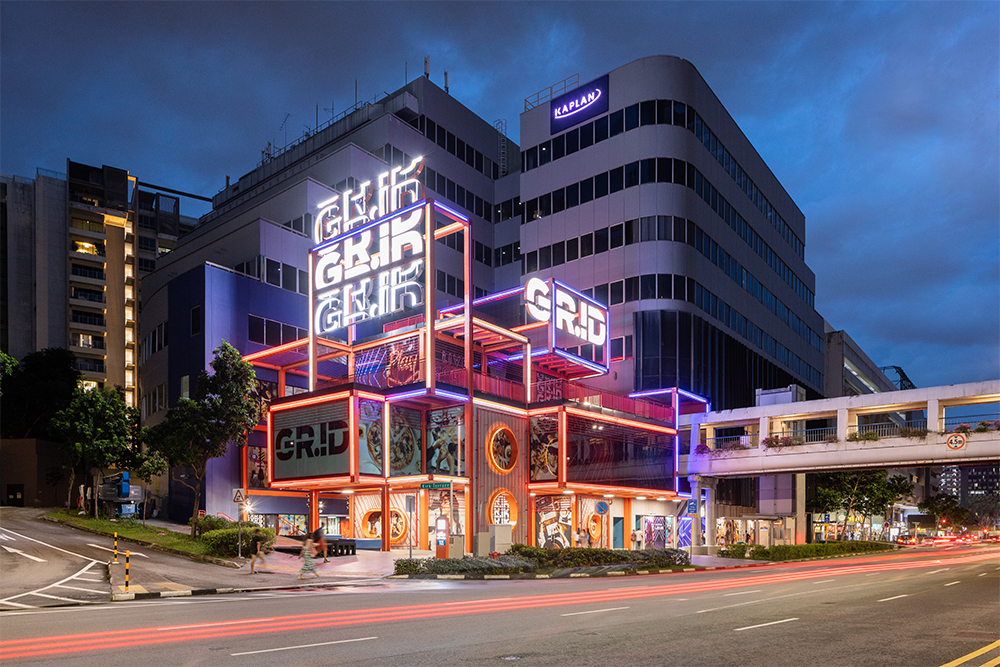
GRiD by Spark Architects, Singapore. Jury Award Winner, 11th Annual A+Awards, Retail. Photographs by Fabian Ong.

Or, if your thinking, “count me out of reining it in,” then it’s time to toss out the tepid and embrace the bold. Beige isn’t just a color; it’s a symbol of safe choices that lull us into a creative slumber. This year you could set yourself the task of shake off that drowsiness and give your work some much-needed pizzazz.

Think about it. When was the last time you stepped out of our comfort zone with color? I’m not talking about a touch of terracotta or a splash of sage. I’m talking full kaleidoscope. It’s not just about painting the town red (or green, or purple). Let’s get inventive with our spaces have a heart-to-heart with our materials. This year could be a great time to experiment and give your designs the innovative eye they deserve.

And who knows, those eye catching hues it might just be what makes them stand out to our jurors in future A+Awards competitions.


Celebrate the wins.

And finally, and in my opinion, most importantly, celebrate the wins! We said that the new year is all about reflecting and looking back at our achievements, recognizing what we did well or not so well. But why wait? Why not celebrate the wins as and when they happen? Commit yourself to taking time out, whether it’s a day, an hour or a week, to really appreciate the times that things went well. Don’t just move on to the next challenge and forget to take time to pat yourself and your team on the back and say, “Well done!”

The latest edition of “Architizer: The World’s Best Architecture” — a stunning, hardbound book celebrating the most inspiring contemporary architecture from around the globe — is now available. Order your copy today.  

Reference

Entrance of Yukinohako snow-powered cool store
CategoriesArchitecture

Kei Kaihoh Architects forms snow-cooled rice warehouse from local cedar

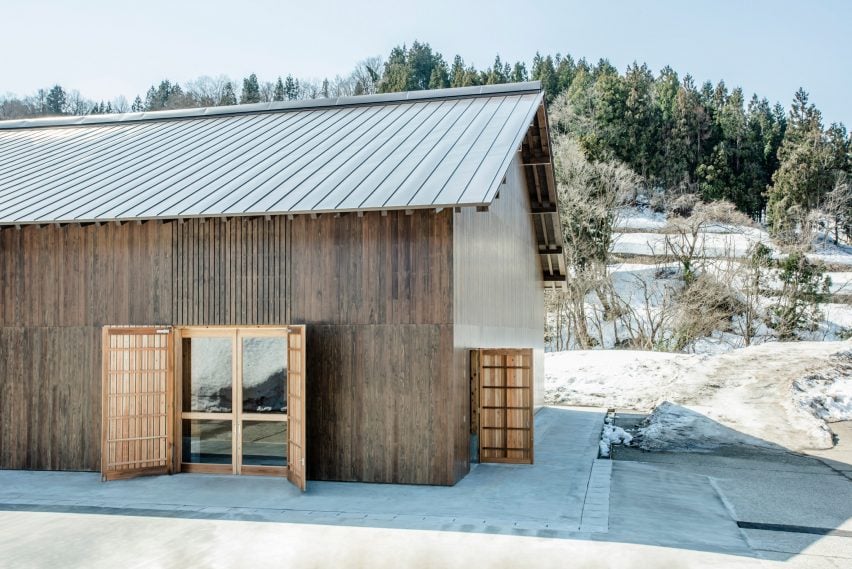
Japanese studio Kei Kaihoh Architects has completed a timber-framed storage facility in Joetsu City that offers rice farmers a way to refrigerate their harvest without relying on gas or electricity.

Instead, the Yukinohako facility is naturally cooled using snow – an abundant local material in this mountainous part of Niigata Prefecture, surrounded by ski resorts and terraced rice paddies.

With the aim of creating a model that could be cheaply and easily replicated across the prefecture, Kei Kaihoh Architects constructed the two-storey structure using local cedar instead of reinforced concrete or mass timber, which would have to be shipped in.

Entrance of Yukinohako snow-powered cool store
Yukinohako is a natural refrigerator powered by snow

The studio hopes that Yukinohako, which is Japanese for “treasure chest of snow”, can encourage locals to find a new appreciation for snow and its natural cooling abilities, rather than just seeing it as a burden.

“If inexpensive snow rooms can be realised, farmers will be able to easily build snow rooms in both new construction and renovations, increasing momentum for snow utilisation rather than snow removal,” Kei Kaihoh Architects said.

“By doing so, we can love snow, which has been an obstacle to people’s lives, costing them money and effort to dump it into the ocean, and was not well-liked by the local population.”

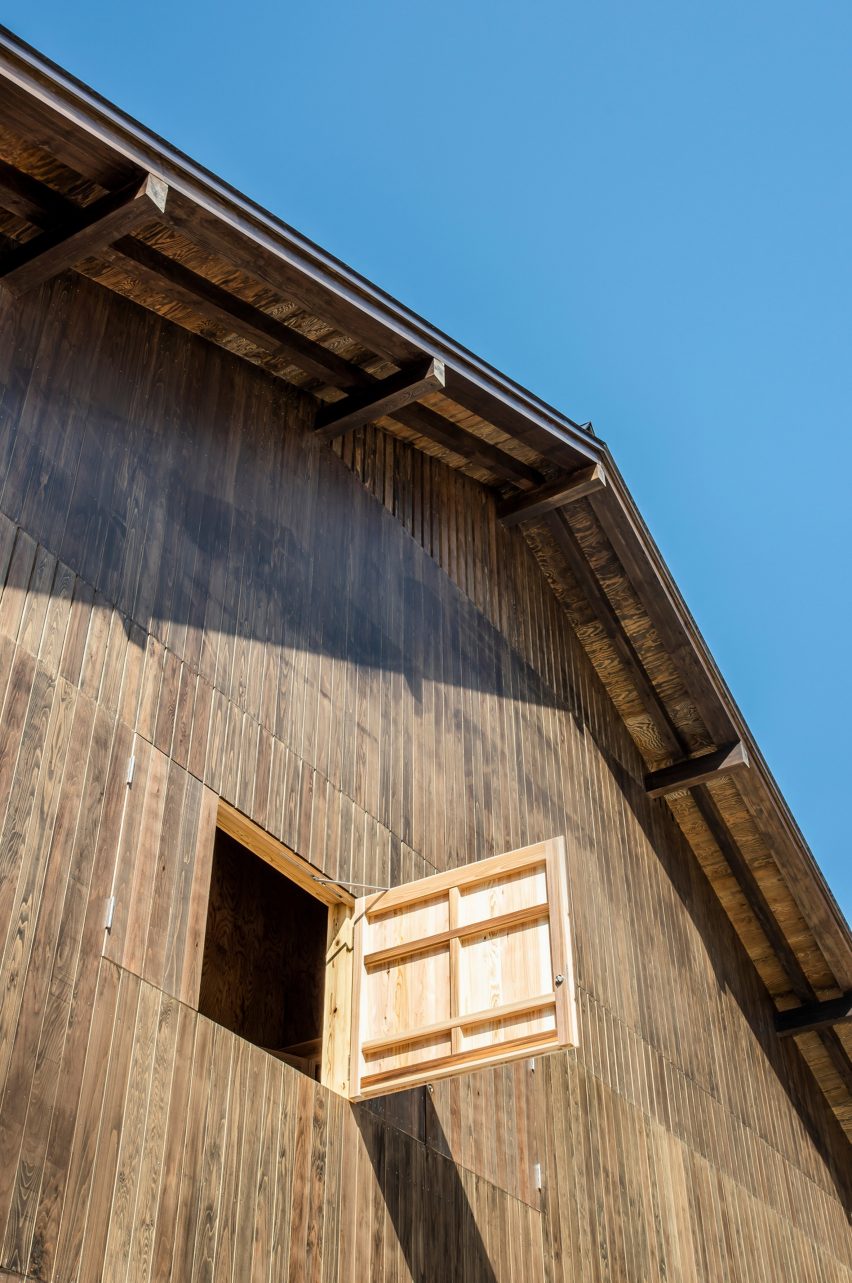
Window in cedar building by Kei Kaihoh Architects in Joetsu City, Niigata Prefecture
The gabled building is constructed from local cedar

Yukinohako replaces a reinforced concrete warehouse cooled by an emissions-intensive air conditioning system, which was damaged by a fire during renovation works in 2017.

The gabled building stretches over two storeys and is held up by a system of braced timber columns that are supported by auxiliary beams.

This allowed Kei Kaihoh Architects to use local small-diametre cedar wood rather than having to ship in mass-timber members.

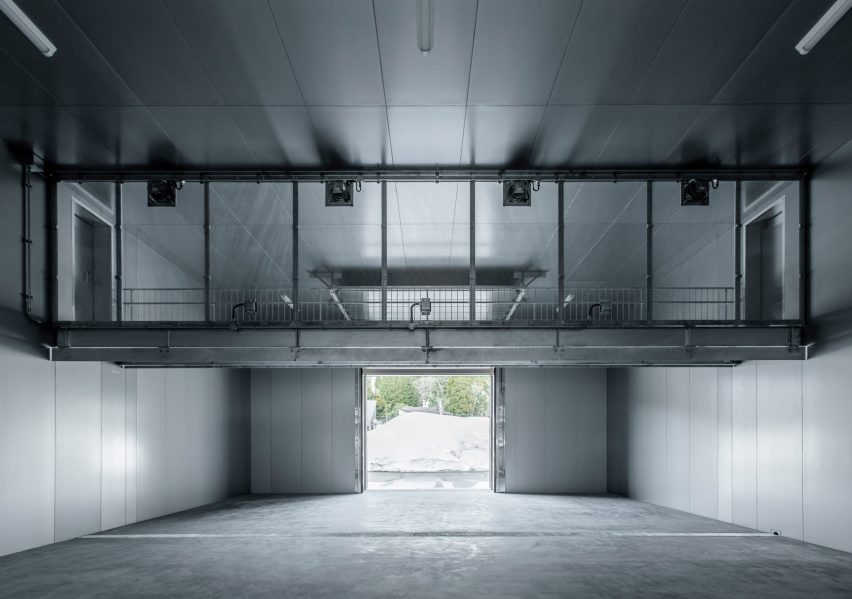
Double-height warehouse inside Yukinohako snow-powered cool store
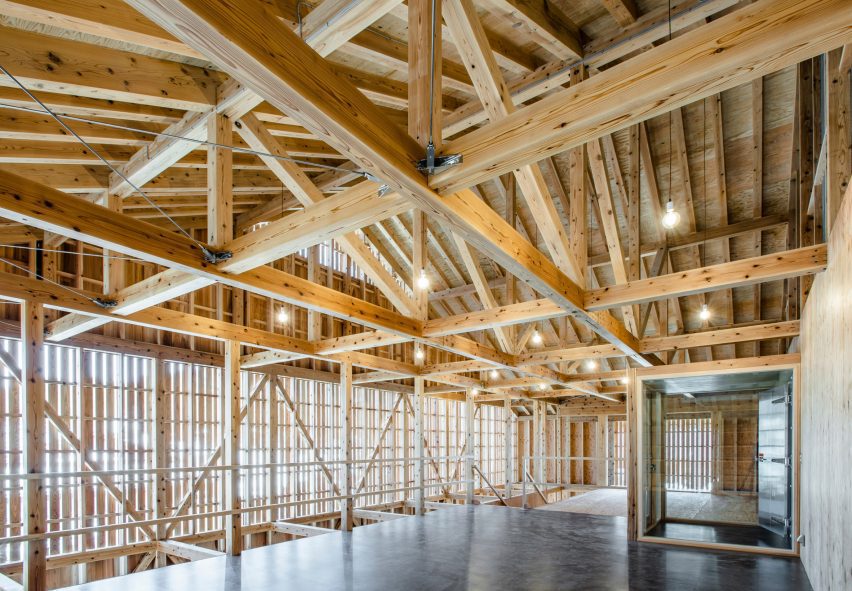
A double-height storage space is at the heart of the facility

At the centre of the building is a double-height, 159-square-metre warehouse, which takes over the majority of the ground floor. It sits alongside a small temperature-control room and a reception.

The storage space itself is split in two, with one side holding up to 90 tonnes of snow that is piped into the building using an automatic snow blower and an inlet on the east side of the building.

The other side can accommodate around 30 pallets or one tonne of rice and 200 kilograms of vegetables.

Break room inside warehouse by Kei Kaihoh Architects in Joetsu City, Niigata Prefecture
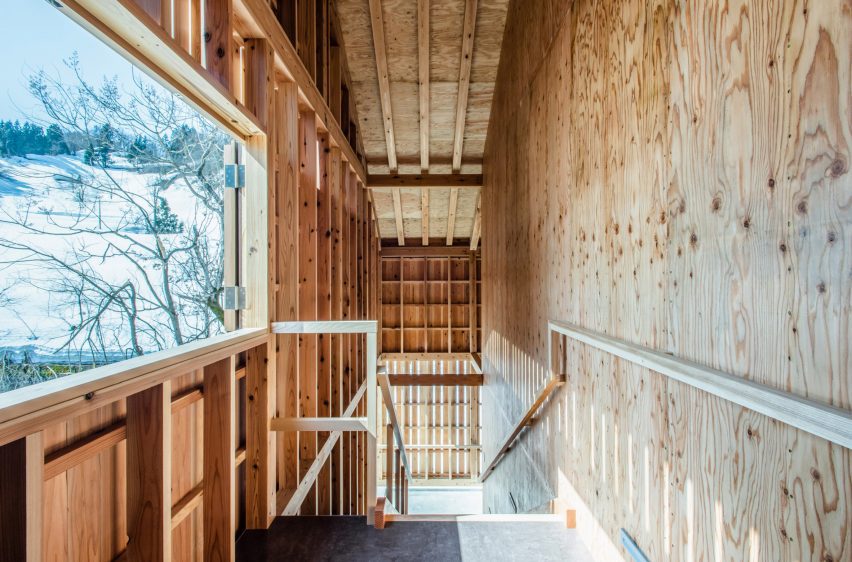
The break room is located on the second floor

In order to maintain airflow, the two halves of the space aren’t separated by a wall but by steel containers filled with snow, while an auxiliary fan on the ceiling circulates cold air from the snow into the food store.

A maintenance bridge runs across the double-height space to provide an overview of the warehouse and connects to a break room on the second floor.

To ensure the interior stays as cool as possible, Kei Kaihoh Architects installed insulation panels across the walls and ceilings of the warehouse, creating an air-tight envelope.

Even the forklift trucks used to transport palettes of rice are powered by batteries instead of engines to avoid emissions and reduce the need for mechanical ventilation.

The studio also constructed an external corridor that runs along three sides of the building, creating a double facade to prevent solar radiation from reaching the inner insulated wall.

Taken together, Kei Kaihoh Architects says these measures help to keep the warehouse at a consistently low temperature while generating a fraction of the emissions as a traditional air conditioning system.

Timber walkway inside Yukinohako snow-powered cool store
A covered walkway runs along the building on three sides

“In low-temperature warehouses, the storage method involves the constant use of electric air conditioners to keep the temperature at 10 to 20 degrees Celsius,” Kei Kaihoh Architects told Dezeen.

“On the other hand, at Yukinohako, the temperature is kept at zero to five degrees with only the cold air of snow and the humidity is kept high.”

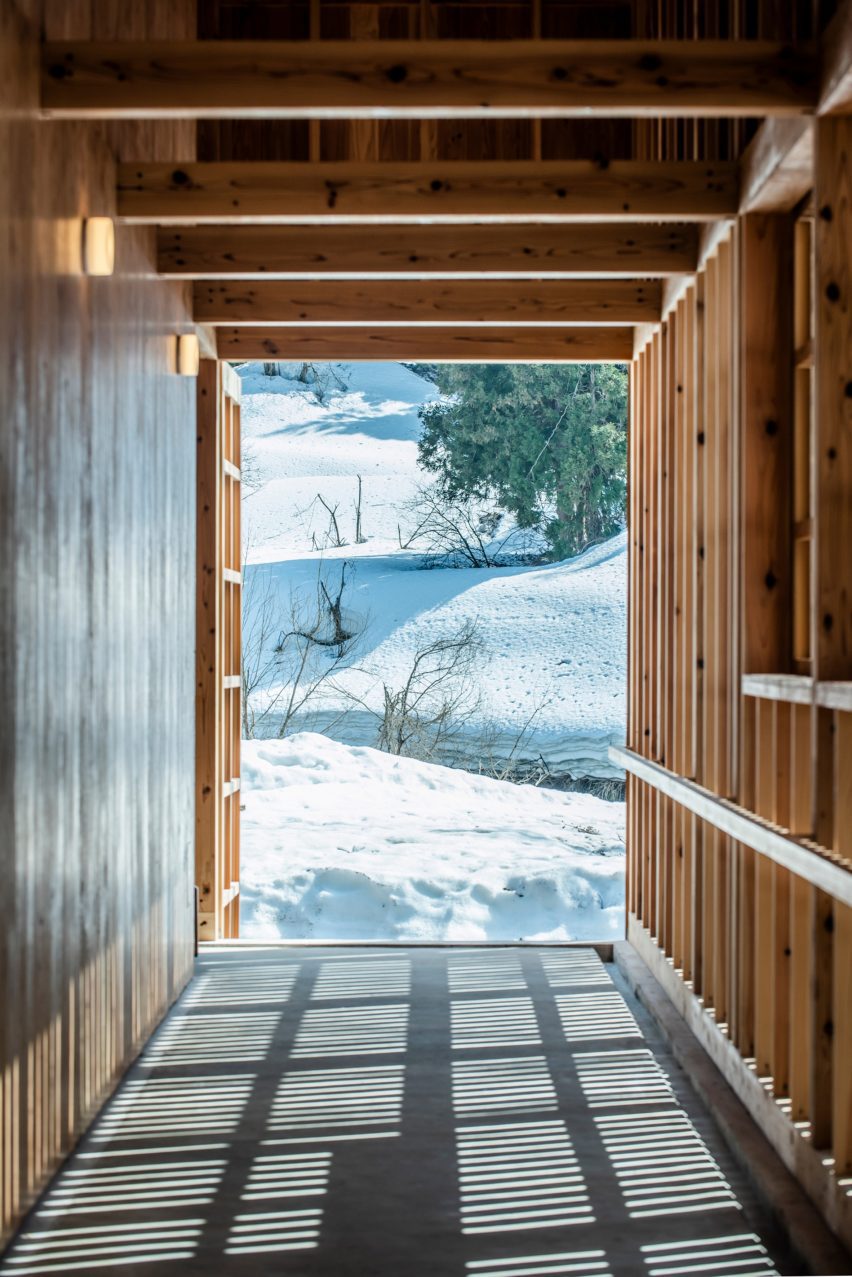
Aside from providing a covered walkway around the building in winter, the external corridor also provides a space to enjoy views of the surrounding nature.

Timber-framed walkway in warehouse by Kei Kaihoh Architects in Joetsu City, Niigata Prefecture
Openings frame views of the snowy scenery

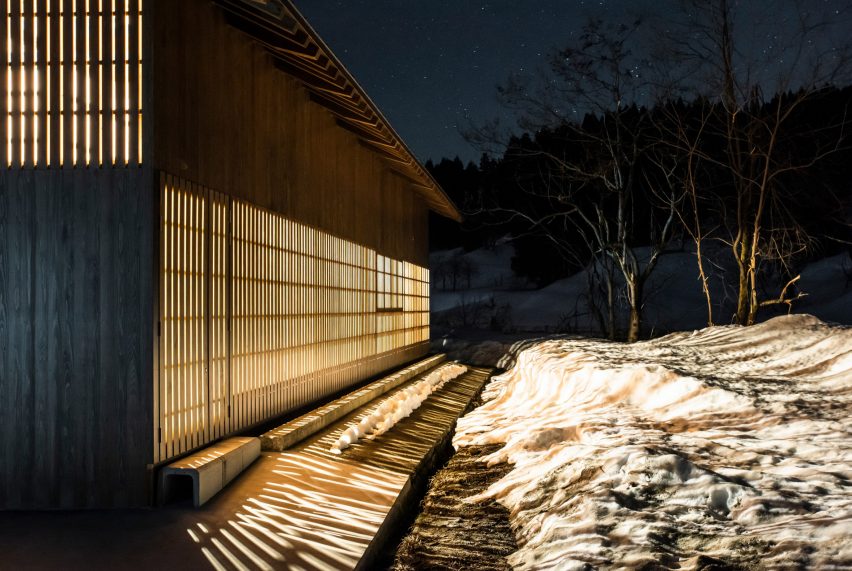
Strategic openings in the facade frame views of the snowy landscape while slatted sections allow light to filter in alongside the sounds of the Oguro River, which rushes along the back of the warehouse.

“We aimed to create a place where people could take pride in farming in the snow country,” the studio said.

The building’s timber structure was pre-cut and assembled at a nearby factory before being sent to the site, catering for quick and easy construction despite the region’s heavy snowfall.

Nighttime exterior shot of light spilling out of Yukinohako snow-powered cool store by Kei Kaihoh Architects in Joetsu City, Niigata Prefecture
Slatted sections allow light and sound to filter through

“The processing and storage of prefectural cedar timber is done in Joetsu City, minimising transportation costs and fuel consumption,” the studio said.

To protect the wood from water and inclement weather, the building’s exterior walls are finished in a glass coating, which Kei Kaihoh Architects says was also used in Kengo Kuma’s Japan National Stadium.

Yukinohako has been shortlisted in the sustainable building category of this year’s Dezeen Awards alongside a girls’ school in India made from local sandstone and Waugh Thistleton Architects’ mass-timber Black & White office building in London.

The photography is by Soichiro Suizu.

Reference

100+ Top Tech Tools for Architects and Designers
CategoriesArchitecture

100+ Top Tech Tools for Architects and Designers

If there is one thing architects love almost as much as designing buildings, it’s the technology they use to do it! Throughout the past decade, of all the thousands of articles Architizer has published, those related to tech have garnered many millions of views, and the number shoots up daily. Whether it’s SketchUp plugins, AI tools, design-foward laptops, or any number of rendering tutorials, architects and designers have shown an insatiable appetite to learn about technology that can augment their workflow and help realize their client’s perfect project.

It makes perfect sense then, for Architizer to provide a permanent home for these tools — a place where architects and designers can research and learn about the ever-evolving landscape of AEC technology and keep ahead of the curve.

To this end, we are thrilled to announce the launch of Architizer’s Tech Directory, a database of tech tools that benefit all those involved in architecture, from concept to construction.

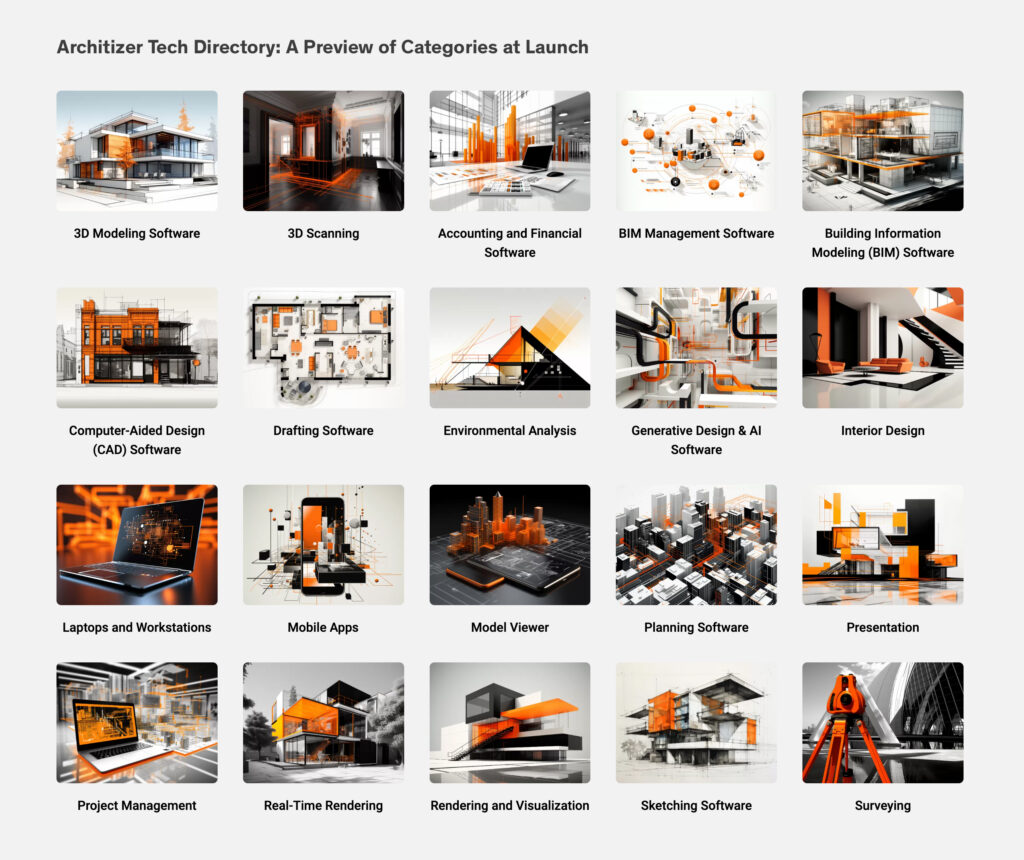
The directory features the latest generative design and AI (artificial intelligence) software, as well as listings for rendering and visualization, 3D modeling, project management and many more. Explore the complete library of categories here.

Without further ado, check out the first 100+ tools to make the platform:

Explore Top Tech Tools for Architects

Screen recording of Architizer Tech Directory for Architects

Review Your Favorite Architectural Tools — and Get Featured!

A key element of the Tech Directory is the ability for users to write reviews. Architizer is a community-based site, and there is incredible potential for architects and designers to share knowledge and gain insights on the latest AEC technology through this platform.

If you have a tech tool that you love and rely on to do your best work, we encourage you to search for it in the Tech Directory and leave a review for others to read! We’ll include select quotes from the most insightful reviews in upcoming editorial features, offering you the chance to become a thought leader in AEC technology.

Write a Tech Review

Writing a review is quick and easy: Simply go to the Tech Directory, click ‘Sign In‘ in the top right corner, and create your Tech Directory user profile (this is distinct from your Architizer profile, if you have one). Then, search for and select the tool you’d like to leave a review for and click ‘Write a Review‘. You can give the tool a star rating (from 1 to 5) and write your thoughts about the tool.

Try to include as much detail as possible: What are the best features of the tool and why? What differentiates the tool from its competitors? Does the tool have any missing features or drawbacks?

Comprehensive, authentic reviews will help grow the utility of the Tech Directory, and provide the brands that make these tools with valuable insights they can use to improve their products in future. We’ll share more on how to create a good review in an upcoming editorial feature, so stay tuned!

Make Architectural Software or Hardware? Add Your Listing for Free

The Tech Directory launches with just over 100 tools, but this is just the beginning: We invite all makers of architectural software and hardware to create their own listings, and help us grow this database into a comprehensive home for architectural technology.

A basic listing is free to create, and you can get started here (all listings are subject to approval from Architizer’s editorial team before they go live). Architizer’s editorial team can help you perfect your profile and guide you on how to best promote your listing. (Hint: Start by inviting your super fans and power users to leave an insightful review about your tool!)

Create a Listing

Beyond the free listings, there are Professional and Enterprise Plans for those looking to enhance the visibility of their brand and provide prospective clients with more insights into their tools. Those on the Professional Plan can upload more images, enabling them to add additional screenshots, case studies and product shots. They can also add an email contact to their profile, and will see their listing prioritized in the featured section of the Architizer Tech homepage.

In addition to these features, Enterprise members can add videos to their listing, enabling them to include showreels, demos, and tutorials as desired. They can also add a contact phone number and additional details to their listing — click here to see a full list of subscription benefits.

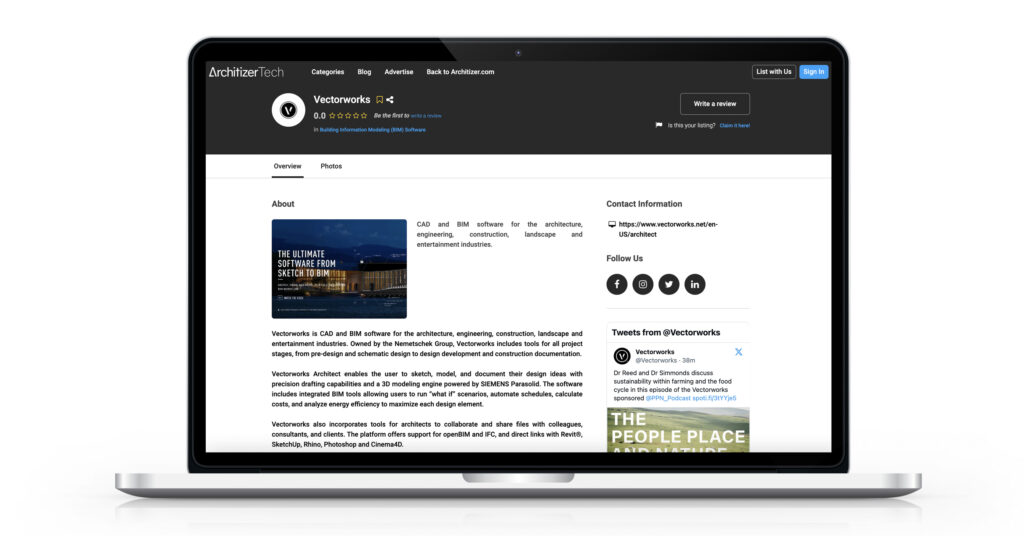
Architizer Tech Directory Categories InfographicWe hope you enjoy exploring the Tech Directory and find it useful when doing your research into the latest architectural technology. As noted, this is just the beginning: We plan to develop this platform into a comprehensive directory that will benefit everyone in the construction industry.

Ultimately though, the success of the directory will come down to you: The people that use these tools every day. Reviewing your favorite applications will give your go-to brands priceless insights and feedback that they can then use to improve their products, creating a virtuous cycle of technological innovation. As mentioned, your review might just get you featured in our next editorial!

With this in mind, we look forward to seeing your thoughts on the top tech tools for architects — head this way to get started!

Reference

a petal in the urban oasis 2
CategoriesArchitecture

epiphany architects’ public installation in chengdu undulates like a petal

A Petal in the Urban Oasis by epiphany architects in chengdu


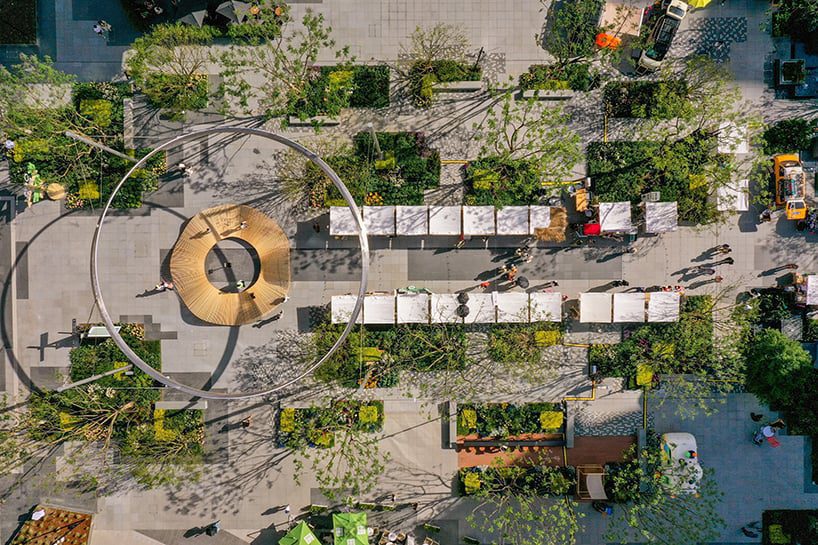
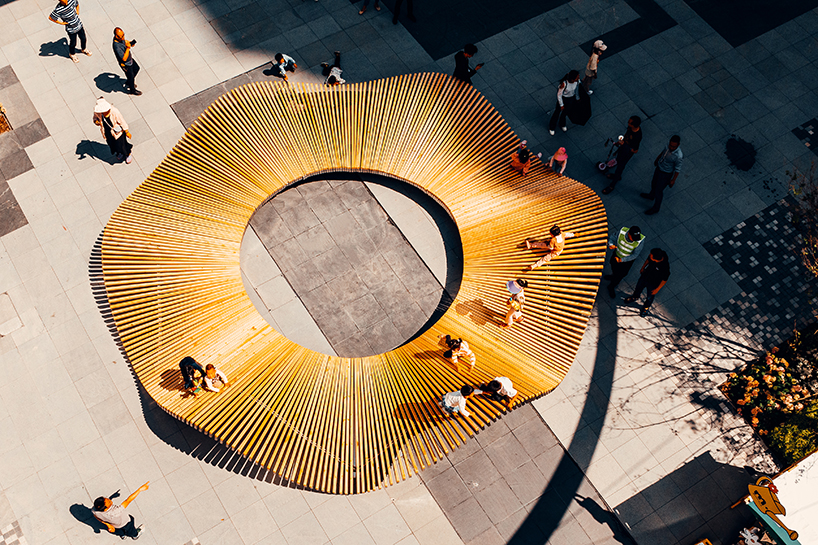
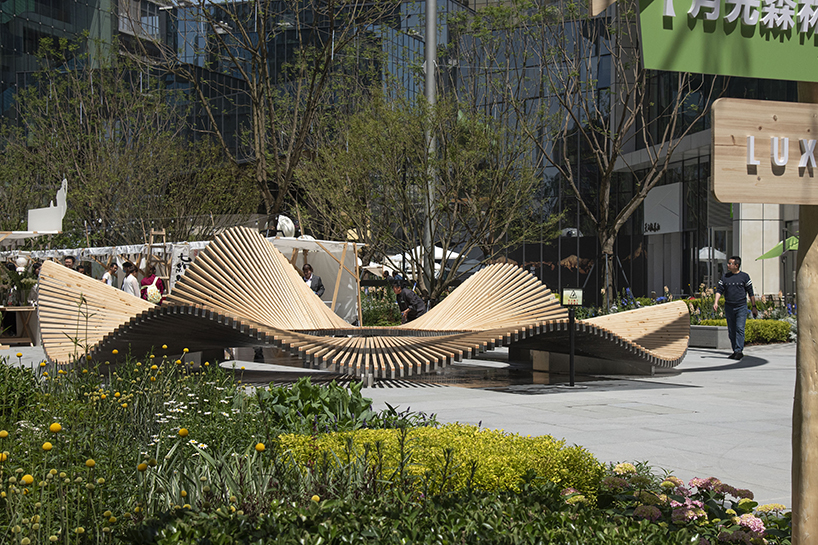
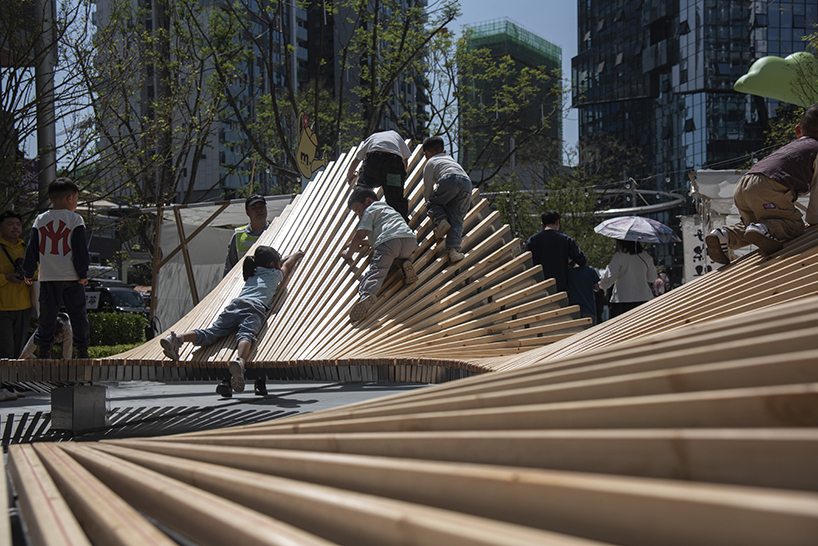
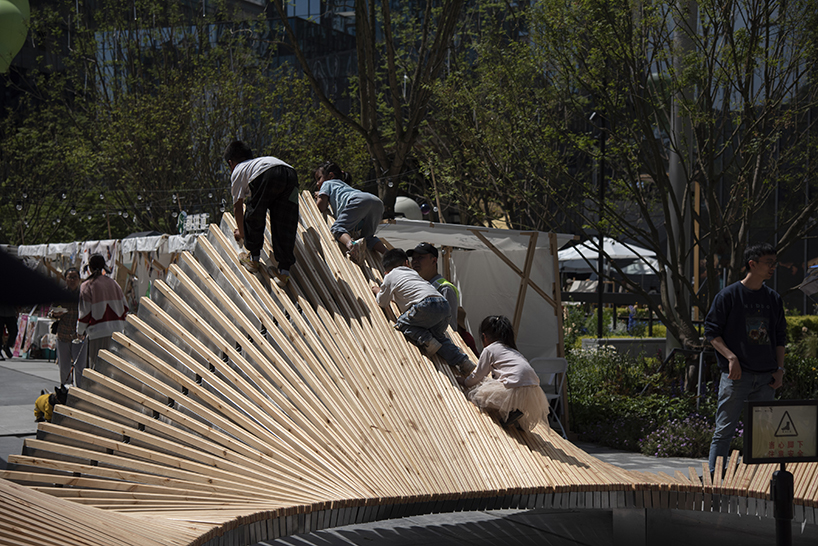
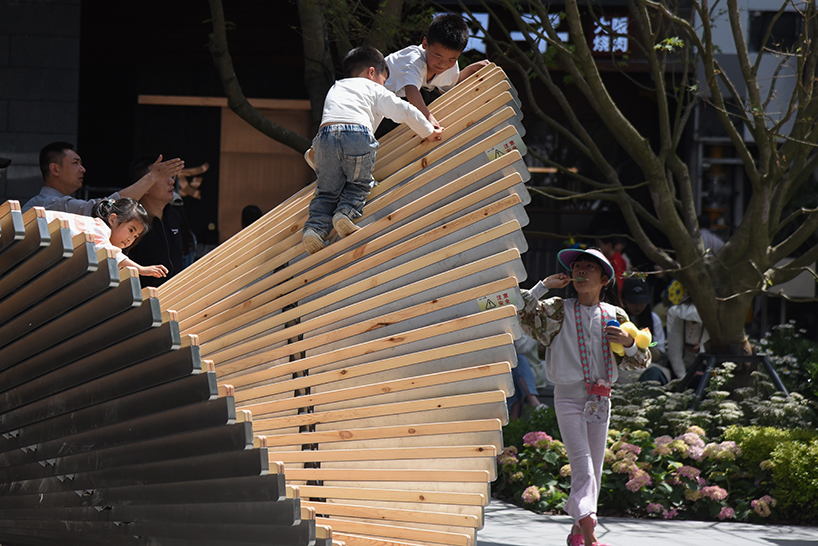
Sited in Chengdu‘s Luxezone Plaza, A Petal in the Urban Oasis is a new public installation completed by Chinese studio Epiphany Architects. The wooden design gracefully flows and undulates amid the lush urban greenery, creating playful light and shadow effects for visitors to enjoy. ‘Through interaction with the surrounding environment, it flexibly adjusts its shape to present itself in the most suitable way. This petal welcomes every resident and visitor with open arms,’ shares the studio. At its center, a circular void offers a uniform height to create a comfortable social space. At the same time, its outer, undulating body reveals different heights that lead to a more lively and dynamic appeal and more opportunities for interaction — namely playing, sitting, leaning, gathering, and resting. The children’s engagement brings a particularly more interesting dimension to the dynamics. 

a petal in the urban oasis 2
A Petal in the Urban Oasis | all images courtesy Epiphany Architects


using 300 wooden pieces of varying lengths


Supporting the installation by Epiphany Architects (see more here) are six mirror bases cleverly designed to align with six points where the petal ‘drops’. This design visually integrates the bases with the petals, echoing its image of lightness and buoyancy. In addition to the bases, the installation utilizes curved steel trusses to support the entire form. These trusses are connected to the lightbox using a snap-fit method, ensuring the overall structure’s stability while effectively concealing the trusses between the wood and stainless steel lightboxes. This unique petal is meticulously composed of 300 wooden elements of varying lengths and stainless steel light boxes. Each lightbox has a different angle of connection with the trusses, resulting in 600 other forms of connectors. In the production process, the sequence of node design, data output, data organization, CNC machine input and output, and overall assembly showcases the perfect integration of technology and art.

a petal in the urban oasis 1
creating varying light and shadow effects

a petal in the urban oasis 4
the undulating wooden installation mimics the movement of a petal

a petal in the urban oasis 6
children exploring the structure by Epiphany Architects

a petal in the urban oasis 7
climbing to the top

a petal in the urban oasis 8
a continuous wave-like surface

Reference

The raw concrete facade of Trunk Hotel Yoyogi Park
CategoriesInterior Design

Keiji Ashizawa Design and Norm Architects create Trunk Hotel in Tokyo

An exposed raw concrete facade fronts the Trunk Hotel Yoyogi Park, which Japanese studio Keiji Ashizawa Design and Danish firm Norm Architects conceived as a minimalist retreat in the heart of the city.

Marking the third location in a trio of Trunk hotels in Tokyo, the design of the boutique hotel was rooted in the concept of “urban recharge”, according to Trunk chief creative officer Masayuki Kinoshita.

The raw concrete facade of Trunk Hotel Yoyogi Park
Trunk Hotel Yoyogi Park features a raw concrete facade

The hotel group said the idea was to balance the opposing elements of tradition and modernity as well as nature and the city and the melding of both Japanese and European craft.

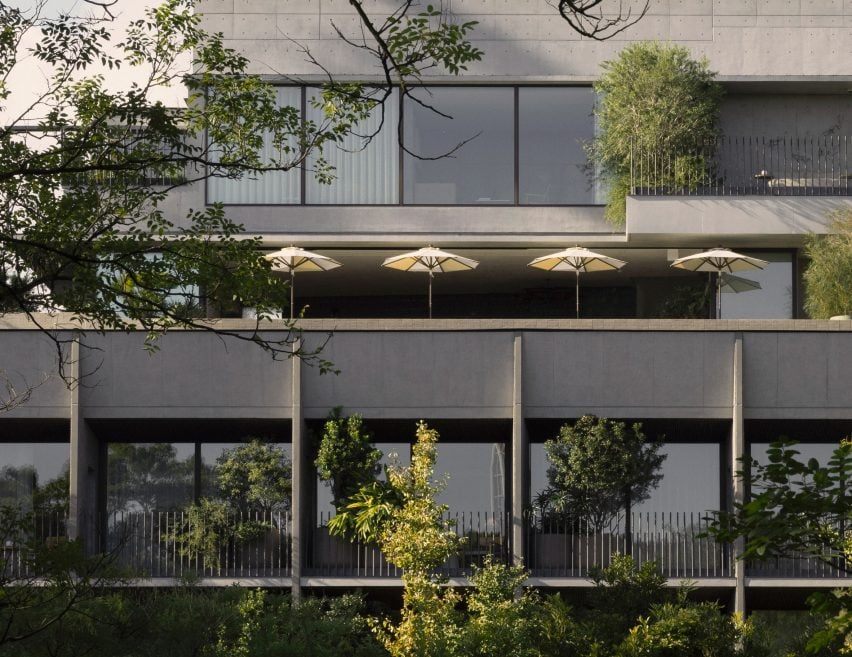
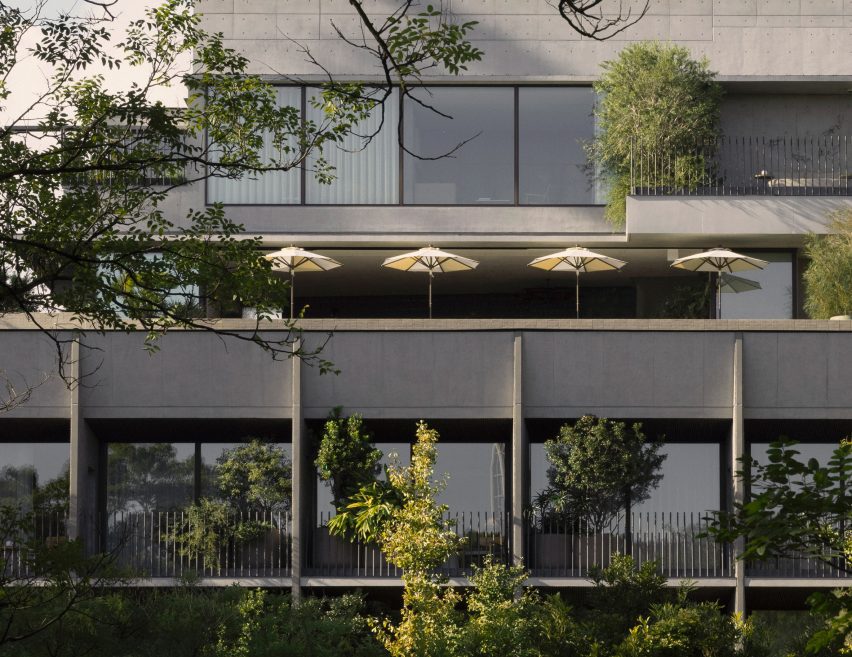
Keiji Ashizawa Design created a textured concrete aggregate facade for the seven-storey building, which is punctuated with steel-lined balconies and overlooks Yoyogi Park’s lush treetops.

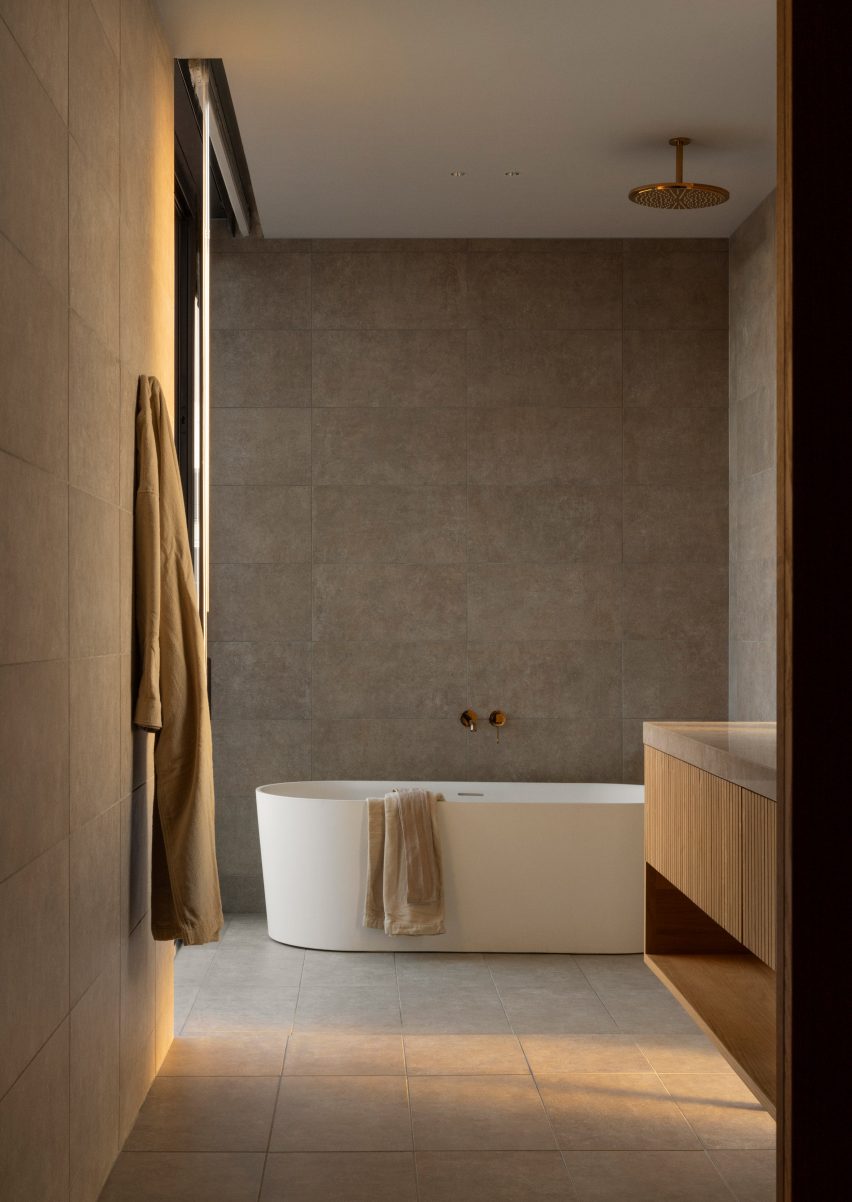
Neutral bathroom within Tokyo's Trunk Hotel
Guest rooms feature a muted colour and material palette

The studio worked with Norm Architects to design the minimalist interior, accessed via a copper-clad entrance.

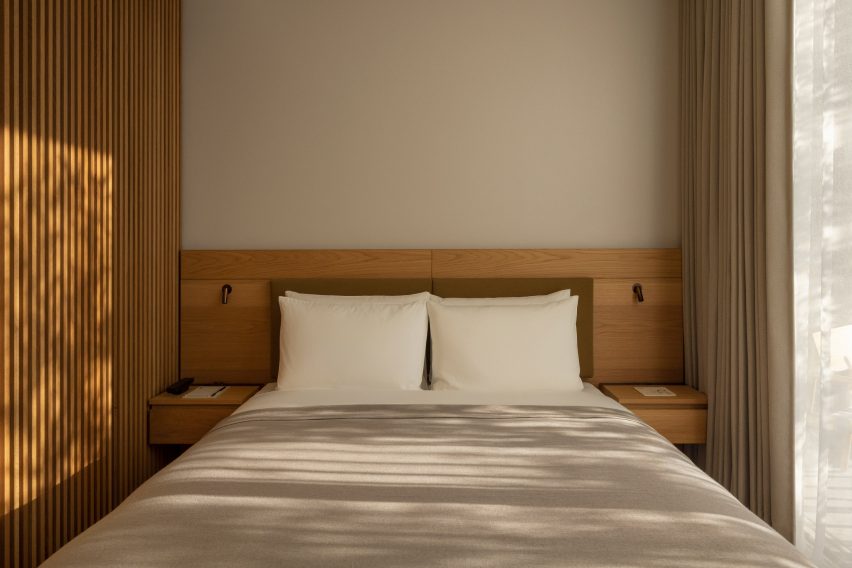
A total of 20 guest rooms and five suites were dressed in a muted colour and material palette featuring hardwood flooring and plush Hotta Carpet-designed rugs informed by traditional Japanese architecture.

Paper-cord chairs and washi pendant lights at Trunk Hotel in Tokyo
Paper-cord chairs and tapered washi pendant lights contribute to the minimalist design

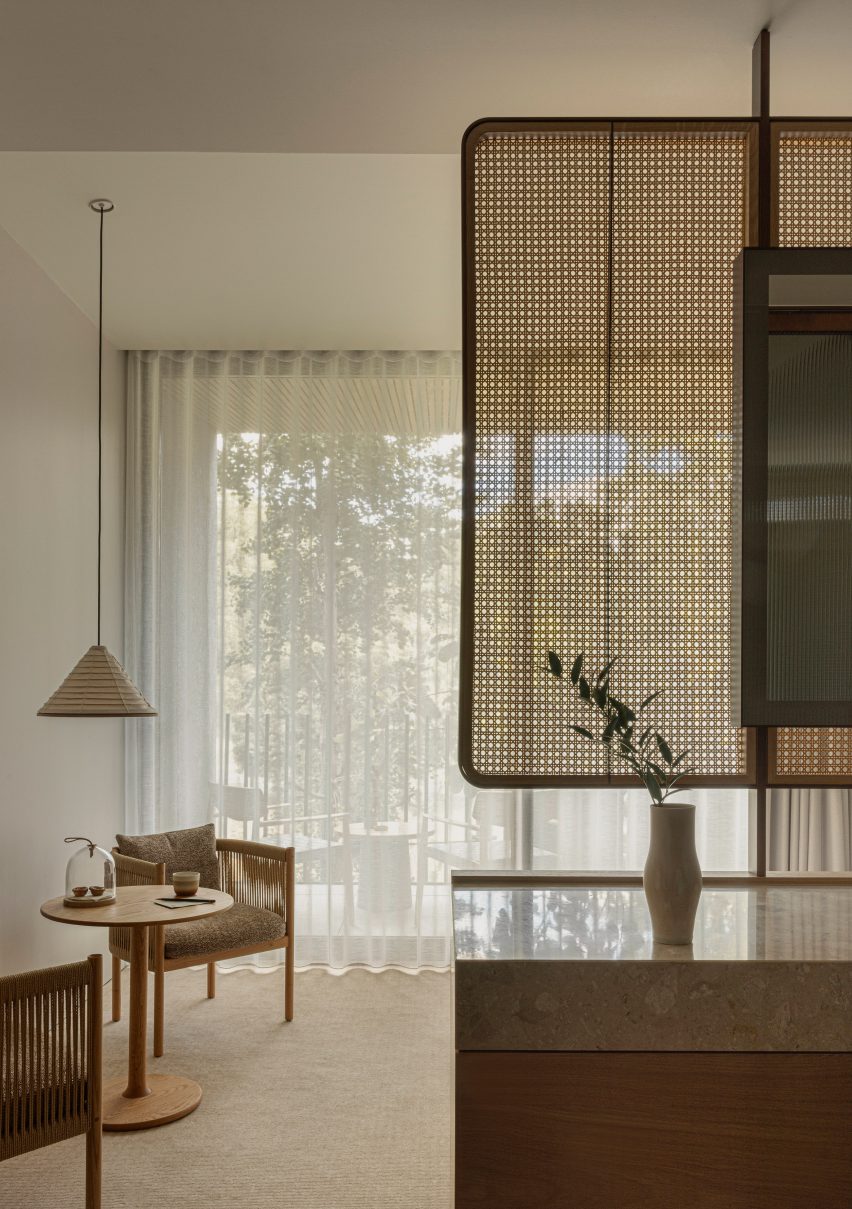
Delicate rattan partition walls delineate spaces within the rooms, which open out onto the building’s balconies that were fitted with slanted ceilings in order to encourage sunlight into each room “as if mimicking the gentle transitions of a day”.

“It’s been an interesting journey for us to find the right balance between a space that is relaxed and vibrant at the same time,” said Norm Architects co-founder Jonas Bjerre-Poulsen.

Minimalist neutral double bed within the Trunk Hotel in Tokyo
The interiors were designed to be both “relaxed and vibrant”

The rooms are also characterised by paper-cord chairs and tapered washi pendant lights as well as abstract artworks, amorphous vases and grainy floor-to-ceiling bathroom tiles.

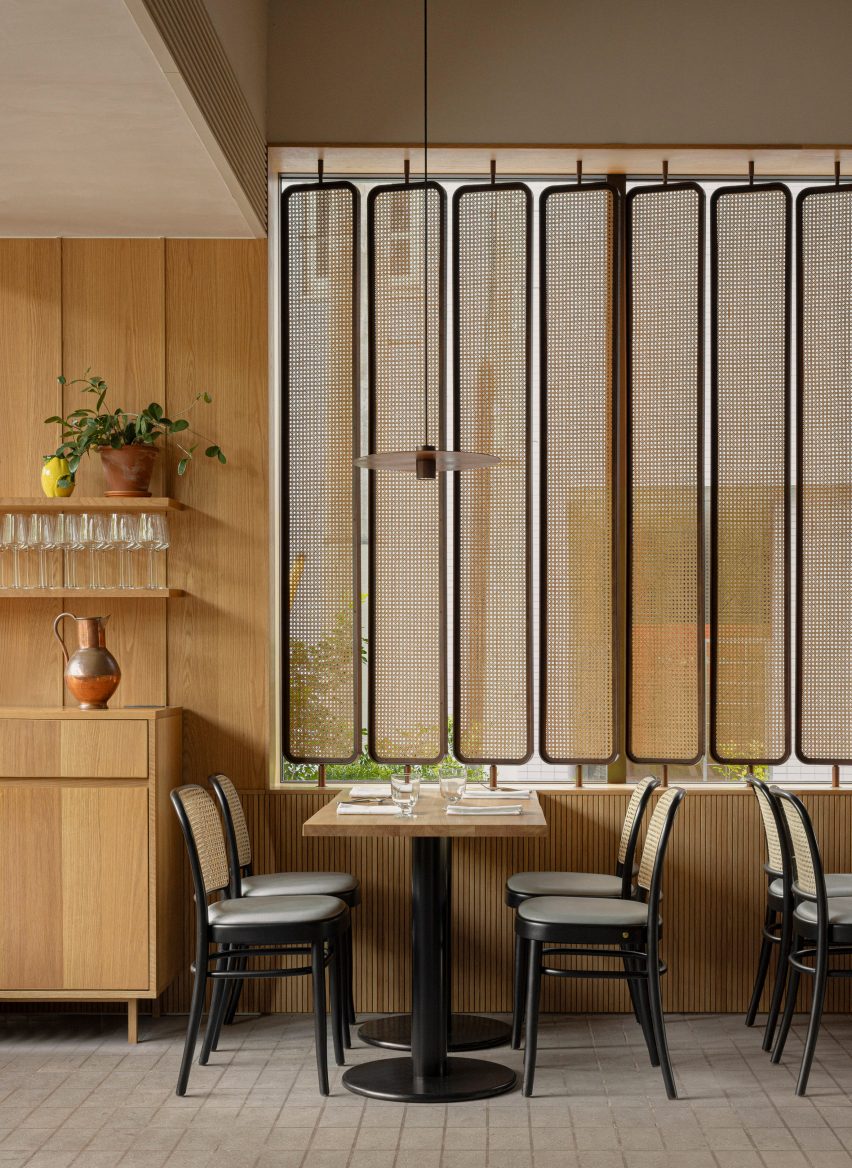
On the ground floor, oak seating designed by Norm Architects for Karimoku features in the hotel restaurant, which includes a striking copper-clad pizza oven and the same rattan accents that can be found in the guest rooms.

Rattan room dividers in the restaurant of Trunk Hotel
Rattan accents can also be found in the hotel restaurant

“It is a very unique and gratifying experience in the sense that the architecture, interior and furniture, as well as the attention to detail, have created a space with such a strong sense of unity,” said Keiji Ashizawa Design.

An open-air pool club is located on the sixth floor of the hotel.

Sand-blasted concrete flooring was paired with thin bluey-green tiles that make up the infinity swimming pool, which overlooks the park below.

A “glowing” firepit can also be set alight after dark, intended to create a soothing contrast with the bright Tokyo skyline.

Rooftop infinity pool overlooking Yoyogi Park
The Trunk Hotel features a rooftop infinity pool

The city’s first Trunk Hotel opened in Shibuya in 2017, while the second location is an offbeat one-room hotel in the metropolis’s Kagurazaka neighbourhood featuring its own miniature nightclub.

The photography is by Jonas Bjerre-Poulsen.

Reference

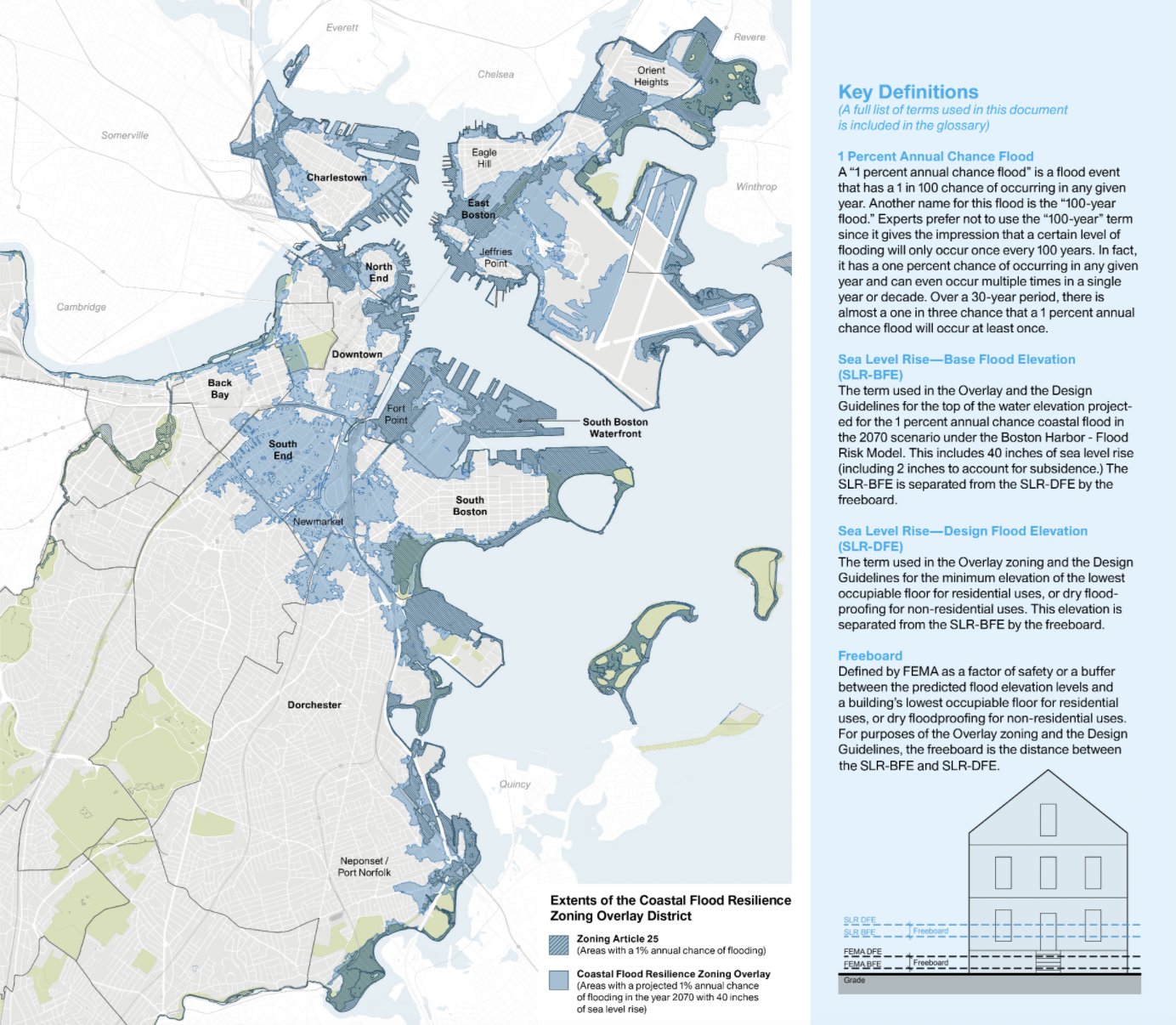
Boston Coastal Flood Resilience Design Guidelines and Zoning Overlay District.
CategoriesArchitecture

Architects’ Guide: Short and Long Term Design Strategies for Flood Defense and Urban Resilience

Architizer’s 12th Annual A+Awards are officially underway! Sign up for key program updates and prepare your submission ahead of the Main Entry Deadline on  December 15th.  

With over half of the world’s megacities located along coastlines, many are at risk of experiencing rising sea levels and potential flooding. Projections suggest that by 2050, sea levels will increase by 0.25 inches (0.65 centimeters) per year. Cities around the globe are increasingly embracing comprehensive coastal resilience initiatives to address the urgent challenges of climate change. With climate change triggering a range of impacts, including the alarming rise in sea levels, extreme storm surges and high tides, urban areas are recognizing the need for proactive strategies to safeguard their coastal regions and the communities within them.

A diverse array of measures and actions — including nature-based and/or man-made defenses — are aimed at fortifying cities against the adverse consequences of coastal hazards. The impacts encompass not only the physical encroachment of water onto land but also the destructive effects on infrastructure, buildings, open spaces, and the well-being of urban populations.

Adapting the built environment to reduce the impact of flooding could include building codes, restricting construction in at-risk areas, and planning to live with water. Inevitably, moving away from the coastline will occur in some places. Proactive, managed retreats will have significantly lower social and economic impacts than forced, reactive retreats after the event of coastal flooding.

Fostering Resilience Through City Initiatives and Guiding Principles

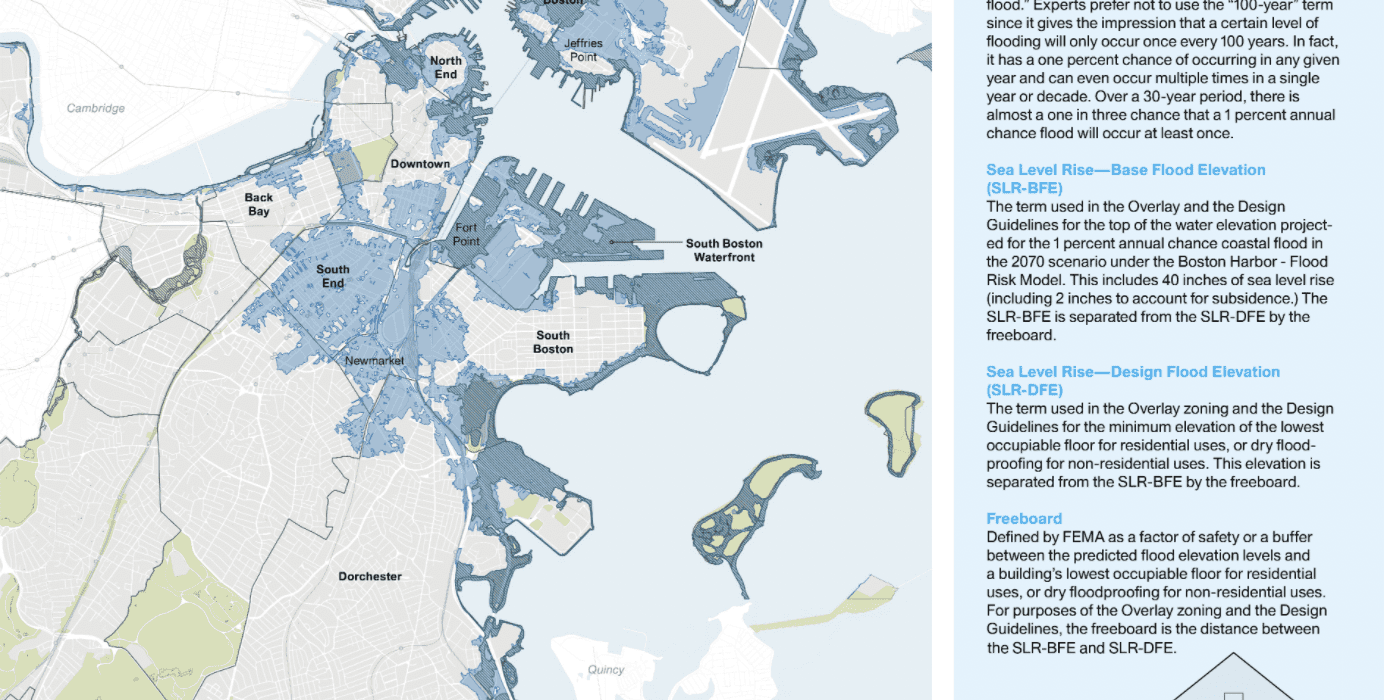
Boston Coastal Flood Resilience Design Guidelines and Zoning Overlay District.

Boston Coastal Flood Resilience Design Guidelines and Zoning Overlay District by Utile, Inc. Boston, Massachusetts, United States.

Resilient design principles serve as essential tools for municipal authorities, property owners and developers, facilitating informed, forward-looking decisions related to flood protection for existing structures and new construction. By following these guidelines, cities can minimize damage and disruption, all while fostering greater awareness among residents and businesses. The uniqueness of each at-risk location is considered in the design, tailoring strategies to the specific circumstances. For example, Boston has implemented initiatives like Climate Ready Boston and the city’s Coastal Flood Resilience Guidelines, which are exemplary instances of resilient design in action.

As a crucial component of the city’s Climate Ready Boston ongoing initiative, Utile spearheaded the creation of Boston’s first Coastal Flood Resilience Design Guidelines in collaboration with the Boston Planning and Development Agency. These guidelines, applicable to existing and forthcoming developments, ensure that structures are constructed or adapted to withstand the threats posed by sea level rise and storm surge. This initiative will be facilitated by a future zoning overlay, encompassing areas at a 1% risk of coastal flooding by 2070.

Working alongside Kleinfelder, Noble, Wickersham & Hart, LLP, and an advisory team featuring HDR and Offshoots, Inc., Utile employed a comprehensive project approach. This approach integrated national best practices, current regulations, analysis of Boston’s urban landscape, community input, and expertise in cutting-edge building technology. The Guidelines seamlessly complement various other initiatives within the Climate Ready Boston program, including neighborhood plans, public right-of-way guidance and existing zoning.

With a focus on retrofitting, the guidelines incorporate case studies outlining short- and long-term adaptation strategies tailored to the most common building types in flood-prone areas, effectively communicated through clear, concise graphics. Additionally, our zoning recommendations facilitate the implementation of these enhancements while striking a balance between private interests and their impact on the public domain.

Resilient Infrastructure: A Canvas for Innovative Design

Efforts to enhance flood defense and adapt to rising sea levels represent a design opportunity. These initiatives not only mitigate coastal hazards but also serve as remarkable engineering, architectural and urban creations. They blend aesthetics and functionality, fostering resilient, sustainable and visually appealing solutions that enhance urban landscapes while addressing climate challenges.

Located between St. Pauli Landungsbrücken and Baumwall in Hamburg, the new 2,050-feet (625-meter) Zaha Hadid Architects’ river promenade at Niederhafen is a vital component of the city’s upgraded flood protection system. Initially established in response to the catastrophic storm surge floods of 1962, which claimed 315 lives and displaced 60,000 residents, Hamburg’s flood barrier was erected between 1964 and 1968, reaching up to 24 feet (7 meters) above sea level.

Subsequent hydrological analysis and computer simulations pinpointed the necessity of raising the barrier by approximately 3 feet (1 meter) to fortify Hamburg against future winter storm surges and extreme high tides. Inspections in 2006 exposed overloaded supporting elements and foundation challenges, leading to a design competition and, eventually, the selection of Zaha Hadid Architects for the project.

The Niederhafen flood protection barrier occupies a prominent location encompassing Hamburg’s renowned riverside promenade — a tourist attraction and one of the city’s main public spaces. From its elevated position, the promenade provides unobstructed views of the Elbe River and the bustling port.

The finished project has reconnected Hamburg’s Niederhafen flood protection barrier with the city’s urban fabric, providing a popular riverside walkway and facilitating connections with nearby neighborhoods. The barrier’s eastern section stands 8.60 meters above sea level, while the western part reaches 8.90 meters, safeguarding the city from maximum winter storm surges and high tides. With a minimum width of ten meters (approximately 33 feet), the riverside promenade offers ample space for pedestrians, food vendors, cafes, shops, and public amenities at street level, enhancing its appeal as a vibrant public space.

Envisioning the Future: Flood Protection Infrastructure as Urban Catalyst

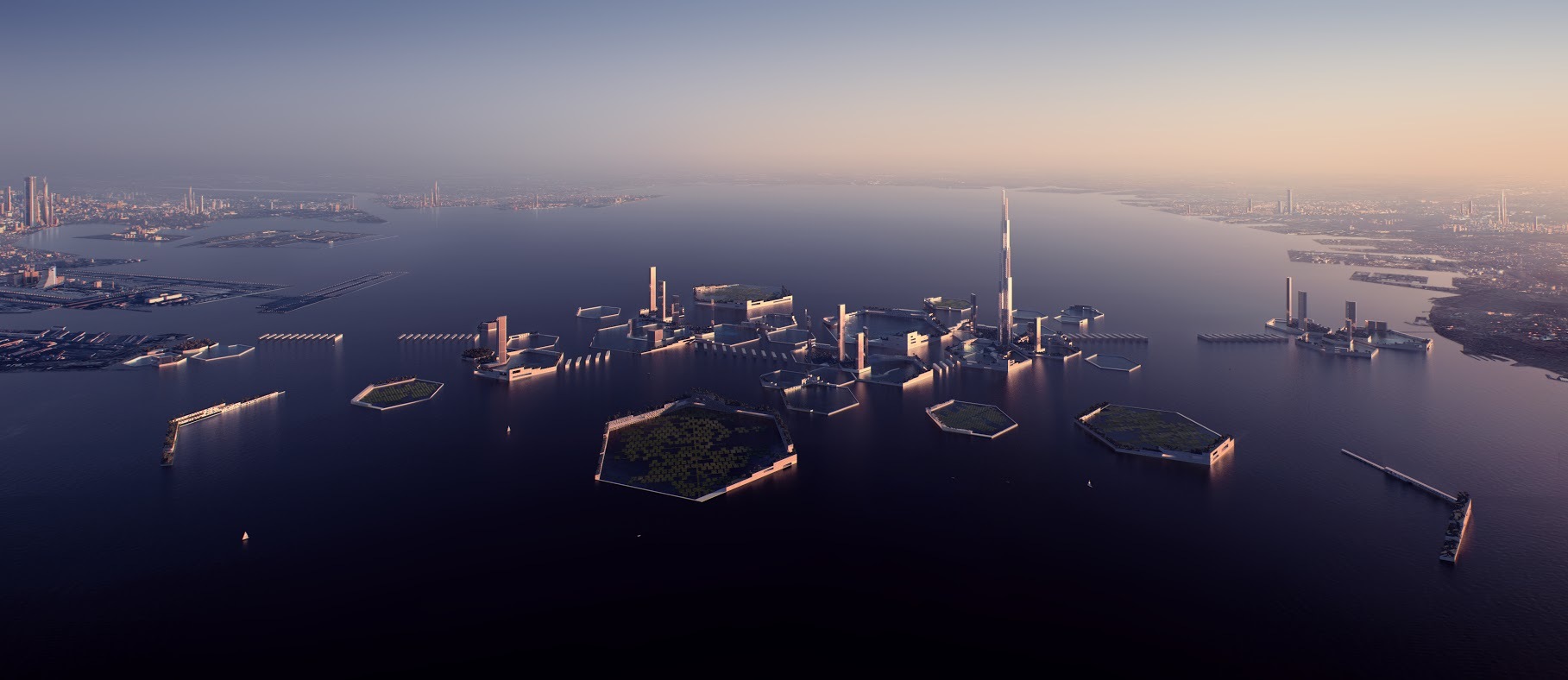
Next Tokyo 2045

Next Tokyo 2045 by Kohn Pedersen Fox Associates, Tokyo, Japan.

The potential of flood protection infrastructure goes beyond its primary role as a safeguard against inundation. It has the capacity to provide the groundwork for the creation of dynamic recreational open spaces and the expansion of high-density urban communities.

Next Tokyo 2045 envisions a resurgent megacity that that adapts to the challenges of climate change by establishing a high-density eco-district firmly underpinned by robust infrastructure. This archipelago of reclaimed land is planned to accommodate half a million residents, while fortifying Tokyo Bay against various water-related risks, such as rising sea levels, seismic activity and an increased frequency of typhoons.

Next Tokyo 2045 addresses the vulnerability of the low-elevation coastal zones around Tokyo Bay by implementing coastal defense infrastructure along the upper Tokyo Bay shoreline. Not only do these resilient infrastructural components enhance the city’s safety, but they also lay the groundwork for the creation of recreational open spaces and the development of high-density urban areas across the bay. This ambitious vision even includes the remarkable Sky Mile Tower, reaching over 5,250 feet (1,600 meters) in height.

As part of this development strategy, a share of the value generated from this newly coveted waterfront real estate will be allocated to support the essential municipal infrastructure required to sustain this urban transformation.

Safeguarding Cities: Resilience, Collaboration, and Urban Innovation

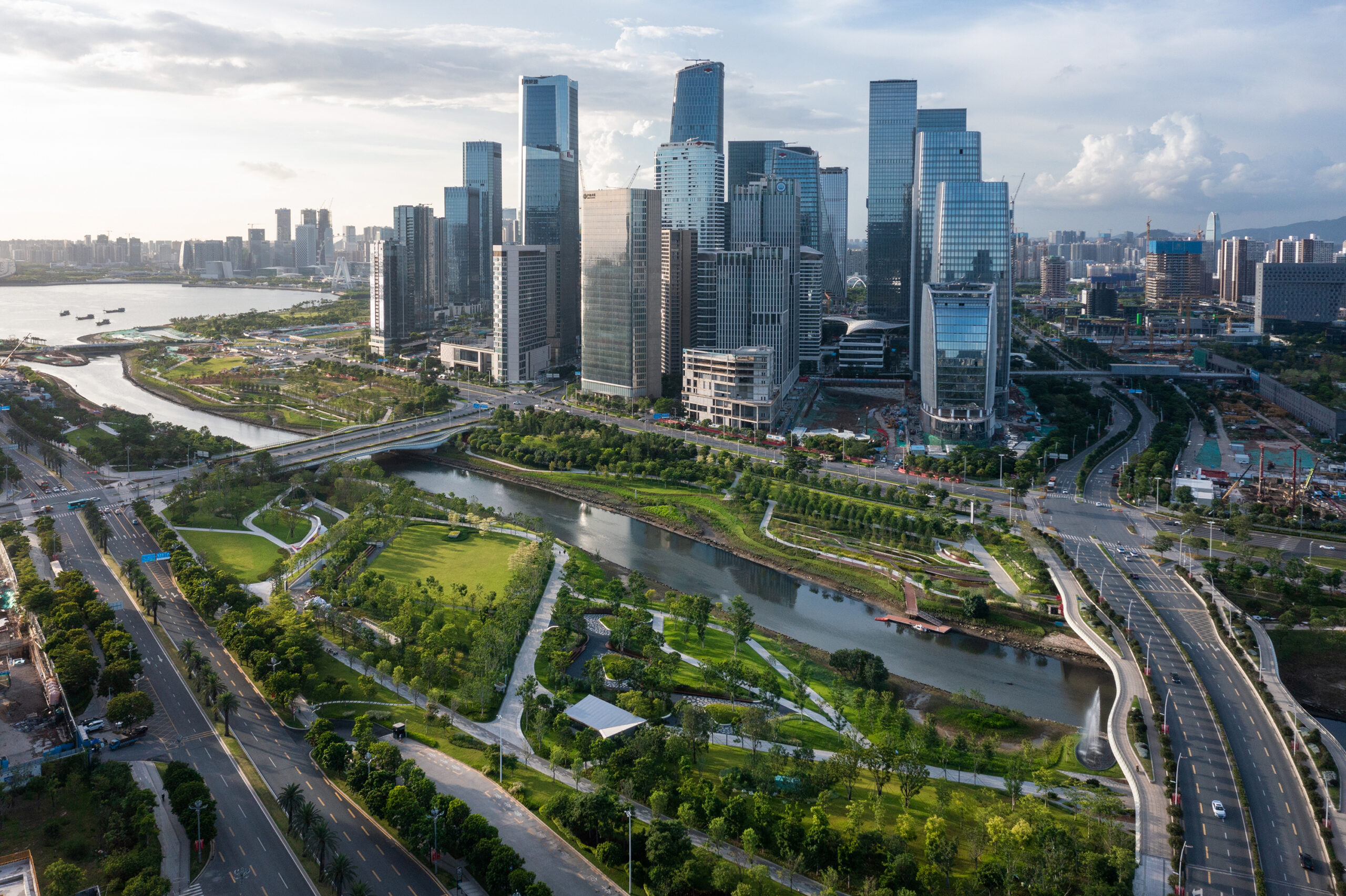
Qianhai’s Guiwan Park by Field Operations, Shenzhen, China | Jury Winner, 11th Annual A+Awards, Architecture +Urban Transformation

Cities are proactively implementing strategies not only to shield themselves from coastal hazards but also to create resilient, sustainable urban environments that can navigate the challenges of climate change. These coastal resilience initiatives aim at safeguarding current and future community well-being.

Collaboration and coordination among cities are pivotal, enhancing the effectiveness of actions and resource pooling, as the decisions of one location can affect neighboring areas. Coordinated efforts at various levels bolster regional climate resilience and promote the exchange of tools and knowledge. Moreover, community engagement is paramount to ensure inclusive action plans that address the needs of the most vulnerable populations.

The visionary Next Tokyo 2045 project demonstrates the potential of flood protection infrastructure extending beyond its core purpose. It not only safeguards against flooding but also serves as the foundation for the development of vibrant recreational open spaces and the growth of high-density urban communities. This innovative approach aligns resilience with urban expansion, showcasing how infrastructure can play a multifaceted role in shaping the future of cities.

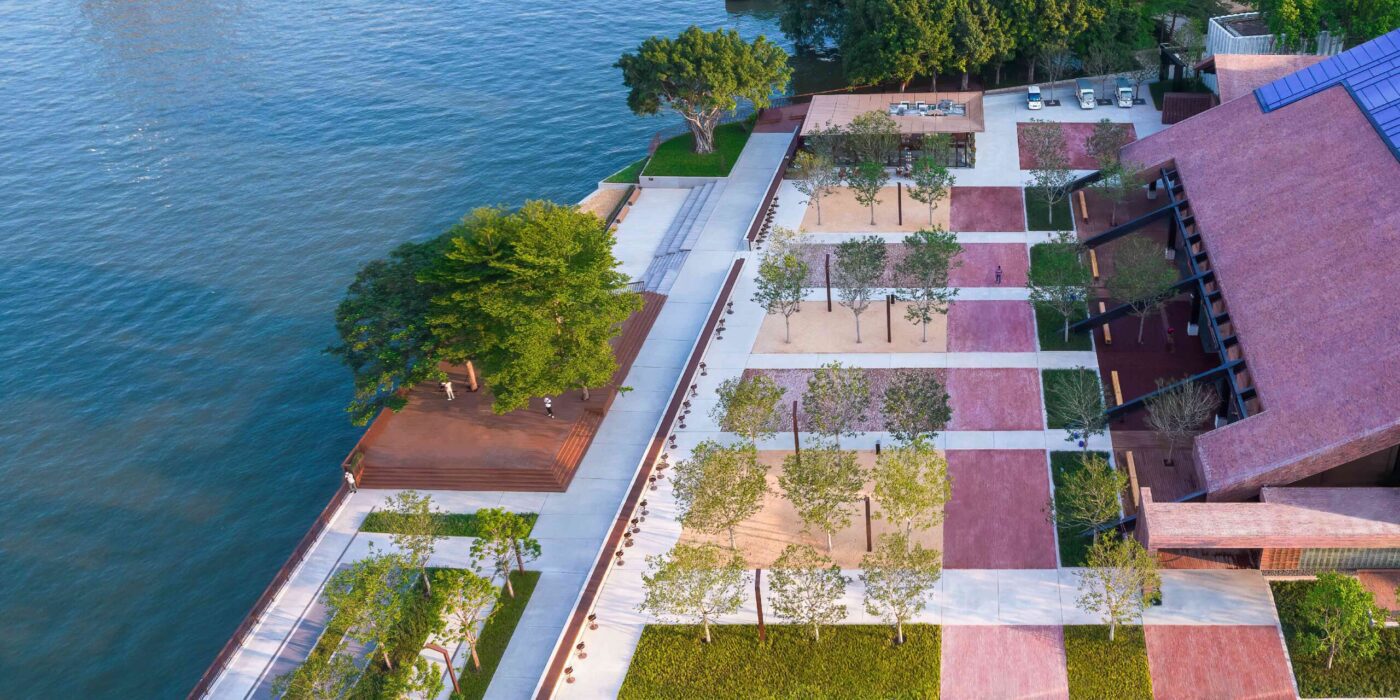
Top image: Bai’etan Exhibition Center Landscape by Sasaki, Guangzhou, China Popular Choice Winner, 11th Annual A+Awards, Sustainable Landscape / Planning Project

Architizer’s 12th Annual A+Awards are officially underway! Sign up for key program updates and prepare your submission ahead of the Main Entry Deadline on  December 15th.  


Reference

Bai’etan Exhibition Center Landscape by Sasaki
CategoriesArchitecture

New Kid on the Block: 6 Ways Architects Are Reinventing the Public Park

The latest edition of “Architizer: The World’s Best Architecture” — a stunning, hardbound book celebrating the most inspiring contemporary architecture from around the globe — is now available. Order your copy today.  
Square footage in the world’s most populous cities is a valuable commodity. There’s a pervasive urge to build bigger and better, extracting profit from every nook and cranny. Amid the frenetic pace of urban development, the public park is a radical thing. Democratic by its very nature, it’s a rare space open to all, where visitors can commune with nature and connect with their community without parting with a dime.

In the face of land scarcity and environmental challenges, the public park is changing. Architects are finding daring new ways to carve out pockets of space, preserve native terrain and shape compelling topographical experiences. Discover how these six winning projects from the 11th A+Awards are reinventing one of our most valuable public typologies…


1. Incorporating the Industrial Past

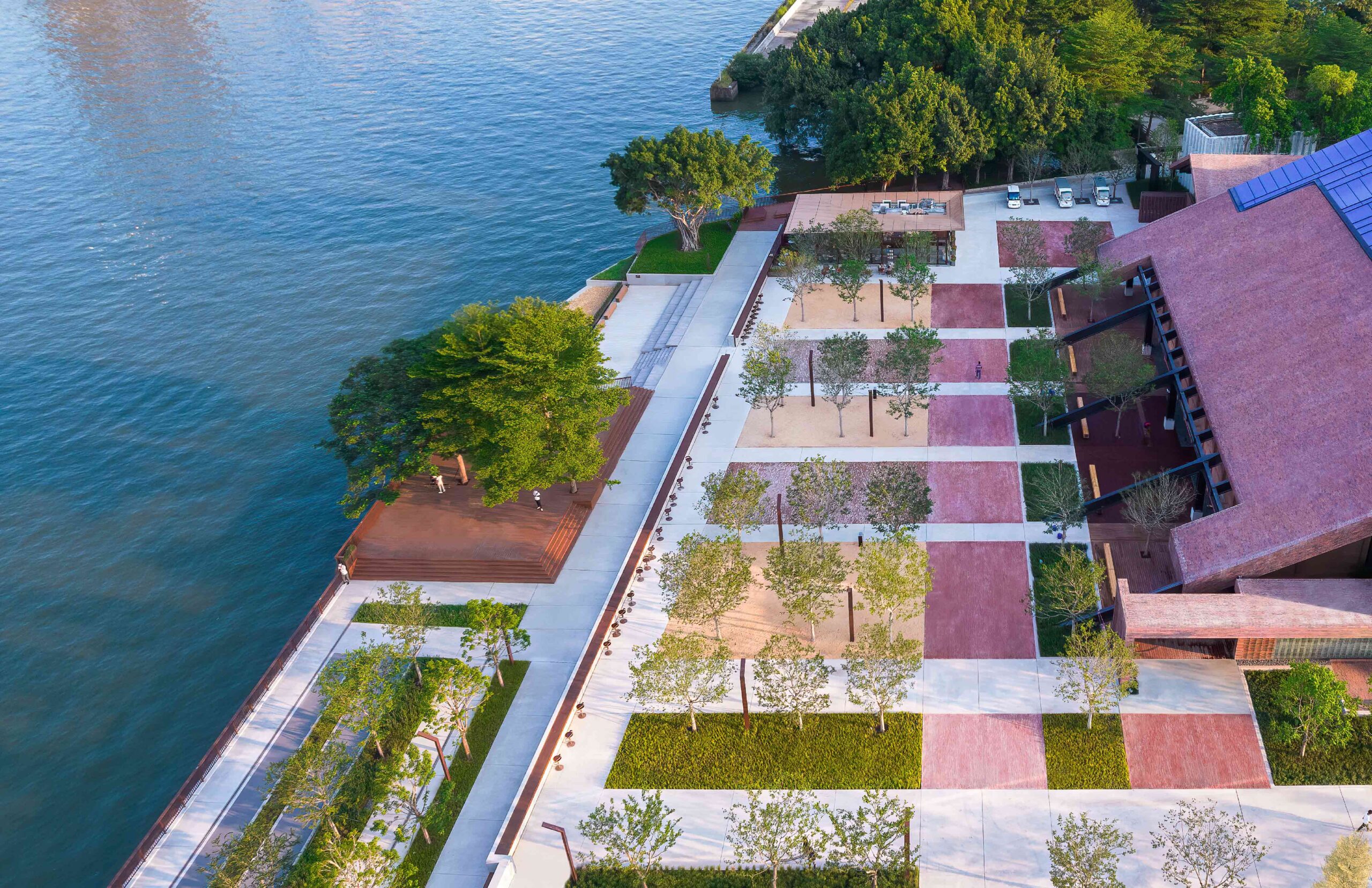
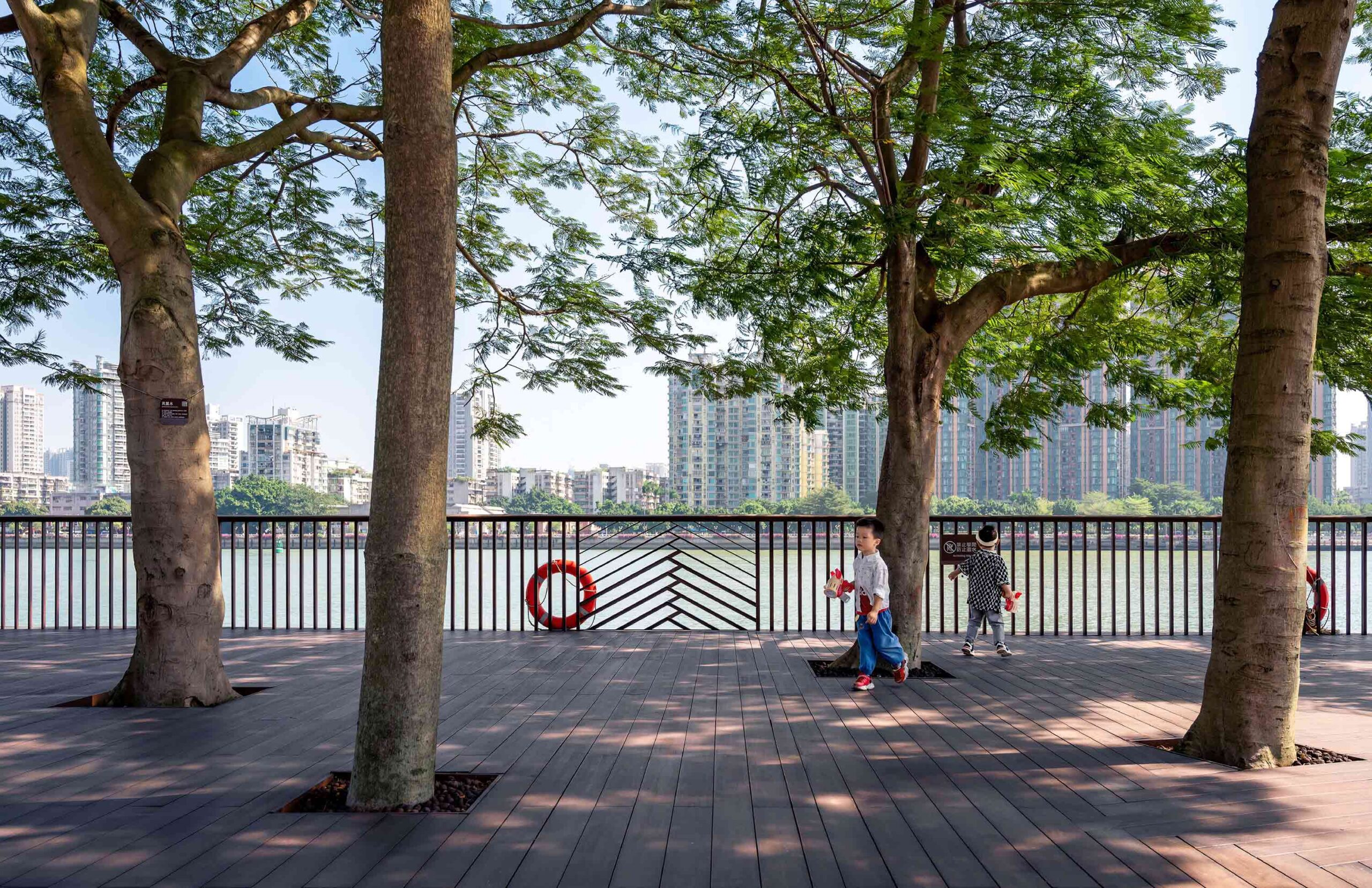
Bai’etan Exhibition Center Landscape by Sasaki, Guangzhou, China

Popular Choice Winner, 11th Annual A+Awards, Sustainable Landscape/Planning Project

Bai’etan Exhibition Center Landscape by Sasaki Bai’etan Exhibition Center Landscape by SasakiOnce bustling with warehouses, factories and docks, this stretch of land on the banks of Guangzhou’s Pearl River has undergone a dramatic transformation. The former industrial lot is now a remarkable public park, imbued with the spirit of its commercial past.

The fabric of a historic warehouse has been preserved and integrated into a new plaza. Brickwork salvaged from the site extends the roofline down to the ground, creating a tactile connection with the land’s former life. Existing topographic features such as the ficus grove have been preserved along the water’s edge, while the restored timber dock evokes the memory of the energetic, working waterfront. Motifs inspired by the factories, water and native trees are integrated into the design of the metal railings and the floodwall panels. In this dynamic project, past and present are thoughtfully placed in conversation.


2. Elevating Thoroughfares

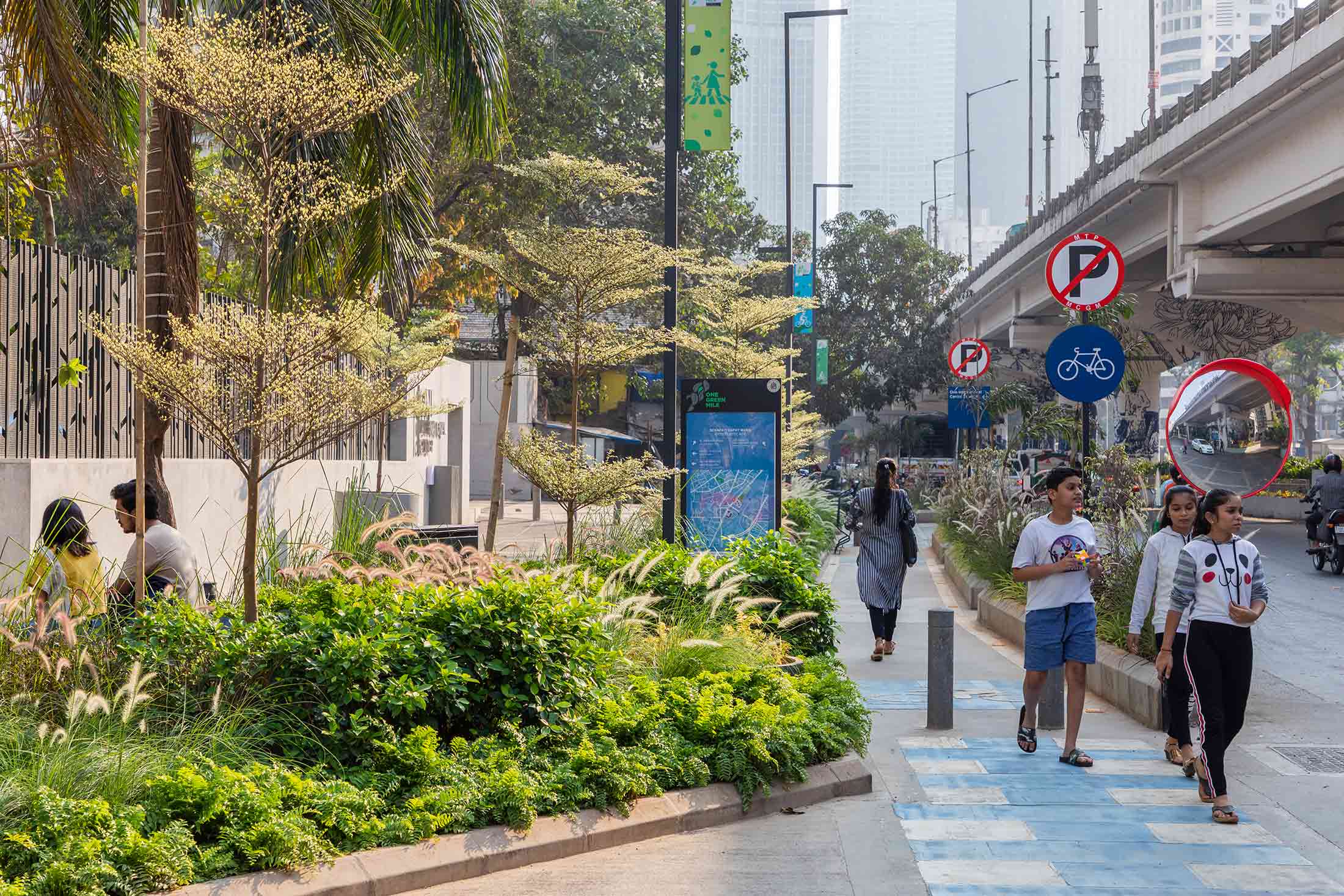
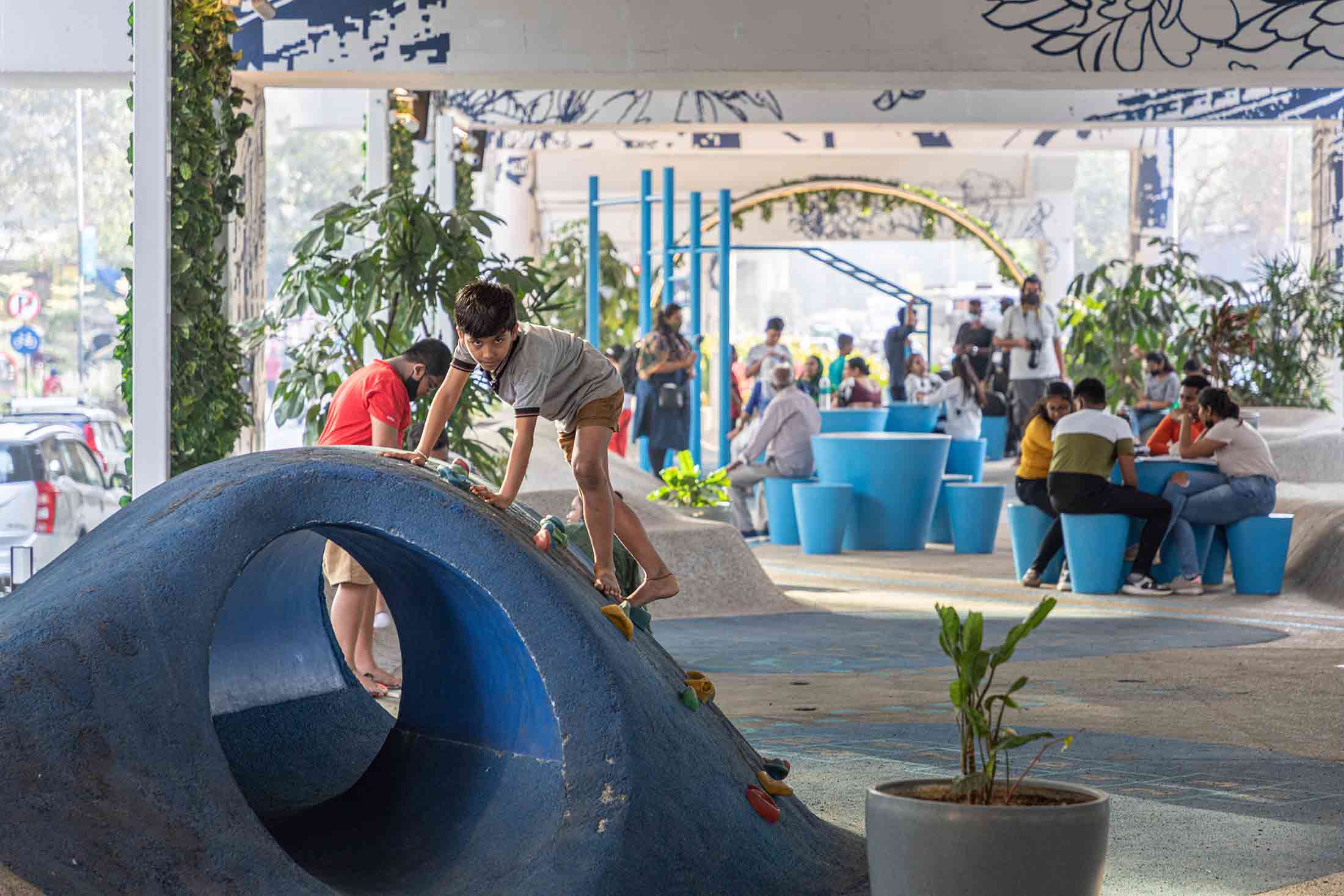
One Green Mile – Public Space and Streetscape Design by StudioPOD, Mumbai, India

Jury Winner, 11th Annual A+Awards, Sustainable Transportation Project

One Green Mile – Public Space and Streetscape Design by StudioPOD One Green Mile – Public Space and Streetscape Design by StudioPODIn a densely packed metropolis like Mumbai, prioritizing the public realm amongst the city’s vast transport infrastructure is a far from straightforward undertaking. This innovative masterplan sought to readdress the balance, creating a street that fullfils the needs of all spatial users. Impressively, the project reclaimed almost 2.3 acres of land for municipal use.

The geometries of the public walkways were expanded to create a richer experience for pedestrians and cyclists. Trees and shrubs line the thoroughfares, punctuated by ‘micro destinations’ and meeting points. Redundant spaces below the flyover were repurposed into vibrant hubs for the neighborhood to enjoy, encompassing community gardens, socializing zones and play equipment. Within this busy urban jungle, a new public world is flourishing.


3. Preserving Native Ecology

Pima Dynamite Trailhead by Weddle Gilmore Architects, Scottsdale, Arizona

Jury Winner, 11th Annual A+Awards, Public Parks & Green Spaces

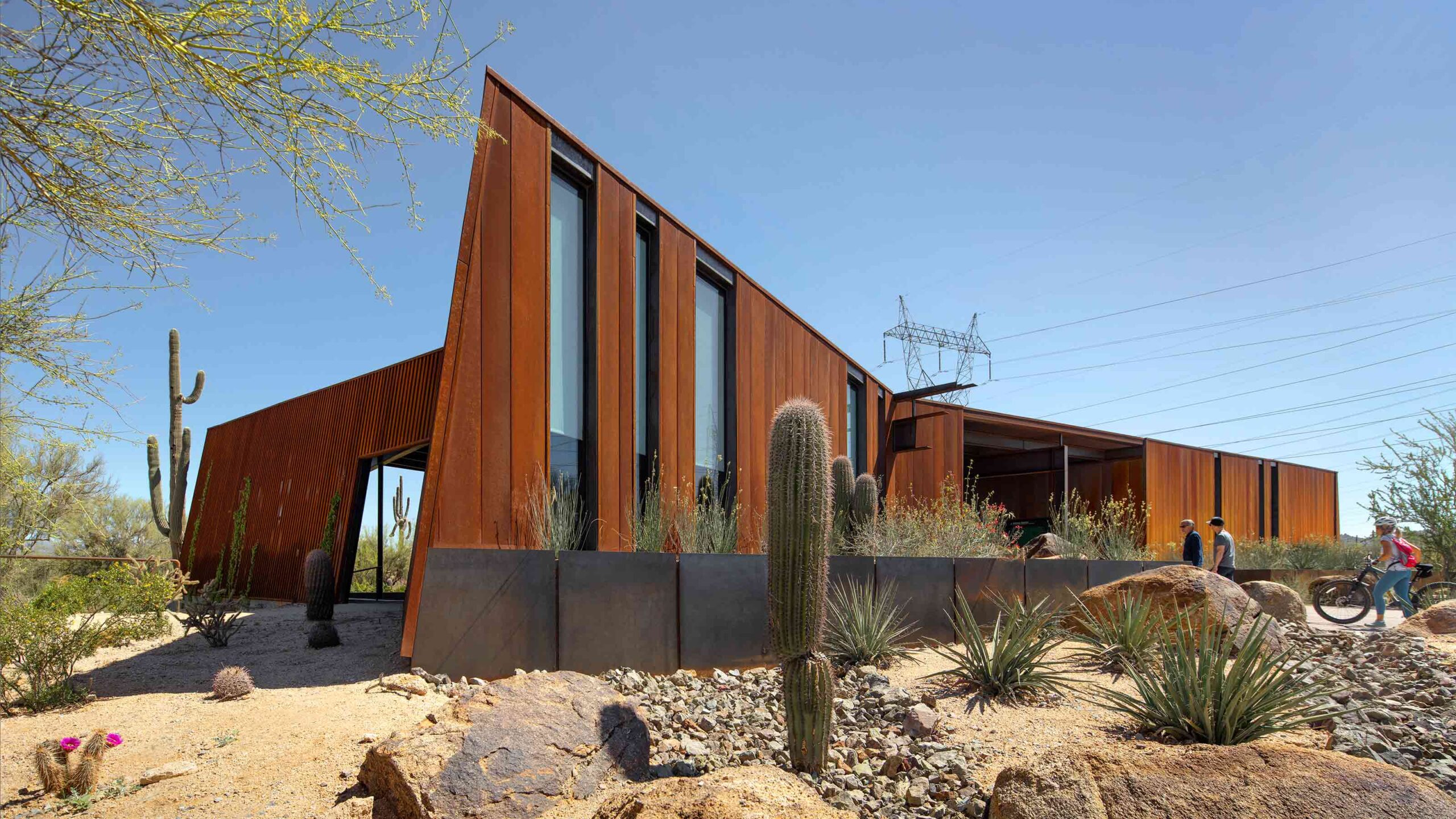
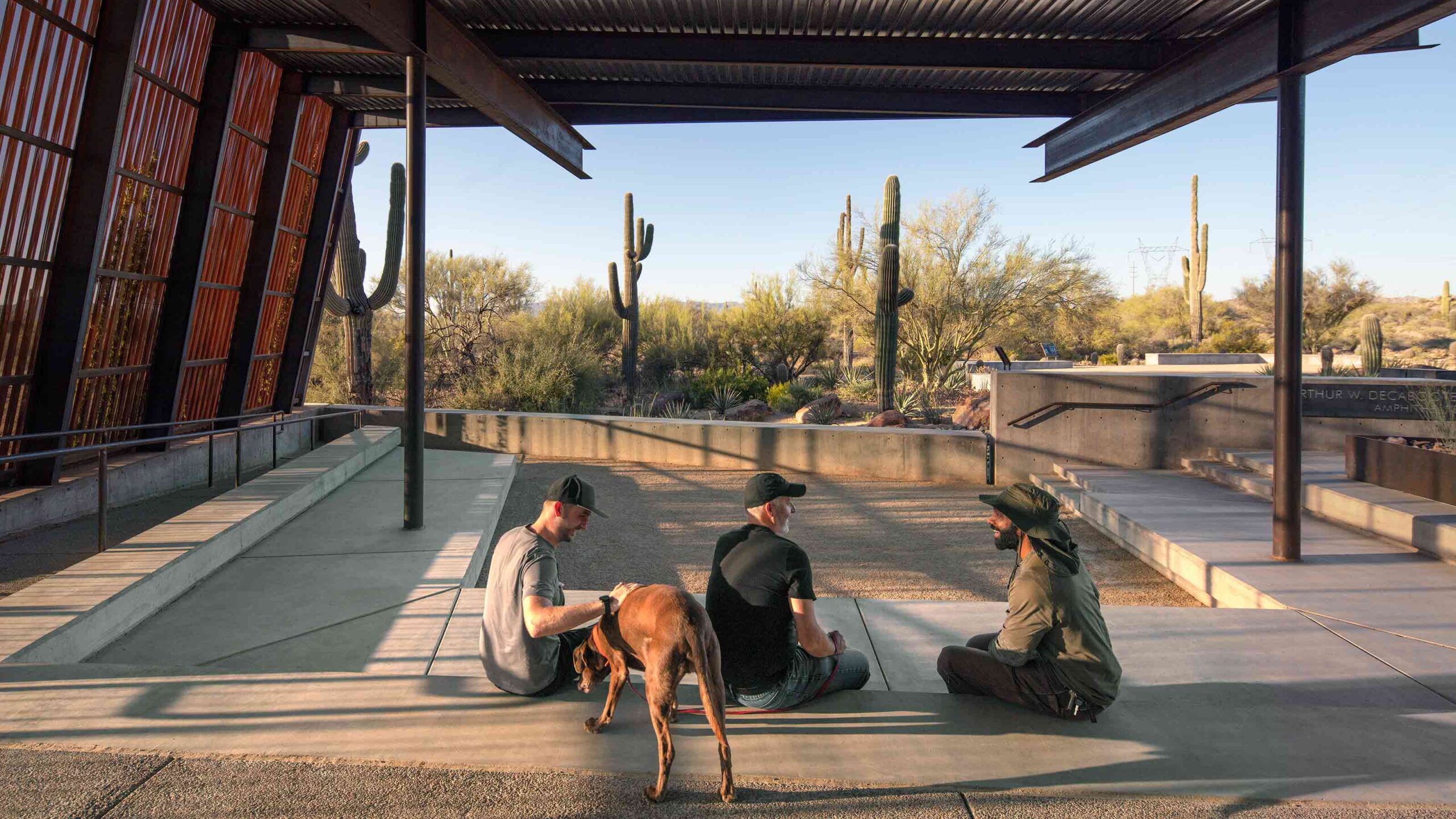
Pima Dynamite Trailhead by Weddle Gilmore Architects Pima Dynamite Trailhead by Weddle Gilmore ArchitectsPoised on the boundary between the city and the desert, the Pima Dynamite Trailhead in Scottsdale is a gateway of sorts between two worlds. The beginning of the trail is marked by an angular volume, clad in a corten steel skin that rises out of the sandy wilderness. As well as accommodating restrooms and amenities within, the center’s slatted overhangs frame outdoor rooms, oriented to maximize the outlook and provide respite for hikers, cyclists and equestrians.

Preserving the ecology of the Sonoran Desert was of the utmost importance to the project. To this end, new construction was restricted to land that had already been developed. The building’s low, unraveling form was carefully positioned to harmonize with the site’s natural drainage flow. Where the organic topography was disturbed, native plants were brought in to restore the terrain. These small, sensitive interventions ensure nature remains the guiding force.


4. Emphasizing the Metaphysical

Eucalyptus Society Garden by SWA GROUP / Los Angeles, Guangzhou, China

Popular Choice Winner, 11th Annual A+Awards, Public Parks & Green Spaces

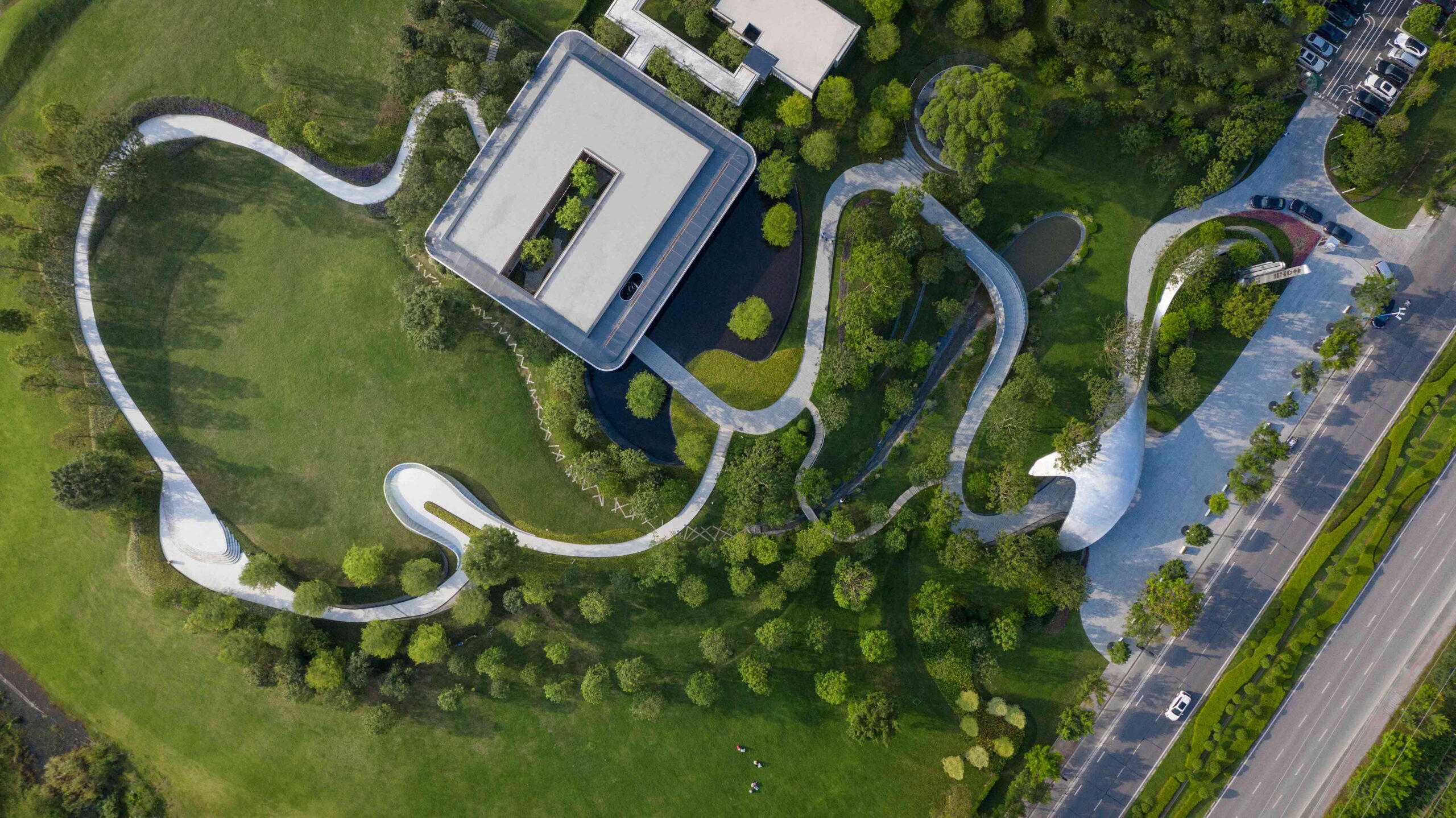
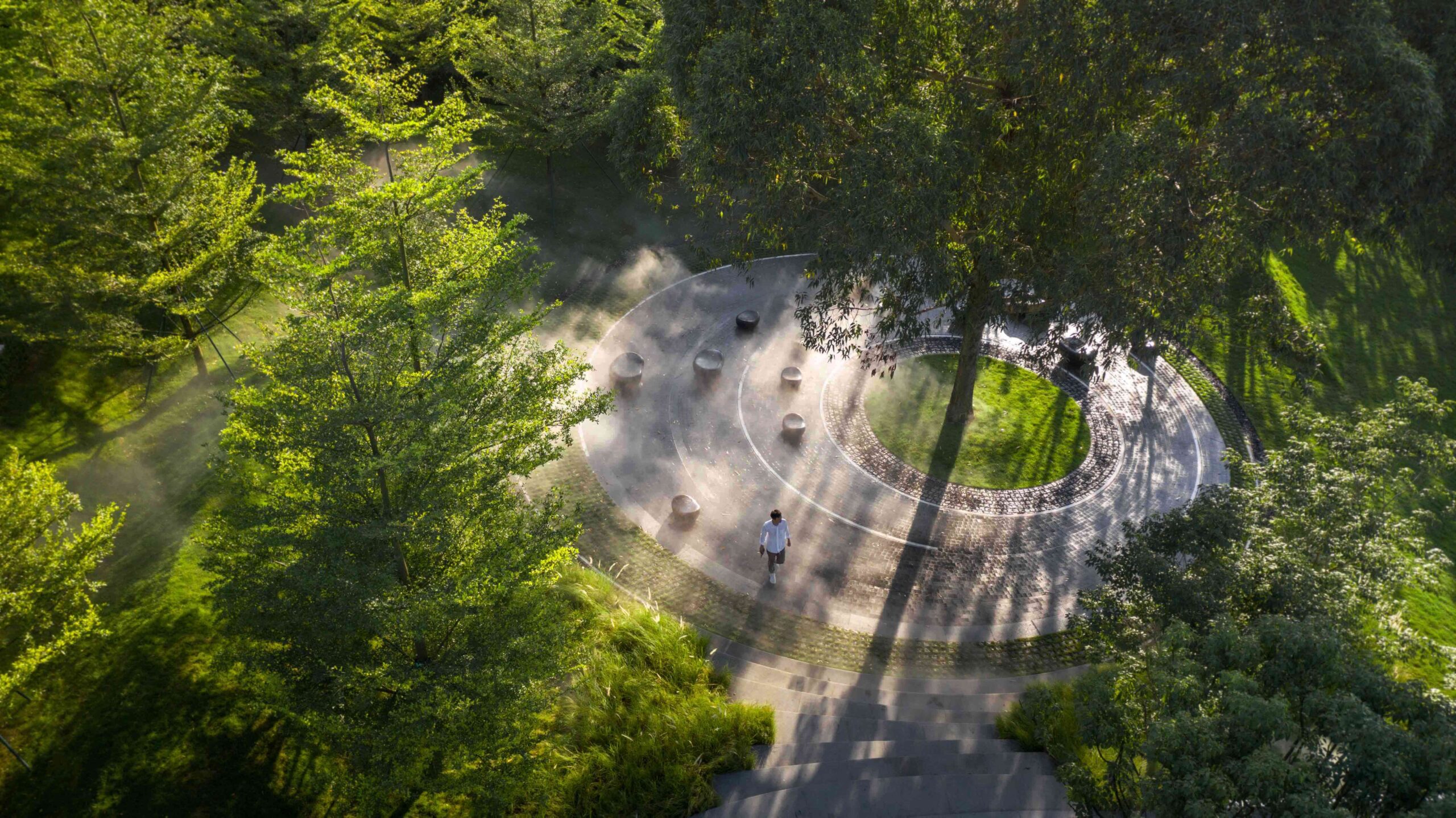
Eucalyptus Society Garden by SWA GROUP / Los Angeles Eucalyptus Society Garden by SWA GROUP / Los AngelesThis astonishing public park at the heart of a college community in Guangzhou is a contemplative space where the metaphysical takes center stage. Defined by sweeping, curvilinear pathways and undulating lawns, scale and form are skilfully handled, resulting in an immersive, thought-provoking design.

The project is infused with cultural symbolism. An ancient Eucalyptus tree anchors the site, evoking the tree that Confucius is rumored to have given lectures beneath. Rhythmic circles radiate out around the trunk. The innermost and outermost rings comprise glass bricks, emblematic of the manmade and natural landscapes colliding. From the meandering 131-foot-long (40 meter) Wisdom Bridge to the pebble-like benches, the park’s architecture is a catalyst for rumination.


5. Fusing Urban and Organic Realms

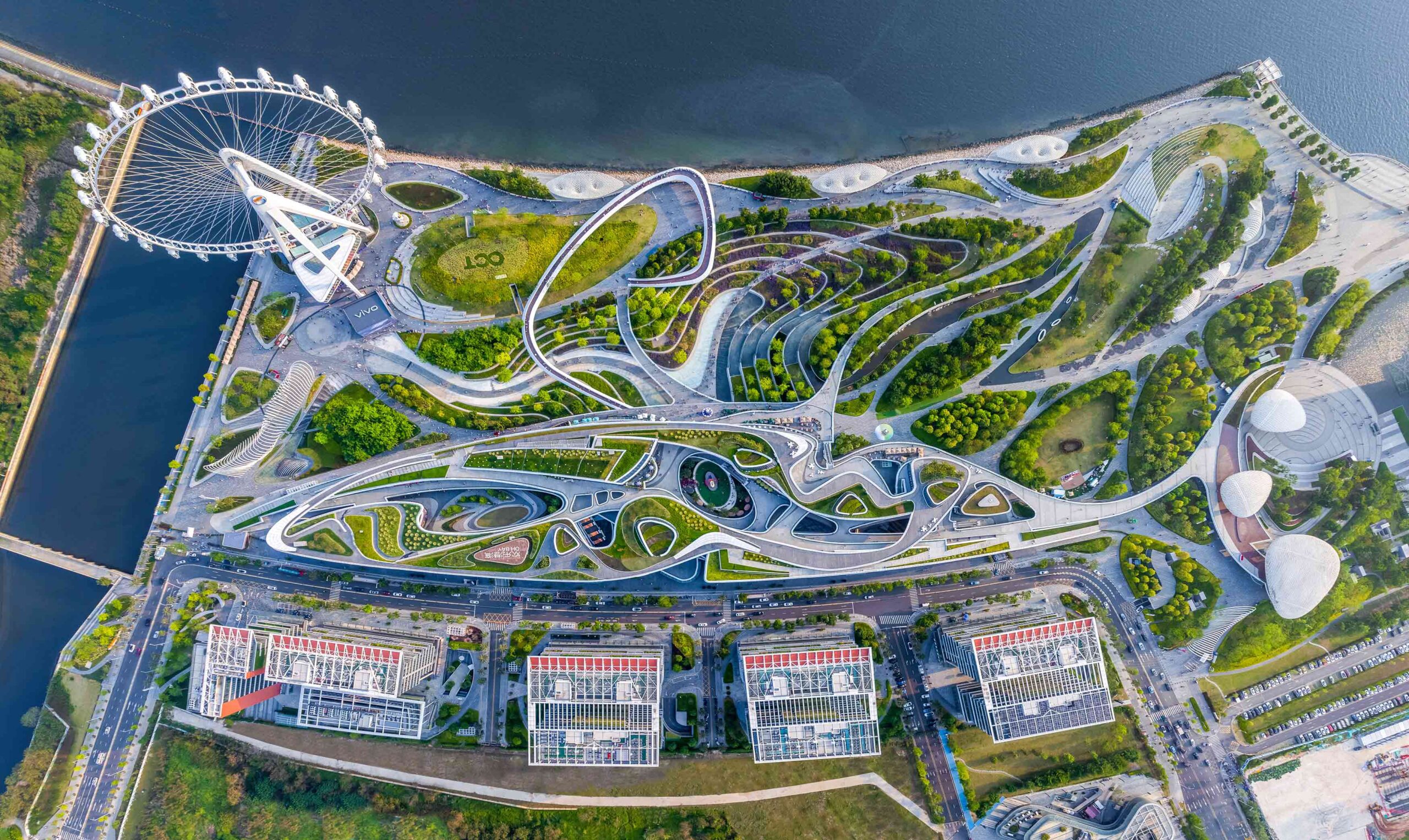
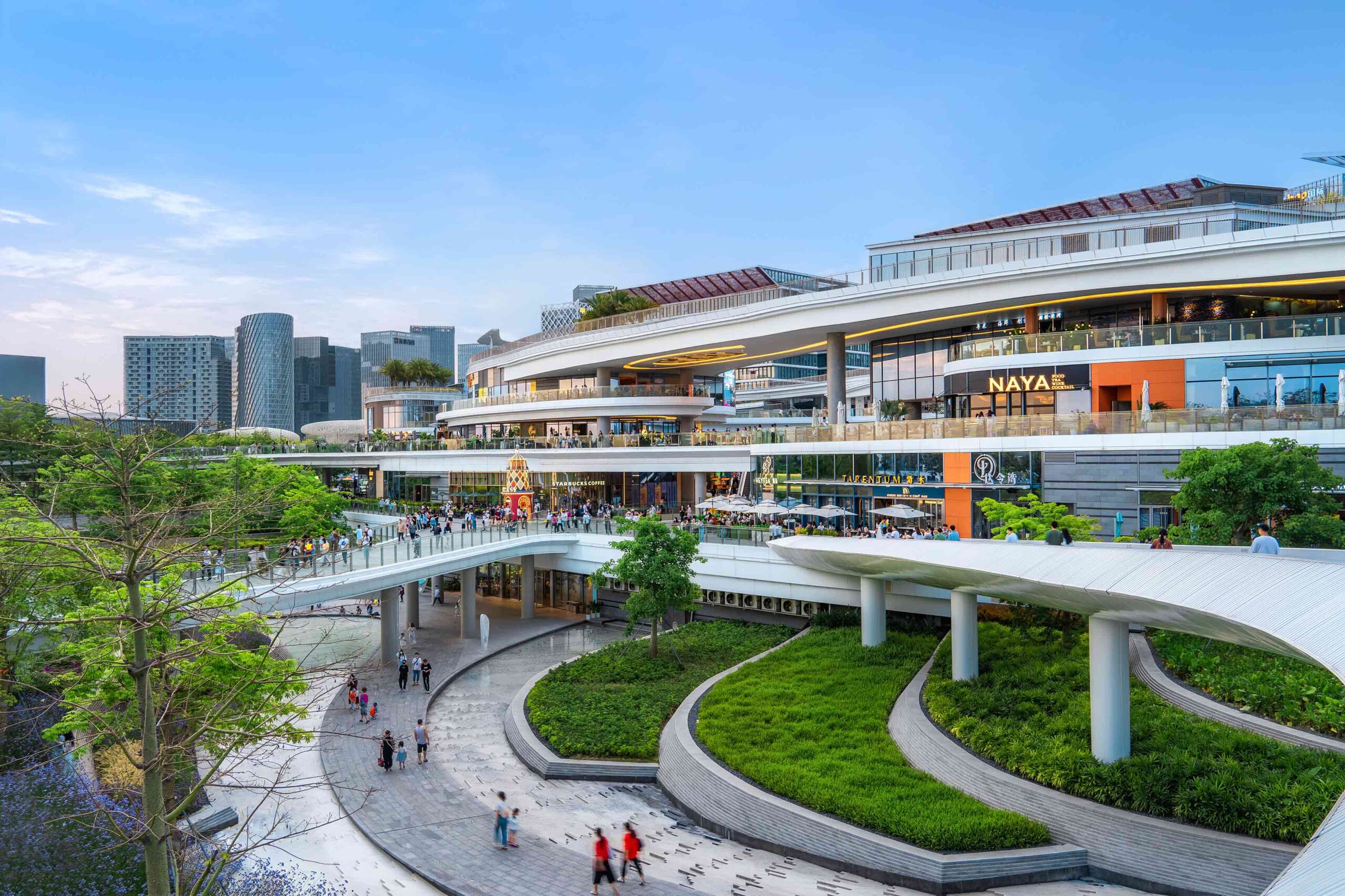
OCT Bao’an OH BAY by LAGUARDA.LOW ARCHITECTS, Shenzhen China

Popular Choice Winner, 11th Annual A+Awards, Urban & Masterplan

OCT Bao’an OH BAY by LAGUARDA.LOW ARCHITECTS OCT Bao’an OH BAY by LAGUARDA.LOW ARCHITECTSSprawling across 128 acres, this pioneering project on the waterfront of Shenzhen challenges conventional notions of the public park. Rather than a distinct, green space set apart from the city’s commercial hubbub, the new Central District Park combines natural landscapes with retail and cultural functions.

The terrain is complex and multi-layered. From the sky, the land is defined by an intricate pattern of green plazas and rippling hills. But on the ground, their hidden depths are revealed. Beneath the undulations of earth, shop façades emerge from beneath living roofs. A myriad of pathways and promenades snake across the park, connecting the retail village, business center, cultural center and book market. Here, the natural and urban realms are one and the same.


6. Modernizing Heritage Typologies

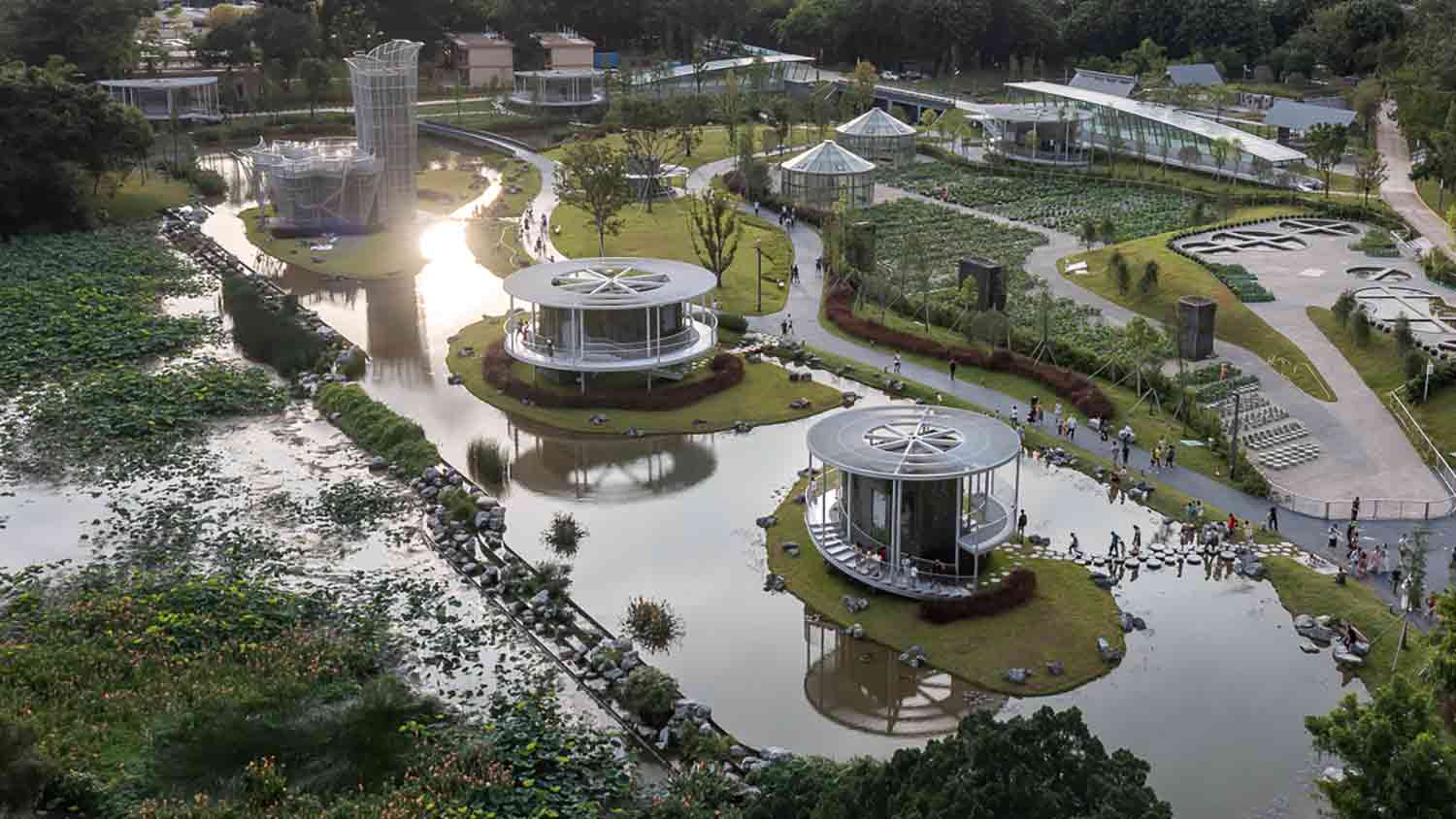
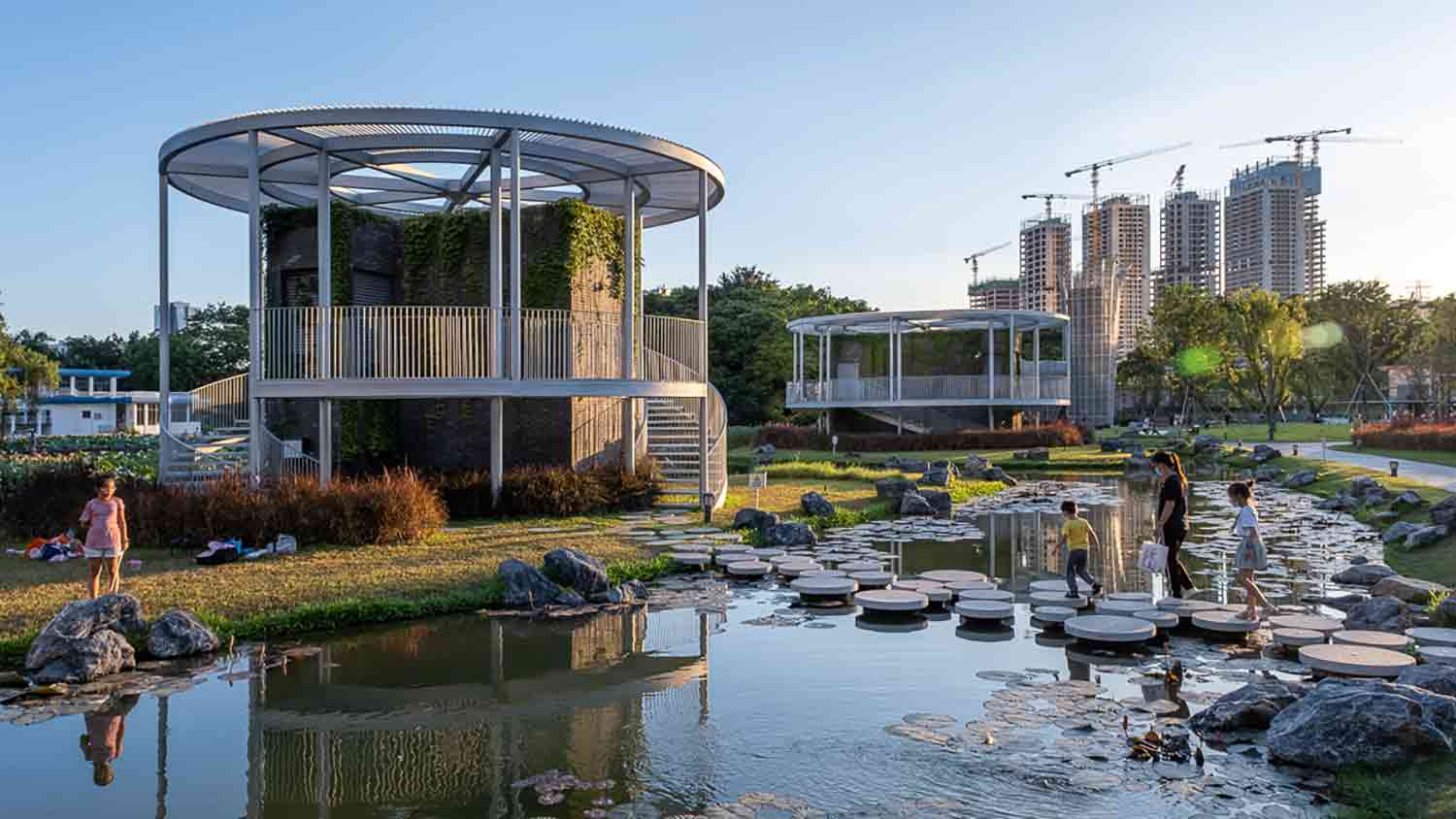
Shenzhen Lotus Water Culture Base: Landscape Design for Honghu Park Water Purification Station by NODE Architecture & Urbanism, Shenzhen, China

Jury Winner, 11th Annual A+Awards, Architecture +Landscape

Shenzhen Lotus Water Culture Base: Landscape Design for Honghu Park Water Purification Station by NODE Architecture & Urbanism Shenzhen Lotus Water Culture Base: Landscape Design for Honghu Park Water Purification Station by NODE Architecture & UrbanismThis whimsical floating garden within a municipal park in Shenzhen sits on top of a submerged water purification facility. The project had numerous complex facets to negotiate, including concealing the plant’s protruding infrastructure. Ingenious design solutions were devised to transform the industrial site into a picturesque retreat for the city’s residents.

The architects turned to historic local typologies for inspiration. The pagodas, pavilions and gazebos of the traditional Lingnan garden, a landscape aesthetic native to the province of Guangdong, were the perfect fit to disguise the cylindrical volumes. Reimagined through a contemporary lens, the forms read as art installations. The tallest vent has been skilfully utilized as a birdwatching platform, while the other shafts offer vantage points where visitors can admire the lotuses. Form and function combine in perfect harmony.

The latest edition of “Architizer: The World’s Best Architecture” — a stunning, hardbound book celebrating the most inspiring contemporary architecture from around the globe — is now available. Order your copy today.  
Reference