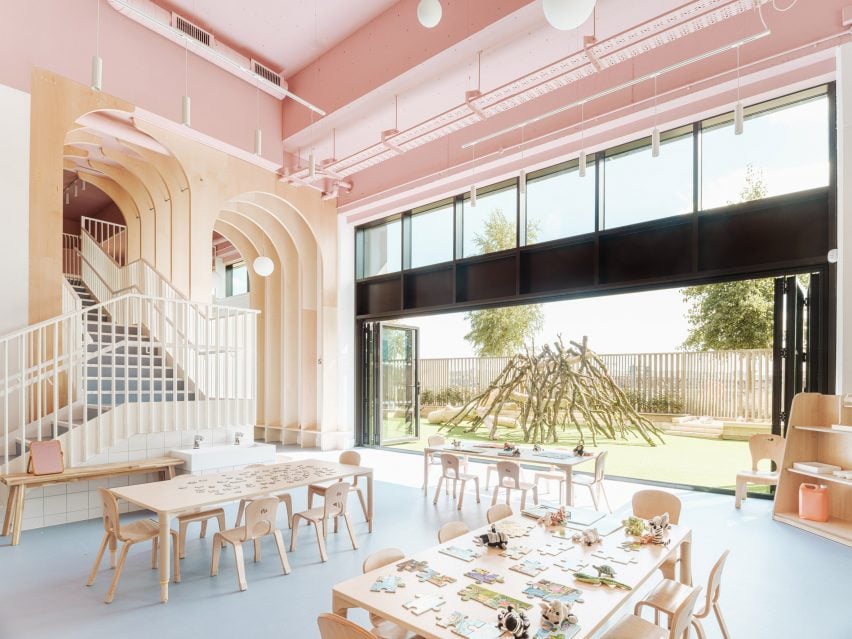
Overview of the Nest nursery in east London by Delve Architects
CategoriesInterior Design

Delve Architects designs “nurturing but playful” The Nest nursery

English practice Delve Architects has used joyful colours and natural, tactile materials to outfit a newly established kindergarten by the River Thames in east London that can be accessed via boat.

The Nest daycare centre is part of a wider housing development in the Royal Wharf area, occupying a commercial unit at the base of a 19-storey housing block.
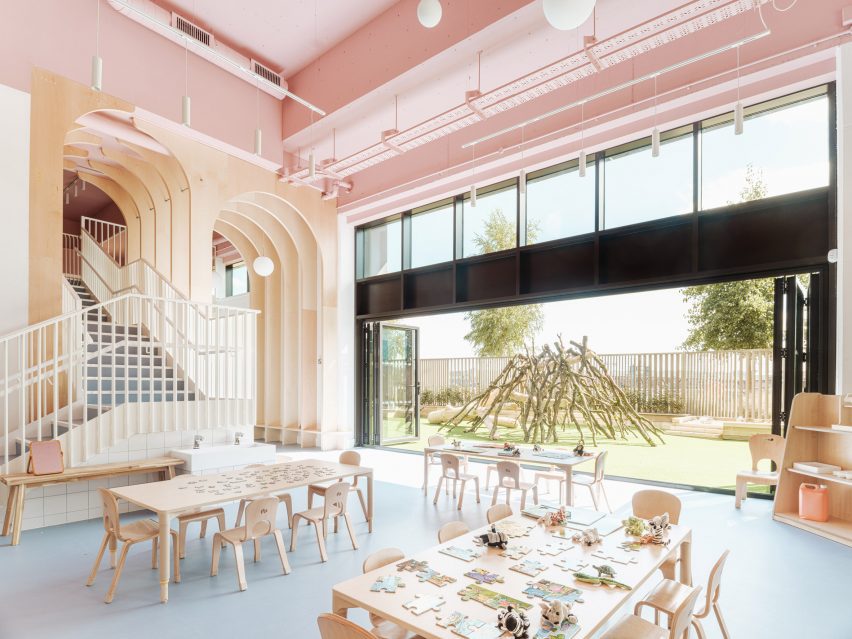
Overview of the Nest nursery in east London by Delve Architects
The Nest nursery was designed by Delve Architects

As a result, the primary challenge was to bring the towering newbuild space down to child scale and make it feel more homely while forging a greater connection to the riverfront.

“We wanted to create a calm, nurturing but playful space that reflected the values of the nursery,” Delve Architects co-founder Alex Raher told Dezeen.

“Their ethos is for children to have a positive learning experience through a healthy relationship with the environment around them and a connection to the outdoors.”
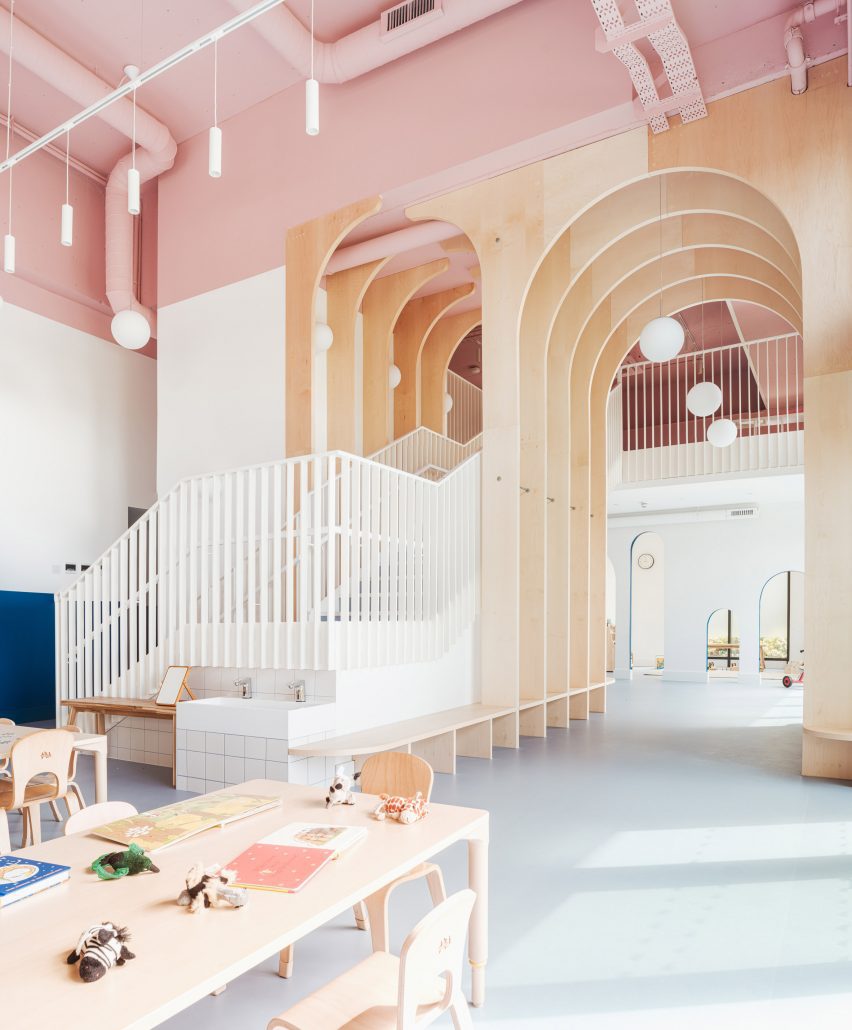
Stairway and wooden arches inside east London nursery
The studio used timber arches to define the space and envelop the new staircase

To boost the internal floor are, the studio installed a new mezzanine with a bespoke, powder-coated metal staircase that rises through a double-height space defined by a series of arched timber fins.

These maple-veneered arches – each around 4.5 metres tall – were conceived by Delve Architects to subdivide the space, creating zones without physical barriers.
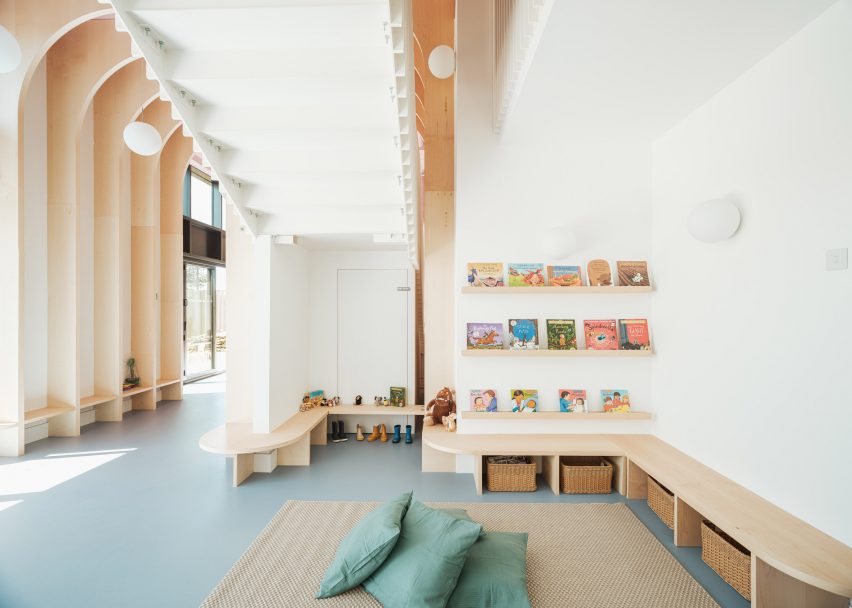
Area with low benches inside The Nest nursery
The timber fins taper off into low benches for the children

“We wanted to connect the spaces visually and physically between the mezzanine and lower level, and to soften the hardened edges of the space,” said Raher.

The arches are formed from a series of fins that merge into benches and individual seating as they approach the ground.
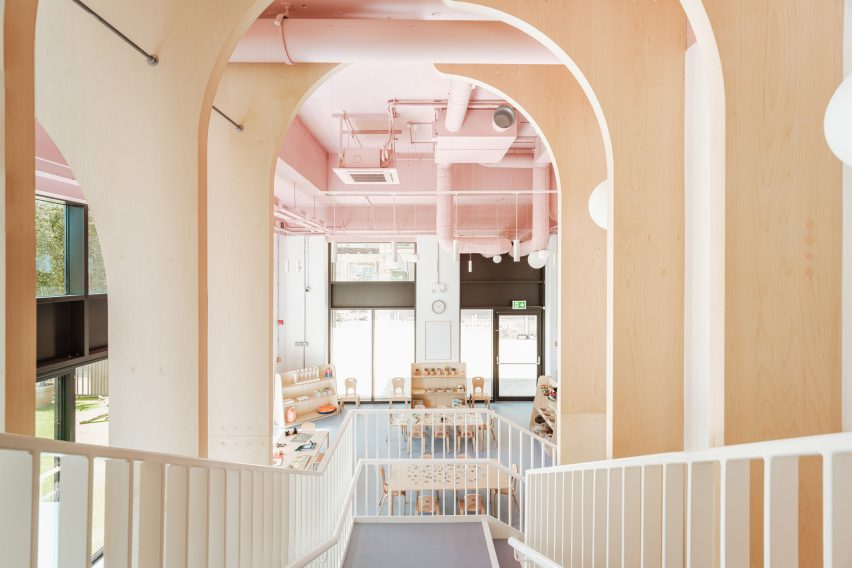
View from stairs of east London kindergarten by Delve Architects
The stairs lead up to a new mezzanine level

“The grand scale of the arches for a small child could feel overwhelming, so we brought this down into child-height seating, benches and joinery to play with the scale and make it more familiar to them,” said Raher.

“The material flows seamlessly between the two levels and creates a natural material palette that the children could recognise and read through different heights and spaces.”

The arches also span over the main staircase, where Raher says they suggest a canopy of trees.

“We wanted it to be a centrepiece that was exciting, functional and exploratory, almost like a meandering joinery up to a treehouse-style level on the mezzanine, through a network of arches and branches on the way,” the architect explained.

“One of the first concepts we explored was the treehouse idea, developing ideas around the nursery name The Nest and how we could bring a playful part of nature into the design.”

Given its inner-city location, the nursery is fortunate to have a large garden overlooking the riverfront, which is connected to the nursery via a double set of six bi-folding doors.
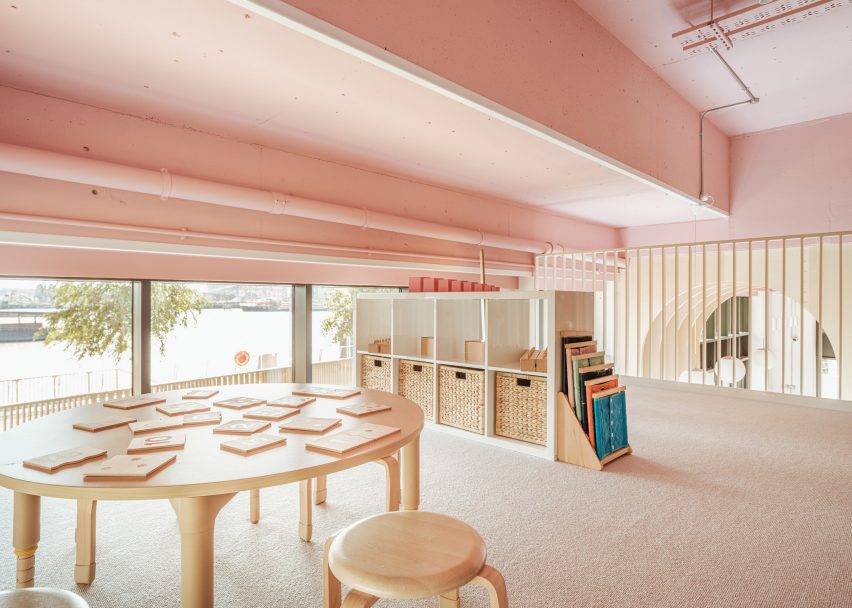
Pink-toned mezzanine of The Nest nursery
The upper level is finished almost entirely in baby pink

The external fencing was designed by Delve Architects “to merge with the rhythm of the existing tower’s balconies” and powder-coated in a matching colour.

“We wanted to celebrate the connection to the outside space, the riverfront location and the child-height views from the mezzanine to the water, as it was unique to the space and to the nursery setting,” said Raher.

“Children can arrive and parents can commute using the river boat directly outside the nursery. The new pier designed by Nex Architecture is a beautiful backdrop to the site.”
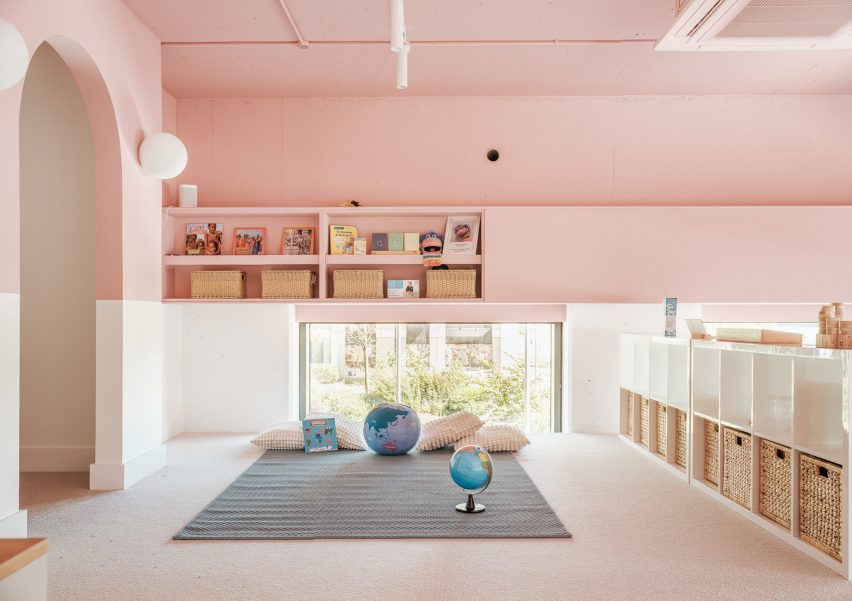
Pink-toned mezzanine of kindergarten in east London by Delve Architects
The mezzanine houses cosy play areas

To cope with the demands of a nursery setting, materials and finishes are resilient as well as being natural and tactile. Among them is recycled and recyclable Marmoleum flooring, maple-veneered joinery and low VOC paint.

A colour palette of soft muted shades helps to create a homely atmosphere inside The Nest.

“This palette works better than bolder primary colours, as these create too much visual noise for younger children,” Raher said.
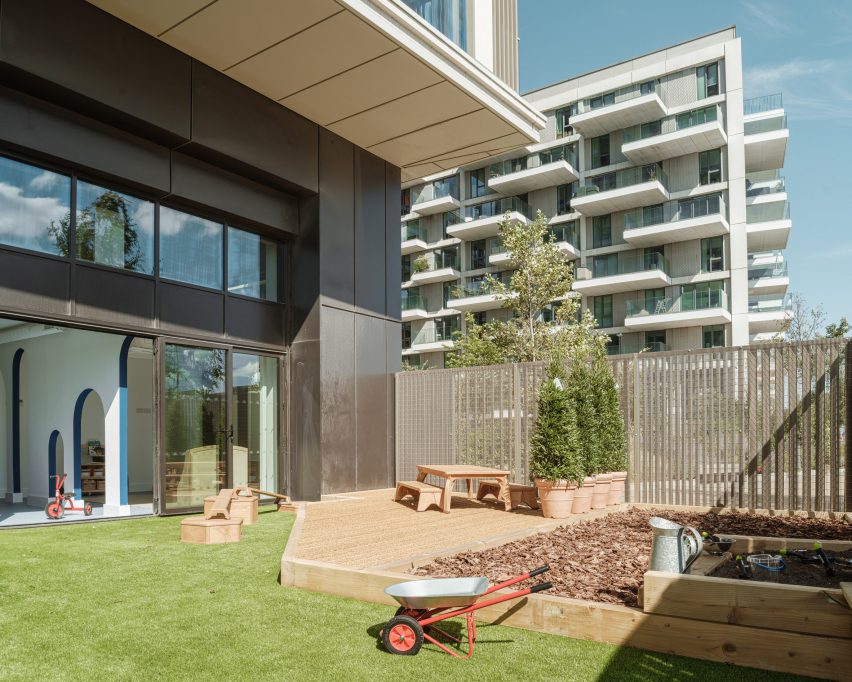
Outdoor play area of The Nest nursery in east London
The Nest’s garden overlooks the riverfront

A panel of dark teal blue creates a datum line around the walls, designed to be “resilient to little fingers” while making the tall spaces feel more relatable to children.

“We always try to design from a child’s perspective, putting ourselves at that level, quite literally in some cases,” Raher said.

The soft blue of the flooring gels with the tones of the pale maple veneer and the matt pink that wraps around the ceiling and upper walls, covering almost the entire mezzanine.
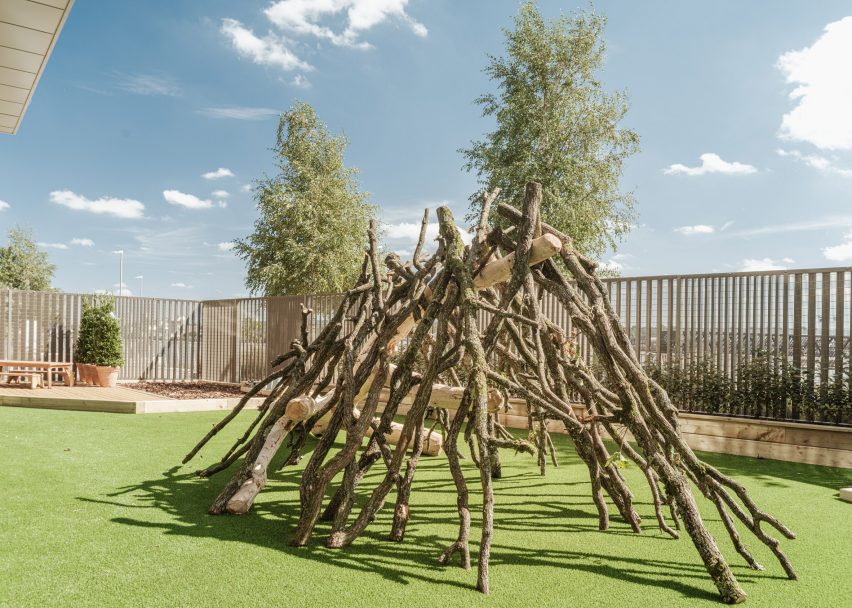
Twig house in kindergarten play area
It can be accessed via river boat

“It both draws your eye upwards but also manages to change the scale of the space,” said Raher. “In some areas there is a five-metre ceiling height, so we wanted to break this up visually.”

“The services for heating, cooling and ventilation were also left exposed, giving a little insight for children to explore and imagine what they could be – a network of intriguing forms and geometry running through the nursery.”

Other kindergartens that hope to forge a greater connection to nature include this English nursery by Feilden Clegg Bradley, which makes use of natural materials to reflect the surrounding woodland, and a timber kindergarten extension in Austria by Bernardo Bader Architekten.

The photography is by Fred Howarth.
Reference

Sanctuario De La Salle by CAZA
CategoriesArchitecture

Transcending Typology: 6 Ways Architects Are Transforming New Spiritual Spaces

The latest edition of “Architizer: The World’s Best Architecture” — a stunning, hardbound book celebrating the most inspiring contemporary architecture from around the globe — is now available. Order your copy today.  

Religion is steeped in symbolism, and places of worship are, by extension, physical manifestations of these belief systems. Architecture is a powerful vehicle for spirituality. It allows the ethereal, the conceptual, to be made tangible and concrete. Spatial design can give form to the cornerstones of faith, orchestrating vast volumes of veneration and shaping intimate nooks for introspection.

Yet, we’ve moved far beyond traditional, time-honored typologies of religious space. Architects continue to experiment with light, scale and form to create subversive and surprising sacred structures. From awe-inspiring parametric projects to a meditative woodland retreat, discover the ways these wonderous places of worship, recognized at the 11th A+Awards, are forging new pathways to architectural enlightenment.


1. Calling on Curvilinear Forms

Sanctuario De La Salle by CAZA, Biñan, Philippines

Jury Winner, 11th Annual A+Awards, Religious Buildings & Memorials

Sanctuario De La Salle by CAZA

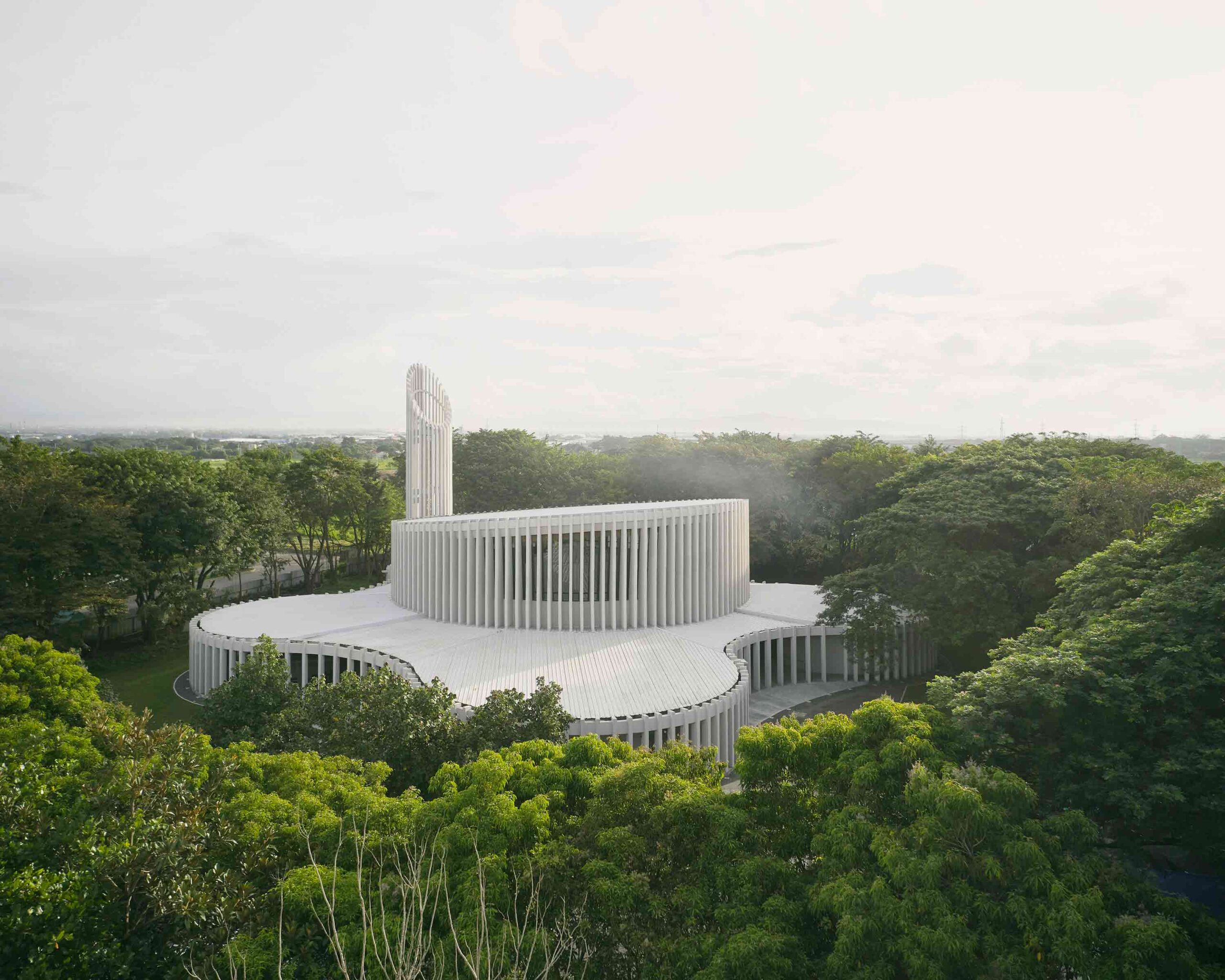
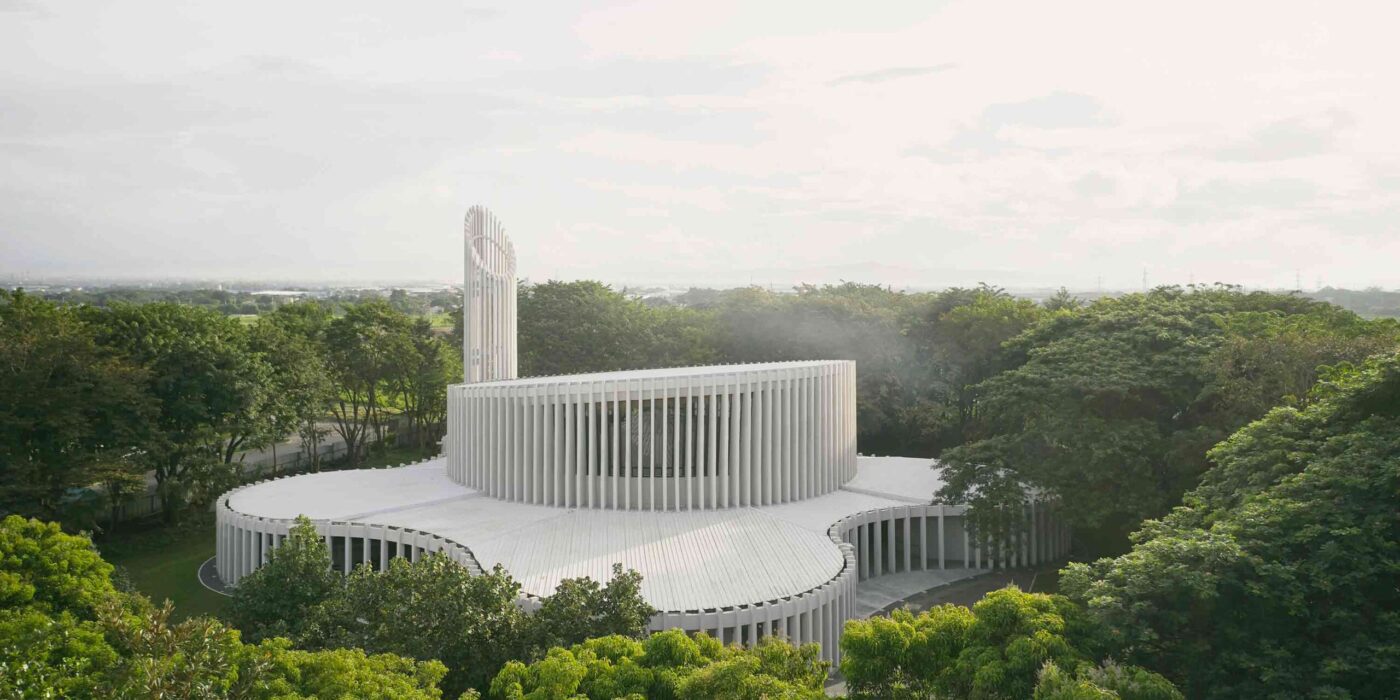
Sanctuario De La Salle by CAZAIn a dramatic departure from the historic cruciform plan, this remarkable church in the Philippines is defined by its striking, amorphous form. Shrouded by woodland, the mysterious edifice is veiled by a rhythmic curtain of white slats, eschewing precise angles for flowing, curvilinear lines. The building embraces organic shapes, while its permeable façade establishes a dialogue between the inner world of worship and the external landscape.
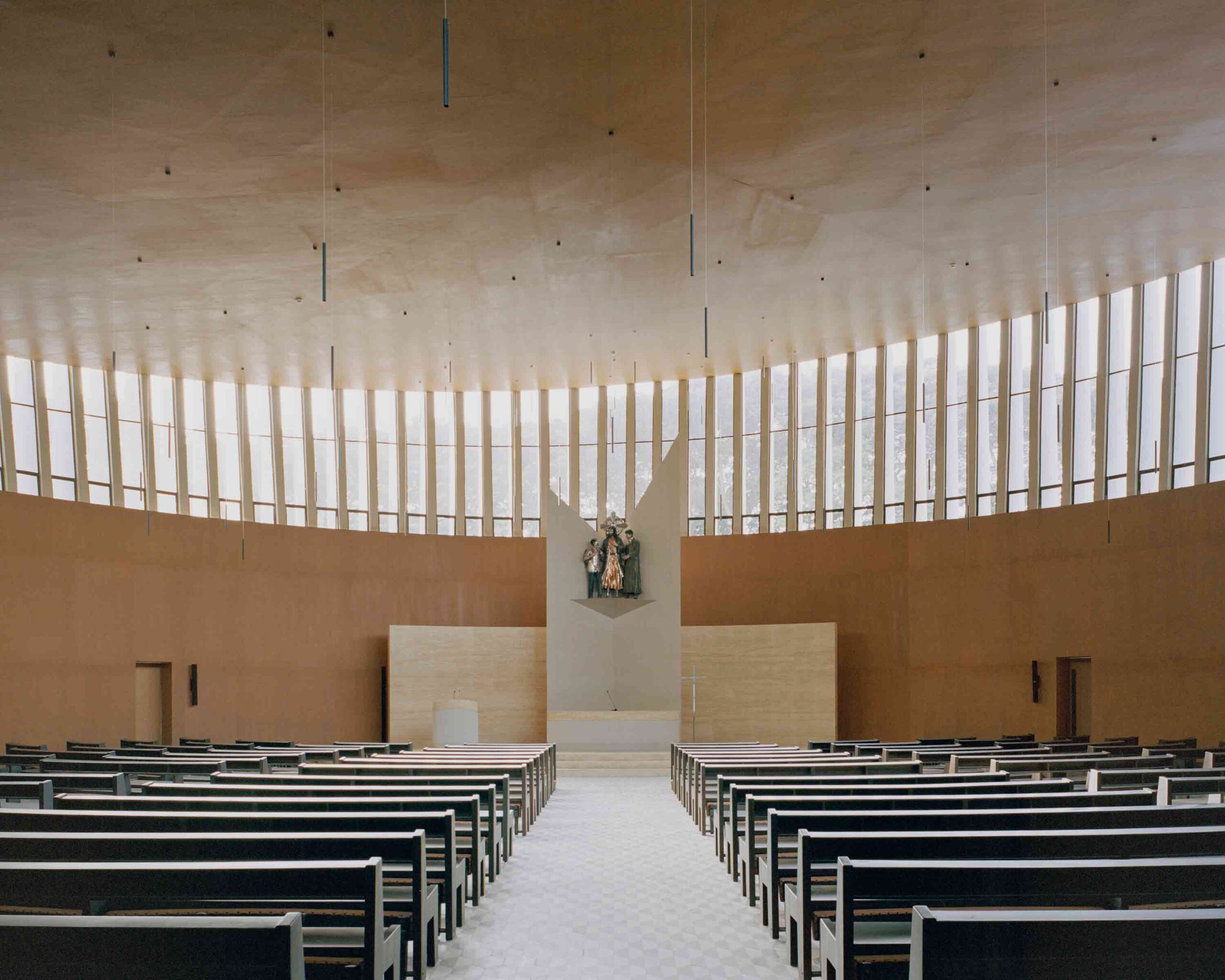
At the heart of the church is the drum-shaped congregation hall, framed by a sweeping clerestory window. Above, the tilted ceiling evokes the orbital arc of the planets, reinforcing the connection between the congregation and the wider universe. A series of spherical rooms flank the hall, situated within a larger circulatory area, the small pockets forming a communal space greater than the sum of its parts.


2. Experimenting With Glazing

Church of the Holy Family by ARQBR Arquitectura e Urbanismo, Brasília, Brazil

Popular Choice Winner, 11th Annual A+Awards, Religious Buildings & Memorials

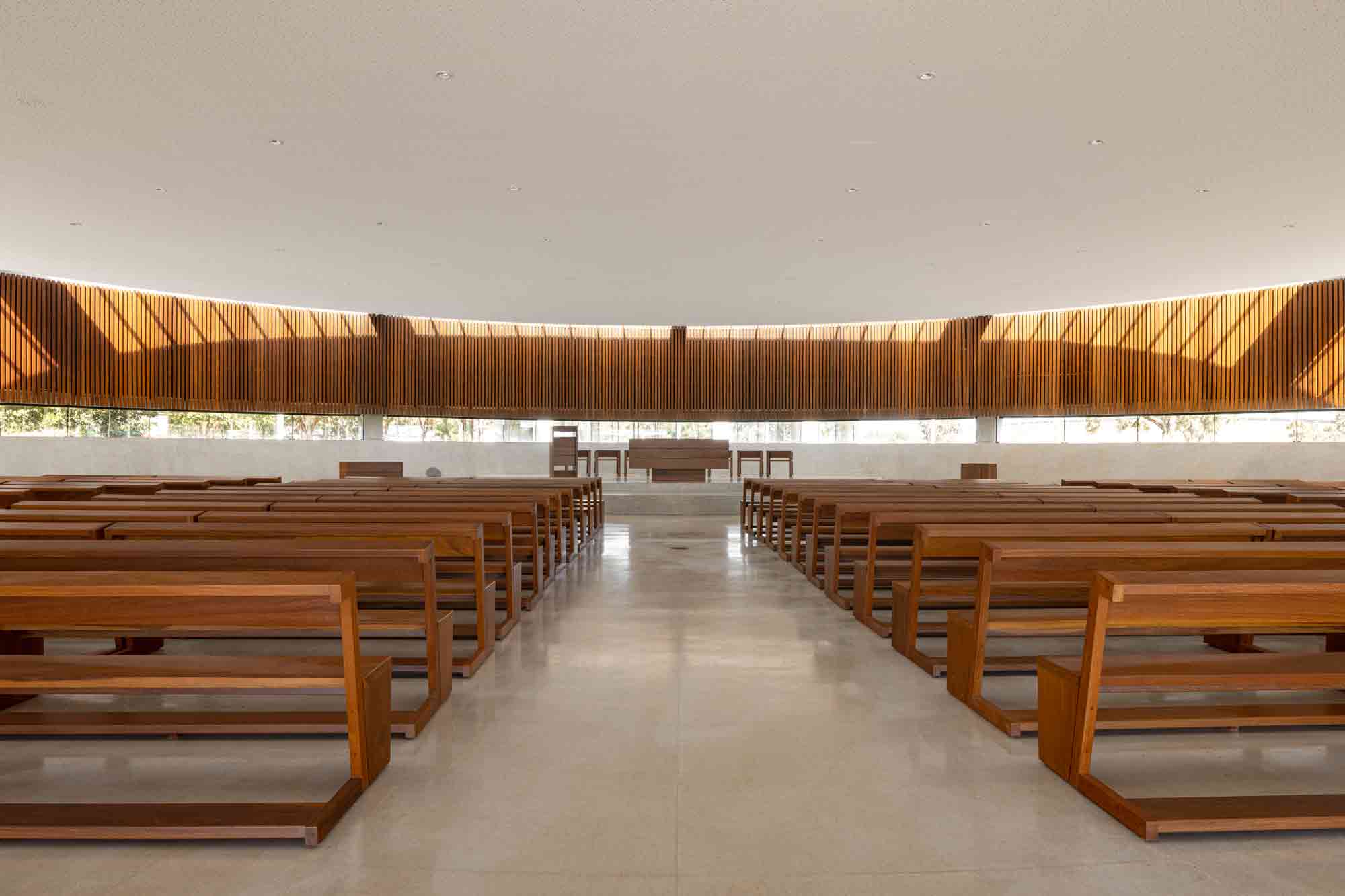
Church of the Holy Family by ARQBR Arquitectura e Urbanismo Church of the Holy Family by ARQBR Arquitectura e UrbanismoA casualty of urbanization, the trees that once surrounded this site in Brasília were all but removed to make way for an adjacent expressway. The acreage’s new Catholic church seeks to reawaken the bucolic soul of the land and illuminate the relationship between the spiritual and environmental realms.
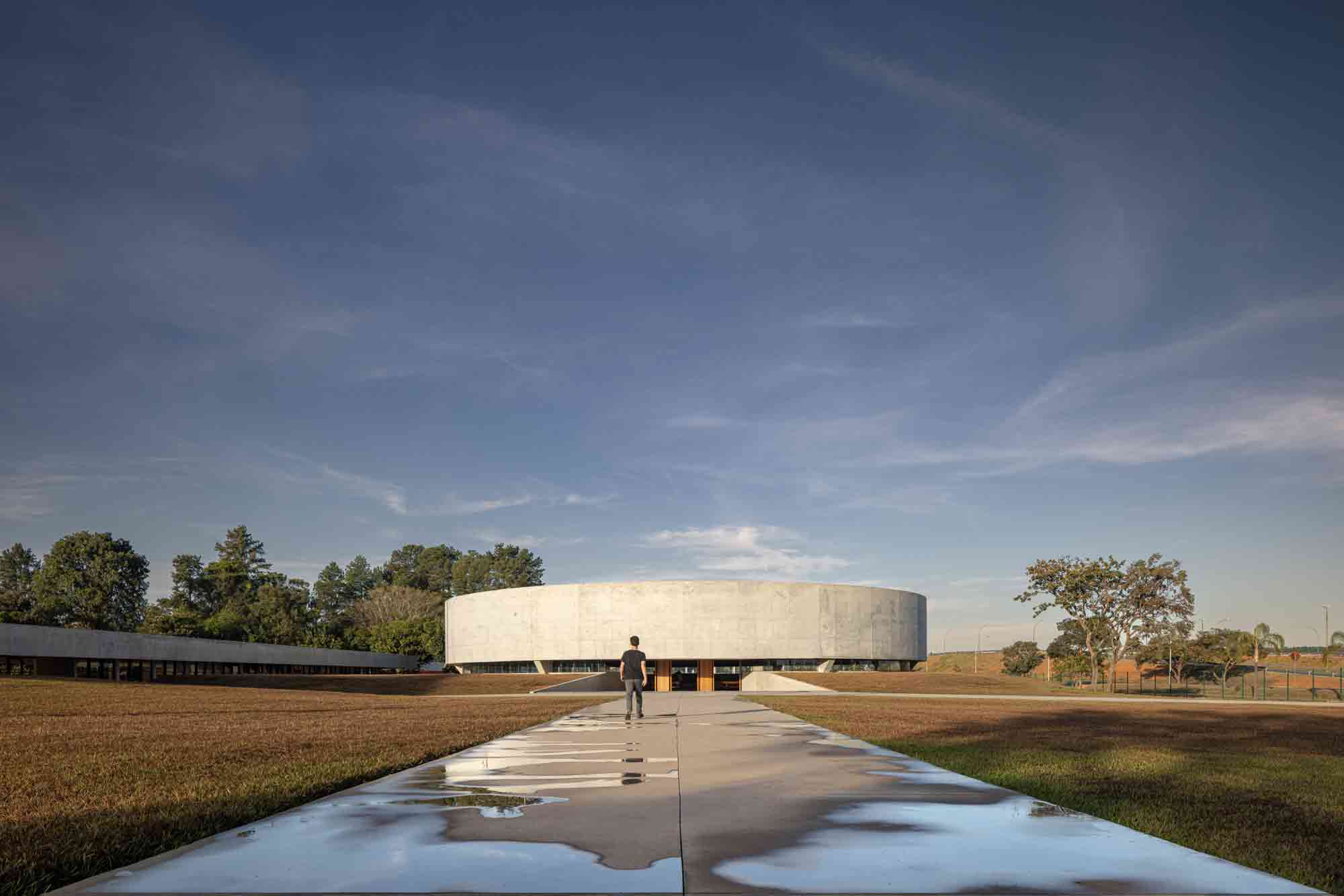
The circular nave, peaceful in its monolithic presence, is partially embedded underground, beneath the natural height of the plot. Inside, parallel ribbons of glazing encase the perimeter. Inset into the roof, a ring of skylights illuminates the ripple of wood panels below. A sweeping glass band rises behind the lectern, balancing on the horizon, drawing the external terrain in. This remarkable project recenters and internalizes the landscape, infusing it with religious significance.


3. Memorializing the Past

Saint Sarkis Church by David Hotson_Architect, Carrollton, Texas

Finalist, 11th Annual A+Awards, Religious Buildings & Memorials

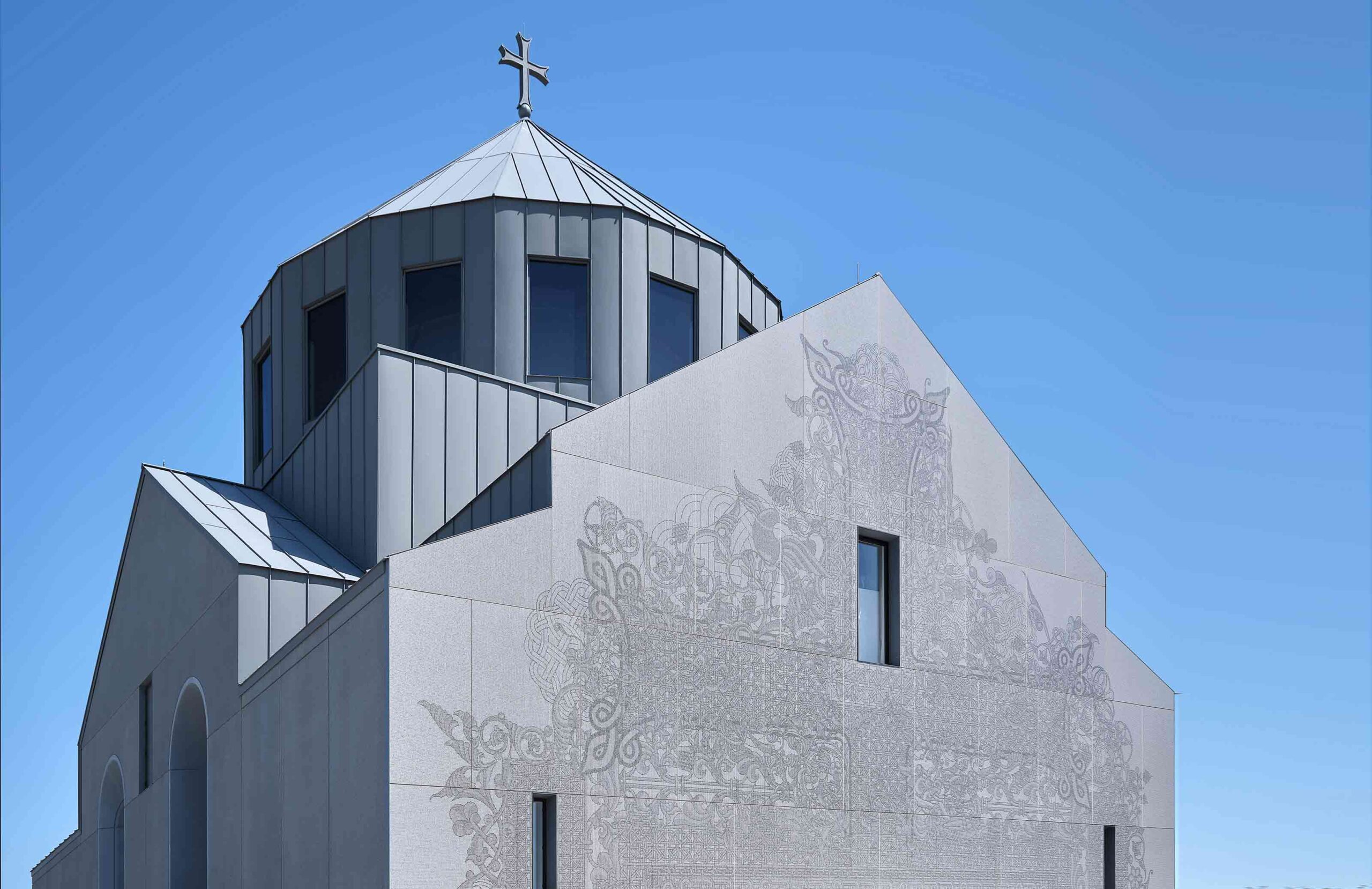
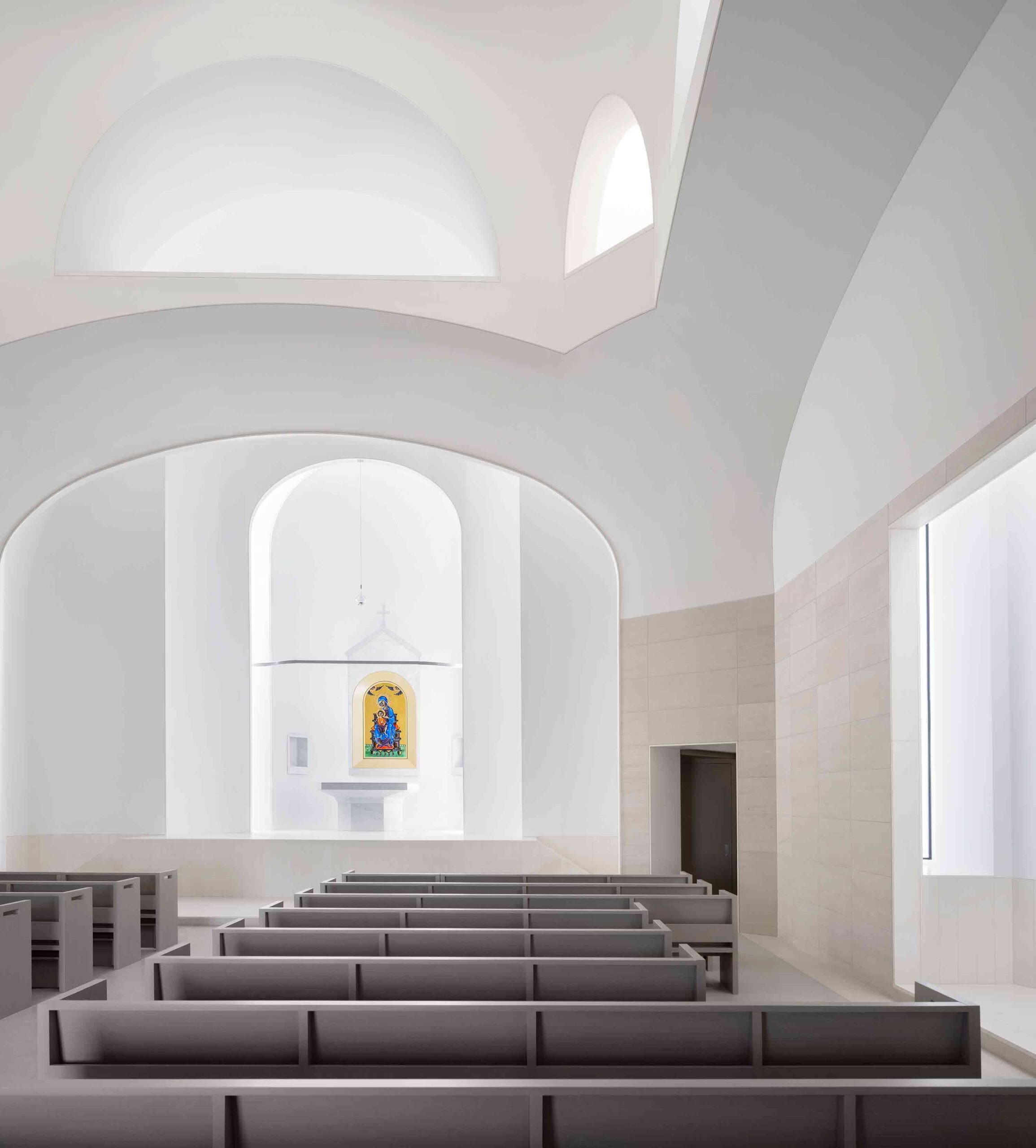
Saint Sarkis Church by David Hotson_Architect Saint Sarkis Church by David Hotson_ArchitectWhile this astonishing church stands in East Texas, it draws on an ecclesiastical tradition some 8,000 miles away. A homage to the historic Armenian church of Saint Hripsime, it features the same domed form, built some 1,400 years on from its counterpart. The structure’s sculptural interior, carved from glass-fiber reinforced concrete, follows the lead of its ancient inspiration. Lighting fixtures, air-conditioning ducts and other modern interventions have been skilfully concealed, creating an ethereal finish that transcends time.
The very fabric of this grand edifice was conceived as a moving memorial too. The west façade is clad in digitally printed porcelain rainscreen, depicting the traditional Armenian cross and motifs drawn from the country’s vernacular art. Yet, upon closer examination, a secondary layer of meaning unfurls — the design dissolves into 1.5 million infinitesimal pixels, representative of the victims of the Armenian genocide.


4. Honoring the Organic World

Meristem Chapel by MOTIV Architects, Surrey, Canada

Finalist, 11th Annual A+Awards, Pavilions

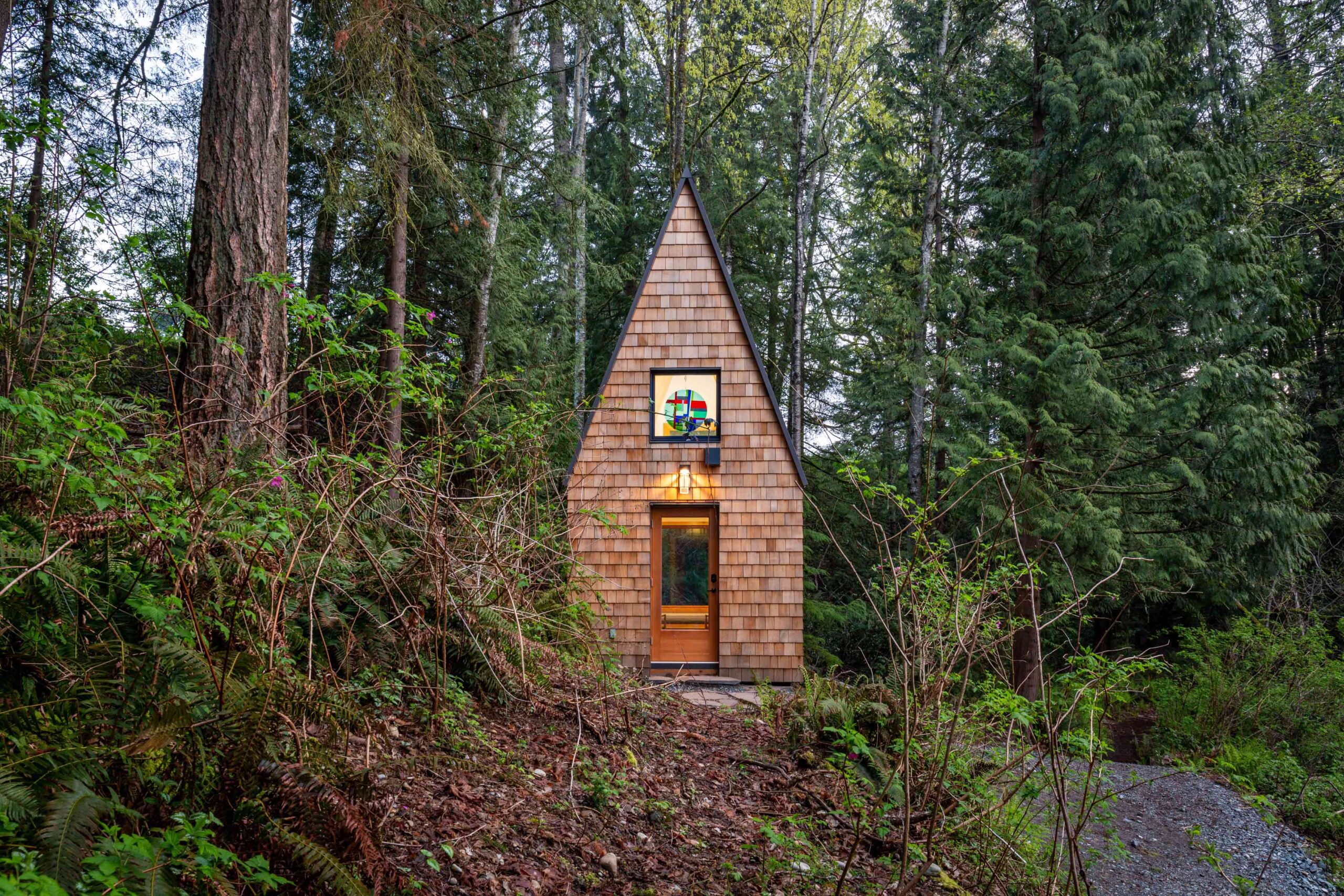
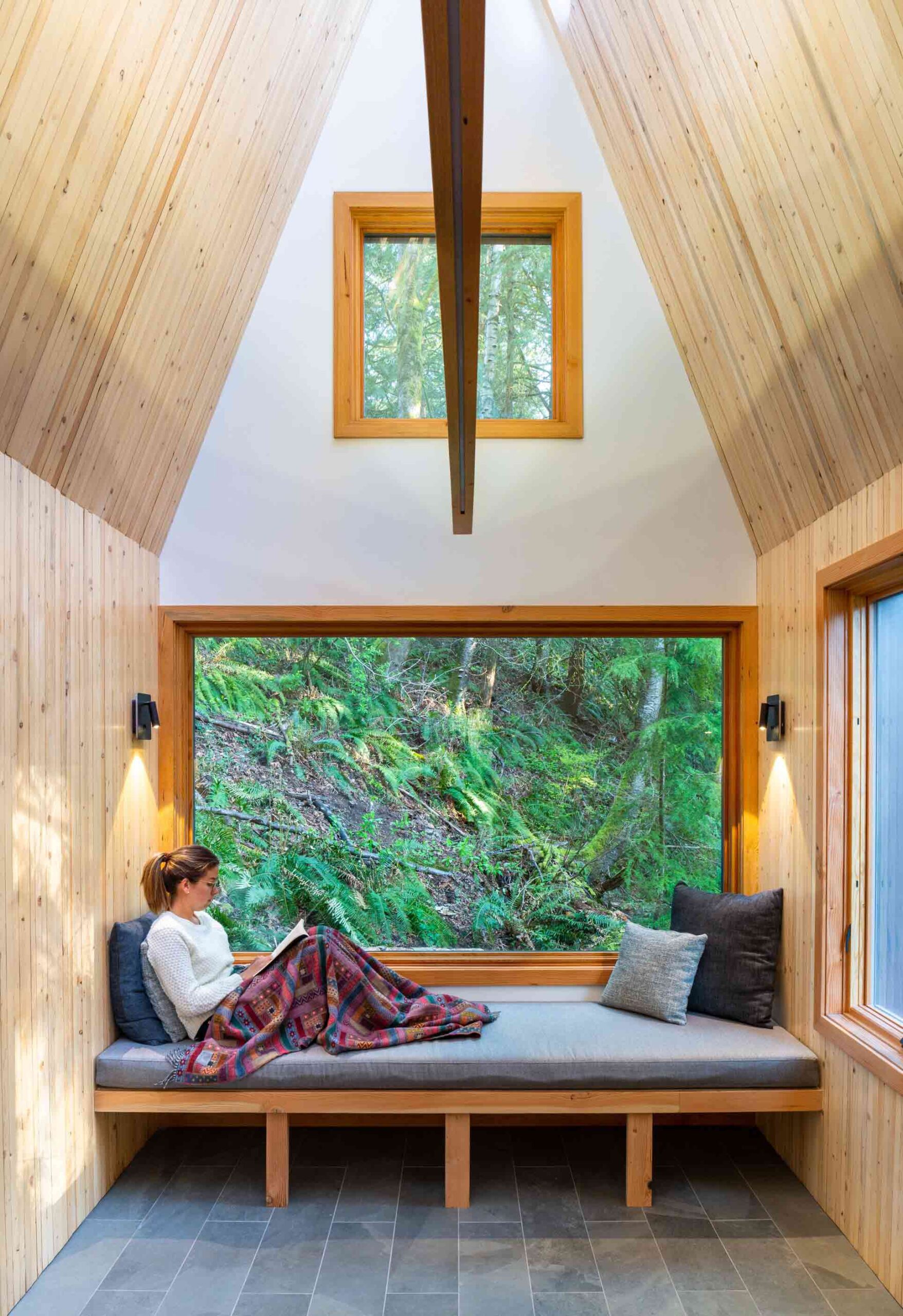
Meristem Chapel by MOTIV Architects Meristem Chapel by MOTIV ArchitectsThis enchanting chapel in British Columbia was conceived as a peaceful place of reflection and reconnection with the organic landscape, at a distance from the frenetic hubbub of modern life. Its name, Meristem, references a plant tissue found in the roots and shoots of foliage, which instigates the growth of new cells. In the same way, this unassuming space seeks to instill spiritual growth in those who find refuge within its walls.
Nestled in woodland, the structure’s steeply pitched form mirrors the silhouette of the surrounding conifers. The materials used in its construction are deeply rooted in the chapel’s locale — plywood and nail-laminated timber panels were salvaged from deconstructed buildings less than 200 meters from the site. Exposed wood envelops the interior, forming a calming space for contemplation. Twelve skylights are embedded in the ridge of the roof, casting mesmerizing sunbeams across the woodwork.


5. Playing with Perforated Skins

Kol Emeth Center by Field Architecture, Palo Alto, California

Finalist, 11th Annual A+Awards, Religious Buildings & Memorials
Finalist, 11th Annual A+Awards, Sustainable Cultural/Institutional Building

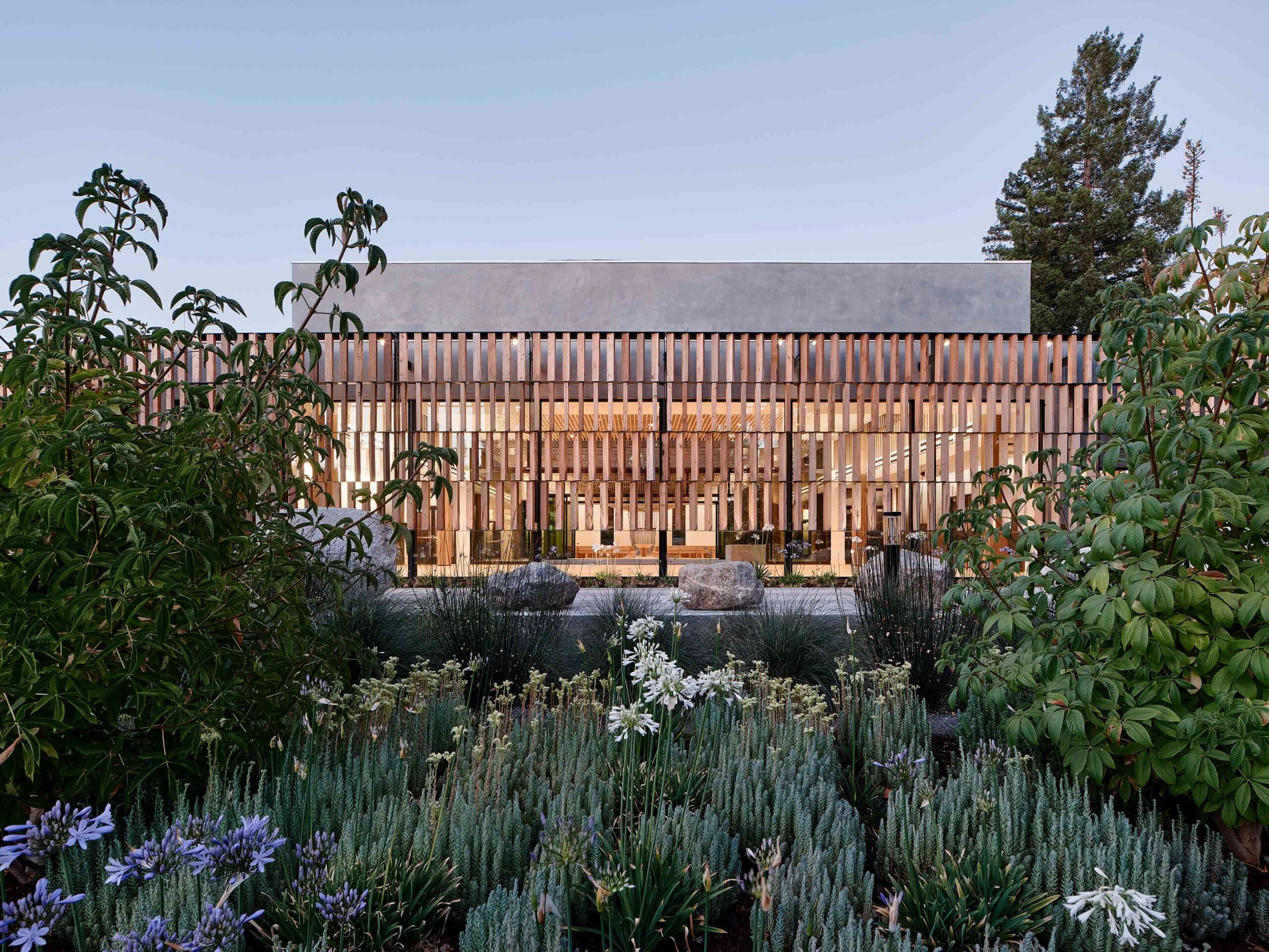
Kol Emeth Center by Field Architecture Kol Emeth Center by Field ArchitectureEnvisaged as a progressive beacon, this extraordinary synagogue in California combines centuries-old tradition with modern values, articulated through cutting-edge construction methods. The project negotiated a number of restrictions, including an awkward, triangular plot, a single-story height limit and a tight budget. The result is a versatile place of worship that utilizes humble materials and honors the structure’s environmental context.
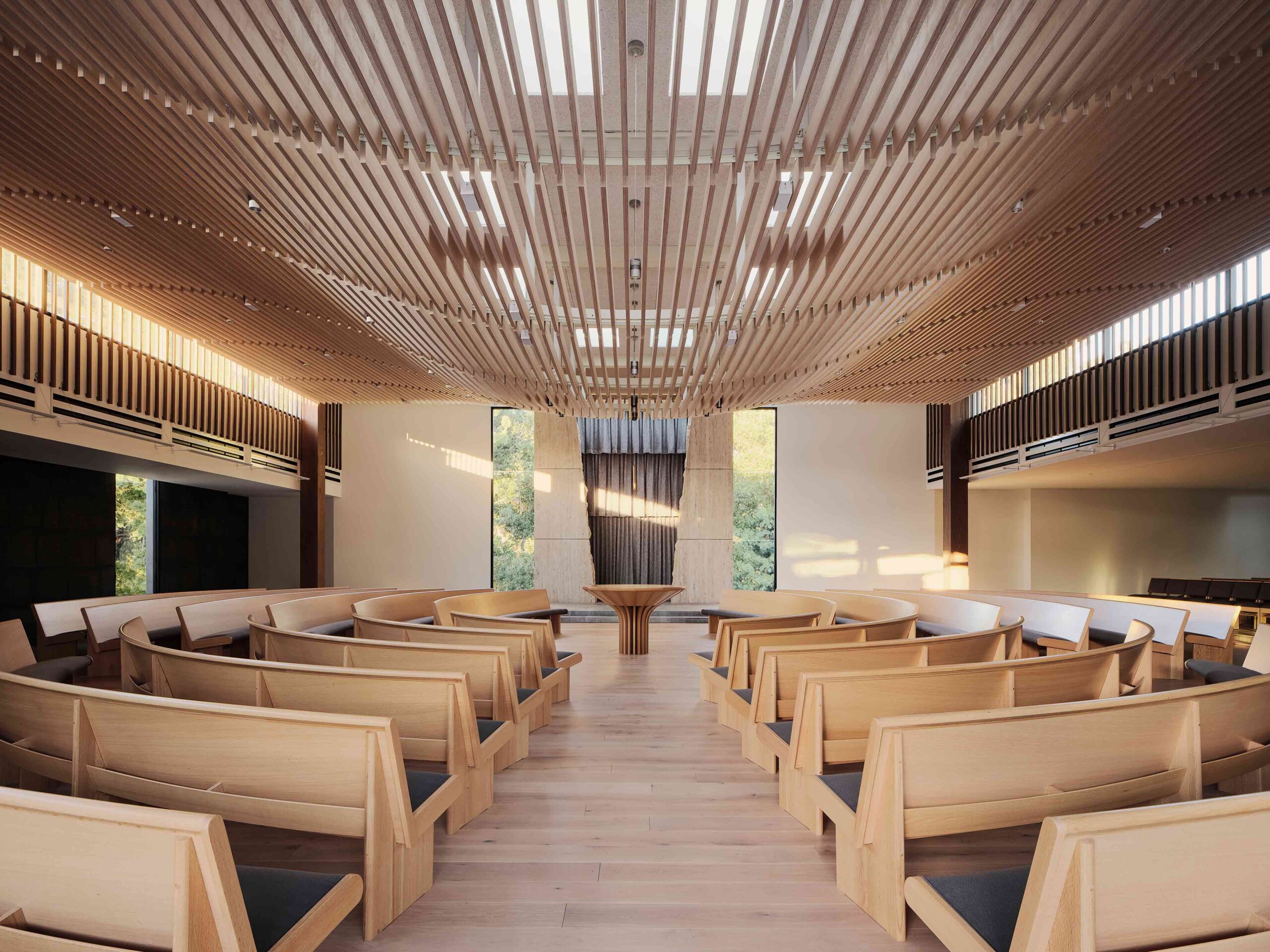
The building’s sleek, glazed frame is encircled by a striking perforated skin. A stunning example of parametric design, four tiers of rotating timber slats have been carefully calibrated to maximize the site’s light levels. In the prayer hall, a slatted dropped ceiling falls in organic undulations, allowing light from the glazing above to filter through. Thanks to the synagogue’s porous shroud, its spiritual spaces are punctuated with glimpses of the verdant woodlands and wildflowers.


6. Merging Unexpected Typologies

Madaline Terrace by Dake Wells Architecture, Springfield, Missouri

Special Mention, 11th Annual A+Awards, Religious Buildings & Memorials

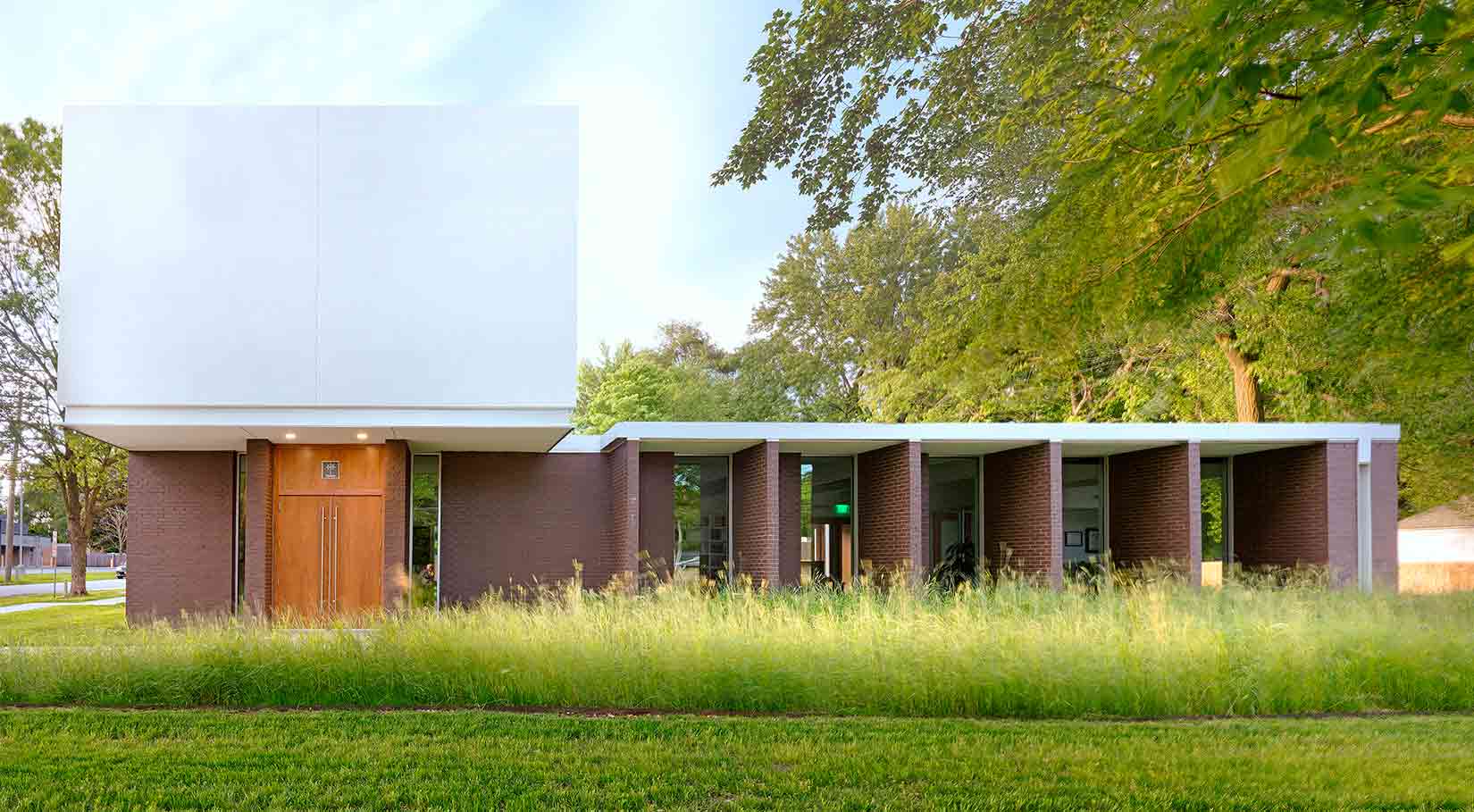
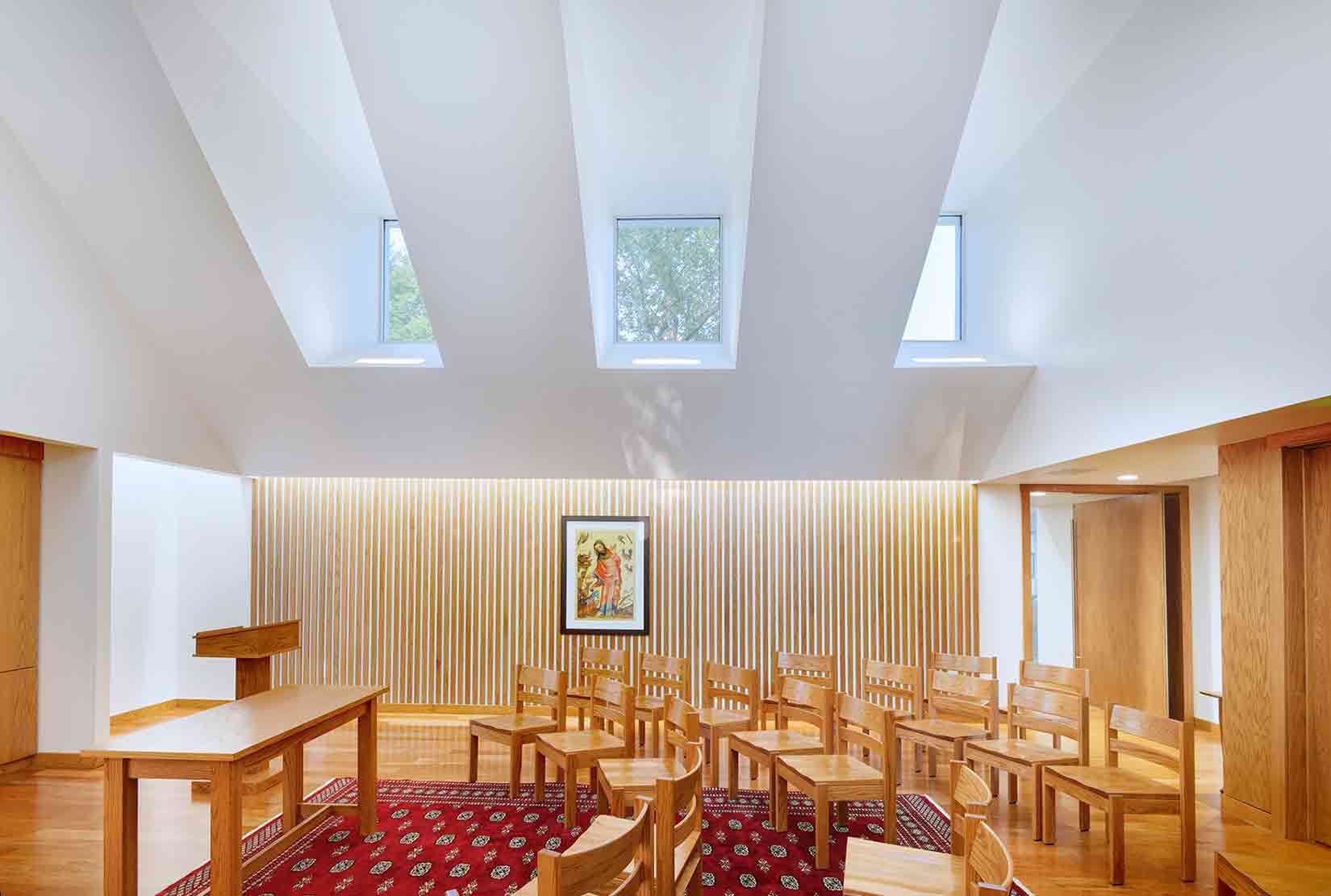
Madaline Terrace by Dake Wells Architecture Madaline Terrace by Dake Wells ArchitectureThis innovative project sits at a juncture between contrasting worlds. Bridging Springfield’s energetic commercial district and a quiet neighborhood, the building fuses two surprising typologies: a private law practice and a chapel. Visually compelling, the modernist-inspired structure masterfully balances the needs of its client, a minister and attorney with a proclivity for Le Corbusier and Louis Kahn.
The building reads as a tale of two functions, belied by a unifying architectural thread. A low pavilion houses the law office, accentuated by protruding fins that offer shade from the Missouri sun. Meanwhile, the chapel is expressed as a white cubic volume floating above the brickwork. Inside, the mass has been carved into a majestic, vaulted space. The sequestered glazing in the roof becomes a series of picture frames, capturing snapshots of the tree canopy while obscuring the hustle and bustle of the thoroughfare below.

The latest edition of “Architizer: The World’s Best Architecture” — a stunning, hardbound book celebrating the most inspiring contemporary architecture from around the globe — is now available. Order your copy today.  

Reference

Lanserhof Sylt Medical Health Resort by Inhenhoven Architects
CategoriesSustainable News

Ingenhoven Architects tops resort with Europe’s largest thatched roof

Architecture studio Ingenhoven Architects has created a series of buildings topped with large, overhanging thatched roofs for the Lanserhof Sylt health resort on the Germany island of Sylt.

Ingenhoven Architects was informed by the surrounding dunes and the thatched roof of a previous building on the site for the resort, which was built in an area formerly used by the military on the island of Sylt in northern Germany.

Lanserhof Sylt Medical Health Resort by Inhenhoven Architects
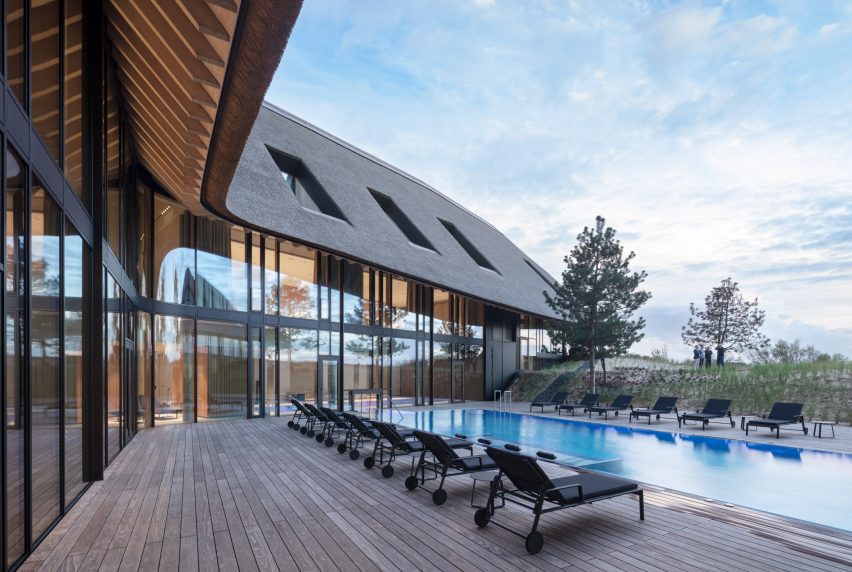
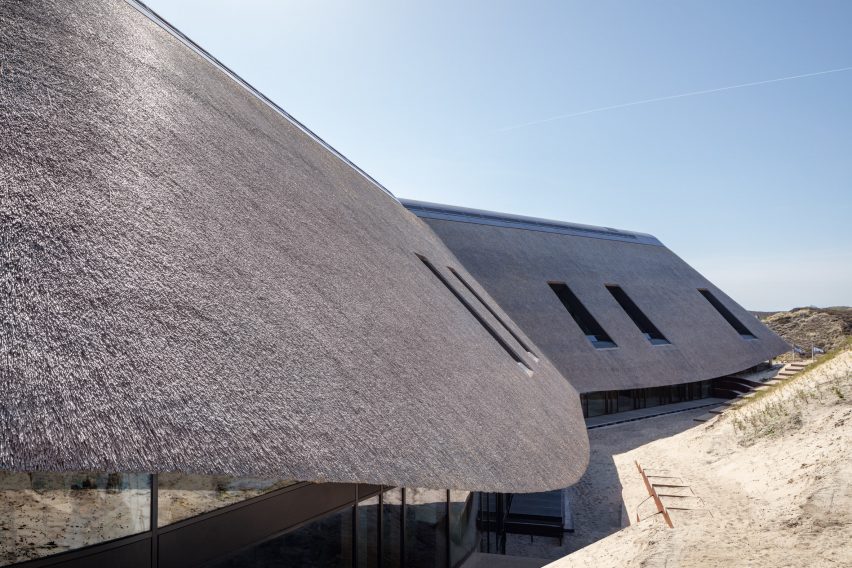
Ingenhoven Architects created the largest thatched roof in Europe

Lanserhof Sylt includes traditional spa services, such as a saltwater swimming pool, gym, climbing wall, yoga studio, sauna and steam rooms, library and indoor-outdoor lounges. The resort’s focus on health means there are also CT and ultrasound scanners, ECG monitors as well as IV lounges and colonic hydrotherapy suites.

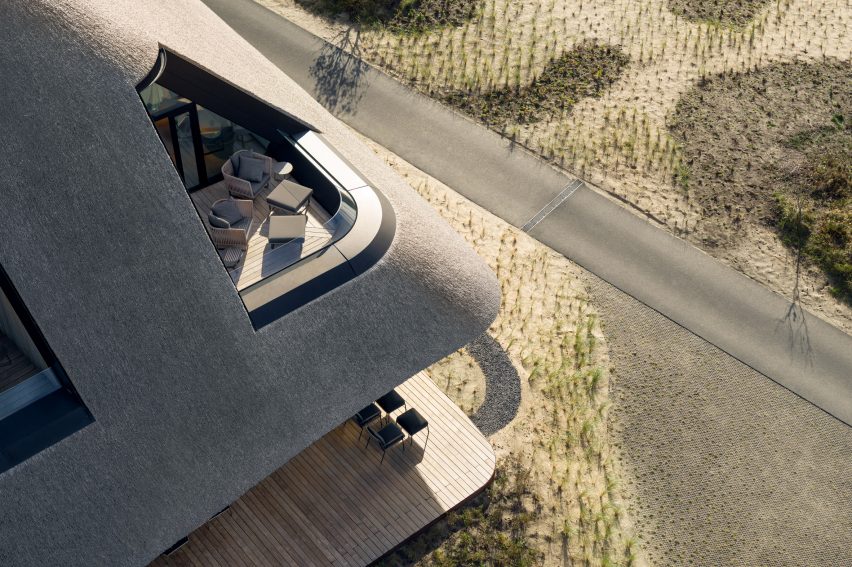
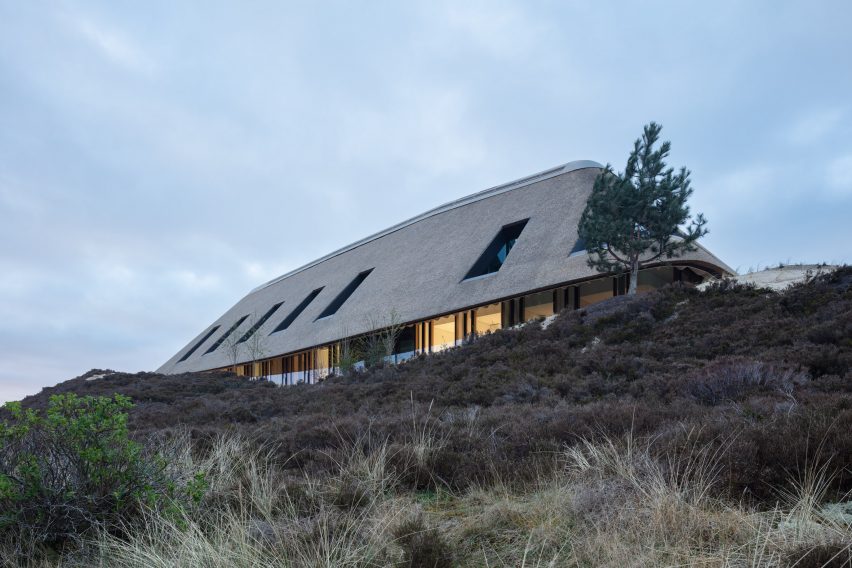
Its building is topped with a thatch roof that measures 7,100 square metres – making it the largest in Europe. It was conceived as a contemporary interpretation of the surrounding dune landscape.

Lanserhof Sylt Medical Health Resort by Inhenhoven Architects
The studio built the medical health resort to blend in with the surrounding landscape

“Our projects are always to be understood as a contemporary reaction to what previous generations have created,” Ingenhoven Architects founder Christoph Ingenhoven told Dezeen. “At the same time, building on Sylt means being part of a dune in motion.”

“For the Lanserhof we designed buildings in harmony with nature, reduced to the essentials, which is our definition of luxury today,” he continued.

Lanserhof Sylt Medical Health Resort by Inhenhoven Architects
The health resort has a pool looking out to the dunes

The studio chose a colour palette that echoes the surrounding landscape: beige, white, grey, wooden floors, large windows and transparent glass.

“Everything is geared towards simplicity and transforming restraints to achieve a positive spatial experience,” the studio explained.

Natural materials without synthetic finishes, such as reed, were used for the project, which Ingenhoven described as “not only a traditional choice but also an eco-friendly building element”.

Local craftsmen built the roof framework from wood, which “eased logistical challenges posed by the island’s location”.

“The softly undulating form of the roof harmonises beautifully with the dynamic dune landscape,” Ingenhoven explained.

“In terms of architectural heritage, we sought to pay homage to the cultural tradition of the island’s historical houses.”

Lanserhof Sylt Medical Health Resort by Inhenhoven Architects
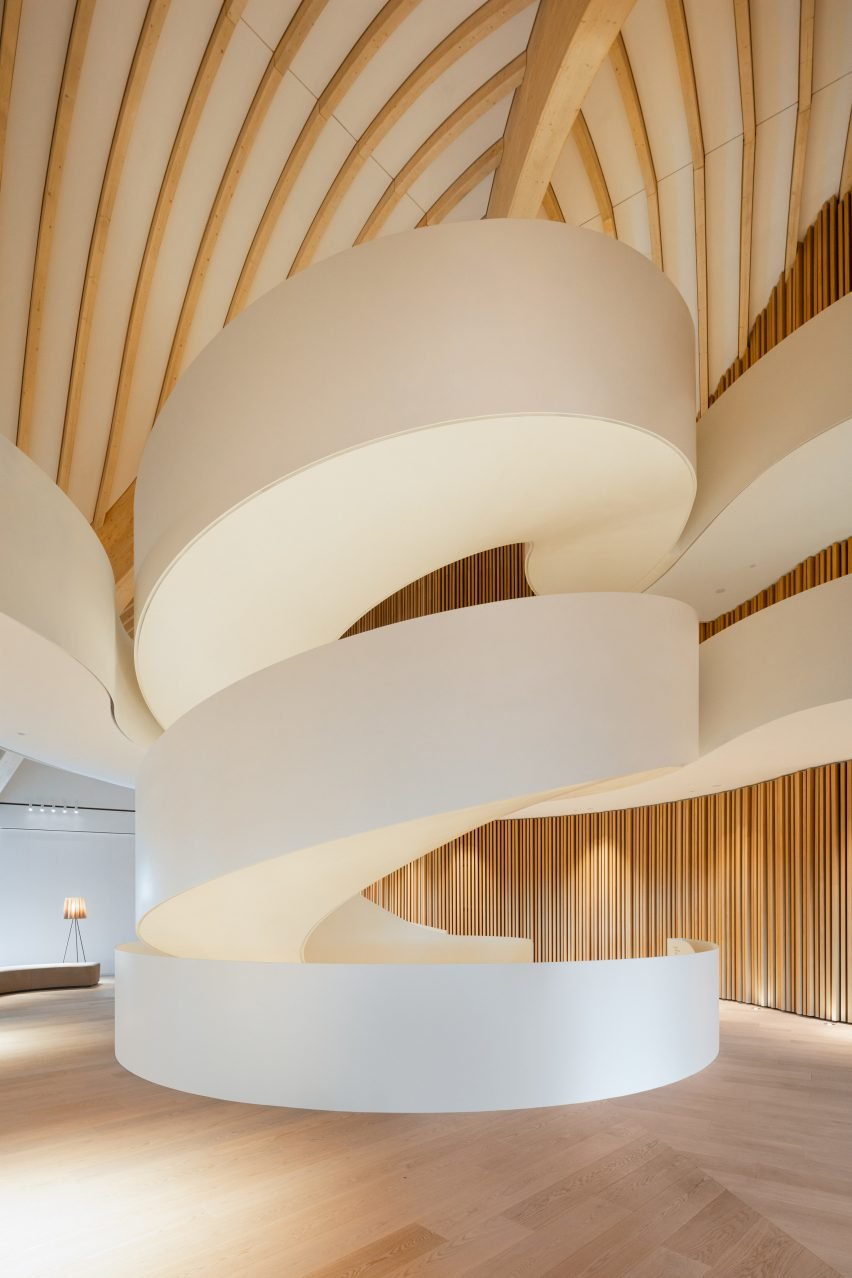
An imposing staircase made of steel and oak features inside the resort

Inside, an imposing staircase made of steel and oak connects all levels, leading guests from the reception to the garage to the medical area to their rooms, which each have their own sheltered outdoor area.

“The architecture operates in analogy to the medical concept, which, in terms of the healing process, translates to a design that simplifies itself to the essentials,” added Ingenhoven,

Lanserhof Sylt Medical Health Resort by Inhenhoven Architects
The studio chose a colour palette that consists of beige, white and grey, echoing its surroundings

Other projects by Ingenhoven Associates recently featured on Dezeen include plant-covered skyscrapers in Tokyo and an office covered in five miles of hedges in Dusseldorf.

The photography is courtesy of Ingenhoven Architects/HGEsch. 

Reference

greater dog architects' renovated 5 X 7 building in china boasts a goose foot-shaped canopy
CategoriesArchitecture

greater dog architects’ renovated 5 X 7 building in china

the renovation of 5 x 7 building in Zhejiang, China


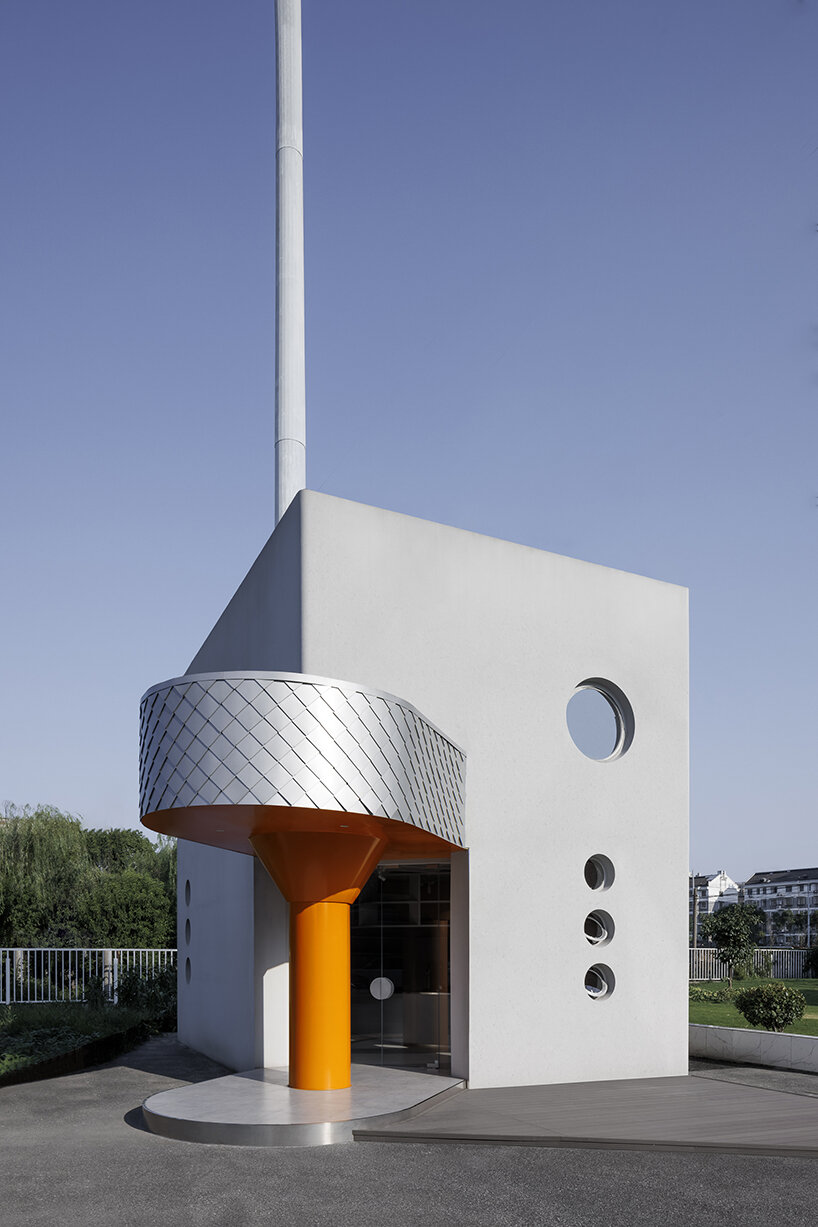
Greater Dog Architects was commissioned to renovate a small brick and concrete mixed-use structure in Zhejiang, China. Situated on the edge of a riverfront plot, the structure’s previous function was as a backup room for a substation, now transformed into The 5 X 7 building as a stopping point during touristic tours organized at the nearby é é é | BSH headquarters — a multi-use complex featuring a retail space, an office, an R&D, and production unit, several restaurants, and a factory that produces bedding made from high-quality goose down (the bird’s soft under plumage). In response, the architects employed an adaptive reuse strategy, effectively repurposing the existing space and floor height to create a suitable hub for the public to relax and enjoy tea.

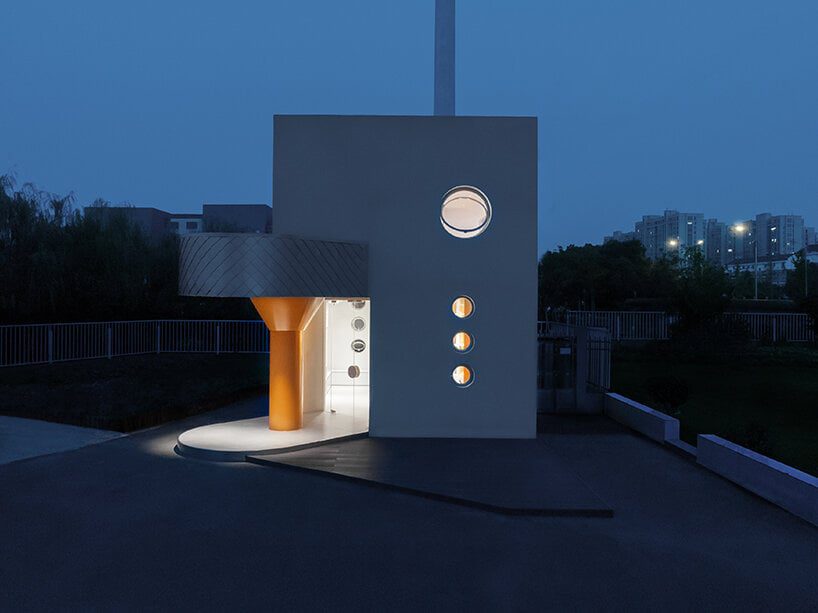
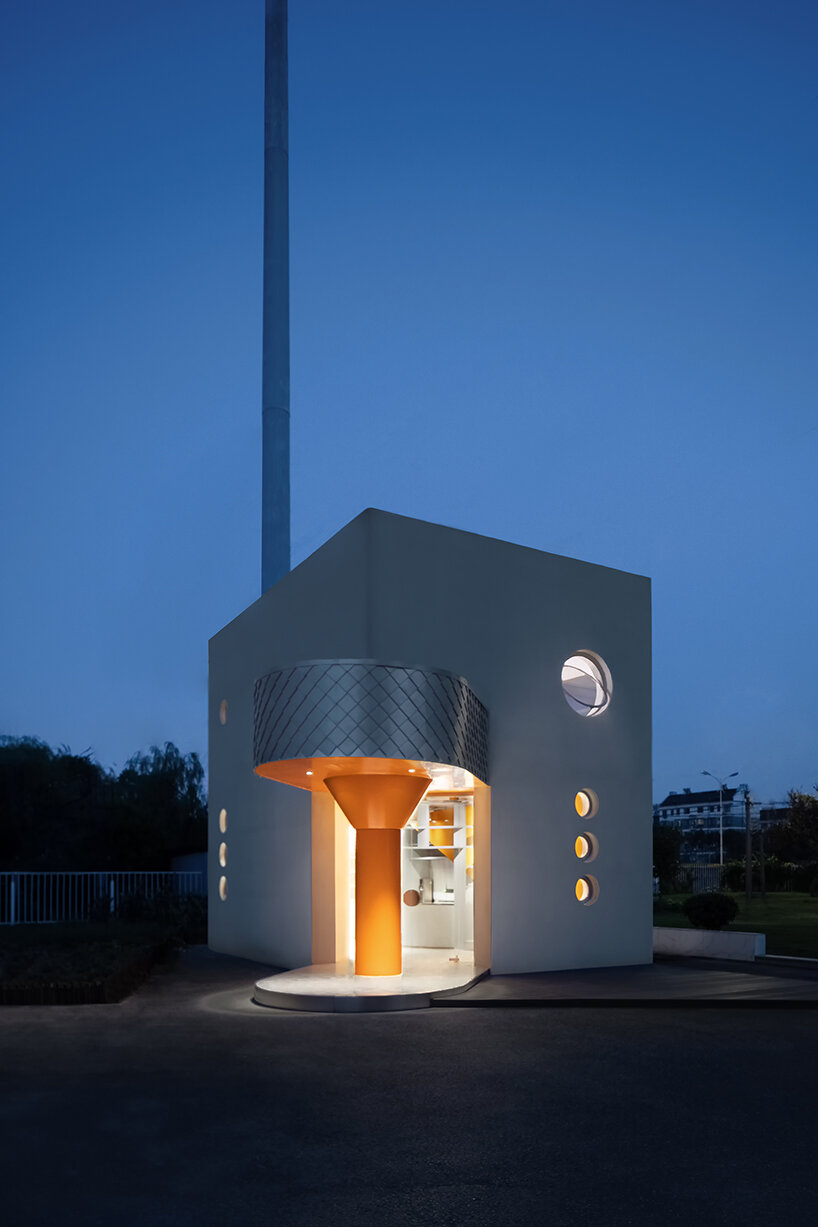
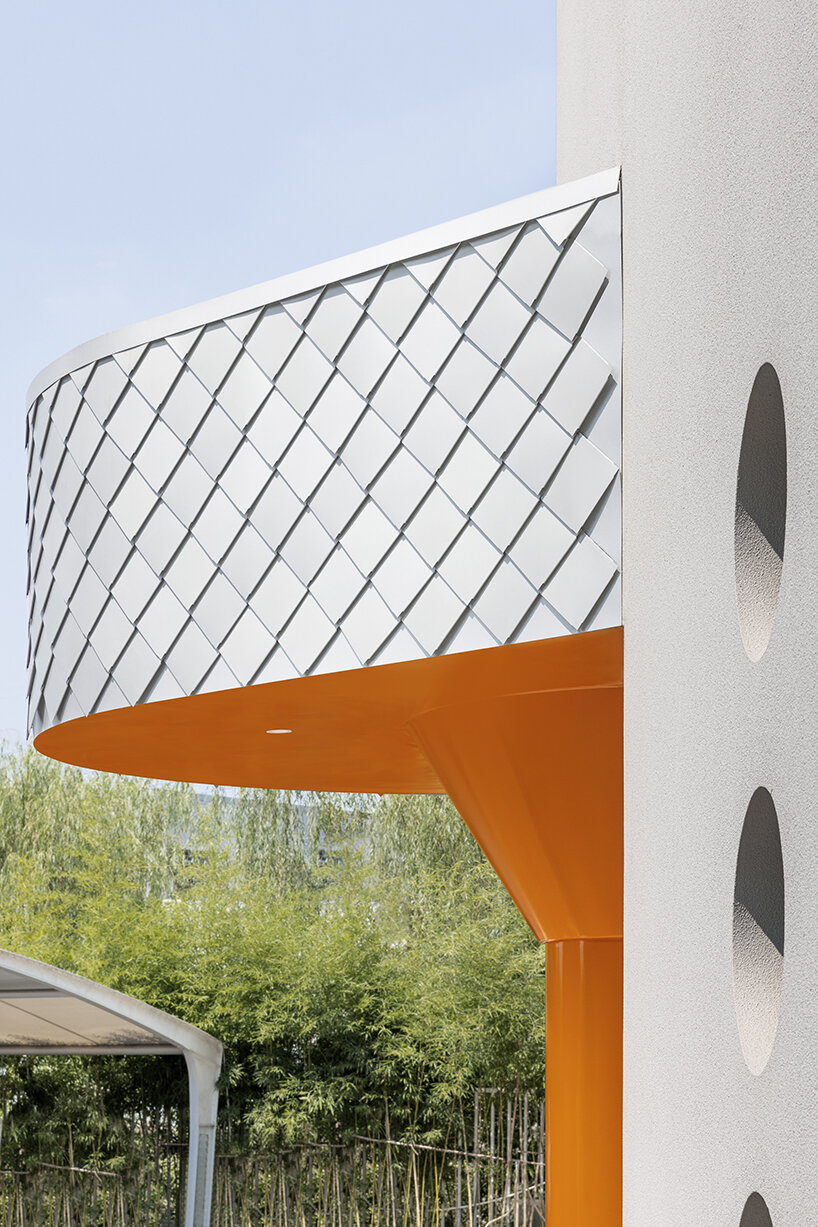
Under tight budget cost control, the aluminum-clad building 5 X 7 retains the old structural boundaries, while the extended canopy is used to break the conventional boxy shape, which also serves as the main entrance; this unique feature not only fulfills its function of providing shelter from the elements but also introduces subtle ‘reconstruction’ changes within the existing architectural framework. As a new structural element, it brings a sculptural language to the building, and the abstract goose-foot shape infuses it with vibrancy and humor.

greater dog architects' renovated 5 X 7 building in china boasts a goose foot-shaped canopy
all images © Metaviz Studio


greater dog architects pairs aluminum with vivid orange hue


Furthermore, Greater Dog Architects (see more here) integrated the large windows on the original 5 x 7 building’s four facades into partially small circular windows. Throughout, the architects achieved optimal thermal insulation on the original exterior walls by adjusting the window-to-wall ratio, effectively combining the forms of southeast-facing windows and roof skylights to increase daylight pouring in.

Facade-wise, the structure primarily features a neutral gray textured paint, while the special-shaped entrance canopy sports lightweight and corrosion-resistant natural aluminum cladding and orange-painted aluminum panels. The orange columns add a splash of color, rejuvenating the corner and making the building noticeable from a distance. Natural aluminum, as a 100% recyclable sustainable material, also boasts lightweight characteristics that ease installation and reduce the load on the original building structure, while its corrosion resistance ensures long-lasting durability. Simultaneously, the application of textured paint and aluminum materials accelerates construction, reducing the cost of renovating small-scale buildings.

greater dog architects' renovated 5 X 7 building in china boasts a goose foot-shaped canopy
abstract goose-foot shape infuses the building with vibrancy and humor


flexible and skylit interiors for tea and relaxation 


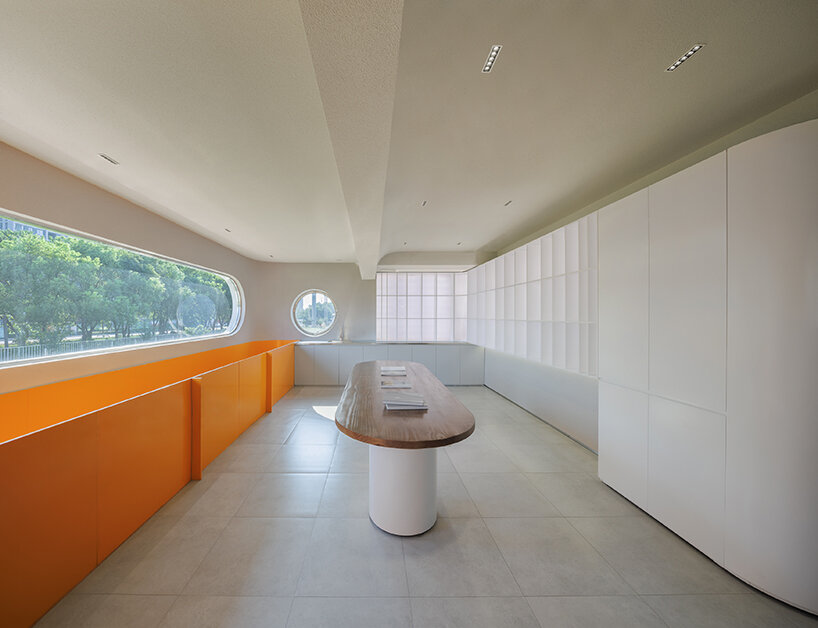
As for the interiors, Greater Dog Architects carefully reconfigured the 5 X 7 spaces, using the original building’s 6.8-meter ceiling height to divide it into two levels of use. On the one hand, a new orange-painted steel staircase added to the south side of the first-floor bar counter creates a vertical connection, linking the first-floor bar area with the second-floor tea lounge. On the other hand, the roof skylights above the staircase bring more natural light to the second floor and stairwell, creating unexpected spatial opportunities within the limited interior space. Additionally, large windows on the outward-facing facade offer views of the surrounding river and maximize transparency within the compact interiors.

The building serves as an external tea and relaxation space for the BSH goose-down tourist factory and extends its display functions to maximize the flexible layout and shared use of the functional area. The architects have utilized the vertical space of the wall to design display shelves of various scales, meeting the future needs for product display within the space. Similarly, the materials used in the building extend into the interior space, establishing a visual connection between inside and outside. Lastly, as night falls, the 5 X 7 structure becomes a shimmering elf in the corner.

greater dog architects' renovated 5 X 7 building in china boasts a goose foot-shaped canopy
the architects coated the structure primarily in a neutral gray textured paint

greater dog architects' renovated 5 X 7 building in china boasts a goose foot-shaped canopy
a touch of vivid orange makes 5 X 7 recognizable from a distance

greater dog architects' renovated 5 X 7 building in china boasts a goose foot-shaped canopy
sing the original building’s 6.8-meter ceiling height to divide it into two levels

Reference

CCY architects hides a remote, copper-clad cabin deep in the colorado rockies
CategoriesArchitecture

CCY architects hides this DNA alpine cabin in the colorado rockies

a mountain hideaway for nature-lovers


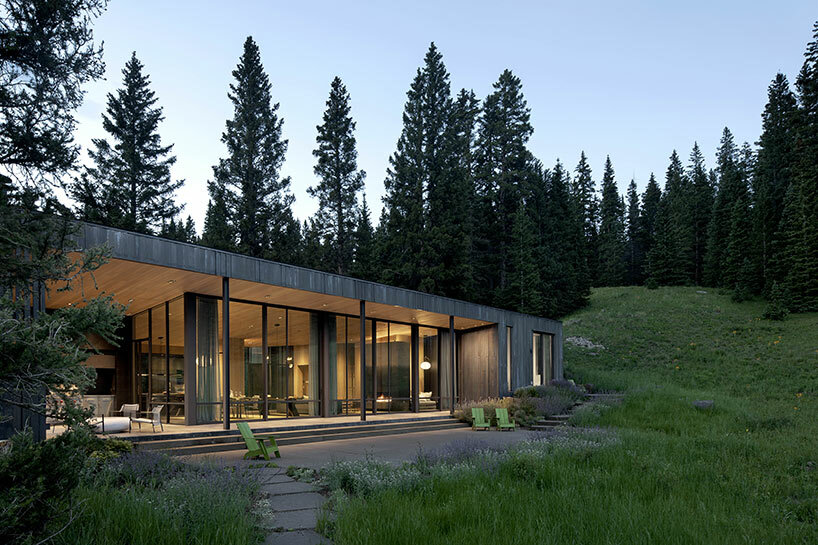
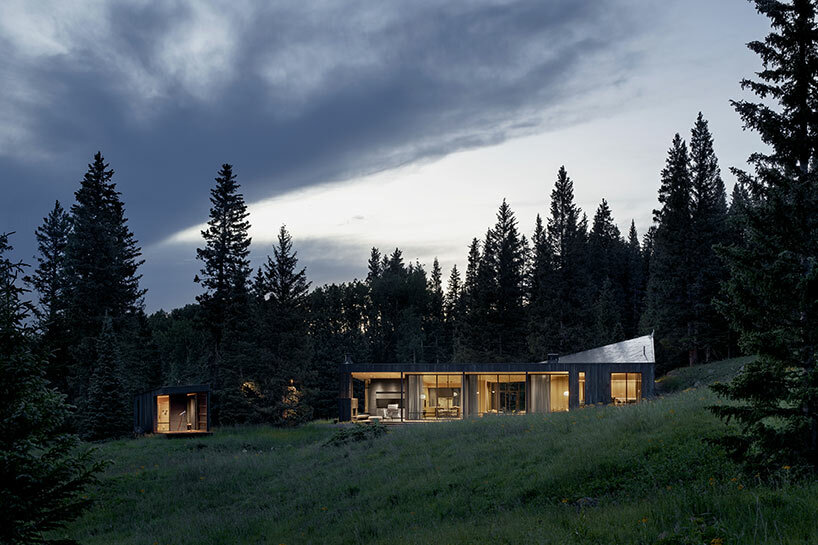
Deep into the rugged wilderness of Colorado‘s San Miguel County, this newly completed house known as DNA Alpine has been crafted by CCY Architects. This secluded retreat high in the Rocky Mountains offers a tranquil retreat for a family who had owned and loved the 70-acre plot of land for over two decades. Their wish for a permanent dwelling — from which they could hike, snowshoe, and cross-country ski — led to the design of this humble trio of cabins. Perched along the northern edge of a gentle bowl and backdropped by towering spruce trees, the copper-clad dwelling results from the owners’ intimate knowledge of the site. Their commitment to preserving the environment led to the structure’s minimal footprint on the land.


Accessible by car only in summer, occupants must reach the cabins by snowshoe in the winter months,writes CCY Architects, describing the unique remoteness of the forested site.

CCY architects hides a remote, copper-clad cabin deep in the colorado rockiesimages © Jeremy Bittermann / JBSA


ccy architects clusters a trio of cabins


In a thoughtful response to the hidden site’s challenging topography, CCY Architects divided DNA Alpine into three distinct buildings: the main house, garage, and sauna. This division allowed each structure to respectfully adapt to the natural contours of the land, weaving between the existing trees. These buildings are linked together by a network of walking paths.


To ensure space for gatherings across generations, the architects employed a clever strategy of multi-functional areas. Instead of allocating space for four dedicated bedrooms, a flexible room serves as an office or sleeping area with two daybeds, while a sleeping loft is nestled beneath the sloping roof. The outcome is a beautifully designed home that accommodates both the family and the environment it inhabits.

CCY architects hides a remote, copper-clad cabin deep in the colorado rockies


The clients wanted a generational house that respected their land, so we paid close attention to the scale of the structures,’ Consulting Principal John Cottle, FAIA tells designboom.The house lives large, with flowing spaces, but because of the folded roof the highest point is only fourteen feet above the undulating topography. It’s a statement of deference to the beauty of the landscape.’

CCY architects hides a remote, copper-clad cabin deep in the colorado rockies
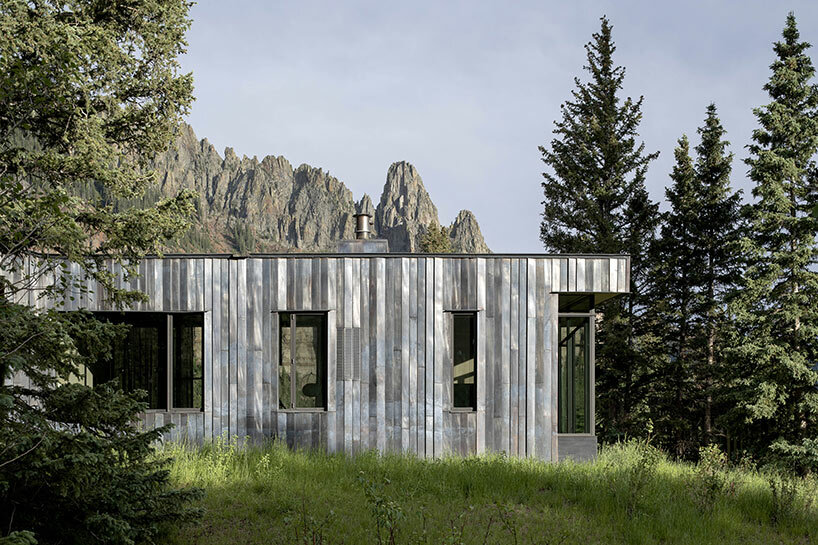
the copper cladding pattern mirrors the DNA sequence of the site’s heritage spruce trees


dna alpine’s namesake copper cladding


For the cladding of its DNA Alpine, CCY Architects turned to copper sheeting, which was carefully formed into four profiles that could be arranged in any pattern. Inspired by the client’s interest in synthetic biology, the chosen pattern mirrors the DNA sequence of the heritage spruce trees that encircle the house. This non-repetitive sequence wraps the structure, creating a dynamic and slightly reflective facade that interacts with the changing daylight. As seasons pass, the cladding will gracefully patina, further harmonizing the house with its natural surroundings.

CCY architects hides a remote, copper-clad cabin deep in the colorado rockies
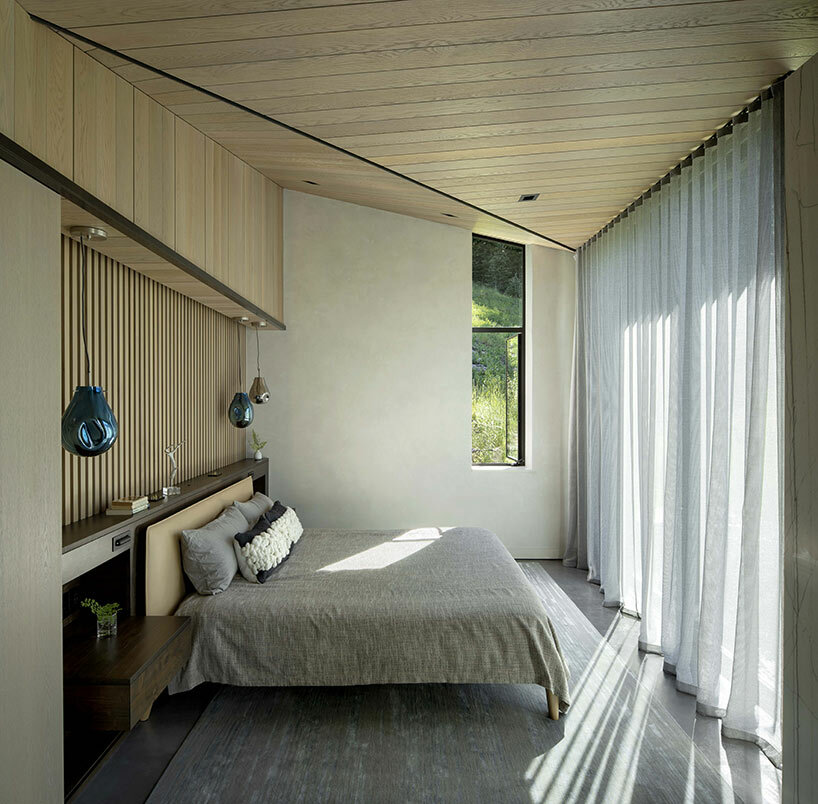
the angular, sloping roof is expressed along the interiors CCY architects hides a remote, copper-clad cabin deep in the colorado rockiesthe trio of cabins are linked by a network of footpaths
Reference

Because it can be cast into any shape, concrete opened up new possibilities for architects.
CategoriesArchitecture

Architects Should Continue Using Concrete. Change My Mind.

Architizer’s new image-heavy daily newsletter, The Plug, is easy on the eyes, giving readers a quick jolt of inspiration to supercharge their days. Plug in to the latest design discussions by subscribing. 

“What’s nice about concrete is that it looks unfinished.” 

– Zaha Hadid 

Before embarking on my argument, I want to get something out of the way: I believe that climate change is real. I also believe that mitigating climate change by lowering carbon emissions in as many areas of human life as possible is an urgent necessity in our century. Doing so is the only way to preserve the chance that future generations will be able to enjoy a decent and dignified existence. 

Another point to add in the preamble: I agree that concrete is an enormous contributor to climate change. It would be silly to try to deny it. The facts are there for anyone who cares to look. 

According to the Princeton Student Climate Initiative, the manufacture of concrete produces 4 billion tonnes of carbon dioxide annually, about 8% of global emissions. By comparison, transportation accounts for 29% of global emissions. The reason concrete is so carbon-heavy has to do with the manufacture of cement, the binding agent that, when mixed with water and gravel or sand, creates concrete – that magical liquid stone that enabled the creation of modern cities and remains the most consumed product on Earth after water. (Food is not even in spitting distance). 

To create cement, limestone, clay and other materials are fired in massive kilns at over 1,200 degrees fahrenheit. And again, this is done a lot, all over the world, as concrete is used in almost every aspect of construction worldwide, from roads to sidewalks to bridges to pipes and more. Even most wood frame buildings have concrete foundations. As the architect Sarah Nichols put it, concrete is in “almost everything” and can be found “almost everywhere” in the modern world. 

In a brilliant 2022 essay for Noema, author Joe Zadeh explains that “such a monstrous scale of production has monstrous consequences.” He adds that “concrete has been like a nuclear bomb in man’s conquest of nature: redirecting great rivers (often away from the communities that had come to rely on them), reducing quarried mountains to mere hills, and contributing to biodiversity loss and mass flooding by effectively sealing large swathes of land in an impermeable gray crust.” 

It is no wonder that some writers have advocated abandoning concrete altogether, arguing that new techniques of engineering wood and other materials obviate the need for all this gray sludge. Right here in Architizer, Francesca Mercurio asserted bluntly that “architects should stop using concrete.” She writes that “we should be striving toward a mindset shift, one where humans understand their place on Earth and respect their ecosystems and natural terrains. We must shift our priority from grandeur and excess to preserving the Earth’s natural resources and ultimately, close the chapter on the concrete era.” 

Because it can be cast into any shape, concrete opened up new possibilities for architects.

Because it can be cast into any shape, concrete opened up new possibilities for architects, essentially enabling the development of modern architecture as we understand it. Via Phaidon and Architizer.

However, even Mercurio admits that “there is certainly no clear path” to abandoning concrete altogether, as there are no real substitutes that are as cheap and versatile to meet the needs of a world that is still in the process of urbanizing. And here is my worry. 

At times, the broadsides against concrete seem to be attacks on modernity itself, a claim that the time has come to scale back and learn to live with less. It is often linked to a call to repair existing infrastructure instead of always building more. But that is not an option for the developing world, where necessary infrastructure is still being constructed and the process of industrialization and economic growth is lifting millions out of poverty. When people say that “concrete built the modern world,” it almost seems to imply that the modern world has already been built, which is far from the case. Politically, economically, physically, and morally, humanity remains involved in a period of growth and transformation. 

As a democratic socialist, I am not happy with where we are. I do not want to stop building and go back to nature, as doing so would require an enormous amount of sacrifice on the part of the world’s most vulnerable people. A sustainable future is key, but it must be a high-tech future, one that is able to provide for the needs of a global population that continues to grow. To do this, we are going to need to move mountains — literally. Certainly, innovations toward a greener concrete should be commended, as should building practices that allow architects to use less concrete. In this vein, Philippe Block’s research into how architects can use vaulting to limit the amount of concrete used even in high rise structures is particularly fascinating. But until a real alternative to concrete presents itself, we are very much still in the “concrete era.”

Architizer’s new image-heavy daily newsletter, The Plug, is easy on the eyes, giving readers a quick jolt of inspiration to supercharge their days. Plug in to the latest design discussions by subscribing. 

Cover image: RW Concrete Church by NAMELESS Architecture, Seoul, South Korea

Reference

6 Homey Ways Architects Are Designing Warmer Office Environments
CategoriesArchitecture

6 Homey Ways Architects Are Designing Warmer Office Environments

The latest edition of “Architizer: The World’s Best Architecture” — a stunning, hardbound book celebrating the most inspiring contemporary architecture from around the globe — is now available. Order your copy today.  

Today, our lives are no longer compartmentalized into rigid schedules, nor is the line separating work from leisure as clear-cut as before. When the global pandemic hit in 2020, everyone was forced to work from home, bringing their meetings and busy agendas to the middle of their living rooms, changing much of what we know about the workplace and further blurring the line between the office and the home. That shift later promoted many businesses to uphold the “working from home” setup, at least in a hybrid format with some in-office days, having realized its environmental, financial and social benefits for many.


Following these trends, many businesses are now adopting a comfortable home-like environment — sometimes prioritizing comfort over formality and other times upping their interior decor game to lure employees back to work. These office designs, of course, come without the challenges of WFH policies, such as unexpected family cameos in Zoom meetings and the difficulty of unplugging at the end of a day in the home office. The following trailblazing honorees from the 11th Annual A+Awards awards showcase examples of offices that are so comfortable that employees will feel right at home.


Bay Area Research Company

By SkB Architects, CA, United States

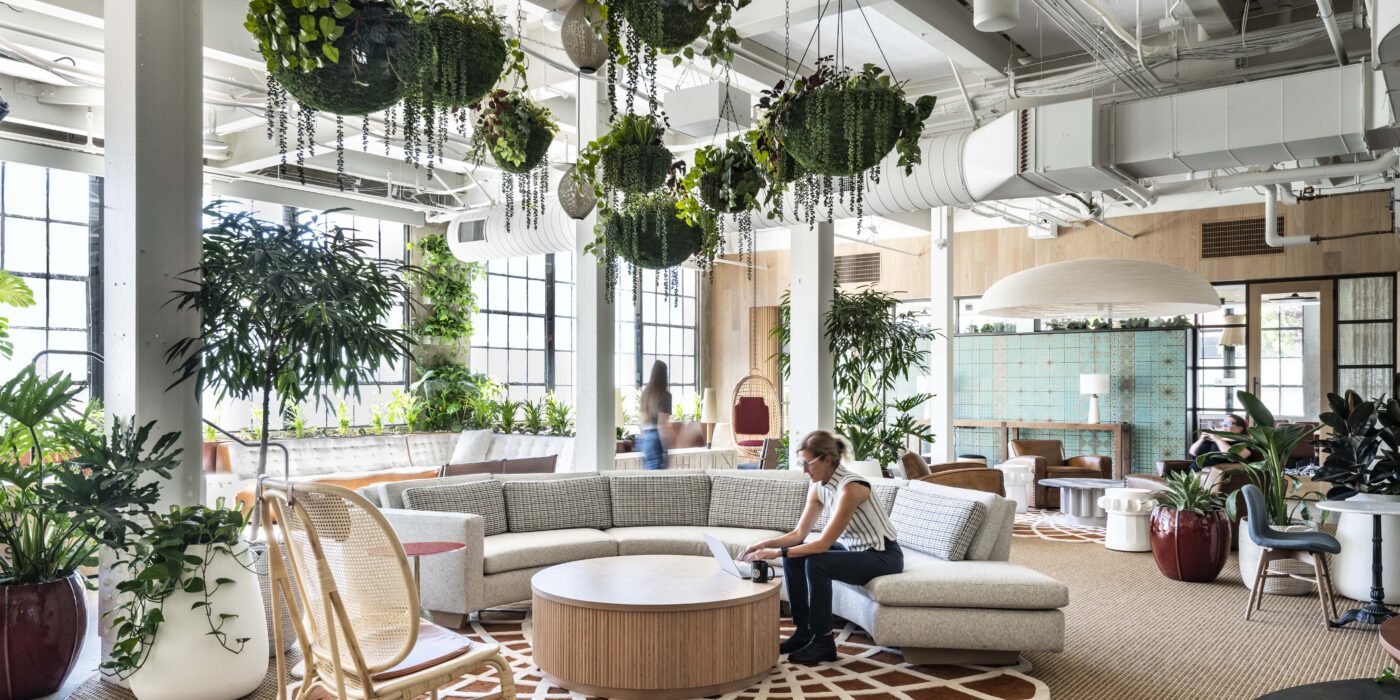


Bay Area Research CompanyEntering this think tank feels like entering someone’s living room, you almost feel like you need to knock first. Designed as an engaging and emotion provoking workplace that seamlessly flows between what used to be two warehouses in the Bay Area in California, this design research company adopts what the designers termed as a “better-than-home” concept, achieved through the selection of furniture, carpets, plants and materials that have contributed to producing a very relaxing and tranquil work environment. The workspaces are distributed over a wide variety of smaller spaces anchored in the open floor plan and staggered vertically across a number of split levels that together enrich the user experience for the employees, guests and collaborators.

EDGE Suedkreuz Berlin

By TCHOBAN VOSS Architekten GmbH,

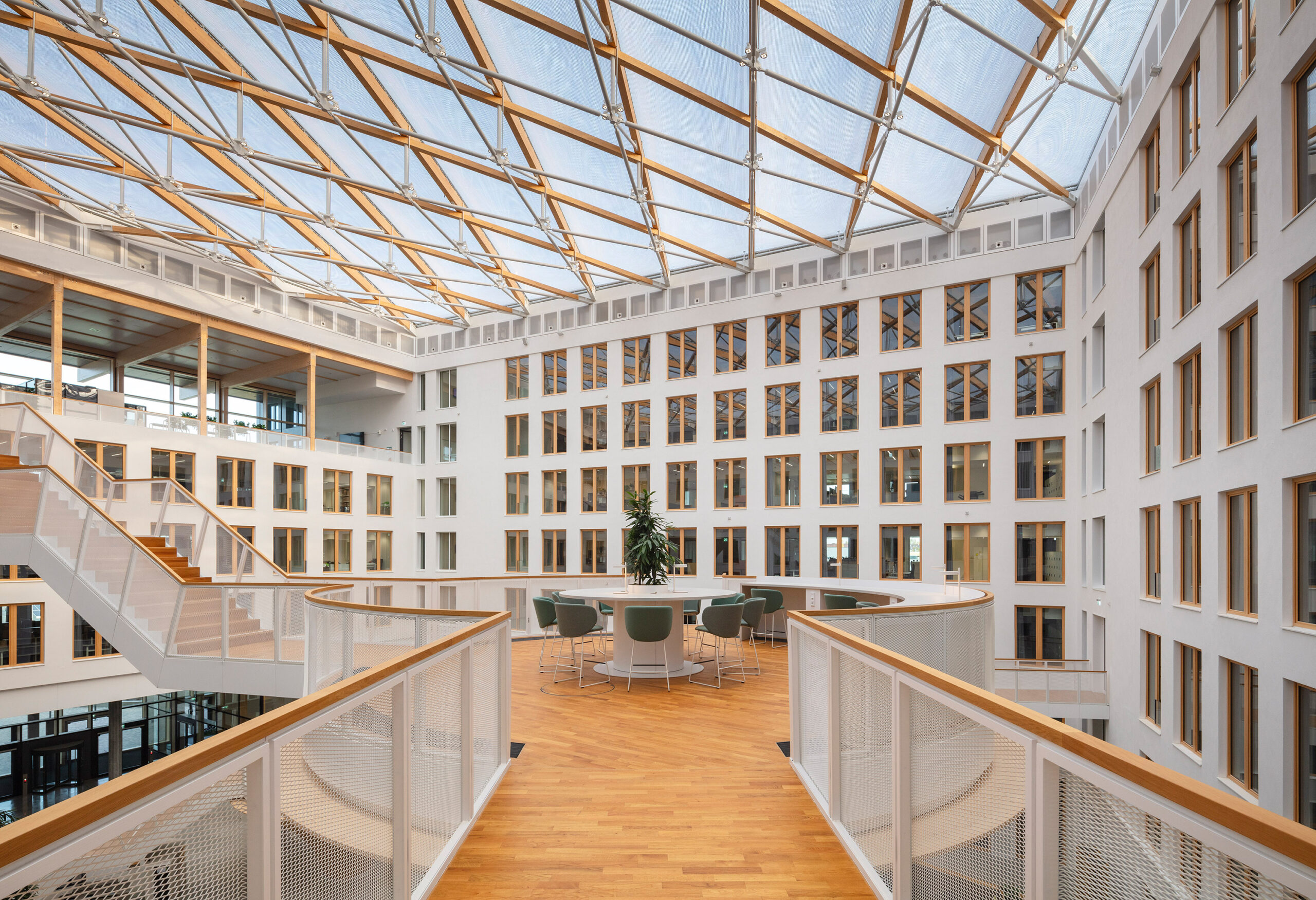
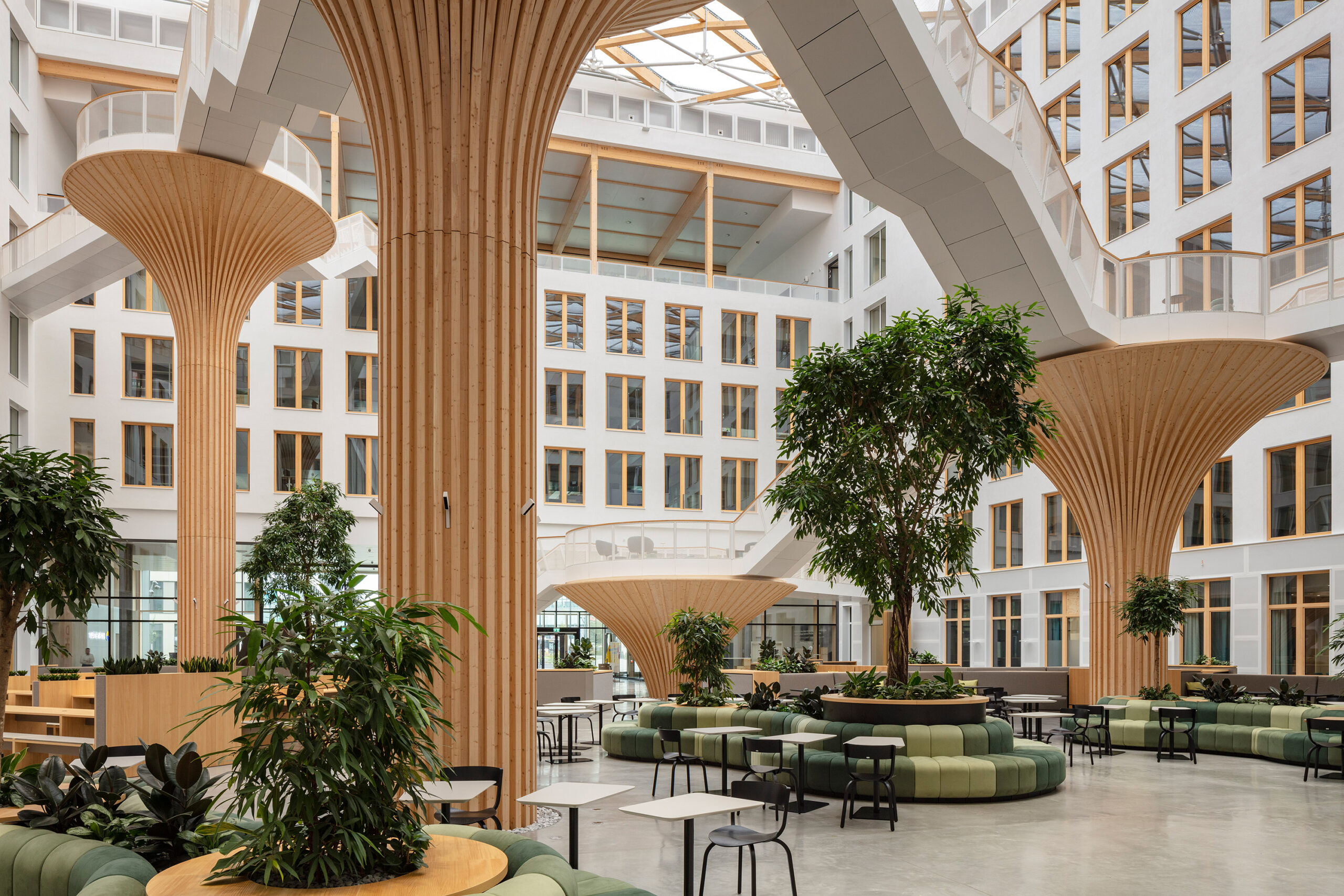
 From the outside, the two newly designed EDGE office buildings facing Hedwig-Dohm-Strasse in Berlin give no hint of what their insides look like, presenting employees a pleasant surprise once they enter. Inside the “Carré” building, the larger of the two buildings, a generously naturally lit atrium almost looks like a play area for adults, with its design blurring the boundary between the inside and the outside.
This atrium is playfully furnished with a web of tree like wooden structures that offer a variety of platforms for recreation and communication, connected by a network of by filigree steps that facilitate circulation across the building’s different parts. The sustainable state of the art design of both the buildings, which won the project the DGNB Platinum and DGNB Diamond awards, produces a healthy and vibrant work environment for employees and ensures the longevity of the buildings and the reusability of its materials.


DB55 Amsterdam

By D/DOCK, Amsterdam, Netherlands

Photo by Niels Vlug

Photo by Niels Vlug

Photo by Niels Vlug

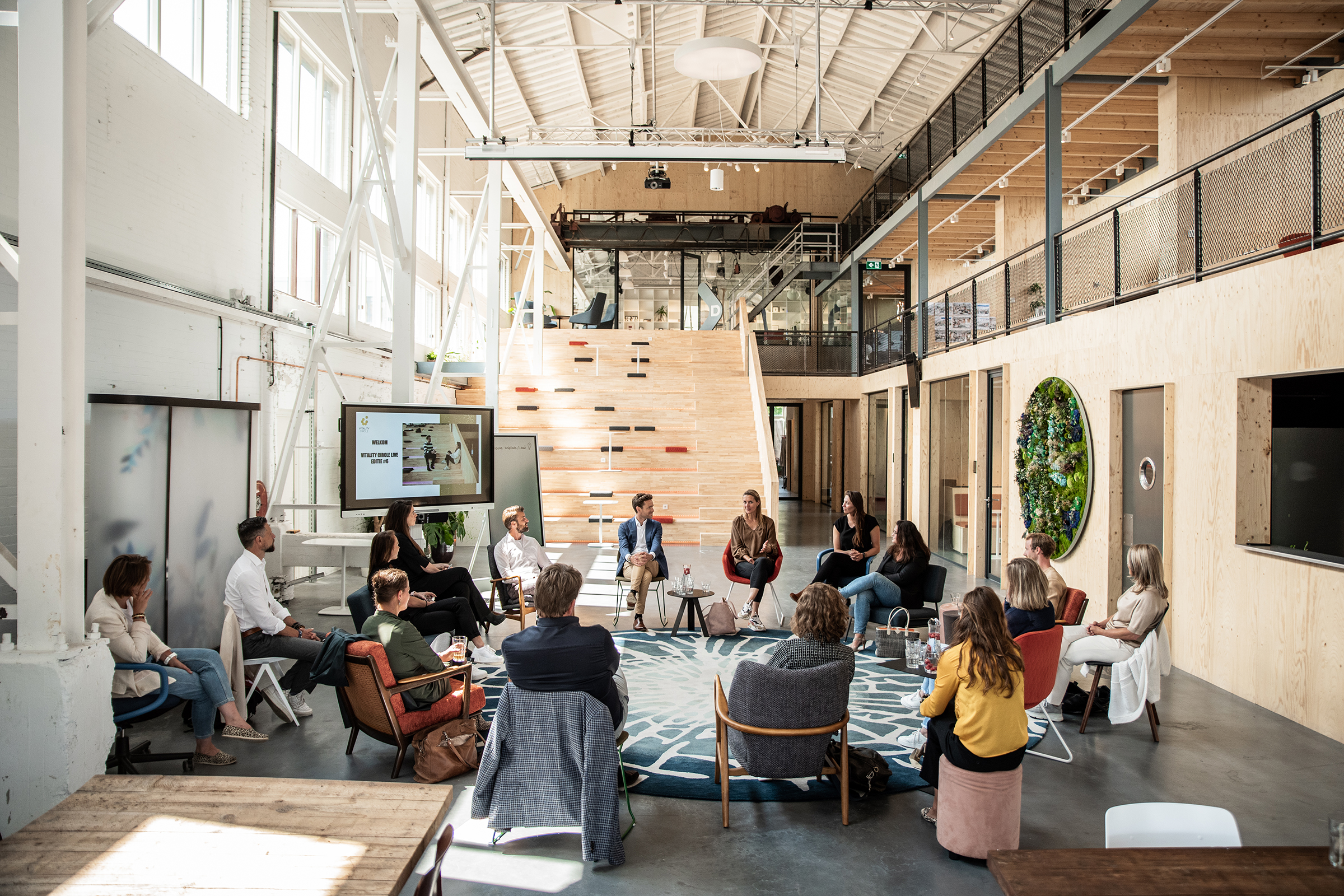
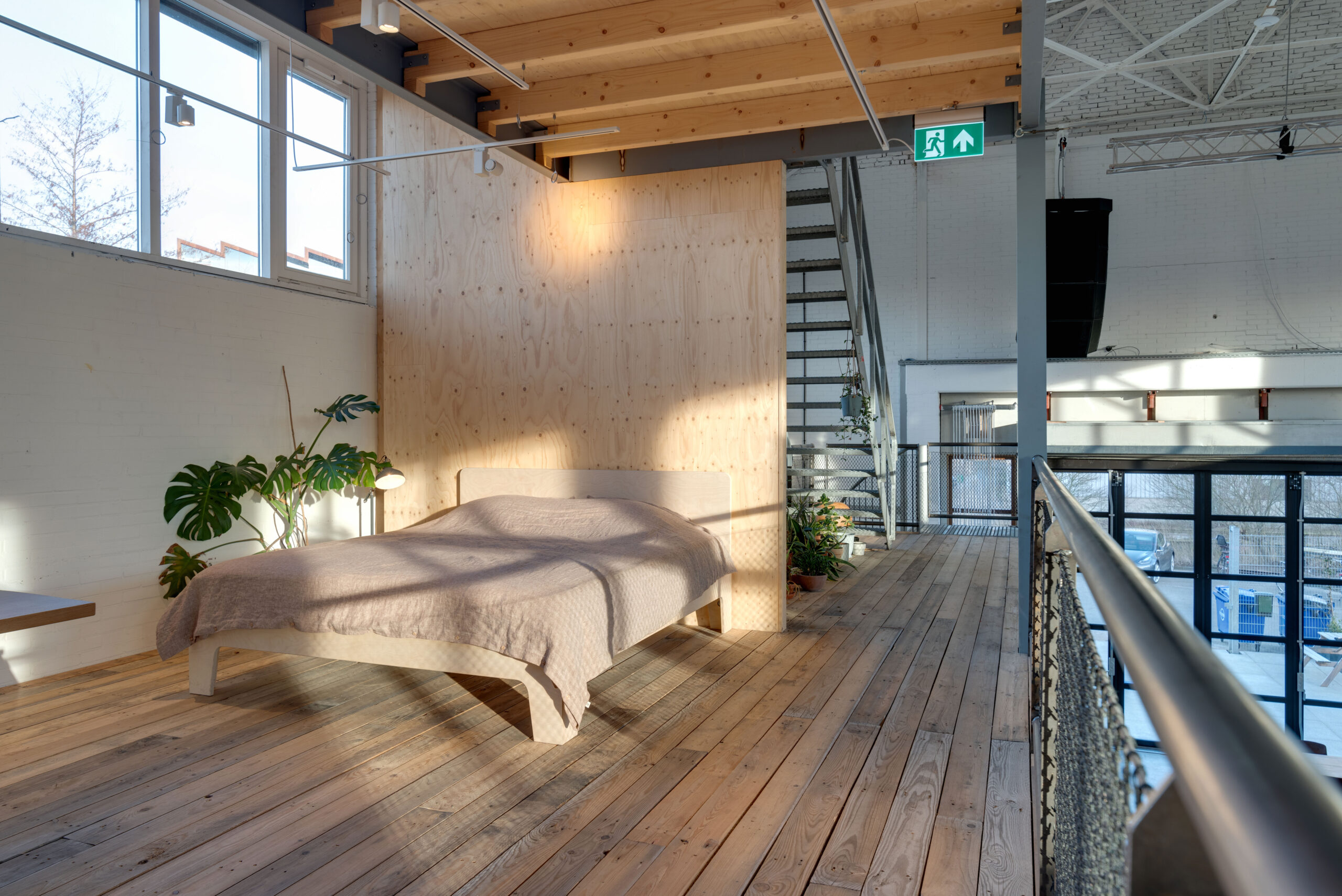
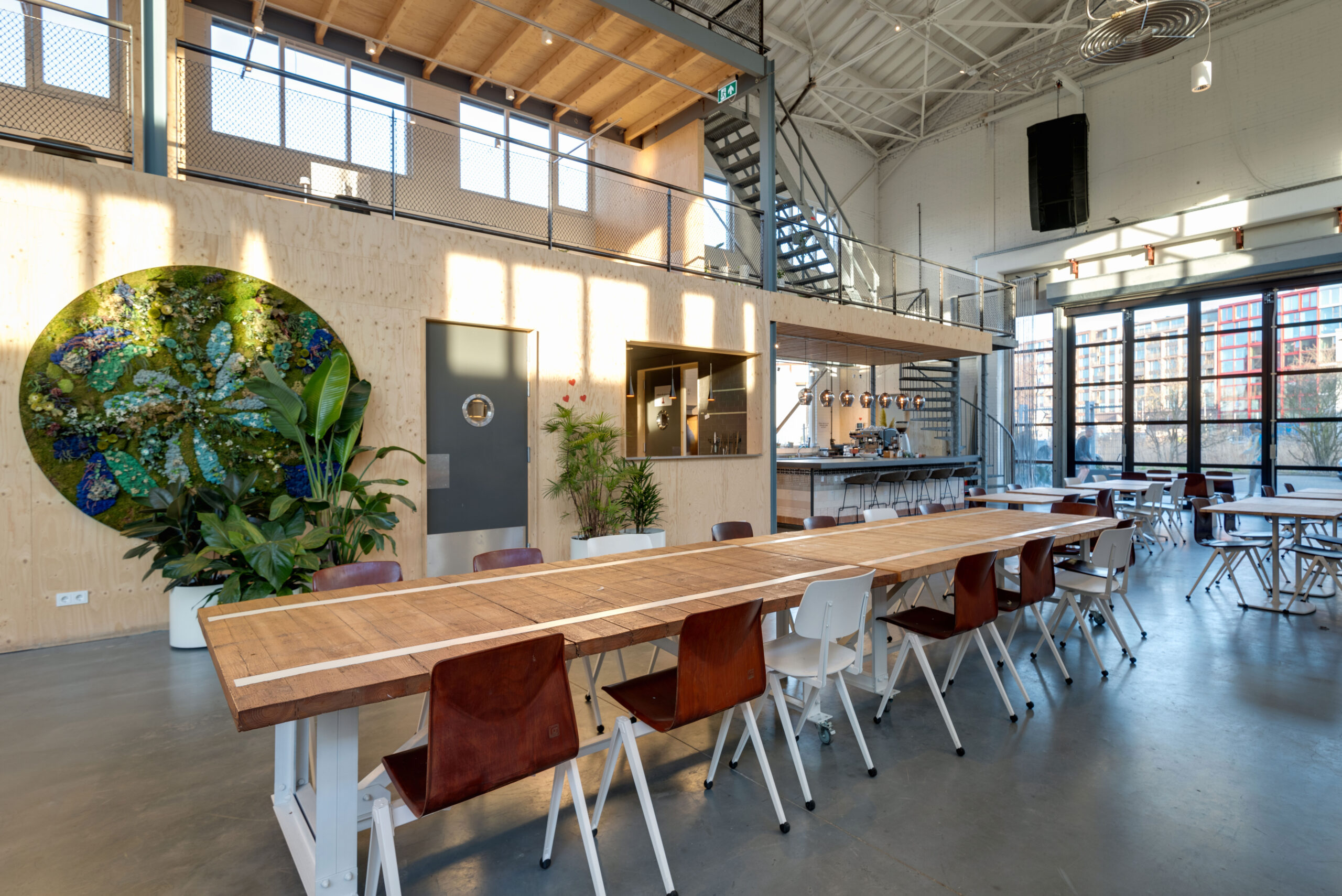
It is hard to tell what this place is for at first glance, given the variety of activities taking place around the miscellaneous furniture spread out across this building’s different sections. From a bed to a huge dining table and an abdunance of plants, the open floor plan contains a variety of levels where so much is going on at the same time. For those reasons, it comes as no surprise that this building, which used to be a timber warehouse, has a program that combines work and leisure, giving space to different events and even making room for a children’s playground. The array of windows on the top of the building connect the building with the outside and create a pleasant indoor experience, flooding the central open space with its double volume with natural sunlight, while the natural wood that is used in various elements of the interior give a soft and tranquil work ambiance.


Kabelovna Studios

By B² Architecture ,Praha, Czechia

Photo by Alex Shoots Buildings

Photo by Alex Shoots Buildings

Photo by Alex Shoots Buildings

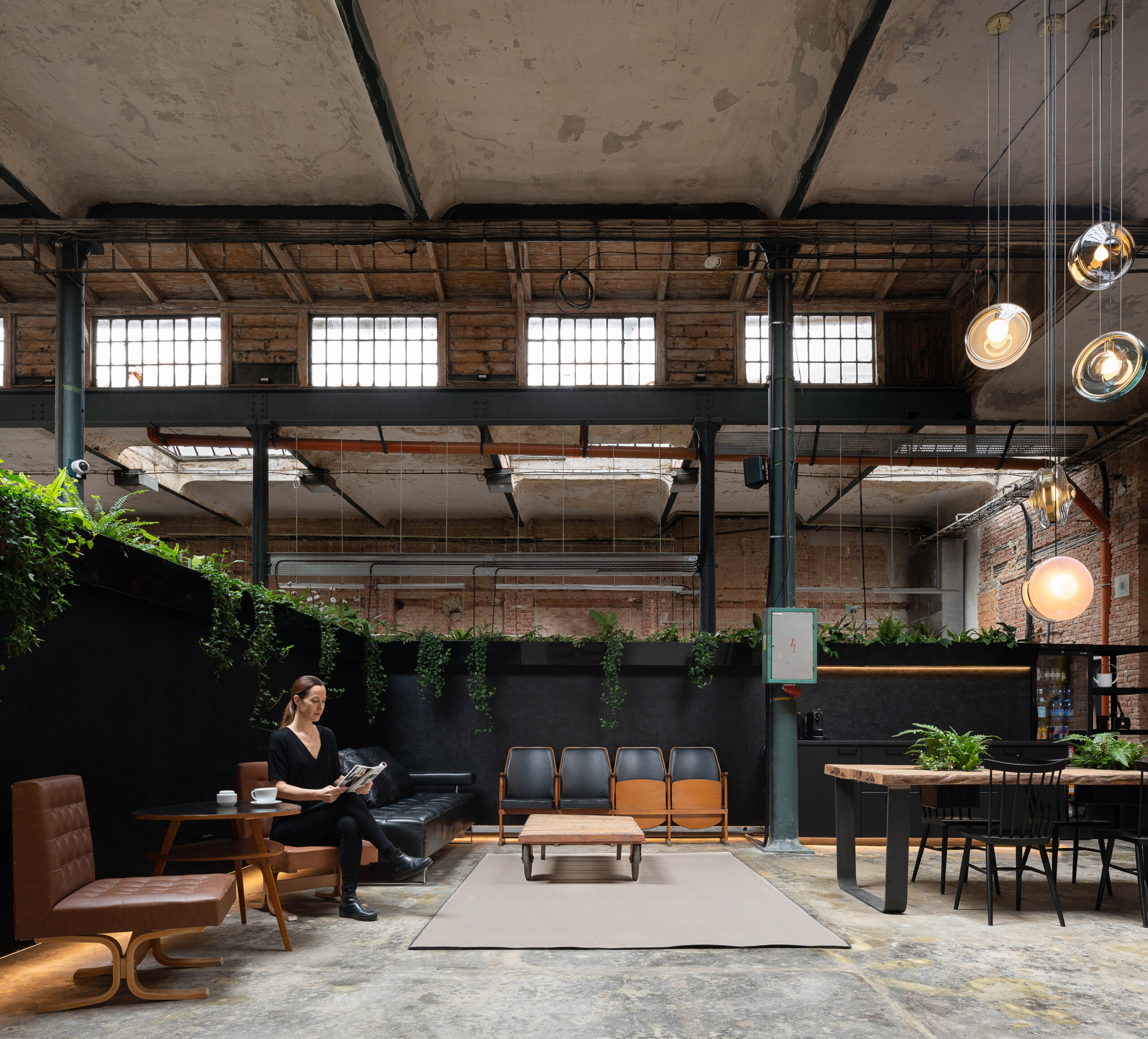
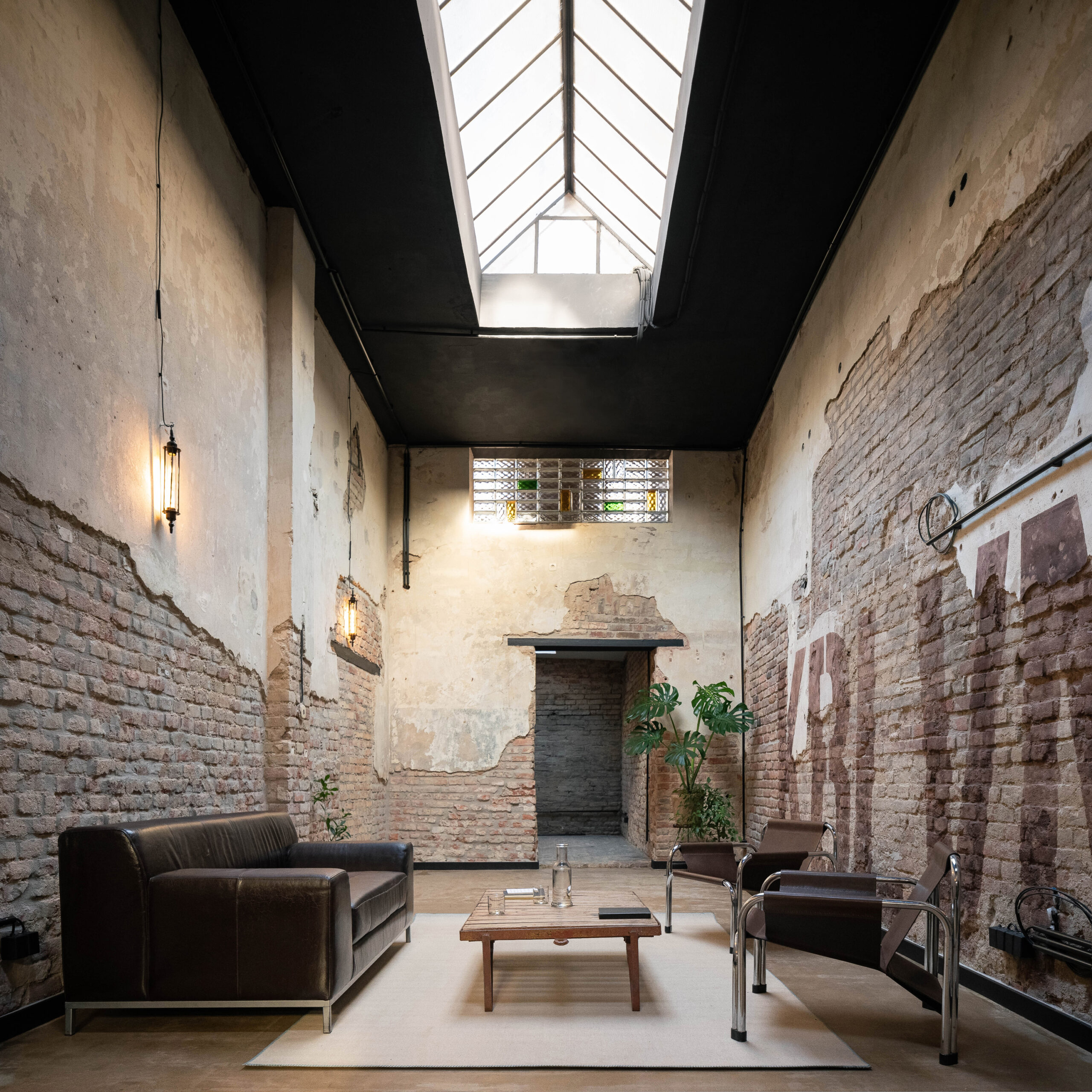
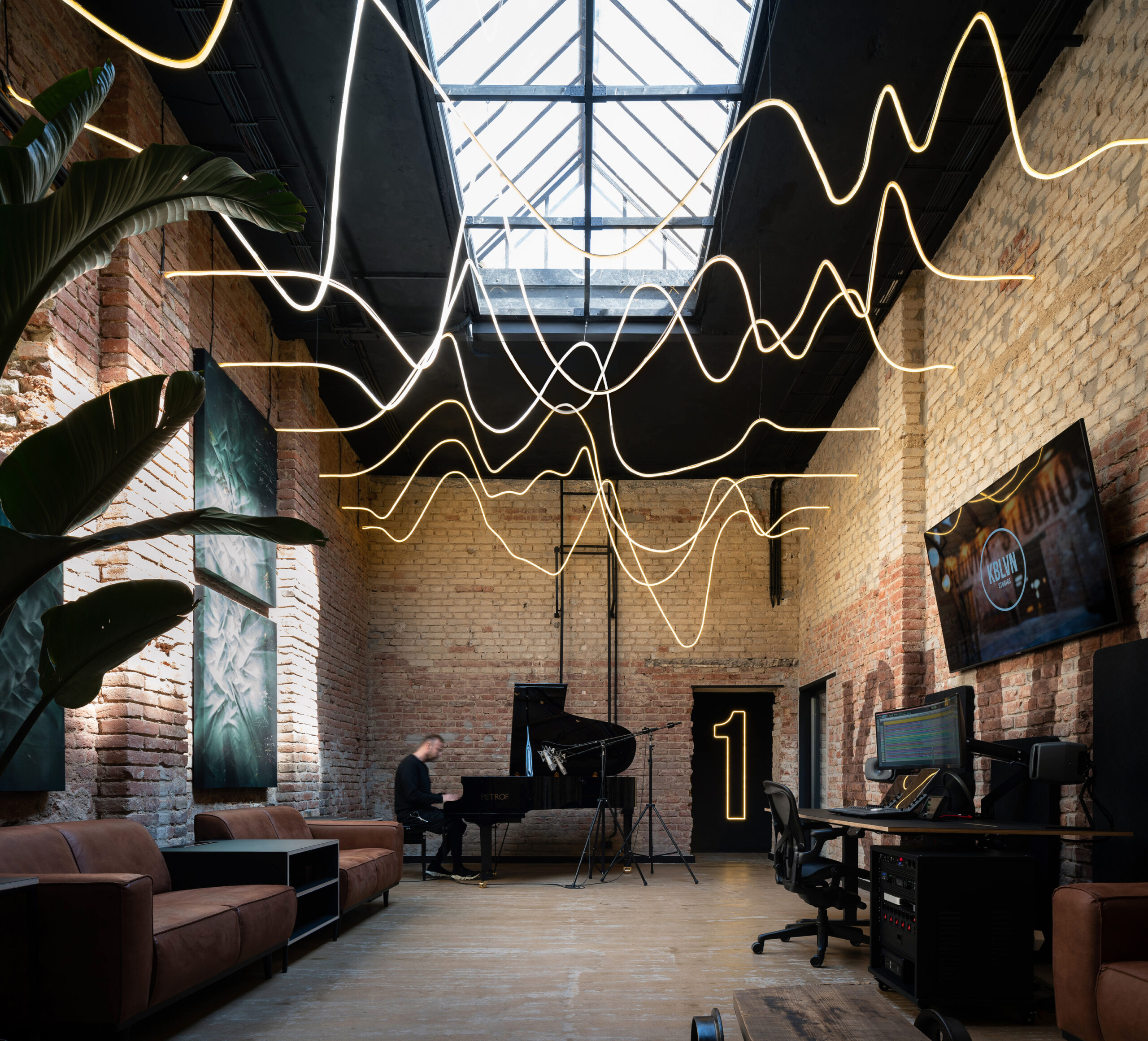
Set in what used to be a cable making factory, the super cozy atmosphere of this recording studio was established through the generous use of plants and the floods of natural sunlight that light up the entire space and allow an interplay of shades and shadows that complement the interplay of the musical notes across the sheets. The different recording studios are distributed around a central “living room” with a seating area and a kitchen, with the high ceiling giving a generous breathing space and the restored brick walls giving the studio a rustic and authentic character that offers a rich background for the recording artists.


Shenzhen Yeahka Office

By JSPA Design, Shenzhen, China


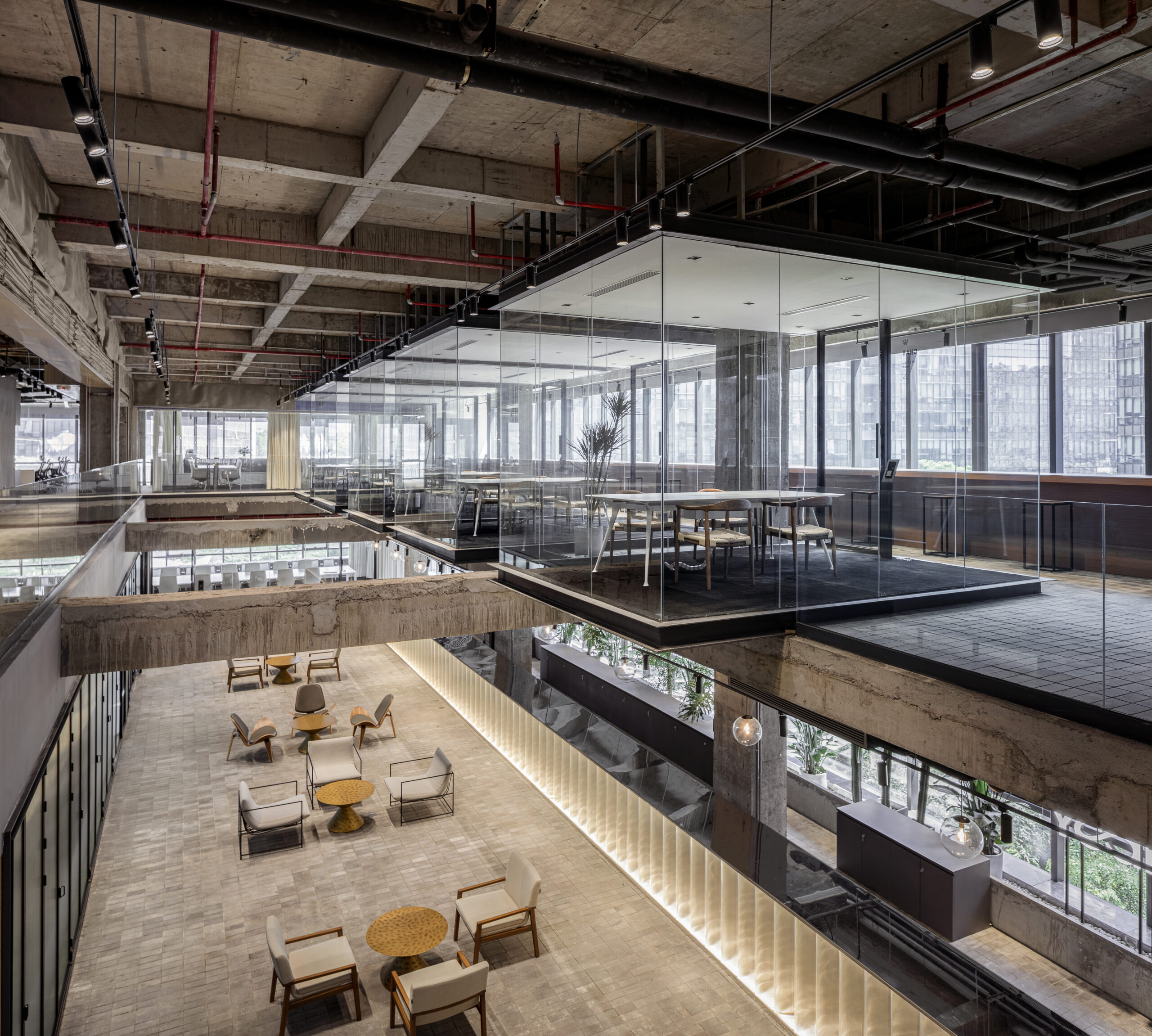
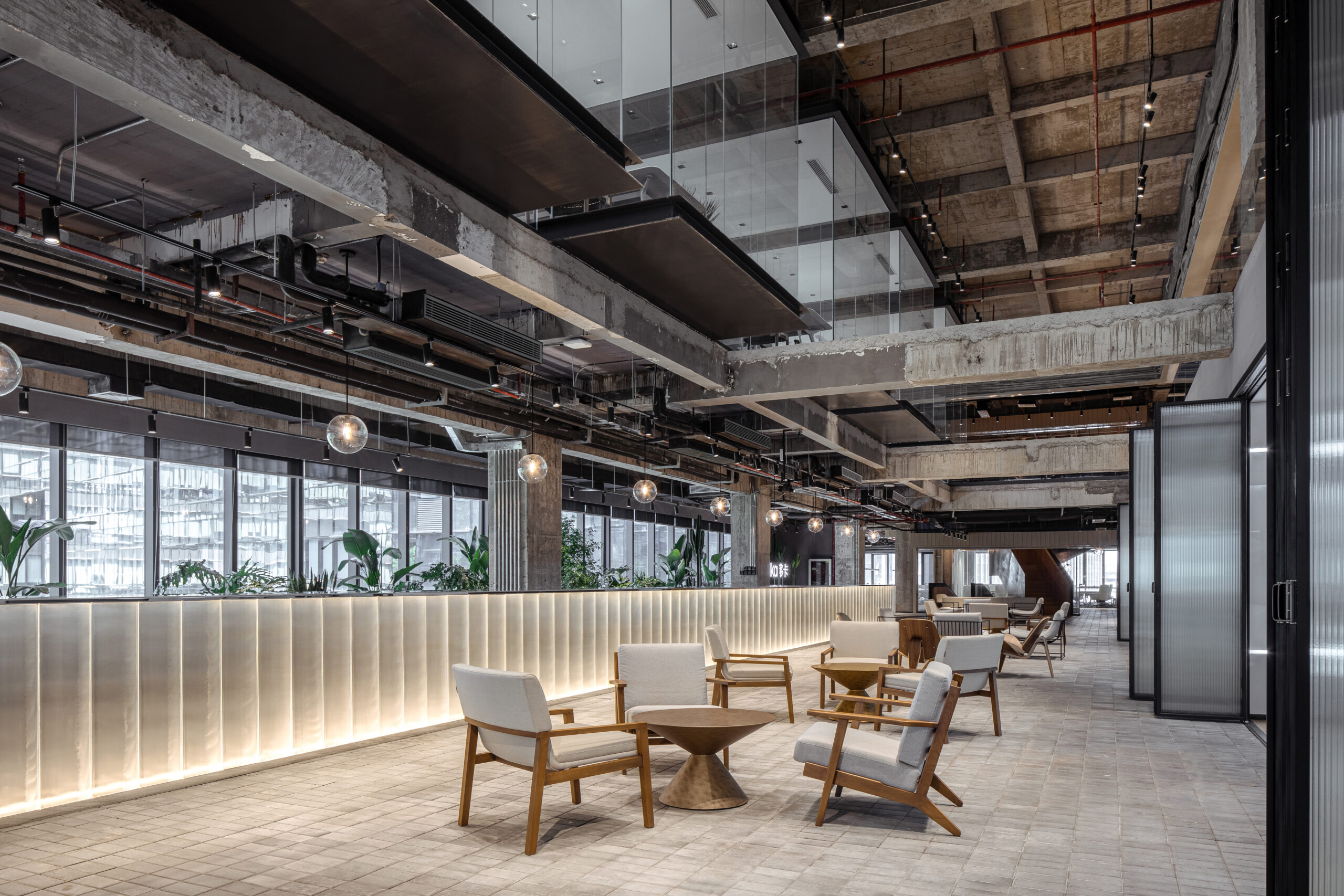
The interiors of the Yeahka headquarter office look like an ultra modern apartment set in a futuristic movie scene, with meeting tables hovering over the building’s central space inside glass boxes and the exposed structure of the refurbished building boldly exposed. The rough appearance of the building’s envelope is nicely contrasted with the use of softer materials and lighter colors for the partitions and the furniture, while the high ceilings allow floods of natural sunlight to travel across the office’s atriums and establish a variety of visual connections for visitors and employees across the different floors.
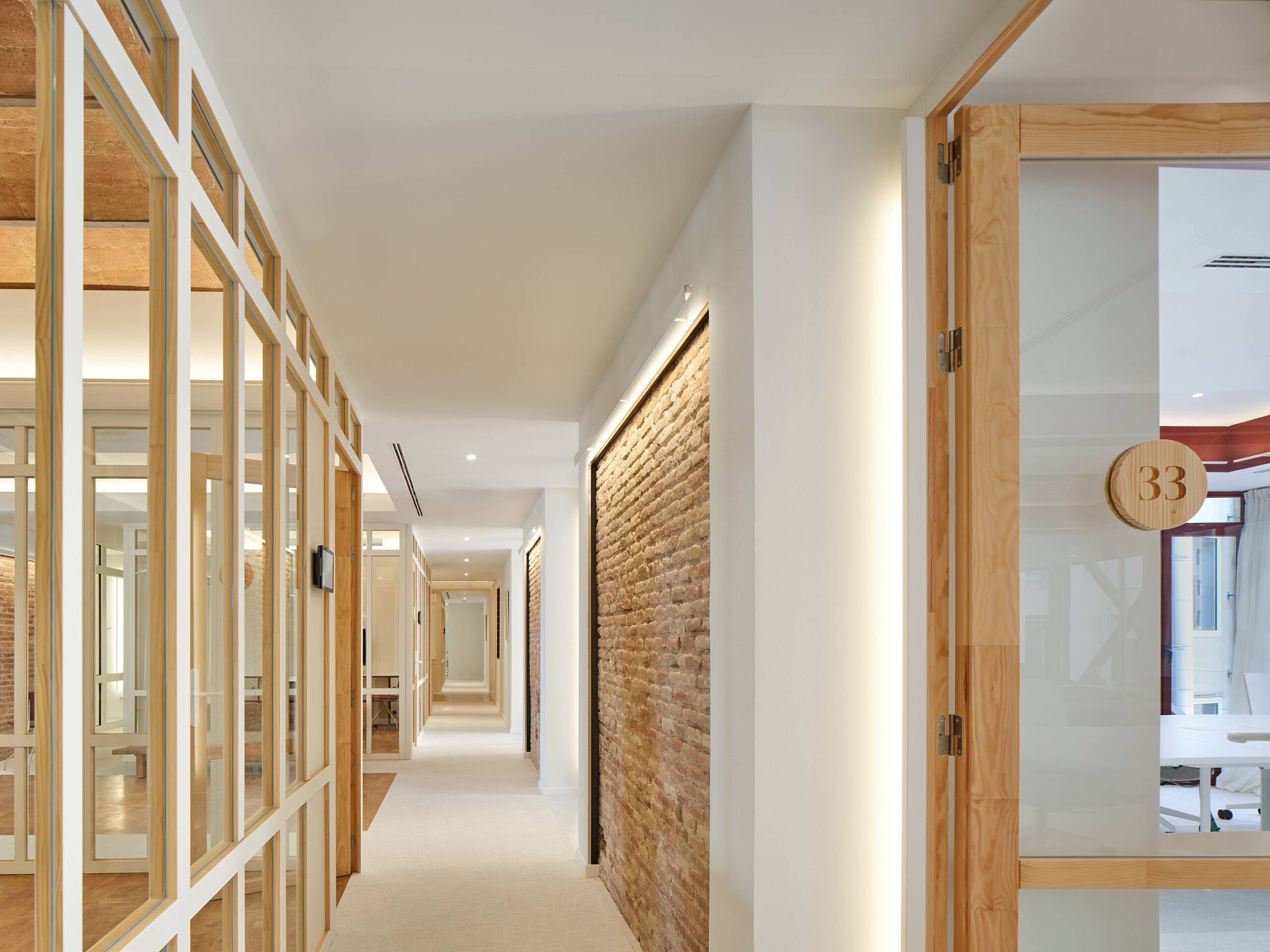
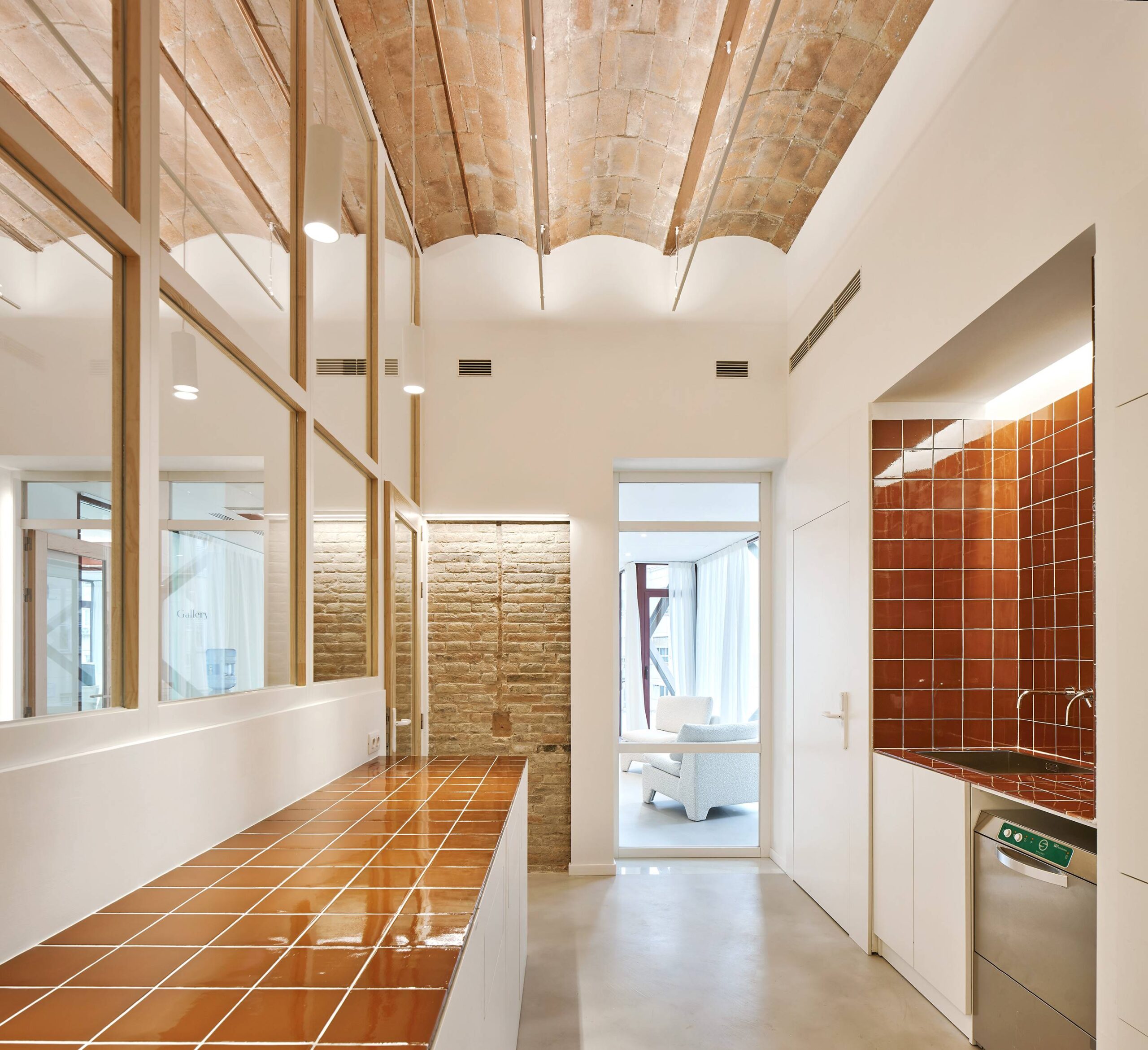
Casa Pich i Pon. LOOM Plaza Catalunya

By SCOB Architecture & Landscape 

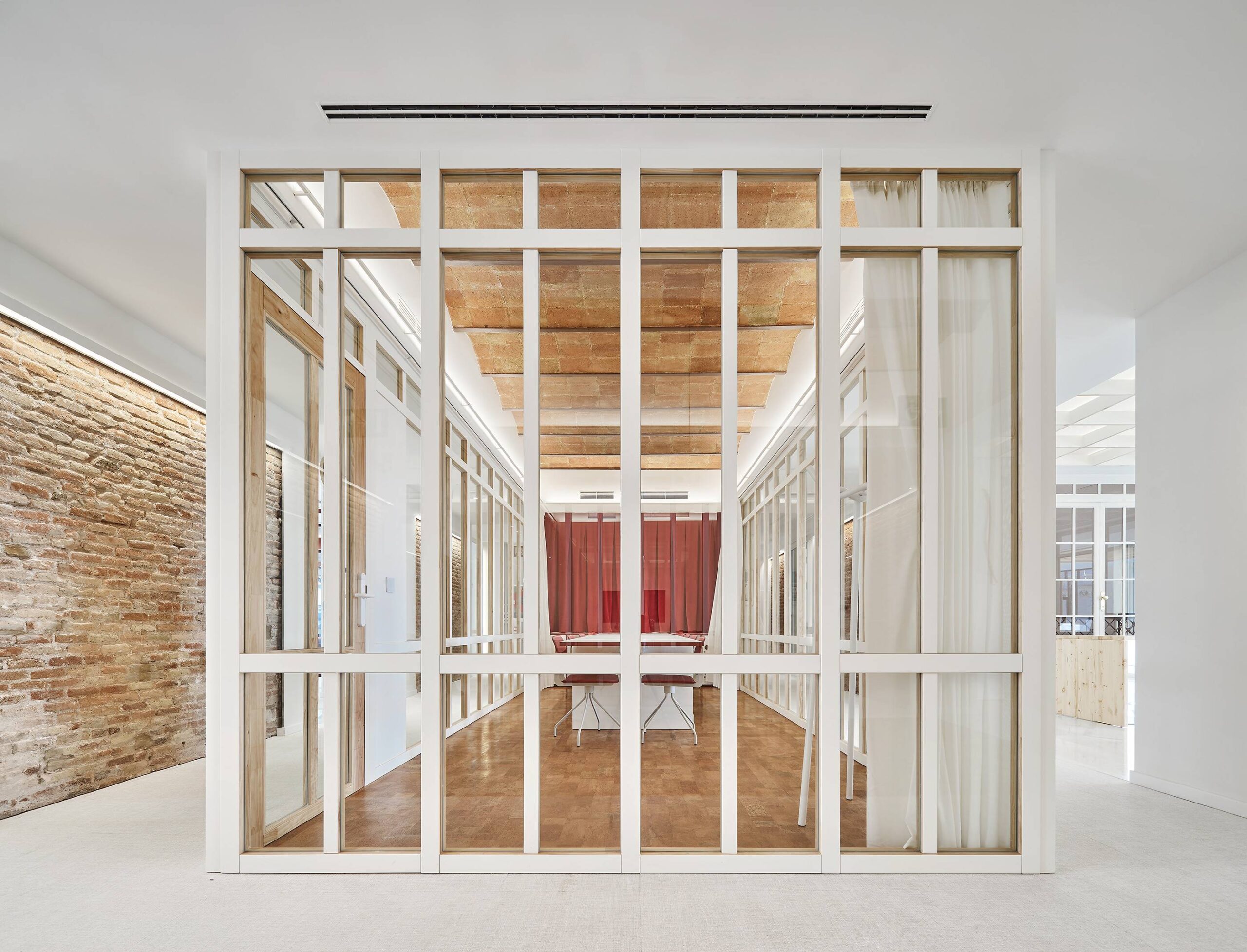
Aesthetically, the organization of this office space is remarkably appealing, allowing the eye to travel across a variety of layers and vertical lines around every corner. Whether it is through the contrast of materials, or the perfect positioning of the working chambers inside the open floor plan, a lot is happening inside this refurbished historical building whose celebratory classic exterior celebrates a masterpiece of its time. The color white, which dominates the interior, sets the stage for the other materials to occupy the space, particularly the red brick walls that stand as a reminder of the building’s rich past.
The latest edition of “Architizer: The World’s Best Architecture” — a stunning, hardbound book celebrating the most inspiring contemporary architecture from around the globe — is now available. Order your copy today.  

Reference

Leddy Maytum Stacy Architects Environmental School
CategoriesArchitecture

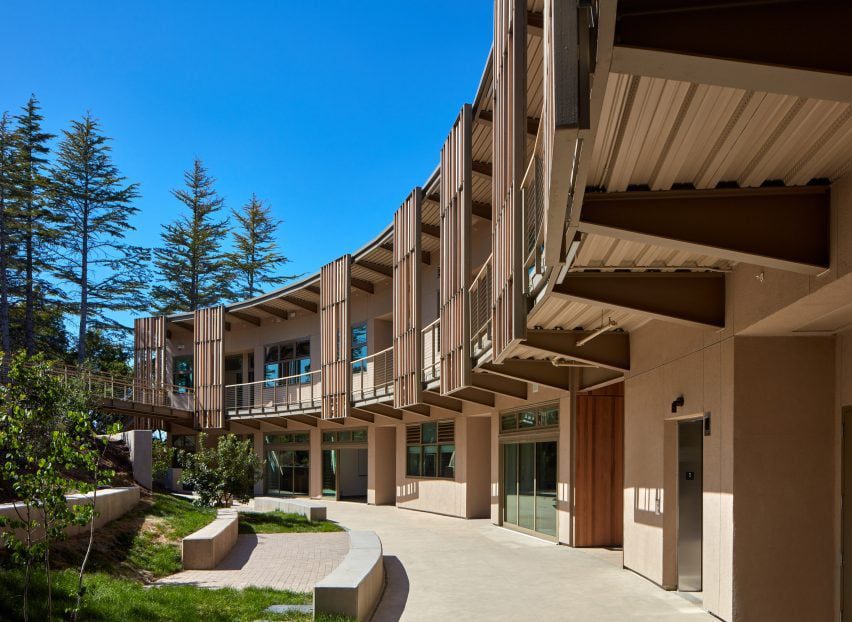
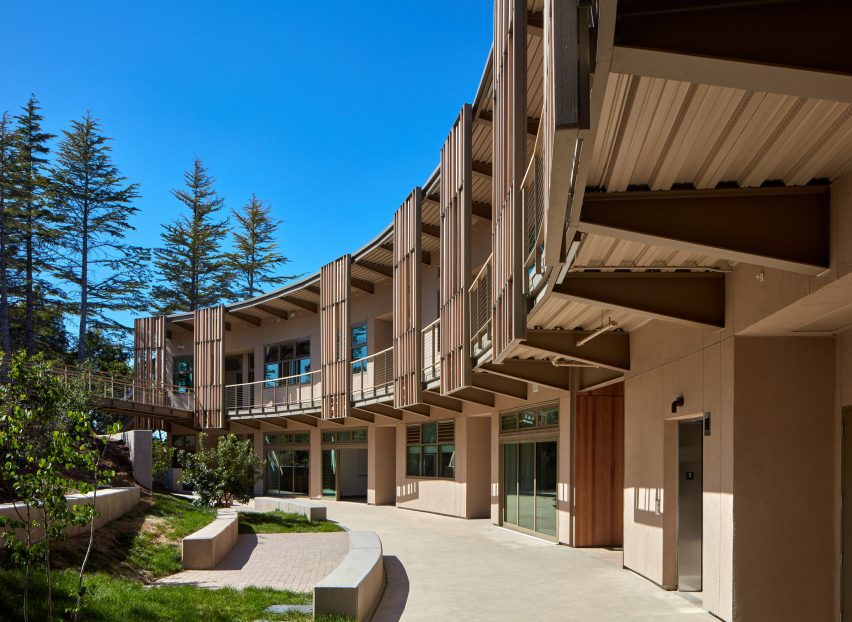
Leddy Maytum Stacy Architects creates low-energy school in California

Leddy Maytum Stacy Architects has designed a school building that prioritises low-carbon solutions and water retention on restored woodlands outside of San Francisco.

Called The Science and Environmental Center, the structure is an expansion of the campus for the Nueva School in Hillsborough, Silicon Valley.

The campus comprises an 11,600-square-foot (1,077 square-metre) two-storey building on a 33-acre site, with an oak forest that was restored as part of the project.

Leddy Maytum Stacy Architects Environmental School
Leddy Maytum Stacy Architects has created an expansion to a California primary school campus

“The design integrates straightforward, appropriate, and cost-effective sustainable design solutions that provide practical and poetic connections between people and the natural world,” Leddy Maytum Stacy Architects told Dezeen.

“The building shape echoes the landform, following the topography of the hillside to minimize excavation and maximize outdoor education space that extend ground floor classrooms.”

“The narrow floor plate minimizes impacts to the existing natural features of the site, while maximizing daylighting and natural ventilation within the classrooms.”

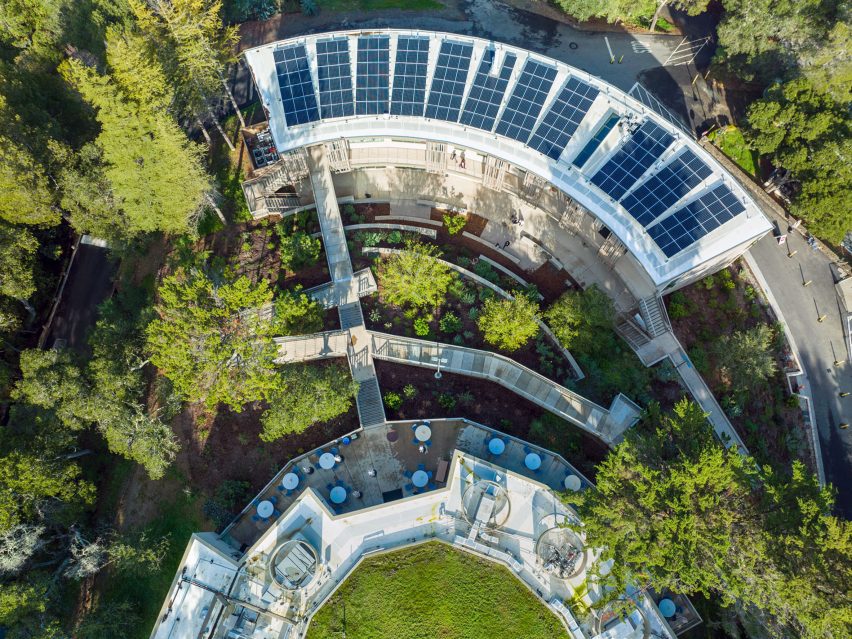
Solar array on semi-circular school
It includes a number of passive and electric energy strategies

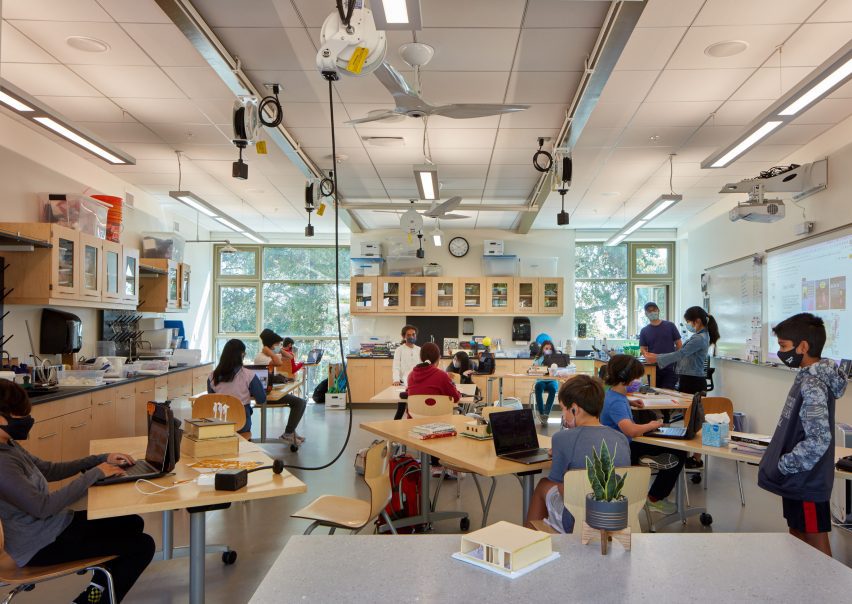
The building has a semi-circular form that allows for the eight classrooms to be exposed to light from two sides. With the inclusion of ceiling fans, this form allowed for mechanical heating and cooling to be mostly eliminated from the project, according to the studio.

Wood cladding wraps one side of the structure almost completely, and was also used generously for the classroom interiors. The wood was chosen based on FSC certifications.

Elevated walkway with school in background
An elevated walkway connects the new structure to the other campus buildings

The inside of the semi-circle was clad in steel and aluminium. As much as 15 per cent of these materials – as well as the cotton insulation – were garnered from recycled materials, Leddy Maytum Stacy Architects said.

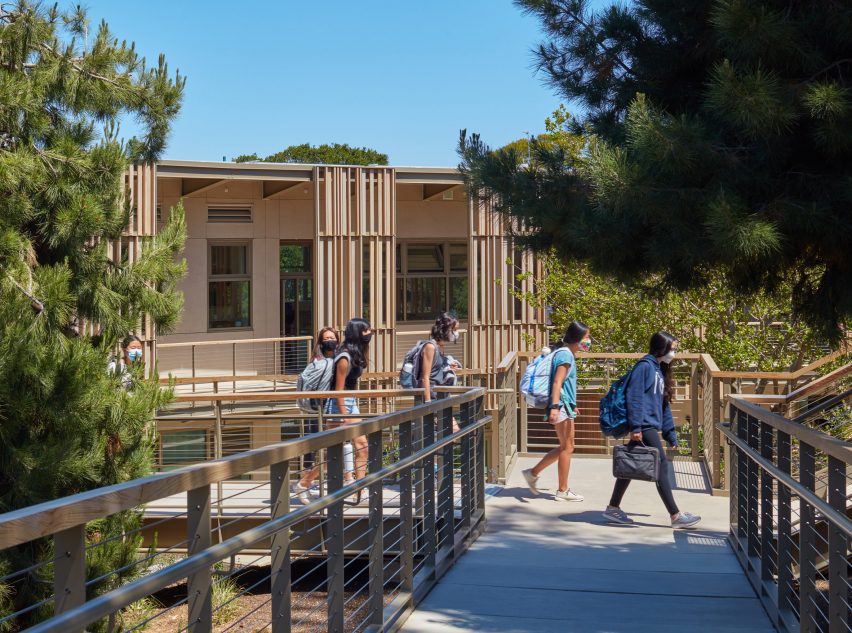
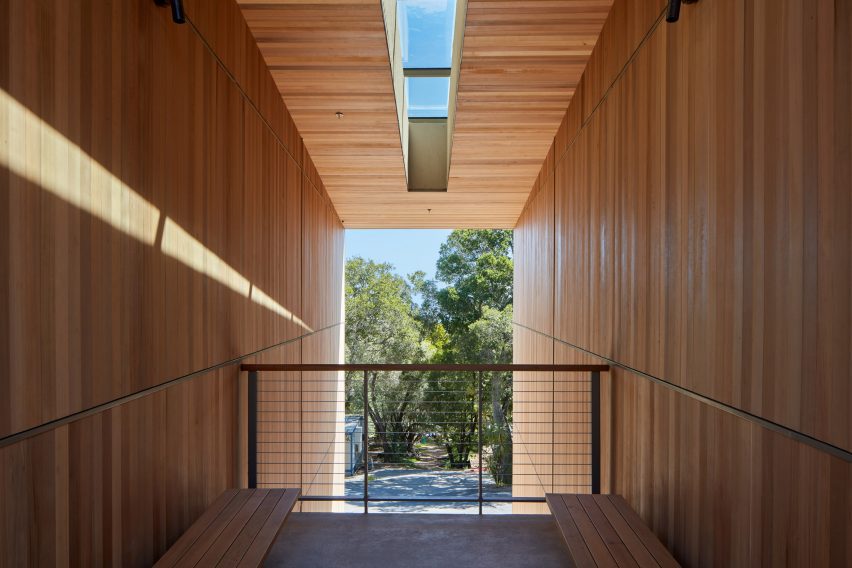
In order to connect the new structure with previous school buildings on the site, the studio included an elevated walkway called the Canopy Walk, which connects to the upper level of the centre and expands outward into the forested site to provide a vantage point for the students.

This second-floor circulation also acts as a sunshade for the classrooms below.

The Science and Environmental Center was designed to be a net zero campus and the school runs only on electricity, with much of the power generated from a 70-kilowatt array of solar panels placed on its roof.

Wood lookout
It features FSC-certified wood cladding

In response to the water shortage issues in California, the design also features a number of water retention strategies.

“As climate change continues to impact California’s potable water supply, the project takes an active role in reducing potable water use by 89 per cent below baseline,” said the studio.

Classroom in environmental school
It has eight classrooms for young students

The goal of the centre, which serves the school’s 500 students, is to “foster social acuity and environmental citizenship”, according to the studio.

The Nueva School‘s Hillsborough campus serves primary school children, while its San Mateo campus serves high school students.

Leddy Maytum Stacy Architects has designed other buildings in the region that prioritise strategies geared towards environmental and social ends, including a design centre in Berkeley and a housing complex for people with autism.

The photography is by Richard Barnes and Bruce Damonte.

Reference

Taiga by Park + Associates
CategoriesArchitecture

A Table With a View: 7 Ways Architects Are Upselling Restaurant Design

Architizer is thrilled to announce the winners of the 11th Annual A+Awards! Interested in participating next season? Sign up for key information about the 12th Annual A+Awards, set to launch this fall.

As the chef’s adage goes, you eat with your eyes first. Beyond the confines of the plate, a restaurant’s spatial character is the vital ingredient that underlies every meal. While crispy basil leaves and elegant reels of tagliatelle can conjure up fields of sun-dappled groves beneath a Tuscan sun, so too can the undulating curves of a vaulted ceiling or carefully articulated patterns of light.

The unique power of architecture in the hospitality sphere is something the architects of these winning restaurants from the 11th A+Awards know well. From pioneering approaches to sustainability to striking cultural invocations and immersive visual storytelling, each offers an extraordinary new riff on traditional restaurant typologies. Add one part impeccable spatial planning to one part design innovation and mix well — here are seven ways architects are revolutionizing the eatery.


1. Evoking Distant Terrains

Taiga by Park + Associates, Singapore

Popular Choice Winner, 11th Annual A+Awards, Restaurants (S <1000 sq ft)

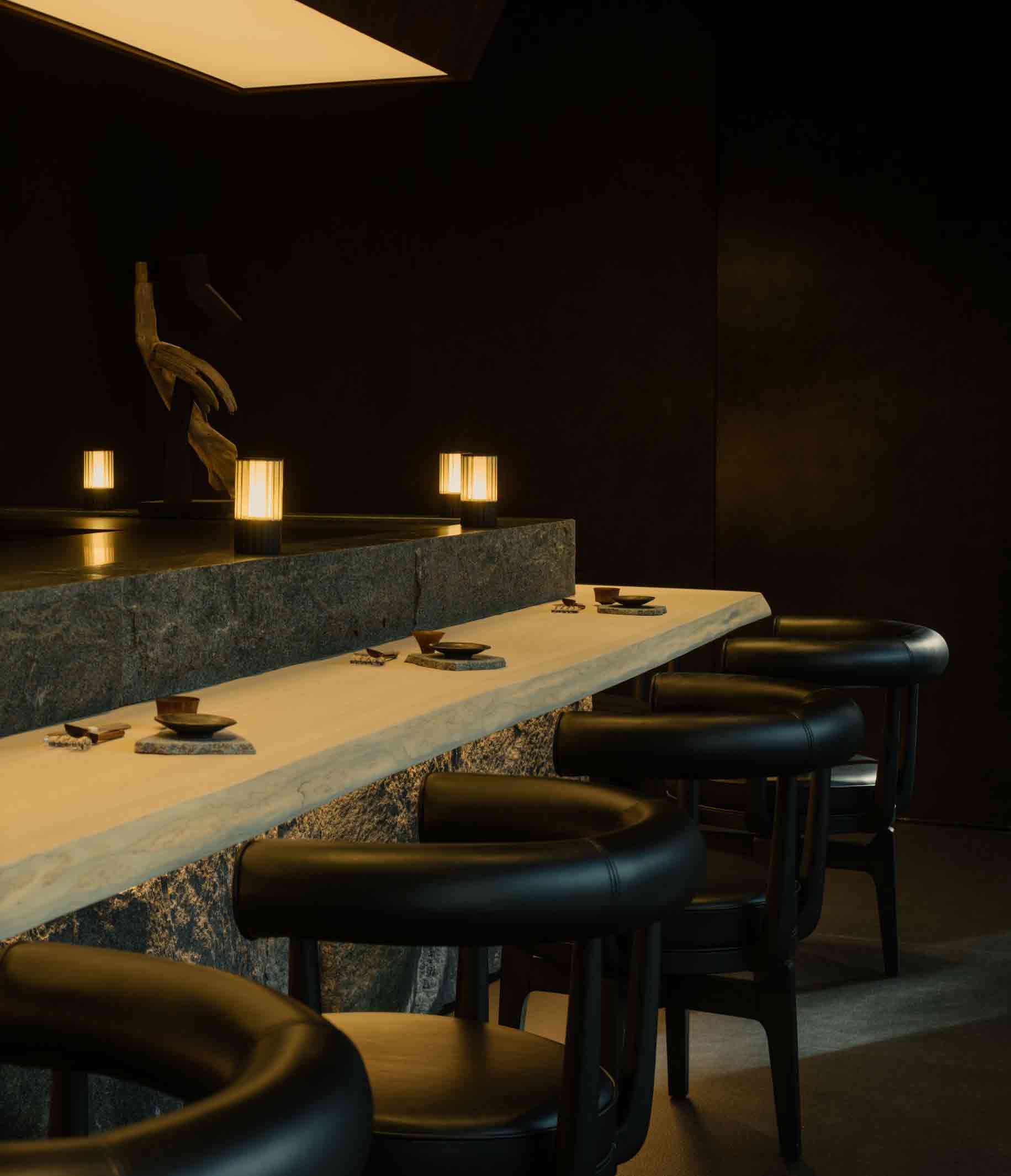
Taiga by Park + Associates Taiga by Park + AssociatesWhile it may be nestled amid the bustling cityscape of Singapore, this astonishing Japanese restaurant channels the topography of the chef’s native Kochi Prefecture, over 3,000 miles away. A diptych relief painting of a tumultuous rock formation conceals the eatery’s entrance. Stepping through the parted canvas is like stepping into the mountain itself — diners negotiate twists and turns as they navigate the architectural ‘foothills.’
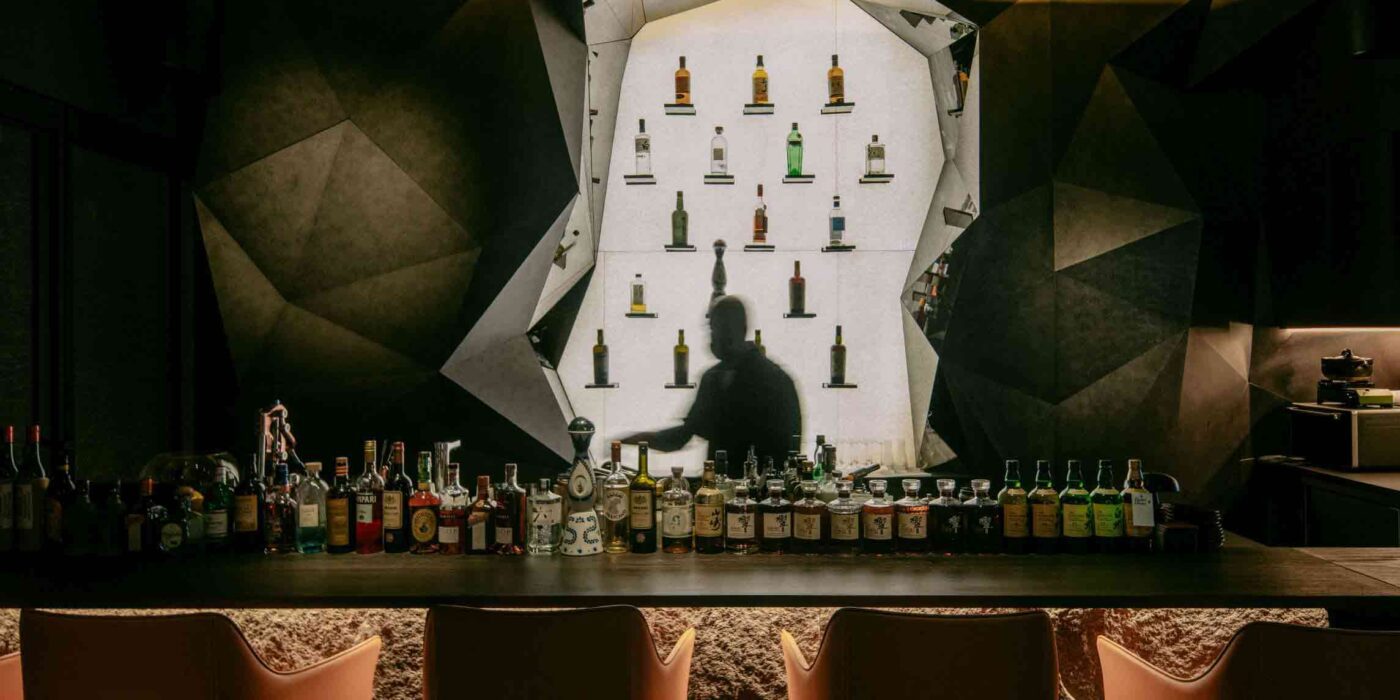
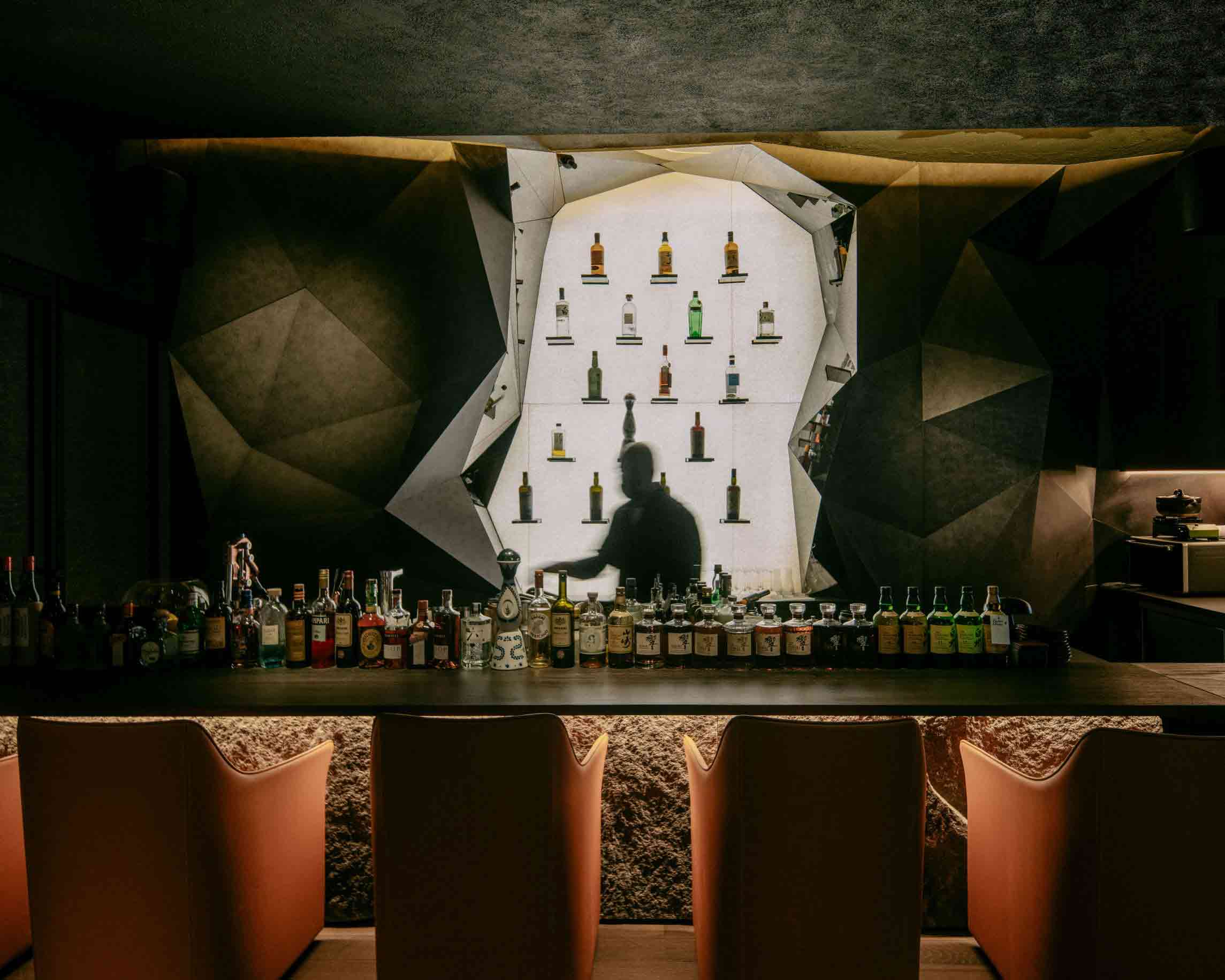
The cocooning, cave-like dining space is texturally rich and immersive. Rugged split-face granite is emboldened by downlighting, while the backlit saké bar is flanked by a glowing onyx rock formation articulated in a graphic 3D surface design. Throughout, metallic finishes glisten as though the restaurant were hollowed out from a mineral vein.


2. Revising the Vernacular

Shanshui Firewood Garden by Mix Architecture, Yibin, China

Popular Choice Winner, 11th Annual A+Awards, Sustainable Hospitality Building

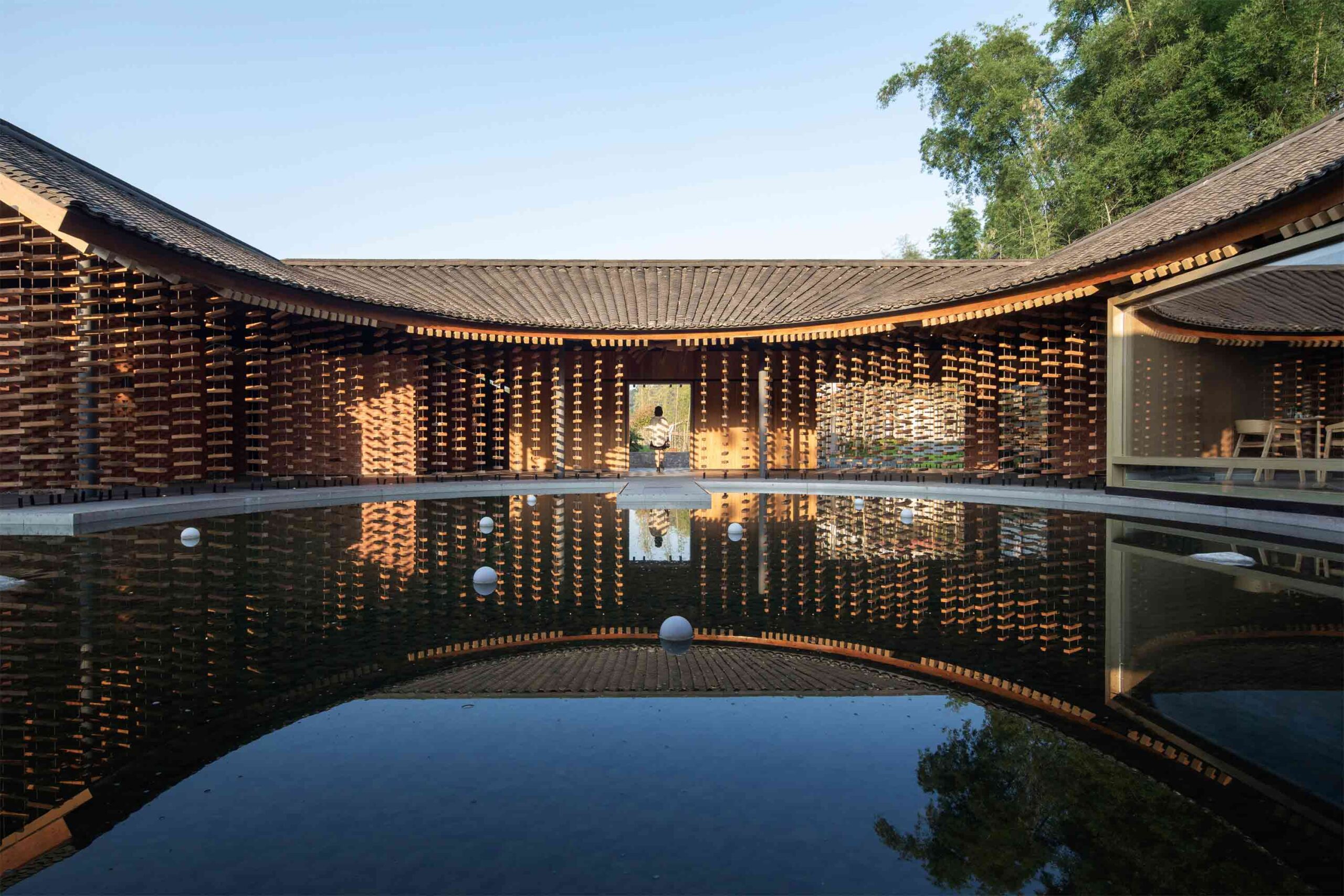
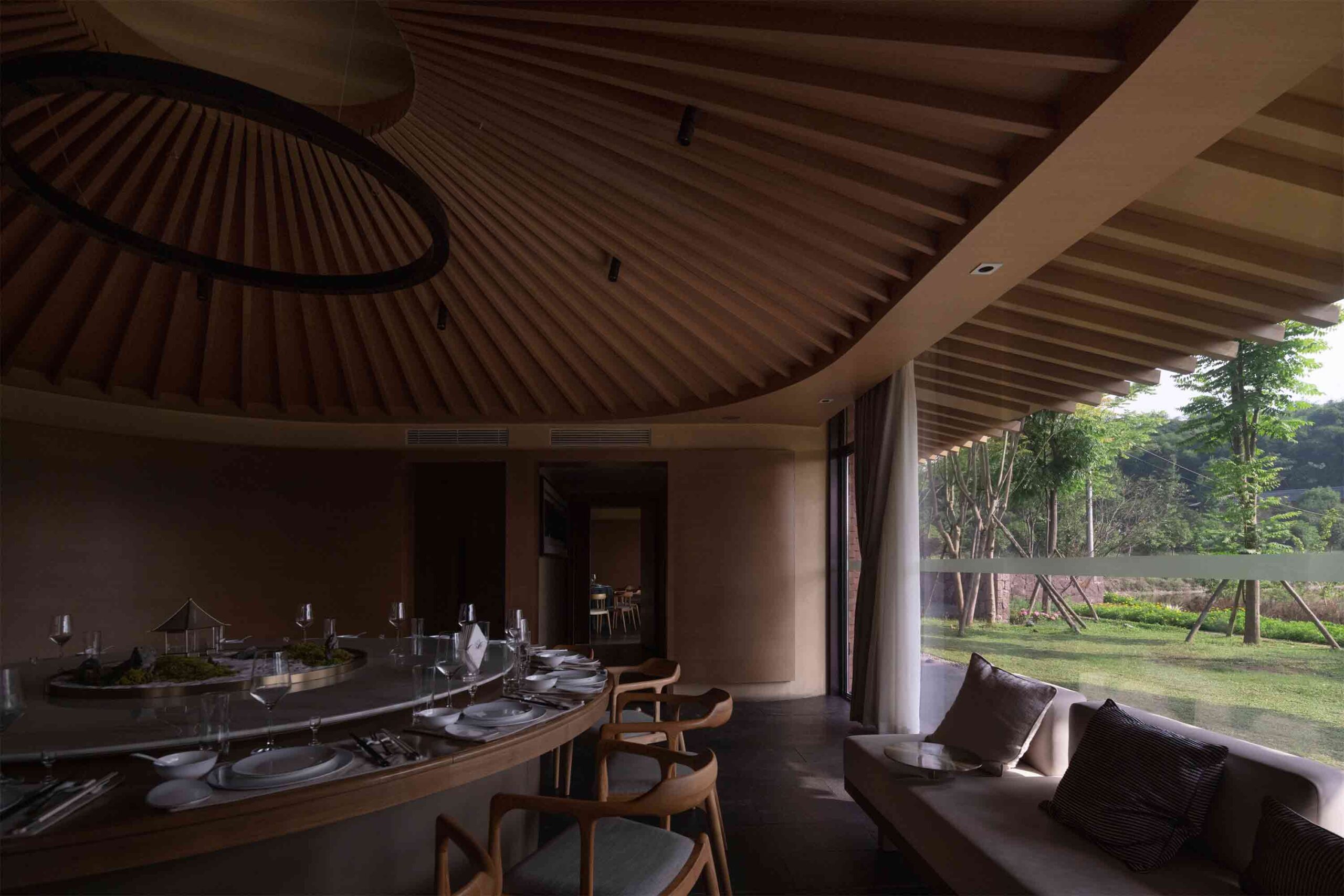
Shanshui Firewood Garden by Mix Architecture Shanshui Firewood Garden by Mix ArchitectureThis extraordinary restaurant in rural Sichuan province takes inspiration from the region’s architectural vernacular. Traditional low, far-reaching eaves offer ventilation and shelter from the elements, while a central courtyard pool blurs the boundary between organic and built landscapes. Curved lines define the interior dining space, which is dissected into more intimate zones, each offering a glimpse of a different rural outlook.
The structure itself comprises red sandstone blocks from the mountains of Sichuan, hewn into usual fish scales, while firewood, the backbone of the area’s agricultural life, is entwined throughout the design. One of its most powerful iterations is the hanging curtain of suspended timber blocks, which encases the structure in a magnificent porous skin. These familiar local materials are skillfully reimagined in unfamiliar ways.


3. Experimenting With Timber Tectonics

Prime Seafood Palace by Omar Gandhi Architects, Toronto, Canada

Popular Choice Winner, 11th Annual A+Awards, Restaurants (L >1000 sq ft)

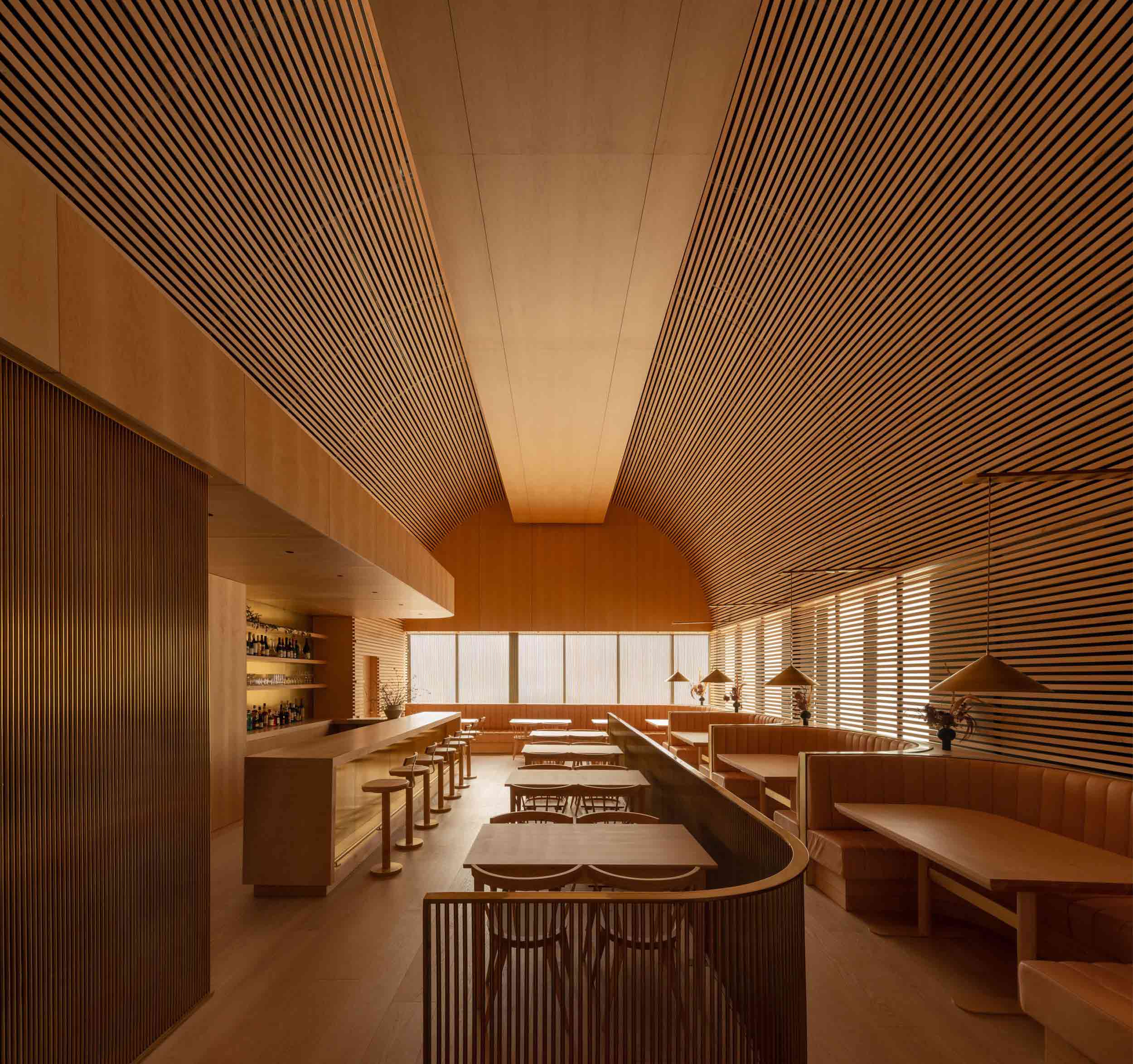
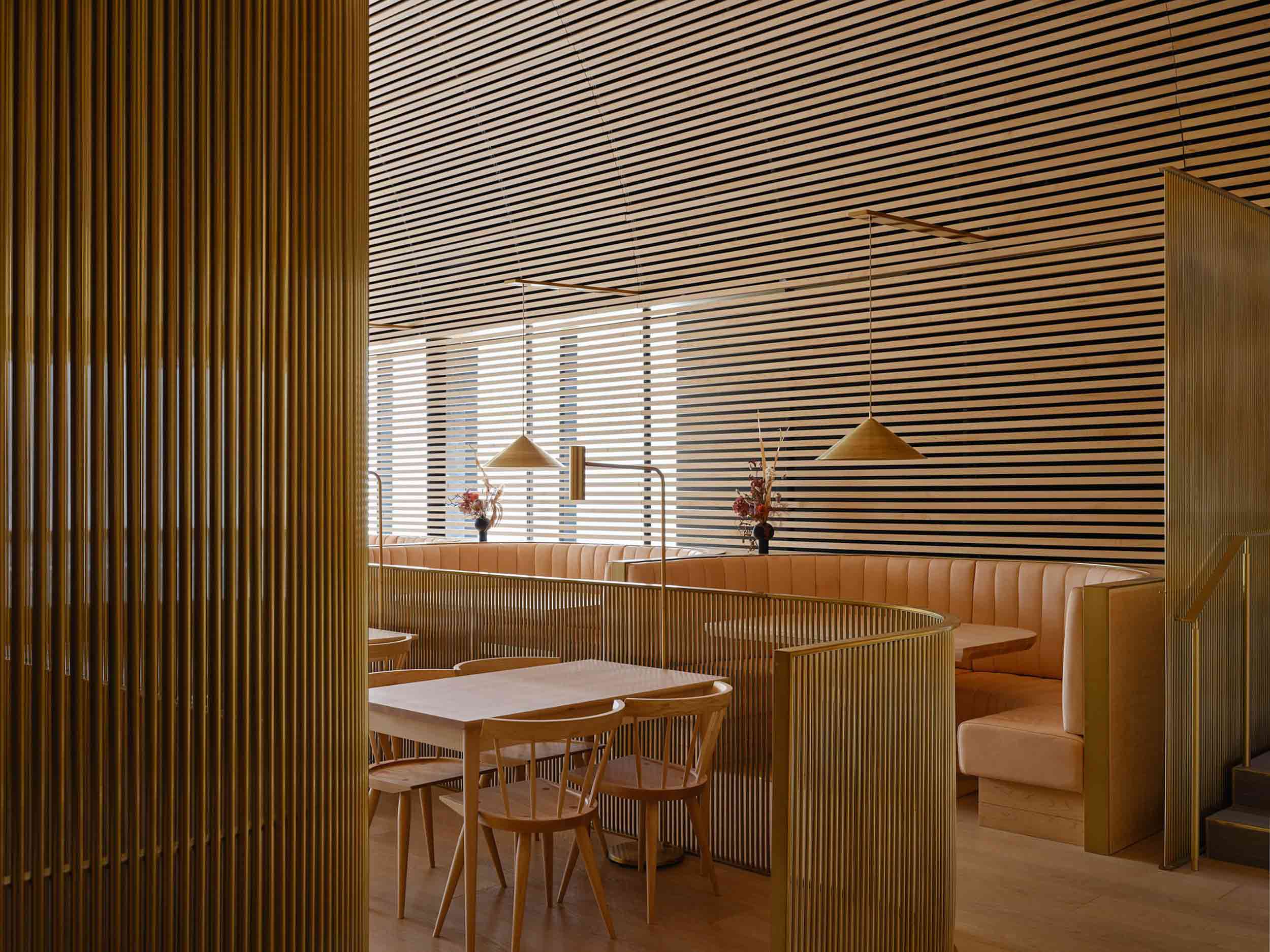
Prime Seafood Palace by Omar Gandhi Architects Prime Seafood Palace by Omar Gandhi ArchitectsBold in its monochrome execution, this Toronto restaurant was conceived as a mesmerizing timber cathedral. Rather than being shaped by the transient whims of interior trends, the architects opted for an evolving natural material palette that would patina and shift with the passage of time.
Enveloping slats line the vaulted barrel ceiling, extending down over the apertures across one aspect of the dining zone. The effect is a soft diffusion of natural light. Wood here is employed as a protective layer from the city outside — it softens the visual and acoustic experience, carving out an ethereal space at arm’s reach from the hustle and bustle.


4. Celebrating Salvage

Project Big Top by Multitude of Sins, Bangalore, India

Jury Winner, 11th Annual A+Awards, Sustainable Interior Project

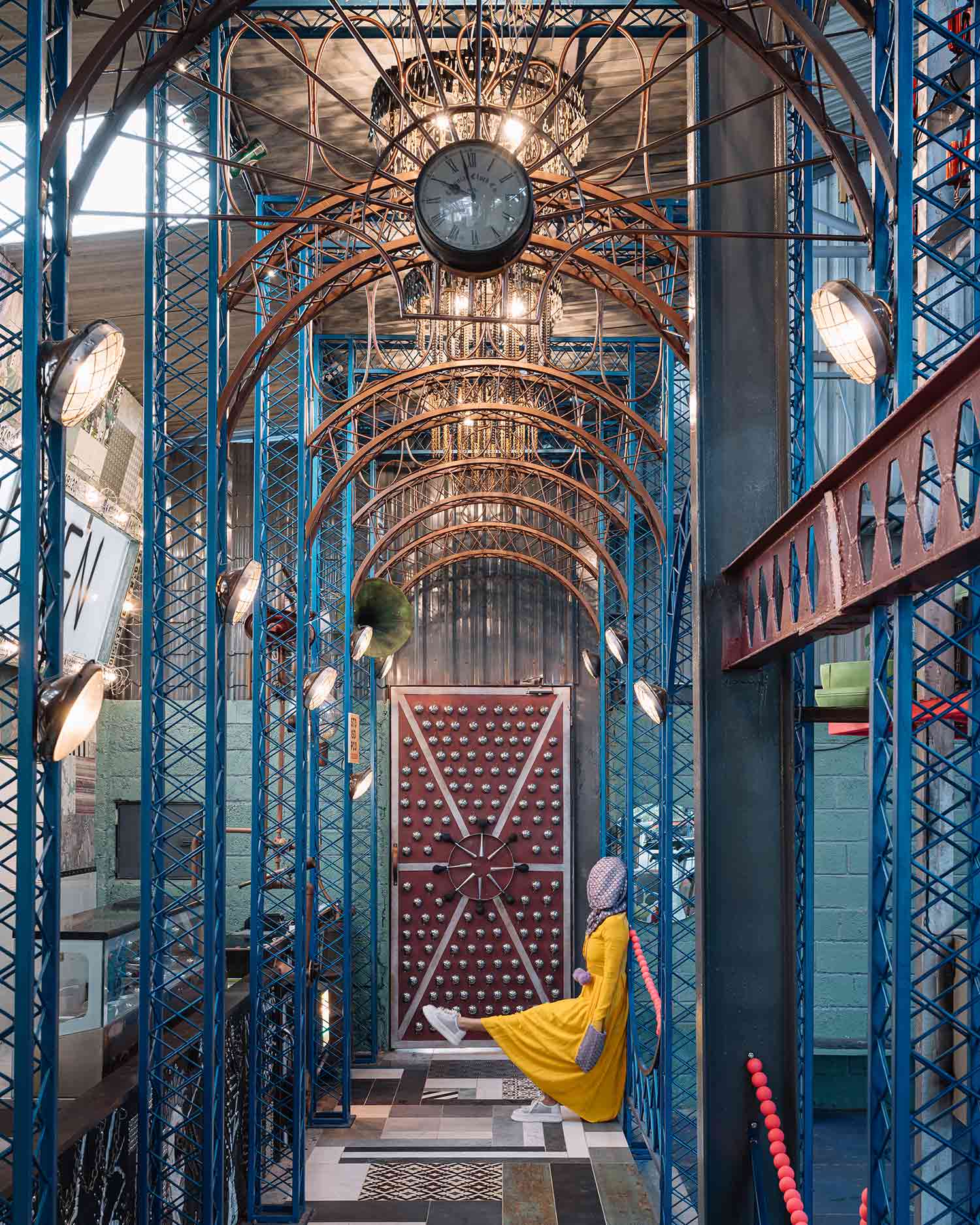
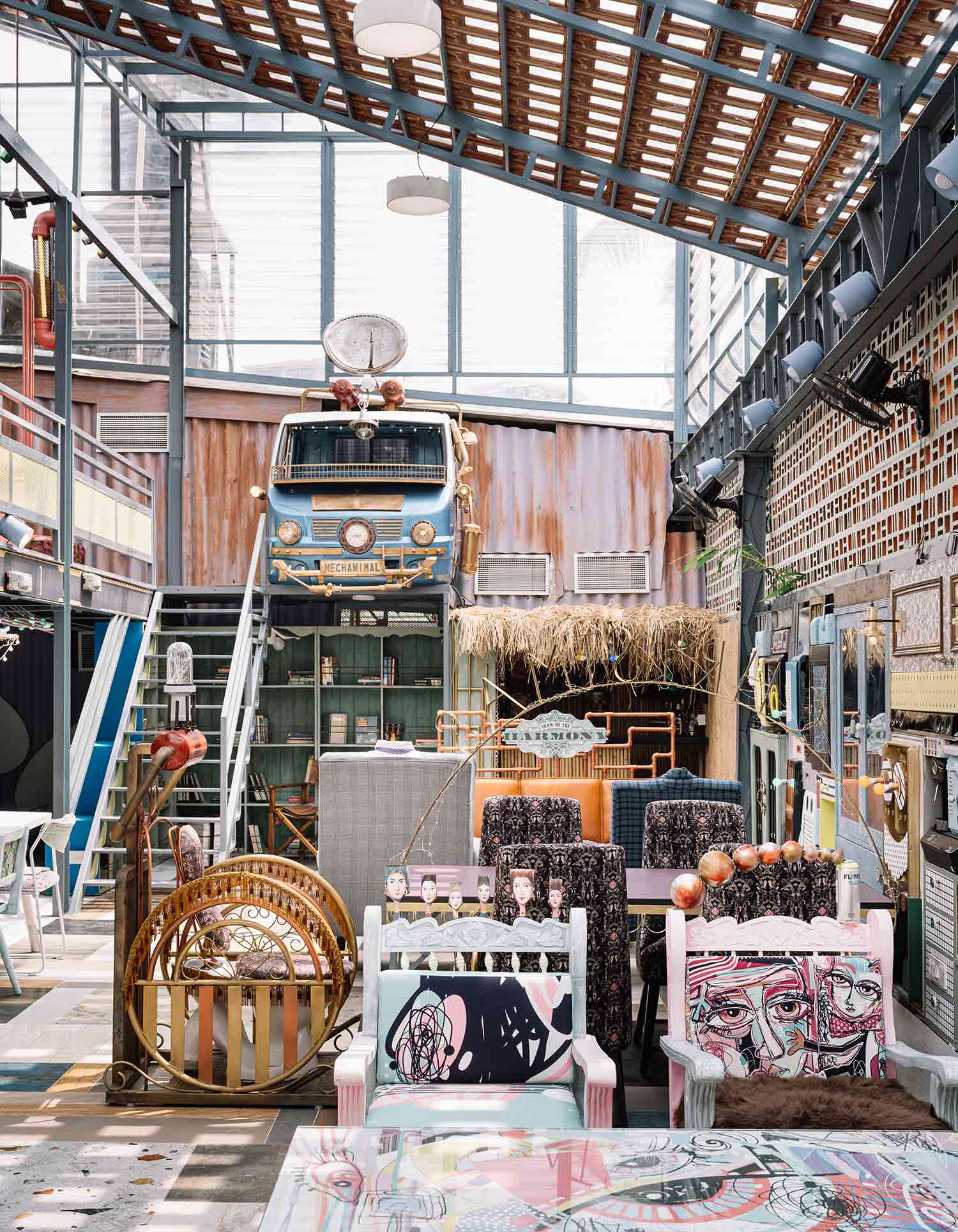
Project Big Top by Multitude of Sins Project Big Top by Multitude of SinsWhile many in the industry pay lip service to sustainability, this whimsical restaurant in Bangalore is a true celebration of reuse. 90% of its material fabric comprises recycled and salvaged elements, resulting in a playful, architectural patchwork of curios. Inspired by the spectacle of the circus, the entrance is framed by a ripple of teal arches crafted from scrap metal, while chandeliers shaped from bike chains and metal filings hang overhead.
In the main two-story dining area, a wall of discarded electronics, fixtures and furnishings forms an elaborate collage of waste. The result of this magnificent mismatched interior is two-fold. On the one hand, the fantastical space is an artistic hub of escapism, yet on the other, it subtly reinforces a powerful environmental message.


5. Honoring the Rural Landscape

Steirereck am Pogusch by PPAG architects, Turnau, Austria

Jury Winner, 11th Annual A+Awards, Restaurants (L >1000 sq ft)
Jury Winner, 11th Annual A+Awards, Sustainable Hospitality Building

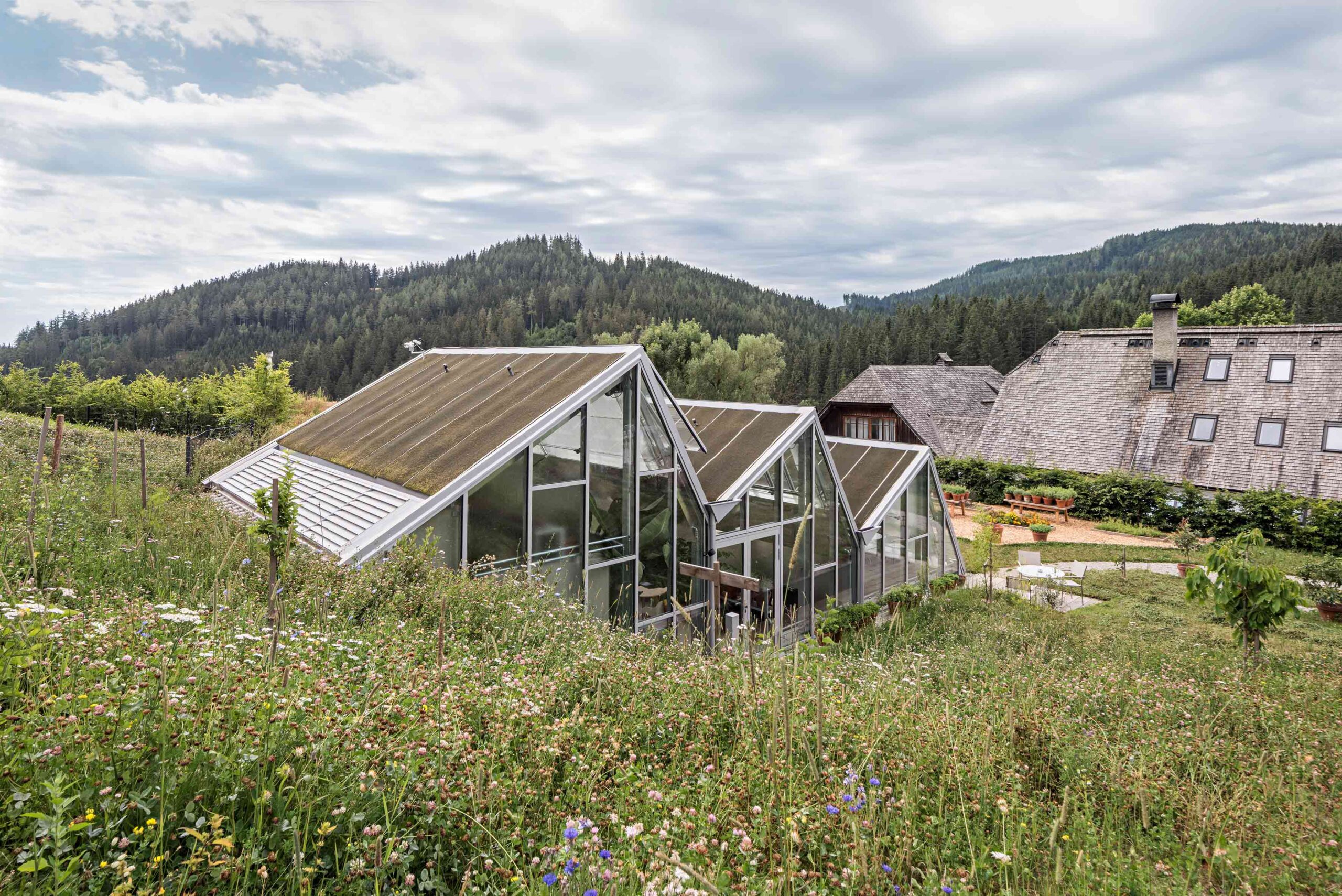
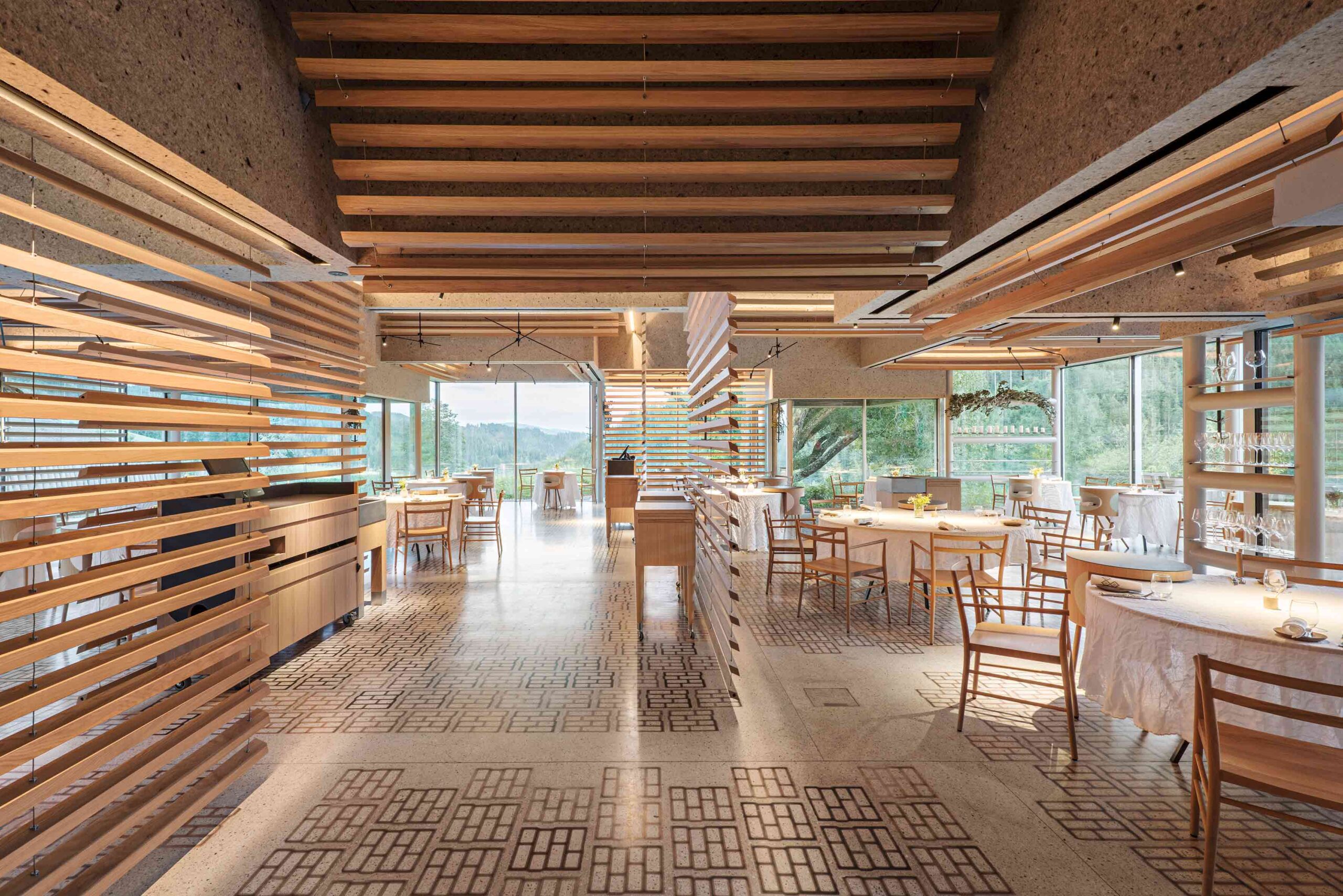
Steirereck am Pogusch by PPAG architects Steirereck am Pogusch by PPAG architectsSequestered in the Austrian Alps, this pioneering restaurant complex is rooted in its rural mountain locale. The various buildings, some old, some new, form a self-sufficient culinary village that encompasses dining areas, prep kitchens, staff zones, guest accommodation and a kitchen garden. Across the estate, the verdant landscape is never far from view. In one of the restaurants, swaths of glazing encircle the space. Slatted timber dividers create permeable divisions between tables, ensuring the breathtaking outlook takes center stage.
One of the complex’s newer interventions is a pioneering glass structure — a hybrid greenhouse and living space. Ingeniously, the atmosphere symbiotically supports residents and plant life. The structure is stepped into the incline of the hillside, respectful of the rhythms of the existing terrain.


6. Fusing Nostalgia and Futurism

Super Paradise Beach Club by Omniview Design, Mykonos, Greece

Popular Choice Winner, 11th Annual A+Awards, Popular Choice Winner

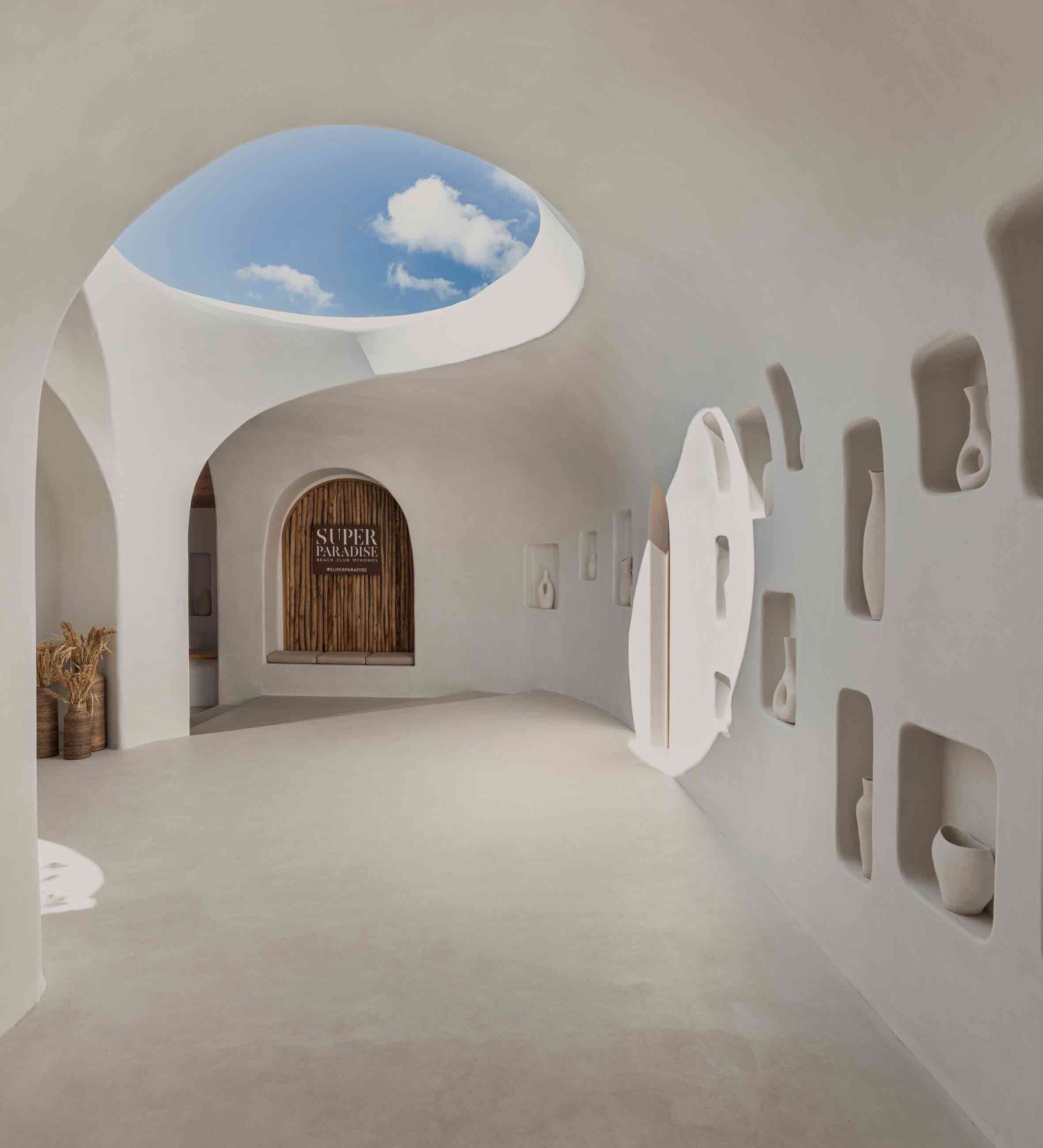
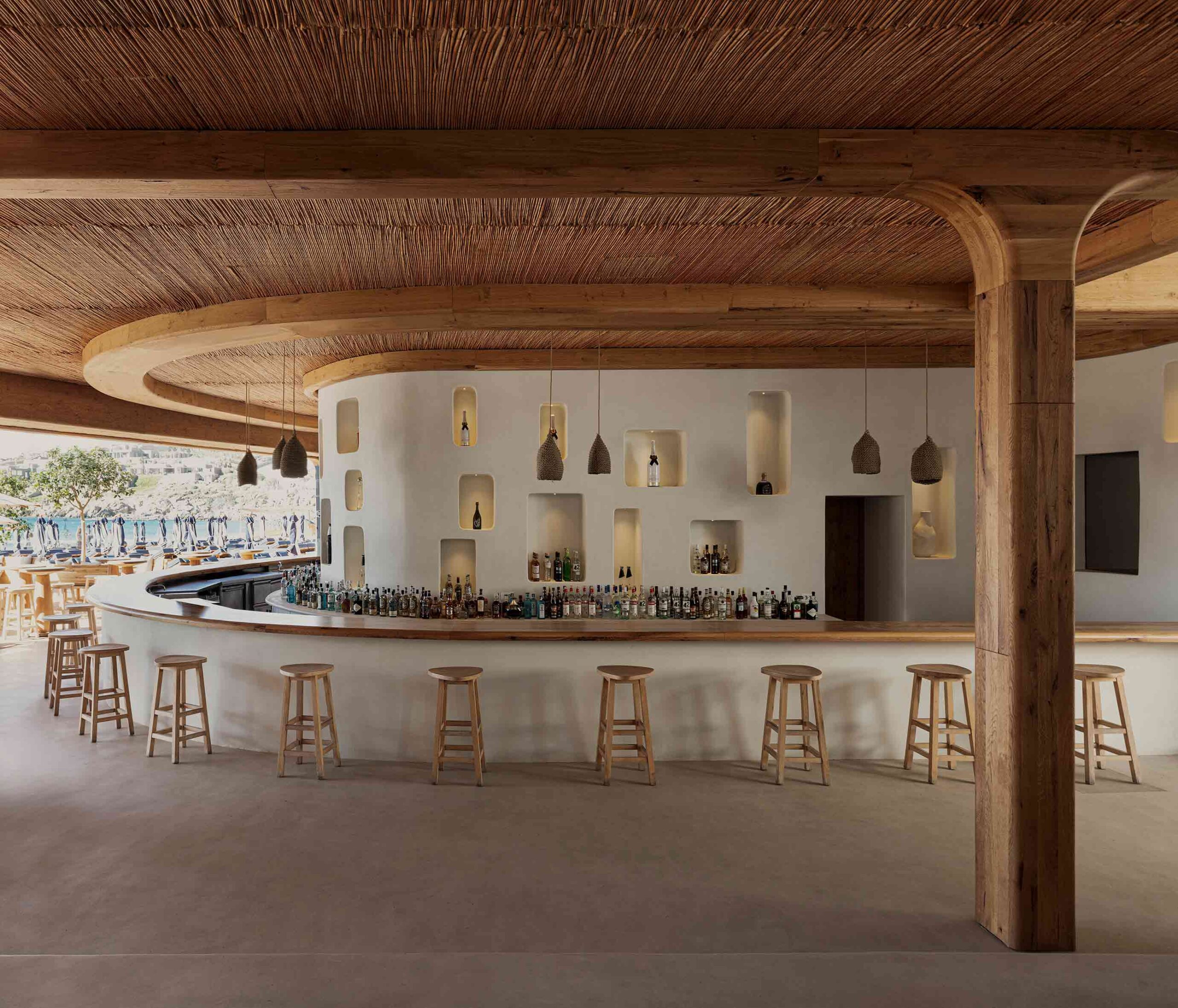
Super Paradise beach club by Omniview Design Super Paradise beach club by Omniview DesignThe artful revival of this historic beach bar on the Greek island of Mykonos has resulted in a fascinating collision of architectural languages. The unembellished whitewashed walls and rustic, traditional materials including wood and bamboo hark back to the Cycladic vernacular. Historic emblems play out across the scheme — hollows inset into the walls create display nooks around the bar and entryway.
However, the handling of these elements is strikingly futuristic. Complex, curvilinear geometries orchestrated by state-of-the-art technology result in flowing lines that appear otherworldly. The project reads as a fusion of timelines, merging to create an enigmatic space that defies categorization.


7. Architecturalizing Nature

Ling Ling by Sordo Madaleno, Mexico City, Mexico

Jury Winner, 11th Annual A+Awards, Restaurants (S <1000 sq ft)

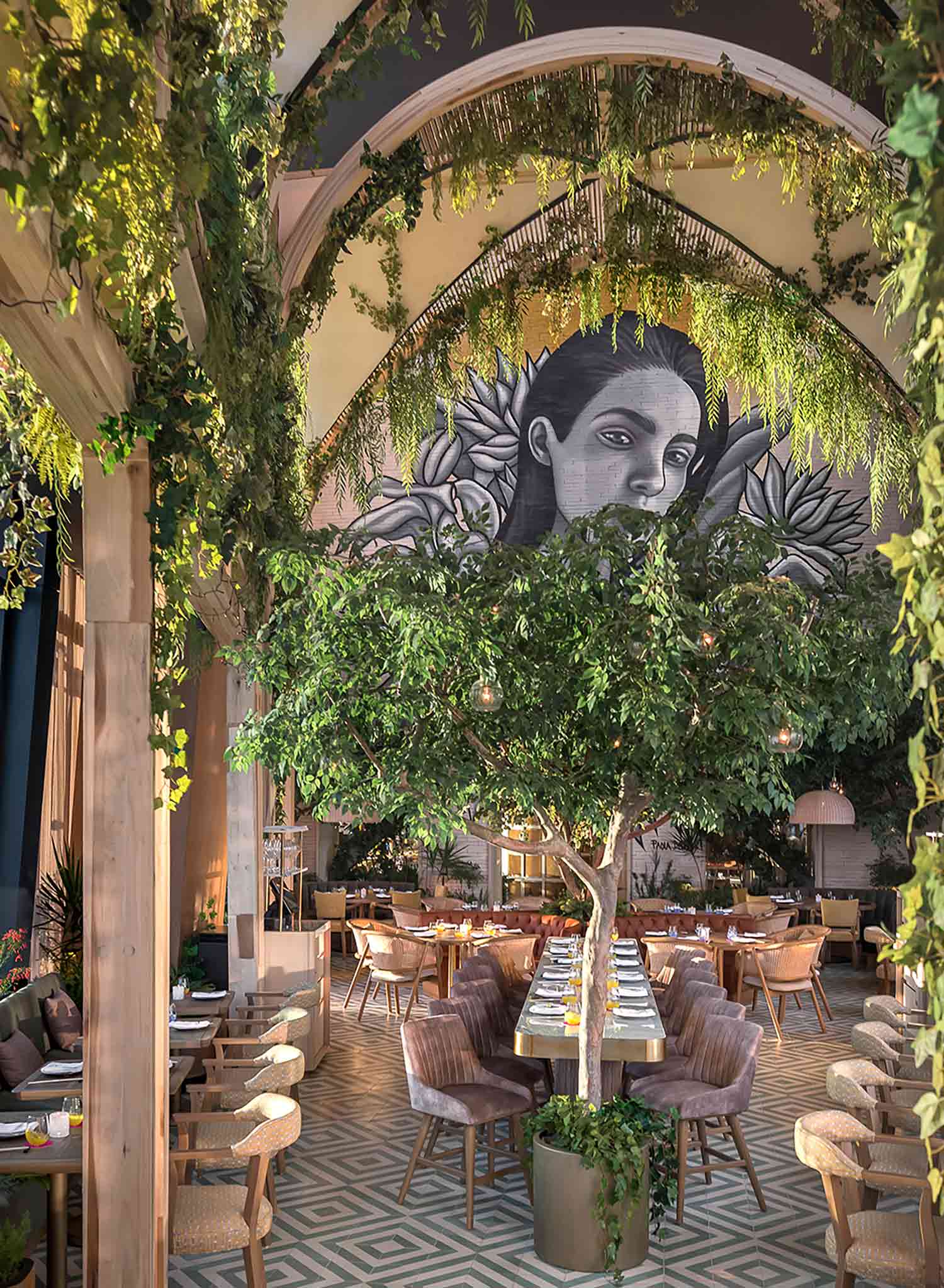
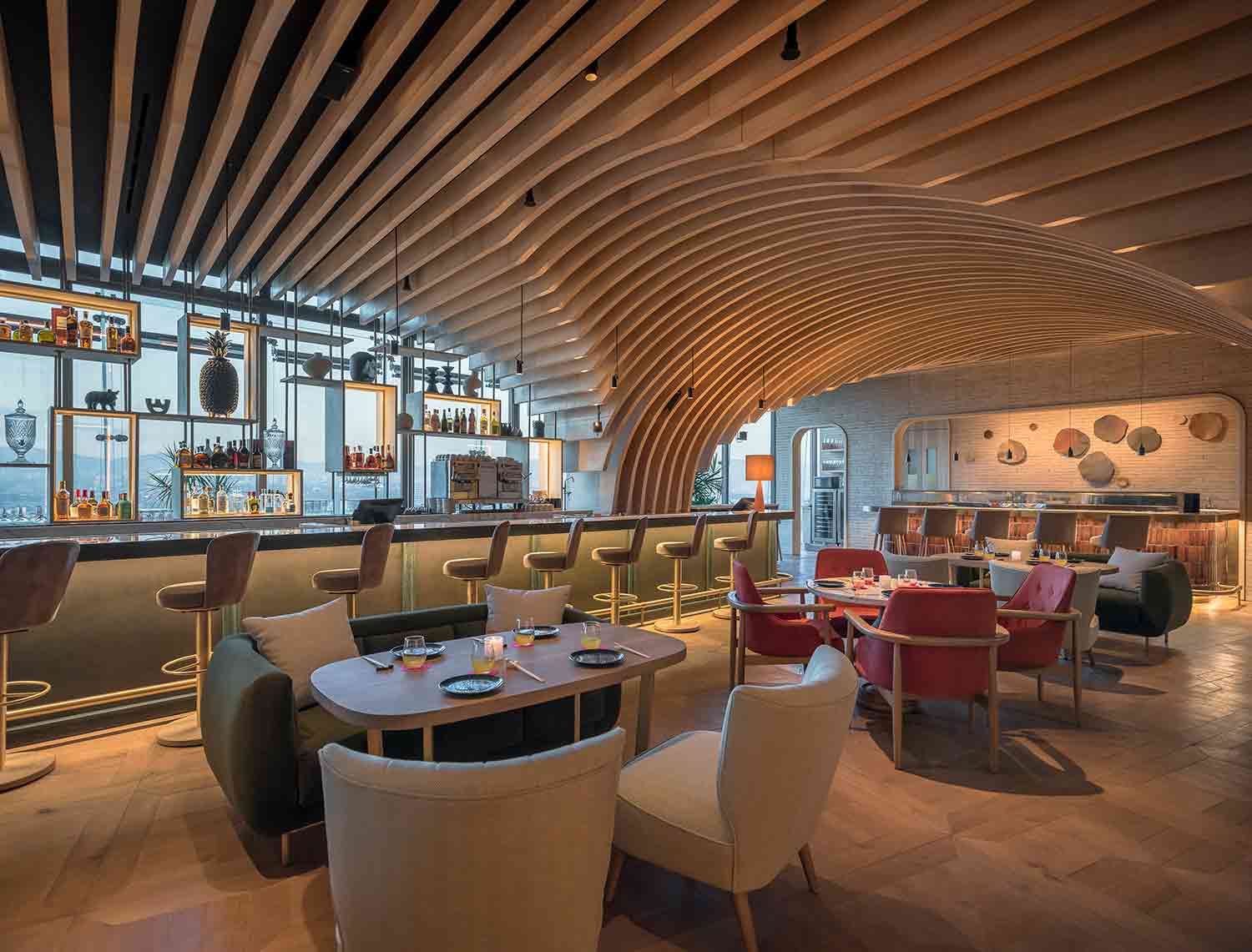
Ling Ling by Sordo Madaleno Ling Ling by Sordo MadalenoPoised at the top of one of Mexico City’s highest skyscrapers, this extraordinary restaurant subverts expectations. Floating over the city, a flourishing garden unfurls, taking its design cues from the terraces and courtyards prevalent in Mexican architecture. In the triple-height dining zone, a lofty portico structure intertwined with greenery creates a biophilic cathedral of sorts.
In the inner bar and salon, the spatial proportions contract. An innovative vaulted timber framework hangs above patrons. Crafted using intricate stereotomy techniques, the layers of wood ebb and flow in undulations. Trunk-like columns rise to form a canopy overhead, as though, inexplicably, an architectural forest had taken root on the 56th floor.

Architizer is thrilled to announce the winners of the 11th Annual A+Awards! Interested in participating next season? Sign up for key information about the 12th Annual A+Awards, set to launch this fall.

Reference

Wabi-Sabi: Why Architects Should Discover the Art of Imperfection
CategoriesArchitecture

Wabi-Sabi: Why Architects Should Discover the Art of Imperfection

The latest edition of “Architizer: The World’s Best Architecture” — a stunning, hardbound book celebrating the most inspiring contemporary architecture from around the globe — is now available. Order your copy today.  

There is a crack in everything / That’s how the light gets in
Leonard Cohen

The most memorable buildings are not always the most stunning ones. A bit of awkwardness — clunkiness even — can help a building stick in the mind, much like a crooked nose or a lazy eye can give a human face “character.” There is a Japanese term for this idea: wabi-sabi. The Random House Unabridged Dictionary defines wabi-sabi as an aesthetic attitude “which delights in the tarnish on an ancient silver bowl and the old uneven cobblestones.” Wabi-sabi is not the valorization of ugliness but of beautiful objects that seem to approach perfection, only then to veer away from it at the last moment. Perhaps in this way, they signal that they belong to the world of things and not ideas. 

Wabi-sabi is precisely what AI-generated designs will always lack. It is also what is missing from Brasilia, the immaculate, centrally planned capital city of Brazil that people famously hate living in because it seems too sterile. In fact, I would argue that it was precisely a lack of wabi-sabi that doomed the International Style, opening the way for postmodernists to restore decorative motifs, whimsy and weirdness of various kinds to their designs. 

You can’t bottle wabi-sabi though. Just because one intends to lend their building a charming sense of imperfection doesn’t mean one will succeed. In fact, it is perhaps not advisable to intend to create such an effect. Think back to the archetypal examples of wabi-sabi: a tarnished bowl, uneven cobblestones. These details simply emerged organically, and they remain as an index of the object’s contact with the world. 

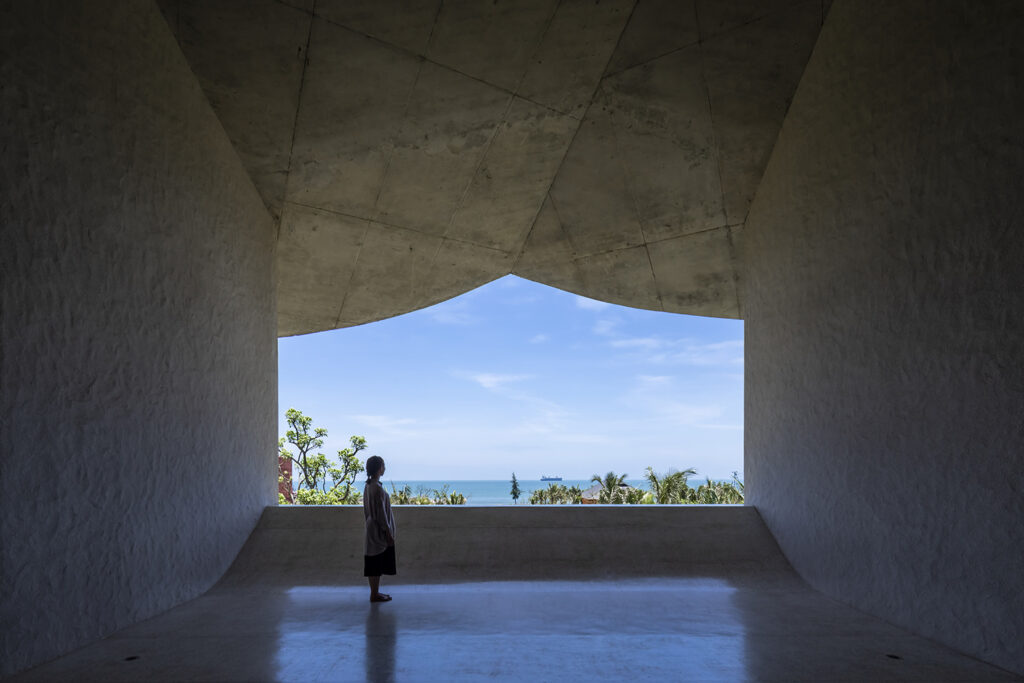
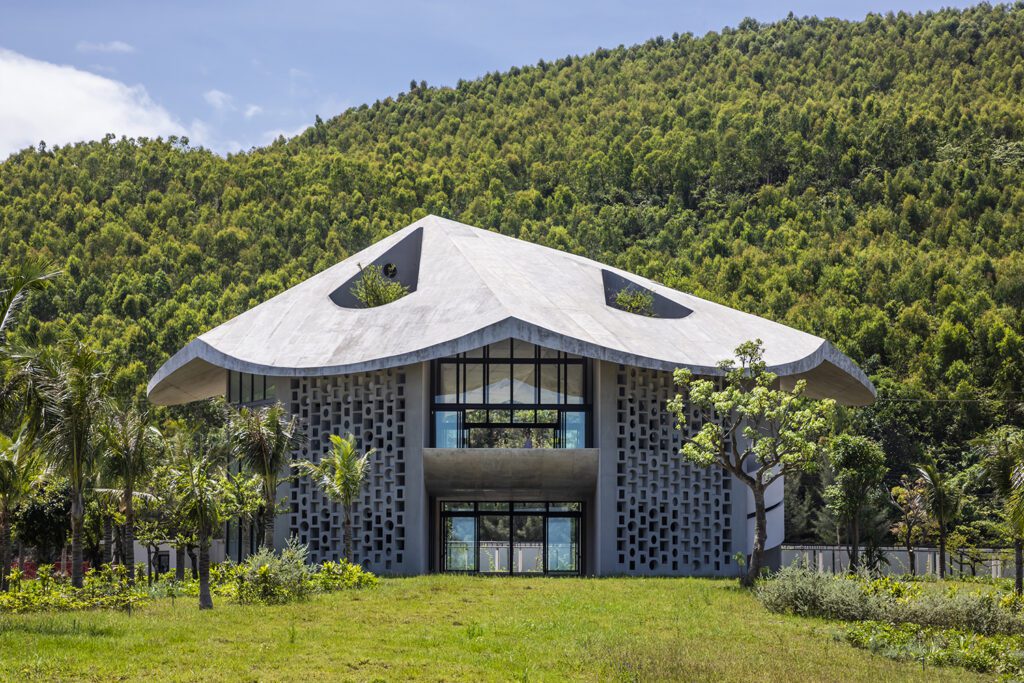
The Kaleidoscope by Inrestudio, Quang Binh Province, Vietnam. Note the dramatically scaled and off-kilter roof.

Nevertheless, some new buildings do achieve a sense of wabi-sabi, a charming awkwardness. And I think they achieve this effect by working with the environment, seeking neither a pure functionalism nor a dramatic ornamental scheme. One building that inhabits this zone is The Kaleidoscope, a mixed-use workplace and residential studio in central Vietnam designed by the firm Inrestudio under the direction of lead architect Kosuke Nishijima.

The Kaleidoscope, which was Jury Winner in the 11th Annual A+Awards’ Office – Low-Rise category, makes a strong impression when one encounters it in the forests of Vietnam, wedged between a forested hill and the sea. Relatively small (two stories, 3,150 square feet) but sturdy, it at first appears to be a kind of squat brutalist fortress, perhaps some sort of municipal building or outpost for forest rangers. But then one notices the roof – heavy, sculptural,and off-centered, with dramatic eaves that shade the trunk of the building like a mushroom cap. Walking around the building, one then notices the perforated ventilation blocks and, finally, the outside of a white spiral staircase. The design elements all work together nicely but not cleanly. There is a sense of bricolage, of different ideas pieced together according to a design that is idiosyncratic but not random. 

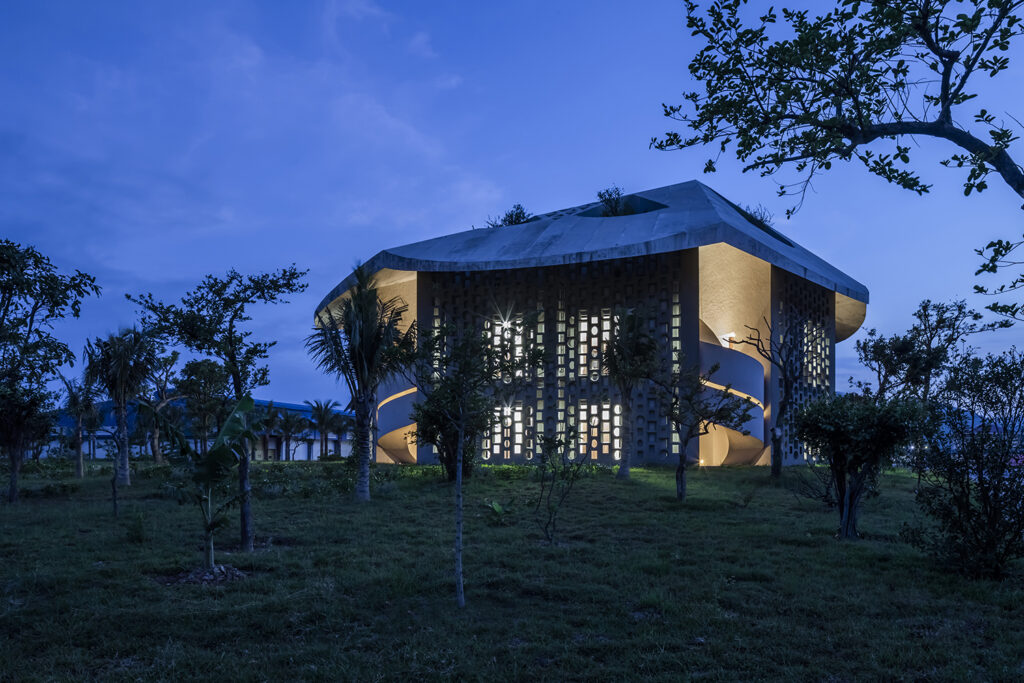
The Kaleidoscope by Inrestudio, Quang Binh Province, Vietnam

When one looks into the rationale behind this beautiful roof, one learns that it indeed has a function tied to the harsh tropical climate of central Vietnam. “Resembling a “nón lá”, a traditional farmer’s hat of Vietnam, a large conical roof casts shadows on the entire building,” explains Inrestudio. “The ventilated cavity between the double layered roof functions as a natural heat insulator against the sunlight, while the deep eaves enable the central space’s windows to remain open even during the rains. The main function of the building is placed at the center of a floating slab, which keeps the space protected from the ground moisture.”

So this is the purpose of the squat Brutalist fortress – to allow individuals to experience fresh air even during typhoons. The perforated walls enhance this relationship to the outdoors. As the sun moves across the sky, the shadows cast inside the building change, much like the patterns of a kaleidoscope change when the end is rotated. 

The Kaleidoscope by Inrestudio, Quang Binh Province, Vietnam

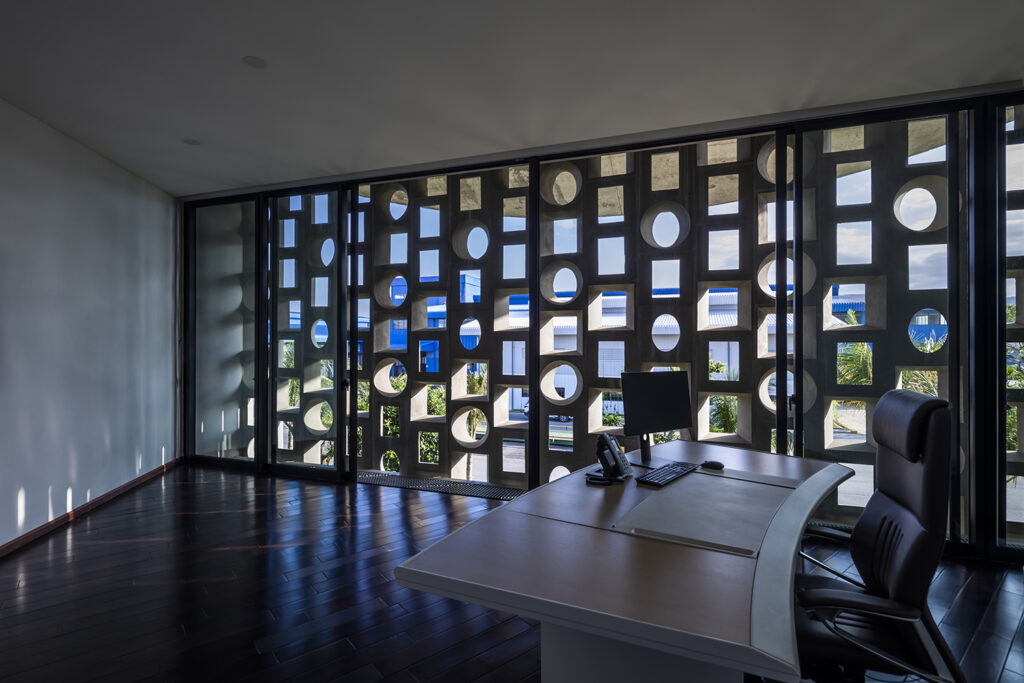
“Perforated ventilation blocks are common building elements in tropical regions, not only to moderate environmental factors but also casting impressive light patterns,” explains Inrestudio. “Custom precast ventilation blocks compose the outer surfaces of the triangular volumes to provide privacy to the inner rooms. These fiber-reinforced concrete blocks have larger dimensions than usual, and match the grand scale of the surrounding backdrop.”

The Kaleidoscope by Inrestudio, Quang Binh Province, Vietnam | Interior view of perforated ventilation block.

The intended use of this building is interesting as well. It is both a living and working space. Located near a factory in a relatively remote area of Vietnam, the building houses offices on the lower level and residences above. Inrestudio explains that they placed a large emphasis on natural light in their design in order to highlight the transition from day to night, when the function of the building will shift from working to living. 

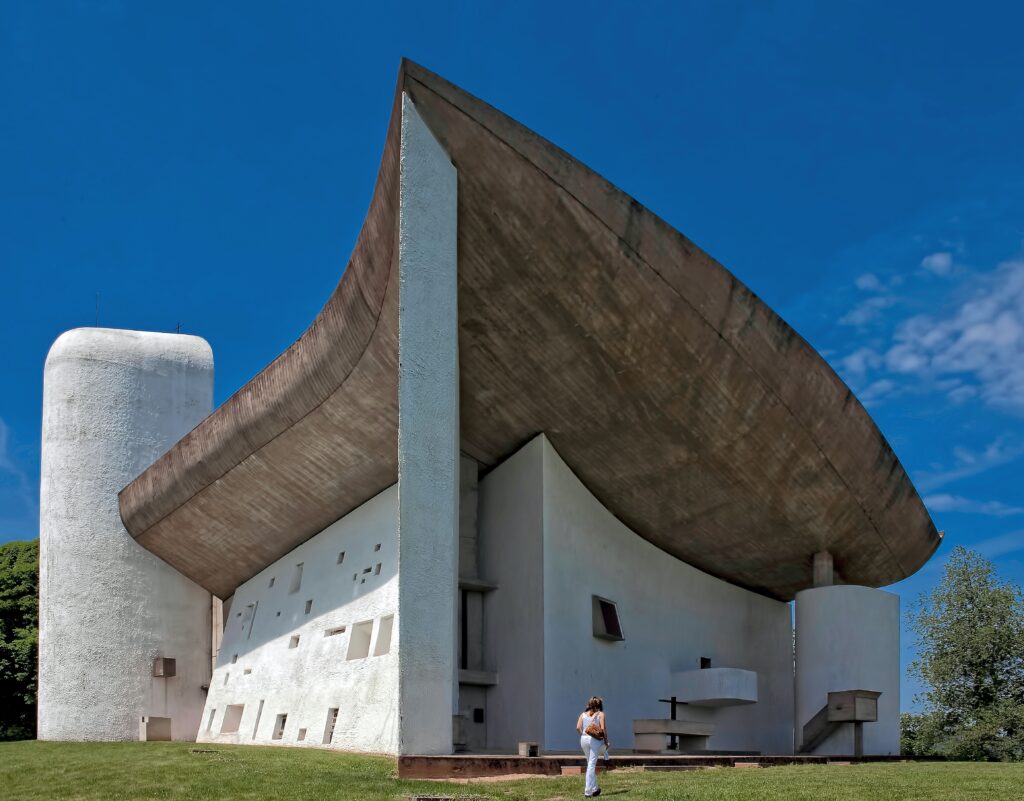
Notre Dame du Haut, nicknamed Ronchamp Chapel, is one of Le Corbusier’s most loved buildings. Photo by Ricardo Gomez Angel on Unsplash

Wabi-sabi is a Japanese term, but the idea has been embraced by Westerners as well – even those one wouldn’t expect. Le Corbusier, for instance, is remembered as the archon of high modernism, drawing up wicked plans to flatten Paris to make room for concrete high rises. And yet, the building he is best remembered for looks a lot like The Kaleidoscope. In fact, it would be hard for me to believe that Inrestudio did not have the Ronchamp Chapel in mind when they designed The Kaleidoscope. 

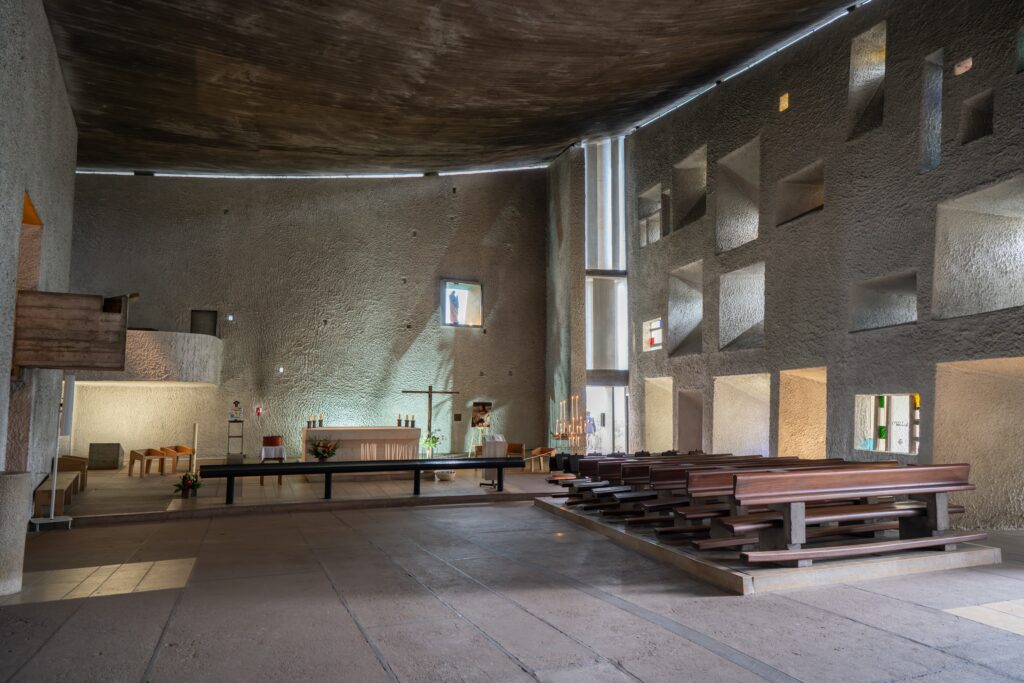
Completed in 1954, near the end of his career, Ronchamp Chapel is a masterpiece that seems to bear little resemblance to the harsh symmetries of Corbusier’s earlier buildings. It replaced a stone chapel that had been destroyed in the second world war, and one gets the impression that Corbu understood that his design should preserve some of the gentleness, or wabi-sabi, of the original, even though his design was entirely original. Like the Kaleidoscope, its greatest features are its sculptural roof, which seems to float above the structure, and the way it draws in natural light in the interior. In the case of Ronchamp Chapel, this is done through a charming array of stained glass windows – arranged in an irregular pattern of course. 

Interior view of Ronchamp Chapel. Note the slight gap at the roof line, which lets in a crack of sunlight. Photo by Richard Hedrick on Unsplash

Like The Kaleidoscope, Ronchamp Chapel is possessed of a humble beauty that is easy to relate to. It might be an odd building, but it is not unserious of self-consciously quirky. Above all, it is very much itself. I hope to see more buildings designed in this mode in the coming years.

The latest edition of “Architizer: The World’s Best Architecture” — a stunning, hardbound book celebrating the most inspiring contemporary architecture from around the globe — is now available. Order your copy today.  

Reference