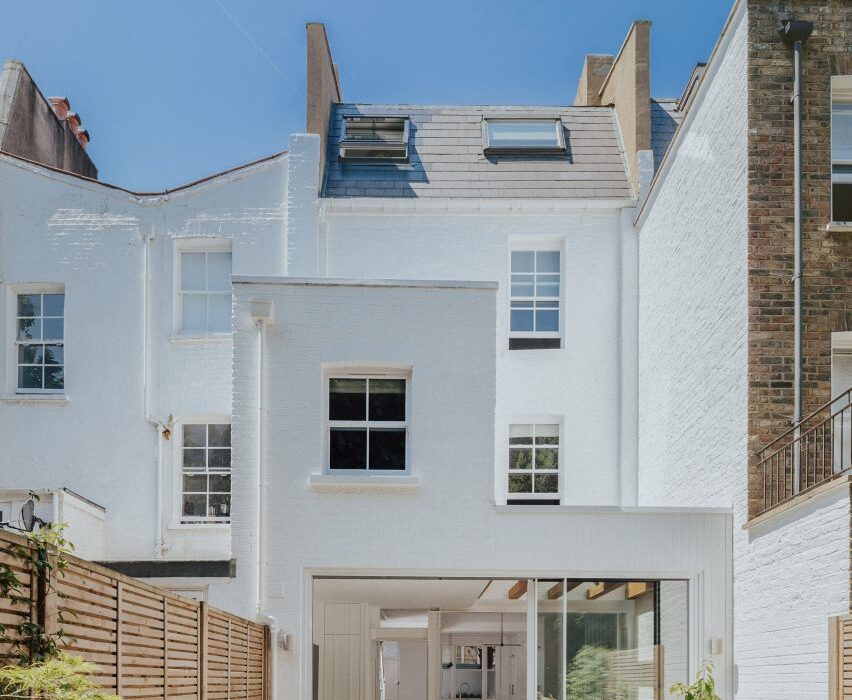
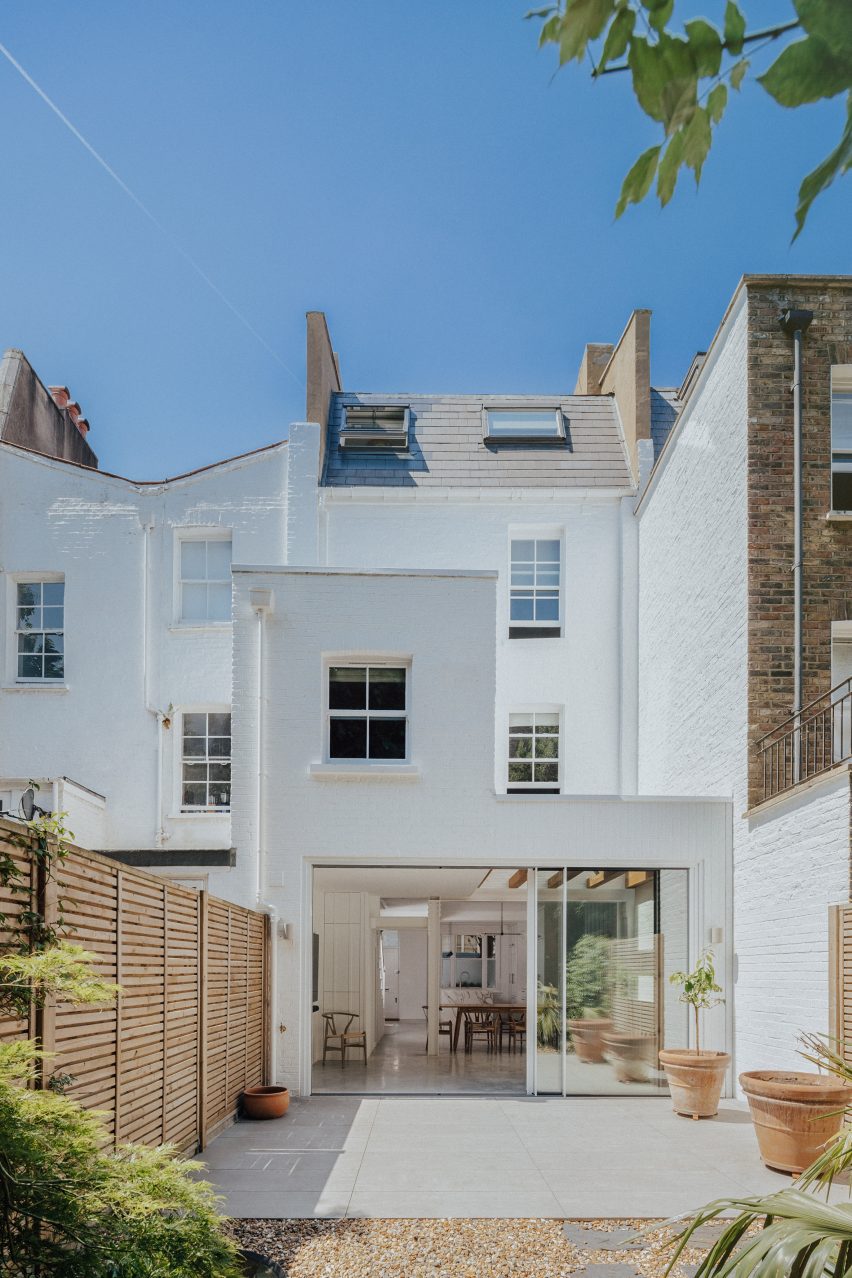
Exterior of house in London by Studio Varey Architects
CategoriesInterior Design

Studio Varey Architects celebrates natural light in Notting Hill house

London firm Studio Varey Architects has simplified this Victorian terraced house to create a light-filled home in Notting Hill, with timber-framed skylights designed to catch the sun.

Set in the Westbourne Conservation Area, Huron House has belonged to its current owners for the last 25 years.

Exterior of house in London by Studio Varey Architects
Huron House is a renovated Victorian terrace in west London

The overhaul of the 19th-century building started as a simple ground-floor renovation to replace the kitchen and improve the connection between the house and its garden.

However, exploratory works showed the four-storey property to be in bad structural condition, which demanded major improvement works but also gave the owners an opportunity to reimagine their period home.

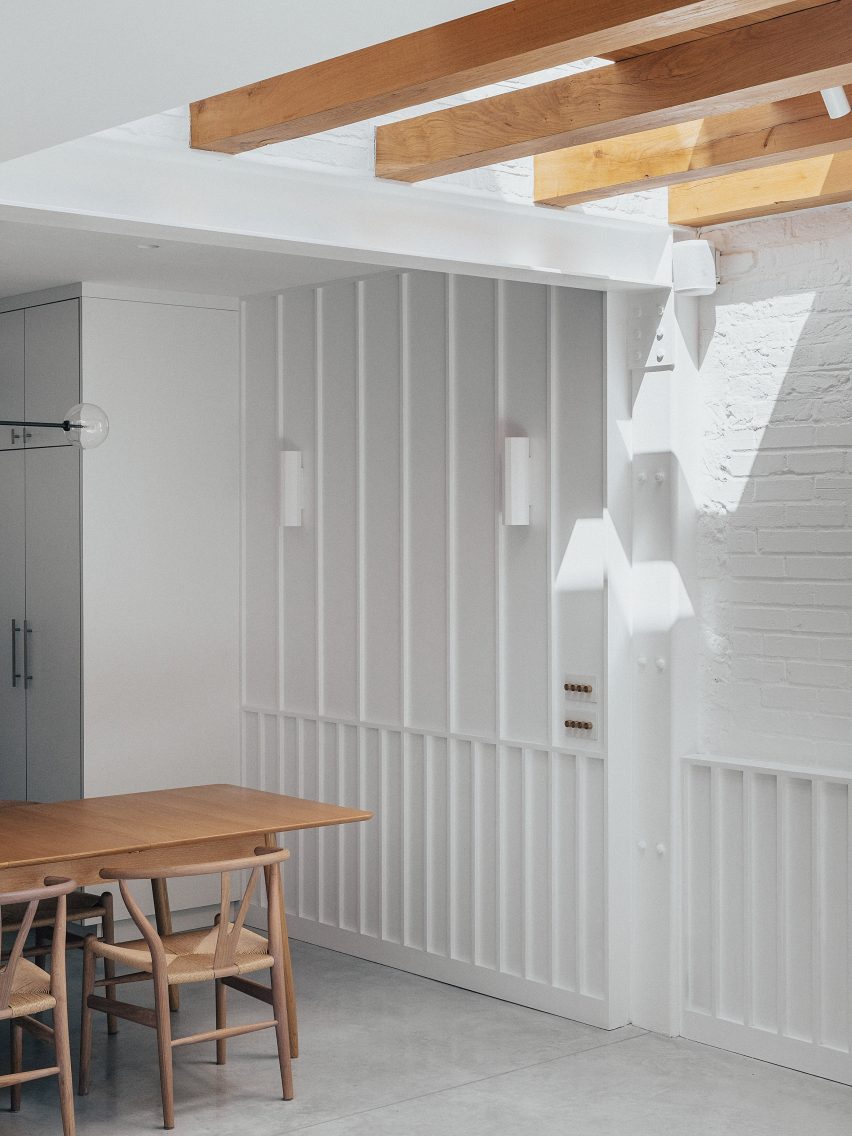
Dining area of Huron House
Decorative oak beams frame the skylight in the extension

The new brief to Studio Varey Architects included a full house renovation and interior design, with special emphasis on the bathrooms as well as custom joinery and the rebuilding of the 1990s rear extension to create a new open-plan kitchen and dining room.

“Our goal was to create an open-plan living space and bring lots of natural light into the ground floor, helping it to feel more inviting and better suited to entertaining friends and family,” the studio told Dezeen.

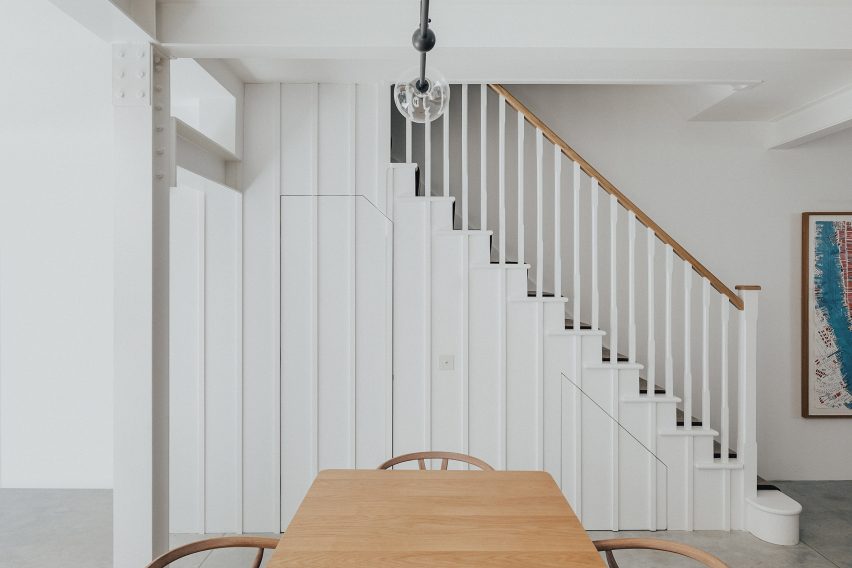
Stairwell of house in London by Studio Varey Architects
A simple white staircase leads upstairs

The property sits on a rough east-west axis, giving it the potential to achieve great light levels throughout the day, with the sun moving from the back of the house in the morning to the front in the afternoon.

“We wanted to ensure this natural light was captured through the architecture and design of the spaces,” the studio said.

On the ground floor, Studio Varey Architects removed a structural post that supported the building but divided the back wall.

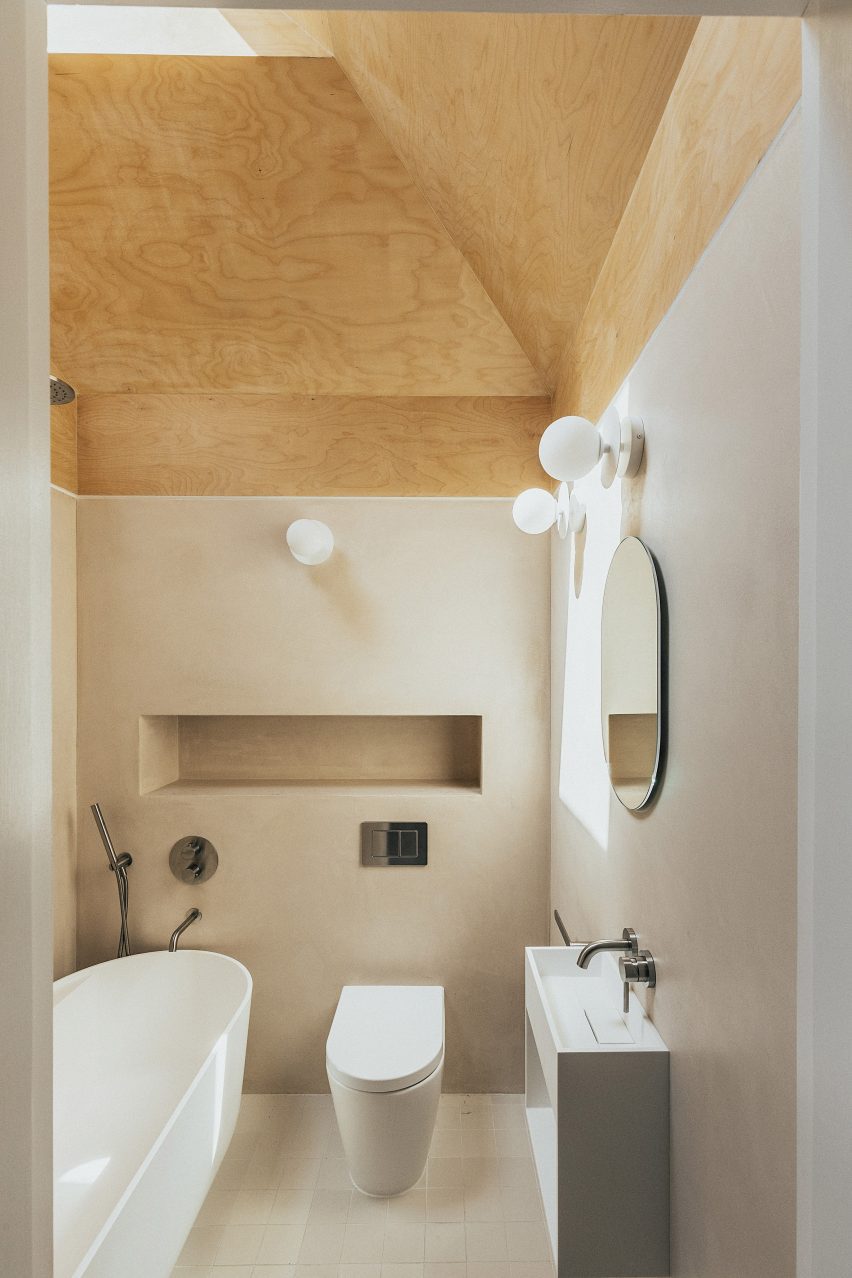
Bathroom with light well in Huron House
A skylight illuminates the top-floor bathroom

This has been replaced with a steel frame, which allowed the studio to introduce slimline aluminium sliding doors that now run along the whole back of the property.

An existing skylight in the flat roof here was enlarged and framed with oak beams, pulling more light into the centre of the hybrid kitchen-dining space.

“Natural light cascades into the back of the house, while the introduction of oak beams created a feature that plays with the light as it travels through the property,” the studio said.

The whole staircase was replaced and positioned further away from the home’s large rear windows, creating a lightwell funnels sun into the lower floors.

On the top floor, an existing bathroom was fully renovated. Situated in the middle of the top floor it featured no windows save for a small skylight, meaning that light levels were totally inadequate.

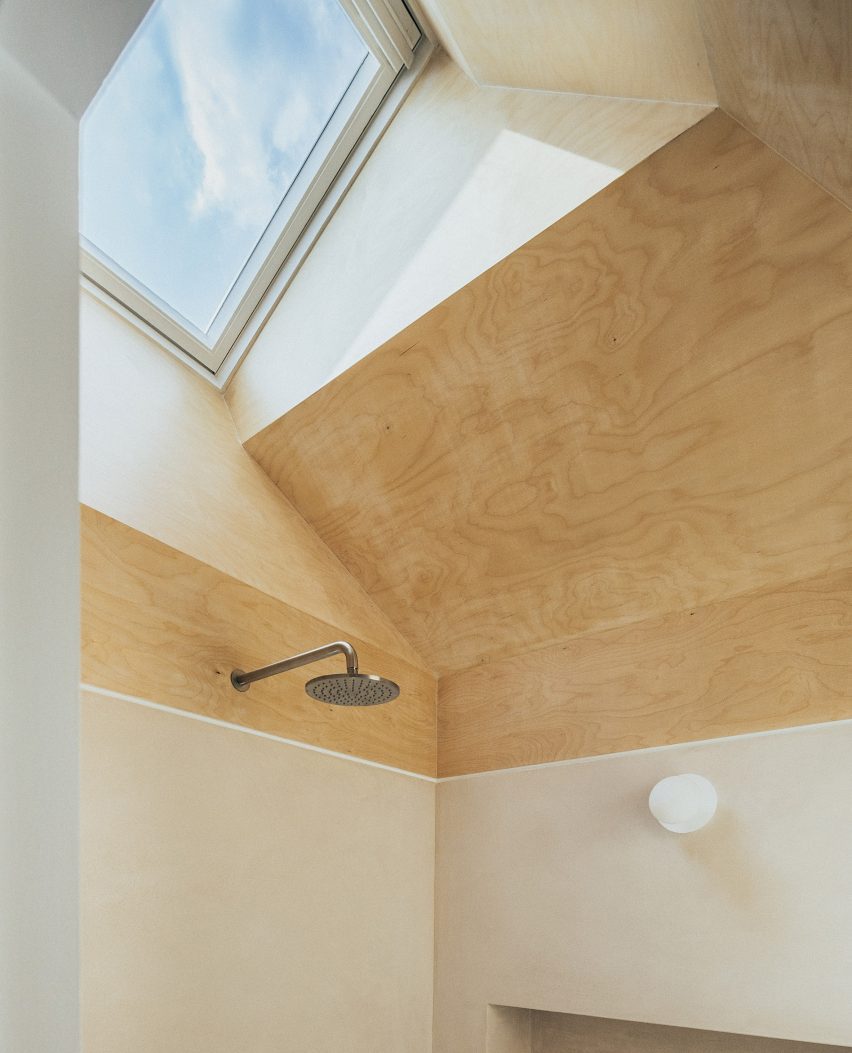
Here, Studio Varey Architects cut back the ceiling to create a multifaceted surface clad in birch plywood – its colour knocked back with a wash of soft white – to bounce light around the space.

Timber-clad light well in Huron House
The ceiling was cut back to allow more light into the interior

“We created a splayed ceiling that increased the height of the space, allowing for the playful integration of materials to emphasise the new angles,” the studio said.

“Naturally finished birch ply, leading from the skylight down into Tadelakt walls, beautifully captures sunlight creating a special warmth in the space.”

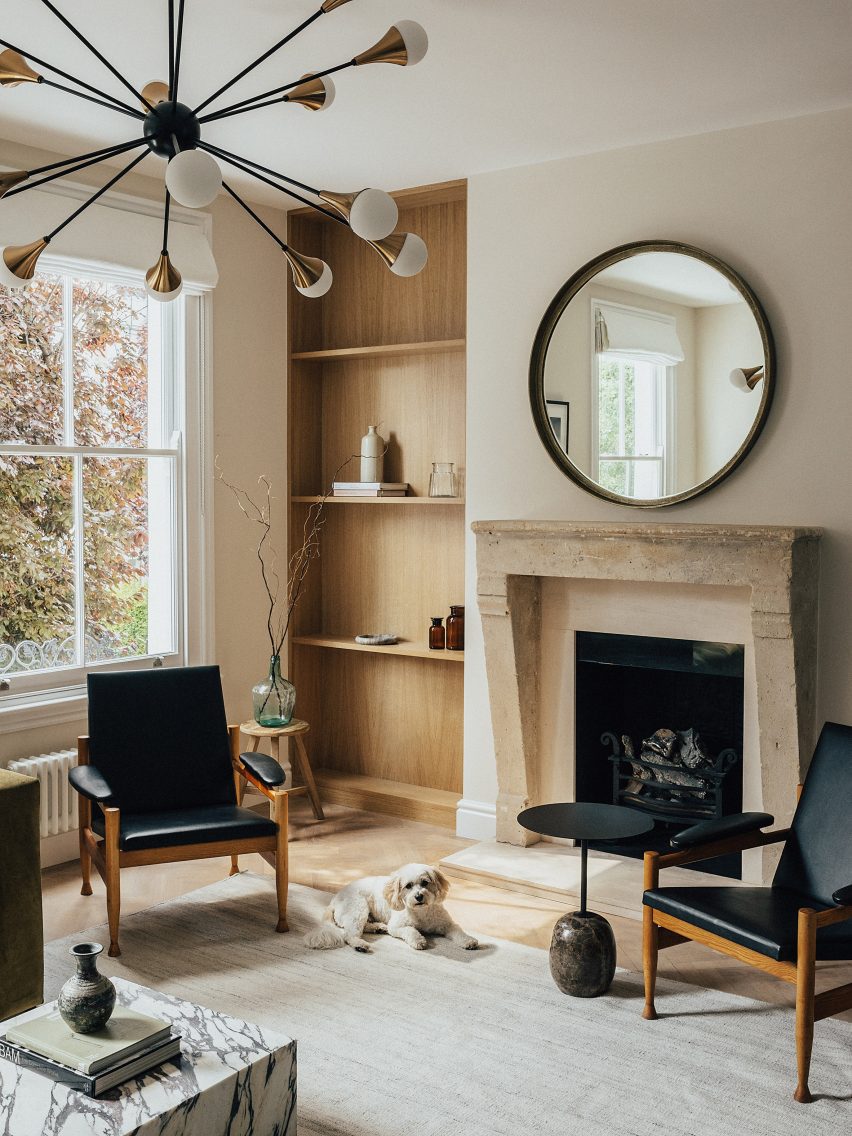
Living room of house in London by Studio Varey Architects
Oak forms bookcases in the sitting rom

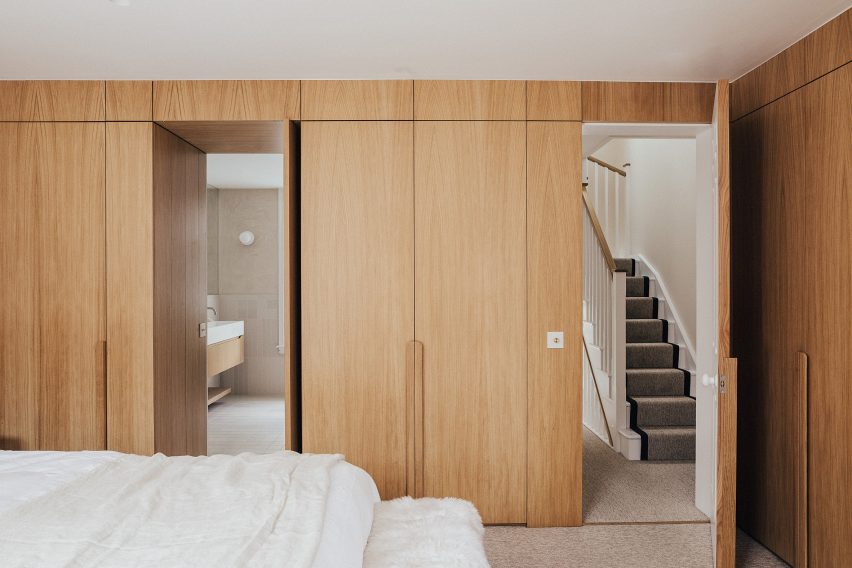
White oak can be found throughout the house in the form of built-in joinery from bookcases and wardrobes, as well as in the feature beams of the extension.

“We wanted to simplify the material palette and keep it light, both in appearance and number of elements we used,” the studio said.

“This was done to emphasise the quality of the materials themselves, highlight the craftsmanship of the work and establish a visual link between the interior spaces throughout the home.”

Bedroom of house in London by Studio Varey Architects
Oak joinery features in the primary bedroom

Polished concrete, used for the floor at ground level, is underlaid with underfloor heating and provides a durable surface that is easy to clean for the owners after walking their dog.

Other recently renovated houses in London include Sunderland Road House by 2LG, which features pastel-painted corniced ceilings, and Graphic House by Office S&M, which is defined by graphic shapes and bold hues.

The photography is by Taran Wilkhu.

Reference

Curtain wall reflection
CategoriesArchitecture

Non-Architectural Challenges Architects Face When Converting Offices into Housing

Architizer’s new image-heavy daily newsletter, The Plug, is easy on the eyes, giving readers a quick jolt of inspiration to supercharge their days. Plug in to the latest design discussions by subscribing. 

COVID-19 has left many office buildings half-empty in city downtowns across the United States, and as vacancies rise, commercial property values drop. The demand for office space might not rebound to pre-pandemic levels as some observed have augured.

Banks, city governments and property management companies fear the severity of the situation and its potentially dismal economic consequences. At the same time, the housing shortage is becoming a major problem for many cities. Could empty office buildings be the remedy to the housing crisis? What does it take to convert office buildings into housing?

One would think that the idea of converting office buildings into residential would presumably face little-to-no opposition and be promoted by cities and planning authorities as a possibility to mitigate the housing shortage and activate districts. It could be a win-win situation if not for the red-tape bureaucracy — local building and zoning regulations — and the technical difficulties, including structural, energy/mechanical, accessibility and fire safety upgrades, among other requirements. These requirements limit the number of vacant office buildings that could potentially be converted into residential use.

Zoning Regulations

Curtain wall reflection

Image by Eloi Smith via Unsplash.

There is no general rule for turning office space into housing, and each building must comply with local building and zoning regulations. Zoning rules vary, but they often share the common purpose of separating occupancies i.e. separating residential from commercial use. For this specific reason, it is difficult to change the use of an existing building, and developers wanting to undertake such a task will have to apply for a variance, which may face opposition before it is granted. Difficulties don’t end here. In addition to zoning regulations, building codes will influence redevelopment projects.

Generally, building codes applied to residential projects are considerably different from those that apply to office buildings. Adapting an existing structure to a new use will involve the cooperation of different agencies to address the complexities that come with the change of occupancy use. But given the extraordinary situation where on the one hand, we have thousands of vacant office square footage and, on the other hand, an urgent housing shortage, it would make perfect sense to relax these regulations and try to solve both problems. City authorities have in their hands the opportunity to make change recommendations in city zoning regulations. In this respect, New York’s Mayor Eric Adams has been encouraging modifications to zoning and building codes to spur the office-housing transformation.

8899 Beverly Boulevard

8899 Beverly Boulevard by Olson Kundig, Los Angeles, California | Image by Nils Timm.

For the time being, zoning and building regulations make it hard for office buildings to be turned into a different use, especially into residential, simply because the requirements for one are so different from the other. Let’s look at some of the specific requirements to turn an office building into housing: Light and ventilation are perhaps the most critical factors that play into the equation.

Light and Ventilation Requirements

One crucial requirement is that habitable spaces need to be provided with a minimum amount of light and ventilation. Oddly, pre-air-conditioning-era office buildings are potentially better suited to office-to-housing transformation. Their size and configuration were dictated by the necessity to provide offices with light and ventilation. When air-conditioning and fluorescent lighting became characteristic features of the office environment, the narrow, rectangular footprint of the typical office building and its U-, L-, C, and E-wing variations could expand to larger floor plates filled with rows of offices that no longer needed a window close by. That is when things got complicated for the office-to-housing transformation. The distance from the center of the building to an exterior wall is often so great even when the center is formed by a circulation and utility core  — that it is impossible to create an effective layout where all the units have windows.

Adding to this problem is the type of building envelope. The interiors of modern office buildings are, for the most part, sealed behind curtain walls. To comply with the light and ventilation rule required in residential buildings, the entire glass skin needs to be replaced with a system that incorporates operable windows.

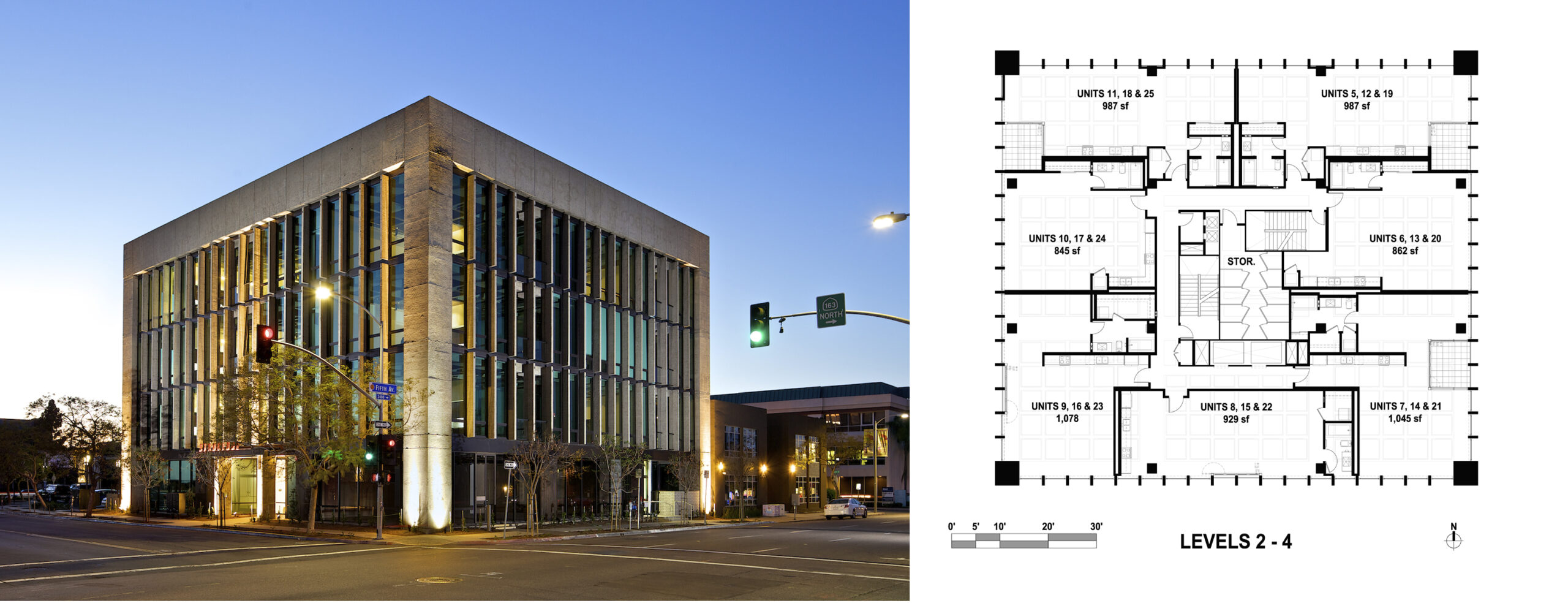
Structure Lofts

The Structure Lofts by H2 | Hawkins + Hawkins Architects, Inc. San Diego, California | Image by Brent Haywood.

Other factors, including the configuration of the structural grid and the window location, impact the viability of office-to-housing conversion projects and dictate the layout and size of the rooms in new apartments. Above, the Hawkins + Hawkins Architcts‘ office building-turned-apartment complex shows the typical floor plan for all levels above the ground floor with units around a circulation and storage central core. The open plan of all the units allows for natural light to reach every corner.

The design reimagines a four-story, modern office building that served as San Diego’s Blood Bank for nearly 40 years. Offering panoramic views of the city skyline, a central park and a bay, the building inspired the conversion to loft apartments. The goal was to create expansive, energy-efficient living units through adaptive reuse while preserving a landmark. The interior structural elements such as the concrete floors and coffered ceilings, were exposed to create a clean, industrial look. Single-glazed windows were replaced with energy-efficient, dual-glazed, floor-to-ceiling vinyl windows; and new, energy-efficient mechanical and electrical systems were installed.

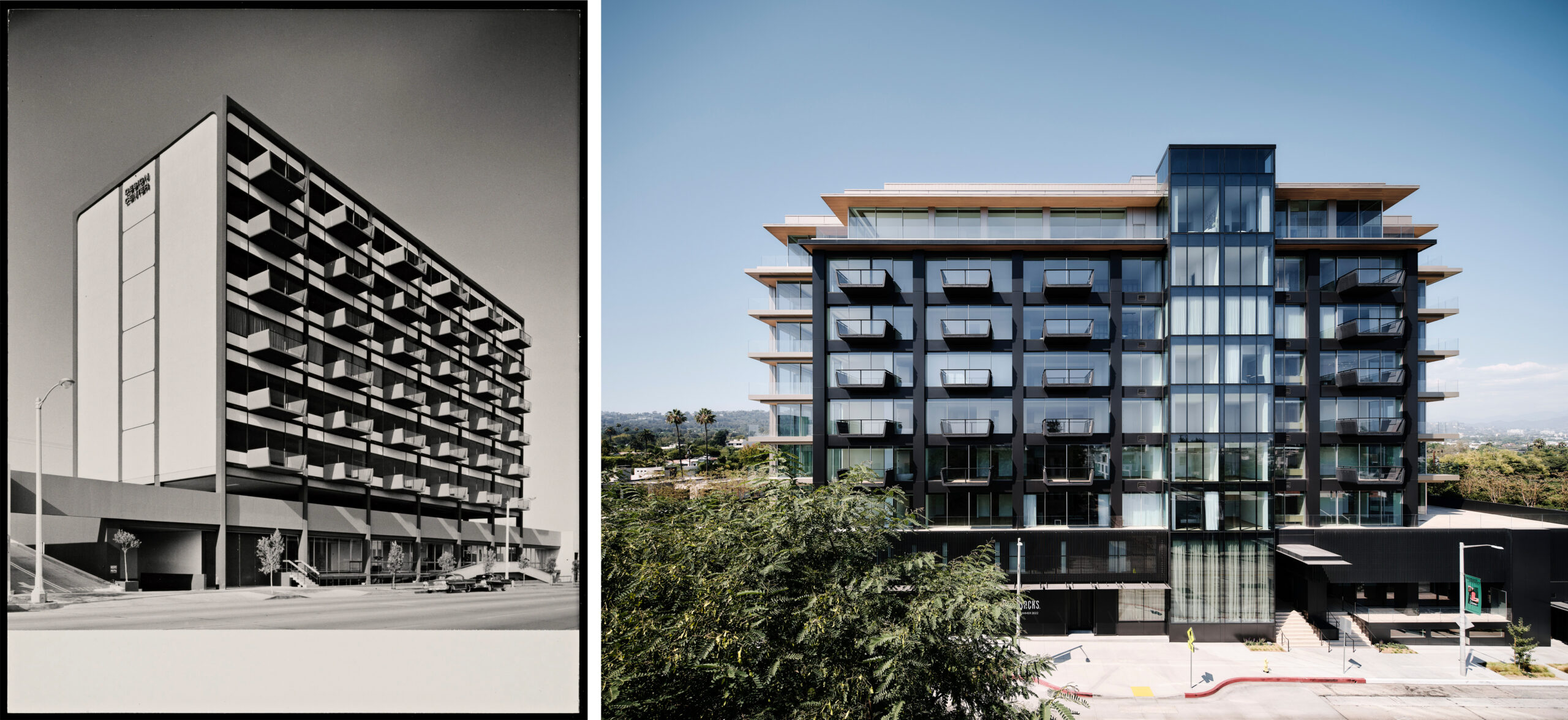
8899 Beverly Boulevard

The International Design Center, originally designed by Richard Dorman in 1964 (left) and 8899 Beverly Boulevard by Olson Kundig, Los Angeles, California | Image by Joe Fletcher (right).

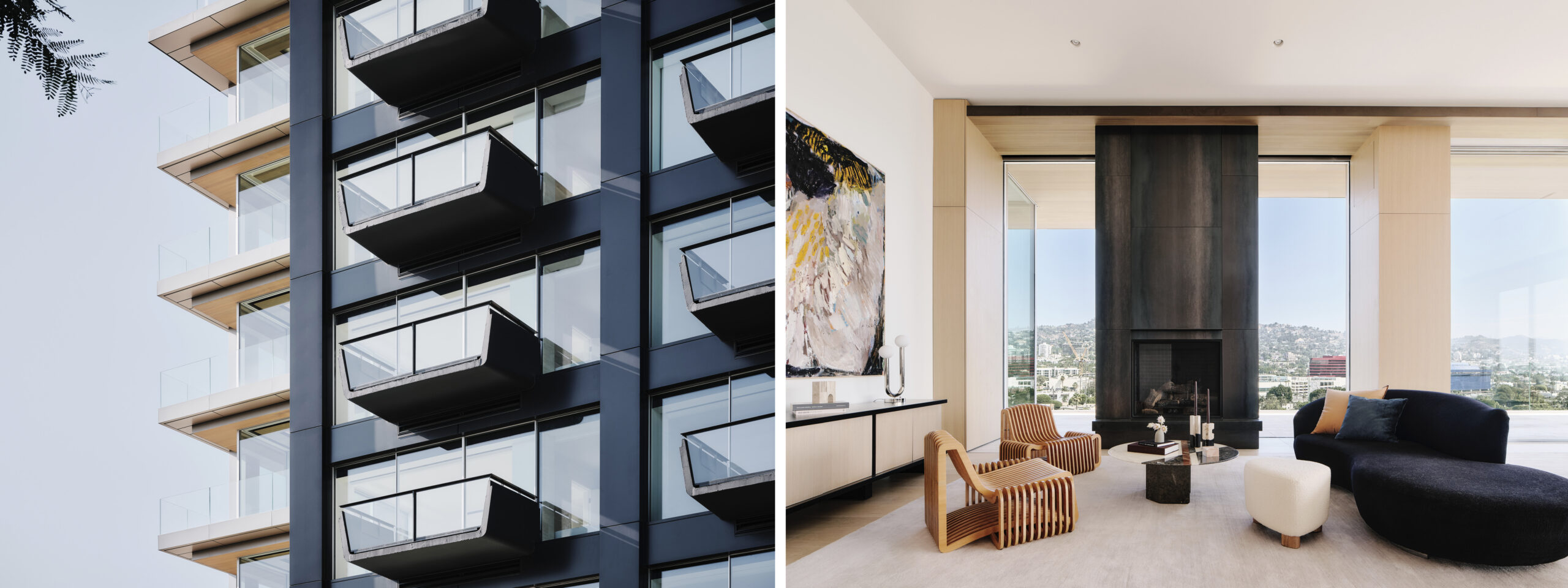
Olson Kundig's office to housing tower conversion

8899 Beverly Boulevard by Olson Kundig, Los Angeles, California| Images by Joe Fletcher.

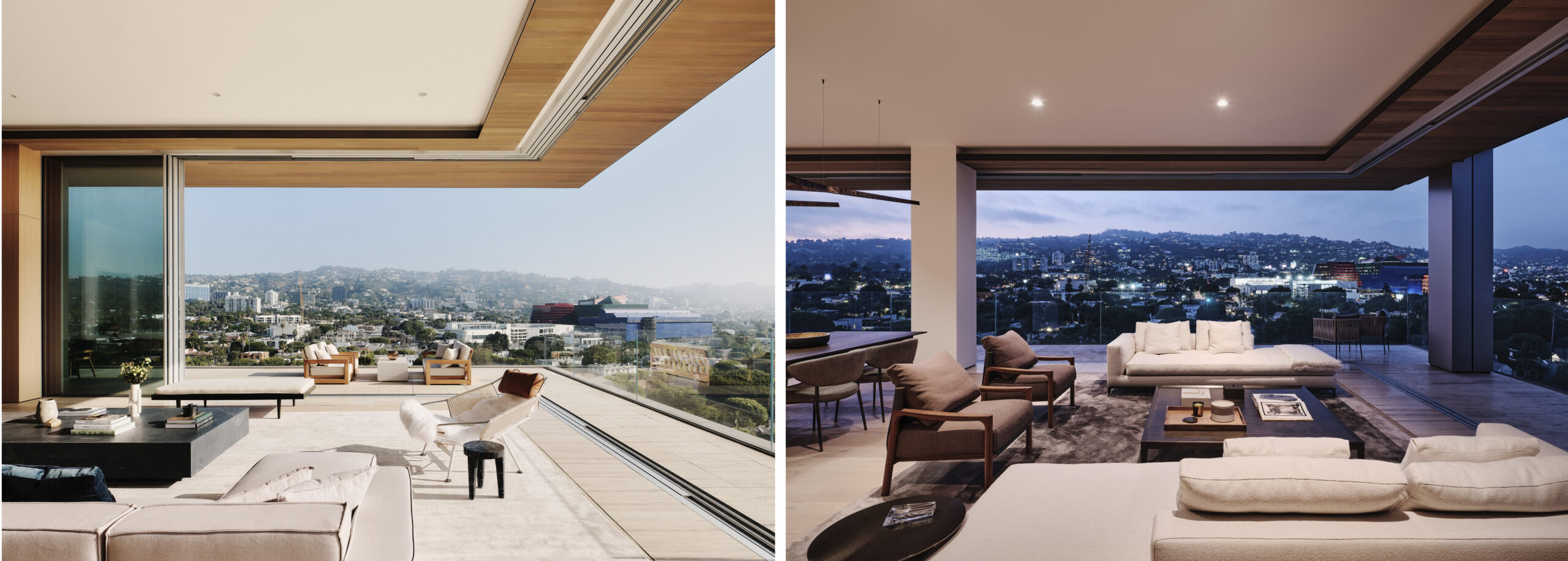
Here is another office-to-housing redevelopment example. The International Design Center, originally designed by Richard Dorman in 1964, is located in today’s heart of West Hollywood’s vibrant arts and design district in Los Angeles. Olson Kundig‘s redevelopment design maintains the building’s original integrity while transitioning its function to a 48-unit luxury condo complex.New additions are set back from the structure to acknowledge the building’s form. The upper levels contain a mixture of one-, two-, three- and four-bedroom units, fifteen of which are designated market rate. Private amenities on the lower level include a residential lobby, fitness room and an adjacent pool area. The building’s new design highlights indoor-outdoor connections through a generous use of glass while maintaining the building’s original concrete balconies. The updated façade incorporates a shutter system to control shade and privacy. Roof terraces on the new penthouse level extend livable areas outdoors, opening to views of West Hollywood and the Hollywood Hills beyond.

Are Large Office Buildings Doomed?

8899-Penthouse

8899 Beverly Boulevard by Olson Kundig, Los Angeles, California | Images by Joe Fletcher.

The way office buildings are designed factors in the suitability for office-to-housing transformation, and for now, large office buildings offer a hornet nest of unsolvable technical difficulties after factoring in cost, profitability and physical limitations. The amendment of local zoning and building regulations is critical to facilitate the redevelopment of offices into homes. In the most extravagant and extraordinarily expensive cases, developers can allow their imagination to run wild: carve out portions of a building to create outdoor terraces that bring light and air into otherwise windowless apartments or blow up holes in the floor plates to run lightwells. Mix-use occupancy could be an option worth exploring. In this case, fire separation and exits would be challenging issues that would need to be addressed.

Office-to-housing redevelopment costs can be exorbitant, and most certainly, such projects would only be viable when offered as luxury apartment buildings. At this rate, the office-to-housing redevelopment projects will probably have little positive impact on the housing shortage, at least for now. Code relaxation and economic incentives to allow these conversions to take off are urgently needed.

Architizer’s new image-heavy daily newsletter, The Plug, is easy on the eyes, giving readers a quick jolt of inspiration to supercharge their days. Plug in to the latest design discussions by subscribing. 

Reference

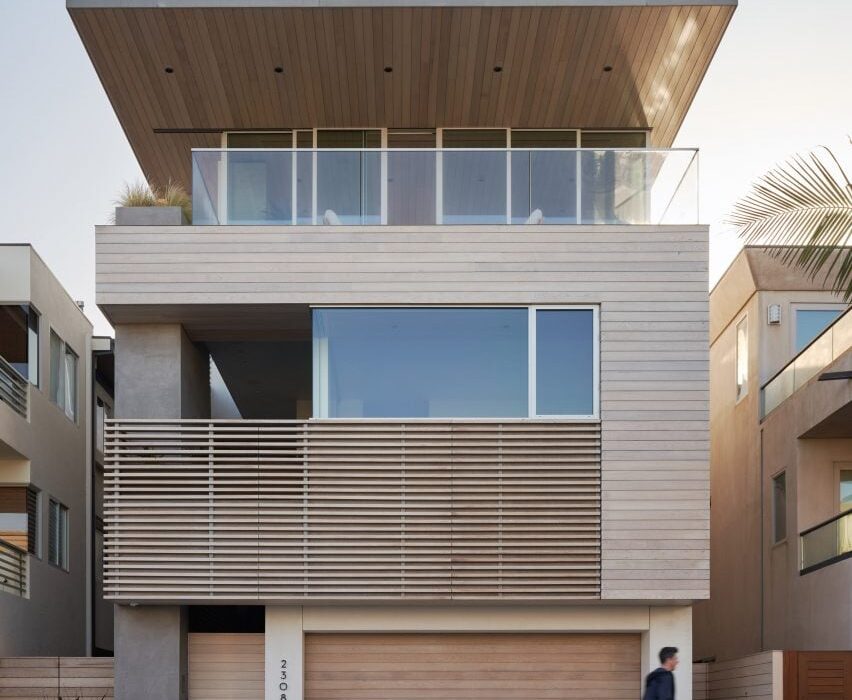
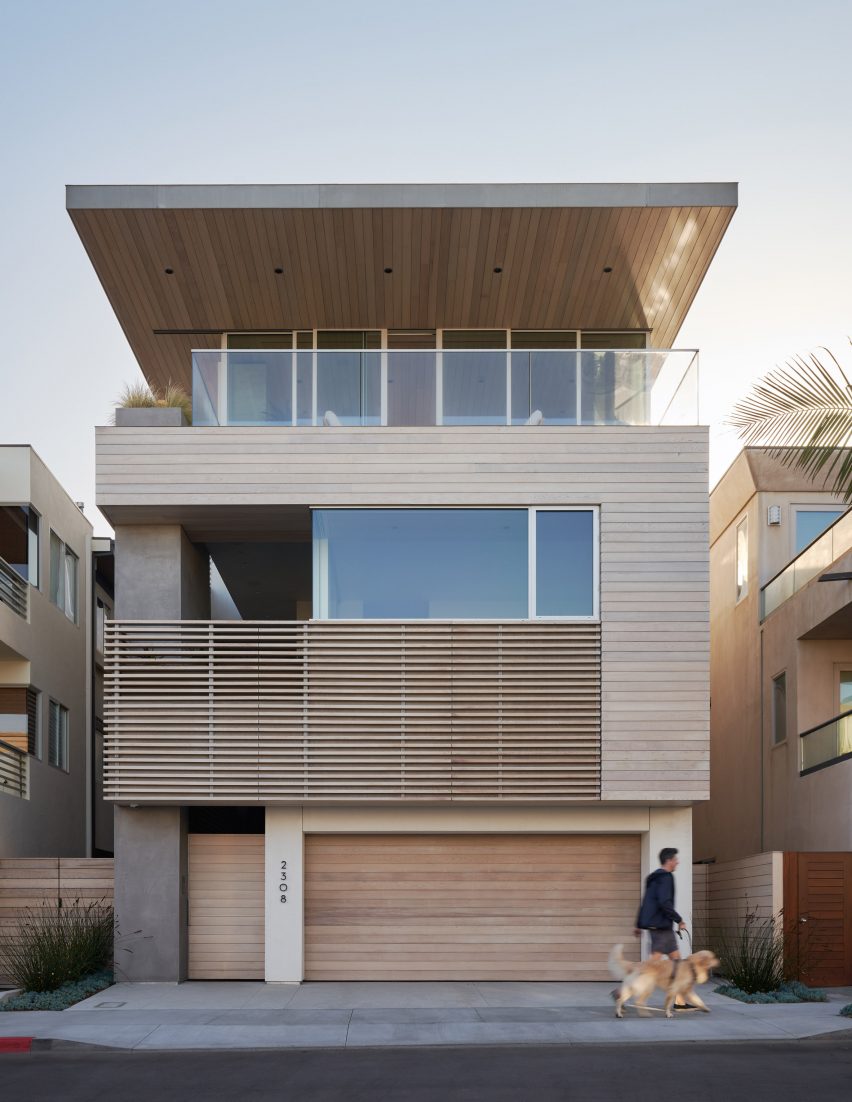
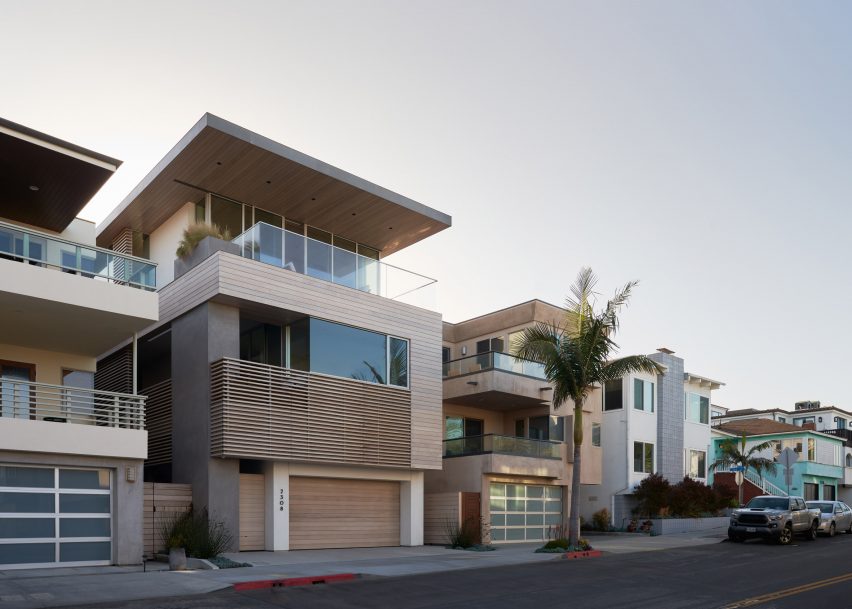
Exterior of a multi-storey home in California by Montalba Architects
CategoriesArchitecture

Montalba Architects prioritises nature at Manhattan Beach House

A slender pool lined with a “vertical garden” features in an oceanfront home in southern California designed by US studio Montalba Architects.

The house is located within a dense, beachside neighbourhood in Manhattan Beach outside of Los Angeles. Designed for a couple who are long-time residents of the area, the dwelling is imbued with a sense of calm and a connection to the outdoors.

Exterior of a multi-storey home in California by Montalba Architects
Facades were covered in stucco and western cedar

“Manhattan Beach House is intended to provide a spacious, peaceful feeling, offering an experience close to nature throughout the interior of the building itself,” said Los Angeles-based studio Montalba Architects

Situated on a narrow, sloped lot, the home rises three levels and encompasses 6,000 square feet (557 square metres).

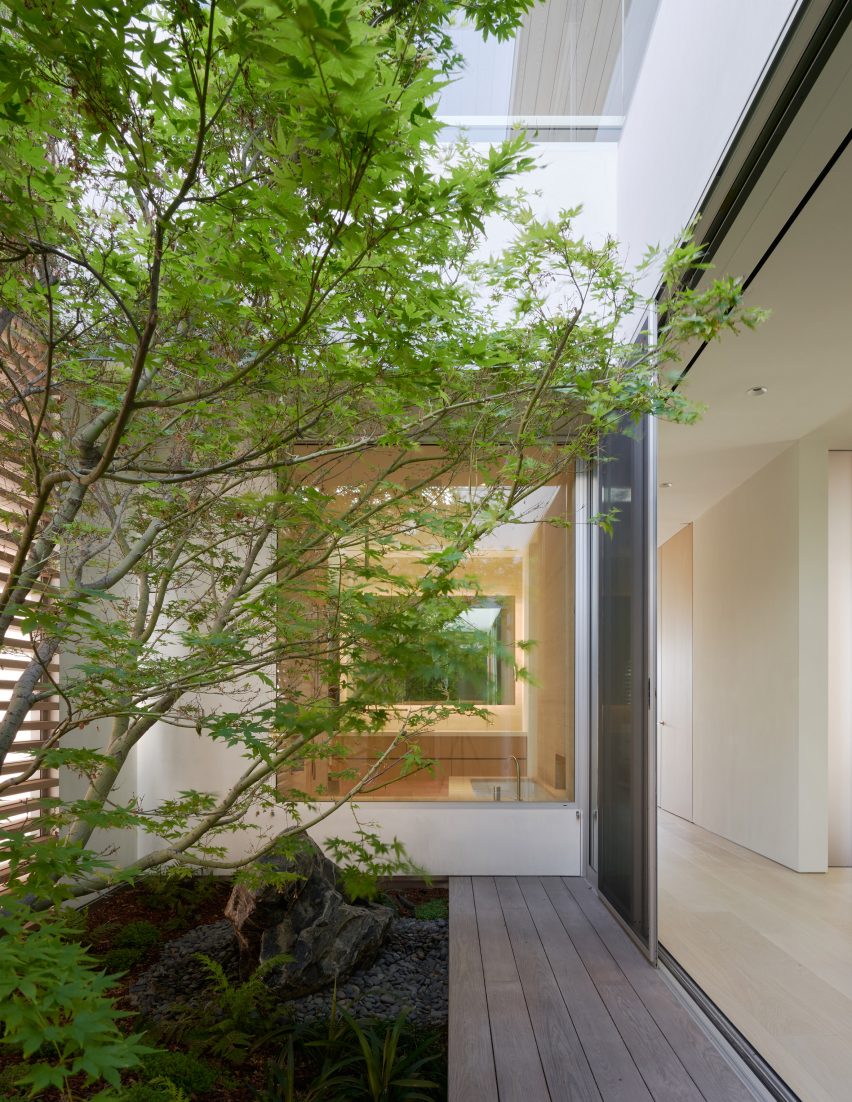
Courtyard with a planted tree in a Californian home by Montalba Architects
Montalba Architects aimed to provide a connection to nature in the home

Facades are clad in smooth-troweled stucco and western cedar. Along the front elevation, a cedar and aluminium screen provides privacy and acts as a guardrail.

The slatted screen wraps around the north side of the home, where the main entrance is located. The screen adds definition to an entry courtyard while also providing visual continuity between the front and side facades.

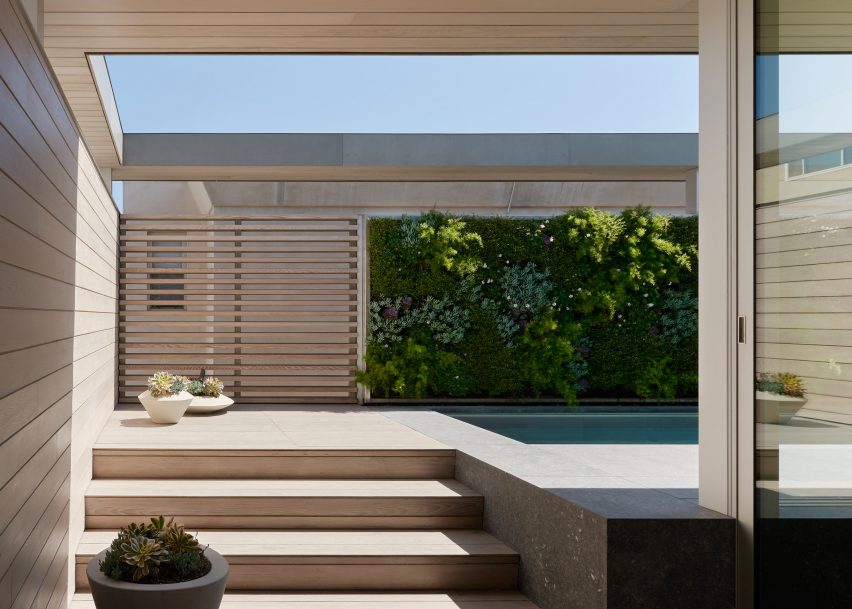
Steps leading to an outdoor swimming pool with a green wall
A green wall sits beside an outdoor swimming pool

The front elevation looks west, toward the ocean, while the rear side faces an alley. To form sight lines and usher in daylight, the team focused on creating openings on both the exterior and within the house.

“Behind the street front, the volume of the house dissolves, with glimpses through openings between floors and between distant rooms.”

On the ground level, the team placed a four-car garage, gym, laundry room and guest quarters. The first floor holds the primary bedroom suite and a pair of offices, along with a two-car garage that is accessed via the alley.

A double-height courtyard on the first floor showcases a maple tree that is meant to be “a reminder of natural time and the seasons”.

“The courtyard is visible throughout the house, whether moving along the length of the house or up to the third floor,” the team said.

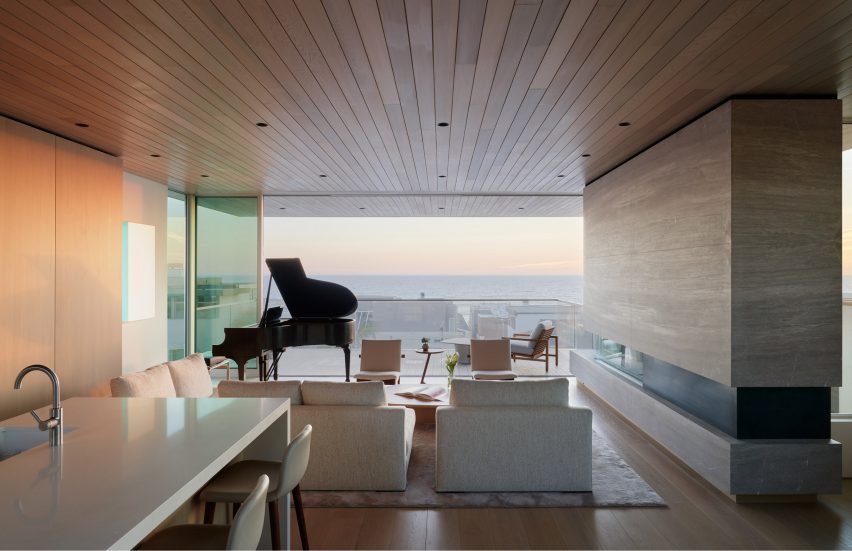
Living room in a Californian home with seating, a piano, and glass sliding doors with views of the city skyline
Glass doors on the top floor lead to a balcony

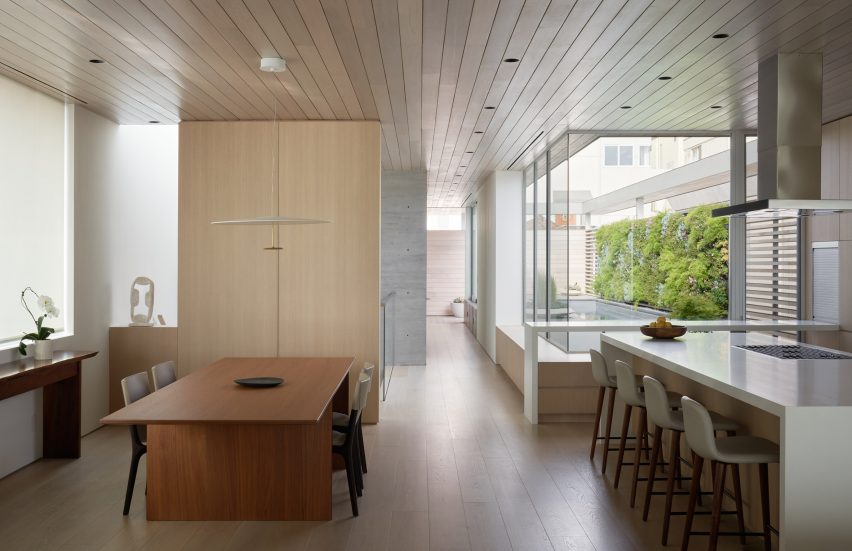
The top floor encompasses a kitchen, dining area, living room and media room. Glazed doors provide access to a balcony and a pool terrace.

The pool is lined with a “vertical garden” filled with drought-tolerant plants, including hardy geraniums, creeping Jenny and blue chalksticks.

Open-plan kitchen and dining room with large windows looking onto an outdoor swimming pool
Cedar covers the ceilings while oak lines the floors

“To maintain the living wall, the gardener is suspended over the adjacent pool on a rolling platform, which is stored on-site,” the team said.

Throughout the home, the team used earthy finishes such as cedar ceilings and white oak flooring and millwork.

Exterior of a multi-storey home in California by Montalba Archietcts
The home was designed for a couple living in Manhattan Beach

The kitchen is fitted with oak cabinetry and Caesarstone countertops, and the fireplace surround is made of silver travertine.

Other recent projects by Montalba Architects include the renovation of a 1960s Los Angeles building by Edward Durrell Stone and the completion of a hillside home in Santa Monica that features ample glazing and a clever siting strategy.

The photography is by Kevin Scott.


Project credits:

Architect: Montalba Architects
Landcape design: Pamela Burton
Living wall: Habitat Horticulture

Reference

Arts space by The Grid Architects in Ahmedabad
CategoriesArchitecture

Flowing vaulted roofs top Tarang arts space by The Grid Architects

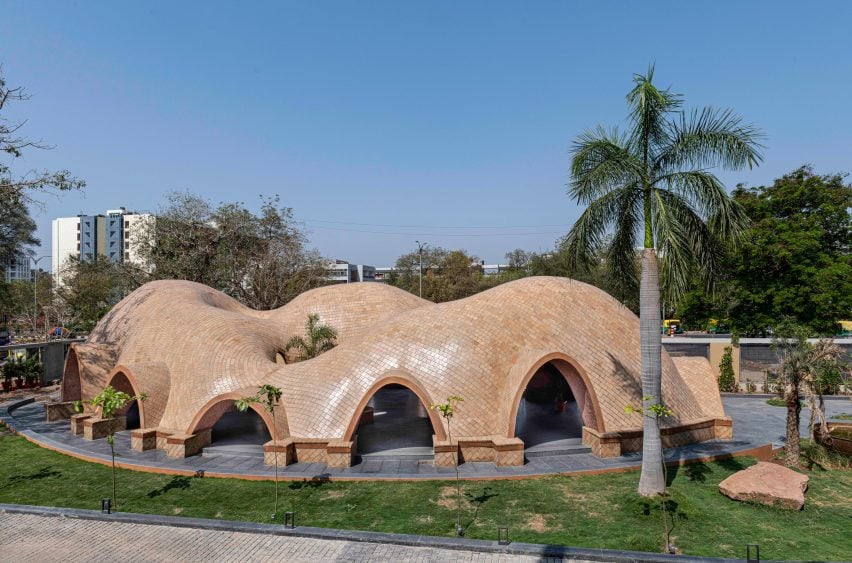
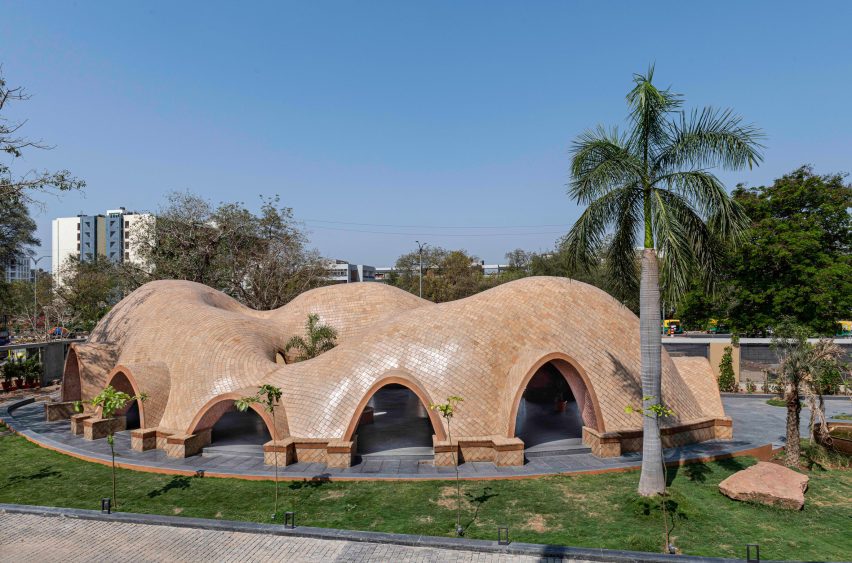
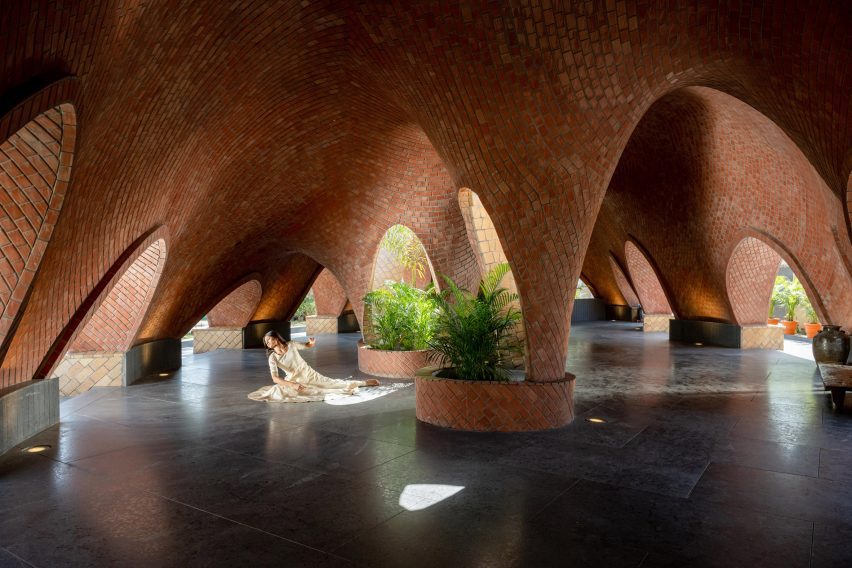
Undulating vaults shelter this multipurpose arts space in Ahmedabad, India, which local studio The Grid Architects designed to defy “conventional architectural norms”.

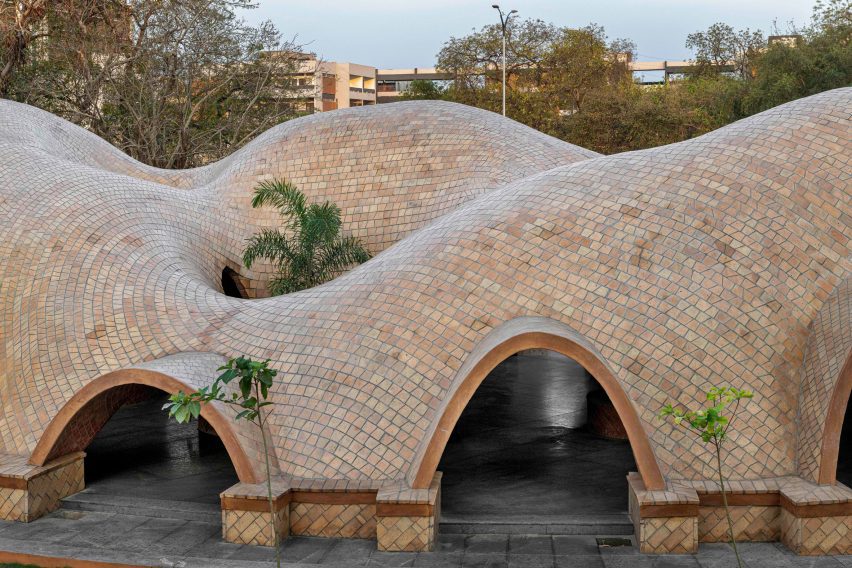
Named Tarang after the Hindi word for waves, the sweeping structure is formed of a series of timbrel vaults made from locally-sourced terracotta tiles without supporting beams or reinforcement.

According to The Grid Architects, with an area of 279 square metres, it is one of the largest vaulted structures of its kind in India.

Arts space by The Grid Architects in Ahmedabad
The Grid Architects has created a multipurpose arts space in Ahmedabad

“[Tarang] emerged from the desire to create a structure distinct from the urban context, where box-like structures dominated the surroundings,” said studio founders Snehal Suthar and Bhadri Suthar.

“The vision was to craft a cornerless edifice, harmonic waves that defied conventional architectural norms,” they told Dezeen.

A series of brick plinths on the perimeter of the oval-shaped site support the vaulted roof and create a series of arched openings of different heights that lead inside.

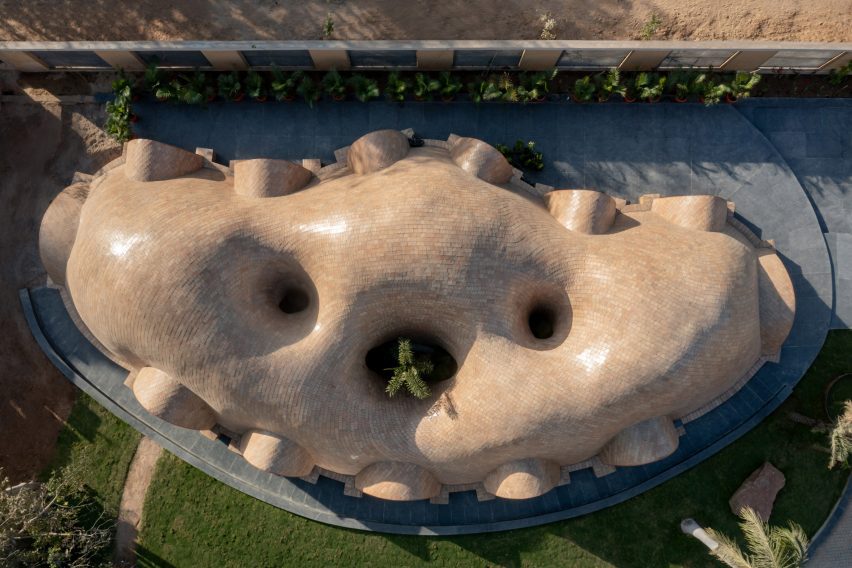
Aerial view of Tarang arts space by The Grid Architects in India
It is sheltered by undulating vaults. Photo by Vinay Panjwani

At the centre of Tarang, three circular plinths form funnel-shaped openings that provide sunlight and water to small planters positioned at their base.

The construction of Tarang was carried out by So Hath – 100 Hands Foundation For Building Artisans, a local organisation that advocates for and provides training in traditional construction techniques.

Vaulted building by The Grid Architects
It is made from tiles without supporting beams

The tiles are designed so that if Tarang’s arches are ever deconstructed they can be repurposed.

“Minimizing waste and concrete use, and prioritizing local resources and labour, it serves as a model for environmentally conscious architecture that celebrates local culture and positively contributes to the community,” explained the studio’s founders.

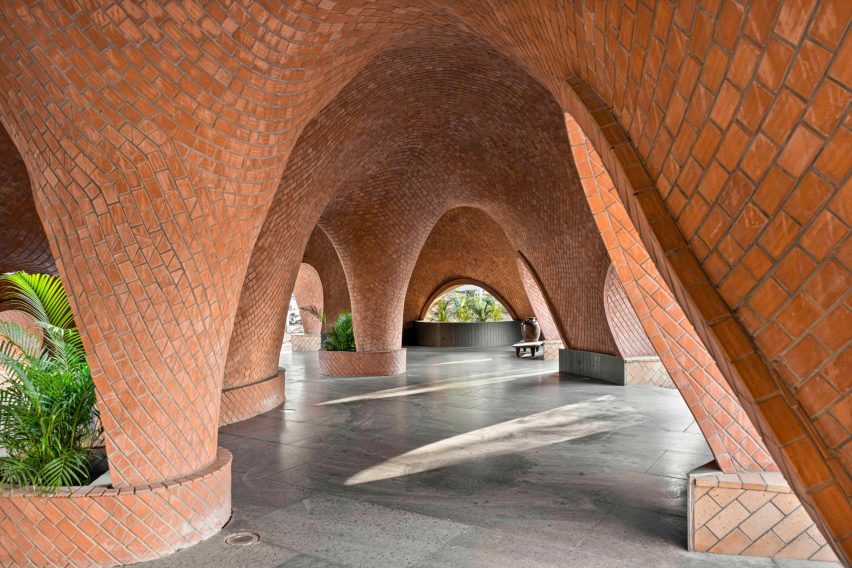
Inside, the tiles and polished stone floors are intended as a backdrop to a range of activities, from performances to artistic exhibitions and gatherings.

“The interplay of sunlight and shadow within the space is nothing short of mesmerising, imbuing the simplicity of the tiles and bricks with a quality that is truly remarkable,” said the duo.

Vaulted brick interior of Tarang
Planters feature inside

“Indeed, the structure itself is the finished product, where the rawness of the materials is transformed into something sublime and transcendent,” they continued.

The Grid Architects is an Ahmedabad-based studio founded in 2002. In 2021 it was longlisted for the studio of the year in the Dezeen Awards.

Vaulted arts space in India
It is intended as a backdrop to a range of activities. Photo by Vinay Panjwani

The studio previously turned to the brutalist buildings of the 1960s to create a home sheltered by a geometric, folded concrete shell.

Other recent projects in Ahmedabad include a factory by Iksoi Studio with an exposed concrete grid and the timber and stone-tiled VS House by Sārānsh.

The photography is by Photographix unless stated otherwise.

Reference

Designing with Light: 6 Ways Architects Are Using Swisspearl's Progressive Cladding Panels
CategoriesArchitecture

Designing with Light: 6 Ways Architects Are Using Swisspearl’s Progressive Cladding Panels

Architects: Want to have your project featured? Showcase your work through Architizer and sign up for our inspirational newsletters.

We first understand architecture through it’s façade, the face that it presents to us. This first impression is deeply tied to the materials and building systems a structure is made of. As designers and architects collaborate with manufacturers and fabricators, they continuously reimagine what this “first impression” can be and how buildings perform. A global provider based in Switzerland, Swisspearl is a manufacturer known for rethinking cladding and façades. The company’s guiding principle is to develop and produce forward-looking, functional and aesthetically convincing designs with architects, craftspeople and building material suppliers.

The headquarters of today’s Swisspearl Group is located in Niederurnen, where one of the first production facilities for fiber cement was founded in 1903. For many years, Swisspearl has been developing products made of natural materials for use in building envelopes, interior design and landscapes. The company’s products from their workshops in Niederurnen and Payerne have shaped Swiss building culture and, over time, have been used in projects worldwide. Swisspearl became well-known for cement composite panels (formerly called fiber cement panels or fiber-reinforced cementitious panels) offered in a wide color range. The following projects highlight their panels and product innovations used in architecture worldwide.


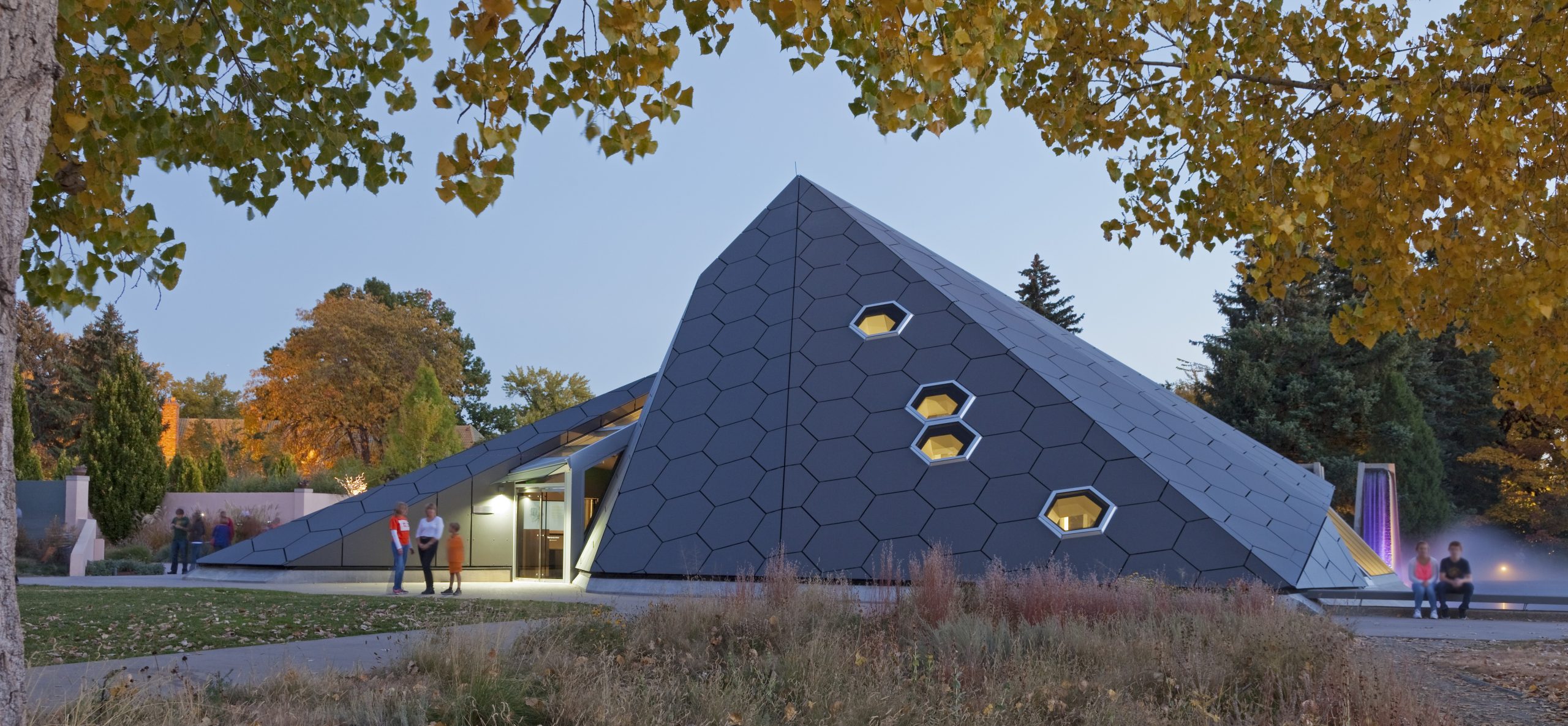
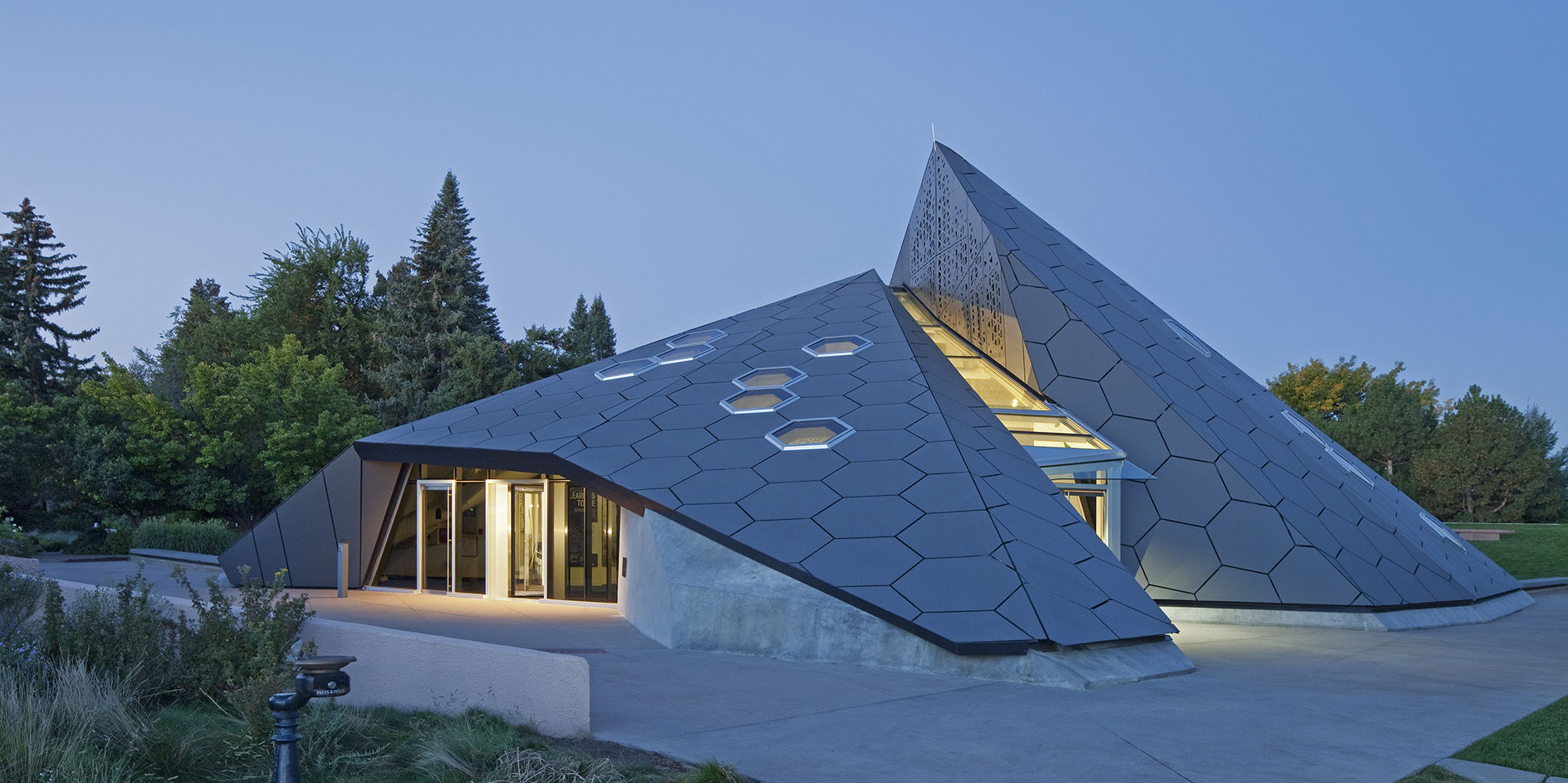
Denver Botanic Gardens Science Pyramid

By EUA, Denver, CO, United States

This iconic Science Pyramid was inspired by nature. The team wanted the façade of the building to mimic the hexagonal structure of a honeycomb. The pyramid’s two peaks and 16 facets twist and turn towards the sky as if it was a result of the earth’s colliding tectonic plates. Located in the center of the gardens, the pyramid’s proportions are a inverse of the adjacent amphitheater, made to create harmony between the building and the surrounding landscape.

Faced with the task of designing a transparent pyramid, as specified in the competition brief, the architects of the winning competition entry drew their inspiration from the geological processes causing the ragged rock formations of the nearby mountain ridges. The envelope of the structure informed by a biological metaphor and features almost 500 dark gray, hexagonal Swisspearl panels interspersed with thirty photo-voltaic collectors and multiple windows and skylights.


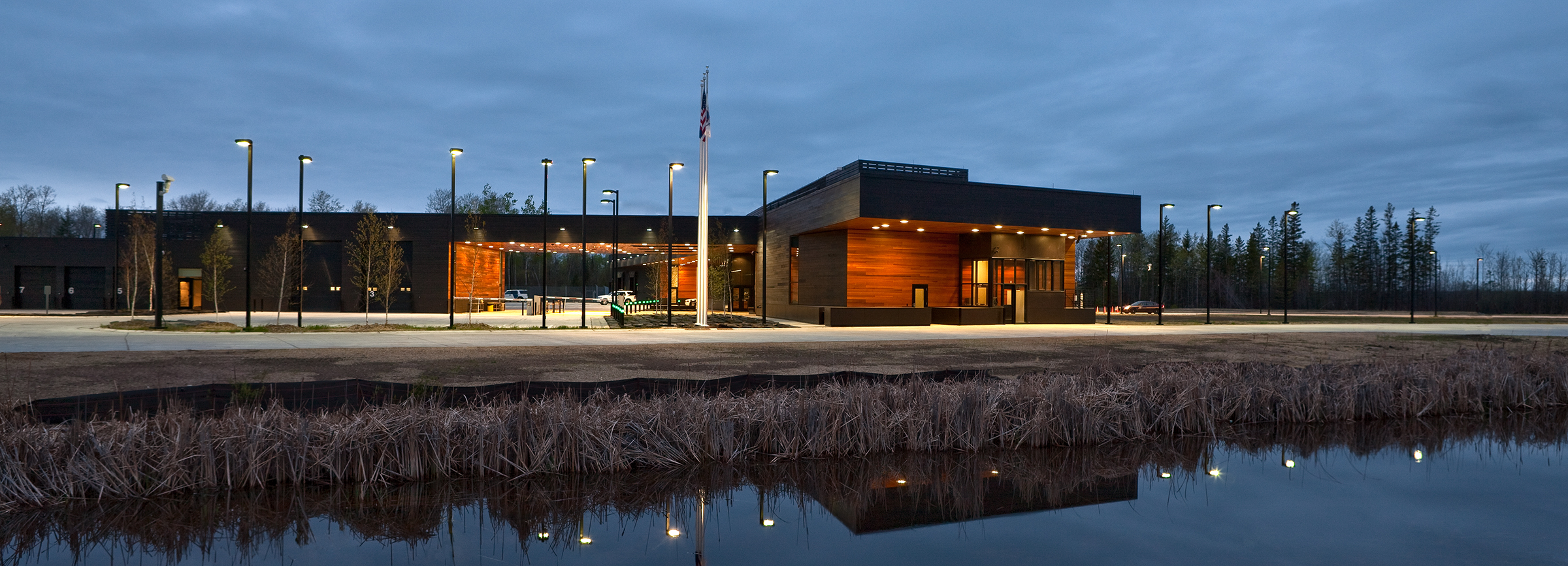
US Land Port of Entry, Warroad MN

By Snow Kreilich Architects, Warroad, MN, United States

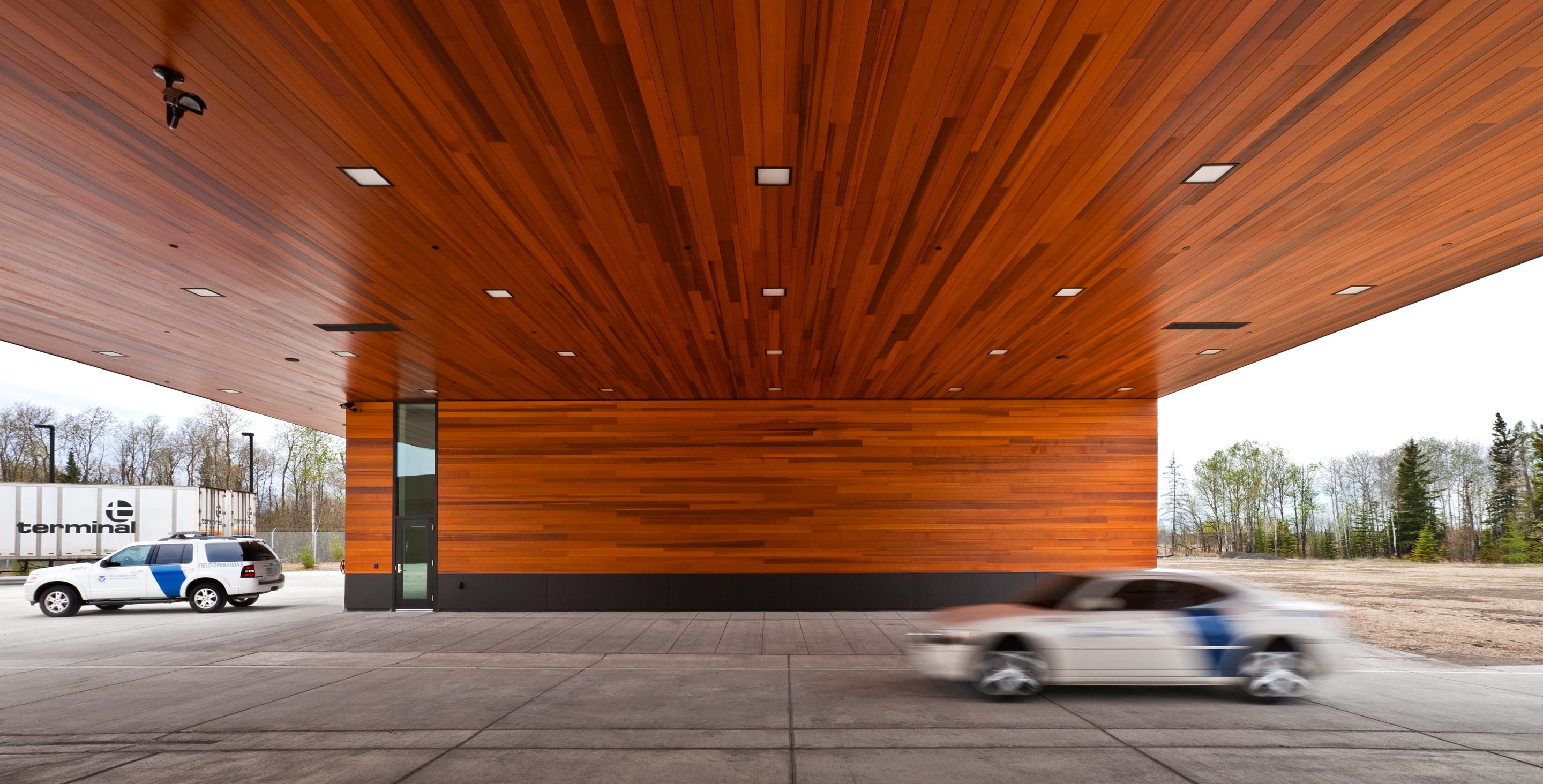
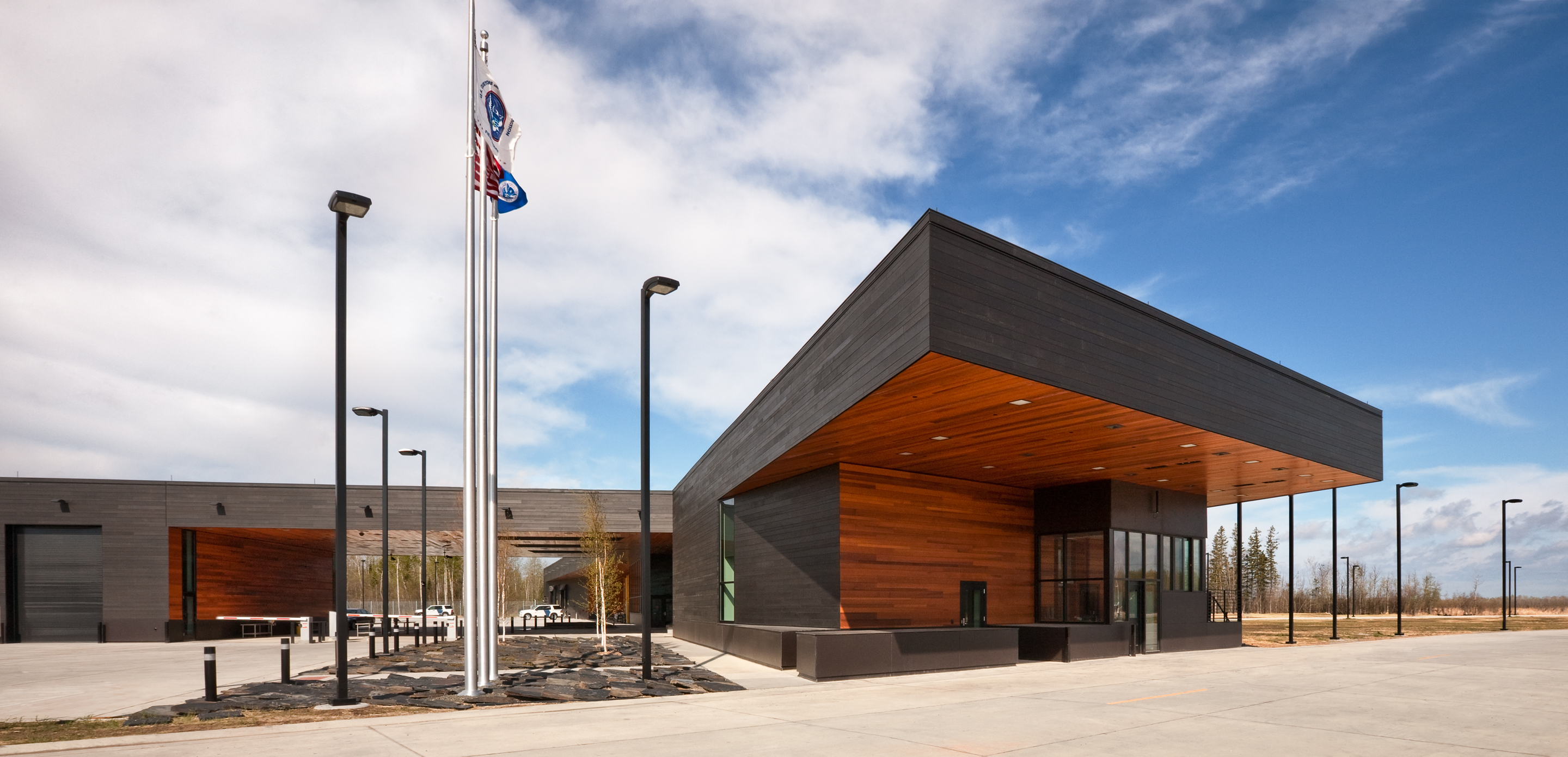
Snow Kreilich designed the Warroad Land Port of Entry to support the mission-driven demands of US Customs and Border Protection (CBP). The 40,108 square foot facility was conceived as a specific response to the vast open landscape along the Minnesota-Canadian border. In turn, its form reiterates the dominant horizon of the landscape while making reference to the East-West border.  Inflected building forms facilitate intuitive use by visitors, the officer’s ability to survey the entire site, and vehicle access to secondary inspections.

Swisspearl was used along the building façade, along with cedar planks stained black. Surfaces that face inward, in contrast, are an auburn-colored cedar. The Warroad Land Port of Entry sets a new standard for remote, small ports in achieving the highest design standard for public buildings. While embracing CBP’s operational procedures and inevitably changing technologies, the design advances the dual mission to protect national security while facilitating trade and travel in a comfortable, efficient facility.


Davis-Harrington Welcome Center

By Dake Wells Architecture, Springfield, MO, United States

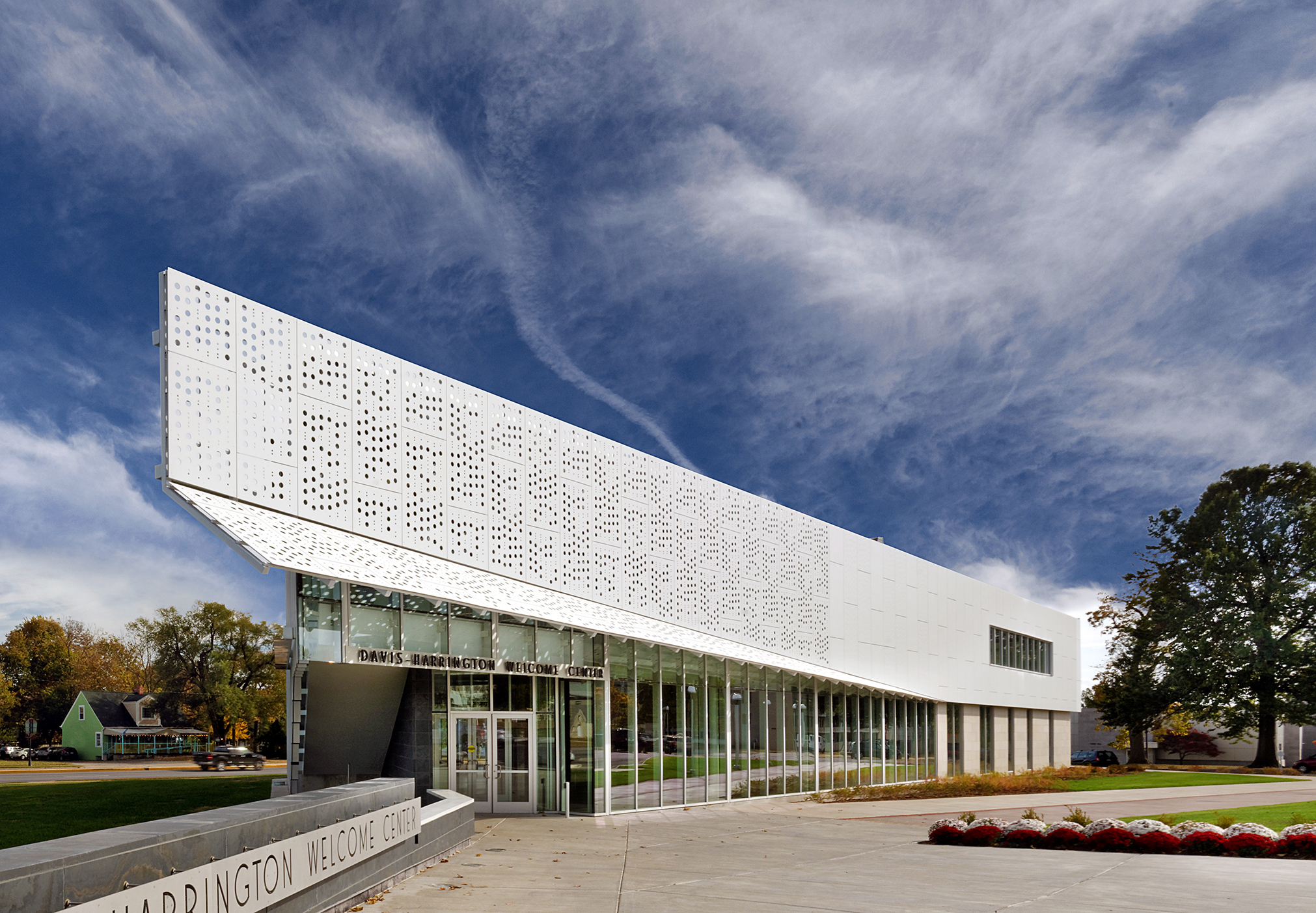
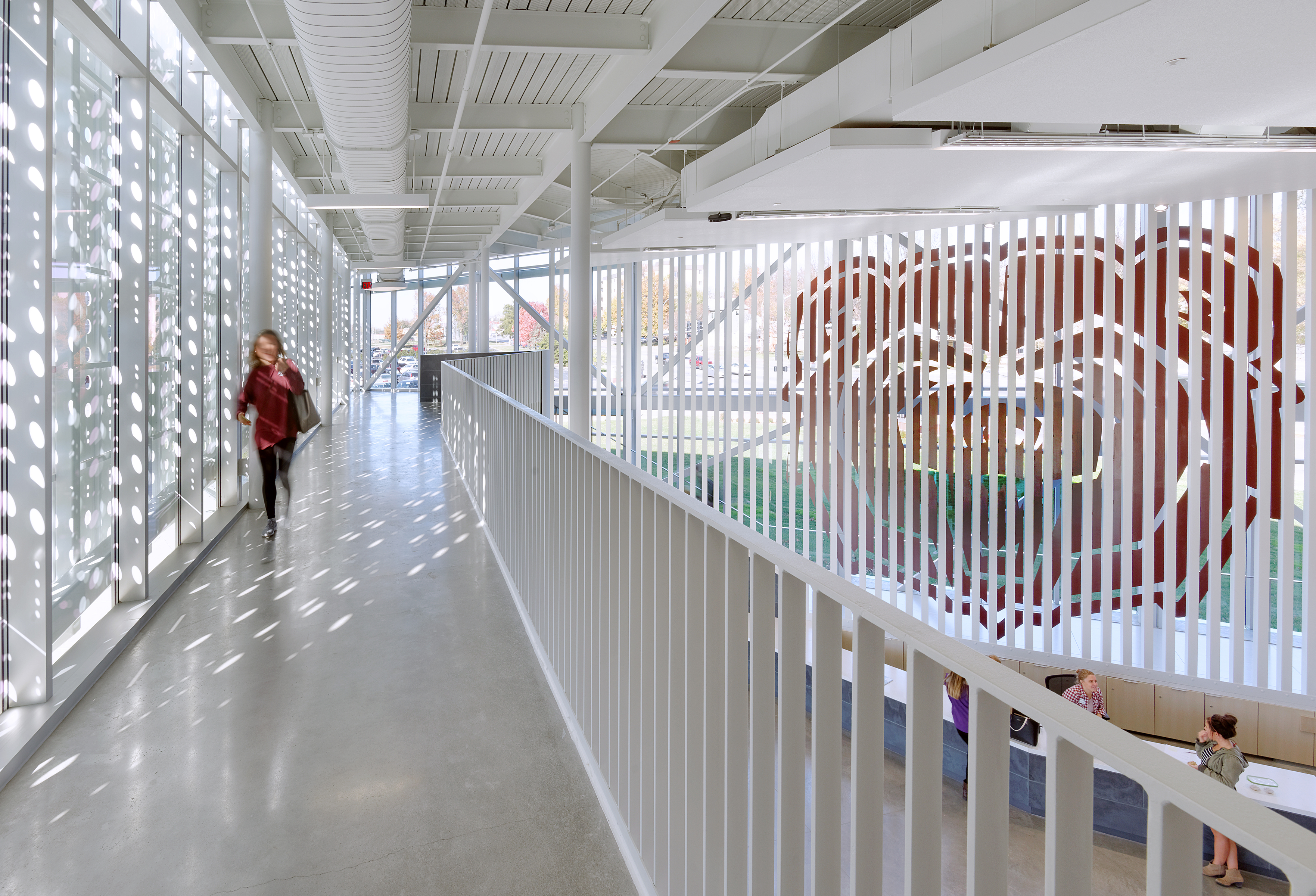
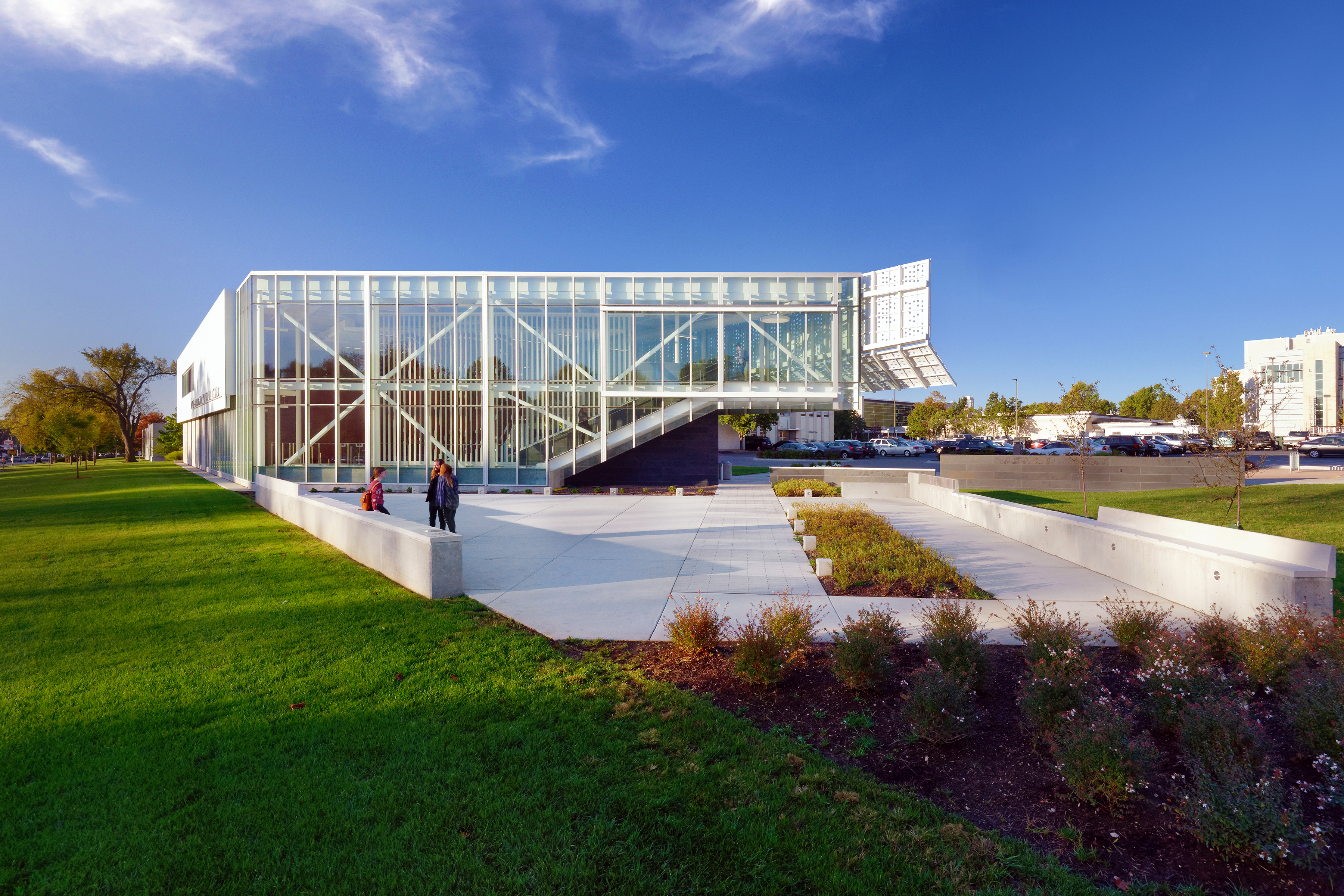
Dake Wells designed the Davis-Harrington Welcome Center as a new “front door” welcoming visitors to Missouri State University’s campus. The 13,000 square foot facility includes a two-story lobby and 100 seat presentation room to provide a multi-purpose venue for special events. Tasked by the University with providing a “signature piece of architecture”, the design solution was made to be both economical and monumental. The building program is arranged in a two-story scheme, placing administrative functions on an upper level in order to increase the building’s visual presence as it reinforces the campus edge.

The building enclosure combines a variety of materials in response to the surrounding campus context. The architects used a seemingly paper-thin layer of white Swisspearl panels to sheathe the fully glazed upper sections of the east and west façades. As the team explains, the latter extends slightly beyond the pointed corner of the building where the lower part folds slightly away to extend a welcoming gesture to visitors. Inspired by the pattern of a composition booklet, a seemingly random arrangement of circular perforations feeds dappled light into the atrium and allows views from the second-floor walkway.


Myriad Botanical Gardens

By Gensler, Oklahoma City, OK, United States

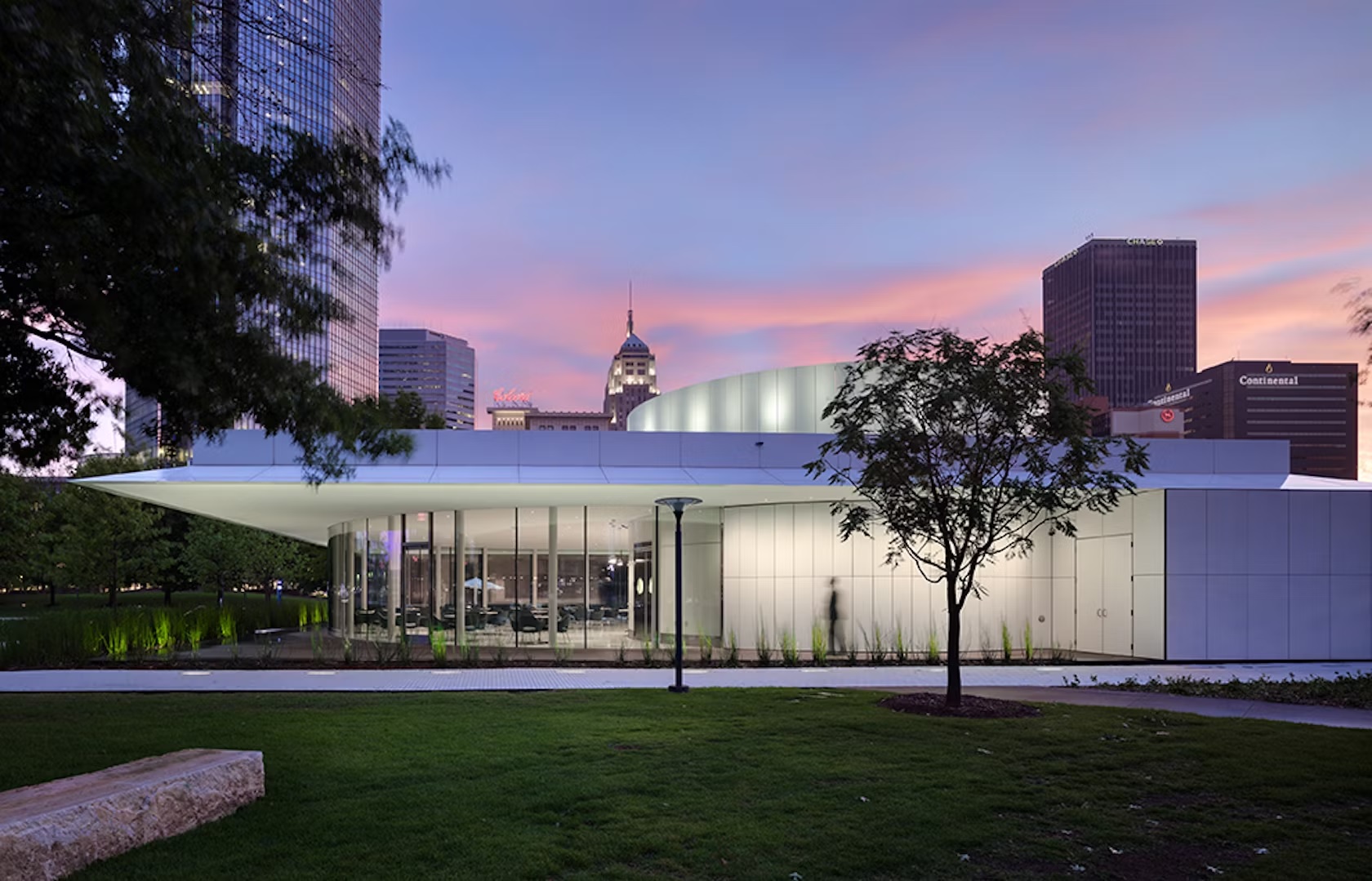
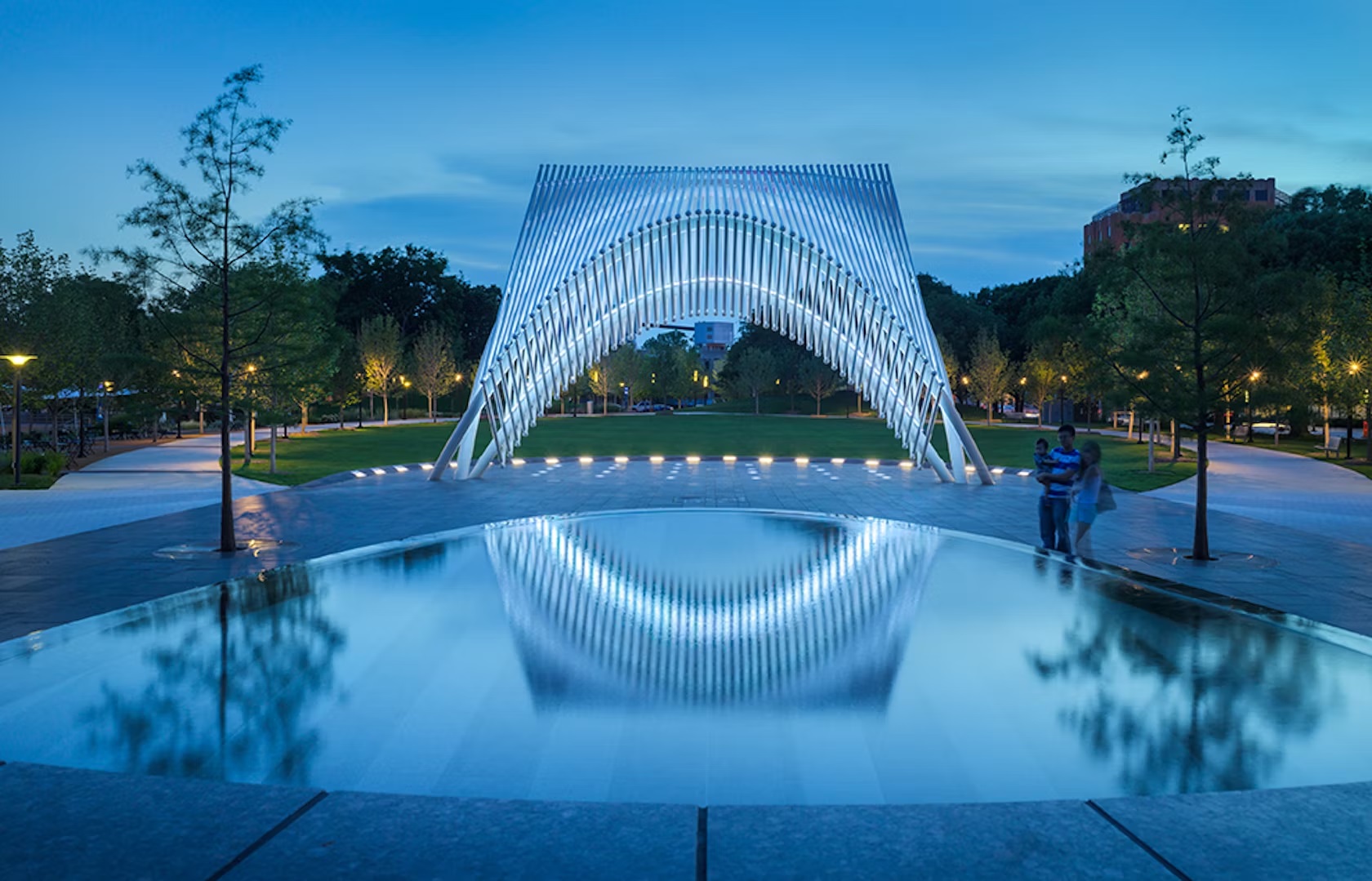
The design team wanted to transform Oklahoma City’s Myriad Botanical Gardens from an underused park to a vibrant center of activity for residents and visitors. By adding a new restaurant, open-air pavilion, bandshell and addition to the existing conservatory as well as redesigning the landscape, the design team set out to give the park new appeal. The buildings are linked through consistent geometry derived from the pure Euclidian form of the original botanical conservatory. The compositional elements that form the architectural language include single-story geometric forms, white cementitious panels, water-clear glass and extended overhangs.

Each structure has its own unique character informed by its distinct program. Swisspearl was used as siding for the project throughout. The restaurant is a perfect square, where cantilevered overhangs extend 18 feet on the west side to provide shade from the harsh summer sun. Twelve foot curved glass panels form the circular dining area. While the bandshell is a complex 3D sculptural and monumental form. Since the park’s grand re-opening, the new Myriad Botanical Gardens has added vitality to downtown Oklahoma City attracting visitors each year.


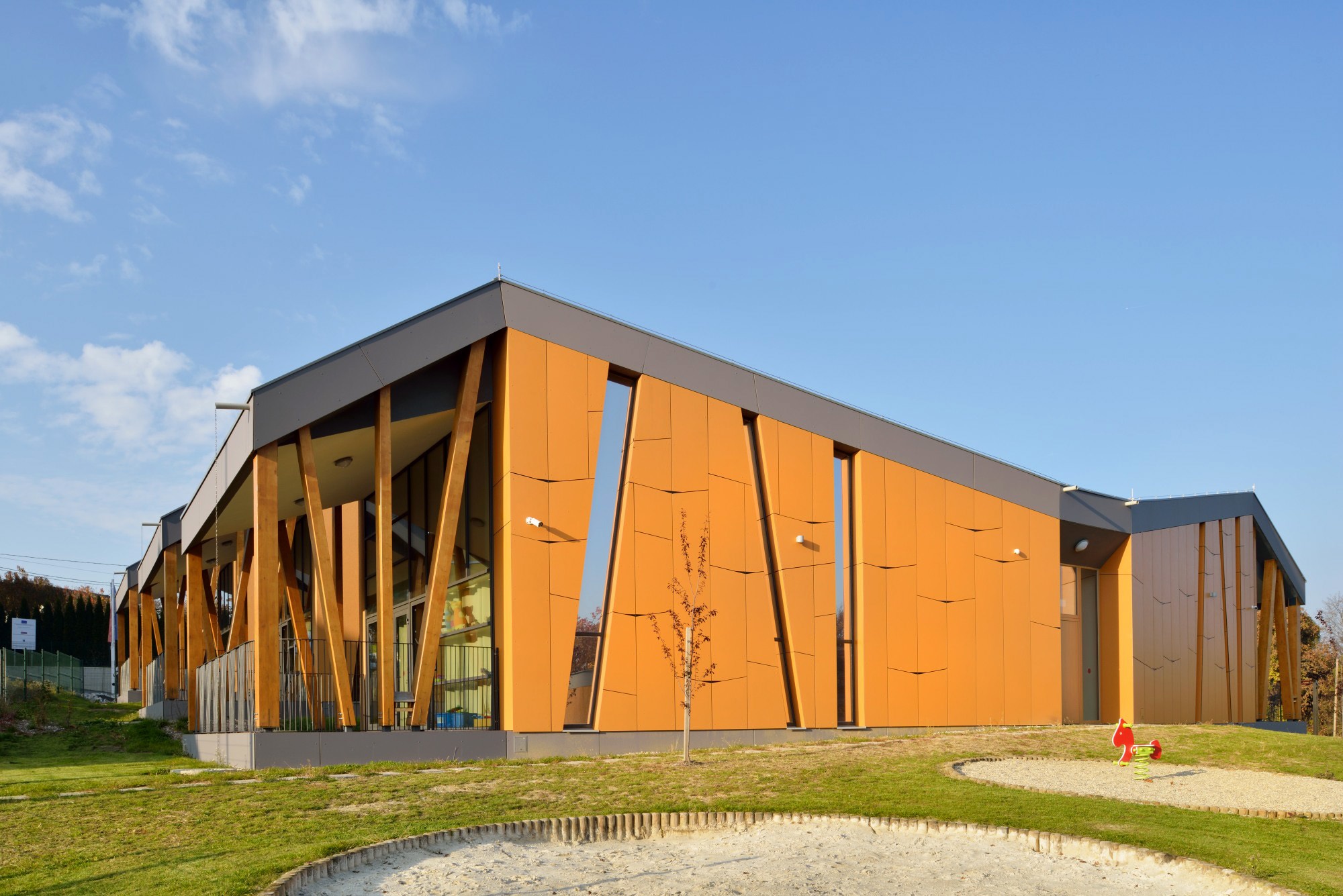
Kindergarten Cerkvenjak

By Superform, Municipality of Cerkvenjak, Slovenia

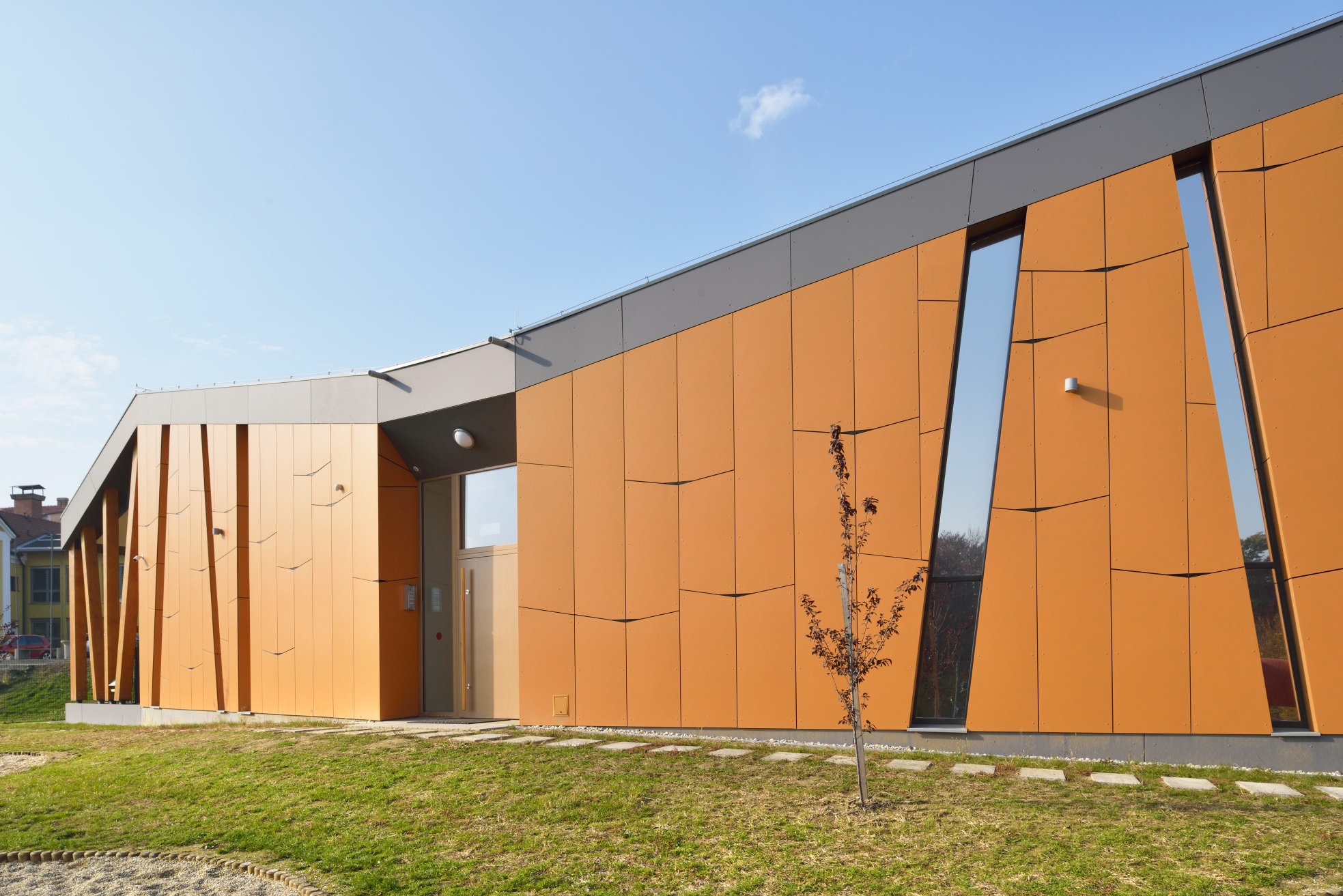
Desigend as a kindergarten is in the village of Cerkvenjak, this project is located in the center of the Slovenske Gorice region of Slovenia. The kindergarten was designed to be inseparably connected with the natural surroundings of the trees and playground equipment. The concept of the kindergarten is similar to its local surroundings with the rhythmic string of volumes and roofs. Because of this concept, the kindergarten does not surpass the scale of an individual house and gives the user — a child — a sense of home.

The architects drew the inspiration for this kindergarten from a nearby learning path running through the Slovenian village of Cerkvenjak. Intended to enrich the children‘s spatial experience, the hallway inside varies in width and each playroom unit boasts a unique, irregular and contorted shape. The design of the Swisspearl envelope support this idea. The kindergarten is a new program and function that upgrades the existing learning path. The result of using the principle of a learning path is a unique division and rhythm of the playrooms, where the kindergarten is closer to the scale of a child.


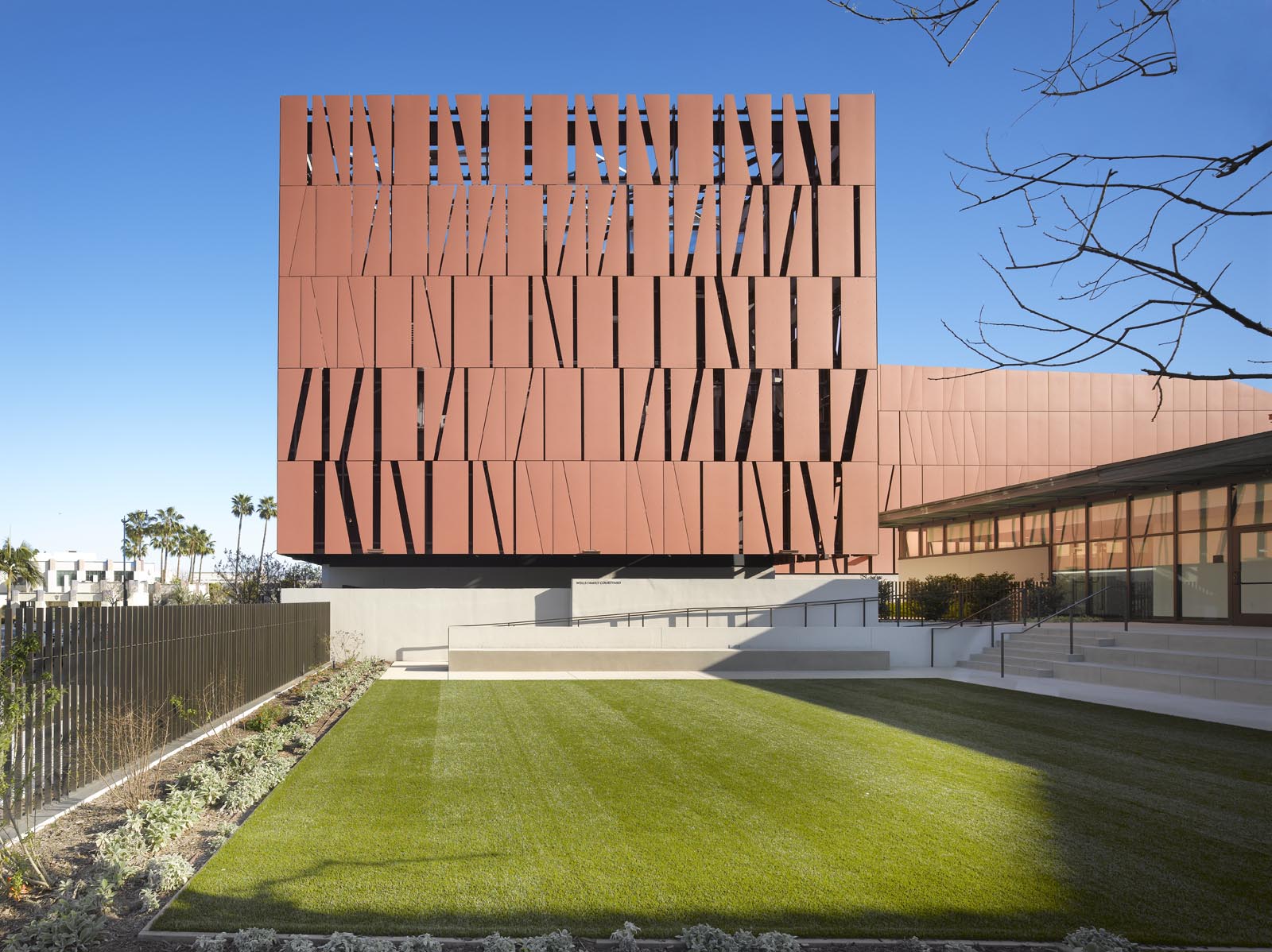
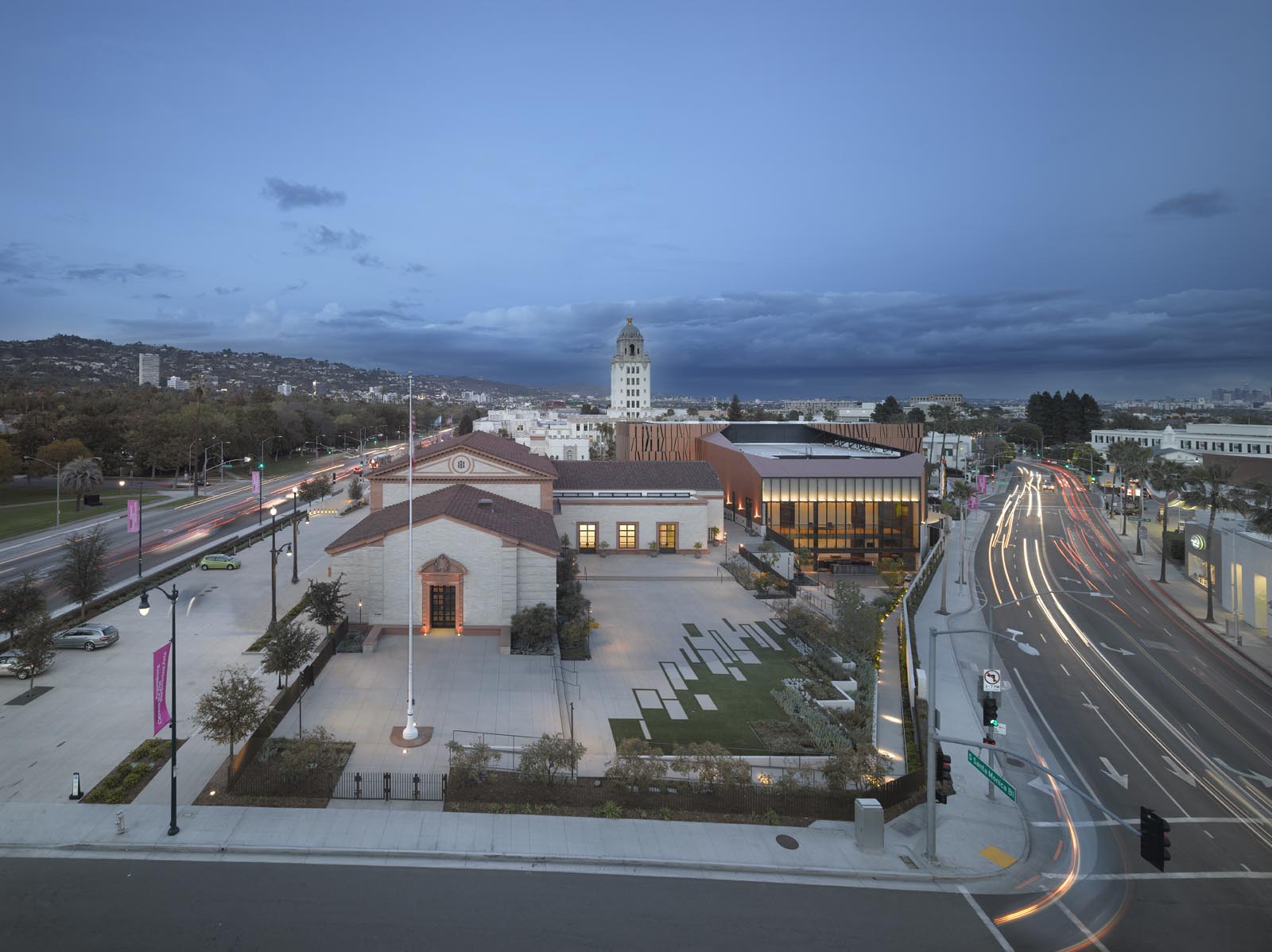
The Wallis Annenberg Center for the Performing Arts

By SPF:architects, Denver, CO, United States

SPF:architects took on the revitalization of the dormant Beverly Hills post office site to create a new performing arts center. Built on the historic site, the new project includes a 500-seat theater building connected via promenade and outdoor sculpture garden. The historic WPA building built in 1934 is repurposed to house a 120-seat studio theater, a café, gift shop, box offices, administration facilities and a 3-classroom theater school for children. Outside, a garden and courtyard connect the historic with the new building with direct visual connection to the shops and restaurants of downtown Beverly Hills.

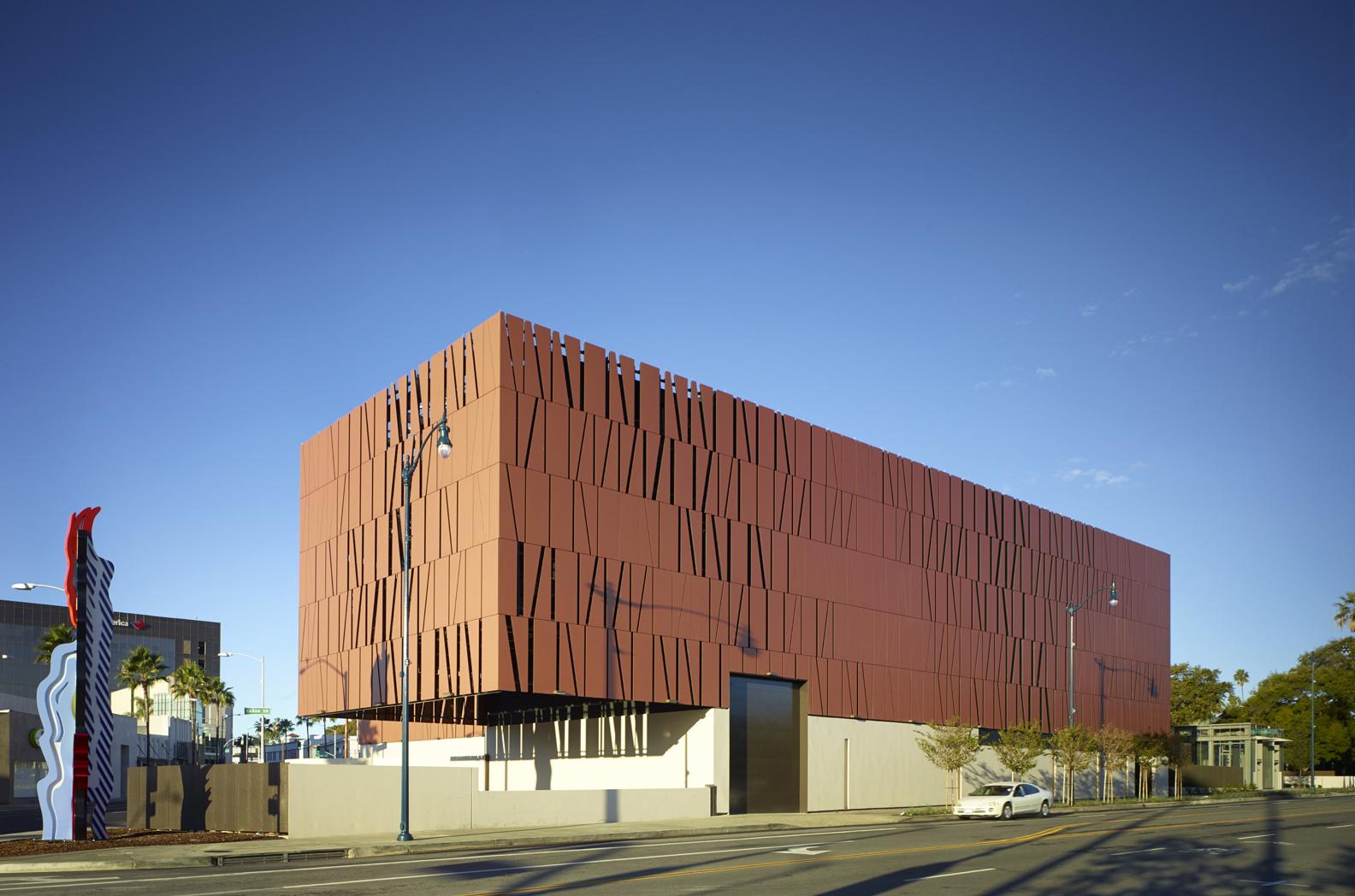
Celebrating the history of the site, the skin is formed in copper-colored concrete panels. A 4 foot by 9 foot envelope-shaped panel is repeated across the façade. The result is an abstract textural pattern, engraved into the building skin. Made out of Swis­s­pearl cement boards, the team redesigned the façade to alter the size and mod­u­la­tion of the ​gaps between pan­els, result­ing in 30% sav­ings in mate­r­i­al. The plan preserves and celebrates the historic architecture, as well as affords the Center the opportunity to create a new, state-of-the-art, flexible performing arts facility with ample back-of-house amenities.

Architects: Want to have your project featured? Showcase your work through Architizer and sign up for our inspirational newsletters.

Reference

Plot Twist  —  Generative AI May Actually Encourage Architects to Draw MORE
CategoriesArchitecture

Plot Twist  —  Generative AI May Actually Encourage Architects to Draw MORE

Keir is an AEC Domain Expert operating at the intersection of architecture practice, sustainable development and software design. With over 15 years in practice, he has crafted high-quality projects across various sectors, including education, health, housing, and workplaces. He helps Architects, Clients and Startups thrive in an ever-changing industry. Connect on LinkedIn.

A new week, a new way for Generative AI to blow our minds.

Images generated from text prompts have now filled my news feed; they have swiftly ascended the viral ladder, caused heated debates and gained ‘meme status.’ When these arresting visuals started appearing, it felt like each novel experimentation demanded our close attention: “What has this inexplicable new tool done now?!”

Yet modern attention spans are increasingly short, and bold imagery can quickly become ubiquitous. Our sense of wonder is easily replaced by boredom and ambivalence.
Incredibly, the development of Generative AI actually appears to be evolving faster than our agitated modern attention spans. Just as I was beginning to become nonplussed by the latest hybridization of Batman X The Simpsons, I discovered sketch-to-render.

Most people are familiar with models that use simple text prompting, where you describe everything about a composition using words only. Much can be achieved with these tools, but when it comes to exact composition and configuration, you are working at the model’s behest. However, fewer architects are aware that you can now combine an image with a text prompt to further your creative control.

While these are enormously promising developments, it has been hard to understand exactly how an architect might be able to use these tools. How can we use them to augment the design and visualization processes we are already doing? In architecture, we work in the gritty reality, not the synthetic imagination of AI. Planning and construction is a messy business that requires precision solutions.

Yet, sketch-to-render is a different kind of approach and takes user control to the next level again, utilizing an additional step in the generation feature called Control Nets, which allow for far greater control over how an image is constructed and where the trained model will go to work on a composition. Think of Control Nets as a framework or bounding box within which the AI will go to work — it puts you in the driving seat of the model’s explorations.
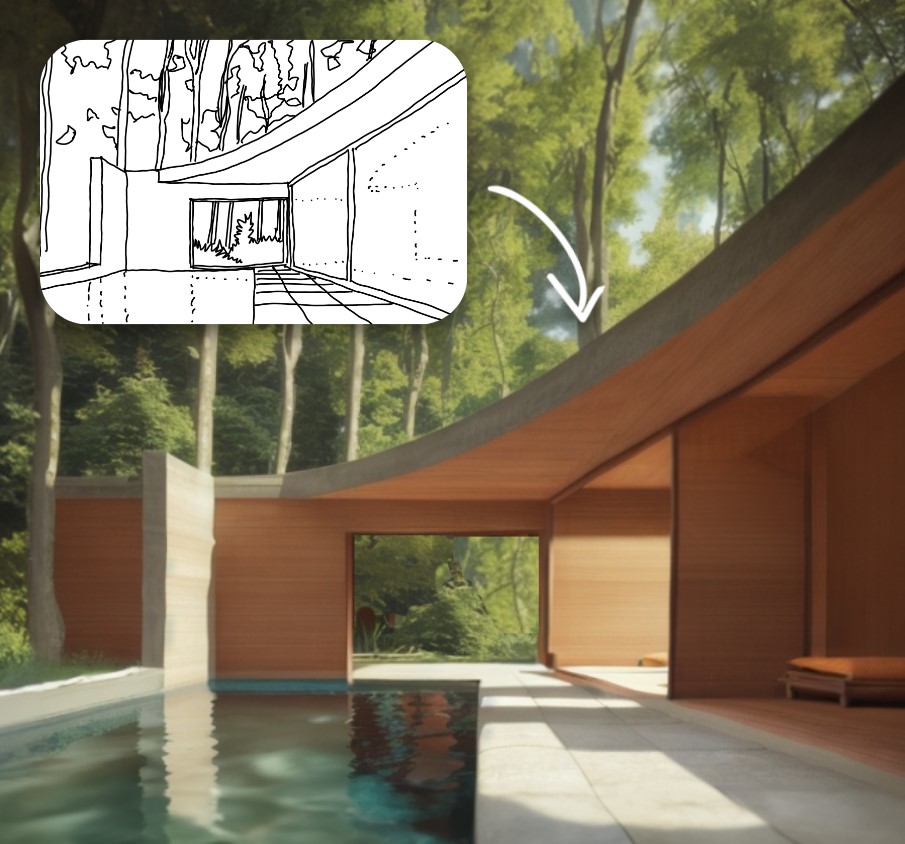
Sketch by author (of NWLND’s “Refuge” project), render produced in Prome AI

Sketch-to-Render

This is a 20-minute process and the idea here is to go straight from primitive line work to vivid render.

Midjourney can produce incredibly high quality and vivid imagery, but offers limited control over the exacting composition of the subject matter. For fields like architecture, the ability to fix the areas within an image around which the model will iterate is absolutely essential for actual tool adoption and use.

There are now various methods to combine generative image tools with ‘fixed’ image subjects and composition to give more exacting control over a single viewpoint and to then iterate ideas on top.

Here are some good emerging methods that are worth experimentation:

  1. Control Net: A Stable Diffusion model that creates an abstract segmentation using a preprocessor and then combines this with a text prompt. The install is complicated for regular users and the software needs a powerful computer. If you can’t run this locally due to hardware, you can now do it on the cloud, where the Stable Diffusion with ControlNet is now being hosted by various providers.
  2. PromeAI: The easiest interface that I’ve tried for sketches, complete with preset filters and styles.  Its mostly free baseline features are powerful and worth a play. The workflow is simple just login, upload a sketch or hidden line view, add text description prompts and off you go.
  3. Veras: This works directly within the viewport of everyday software interfaces (SketchUp/Rhino/Revit). It is simple and easy to use and is frictionless because it’s a 3D CAD plugin. The more detail and surface materials you can add, the better it will do at recognizing components.
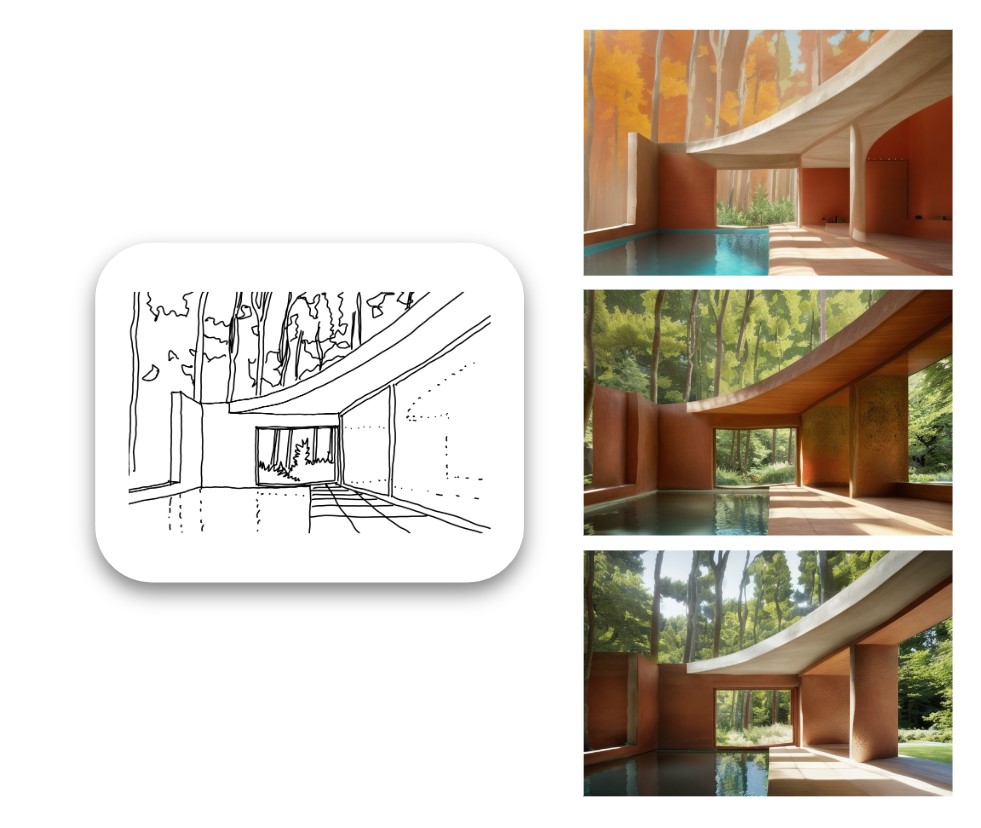
Example of varied rendered outputs produced from the original sketch

Sketch-to-Render-in-Context

This is a more complex process and takes about 30 minutes once you understand how to do it.

The direct sketch-to-render tools are great to use, but having experimented with them in detail, I felt they were best suited to interior design work only. When it comes to external envelope and massing, we always need to place our ideas in context and render with appropriate scale, visualizing the buildings and landscapes within which they sit.

Then, I discovered the idea of using two control nets together: one for a process called “in-painting” and the second for the sketch proposal. There is quite a bit of trial and error to get the workflow right, but it’s made possible by running Stable Diffusion with ControlNet model on your local machine and is repeatable for any photo and sketch combo (provided you can draw).

Photograph taken by author of an imaginary development site while on a cycle ride home

The aforementioned simple “sketch-to-render” process works with one ControlNet active. However you can now use Stable Diffusion with a second ControlNet at the same time which can be used for a process called  “in-painting” and this allows you to tell the model exactly which parts of a source image you want to experiment with and which you want to leave exactly as they are.

What I love about this application of Generative AI is that it relies solely on your direction and discretion as a designer and what you do with the pen. It takes out the “middle-man” of painstaking digital modeling of an idea and goes straight to vivid imagery. This is rendering without the hours of boring 3D modeling.

In a world where you can get straight to a high-quality render with just a site photo, a sketch and an ability to describe your idea in the form of an effective prompt, you immediately bypass the need to build detailed 3D models of initial concept ideas.
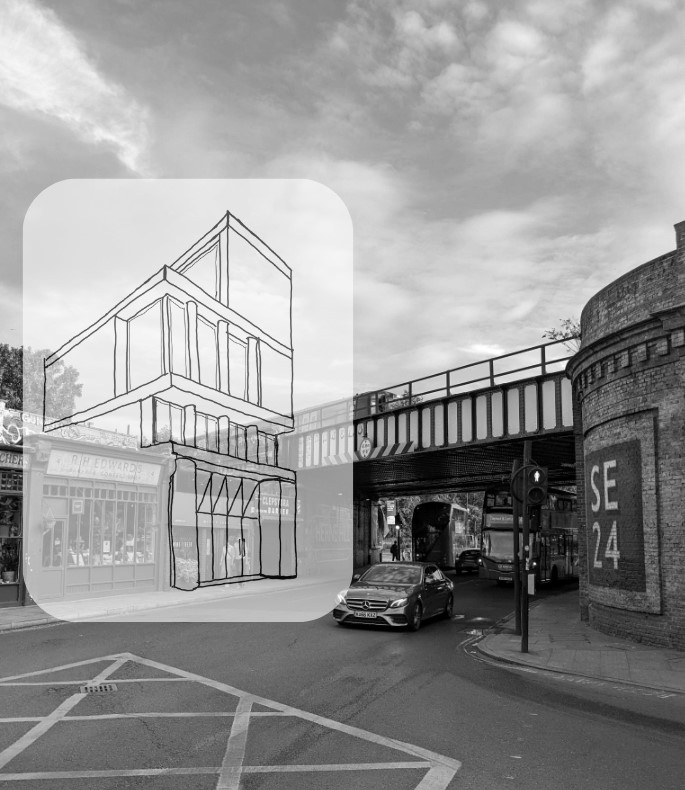
Design sketch by author, drawn quickly directly on top of original photograph.

Arguably, most major practices working with developers have to run projects with a high degree of waste. Options are tested, digitally modeled in 3D, rendered, photoshopped and  perhaps mocked up quickly in foam or card model for a client to review.  Then we respond to comments, requests for changes, new constraints, new information and a continuous process of change occurs.

Throughout this design process, each rendition must be exhaustively conceived, drawn and modeled before it can be vividly represented in context; this means much of the previous work is discarded or inevitably thrown away almost immediately. Quick iteration tooling could massively reduce the waste and grunt work associated with the process we call “optioneering.”  This term is not used affectionately in practice because it can feel so non-linear, but unfortunately some form of option testing is always required to discover a design and each option requires lots of time and energy.
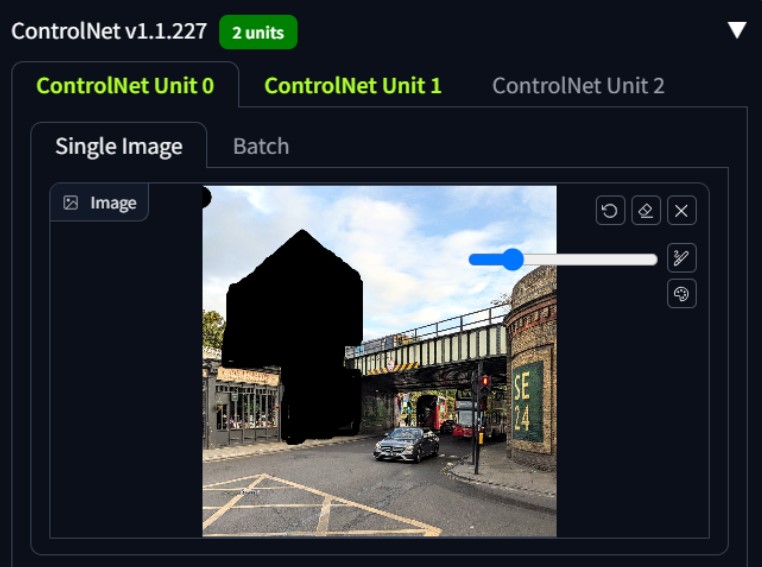
Screenshot produced by author showing process of in-painting using Stable Diffusion with 2no ControlNets – the black area tells the model which part of the image to experiment upon

In a race to produce powerful concept imagery for a new feasibility study or competition, someone who can draw their ideas well is going to beat 3D modeling in turnaround time and speed of iterations using a tool like this .

Soon, clients will be getting rendered ideas in a matter of days from a commission, not weeks. Their expectations about what is possible in a given time frame are going to change — and quickly.

There remains loads of space for improvement, but the foundation is there for a very different approach to design and visualization that could be really empowering for architects (and clients too).
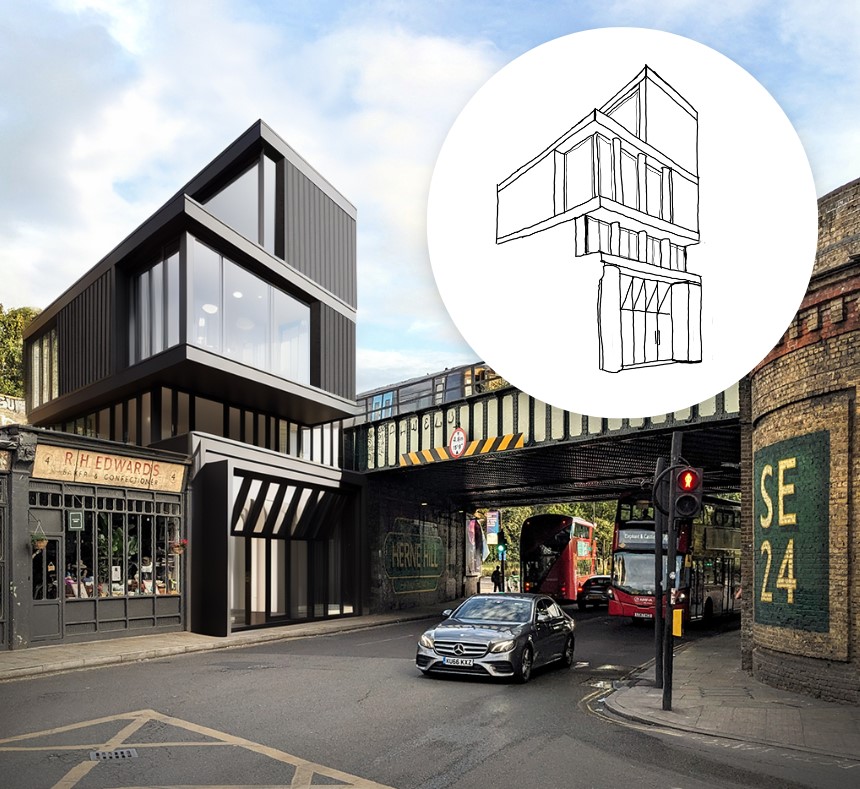
Final Image produced by author using Stable Diffusion with two ControlNets for an imaginary project in Herne Hill, London. The image was produced in less than an hour including sketching time.

My first attempt is a bit rough but demonstrates the enormous potential here; imagine how powerful this will be for early stage feasibility work. I definitely don’t love the outcome, but it’s some version of what I was thinking in the sketch. I would still be happy to present this image to a client as an early study at feasibility stage to give them a more vivid sense of a project’s massing and scale alongside a set of 2D drawings before developing the preferred option in fine detail myself.

In the example shown, I would estimate the model achieved about 50% of my line intentions and about 20% of my material intent on the façades. However, the perspective, massing, lighting, context placement, reflections and sense of scale are all bang on — and all this is done with a general purpose, open-source model.

As this technology continues to improve, specialized architecture models will be trained on data sets that focus specifically on façade and architectural composition. Different architectural styles and materiality options will be made possible and they will be far better at understanding façade componentry such as floor zones, balustrades, windows, curtain walling and columns. The models will need to learn “archispeak” which will now be expressed using text prompt inputs and require architects to say what they actually mean in simple language.

As these models improve we will be able to discern discrete elements within the design concept, identify them as an architectural building component and then refine them directly with prompts as we work. We will be able to apply different prompts to different parts of the image, add people, change the lighting and mood — designing over and over in a live render environment — without modeling anything, all potentially driven from a sketch idea.

There will be many more experiments to come… and when Midjourney can do ControlNets too, it will probably feel like “game over” for much of the traditional 3D model and rendering that we do currently.


Keir is an AEC Domain Expert operating at the intersection of architecture practice, sustainable development and software design. Connect on LinkedIn.

With thanks to:

Ismail Seleit who was the first person I saw demonstrate this idea.

@design.input who put out a great video that helped to describe each step of the process.

Hamza Shaikh for pointing me at ControlNet in the first place when I got frustrated with Midjourney.


Architizer’s new image-heavy daily newsletter, The Plug, is easy on the eyes, giving readers a quick jolt of inspiration to supercharge their days. Plug in to the latest design discussions by subscribing. 



Reference

Chat GPT for Architects and Designers: Prompt Formula and Working Examples
CategoriesArchitecture

Chat GPT for Architects and Designers: Prompt Formula and Working Examples

For more ways to supercharge your workflow, check out more articles in our Tech for Architects series, which includes our recommendations of Top Laptops for Architects and Designers. 

We recently published our first Chat GPT Cheat Sheet for Architects, a handy guide for exploring the potential of using the tool to enhance your daily workflow. While the sheet is a helpful reference point, nothing beats seeing a real example of how Chat GPT can be used in action.

To this end, the following example demonstrates how one prompt can produce a variety of starting points for further exploration at the beginning of a project, either as part of a feasibility study or the conceptual design phase. But before we dive in, here’s a quick introduction to Chat GPT itself.

Midjourney image prompt: A mystical image of a female architectural designer sitting at a drawing board using Chat GPT, architectural ideas and models floating above –ar 16:9 –v 5.2

What is Chat GPT?

Chat GPT (Chat Generative Pre-Trained Transformer) is the remarkable creation of OpenAI. A large language model-based chatbot, this AI-powered tool was launched in November 2022 and became the fastest-growing consumer software application in history earlier in 2023. Why? Because this easy-to-use tool brings unprecedented capabilities to the world of conversation.

With ChatGPT, users hold the reins, steering discussions precisely where they desire. It is possible to tailor every aspect of the conversation to your liking — from length and format to style, level of detail, and even the language used. It’s like having a conversation partner who adapts perfectly to your preferences.

The secret to ChatGPT’s brilliance lies in prompt engineering. At every step of the interaction, it deftly analyzes successive prompts and replies, leveraging this contextual understanding to craft responses that align with the ongoing dialogue.

For architects and designers, Chat GPT can unlock a whole new avenue of research, exploration and ideation. For more information on the application and to start experimenting with your own prompts, click here.


Chat GPT Prompt for Architects

Here’s a simple Chat GPT prompt formula, a slight variation on the one shown in our cheat sheet, which can be specifically tailored for architects and designers:

“[Introduction or context] + [Specific question or instruction] + [Optional additional details or constraints]”

Let’s break it down:

1. Introduction or Context

Start by providing some context or background information to set the stage for your question or instruction. It helps guide the AI’s understanding of the topic and focus its response on the relevant aspects.

Example: “As an architect working on a residential project, I need assistance with…”

2. Specific Question or Instruction

State your question or instruction clearly and concisely, focusing on the specific aspect or topic you want to explore. Be as specific as possible to receive targeted and relevant responses.

Example: “…optimizing natural lighting and ventilation. What are some effective design strategies to achieve this?”

3. Optional Additional Details or Constraints

If necessary, you can include additional details or constraints to guide the AI’s response. This helps provide more context and narrow down the focus of the answer.

Example: “…for a compact urban site with limited access to direct sunlight.”

Putting that all together, here’s an example of a complete Chat GPT prompt for architects, using our formula:

“As an architect working on a residential project, I need assistance with optimizing natural lighting and ventilation. What are some effective design strategies to achieve this? The site I’m working with is a compact urban area with limited access to direct sunlight.”

By following this prompt formula, you can effectively guide Chat GPT to provide targeted and insightful responses. You can adapt or add to the formula to produce more in-depth or nuanced information.

Midjourney image prompt: A mystical image of an architectural designer using Chat GPT, ideas floating above –ar 16:9 –v 5.2

Chat GPT Prompt for Architects: The Output

We plugged the above prompt into the basic, free version of Chat GPT (version 3.5); here is the response it produced:

“When working on a residential project in a compact urban area with limited access to direct sunlight, optimizing natural lighting and ventilation becomes crucial. Here are some effective design strategies to achieve this:

  1. Incorporate Light Wells and Skylights: Introduce light wells or courtyards within the building to bring in natural light from above. Install skylights strategically to maximize daylight penetration into interior spaces.
  2. Use Reflective Surfaces: Incorporate light-colored or reflective surfaces, such as white walls or glossy finishes, to bounce natural light deeper into the space and create a brighter ambiance.
  3. Implement Clerestory Windows: Install high-level windows, known as clerestory windows, near the top of the walls to allow natural light to enter while maintaining privacy. This helps bring light deeper into the space and improves overall illumination.
  4. Design Open Floor Plans: Create an open layout to enable better light distribution throughout the living areas. Minimize the use of interior partitions or walls that could block natural light flow.
  5. Utilize Light Tubes: Light tubes, also known as solar tubes or sun tunnels, are tubular devices that capture sunlight from the roof and transport it into interior spaces. They can be an effective way to bring natural light into areas with limited access to windows.
  6. Optimize Window Placement: Strategically position windows to maximize daylight penetration. Consider the orientation of the site and place windows on the south-facing side to capture the most sunlight throughout the day.
  7. Use Light Diffusing Materials: Employ materials, such as frosted glass or translucent screens, that diffuse natural light to reduce glare while still allowing light to pass through. This helps create a softer and more even distribution of light.
  8. Implement Natural Ventilation Strategies: Incorporate operable windows and vents to facilitate cross-ventilation and promote natural airflow throughout the space. This helps improve indoor air quality and thermal comfort.
  9. Consider Light-Controlling Elements: Integrate shading devices, such as louvers, blinds, or adjustable curtains, to manage direct sunlight and prevent overheating during peak daylight hours. This allows occupants to control the amount of light entering the space.
  10. Incorporate Greenery and Vertical Gardens: Introduce indoor plants and vertical gardens to create a connection with nature and enhance the perception of natural light. Plants can also help improve air quality and contribute to a healthy indoor environment.

Remember to adapt these strategies to suit the specific requirements and constraints of your residential project in the compact urban area. Implementing these design strategies will help optimize natural lighting and ventilation, creating a comfortable and inviting living space.”

Midjourney image prompt: A mystical image of a black female architectural designer sitting at a drawing board using Chat GPT, architectural ideas and models floating above –ar 16:9 –v 5.2

Conclusion and Further Explorations

The above example shows how text-based AI tools can be harnessed by designers in a simple yet effective way, and demonstrates its utility in terms of information recall and automated curation. Most architects will be aware of the possible design solutions listed above, and could use ‘traditional’ internet research to surface them as well, but they could easily overlook one of these strategies while addressing the many nuances of a complex site and design brief.

In effect, Chat GPT’s response to the prompt acts as a reciprocal prompt for the designer, acting as a reminder of concepts that may be worth considering as a project develops. When viewed from this perspective, AI can be seen to augment an architect’s workflow, helping them to research and ideate more efficiently than ever before. As the technology develops, this augmentation will surely only continue to grow within the profession.

How are you using Chat GPT and other AI tools in your architectural workflow? We’d love to hear from you: Follow Paul Keskeys and Architizer on LinkedIn to join the discussion!

For more ways to supercharge your workflow, check out more articles in our Tech for Architects series, which includes our recommendations of Top Laptops for Architects and Designers. 

Reference

“Architects Are Bad at Business:” Here’s Why and What We Can Do About It
CategoriesArchitecture

“Architects Are Bad at Business:” Here’s Why and What We Can Do About It

Evelyn Lee is the Head of Workplace Strategy and Innovation at Slack Technologies, founder of Practice of Architecture, and co-host of the podcast, Practice Disrupted. She will serve as the 101st President of the AIA in 2025.

Every architecture and design firm is a business first. It’s easy to forget while celebrating our design awards and the stories of our contributions to the communities where we live, work and play. But to pursue the work that brings us so much joy, it is, first and foremost, essential to have a profitable and agile business that continues to adapt to the changing nature of the economy.

Architects aren’t necessarily known for being good at business or even enjoying having conversations on business operations. We would rather spend our time talking about the projects, the impact of the design, the materials that went into them, and the changes made within the project delivery process to make it so successful.

But the phrase, “Architects are bad at business,” has become a crutch, if not an excuse, to continue to be bad at business and avoid the conversation altogether.

So why are we this way?

OrfiSera by YERCE ARCHITECTURE

Architects are often more focused on the creative aspects of their work rather than business ones.

The problem with focusing only on creativity often means losing focus on things like project management. This means we spend so much time focused on only one aspect of the business, but businesses are systems, and every aspect of the system needs attention to be successful.

Architects are not trained in business practices.

Anyone who went through an accredited degree program could tell you that the one-hour seminar on professional practice taught students more about avoiding lawsuits while practicing than it did about running a business effectively. And even if it was the class was more broadly focused, there’s too much to learn in a single class to be effective.

What’s more, the ongoing education of individuals, once in practice, is often more focused on project work and does not extend beyond that.

Architects are often reluctant to change.

In today’s rapidly changing business environment, it is more important than ever for businesses to be agile. Agility is the ability to adapt quickly to change, and it is essential for businesses that want to stay ahead of the competition (especially the growing competition coming from outside the profession). However, architects, no matter how innovative we are with our projects, are otherwise stuck in our ways and resistant to change.

Good business operations require continuous improvement, and it not only takes a change mindset but a commitment of resources, both time and money, to examine what is and isn’t working.

OrfiSera by YERCE ARCHITECTURE

Architects are not good at selling their services.

How often have you heard an architect say, “The work speaks for itself.” Sure, there was a time when architects were discouraged from advertising their services (from the late 1800s to the early 1960s), but even with advertising being off the table, there are many different ways to sell services that most architects are not using.

Architects don’t like to ask for help.

While it’s easy for us to be good at what we are good at, it’s often harder for us to realize what we are not good at and, more importantly, to not stand in the way of letting other experts do their thing. I don’t know how often I’ve heard an architect say about a business operations consultant, “They just don’t understand what we do and how we do it.”

In many ways, we make ourselves out to be so unique that we get it in our heads that no one else can understand what it is we do and how we do it. We then put it on ourselves to do everything, and in essence, nothing more gets accomplished.

OrfiSera by YERCE ARCHITECTURE

So what can better business operations do for our architecture and design firms? There are many benefits, including:

  • Better communication and collaboration: Well-designed business operations can improve communication and collaboration within an architecture or design firm. This can lead to faster decision-making, better problem-solving and more efficient use of resources.
  • Streamlined processes: By streamlining processes, firms can reduce the amount of time and effort it takes to complete tasks. This can lead to increased efficiency and productivity.
  • Automated tasks: By automating tasks, firms can free up their staff to focus on more strategic and creative work. This can lead to increased efficiency and profitability.
  • Better use of technology: By using technology effectively, firms can improve their efficiency and productivity. This can include using project management software, cloud-based collaboration tools, and other technology solutions.
  • A focus on continuous improvement: By focusing on continuous improvement, firms can identify and implement changes that will make their business more efficient. This can lead to a sustainable competitive advantage.

In addition to the benefits above, better business operations can also help architecture and design firms to:

  • Attract and retain top talent
  • Increase customer satisfaction
  • Improve profitability
  • Expand into new markets

OrfiSera by YERCE ARCHITECTURE

Design thinking has taken hold in many different areas, and architects often share their desire to own the space. I think there’s an opportunity to raise our value there, but to showcase what we can do, we first have to start with what we can do within our firms.

Stay tuned for our upcoming articles offering specific guidance and steps to design and implement better business operations.

In the meantime, we encourage you to download Practice of Architect’s Agile Practice Resource. This free living resource is designed to equip you with the knowledge and tools necessary to bring more agility to your practice.

Architects: Want to have your project featured? Showcase your work through Architizer and sign up for our inspirational newsletters.

Reference

Site Overview of Project
CategoriesArchitecture

Factory Reset: These Architects are Giving the Industrial Typology a Much-Needed Update

Architizer is thrilled to announce the winners of the 11th Annual A+Awards! Interested in participating next season? Sign up for key information about the 12th Annual A+Awards, set to launch this fall.

Designing industrial buildings, particularly factories, is usually a process that is dominated by the complicated functional and logistical requirements that limit architects creatively, overpowered by the technical specifications of the machinery and the production lines that occupy the entirety of the building space and leave little space for the form to develop beyond the functional limitations.

That being said, one would ask, What comes first? Form or Function?

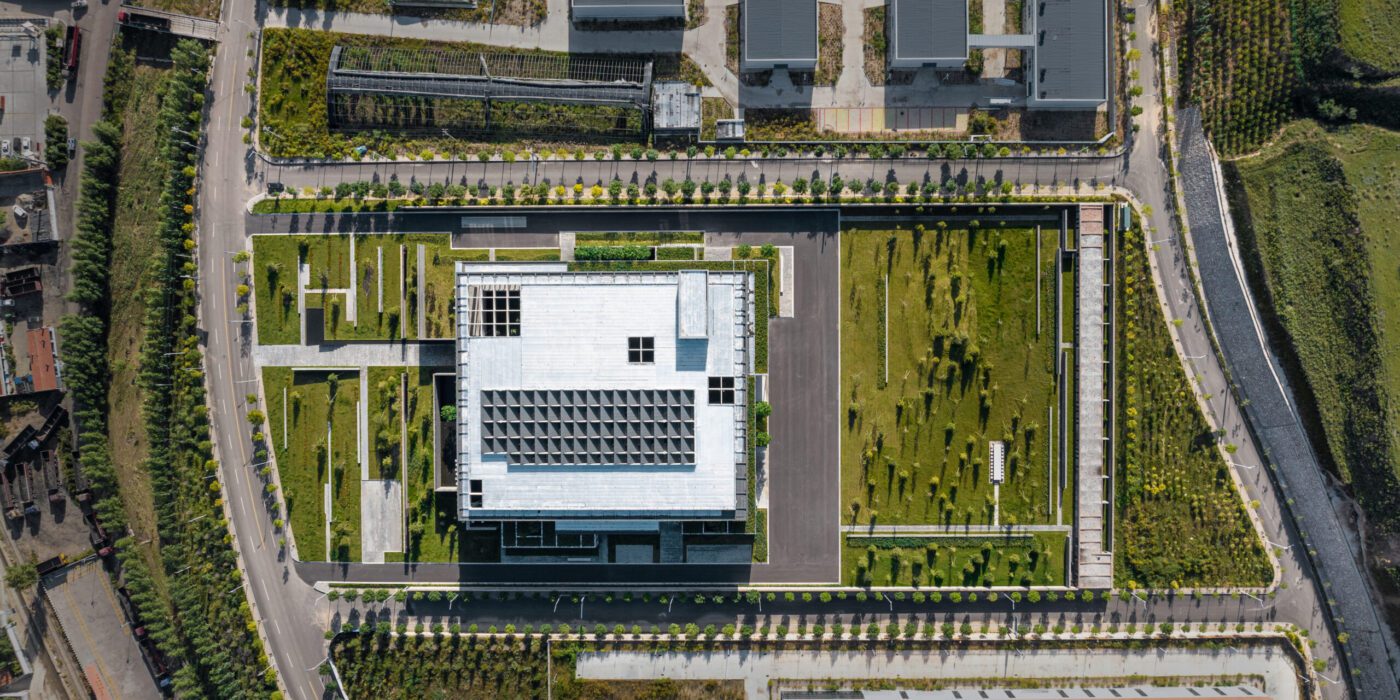
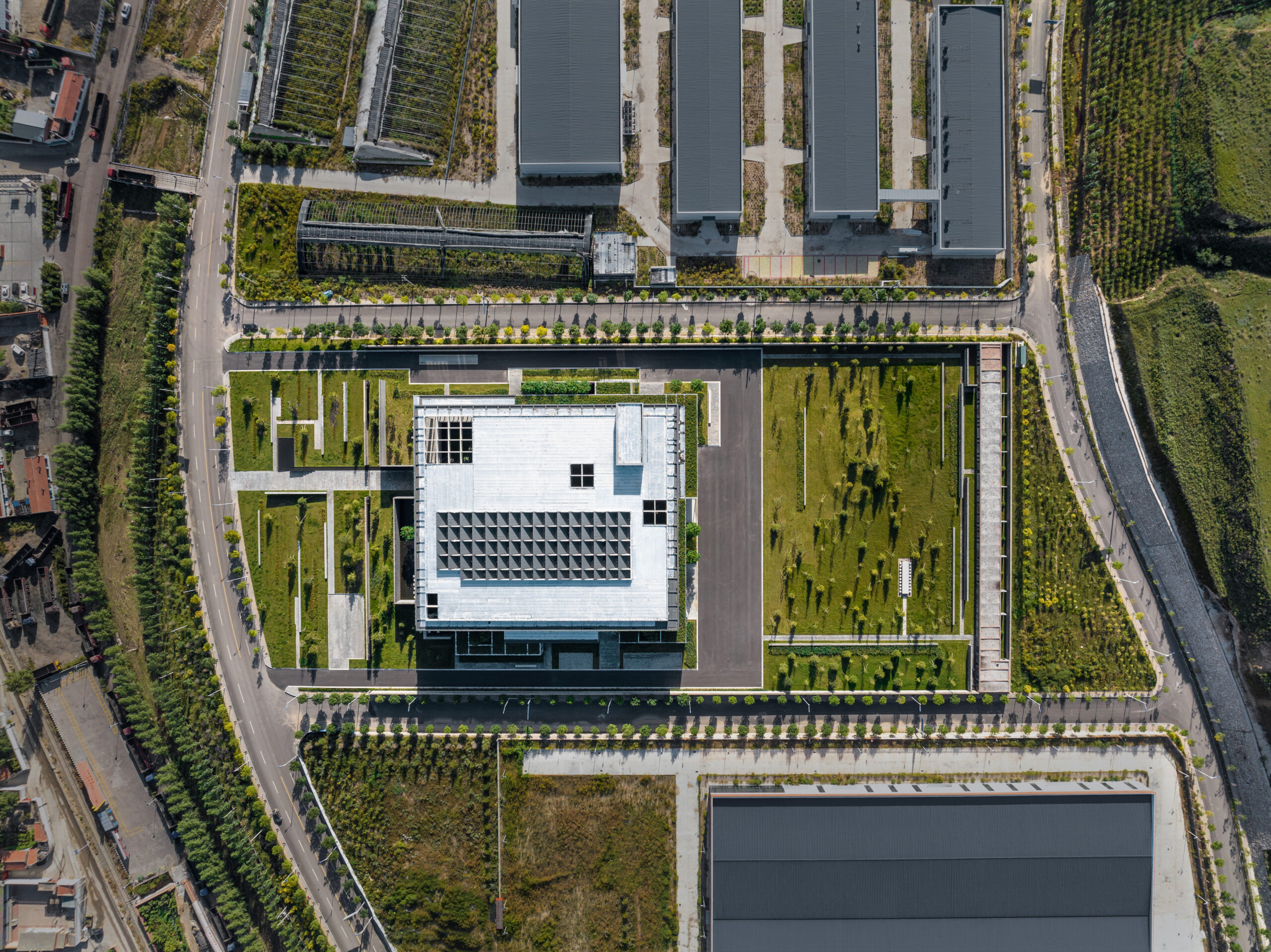
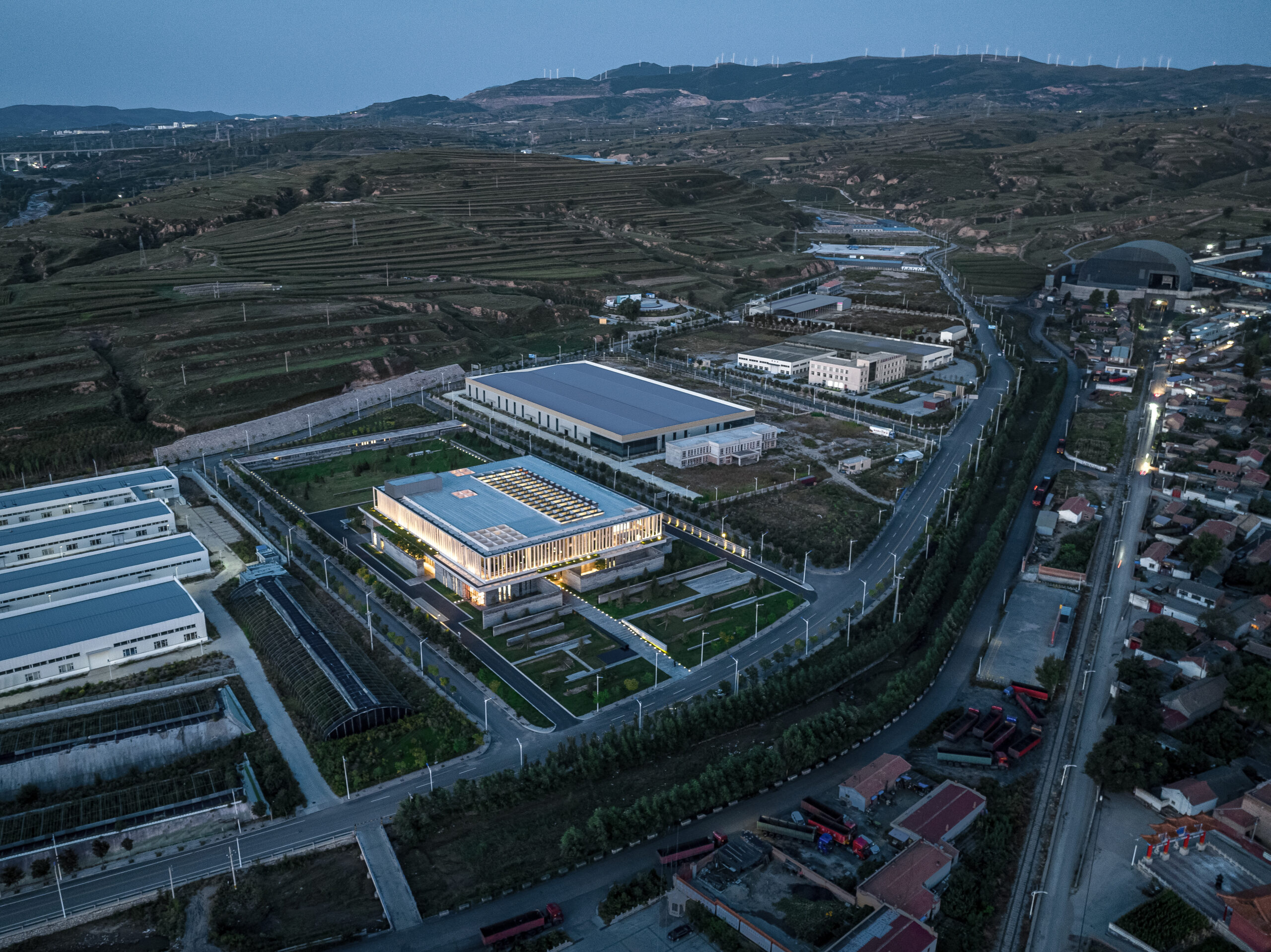
Site Overview of Project

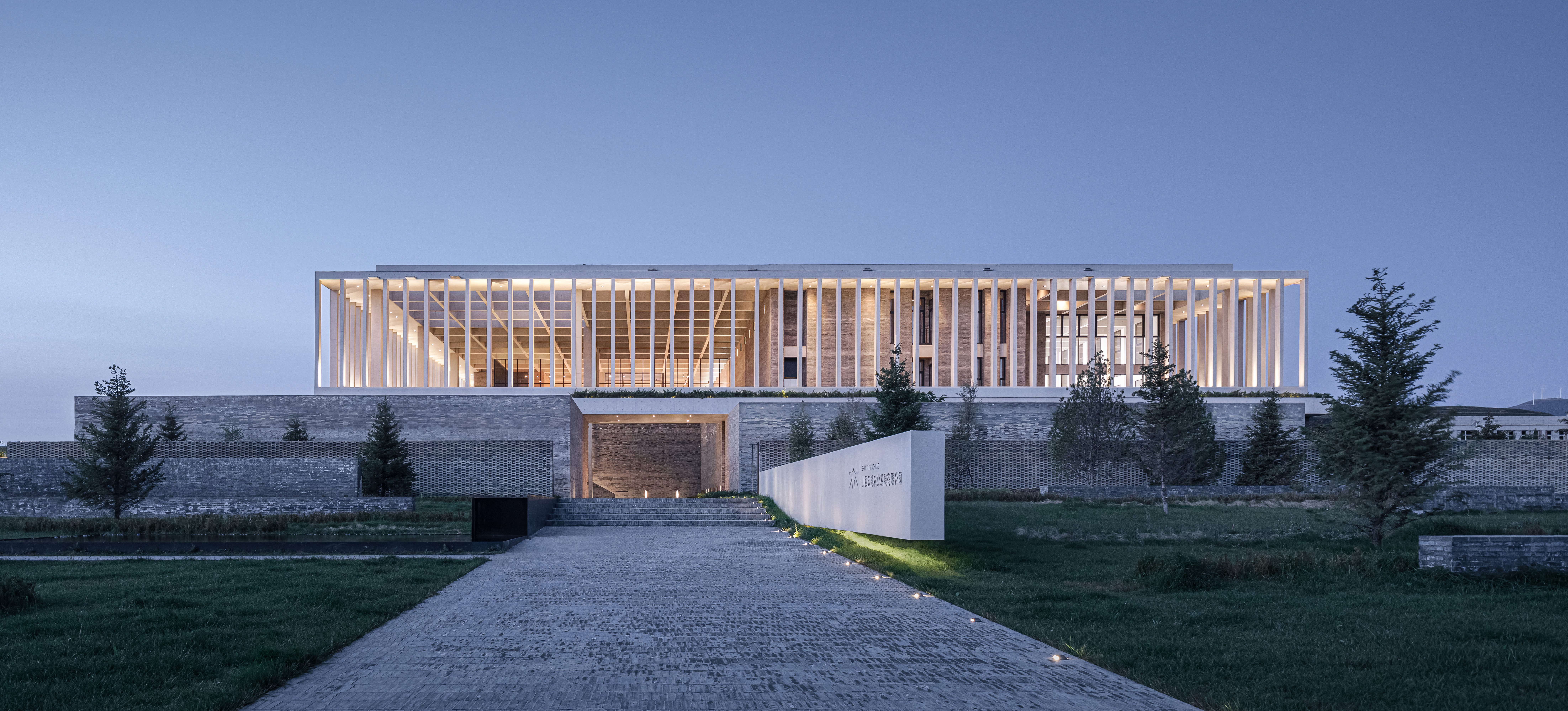
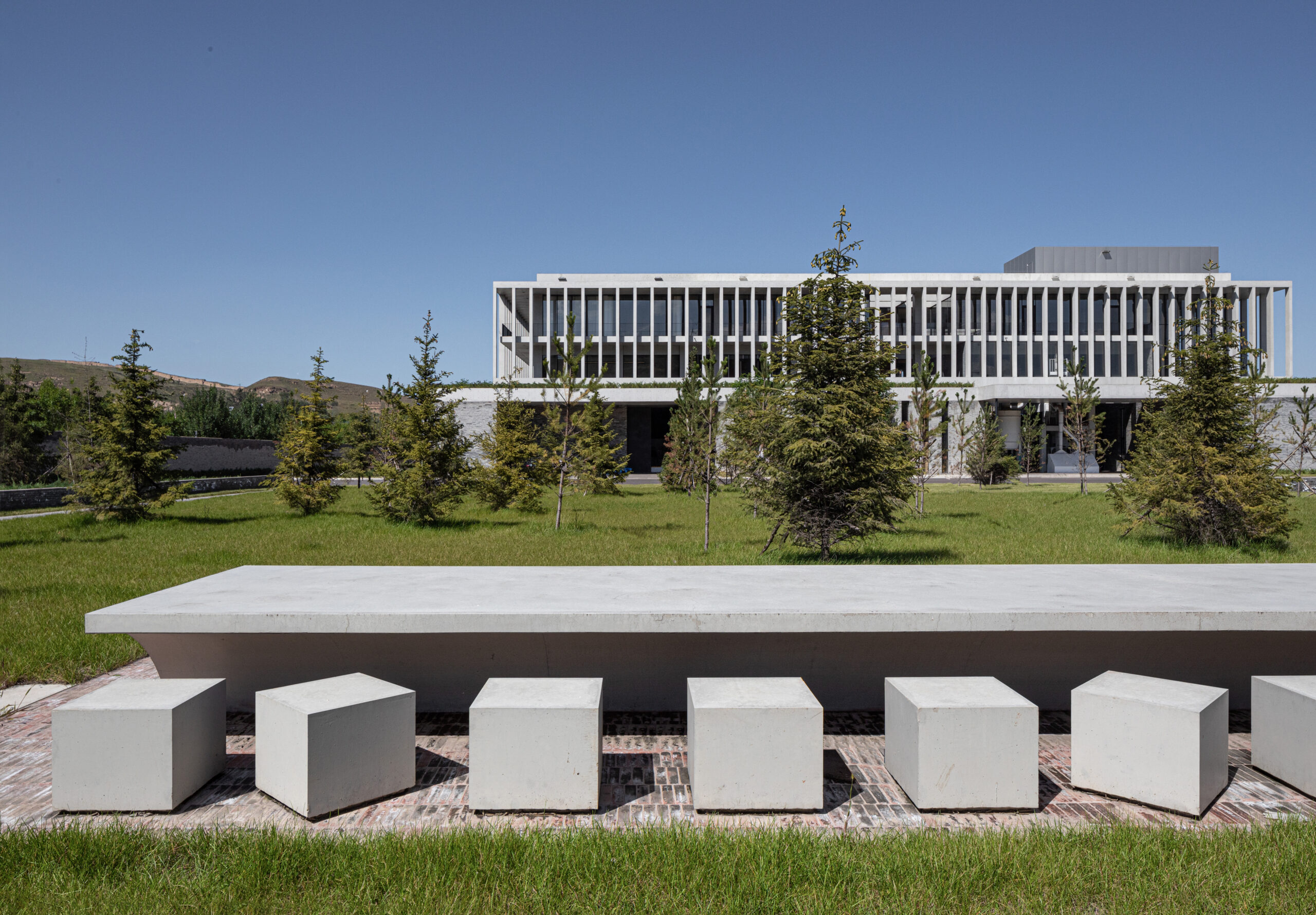
The Oatmeal Factory in Ningwu, Shanxi province by JSPA Design.

This question has been the topic of hot debate among architects throughout history, with contrasting perspectives among the modernists and postmodernists, among others. During the late 19th and the 20th century, particularly within the field of industrial design, architects believed that “form follows function,” as expressed by architect Louis Sullivan, which indicated that the function of the building is what generates its form and guides its design process. For Frank Lloyd Wright, that design principle has been misunderstood, because, “Form and function should be one, joined in a spiritual union.”

When studying the design of the Ningwu Oatmeal Factory in Shanxi, China, which was both the Jury Winner and won the Popular Choice vote during Architizer’s 11th Annual A+Awards, one could argue that JSPA Design was inspired by Wright’s principle. This is especially evident in the way they eloquently strike the balance between both, breeding what could be described as a spiritual union between form and function. The design shows a high level of attention to the factory’s user experience, the selection of materials and the relationship with the site. In short, JSPA Design conceived of a home for production processes that is more than just a factory; the Ningwu Oatmeal Factory is a building that produces a lot more than just oatmeal.

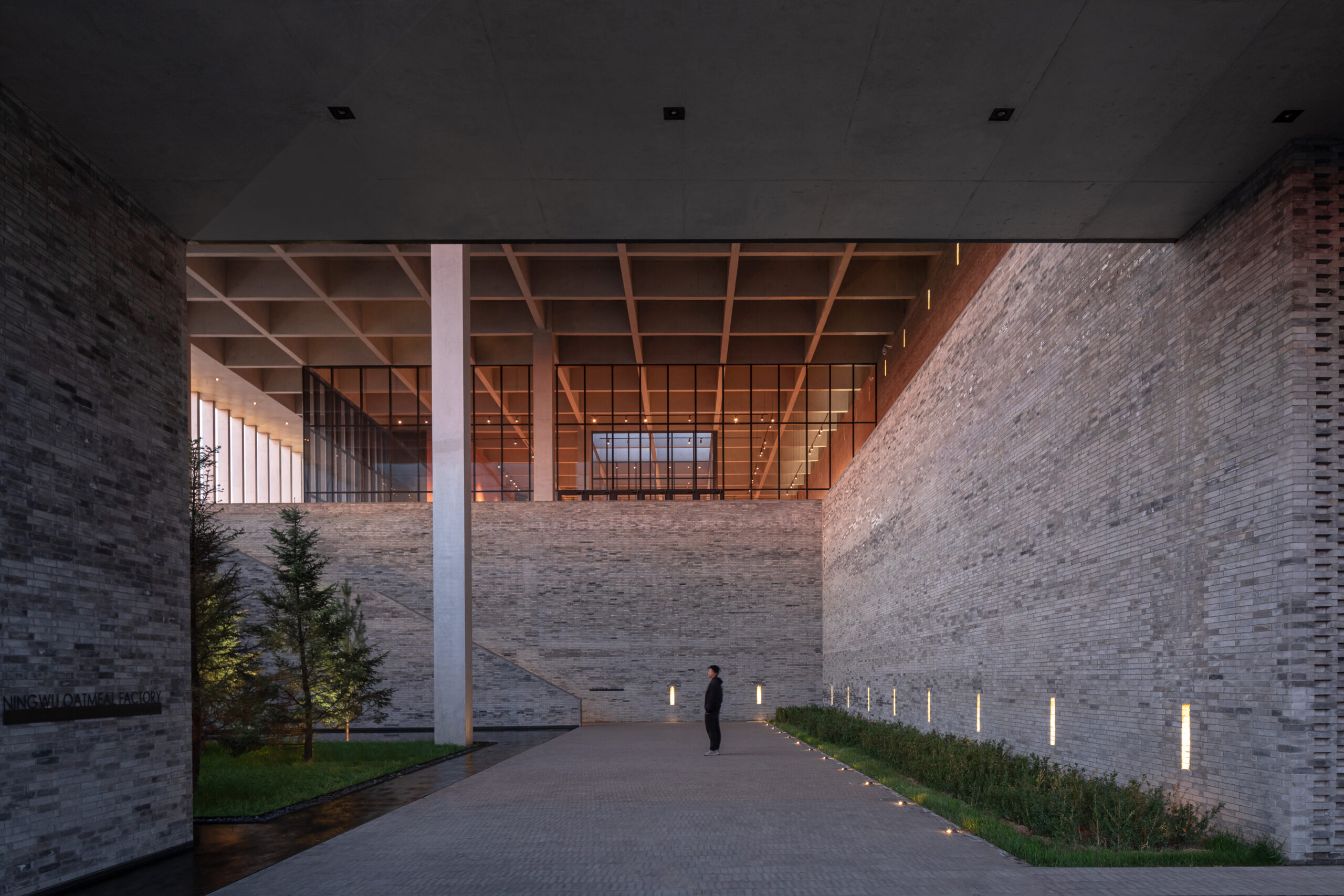
The main entrance to the factory emphasized by the use of brick walls.

The Beijing-based French design studio produced a design that strokes the right balance between the complicated functional requirements and the humanization of the work environment, juggling the different design components while also introducing an interesting user experience that invited the public into the building while redeeming the integrity of the factory’s different operations.

From the outside, the surrounding context was challenging to work with, with the factory being located within dry and arid industrial landscapes punctured with coal mines on their outskirts. In response to this context, the design team chose to orient the building inwards, introducing a variety of horizontal and vertical boundary-demarcating elements that fostered a crisp and clean indoor environment, experientially detaching the building from the outside while enhancing the user experience and orchestrating an interesting walkthrough across the complex’s different sections. Meanwhile, visitors are spatially separated from staff for safety and logistical reasons.

An overview of the factory’s industrial context.

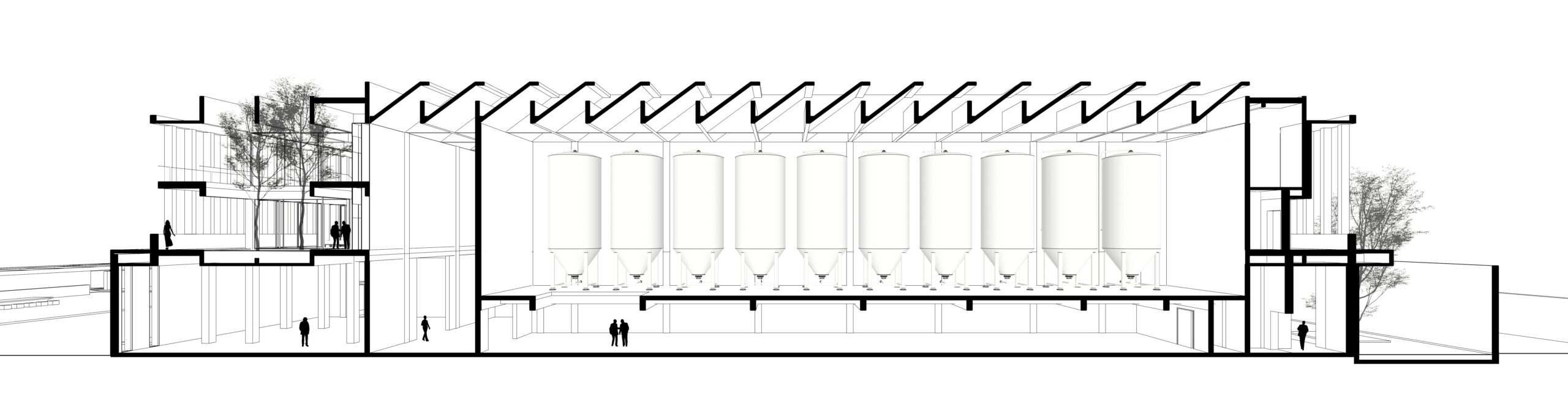
From an environmental perspective, the building’s relationship with the outdoors is further regulated through a network of patios and gardens that invite sunlight to enter the factory’s various spaces. These design provisions enrich the quality of the indoor environment, allowing floods of northern light to illuminate the central production space through a sequence of skylights.

A cross section through the main production space showing the skylights and the production machinery.

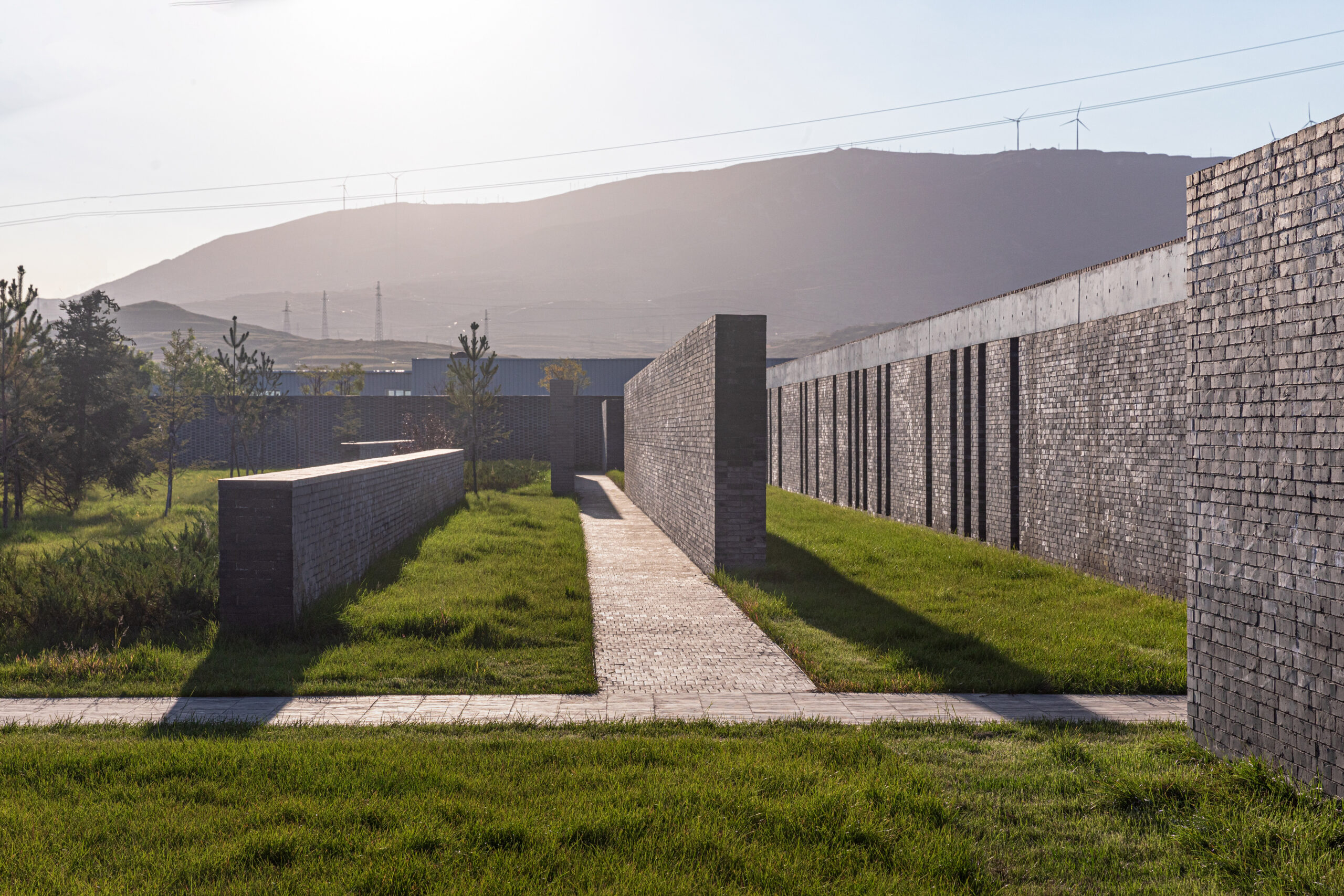
By using grey bricks as the main construction material, the designers establish a more materialistic connection with the surrounding context. By harnessing local construction methods to erect a series of brick walls that became the prominent design feature, the material amplifies the building’s relationship with the site and the surrounding landscapes.

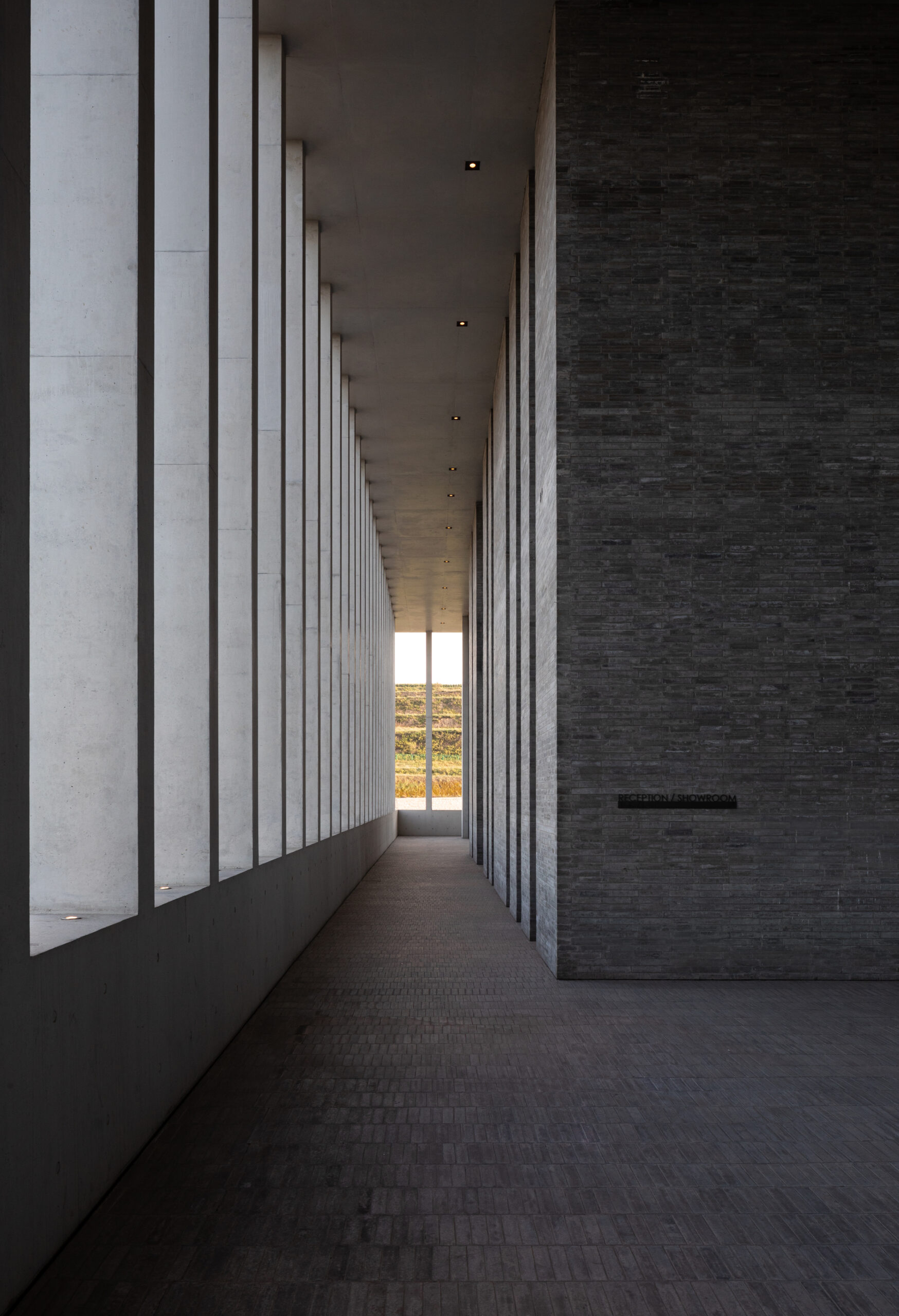
Similar to the flow of production lines that transform raw oat into flour products, a variety of brick walls organize the circulation flows through the factory, starting at the entrance and leading each user group to their designated section, while also organizing entry and exit to the building, the delivery of materials and the loading of products. For the visitors, the ground floor serves as an opaque passage, with the brick walls concealing the technical spaces from the public that are lead instead to the first floor where the public spaces are located, including a café, a shop and a garden.

Brick walls guide the different users groups through the factory.

At the factory’s entrance, the public are greeted with a seating area and kids pools, mediating the relationship between the inside and the outside and softening the edge that separates the functional from the social sections of the factory. Brick makes a gradual and smooth appearance at the entrance, first appearing on the benches, before moving to the fences, and then extending vertically and becoming a series of walls that soon become the factory.

The seating area in front of the main entrance that acts as part of the public spaces of the factory.

The bricks walls that organize movement through the landscape aligned with the factory walls.

Despite how the brick walls have acted as boundary demarcating elements that organized the factory’s spaces, circulation and relation with the site, this project is an excellent example of architecture that blurs the line between form and function, with each fundamentally playing a role in shaping the other, without one necessarily needing to precede the other.

One of the interior gardens of the factory that regulate the relationship with the outside, demarcated by the brick walls .

The design team strategically chose key places to expose and conceal the factory’s different spaces, as well as varied sites where the factory is either connected or disconnected from the outside. Other binaries include rhythmic alternations between soft and hard, experiential and technical; and outward-reaching and inward-turning (click here to see plans, sections and more details from the A+Award-winning project). The sum of these complex calculations is proof that factory design need not be entirely automated. It shows that there is always a space for humans to intervene and be present within industrial sites.

Architizer is thrilled to announce the winners of the 11th Annual A+Awards! Interested in participating next season? Sign up for key information about the 12th Annual A+Awards, set to launch this fall.

Reference

Spill The Tea: How Architects Can Transform Workplace Culture and Call Out Toxic Office Environments
CategoriesArchitecture

Spill The Tea: How Architects Can Transform Workplace Culture and Call Out Toxic Office Environments

Wandile Mthiyane is an Obama Leader, TedxFellow, architectural designer, social entrepreneur and the founder and CEO of Ubuntu Design Group (UDG) and The Anti-Racist Hotdog. He is proud to introduce The Tea, a peer-to-peer inclusion rating platform.

For far too long, companies have chosen to remedy discrimination after the fact rather than proactively cultivating prevention tactics to ensure employees don’t endure negative and potentially traumatic experiences. This reactive default means that the people who plan our homes, neighborhoods and cities don’t have a plan preventing them from facing harmful and dangerous workplace situations. It’s too easy to simply blame architecture culture; architects shouldn’t have to depend on Plan B–lawsuits, support groups or even have therapists on speed dial. What if you had all the information you needed on a company’s culture before applying?

Recently, I asked some friends what they wished they had known before entering the workforce, and their responses shed light on the challenges they faced. Each told me a harrowing story about intersectional discrimination in the workplace: significant pay gaps, inadequate maternity leave and administrative reluctance to address these issues and others. Comparing their stories exposes how similar problems can be found anywhere in the world, with women and people of color trying to combat workplace discrimination while simply trying to do the jobs they were hired for.

One experience was shared by a Black female friend who worked as an architectural designer in South Africa. After her first year, the company hired her white male classmate from university, assigning her the task of mentoring him for six months and teaching him about the firm’s design philosophy. One day over lunch, he unexpectedly expressed his dissatisfaction with his salary and, in the process, revealed the significant pay gap between them. Surprised by this revelation, my friend confronted her boss, and the conversation that followed is almost unbelievable.

Library in Anzin by Dominique Coulon & Associés, Anzin, France

The boss initially justified the disparity by explaining that her classmate had financial responsibilities, such as paying rent to his mother. She pointed out that she paid rent to an actual landlord. The boss mentioned that his colleague — again, who she was mentoring — had a car, so they need to uphold his living standard, to which she responded she’d also have a car if she were compensated fairly. Only when she threatened to quit did she gain a raise to match her classmate’s salary.

These problems persist in North America, too. My Asian friend from Canada shared a comparable account of discovering that she was being paid significantly less than her colleagues. When she confronted her boss about the inequity, her boss quickly deflected the issue to the HR department, adopting a stance of concern and promising action. A week later, the boss informed her that the matter had been resolved and presented her with a list of goals she needed to achieve within a specific timeframe to earn a raise. Frustrated, she questioned the idea of needing to prove herself for a job she was already overqualified for just to receive equal pay. In the face of her threat to resign, the matter was resolved within a week.

Meanwhile, one of my white female friends in Germany revealed an age-based layer to gender discrimination. As she approached her mid-20s, she encountered difficulties securing a job. Once gainfully employed, she faced even greater hurdles in obtaining promotions. Companies perceived her as a potential liability because she could get pregnant, thus hindering her progress at work. Almost ironically, policies favoring maternity leave have led male bosses to view women as liabilities.

Clearly this problem is pervasive worldwide and is linked to problematic workplace cultures. While relevant in most workplaces, architecture is an industry well known for its toxic work culture. Architects have to deal with unnecessary competition between colleagues, work long hours, and pay off a mountain of school debt in the meantime. In 2023, Architecture Journal reported that over 40% of architects work at least 10 hours of overtime per week, largely unpaid, according to an AJ study completed by 400 architects. This work-pace leads to high burn-out rates, with almost 97% of architects reporting burn-out.

Take into consideration women and People of Color have to fight their own struggles against workplace discrimination while doing their own work in these already-toxic spaces. According to the National Council of Architectural Registration Boards (NCARB), out of the 121,603 licensed architects in the U.S. as of 2022, only 2% (2,492) are Black. Among them, only 566 are Black women, despite Black people making up 12.6% of the country’s population, with 52% of the Black population being Black women. These statistics clearly highlight the significant underrepresentation of people of color, particularly Black individuals and women, exposing them to vulnerability in white male-dominated studio spaces. Moreover, disparities in power structures within firms further exacerbate the situation, as women face additional challenges and are less likely to complete licensure, impeding their progression to principal roles. As one of my American friends noted, employees should have the ability to go to work and focus solely on their tasks without the added burden of being the unofficial and unpaid advocates for DEI within their companies.

Clearly, DEI programming is not enough to change our workplaces. Over the past two years, my team and I have partnered with leading social psychologists from Harvard, Columbia, Deloitte, and The Resolution Project, and closely studied company culture while consulting with architecture firms, both large and small. Throughout our research, we engaged with young professionals to understand what they wish they had known before entering the workforce, particularly what would have helped them make better decisions about the places where they would spend the majority of their adult lives.

Building upon this work, we developed The Tea: a demographic-specific, peer-to-peer inclusion rating platform that connects women and people of color to workplaces where they are truly valued. The Tea uses key workplace indicators that matter the most to individuals of similar demographics, based on research that shows why women and people of color leave or stay in workplaces. The platform uses ratings based on key workplace indicators such as salaries and benefits, path to growth, internal advocacy, external advocacy, authentic self, and valued expression. Users can also filter based on race, gender, sexual orientation and age to find how people that look like you have experienced a particular workplace.

The Tea is also built for firm leaders and HR directors, helping them know exactly what they need to improve in their own workplaces and the steps they have to take. Instead of providing negative anecdotes without clear solutions, The Tea’s data-driven key indicators show more precisely where companies need to improve. Companies can even upload their own efforts to address each indicator, so applicants can see how a company is dealing with certain problems. Above all, we value everyone’s identity and security, online and in the workplace: just log in with your LinkedIn, and your reporting remains anonymous.

In the end, The Tea benefits everyone involved. It provides employees with a safe space to identify companies that truly value their labor, eliminating the need for them to be BIM managers and the office’s designated MLK just because they’re a person of color. Simultaneously, employers gain valuable insights on how to create the most culturally diverse and inclusive firms in the world. We are transforming DEI from a mere aspiration into a tangible reality. Let’s join forces and spill the tea together, ensuring we never have to face these challenges again!

Architects: Want to have your project featured? Showcase your work through Architizer and sign up for our inspirational newsletters.

Reference