The Mobile Joy-city Community Commerce Beijing, China_MAT Office
CategoriesArchitecture

Dense and Sensibility: How Architects Can Help Shape More Sustainable Cities

Architizer is thrilled to announce the winners of the 11th Annual A+Awards! Interested in participating next season? Sign up for key information about the 12th Annual A+Awards, set to launch this fall.

How can cities have high urban standards and improve residents’ quality of life? As history has demonstrated, if the choices and strategies to achieve positive results are appropriate, the outcome delivers inclusive, safe, resilient and sustainable cities; if wrong, the outcome is devastating, forcing cities to face challenges such as pollution, high energy consumption, insufficient affordable housing, inequalities and health risks, among many others.

Architecture must generate urban quality and environmental sustainability while reflecting the cultural heritage and empowering residents. The growing process of cities leads to transformations, and such transformations need to be associated with sustainable models to improve the social, economic and environmental conditions of cities, ensuring the quality of life of current and future residents.
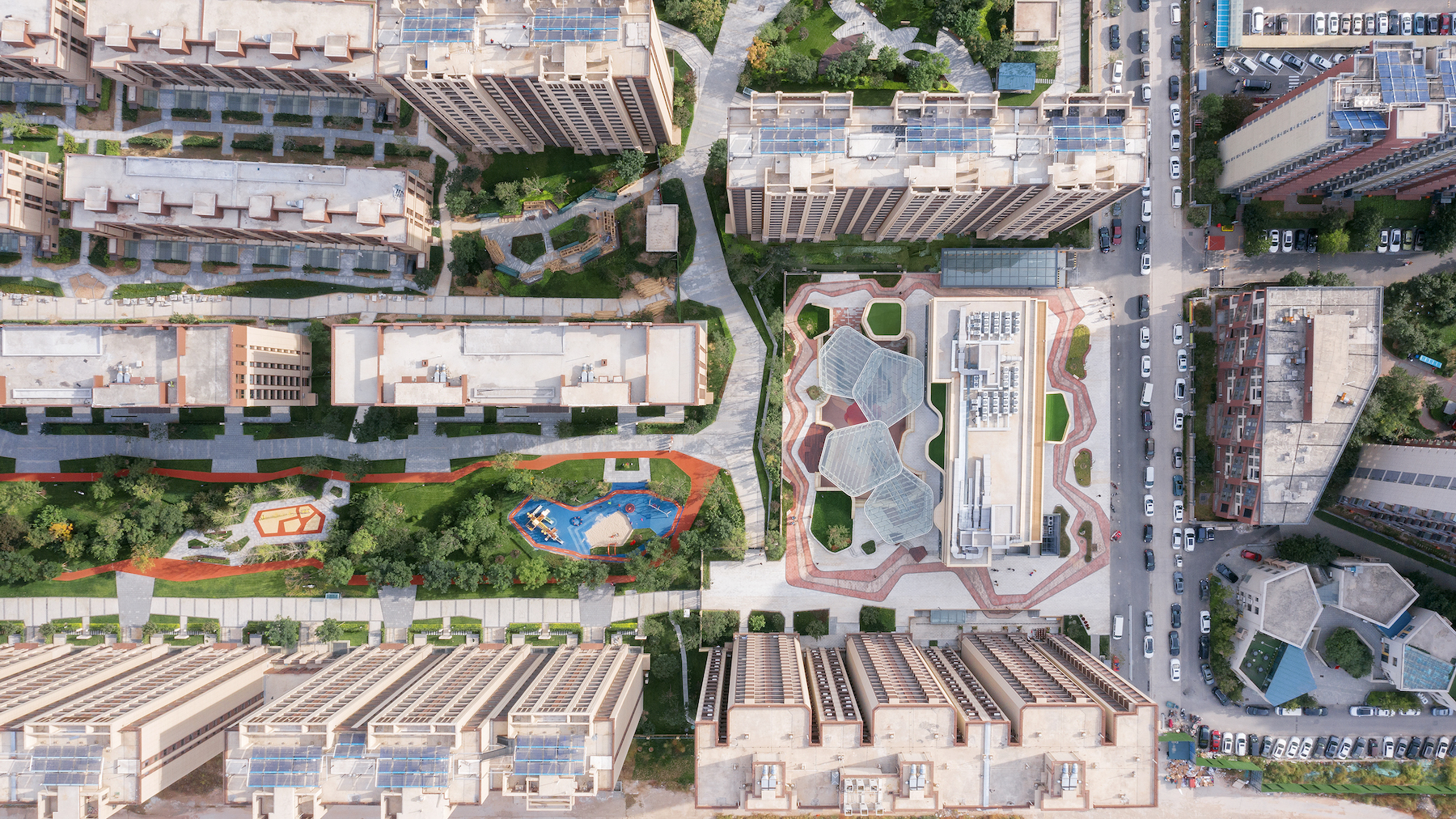
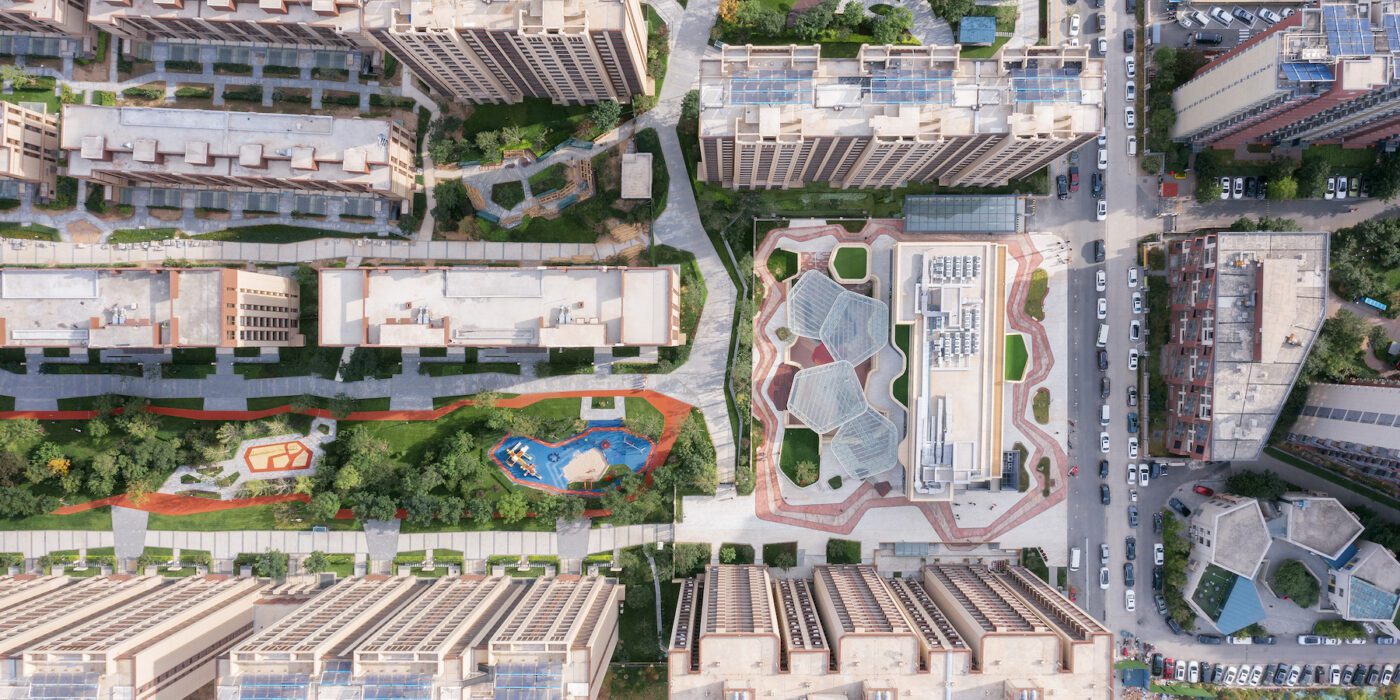
The Mobile Joy-city Community Commerce Beijing, China_MAT Office

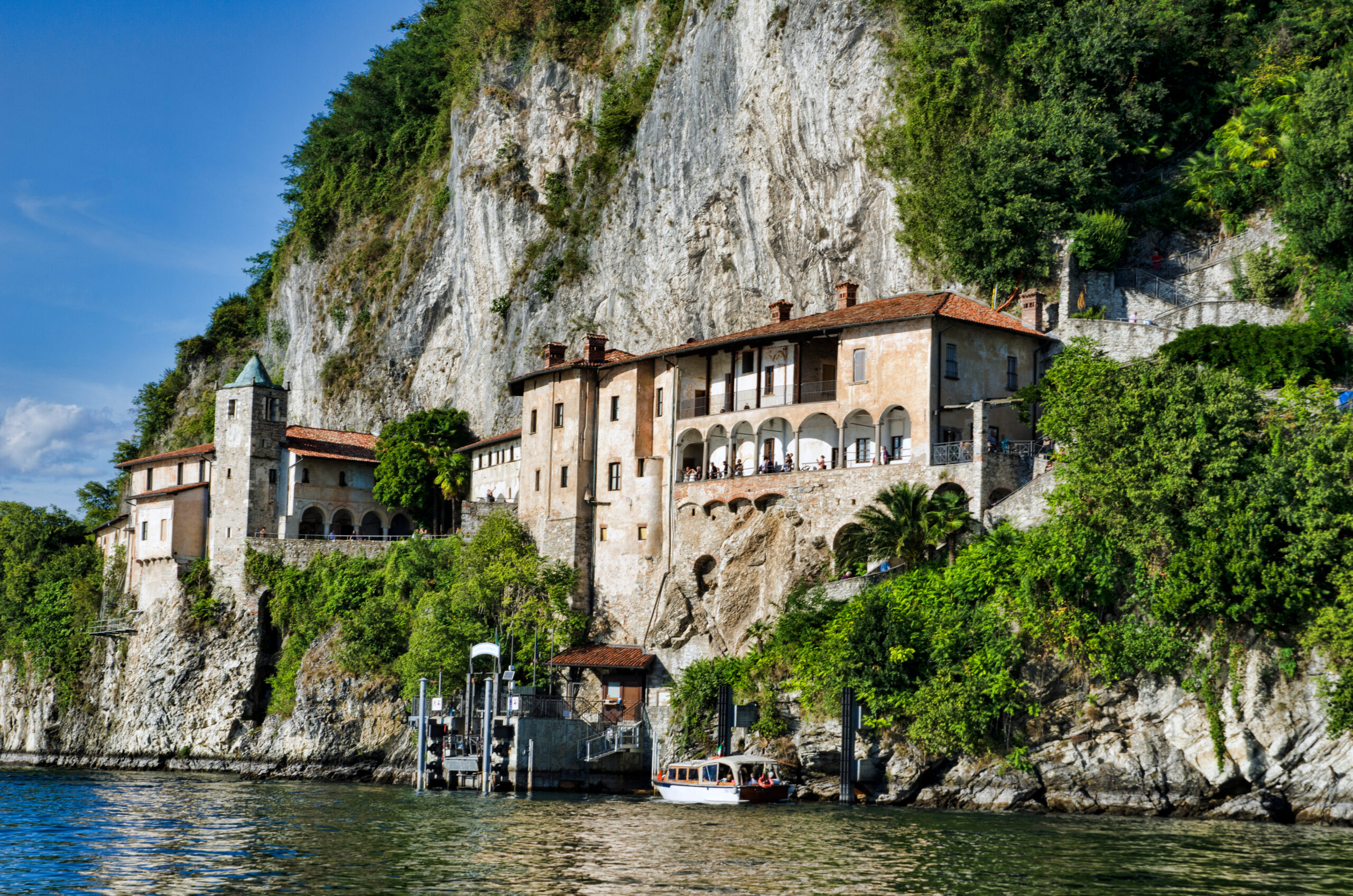
The Mobile Joy-city in Jingxi Xiangyun, Beijing, China, offers creative solutions for a community plan that integrates work, home, shopping, transportation and green spaces. The design focuses on three design concepts: “open archipelago concept”, “landscape urban place”, and “community space shaping.” Design and images by MAT Office.

Architecture as a Contributor to the Sustainable Growth of Cities

Architecture can incorporate social and environmental factors as a core part of its design strategy and contribute to cities’ goals as centers of economic growth, culture and innovation, which will translate into improved quality of life. Understanding architecture as an isolated discipline aimed at creating buildings uniquely might lead to a lack of cohesion and functionality. On the other hand, if we see it as one in dialog with other urban domains, such as landscape design and transit, we can build urban areas that are accessible, livable and affordable, ensuring that cities are engines of sustainable economic growth.
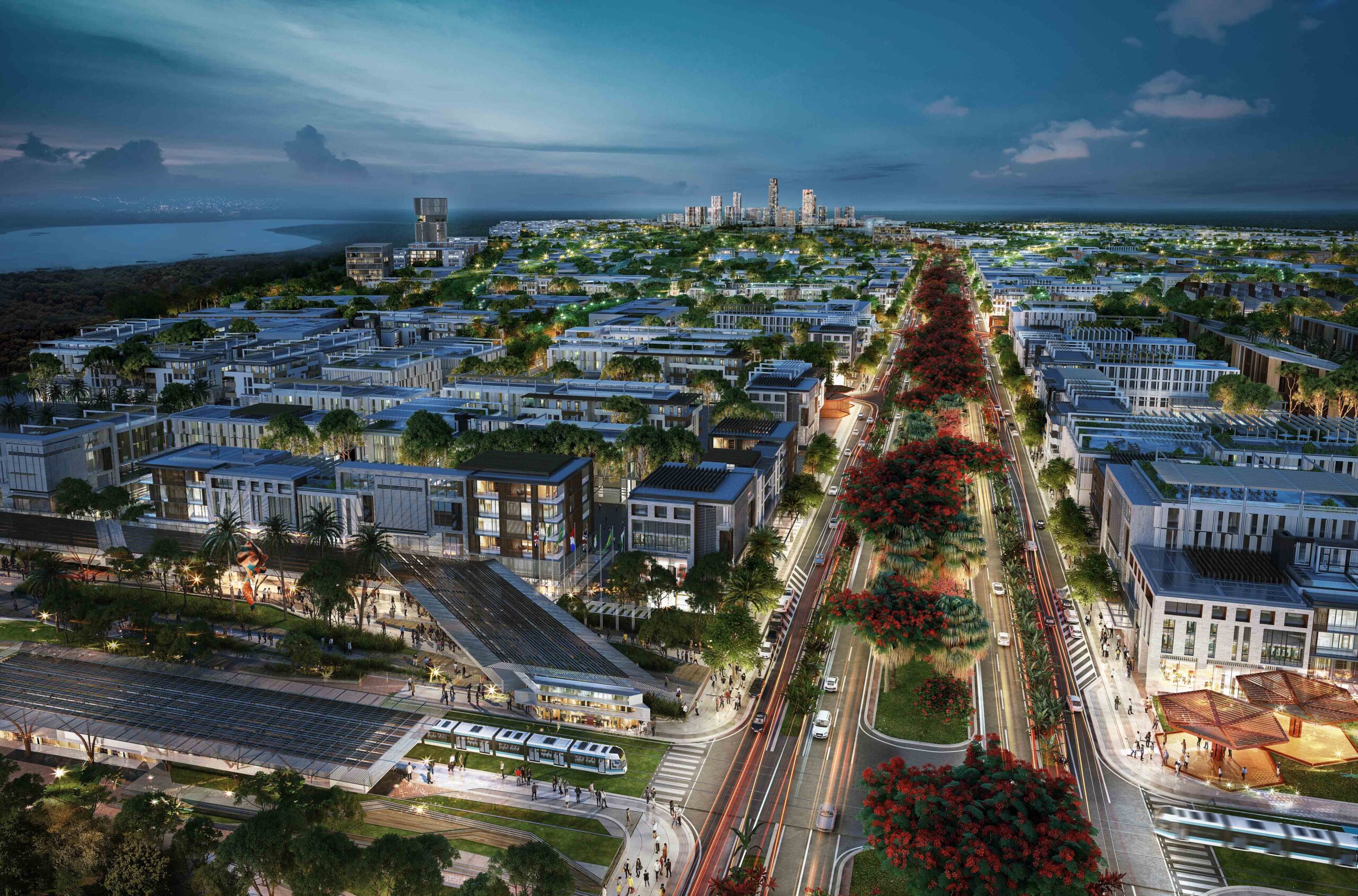
Alárò City_Skidmore, Owings & Merrill (SOM)

SOM‘s master plan for Alárò City lies in the growth path of Lagos, one of Africa’s fastest-growing cities with a population of over twenty million. Alárò City reinforces Lagos as the economic and cultural center in West Africa through a new sustainable community. The master plan highlights the site’s unique conditions enabling long-term resiliency. Design and renderings by SOM.

Co-Living, Transit-Oriented Developments and Sustainability

The examples of projects illustrated below show how different cities address their growth challenges through a mixture of spaces, functions and services that are accessible to the population. Each responds to the specifics of their economic, social and environmental situation differently but with a common goal: achieve quality of life and efficiency.

These examples are mixed-use developments that integrate housing, retail and community spaces to promote urban connectivity and social inclusion while making cities safer for pedestrians, motorized vehicles, and bicycles. Most of them feature an architecture that incorporates green strategies aiming at minimizing environmental impact.
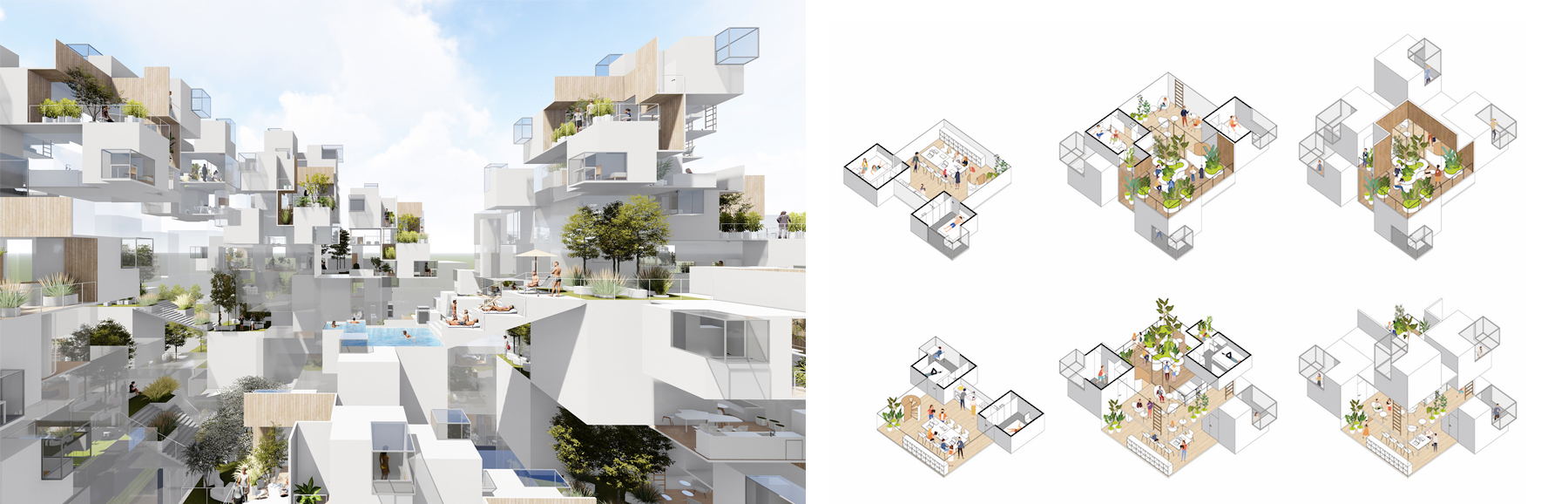
Super Babylon_MAT Office

Super Babylon is conceived as a co-living community. The concept prioritizes sustainable living and shared communal spaces while giving privacy equal due. Design and renderings by MAT Office.

MAT Office proposes a series of linked transformable structures inspired by the New Babylon, a megastructure that Dutch visual artist and Situationist Constant Nieuwenhuys developed a half-century ago. MAT Office‘s Super Babylon is a modular structure composed of units that can generate four types of spatial and social relations: individual basic units, small family spaces, communal spaces and collective community buildings with access to commercial spaces at ground level. Following the shared community  — or, co-living — model, New Babylon attracts a diverse population of young professionals, retirees, singles, and families, all working together to create a lifestyle that reflects their shared core values.
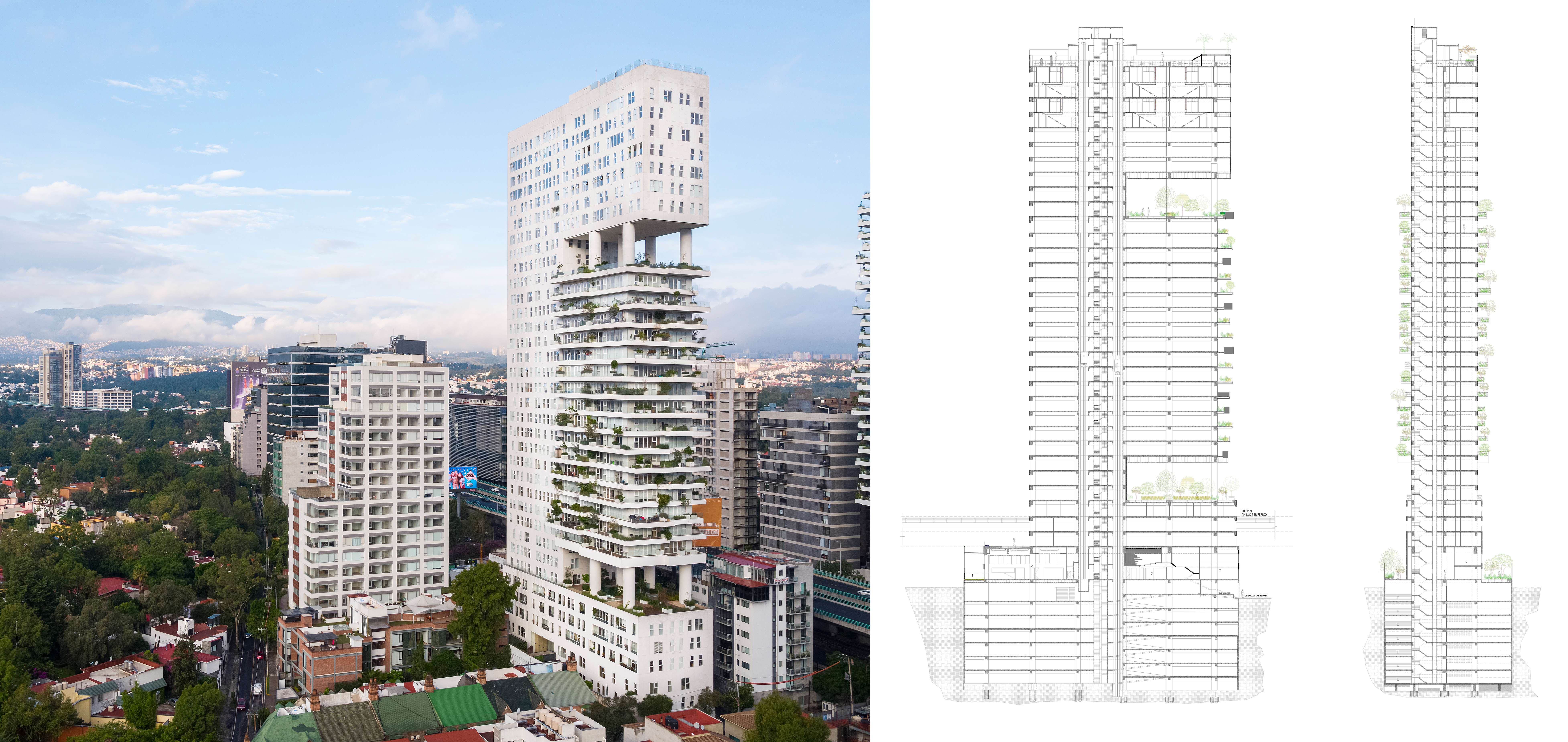
Periferico 2008_BRAG Arquitectos

Periferico 2008 is a residential high-rise with public amenities on the ground floor and a rooftop terrace with panoramic views. Project by BRAG Arquitectos. Image by Felix Fernández.

Periferico 2008 is a multi-unit residential tower close to San Angel, a neighborhood south of Mexico City known for its colonial history, monuments and religious architecture. The abundant greenery in the area set the tone for Periferico’s design: a thirty-story tall parallelepiped with two carved-out sections to make room for green terraces. The building’s 184 apartments — with areas ranging from 700 to 2,690 square feet (65 to 250 square meters) — feature spacious layouts and optimal orientations to maximize views and optimize natural lighting and ventilation. The ground floor amenities include a gym, swimming pool, spa, business center, playroom, library, and a movie theater. The rooftop terrace offers opportunities for relaxation and entertaining with views of the city and beyond.
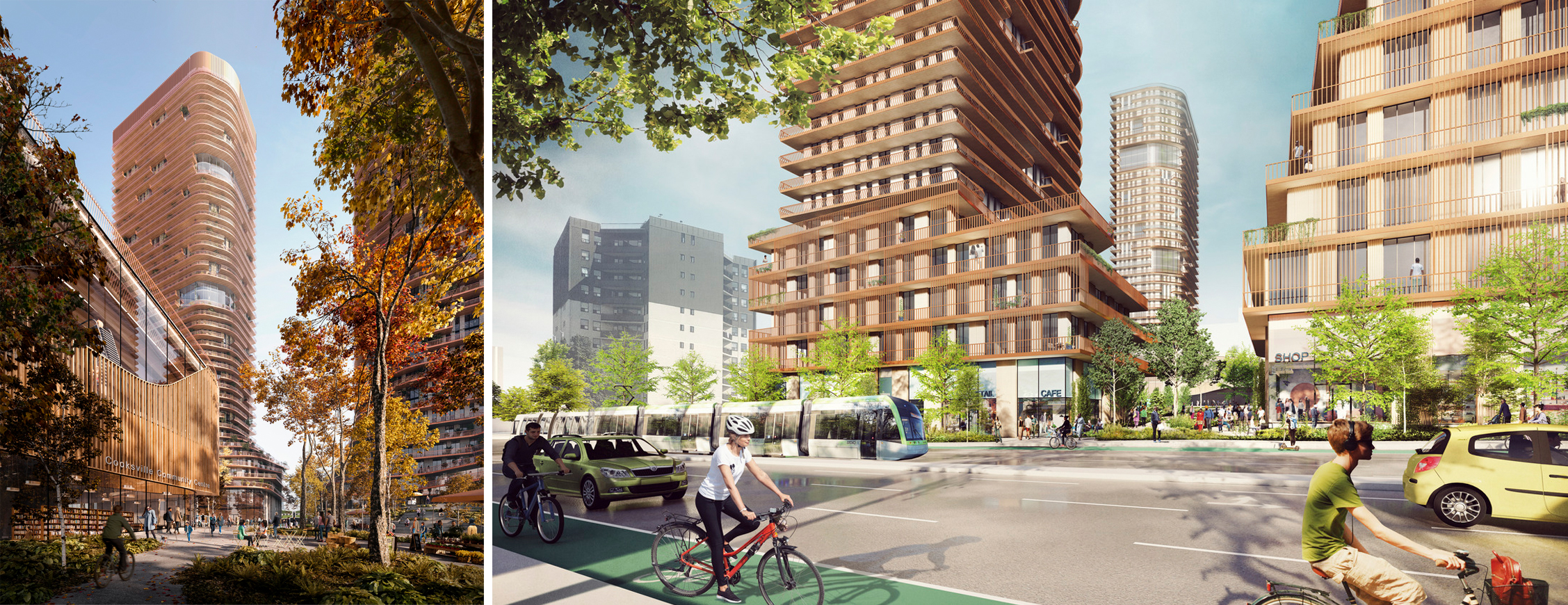
Connecting Cooksville_SvN Architects + Planners

Connecting Cooksville in Mississauga, Ontario, Canada is a development project that offers many connections for pedestrians and vehicles, highlighting opportunities to prioritize the human scale and overall urban connectivity. Design and renderings by SvN Architects + Planners.

SvN‘s design for Connecting Cooksville is a vision for an integrated transit-oriented development in Mississauga, one of Canada’s fastest-growing cities. The project will transform a site dominated by surface parking into an interconnected, transit-oriented, mixed-use development with interior streets and a regenerative landscape. At nearly 1.7 million square feet (157, 900 square meters) , the development will provide nearly 2,200 new apartment units and close to 100,000 square feet (9,290 square meters) of commercial space, including a community gathering space covering almost half of the site.

Walking trails, outdoor kitchens, classrooms, cafe seating, areas for recreation, exercise and outdoor daycare play zones provide additional ground-level programming. SvN, in collaboration with WHY Architecture Workshop, designed an urban forest as part of the development, which prioritizes climate resiliency by strategically designing the cluster of towers and the landscape responding to the City of Mississauga’s Climate Action and Strategic Plans.
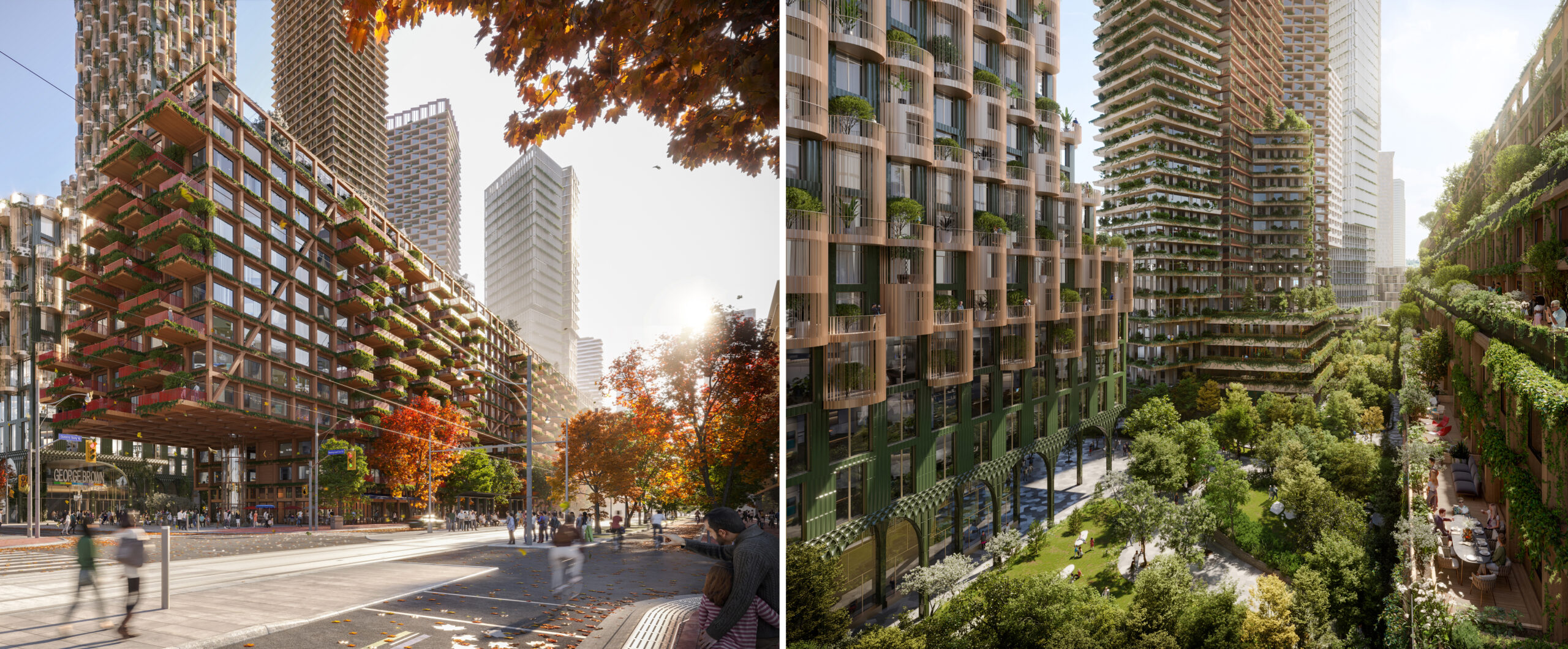
Quayside_Norm Li

Quayside in Toronto, Canada, is conceived as an electrically powered, zero-carbon community where residents will have easy access to their daily needs, including jobs, education, healthcare, food, and recreation. Design and renderings by Norm Li.

Quayside is a mix of market-rate and affordable housing in Toronto for individuals and families of different backgrounds and incomes. A total of six buildings, including Canada’s largest mass-timber residential building, will also provide commercial and institutional spaces, as well as access to a three-and-a-half-acre public space. Additionally, a one-acre urban farm on the rooftop of the mass-timber building will be accessible to residents and the public. The project was conceived with sustainability in mind resulting in an all-electrically powered, zero-carbon community. The use of environmentally friendly materials and technologies will promote biodiversity and create comfortable and accessible green spaces, which will reduce greenhouse gas emissions and contribute to the efficient management of severe weather risks.

Aiming for Sustainable and Livable Cities

The creation of high-density buildings offering easy access to daily needs and the use of sustainable building solutions can be considered good examples of how architecture can bring social and environmental change. City growth is inevitable but manageable with the right tools and the right decisions. The prominent role of the architectural community in envisioning and designing cities demonstrates that it can be beneficial to the betterment of citizens’ quality of life, social equity, health and the environment. Healthier places — no matter what their functions are — will result in healthier people, communities and cities.

Architizer is thrilled to announce the winners of the 11th Annual A+Awards! Interested in participating next season? Sign up for key information about the 12th Annual A+Awards, set to launch this fall.

Reference

Chat GPT Cheat Sheet for Architects and Designers
CategoriesArchitecture

Chat GPT Cheat Sheet for Architects and Designers

The latest edition of “Architizer: The World’s Best Architecture” — a stunning, hardbound book celebrating the most inspiring contemporary architecture from around the globe — is now available. Order your copy today.  

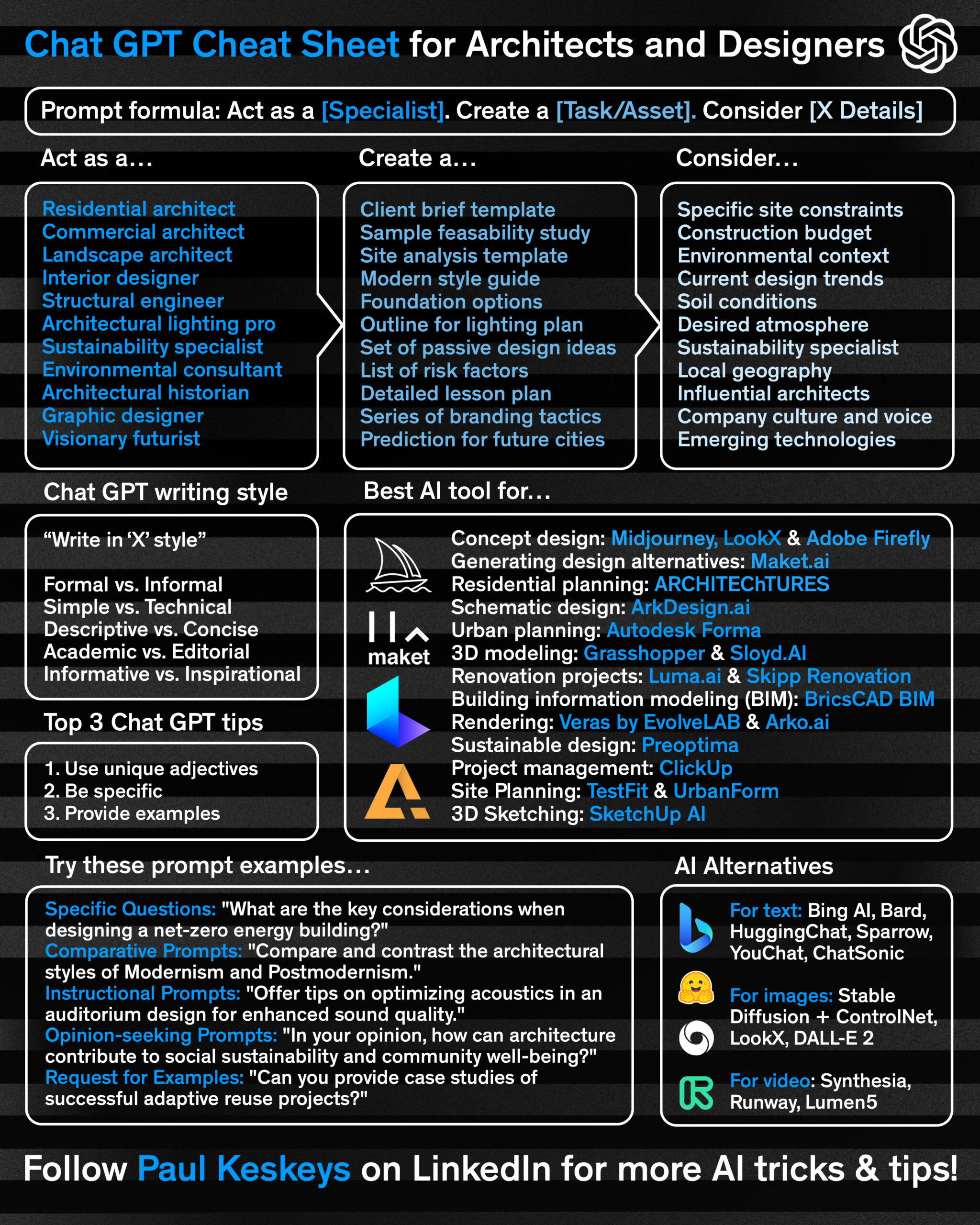
By now, you’re likely aware of the AI revolution sweeping the industry. One of the most popular AI apps is OpenAI’s Chat GPT — but how can this text-based tool help architects and designers?

The sheet below, created by Architizer’s own Paul Keskeys, provides some helpful starting points for exploration. It includes a standardized prompt formula for architects, examples of how the formula can be used for real-world applications, and additional tips for getting the most out of Chat GPT. There is also a list of AI tools worth testing for different stages of the architectural design process.

Without further ado, check out the sheet below…

Here are three quick tips to make the most out of this sheet:

1. The prompt examples shown here are just that — examples.

The key with Chat GPT is to keep iterating. Try assigning the tool different roles, instructions and details. The more you experiment, the better!

2. Chat GPT is great for creating templates, examples and approximations.

What Chat GPT provides will rarely be the finished product, so use it as a starting point and then refine the output with good, old-fashioned human intelligence.

3. Try combining Chat GPT with other AI tools to create even more efficiencies.

Chat GPT is amazingly good at producing architectural prompts for Midjourney, for example! Check out some examples here.


If you find sheet this useful, share it with your colleagues, and follow Architizer and Paul Keskeys on Linkedin for more.

You can learn more about the top AI tools for architects designers here.

For more ways to supercharge your workflow, check out more articles in our Tech for Architects series, which includes our recommendations of Top Laptops for Architects and Designers. 

Reference

Coil Coatings: Architects' Secret to Brighter Metal Building Façades
CategoriesSustainable News

Coil Coatings: Architects’ Secret to Brighter Metal Building Façades

Architects: Want to have your project featured? Showcase your work through Architizer and sign up for our inspirational newsletters.

The best architecture is tied to community and local contexts. The products manufacturers create for a building bring ideas to life through shapes, colors and materials. As metal structures and product applications have become more commonplace, so too have the variety of ways to express design concepts. This is especially true for metal coatings, used in everything from curtain walls and metal wall panel systems to roofing, louvers and sunshades. Today, manufacturer Sherwin-Williams is reimagining color and expression through coil coatings.

As the manufacturer states when describing their approach to factory-applied coil coatings for architecture, they can “create nearly any color or effect you can dream up.” Coil coating, sometimes called pre-painted metal, is an efficient way to produce a uniform, high-quality, coated finish. The key is that the metal is painted before rather than after fabrication. The types of paint curing used in the coil industry include thermal, infrared, induction and UV cure. Exploring these coatings through color and specific products, the following projects showcase the range of applications created by Sherwin-Williams. Together, they represent a technology that is versatile and high quality, with a range of cost, environmental and performance benefits.


Edmonton Public Library

Designed by Patkau Architects, Edmonton, Canada

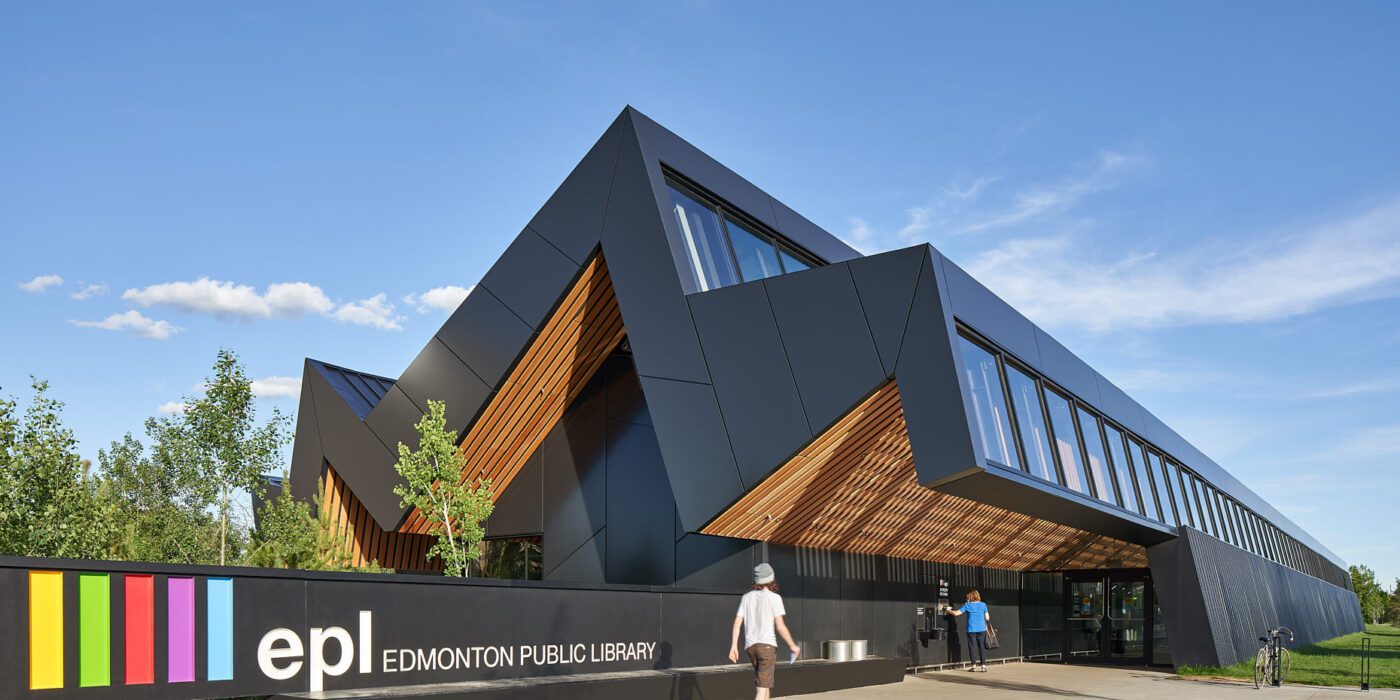
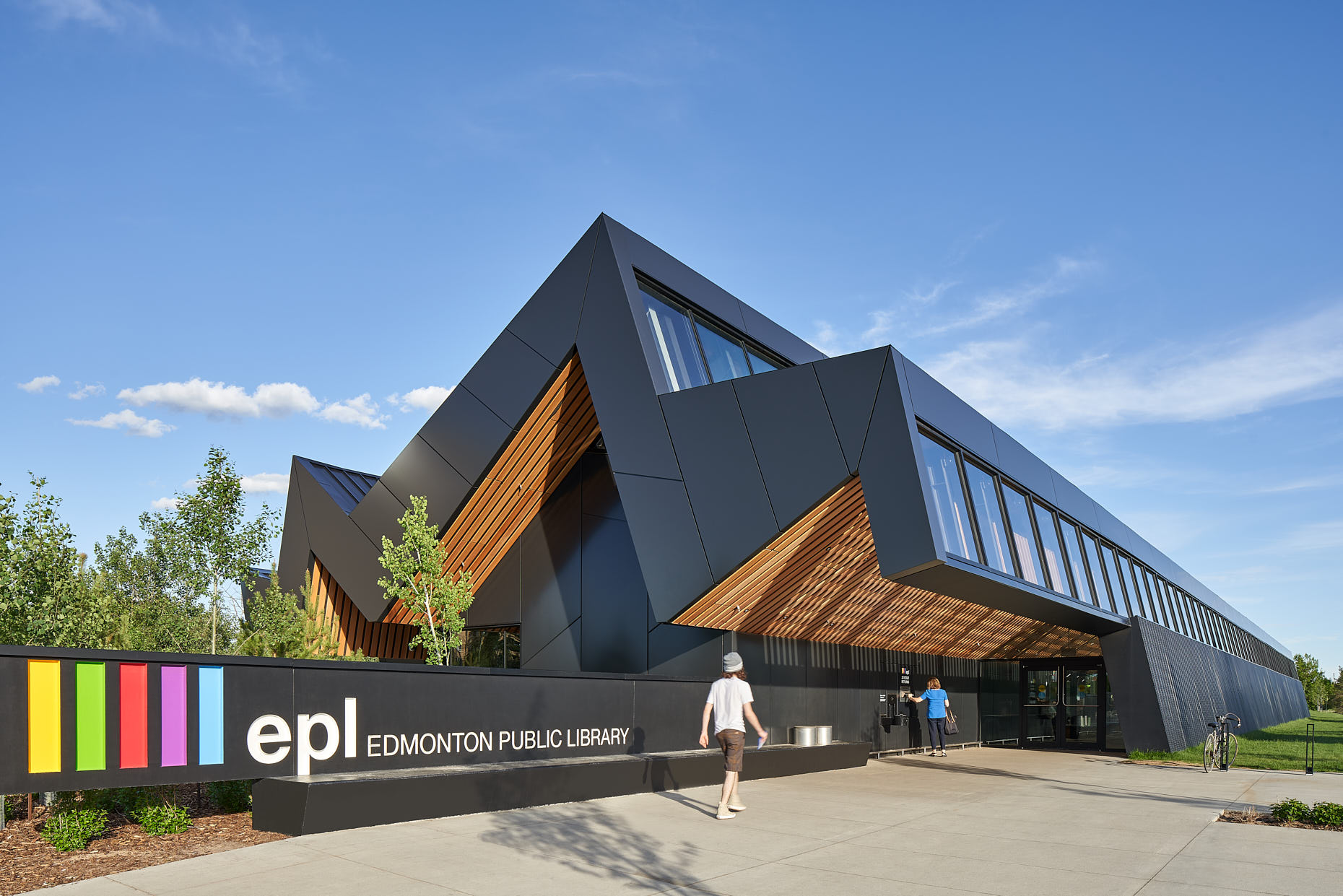
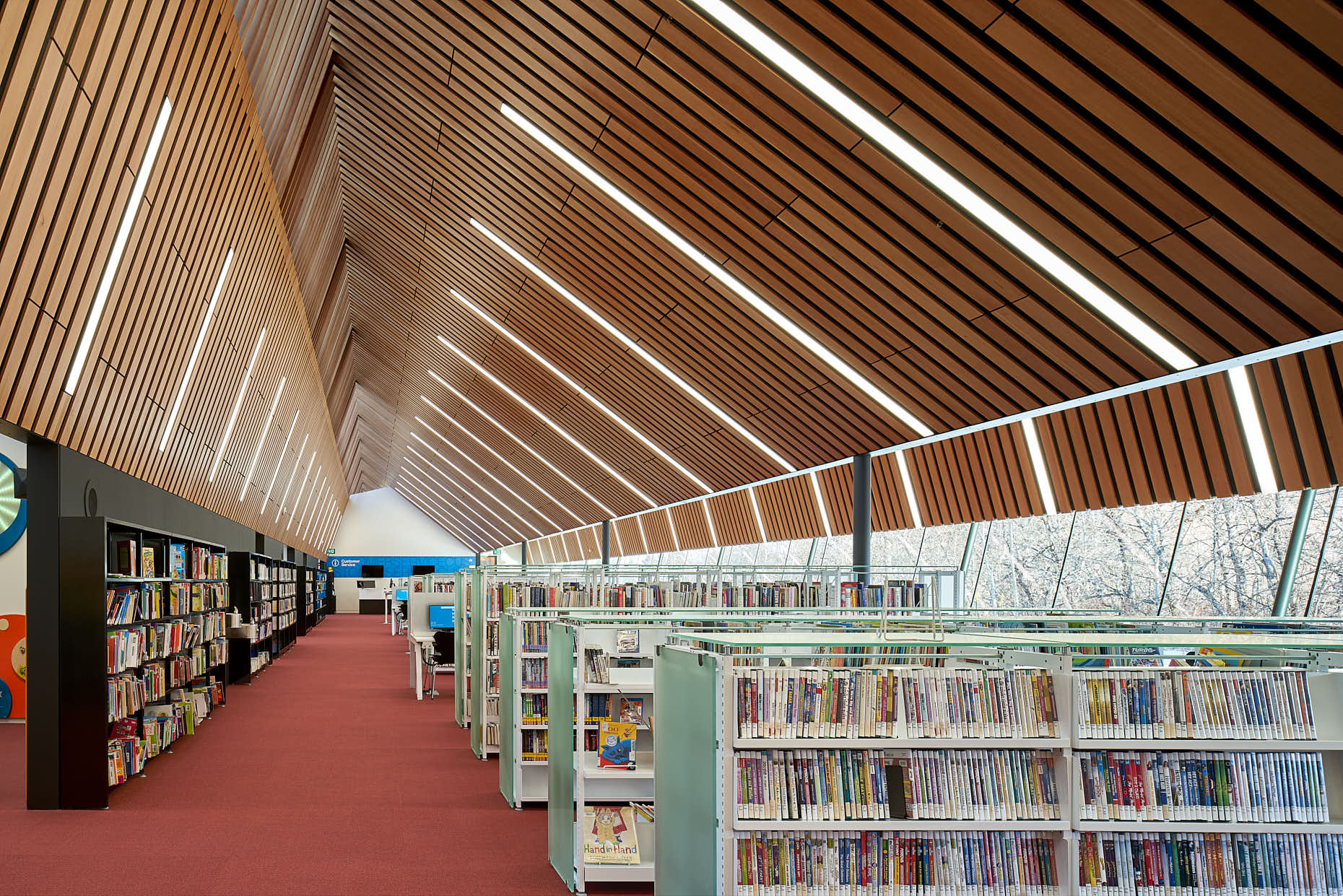
The Capilano Library connects its suburban community to nature. The library form is developed from its cross section, which is folded to form three peaks across the site, each with a different scale. Each of the three peaks responds to scale, function, natural light and view. The western peak reflects the scale of the neighborhood with a quiet edge of support spaces along the street. The eastern peak is intimately scaled, with varied seating along a serene window overlooking the nearby ravine. The design is enhanced by the mix of rectangular and polygonal ALPOLIC metal panels that were installed around the library’s exterior.

ALPOLIC metal composite materials deliver excellent flatness and exceptional formability to give the library a sophisticated exterior aesthetic. The metal panels are coated in a Valflon finish supplied by Sherwin-Williams Coil Coatings. The rich, vibrant and high-gloss color is a fluoropolymer FEVE resin-based coating that offers color consistency, protection against weathering, chalking and fading, and excellent overall adhesion. This finish also meets the highest performance standards, including AAMA 2605 specifications. In time, the Edmonton Public Library Capilano Branch has become a central space for the community.


Wolf Creek Library

Designed by Leo A Daly, Atlanta, GA, United States

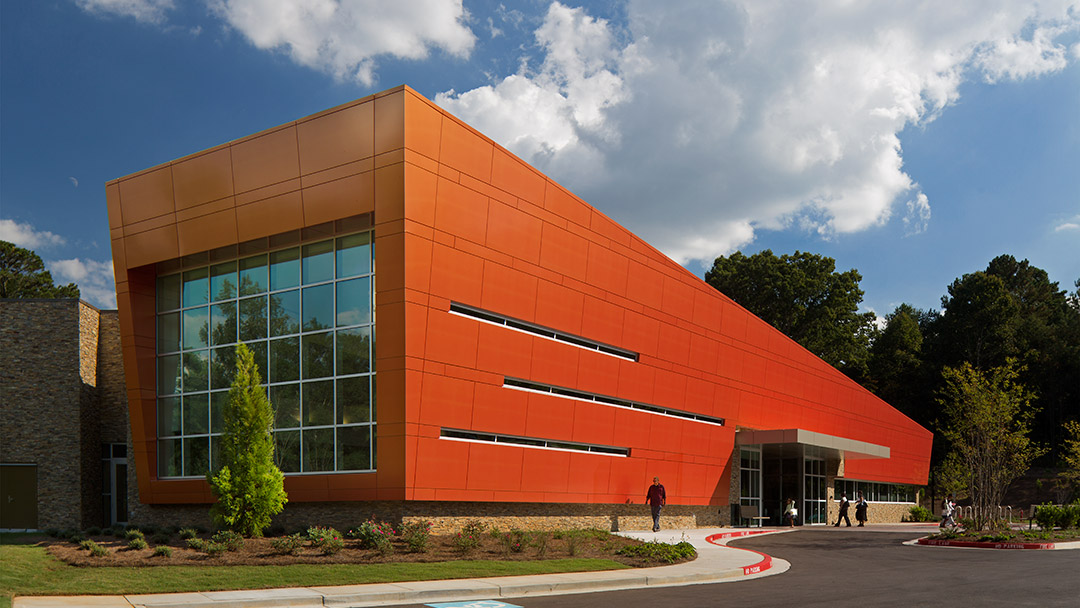
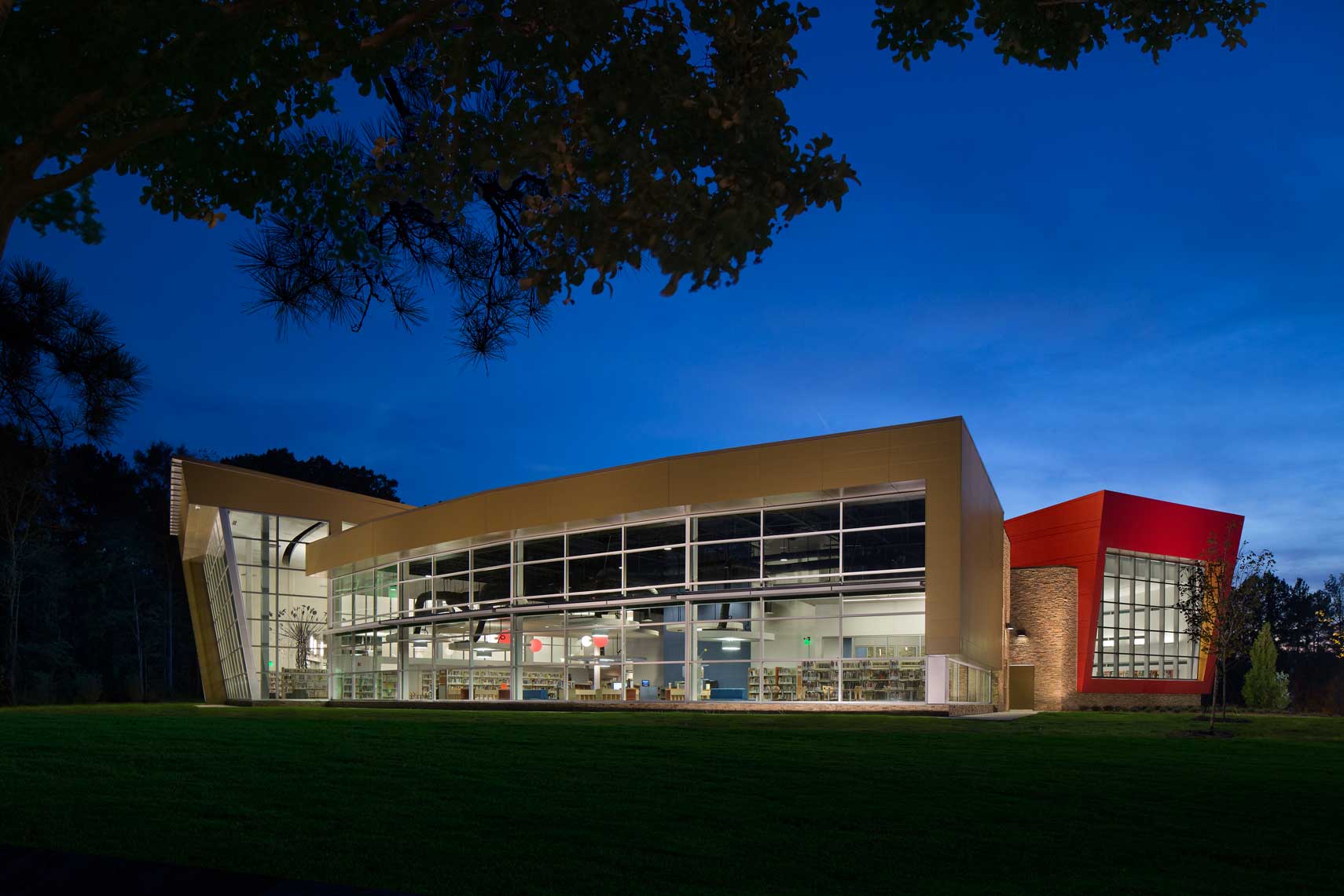
The Wolf Creek Library design was made as a community destination and as a catalyst for growth. The exterior features an outdoor reading garden and terraced seating. The library houses 5,700 square feet of adult collections, 5,000 square feet of children’s collections, a computer/learning station room, teen area, music room, sub-dividable community meeting room for 125 people and two conference rooms with smart boards and projectors. Originally, copper was considered as cladding material for the building’s iconic wedge-shaped façade. But, ultimately, it was determined that ALPOLIC’s aluminium composite material (ACM) was a superior solution.

The custom MRT Prismatic Magma finish would evoke the original copper intent, but offer a more vibrant visual experience. Sherwin-Williams Valflon coating provides the shimmer and shifting colour the architects desired. The simple but geometric design is at once bold but refined and enhanced by the Valflon coil coating. Durable with excellent adhesion and flexibility properties, the FEVE resin allows each prismatic color to have an intense brightness of shade and a high-gloss quality. In the daytime, the Wolf Creek Library’s appearance shifts from copper to red to orange, depending on the time of day, weather conditions and viewing angle.


St. Nicholas Eastern Orthodox Church

Designed by Marlon Blackwell Architects, Springdale, AR, United States

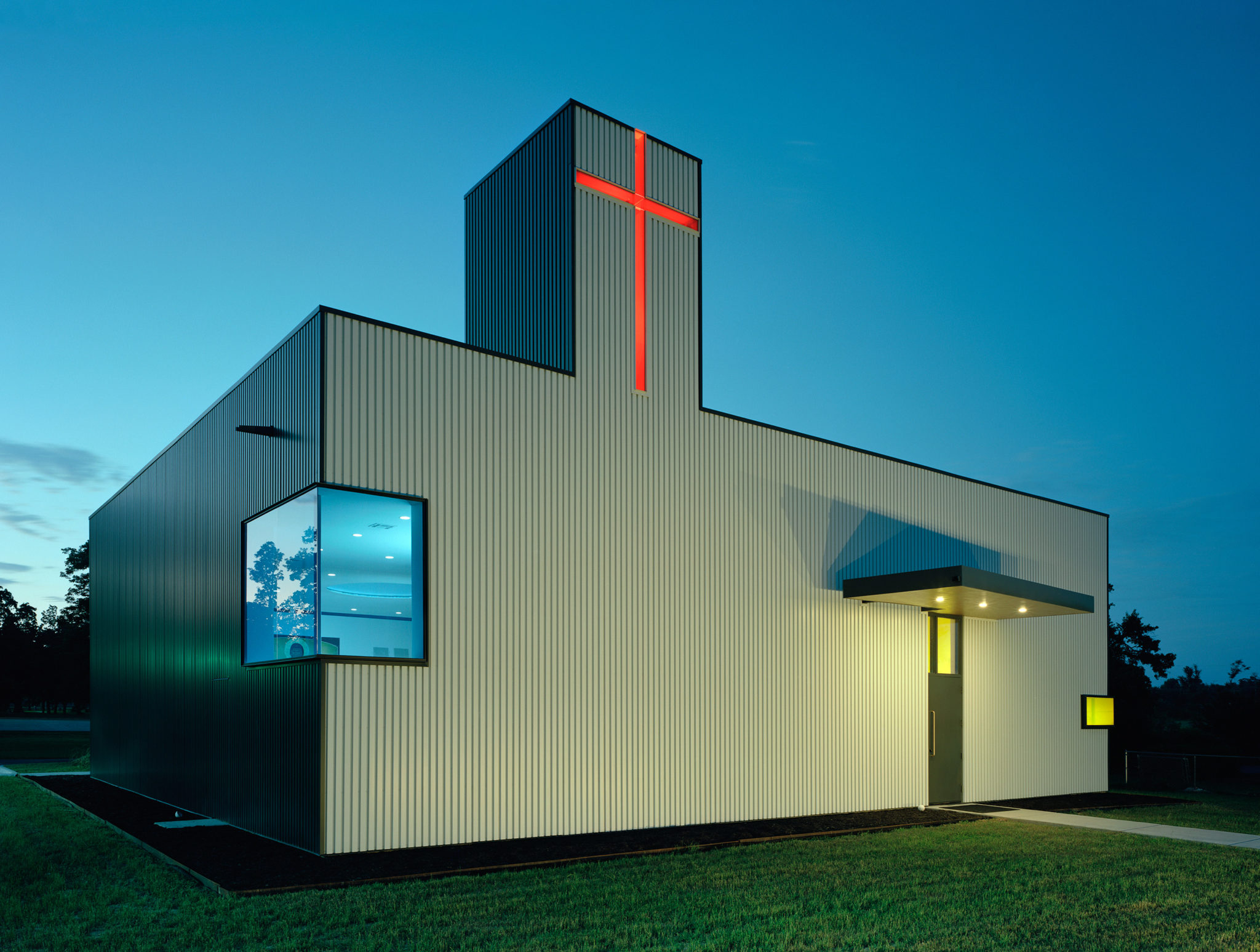
The Saint Nicholas Eastern Orthodox Church transformed a generic shop building into a place of worship and fellowship. The architects kept the interior simple but utilized box rib metal panels for the exterior. Metal Sales manufactured the T-10A metal walls panels, which are coated in Metallic Silver and Dark Bronze Fluropon colors from Sherwin-Williams Coil Coatings. A thin cross, lit up in red, is also visible on the western side of the church.

Marlon Blackwell created an addition on the western side of the 3,600 square-foot building in order to orient the structure toward the eastern axis, which is typical for Greek Orthodox churches. The skylit tower pours red light down into the transition between the narthex and the sanctuary, giving a moment of pause before entering to worship. A narrow cross is suspended on the western side of the tower, backlit by the morning sun to become a beacon for arriving parishioners. Once inside the sanctuary, a transom that spans the entire width of the space faces east and bathes the space in soft morning light during Sunday morning services.


Formosa1140

Designed by Lorcan O’Herlihy Architects [LOHA], West Hollywood, CA, United States

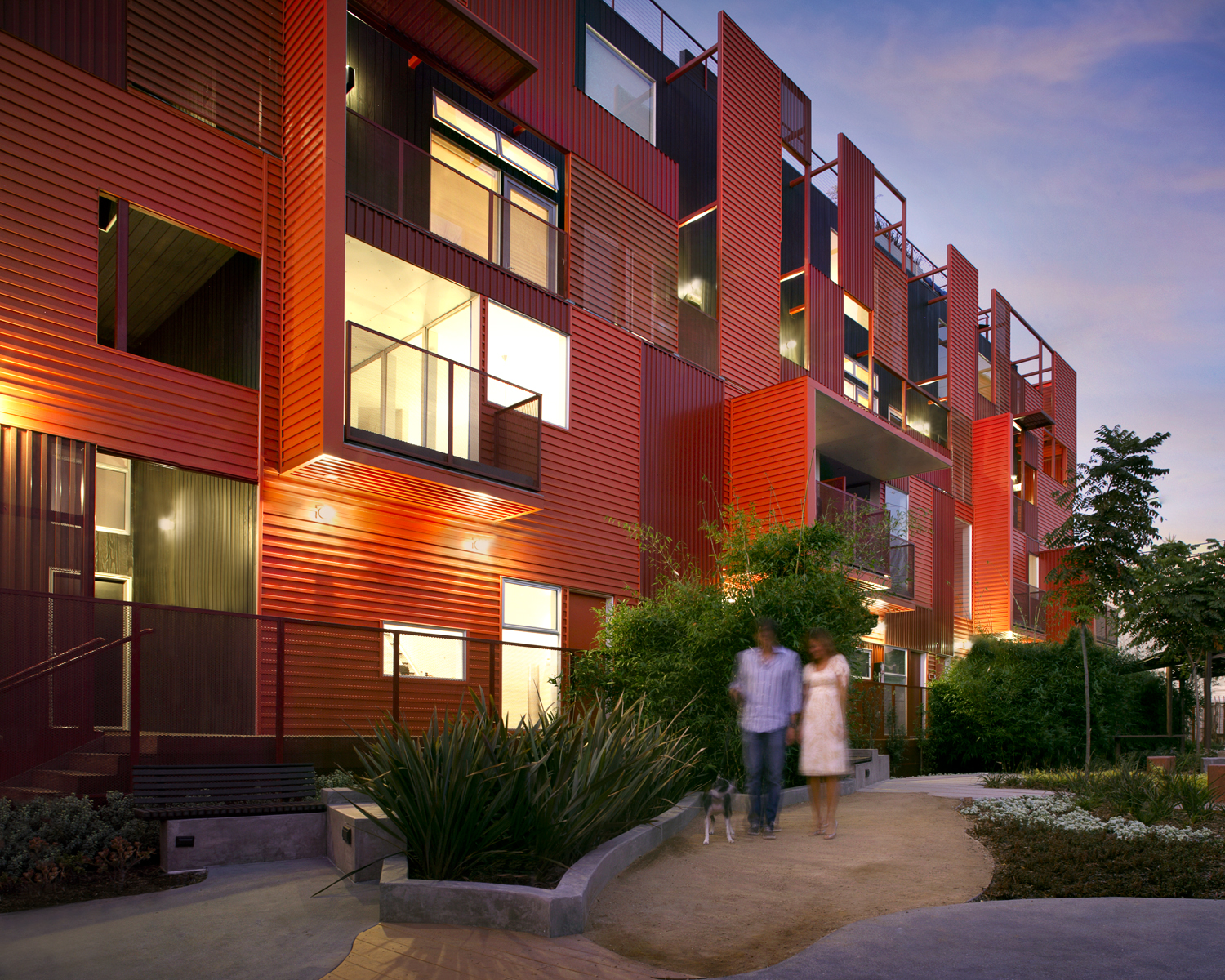
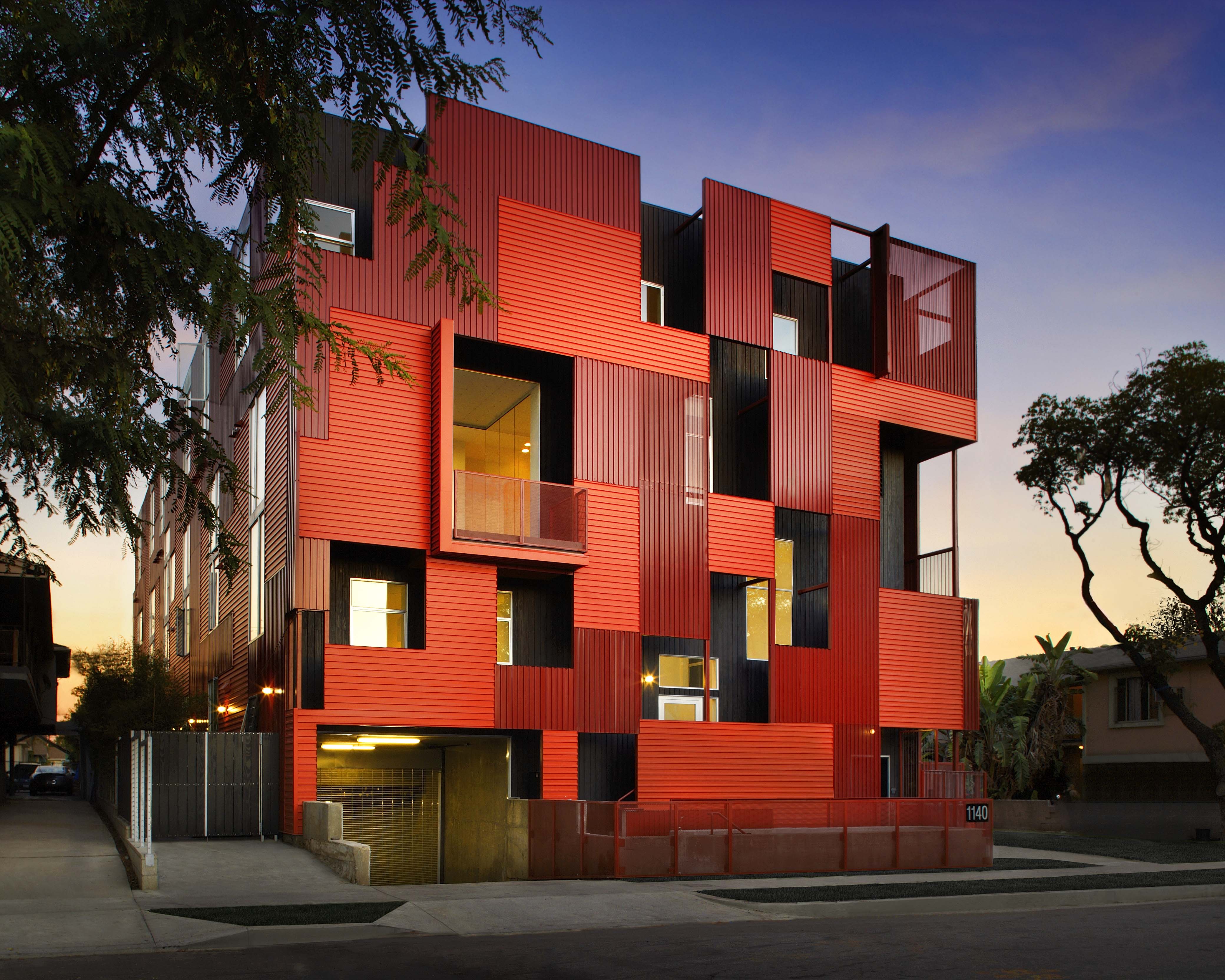
Located in the heart of Los Angeles, this new eleven unit housing project emphasizes the central importance of shared open space for the residents and the community. Formosa takes what would be the internalized open space of the courtyard and moves it to the exterior of the building to create a park. This plan, O’Herlihy’s firm says, “simultaneously creates density and green space and models a replicable prototype for incremental community-driven city development.” Completed in 2008, the 16,000-square-foot building features a red corrugated metal exterior. Sherwin-Williams was chosen for its flagship Fluropon coating to be the product of choice for Formosa.

Using Sherwin-Williams 70% PVDF Fluropon coating, a custom red color — Coronado Red — was inspired by the iconic nearby Formosa Café, and not only highlighted the texture and pattern of the exterior, but also contrasted with the green shades of the park. The metal façade is made of 12,900 square feet of perforated T16-E panels from Metal Sales Manufacturing Corporation, which conceal and shade outdoor walkways on the three-story building, giving residents a sense of privacy in spite of the structure’s openness to the park and street.


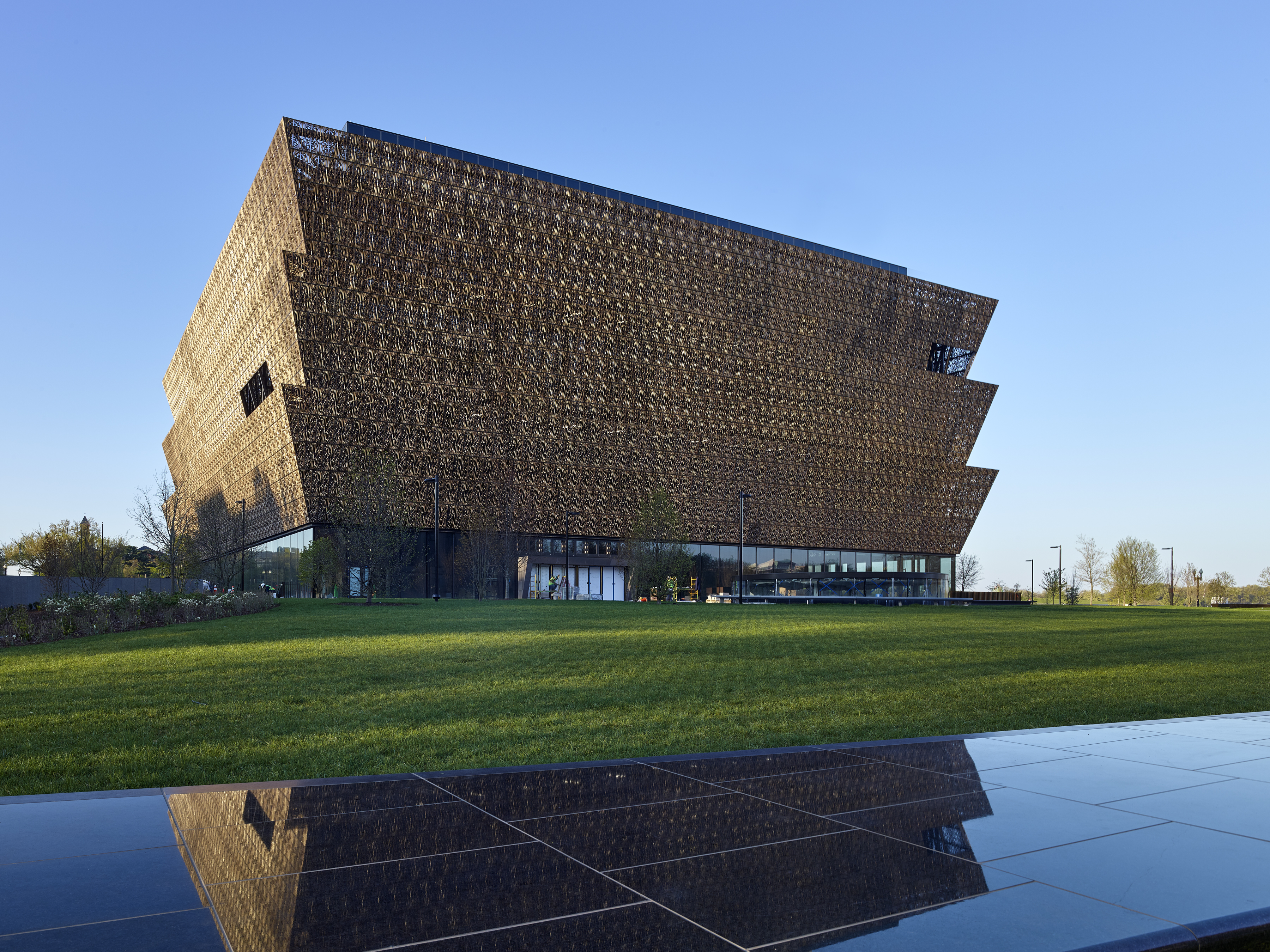
National Museum of African American History and Culture

By The Freelon Group, Adjaye Associates, Davis Brody Bond LLP, Washington, DC, United States

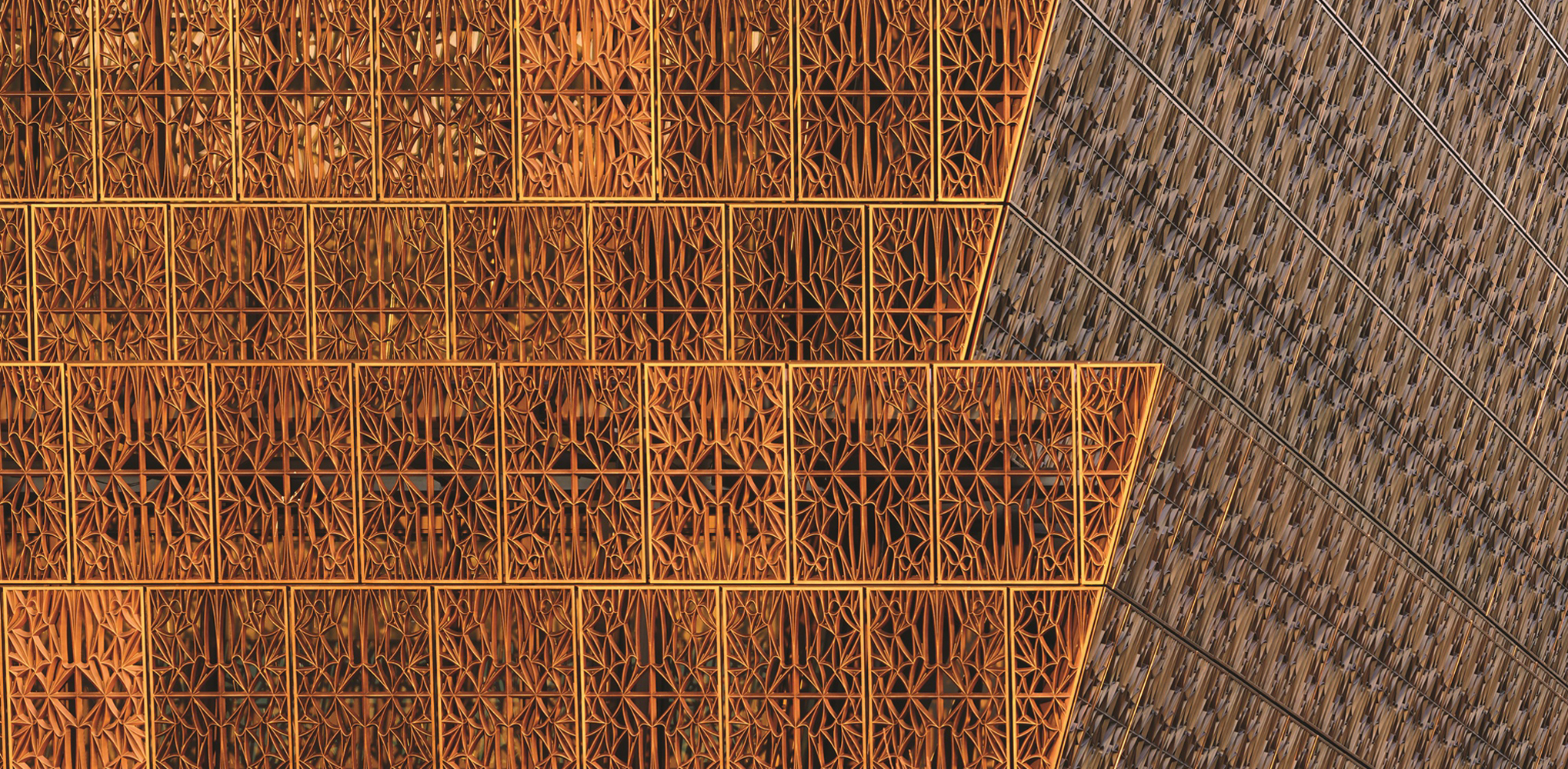
The National Museum of African American History and Culture (NMAAHC) holds a prominent place on the National Mall. As the team outlines, the primary architectural idea for the museum was derived from the classical tripartite column with its base, shaft and capital. In Yoruban art and architecture, the column or wooden post was usually crafted with a capital resembling a crown. This crown or corona form is the central idea which has driven the design of the museum.

Reaching toward the sky, the bronze clad corona expresses faith, hope and resiliency. Once the final color idea was identified, the new challenge of obtaining the perfect hue began. Three custom shades, African Sunset, African Sunrise and African Rose, and one standard shade of Black Sherwin-Williams Fluropon coating were used on these massive aluminum panels, each weighing around 200 pounds and stretching 4 by 5 feet. Each panel that was custom cast by Morel Industries was finished with five different coating layers, each a different color of the Fluropon coating, to achieve the exact bronze shade desired by the design team. Eventually, the final color was created, called “Artisan 3.5.”


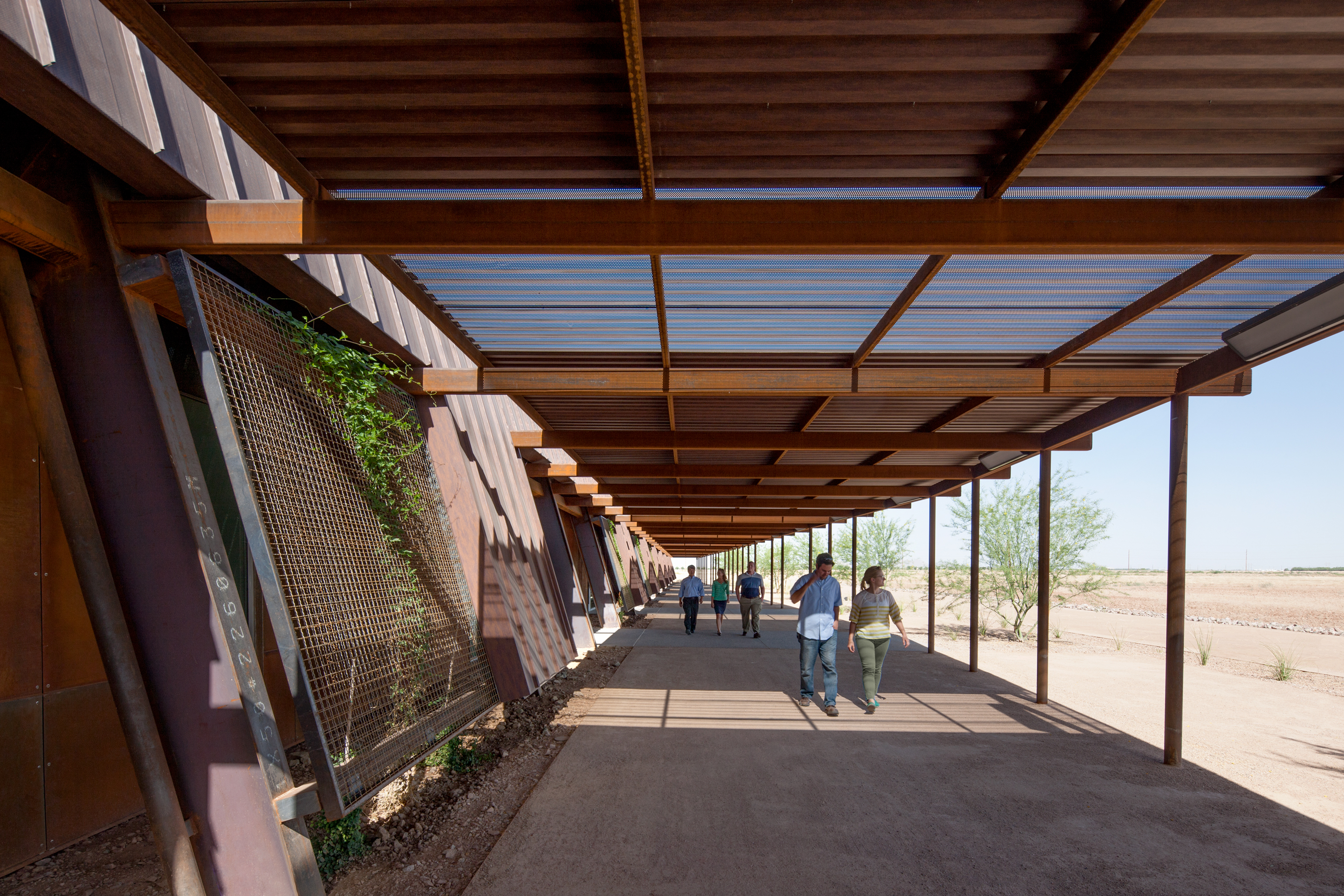
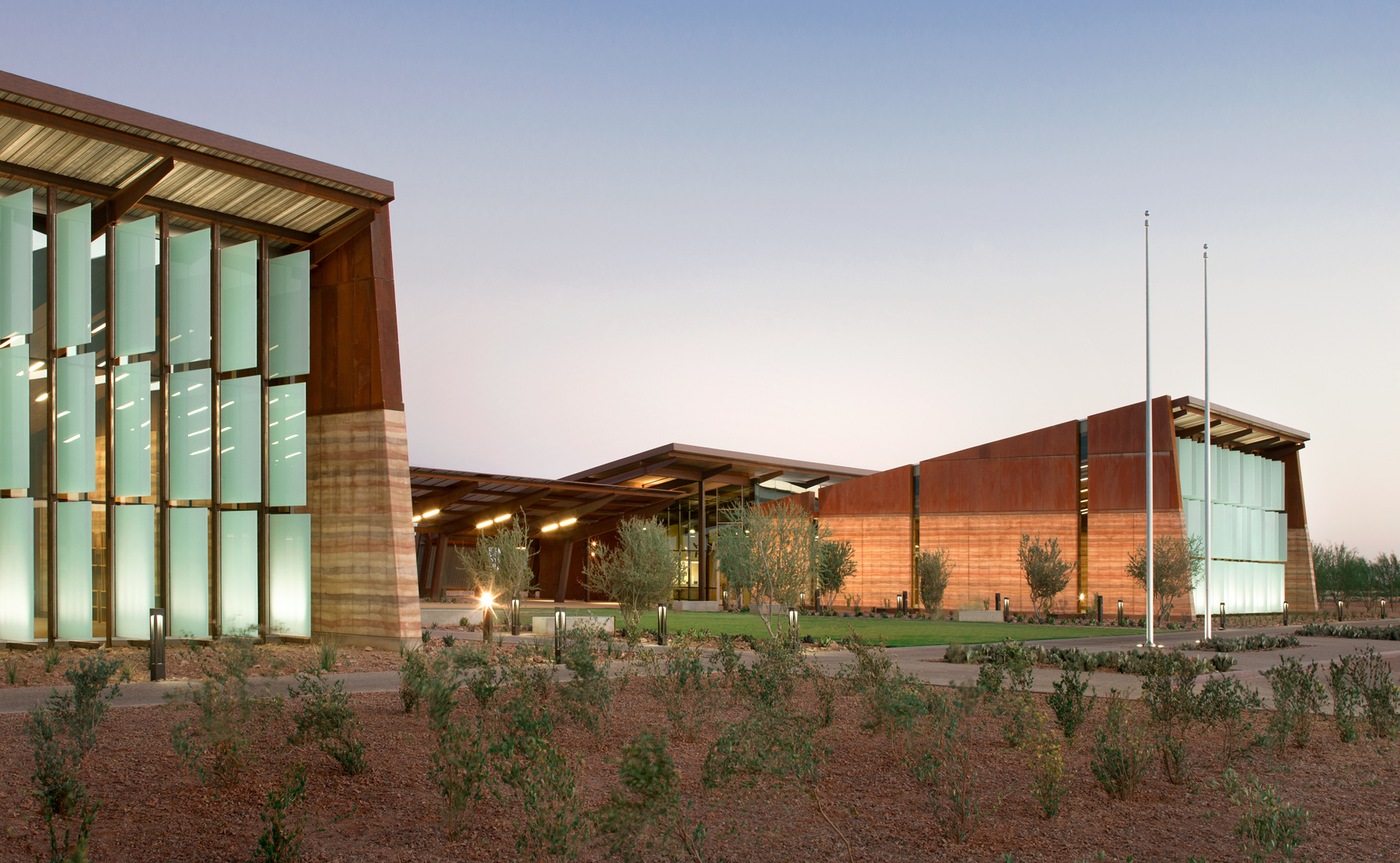
Central Arizona College, Maricopa Campus

Designed by SmithGroup, Maricopa, AZ, United States

This new ground up campus was designed to create a unique and authentic identity for the growing Central Arizona College. The three building campus is conceptually rooted in its historic agricultural roots and Native American legacy. Structures are conceived as a series of honest, spare and no maintenance ‘academic sheds.’ Deep overhangs let interior academic spaces flow outdoors seamlessly. Corten steel and rammed earth create the primary exterior language eliminating the need for long term maintenance.

The diverse program includes teaching laboratories, classrooms, culinary arts, a café, bookstore, library, learning center, interactive distance learning classrooms, student services, administration and a multipurpose community room. To ensure the unique appearance, Sherwin-Williams Fluropon coating in Cor-Ten AZP was chosen to adorn the facility. This coating achieves the look of Cor-Ten Steel through a two-step process using a print effect Floropon coating. The coating, containing 70% PVDF resins, provides the strongest protection against weathering, aging and pollution for color retention to preserve the beautiful aesthetic of the facility for years to come.

Architects: Want to have your project featured? Showcase your work through Architizer and sign up for our inspirational newsletters.

Reference

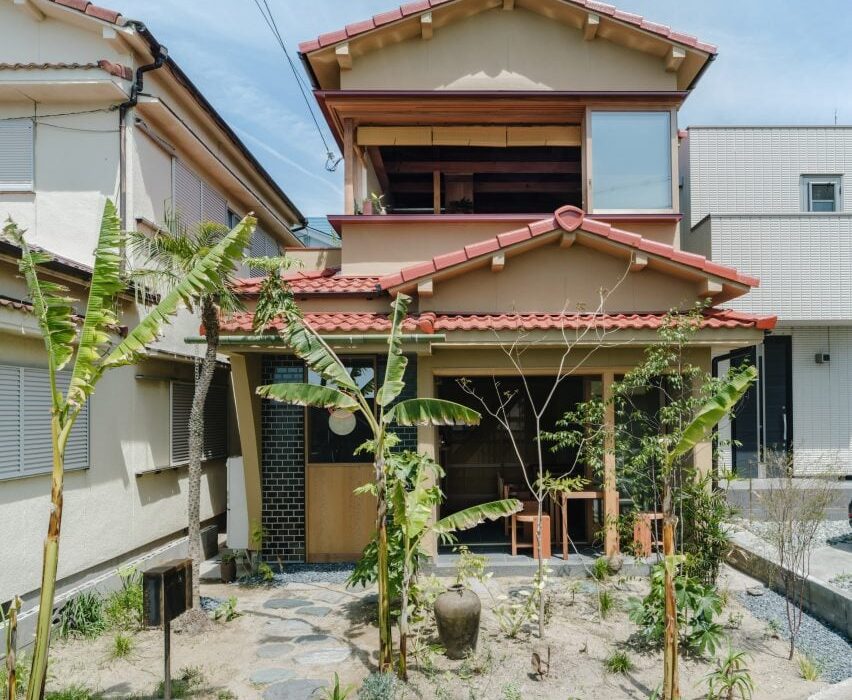
Exterior image of House in Hayashisaki Matsue Beach
CategoriesInterior Design

Akio Isshiki Architects marries old and new with Japanese home and restaurant

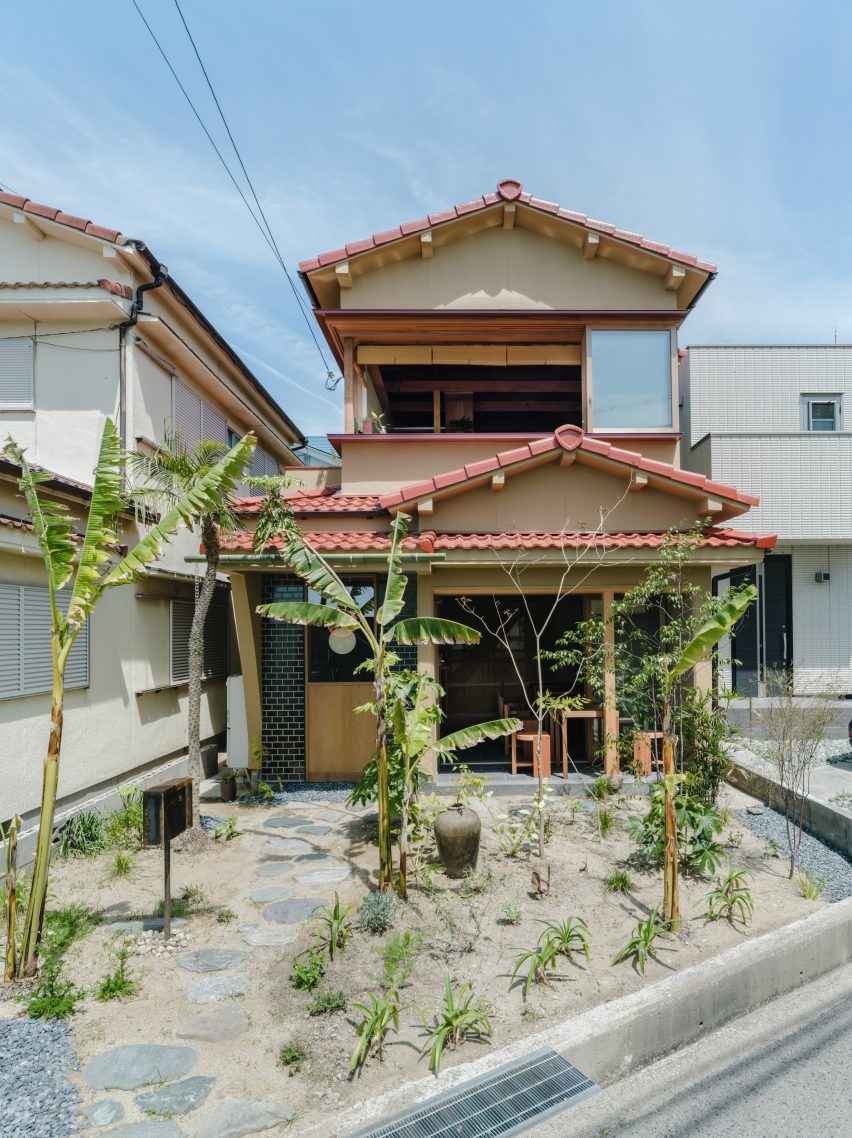
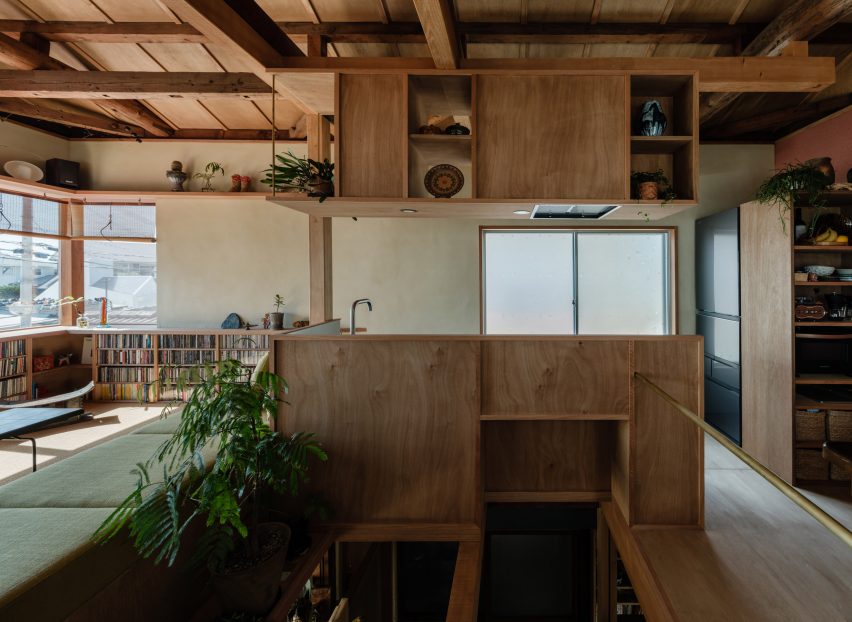
Japanese studio Akio Isshiki Architects has transformed an old wooden building into a warm-toned home and public restaurant named House in Hayashisaki Matsue Beach.

Located on a coastal street in Akashi in southern Japan, the mixed-use space was built within a 50-year-old building for a local designer and features a curry restaurant as well as residential and working spaces.

Designed to reflect traditional Japanese dwellings, the home and restaurant are contained within a wooden building that was previously dark and separated.

Exterior image of House in Hayashisaki Matsue Beach
House in Hayashisaki Matsue Beach was designed by Akio Isshiki Architects

During the renovation, Akio Isshiki Architects aimed to pair existing elements with modern features to reflect the mixed-use nature of the project.

“The house was divided into small rooms, narrow and dark,” studio founder Akio Isshiki told Dezeen.

“It was very old and damaged, but fortunately the carpenter had done a good job, there were no leaks, and the structure was solid.”

Interior photo of House in Hayashisaki Matsue Beach
It is located in Akashi

Accessed from the roadside, a series of circular stones form a path that leads through the planted front garden and curves to extend along the front of the building, providing access to the ground-floor restaurant.

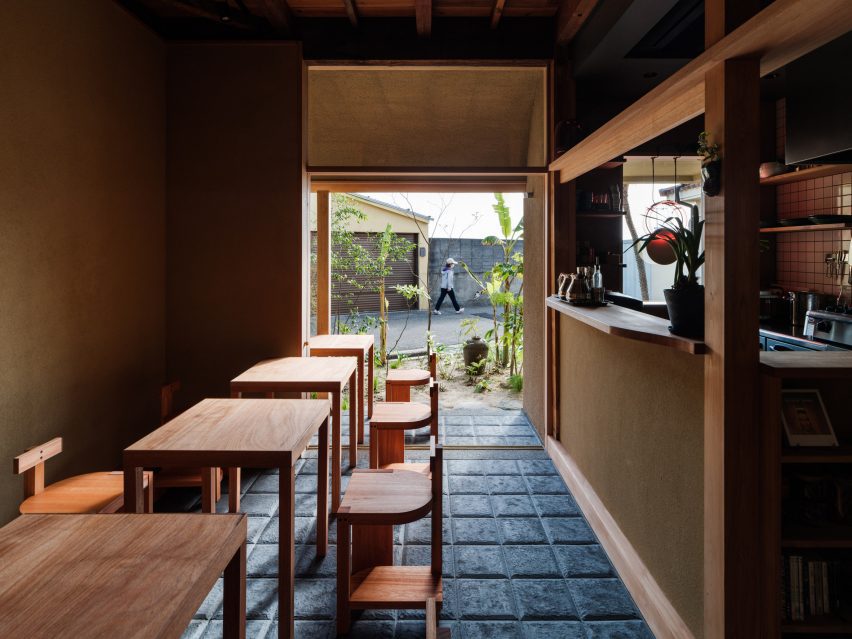
Here, a stepped sheltered porch features external seating and is separated from the interior space by a wide sliding glass door set in a timber frame, which offers views into the garden and can be fully opened to connect the dining space to the outside.

Interior photo of the restaurant at House in Hayashisaki Matsue Beach
The structure contains a restaurant and a home

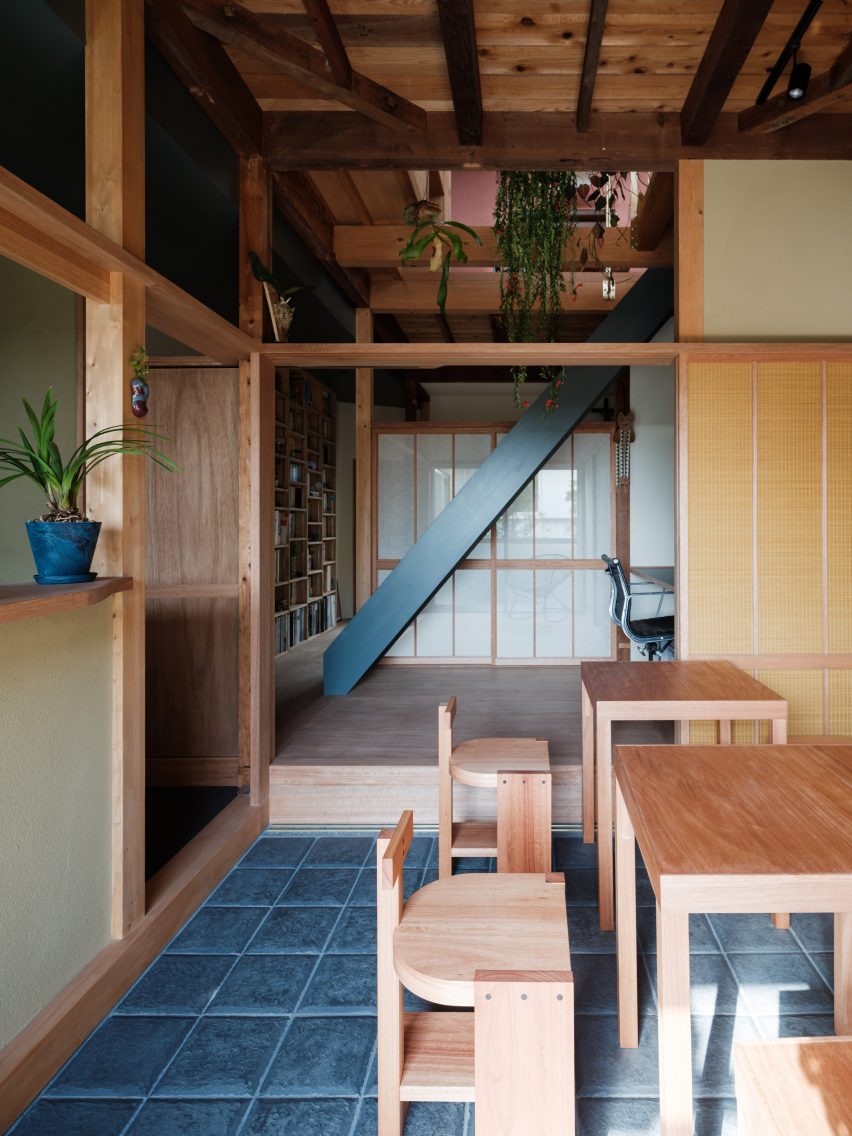
Inside, the floor has been coated with dark tiles informed by the history of the area, which was formerly a large tile producer.

“These tiles were handcrafted one by one by tile craftsmen in Awaji, with the image of lava stone pavements seen in cities in Central and South America superimposed on the texture and edge shape,” said the studio.

Interior photo of House in Hayashisaki Matsue Beach
It draws on traditional Japanese homes

Wooden furnishings, including bespoke D-shaped chairs designed by the studio and created by a local woodworker, are arranged throughout the dining space at the front of the building.

“To ensure stability even on uneven floors, three legs are used as a base for the chairs, and the legs are made of a thick material so that they do not fit in the joints of the Kawara tiles,” said Isshiki.

“I aimed for a primitive design with an unknown nationality, with as simple and crude a composition as possible.”

Separated from the main space by an earth-toned counter, the kitchen is tucked into one side of the dining room and features walls clad in wooden panels and white tiles, along with a lighting fixture formed from two circles that hangs in the street-facing window.

A Japanese shoji screen at the end of the dining room is the first of a series of flexible partitions throughout the home that can be pulled out to provide separation between the spaces.

Photo of House in Hayashisaki Matsue Beach
The upper floor contains private residential space

“Conscious of the tropics and nostalgia, we put nets that look like mosquito nets and sudare blinds on the shoji screens,” said the studio. “The graceful plans created by imperfect partitions such as shoji and fusuma are typical of ancient Japanese architecture.”

“In this house, where cultures, nationalities, times, and various other things are combined, I thought it would be appropriate to have the spaces partially mixed so that they could feel the presence of each other, rather than being permanently partitioned in terms of usage,” it continued.

Photo of a corridor at the Japanese home
Wood was used throughout the interior

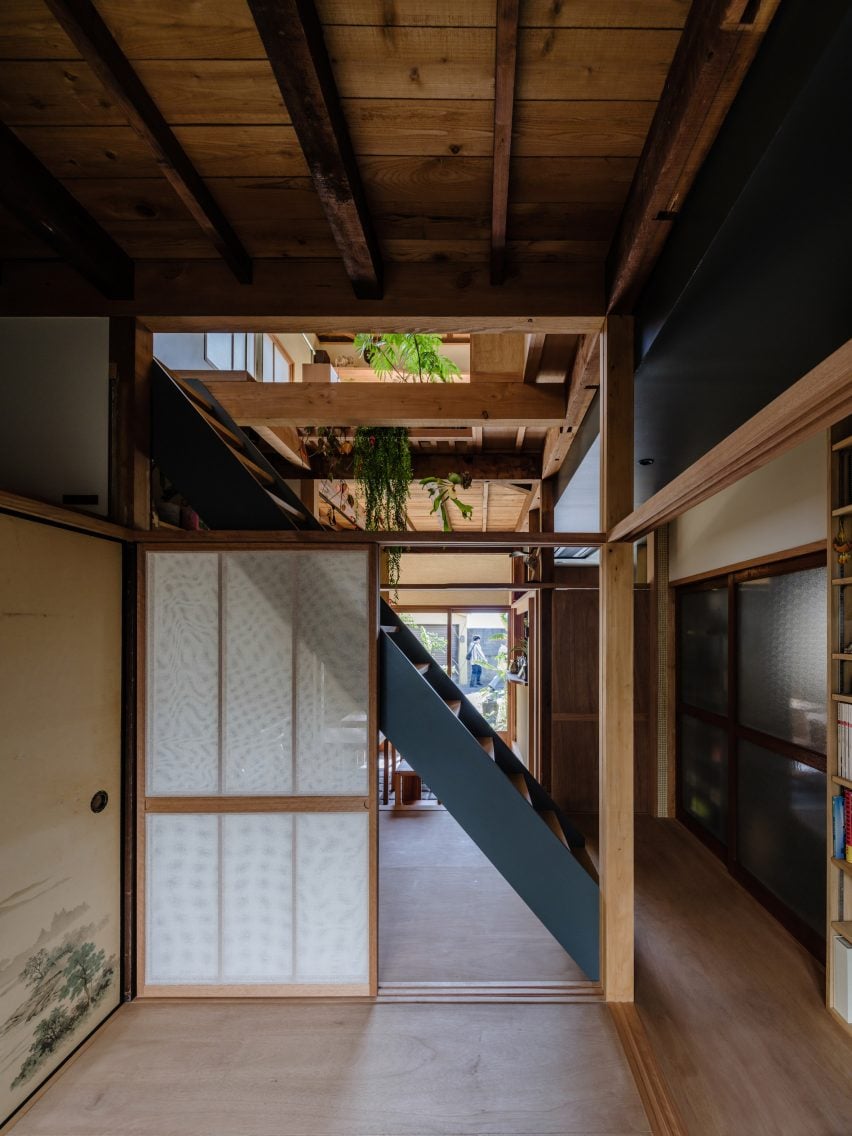
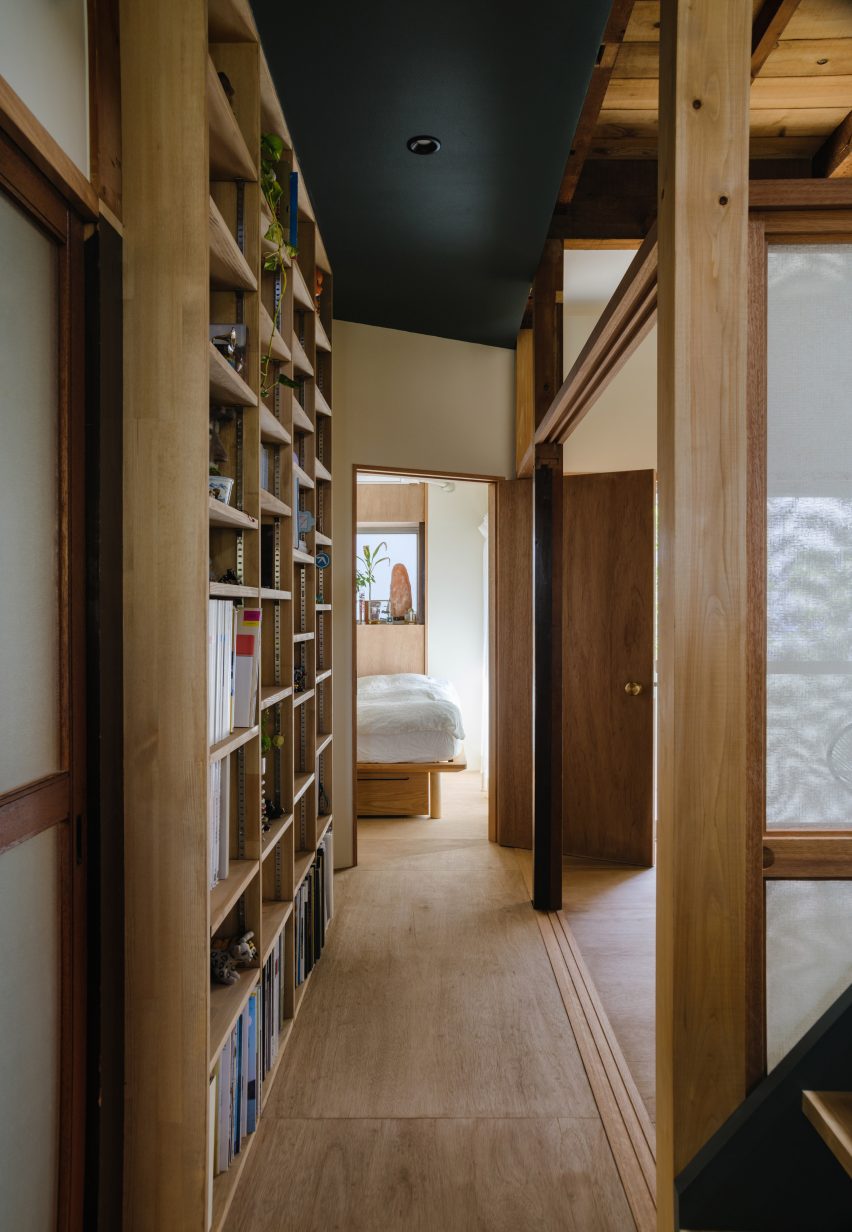
Built on a raised timber platform, the rest of the ground floor holds private rooms for the client, which are divided by shoji screens, including a traditional Japanese room that opens onto a garden.

A home office borders the dining space, where a central black ladder leads to the floor above, while a bedroom, bathroom and utility room branch from the other side of the corridor.

Photo of the home
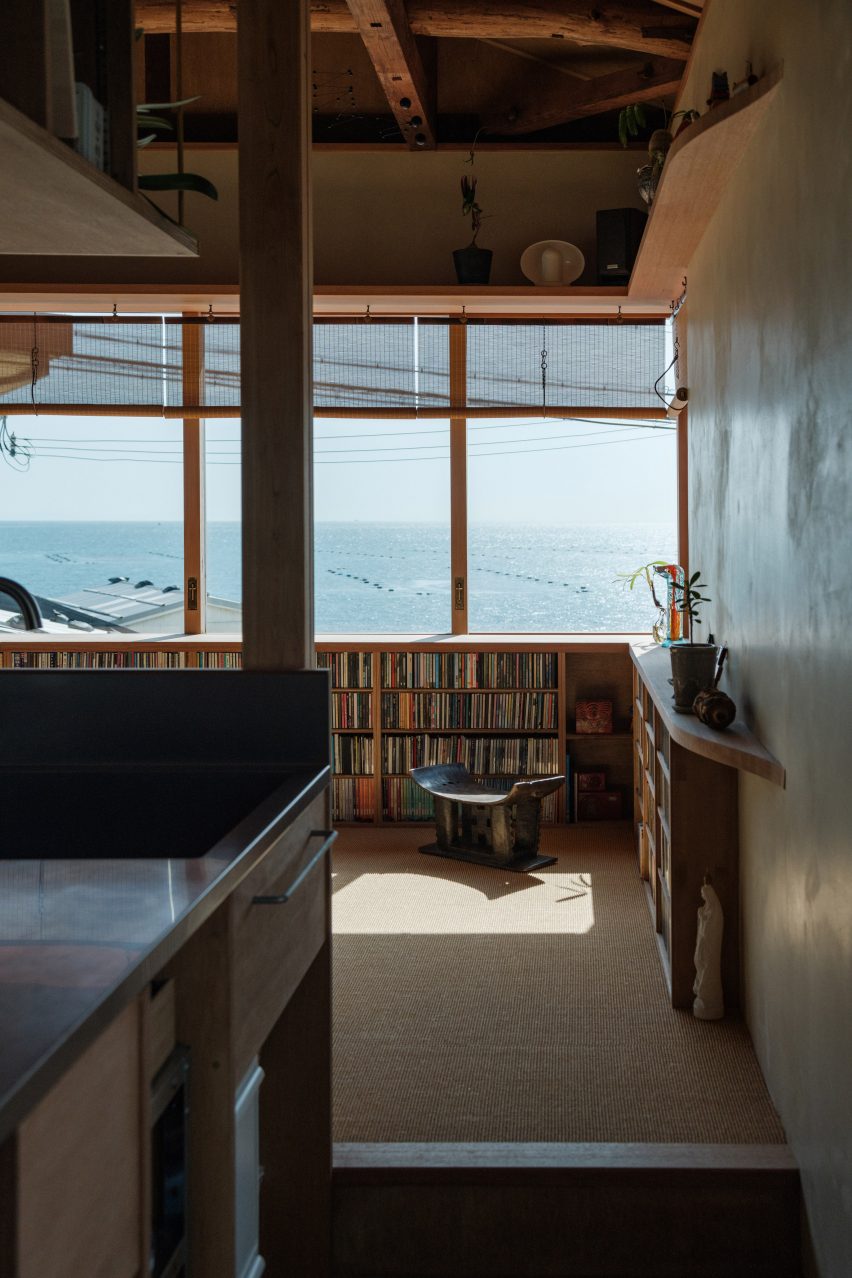
The residential space has views of the sea

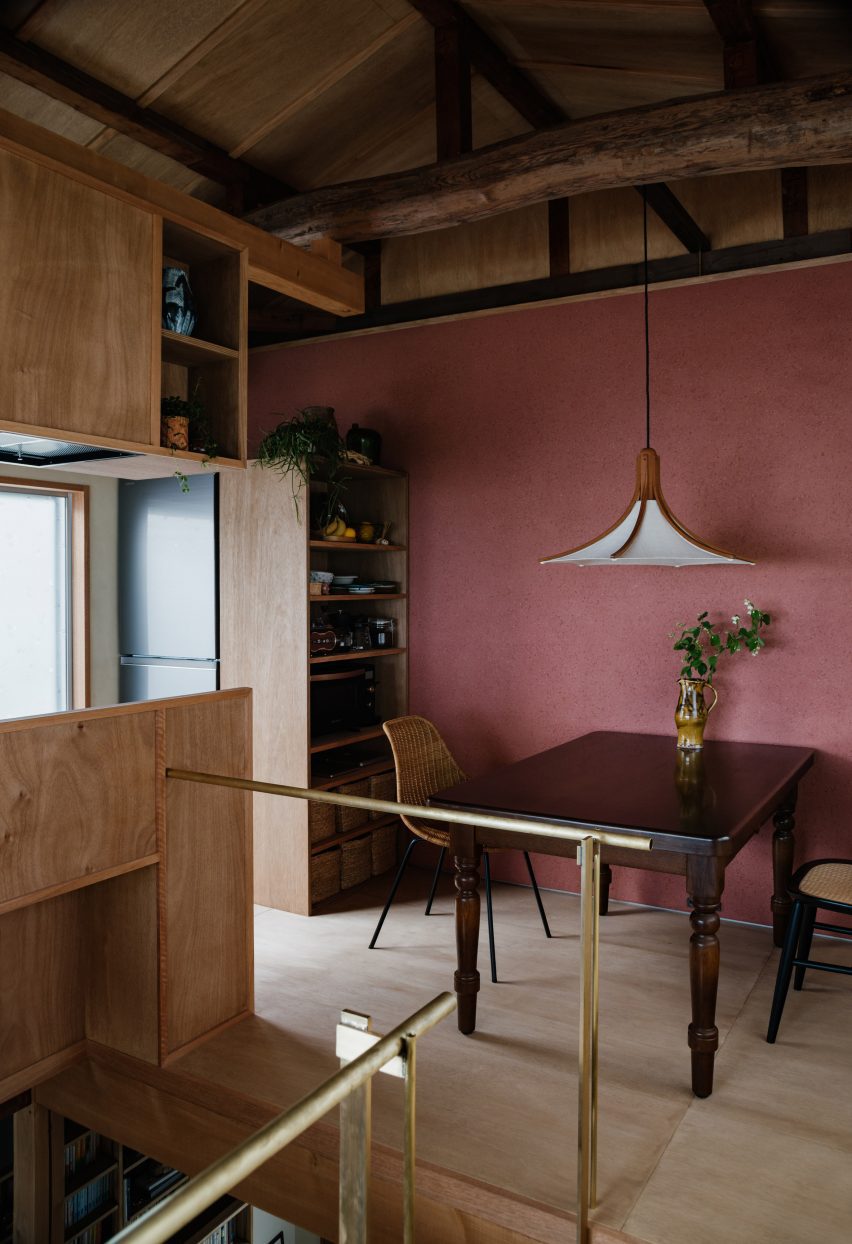
Upstairs, the studio added an open arrangement of dining and living spaces with warm-toned surfaces including a red wall and dark wooden beams that interact with the home’s original rustic roof structure.

“The wall on the second floor is a scraped wall mixed with red iron oxide and finished by a plasterer from Awaji,” said Isshiki. “This is an attempt to incorporate the colourful walls of each country into architecture in a Japanese context.”

Interior photo of the home
The home has an open-plan living arrangement

Other Japanese homes recently featured on Dezeen include a Tokyo home spread across two stacked volumes and a concrete home supported by a single column on Japan’s Okinawa Island.

The photography is by Yosuke Ohtake.

Reference

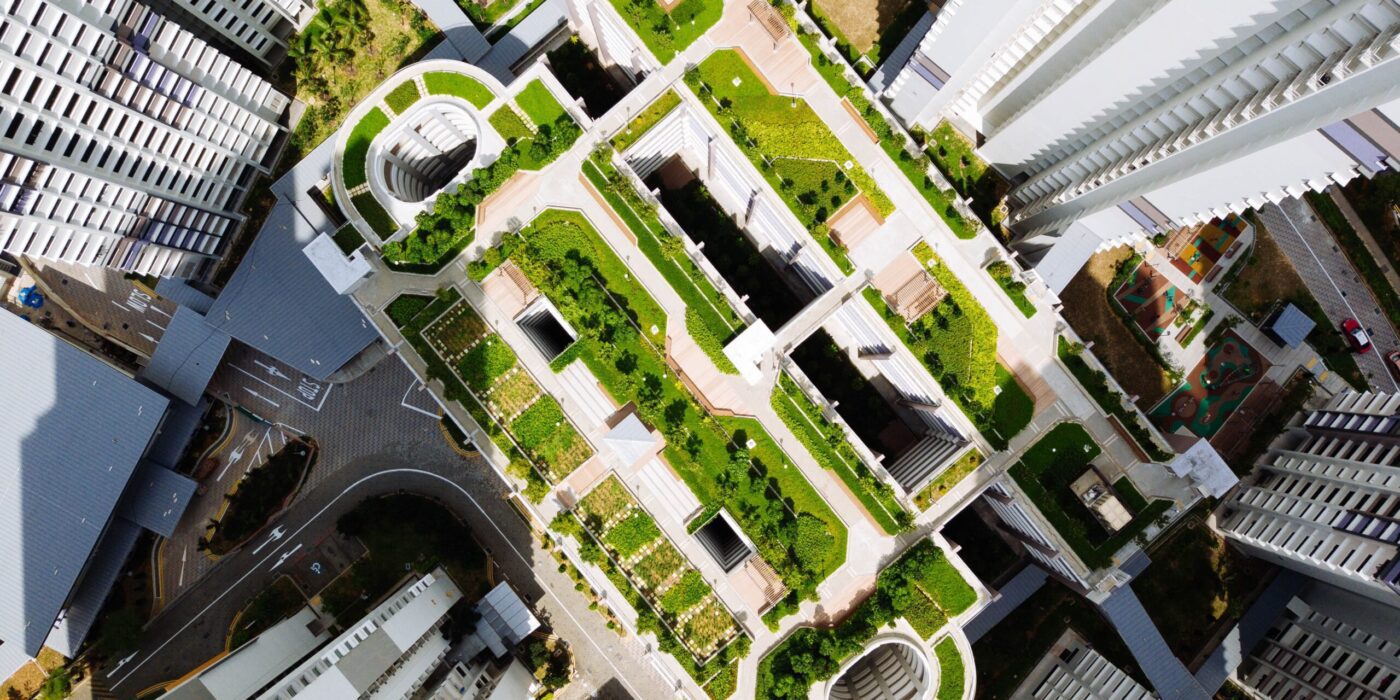
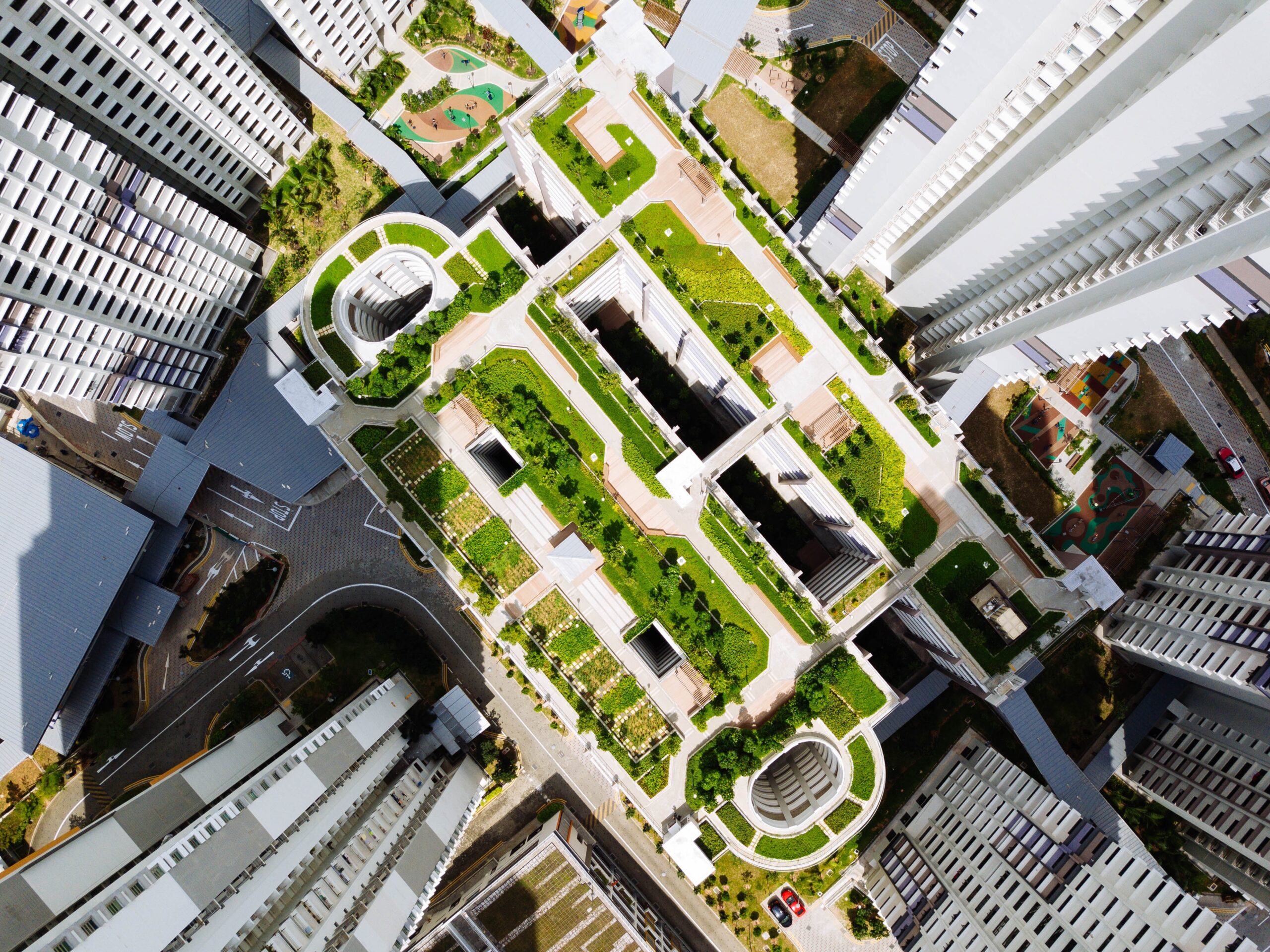
Aerial views of roof terraces. Photo by CHUTTERSNAP via Unsplash
CategoriesArchitecture

Is Demand Set to Grow for Architects Specialized in Green Roof Design and Renovation?

Architizer is thrilled to announce the winners of the 11th Annual A+Awards! Interested in participating next season? Sign up for key information about the 12th Annual A+Awards, set to launch this fall.
Rooftops have traditionally been the domain of mechanical equipment, line-drying laundry and the occasional playground for kids. Panoramic views and good weather make the perfect setting for sunset drinks (bars, restaurants and hotels got it right!), but expansive areas of residential building rooftops remain underused around the world. These spaces are waiting to be transformed into pleasant outdoor environments — and not necessarily for lucrative purposes. The benefits of transforming rooftops extend not only to residents but to entire cities at large.

Aerial views of roof terraces. Photo by CHUTTERSNAP via Unsplash

Roof terraces aerial view. Photo by CHUTTERSNAP via Unsplash.

In densely populated areas where scant land is available, underused roofs offer the opportunity to expand green urban areas, promoting urban biodiversity, improving the well-being of city dwellers and reducing negative environmental impact. With green roof technology, rooftops no longer accumulate heat during the day, creating the so-dreaded heat island effect. Instead, they retain rainwater and capture CO2 and pollutants. Turning rooftops into pleasant outdoor spaces accessible to building residents is an effective use of otherwise wasted built space and offers the opportunity to replace lost habitats.

Improving the Quality of Life for City Dwellers

Architects, developers, builders, landscape architects/designers and product manufacturers are the ideal team to create cohesive, functional and sustainable buildings that improve city dwellers’ quality of life. Architectural examples worldwide demonstrate that the effort to counter the overpopulation of urban areas and the scant green spaces is global. They differ, however, in the architectural vocabulary, which, in each case, facilitates the integration of buildings into their specific context, taking into account cultural, climatic and economic factors.

90-unit housing development in Saint-Ouen, France by Atelier du Pont

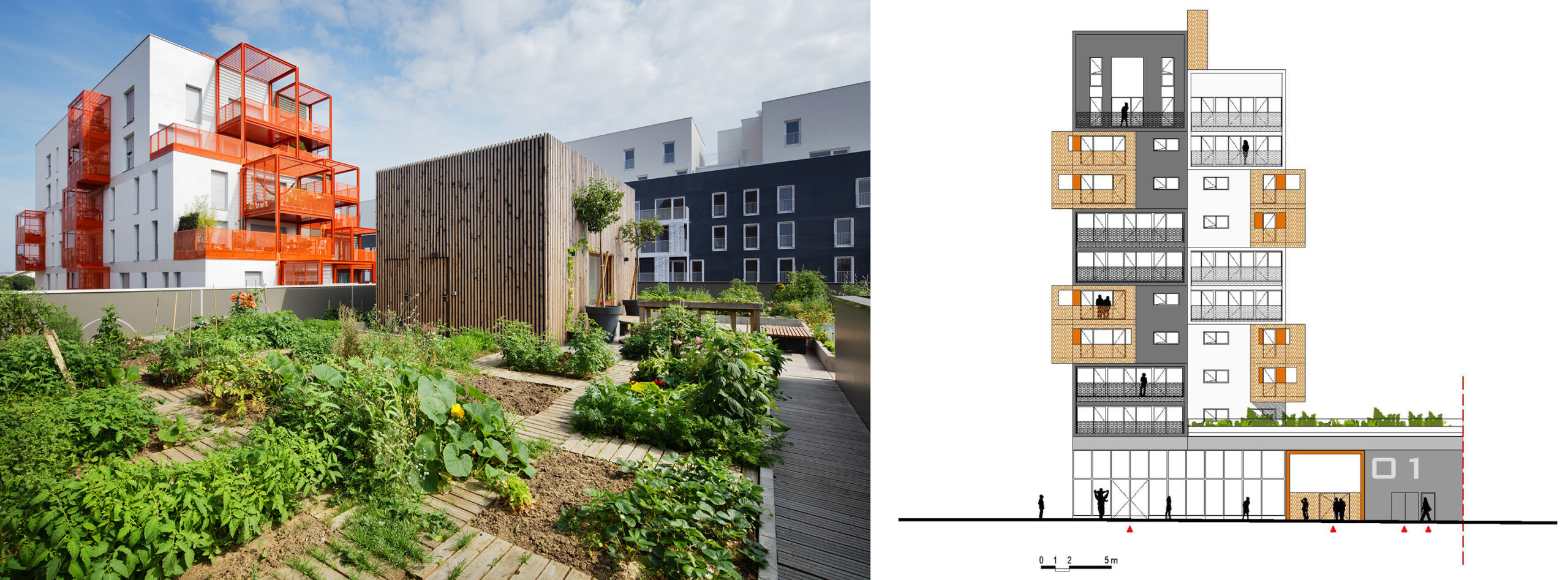
90-unit housing development in Saint-Ouen, France, by Atelier du Pont. Photo by Takuji Shimmura. 

Take, for example, Atelier du Pont  90-unit mixed-use building in Saint-Ouen, near Paris, France, which draws inspiration from the city’s industrial heritage. The project offers private open spaces at various levels and a shared community garden, a gathering spot for the building’s residents.

The building’s overall massing of staggered concrete “boxes” maximizes natural daylight, while brightly colored metal balconies provide private outdoor spaces. On the sixth floor, a community garden offers open space for residents to grow their own organic vegetables and socialize. As open spaces in cities dwindle, rooftops and terraces open a world of opportunities.

Avalon Bay Urban Housing Landscape by Todd Rader + Amy Crews Architecture Landscape Architecture LLC

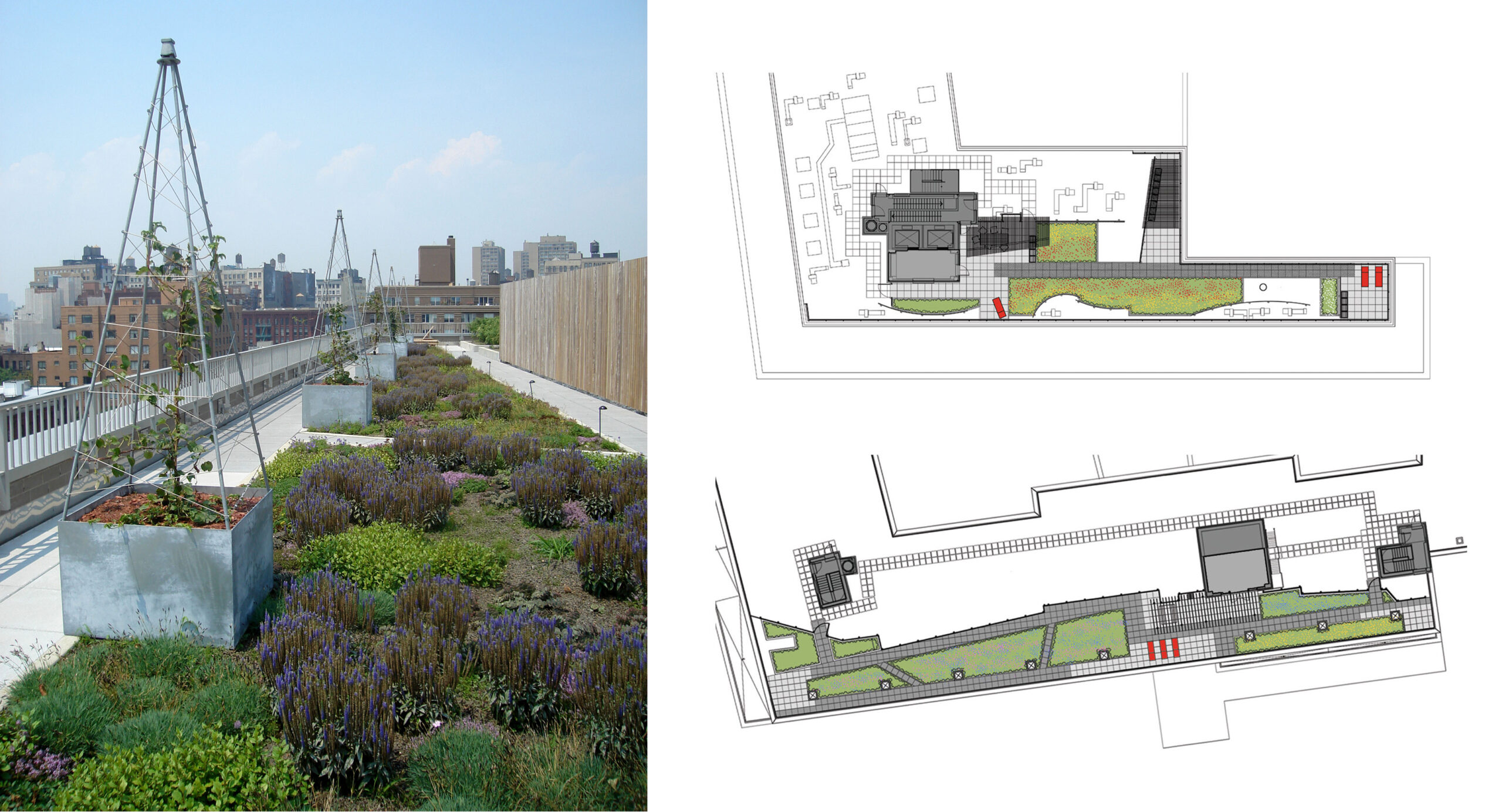
Avalon Bay Urban Housing Landscape by Todd Rader + Amy Crews Architecture Landscape Architecture LLC, New York City, NY

Meanwhile, our next case study brings us to the New York City, where Todd Rader + Amy Crews designed the landscapes at Avalon Bowery Place in the heart of the concrete jungle, where scant land is available. The new landscapes root the project in the urban context and provide open space for the building’s residents and the neighborhood.

The project includes three landscapes at the ground level and two on building rooftops. While the ground-level landscapes unify the complex through visual connection and material selection, the roof terraces are physically isolated landscapes in the sky, where they enjoy sunny exposure and participate in the aerial archipelago formed by the landscape of city rooftops.

Nieuw Bergen development in Eindhoven, The Netherlands

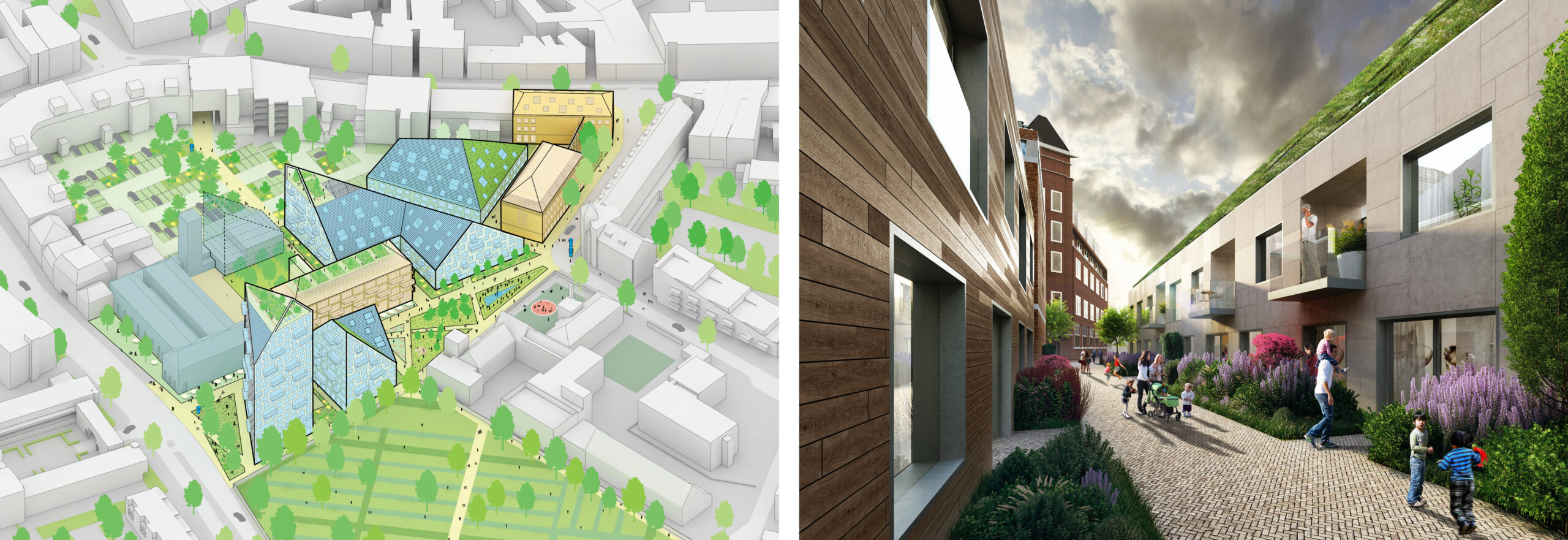
Nieuw Bergen by MVRDV, Eindhoven, The Netherlands

Finally, let’s take a look at The Nieuw Bergen — a multi-unit housing development in Eindhoven, the Netherlands. Its design responds to an urban strategy tool that the architects, MVRDV, have been developing and implementing in cities on the way to sustainable densification. This strategy establishes environmentally friendly and dynamic living conditions for residents. The sloped roofs maximize sunlight for the buildings and the public spaces at street level, resulting in significant energy savings. The diverse roofscape of solar panels and greenery complement the area’s architectural character of new and existing buildings.

So, given all of the clear urban benefits demonstrated by the private initiatives explored in these examples, what would it look like to implement green roof design at an urban scale? Well, one European city has already recognized the broader benefits of mandating this architectural upgrade and is exploring ways to provide impetus for designers to incorporate green roofs in their plans.

Barcelona Living Terrace Roofs and Green Roofs Initiative

Following the example of other European cities, Barcelona has been promoting environmentally conscious initiatives, offering sustainable solutions to reduce pollution and increase access to green areas (internationally, Barcelona’s popular superblock concept has received a lot of coverage). Now, the Living Roofs and Green Covers initiative highlights the social and environmental benefits of green roofs and, since 2017, has been the platform to launch the Green Roof Competitions to promote the creation of green rooftops in privately owned residential buildings.

Initiatives like this one are paramount to raising environmental awareness. According to the Guide to Living Terrace Roofs and Green Roofs published by the City of Barcelona in 2014, it is estimated that 67% of the surface area of roofs in Barcelona (1,764.4 hectares) could be landscaped. If this could ever be achieved, the temperature in the city would drop by approximately two degrees, the green area per resident would more than double and the levels of air pollution would be considerably lower.

The Expansion of the Green Roof Market

The surface area that city building roofs cover is vast, and the social and environmental benefits of greening these surfaces are considerable. Building owners invest in green roofs, designers dream up the plans, and city authorities play a major role in spreading the practice. Choosing between living in the suburbs close to nature and living in the city near work is no longer necessary. Building residents are looking for homes with outdoor access, especially since the pandemic.

Aware of the increasingly popular demand, the real estate industry sees multi-unit residential buildings with partially or entirely planted rooftops as an architectural trend that adapts to a contemporary lifestyle. But how fast is the green roof market expanding? Studies indicate that the global green roof market has been steadily growing at a rate of 17% since 2020 and is expected to grow at this same rate through 2027. Limitations for this growth? Unfavorable climate conditions and maintenance requirements.

Architizer is thrilled to announce the winners of the 11th Annual A+Awards! Interested in participating next season? Sign up for key information about the 12th Annual A+Awards, set to launch this fall.

Reference

Zaha Hadid Architects' New AI Tool Takes You From Sketch to Rendering With a Click
CategoriesArchitecture

Zaha Hadid Architects’ New AI Tool Takes You From Sketch to Rendering With a Click

The latest edition of “Architizer: The World’s Best Architecture” — a stunning, hardbound book celebrating the most inspiring contemporary architecture from around the globe — is now available. Order your copy today.  

2022 was the year AI broke through to mainstream attention. But 2023 might be the year deep learning technology begins to really change how architects work.

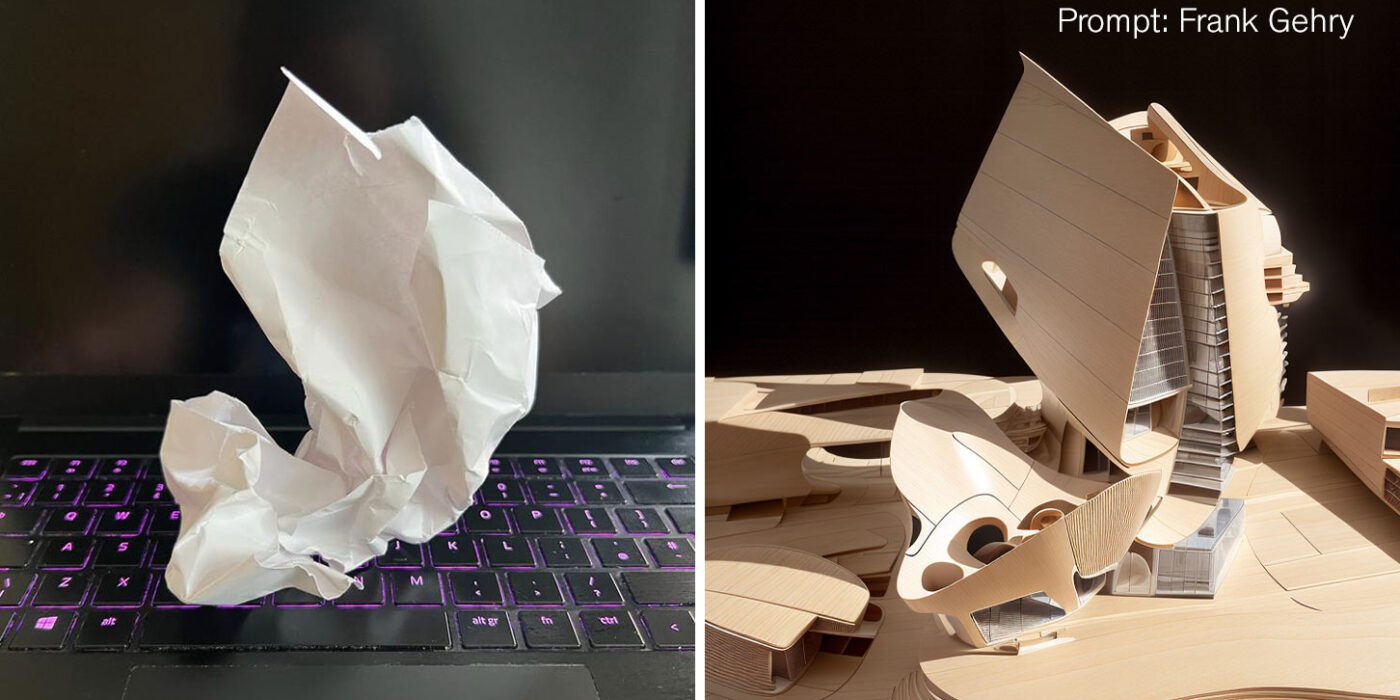
It should come as no surprise to anyone that Zaha Hadid Architects is behind LookX, a digital tool that allows architects to put AI to work in a meaningful way. Dubbed “the Midjourney for Architecture” by Dezeen, LookX is a software program that can take a wide variety of inputs — anything from a detailed sketch to a group of squiggly lines — and instantly transform them into high-end architectural renderings. Zaha Hadid designer Tim Fu made headlines with a Gehry-esque rendering created from a crumpled piece of paper.

Unlike Midjourney — or any other AI tool for that many — LookX was specifically trained on an architecture dataset called ArchiNet. The fact that LookX has been trained on this data sets it apart from other tools and allows its outputs to be of real use to architects.

“Because it’s trained specifically on architecture models, it has a lot more capabilities in producing finished results and resolved geometry, as opposed to what you would typically get from Midjourney or DALL-E or Stable Diffusion,” Fu told Dezeen.

In short, the program is able to quickly grasp different architectural typologies, distinguishing residential structures from commercial or public buildings. It can also fill in details that really make sense and could be useful in later phases of the design process. These outputs, in other words, are not simply impressionistic digital sketches of buildings. Their utility extends beyond the initial “wow” factor.

The LookX platform includes three sections: Generator, Model Training and Sharing Community. This last section, the social dimension, allows different models to cross-pollinate, enabling sparks of innovation to fly in unexpected directions.

In addition, the image generation is split into Render Mode, where the machine re-interprets sketches into architectural form, and Explore Mode, which allows for flexible customization. Even Render mode is more flexible than one might think; users can upload reference images to give the program visual guidelines. Something is reassuring about these features; they make it clear that using LookX does not mean handing over creative control to the machine!

As LookX is a deep learning program, its generating capabilities are constantly improving the more that it is used. That might sound eerie but it is true; the power of these kinds of programs lies in their ability to learn.

There is a certain significance to the fact that Zaha Hadid Architects is the firm to release this tool. The late Dame Zaha Hadid was well-known for her loose and impressionistic sketches. She had the remarkable ability to think in terms of large shapes and curves and then translate these general ideas into real-life buildings.

LookX will allow more architects to work like Hadid, beginning with the big picture. As a brainstorming tool, this is very exciting. We can’t wait to see what buildings result from this technology!

The latest edition of “Architizer: The World’s Best Architecture” — a stunning, hardbound book celebrating the most inspiring contemporary architecture from around the globe — is now available. Order your copy today.  


Reference

sealand architects' timber residence australis takes after noosa's traditional homes
CategoriesArchitecture

sealand architects’ australis takes after noosa’s traditional homes

Australis: a family home that opens to the australian bush


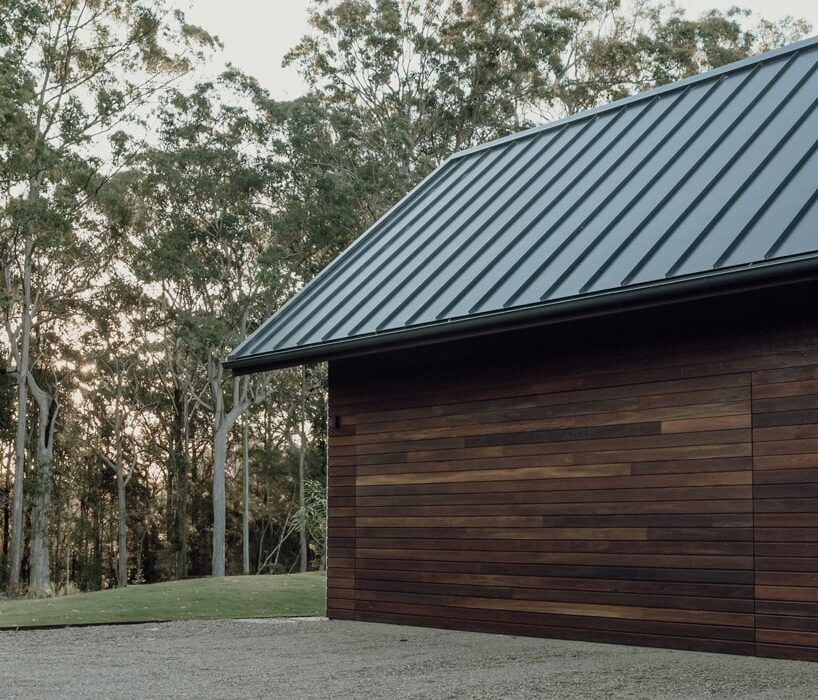
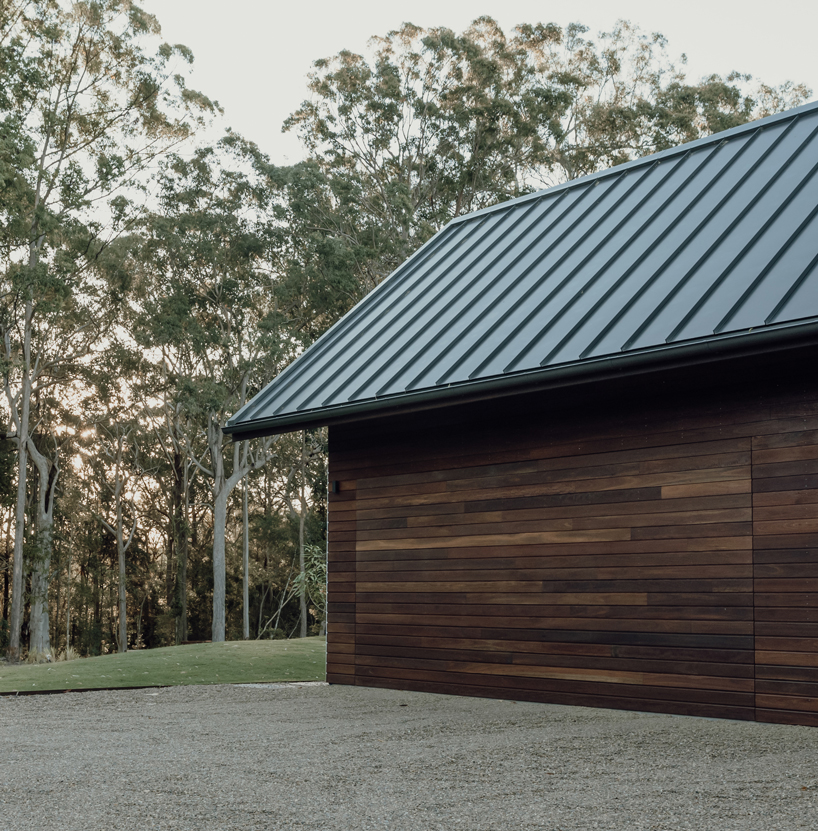
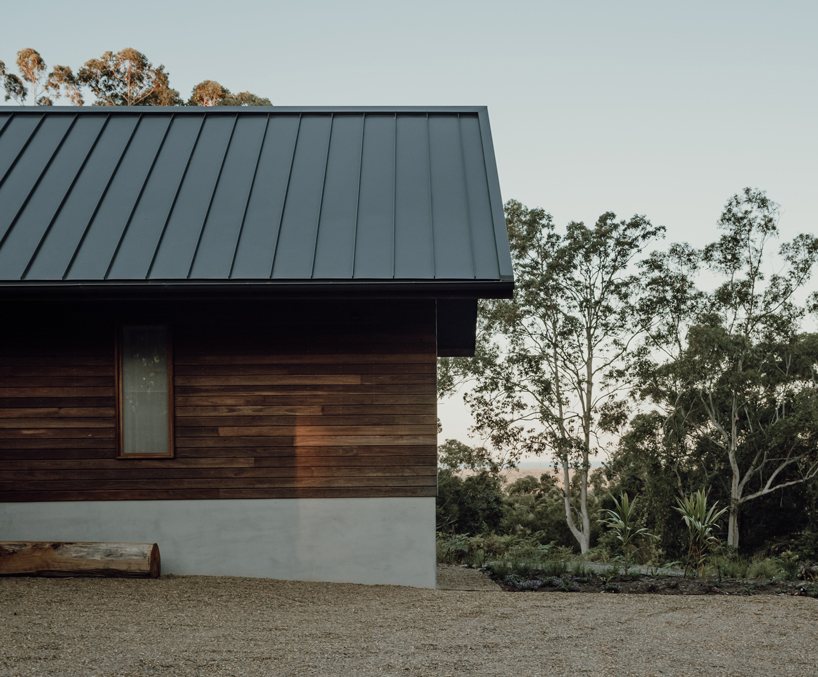
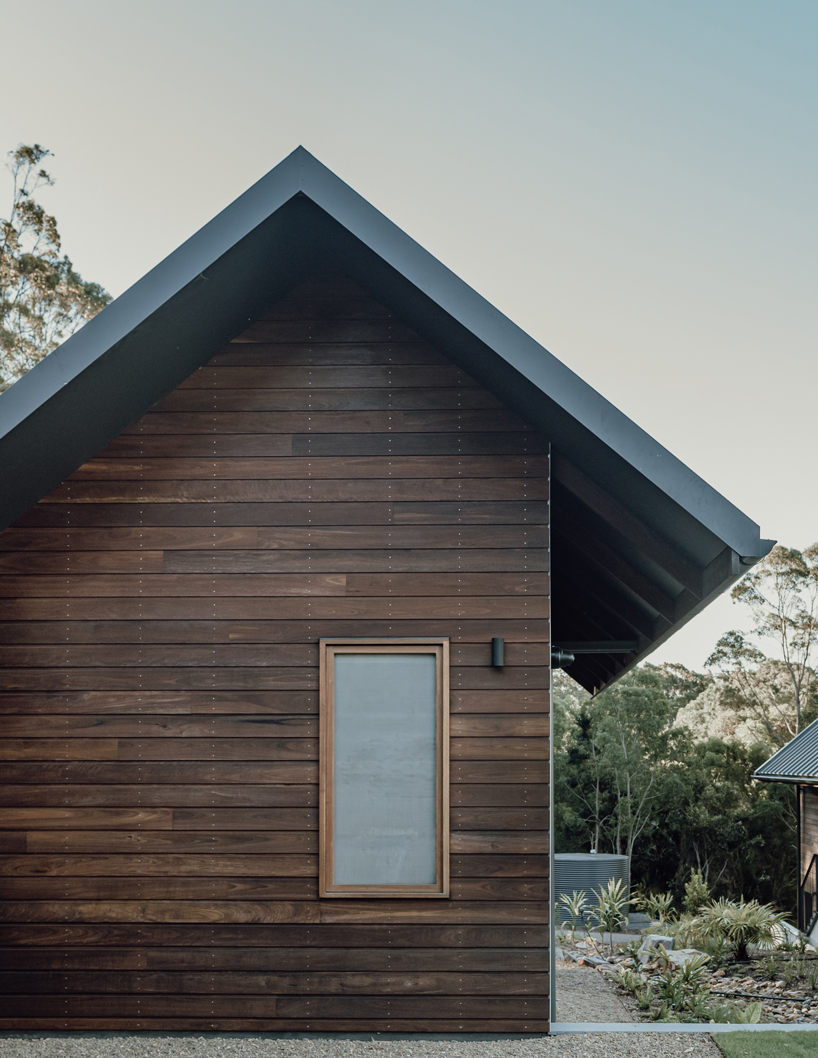
Australis House by Queensland-based sealand architects is designed to foster users’ family and friends connections and blend with the surrounding landscape of the Australian bush. The project allows for flexibility in the design to accommodate the changing requirements of the family’s living conditions. The concept follows a traditional character and draws from early Noosa building structures that present elegant roof forms and timber construction. Externally the facade applies materials such as local hardwood, stone, and metal roof sheeting that are relatively low maintenance and bushfire resistant.


The layout forms large central areas in the house for gathering, cooking, dining, and relaxing. The more intimate zones nestle at either end of the house. The architecture provides a strong connection to the surrounding landscape and responds to the local climate and lifestyle. Large sliding glass doors and windows set up in every room open onto the gardens and landscape beyond. The apertures allow natural light and ventilation throughout the interior.

sealand architects' timber residence australis takes after noosa's traditional homes
all images by David Chatfield and Emma Bourne


Australian hardwood, stone, concrete adorn the interior


Internally, the project primarily applies local hardwood, stone, concrete, and plaster. The design team‘s selection of robust materials provides a warm feel throughout and ease in maintenance and cleaning. The design references the farmhouse typology that characterizes the Noosa hinterland, traditionally made up of rural properties. Modeling on the typical layout of a central main house, that was surrounded by a series of smaller buildings, the architecture breaks up the structure into a series of smaller pavilions that follow the natural topography, and connect to the landscape. As the house is surrounded by Australian native forests, the bushfire risk is one of the principal challenges of the design. To reduce the risk, the flammable eucalyptus trees are removed from around the house and replaced with native rainforest plants that have higher water content and will create a natural bushfire buffer around the construction. 

sealand architects' timber residence australis takes after noosa's traditional homes
the design draws from early Noosa timber building structures

sealand architects' timber residence australis takes after noosa's traditional homes
traditional Queensland gable roofs and bushfire-resistant Australian hardwood cladding

sealand architects' timber residence australis takes after noosa's traditional homes
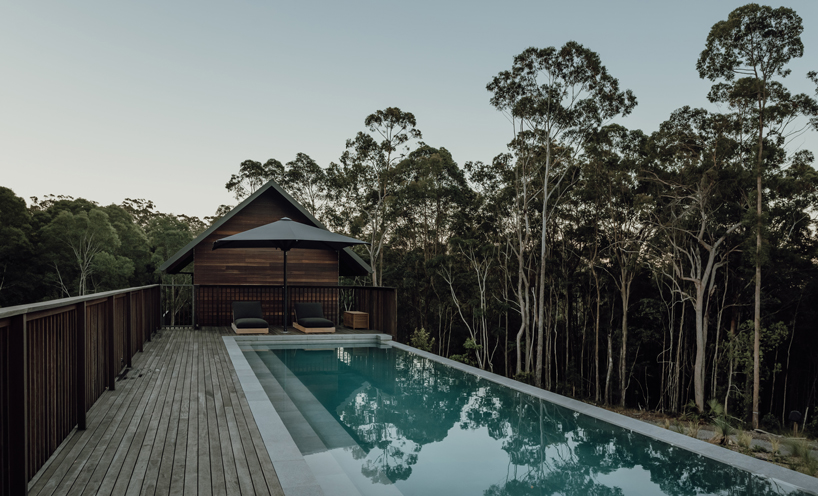
the large pool looking interacts with the natural surroundings

Reference

Staircase and kitchen in Dragon Flat by Tsuruta Architects
CategoriesInterior Design

Dragon Flat by Tsuruta Architects features AI-generated engravings

UK-studio Tsuruta Architects has combined artificial intelligence with CNC cutting in a revamp of a home in London’s Notting Hill.

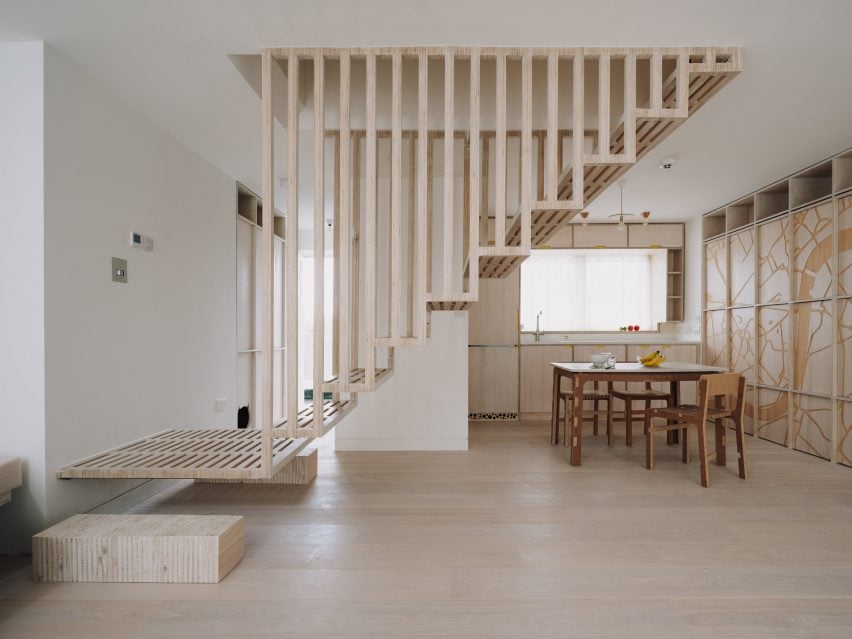
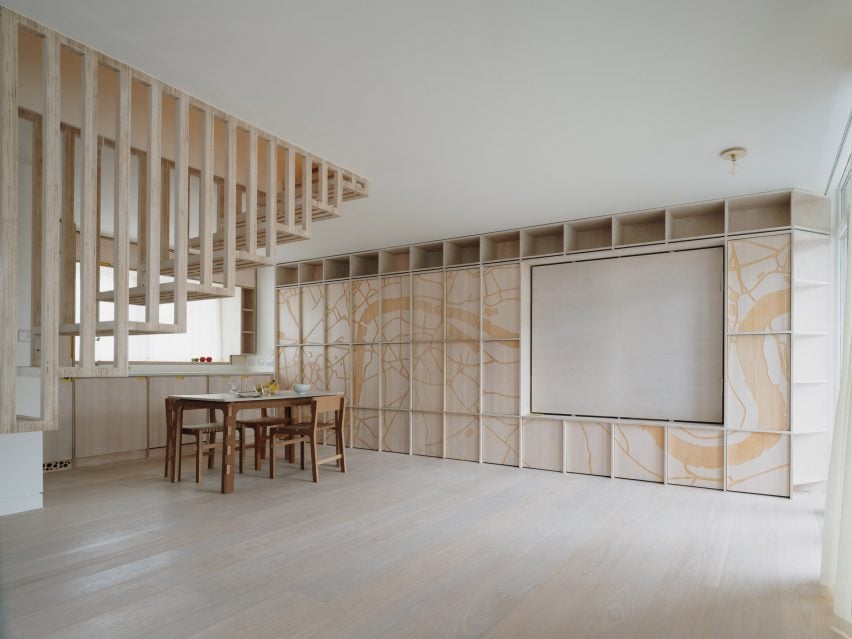
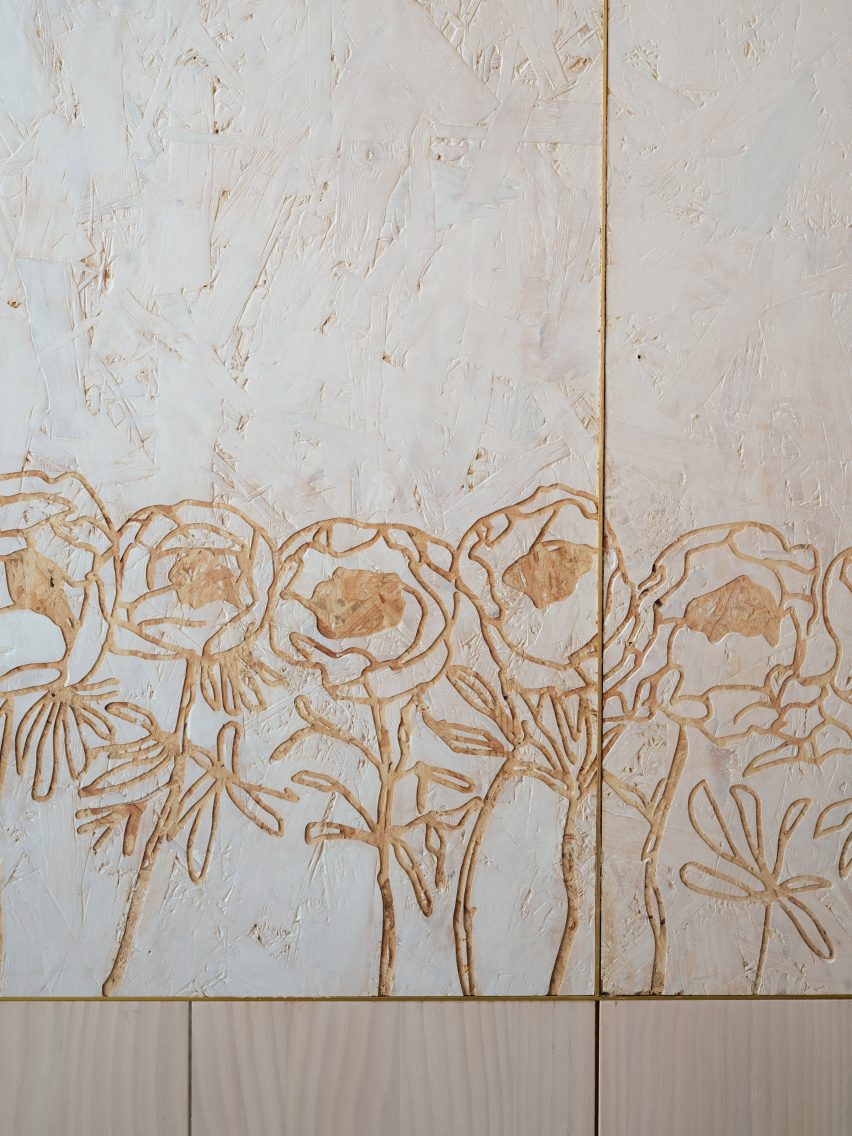
Dragon Flat features engraved wall panels and joinery incorporating AI-generated images, including a map of the River Thames and a graphic floral motif.

Staircase and kitchen in Dragon Flat by Tsuruta Architects
AI-generated engravings feature on both floors of the home

A CNC router – a computer-controlled cutting machine – allowed these designs to be directly transferred onto wooden boards, which have been used for surfaces within the interior.

Taro Tsuruta, founder of Tsuruta Architects, said that he decided to experiment with AI because there wasn’t room in the budget to collaborate with a graphic designer.

River Thames engraving in Dragon Flat by Tsuruta Architects
A map of the River Thames features in the living space

Using DALL-E 2, an AI program that transforms text instructions into high-quality images, he was able to create bespoke designs for the kitchen and bedroom space.

“I typed a series of prompts and ran a series of variations, then came up with an unexpected yet expected result,” he told Dezeen. “It was like sculpting a form with a keyboard.”

Tatami room in Dragon Flat by Tsuruta Architects
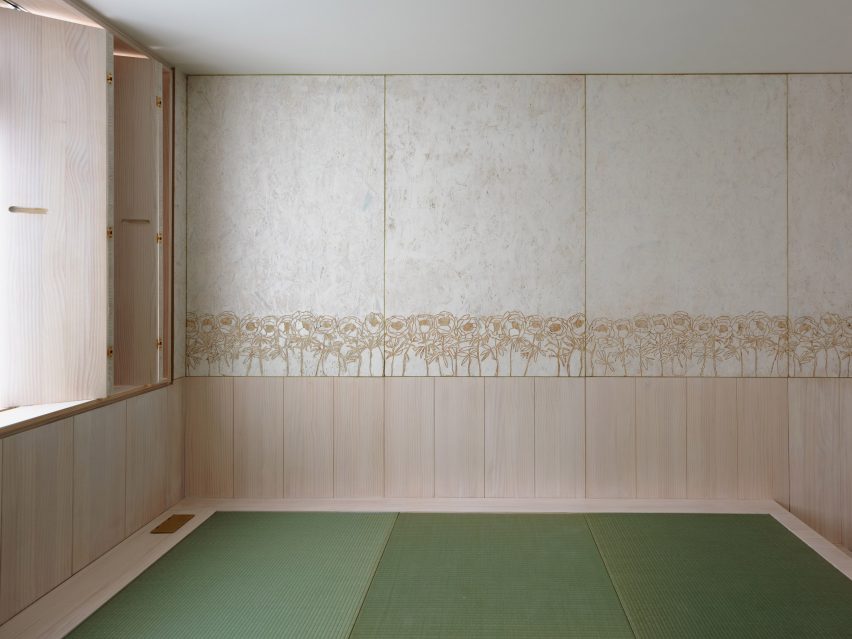
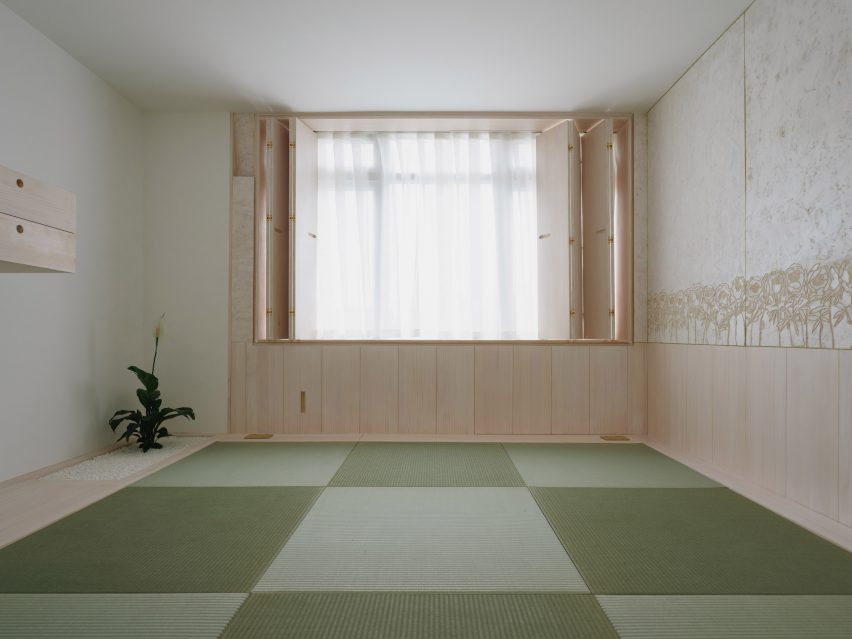
Upstairs, a tatami room features a row of engraved peonies

Tsuruta’s clients for Dragon Flat were a young Asian couple who moved to London five years ago. The property they bought was a two-level maisonette in a 1950s council block.

The renovation sees the home subtly reconfigured.

The lower level is opened up, allowing the kitchen to become part of the living space, while the upper level has been adapted to create more storage.

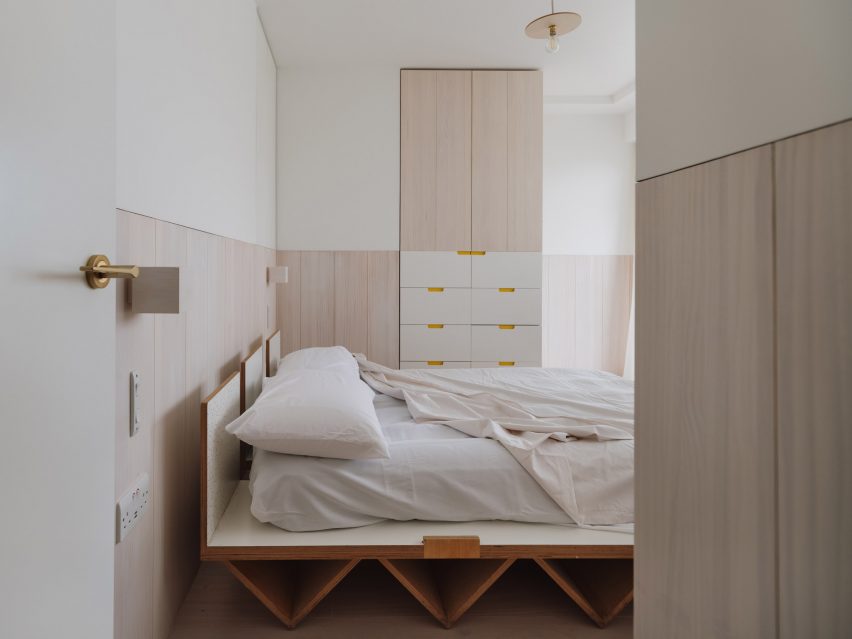
This revamped upper level includes a walk-in wardrobe and a tatami room – a typical space in traditional Japanese homes – as well as a main bedroom.

Floral engraving in Dragon Flat by Tsuruta Architects
The designs are etched into OSB wall panels

The River Thames image features in the new living and dining room. Engraved plywood panels front a grid of cupboards, creating an entire wall of storage.

The floral pattern, designed to resemble “an army of peonies”, can be found in the tatami room.

Images of these flowers are etched into white-washed oriented strand board (OSB), which forms wall panels. This creates a colour contrast that allows the design to stand out.

Tatami room in Dragon Flat by Tsuruta Architects
Whitewashed surfaces allow the floral design to stand out

“We did quite a few sample tests, changing the needle size of the CNC router to get it right,” said Tsuruta.

The aim here, he explained, was to create a design that playfully references Arts and Crafts, a movement that embraced floral imagery but rejected the technological advances of its time.

“Arts and Craft was very labour-intensive,” said the architect. “Our process is the opposite, but we share a common goal of enriching the lives of occupants.”

Bedroom in Dragon Flat by Tsuruta Architects
The addition of a walk-in wardrobe frees up space in the bedroom

CNC cutting has played a pivotal role in many of Tsuruta’s projects. Examples include The Queen of Catford, a group of five flats filled with cat faces, and Marie’s Wardrobe, a home with a highly intricate custom staircase.

Dragon Flat is his first completed project to incorporate AI, a process he said provides infinite options but requires human input in order to achieve a successful result.

Staircase and living space in Dragon Flat by Tsuruta Architects
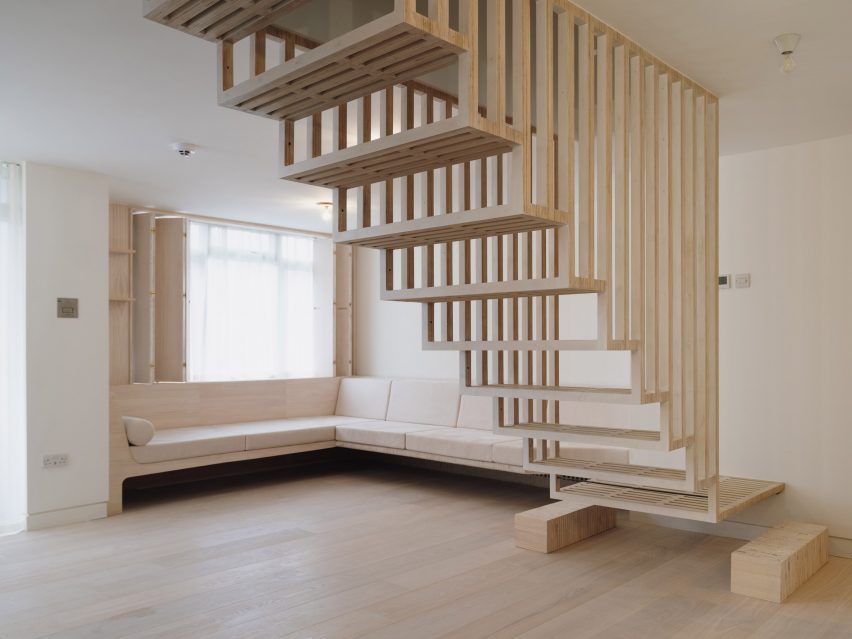
A floating timber staircase allows light to filter through

“This process is pretty much the same as with any tool,” he said. “At the end of the day, we were the ones to select and move on to the next variation or stop there.”

The interior also features other playful details, including a floating timber staircase. Built in the same position as the original stairwell, this perforated volume allows more light to filter between spaces.

Bathroom in Dragon Flat by Tsuruta Architects
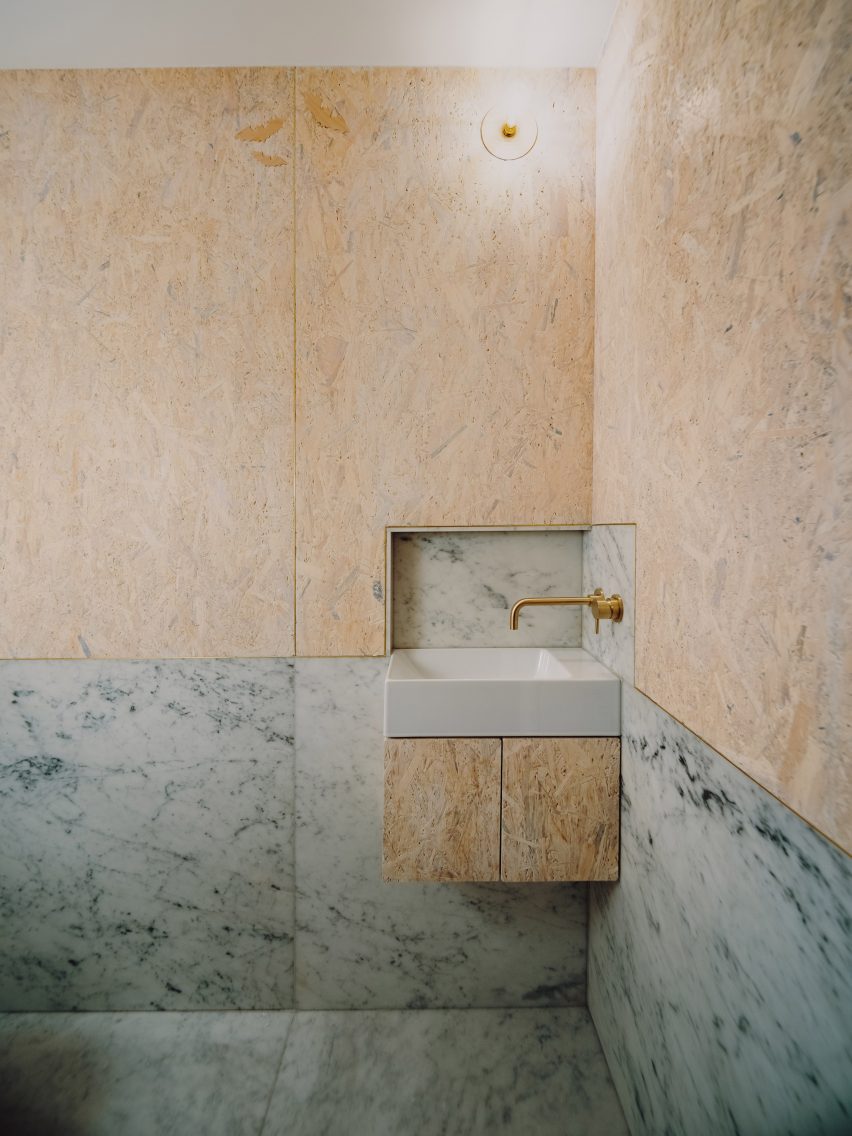
OSB and marble contrast in the bathroom

The bathroom combines marble with OSB, creating an intentional contrast between luxury and low-cost materials, and also includes some small motifs showing bats.

“The symbolic meaning of peonies, dragons and bats, together with the Thames River, is ambiguous,” added Tsuruta.

“We want people to keep thinking and talking about them, but overall they are believed to bring prosperity and a happy life.”

The photography is by Tim Croker.

Reference

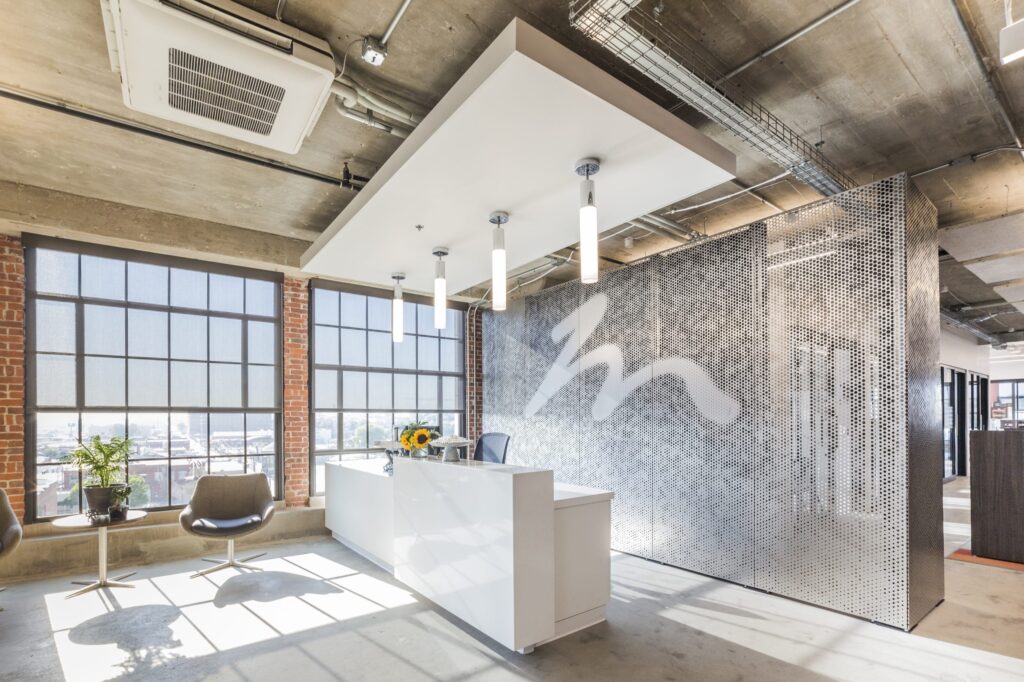
Perforated metal wall panels ImageWall by Zahner
CategoriesArchitecture

An Architect’s Guide To: Graphic Perforated Metal Panels

Architectural innovation and creativity go hand in hand. Designers are constantly seeking new ways to push boundaries, challenge norms, and create buildings that resonate with places and people. One material that is increasingly being harnessed to this end is perforated metal, with a multitude of high-tech systems now available to architects looking for customizable wall and façade solutions.

One such example is the ImageWall system by Zahner, a renowned engineering and fabrication company with a long-standing reputation for its work with architects. Developed specifically for perforated metal panels, it offers a range of diverse qualities for projects across typologies and climates.

Perforated metal wall panels ImageWall by ZahnerZahner became known for advanced metal surfaces and systems with both functional and ornamental forms. With ImageWall, Zahner has created a system that offers design versatility to make immersive experiences. With its accessible design tools, affordability, and wide range of applications, the perforated metal panel system empowers designers and architects to bring their visions to life.
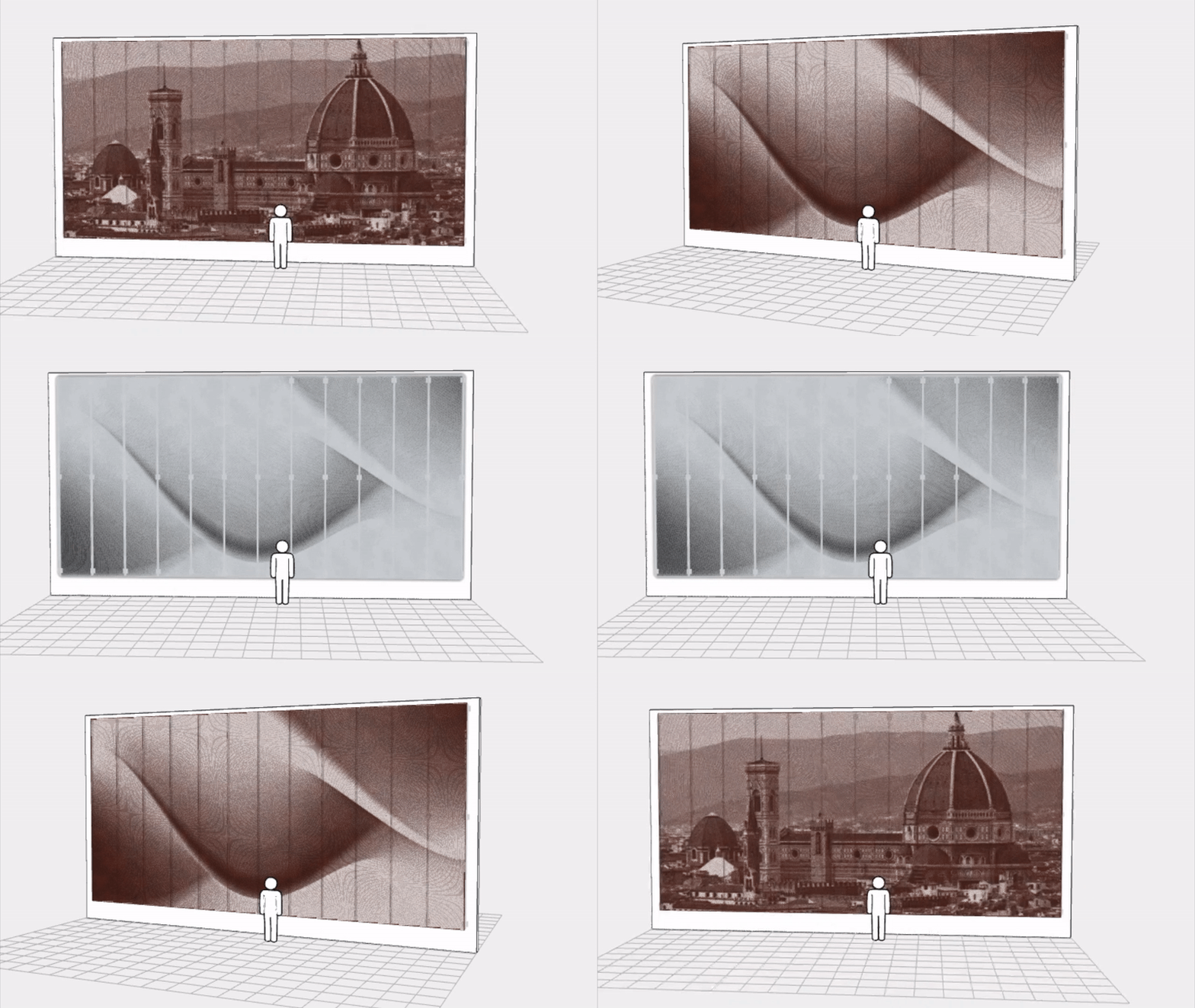
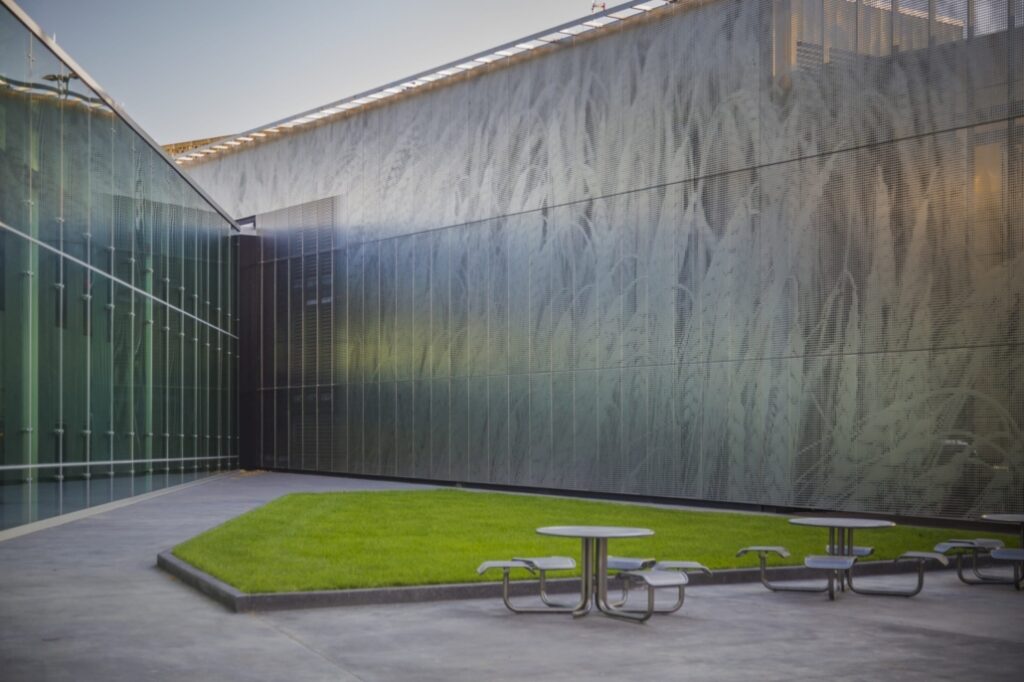
Whether used in commercial, hospitality, retail, or residential settings, this material provides a customizable canvas for integrating backlighting, materials, and graphics. In this guide, we’ll explore the creative potential of perforated metal panel systems like ImageWall, from the design process to technical detailing and application.


Conceptualization: Pushing the Boundaries of Design

Perforated metal wall panels animation ImageWall by ZahnerOne of the most remarkable aspects of the ImageWall system is its accessibility to designers. Gone are the days of tedious back-and-forth communication. With this system, designers can now conceptualize and design directly within an intuitive online visualizer tool on the Zahner website.
This streamlines the design process and empowers architects to bring their visions to life more efficiently than ever before. The accessibility provided by the system fosters a greater sense of creative freedom, allowing designers to experiment, iterate, and explore a multitude of design options.

Design With ImageWall

Recently, Zahner Labs has further developed the system with ImageLines — an additional customization for generating perforated images. As the team explains, perforations are positioned by an array of customizable lines or curves, while perforation size is driven by a source image. Try it out; it’s easy to upload an image to the configurator and see how ImageLines takes perforated façades to the next level.


Technical Details: Streamlined Installation and Pre-Engineered Elements

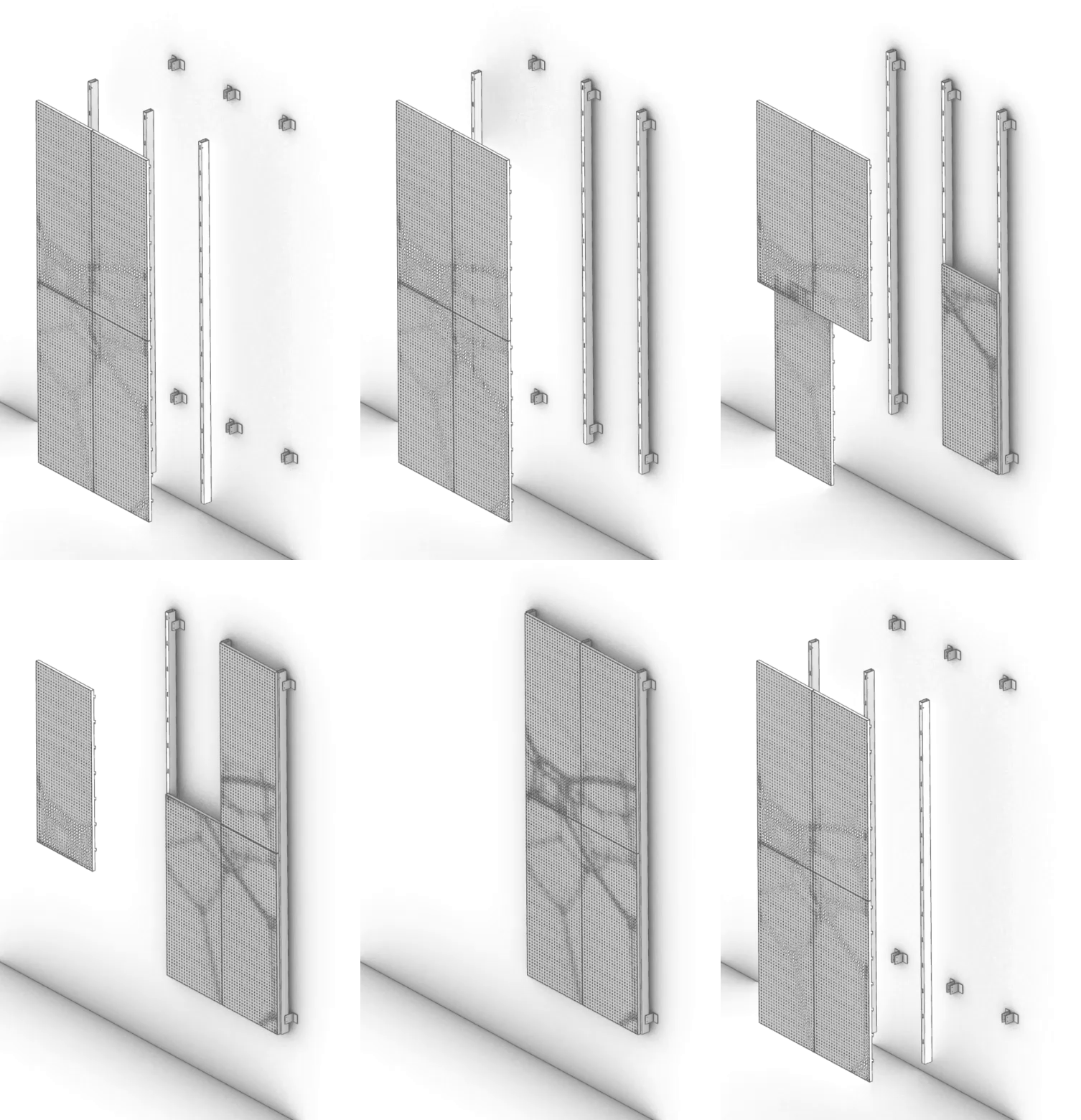
The ImageWall perforated metal panels not only look beautiful, but also allow for more streamlined detailing. Through the use of pre-engineered elements and easy-install systems, the cost and lead times are significantly reduced compared to traditional custom solutions. This makes affordability a key advantage offered by Zahner’s system.
Their product also allows clients with tighter budgets to benefit from the company’s reputation for quality craftsmanship and design expertise. In turn, the evolution from custom projects to a pre-engineered product demonstrates Zahner’s commitment to making cutting-edge design accessible to a wider audience.

Download ImageWall Details

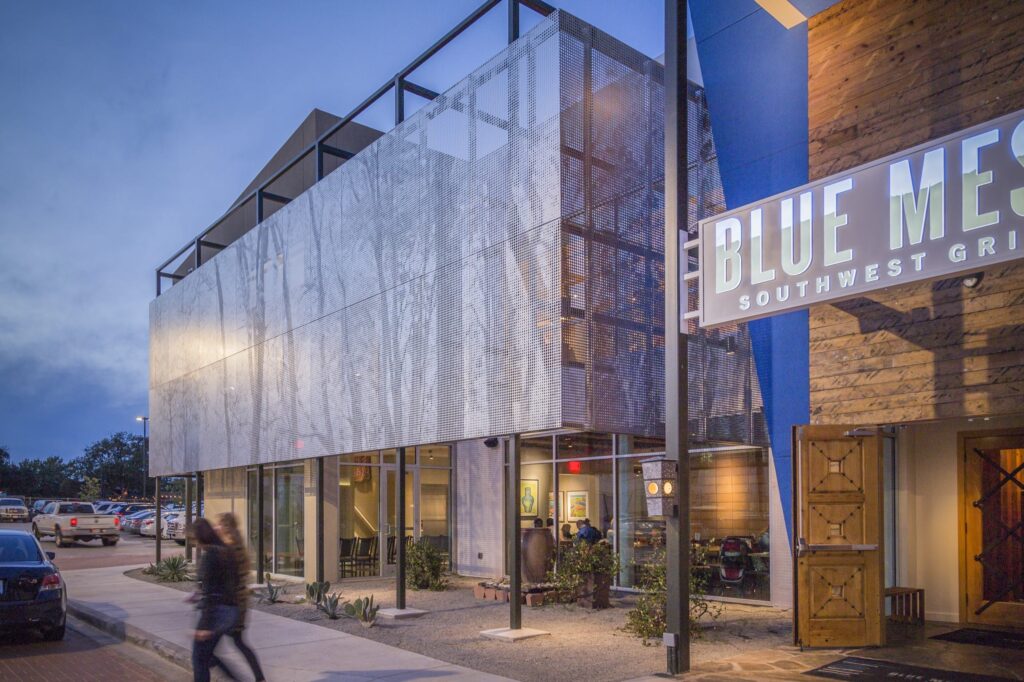
Perforated metal wall panels ImageWall by ZahnerFrom sleek and modern metals like stainless steel and aluminum to warm and inviting materials like pre-weathered weathering steel and copper, ImageWall provides architects and designers with a wide selection of options to suit their desired aesthetic.
Additionally, the system can incorporate other materials such as glass, ceramics, or options like recycled materials, ensuring that each project can be uniquely tailored to meet the specific design requirements and desired visual impact. The versatility in material choices offered enables the creation of customized architectural elements that seamlessly integrate into a design.


Applications: Versatility Across Architectural Typologies

At its heart, Zahner’s system has wide-ranging applications across architectural typologies. From commercial buildings to hospitality spaces, retail environments to multi-unit residential common areas, ImageWall seamlessly integrates with other building systems, structures, and assemblies.
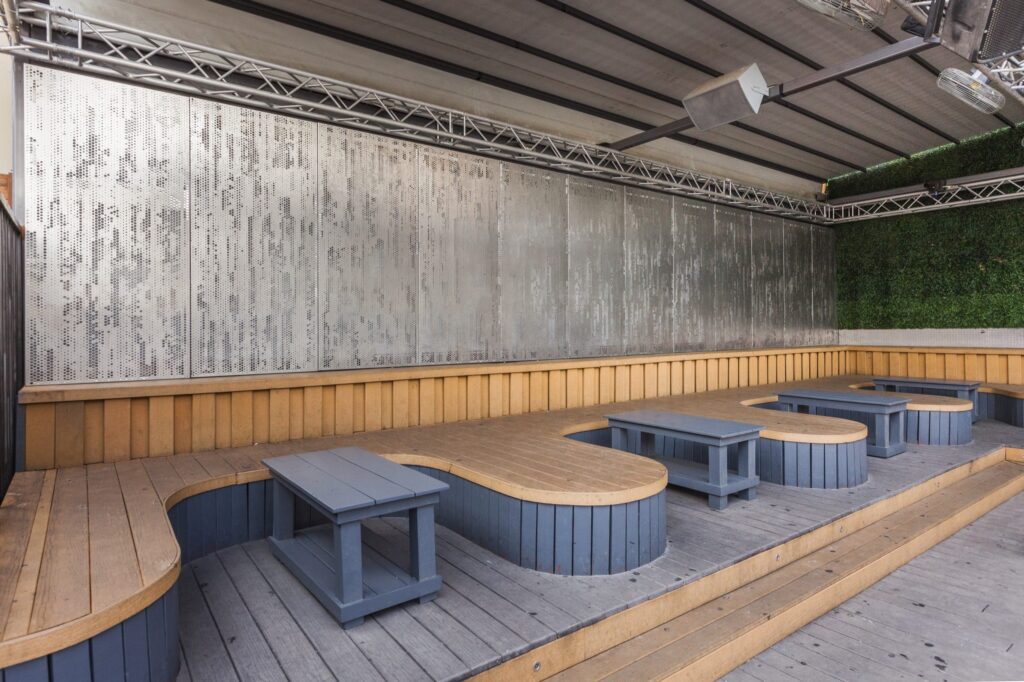
This adaptability makes it a valuable tool for architects and designers working on a diverse range of projects. Whether it’s an eye-catching façade for a high-end hotel, an immersive retail environment, or a statement piece in a public space, the system offers endless possibilities for enhancing the appeal of a structure, entry or interior.


Creative Possibilities: Enhancing Design with Light, Materials, and Graphics

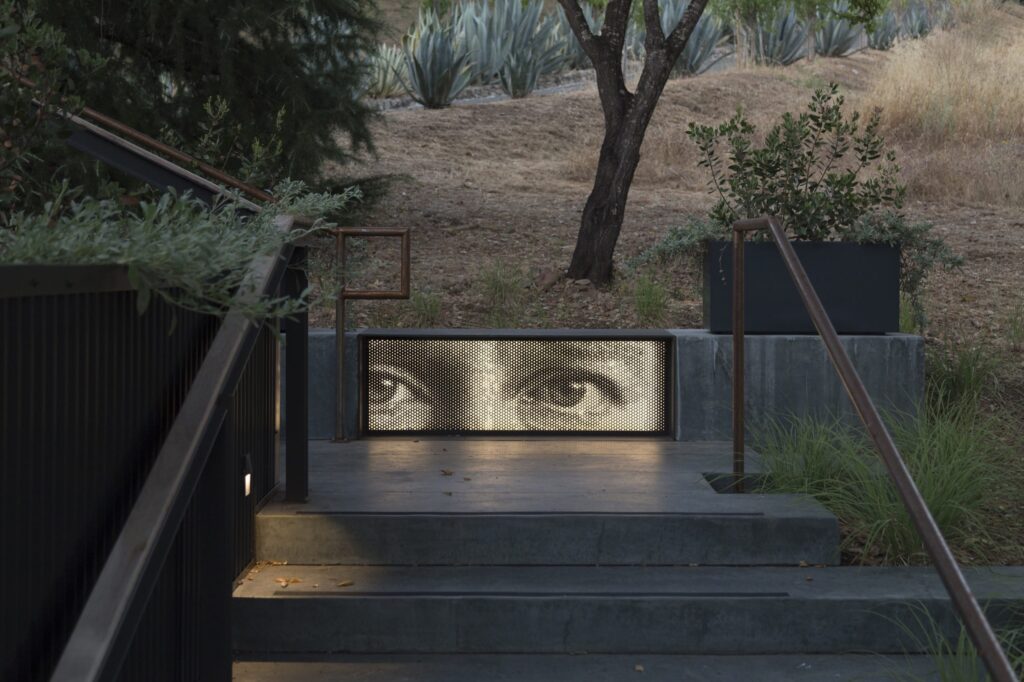
ImageWall offers a myriad of creative possibilities, including lighting options, material choices, and graphic integration. Backlighting adds a whole new dimension to architectural design, bringing depth, texture, and visual interest to spaces.
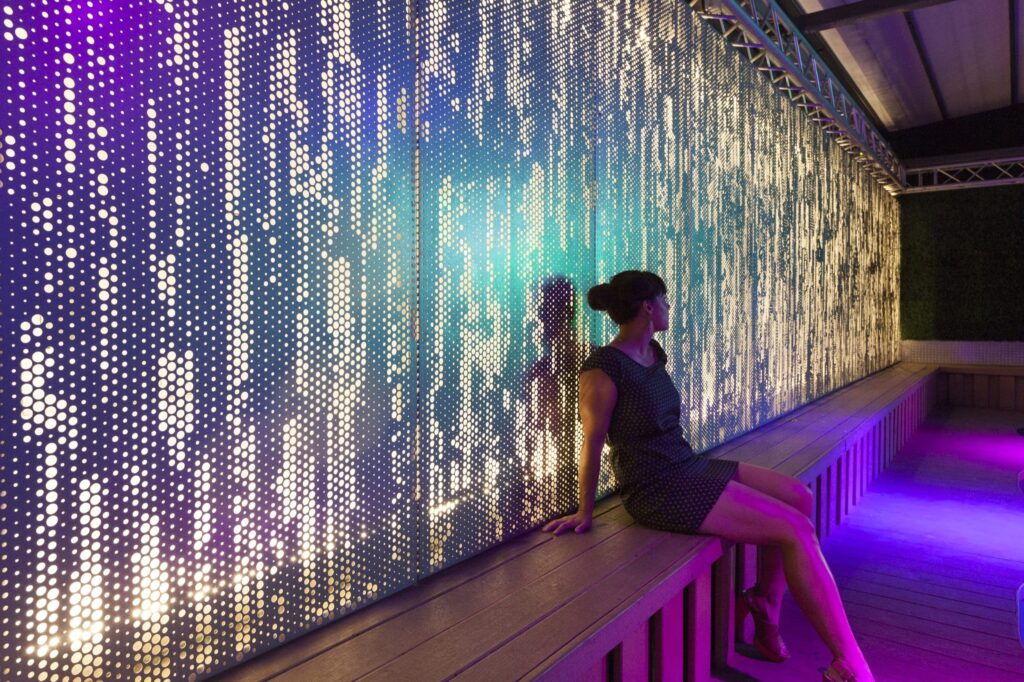
Perforated metal wall panels ImageWall by ZahnerWith a vast array of materials to choose from, architects can find the perfect match for their desired aesthetic, whether it be sleek and modern or warm and organic. The graphic options also enable the integration of custom patterns, logos, or artwork, allowing architects to create truly unique and memorable spaces that leave a lasting impression.

Case Studies: Showcasing the Power of ImageWall

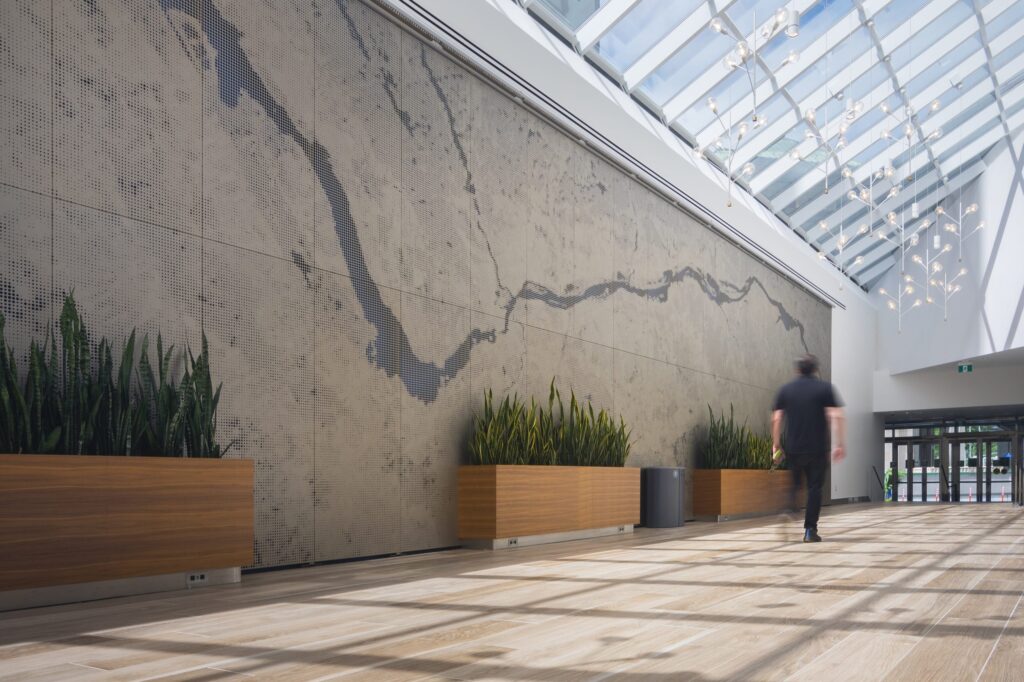
To appreciate the capabilities of perforated metal panels, there are many noteworthy case studies. For example, the ImageWall system was employed only a short walk from Canada’s Parliament buildings in Ottawa, Ontario, where the team of B+H Architects and Morguard collaborated with Zahner to enhance the experience of entering their office complex at 350 Sparks. The installation of custom perforated wall art showcases the journey along the Ottawa River adjacent to Parliament Hill. Zahner supplied 1,563 visible square feet of aluminum panels and associated sub-framing for the installation.
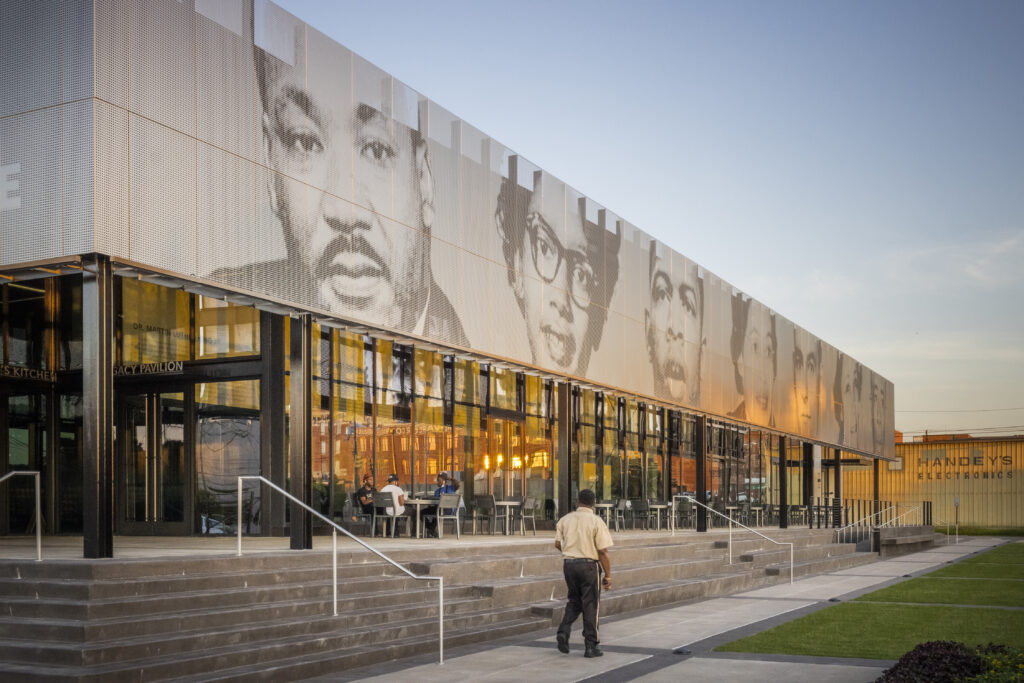
Zahner also collaborated on the Legacy Pavilion for The Equal Justice Initiative. The Pavilion, designed by Williams Blackstock Architects, is the EJI Museum campus’ new building. Zahner engineered and fabricated the custom Angel Hair stainless steel that clads the exterior of the building, which depicts the iconic images of several local civil rights activists that inspire hope for equal justice. In a similar way, two ImageWall murals clad the east and north sides of 1256 Penn Ave, featuring individual portrait panels of renowned local civil rights activists that helped shape the culture of Minneapolis.
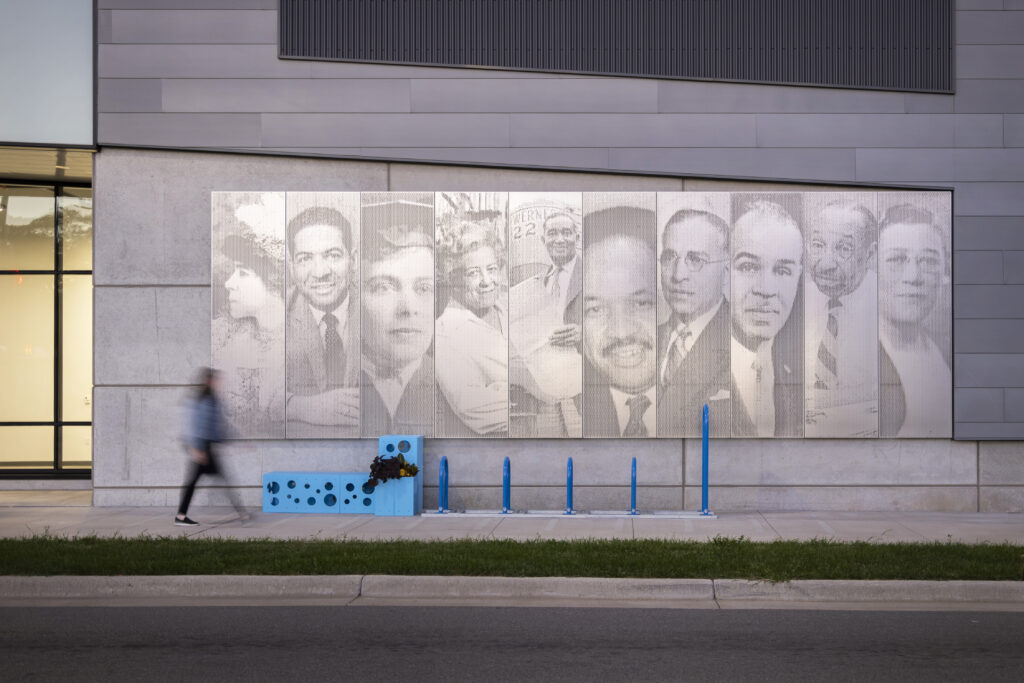
These case studies demonstrate how Zahner’s perforated metal panel system can be utilized by architects to enhance their designs. Its adaptability, material options, and creative possibilities have allowed architects to push boundaries and transform their visions into new landmarks.
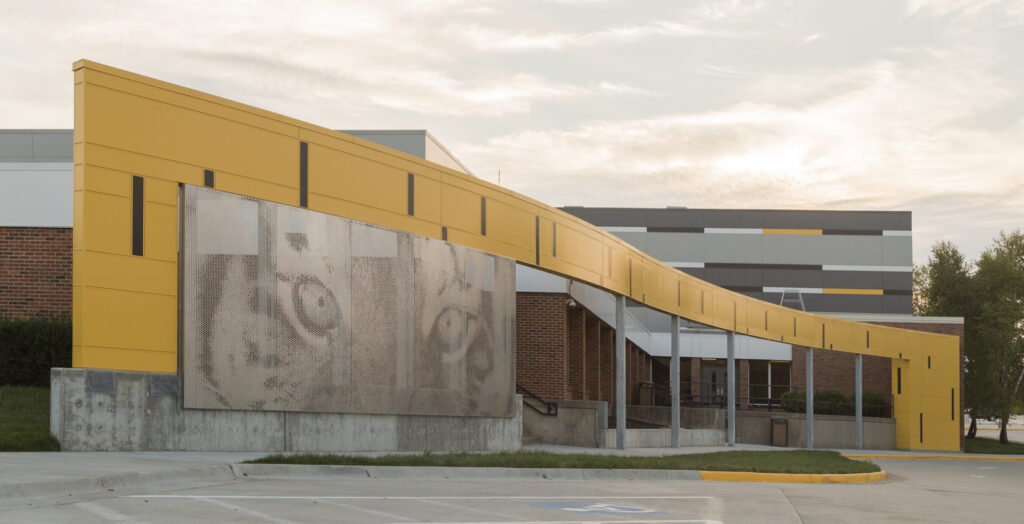
Explore More Projects

ImageWall represents the evolution of architectural solutions, bridging the gap between visionary concepts and practical implementation. Its accessibility to designers, affordability, wide range of applications, and design potential make it a versatile and valuable tool for architects and designers alike.
As Zahner continues to push boundaries and redefine what is possible in architectural design, the system stands as a testament to their ability to transform visionary concepts into innovative architecture products and systems.

Learn more about ImageWall here, start designing your own custom perforated panel here, and reach out to Zahner’s specialists about your next project here.

Reference

Alberghi Diffusi: Architects Should Embrace Italy's Decades-Old Design Concept
CategoriesArchitecture

Alberghi Diffusi: Architects Should Embrace Italy’s Decades-Old Design Concept

Architects: Want to have your project featured? Showcase your work through Architizer and sign up for our inspirational newsletters.

Across the iridescent olive groves, vine-laden hills and skyline of sunflowers that intertwine to become the breathtaking Italian countryside, there lies a number of rural gems unblemished by modernity. Their façades bare the marks of many lives lived, and their cobblestone streets chatter with centuries of traditions and tales. While you venture through the quiet alleys, under clotheslines laden with laundry, you’ll find the remarkable concept of “alberghi diffusi” — Italy’s answer to sustainable tourism.

An idea that expertly juxtaposes the past with the present, marrying rustic charm with modern luxury, preserving heritage while showcasing rural sophistication. Here, amongst the charm and romanticism of rural Italy, hospitality takes on a different meaning: it’s not about visiting, it’s about belonging, and these “scattered hotels,” a constellation of repurposed dwellings, are the lifeblood of these otherwise semi-deserted hamlets. As more and more architects embrace adaptive reuse and renovation is increasingly celebrated as preferable to new-builds, Italy’s model for sustainable tourism is set to gain further traction beyond the Mediterranean country’s borders. 

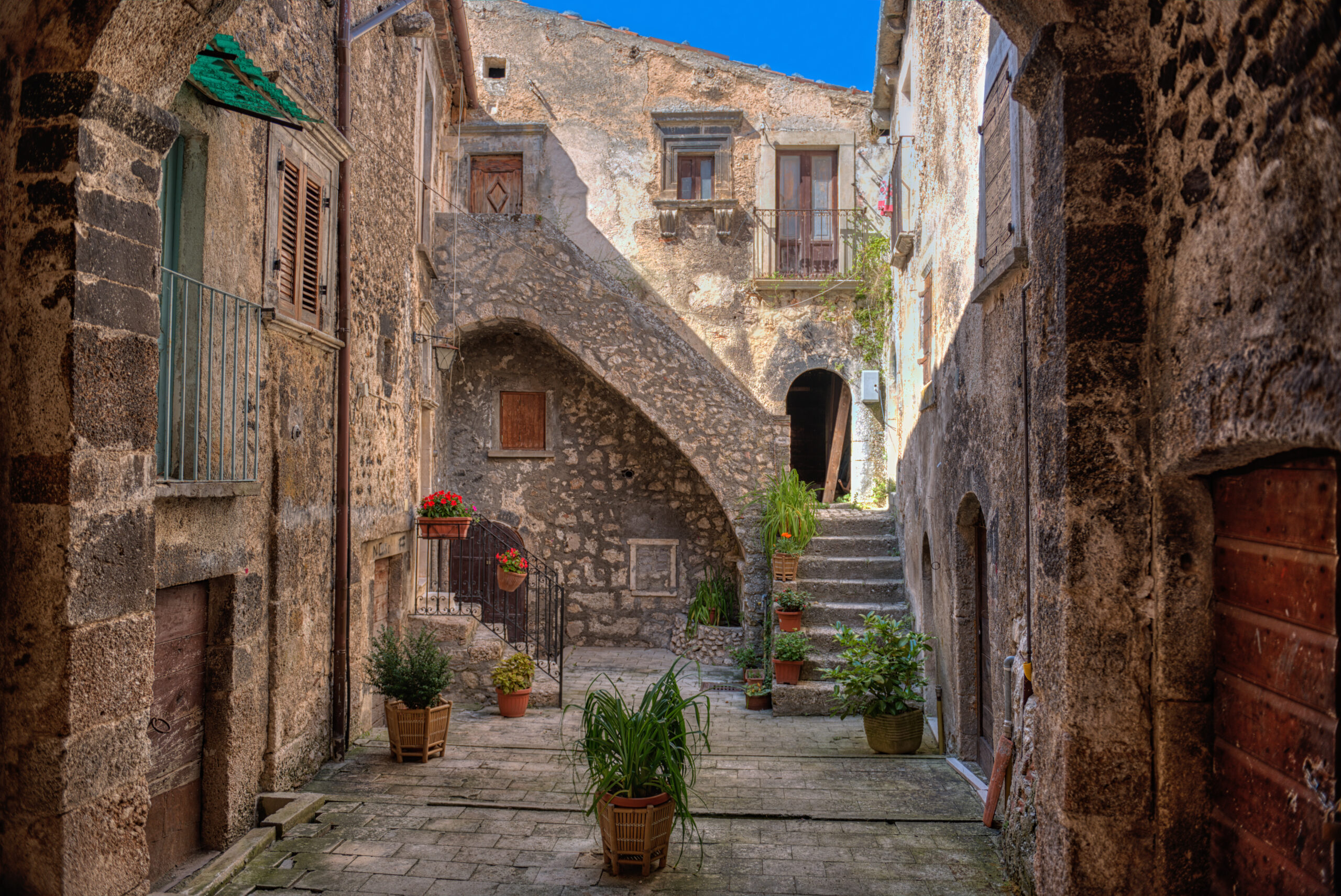
Santo Stefano di Sessanio Village, Abruzzo, L’Aquila, Italy. Photograph by Stefano Pellicciari

The albergo diffuso model is by no means a new concept. It was initially conceived in the late 1970s or early 1980s (an exact year cannot be pinpointed). Some attribute the model to the aftermath of the May 1976 earthquakes, when the idea was utilized to revitalize the impacted villages and was then later championed by Giancarlo Dall’Ara, a pioneering figure who is now-President of the Alberghi Diffusi National Association.

The philosophy of the albergi diffusi model is rooted in the notion that a hotel’s room should not have to be contained within a single structure but, in fact, can be spread throughout the houses and buildings of an entire town, and it is the service and amenities in the proximity to the room that establishes it as being part of a hotel.


Cividale del Friuli, Italy Photograph by milosk50

A “scattered hotel,” as it translates in English, creates visitor accommodation by reusing and restructuring existing properties, with one crucial factor — it must be located around an inhabited town center. It is the inhabitants of the albergo diffuso that serve as the draw for the guests that are so enthralled by these places in their search for authentic experiences.

In the heart of Friuli Venezia Giulia, the model found fertile ground in Comeglians, a village of approximately 400 inhabitants that became one of Italy’s first albergo diffuso’s. By the mid-1990s, under careful orchestration and with cooperation from the residents, a transformative project began to unfurl. A handful of the nearly 300 houses, left vacant after a decades-long exodus of youth searching for urban opportunities, were repurposed into an albergo diffuso. This revitalization not only safeguarded the village’s heritage but also reinvigorated the local economy by creating jobs and stimulating tourism that continues to thrive to this day.

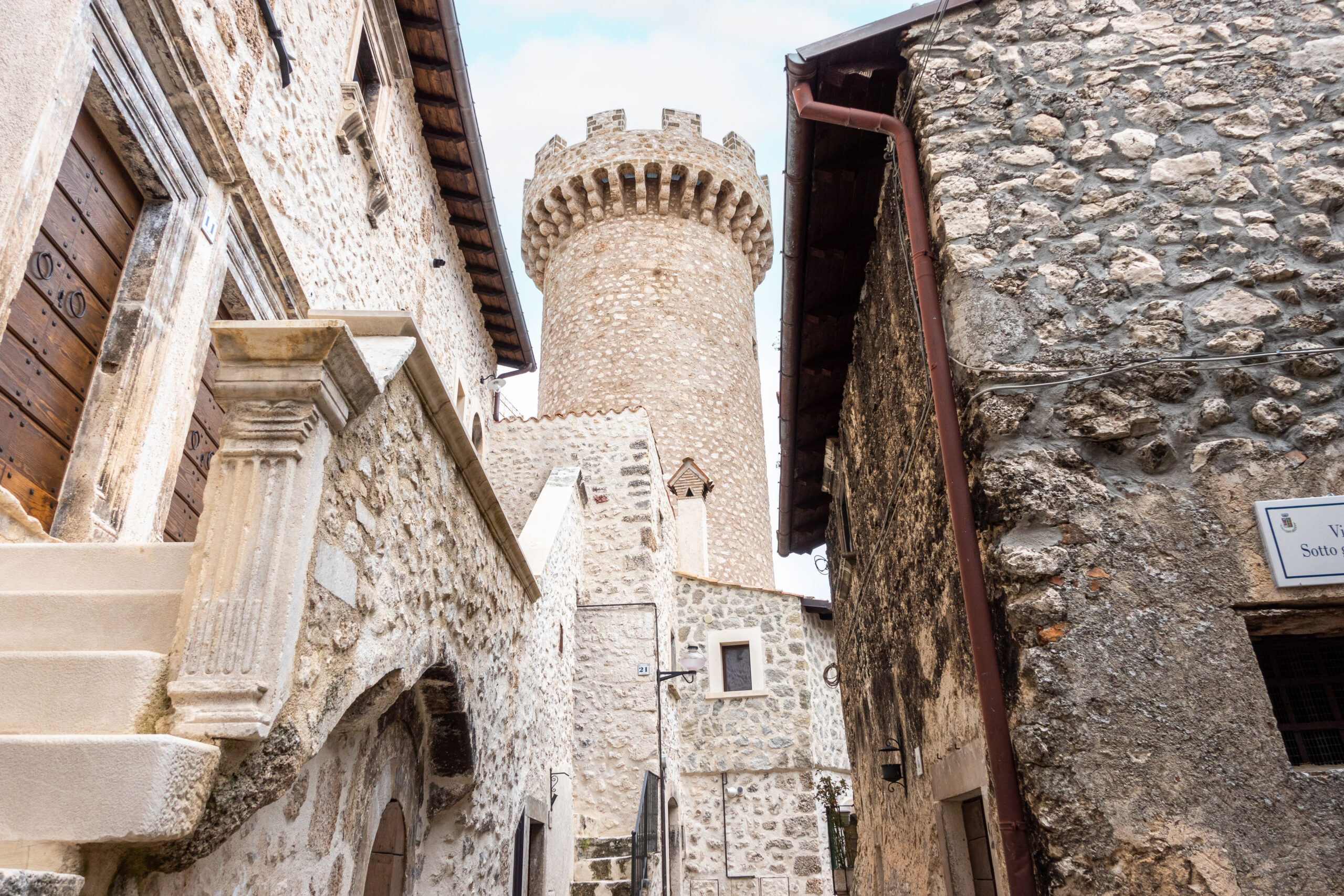
Santo Stefano di Sessanio, Abruzzo, Italy. Photograph by Giulio Benzin

Meanwhile, down in the rugged terrain of Abruzzo, the town of Santo Stefano di Sessanio harbored a latent opportunity despite its population dwindling to under 100 by the late 1990s. Swedish-Italian entrepreneur Daniele Kihlgren, recognizing the town’s potential, made considerable investments to meticulously restore its ancient, stone-walled structures. The project, which converted 27 medieval buildings into 27 rooms of the Sextantio Albergo Diffuso, not only rekindled the town’s historic charm but also spawned a variety of jobs, reducing unemployment and re-populating this once-deserted gem.

Santa Caterina dello Lonio, Catanzaro, Calabria, Southern Italy. Photograph by Fabio

The tale took a southern twist in Sicily, where the historic borough of Borgo Santa Caterina witnessed a similar resurgence. Here, the alberghi diffusi’s model breathed new life into the town’s decaying structures, emblematic of diverse eras, including the Arab, Norman and Byzantine epochs. The regeneration of these architectural marvels into Albergo Diffuso Borgo Santa Caterina attracts a steady stream of tourists, bolstering the local economy and enhancing the livelihood of its residents, who had endured years of economic stagnation. These enduring transformations underscore the alberghi diffusi’s ability to fuse architectural preservation with socio-economic regeneration.

Corippo, Verzasca valley, Switzerland. Photograph by fotoember

The ripple effects of this ingenious model are palpable even beyond the Italian borders, in Switzerland’s Verzasca Valley, further underscoring its potential as a global blueprint for rural revitalization, in the Italian-speaking canton of Ticino, renowned for its emerald-green river flowing past miles of winding canyons, lofty peaks and forests. Corippo, a tiny 800-year-old hamlet of handcrafted stone homes, rises nearly 2,000 feet (610 meters) above the valley floor, and in June 2022, Corippo became the home of Switzerland’s first certified albergo diffuso. The lodging is part of a multiyear plan to preserve and revitalize the medieval village hit hard by depopulation, which follows the all-too-familiar story where its inhabitants have emigrated to other parts of the world in search of a better life.

Corippo’s new albergo diffuso consists of ten cozy rooms spanning five restored residences. Adjacent to the main piazza is a terraced osteria (restaurant) with sweeping canyon views that doubles as a lobby. Distinctive architectural details, such as original exteriors and dimensions, were preserved using local materials and traditional methods.

Labro, Rieti, Latium, Italy. Photograph by e55evu

Beyond Corippo’s historical significance and ideal landscape for outdoor activities, its appeal is its sense of solitude. Locarno’s promenade of boutiques, cafes, and Lugano’s art museums and galleries are a magnet to all who visit the secluded yet stunning secret.

Sauntering through these resilient, reborn hamlets, we can encounter an enduring testament to the power of sustainable innovation with the Alberghi Diffusi model. These scattered hotels are not merely establishments offering accommodation; they are a vibrant tapestry of community life, a profound immersion into authentic Italian culture and heritage.

Each albergo diffuso emerges as a phoenix from the ashes of urbanization and economic stagnation. They are the robust threads reconnecting frayed populations, providing gainful employment and a renewed sense of pride in the people of their historical legacy. In this innovative reinterpretation of hospitality, we find the courage of countless small towns standing tall against time, breathing new life into their narrative, heritage and future.

Architects: Want to have your project featured? Showcase your work through Architizer and sign up for our inspirational newsletters.

Reference