California studio Kadre Architects has used bold graphics and vibrant colours to transform a dilapidated motel into The Alvarado, which offers beds for families experiencing homelessness.
Designed by local firm Kadre Architects, the adaptive reuse project involved converting a 20,000-square-foot (1,858-square-metre) motel built in 1984 into a shelter for families transitioning out of homelessness in LA’s Westlake neighbourhood, one block north of MacArthur Park.
Kadre Architects transformed a former motel into a homeless shelter
The Alvarado project was led by Los Angeles County and its nonprofit partner, Hope the Mission. It was designed and completed in eight months.
The four-storey building contains 43 units with a total of 172 beds, along with support spaces and offices.
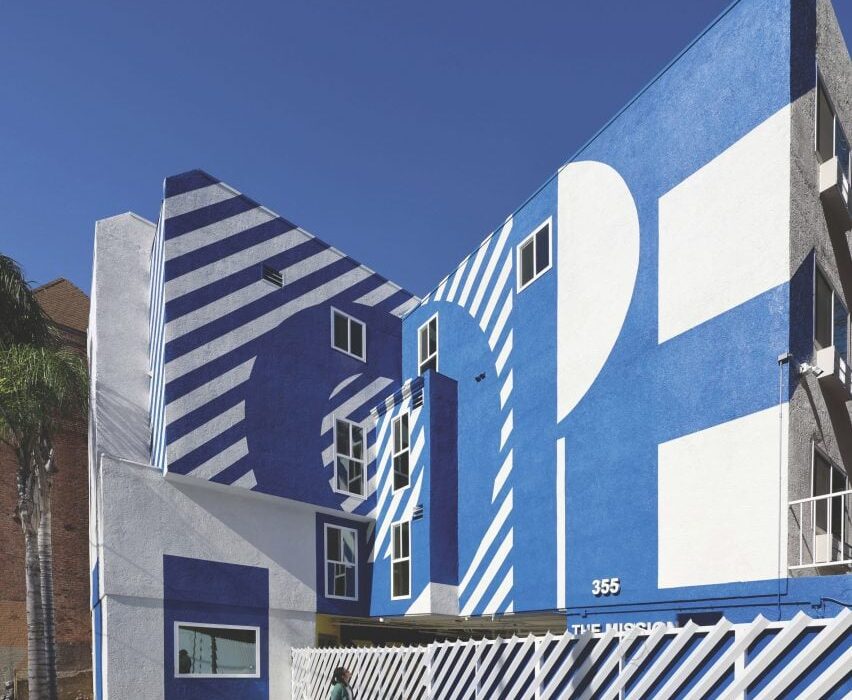
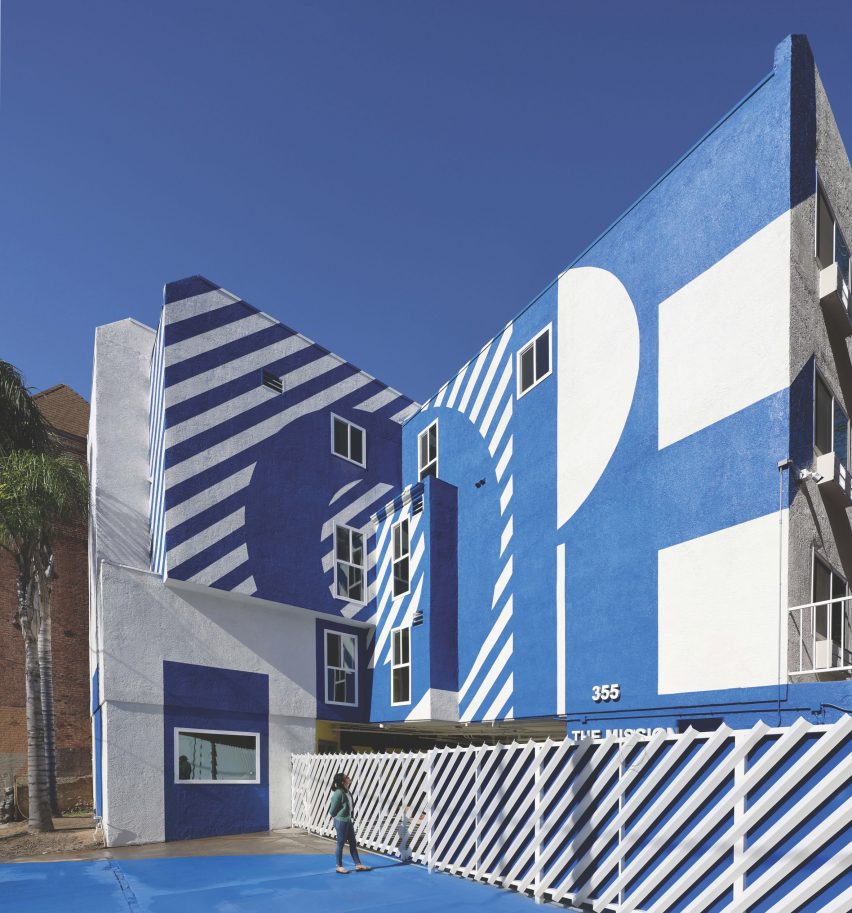
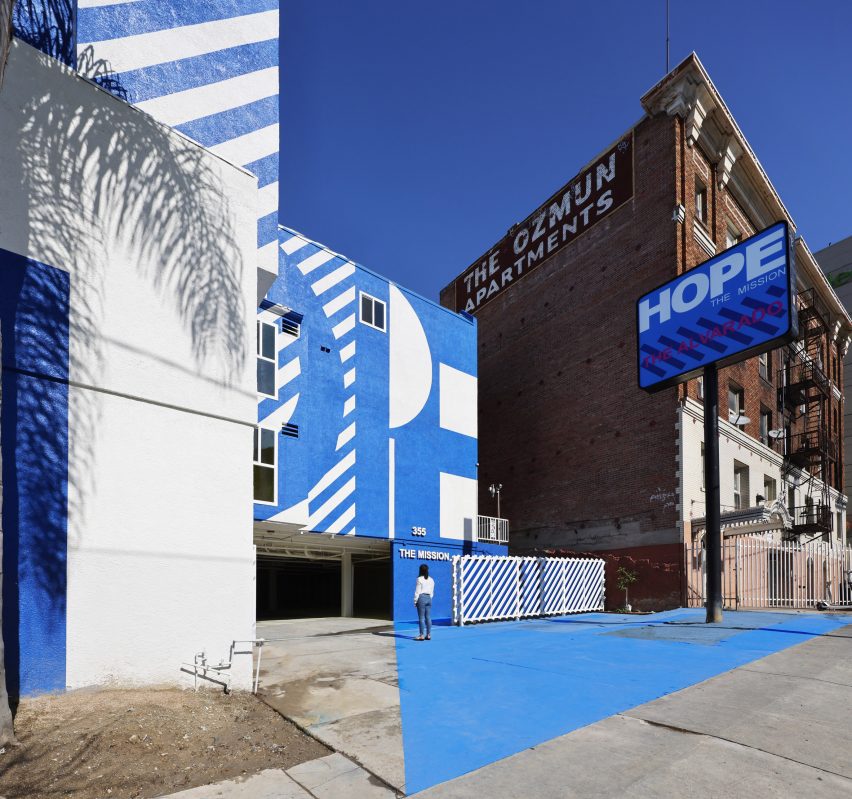
The building has a graphic blue and white facade that spells HOPE
The Alvarado project was led by Los Angeles County and its nonprofit partner, Hope the Mission. It was designed and completed in eight months.
The four-storey building contains 43 units with a total of 172 beds, along with support spaces and offices.
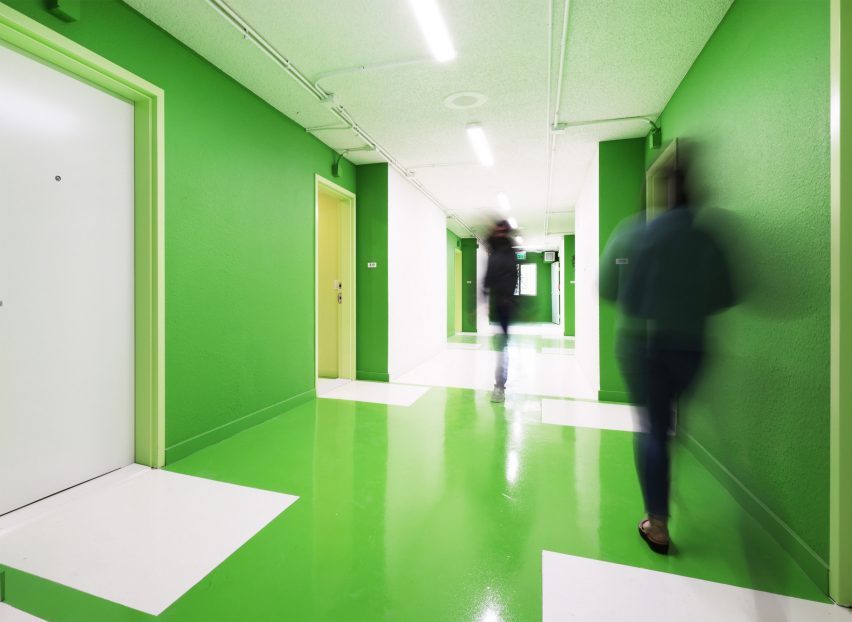
Bold colours feature throughout the building
The majority of tenants are single mothers and children. The project is part of the state of California’s Project Homekey initiative, which provides funding for local governments to rapidly create housing for the homeless.
Working on a limited budget, the architects opted to use bold colours and graphics to bring “new life to the blighted building”.
The entrance facade formerly had a pale green colour and Italianate-style detailing. The team replaced it with a blue-and-white graphic that spells out “Hope”.
“Paint goes a long way when budgets are low, and the welcoming graphic greets each resident with an inspiring message, creating a sense of belonging and dignity,” the team said.
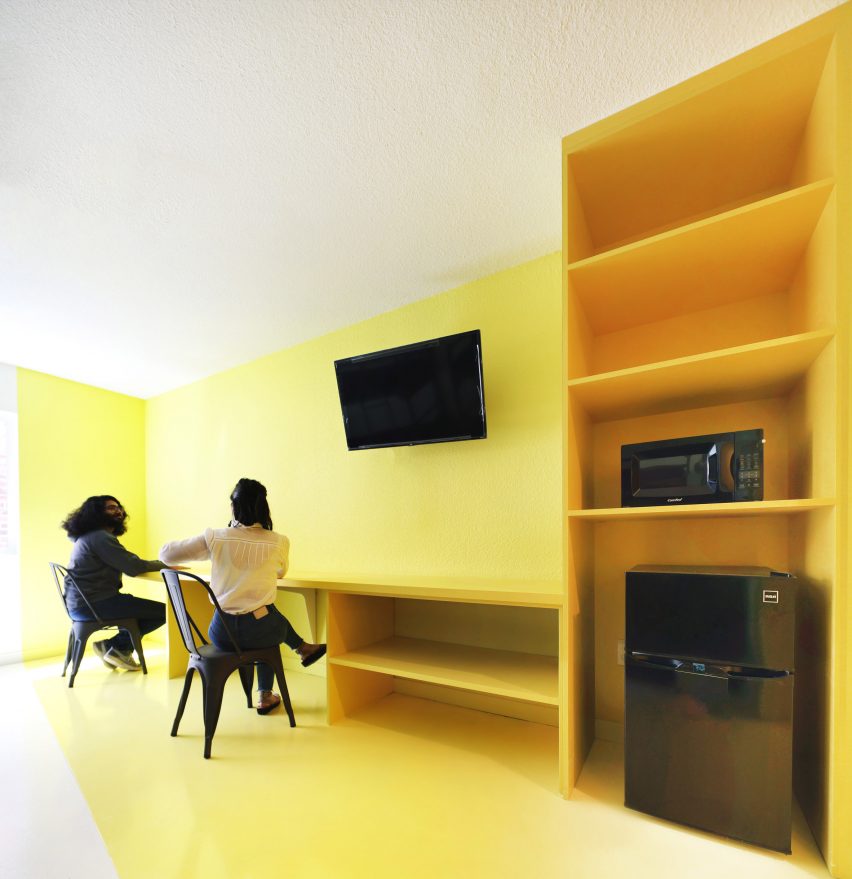
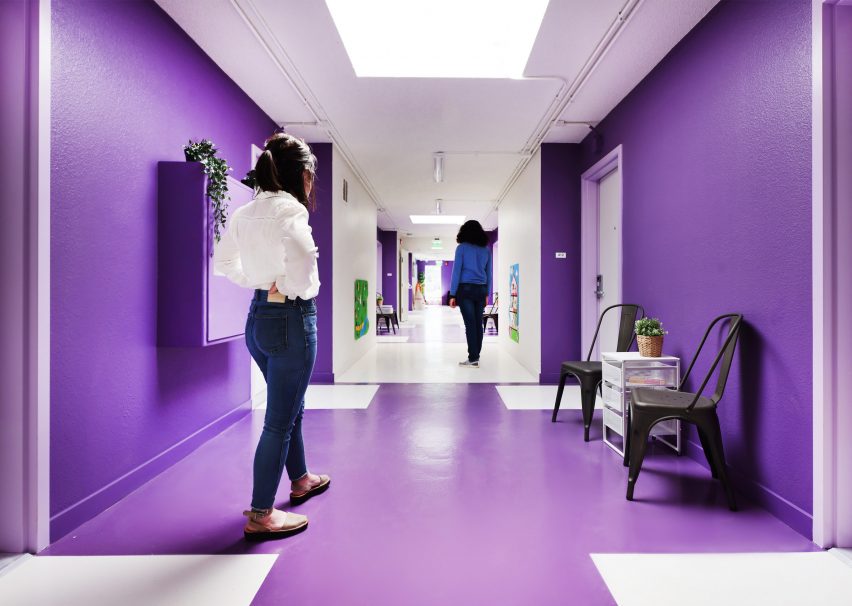
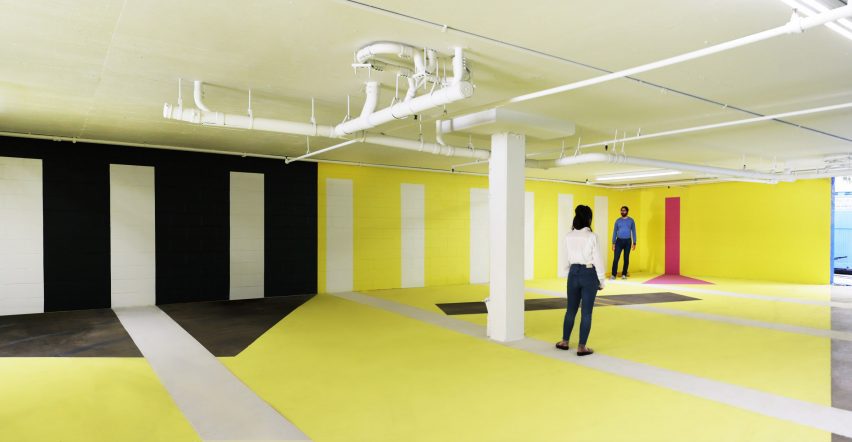
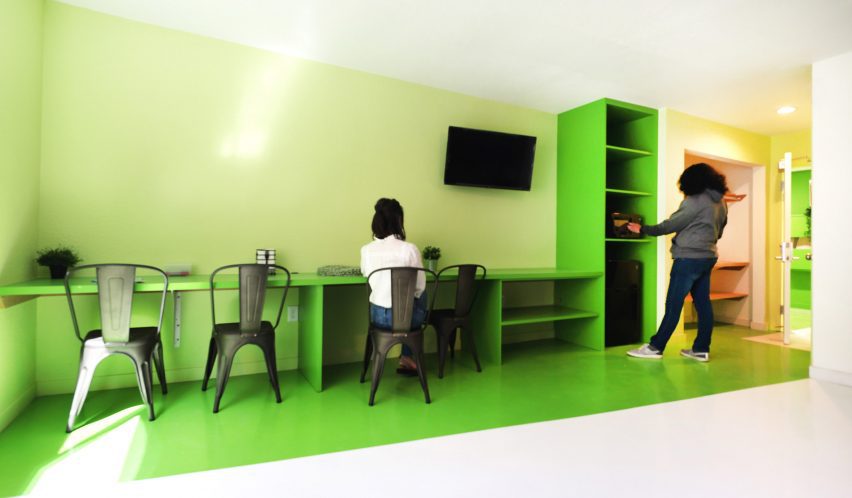
Graphics in hues such as yellow, purple and green are also found indoors, providing a sense of “moving through a colourful composition”.
The shelter contains space for 172 beds, offices and support spaces
“[We] used the palette to enliven spaces and bring about a sense of ownership, with each floor having its own graphic identity throughout each of the rooms, floors, walls and furnishings – like one’s own neighborhood,” the team said.
The ground level holds a covered gathering area and support spaces. The upper three levels encompass the living units, each of which has bunk beds, a bathroom, a microwave and small refrigerator. The units average 280 square feet (26 square metres).
The building was originally built in 1984
An outdoor area has been transformed into a dining deck for tenants, who are provided three meals each day.
The project has a number of sustainable features, including drought-tolerant landscaping and a white-painted roof that helps reduce heat gain. A photovoltaic array meets about half of the building’s energy needs.
A gathering space is located on the ground floor
“Collaborating closely with the contractors and specialty consultants, the architects were able to eliminate fossil fuels completely and switch the entire building to electric power, in-step with the goals of the California Energy Commission,” the team said.
The project marks the first of three designed by Kadre Architects and Hope the Mission. The other two are slated to open later this year.
It forms part of California’s Project Homekey initiative
They are all part of the state’s Project Homekey initiative, which aims to address California’s escalating homelessness crisis. In 2022, there were over 171,000 homeless people in the state. About 30 per cent of the nation’s homeless population lives in California, according to a federal government report.
The founder of Kadre Architects, Nerin Kadribegovic, is a third-generation architect who has experienced “chaotic social and environmental disruption” due to being a refugee of the wars in Yugoslavia and Bosnia.
His refugee experience ignited his interest in addressing complex urban problems like homelessness.
It is located in the Westlake neighbourhood in Los Angeles
“This awareness evokes deep empathic connection to critical issues facing metropolitan urban centers around the world,” said his studio.
Prior to launching Kadre, Nerin was a partner at the LA-based studio Lehrer Architects, which has designed a number of housing projects for the homeless in Los Angeles. These include an apartment complex in the Willowbrook neighbourhood with shared patios and splashes of yellow, and a tiny home village on a narrow plot in North Hollywood.
Across the industry, architects are embracing a new partner in their creative pursuits: artificial intelligence. Once plagued by repetition and monotony, the architectural workforce finds itself on the cusp of a digital revolution where bits and bytes hold the key to automation and once unimaginable possibilities.
The AI revolution is not knocking at our door; it has already stepped in, taken off its hat, and is ready to get to work. The dynamics of design are evolving, and we are at the forefront, blending human creativity and machine precision. The future of architecture is not just being written — it’s being coded, and these are fourteen of the most valuable AI tools you could be using right now.
It’s safe to say that the list of AI tools for architects is progressing rapidly, with new programs being announced each and every day and as the architectural and technological landscapes continue to evolve, architects can expect the emergence of even more innovative AI tools, each promising to further revolutionize the field. These advancements will shape the future of architectural design, empowering professionals to deliver exceptional projects while pushing the boundaries of creativity and efficiency and, with hope, saving our planet at the same time.
Midjourney is everywhere right now. The AI-powered image generation tool presents architects with a canvas as boundless as their imagination. Working from written prompts, Midjourney deftly weaves photorealistic images that can be used to illustrate conceptual thinking.
While Midjourney is yet to fill the shoes of your favorite visualizer, the intelligent program can help designers convey complex designs by producing stunning visual narratives to help demonstrate to clients and stakeholders our vision. Even the most intrepid architectural ideas can spring from the mind’s eye onto the screen with Midjourney, making it a treasure trove for experimental design.
Adobe Firefly, still fluttering in the chrysalis of development, is already showcasing the strength of its potential. This emergent member of the generative AI family promises to ignite the creative flame in architects and designers alike while streamlining workflow and providing a versatile and trusted platform for generating images, text effects, and other creative content.
Currently, Firefly, like Midjourney, is a dynamic companion that can illustrate innovative design ideas using text-to-image prompts. The program is included as part of the Adobe suite. Firefly is a trusty liaison, promoting collaborative relationships with colleagues and clients through a recognized and dependable platform.
As a relatively new program, many of the promised features of Firefly are not available yet. It wouldn’t be too far-fetched to conceive that the brains behind the interface didn’t want to fall too far behind the incredibly popular Midjourney and so decided to drip-feed users functions before the program was complete. However, as Adobe Firefly continues to mature, we will likely see heavy development in Adobe’s ambition to create seamless transitioning between their popular design programs, which promises to make image creation and editing a breeze in the not-too-distant future.
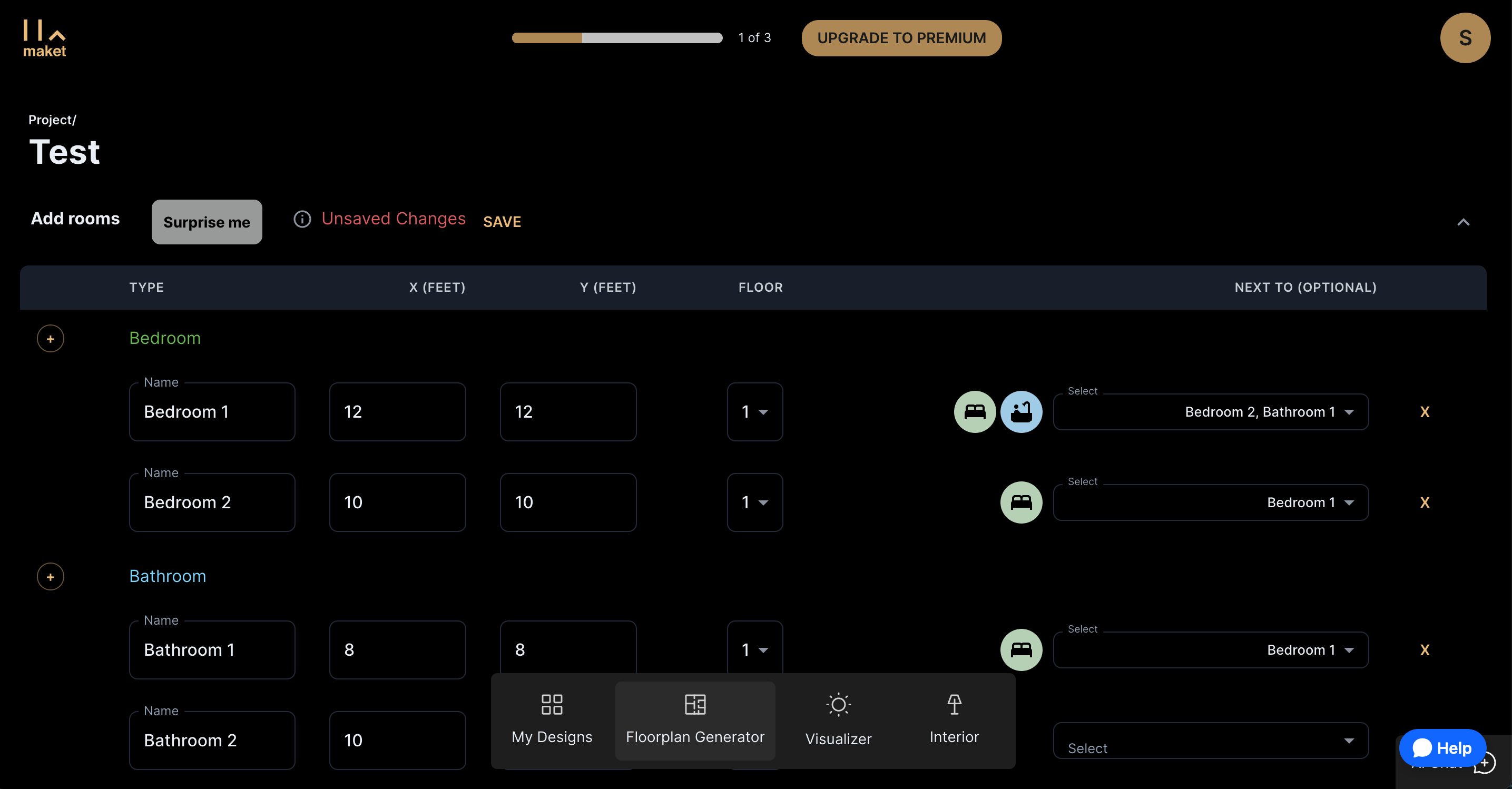
Where architects once navigated the labyrinth of multiple design options alone, Maket.ai stands ready as a steadfast companion. With Maket.ai, the challenge of client-specific requirements and spatial restrictions becomes an opportunity for diverse design exploration. Rather than presenting a singular vision — or whatever number timescale allows — architects can now offer a visual banquet of design alternatives, each as meticulously tailored as a Savile Row suit.
Yet the true magic of Maket.ai lies in its promise of liberated time and resources. By taking on the laborious task of generating design options, Maket.ai gives architects a bounty of time, freeing them to engage more deeply with creativity and clients.
The pièce de résistance of Maket.ai is the potential to stir the stagnant waters of architectural convention. By generating unexpected design options, Maket.ai propels architects into the thrilling unknown of innovative design. The tool serves as a launchpad for creativity, inspiring architects to reach beyond their tried-and-true and embrace the unknown.
ARCHITEChTURES is a transformative AI-powered tool revolutionizing residential planning. Meticulously designed for the discerning architect, it streamlines decision-making and maximizes efficiency.
Harnessing the cutting-edge power of artificial intelligence, ARCHITEChTURES analyzes site conditions, climate dynamics, budget constraints, and client aspirations. With this wealth of knowledge, it unveils an array of design options, flawlessly harmonizing form and function while bringing architectural visions to life.
ARCHITEChTURES is already the trusted ally of many architects, empowering them to surpass limitations and unlock unparalleled efficiency. Through automation, liberation from mundane tasks is a reality. With an extensive palette of design parameters to work with, it is possible to set boundaries and set the program to work on all the available options.
From site planning, where ARCHITEChTURES navigates constraints and explores opportunities, to meticulous building design encompassing room sizes, window placements, and sustainable material selections, ARCHITEChTURES enables accuracy and adjustment with ease.
ArkDesign.ai is the answer to schematic design packs, a boon for architects and developers alike. The intelligent platform optimizes building designs in a flash, leaving you to make informed, expedited decisions.
ArkDesign.ai is armed with an AI brain that scrutinizes and learns the metadata of architectural designs, spawning variations while accounting for US local regulations and ordinances, ensuring that each project is innovative as well as compliant, championing efficiency, quality, and cost-effectiveness.
Sidewalk Labs is the brainchild of Alphabet Inc. and is now part of Google. With urban inefficiencies on an upward trajectory, this revolutionary AI maverick aims to change the landscape of urban planning.
It’s all about digital dexterity. Sidewalk Labs marries AI, machine learning, and sensor technologies, enabling your designs to work harder while you work smarter. Having already been adopted globally, Sidewalk Labs is shaping reality in Toronto, New York, and Singapore, managing city congestion one street at a time.
Picture this: AI splashes an array of design options onto your canvas, and machine learning flexes its muscles to optimize building performance — we’re talking energy efficiency, comfort, and safety wrapped up in a cost-effective package. Next, sensor technology steps to provide invaluable data on traffic patterns, air quality, and noise levels.
Sidewalk Labs is absolutely the new kid on the block, but the program has great potential in the race to rethink our urban landscapes.
Kaedim is a standout performer in the realm of AI-powered 3D modeling that is backed by many in the gaming industry. It harnesses the transformative potential of machine learning, generative adversarial networks, and natural language processing to morph simple 2D design ideas into stunningly accurate 3D models.
Kaedim serves as an architect’s dynamic ally, taking the weight of manual 3D model creation off their shoulders. With Kaedim, architects and designers can freely explore various design concepts, iterate them, and refine their vision in a virtual space before they take tangible form.
In the client-facing phase, Kaedim plays a critical role in visual communication, enabling architects to present 3D models that resonate with clients’ imaginations. It also carries its weight during the construction planning phase, ensuring accurate documentation via detailed 3D models. In an industry where precision and realism are paramount, Kaedim emerges as a crucial asset.
3D modeling is time-consuming. Welcome, Sloyd.AI, a trailblazer in cloud-based 3D modeling. It’s not just a tool but an innovative platform that leverages machine learning, generative adversarial networks, and natural language processing. It renders high-quality 3D models, capturing intricate details from architectural designs to produce exceptional representations.
Sloyd.AI doesn’t merely mimic the architect’s concept but extends its precision to breathe life into designs with a high degree of realism. It liberates architects from time-consuming physical model creation, opening up a playground of virtual exploration and design refinement.
Sloyd.AI proves invaluable from project conception to completion. It allows architects to present dynamic 3D models to clients, creating an immersive experience that static images simply cannot match. For construction planning and documentation, Sloyd.AI’s exactness ensures each specification is captured in the 3D models it generates. In the fast-paced world of architectural design, Sloyd.AI is the companion architects need to maintain their creative edge.
Like Kaedim, Luma.AI is a distinguished pathfinder in AI-driven 3D scanning and modeling. This platform takes the laborious task of creating detailed 3D models and reimagines it, deploying advanced AI techniques such as computer vision, deep learning, and generative adversarial networks. It crafts accurate, realistic 3D models from photographs that can provide architects a comprehensive perspective of objects, be it buildings, furniture, or intricate architectural elements.
Luma.AI is not just a 3D modeler; it is a digital reincarnation expert. The true genius of Luma.AI occurs in renovation and restoration projects, where it can capture existing structures with striking accuracy and creates virtual twins. It bridges the gap between the tangible and the virtual, allowing architects to visualize the renovated structure even before the first brick is laid.
Its prowess doesn’t stop there. Regarding design visualization, Luma.AI ensures that the newly proposed modifications are compatible with the existing structure and enhance its aesthetic and functional appeal. The created 3D models can also be utilized in interactive virtual reality or augmented reality presentations, taking client and stakeholder engagement to new heights.
Best AI Tool for Building Information Modeling (BIM)
BricsCAD BIM is the tool where AI and BIM converge for a seamless, efficient architectural design process. While BIM encapsulates the architecture, engineering, and construction of a building in a 3D model, enabling a holistic view of the project. BricsCAD BIM amplifies the capabilities of BIM by introducing AI, creating a nexus of innovation and practicality.
BricsCAD BIM isn’t just a tool but an efficient assistant that works tirelessly, automating repetitive tasks such as drafting dimensions and annotations. It employs AI to translate 2D sketches into detailed 3D models while offering real-time visualization, enabling architects to interact with their design, tweaking it to perfection.
BricsCAD BIMs’ capabilities extend beyond aesthetics. The program enables architects to identify and rectify errors, enhancing the quality of the final output and minimizing post-construction issues. The provision for real-time visualization empowers architects to make informed design decisions, visualizing the impact of each modification.
Yet, the charm of BricsCAD BIM lies in its ability for effective collaboration. It ensures that architects, engineers, and builders are in sync, providing a shared platform that brings everyone on the same page. This collaboration streamlines the design process, reduces redundancy, and ensures a consistent understanding of the project among all parties involved.
The generative design capability of BricsCAD BIM is another aspect of its brilliance. It can conceptualize 3D building models based on user-defined parameters such as number of floors, building size, and the materials to be used. This encourages exploration, providing architects with a multitude of design options that adhere to the set constraints.
BricsCAD BIM is a true paragon in the world of AI-assisted BIM tools. It integrates the detail-oriented approach of BIM and the automation capabilities of AI, improving the design process, promoting collaboration, and ensuring the delivery of high-quality buildings.
Arko.ai enters the architectural scene as a promising AI-powered rendering service by providing high-quality, photorealistic renders in minutes. Through the power of AI and the convenience of a cloud-based platform, Arko.ai transforms 3D models into stunning visual masterpieces that mirror reality.
The key to Arko.ai’s appeal lies in the ways it can enhance the design process for architects. Primarily, it offers a powerful medium for architects to visualize their designs, as it breathes life into 2D sketches and models, translating them into realistic renders that provide architects with a glimpse of their creations in the real world.
Moreover, Arko.ai is a time-saver, taking over the labor-intensive task of rendering and freeing architects to focus on the creative aspects of their designs.
Compatible with SketchUp®, Revit®, and Rhinoceros® Arko.ai is a promising addition to an architect’s toolbox, offering realistic visualizations of designs and saving time.
Veras
Recently announced as being available within SketchUp® Veras is an AI-powered visualization tool that leverages 3D model geometry to inspire and promote creativity. Architects can turn to Veras to create photorealistic renders of their designs using text prompts, bringing to the fore the power of AI in architectural visualization.
Ultimately, the strength of Veras lies in its versatility and speed. It generates stunning renders way faster than traditional methods, affording architects and designers more time to dedicate to the more complex aspects of design. It allows designers to explore variations quickly so that informed design decisions can be made without the shackles of cost or time implications.
Autodesk Forma carves a niche for itself as an all-encompassing AI-powered planning tool that offers architects and urban planners the ability to design sustainable, livable cities with heightened precision.
Operating on a cloud-based platform, Autodesk Forma is easily accessible from any location and works in tandem with AutoCAD and Revit.
The new addition from Autodesk harnesses the power of AI to simulate the implications of diverse design decisions on critical factors, such as energy consumption, traffic flow, and air quality, with an aim to help designers make more informed and sustainable design choices while enhancing the sustainability and livability of projects. Autodesk Forma is also equipt to help identify potential design flaws before implementation, circumventing costly future rectifications.
In essence, even in its earliest stages, Autodesk Forma is a comprehensive architecture AI tool that supports architects in designing more thoughtful and sustainable cities. It facilitates informed design choices, promotes time and cost efficiency, and encourages the creation of sustainable designs, thereby redefining the landscape of urban planning and architecture.
ClickUp is a project management tool that has been adopted across many different industries. It has become a secret weapon, revolutionizing project management with features tailored for enhanced workflow efficiency. This cloud-based application seamlessly organizes and tracks projects.
ClickUp harmonizes tasks, deadlines, and team assignments in a simple platform, ensuring project progression from design to construction, avoiding missed deadlines and maintaining momentum.
Effective communication is key, and ClickUp delivers. Chat, video conferencing, and file-sharing tools synchronize efforts with team members and clients.
In ClickUp’s virtual realm, real-time collaboration can be used to refine designs collectively, while ClickUp’s reporting tools provide invaluable insights to identify improvement areas and fine-tune workflows. Analytics and visualizations offer panoramic project views.
The Best AI Tool for 3D Sketching
?????
SketchUp will be announcing the beta versions of two new AI features in June 2023, both which help accelerate and streamline design workflows so architects can spend more time designing and less time on tedious tasks. We’re keeping our eyes out for their announcement.
For more ways to supercharge your workflow, check out more articles in our Tech for Architects series, which includes our recommendations of Top Laptops for Architects and Designers.
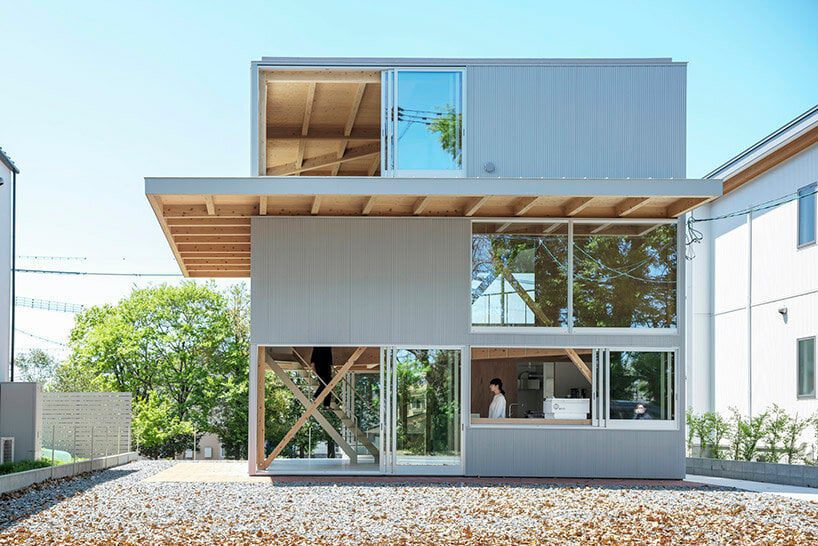
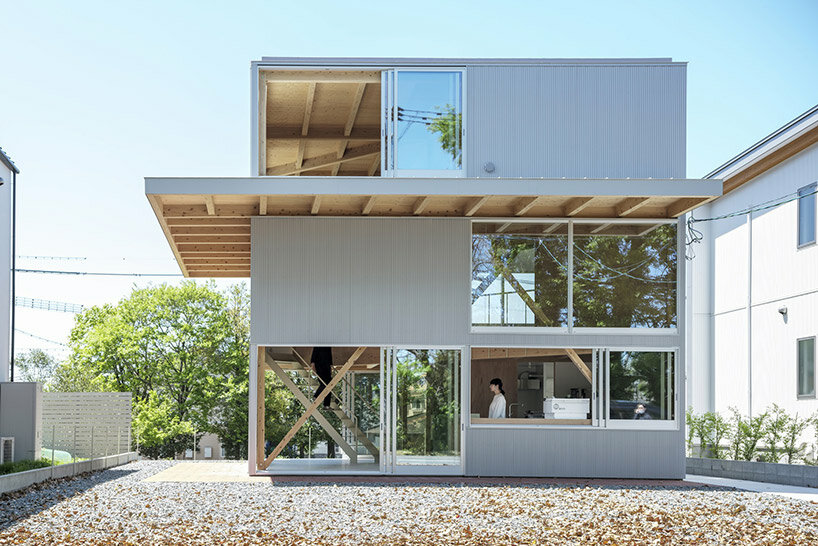
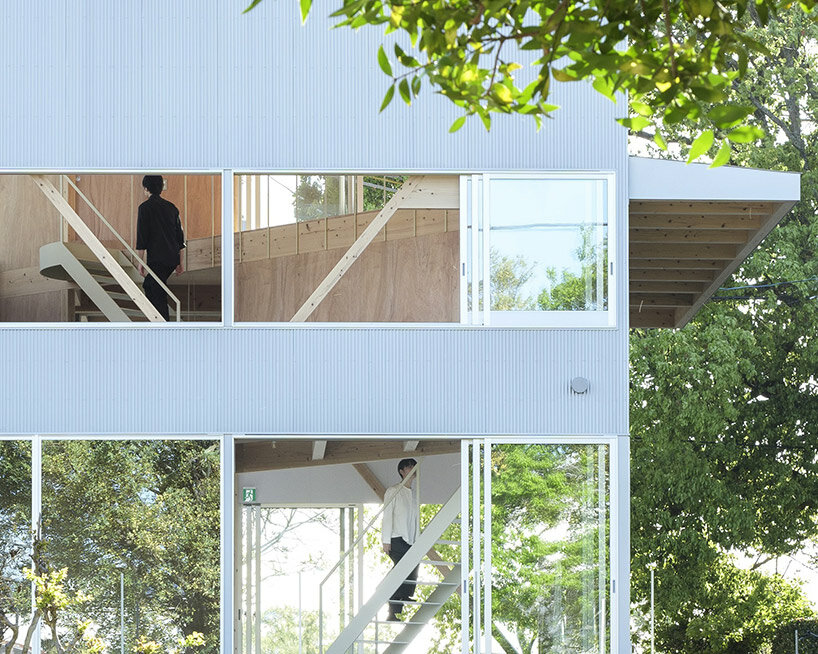
Nestled in a tranquil corner of a lakeside residential area in Kumamoto, Japan, the recently completed ‘EZU House and Café‘ stands as a testament to innovative architectural design, crafted by Yabashi Architects and Associates (YAA). this structure opens broadly out toward its surroundings to provide a unique experience for its occupants. The site’s terrain, with its stepped landscape along the lakeside, offers breathtaking views of nearby gardens, private house roofs, and distant mountains. By skillfully incorporating these elements into the design, the architects have created a multi-layered structure that fosters a sense of harmony between its retail and residential programs.
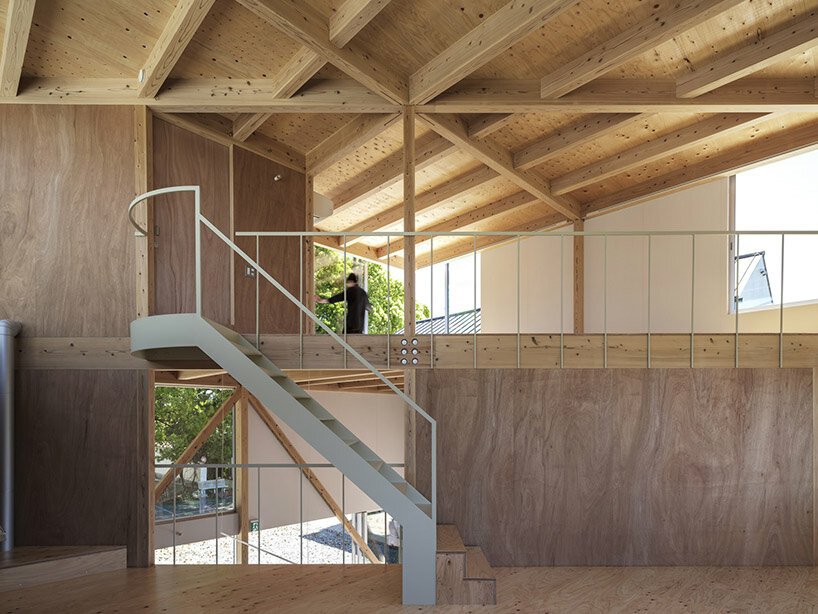
At the core of the design philosophy is a square plan that encompasses the site. The upper floors of the building are ingeniously divided diagonally, establishing a dynamic interplay of spaces. By shifting the floors to increase the parameter with the ground and connecting them through a spiral vertical movement, the architects have achieved a three-layered structure that presents an array of viewpoints at every turn. This deliberate arrangement allows for a varied experience on each floor, with minimal necessary functions, furniture, and plants. The result is a space that transcends conventional definitions, offering an open canvas for inhabitants to freely create their own personalized environments.
Seamless Integration of Functions
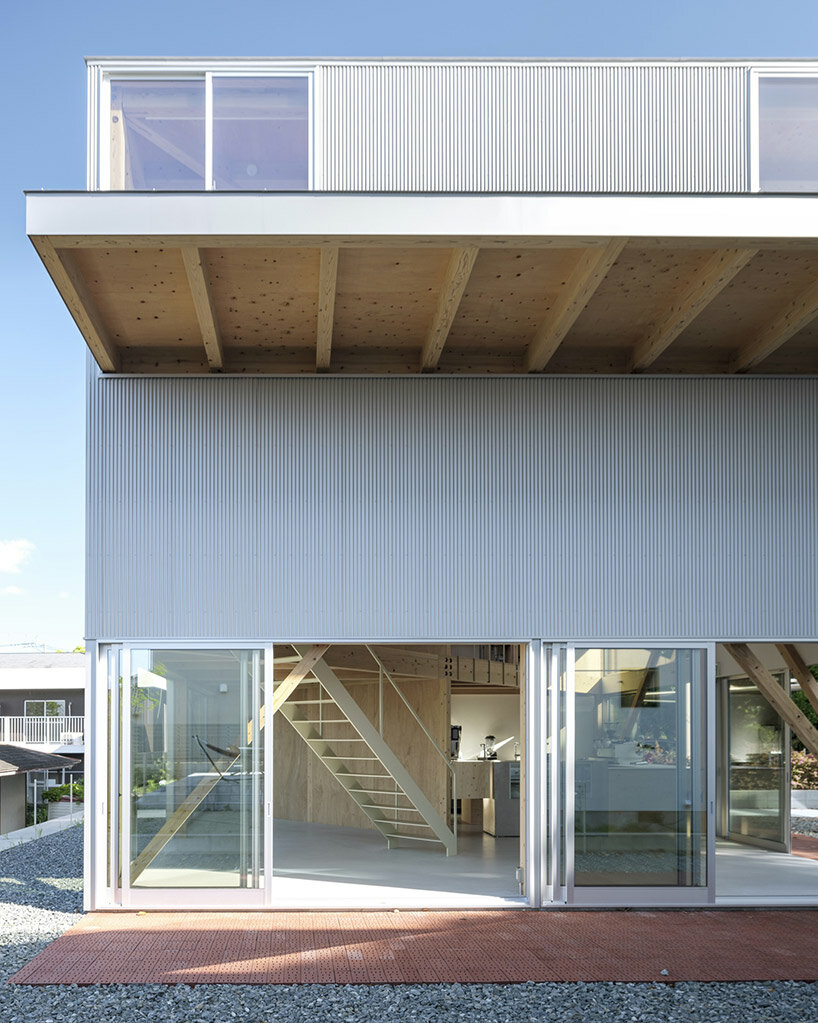
The ground floor of the EZU House and Café serves as a retail area, seamlessly transitioning into the residential space on the upper floor. The distinction between these two sections is purposefully fragmented, employing diagonal load-bearing walls that create a continuous three-dimensional living space. This approach fosters a sense of connectedness and flow throughout the entire structure. Furthermore, the architects have emphasized the integration with the natural surroundings by incorporating a double structure. This design envelops the earthquake-resistant framework with elements dedicated to wind resistance and heat insulation, while the outer skin of the building serves as a gateway to the outdoor environment.
Unobstructed Views by yabashi architects
The absence of partitions between spaces is a deliberate choice that enhances the occupants’ experience of the surrounding environment. Depending on one’s body position and movement, glimpses of the sky, verdant greenery, or sudden visual breaks may appear through the windows on adjacent floors. This design creates a spatial experience that emphasizes the inherent richness of the location and the generosity of life itself. In essence, the EZU House and Café may appear as a mere assembly of floors, outer panels, and openings. However, it transcends its utilitarian nature, transforming into a powerful tool that allows individuals to perceive the external environment as an integral part of the internal space.
a double structure wraps earthquake-resistant elements with wind resistance and heat insulation the multi-use space is flexible with a spiral vertical movement and minimal necessary functions
a harmonious blend of architecture and agriculture
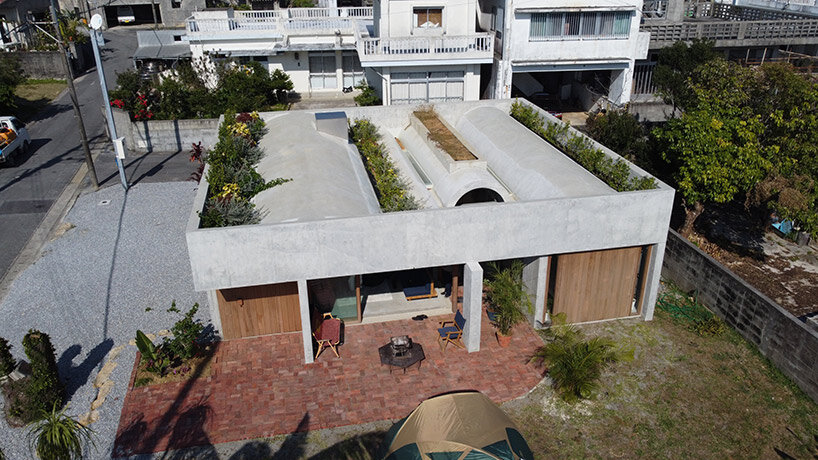
The House in Shikenbaru, designed by Studio Cochi Architects, is a residential structure located in the village of Nanjo, Japan. Situated near the sea in southern Okinawa, this concrete house serves as a home for a couple and their four children. It is not merely a dwelling but also a space that seamlessly integrates with the local farming activities and the natural environment of Okinawa. The architecture of the house takes into account the region’s unique characteristics, such as its temperate climate and abundant agricultural opportunities. This essay explores the innovative design and features of the House in Shikenbaru, highlighting its harmonious integration of farm work, spatial layout, and environmental considerations.
The owner of the Studio Cochi Architects-designed ‘House in Shikenbaru’ is a farmer, cultivating a variety of vegetables including okra, green beans, and papaya. With a focus on sustainability, the architects consider the owner’s farming activities and aim to provide a conducive environment for his work. The site’s location near fields and the absence of snow or frost in Okinawa enables year-round vegetable cultivation, which influenced the architectural decisions. The house becomes a vital element in supporting the owner’s farming endeavors, allowing for efficient operations and seamless transitions between indoor and outdoor work areas.
Spatial Considerations and Layout
To create a functional and adaptable living space, the layout and volume of the House in Shikenbaru were carefully planned, taking into account the surrounding environment and prevailing wind direction. Given the spacious site, the decision was made to construct a single-story house. The removal of the original block wall facilitated easy access for tractors and cultivators from any direction, creating a versatile environment conducive to agricultural activities. Additionally, a vacant lot was designated around the building, providing storage space for farming tools and ensuring a smooth workflow that integrates both indoor and outdoor tasks.
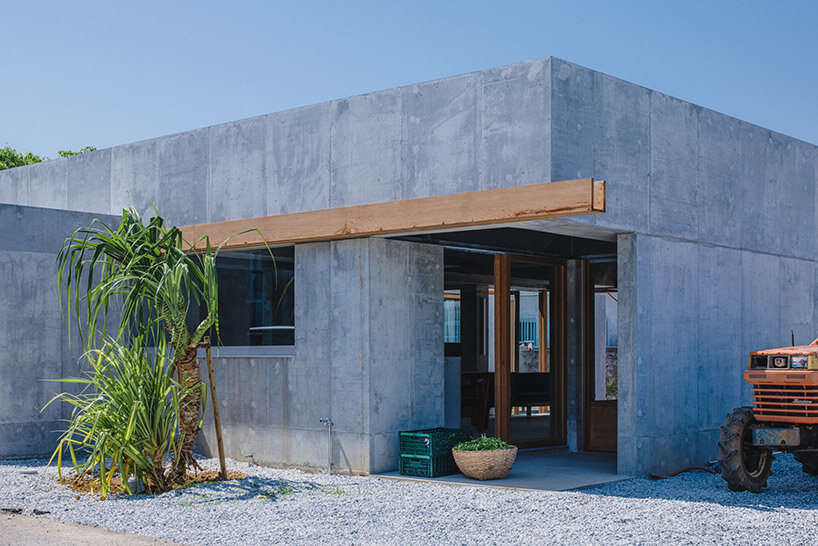
deep overhangs shelter semi-outdoor spaces
Seamless Integration of Interior and Exterior
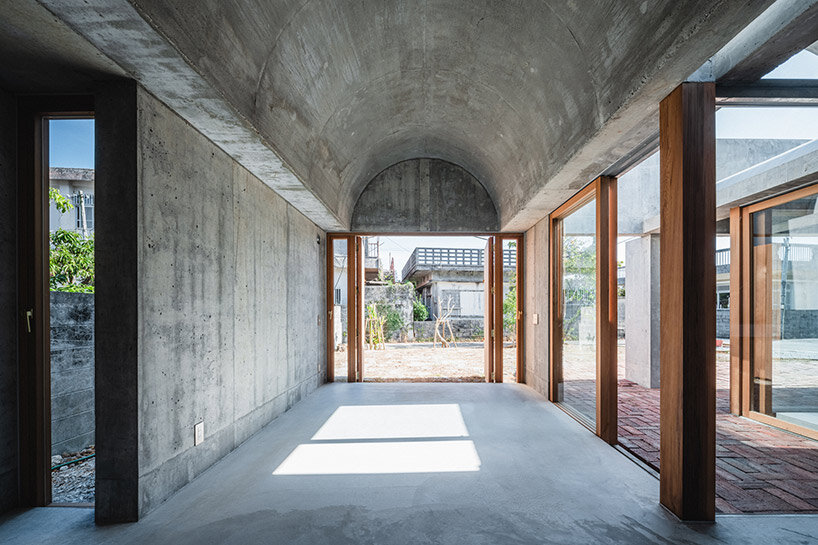
The architectural design of the House in Shikenbaru employs a simplistic yet elegant approach to seamlessly blend the interior and exterior spaces. A continuous vaulted ceiling, varying in height, unifies the indoor and outdoor areas. Stretching from north to south, this vault crosses the boundaries between the interior and the garden, forming a semi-outdoor intermediate space.
With deep eaves, this area serves as a hall for daytime farming activities and fosters a connection between the occupants and the surrounding natural environment. The rhythm of the continuous east-west vaulted ceiling creates a sense of visual harmony within the simple plan, while the interplay of natural light through the roof and wall gaps produces a subtle and captivating gradation of light and shadow.
the interiors and exteriors are united by a continuous vaulted ceiling of varying heights
Environmental Adaptations
The House in Shikenbaru effectively adapts to the demanding Okinawan climate through innovative architectural choices. The valley at the top of the vaulted ceiling is filled with soil, providing insulation against the intense sunlight. This strategic design element helps regulate the indoor temperature, ensuring comfort for the residents and protecting delicate crops.
Furthermore, the entire surface of the vaulted roof is covered with vibrant ivy plants, such as passion fruit and bougainvillea. This living roof not only enhances the aesthetic appeal of the house but also contributes to environmental sustainability and acts as a testament to the owner’s commitment to cultivating fruits and vegetables in diverse soil depths.
the house opens up with seamless, gradual transitions between the interiors and exteriors
The House in Shikenbaru exemplifies the successful integration of architecture, farming, and the natural environment in southern Okinawa. Studio Cochi Architects have skillfully crafted a residence that caters to the needs of a farming family while honoring the local context and sustainable practices. Through the layout, seamless blending of spaces, and environmental adaptations, the house creates a harmonious environment that embraces the rhythm of farm work and facilitates a deep connection with the surrounding landscape. The House in Shikenbaru stands as a testament to the power of architecture to enrich lives, promote sustainable practices, and create spaces that resonate with their inhabitants.
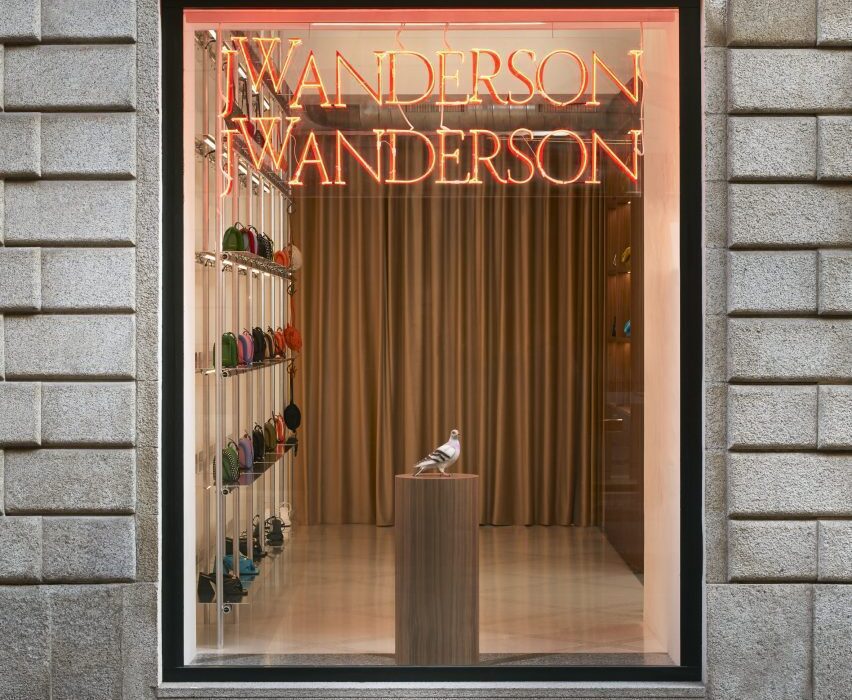
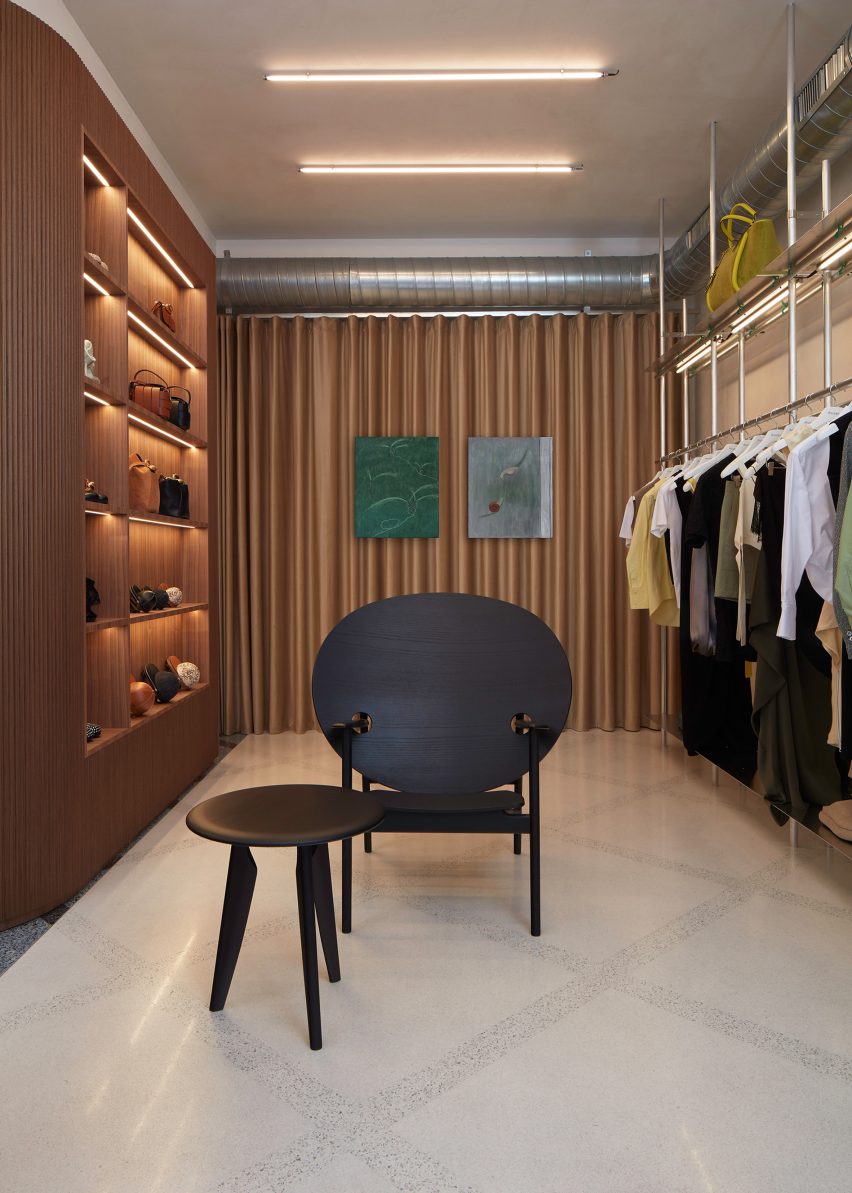
British fashion brand JW Anderson has opened a flagship store in Milan that was designed by British studio 6a Architects and draws on the local atmosphere as well as Soho sex shops.
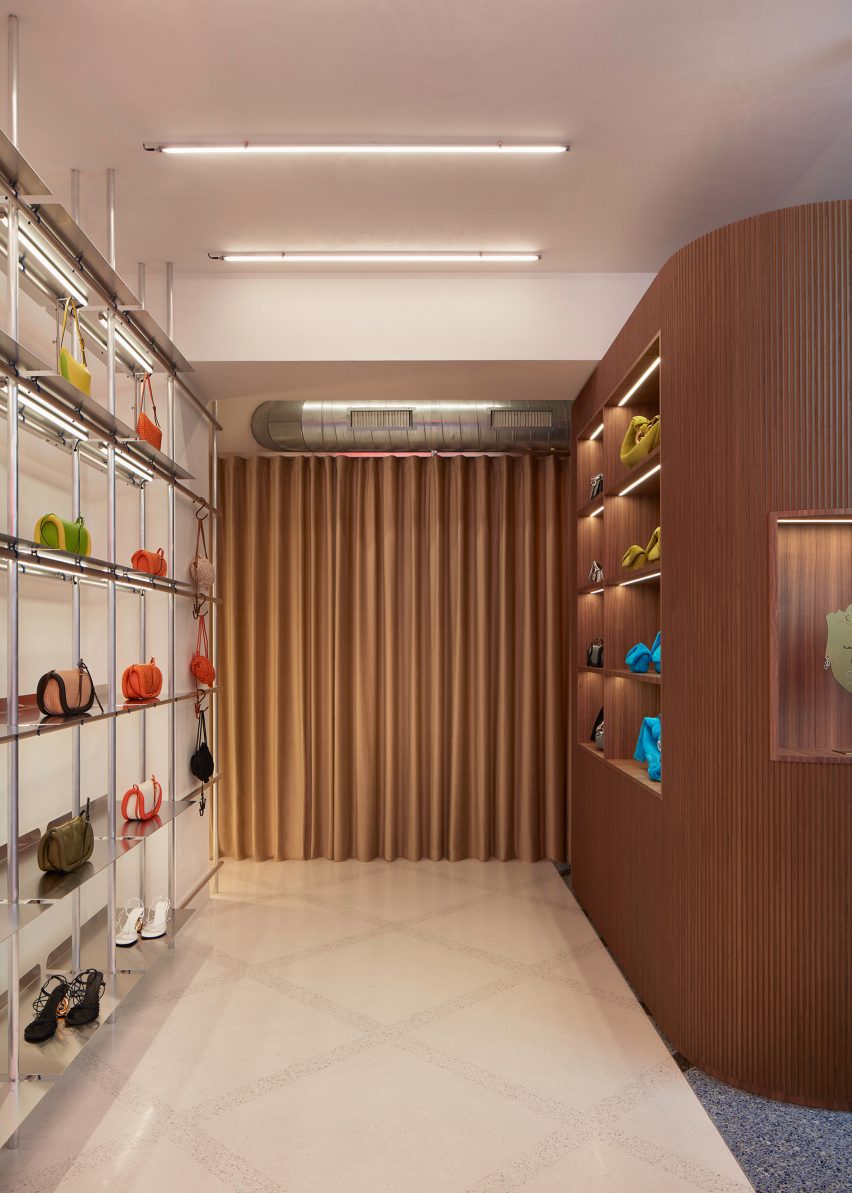
The 53 square-metre-store is located on the Via Sant’Andrea luxury shopping street in Milan’s Quadrilatero shopping district. It is set across a single floor and comprises two rooms.
JW Anderson’s first Milan store was designed by 6a Architects
While the boutique primarily draws reference from its “bourgeoise” Milanese surroundings, the retail space also pulls from designer Jonathan Anderson’s first JW Anderson store in Soho and from the 2017 exhibition Disobedient Bodies, which was curated by him.
It was designed by 6a Architects, who Anderson began working with in 2017 after selecting the studio to design the set for Disobedient Bodies at The Hepworth Wakefield.
It draws on a Milanese atmosphere
“I thought [6a Architects] really grasped how to take my visual language and turn it into something which was able to be educational,” Anderson told Dezeen.
“They’re very good at hybrid, old or new. They’re very good at this combination, they’re great architects.”
“The store actually is a combination of Disobedient Bodies and a store. It’s a little bit more elevated,” he said. “The front of the building feels Soho, and as you go in, it feels more kind of domestic Milanese.”
It carries over elements from the Soho store
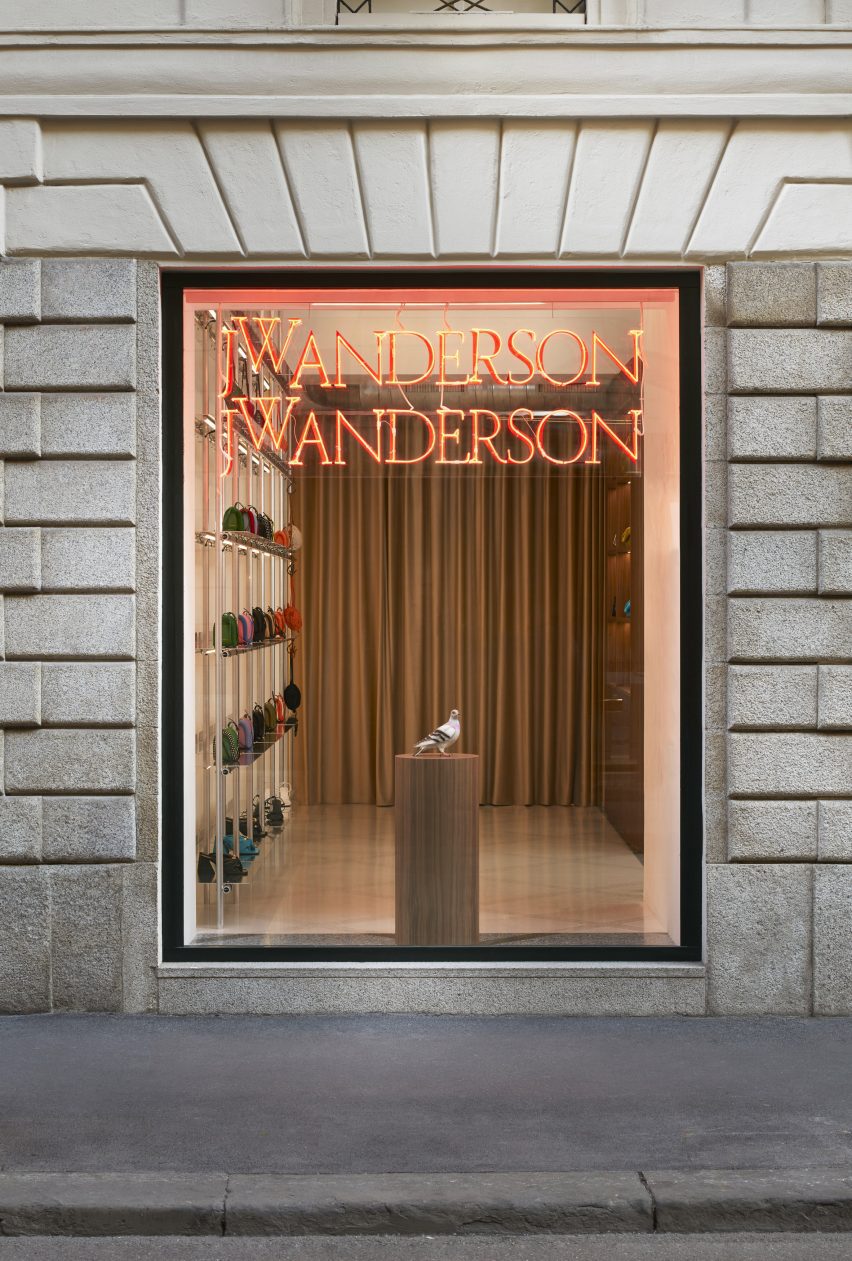
In a nod to the store frontages of the sex shops found in London’s Soho area, the windows of the Milanese store were decorated with neon lighting and rainbow-slatted curtains.
Anderson and 6a Architects used the design as a juxtaposition against the more typical Milanese interior.
“For me, there is something very sexual about neon lighting,” said Anderson. “I think we associate it with grand gestures and I felt like a window is kind of like a television set. There’s something with neon that it does, it kind of tricks you.”
Traditional Italian furnishings and finishes fill the interior
“There are little alleyways and they have all these amazing sex stores on and these curtains,” Anderson continued.
“I liked the idea that we have this in Milan and then suddenly you enter into a kind of Milanese setting, something which is very bourgeoise.”
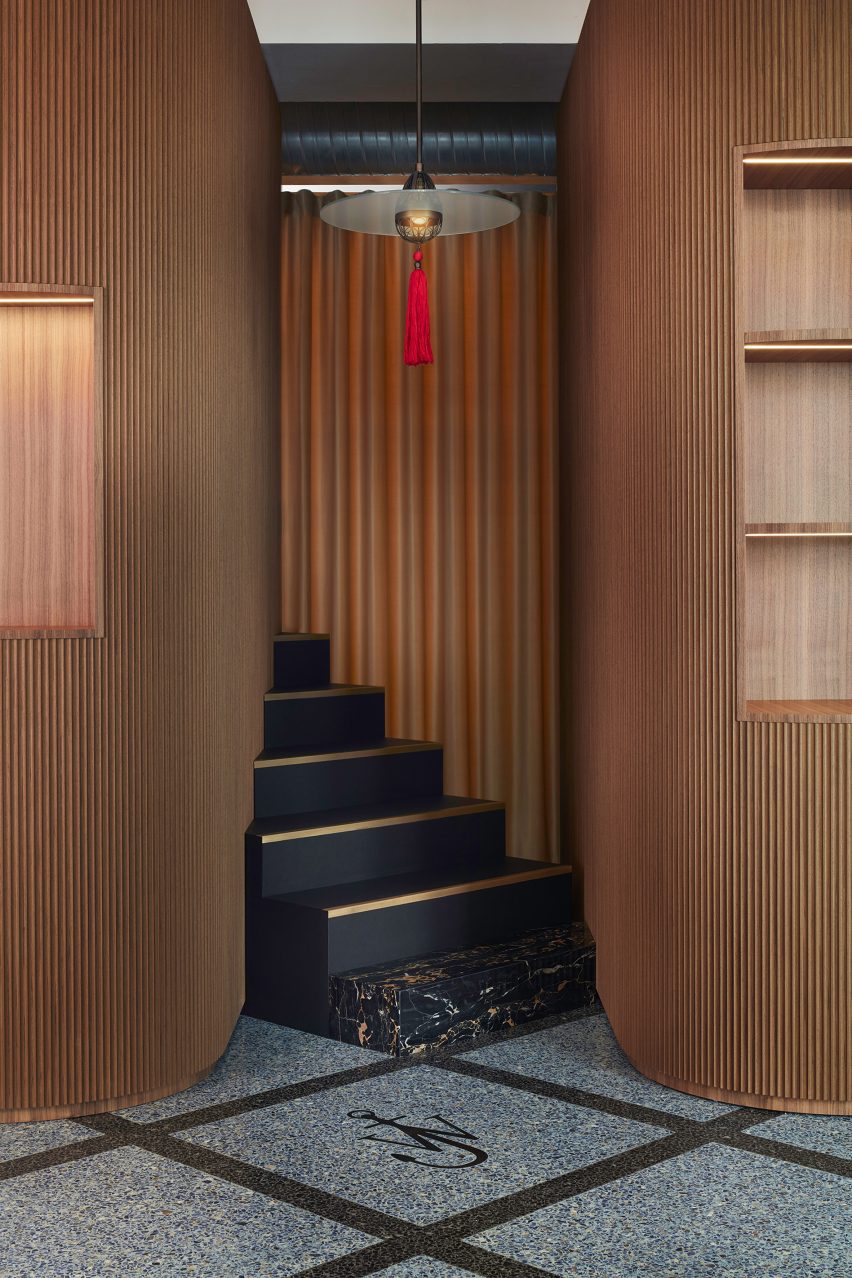
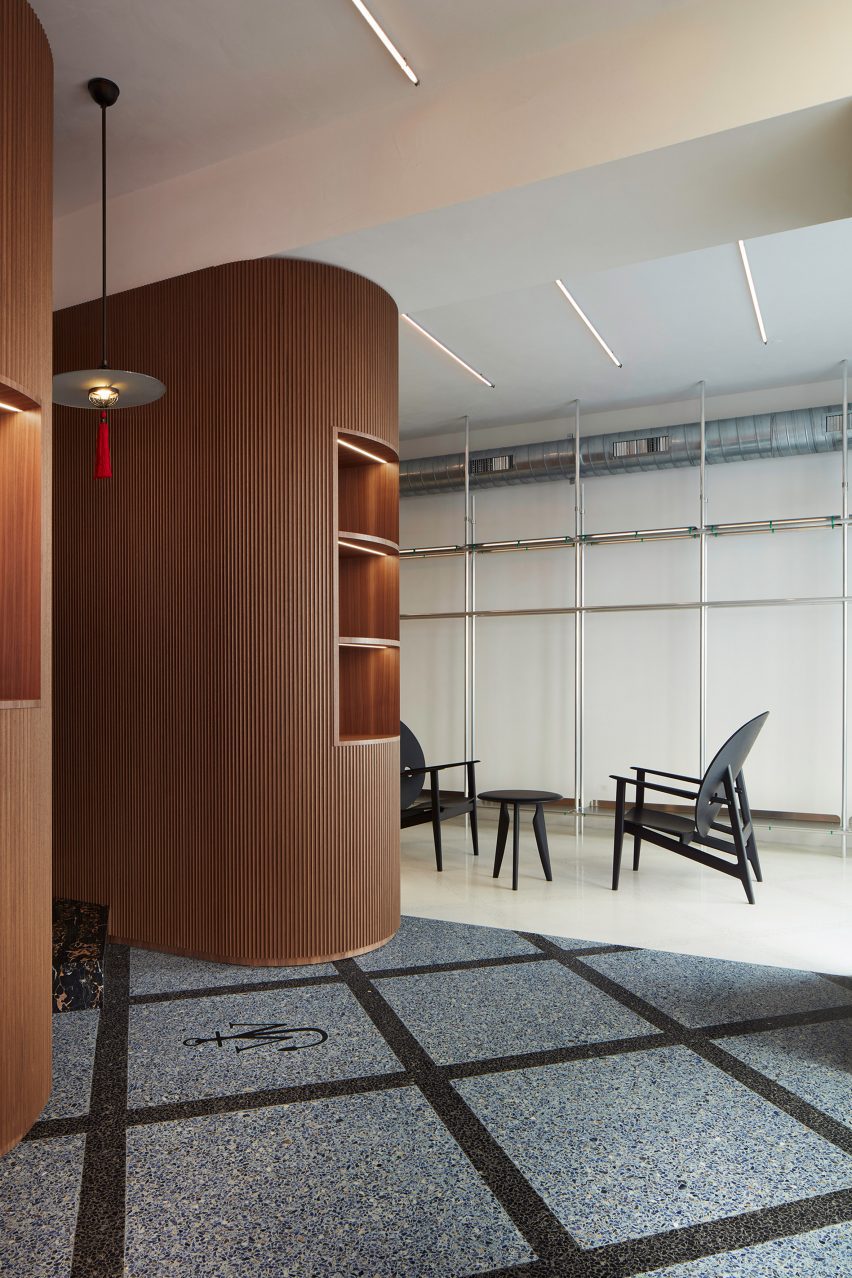
Inside, gridded handmade terrazzo covers the floor and visually divides areas of the interior through bespoke contrasting tones of grey and sand.
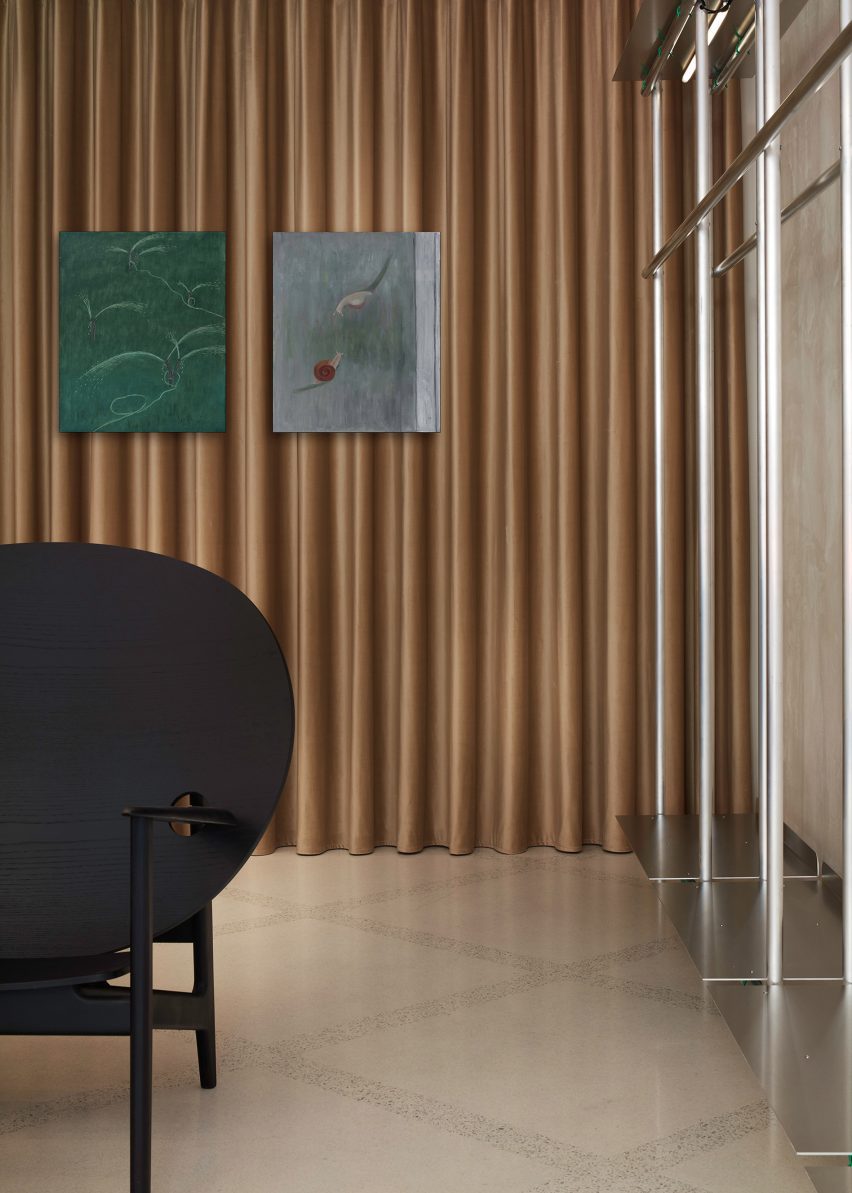
Brassy, metallic curtains ripple along the rear walls of the store, in a similar way to 6a Architects’ use of curtains in the exhibition design for Disobedient Bodies.
Jonathan Anderson selected furniture and artwork for the interior
Aluminium scaffolding, which was also carried over from Anderson’s Soho store, was translated into display shelving and brought an “angst” to the interior that contrasts against traditional Italian furnishings, such as fluted walnut panelling that envelops two curved walls.
“There is something slightly more underground in terms of the construction of a JW Anderson store, whereas, I think Loewe [for which Anderson is creative director] is about a heightened perfection,” said Anderson. “With JW Anderson, there’s always a bit of slight angst to it.”
“It’s softer inside, and then you have this harshness with the windows where there’s neons and sex curtains and it’s kind of like a theatre. It has moveable parts and in a weird way the store becomes a giant window.”
It has furniture by Mac Collins
Furniture and artworks personally selected by Anderson fill the interior.
Designer Mac Collins’ black Iklwa chair was paired with matching side tables, while a Cardinal Hat pendant light by Lutyens Furniture is suspended from the ceiling of the main space.
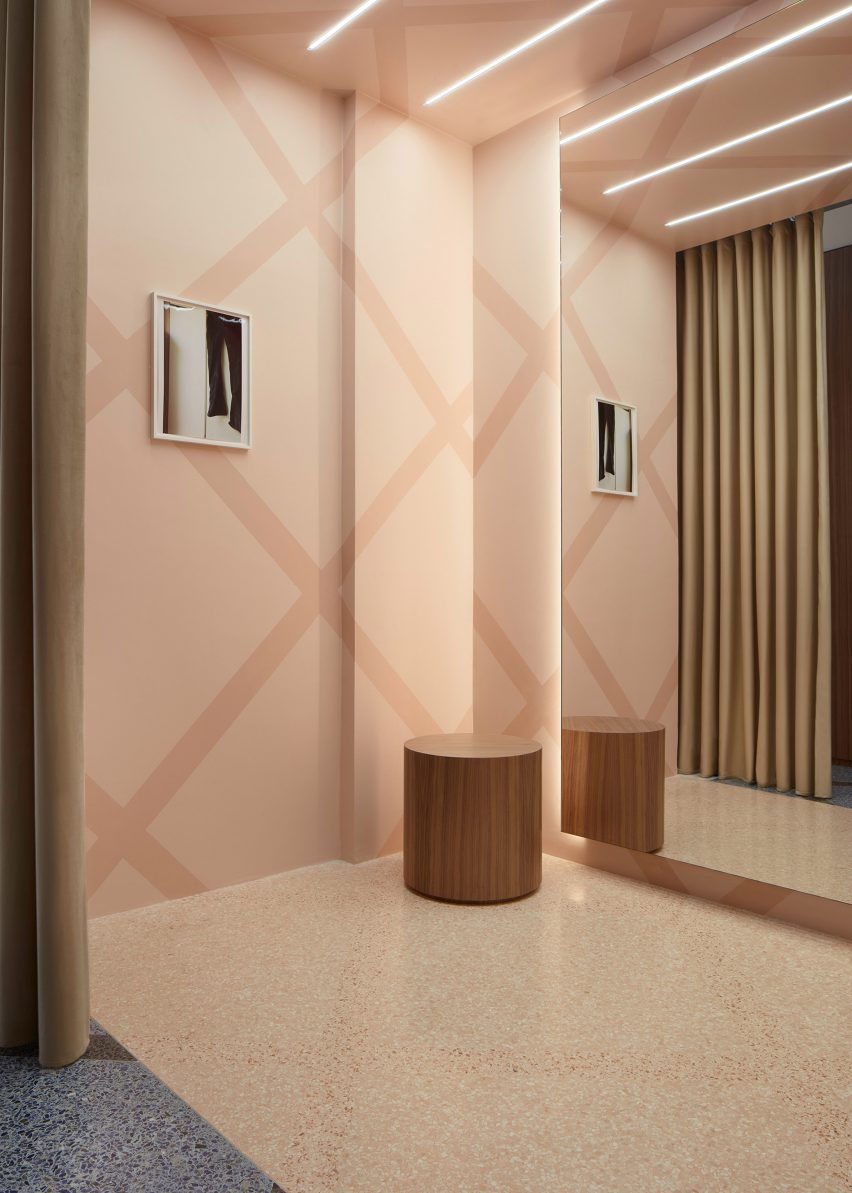
Oil paintings by Chinese artist Hongyan appear to float on the ripples of the brass-coloured curtains, and images by photographer Wolfgang Tillmans sit on the walls of the store’s fitting room.
An image by Wolfgang Tillmans is placed in the fitting room
“I don’t believe that stores should be completely cookie-cutter,” said Anderson. “I feel like the key is to make sure that each store has a different universe because there’s no point in having something which is just a duplication, duplication, duplication.”
Jonathan Anderson founded his eponymous label JW Anderson in 2008 and was appointed creative director of Spanish luxury house Loewe in 2014, which recently announced the winner of its sixth annual craft prize.
During London Fashion Week, JW Anderson presented a “parallel world of people trapped in their computers” for its Spring Summer 2023 collection.
The UK chapter of Architects Declare has responded to a recent opinion piece published on Dezeen that argued the climate network has been a “failure”.
In a statement provided to Dezeen, which is published below in full, the steering group for UK Architects Declare stated that the opinion piece contained “numerous flaws”.
Written by Chris Hocknell, director of UK sustainability consultancy Eight Versa, the original article claimed that Architects Declare’s commitments were unrealistic and that many architecture studios which signed up to the initiative have failed to implement its aims.
“While bold and splashy commitments may make for impressive LinkedIn posts, failing to meet those targets undermines faith in the power of commitments and discourages others from taking the collective action required to effect real change,” Hocknell wrote.
“Surprisingly defeatist”
In its response, UK Architects Declare said: “In summary, on these key questions, we agree that we need to accelerate the pace of change and that there are too many firms continuing with business as usual or very close to it.”
“Where we disagree is in the implied assertion that the solution is to return to conventional approaches to sustainability,” it continued.
The group argued that “a target-setting and compliance approach would be mistaken”, suggesting that such mechanisms have proved ineffective in combating climate change.
It also claimed that Hocknell’s argument that many of the Architects Declare commitments are outside of architects’ control is “surprisingly defeatist”.
Commitments made in good faith “admirable in our view”
However, the statement said the steering group “partly agree” that some studios are not implementing Architects Declare’s commitments.
“We haven’t seen the level of change necessary to match what the science shows is required […] but it’s absurd to suggest that lack of full commitment invalidates the whole initiative,” it added.
Hocknell’s piece also argued that “no commitment is often better than a failed one” when it comes to climate-target setting.
“We fundamentally disagree,” the UK Architects Declare response said. “As long as the commitment is made in good faith and followed up earnestly, that is admirable in our view.”
“There is clearly a long way to go in little time”
Architects Declare was established in May 2019 by an initial group of 17 Stirling Prize-winning UK studios. It now has nearly 1,300 signatories, with thousands more across 28 different countries.
It is based around pledges to move towards designing buildings and cities that go beyond limiting carbon emissions to having a positive impact on the planet and biodiversity.
Among the 12 Architects Declare commitments are promises to “evaluate all new projects against the aspiration to contribute positively to mitigating climate breakdown”, “accelerate the shift to low embodied carbon materials in all our work” and “include life cycle costing, whole life carbon modelling and post occupancy evaluation as part of our basic scope of work”.
As part of its response to Hocknell’s piece, UK Architects Declare listed its achievements, including the publication of resources on implementing the pledges, a book on regenerative design co-authored by a steering-group member and attempts to influence Royal Institute of British Architects (RIBA) and Council on Tall Buildings and Urban Habitats policies.
“There is clearly a long way to go in little time, but there is much greater action on regenerative design now than there was four years ago, and a greater understanding of the shortcomings of conventional sustainability,” the statement said.
“We think it’s fair for AD to be credited with some of that shift – and to be constructively challenged and supported in reaching further.”
Last year, the design industry followed architecture in establishing the Design Declares campaign, with eight founding signatories.
The full response from UK Architects Declare is below:
We would like to respond to the recent article that made a number of assertions about Architects Declare. Its numerous flaws could have been addressed had the author contacted us to shape a constructive piece on how architects can offer their skills, experience and commitment to tackle the climate and biodiversity emergency. Nevertheless, we are keen to clarify where we agree or disagree with the piece and correct the record.
Firstly, we should point out that Architects Declare (AD) is an international movement with active groups in 28 countries and is part of the wider Built Environment Declares. The article focused on us in the UK without making that distinction – presumably, the author’s experience is with UK practices – and we hope that readers outside the UK will not feel that the criticism aimed at us (incorrectly, as we show) was an attack on them also. We are responding as the steering group for UK Architects Declare.
We welcome reasoned discussion. Indeed, effective dialogue has been one of AD’s aims from the start. AD has a well-developed theory of change, drawing on solid research in systems thinking and how best to move the current system – in this case, away from a failing assumption that improved sustainability will solve the emergency over time to one of regenerative design that addresses the emergency head on. We say more on that below, but it’s important to recognise that the original article spoke from within the current sustainability paradigm.
We address the article’s key assertions, which were:
1. That we should set “realistic, achievable and accountable” targets and have a means by which these are enforced
As a theory of change, this is almost identical to what’s been advocated for the last 30 years as sustainability and has not got us anywhere near to where we need to be. The latest IPCC report, AR6 Synthesis Report: Climate Change 2023, is a stark reminder of the urgent need for action. Global greenhouse gas emissions have continued to increase and we need to be doing much more, much faster, or we risk not being able to limit warming to 2 degrees Celsius, let alone 1.5 degrees Celsius. This is why AD’s theory of change builds on Donella Meadows’ system thinking, which asserts that the most influential way to change a system is by intervening at the level of the paradigm or mindset that determines how it behaves. The second-most effective leverage point is to change the goals of the system. The transition we need is far more than some simple industrial shift focused almost exclusively on carbon. What’s required is a broader cultural shift that extends perspectives beyond carbon to much wider issues, including the whole web of life, and beyond a limited ambition of mitigating negatives towards optimising positives.
We believe a target-setting and compliance approach would be mistaken for AD. The system change required is difficult to achieve simply working at that level, even at scale. And to monitor 1,200-plus signatories would mean AD charging significant subscriptions and taking on a policing role. This would undoubtedly put off large numbers of would-be signatories which, in turn, would reduce our influence when making the case to government on the role that it needs to play.
2. That a number of the practices are not implementing AD’s declaration points
On this point we partly agree. We haven’t seen the level of change necessary to match what the science shows is required. We have seen a range of responses among AD signatories.
Some have adopted the spirit of the declaration, implementing new procedures throughout their companies, including new positions for heads of regenerative design. Some have signed and are now striving to catch up – and we’re working to assist them with a range of resources. Others have signed up and taken little or no action. While the latter category is disappointing, having more signatories signals the required direction of change and makes the collective voice more influential, and we hope that, in time, all signatories will be encouraged and enabled (internally by staff, externally by broader cultural and professional shifts) to engage more meaningfully.
Obviously we would prefer all practices to be in the first category but it’s absurd to suggest that lack of full commitment invalidates the whole initiative.
3. That some of the declaration points are outside an architect’s remit
This statement is surprisingly defeatist. Perceived limits to people’s agency are a major part of why there has been so little progress, and this includes architects as much as other professions and communities. Where we see that urgent change is necessary, but feel this to be outside our control, we need to find ways to extend our agency through broader industry collaboration and through pushing for higher-level systems change.
4. That making no commitments on climate is better than making a commitment and failing to meet it
We fundamentally disagree. The changes necessary to address the planetary emergency are currently well beyond even the most progressive practices, and there is no built-environment company we’re aware of that could be described as fully regenerative. To suggest that making no commitment is better than failing to meet a stretching one is a counsel of despair. Anyone who advised a business not to bother if they couldn’t see a way to make progress would be doing a very poor job.
Many of the practices that signed the declaration did not at that time know how they would address its challenges, but making a commitment to try is the important first step. As long as the commitment is made in good faith and followed up earnestly, that is admirable in our view. Sharing knowledge of our successes and failures on that journey is part of the process and key to improvement.
In summary, on these key questions, we agree that we need to accelerate the pace of change and that there are too many firms continuing with business as usual or very close to it. Where we disagree is in the implied assertion that the solution is to return to conventional approaches to sustainability. We would welcome an informed critique of our theory of change and can provide the key sources for anyone wishing to do that.
The article also made some confused comments about AD’s interaction with government, which overlook the role governments could and should play in accelerating the shifts we need. Developers operate within an economic system and if that system is leading to collapse then it’s right that governments should be expected to change it. There are inspiring examples like doughnut economics that AD has advocated, and there are examples of governmental bodies are already getting on board with that shift.
Have we achieved what we set out to do? Even a brief account of what AD has done and continues to do (which the article fails to even attempt) will suggest the progress we are making and the direction we are moving in.
Many signatory architects described our first event, at which Kate Raworth and Jeremy Lent spoke, as a turning point in their careers
And many people – steering group members and other volunteers from signatory practices – worked hard to produce AD’s extensive and well-received Practice Guide and a comprehensive series of Action Practice Masterclasses based on that: all specifically structured to help practices progress with their commitment to the declaration. We are collaborating again to include regenerative design guidance
One of our steering group members has co-authored a book exploring the philosophical shifts and practical steps involved in moving from “sustainable” to “regenerative”
We’ve organised many events with high-profile speakers on topics such as new economics, long-term thinking, company transformation, climate justice and regenerative materials
We work with others to ensure the best reach of our efforts and expertise – not least with the RIBA to launch our joint Built for the Environment report and summit ahead of the COP26 summit held in the UK
And we challenge others, not just government, where they can help change the goals of the system: for example, making the case to the RIBA that the strategic mission of the profession needs to be updated and seeking to engage the Council on Tall Buildings and Urban Habitats on a transformative new mission
There is more work underway, both to help our signatories meet the challenges of the declaration while improving their businesses, and to make strong calls on those who can do what architects cannot do alone: change the system that perpetuates the planetary emergency to one that addresses it. And we share progress and problems with other declare groups here in the UK and around the world, with regular international gatherings on Zoom.
All of this gives us, our partners and our signatories strength in pushing ahead. There is clearly a long way to go in little time, but there is much greater action on regenerative design now than there was four years ago, and a greater understanding of the shortcomings of conventional sustainability. We think it’s fair for AD to be credited with some of that shift – and to be constructively challenged and supported in reaching further.
Importantly, our declaration draws attention, front and centre, to what is needed across the built environment and its stakeholders. What is needed is not merely a continuation of conventional sustainability but striving to change the mindset and the goals of the system.
From the steering group for UK Architects Declare: Duncan Baker-Brown, Julia Barfield, Alasdair Ben Dixon, Mandy Franz, Tara Gbolade, Tom Greenall, Kevin Logan, Anna Lisa McSweeney, Ken Okonkwo, Anna Pamphilon, Michael Pawlyn, Craig Robertson, Zoe Watson, Andrew Waugh and Anna Woodeson.
Some of the AD Steering Group with speakers at our November 2022 ‘Building Justice: Crisis Solutions’ event.”
The photo, showing members of the Architects Declare steering group together with speakers at a November 2022 Architects Declare event, is courtesy of UK Architects Declare.
Judging for the 11th A+Awards is now underway! While awaiting the Winners, learn more about Architizer’s Vision Awards. The Main Entry Deadline on June 9th is fast approaching. Start your entry today >
The architectural design process is an intricate dance between creativity and technical mastery. From beginning to end, as each act of a project unfolds, and visions come to life, every architect must rely on an array of visualization tools to help them successfully navigate project stages. These tools are our trusty partners throughout the performance that is design.
From sketching the earliest of ideas to unveiling new worlds in digital landscapes, many tools have revolutionized the way we work and transformed how we communicate our ideas. While we each have individual preferences, undoubtedly, from concept to completion, there are some visualization tools we can all agree we would rather not live without.
Conceptualization: Sketching and Diagramming – The Napkin Chronicles
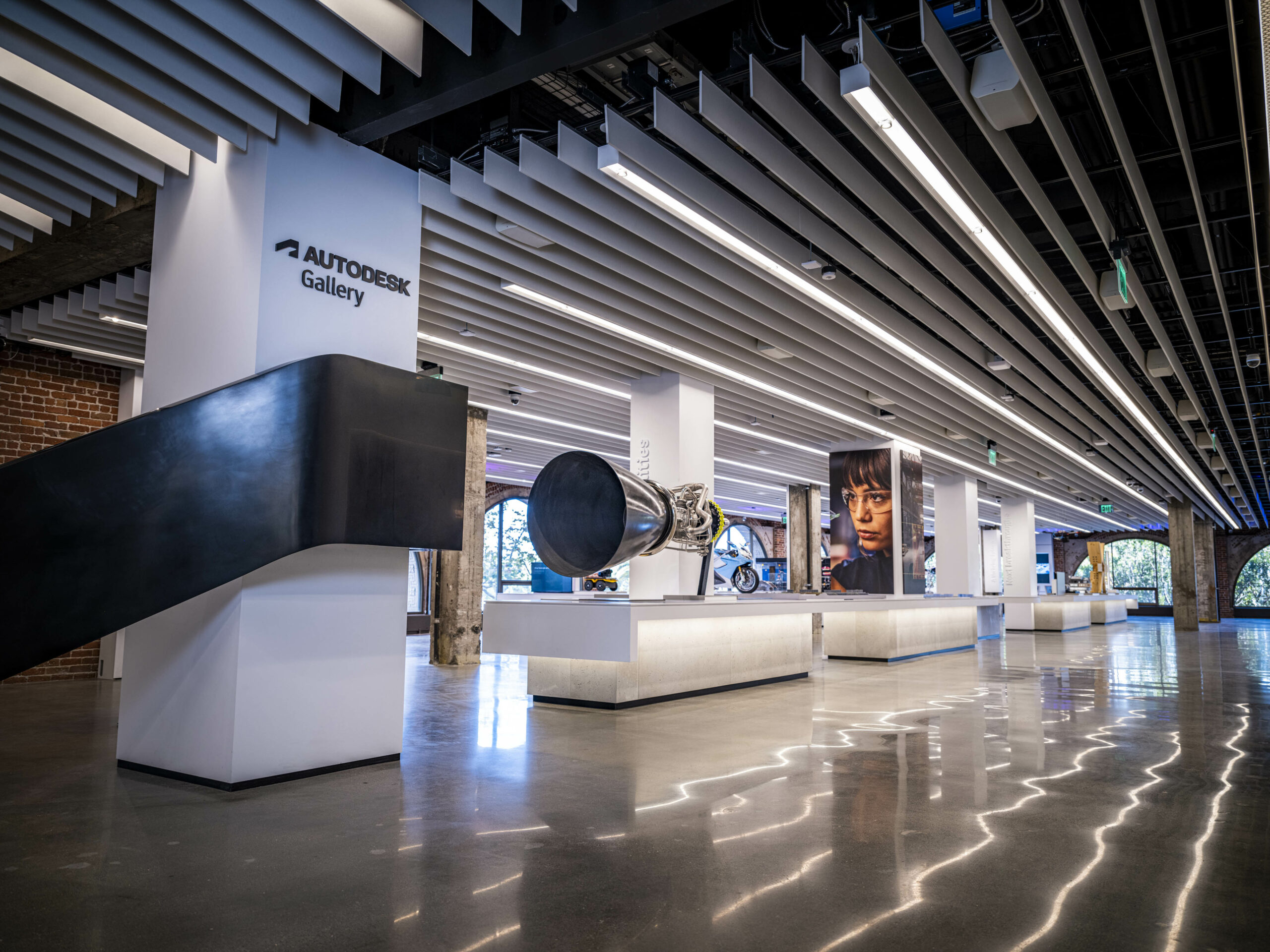
Interior of the reimagined Autodesk Gallery, San Francisco, CA, United States Photograph provided by Autodesk
We’ve all been there — a moment of divine inspiration striking in the middle of lunch, hastily scribbling our ideas on a napkin, a receipt, even our hand. Be it through traditional (pen and paper) sketching or digital tools like SketchBook by Autodesk and Morpholio Trace, conceptualization is the wild west of design documentation, and that’s precisely what these programs are built for.
By allowing us to quickly test various design concepts, proportions, and relationships while providing a platform for experimentation and ideation, such sketching software helps to support and facilitate mark-making and disjointed thought. The intuitive interface and versatile features of these digital sketching apps enable architects to easily switch between mediums, layers, and scales, streamlining the concept process and ultimately helping us make sense of our own ideas effectively.
Schematic Design: 2D CAD Drawings – Back to the Grid
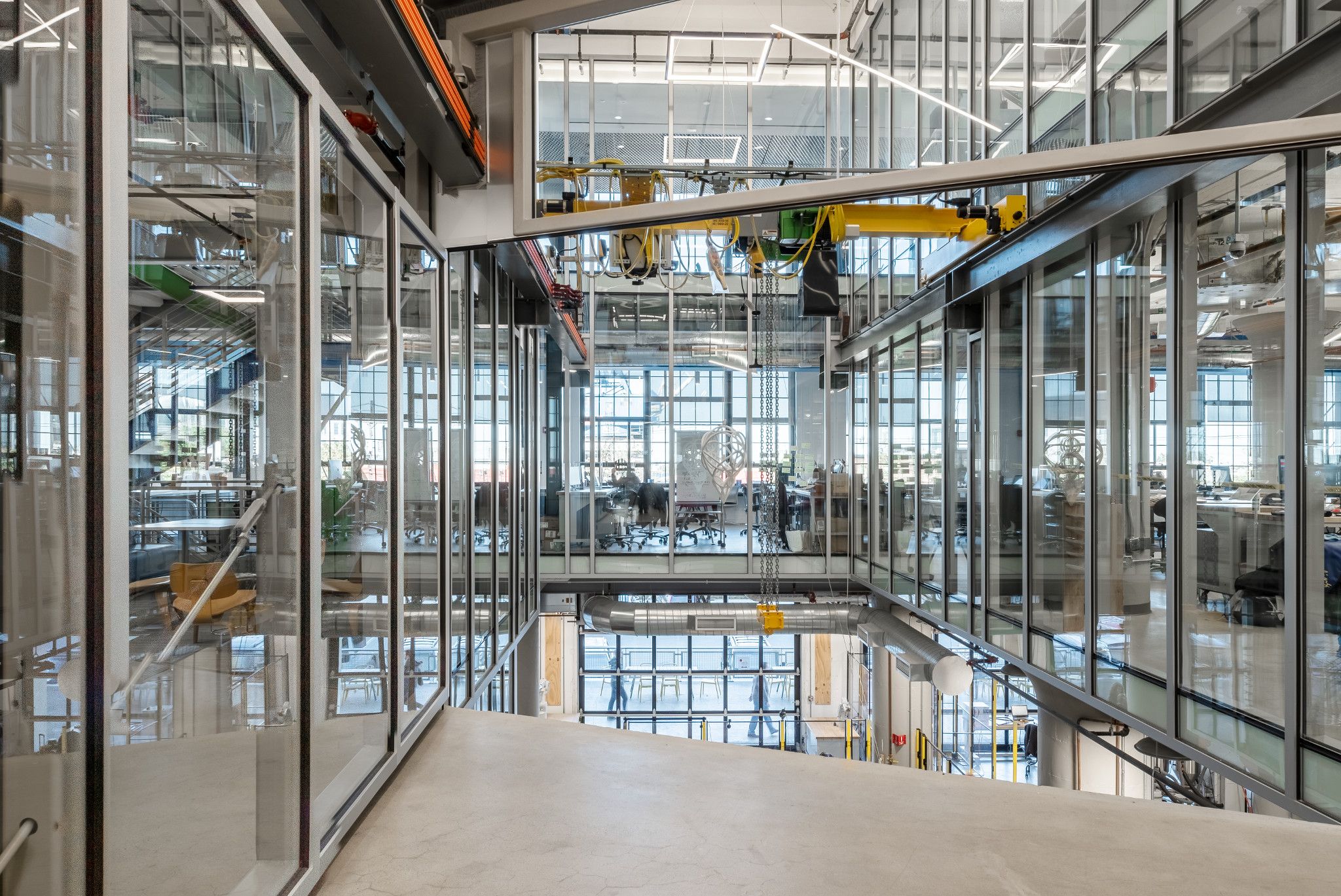
Autodesk Technology Center, Boston, MA, United States Photograph provided by Autodesk
With concepts refined, then comes the time to embrace the precision and orderliness of 2D CAD drawings. Bidding adieu to the delightful chaos of the napkin sketches, programs like AutoCAD and Vectorworks become our new best friends. During the schematic phase, meticulously articulating our visions is essential, ensuring that not even a single datum line goes astray.
Whatever your preferred platform may be, CAD programs allow us to create detailed, scalable drawings, facilitating coordination with consultants, and fine-tuning the review process for and with clients. Over the years, the software’s extensive libraries and automated tools have increased the efficiency of drawing tenfold, reducing errors and resources required at this stage of the design development process.
Design Development: 3D Modeling – The Taming of the Shrewd
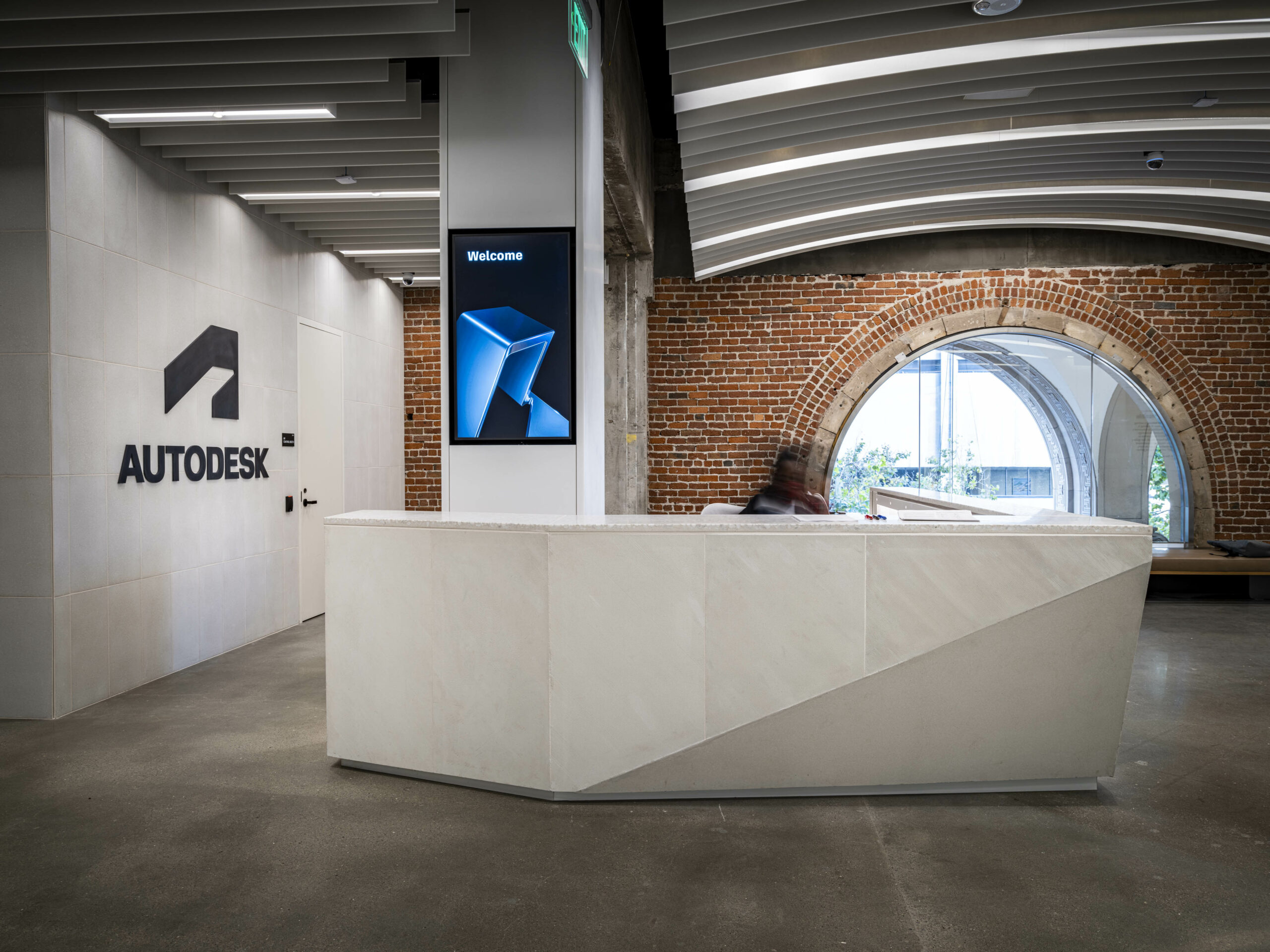
Interior of the new reimagined Autodesk Gallery in San Francisco, CA, United States Photograph provided by Autodesk
The design process can often feel a lot like herding cats, chaotic and unpredictable. 3D modeling software such as SketchUp, Rhino, and Revit can feel like our trusty shepherd’s staff in times of uncertainty and compromise. With these tools, we can juggle competing interests — structural engineers advocating for fewer cantilevers and environmental officers requesting more green space alongside MEP consultants demanding cavernous service risers.
3D models give us the capacity to study the spatial relationships and materiality of our designs, enabling us to make informed decisions on practicality with as little impact on the design ambition as possible. The real-time rendering capabilities of these programs thrive in the quest for seamless collaboration between team members, promoting an iterative design process and ensuring that all disciplines are working in harmony.
Visualization: Rendering and Virtual Reality – The Picture-Perfect Performance
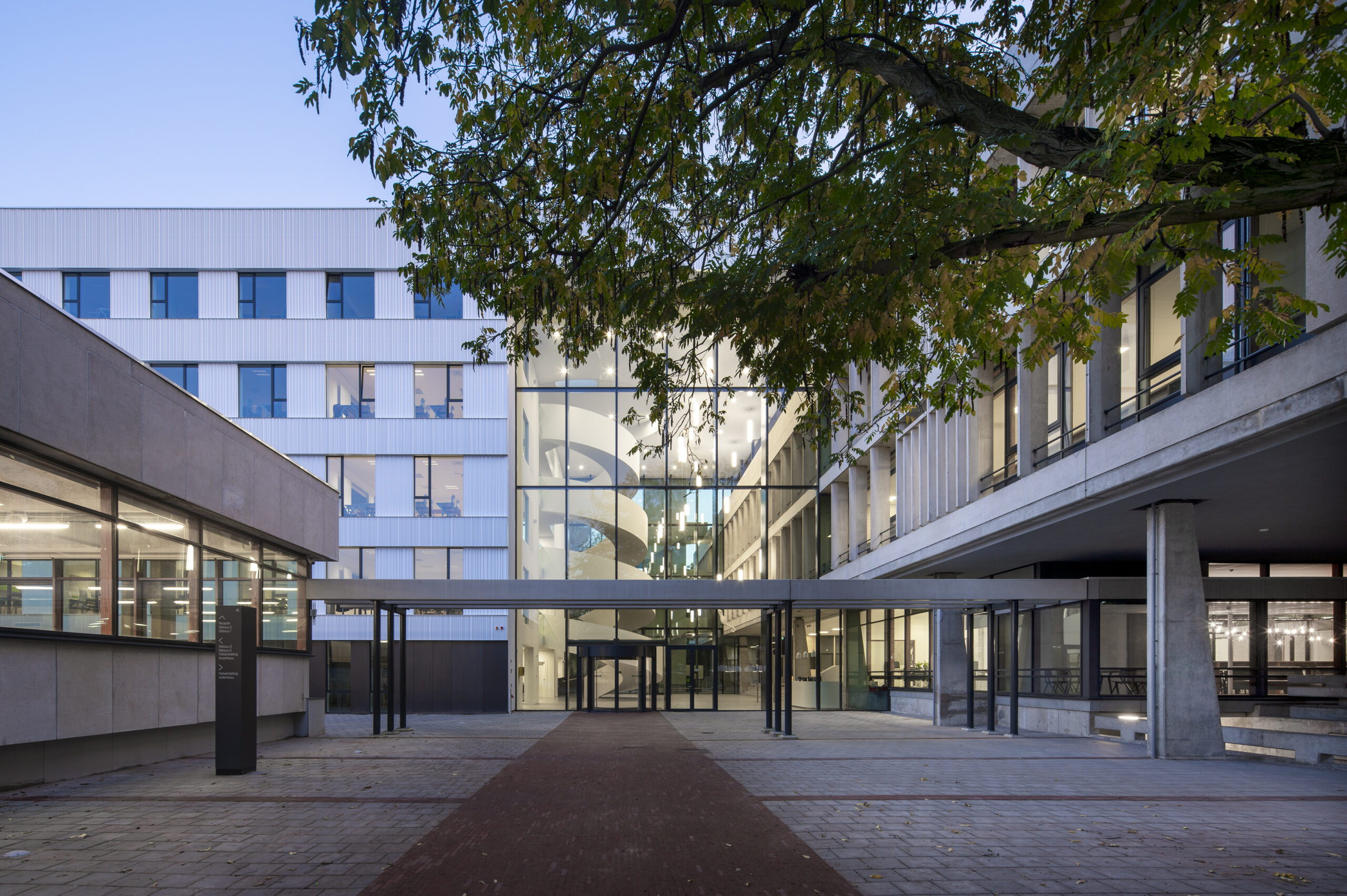
The Lumion office building by atelier PRO architekten, Amsterdam, Netherlands. Photograph by Jan Paul Mioulet
During the design process, renderings are akin to a grand soiree, a sumptuous feast for the eyes that unveil creations in all their splendor. With virtuosos like V-Ray and Lumion at the helm, 3D renders allow us to conduct a mesmerizing performance of light and texture, conjuring spellbinding visuals that leave clients entranced.
These rendering maestros boast an array of sophisticated features, from global illumination to physically-based materials and ethereal atmospheric effects, empowering architects to craft lifelike images that impeccably embody their design aspirations. Furthermore, VR technologies such as the Oculus Rift and HTC Vive transport us to a realm where we can meander through our masterpieces as though they already stand tall — always remember to mind your footing in the tangible world as you navigate the virtual one.
Construction Documentation: BIM – The Clash of the Disciplines
The pièce de résistance of the design process, construction documentation through BIM software, such as Revit, is where the rubber meets the road. Architects know that, in today’s world, coordination is the name of the game, and nothing tests resolve quite like the clash detection feature in our BIM software.
By consolidating architectural, structural, and MEP models into a single, comprehensive database, BIM enables us to identify and resolve conflicts early in the design process, preventing costly and time-consuming issues during construction. BIM’s powerful parametric capabilities also facilitate the generation of detailed schedules and specifications, ensuring that the information is accurate, consistent, and up-to-date.
Digital Fabrication: Parametric Design – A Brave New World
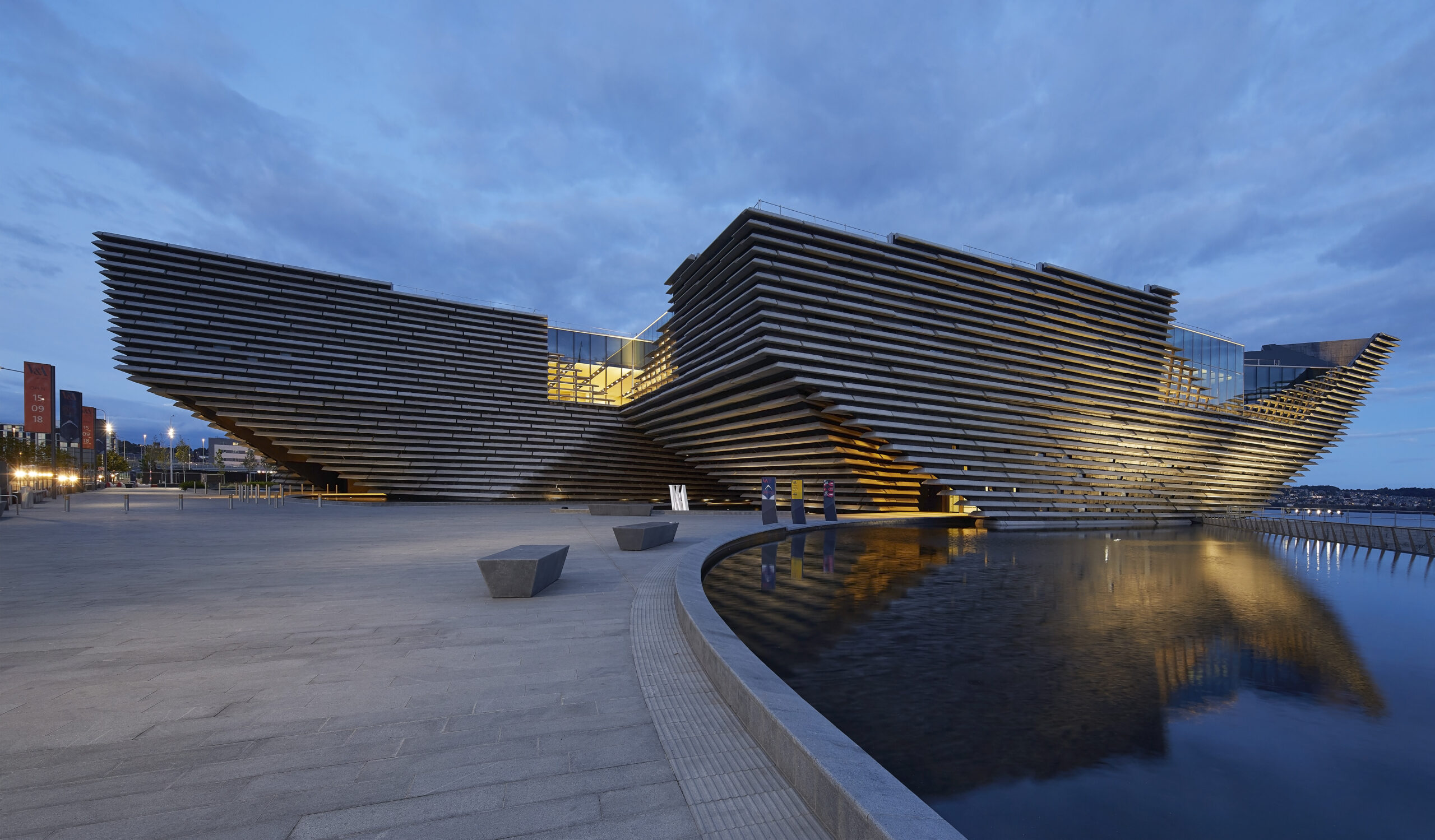
Designed using CATIA V&A Dundee by Kengo Kuma and Associates, Dundee, Scotland. Photograph by Hufton+Crow
As we explore the frontiers of design, the relatively new realm of digital fabrication beckons. Unlike days of old, armed with kappa board and scalpel, parametric design and computational tools like Grasshopper, Dynamo, and Catia empower us to translate complex geometries and intricate patterns into buildable forms. These tools enable us to visualize and rationalize our boldest ideas, bridging the gap between digital models and physical constructs.
We can optimize our designs for structural efficiency, environmental performance, and material utilization by scripting algorithms and generating parametric models. As we venture into the brave new world of 3D printing, CNC milling, and robotic assembly, these visual documentation tools are our invaluable guides, helping us push the boundaries of architectural possibility.
Interactive Presentations: Augmented Reality and Mixed Reality – The Future is Now
Autodesk, Montreal, Quebec, Canada. Photograph provided by Autodesk
As the future of architecture unfolds before us, augmented reality (AR) and mixed reality (MR) technologies are poised to revolutionize the way we present and experience our designs. Tools like Microsoft HoloLens, Magic Leap, and Apple ARKit allow us to superimpose digital information onto the physical environment, creating immersive and interactive presentations that captivate our clients and collaborators. These cutting-edge technologies enable us to visualize and manipulate design elements in real time, engaging with our projects in novel and exciting ways. By overlaying digital models onto site photographs, AR can enhance client presentations by demonstrating the proposed design in context. As we embrace AR and MR, we stand at the forefront of a paradigm shift, forever changing how we document, present, and interact with architecture.
Throughout the timeline of a project, architects employ an ever-evolving array of visualization tools, from the nascent stages of conceptualization to the emerging realms of digital fabrication and interactive presentations. By embracing these tools and the many more sure to be introduced over our careers, we can continue to push the boundaries of architectural possibility, shaping the world around us with passion, precision, and innovation. As we salute the visual documentation tools accompanying us on our architectural odyssey, let’s not forget the camaraderie and ingenuity that defines our profession. Together, we can create spaces that inspire, transform, and endure for generations.
Judging for the 11th A+Awards is now underway! While awaiting the Winners, learn more about Architizer’s Vision Awards. The Main Entry Deadline on June 9th is fast approaching. Start your entry today >
Hampshire-based Pad Studio recently completed a post-occupancy study on an eco-house it completed 13 years ago. In this interview, director Wendy Perring discusses the findings.
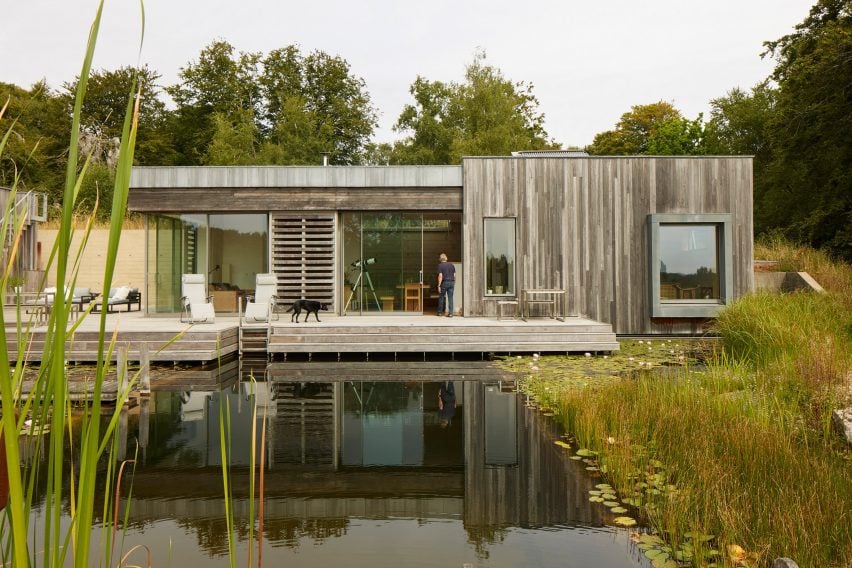
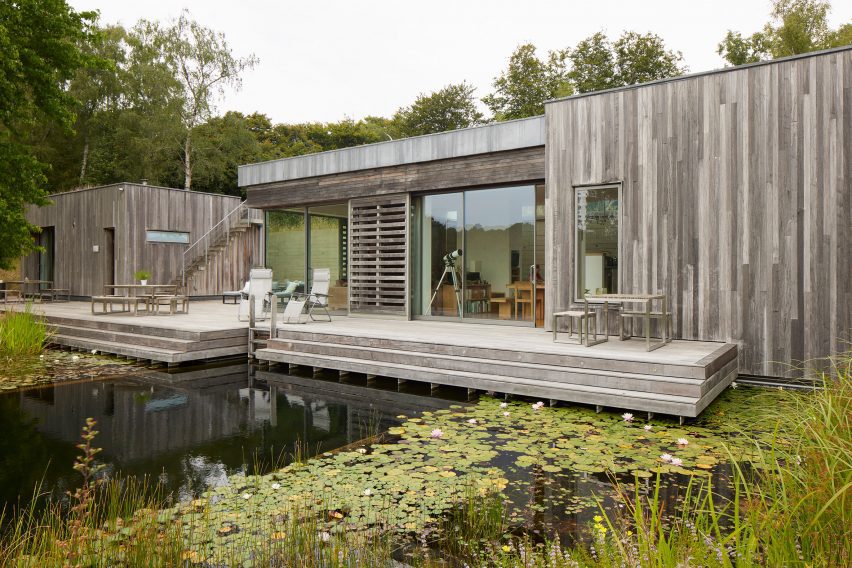
Architecture practice Pad Studio completed New Forest House in 2010. Over the past year, it has been actively measuring the home’s energy usage.
The studio funded the study itself as a learning exercise. Perring believes the approach should be more common among architects.
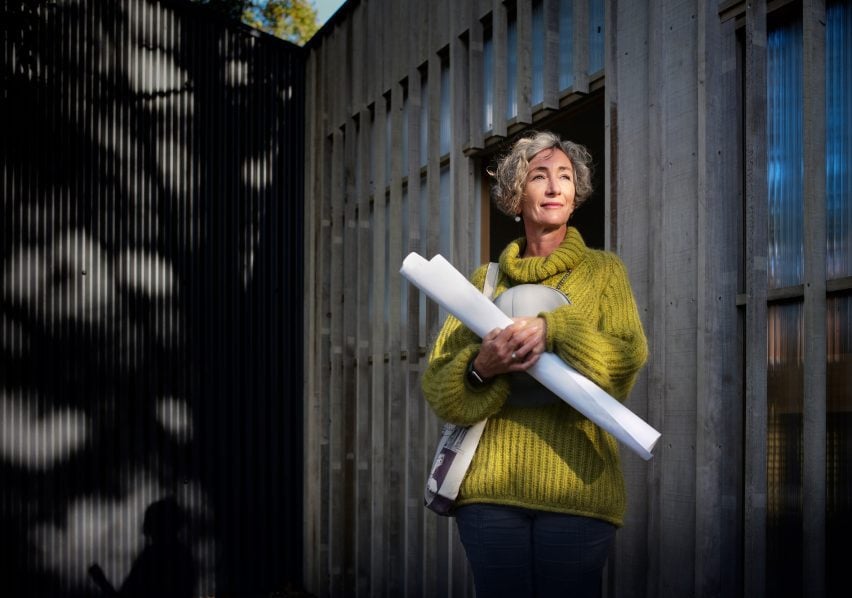
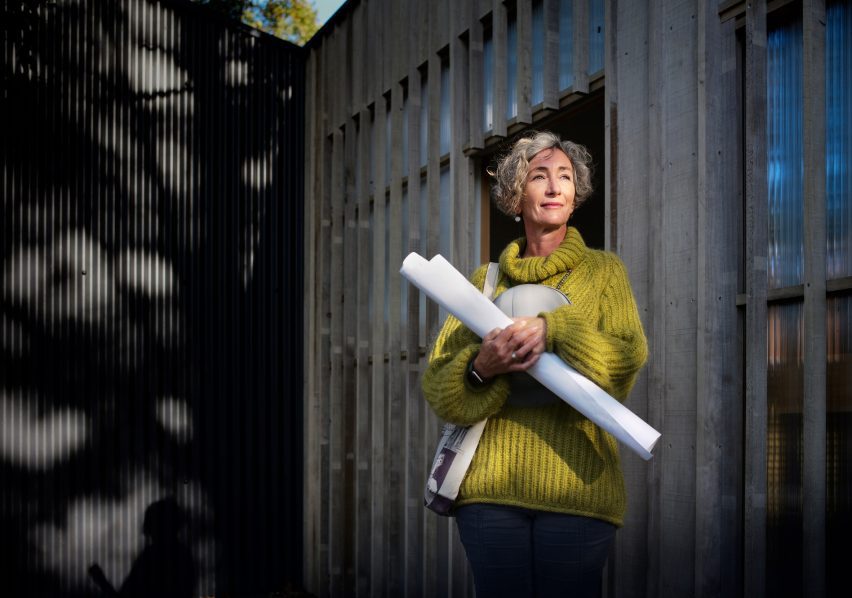
Wendy Perring believes more architecture studios should undertake post-occupancy studies into their projects. Photo by Paul Close
“It’s so important, because otherwise, how do we learn?” she told Dezeen. “Architects are so sheltered in terms of their sharing of knowledge.”
“It would be great if it was actually mandatory to collect data from all new houses, that there was a much more joined-up system so that we could just share knowledge about what works and what doesn’t.”
The project was developed for a couple with a large budget who wanted to prioritise sustainability – meaning Perring was given licence to experiment.
“Our clients were very enlightened and they requested a house that treads lightly on the Earth, which totally fitted with our ethos, and I think was one of the reasons why we got the job,” recalled Perring, who undertook the project prior to buying out her business partner and establishing Pad Studio.
“Degree of hoping for the best”
Some of the decisions Perring made were unusual for the time.
“I guess it was a case of putting into practice a lot of textbook research, and maybe there was a degree of hoping for the best,” she said. “But it really did pay off.”
For example, the design focuses on a high level of thermal mass, with a concrete structure preferred to lightweight timber frame.
Thermally massive materials like concrete absorb heat from the sun during the day and store it, slowly releasing the warmth when external temperatures drop.
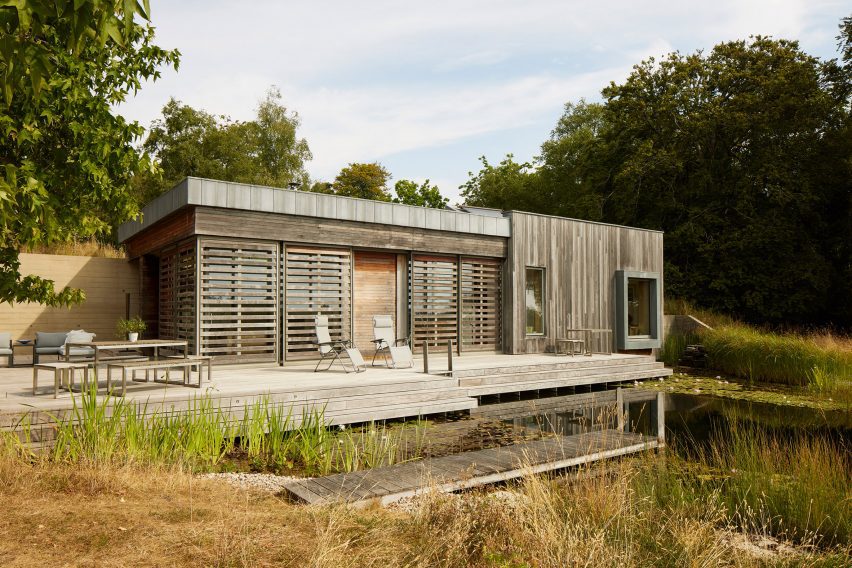
New Forest House was completed in 2010 for a couple who wanted to prioritise sustainability
Perring worked with consultant and Bath University visiting professor Doug King on the thermal mass strategy at New Forest House, which contradicted what many low-carbon architecture advocates believed around the turn of the 2010s.
“At that time there was a lot of debate about thermal mass,” said Perring. “We were reading about all this stuff, but we took a leap of faith in many ways.”
“One of the things that is really fascinating in the post-occupancy data is how flat the temperature differential is. It really does work.”
Timber frame was chosen for the guest annexe, where sporadic occupancy meant quicker heating was considered an advantage.
Slatted shutters over the windows help to control the amount of sunlight – and therefore solar heat gain – entering the house.
Perring’s other major sustainability decision was to take New Forest House’s energy generation mostly off-grid.
A ground-source heat pump – Perring’s preference but out of most clients’ financial reach – provides heating and hot water, meaning the house has no mains gas connection. Its bore holes plunge 100 metres underground.
Back in 2010, the heat pump actually had a larger carbon impact than a gas combi boiler, but the national electricity grid’s decisive shift away from coal in the years since has already led to a significant carbon saving.
Pad Studio experimented with thermal mass science as part of the project
A solar thermal system on the building’s roof supports the heat pump’s hot water provision.
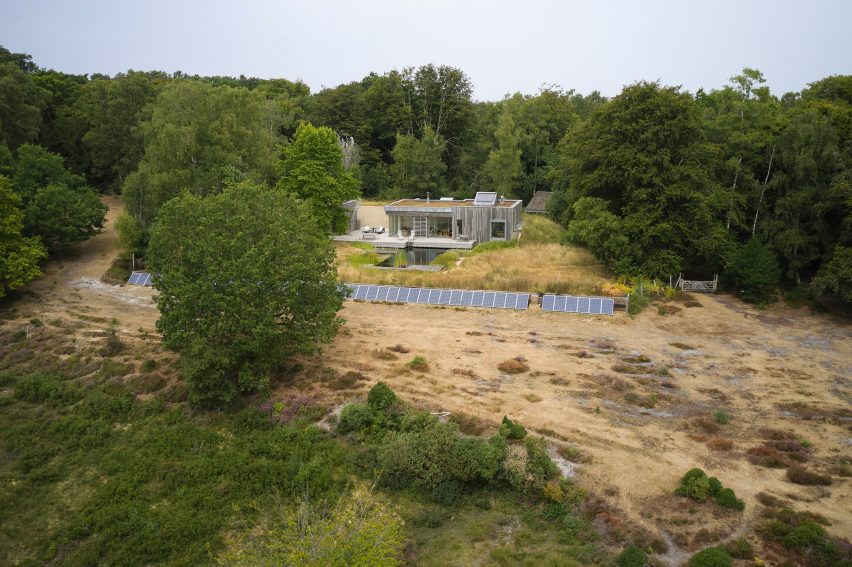
In addition, 47 solar panels next to the house generate an average of 9,500 kilowatt-hours (kw/h) per year – equivalent to £3,420 at today’s prices.
Solar battery storage with 13.5 kw/h of capacity now being installed on the site will ensure that more of the energy generated can be put to use.
Up to 97 per cent cheaper to run
The post-occupancy energy efficiency study was conducted in collaboration with Mesh Energy Consultants. Five Purmetrix sensors were positioned around the home for 12 months, gathering data on humidity, temperature and ventilation.
They found that, as a result of the sustainability measures embedded into its design, New Forest House is 42 per cent cheaper to run than a home built to current building regulations.
If it wasn’t for the household’s unusually high electricity usage – with an electric pottery kiln, an infrared sauna, electric woodworking tools and an electric car – the house would be 97 cheaper to run compared to most new-builds being constructed today.
The home is mostly off-grid, with a ground-source heat pump, photovoltaic panels and a solar thermal panel
Combined, the heat pump and solar mean New Forest House has emitted 110 per cent less carbon dioxide during its lifetime than if it had been powered by gas.
As well as operational efficiency, the study also looked at embodied carbon – that is, emissions caused by the building’s construction.
It concluded that at 359 kilograms of CO2 equivalent per square metre (kgCO2e/m2), New Forest House has an embodied carbon value 43 per cent smaller than set by current building regulations and the Royal Institute of British Architects’ 2030 Climate Challenge.
This is despite the importance of embodied carbon only becoming properly understood in the past few years.
According to the study, New Forest House is 42 per cent cheaper than a house built to today’s standards
“We weren’t talking about embodied carbon back then – we didn’t have the label – but we knew that we wanted to steward resources carefully,” said Perring.
Local materials were used where possible, while in another unusual step for the time, the concrete has a high proportion of ground granulated blast-furnace slag instead of highly polluting cement.
“We thought: ‘well, if we’re building using concrete, why don’t we just be honest about that fact and actually try to reduce the environmental impact of it, and exploit the fact we’ve got this thermal mass and use it to its benefit’,” said Perring.
“I think architects are very judgmental, in terms of: concrete is bad, timber is good. And that’s not always the case. It’s how you use it.”
Earth berm and swimming pond
Initially she had wanted to use stabilised rammed earth taken from the site for the structure, but testing revealed the soil was unsuitable.
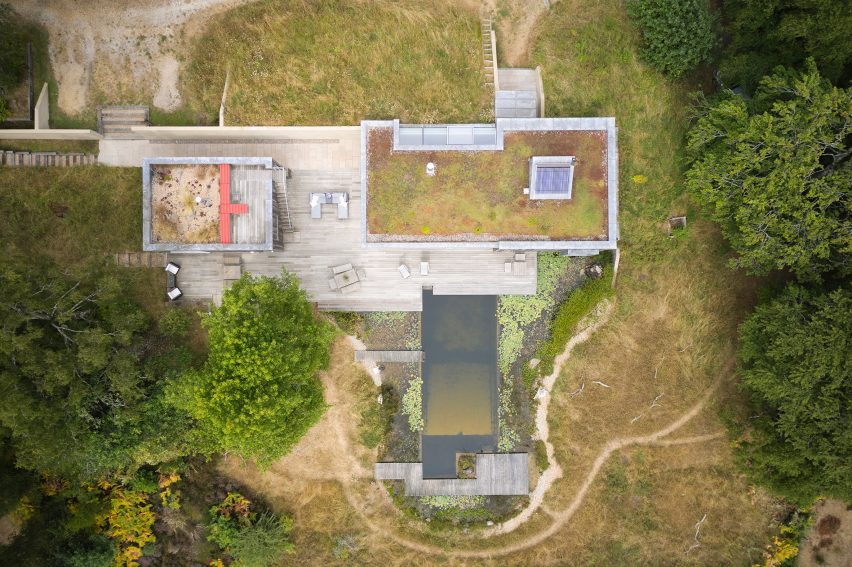
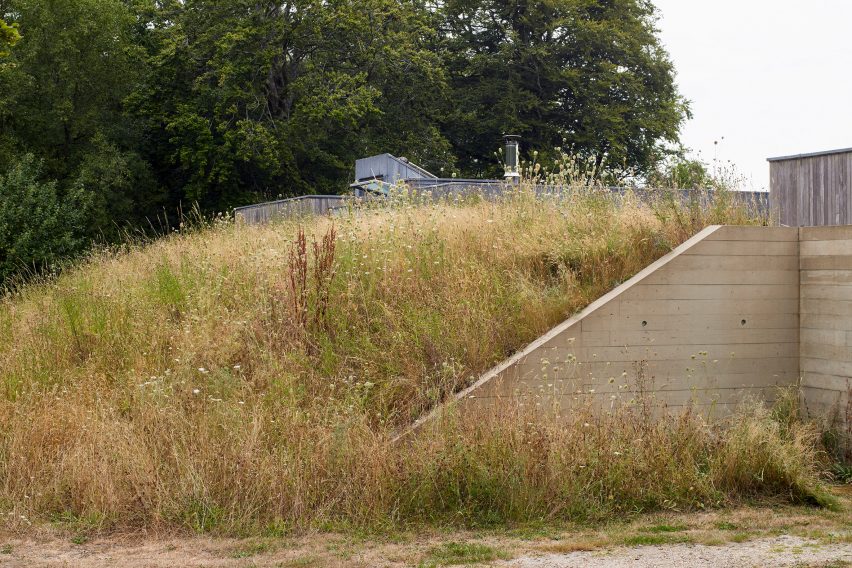
Instead, earth excavated for a basement and swimming pond was saved from landfill by being used for a berm on the northern side, providing added insulation and acoustic shielding from a nearby motorway.
Home to a small community of voles, it is among multiple interventions on the large site intended to contribute to the local ecology, alongside a green roof and the planted swimming pond, which attracts news, grass snakes, kingfishers and nightjars.
As the New Forest is a designated Site of Special Scientific Interest, this was essential for gaining planning permission.
An earth berm was formed using the soil dug to create the swimming pond
The earth sheltering does come with downsides, however. The sensors picked up high humidity levels on this side of the house, increasing the risk of mould growth.
Meanwhile, for most of the year the house’s water is supplied by a restored seepage well that takes from the groundwater.
Wastewater is then treated on-site and filtered back into the landscape before being drawn up by the well again.
“We have to be designing for longevity”
For Perring, circularity is the next major step towards architecture becoming more sustainable, with demountable structures and recyclable materials key aspects of design.
“It’s not acceptable to knock down a house and send it off to landfill,” she said. “We have to be designing for longevity, but we have to be considering what happens, inevitably, to those buildings that do have a defined lifespan.”
In the past 13 years, Pad Studio’s practice has moved on from New Forest House.
Pad Studio’s current projects aim for a lower embodied carbon than New Forest House
A greater range of insulation and window systems are available, Perring explains, while current projects target a considerably smaller embodied carbon.
Its recently completed The Clay Retreat, for instance, has a calculated embodied carbon of 159 kgCO2e/m2 – 56 per lower than New Forest House.
New Forest House’s energy performance remains impressive compared to most houses being built today, but Perring believes that is partly a function of policy failures in the UK.
“I am a big believer that the only way to push things forward is statutory change,” she said.
“There’s got to be better joined up policies in terms of the government setting standards for embodied carbon and operational energy, there’s just got to be.
“We’ve got to use less, we really do.”
The photography is by Richard Chivers unless otherwise stated.
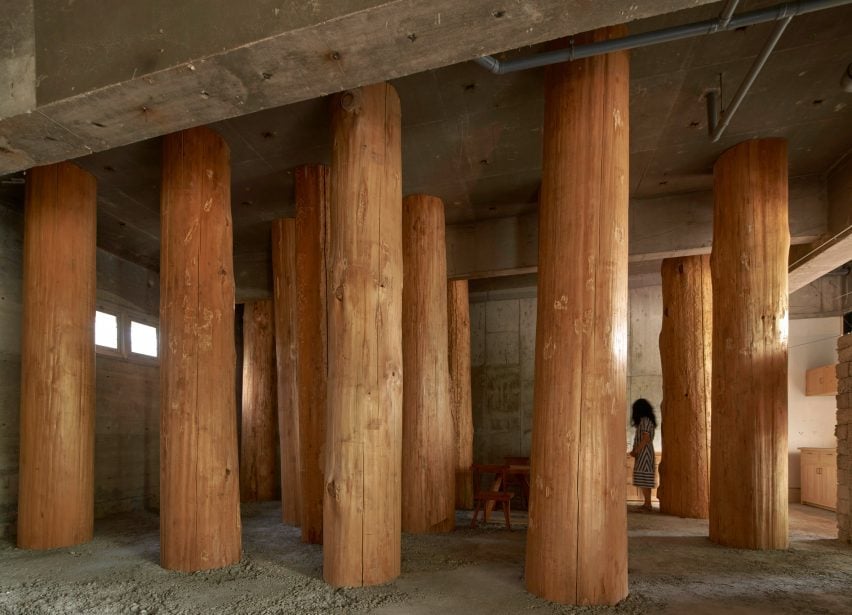
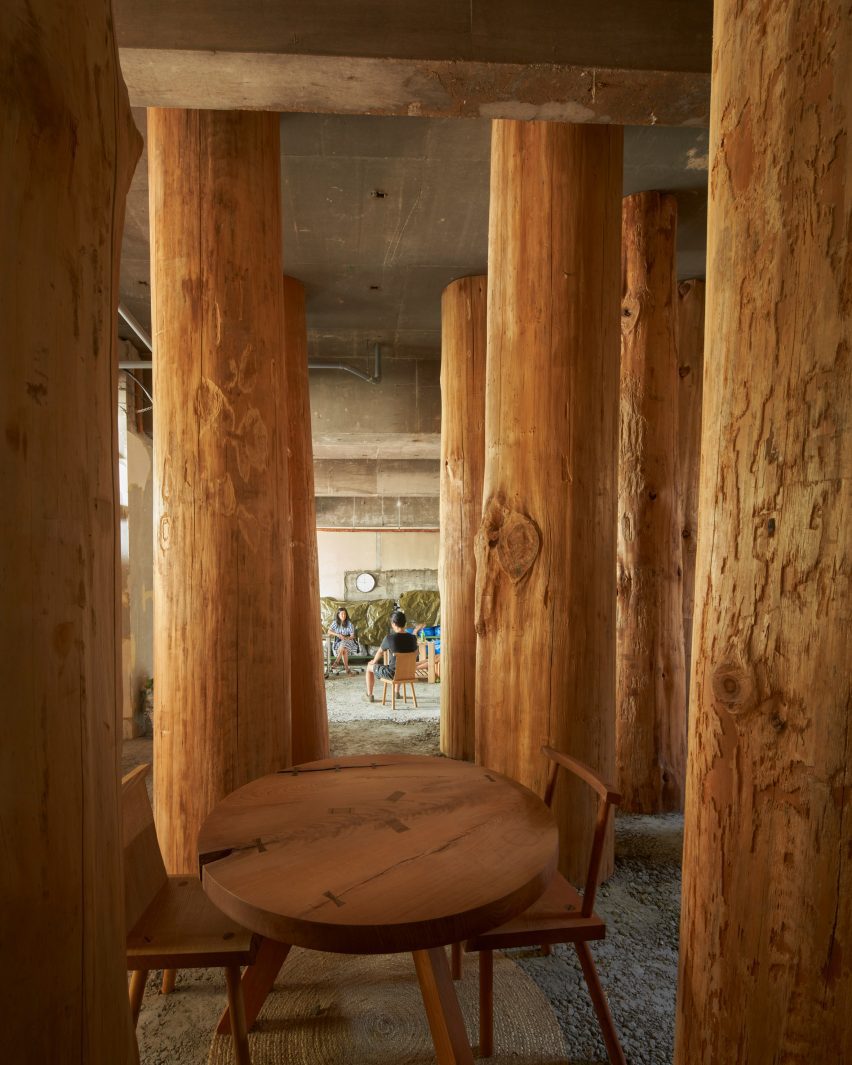
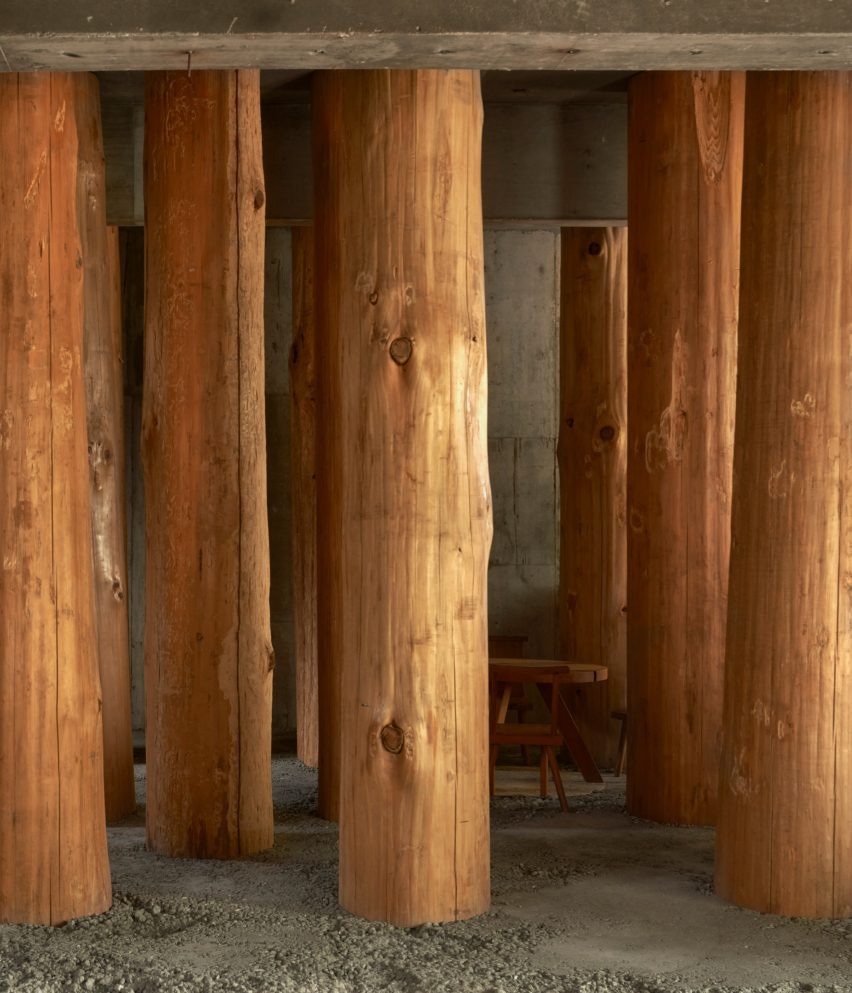
Columns made from thick wooden logs fill this office in Nagoya City, Japan, created by local studio Tomoaki Uno Architects at the base of a former apartment block.
Named Forest Office, the small workspace was commissioned by a client who simply requested that “something interesting” be created within half of his office space.
It was Tomoaki Uno Architects‘ second commission by the client, with the first being a sky-lit dwelling nearby named Ogimachi House.
Tomoaki Uno Architects has created Forest Office in Japan
“There were no specific requirements for [the project],” studio founder Tomoaki Uno told Dezeen.
“As someone who usually works within functional constraints, this was an exciting opportunity for me,” he continued.
Drawing on the site’s natural surroundings and a nearby shrine, Tomoaki Uno Architects prioritised natural materials and rough finishes to create an atmospheric, multipurpose space.
The workspace is filled with columns made from thick wooden logs
“I had long been inspired by the unique atmosphere I felt every time I walked along the approach to Ise Shrine,” said Uno.
“I knew that the irregular rows of large trees had a strong influence on this feeling. Therefore, I thought about using thick logs as a metaphor and seeing if I could recreate something similar,” he continued.
A table is nestled at the centre
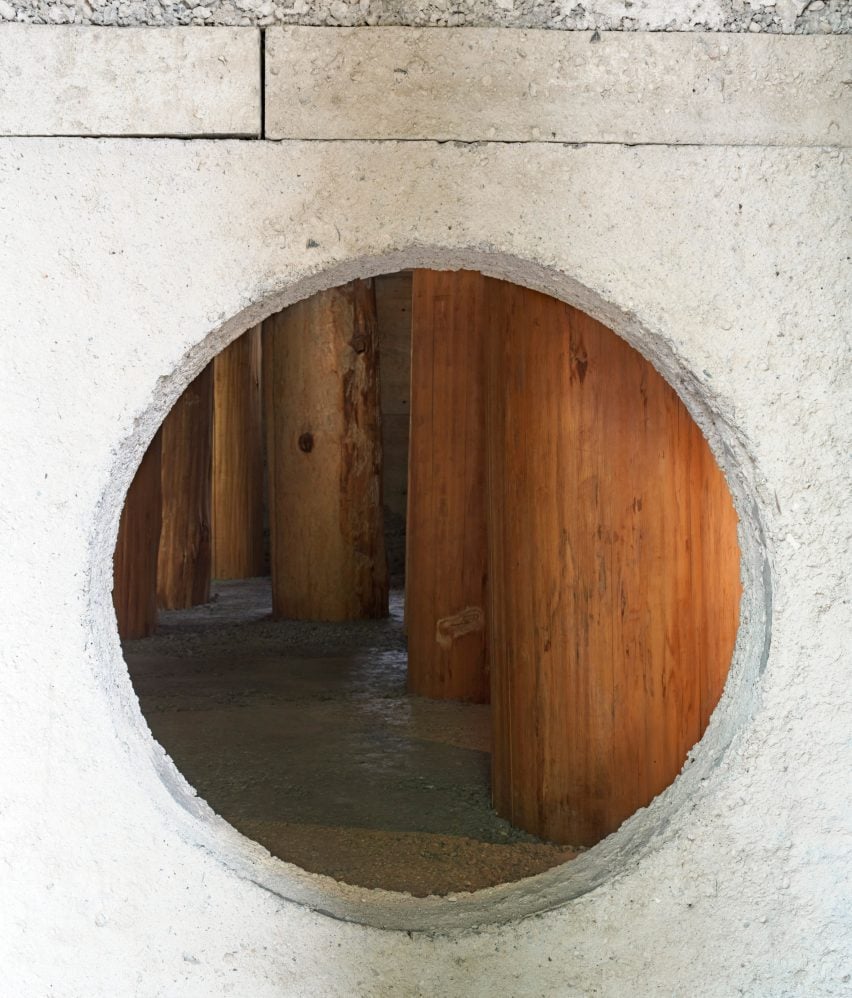
Inside, the concrete of the existing structure has been left exposed. It is teamed with a new floor and wall with a circular opening, both made of concrete with a rough aggregate.
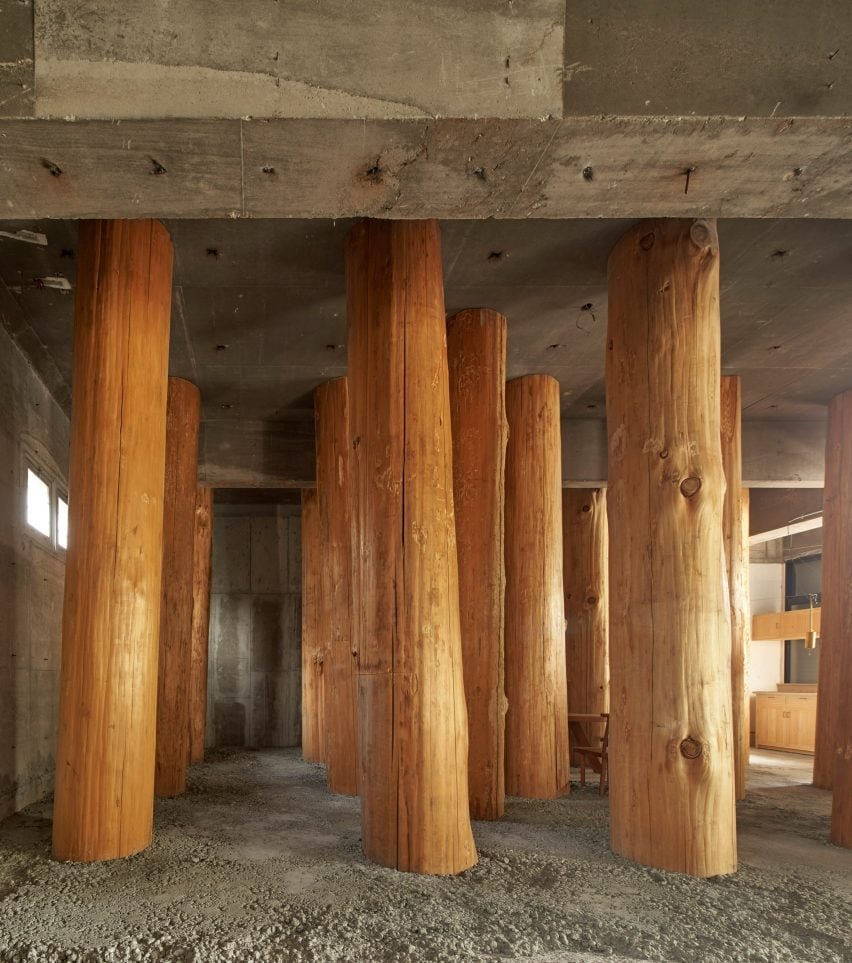
Large wooden logs, stripped of their bark and spaced equally in a grid, are set into the concrete floor to create the feeling of being in a forest.
Due to their size, the trunks had to be brought into Forest Office horizontally, before being hoisted into position and cast into the concrete floor.
One of these trunks could not fit in the planned location, and all of them ended up being slightly tilted and displaced during construction, which Uno embraced as “serendipity”.
The columns are set into the rough concrete floor
“In a nutshell, this is a question of how to deal with nature,” said Uno. “Whether consciously or not, architects are constantly being questioned in every aspect of how they approach nature and their thoughts,” he continued.
“I explored unbuilt boundaries with this project, and I wanted to confirm that the presence of the spirit felt in nature is the origin of architecture.”
A wall with a circular opening has been added
A kitchenette and bathroom occupy one corner of Forest Office, while a small table and chairs nestle between the large trunks at the centre.
Tomoaki Uno Architects was founded by Uno in Nagoya in 1990. Its previous projects include a concrete home with an Aztec-informed pyramid and a minimal concrete home illuminated by dramatic light wells, both of which are also located in Nagoya.
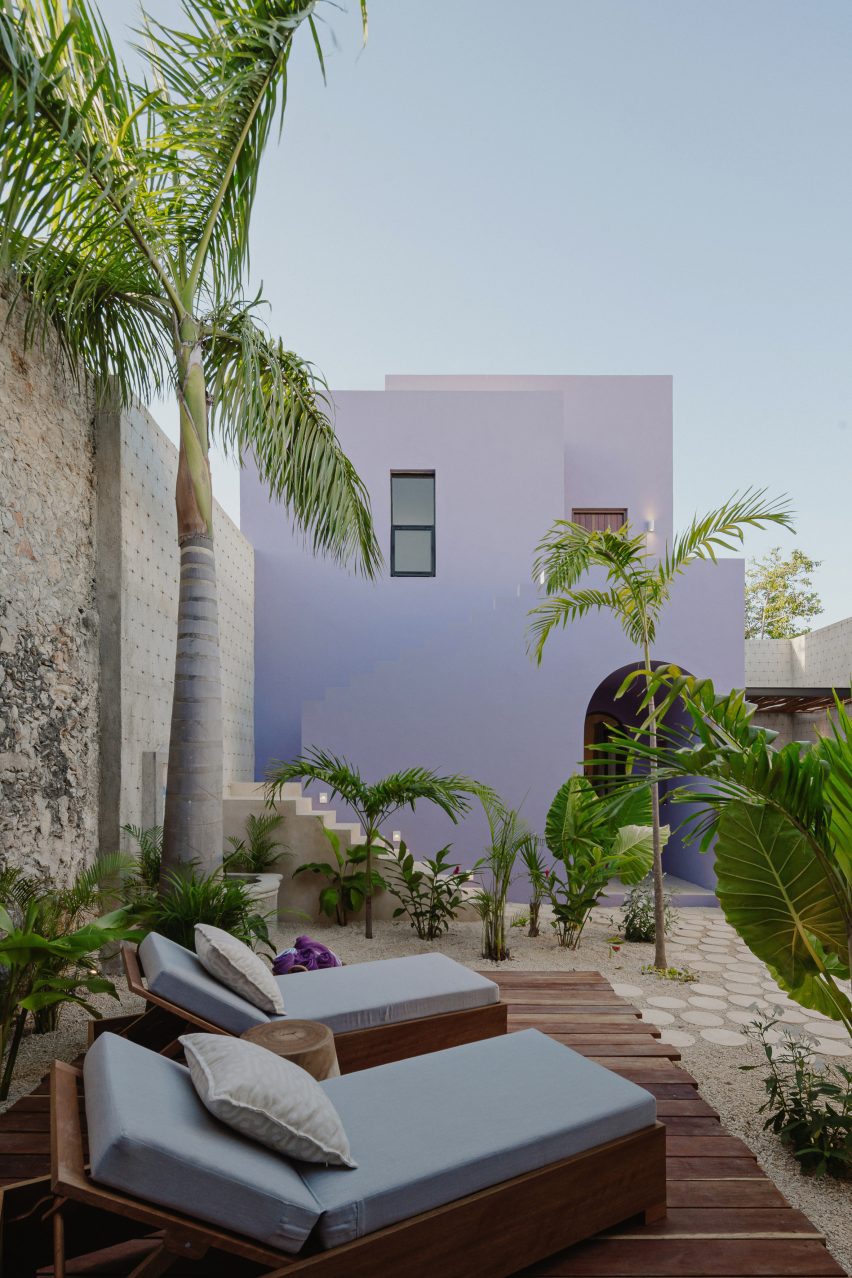
Local architecture studio Workshop Architects has renovated a Spanish colonial house in Mérida, Mexico, and added two concrete buildings in its garden.
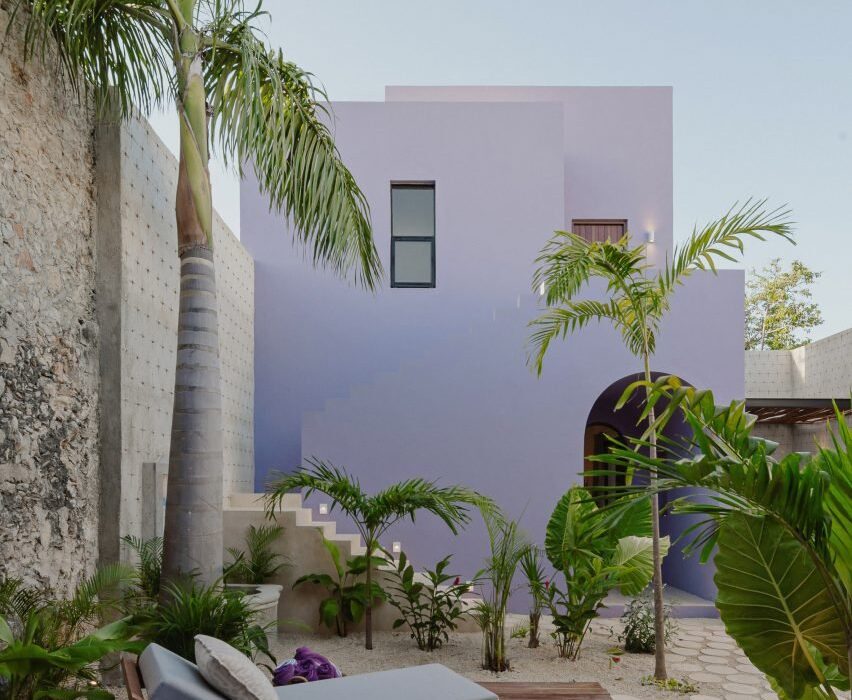
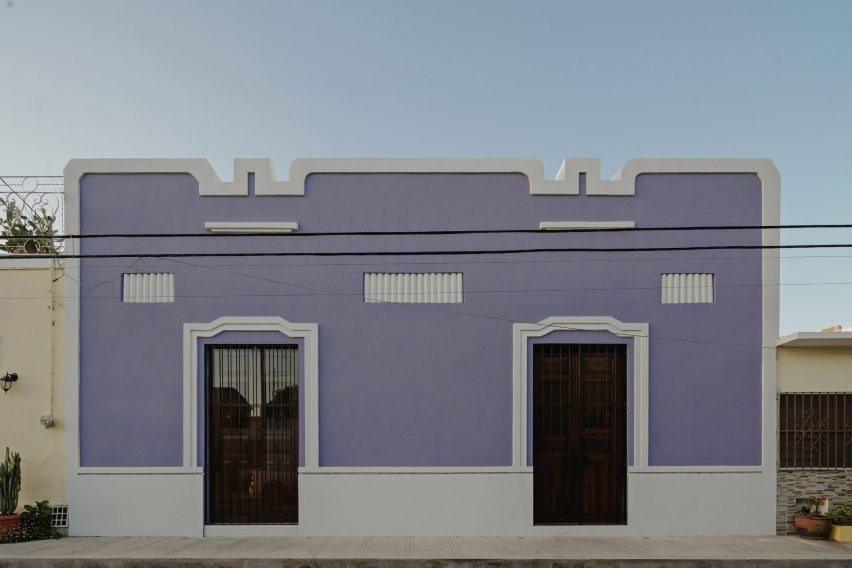
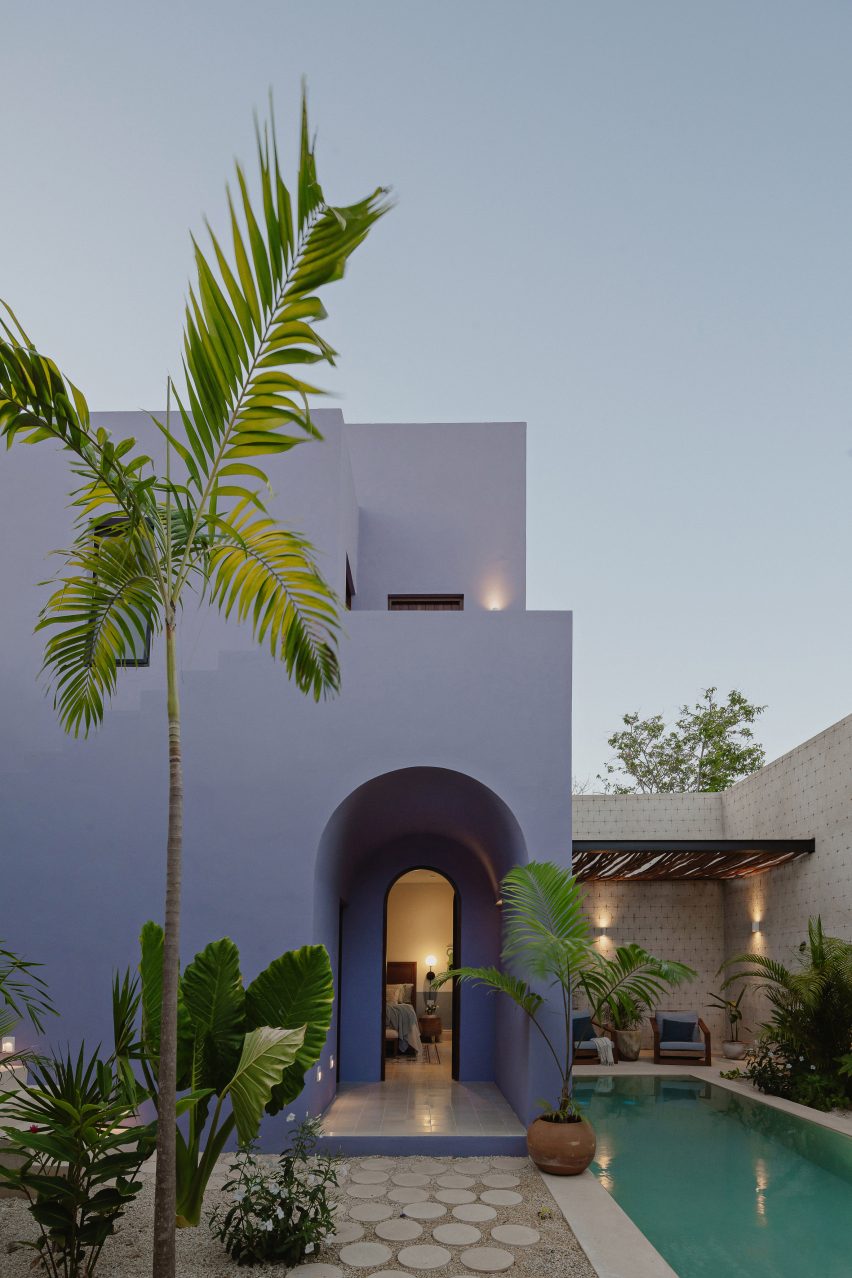
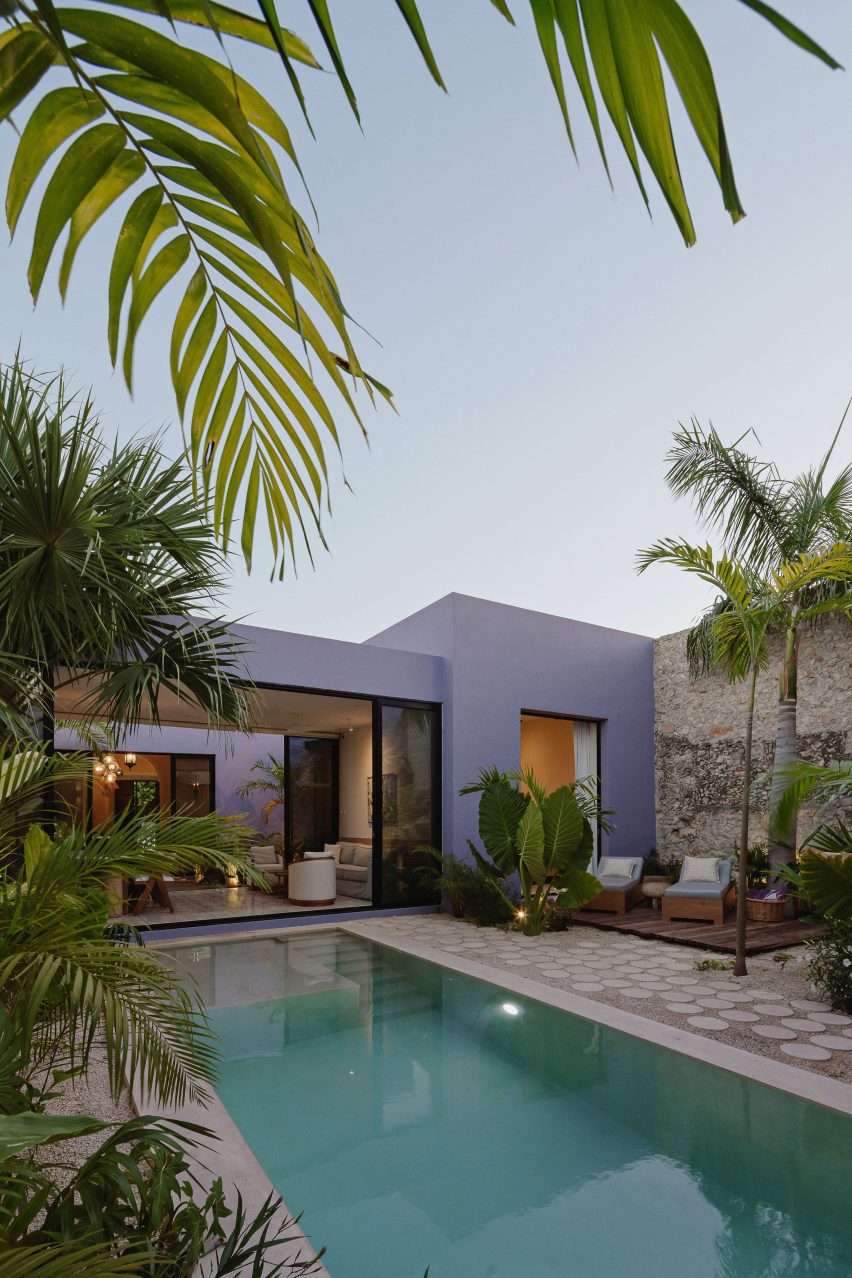
Named Casa Pulpo, the 235-square-metre residential project is characterised by lilac-hued exterior walls and traditional pasta floor mosaic tiling in the interiors.
Casa Pulpo has three purple-coloured buildings
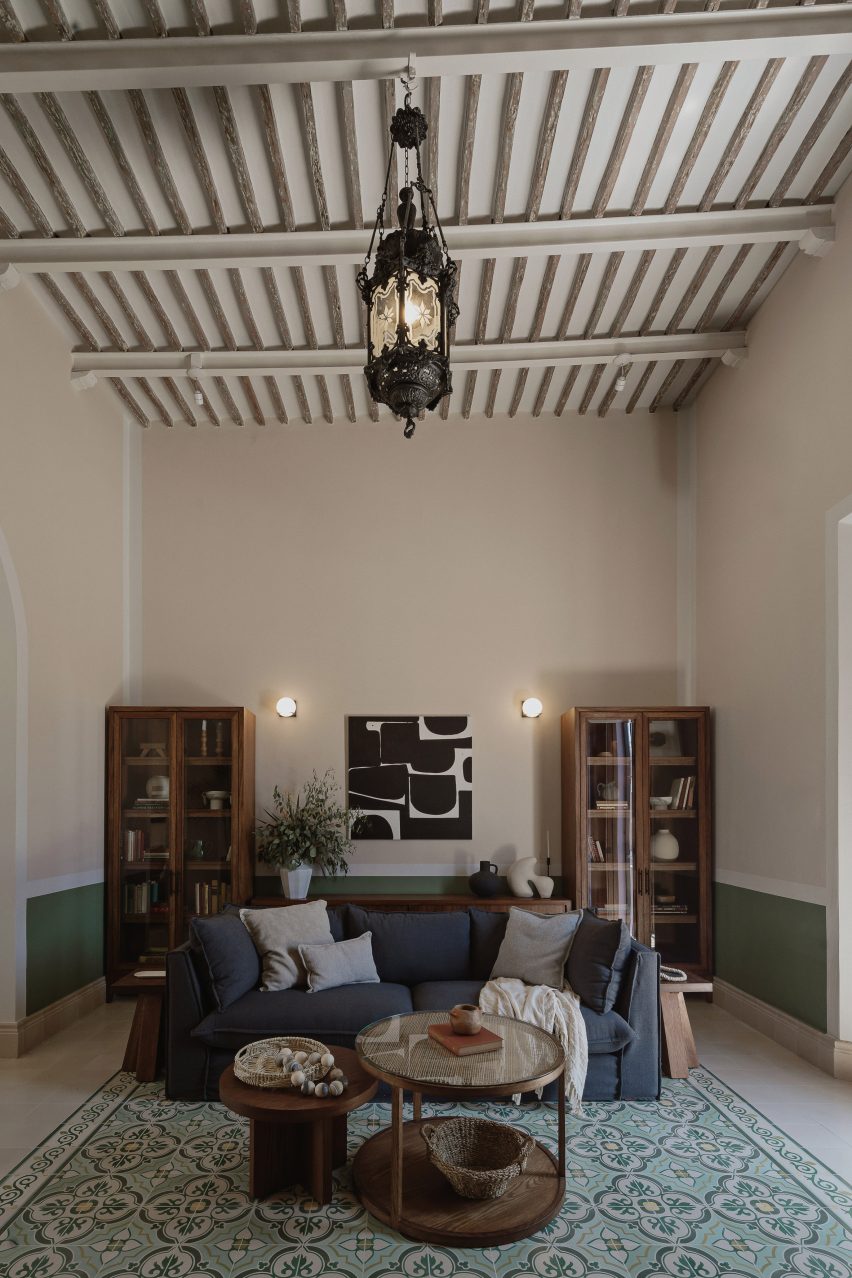
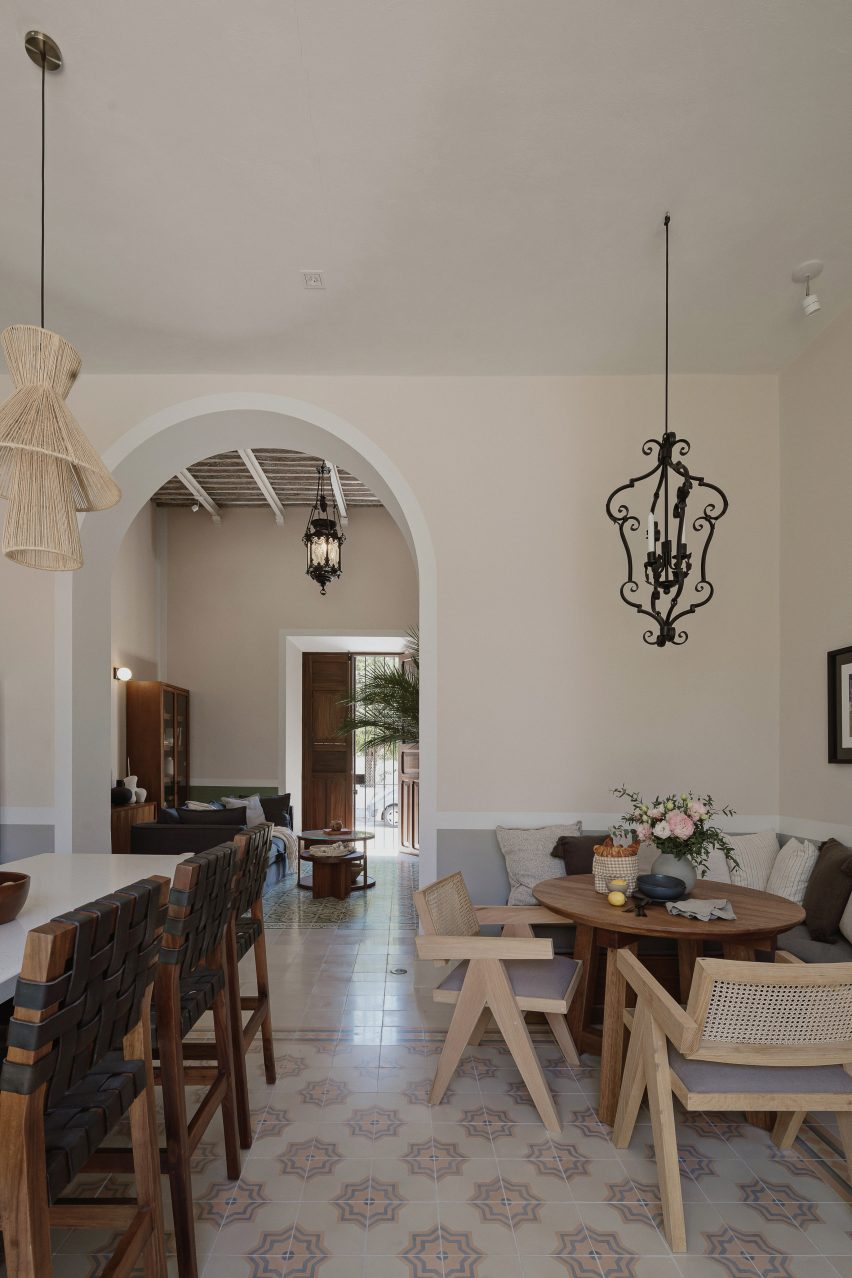
“The traditional architecture of Mérida uses pasta tile for the floors, and usually, each room has a different pattern,” said Workshop Architects co-founder Francisco Bernés.
“That is why in this project, every room has a unique design on the floors and a similar tone colour for the base of the walls.”
The studio renovated the existing Spanish colonial house
The studio renovated the existing house, preserving the high ceilings and exposed white metal beams with wooden joists in the bedroom and living room at the front of the property.
An archway in the living room leads to the kitchen, which features a wood and white quartz island and a corner breakfast area to add a sense of cosiness.
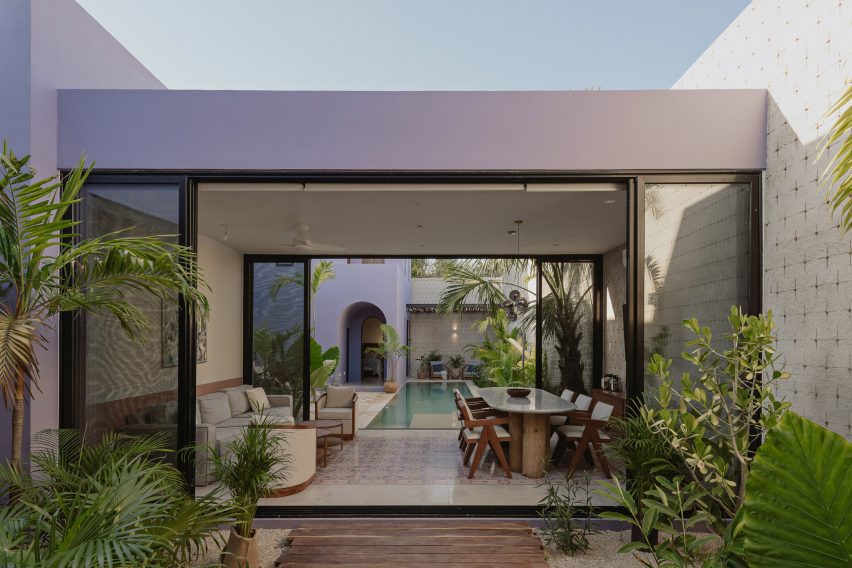
Glass sliding doors in the central building connect the living space and swimming pool
Each space in the house features a different colour applied to the pasta floor tiles and painted on the lower sections of the walls.
Workshop Architects united the rooms by using a neutral colour on the upper part of the walls and adding white border tiles on the perimeter of the floors.
Traditional Mexican pasta tiles decorate the floors
Large sliding glass doors connect the kitchen and outdoor space, letting natural light and ventilation into the interior.
A breakfast nook was also added to generate a “warm and cosy feeling”.
The studio added two separate concrete buildings to the site, using door proportions and wall heights and thickness that reference the original house.
One of the buildings is a one-storey structure in the middle of the site, accommodating a bedroom and dining and TV room with glass sliding doors open out to a swimming pool.
“This area, being independent of the rest of the house, allows, through the use of two sliding glass doors, to have visuals that flow towards the gardens and towards the pool area, giving the sensation of spaciousness and freshness,” said Workshop Architects.
Workshop Architects added an arched entryway to the building at the rear of the property
At the end of the garden is a two-storey structure containing a bedroom and ensuite on the ground floor, accessed by an arched entryway. An outdoor staircase leads to an additional bedroom and ensuite above.
“The third and last nucleus of the house has a more modern and purposeful volumetry with respect to the previous two, which are presented in a more conservative way,” said Workshop Architects.
Chukum was used for the swimming pool walls
Adjacent to the two-storey structure is a small terrace with a bajareque wooden roof that filters natural light and “projects an extraordinary play of light and shadow on the walls and floors”.
The swimming pool walls were made from the material chukum, which is created by boiling chukum tree bark and mixing it with concrete.
Different colours were used on the lower parts of the walls in each room
“Casa Pulpo seeks to create perfect atmospheres for the full enjoyment of each of its spaces through the use of different materials and textures throughout the property,” said Workshop Architects.
In 2020, the studio transformed a colonial house in Mérida into an art centre and workshop for the city’s annual festival of lights.






 images ©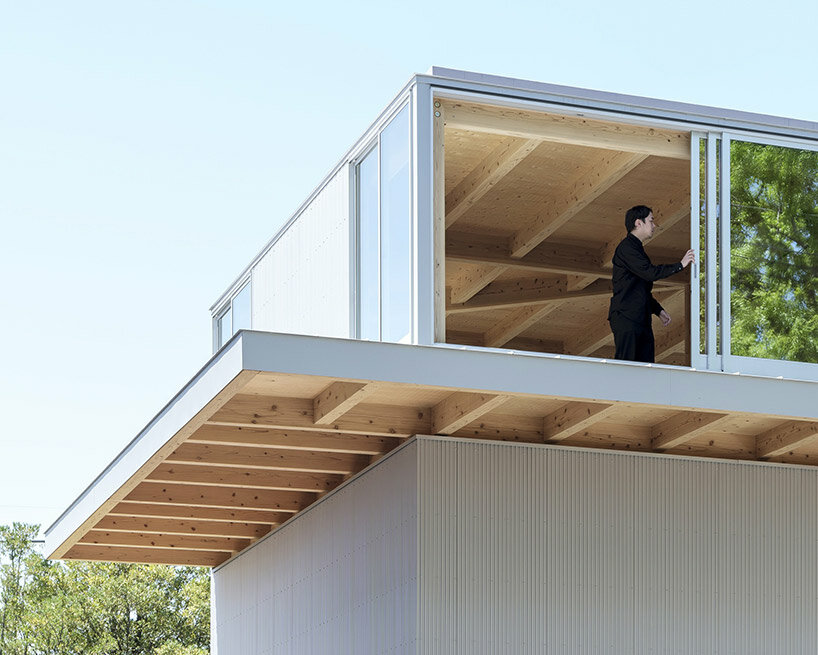
 the multi-use space is flexible with a spiral vertical movement and minimal necessary functions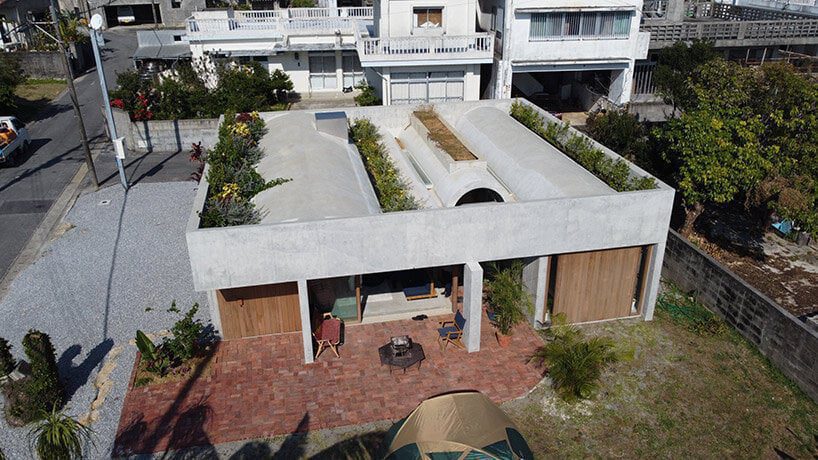
 images ©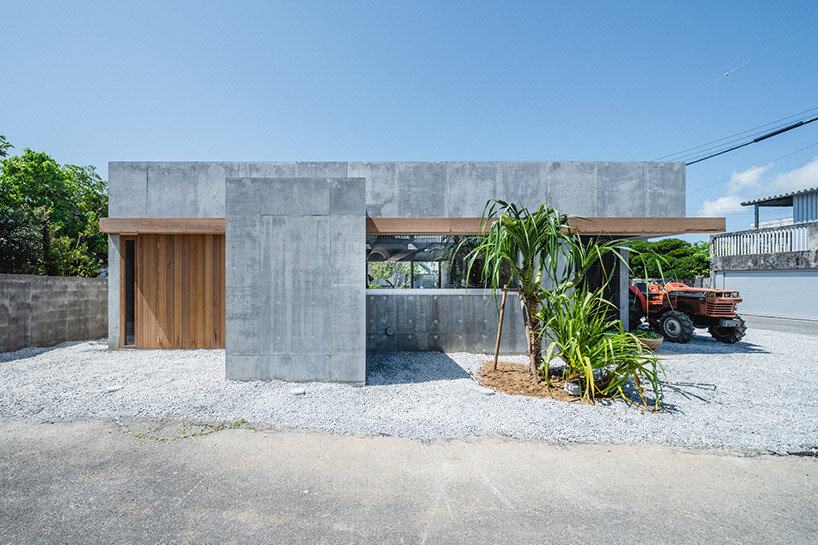
 deep overhangs shelter semi-outdoor spaces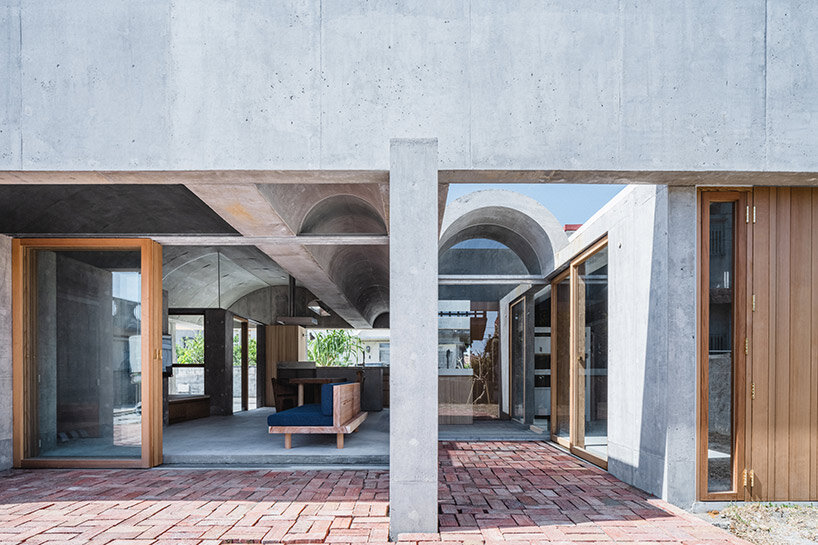
 the house opens up with seamless, gradual transitions between the interiors and exteriors