Material Trends: “Eunomia” Depicts a Bold Future of Design in Balance With Nature
CategoriesArchitecture

Material Trends: “Eunomia” Depicts a Bold Future of Design in Balance With Nature

A new series of reports on macro design trends reveals fascinating insights into the direction in which architects and designers are traveling — and harmony lies at the heart of the first publication. In collaboration with The Prospectivists and Broadside Studios, material research and resource platform Material ConneXion has released its first major trend report, entitled Eunomia, which can be interpreted as “Fair Measure or the Good Norm.” Originally coined for a period of societal reform in Ancient Greece, Eunomia aimed to impose harmonic rules to counterbalance the consequences of human excess.

Learn More and Access the Full Report

This macro trend has clearly been catalyzed by the global pandemic. “As a reaction to months of lockdown, the fascination for the great outdoors, wellbeing and extreme sports have become deeply rooted in urbanized populations that increasingly aspire to experience a very specific and direct relationship to Nature,” states the report.

This phenomenon is linked with a rise in subcultures that recognize and embrace society’s interdependence with the natural world, developing new systems and products that are deeply informed by biological systems. Eunomia presents a diverse range of case studies to illustrate how this trend can be seen in action, from tree-bark-inspired wearables and moss-covered furnishings to bacteria-grown paint and 3D-printed waste wood tiles — complete with in-built planters.
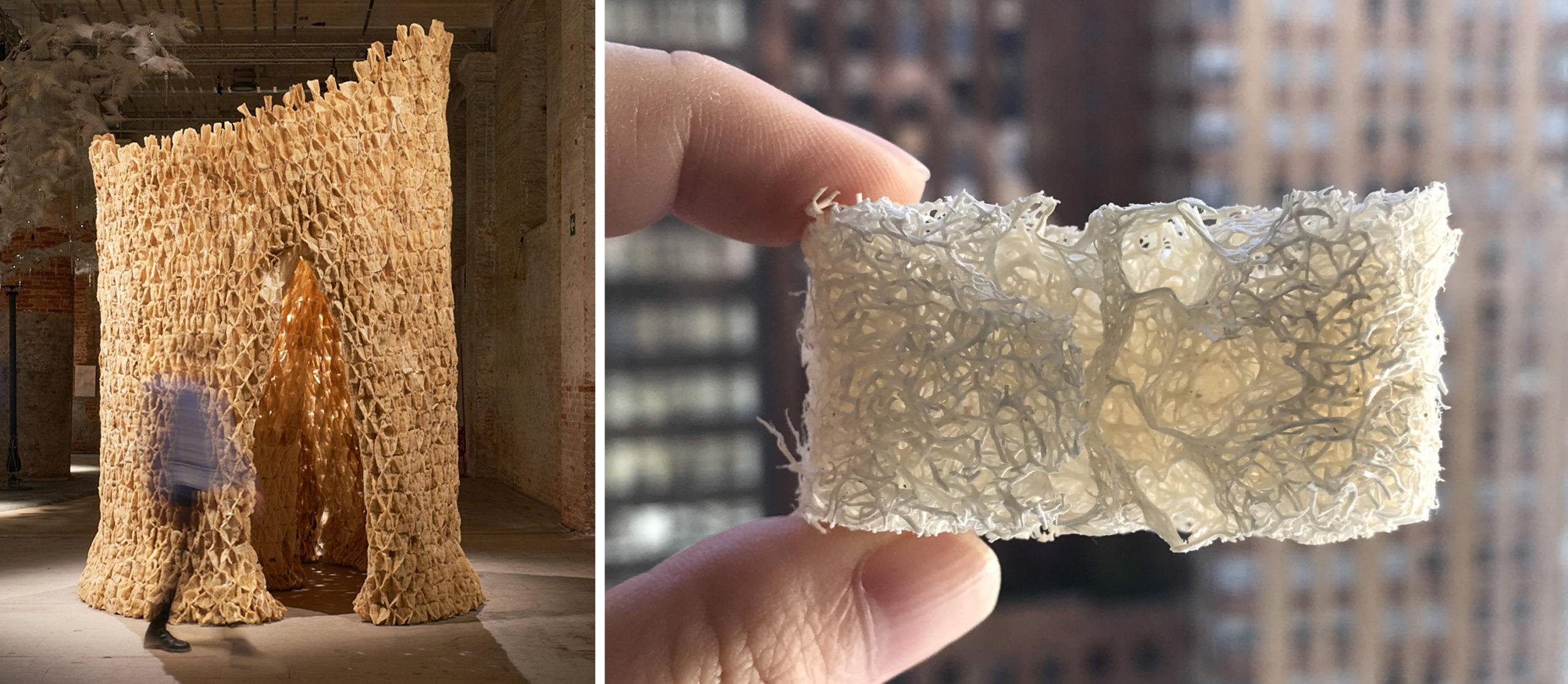
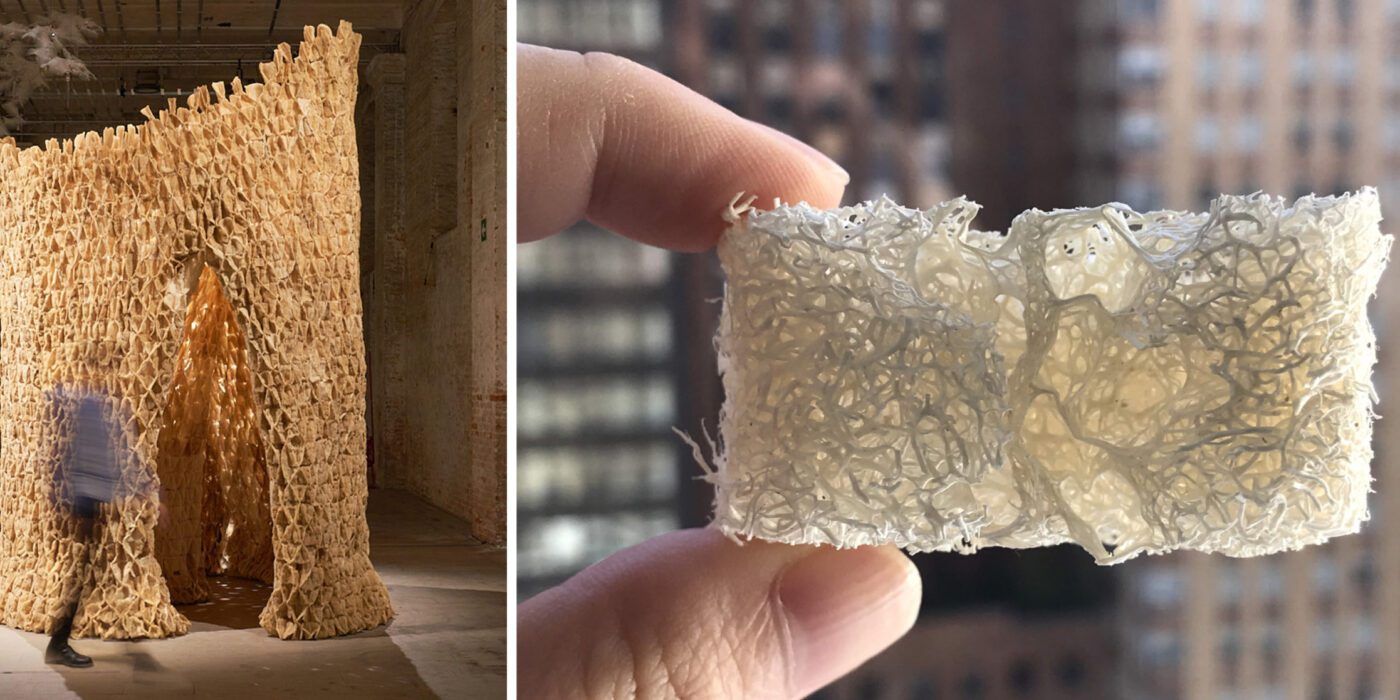
Eunomia’s themes evoke images of numerous projects from last season’s A+Awards, including The Living’s “Alive” installation, which won a Finalist accolade in the Experimental Design category. “Alive” is an experiment in multi-species architecture: a room made of porous, organic material with both macro-spaces for humans and micro-spaces for microbes, with interfaces for exchanges among different species. Photos courtesy of The Living

For architects, the report is a veritable goldmine of inspiration. Biophilic design, resilient architecture, eco-conscious materials and sustainable construction processes are all touted within the ‘Innovation Concepts’ section, with stunning case studies of these concepts being put into practice. Standout examples include Casa Merida, a house designed by Ludwig Godefroy to “withstand the local climate, using locally sourced materials and traditional Mayan features: tall air paths and punctual green areas freshen the circulating air, providing a natural cooling sensation.” 

Meanwhile, Tanya Rey’s Verdant Project presents 3D-printed ceramic columns that are designed to allow moss to grow across every surface, forming a new type of architectural ‘coating’ that blends manmade materials with nature. Additionally, Brigitte Kock and Irene Roca Moracia’s “bio concrete” material is made from invasive species such as Japanese knotweed and American crayfish, providing an “example of how polluting building materials can be transformed into new ‘economic and ecological’ value enhancing natural aesthetics, while helping to restore local biodiversity.”
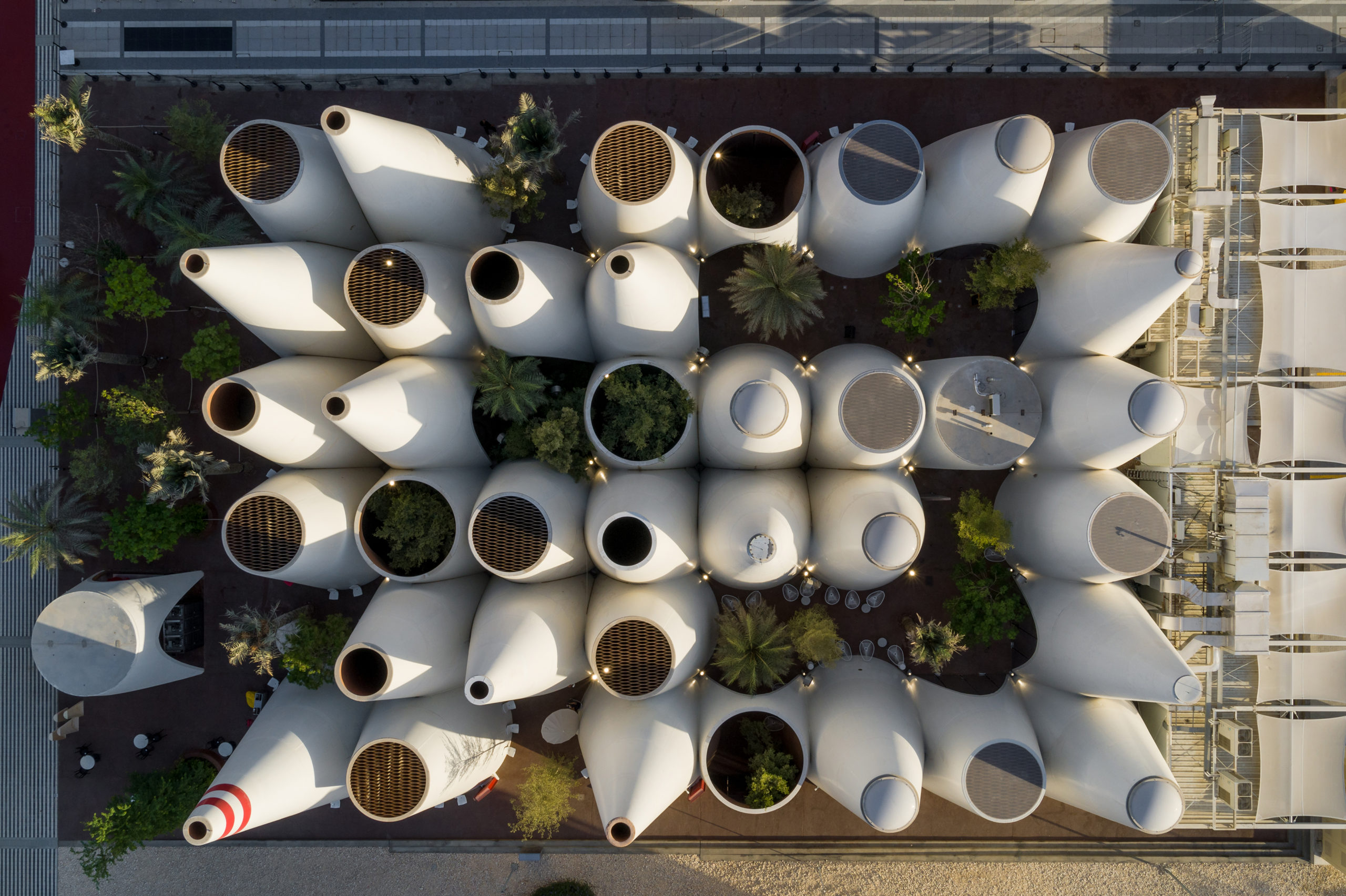
The report brings to mind projects such as Querkraft Architekten’s A+Award-winning Austrian Pavilion for the 2020 Dubai Expo. Combining local building traditions and intelligent Austrian climate engineering, a series of 38 clay plaster cones enables conventional air conditioning technology to be largely avoided, saving three quarters of the energy needed for a comparable building. Photo by Dany Eid/Expo 2020 Dubai

The report wraps up with ‘Design Ideations’, a series of vibrant, complex mood boards tied together along both aesthetic and thematic lines. These diverse yet cohesive palettes should provide architects and designers with fertile ground for continued exploration of the concepts found throughout the report. The biggest takeaway? The power of Nature is only building, and creatives must surely work with it — rather than against it — in order to thrive in the upcoming decade.

To see the full trend report and receive new material insights each month, become a member of Material ConneXion. Learn more >

Top image: Austrian Pavilion for the 2020 Dubai Expo by Querkraft Architekten
Reference

Rainwater in pond
CategoriesSustainable News

Farmland informs design of school building by Eskew Dumez Ripple

American studio Eskew Dumez Ripple has used features of vernacular architecture in creative ways to form a sustainable, multipurpose school building.

The Home Building is part of the Thaden School, a private school in Bentonville, Arkansas, that serves students in grades six to 12.

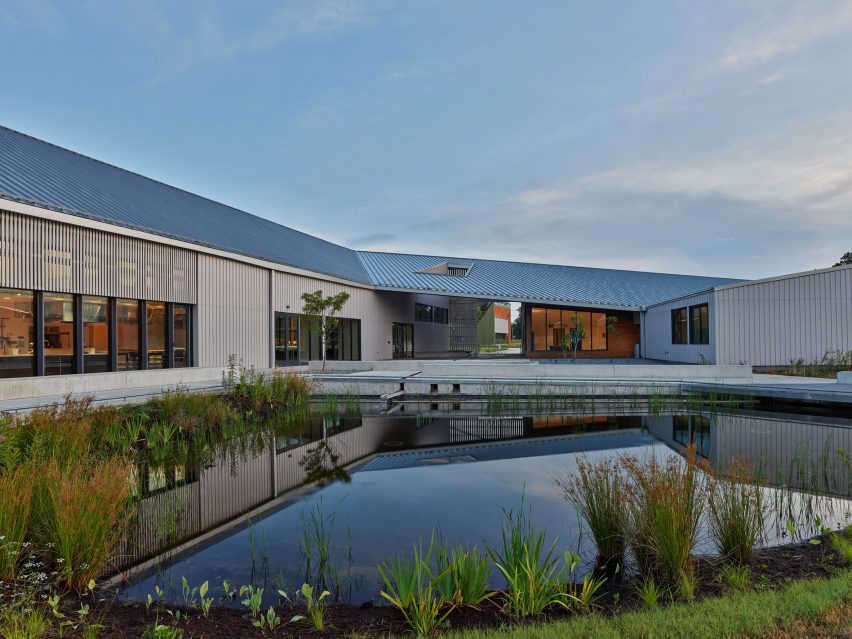
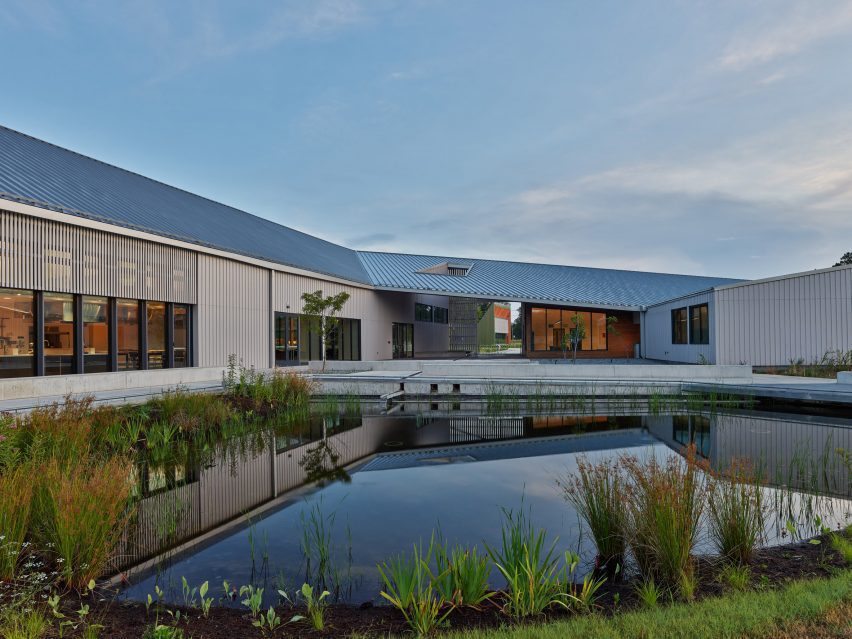
Rainwater in pond
Rainwater is collected and stored in a pond, or “water lab”, at the Thaden School. Photo is by Tim Hursley

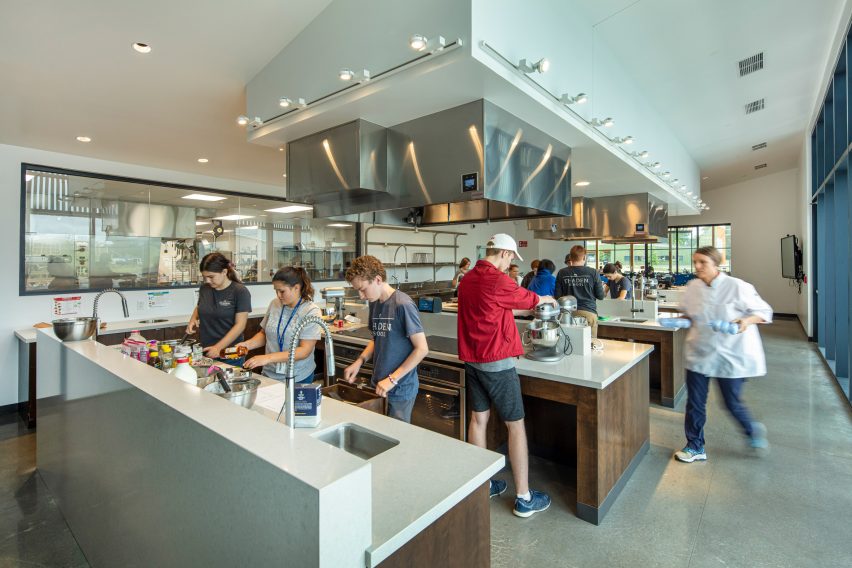
With a focus on learning by doing, students engage in activities such as filmmaking, constructing bicycles, and growing and preparing food.

The school is backed by the Walton Family Foundation, which is led by the founders of the retail giant Walmart.

The school’s 26-acre (10-hectare) campus was master-planned by Eskew Dumez Ripple – a studio based in New Orleans, Louisiana – in collaboration with local firm Marlon Blackwell Architects, landscape architects Andropogon and engineering firm CMTA.

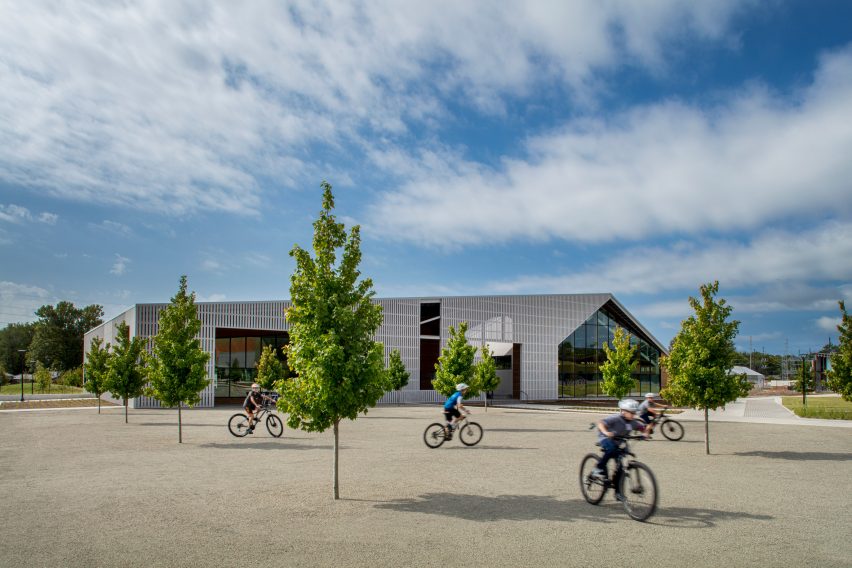
School building in Arkansas
The team took cues from the area’s pastoral heritage for the architecture. Photo is by Dero Sanford

Eskew Dumez Ripple was tasked with designing the Home Building – a 34,000-square-foot (3,159-square-metre) facility that holds a dining hall, teaching kitchen, bookstore, library and lounge/study spaces.

“The Home Building serves as both the social and spiritual center for students,” the architects said.

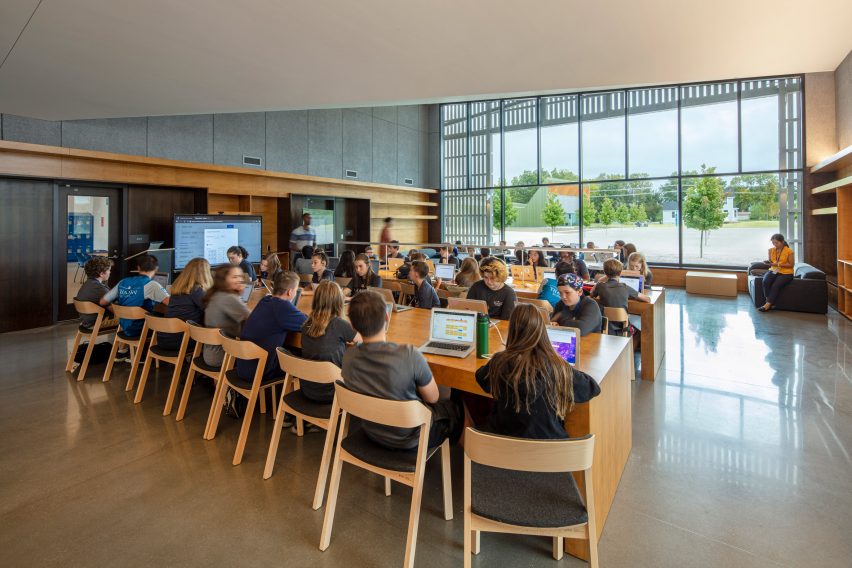
Eskew Dumez Ripple study room
Eskew Dumez Ripple added a study room to the project. Photo is by Dero Sanford

While designing the facility, the team took cues from the area’s pastoral heritage, including its vernacular architecture.

“The design reconciles seemingly contradictory notion: lofty ambitions for the building’s design with the humble nature of local, vernacular architecture,” the firm said.

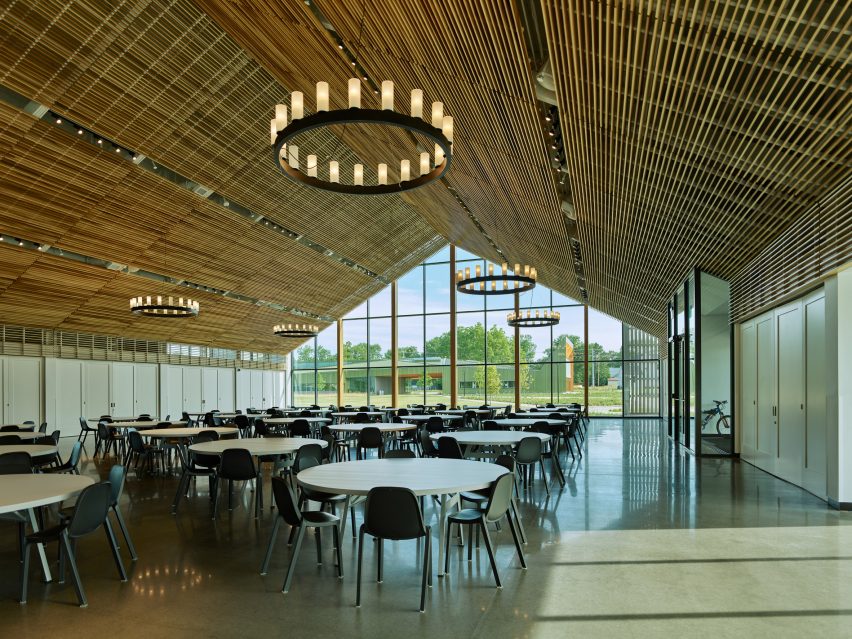
Gabled slatted canopy
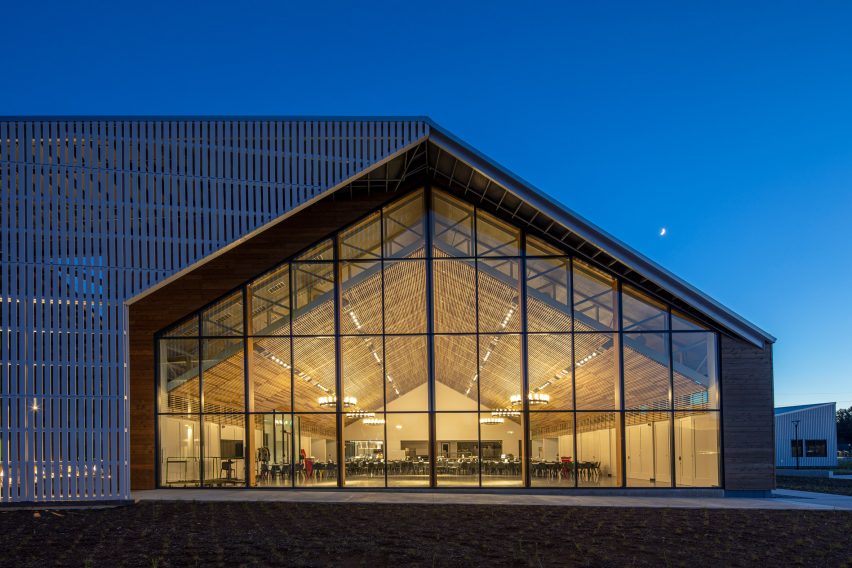
A gabled, slatted canopy made of poplar wood features in the dining room. Photo is by Tim Hursley

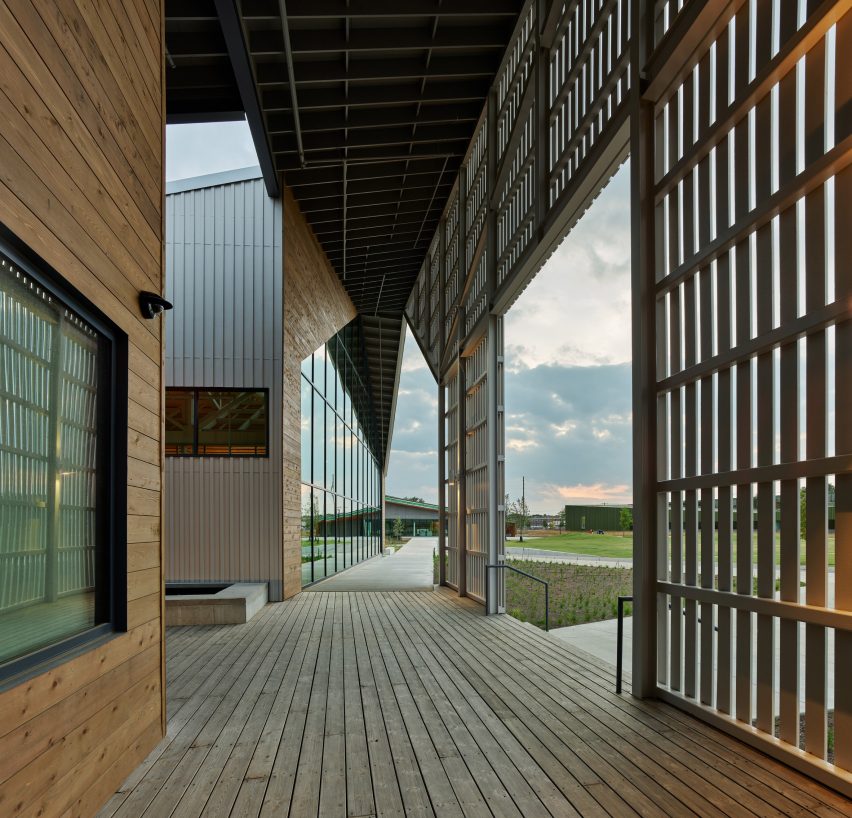
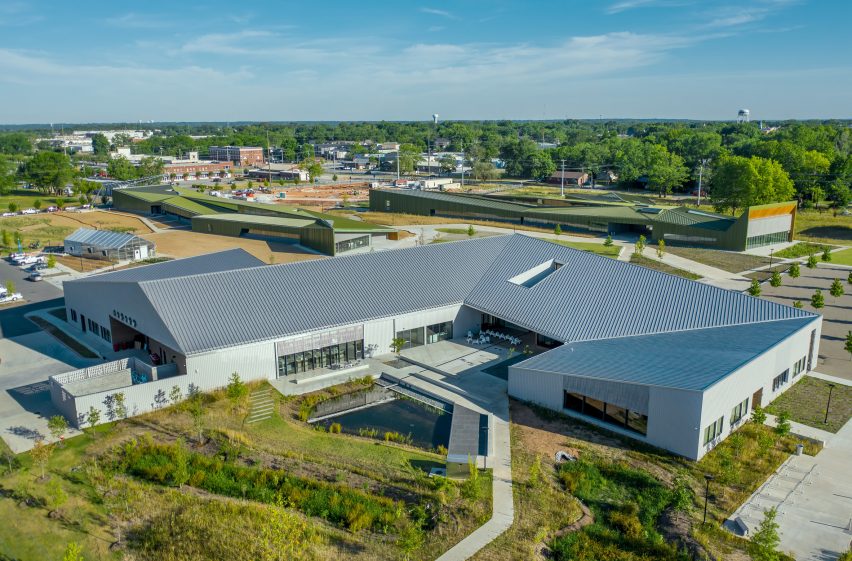
Zigzag in plan, the wood-framed building stretches across the site, bending at several points to create porches and courtyards.

Facades are clad in shiplap cedar siding and board-and-batten siding made of white, fibre-cement Hardie panels. 
Cedar siding
Facades are clad in shiplap cedar siding. Photo is by Tim Hursley

The building’s different parts are topped with either single-slope or gabled roofs, all of which are covered with standing seam metal.

Within the building, the team used basic finishes such as concrete flooring and white-painted sheetrock, and incorporated special accents like custom millwork in the study hall and a live-edge wooden table in the teaching kitchen.
Eskew Dumez Ripple interior space
Eskew Dumez Ripple used basic finishes within the facility. Photo is by Dero Sanford

At the heart of the facility is the dining room, which rises to 38 feet (12 metres) at its highest point and features a glazed wall. Hung from large, exposed trusses is a gabled, slatted canopy made of poplar wood.

“The design employs common materials and methods in uncommon ways,” the team said.

The building has a number of sustainable features, including low-flow plumbing fixtures, a geothermal well and an energy recovery wheel.

Rainwater is collected and stored in a pond, or “water lab”, that serves as a teaching tool for students. The landscape is filled with native species like prairie grass and pecan trees.

The building has a number of sustainable features. Photo is by Tim Hursley

“Sustainability is placed at the forefront of the students’ education, and the landscape functions as a botanical textbook rife with plants that represent a microcosm of the region’s native species,” the team said.

With plans to install a photovoltaic array in the future, the building is designed to achieve an Energy Use Intensity score of 23. A score of 25 or less for a school building indicates that the building is “zero energy ready”, according to the architects.

Thaden School building
Thaden School building is located in Arkansas. Photo is by Dero Sanford

The Home Building at Thaden School was a recipient of the 2022 AIA Architecture Awards.

Other projects there include the Crystal Bridges Museum of Art, designed by Sadie Architects, and a co-working, dining and recreational venue by Brand Bureau and Modus Studio that is located within a former industrial building.

The photography is by Tim Hursley and Dero Sanford.


Project credits:

Architect: Eskew Dumez Ripple
Landscape architect: Andropogon Associates
Civil engineering: Ecological Design Group
MEP engineering: CMTA Consulting Engineers
Structural engineering: Engineering Consultants
Project management: Aegis Property Group | WEI
General contractor: Milestone
Irrigation: Aqueous
Signage and wayfinding: Tom Zetek

Reference

Airport expansion
CategoriesSustainable News

Miller Hull Partnership and Woods Bagot design timber airport expansion

Architecture offices Miller Hull Partnership and Woods Bagot have revealed plans for an extension of Seattle-Tacoma International Airport.

Miller Hull Partnership and Woods Bagot will work with the Port of Seattle to carry out the 145,528 square-foot (13,520-square-metre) expansion of the airport’s C Concourse.

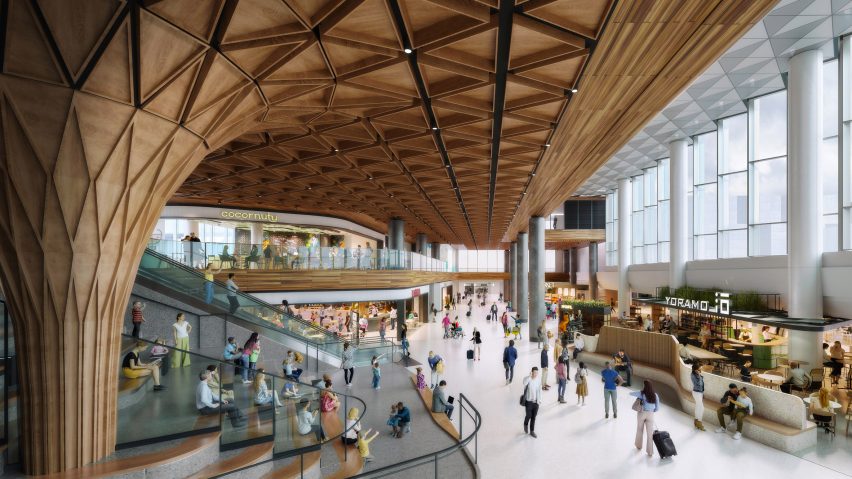
A sculptural pillar and a grand staircase clad in locally sourced Douglas fir will be at the centre of the C Concourse Expansion. The pillar will feature carved decorative geometric shapes.

According to the architecture studios involved, the airport’s grand staircase will be the focal point of the extension, with a design that takes materials and forms of the Pacific Northwest.

Airport expansion
The project will expand Seattle-Tacoma International Airport

“The concourse’s interior will be an interplay of environments that is defined by both the local energy and a connection to the natural landscape,” explained Miller Hull and Woods Bagot.

Four additional storeys above the airport’s existing concourse will provide travellers with a range of amenities.

These additional floors will include dining and retail spaces, as well as interfaith prayer and meditation rooms, a nursing suite and a 20,000-square-foot (1,858-square-metre) lounge for Alaska Airlines.

Due to the expansion’s height,  views of the airfield and the surrounding Olympic Mountains will be expanded.

Douglas fir pillar
A staircase and pillar clad in local Douglas fir will be at the centre of the expansion

A “marketplace” modelled on the Seattle farmers’ markets will be located in the middle of the concourse. It will include a bar, various retail kiosks and an area for musicians that will face the grand staircase.

The C Concourse Expansion’s timber elements have been designed as part of Port of Seattle’s Sustainable Project Framework, which pledges to commit to more sustainable infrastructure.

The expansion will also include rooftop photovoltaic panels and electrochromic window glazing.

According to Miller Hull and Woods Bagot, the expansion will also feature fossil-fuel-free systems for heating and hot water, as well as dishwashing facilities for vendors that will intend to reduce the demand for disposal dishes and low-flow water fixtures.

The architecture firms said that embodied carbon reduction strategies and biophilic design principles will also define the expansion.

Initial construction is slated to begin this summer, with major work due to commence in mid-2023. The expansion is expected to be completed in 2027.

Miller Hull Partnership was founded in 1977 while Woods Bagot was established in 1869. The firms have individually designed many architecture projects including a net-positive building for an Atlanta university and another university building with a fluted concrete tower respectively.

The renderings are courtesy of Woods Bagot and Miller Hull Partnership.

Reference

Frank Gehry's Guggenheim Museum Bilbao
CategoriesSustainable News

“Proposals that are not adopted indicate a failure of design thinking”

In this week’s comments update, readers are debating an opinion piece by urbanist Vishaan Chakrabarti on the global housing problem and discussing other top stories.

Architect and urbanist Vishaan Chakrabarti has caused a stir by suggesting that high-density, low-rise urban housing is the key to accommodating another three billion people over the next 80 years without costing the Earth.

“The answer is hiding in plain sight,” said the architect. “A ‘Goldilocks’ type of high-density, low-rise urban housing that sits between the scale of sprawling single-family houses and large-scale towers, advocated by many architects and urbanists for decades.”

“This is the right idea for the inner suburbs”

Readers are torn. “I’m no architect, but this does make sense to me,” said Andre C.

“Providing it is done right. I live with solar, battery and a heat pump in a semi-detached London suburb and can attest to the semi-self sufficiency of the concept from spring to autumn.”

“This is the right idea for the inner suburbs,” added Chris D, “but probably too low for all the gap sites in city centres.”

James C agreed: “I think that the logic of this is pretty sound, but my biggest preoccupation with these arguments is urban densification and the steps needed to move more and more of (especially) the Western world to public transit systems.”

Dilgreen was unconvinced: “Sensible proposals that get made time and again but are not adopted indicate a failure of design thinking. Since the proposal makes lots of sense in its own terms, clearly the reason for non-adoption lies in another domain.”

Is high-density, low-rise urban housing key to solving the housing shortage? Join the discussion ›

Frank Gehry's Guggenheim Museum Bilbao
Frank Gehry’s Guggenheim Museum Bilbao is “the greatest building of our time”

Reader says Franky Gehry’s Guggenheium Museum Bilbao is “the most exhibitionistic building of our time”

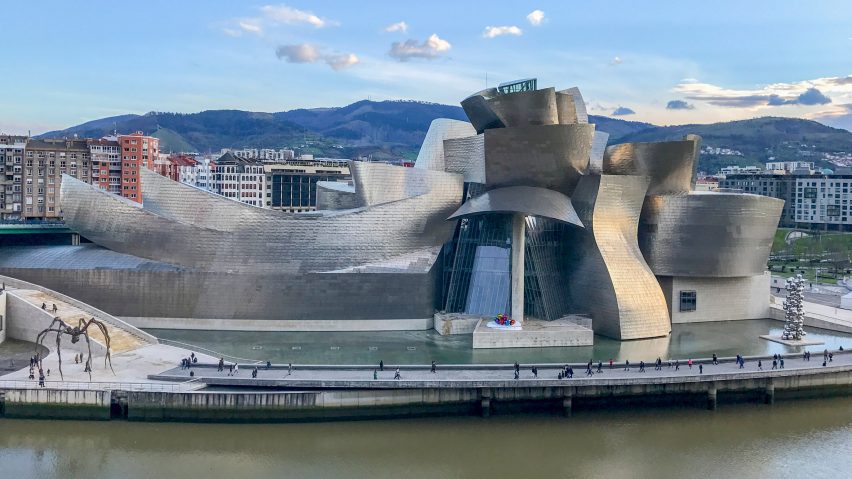
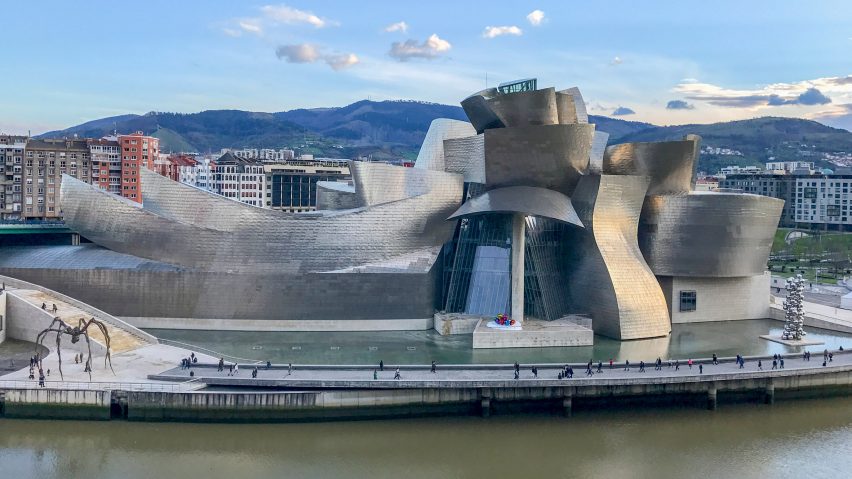
Commenters disagree with architect Philip Johnson’s view that Frank Gehry’s Guggenheim Museum Bilbao is “the greatest building of our time”. The structure is featured in our deconstructivism series.

“It is unquestionably one of the most exhibitionistic buildings of our time,” said Tom Roberts. “Best? It might be truly significant if the structure was not an afterthought.”

Alfred Hitchcock continued: “It’s certainly a remarkable, striking and interesting building as well as being a great tourist draw. But in my experience, as a museum, it doesn’t work very well at all.”

“‘Greatest building of our time’, dunno, maybe it is, maybe it isn’t,” concluded Apsco Radiales. “But the picture of Gehry and Johnson visiting it is a gem. Gehry looks happy with his work, and Johnson wide-eyed in amazement. Both giants, and craftsmen of the highest order.”

Is the Guggenheium Museum Bilbao the greatest building? Join the discussion ›

Timber playspace in London garden
De Matos Ryan adds timber playspace to garden of London home

Commenter calls “treeless treehouse” an “absolutely joyous thing”

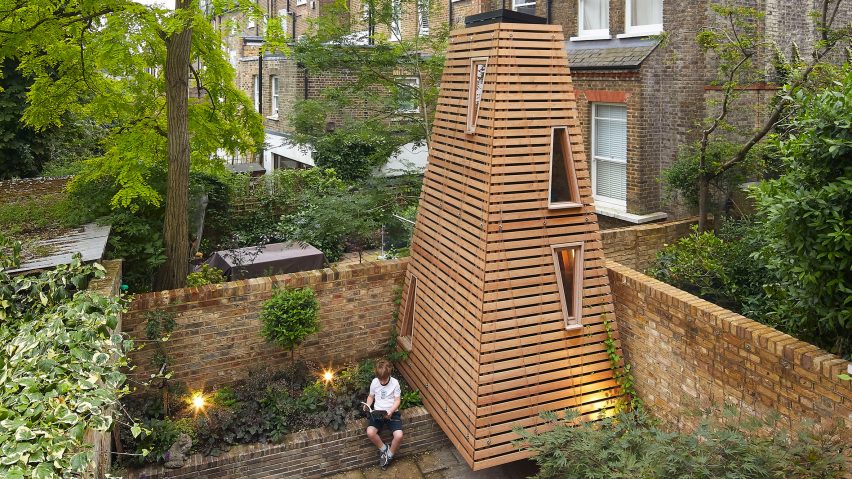
Readers are divided over a “treeless treehouse” named Penfold, which architecture studio De Matos Ryan created for a London garden. The pyramidal timber structure is accessible only by crawling beneath it.

“What an absolutely joyous thing,” said Think.

Flex agreed: “Oh, to be a child again! I could almost live in this playhouse!”

“Maybe speaking out of envy,” replied Jack Mclathass, “but if I was one of the neighbours I would be mad at this structure stealing precious minutes of sunlight and projecting extra shade in my garden.”

Does Penfold bring a smile to your face? Join the discussion ›

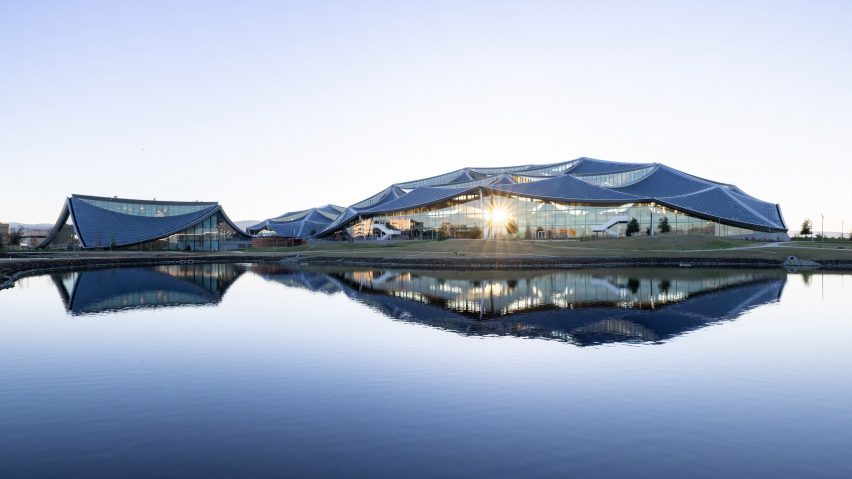
Image of Google's Bay View campus reflecting in a lake
BIG and Heatherwick complete Google campus topped with “dragonscale” roofs

Reader thinks BIG and Heatherwick Studio-designed Google campus interiors “look like a generic trade fair”

Commenters are discussing Google’s new Bay View campus in  Silicon Valley, California. It features sweeping, scale-like panels across its roof and was designed by BIG and Heatherwick Studio.

“This is my favorite building among the tech giants,” said Puzzello. “Not another boxy, suburban, curtainwall structure with their logo slapped on the parapet.”

“That interior does bring up an emotion,” continued Ima Nerdee, “a claustrophobic 1970s cubicle nightmare feeling. Did the budget run out?”

Tom agreed: “Somehow looks like a generic trade fair when the exhibitors are still setting up.”

What do you think of Bay View campus? Join the discussion ›

Comments update

Dezeen is the world’s most commented architecture and design magazine, receiving thousands of comments each month from readers. Keep up to date on the latest discussions on our comments page.

Reference

Interior Design Ideas for Living Big in Small Spaces
CategoriesSustainable News Zero Energy Homes

Interior Design Ideas for Living Big in Small Spaces

While some large-scale builders still cling to huge home floor plans and many upscale buyers still demand them, there is a rapidly growing interest in smaller homes. Small homes use less energy, require a lower carbon input, and cost less to maintain than the typical suburban estate. If you’re building a new home, you have many options for reducing size and living very comfortably (link to Part I). If you’re buying or living in an existing small home, you also have opportunities to make it live bigger without ripping into walls or raising the roof. It’s amazing how creative interior design can expand the visual space and increase the comfort and utility of a small home. Here are some tips.


Interior Design

Keep it light. Paint the walls a light color. Various shades of white or beige are classic choices. If you’re more adventurous, consider light yellow or pastels. Accent walls of brighter hues can add interest. To make a room seem brighter, select an eggshell finish that is slightly more reflective than flat wall paint. Use semi-gloss paint in bathrooms to reflect light and reduce vapor diffusion into walls. 

Choose flooring material. Using the same flooring material for connected spaces will tie the spaces together visually and make them look larger. For example, a kitchen and dining area could have the same tile flooring. Using different materials, distinguishes spaces without actually interrupting the view. A living room next to the dining area can be defined with a hardwood floor, but not blocked off. 

Install mirrors. Reflecting light and extending interior views can be accomplished with strategically placed mirrors

Occupy window sills. Most zero energy homes have thick walls, which brings the added benefit of wide window sills. Consider enhancing their interest with bold sill material, such as stone, tile, or another unique finish. Make the most of these built-in shelves to grow houseplants or display decorative items. 

Enhance trim and detail. High-quality trim and detail can be a key focus of a small house. For example, high-quality hardware and moulding, and other aesthetic touches, can draw attention to the details creating more visual interest with less need to clutter the room with knick-knacks.

Add a focal point. Each room should have one attractive attention-getting feature. This can be a building element, such as built-in furniture, a work of art, or an intriguing light fixture.


Furnishings

Choose quality. Too much clutter makes homes seem small. Small homes should have small comfortable furniture or a smaller amount of carefully selected larger furniture. 

Open up. Select chairs and sofas with open legs instead of those with enclosed bases. These pieces seem lighter and offer a bit more visual space in the room because you can see below them. 

Include storage. Some furniture pieces come with storage, such as an ottoman or footstool, that opens up and contains storage. Some bed frames come with storage below the mattress, either in drawers or the mattress itself may lift. 

Make it tall. Well-designed small homes have high ceilings. Much like clothes with vertical stripes make people look taller, tall furniture pieces will accentuate tall ceilings and draw the eye upward. Similarly, a tall plant will reach into the higher spaces and create visual interest.   

Fold it. Find furniture that transforms to different uses. A coffee table can become a dining table. Tables that hinge down from the wall will allow them to be deployed without moving objects sitting on the floor. The classic space-saving transformer is the Murphy bed. This allows the bedroom to have a day job, too. 

Hidden offices. There are many “hidden” desk ideas that allow for a home office to be discreetly hidden or camouflaged in a living area or bedroom.

Seek niche storage. Look for the small empty spaces that can hold your stuff and reduce clutter. Cabinets can hide less attractive household items, while open shelves can display your treasures. Examine the back side of the closet and pantry doors. Is there space for wall-mounted storage baskets or hooks that will be out of site, but easily accessible? 


Few small homes will use all these ideas, but each one has its merits. Apply the ones that make sense for your situation to make your small home look and live bigger. Be proud that your small home reduces your carbon footprint, has less upkeep, and saves you money without sacrificing comfort.

Reference

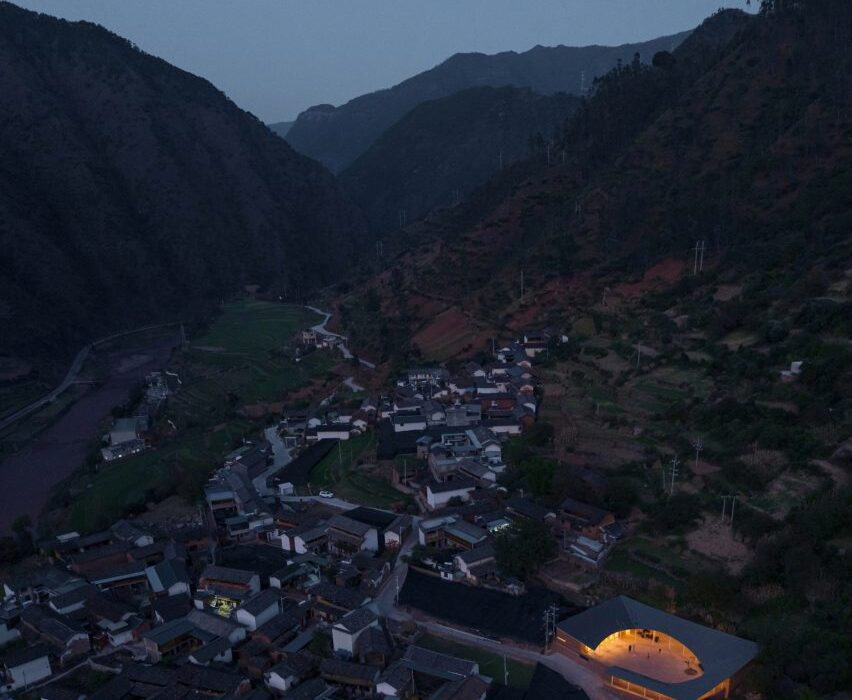
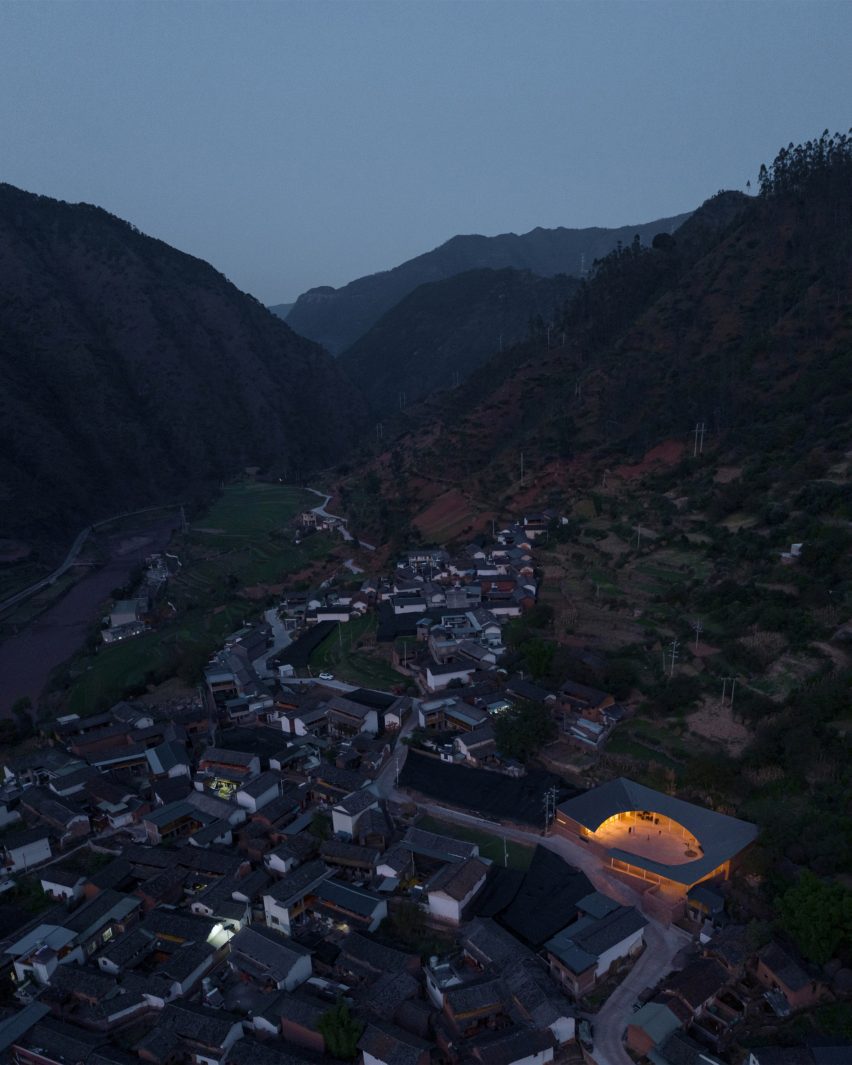
Aerial image of the Yong'an Community Hub and surrounding setting
CategoriesArchitecture

Archi-Union works with students to design rammed earth community centre in rural China

A sweeping, tiled roof informed by the surrounding mountain ranges tops the Yong’an Community Hub in China, which has been designed by students from Tongji University in Shenzhen with architecture studio Archi-Union.

Referencing local structures and involving residents in its construction process, the rammed-earth, courtyard-style building provides a gathering space and residence for the Yong’an village’s more isolated upper area.

Shortlisted in the civic building category of Dezeen Awards 2022, Yong’an Community Hub forms part of an ongoing social welfare programme funded by Tongji University and led by Philip F Yuan, principal of Shanghai-based studio Archi-Union.

Aerial image of the Yong'an Community Hub and surrounding setting
Archi-Union worked with Tongji University to create the community hub

“The villagers from the upper village often suffer from inaccessibility to transportation, and are living in strained circumstances,” said the project’s team.

“The majority have no space to interact with one another other than their working space, therefore building a community centre for the upper village [became] the main goal of the volunteer activity.”

Bordered by stone walls, the main building sits at the north of the site, with a smaller toilet block on the opposite side of a large courtyard. Both were built using rammed earth partially made from the red sandstone found near the site.

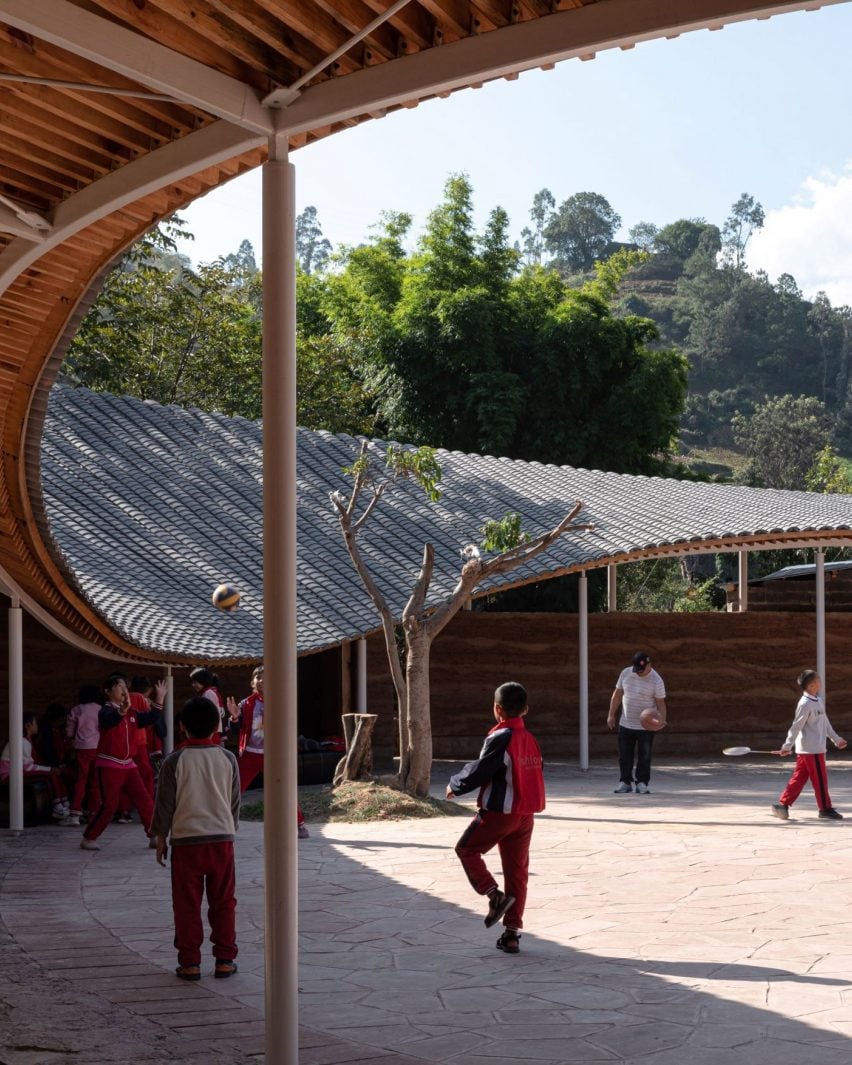
Image of children playing at the Yong'an Community Hub
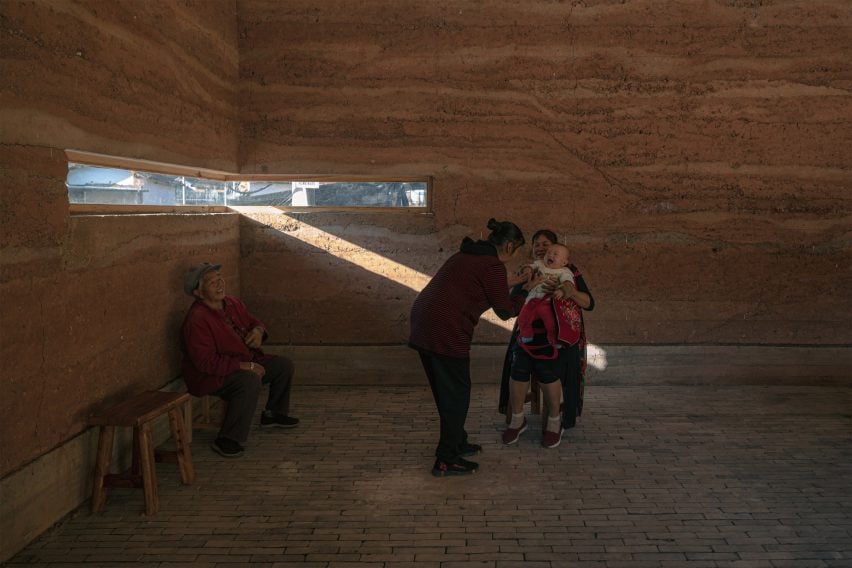
The building features rammed-earth walls

A run of wooden doors allows the main building to be almost completely opened to the courtyard, while a thin, letterbox-style window in its northwest corner frames views back towards the village.

The steel-framed, curving roof contrasts these traditionally-built rammed earth structures, using parametric design methods to create an undulating arc around the courtyard and minimising the use of non-standard components to make construction easier.

This roof shelters what the team describes as a “floating corridor”, an area of covered seating space that provides an area to dwell, watch performances or take in expansive views of the surrounding valley landscape.

“While retaining the functionality of the interior spaces, we tried to maximise the open public space as much as possible… from funerals to weddings or even daily socialising, the openness of space becomes the top priority to [the villagers],” said the team.

“The ‘floating corridor’ became a continuous yet fluid element that held the spaces together…to accommodate the low height of the entrance the roof was lowered, forming a starting point that ends when it meets the mountain slope.”

Interior image of a space that is zoned by rammed-earth walls
An undulating canopy wraps around the centre

Other projects on the shortlist for the civic project category of Dezeen Awards 2022 include a hospital in Myanmar by German practice A+R Architekten, which also drew on materials and typologies local to the area for its design.

The photography is by Schran Images.

Reference

Biotherm concept store in Monaco has blue interiors with science lab-inspired details
CategoriesInterior Design

Universal Design Studio models Biotherm’s Monaco concept store on a lab

The visual language of scientific laboratories informed the look of this blue-lit concept store in Monaco, which London firm Universal Design Studio has devised for skincare brand Biotherm.

Set inside Monaco’s historic Oceanographic Institute, Blue Beauty Lab is where buyers and other industry insiders can come to expand their knowledge of the science underpinning Biotherm‘s skincare line.

Biotherm concept store in Monaco has blue interiors with science lab-inspired details
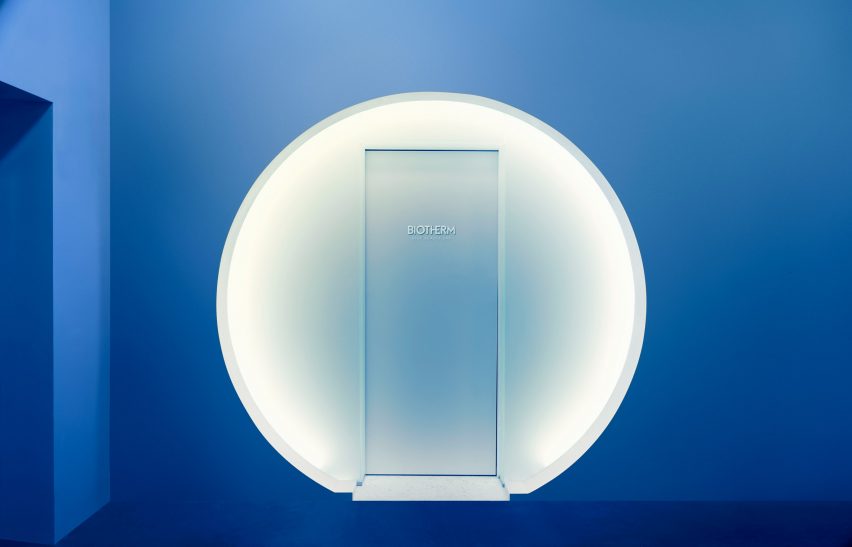
Visitors enter the Blue Beauty Lab via a circular doorway

Although the 30-square-metre concept store showcases a selection of the brand’s products, none of them are for sale. Instead, visitors can fully immerse themselves in the experience of being in the “lab”.

“Brands are increasingly looking to physical presence for means above and beyond selling products,” explained Satoshi Isono, creative director at Universal Design Studio.

“They’re harnessing spaces to storytell their core brand messaging in unique ways and ultimately connect with customers in a more impactful way.”

Biotherm concept store in Monaco has blue interiors with science lab-inspired details
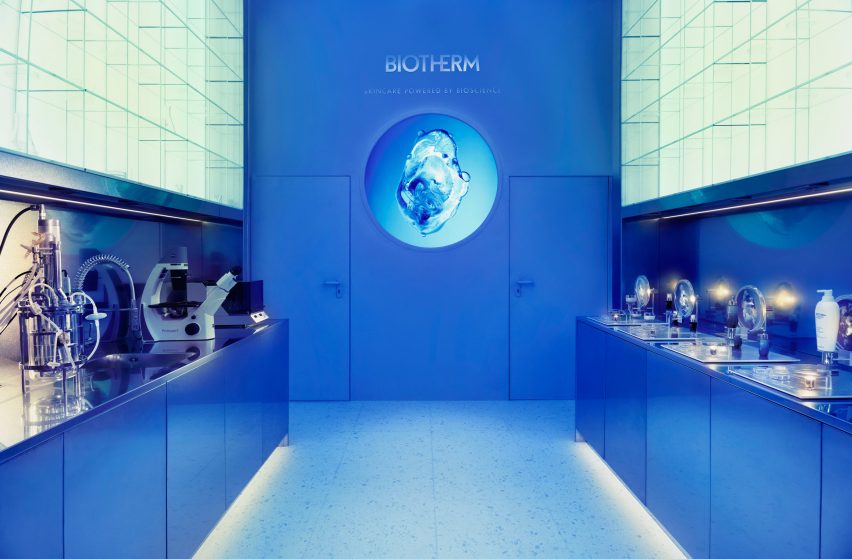
The first section of the store is set up like a science lab

As the outer walls of Blue Beauty Lab back onto water tanks harbouring various aquatic creatures, Universal Design Studio had to keep architectural interventions to a minimum. As a result, the store’s floor plan is fairly simple.

To enter, visitors walk through a circular doorway and a short mirrored tunnel. The interior is washed in sea-blue light and split into two parts.

Biotherm concept store in Monaco has blue interiors with science lab-inspired details
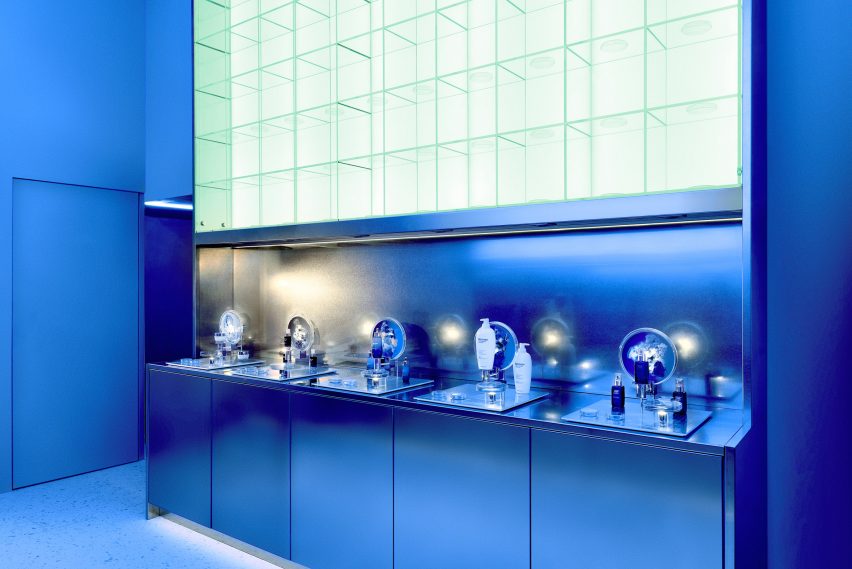
Steel worktops and petri dishes add to the lab-like feel of the space

The first is an area reminiscent of a research lab that gives an insight into the production process of Life Plankton – an extract containing 35 different nutrients that Biotherm incorporates throughout some of its moisturisers, serums and skin peels.

Stainless steel counters and glass shelving units run down the sides of the space, dotted with science paraphernalia like microscopes, petri dishes, test tubes and measuring flasks.

A small workshop forms the second part of the store, centred by a round table. Directly above is a large ring light emitting a bright white glow that enhances the lab-like feel of the space.

Interactive visuals produced by multimedia design studios Superbien and AC3 Studio are projected on the surrounding walls.

Biotherm concept store in Monaco has blue interiors with science lab-inspired details
Measuring flasks and test tubes are also displayed on the shelves

The clinical aesthetic of laboratories has also inspired a number of other interiors.

Among them is a bike shop in Copenhagen by local designer Johannes Torpe and a cafe in Tokyo with a white-lacquered steel ceiling grid.

Reference

Image of the clothes displayed at the Bethany Williams: Alternative Systems display
CategoriesSustainable News

Alternative Systems opens at the Design Museum

An exhibition highlighting London-based designer Bethany Williams’ waste-combating, social-driven vision for the fashion industry has opened at the Design Museum.

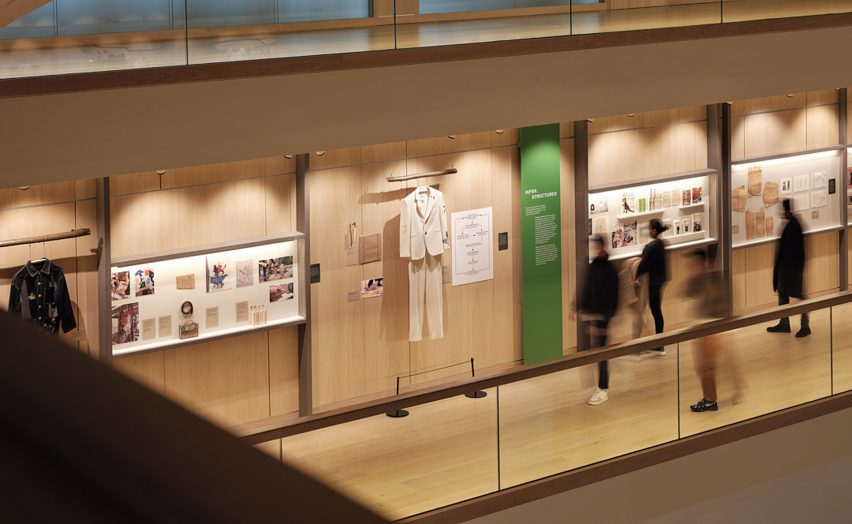
Exhibited in the atrium of London’s Design Museum, Bethany Williams: Alternative Systems is a celebration of Williams’ work which explores and responds to social issues through the use of community-led enrichment initiatives.

Image of the clothes displayed at the Bethany Williams: Alternative Systems display
Bethany Williams: Alternative Systems is a free display in the atrium of the Design Museum

A number of key works by the designer were exhibited across the four walls of the atrium’s balcony gallery, which is free to entry.

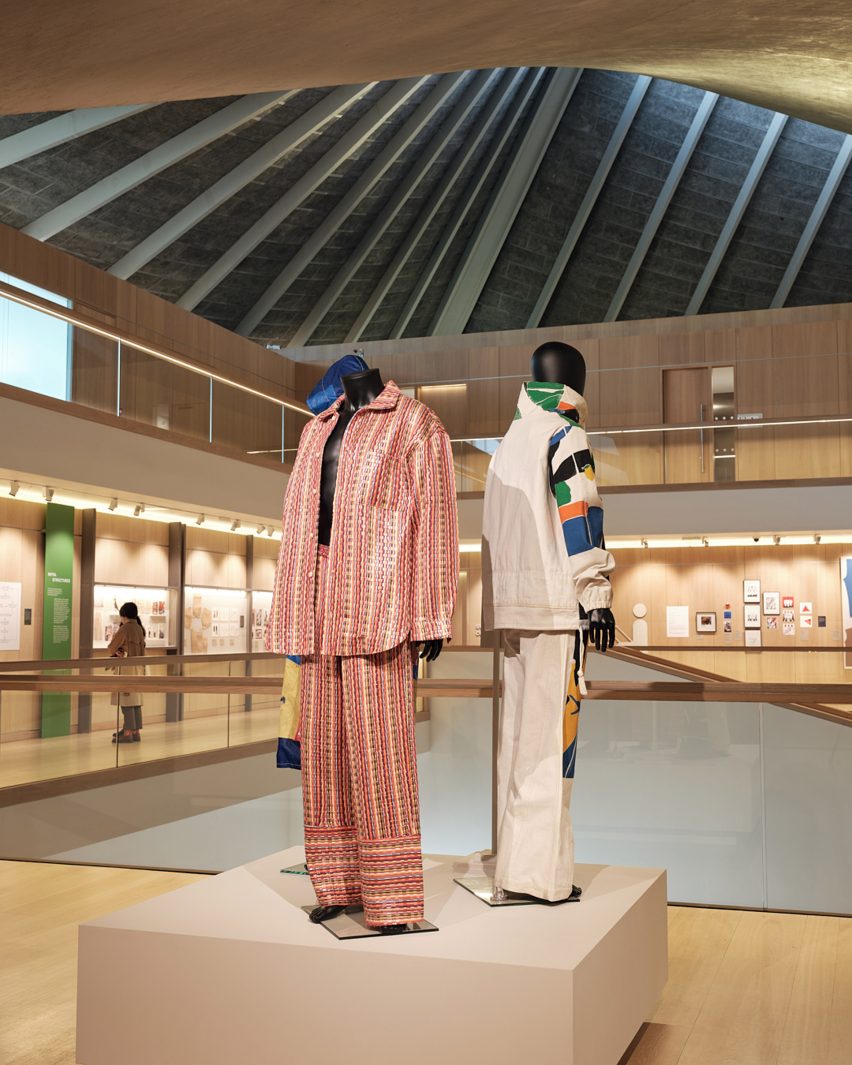
Mannequins are displayed among textiles samples, photography and raw waste materials in efforts to highlight the studio’s commitment to sustainable fashion.

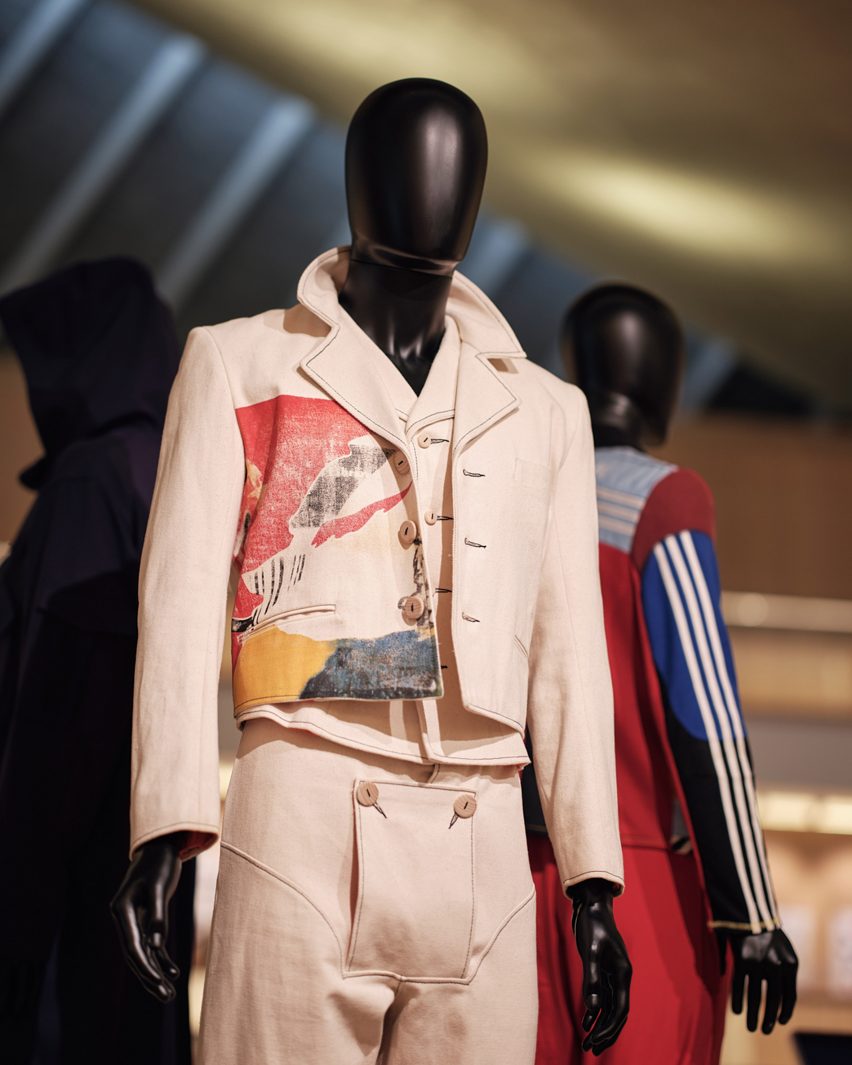
Mannequins dressed in Bethany Williams garments are on display
The display was chosen to be shown in a free entry space in the museum

“I decided to organise the display thematically rather than by collection,” said Design Museum’s head of curatorial and interpretation Priya Khanchandani.

“It opens with a section about the studio specifically and then there’s a part about creative process, intellectual references and the way in which they propose alternative infrastructures of working, followed by a section about reuse and another about community collaborations,” she told Dezeen.

“Bethany’s work not only tackles the question of the environmental impact of design, but it also has an amazing social purpose.”

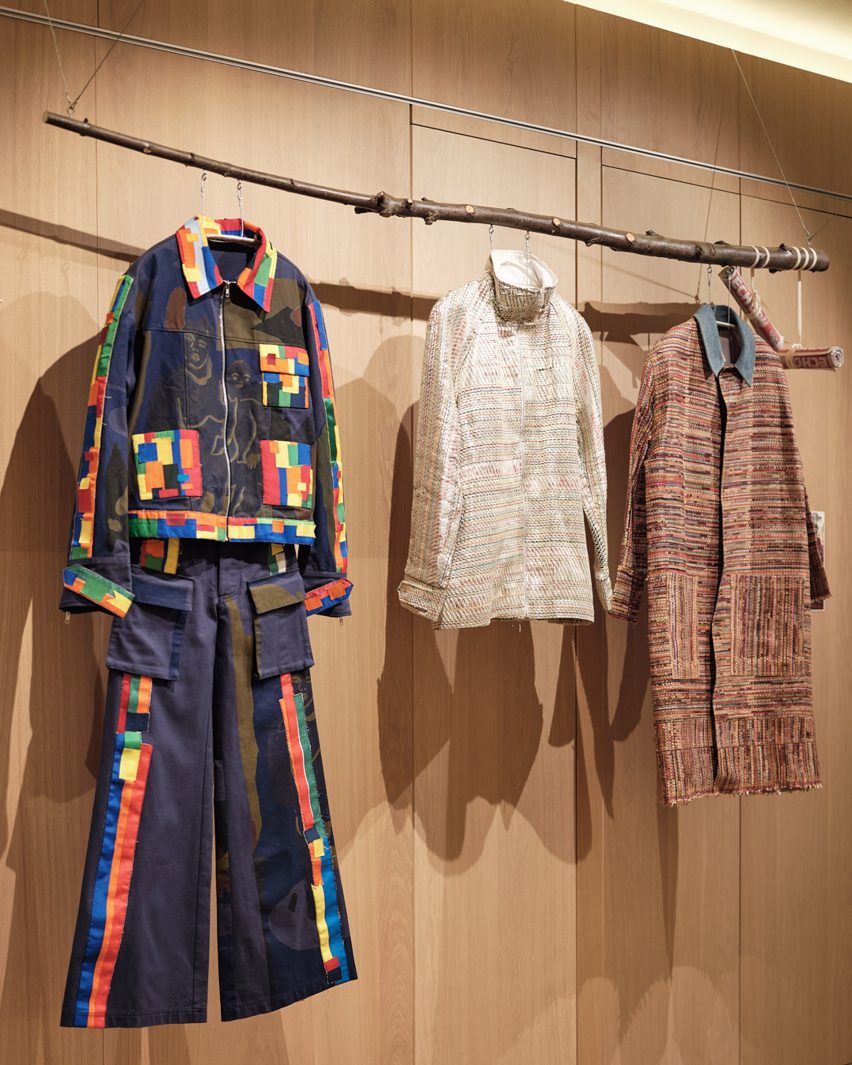
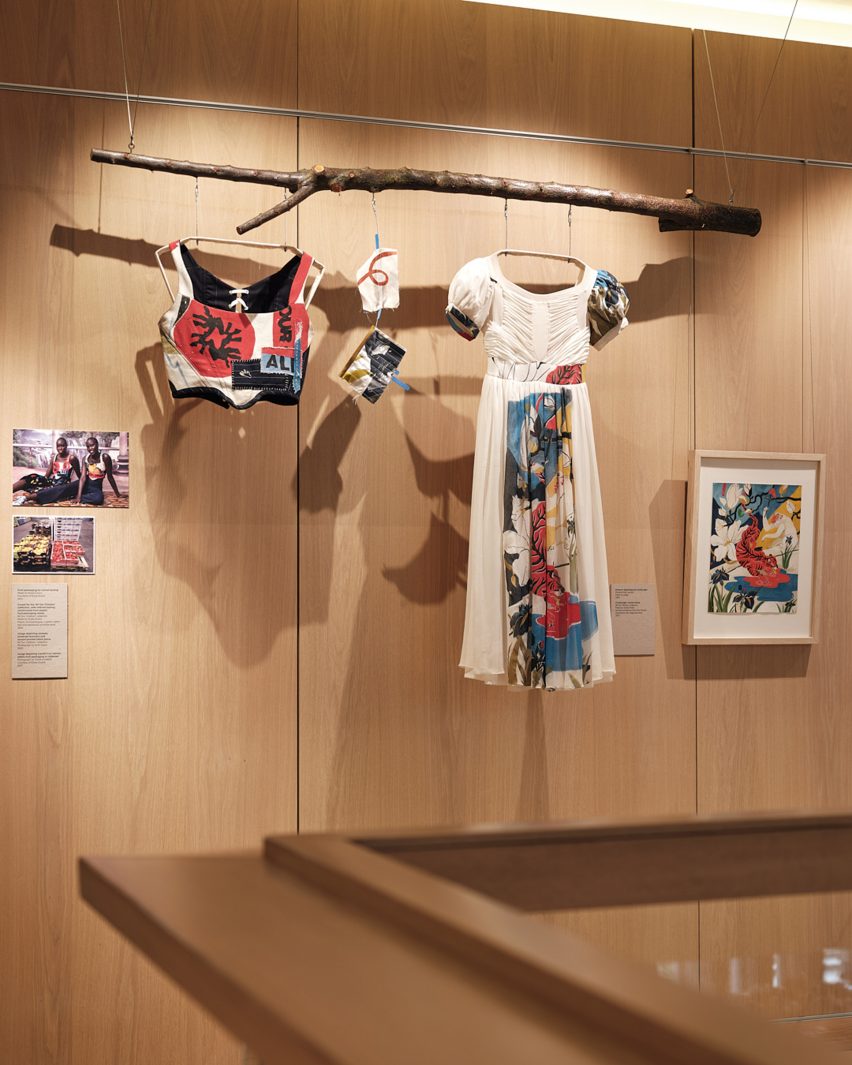
Garments are suspended from branches at Bethany Williams: Alternative Systems
The exhibition design was completed by Edit

Williams is a fashion designer, humanitarian and artist. She graduated from Brighton University with a degree in Critical Fine Art before receiving a master’s from the London College of Fashion in Menswear.

She launched her namesake brand in 2017 and has strived to spotlight and respond to social and environmental issues, her works see her partnering with local grassroots programs and manufacturing collections using waste materials.

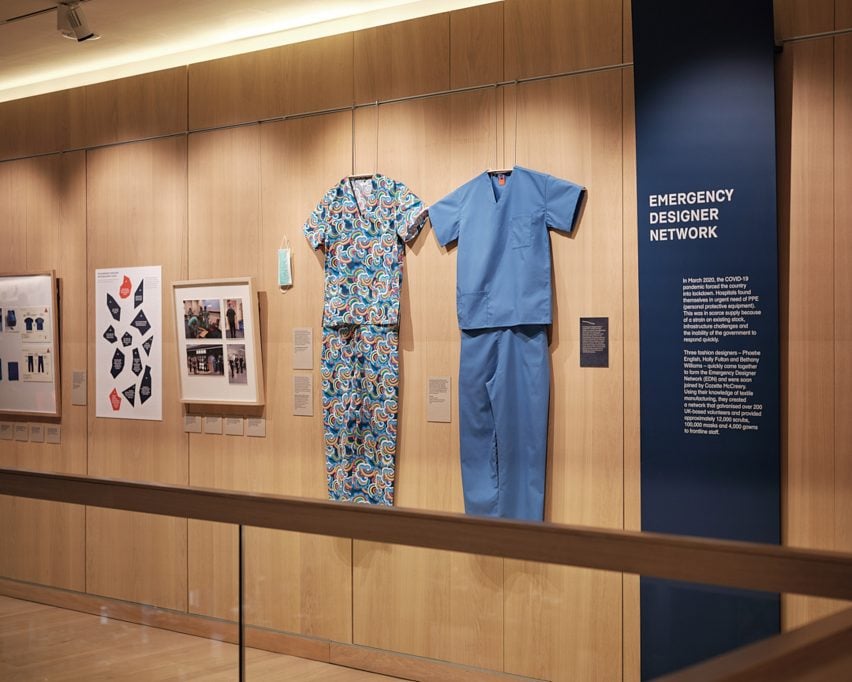
Scrubs are displayed at Bethany Williams: Alternative Systems
Garments are exhibited alongside research, drawings and materials

A section of the display exhibits Willliams’ work as part of the Emergency Designer Network. The initiative is a collaboration between herself and designers Phoebe English, Cozette McCreery and Holly Fulton.

The group of creatives, with their textile manufacturing knowledge and teams of volunteers, produced 12,000 scrubs, 100,000 masks and 4,000 gowns for frontline healthcare workers during the peak of the coronavirus pandemic.

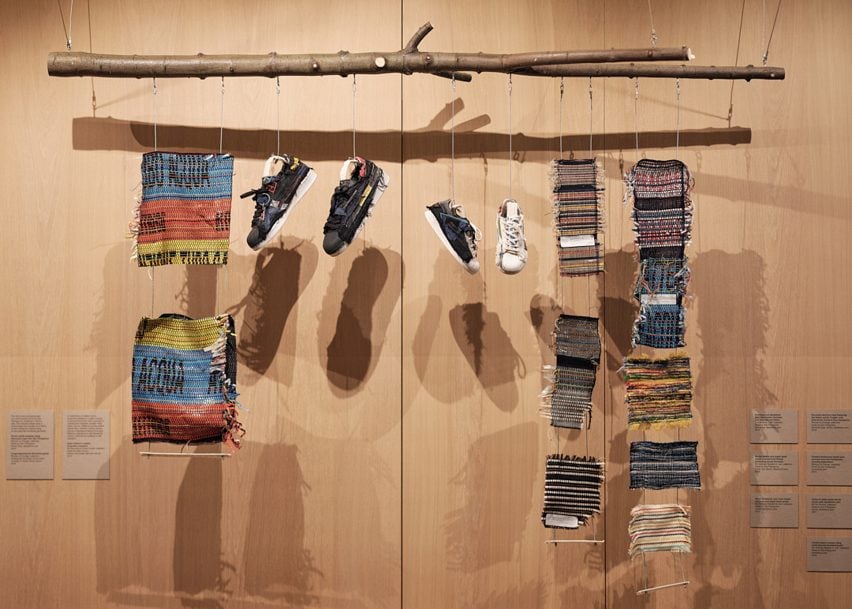
Waste from packaging tape sourced from Rimini, Italy was handwoven and constructed into functional items and garments as part of Williams’s Autumn Winter 2018 collection, which was on display.

“I felt it was very important to show not just the finished garments, which you would see in a retail fashion context; being a museum display I wanted to add other layers of information,” explained Khanchandani.

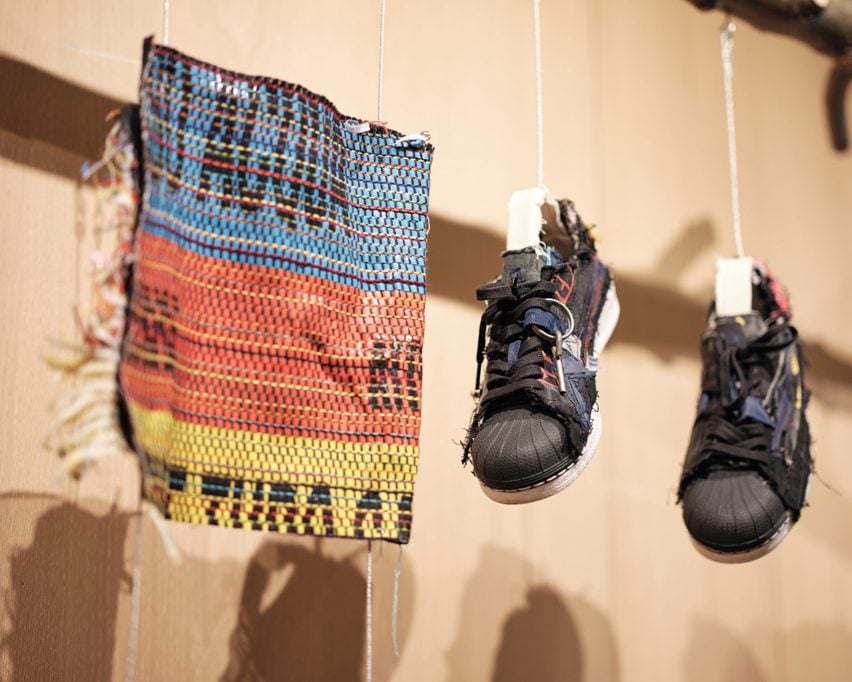
Bethany Williams: Alternative Systems includes shoes crafted from packaging waste
Williams’ work merges streetwear and craft

“There are process materials like drawings and sketches, and also source material,” said Khanchandani. “For instance, a jacket made of waste newspaper is shown alongside some of the waste material, the Liverpool Echo, which is dangling next to the garment.”

“You’re able to see the journey of the objects from inception, to finished product.”

Detail image of shoes made from plastic waste
Williams has collaborated with San Patrignano, a drug and alcohol rehabilitation programme

Each season, the fashion studio collaborates with different local charities and grassroots programs and donates a percentage of its profits to its causes.

“With our work, we hope to continue to reach new audiences, encourage inclusivity and positive change for the fashion industry,” said Williams. “The Design Museum continues to be aligned with this via the exhibitions curated, including their Waste Age exhibition, which we featured in last year.”

“We are so proud to showcase our new exhibition: Bethany Williams: Alternative Systems, a celebration of the new way of working proposed for the fashion industry by the studio’s work.”

Printed and patchwork clothing pictured suspended on the walls of the Design Museum
Dresses and corsetry feature boning constructed from waste materials

The opening of Bethany Williams: Alternative Systems was timed to coincide with Williams’ Autumn Winter 2022 collection, titled The Hands that Heal Us, which was presented at the museum.

The collection included a cactus leather jacket, and garments made from recycled and organic-based denim with detachable metal hardware that aid the recycling process at the end of its life.

Mannequins wearing clothing at Bethany Williams: Alternative Systems
A skeleton suit was informed by a 19th-century children’s playsuit

In 2016, Williams graduated from London College of Fashion and showed her MA graduate collection in the university’s show as part of London Fashion Week.

Last year’s Waste Age exhibition at the Design Museum, which featured Williams’ work, explored how design has contributed to the increasing throwaway culture and how people can create an alternative circular economy that doesn’t exploit the planet.

Photography is by Felix Speller.

Bethany Williams: Alternative Systems is on display at the Design Museum from 22 February 2022. See Dezeen Events Guide for all the latest architecture and design events taking place around the world.

Reference

At The Rose House exhibition
CategoriesInterior Design

At The Rose House presents design at home of famed landscape architect

An exhibition of hand-crafted art and design pieces, including a seminal sculpture by Charles and Ray Eames, is on display at the former New Jersey home of 20th-century landscape architect James Rose.

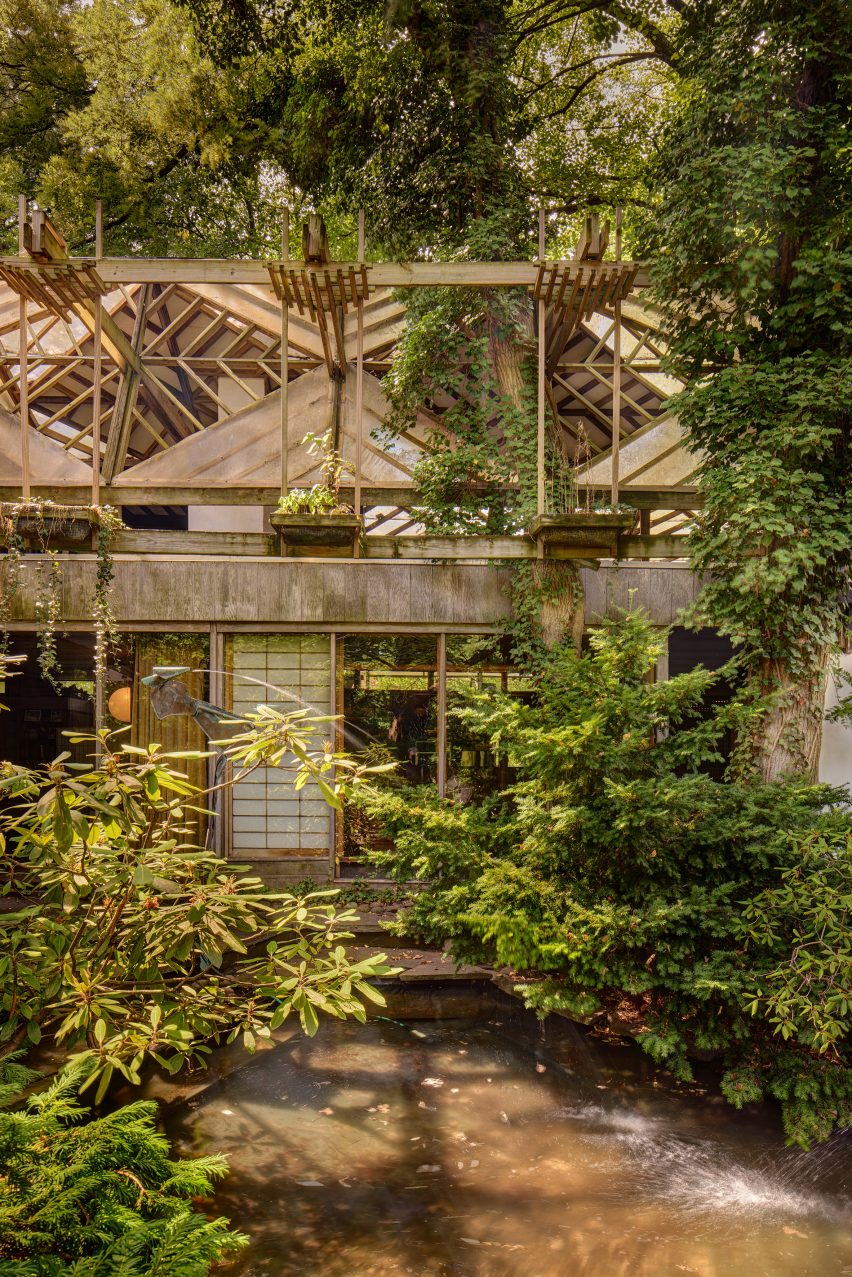
At the Rose House is on show at the Ridgewood home that the late American modernist landscape architect designed and hand-built for himself and his family in 1953 and lived in for almost 40 years.

At The Rose House exhibition
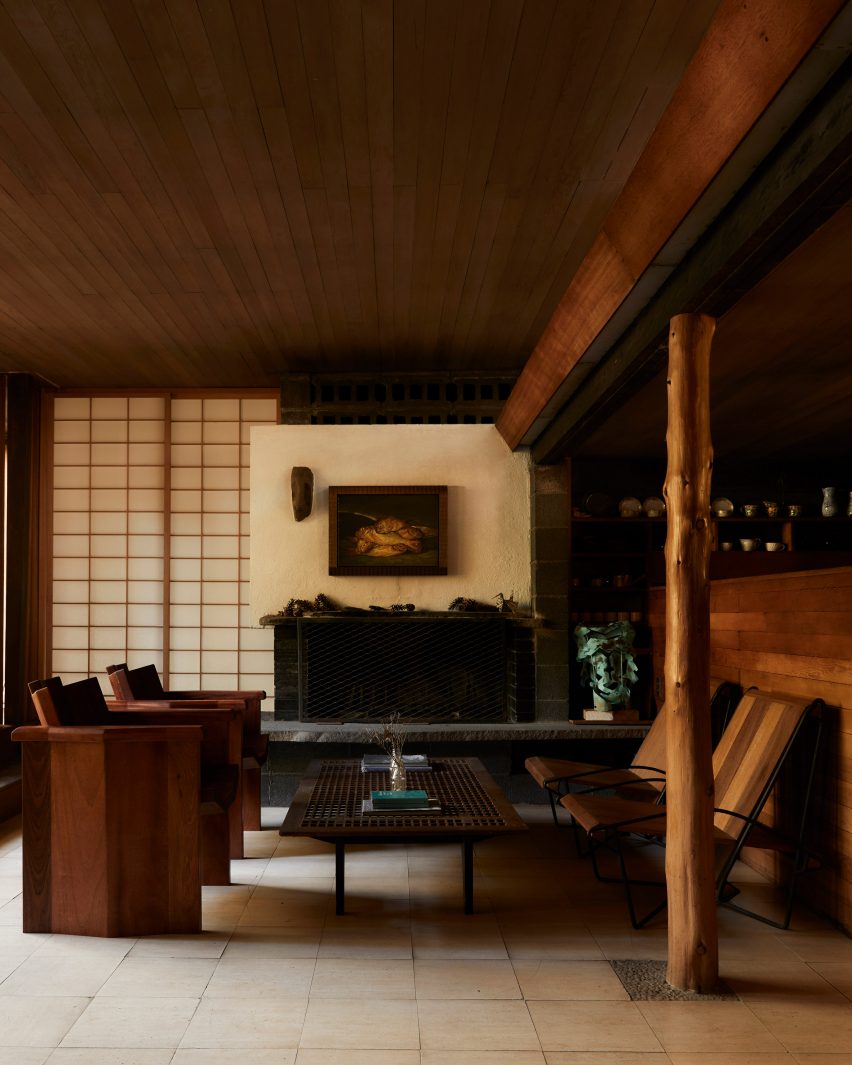
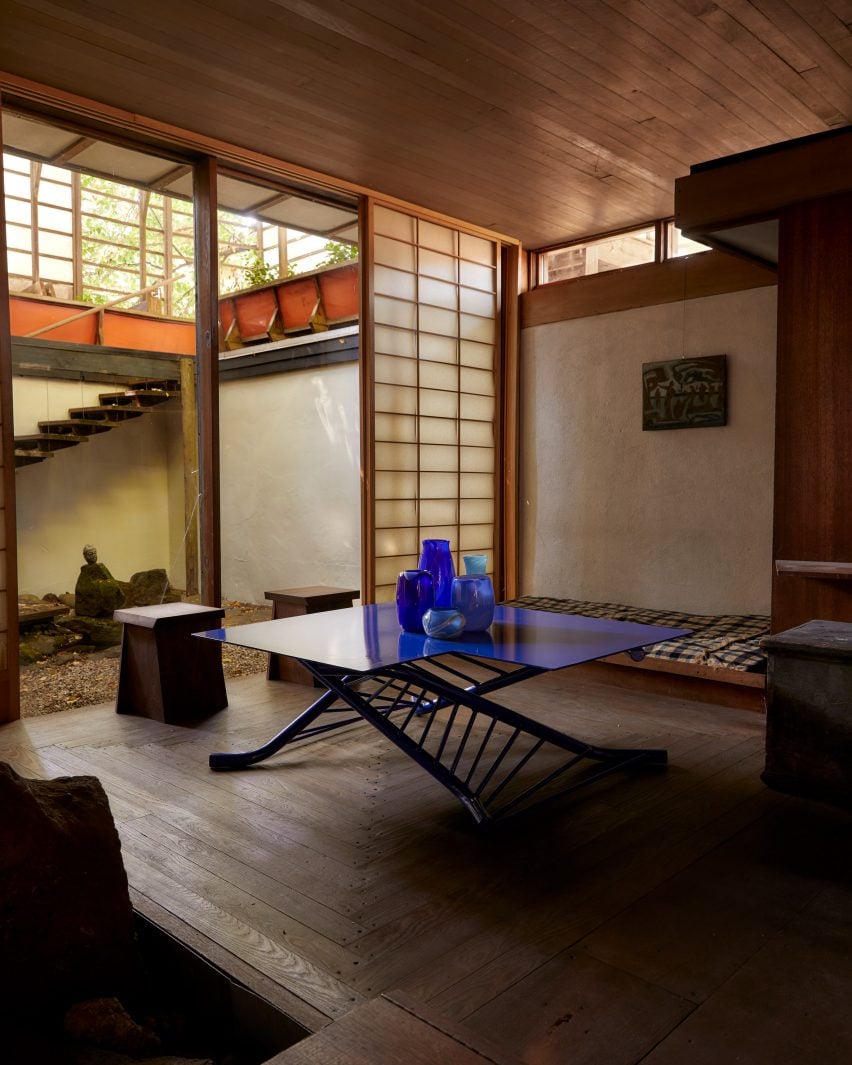
Pieces in the exhibition are displayed throughout the home as if they belong there

Organised by curatorial platform Object & Thing and furniture and interior design studio Green River Project LLC, the exhibition stemmed from Rose’s appreciation for craft and materials.

The show “emphasises the hand-made, beauty in nature and a sense of timelessness” according to the curators.

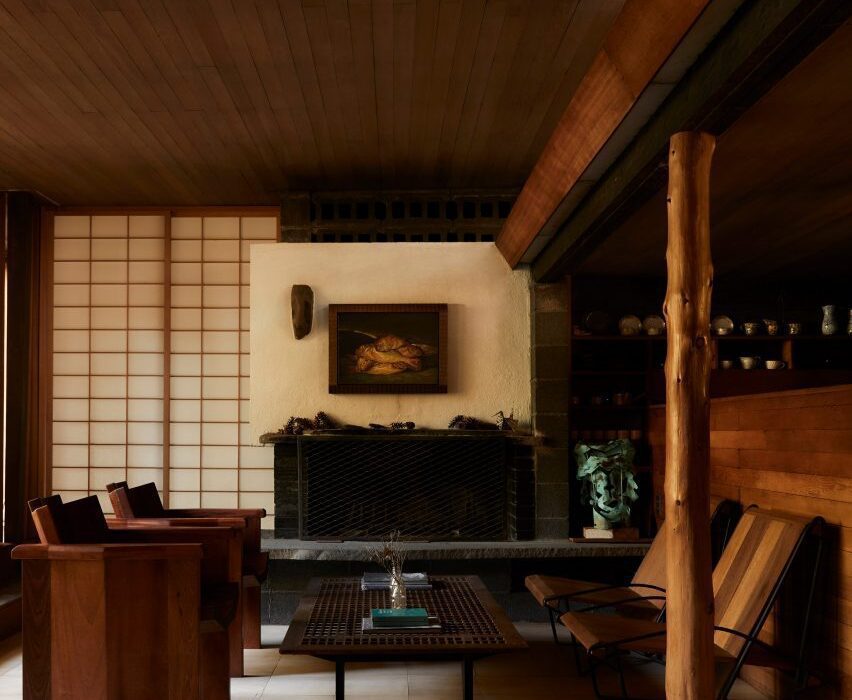
Living room of James Rose's Ridgewood home
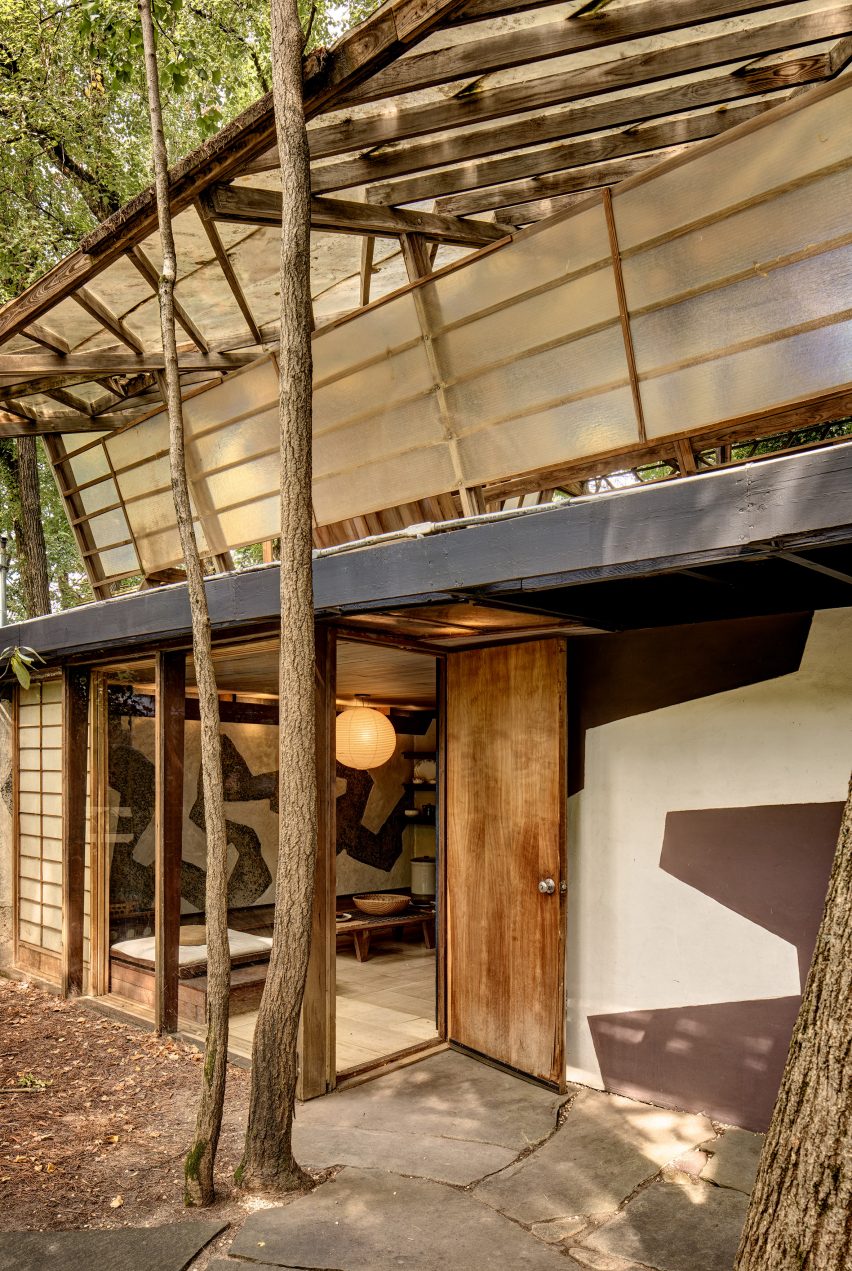
Rose self-designed and hand-built the house, which features several Japanese design elements

Green River Project LLC founders Aaron Aujla and Benjamin Bloomstein, who have admired the landscape architect for some time, have produced a series of new designs based on his work.

Created in collaboration with a group of designers, these pieces include a side chair by both Bloomstein Industrial and Luck Carpentry, rice paper lamps from Preziosi Lighting and carved grooming items on shelves in the bathroom by Teague’s Path.

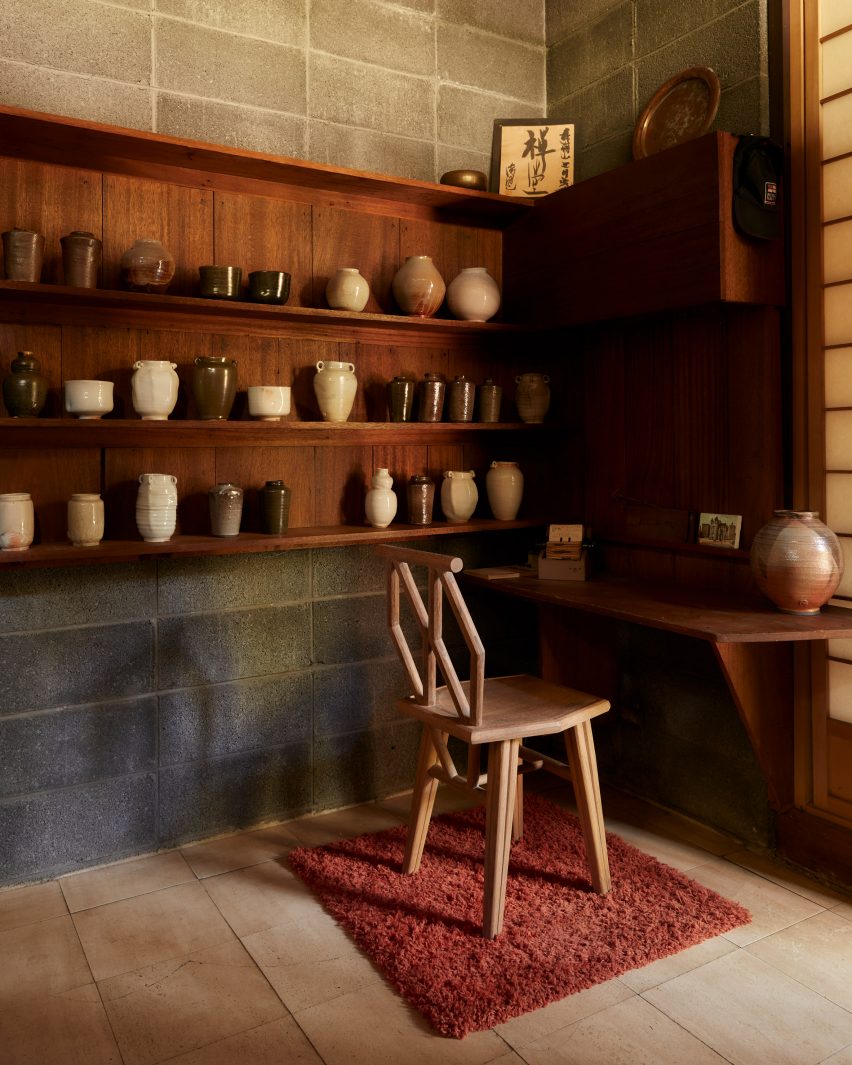
Ceramic pots displayed on wooden shelves
Artworks and designs were selected to reflect Rose’s appreciation for craft and materials

“The ease in which Rose expanded the home using ready-made materials was an early point of reference for our practice,” said Aujla.

“In particular, there is a kitchen with mahogany shelves and pegboard that we must have spent over 100 hours dissecting and referring back to over the last five years.”

Green River Project’s products are presented alongside the work of mid-century and contemporary designers, including Alvaro Barrington, Bode, Charles and Ray Eames, Louis Eisner, Hugh Hayden, Nancy Holt, Kiva Motnyk, Michele Oka Doner, Johnny Ortiz-Concha and Anne Truitt among others.

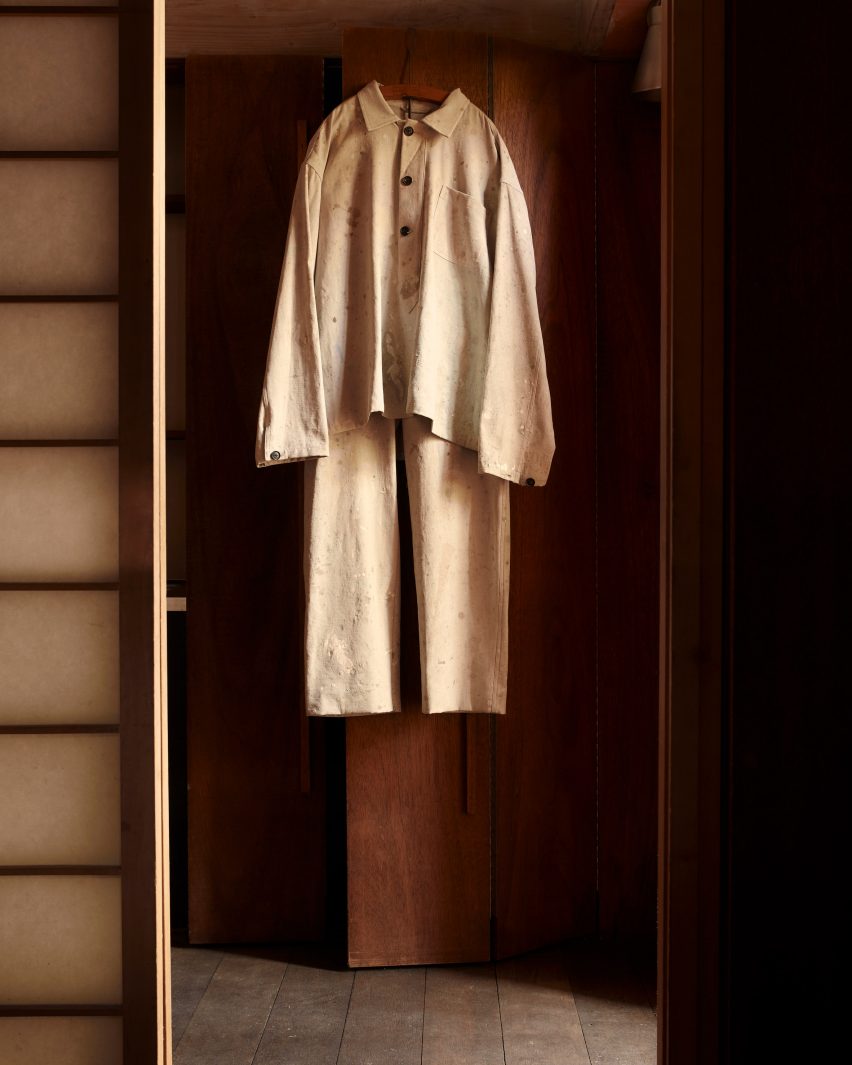
Clothing by Bose hung around the house
Clothing based on Rose’s personal style is hung in closets

The works are installed as if they belong in the rooms and garden, which – like many of Rose’s later projects – feature elements of Japanese design, including the exposed timber structure and shoji screens.

“[Rose] spent considerable amounts of time in Japan and became a Zen Buddhist,” said the curators. “This influence is evident in the Ridgewood house, especially on the upper floor, which contains a room for his daily mediation practice that The James Rose Center is currently restoring.”

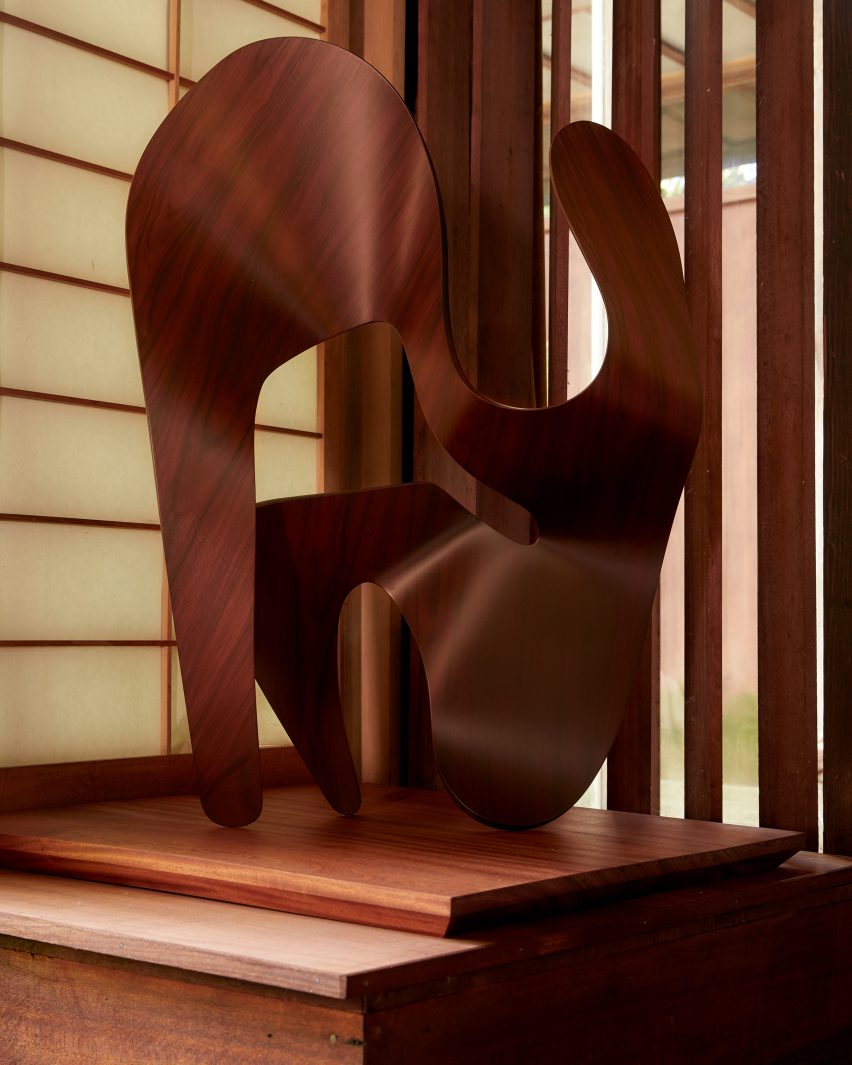
Eames Plywood Sculpture
An edition of the 1943 Plywood Sculpture by Charles and Ray Eames is being presented in the US for the first time. Photo by Michael Biondo

Pieces on display include the Eames’ seminal 1943 Plywood Sculpture – the first time that this edition, which was made and released by Eames Office, is being presented in the US.

Among the designs created for the showcase are leather Adirondack chairs by Hugh Hayden, wood-fired micaceous pots by Johnny Ortiz-Concha and naturally-dyed framed textile works by Kiva Motnyk.

A selection of clothing by New York brand Bode, based on Rose’s “eccentric” personal style, is hung in the closets throughout the house.

Landscape paintings, rice paper drawings, flower vases, terracotta sculptures, and a screening of Nancy Holt’s 1975 film Pine Barrens that “portrays the New Jersey wilderness” also feature.

Exterior of James Rose house
The house in Ridgewood, New Jersey, is preserved by The James Rose Center. Photo by Michael Biondo

Green River Project LLC is also producing new editions of one of Rose’s lanterns to coincide with this exhibition.

These will be sold to benefit The James Rose Center – a non-profit landscape research and study foundation, which is based at the house and has preserved Rose’s legacy since his death in 1991.

Exterior of James Rose house
The exhibition, curated by Object & Thing and Green River Project LLC, runs until 2 October 2022. Photo by Michael Biondo

“Rose was an impossible maverick, called by one author, ‘The James Dean of Landscape Architecture,’ but I think he would be very happy with the vision Green River Project LLC and Object & Thing have brought to his house,” said foundation director Dean Cardasis.

At the Rose House runs until 2 October 2022. This is the latest in a series of exhibitions organised by Object & Thing within the homes of notable 20th-century artists and architects, following presentations at the houses of Gerald Luss, Robert Dash and Eliot Noyes.

Other exhibitions that showcase the work of modernist designers include an exhibition of Le Corbusier’s tapestries in Manhattan.

 See our Dezeen Events Guide for information about other exhibitions, installations and talks.

Reference

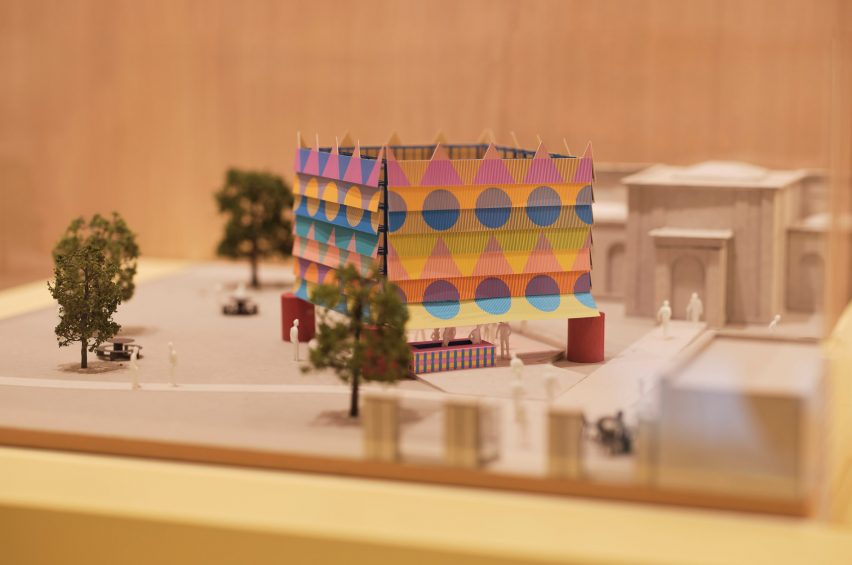
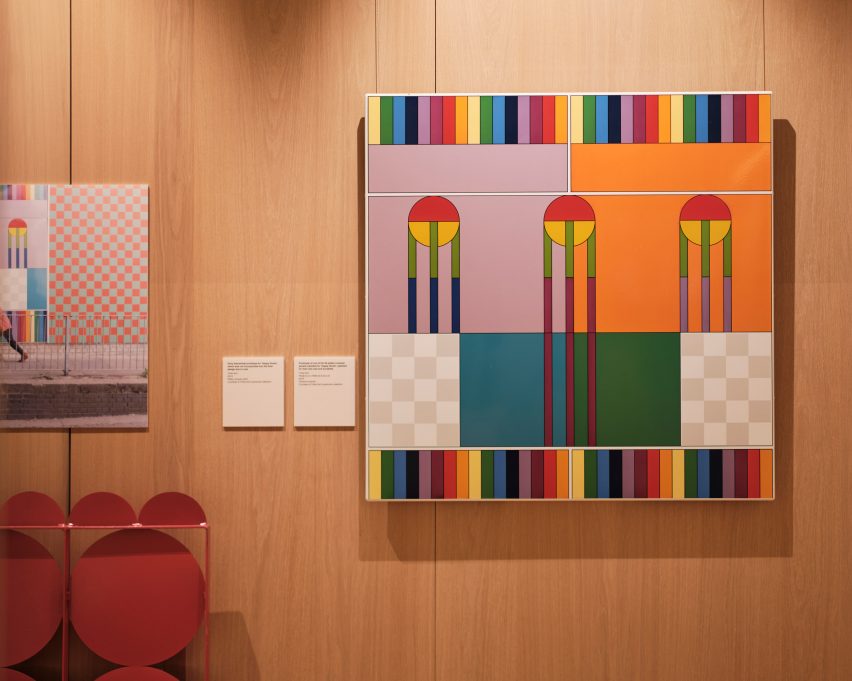
Model of one of Yinka Ilori's architectural designs
CategoriesInterior Design

Exhibition dedicated to the work of Yinka Ilori opens at Design Museum

Brightly coloured chairs and personal memorabilia feature in the Parables for Happiness exhibition showcasing the works of London-based designer Yinka Ilori at the Design Museum.

Opened during London Design Festival, the exhibition is the first major display of Ilori’s vast number of vibrant designs, including graphic murals, furniture and public installations.

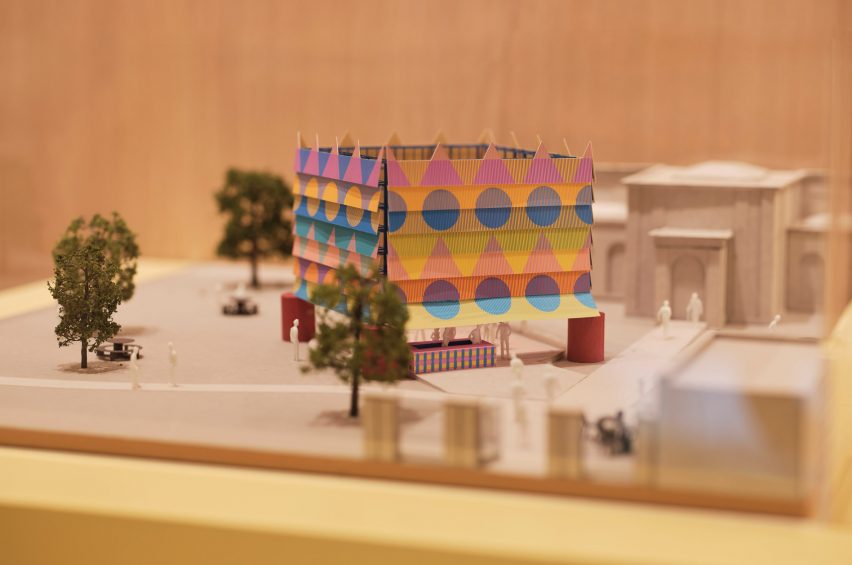
Model of one of Yinka Ilori's architectural designs
Parables of Happiness showcases a wide selection of Ilori’s designs

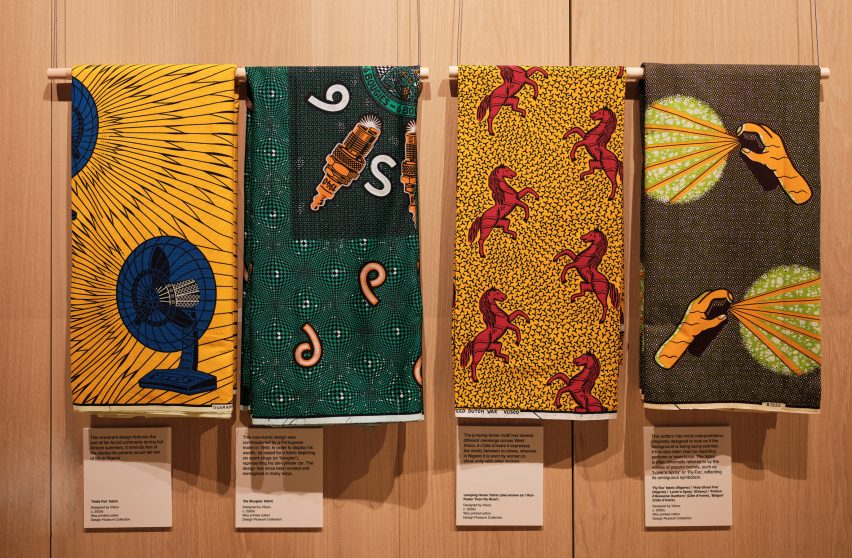
Ilori’s designs are exhibited alongside pieces that influenced his work and objects representing his Nigerian heritage, including Nigerian textiles adorned with colourful geometric patterns and a traditional Dùndún drum that visitors can play.

The show also includes models of some of the 80 sculptural chairs that Ilori has designed.

Yinka Ilori's colourful and graphic chair on display
Ilori started his career designing chairs

One of Ilori’s chair designs is presented in a line-up of iconic and recognisable chairs with the aim of giving context to his work. Included in the display is the RCP2 chair by Jane Atfield, who was Ilori’s tutor at university.

“One of the reasons I started designing was because of a brief given by Jane Atfield called Our Chair,” Ilori told Dezeen. “Purely because of her brief is why I started designing chairs when I finished uni.”

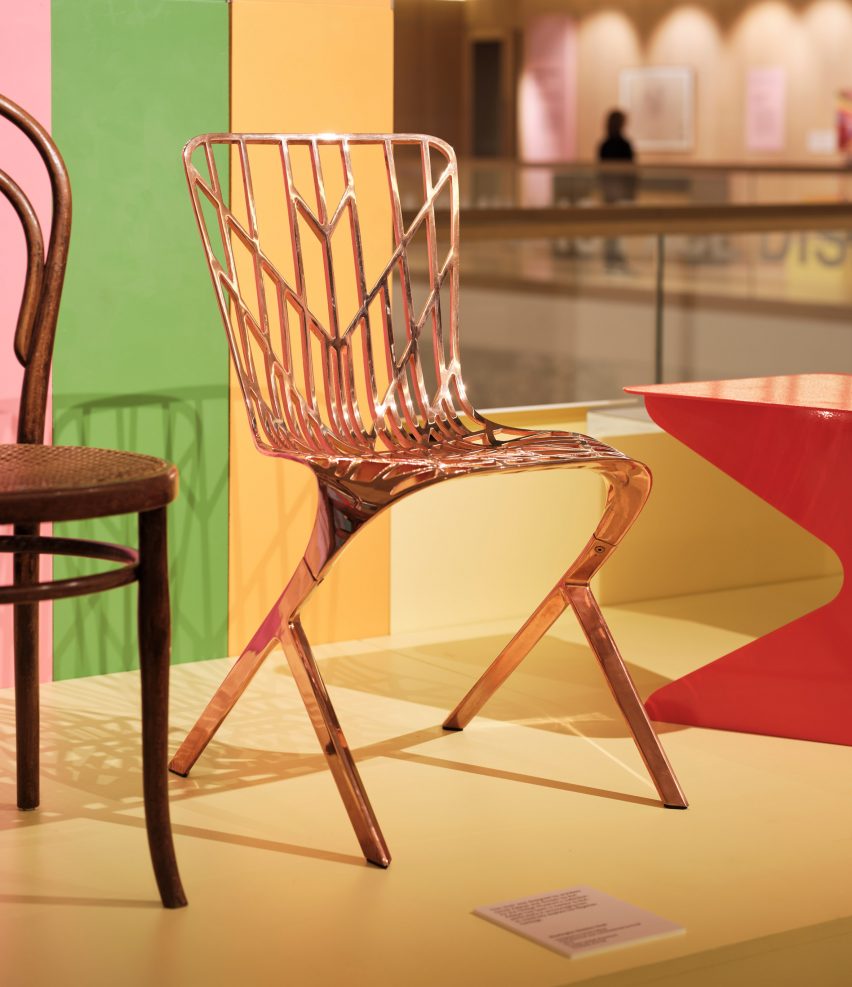
Washington Skeleton Side Chair designed by David Adjaye on display
A chair designed by David Adjaye is exhibited alongside Ilori’s work

Another chair on display is the Washington Skeleton Side Chair designed by British-Ghanian architect David Adjaye, who Ilori credits with having “opened doors for designers like me”.

“Over the years, my work has gained recognition for the strong use of colour, pattern and narrative that comes from my Nigerian heritage,” said Ilori. “However, it has often deviated from design trends and has been misunderstood”

“This display charts my inspirations and creative journey as I transitioned from furniture design to community-driven public installations,” he continued.

Nigerian textiles displayed at the Design Museum
His work is influenced by Nigerian textiles

Visitors to the exhibition can discover Ilori’s architectural projects through photographs, drawings and models including his Colour Palace pavilion, which was erected in Dulwich in 2019.

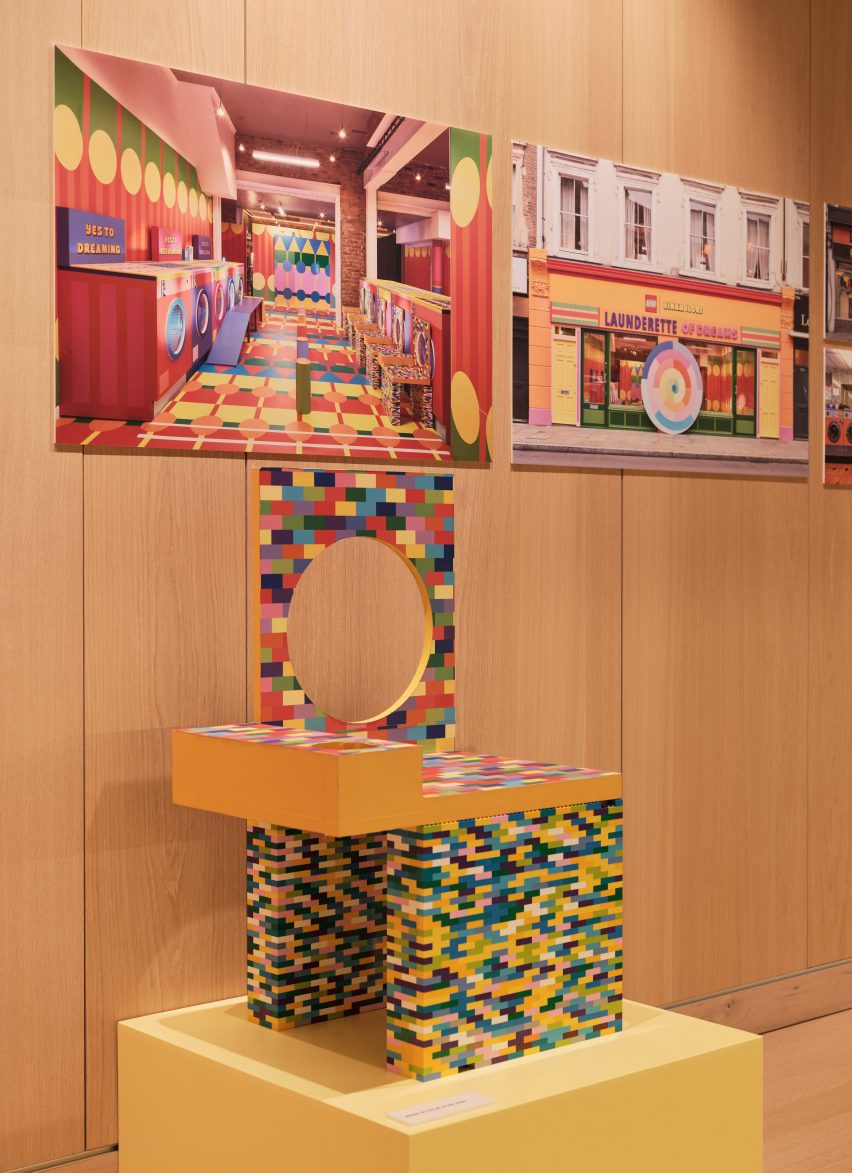
Details of Ilori’s Launderette of Dreams – an installation that involved reimagining a launderette in London as a children’s play zone for Lego – are displayed. A lego chair that formed part of the Launderette of Dreams installation is also on display at the show.

“A fast-rising star of contemporary design, Yinka Ilori’s unique aesthetic – drawing on Nigerian textiles with a nod to postmodernism – employs a mix of visual references that come together to inspire joy,” said the exhibition’s curator Priya Khanchandani.

“This display is a testament to how cultural fusions, frissons and juxtapositions can be rich fuel for creativity and for generating more inclusive architectures in the city.”

Details of the Parables of Happiness exhibition
Chairs and details of the designer’s public installations are included in the exhibition

As well as showcasing Ilori’s bright, playful designs and examples of his design influences, the exhibition features some of the designer’s personal items.

Visitors can see his name badge from working at Marks and Spencer and a pair of paint-splattered trousers that Ilori wore while painting a number of his graphic murals.

Details of the Parables of Happiness exhibition
Ilori is known for his use of colour and graphic representation

“I’m a huge believer in memory making and storytelling – how do we relive or revisit memories?” said Ilori.

In Parables of Happiness, Ilori hopes to “open up new conversations about design in the UK and internationally, to see how other people view design around the world”.

“I am truly humbled and honoured to have my work exhibited at such an early stage in my career and hope the display provides inspiration for the next generation who might feel they don’t fit into the status quo,” the designer continued.

Known for his colourful designs, Ilori has recently completed a pavilion in Berlin with a canopy made up of brightly coloured translucent disks and transformed his London studio and office with bold hues indicative of his signature art style.

The photography is by Felix Speller.

Parables for Happiness takes place from 15 September 2022 to 25 June 2023 at the Design Museum in London. See Dezeen Events Guide for an up-to-date list of architecture and design events taking place around the world.

Reference