
What Kéré Architecture’s Renderings Reveal About the Firm’s Design Process
CategoriesArchitecture

What Kéré Architecture’s Renderings Reveal About the Firm’s Design Process

The 10th Annual A+Awards is still accepting entries! New this season, firms can gain recognition for their entire portfolio of work thanks to the addition of the new Best Firm categories celebrating practices of all sizes, geographies and specializations. Start your entry today.

Images tell powerful stories of people and place. For Kéré Architecture, renderings provide a way to showcase design and relate to larger contexts. Founded by Francis Kéré in 2005, with a dual focus on design and social commitment, the studio’s scope encompasses building, design and knowledge sharing. Known for its use of structure and materials, the practice’s portfolio spans a wide spectrum of projects from civic infrastructure to temporary installations, from concept to execution and across diverse geographies.

Kéré’s architectural reputation is strongly tied to the work’s built realization, and rarely is the process of a project’s creation explored through working images and visualizations. The following article examines a range of Kéré Architecture’s work through rendering, and it does so across different approaches and scales. A common thread emerges that is grounded in the renowned Burkinabè architect’s pioneering approach to sustainable modes of construction and context. The result is a portfolio that centers process and vision as the heart of design.

Inspired by the particularities of each project’s locality and its social tapestry, Kéré and his team work on projects across multiple continents. At the intersection of utopia and pragmatism, the team creates contemporary architecture that feeds the imagination with an Afrofuturist vision. Informed by tradition, the practice explores new modes of construction for which the foundations have long been laid.

Innovative uses of local resources and participatory design methods allow them to work beyond the boundaries of most established design practices and shed dominant norms. Exploring the many crossroads of the architectural realm and other disciplines, from art to technology, they expand their design practice through a deeper understanding of the relationship between rendering, illustration and built work.

Interior of Thomas Sankara Memorial. Render by Kéré Architecture

Interiors: Thomas Sankara Memorial

The Memorial Thomas Sankara is a project to honor and commemorate the memory of the seminal 20th-century Burkinabè thinker, former president and change-maker Thomas Sankara. The design proposal for the memorial reflects the genesis of revolution. The aim is the integration of a structure into an existing landscape that places innovation at its fore. In this rendering, the studio visualizes the interior of the memorial tower, an 285 feet (87 meters) high urban landmark for the Burkinabè capital, a design that stands on the site of the 1987 assassination of Sankara and his comrades.

Visitors are invited to climb the structure using a helicoidal ramp. The path is purposefully long and demanding, emulating the call not to fear the challenging road to change. Tackling the winding route is rewarded with stunning views across the city from a unique vantage point, which also features a restaurant shaped as the contour of Burkina Faso. A suspended funicular cabin provides access to the summit for older people and other abled. This rendering view is used to emphasize materials, light and circulation — all central elements of the design.
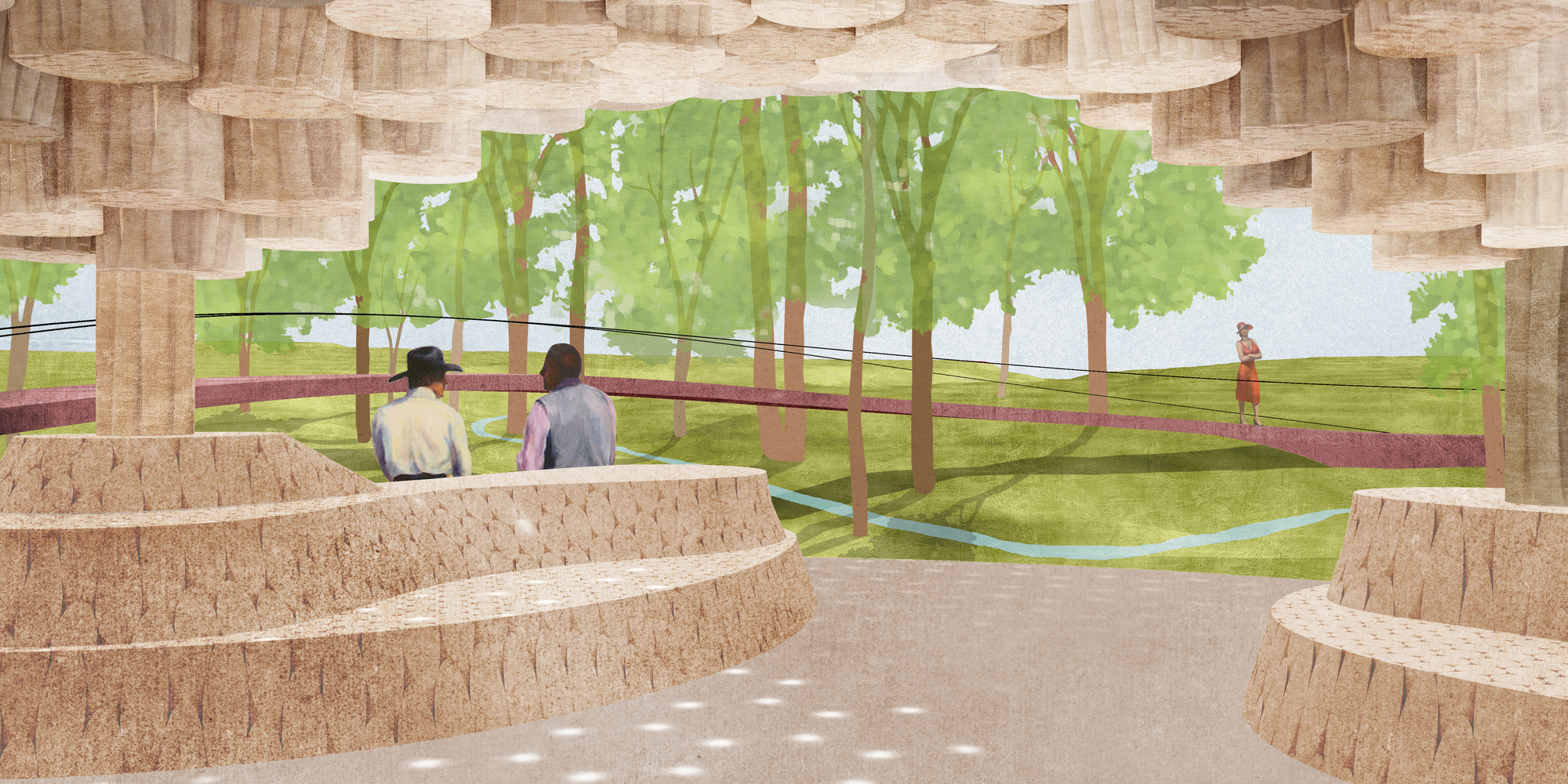
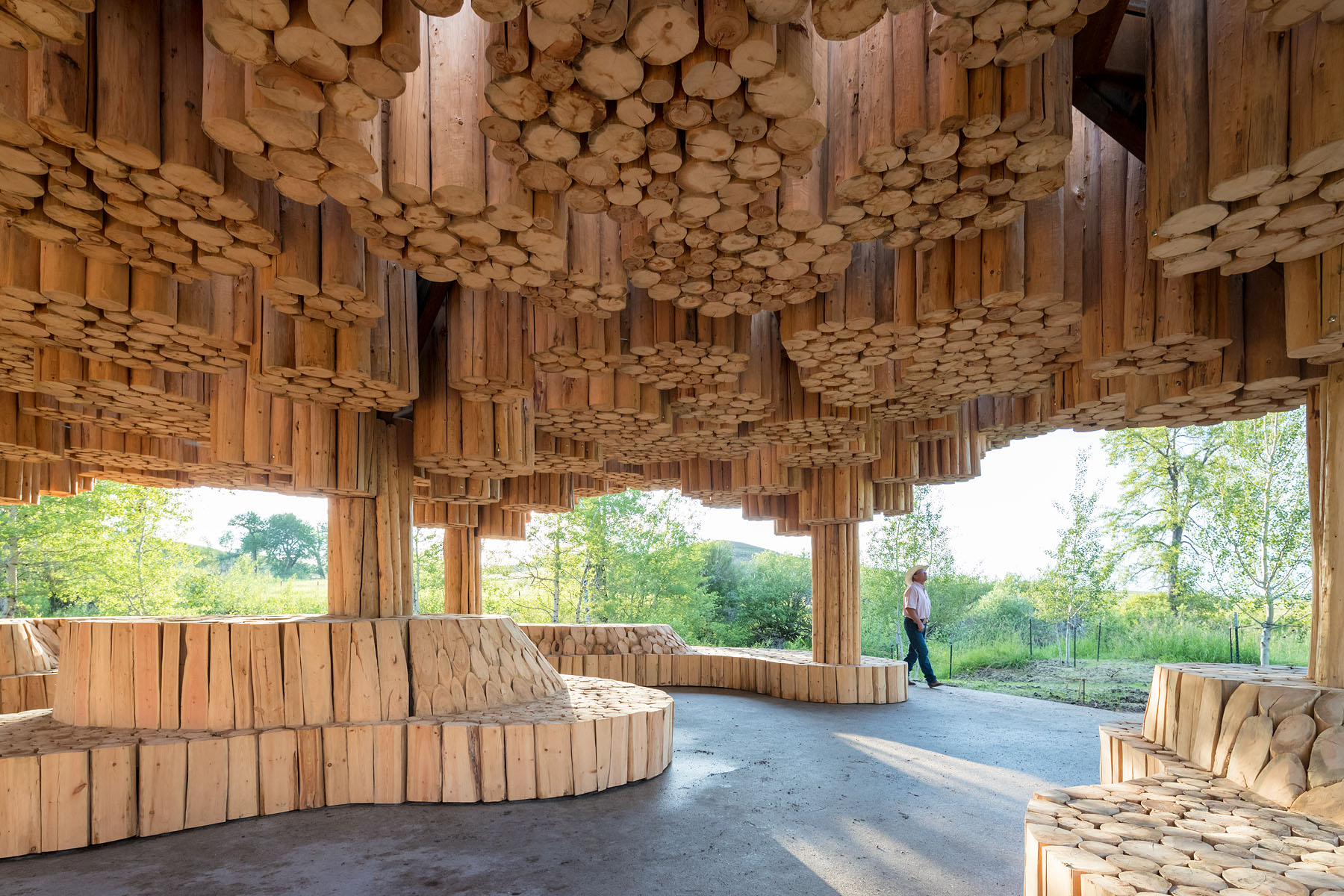
Xylem, Render by Kéré Architecture, photograph by Iwan Baan.

Early Concepts & Materials: Xylem

Kéré Architecture designed Xylem, the gathering pavilion for the Tippet Rise Art Centre, as a quiet, protective shelter. Named to evoke the vital internal layers of a tree’s living structure, Xylem is a place where visitors of this vast outdoor art space can gather to converse or sit and contemplate in solitude. Early renderings for the project show a much more playful and artistic interpretation of the finished design. Favoring illustration over realism, the renderings evoke layering that is much more conceptual than later renderings.

The logs of Xylem’s canopy are grouped in circular bundles within a modular hexagonal structure in weathering steel, supported by seven steel columns. The upper surface of the canopy is carved sinuously to blend into the surrounding hills. Simultaneously massive yet light, the roof is inspired by the tuguna, the sacred gathering space of many small Burkinabè communities. These low-level wood and straw shelters offer protection from the sun while allowing for ventilation.

Inside the pavilion, sunlight filters through the vertical logs, creating a soft play of light and shadow on the curvilinear seating and polished concrete circular platform below. The spatial complexity of the carved wooden seating elements encourages visitors to explore different views of the surrounding landscape.
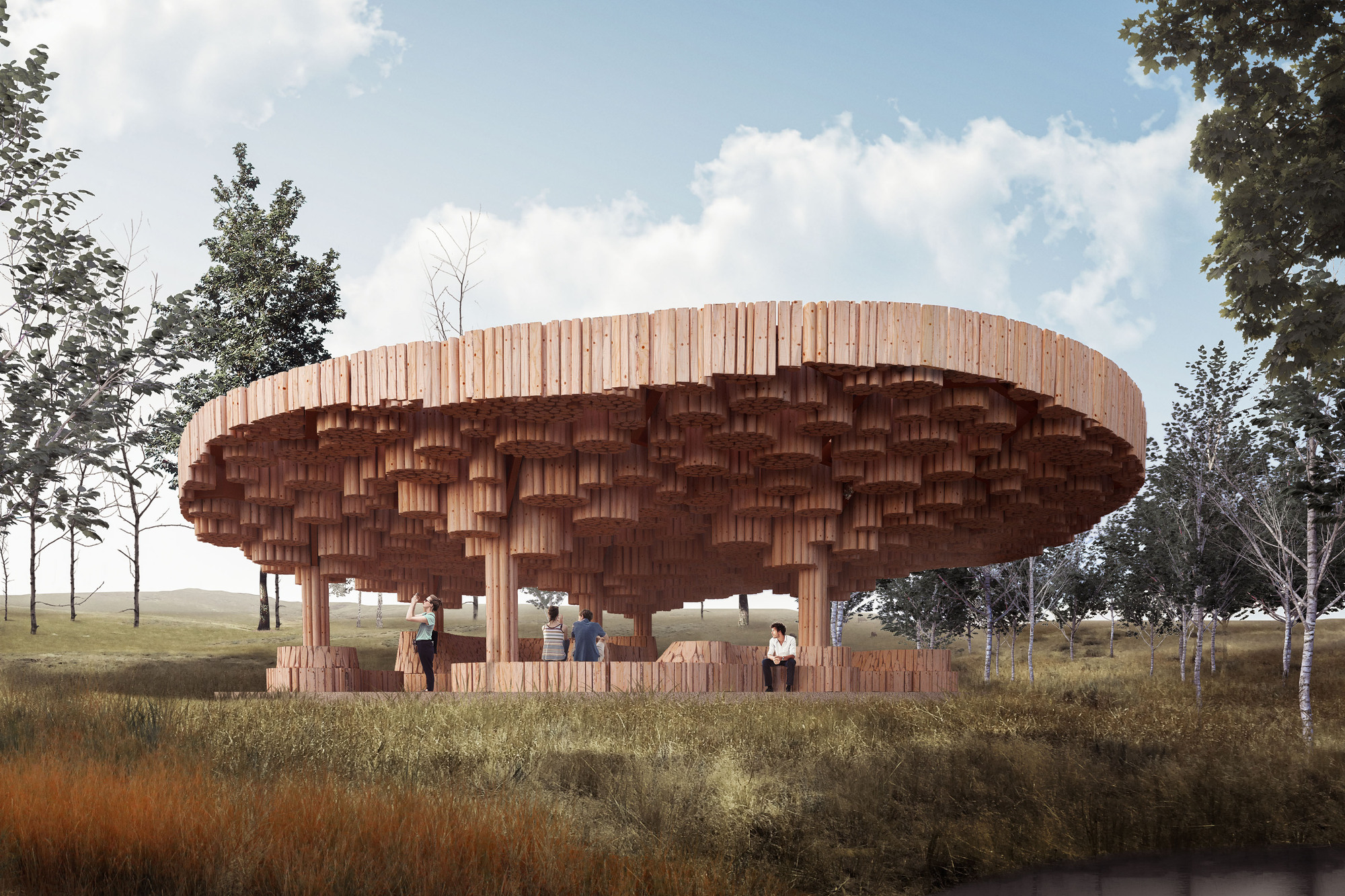
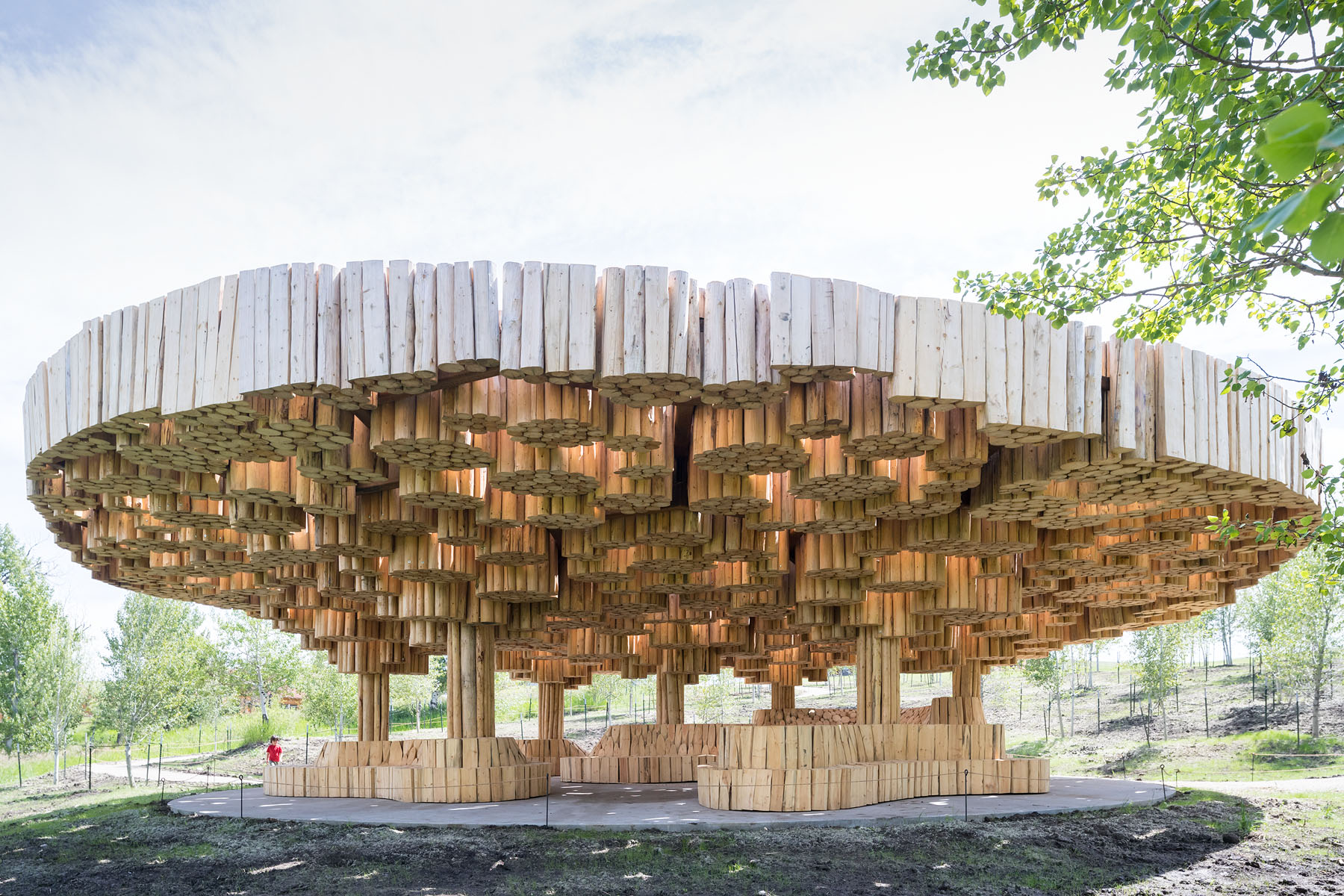
Xylem, Render by Kéré Architecture, photograph by Iwan Baan.

Design Development & Scale: Xylem

Later in the design process you can see how Kéré Architecture’s renderings evolve to a more realistic approach. This brings in scale, sky and photo-realism as an entirely different approach to illustration. Located in a slightly sunken landform between the main facilities of the art center and the start of the hiking tracks, the pavilion nestles in a clearing surrounded by aspen trees, facing a small creek. Entirely carved in wooden logs, the pavilion invites visitors into the heart of the trees. The sustainable pinewood used for the entire pavilion, locally sourced from a natural pruning process that saves forests from parasitic bugs, is used in its raw state.

For Kéré Architecture, the definition of local resources has many layers, all of which are tightly interwoven. The studio believes that to build in a particular location means to engage actively with all aspects of the building practices of that place. Perhaps the most significant local resource is the existing built heritage, which teaches us how to adapt to our given context. In the work of Xylem and the render process, you can see how the studio strongly believes that a comprehensive understanding of local resources grounds each of their projects in its specific site and context.

Waterfront of the Niamey Nyala Masterplan. Render by Kéré Architecture.

Masterplans: Niamey Nyala Masterplan

Not only does Kéré Architecture work at the scale of architecture and pavilions, but also masterplans. The Niamey Nyala Masterplan puts forward a new vision, based on the premise of transforming the city by harnessing the hugely untapped potential of its riverbanks. The plan intends to create a network of public spaces along the Gounti Yéna (a tributary of the Niger River flowing through the city from south to north) and the Yantala Corniche on the left of the river, promoting Niamey’s biodiversity. The studio’s rendering for the masterplan combines an aerial view of the river and city superimposed with textures, architecture and infrastructure for the new project vision.

Along the Yantala Corniche, the existing tree nurseries and market gardens are reorganized to integrate recreational areas. In turn, the illustration shows how housing is planned along the riverside to slow the city’s expansion into the desert, as well as water transport to improve the connection between various points along the banks. The promenade planned along the Gounti Yéna waterway is combined with a series of waste stabilization ponds that filter the water through plants and sand. At the heart of the masterplan, a pedestrian bridge connects the two main promenades and spans the ring road, offering Niamey’s citizens a new vantage point over their city and its river.

Façade of the TUM Tower. Render by Kéré Architecture.

Large-Scale Landmarks: TUM Tower

At the start of 2019, Kéré Architecture was commissioned to design a multi-use civic centre at the heart of the Technical University of Munich’s Garching research campus. Complementing the science facilities, this new central hub aims to promote cross-pollination between the public, faculty, alumni, students and researchers of various disciplines. The rendering especially showcases how each terrace is brought to life by the green façade, which serves as the building’s natural climatization system.

The design explores the organic and flexible possibilities of geometric forms, starting from the simple square. The TUM Tower includes a 360° view of the campus, made possible by the 22.5° rotation of a squared plan around its core axis. Acting as a landmark visible from afar, the TUM Tower brings the form of the campus’s functional architecture to new light. It playfully evokes both the essence and shape of the Bavarian maypole or Maibaum tradition – an annual celebration of communal gathering around a soaring tree-like structure.
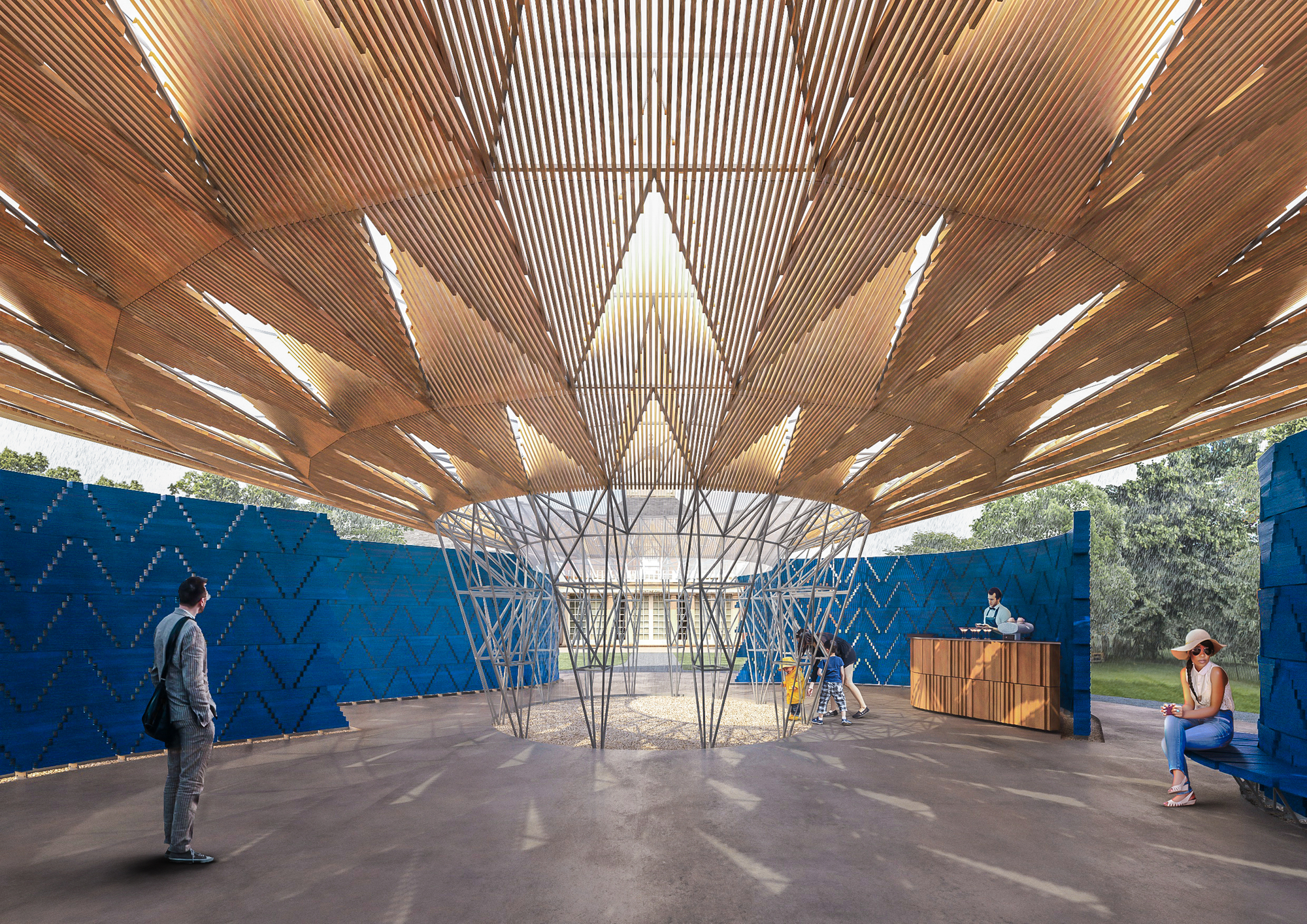
Interior of the Serpentine Pavilion. Render by Kéré Architecture, photo by Iwan Baan.

Pavilions & Light: Serpentine Pavilion

Since 2000, the Serpentine Galleries annually commission an international architecture practice to design the Serpentine Pavilion in Kensington Gardens, London. In 2017, they chose Francis Kéré. Taking inspiration from the great tree in his hometown of Gando, under which members of the community meet to reflect on the day, Kéré’s design is based on creating this sense of community while connecting people with nature. A great overhanging roof canopy made of steel and a transparent skin covers the entire footprint of Kéré’s Serpentine Pavilion, allowing sunlight to enter the space while also protecting it from the rain.

Not only does this rendering showcase the materials and vision for natural light, but it also points to a larger approach to pavilion design. The project is defined by wooden shading elements that line the underside of the roof, creating a dynamic shadow effect that changes with the movement of the sun and clouds. The wall system is made of prefabricated wooden blocks assembled into triangular modules with slight apertures, giving a lightness and transparency to the building enclosure. The curved walls are split into four fragments, allowing four unique access points to Kéré’s Serpentine Pavilion. Completely detached from the roof canopy, these elements allow both the air and visitors to freely circulate.

Façade of the Benin National Assembly. Render by Kéré Architecture.

Architecture & Facades: Benin National Assembly

Having outgrown its current building, which dates back to the colonial era of its past, the parliament of the Republic of Benin has entrusted Kéré Architecture to design a new national assembly that will embody the values of democracy and the cultural identity of its citizens. The project takes inspiration from the palaver tree, the age-old West African tradition of meeting under a tree to make consensual decisions in the interest of a community. Here, an approach to rendering not only accentuates the conceptual idea and brings it to life, but also tells a story of structure and the building façade.

The assembly hall is defined by the dynamic reach of the structure. The crown is comprised of offices and auxiliary functions, set back from the deep façade, which filters the sunlight. The trunk is hollow, creating a central courtyard that allows circulation spaces to be naturally ventilated and indirect light to penetrate the plan. A spiral staircase in its center connects the assembly hall on the ground floor to the offices above. In the southeast corner of the site, a public square marks the civic façade of the building, across from the former national assembly where Benin’s independence was historically declared.

The 10th Annual A+Awards is still accepting entries! New this season, firms can gain recognition for their entire portfolio of work thanks to the addition of the new Best Firm categories celebrating practices of all sizes, geographies and specializations. Start your entry today.
Reference

How Universal Design Can Drive Inclusivity
CategoriesArchitecture

How Universal Design Can Drive Inclusivity

Celebrate a decade of inspirational design with us! The 10th Annual A+Awards is officially underway, and the Extended Entry Deadline is March 4, 2022Click here to start your entry today.
Despite all the talks around inclusivity and diversity in all aspects of life, the idea of universal design is still not one that is widespread. The term, first coined by American architect Ronald Mace, and then later popularized by architect Selwyn Goldsmith, explores a branch of design that caters to everyone regardless of their age and abilities. This implies going beyond wheelchair-accessible spaces and addressing the vast spectrum of disabilities that can exist.

The limitations of designed environments first became a topic of discussion after the second World War when we saw a large number of injured veterans. While the advancement in medicine made it possible for them to live longer lives, there wasn’t enough infrastructure that was entirely accessible to them. Veterans in the United States demanded equal rights for themselves, leading to the establishment of the Americans with Disabilities Act in 1990.

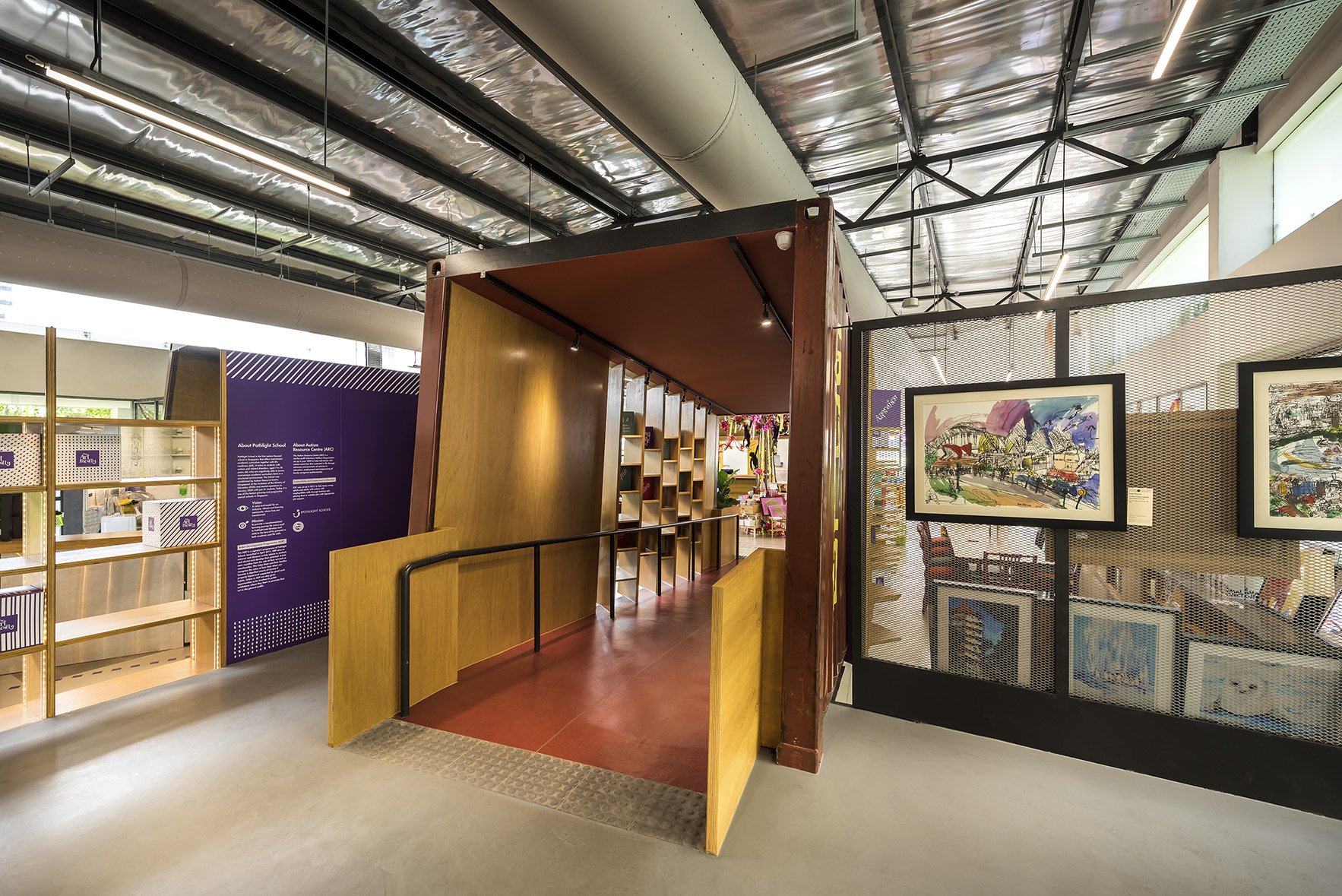
Enabling Village by WOHA in Singapore | Photo by Edward Hendricks

But having equal rights was not enough. When it came to spaces and environments, Mace was instrumental in creating the seven principles of Universal Design in 1997. These are equitable use, flexibility in use, simple and innovative use, perceptible information, tolerance for error, low physical effort and size and space for approach. They are meant to serve as guidelines for designers to create more inclusive and accessible environments.

Equitable use implies the provision of the same degree of access, security and safety for all users. The principles also point to flexibility by accommodating a wide range of preferences such as left and right-handed access, provision for different paces of movement and so on. They also state that the design should be intuitive in a way that individuals with different literacy and language skills should be able to navigate the space without any difficulties. The information provided should also be presented in graphic, audible and tactile forms. Each space must have warnings of hazards and errors and preferably have these high-risk elements isolated. Transparency in buildings, recurring seating spaces, anti-skid surfaces, tactile floor guides and handrails with easy grips are just a few other examples of elements that can be included.

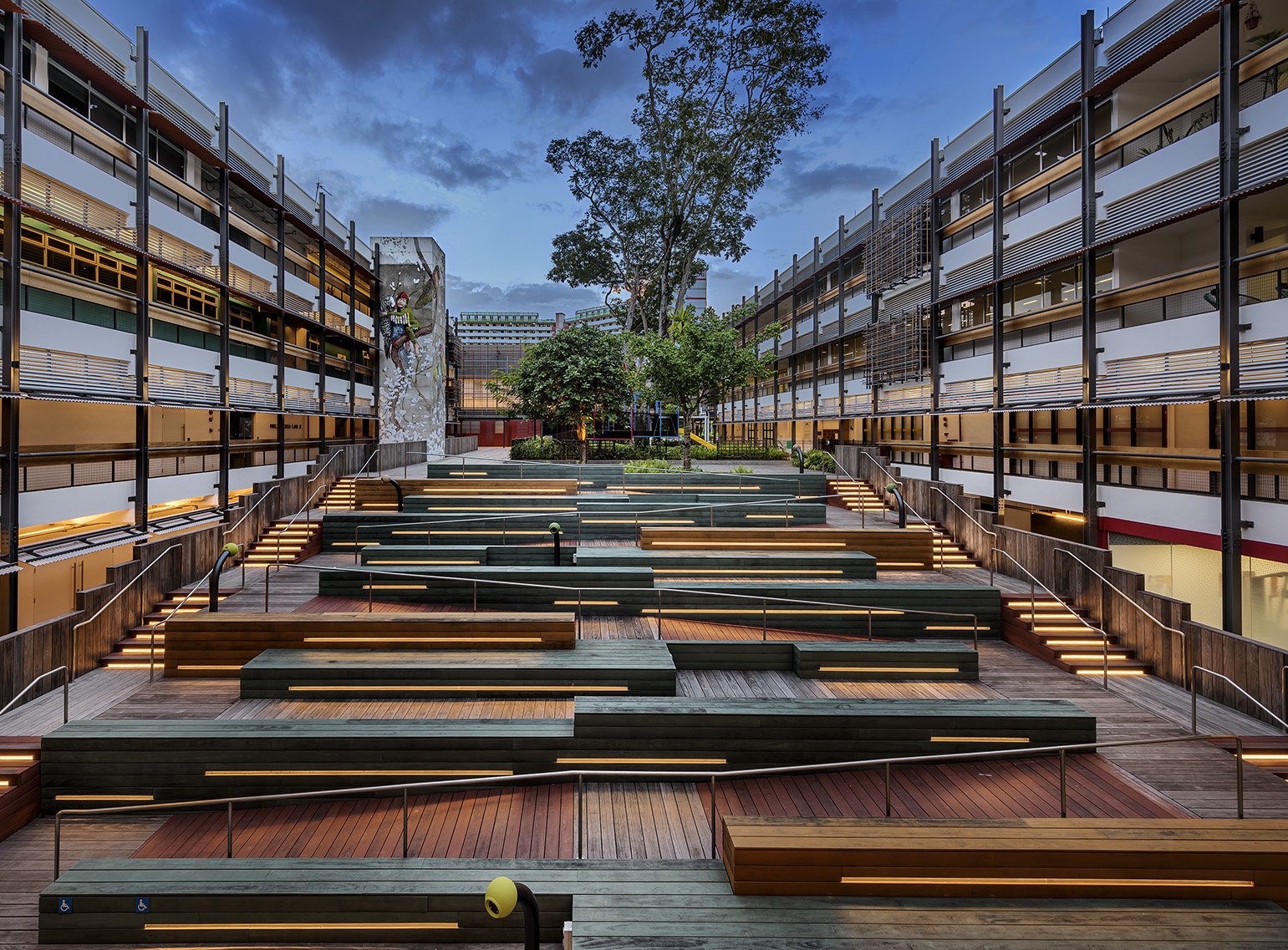
Enabling Village by WOHA in Singapore | Photo by Edward Hendricks

According to Indian architect and Universal Design advocate Kavita Murugkar, Universal Design is an almost fundamental value given that it ties in with accessibility and, in turn, an individual’s right to freedom. She said, “Everyone is talking about equality and extending equal rights and opportunities for all individuals, and creating equal possibilities of participation in the society. This is possible only through equal means of access.”

While we have come a long way in our understanding of what design needs to do, there is still a slightly limited perspective of disability while designing. The needs of someone who is an amputee might be very different from someone who is visually impaired. The latter might need many more tactile and audible cues to guide them in spaces whereas an amputee could require some more room to accommodate any aids they might have.

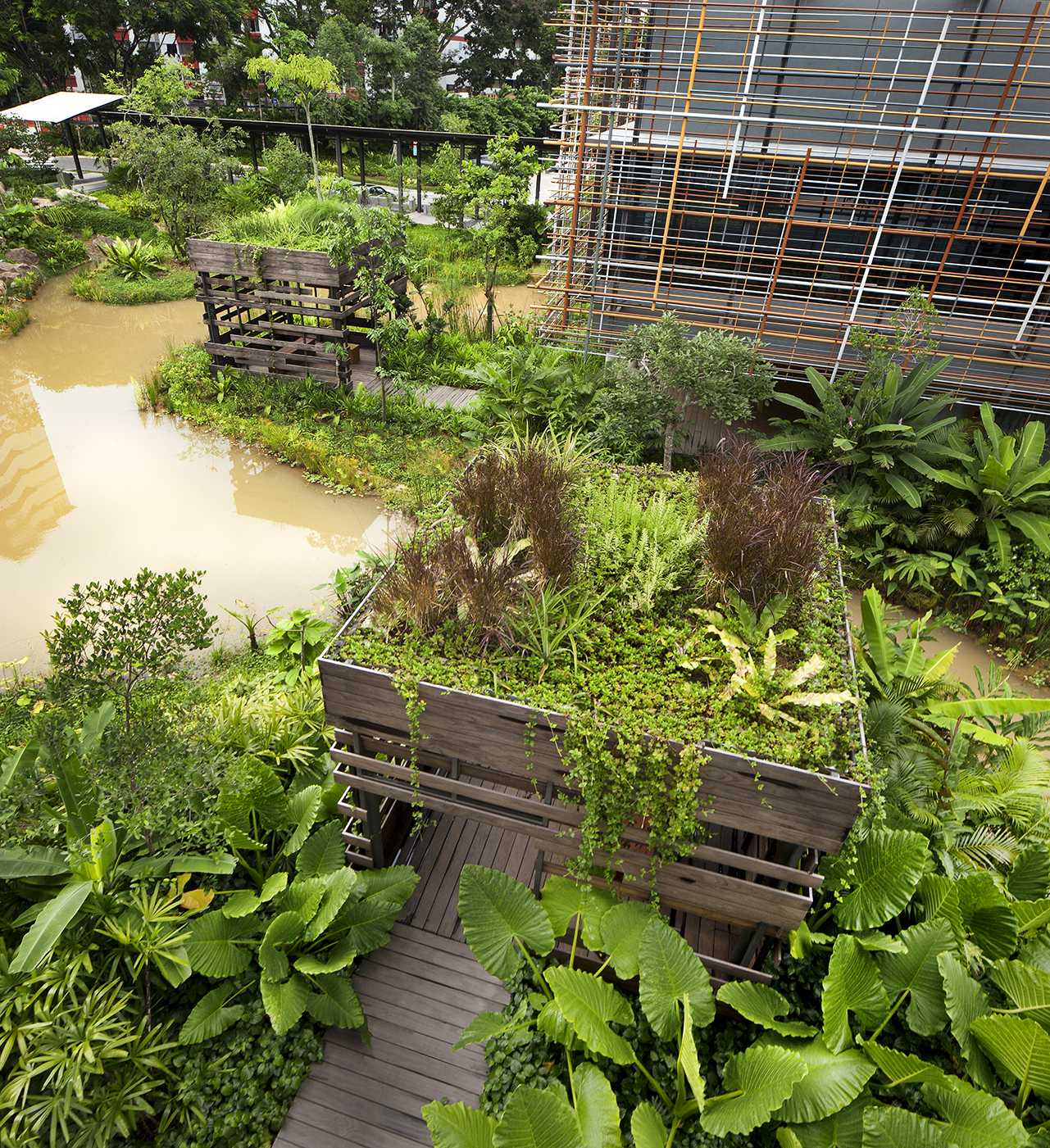
Enabling Village by WOHA in Singapore | Photo by Edward Hendricks

Furthermore, someone with missing arms could require alternative ways to use buttons or even open doors. An individual with Parkinson’s might need spaces that have finishes and interventions that are favorable for those who struggle with balance. And that is just on the physical level. People with autism might require quiet rooms and those with dementia could benefit from surroundings that have fewer identical elements.

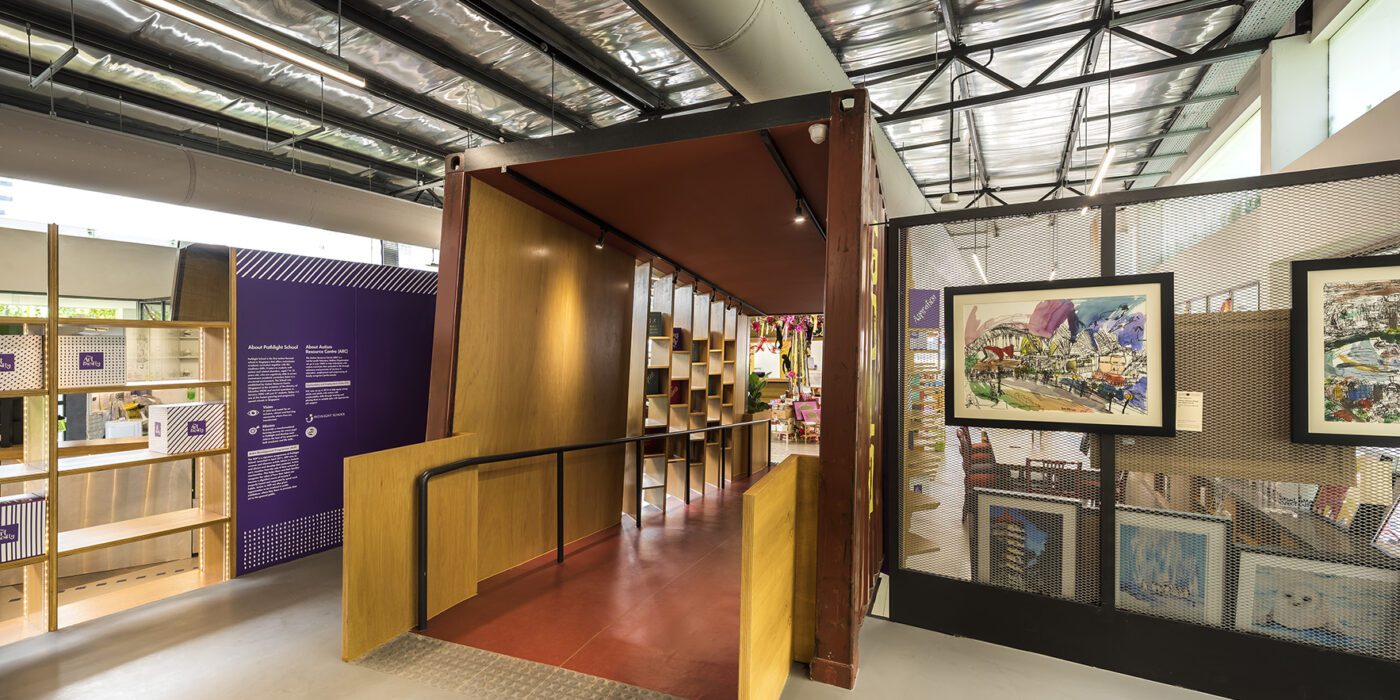
A project that has tried to address this is the Enabling Village in Singapore. Designed by WOHA, the community space offers retail, recreational and training services for differently abled individuals. All public spaces and restrooms in the building are wheelchair accessible. The event spaces have induction loops that can transmit audio to people using hearing aids with T-coils and they also provide braille maps of the space if needed. Even elements like ATM machines in the center have braille labels and earphone ports. The project includes a center for innovators to gather and test ideas for assistive technology. It is equipped with a room where these inventors can also test their products in fully soundproof and lightproof spaces. Furthermore, they are also creating job opportunities for the differently abled members of the community.

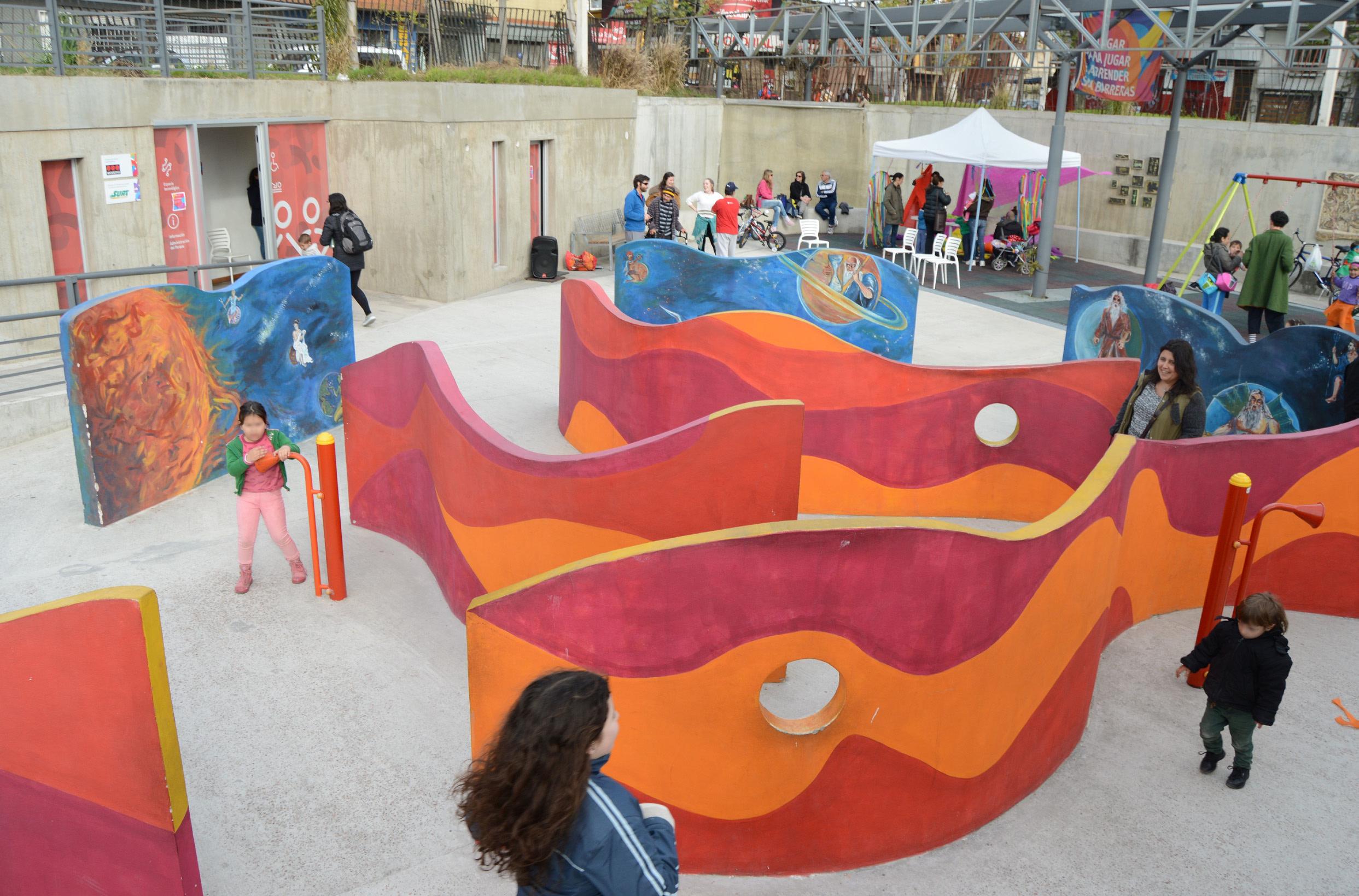
Friendship Park (Parque de la amistad) by Marcelo Roux, Gaston Cuna, Patricia Roland and Federico Lezama, Montevideo, Uruguay | Photos via issuu.com

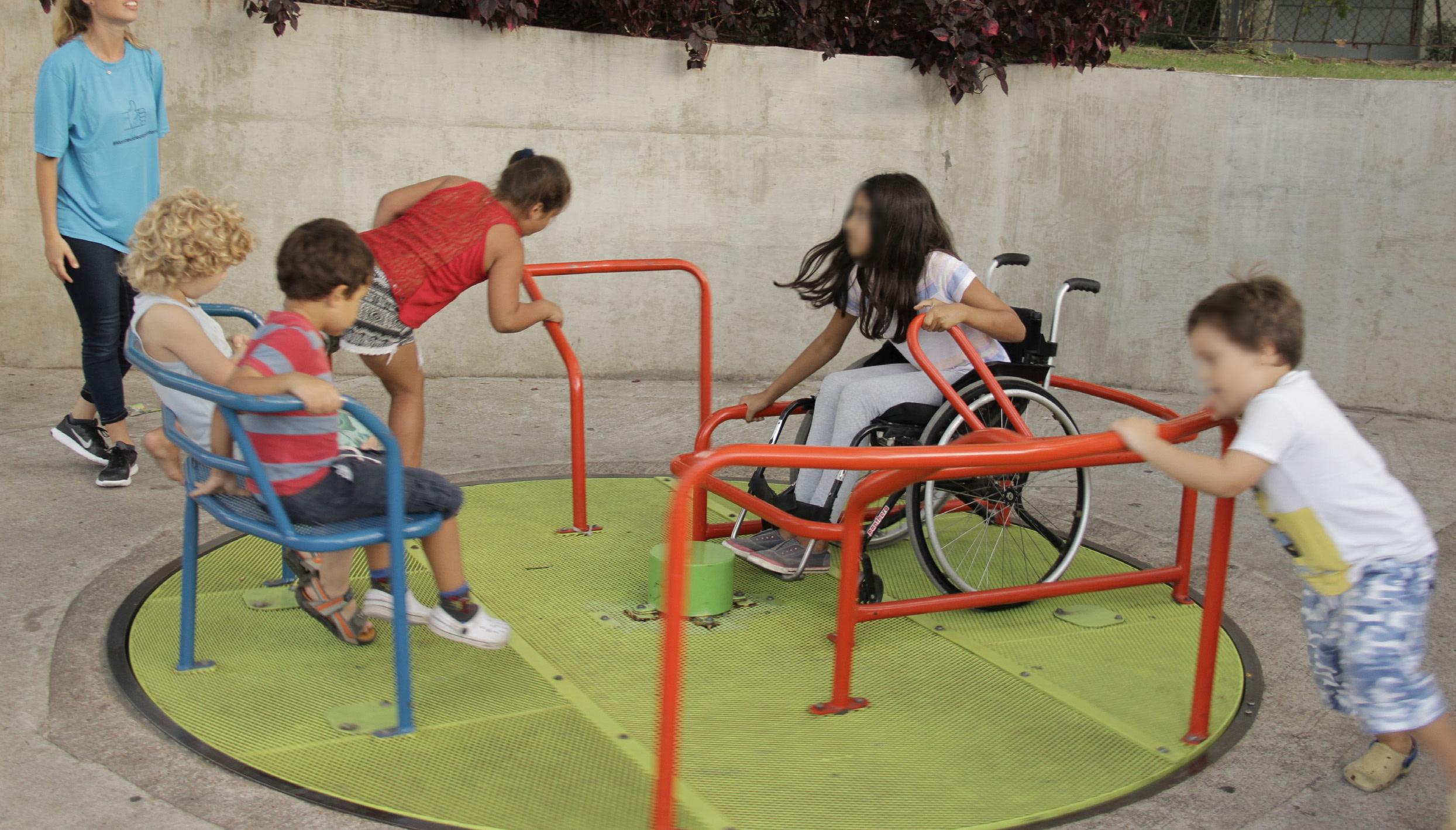
Another example of inclusive design is the Friendship Park in Montevideo, Uruguay that is designed by Marcelo Roux, Gaston Cuna, Patricia Roland and Federico Lezama. It is made in a way that children of all ages can enjoy the space regardless of their physical or cognitive abilities. Apart from the easily accessible spatial arrangement, materials like concrete, metal and rubber are used in abundance to provide tactile and aromatic cues to the users. The team has tried to incorporate more curved surfaces to avoid sharp edges; they have also used a variety of colors throughout to make it appear more fun and the spaces easy to recognize and remember.

Murugkar said the awareness about Universal Design is still not as much as it should be, especially considering its importance. She introduced it as an elective in Dr. B. N. College of Architecture in Pune, where she is an Associate Professor. But she believes that we need to get to a point where the subject is integrated into the entire curriculum and not just taught as a specialization. “Universal Design is a utopian idea. You can definitely not have a design that addresses the needs of every single individual on this earth,” she said. “It just aims to make the spectrum of usability of a particular service or product or an environment broader and broader.”

Inclusive design is more of a way of approach than a design methodology that must be implemented right from the conceptual stage and carried through to the smallest element in the final product. While this approach may give rise to innovation, the question remains: is actually possible to cater to every individual and make this philosophy a reality?

Celebrate a decade of inspirational design with us! The 10th Annual A+Awards is officially underway, and the Extended Entry Deadline is March 4, 2022Click here to start your entry today.
Reference

Birmingham City University
CategoriesInterior Design

Birmingham City University spotlights 17 architecture and design projects

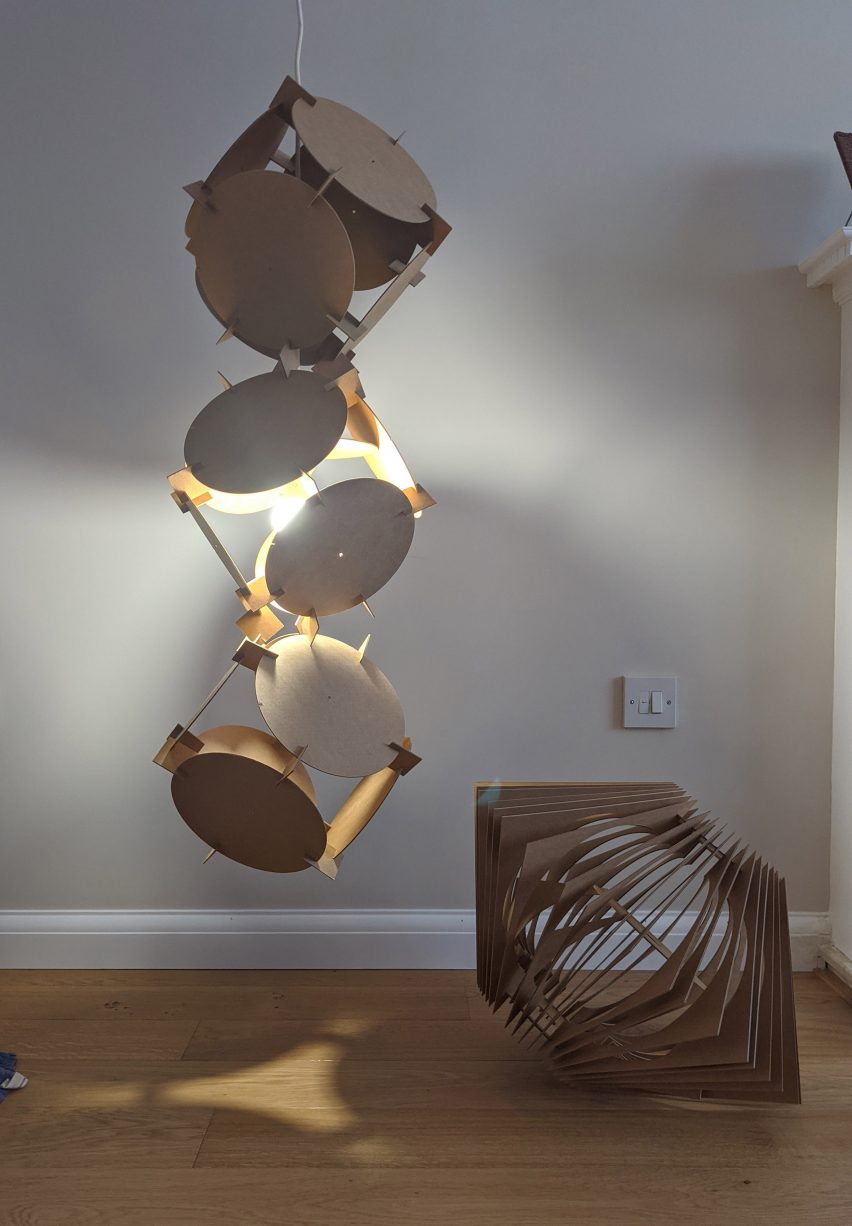
A self-organising shelter that adapts to environmental stimuli and ceramic tableware designed to stimulate the senses are included in Dezeen’s latest school show by students at Birmingham City University.

Also included is a Russian recreational area designed as a multifunctional park to meet residents’ needs, and a chair that explores hair-based discrimination while celebrating black, afro and textured hair.

School: Birmingham City University, Birmingham School of Architecture and Design
Courses: Foundation, BA Architecture, BA Interior Architecture and Design, BA Landscape Architecture, BA Product and Furniture Design, BA Design Management, MArch and MA Landscape Architecture

School statement:

“A vibrant and inspiring learning community, the school identifies strongly with the civic university movement and has a dynamic and growing reputation in practice-led research, enterprise and knowledge exchange, encompassing disciplines across the scales from Product and Furniture through Interiors, Architecture, Urban Design (from September 2021) Landscape Architecture with cross-cutting courses in Design Management and Conservation of the Historic Environment.

“We deliver an outstanding and distinctive student experience and embrace a practice,  research and knowledge-based approach to our teaching demonstrated by our KTPs, our innovative BA (Hons) Design for Future Living in partnership with George Clarke’s Ministry of Building Innovation and Education (MOBIE), our transdisciplinary collaborative Co.LAB live projects and Experimental Sustainability Studio initiatives.”


Birmingham City University

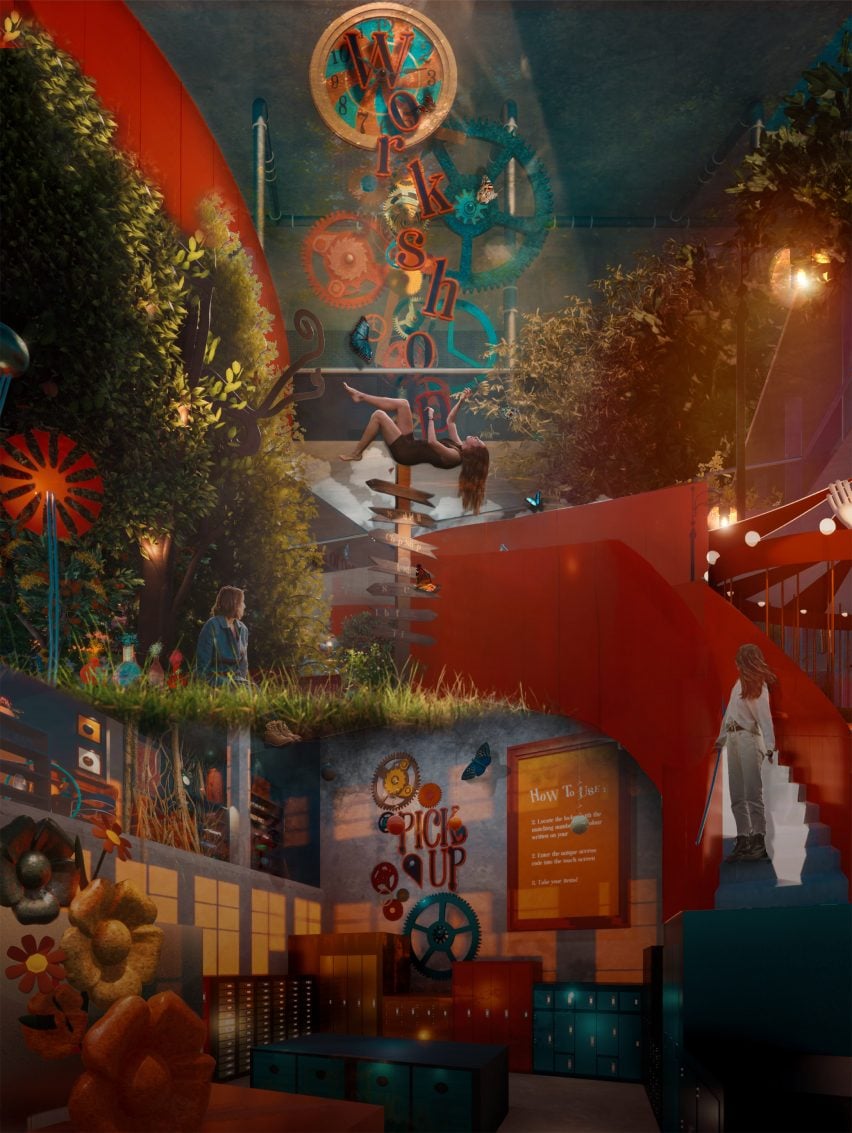
Heirs of Time by Laura Hastings

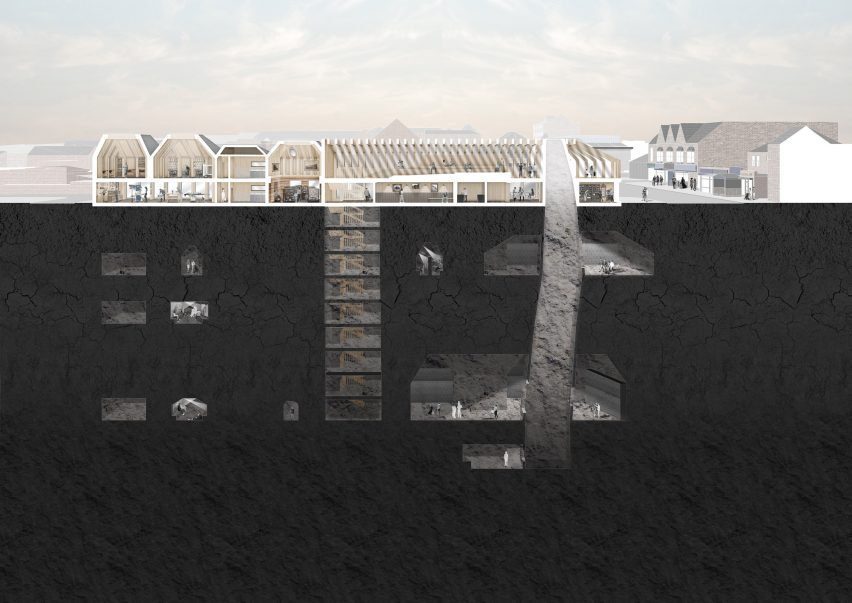
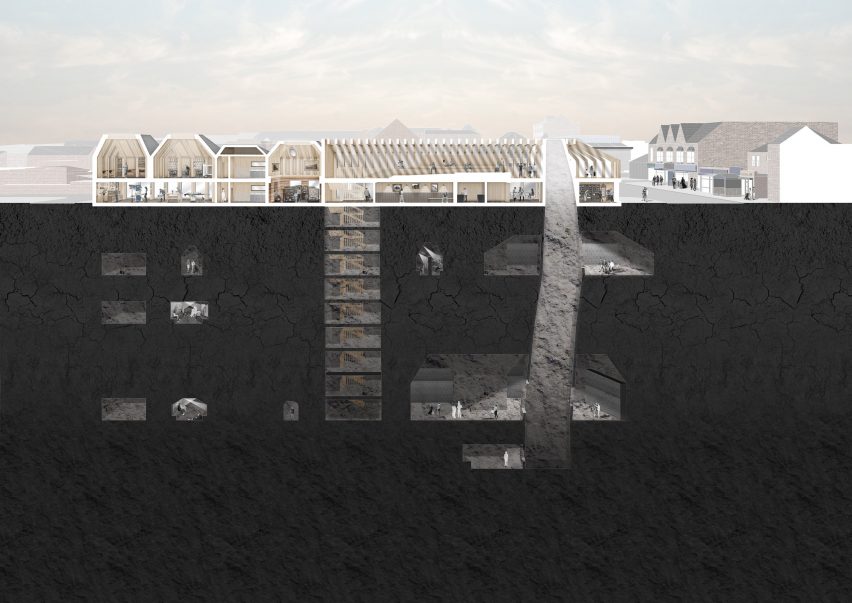
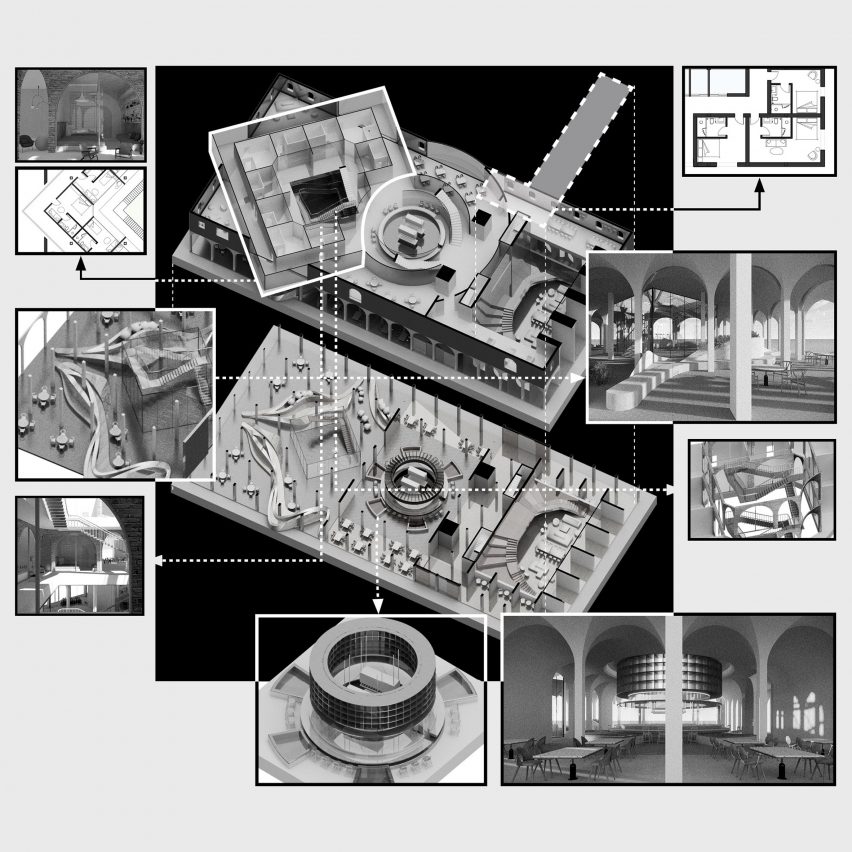
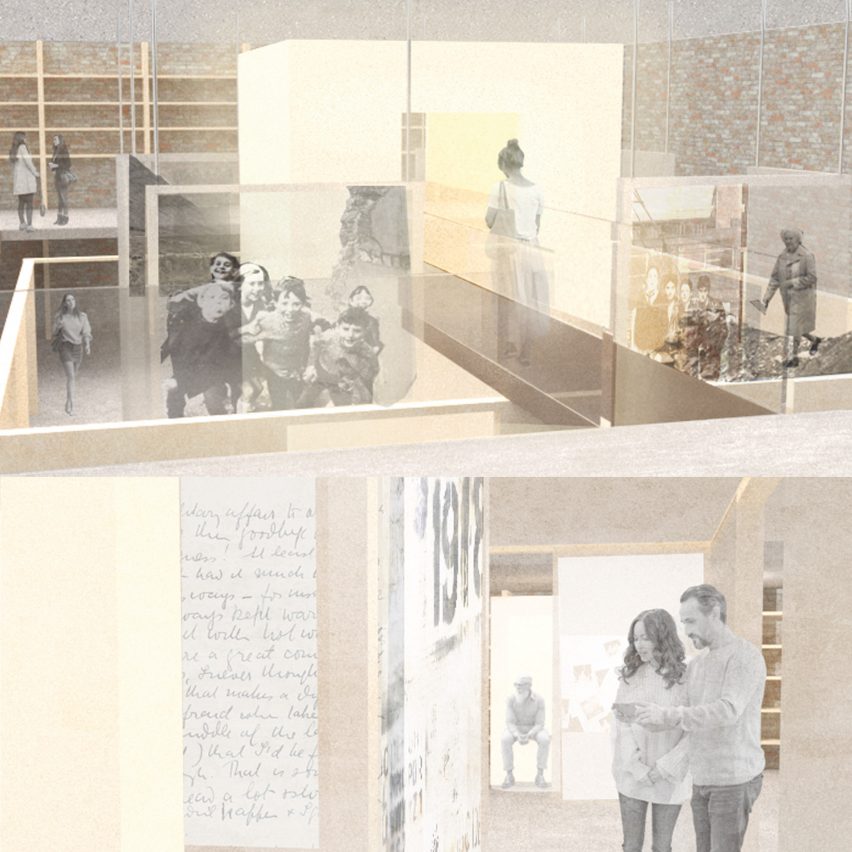
“Heirs of Time explores how the memories of local communities could be archived, restored and recollected through the ‘apparatus of the heirloom’. This thesis explores key themes of time, memory, depth and transformation. Following research and investigation into the changes of a Birmingham high street, the heirloom became a physical manifestation of the built environment.

“Programmatically, underground spaces have been developed to represent long-term, consolidated memories that are not so regularly recollected, functioning as archives and experience rooms. Instead of public-facing, the overground spaces represent short-term memories, those that are regularly made and forgotten.”

Student: Laura Hastings
Course: BA(Hons) Architecture
Tutors: Dr Matthew Jones, Matthew Hayes and Rebecca Walker
Email: ljhastings-1@talktalk.net


Birmingham City University

Equilibrium 2.0 by Pasha Jeremenko

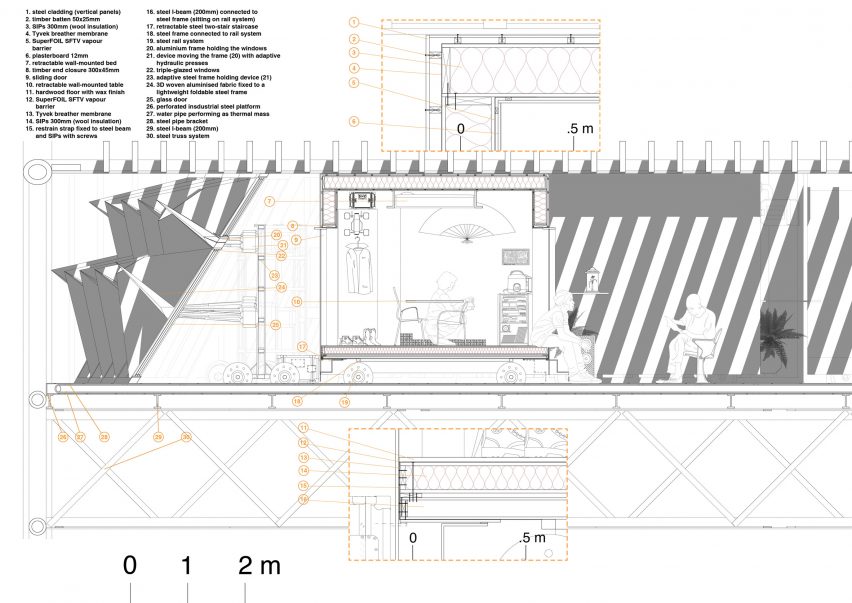
“Equilibrium 2.0 explores self-organising architecture and its adaptations to environmental stimuli. In an extreme climate, conventional architecture cannot sustain itself, which causes the architectural paradigm to shift – from static to dynamic.

“The designed shelter adapts itself to external conditions by working together with nature in its response. The equilibrium between the synthetic and the organic opens up more opportunities for evolving architecture. The evolution, in this case, appears in the form of the technological assembly of machines.”

Student: Pasha Jeremenko
Course: BA(Hons) Architecture
Tutors: David Capener, Amrita Raja, Bea Martin, Rob Annable and Ian Shepherd
Email: pasha.jeremenko@outlook.com


Birmingham City University

How can the music industry rebuild in a post-pandemic environment while securing its future and maintaining its culture? by Azita Maria Rushton

“Access talent is a music industry tour programme that aims to create a supportive, coherent and connected professional journey for young music enthusiasts. The programme comprises three courses taught by industry professionals, hosted in grassroots music venues located in areas of high deprivation in the UK otherwise forgotten by industry and government.

“The programme features an initiative that offers opportunities provided by industry sponsors to work and study within the music. This concept was designed to address threats to the British music industry’s ecosystem, such as poor creative careers education, inequality in music education and lack of support for grassroots music venues.”

Student: Azita Maria Rushton
Course:
 BA (Hons) Design Management Level 6 Top-up
Tutors:
Nicholas Irvin
Email:
azita-maria.rushton@mail.bcu.ac.uk


Birmingham City University

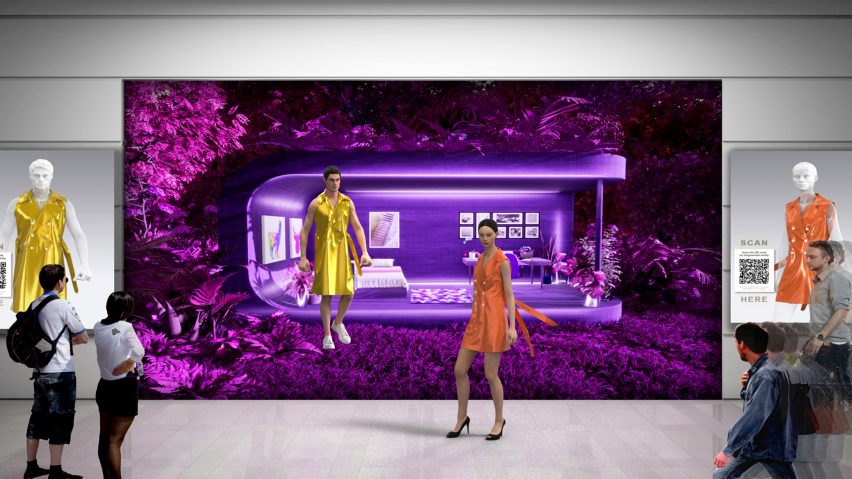
How can design innovation and digital technology be used to create the shopping experience of the future? by Nontawat Nowarit (Addy)

“Neo – X is the integration and utilisation of Augmented Reality (AR) technology in brick-and-mortar stores to reinvigorate retail shopping experiences of the future. The project explores the challenges and opportunities of how AR could be used in retail to enhance window shopping experience and entice customers to come back into physical stores after the pandemic. The concept demonstrates the promising use of AR in window shopping and how it could become a part of the new and enhanced in-store experiences of the future.”

Student: Nontawat Nowarit (Addy)
Course:
BA (Hons) Design Management Level 6 Top-up
Tutors:
Nicholas Irvin
Email:
Nontawat.Nowarit@mail.bcu.ac.uk


Birmingham City University

Box For Life by Luke Reynolds

“The Box For Life project is a national tiny home community network designed to bring the tiny home movement to urban cities. I have developed both the ultimate tiny home that can be purchased at an affordable price and a flagship community site on George Street in Birmingham’s Jewellery Quarter.

“It combats the growing economic issue that sees struggling young people attempt to juggle work and social lives whilst reaching for the property ladder. The project aims to increase ‘urban opportunity’ for people in a tiny home and sustainable living communities and attract a new generation of tiny dwellers.”

Student: Luke Reynolds
Course:
BA Interior Architecture and Design
Tutors:
Christopher Maloney and Josephine Bridges
Email:
Ljwreynolds@gmail.com


Birmingham City University

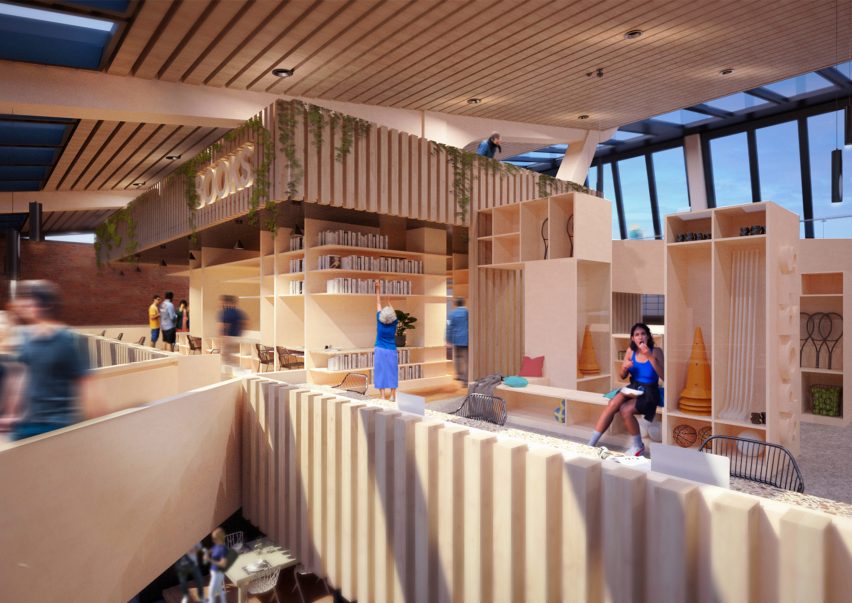
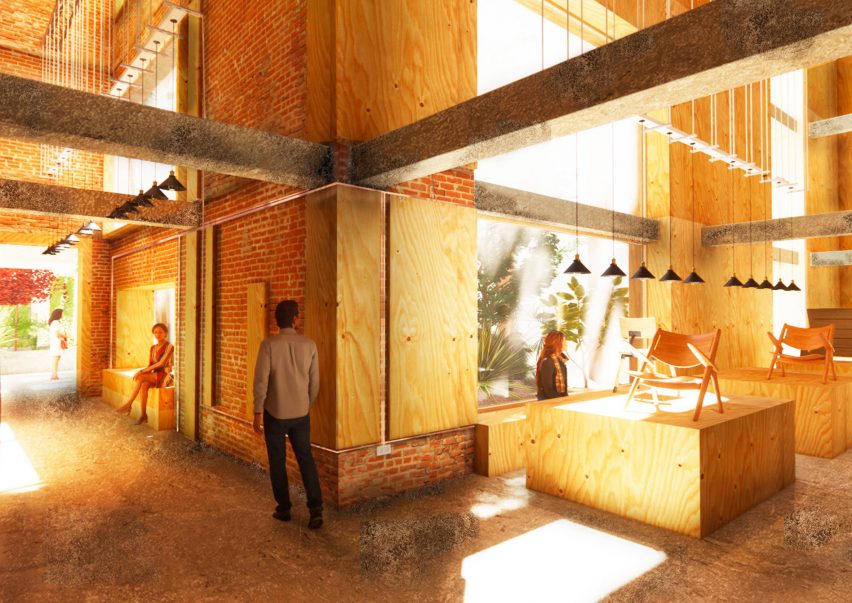
The Emporium of Possibility by Georgia Ruscoe

“This project aims to prepare for a post-pandemic world and become the key to the escapist dream-world that people so deeply desire. Its spatial strategy will disregard hierarchy and instead focus on forming an economy built on human communities.

“It enhances creative potential through the freedom of exploration, epistemic emotions and knowledge production. Providing people with the opportunity to explore their entrepreneurial aspirations whilst combating social and environmental issues. Its goal is to move away from fast output and stop the machine age, centring on the human again by forming an age of experience and creative exploration – something that cannot be automated.”

Student: Georgia Ruscoe
Course:
BA Interior Architecture and Design
Tutors:
Christopher Maloney and Josephine Bridges
Email:
georgiaruscoe@gmail.com


Birmingham City University

Comfort  Valley Murmansk by Linyun Jiang 

“Comfort Valley is a large recreational area outside the city centre of Murmansk, Russia. This innovative design provides an opportunity to identify and implement a vibrant multifunctional park area revitalisation that can meet local residents’ needs, increase the connection between people and the site, and enhance the community environment. It utilises the natural and climatic conditions of the Arctic with sustainable technical innovations in the form of warming huts dotted through the landscape, connected with green infrastructure.”

Student: Linyun Jian
Course:
BA (hons) Landscape Architecture, LI
Tutors:
Lucas Hughes, Eccles Ng, Dawn Parke and Rasha Sayed
Email:
Linyun.Jiang@mail.bcu.ac.uk


Birmingham City University

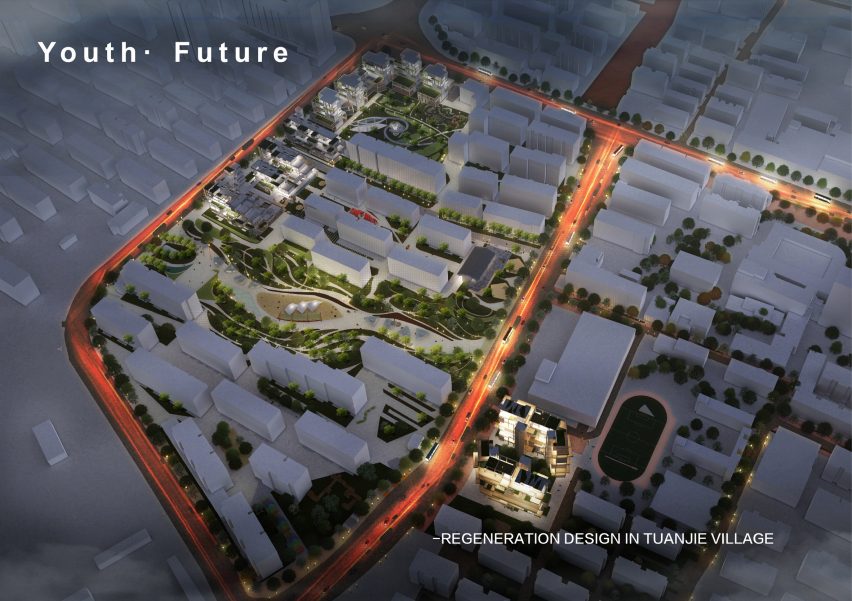
Regeneration Design in Tuanjie Village by Shiyun Huang  

“This landscape-led urban redevelopment creates public space for residents to live, entertain and relax. There is a diversity of activities, forming active street venues which address nighttime and daytime uses. The Unity Village will be a “new life”, a “new symbol”, and a “new landmark”.

“Inspired by the symbolic language abstracted water-towns in the Yangtze River Delta, a new symbol of a Central Park with a series of dynamic connected spaces is created. It is a new landmark integrating traditional and contemporary characteristics, enlightened by the abstract artistic conception of courtyard and landscape forms.”

Student: Shiyun Huang
Course:
BA(Hons) Landscape Architecture 
Tutors:
Lucas Hughes, Eccles Ng, Dawn Parke and Rasha Sayed
Email:
Shiyun.Huang@mail.bcu.ac.uk


Birmingham City University

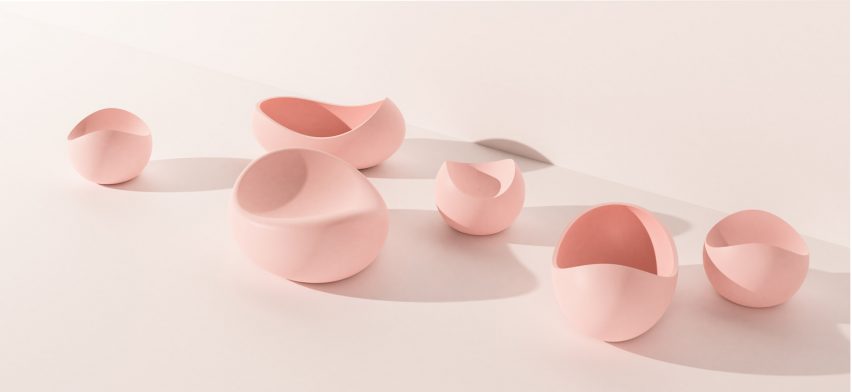
Dolcio by Katarzyna Kozlowska

“Dolcio is a collection of experimental ceramic tableware developed in response to the study of gastrophysics – the scientific analysis of how our experience of food and drink is affected by our senses and surroundings.

“Carefully composed, this series of dessert plates stimulate the senses through colour, form and texture, increasing the sweet taste of puddings and creating a more positive and mindful eating experience. By using rounded tableware, users can reduce the amount of sugar used in dishes without compromising on the taste, therefore helping to promote healthier eating habits.”

Student: Katarzyna Kozlowska
Course:
BA (Hons) Product and Furniture Design
Tutors:
Richard Underhill, Malcolm Hastings, Brian Adams and Natalie Cole
Email:
Katarzynakozlowskadesign@outlook.com


Birmingham City University

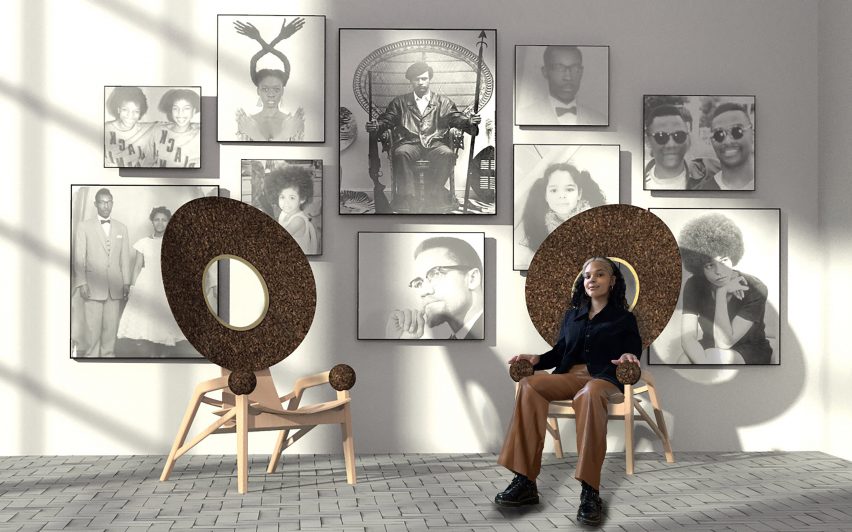
Zewadi by Katy Thompson

“Inspired by personal experiences growing up in a predominately white town and the Black Lives Matter movement, this chair explores hair-based discrimination and how design can celebrate black, afro and textured hair. Zewadi was designed as a functional and educational furniture piece, intended to initiate conversations surrounding this underrepresented issue.

“Zewadi uses textured black cork and rounded forms to represent black hair, whilst its throne-like scale brings empowerment to its users. Additionally, the gap in the headrest not only highlights the user’s hair but also reduces the risk of friction damage.”

Student: Katy Thompson
Course:
BA (Hons) Product and Furniture Design
Tutors:
Richard Underhill, Malcolm Hastings, Brian Adams and Natalie Cole
Email:
Katyt1998@gmail.com


Birmingham City University

Cardboard Products for the Design Museum by Thomas Whiskens

“Taking inspiration from the ecological principle of the edge effect, the project questions and explores how design can respond to uncertainty with creativity and dynamism while recognizing its role in Fairbourne’s narrative.

“The proposition is to create a community-owned visitor destination, together with enabling landscapes, aimed at changing the collective mindset for Fairbourne, encouraging a vision for the territory as having multiple future identities and uses beyond the engineered utility topography.

“The spectrum of landscape systems and settings draw on the unique characteristics of the existing estuary topography, from the engineered edge of the seawall, through the shifting edge of marsh and wetland to the relic uplands.”

Student: Thomas Whiskens
Course:
Foundation/BA Product Design
Tutors:
Myles Cummings, Tom Tebby, Andrew Trujillo and Anastasiya Luban


Birmingham City University

LAxArch – Canal Side Regeneration Project by Matthew Harris

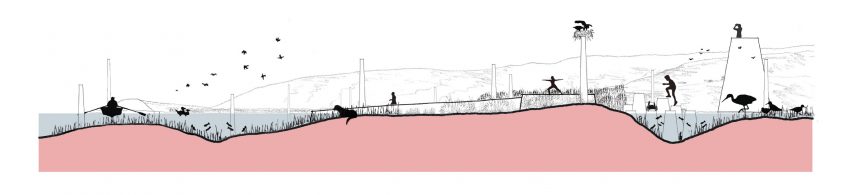
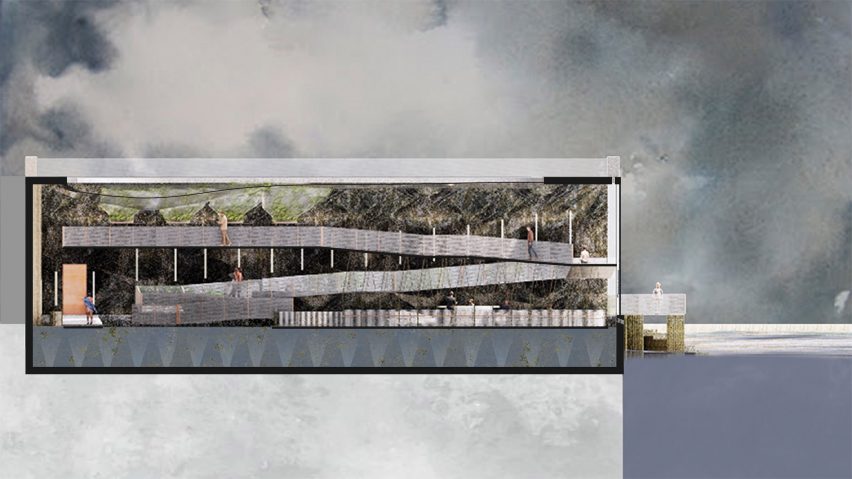
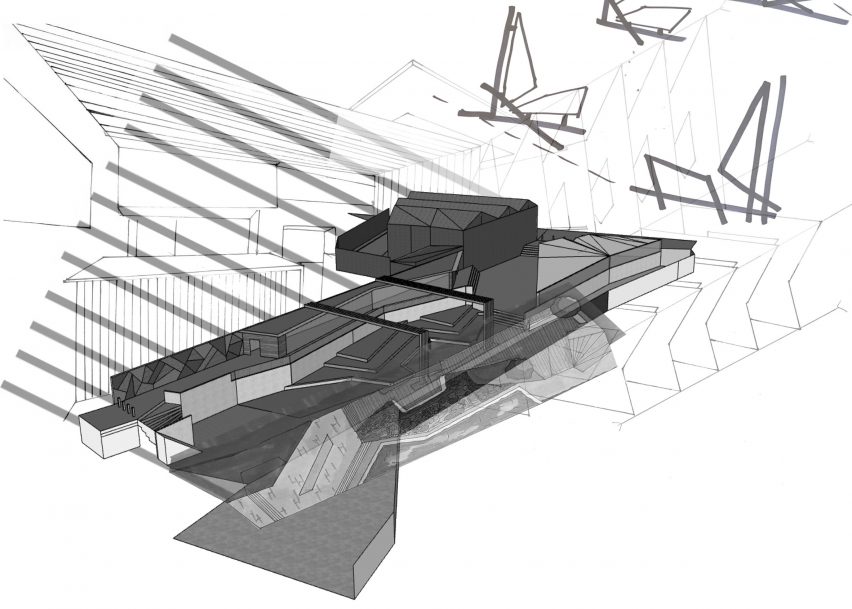
“This Landscape and Architecture project was based on a location within Birmingham’s sprawling canal network. The challenge was to rejuvenate an area of the Grand Union canal in Digbeth, rethink the landscape for people using the site, and provide a kiosk to find information or buy products. This piece of work shows a section through the site.”

Student: Matthew Harris
Course:
Foundation/BA Architecture
Tutors:
Myles Cummings, Tom Tebby, Andrew Trujillo and Anastasiya Luban


Birmingham City University

Grow your own highstreet by Anita Brindley

“Imagine if our cities could become closed-loop systems where all construction materials are produced and harvested just a few metres away from the site. This scheme aims to achieve this by reforesting our high streets. Through reforesting, timber becomes a local and sustainable material source that, during its growth, absorbs vast amounts of carbon dioxide.

“Over time, the timber grown on the high street can then be harvested by locals and used to develop the local surroundings. The high street no longer becomes made up of static objects but encompasses the active processes related to the community and ecology which inhabit and support its construction.”

Student: Anita Brindley
Course:
MArch Architecture (RIBA Pt.2), unit: Extinction Rebellion Architecture
Tutors:
Professor Rachel Sara and Elly Deacon Smith
Email:
 anitalb24@gmail.com


Birmingham City University

The Pleasure Gardens by Chloe Luvena Dent

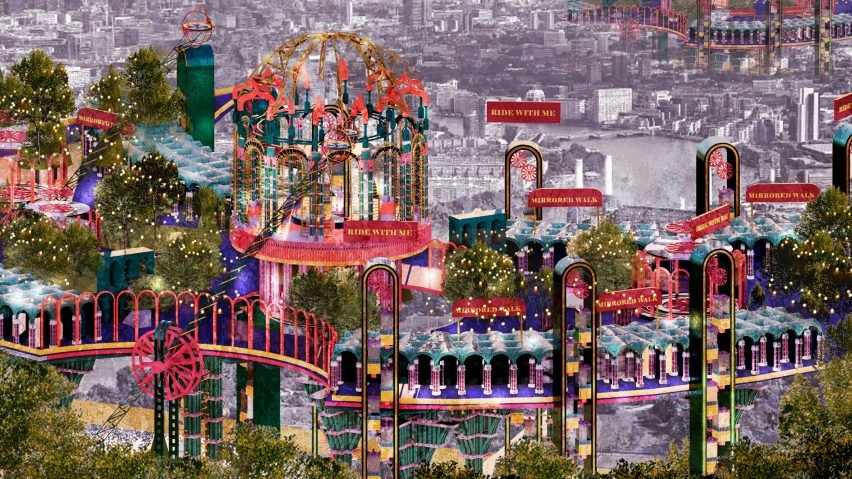
“Inspired by the Festival Pleasure Gardens in Battersea – one of the major exhibitions organised by the post-war Labour government during the Festival of Britain in 1951 to give the British a feeling of recovery in the aftermath of WW2.

“The thesis uses hedonistic ideas of pleasure based on Jeremy Bentham’s theories to create contemporary pleasure gardens as a response to the isolating and disengaging social constraints of Covid-19. Envisioned as a series of raised platforms above London, ‘socially undistanced’ moving gimbals, as well as ornate festival structures embedded within landscaped gardens, create an ambient and fun urban experience.”

Student: Chloe Luvena Dent
Course:
MArch Architecture (RIBA Pt.2), unit: arena
Tutors:
Alessandro Columbano and Valeria Szegal
Email:
chloedent09@gmail.com


Birmingham City University

Fairbourne 2070 – The New Gold Rush by David Mahon

“Given its position on a low-lying salt marsh, Fairbourne can no longer be protected from flooding with rising sea levels and increased risk of storms due to climate change. Fairbourne 2070 – the new gold rush is a project to relocate and design a new Fairbourne that is resilient to climate change and fit for social demands of the year 2070 and beyond, using the principles of a circular economy.

“The new gold rush does not take resources from the landscape. It reuses those that have already been extracted and replenishes those that have been depleted.”

Student: David Mahon
Course:
MA Landscape Architecture
Tutors:
Russell Good and Dr Sandra Costa
Email:
davidedwardmahon@outlook.com


Birmingham City University

Fairbourne – Landscape at the Edge by Sam Rule

“Taking inspiration from the ecological principle of the edge effect, the project questions and explores how design can respond to uncertainty with creativity and dynamism while recognizing its role in Fairbourne’s narrative. The proposition is to create a community-owned visitor destination, together with enabling landscapes, to change the collective mindset for Fairbourne, encouraging a vision for the territory as having multiple future identities and uses beyond the engineered utility topography.

“The spectrum of landscape systems and settings draw on the unique characteristics of the existing estuary topography, from the engineered edge of the seawall, through the shifting edge of marsh and wetland to the relic uplands.”

Student: Sam Rule
Course:
MA Landscape Architecture
Tutors:
Russell Good and Dr Sandra Costa
Email:
sam.rule@outlook.com


Birmingham City University

Forest Hub by Gertruda Blazaityte

“Forest Hub is a wood innovation centre bringing researchers, students, businesses, and local residents together to collaborate and share their passion and knowledge to build a healthier and more sustainable urban city. Forest Hub also provides the local community with a space to connect with nature – both indoors and outdoors along with private and spacious studios designed for multiple uses.

“The concept focuses on sustainable and innovative design solutions by using Biomimicry where biological strategies are being used to improve building’s energy efficiency and create a multi-sensory forest-like journey that brings the user closer to nature.”

Student: Gertruda Blazaityte
Course:
BA Interior Architecture and Design
Tutors:
Christopher Maloney and Josephine Bridges
Email:
blazaitytegertruda@gmail.com


Partnership content

This school show is a partnership between Dezeen and Birmingham City University. Find out more about Dezeen partnership content here.


Reference

University of Huddersfield
CategoriesInterior Design

University of Huddersfield spotlights ten student interior design projects

A gender-inclusive hair salon and a cafe that aims to help break down mental health barriers are included in Dezeen’s latest school show from students at the University of Huddersfield.


Also included is a project that aims to revolutionise up-cycling in the retail industry and an adventure and learning centre designed for the elderly.


School: University of Huddersfield, Arts and Humanities school
Course: Interior Design BA (Hons)
Tutors: Penny Sykes, Jen Leach, Natasha Crowe, Joanne Pigott Hakim, Claire Diggle and Anna Gurrey

School statement:

“We are proud to present a selection of ten pieces of award-winning work that aim to demonstrate the range and scope of projects students undertake in their final year of study. Throughout each project, they selected a site and developed their project brief. Through in-depth research and explorative processes, projects are designed and developed, becoming realised through technical and visual communication.

“Here at Huddersfield, we think that interior design transforms ideas into experiences. We allow students to create entirely new experiences and relationships between people and the places they spend time in. The emphasis is on creativity as we explore and extend current design thinking, pushing boundaries to innovate, providing new ways of looking at human and spatial interactions in response to our changing world.

“This group of students has had to cope with unprecedented circumstances during the Covid-19 outbreak and are a credit to themselves and the course in producing exciting projects that help us to glimpse the future. They are on the cusp of new approaches and changing parameters in design, able to adapt and offer reflexive approaches to future projects. To view the university’s virtual showcase click here and to view its Instagram, visit its profile.”


University of Huddersfield

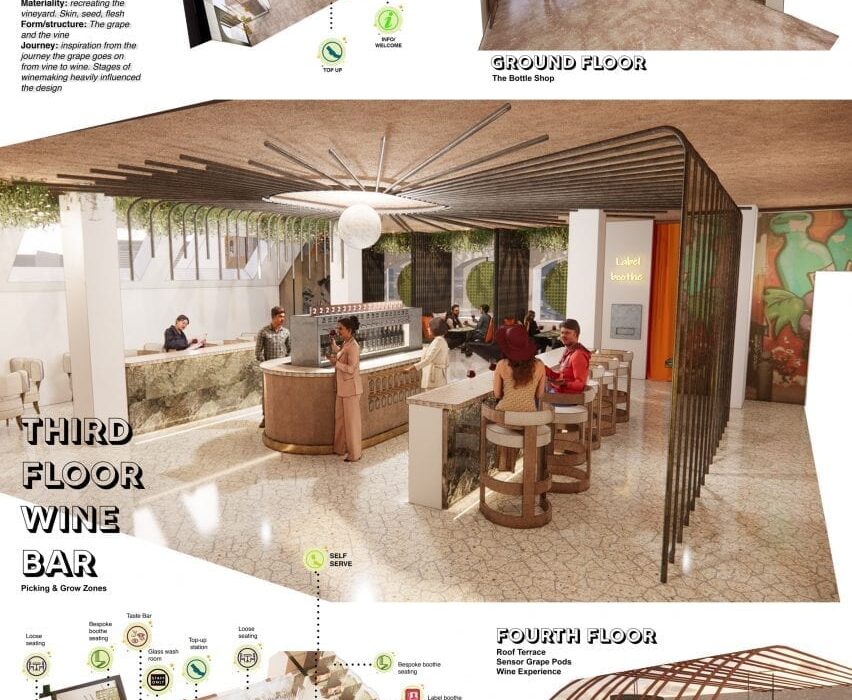
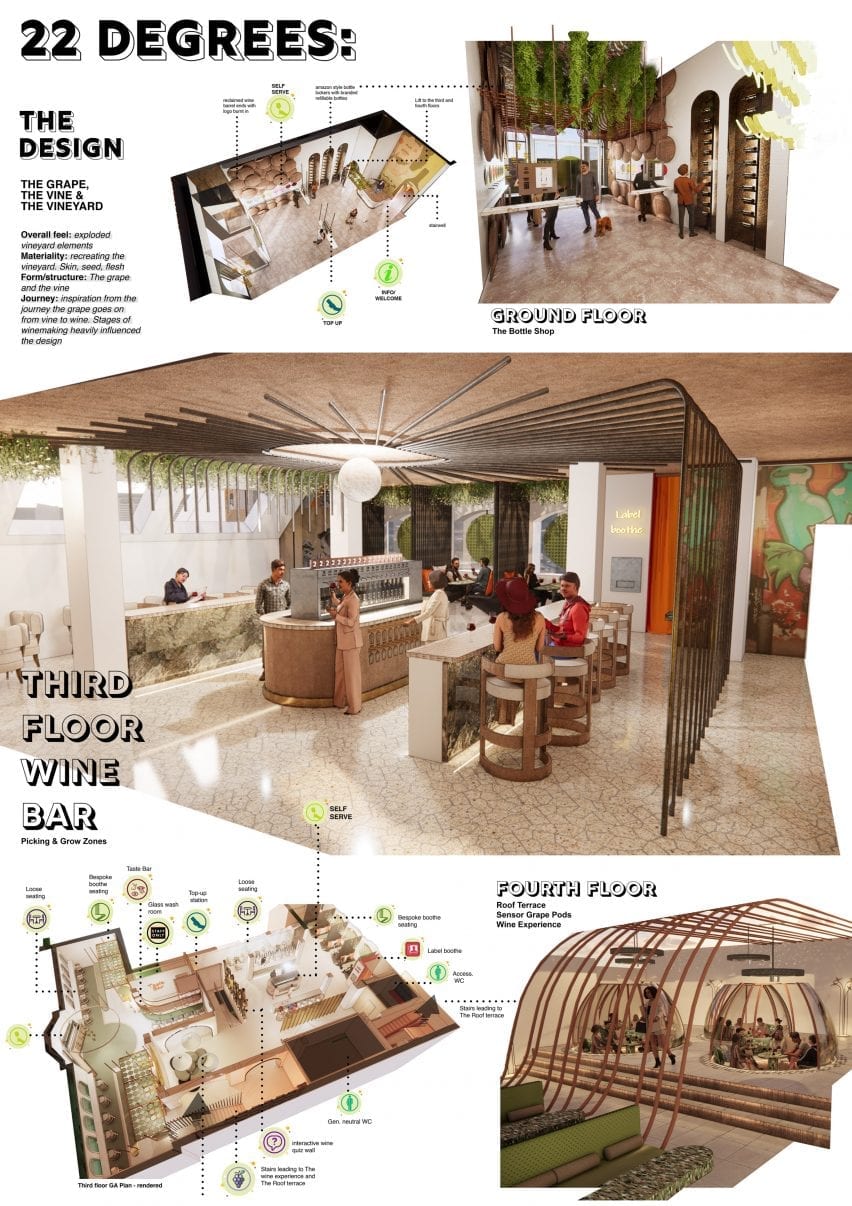
22 Degrees by Paccelli Sowerby

“This project aims to democratise wine tasting for the younger consumer. It seeks to mix up the traditional wine bar, reintroducing wine to the younger consumer in a fun, informal environment that focuses on learning through experience.

“The project intends to create a reactive space with a hands-on approach to wine tasting, bringing people closer to natural wine by echoing the hand-crafted winemaking process through design elements.

“The space gives people the tools and info to embark on their own journey of wine discovery whilst learning about the making process and being inspired by the urban vineyard environment.

“22 Degrees offers more than just a huge variety of natural wines – it also hosts a selfie label-booth, interactive wine quiz, contact-free bottle shop, self serve wine bar, sensory wine experience and roof terrace with sensory grape pods. This project has a full technical pack and feasibility study, both of which are available for download on my website.”

Student: Paccelli Sowerby
Award: Best Visual Communication
Tutors: Penny Sykes, Jen Leach and Natasha Crowe


University of Huddersfield

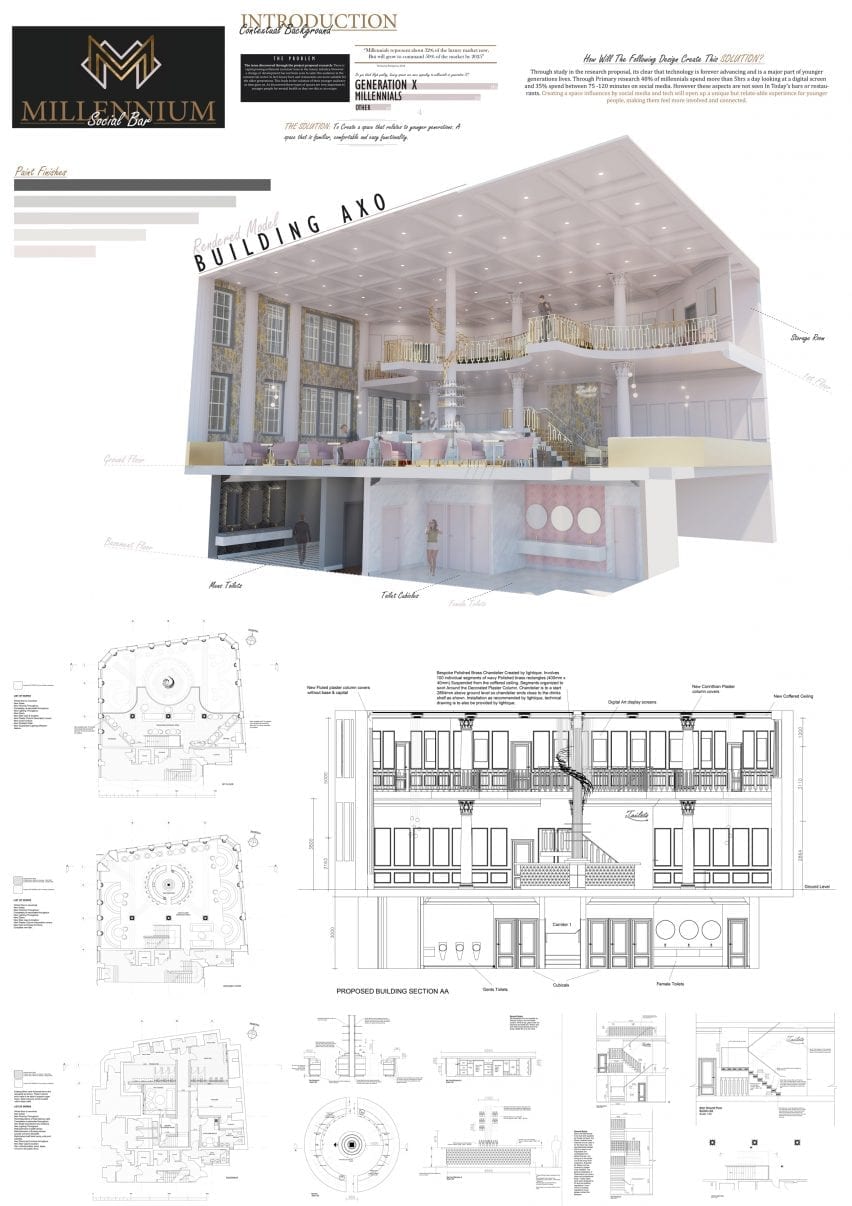
Millennium by Adam Kendall

“Today, millennials represent about 32 per cent of the luxury market but will grow to command 50 per cent of the market by 2025. It is clear that technology is advancing and is a significant part of younger generations lives. Through primary research, 48 per cent of millennials spend more than five hours a day looking at a digital screen, and 35 per cent spend between 75 -120 minutes on social media.

“Millennium is a space influenced by social media, and tech aims to create a unique but relatable experience for younger people, making them feel more involved and connected. The issue discovered through the project research is that there is a growing millennial customer base in the luxury industry.

“However, a change or development has not been seen to suit this audience in the commercial sector. In fact, luxury bars and restaurants are more suitable for the older generations. This leads to the isolation of their younger audience, who are digitally savvy and constantly connected. I propose a solution – to create a space that relates to younger generations. A space that is familiar, comfortable and digitally enhanced.”

Student: Adam Kendall
Award:
Best Technical Detailing
Tutors:
Penny Sykes, Jen leach and Natasha Crowe


University of Huddersfield

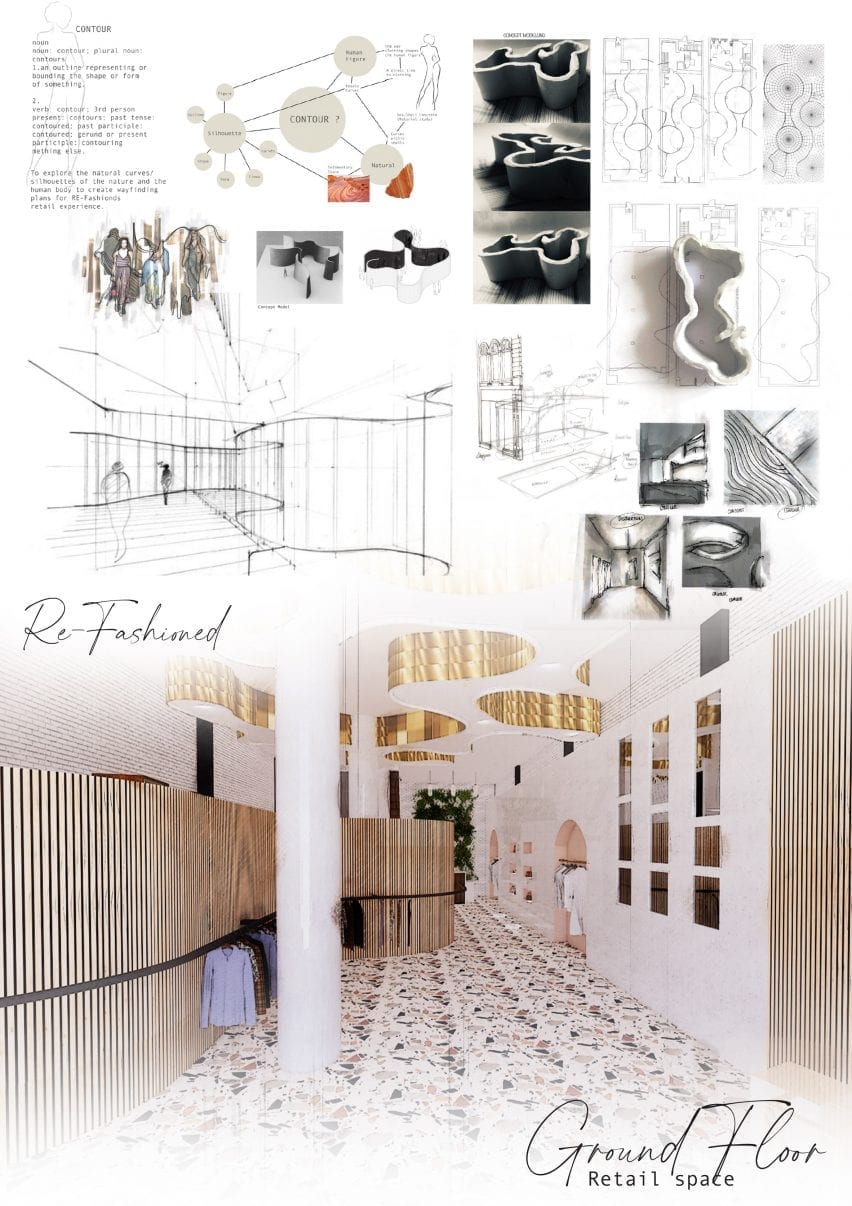
Re-Fashioned by Heather Martin

“This is a project that aims to revolutionise up-cycling in the retail industry through the manipulation of contemporary retail and technology. Often the clothing industry does not recycle materials it cannot sell.

“This means an increasing amount of materials are being thrown away instead of being recycled and reused which, further contributes to the global environmental crisis.

“The solution seems obvious: employ artists who love up-cycling and using material which usually gets discarded to craft new items people will love to wear! Research showed that many people feel pessimistic about purchasing pre-owned items. Re-Fashioned places a luxurious twist on up-cycled clothing to encourage more people to do more to save the environment and to look good doing it!

“The concept was developed by the silhouettes and shapes inspired by the human body – seen in the lighting features. Materials within the space were also essential to consider as it needed to be luxury as well as sustainable and natural.”

Student: Heather Martin
Award:
Best Creative Process
Tutors:
Penny Sykes, Jen Leach and Natasha Crowe


University of Huddersfield

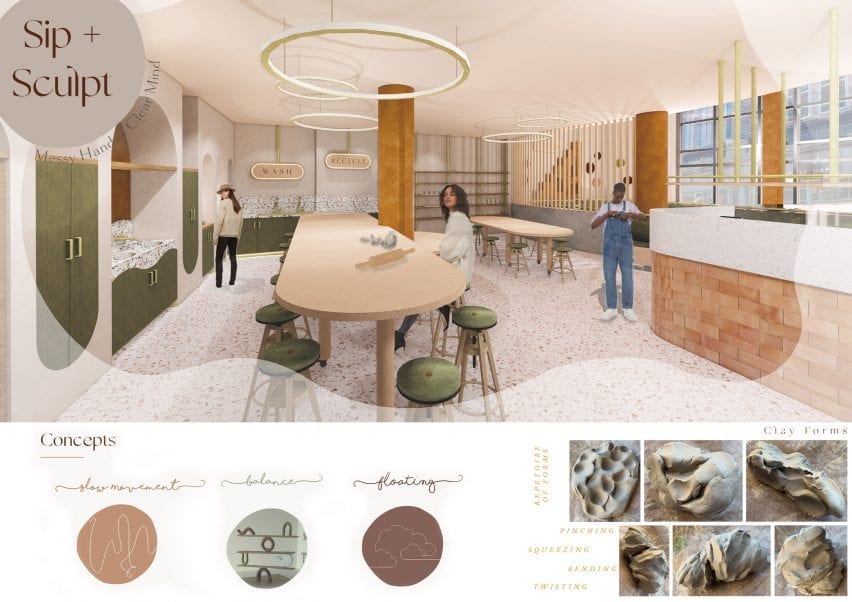
Sip + Sculpt by Alyssia Hanson

“Sip + Sculpt is designed to allow its customers to unwind in a space where they can work through their stress and break down barriers around mental health. It aims to facilitate connection, inspire imagination and create an oasis of positivity and comfort.

“The project’s concept was influenced by the ‘slow living movement’ alongside the keywords, balance’ and ‘floating’. Customers are encouraged to lock away their devices, distancing themselves from the use of social media, allowing themselves to embrace their creativity and get messy with clay.”

Student: Alyssia Hanson
Award:
Best Conceptual Approach
Tutors:
Penny Sykes, Jen Leach and Natasha Crowe


University of Huddersfield

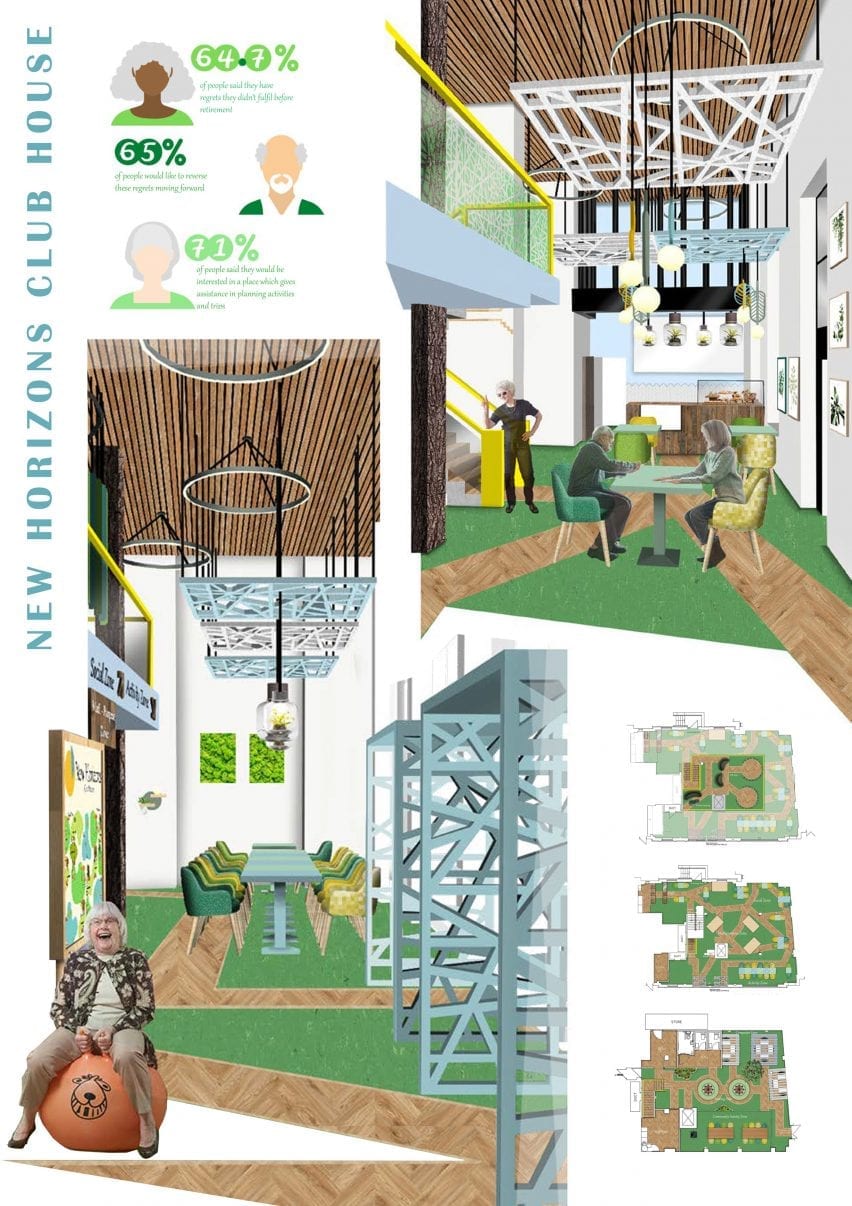
New Horizons Cub House by Amy Rigby

“New Horizons is an experiential adventure and event planning space including digital booking hubs and learning zones. It has been created for the retired generation to create a place to counteract any regrets they have through life.

“Through research, I found that retired people have many regrets about things they have missed out on during their working lives but don’t have anywhere to explore and resolve them.

“The space has been created to encourage and support a second life with access to fun and exciting activities. Activities include participating in new experiences by trying them out in the VR zone, booking experiences, learning about the digital world and improving skills, or just socialising and meeting new people of similar ages and interests.

“The concept is based around ‘a walk in the park’ which makes entering the clubhouse an experience in itself, as the concept can be seen in the layout and other features.”

Student: Amy Rigby
Award:
Best Use of Materiality
Tutors:
Penny Sykes, Jen Leach and Natasha Crowe


University of Huddersfield

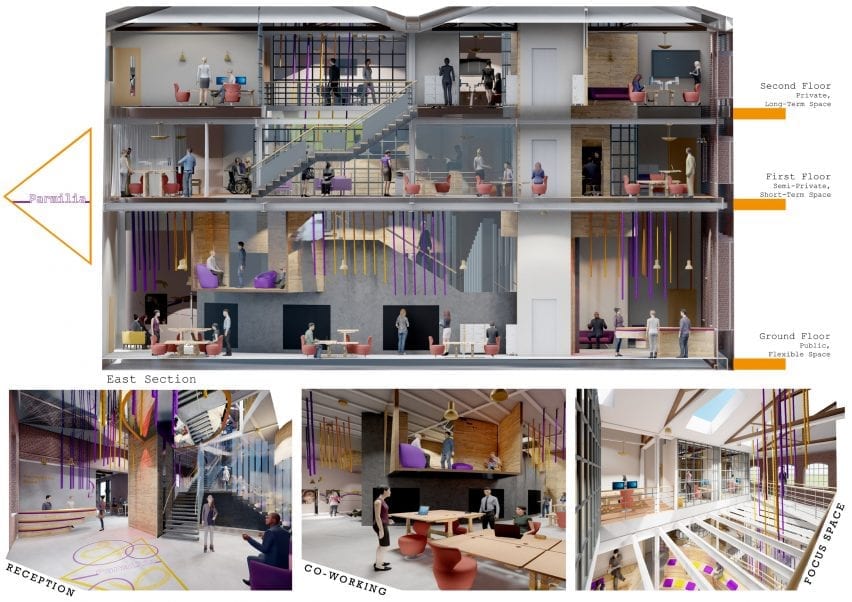
Parmilla by Luke Pierce

“Parmilla is dedicated to the people of Huddersfield and is a creative community workplace and social hub, driven by the concept of perspective. The centre celebrates the creative culture the town has to offer and provide co-working spaces and meeting hubs for hire.

“With the ground floor open to the public, it offers the opportunity for exhibitions and offers space for creative events and performances, to provide new experiences and introduce people to new cultural arts.

“It also has a kitchen space located on the ground floor that features a local guest chef every Friday to offer new food experiences to its guests and give the restaurants the chefs are representing more exposure.

“Parmilia will also send out lengths of fabric to local schools, care homes and stands in the streets of Huddersfield to have people tie knots in the fabric. This fabric will then be exhibited from the ceilings throughout the space. Serving mainly as wayfinding, it also highlights essential areas in Parmilla and represents the people of Huddersfield and celebrates individuality.”

Student: Luke Pierce
Award:
Best Spatial Exploration
Tutors:
Penny Sykes, Jen Leach and Natasha Crowe


University of Huddersfield

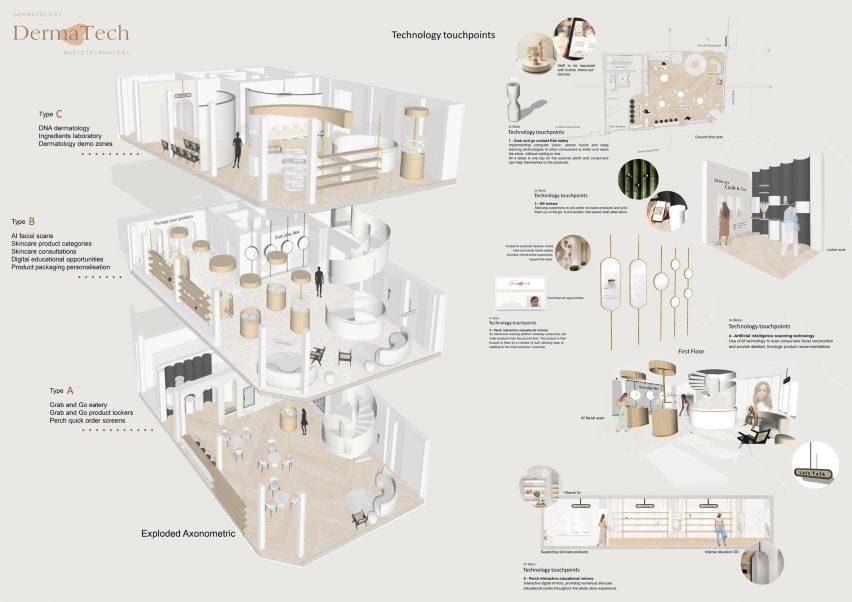
Derma-Tech by Rhiana-Dean Robinson-Hine

“Derma-Tech is a multi-functional, fully immersive retail experience that provides information on skincare knowledge. Consumers are given access to current dermatology technology and DNA driven retailing.

“Developing a forward-thinking ‘go-to’ space for all things skincare by providing numerous experiences for consumers. With technology at the forefront of the design, it harnesses artificial intelligence teledermatology and implements smart technologies throughout each step of the customer journey.”

Student: Rhiana-Dean Robinson-Hine
Award:
Best Future Focussed Project
Tutors:
Penny Sykes, Jen Leach and Natasha Crowe


University of Huddersfield

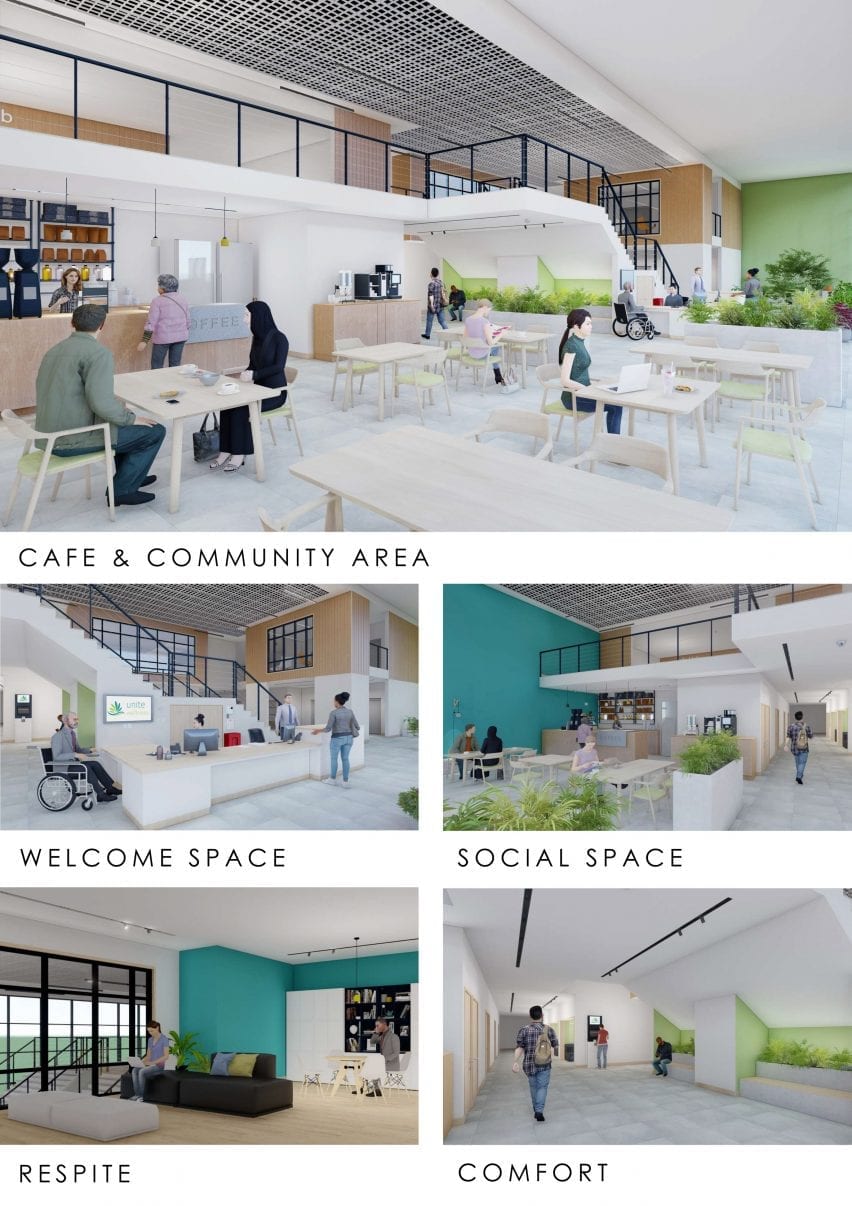
Unite Wellness by Jordan Marzetti

“The Wellness and Respite Centre focuses on delivering a new experience to both dependants and carers. It is a new brand that combines leisure with respite, tackling the disadvantages adults with learning disabilities face and addressing the mental and physical wellbeing of both the dependant and carer.

“It is a purpose-built space located within a residential area, but placed conveniently with other complimenting businesses, providing on-site support through counselling and information. Design is purposely minimal to aid adults with learning disabilities, corridors are direct in layout, and all essential rooms can be found on main corridors.

“There are no curves, or complicated shapes, no distracting patterns, or textures and information points on each main corridor aid navigation acting as way-finding. It includes a new staircase with handrails spaced to be held on either side, including an emergency evacuation slide. Automatic doors into all changing and restroom entrances and two new extra-large lifts have been added to the site.”

Student: Jordan Marzetti
Award:
Best Socially Focused Project
Tutors:
Penny Sykes, Jen Leach and Natasha Crowe


University of Huddersfield

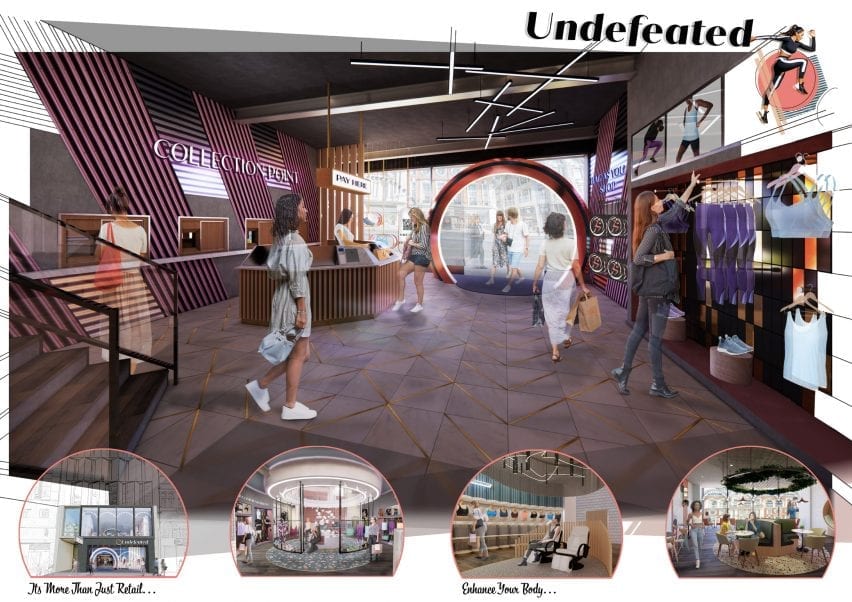
Undefeated by Sarah Parkes

“Research has shown that an overwhelming number of females are faced with physical, mental and social barriers when participating in physical activities. Therefore, a key objective of the design proposal was to challenge and support the journeys women face by offering a personalised and unique fitting service within a female-only sportswear store.

“The building is split into three key areas: physical, mental and social. Physical is on the ground floor and is focused on enhancing the body through high-performance sportswear. This zone also includes RFID technology self-checkout, collection points, beacon technology touchscreens and AR smart mirrors.

“The mental section is on the basement floor and is concentrated on re-energising the customer’s mind and body by creating a multi-sensory experience. This includes a relaxation massage pod that indulges all the customer senses and helps them to escape from the busy retail stores on Oxford Street.

“Social is on the first floor and is focused on maintaining customer’s wellbeing by encouraging social interaction within the environment of a nutrition cafe. The material palette includes fresh and light materials that correspond with nutrition and healthy eating.”

Student: Sarah Parkes
Award:
Best Commercially Focussed Project
Tutors:
Penny Sykes, Jen Leach and Natasha Crowe


University of Huddersfield

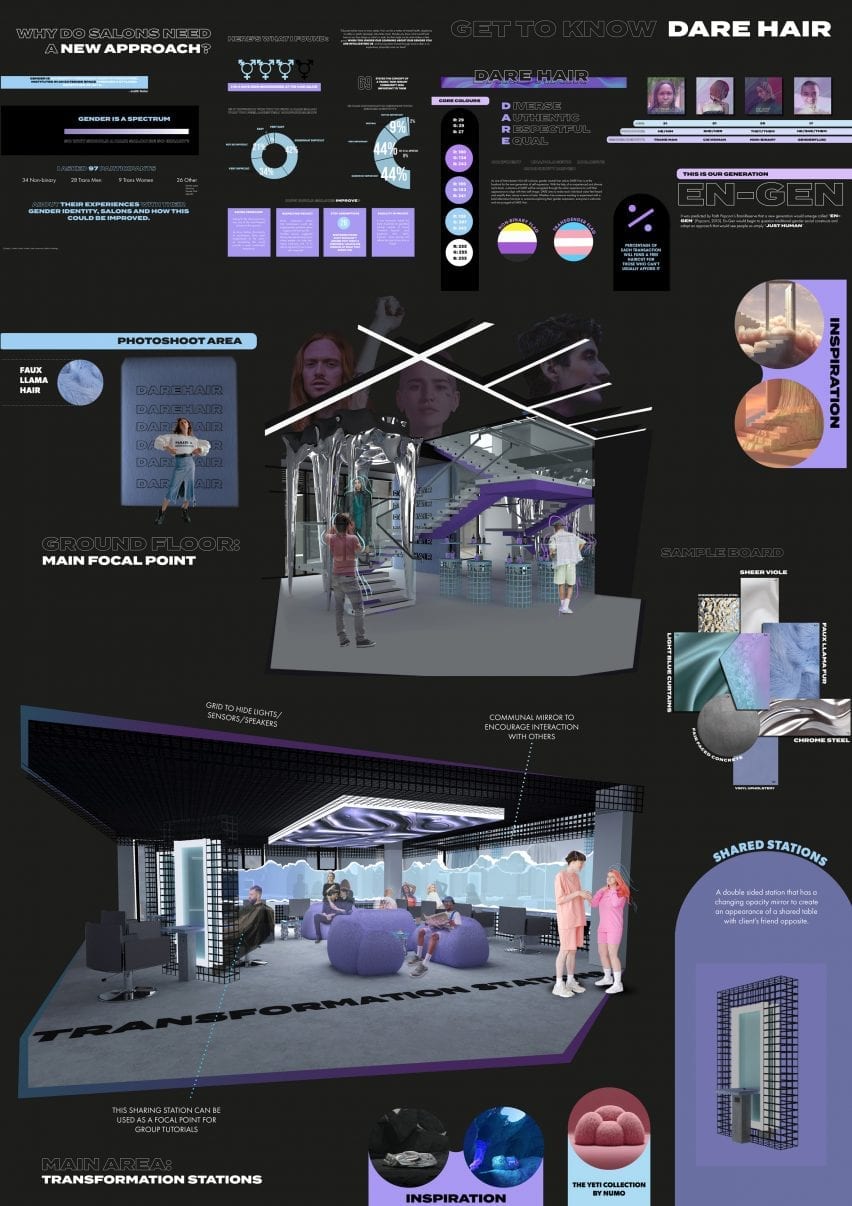
Dare Hair by Jasmin Hardy

“Dare is a non-binary, gender-inclusive hair salon that looks towards the new generation of gender-inclusive hairstyling salons. After researching the importance of hair in gender/self-identity it became apparent that the hair industry needed a new approach to its mainly binary format.

“Using the concept of fluidity, which was also inspired by the limitless creativity of the metaverse, Dare Hair aims to create a gender-inclusive environment for people to experiment with their appearance aided by the integration of smart technology.

“Whether it be someone wanting to experiment with a bold alternative hairstyle or someone exploring their gender expression, everyone is welcome and encouraged at Dare Hair.

“Throughout my time at university, my projects have been driven with the edges of society in mind, so being able to create Dare Hair with the concentration being on the LGBTQ+ community has pushed me to create a thorough, well researched final design. I am thankful to those who are part of the community who were willing to share their experiences with me and I dedicate this project to them.”

Student: Jasmin Hardy
Award:
Best Overall Project
Tutors:
Penny Sykes, Jen Leach and Natasha Crowe


Partnership content

This school show is a partnership between Dezeen and the University of Huddersfield. Find out more about Dezeen partnership content here.


Reference

Scandi living room with grey walls
CategoriesInterior Design

Ten peaceful Scandi living rooms that feature minimalist design

For this week’s lookbook, we have picked ten Scandi-style living rooms from the Dezeen archive that play with textures and showcase natural materials, elegant accessories and muted colours.


Scandi style is a term used to describe designs from the three Scandinavian countries – Sweden, Denmark and Norway – but has also become a catchphrase that denotes minimalist interior design that uses plenty of natural materials, especially wood.

Wooden floors are traditional in Scandinavian homes, where they are often matched with wood details such as panelling and classic mid-century modern furniture.

Scandi living rooms often feature white or pale walls, which are common in the Nordic countries where the long, dark winter months mean people tend to choose light colours for their interiors.

Many of the ten interiors below also play with textures, adding fluffy throws to simple sofas, tactile rugs to wooden floors and rattan and leather seating.

This is the latest roundup in our Dezeen Lookbooks series providing visual inspiration for the home. Previous roundups include L-shaped kitchens, interiors that use internal glazing and inviting courtyards.


Scandi living room with grey walls

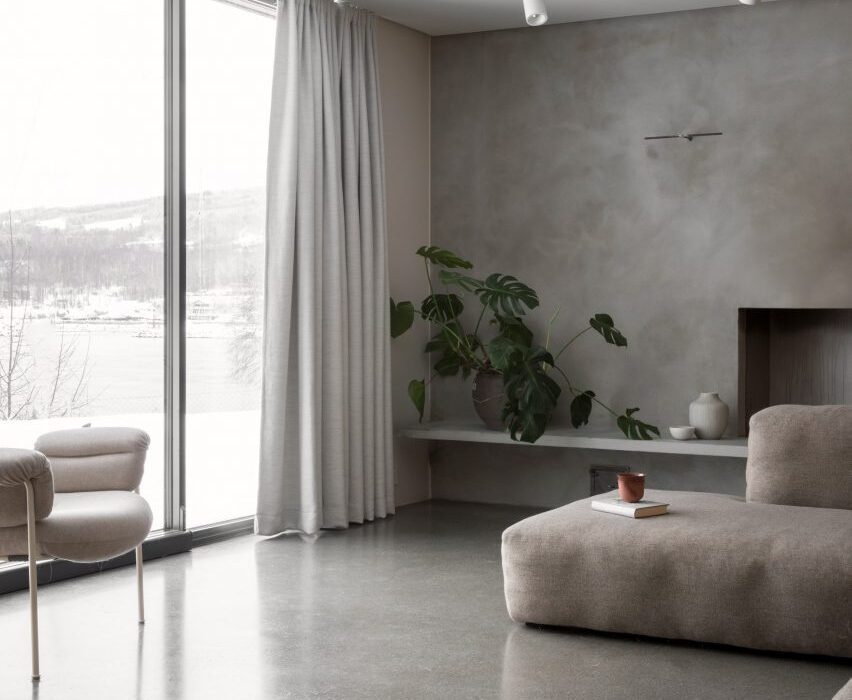
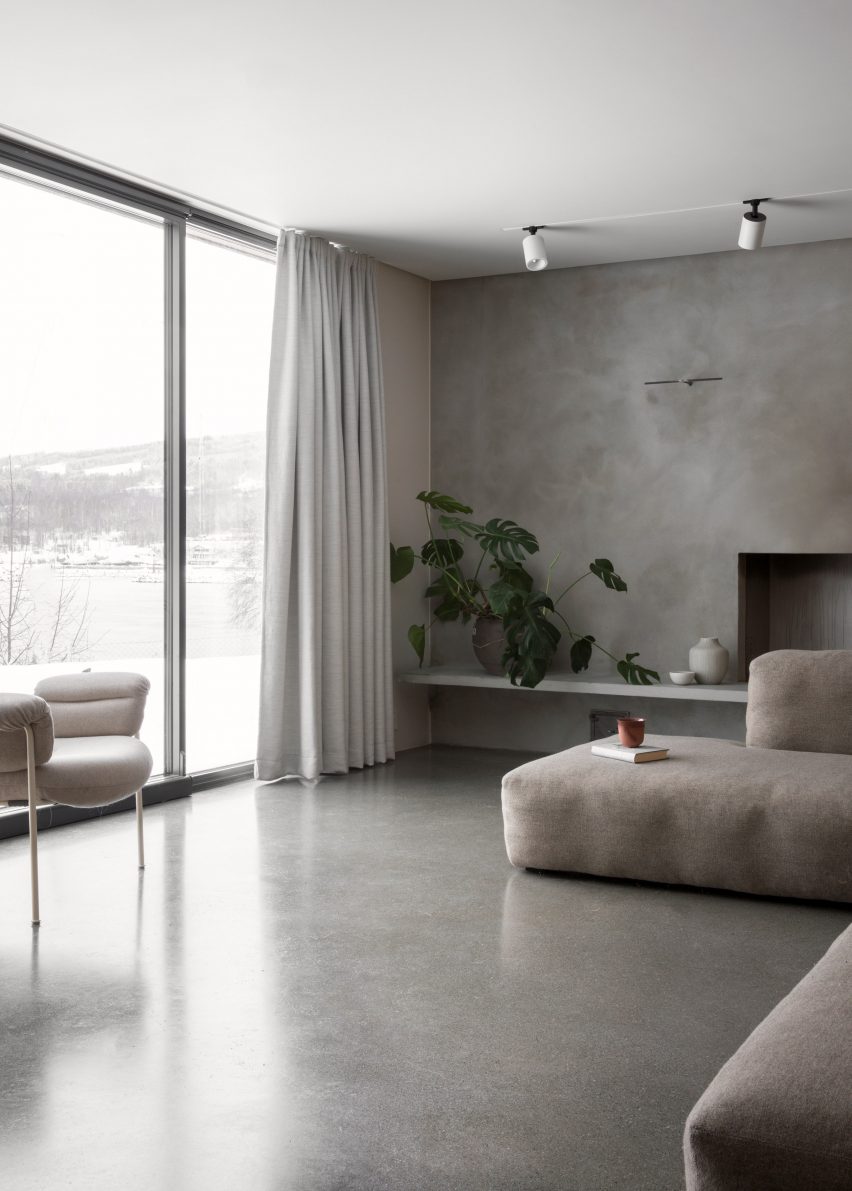
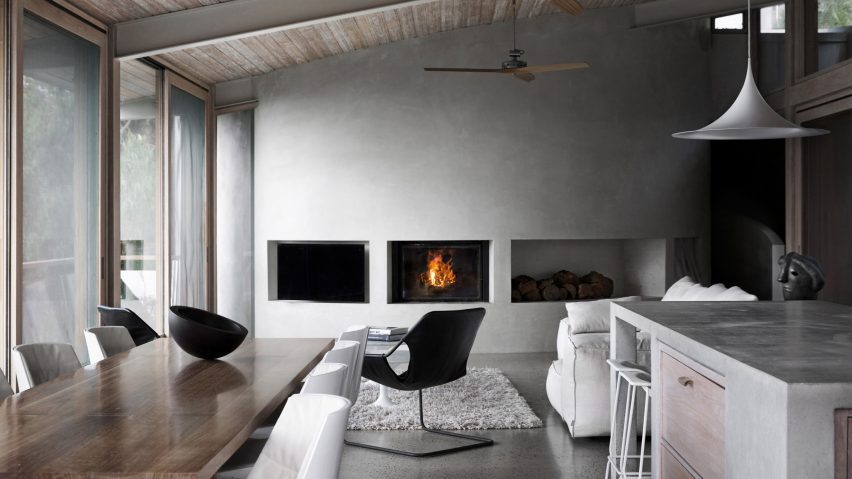
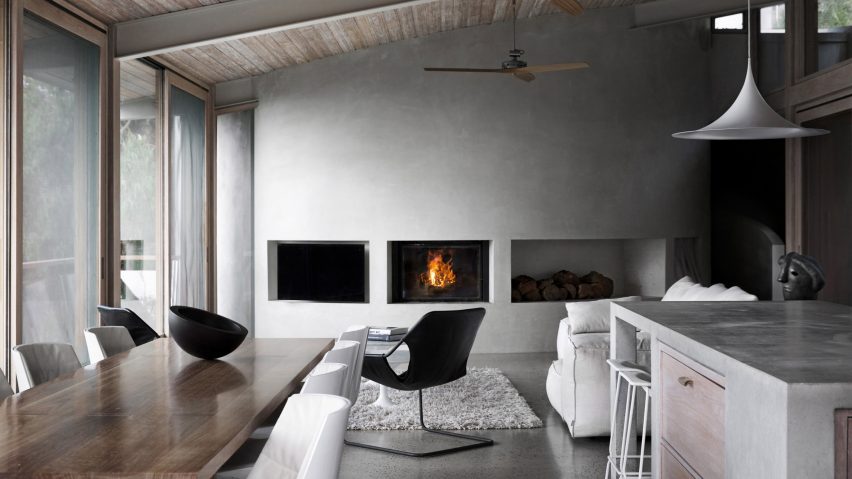
Gjøvik House, Norway, by Norm Architects

Located an hour outside of Oslo, Gjøvik House comprises six interconnected blocks with interiors featuring mottled grey walls, earthen textiles and warm wooden panelling.

Pale grey hues were used for the living room, which has a soft Bollo chair designed by Andreas Engesvik for Foglia and a modular sofa in a neutral grey tone.

According to the architect, the spaces were designed to have a “cosy and inviting feel, where you can truly hibernate while taking shelter from the frigid days of Nordic winter.”

Find out more about Gjøvik House ›


Living room of TypeO Loft in Sweden

TypeO Loft, Sweden, by TypeO

The living room area of creative studio TypeO’s guest loft in southern Sweden features floor-to-ceiling glazing that opens up onto a large balcony.

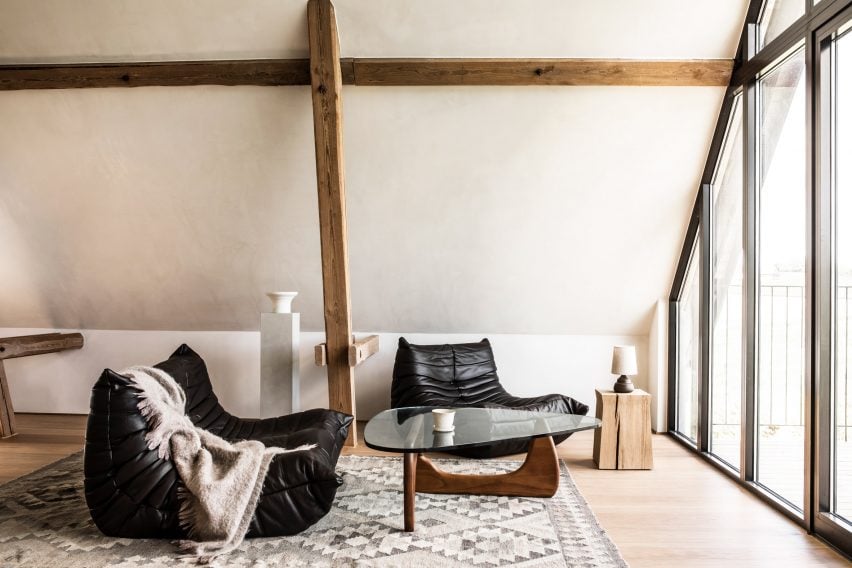
A coffee table by Isamu Noguchi for Vitra matches the wooden floor and beams and is complemented by Ligne Roset’s Togo armchairs in black leather. Sculptural decorative details add an art gallery-like feel to the bright living space.

Find out more about TypeO Loft ›


Living room of 20 Bond apartment by Home Studios

20 Bond Apartment, US, by Home Studios

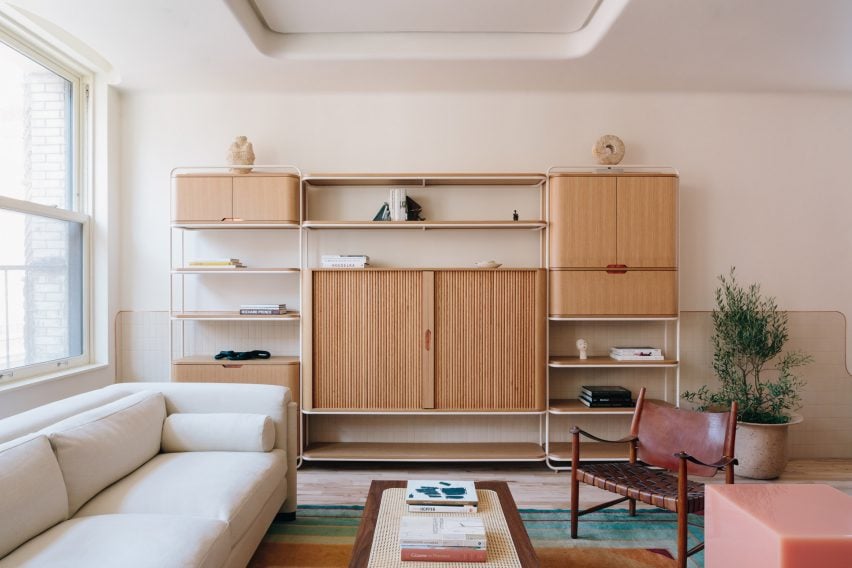
Design firm Home Studios filled the 20 Bond Apartment in New York with bespoke furniture and vintage finds, including a leather Safari chair by Danish designer Kai Winding.

An entire wall is taken up by a bespoke shelving unit that the studio made from oak wood and brass, adding another Scandinavian-style feature to the room. A rattan table and a pink resin side table by Sabine Marcelis add a tactile touch.

Find out more about 20 Bond Apartment ›


The Sculptor's Residence installation by Norm Architects at Stockholm Design Week

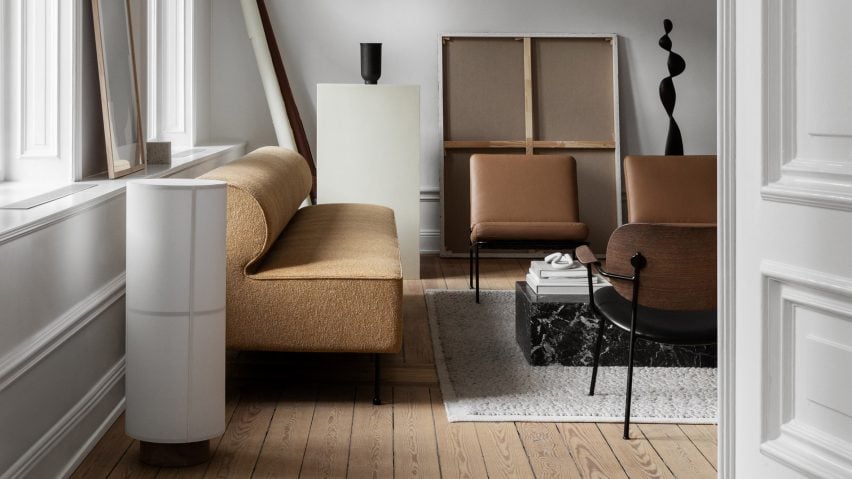
Sculptor’s Residence, Sweden, by Norm Architects, Menu and Dux

Norm Architects, Menu and Dux collaborated on this installation that was designed to resemble the “eclectic living quarters of a creative.” Muted brown and beige hues lend the interiors an earthy, organic feel, which is contrasted by the elegance of the black marble table and black sculptures.

Menu’s Hashira floor lamp adds a subtle nod to Japanese interiors, and its sleek surface offsets the knobbly texture of the brand’s Eave Dining Sofa Bench.

Find out more about Sculptor’s Residence ›


Villa Weinberg by Weinberg Architects and Friis and Moltke

Villa Weinberg, Denmark, by Mette and Martin Weinberg

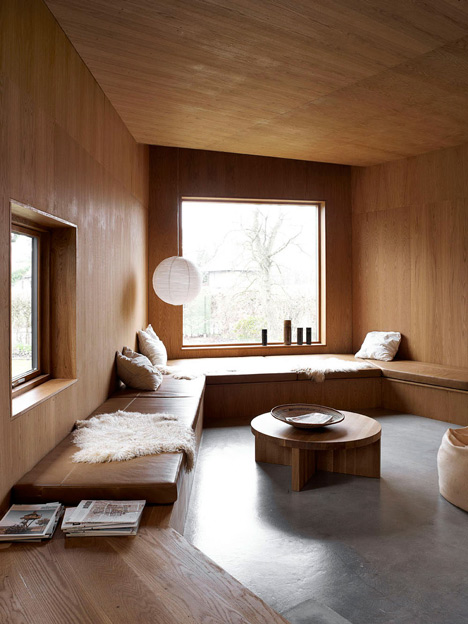
Wienberg Architects collaborated with fellow Danish architects Friis & Moltke to overhaul the 1940s Villa Weinberg. The result is a warm, inviting home lined with oil-treated oak walls.

The wood-clad living room also has a simple wooden coffee table and poufs for lounging on, as well as a built-in leather-clad bench. A rice lamp and sheepskin throw add texture to the wooden interior.

Find out more about Villa Weinberg ›


Summerhouse Solviken by Johan Sundberg Arkitektur

Solviken, Sweden, by Johan Sundberg

Scandi living rooms tend to have very neutral colours, but in this space in a Swedish holiday home, two comfy sofas in a calming seafoam green create a bright focal point in the room. The hue is picked up by a painting at the end of the large, open-plan kitchen and living room.

Small unpainted wooden coffee tables match the floor and the wooden storage cabinets alongside one wall.

Find out more about Solviken ›


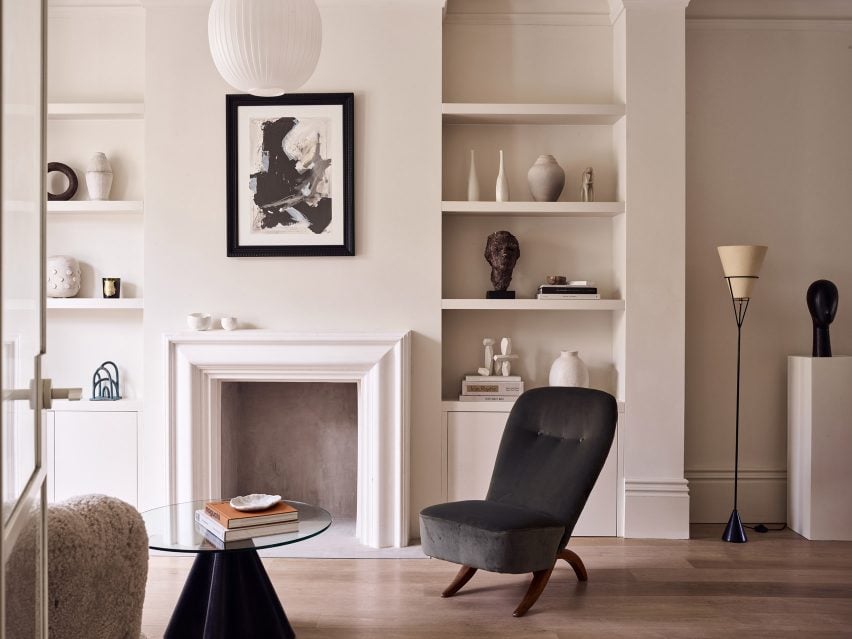
Powerscroft Road by Daytrip

London townhouse, UK, by Daytrip

Design studio Daytrip’s renovation and expansion of an east London townhouse includes a living room with white walls, a wooden floor and furniture in muted colours.

A textured “Banana” sofa designed by Danish Cabinetmaker, contrasts with the glass Trebol side table by Oscar Tusquets Blanca.

Numerous ceramics and sculptures surround the open fireplace and add life and interest to the sleek white interior.

Find out more about London townhouse ›


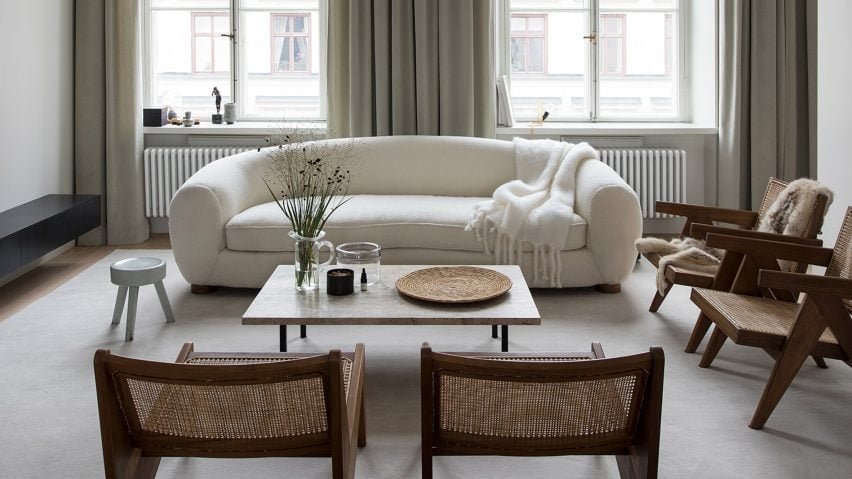
Lyceum apartments by Andreas Martin-Löf Arkitekter

Lyceum Apartments, Sweden, by Andreas Martin-Löf Arkitekter

The Lyceum Apartments in Stockholm are located in the Old Technical College’s Pharmaceutical Institute and feature light-filled rooms with clean designs and historical details.

In the living room, a curved white sofa contrasts against the angular shapes of Pierre Jeanneret’s wood and cane Easy Chairs, Soft beige curtains match the neutral hues of the rest of the room.

Find out more about Lyceum Apartments ›


Sommarhus T by Johan Sundberg

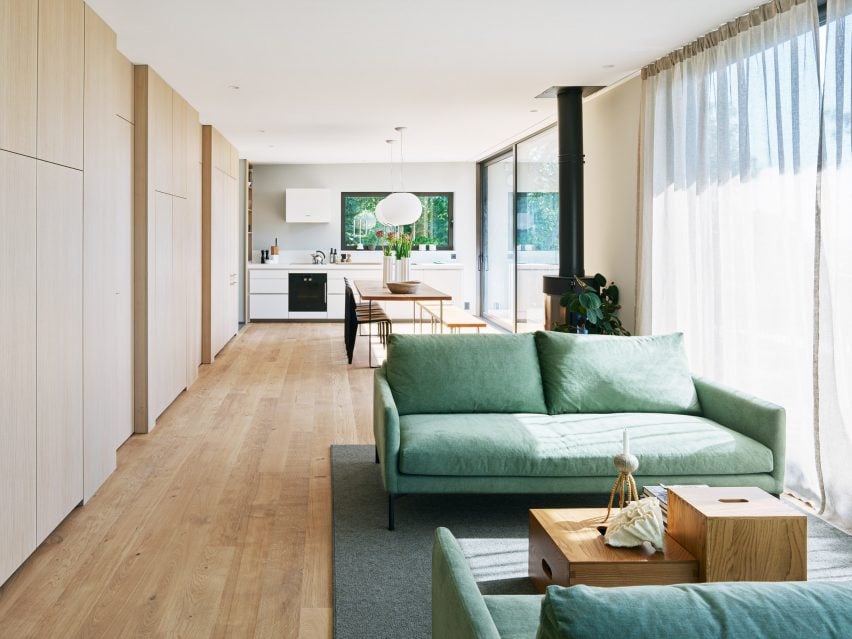
Sommarhus T, Sweden, by Johan Sundberg

This summer house by Johan Sundberg features a green sofa and a matching armchair. Both are from Danish brand &tradition and match the verdant greenery outside the large glass windows.

A practical wooden table holds globe-shaped glass vases matching the slightly uneven glass lamps in the ceiling. The entire room is clad in pale wood, including the spruce floors, creating a calm, peaceful interior. The fixed furniture in the home was made from oak.

Find out more about Sommarhus T ›


Birkedal by urlaubsarchitektur

Birkedal, Denmark, by Jan Henrik Jansen

A circular holiday home on the island of Møn in Denmark features a playful living room with white-panelled walls and a floor covered in small white pebbles collected from the beach.

A built-in curved sofa has brown leather seats that have been made cosier with added throws and pillows, and a small circular side table provides space for books, magazines and snacks.

Find out more about Birkedal ›


This is the latest in our series of lookbooks providing curated visual inspiration from Dezeen’s image archive. For more inspiration see previous lookbooks showcasing colourful interiors, calm living rooms and colourful kitchens.

Reference

Living room with concrete wall
CategoriesInterior Design

Dezeen Lookbooks present interior design inspiration and trends

Living room with concrete wall

Dezeen has launched Dezeen Lookbooks, a new section featuring roundups of home interiors and decor trends to help designers and design lovers plan their projects.


Published each Saturday, the visually driven Dezeen Lookbooks present roundups of images of contemporary interiors selected from our vast archive of over 750,000 images.

Each roundup is curated by the Dezeen editorial team and addresses a different room and theme.

A peaceful bedroom
Top: an image from our cosy living rooms lookbook. Above: a project from the peaceful bedrooms lookbook

Lookbooks published so far feature living rooms, dining rooms, bedrooms, kitchens and bathrooms.

Dezeen Lookbooks is a response to the surge of interest in home design since the start of the coronavirus pandemic, which has seen people spending much more time at home.

As a result, web traffic to Dezeen posts about home interiors has soared.

Klinker apartment
This Barcelona apartment features in our colourful kitchens lookbook

Popular Lookbook stories we’ve published over the last few months include our showcases of living rooms with calm interiors, bold bathroom designs and thirty kitchens designed by architects.

We’ll be adding more image-led roundups over the coming weeks and plan to expand the section to include other types of interiors plus trend reports in future.

Interior design fans can also check out our sections on residential interiors, apartments and houses.

Reference

Living room in Archipelago House, Sweden
CategoriesInterior Design

Seven Japandi interiors that blend Japanese and Scandinavian design

This Dezeen Lookbook presents seven interiors that combine design influences from Japan and Scandinavia in a style that has become known as “Japandi”.


A hybrid of east and west, the style is increasingly popular as a way to create interiors that are minimal without being cold. Japandi makes clever use of craftsmanship and tactile materials, such as textured wood and handmade ceramics, to add comfort and warmth.

It features pared-back styling, precise craft and natural materials – qualities that have long been central to the design traditions of Japan, and the Nordic countries, particularly Denmark and Sweden.

This is the latest lookbook in a series providing visual inspiration for interior designers and design lovers. Previous lookbooks in the series have showcased bathrooms with views, calm living rooms and peaceful bedrooms.


Living room in Archipelago House, Sweden

Archipelago House, Sweden, by Norm Architects

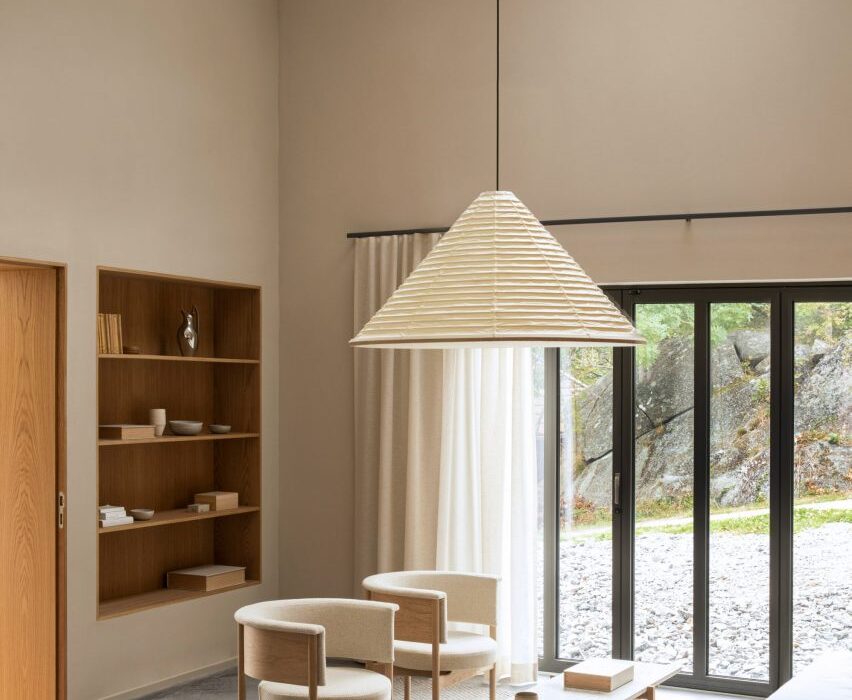
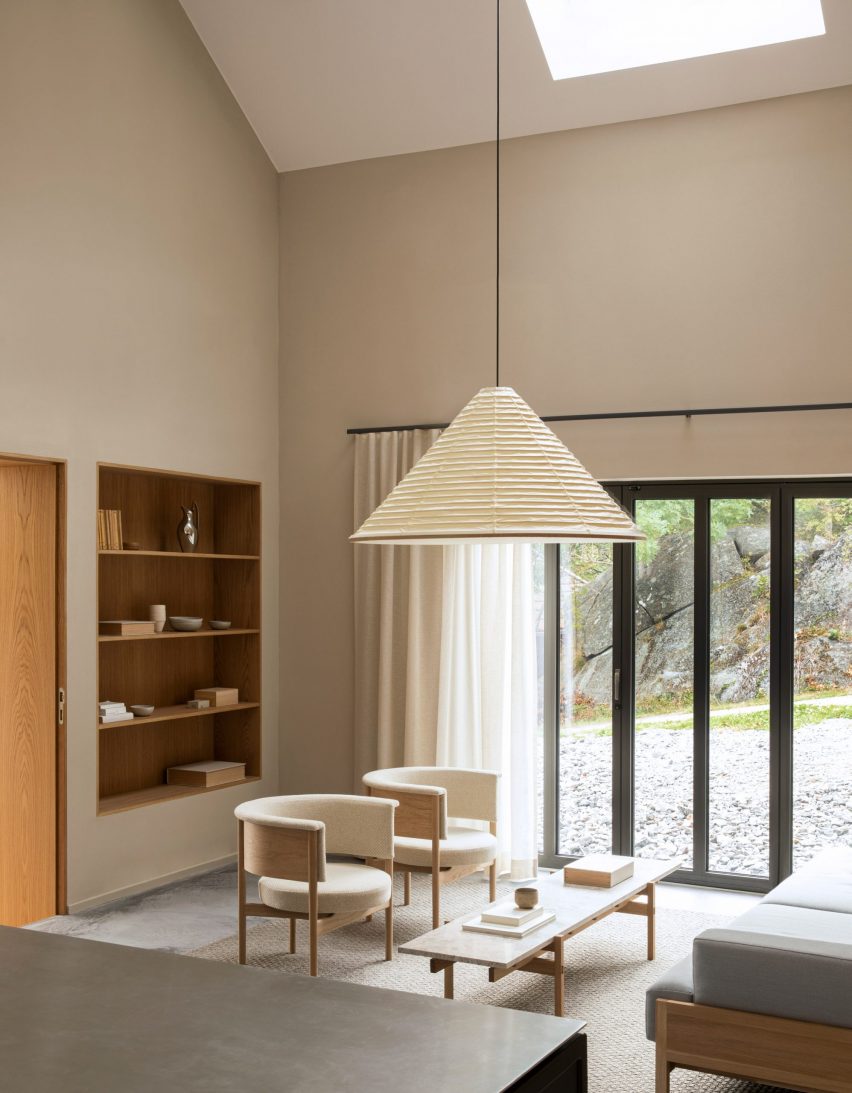
Norm Architects’ Archipelago House is a pine-clad holiday home that was designed to embody Swedish and Japanese aesthetics, a theme that comes through most clearly in the double-height living room.

Here, the owners can lounge on furniture that Norm Architects designed together with Karimoku Case Study – the sister brand of Japanese manufacturer Karimoku.

Creamy white and pale grey hues complement the light wood furniture in the room, where the main light source is a bespoke cone-shaped lantern. This was designed in washi paper by Japan’s Kojima Shouten, which has been making lanterns for over 230 years.

Find out more about Archipelago House ›


Ariake collection at Stockholm Design Week

A Quiet Reflection show, Sweden, by Ariake

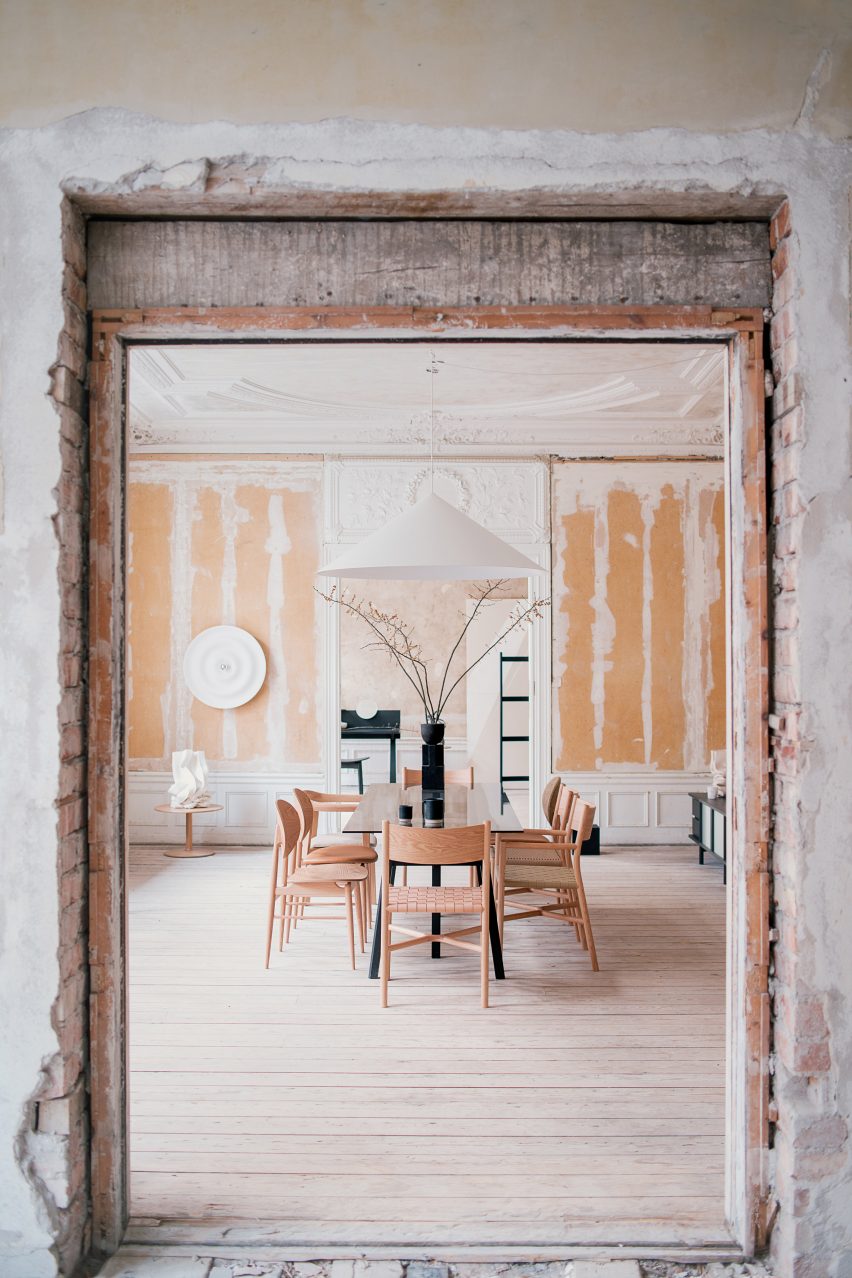
An exhibition by Japanese furniture producer Ariake at Stockholm Design Week showcased the label’s wooden furniture, which was designed in collaboration with a number of designers from all over the world (above and top).

Set in the dilapidated former Mexican embassy in Stockholm, the clean lines of the furniture stood out against the crumbling walls and stuccoed ceilings, creating a mix of texture and colour and an appreciation for older craftsmanship that perfectly embodies Japandi.

Find out more about A Quiet Reflection ›


Interior of Pantechnicon store, London

Pantechnicon, UK, by Farrells

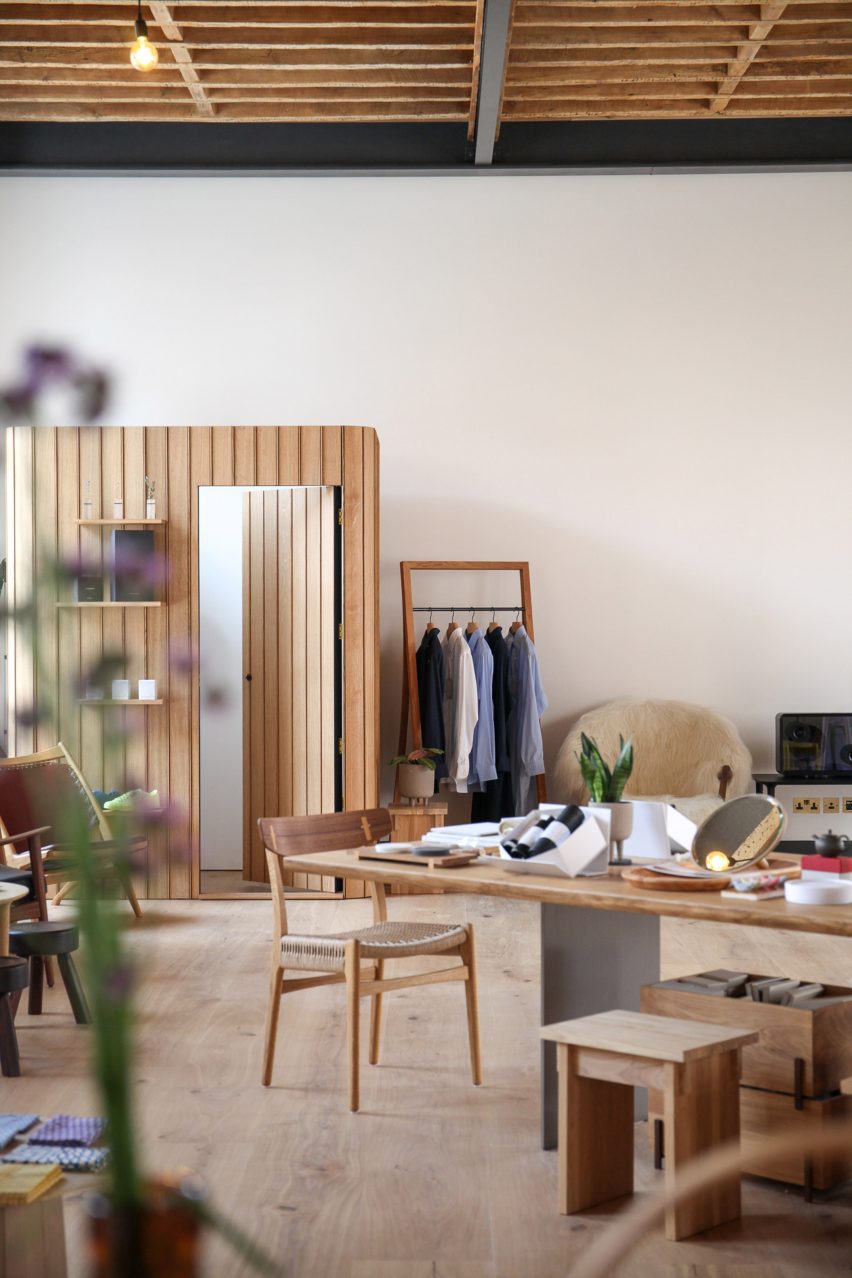
Pantechnicon, located in a 19th-century building in London’s Belgravia neighbourhood, is home to both shops and restaurants that focus on Japanese and Nordic culture. Tenants include a cafe by French-Japanese cult record label Kitsuné and a Nordic restaurant called Eldr.

While Pantechnicon’s interiors are pared-down, plenty of wood detailing gives the space an inviting feel, and lantern-like lights and green plants have been added to soften the minimalist aesthetic.

Find out more about Pantechnicon ›


Japandi interior in Hudson Woods house

Upstate New York Home, US, by Magdalena Keck

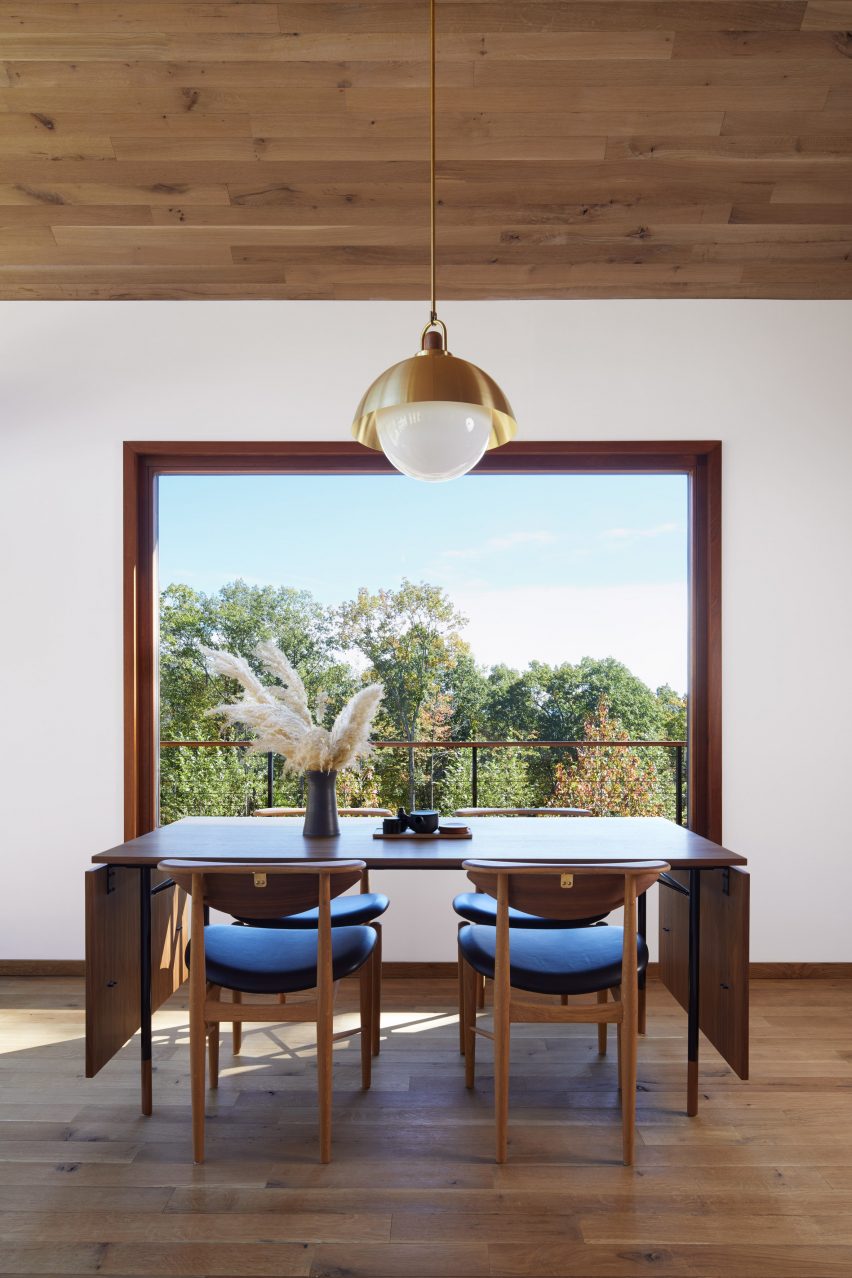
A family with Japanese and American heritage live in this home in the Catskill Mountains, which has an interior that draws on both their backgrounds and adds plenty of Scandinavian style.

In the open-plan living room, dining room and kitchen, a table and chairs by Danish designer Finn Juhl share the spotlight with Japanese pottery and woven mats sourced from Tokyo. Mid-century design and American crafts also feature in the house, balancing out the Japanese minimalism.

Find out more about Upstate New York Home ›


Copenhagen restaurant with Japanese-style interior

Izumi, Denmark, by Pan-Projects and Mok Architects

A Japanese restaurant in Copenhagen is the perfect setting for an interior style that mixes the two cultures.

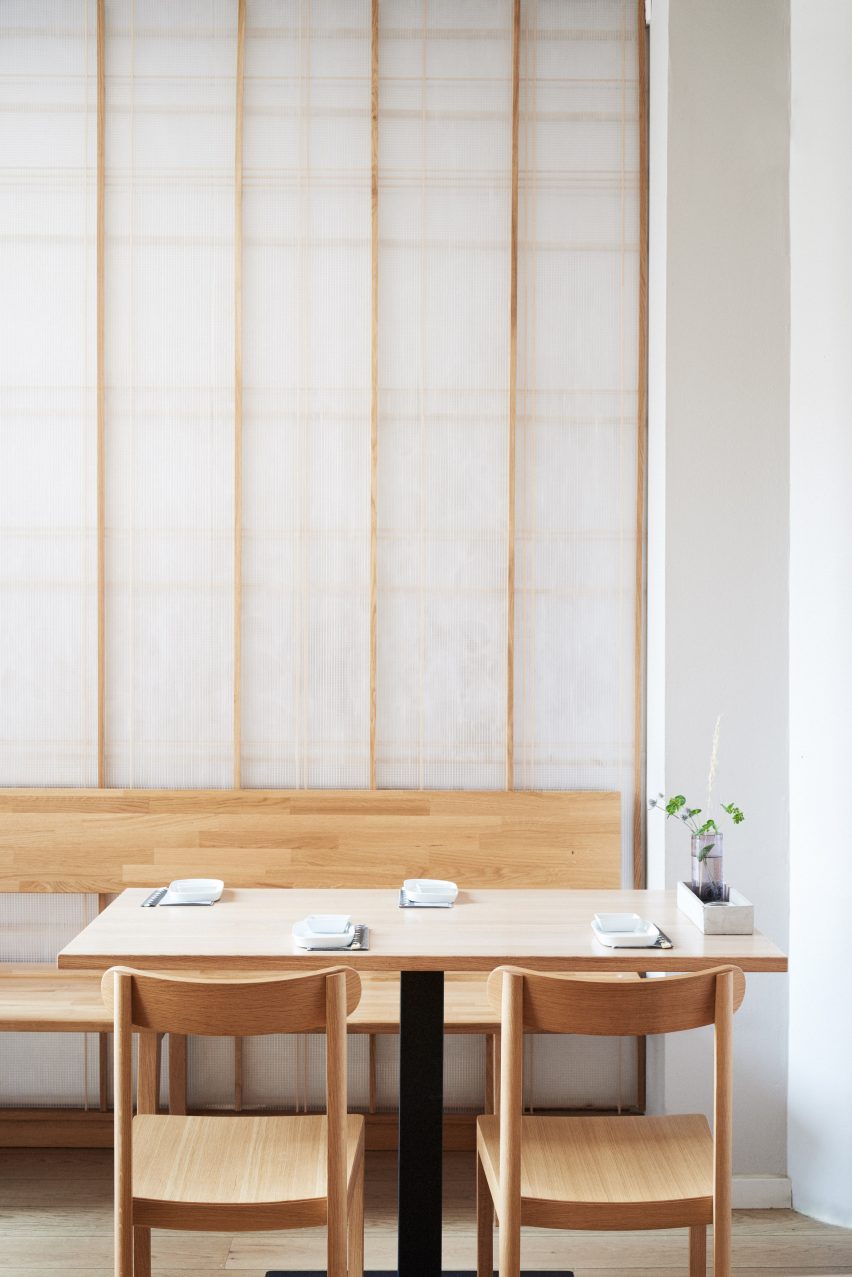
Izumi, in the city’s Charlottenlund suburb, draws on both Japanese restaurant interiors, with translucent screens that reference traditional paper sliding doors, and Scandinavian design. This can be seen in the curving oak panels that surround the open kitchen.

“Japan and the Nordic countries have a rich history of cultural interactions,” explained Pan-Projects’ founders Yurioko Yaga and Kazumasa Takada. “Especially in the field of design, there are many examples that are rooted originally in Japanese culture yet developed uniquely in the land of the Nordic region.”

Find out more about Izumi ›


Claesson Koivisto Rune Tokyo hotel

K5 Tokyo Hotel, Japan, by Claesson Koivisto Rune

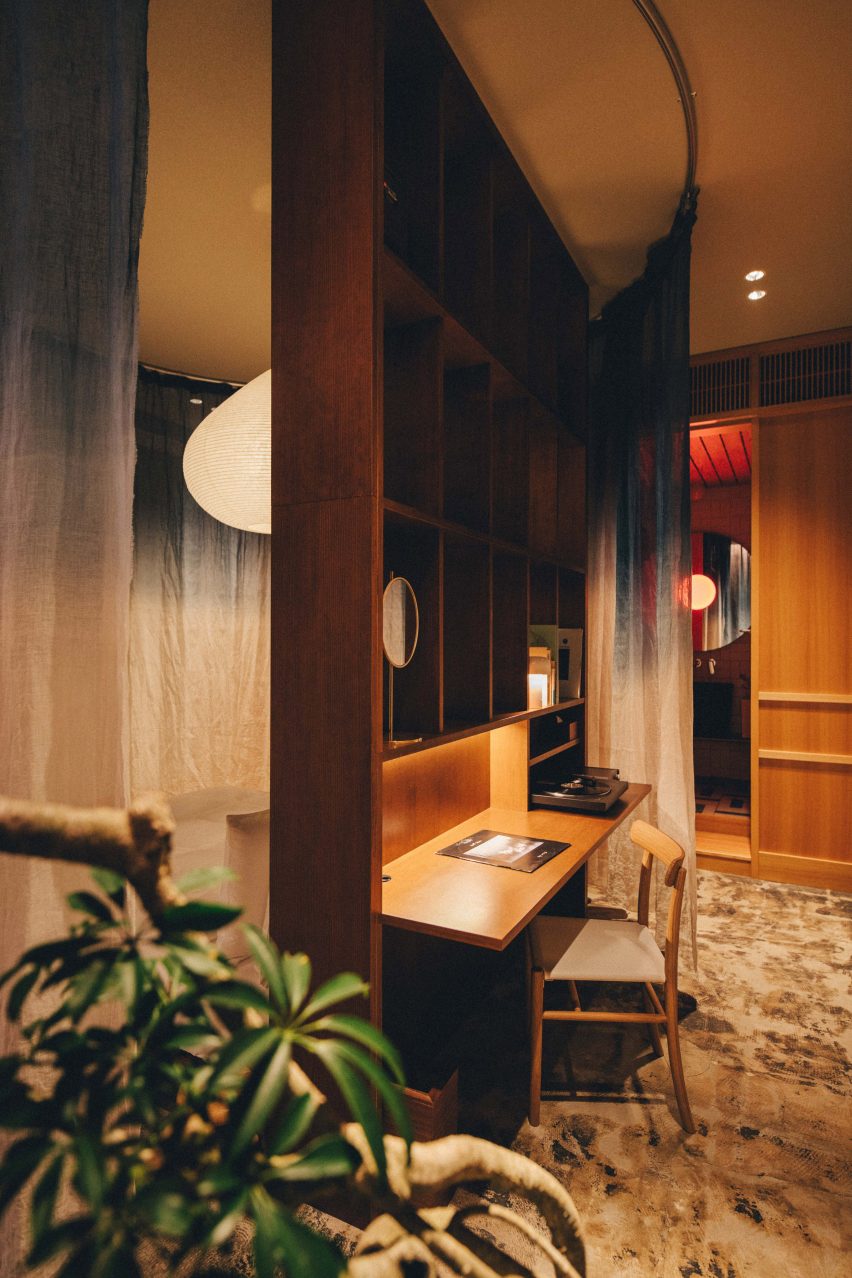
A converted bank building in Tokyo, bombed during world war two, was turned into a boutique hotel by Swedish studio Claesson Koivisto Rune. The studio created a warmer interior style than is usually associated with Japandi, using tactile details and saturated hues.

Thin blue ombre curtains evoke the traditional craft of Japanese indigo-dyeing, or aizome, while sturdy wooden room dividers nod to Scandinavian mid-century modern design. The studio based K5’s interior around the Japanese notion of “aimai”, which is used to describe things that are ambiguous or unclear.

Find out more about K5 Tokyo Hotel ›


Japandi-style interior, London

Powerscroft Road townhouse, UK, by Daytrip

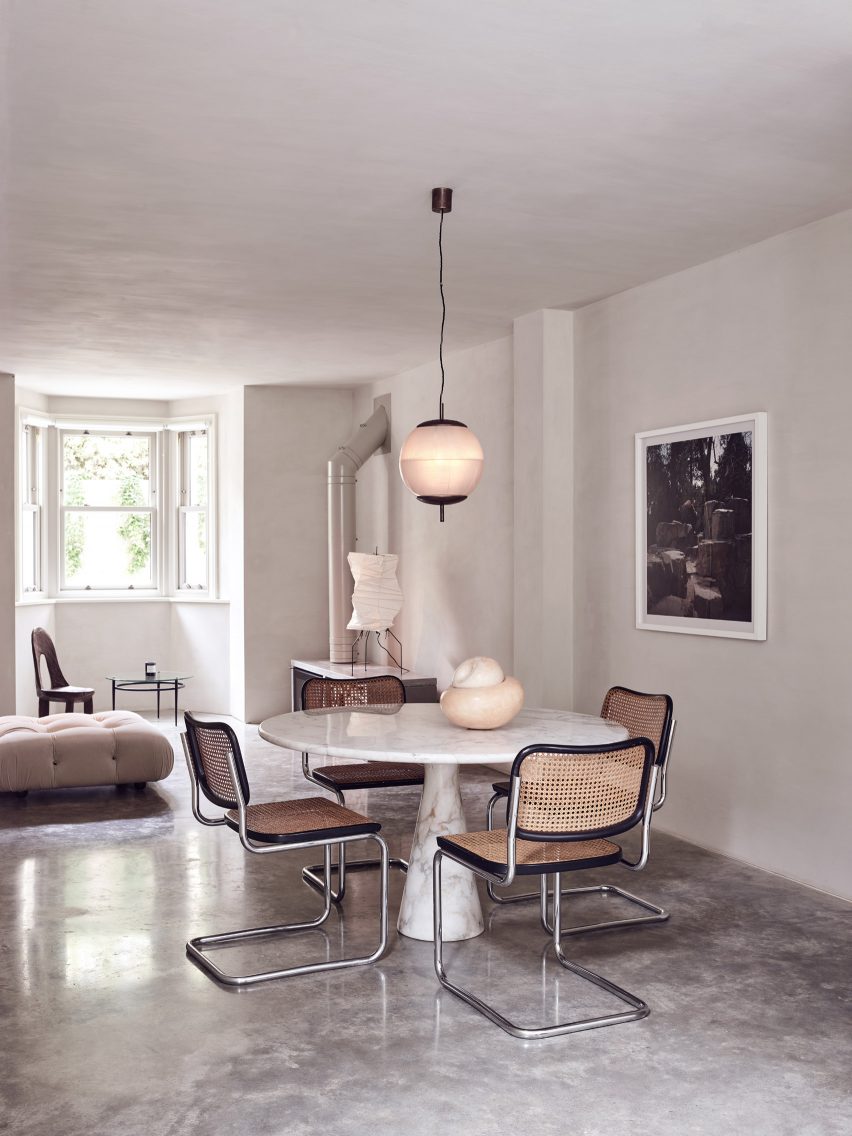
As part of the renovation and expansion of this London townhouse, London-based Daytrip loosely lime-washed the walls and added polished concrete floors to create a “calm and serene home”.

The Scandinavian influence can be seen in the warm wood details used throughout the flat – as in this dining room, where a dark-wood chair complements a dainty table underneath the window – while elegant lighting fixtures add an East Asian feel.

A Japanese paper lamp from designer Isamu Noguchi’s Akari range stands on a wood-burning stove stacked with logs, Scandinavian-style.

Find out more about Powerscroft Road townhouse ›


This is the latest in our series of lookbooks providing curated visual inspiration from Dezeen’s image archive. For more inspiration see previous lookbooks showcasing peaceful bedrooms, calm living rooms and colourful kitchens.

Reference

Pratt Institute
CategoriesInterior Design

Pratt Institute interior design students showcase end-of-year projects

Twenty interior design students at New York City’s Pratt Institute present their final projects in Dezeen’s latest school show.


From a building that could purify contaminated floodwater to analysing how to improve user’s airport experiences, these projects by undergraduate and postgraduate interior design students at Pratt Institute explore how interiors affect our environment and behaviour.


School: Pratt Institute
Courses: BFA Interior Design and MFA Interior Design

School statement:

“The Bachelor of Fine Arts and Master of Fine Arts in Interior Design at Pratt Institute has consistently ranked as the top interior design programmes in the United States and are considered to be some of the most prominent and influential. The courses prepare students to engage in critical inquiry and exploration – skills that establish them as innovators having an impact on the profession, the discipline and research on the interior environment.

“The programmes are architecturally oriented with emphasis on spatial articulation. They are designed to guide students in generating creative solutions by understanding craft, light, colour, and material research. Through theoretical and applied research, the curriculum addresses emerging and innovative technologies, interdisciplinary collaboration and sustainable practices. Both degrees focus on larger issues of ethical and social responsibility, diversity, equity, and inclusion through an understanding of global cultural history and its context.”


Pratt Institute

Solitary Living and Social Interactions in Urban Community by Bingyu Hu

“With different scales, functions and degrees of transparency, interior spaces serve as containers to protect privacy, stimulating communication and participation. As a result, they respond to individual’s lives while fostering community interaction.”

Student: Bingyu Hu
Advisor: Woody Rainey
Course: 
MFA Interior Design
Email: 
bhux16@pratt.edu


Pratt Institute

Activating Boundaries by Caitlin McMasters

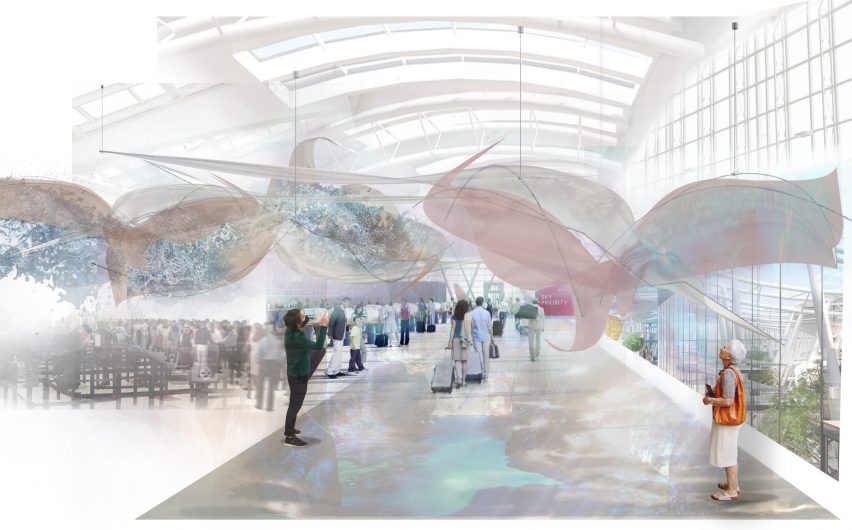
“Activating Boundaries addresses the way generic airport experiences have become passive due to the overwhelming amount of stress placed on users throughout their journey. The effects of these emotions leave the user searching for entertainment from the consumerism offered post-security check.

“Based on research, the stress users undergo are elevated in periods of waiting and delays when the presence of large lines appear. Is there an opportunity to repurpose these boundaries? Can stressors be transformed into a sensory experience? How can we transition from the independent isolation of travelling to experience the journey of travelling together?

“This thesis allowed me to investigate the future of design amidst a global pandemic that has altered the way we perceive space and people. It investigates reconnecting people with each other.”

Student: Caitlin McMasters
Advisor: Dalia Hamati
Course: BFA Interior Design
Email: cmcmaste@pratt.edu


school show

Harvesting Water: Reimagining Environmental Waters as Constructive Materials in the Resilient Coastal Interior by Kats Tamanaha

“By 2060, an estimated 13 million Americans will be displaced due to rising sea levels and coastal flooding. This thesis explores the possibilities of tidal, flood and stormwater as ‘materials’ in our built environment. Here their potential is shifted, from substances that destroy to resilient tools used to manage flooding.

“Water within the built environment is hidden, hyper-controlled through intricate plumbing systems and filtered for use. Water within the exterior is uncontrolled and often feared. Floodwater is contaminated, picking up traces of where it has been and what it has touched. As sea levels rise, areas formerly at risk for 100-year floods will soon be submerged at high tide. How can the interior adapt to embrace the new reality of water rather than avoid it?

“My project embraces the future of permanent tidal flooding. The building passively phytoremediates toxic water while creating an adaptive form of the interior. It explores possibilities of tidal, flood, and stormwater as tools for long-term, in-place resiliency in coastal communities facing an increasing risk of flooding.”

Student: Kats Tamanaha
Advisor: Irina Schneid
Course:
MFA Interior Design
Email: 
ktamanah@pratt.edu


Pratt Institute

Fragment / Reconcile by Aoife McCaul

“Fragment / Reconcile addresses the complexity of living in a post-conflict, economically deprived community that struggles under the burden of the past. Following the events of the troubles and the death of a dominant industry, an entire generation is coming of age in Derry who have to navigate insurmountable unemployment rates and forge a path to peace with little to no outside support.

“To help mitigate the most pressing issue for youth in Derry, I proposed an incubator and teaching facility to build community resilience through a network of small businesses. The centre would provide the resources currently lacking to retain their workforce and make upward mobility possible within the city.

“Growth is made possible by the incubator’s interactive and reflective practices. It engages with the community on a macro scale while also encouraging individual healing on a micro scale. As the user moves through space, it transitions from a collaborative environment to a self-reflective one. An archive becomes the basis upon which to preserve and reflect the collective memory of the people it serves. By being informed by the past, they can move towards the best version of their future.”

Student: Aoife McCaul
Advisor: Melissa Cicetti
Course:
BFA Interior Design
Email: 
amccaul@pratt.edu


Pratt Institute

Inhabiting In-between Space by Tao Sun

“This project puts forward new ways to inhabit in-between space. By breaking down interior elements one by one, a layering of interior and exterior space emerges and reinvents traditional spatial constructs.”

Student: Tao Sun
Advisor:  Edwin Zawadzki
Course: MFA Interior Design
Email: tsun4@pratt.edu


Pratt Institute

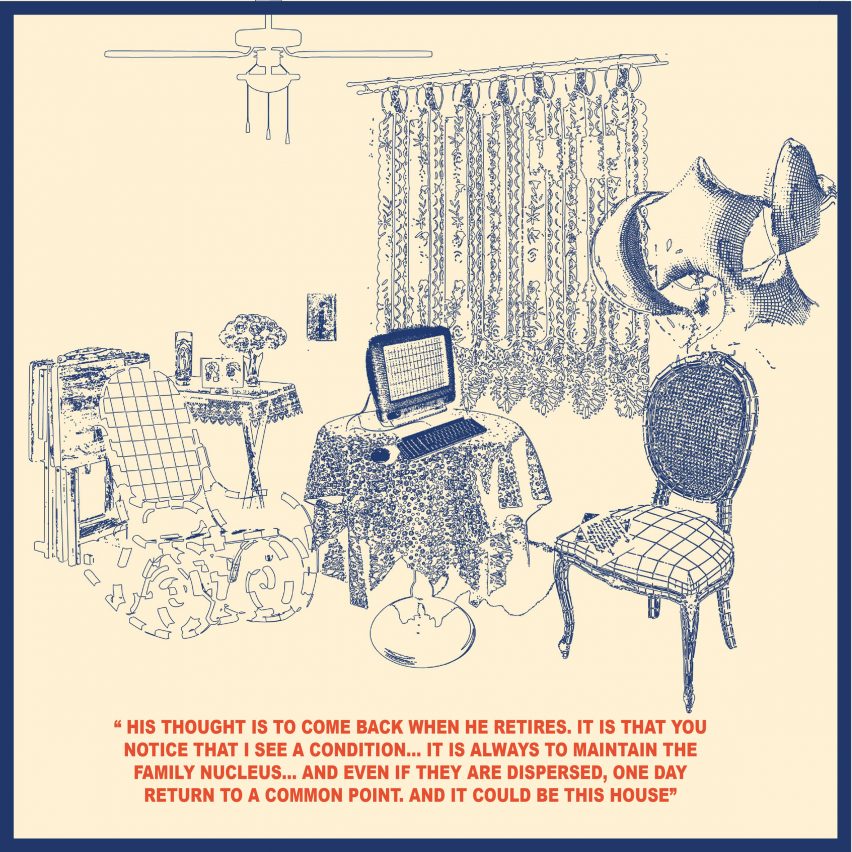
“We Learn Culture At Home” by Bridget Rodezno

“This thesis focuses on the home as a ‘central agent of change’ in response to the remittance between the Salvadoran-American transnational identity. Here, remittance signifies the value of a cultural currency by forming a multi-generational landscape of retraced rituals and reassembled emblems.

“At the beginnings of a discourse, there is an agency in how the home responds to generational, cultural, psychological and environmental issues to constantly shape, design and re-examine contemporary living.”

Student: Bridget Rodezno
Advisor: John Nafziger
Course: BFA Interior Design
Email: brodezn5@prattt.edu


Pratt Institute

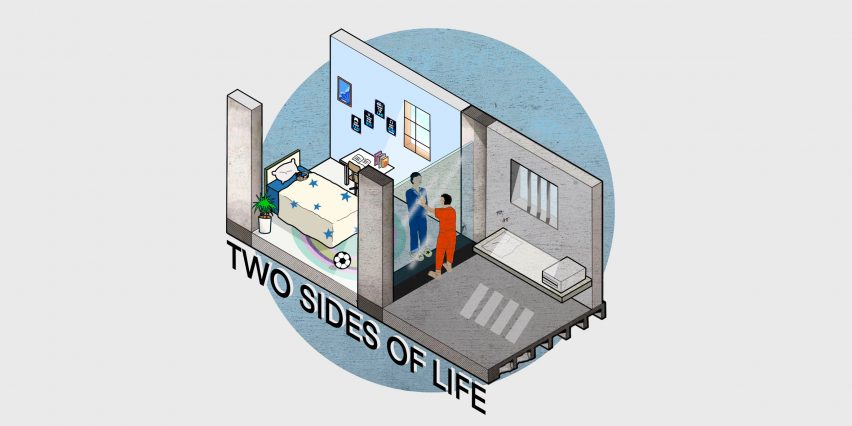
“The Nest is a didactic and prototypical full-time detention centre designed for male adolescents who have committed minor crimes. It is a critique of the current antiquated prison form in New York City. It explores educational, healing, and therapeutic spatial relationships and rethinks surveillance in order to reform negative behaviours and support mental health issues.”

Student: Chaowei Wang
Advisor: Alison Snyder
Course: MFA Interior Design
Email: cwang31@pratt.edu


Pratt Institute

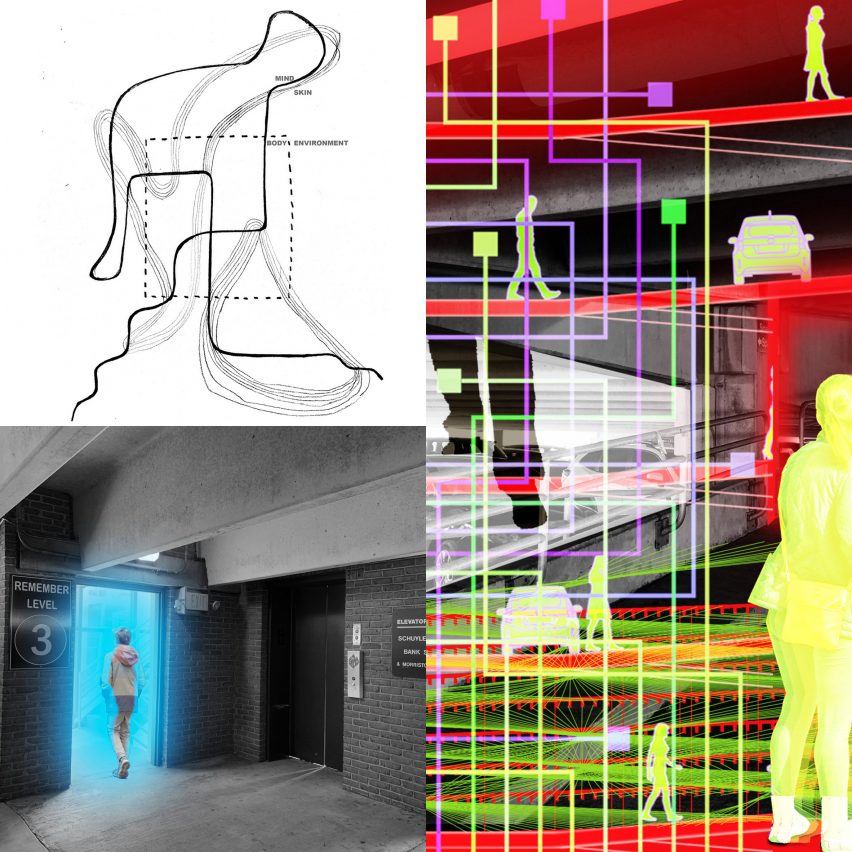
Moments of Movement by Kelli McGrath

“Moments of Movement investigates how interior space can directly affect one’s bodily awareness and interactions with the environment. Rather than habitually moving through space, space can be designed to heighten our awareness of our body and its relationship with the material world.

“The intention is to bring more awareness and appreciation to those small, everyday events that we often perform on auto-pilot. Although we tend to seek out spectacular events, life often happens in those everyday moments in-between. Rather than rushing past them, the users are prompted to slow down and experience those moments.

“The thesis proposes that the body will be part of a network where interactions and movements through thresholds directly affect the environment. By augmenting thresholds within a parking garage and adding screens, mirrors, enhanced lighting, walls and monitors, body movements will be figured as the form-making material of the project. As the body moves within and between various garage zones, it becomes part of a network and explores the relationship between the environment and agency.”

Student: Kelli McGrath
Professor: Brendan Moran
Advisor: BFA Interior Design
Email: kellimcgrath0817@gmail.com


Pratt Institute

Building Within Memory: Strengthening Place Identity in Deteriorating Environments by Claire Riordan

“Place-identity is defined by a person’s cognitions about the physical world around them. At their core are a person’s environmental past, made up of places, spaces and characteristics that have shaped their biological, psychological, social, and cultural needs.

“This thesis analyzes how the changing built environment can be used as a tool to reveal layers of place-identity. The mutual experience of change over time will inform the connection between the physical body and the spatial body, resulting in a stronger sense of self-identity.”

Student: Claire Riordan
Advisor: Francine Monaco
Course: 
MFA Interior Design
Email:
 criorda3@pratt.edu


Pratt Institute

Stage Fright by Allison Margret Piccone

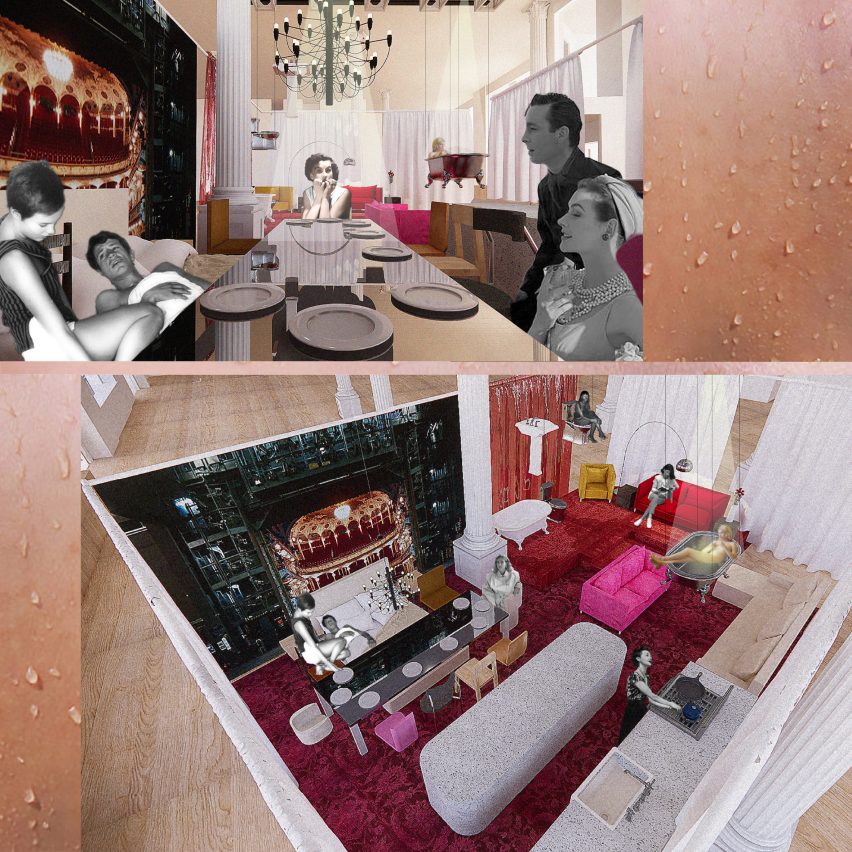
“Through the theory that performance exists every day, stage fright occurs in domestic, banal settings. In this project, customers in a retail furniture store become performers during their perusal of the staged vignettes by subverting social thresholds and design standards, new social and physical relationships form, alleviating the stigma of stage fright.

“Set in the theatrical and historical furniture showroom – ABC Carpet and Home – the staged sets which aim to present a home setting are critiqued as performative. Hired performers act out different domestic activities and shoppers find themselves crossing the threshold from audience to performer. In their attempt to look at the furniture, test it and imagine it in their own homes, they become part of the performance.

“An open floor plan allows for programmes to cross over, as a bed becomes a seat in a dining setting. Some toilets are for show, while others have working plumbing. The sets have spotlights, curtains and a fly system that allows for changing scenes, as furniture flies overhead, adding a theatrical quality to the performance.”

Student: Alison Margret Piccone
Advisor: Alex Schweder
Course:
BFA Interior Design
Email: 
allisonpiccone@gmail.com


Pratt Institute

House of Harmony by Huangyu Zhang 

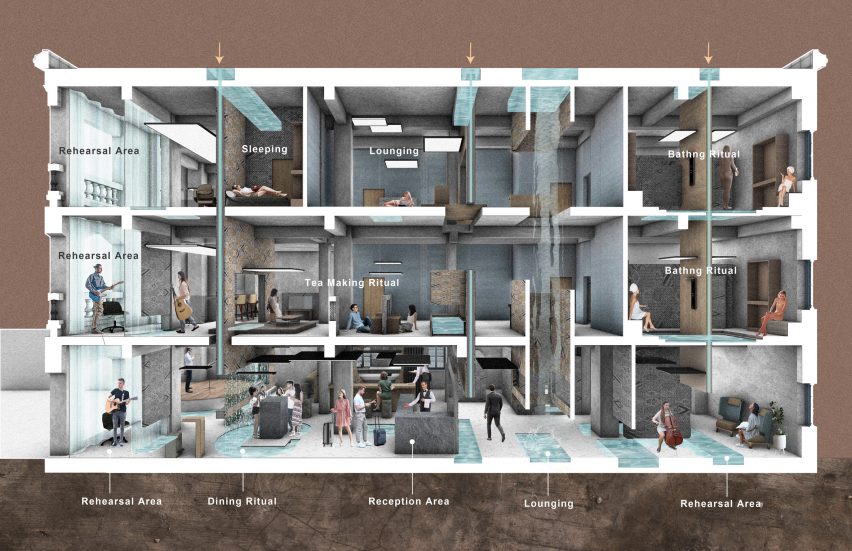
“This thesis explores a shared harmonic environment for residents and tourists. It uses performance rituals to create a prototypical system for cultural interaction and social harmony in creative cities of music evaluated by UNESCO.

“Spatial devices create new relationships between tourists and residents, combining with daily events such as dining or lounging, and cultivating cross-cultural understanding through the universal language of music and integrating it into the celebration of rituals such as holidays and food.

“The rituals will create a specific spatial quality by increasing culture experiences by controlling the sound transparency and visualizing the vibration of sound.”

Student: Huangya Zhang
Advisor:  Nina Freedman
Course:
MFA Interior Design
Email: 
zhanghuangyu1@gmail.com


Institute

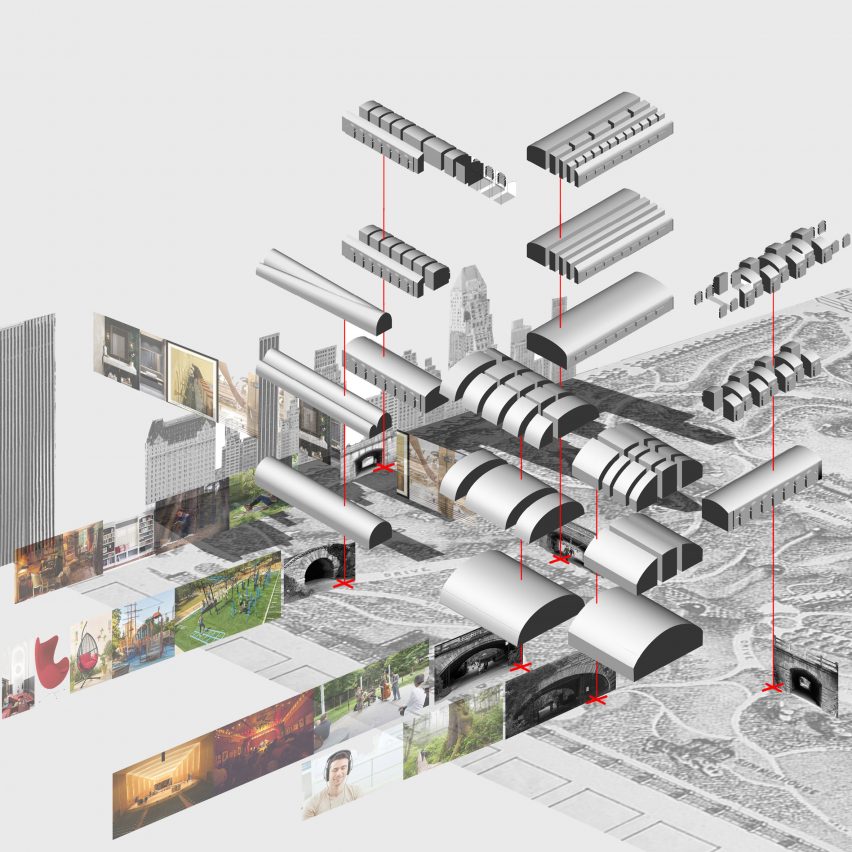
Curating Urban Wormholes by Rianna Desai

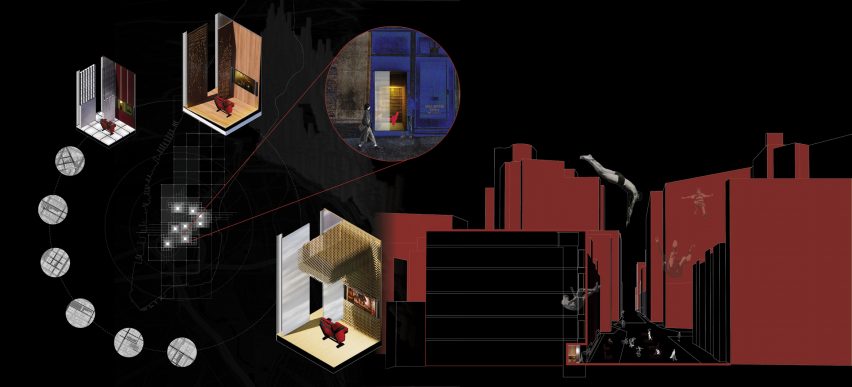
“Curating Urban Wormholes explores the city through a new lens: by inserting cinematic experiences in sidewalk freight elevators that connect invisible, disparate moments in the cityscape. The elevators function as portals to parallel universes providing a social and cultural exchange between program and user.

“The project was inspired by the loss of authentic cinematic experiences due to the pandemic and the heterotopic quality of underutilized niches in the city.

“The network of temporary cinematic installations in sidewalk freight elevators reengages the city by activating unused, ‘other’ spaces, unlocking the city’s true potential. The curated serendipity of the wormholes invites the rediscovery of the urban landscape.

“These wormholes have a nodular quality that gives them an existence of their past the time of their installation, allowing them to leave behind traces in the urban fabric that add to the layered experience of the city.”

Student: Rianna Desai
Advisor: Karin Tehve
Course:
BFA Interior Design
Email: 
riannadesai1998@gmail.com


Pratt Institute

Beneath the Surface: An Inquiry into Boundary as a Didactic Threshold to Promote Awareness by Nella Gray

“Beneath the Surface explores ways to create tension within layers of interior design to provoke awareness and empathy for evasive issues.

“This project questions the separation of people from systems of production and waste as it enables apathy towards the concealed relationship of consumption and environmental degradation.”

Student: Nella Gray
Advisor: Claudia Hernandez
Course:
MFA Interior Design
Email: 
nschools@pratt.edu


Pratt Institute

Sonic Parallax: Sensory Velocity by Nil Karaer

“Borrowing existing materials inherent to the New York City subway station, such as the 3×6 tiles, the project will manipulate the surfaces of the City Hall Station to become an interactive, acoustical field of sonic densities. This experiential-interactive installation intends to address the notion of speed by making the acoustic field and the different paces of the city visual. In other words, rendering auditory data points visible to understand the functioning of NYC.

“The exploration is towards creating an interactive instrument activated through the movement of the users and the train in relation to the parallax effect.

“City Hall Station is underneath the City Hall Park, and the entrance is through the park. It is a loop station for Train Six: The station has existing skylights to the park’s surface.

“The project will be taking a material inherent to the subway station and recreate exposed surfaces in a different function, colour, and densities of tiles to highlight the notion of speed which could be experienced visually and acoustically.”

Student: Nil Karaer
Advisor: Annie Kwon
Course:
BFA Interior Design
Email: 
nkaraer@pratt.edu


Pratt Institute

Various projects

Clockwise from top left:

Pools Under Pavement by Michael Antonio Warren (MFA Interior Design)
A Void: Rising Sea Level by Seung Heon Lee (BFA Interior Design)
Implicit Bias by Xinxiao Hui (BFA Interior Design)
Weaving Connectivity by Xiaoke Li (MFA Interior Design)
Breathing Rules by Yang Pei (MFA Interior Design)
Haptic Therapy Centre by Honghao Chen (BFA Interior Design)

The portfolio and thesis presentations of the Pratt School of Design MFA and BFA Interior Design Class of 2021 can be found on Pratt Institute’s website.


Partnership content

This school show is a partnership between Dezeen and The Pratt Institute. Find out more about Dezeen partnership content here.

Reference