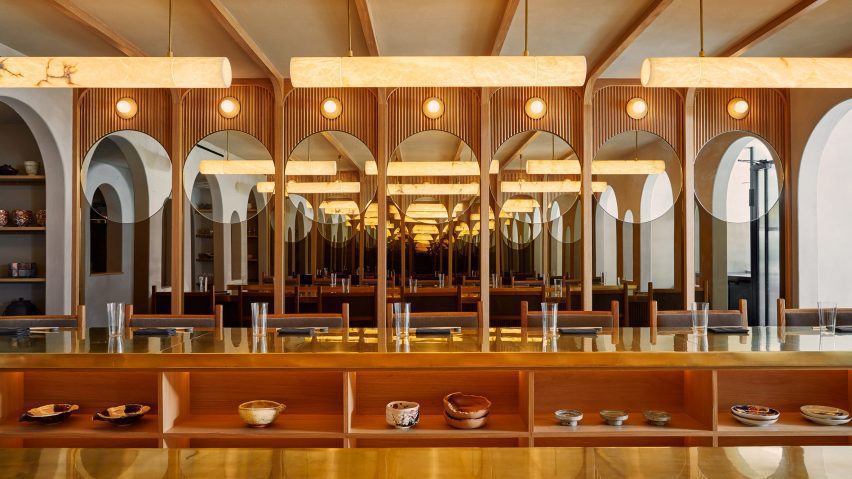
A wood-lined Japanese restaurant with alabaster lights
CategoriesInterior Design

The Dezeen guide to stone in architecture, interiors and design

Thinking of using stone in your project? Our latest Dezeen guide includes 15 popular types of natural rock used in architecture, interiors and design with links to hundreds of examples to inspire your own work.
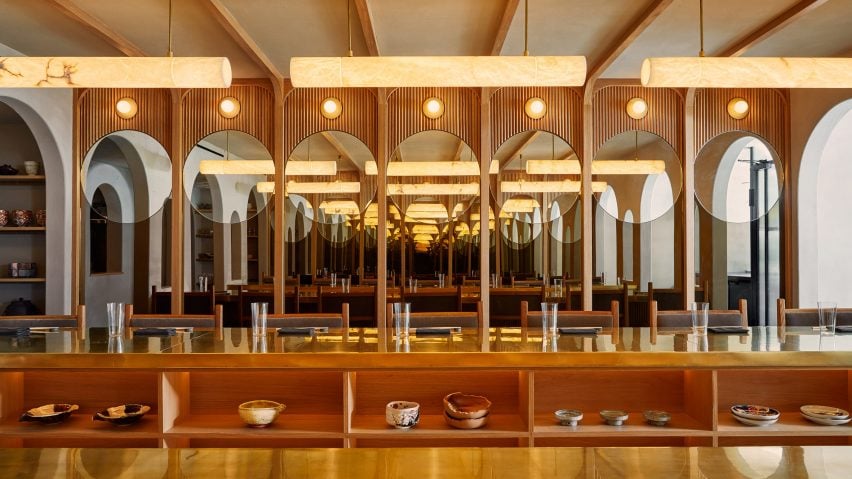


A wood-lined Japanese restaurant with alabaster lights

Alabaster

Alabaster is a soft, fine-grained stone that has been used for centuries to carve elaborate forms and ornaments. However, its solubility in water means that it is best suited for indoor use.

In its pure form, alabaster is white and translucent, which makes it ideally suited to lighting design.

Studio Tack used tubular light shades made from alabaster to softly illuminate a cosy Japanese restaurant in New York (above), while lighting studio Allied Maker used the stone to create ornate totemic floor lamps.

Amarist Studio showcased the sculptural possibilities of the stone in its Aqua Fossil collection, which includes a coffee table with swooping, curved legs.

See projects featuring alabaster ›
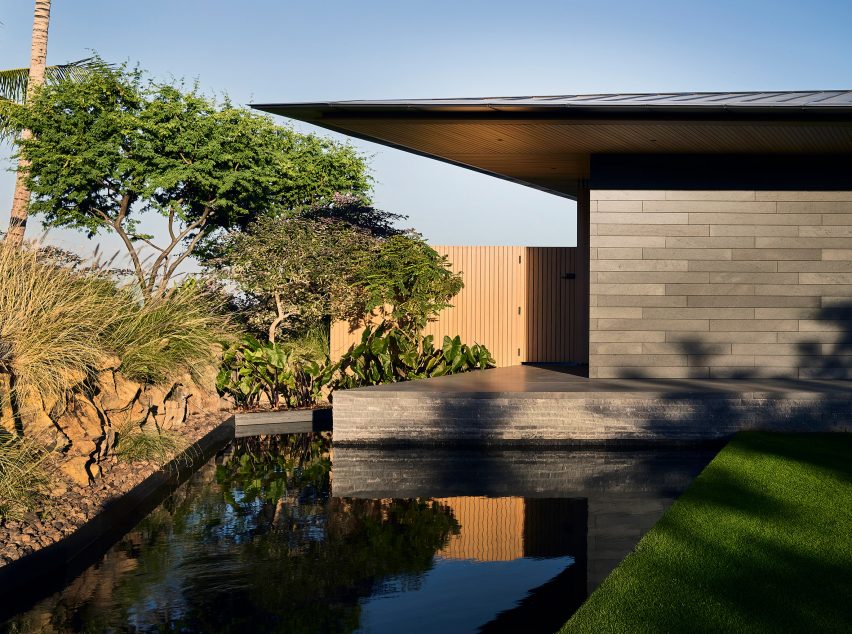

A basalt-clad holiday home in Hawaii

Basalt

Basalt is a dark-coloured igneous rock that is formed when lava cools rapidly. It is most frequently used as an aggregate for concrete as it is low-cost and high-strength, but it is also a popular cladding and flooring material, especially when polished.

Examples of this include the facade of a small gallery in Amsterdam by Barend Koolhaas and a Hawaiian holiday home by Walker Warner Architects in which slender basalt cladding tiles are contrasted with cedar detailing (above).

Icelandic studio Innriinnri used two sculpted slabs of basalt stone to create a sculptural table that doubles as a stool or a piece of art, while South Korean artist Byung Hoon Choi polished the stone to create oversized outdoor furniture.

See projects featuring basalt ›
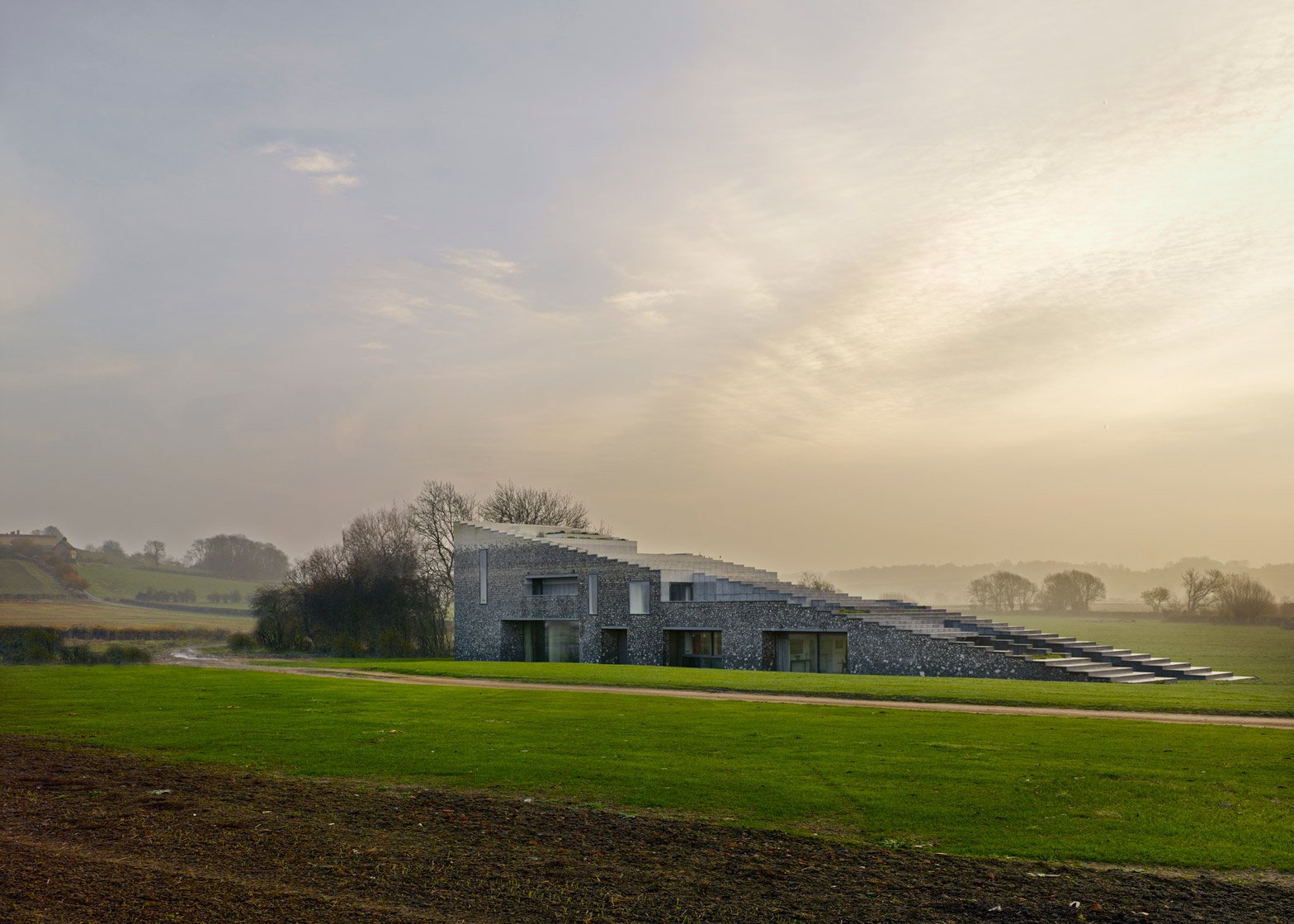

The Flint House exterior by Skene Catling de la Pena

Flint

Flint is a highly durable stone found in abundance as irregular-shaped nodules in sedimentary rocks such as chalk. It has been used as a construction material since the Roman era, though it is not often seen in contemporary architecture.

Flint varies in colour, but it is commonly glassy black with a white crust. In architecture, it is usually knapped – split to expose its glossy inner face – before being laid in mortar.

Skene Catling de la Peña used a combination of knapped and unknapped flint to cover a wedge-shaped house in Buckinghamshire (above), which creates a subtle colour gradient across its facade.

See projects featuring flint ›
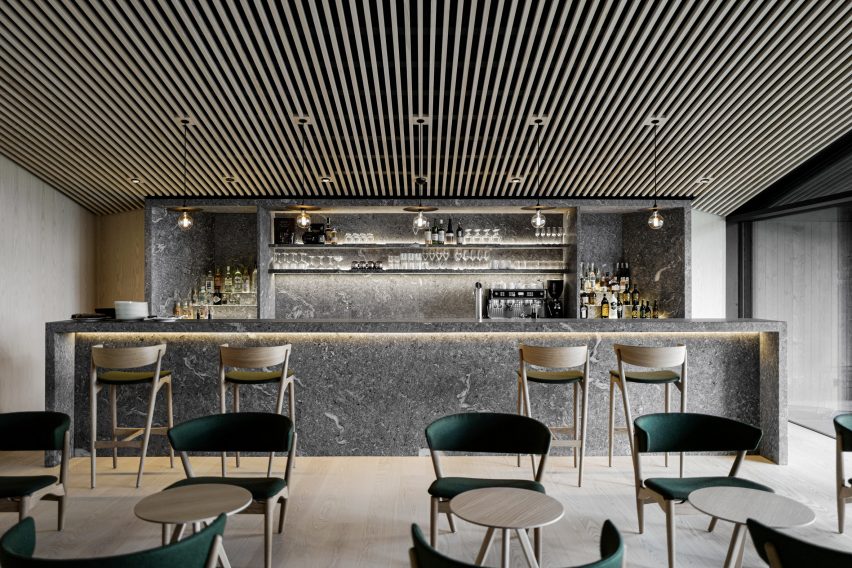

A hotel restaurant with a gneiss bar

Gneiss

Gneiss, a robust metamorphic stone composed of alternating layers of different coloured minerals, is popular to use for flooring and worktops. Hues can range from pinks and golds to greens and dark greys.

Peter Pichler sourced grey gneiss with black-and-white bands from Passeier Valley in South Tyrol to create a large counter in the bar of an Italian Alpine hotel (above).

It can also be used as a cladding material, such as in Bernardo Bader Architekten’s ski resort office in Austria and a radio broadcasting station in Nepal by Archium.
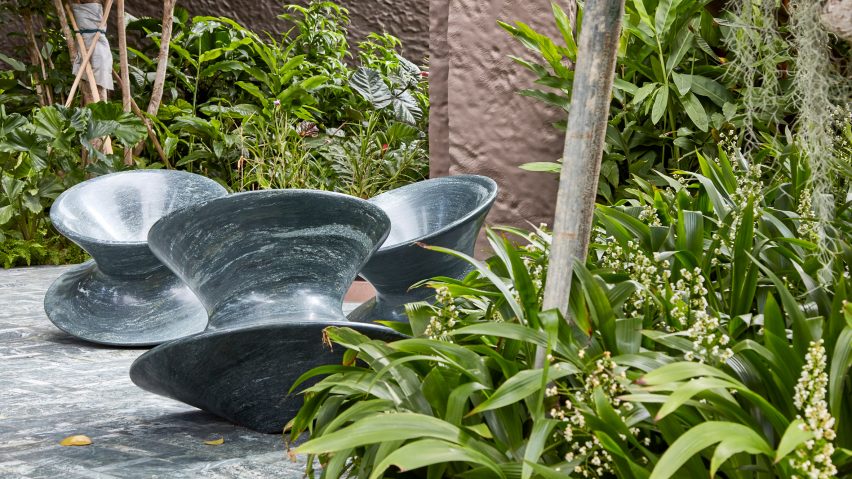

Green granite Spun chairs by Heatherwick Studio

Granite

Granite is one of the most widely used stones in architecture and design. It forms from the slow crystallisation of magma beneath the Earth’s crust. It is used for everything from load-bearing structures to cladding, worktops and furniture.

Its popularity is down to its high compressive strength, durability and low porosity. Granite is also found in an array of colours, making it suitable for a range of spaces and styles.

Heatherwick Studio recently used green granite to make a trio of its sculptural Spun chairs (above), while Snøhetta has used a grey variety to cover almost every surface of an Aesop store to emulate a rocky coastline.

Architecture studio NOARQ tested the material’s strength by elevating a cabin on thick blocks of granite over the entrance to a stone villa in Portugal.

See projects featuring granite ›
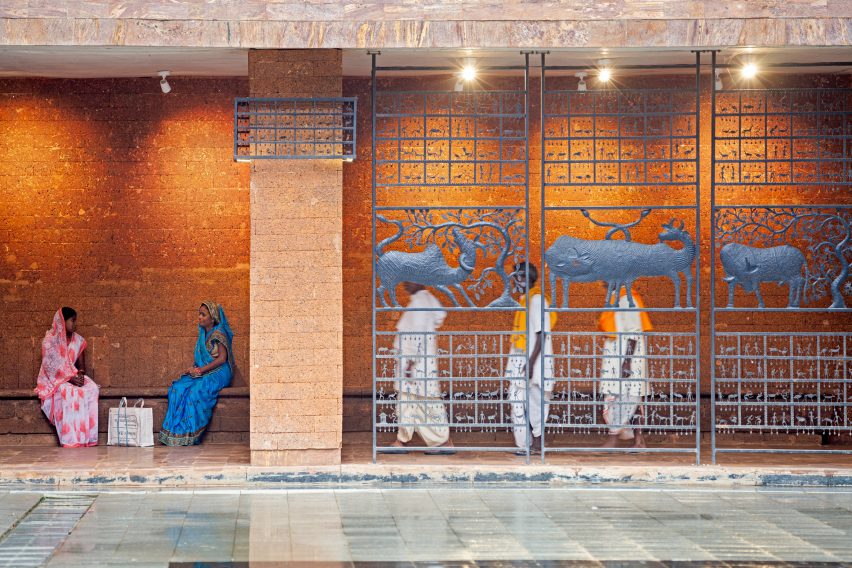

A laterite-brick exterior of an Indian government building

Laterite

Rusty-red laterite stone is formed from the leaching of rocks and soil during alternating periods of high temperature and heavy rainfall in tropical areas. This process leaves behind a high concentration of insoluble iron oxides, which gives the rock its colour.

Laterite is typically used in construction in Africa and Asia in the form of bricks, which have excellent thermal mass and a low embodied energy. These bricks are made by cutting the rock out from below the water table when it is moist and leaving it to harden in the air.

Architect Francis Kéré used locally sourced laterite to build the walls of a school in Burkina Faso and Studio Lotus has used it to create the pedestal of a government building in India (above).
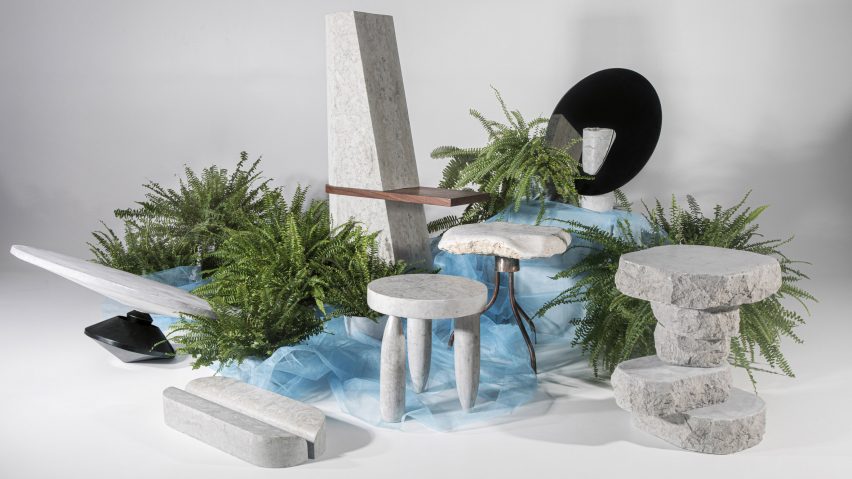

Limestone furniture by Estonian Academy of Arts students

Limestone

There are many different types of limestone, a sedimentary rock composed mainly of calcium carbonate. It is considered a good all-round building material as it is easy to cut and carve and usually has a uniform texture and colour.

Popular limestone varieties include travertine (see below) and Portland stone, which is used on notable buildings in London such as St Paul’s Cathedral and Buckingham Palace.

David Chipperfield Architects recently used limestone to clad the Kunsthaus Zurich museum extension in Switzerland and John Pawson used it to line the surfaces of a minimalist flagship store in Japan for fashion label Jil Sander.

Design projects that utilise limestone include a blocky furniture collection called Dig Where You Stand by students from the Estonian Academy of Arts (above).

See projects featuring limestone ›
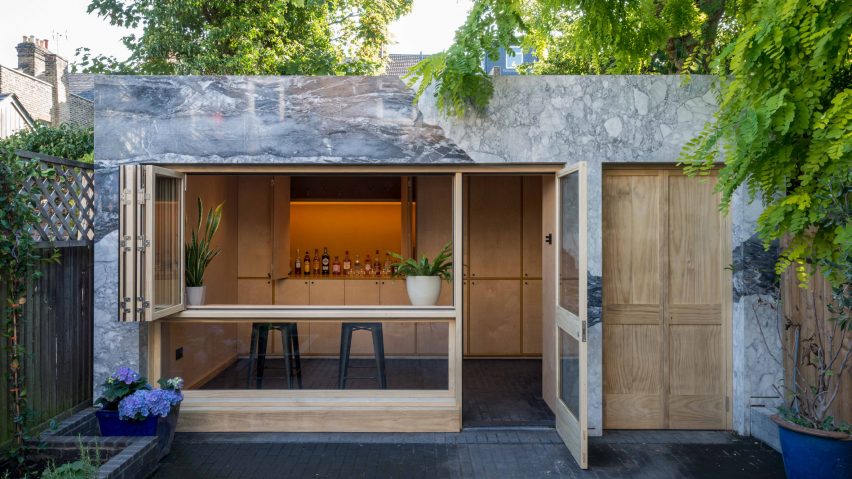

A marble-clad garden room

Marble

Marble is a metamorphic rock with veins of calcite crystal. It forms from limestone that has been exposed to heat and pressure and is found in many colours. Marble is strong but easily carved and polishes well, making it suitable for numerous applications.

It is most popularly used in kitchen and bathroom designs, but it is often used as cladding too, such as in Alexander Owen Architecture’s garden room in London (above).

See projects featuring marble ›
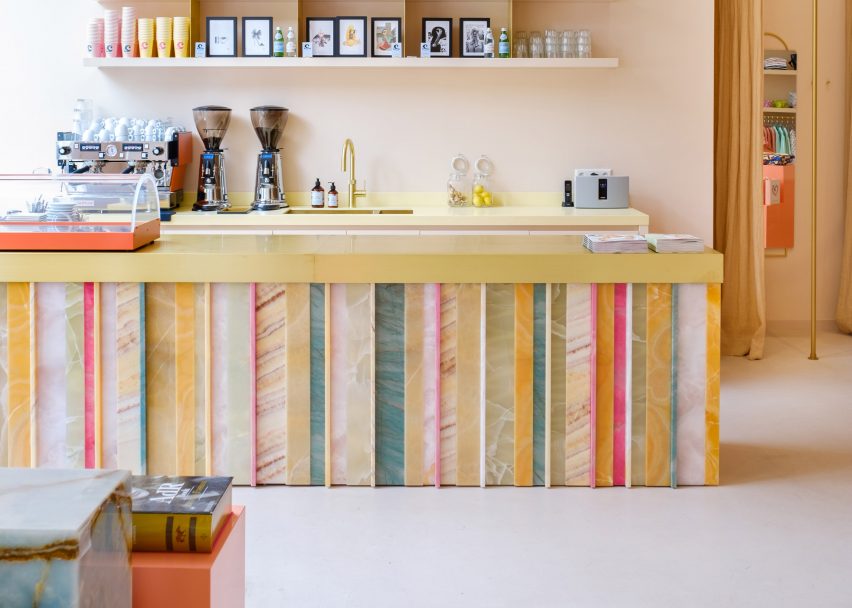

A bar lined with colourful onyx stone

Onyx

Onyx is a translucent gemstone composed of parallel bands of quartz, found in almost every colour. It has a long history of use in sculpture and jewellery but is less commonly found in architecture and design. However, onyx is sometimes used as a facing or lighting.

Projects that use onyx include a mausoleum in Minneapolis by HGA and an office by Anne Claus Interiors where it has been used to clad a multi-coloured bar (above).
See projects featuring onyx ›


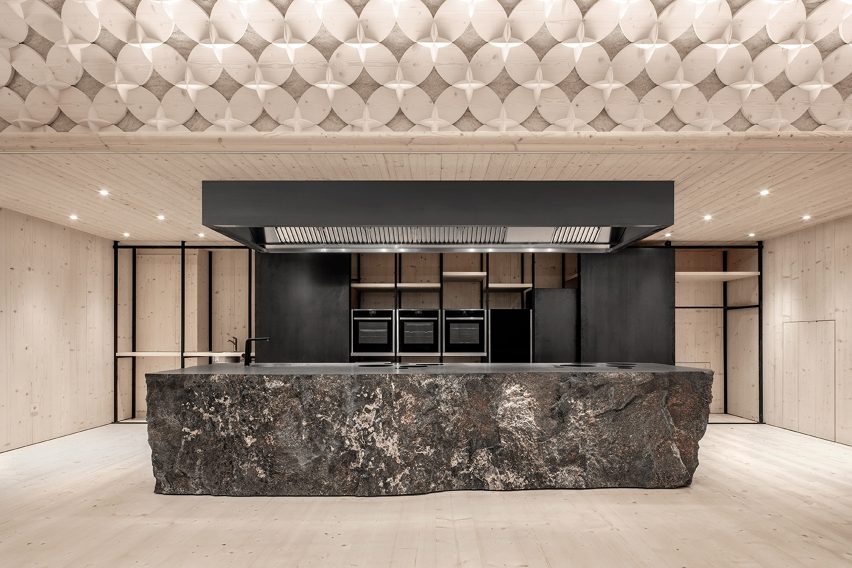
A kitchen island made from porphyry

Porphyry

Porphyry is a strong and hard-wearing igneous stone that comes in reddish-brown to purple hues. It is composed of large-grained crystals embedded in a fine-grained groundmass.

It has been used in architecture and design since antiquity, though it is rarely seen in contemporary architecture and design. Today it is mostly used as aggregate in the construction of roads in places where cars require studded winter tires.

Pedevilla Architects used a block of porphyry as a kitchen island for a cookery school in South Tyrol, while architect Claudio Silvestrin used it to line the walls of a Milanese fashion boutique.
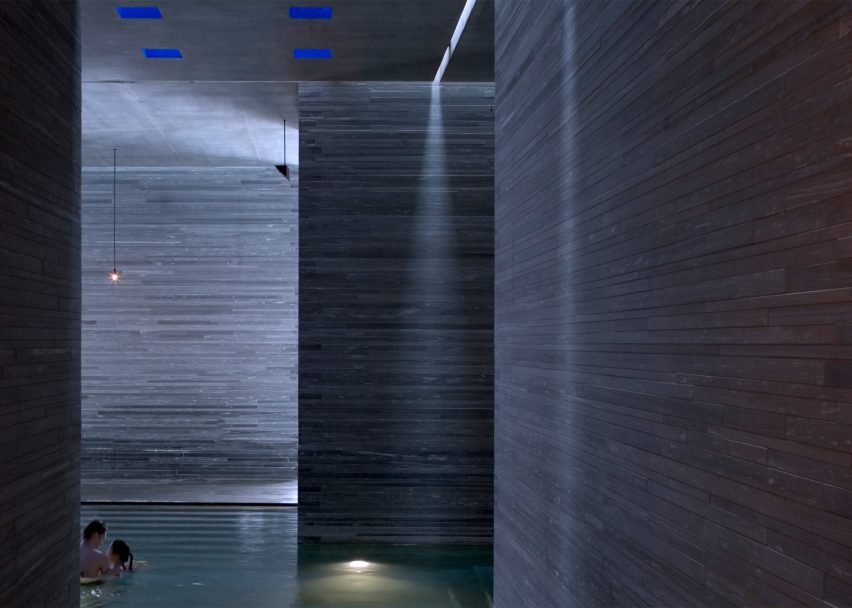

Quartzite walls inside Vals by Peter Zumthor

Quartzite

Formed from sandstone exposed to high heat and pressure, quartzite is a very hard and durable metamorphic rock. It is usually found in white and grey shades.

Quartzite is a popular material for kitchen countertops as it is resistant to staining, but is most commonly used as a decorative cladding or flooring.

Examples of this include a dwelling in Utah by Klima Architecture, Peter Zumthor’s Therme Vals spa (above) and a monolithic Parisian library by Agence Pascale Guédot.

See projects featuring quartzite ›
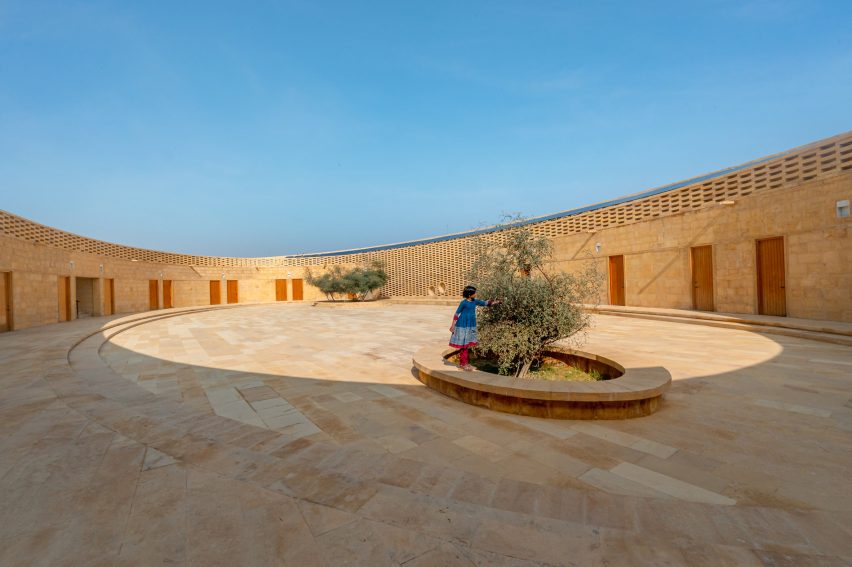

A sandstone school in India

Sandstone

Sandstone is composed of fine silicate grains that have eroded from other rocks, giving it either a warm red, yellow or orange colouration.

Used for construction since prehistoric times, sandstone continues to be a popular choice in architecture and design as it is abundant, durable and easy to handle.

Recent architectural projects that use the material include a cathedral extension by Feilden Fowles, a museum by Álvaro Siza, and an oval-shaped all-girls school in India (above) that is designed to blend into its desert surroundings.

See projects featuring sandstone ›
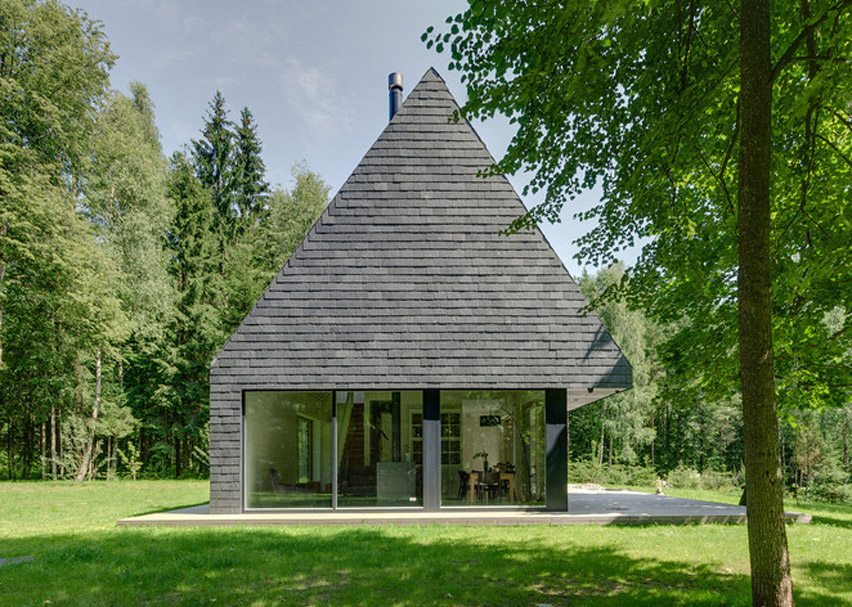

A Lithuanian house clad in shale tiles

Shale

This grey fine-grained stone is one of the most common sedimentary rocks on earth. It is formed from the compaction of silt and mud into thin, fissile layers. In architecture and design, shale is usually crushed and processed into bricks, tiles and pottery, or heated with limestone to make cement.

Aketuri Architektai used shale tiles to clad a pointy woodland house in Lithuania (above), while Spaceworkers wrapped the stone around the basement of a Portuguese house to provide it with a raw, rugged aesthetic.

See projects featuring shale ›
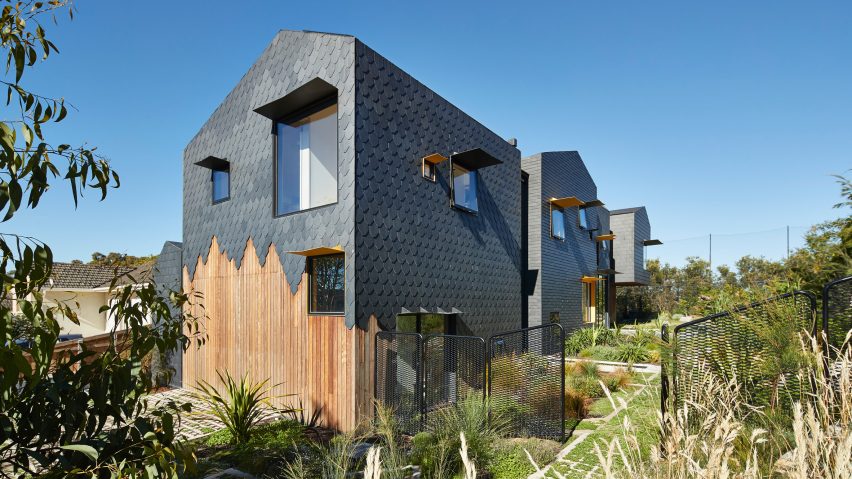

An Australian clad in slate shingles

Slate

Slate is a dark fine-grained stone that is formed when a sedimentary rock, such as shale, is subjected to high pressure. It is a foliated rock, meaning it is made up of thin sedimentary layers, which allows it to be split – or riven – into thin slabs.

Slate is durable and weather- and frost-resistant, making it a popular material choice for cladding, roofing and paving.

In interior projects, the material is often also used as floor tiles, hearths and kitchen worktops. Natalie Weinmann sanded and polished the stone to create a blocky furniture collection.

TRIAS used it to clad a small writer’s retreat in a Welsh valley while Austin Maynard Architects diamond, scalloped and brick-shaped slate shingles to cover a Melbourne house (above).

See projects featuring slate ›
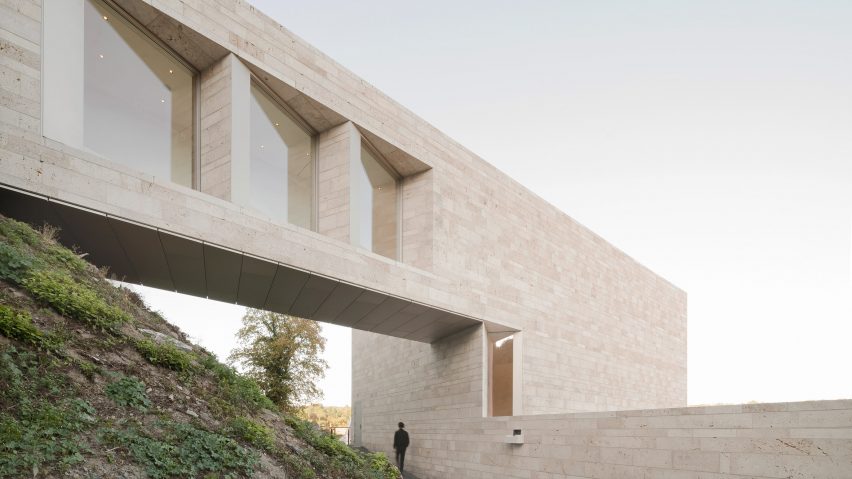

A museum covered in polished travertine tiles

Travertine

One of the most commonly used forms of limestone is travertine, which has been sourced from mineral springs for use as a building material for centuries. The largest building in the world made from this stone is the Colosseum in Rome.

Today, travertine is mostly processed into tiles for internal and external surface coverings, but it is also a popular material for bathroom fit-outs. As it is found with troughs on its surface, processing travertine usually involves polishing its surface.

Projects that use travertine include an extension to a German museum by Bez + Kock Architekten (above), an apartment renovation in Lithuania by 2XJ, and a furniture collection by David/Nicolas.

See projects featuring travertine ›


Recent popular stone projects on Dezeen include an inconspicuous house on the island of Serifos, a monolithic spa by Smartvoll, a collection of luxury lodges on England’s Jurassic Coast and a coffee table by Studio Twenty Seven.

The main image is of Rajkumari Ratnavati Girls’ School by Diana Kellogg Architects taken by Vinay Panjwani.


Reference

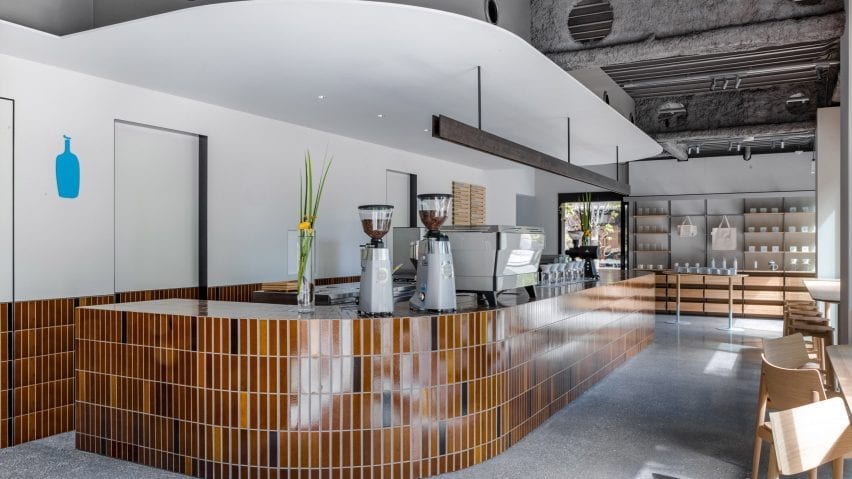
Curving counter with brown tiles in Blue Bottle Coffee Shibuya
CategoriesInterior Design

Keiji Ashizawa Design designs Blue Bottle Coffee outpost in Tokyo

Brick-like tiles with a volcanic ash glaze created by Formafantasma and textured concrete walls feature in this coffee shop in Shibuya, Tokyo, by Japanese studio Keiji Ashizawa Design.
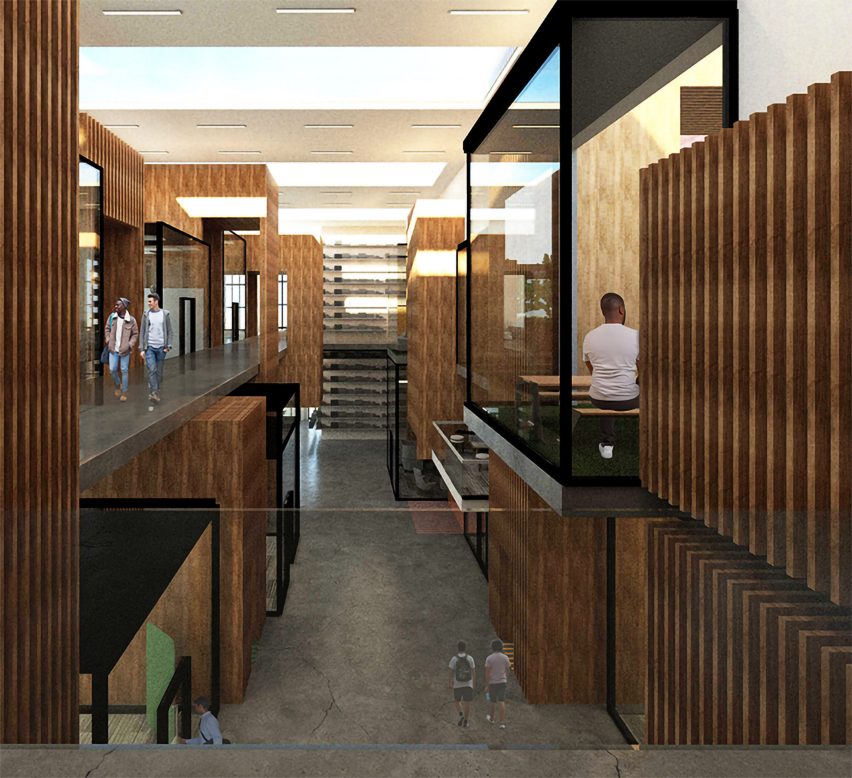

Located a short walk from Tokyo’s busy downtown area, this Blue Bottle Coffee outpost was conceived as an urban retreat sandwiched between two parks.

It serves coffee during the day and appetisers and natural wine in the evenings.

Curving counter with brown tiles in Blue Bottle Coffee Shibuya
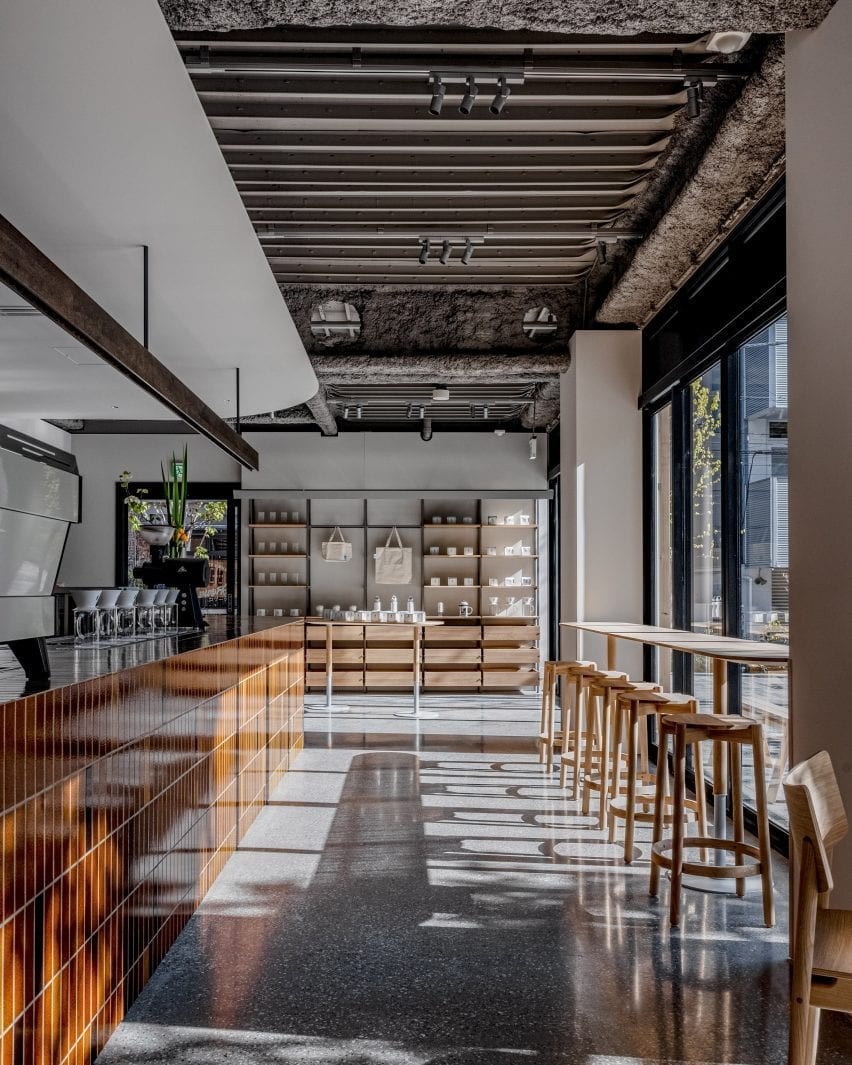
Brown tiles with a volcanic ash glaze feature throughout the interior of Blue Bottle Coffee Shibuya

Keiji Ashizawa Design, which also designed the coffee brand’s Yokohama outpost, wanted to create a warm and welcoming interior that brought the park surroundings into the glass-walled and concrete-floored space.

“It was a challenge to come up with a playful interior plan in this square two-storey building,” Ashizawa told Dezeen.

“The other challenge was to make links between the first and second floors, and the exterior and interior.”

Brown-tiled bar and wooden counter seating in coffee shop by Keiji Ashizawa Design
Counter seating runs along the wall of windows

To bring the outside in, the studio installed a large, curved tile counter that wraps around the cafe’s kitchen area and welcomes customers as they enter.

The brown tiles – developed as a collaboration between London material manufacturer Dzek, and the Amsterdam-based design studio Formafantasma – are finished with a special volcanic ash glaze.

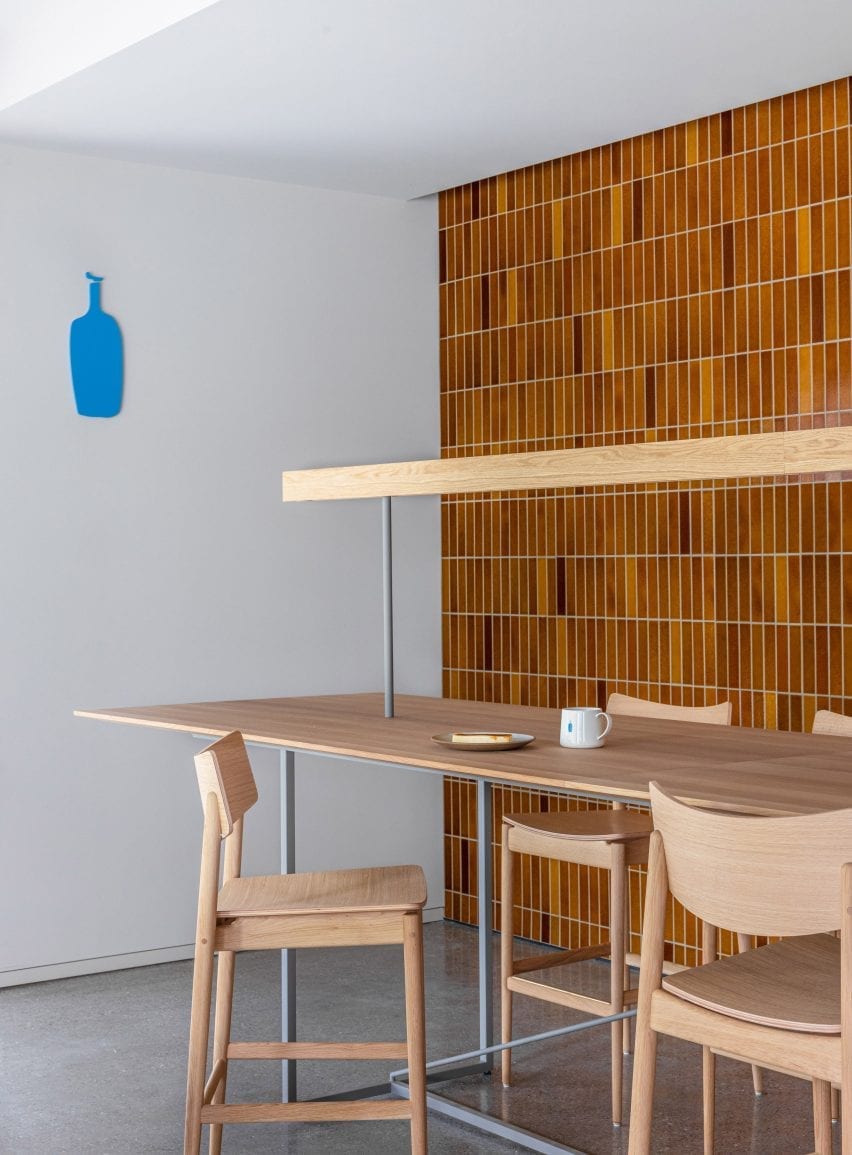
Brow-tiled walls and wooden counter seating in Blue Bottle Coffee Shibuya
A single artisan laid all 7,000 tiles in the interior

A single skilled artisan laid more than 7,000 of the tiles in the cafe. As well as the counter, they cover a low coffee table and a wall in the upstairs lounge area. Ashizawa said the tiles were specifically chosen to connect the interior and exterior spaces.

“We wanted a park-like item as a key material which stands out in the interior but also makes a strong connection between first and second floor, and the exterior and interior at the same time,” explained Ashizawa.

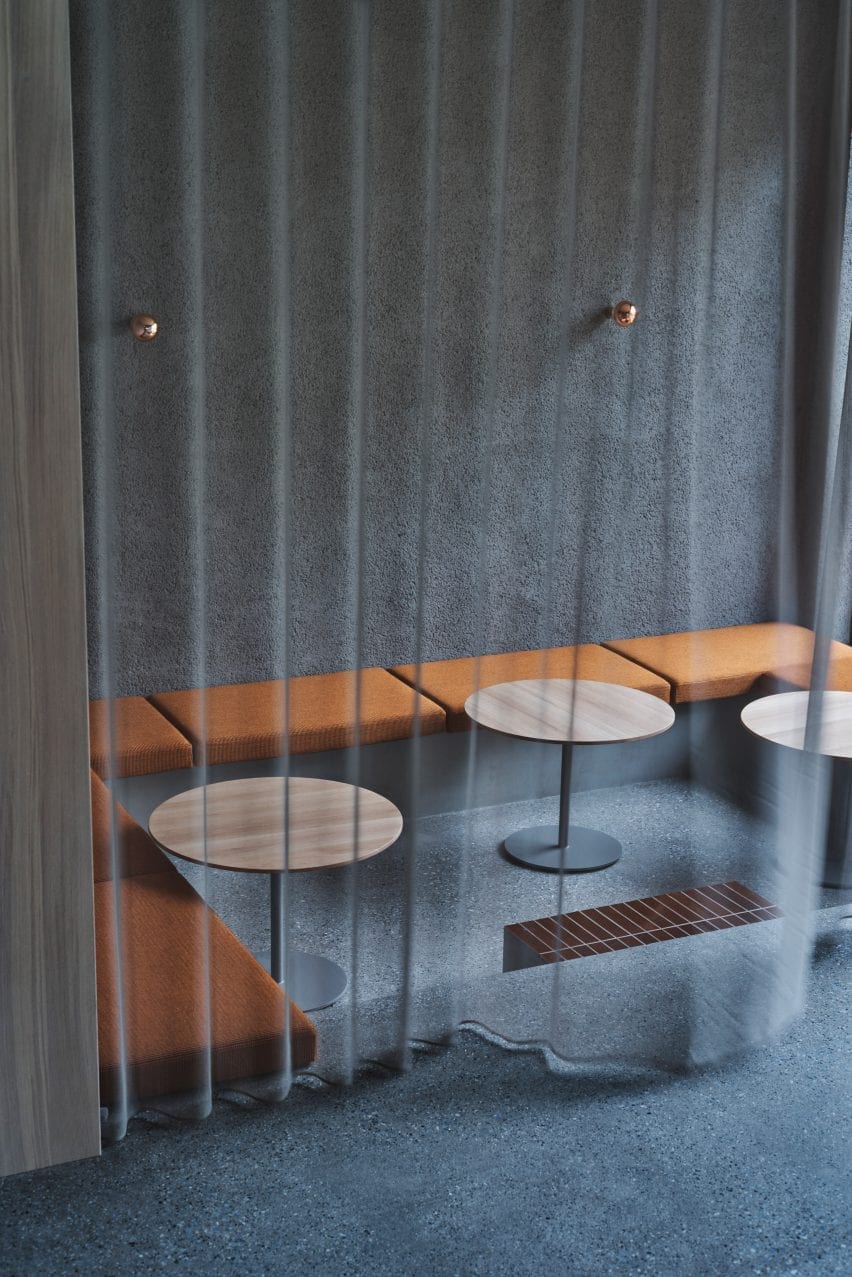
Sunken seating area with orange pillows in coffee shop by Keiji Ashizawa Design
A sunken seating area is fringed in bench seating

“I thought that this tile, which has a brick-like colour, is an item reminiscent of parks in Japan,” he continued.

“Also, there is the fact that the soil from volcanic ash is a familiar material in this Kanto region, and I remember that the soil floor of the original Kitaya Park was also Kanto loam.”

In addition to the warm-coloured tiles, pink and orange textiles by Kvadrat, and wooden furniture by Karimoku, Ishinomaki Lab and Ariake add warmth to the largely glass and concrete interior.

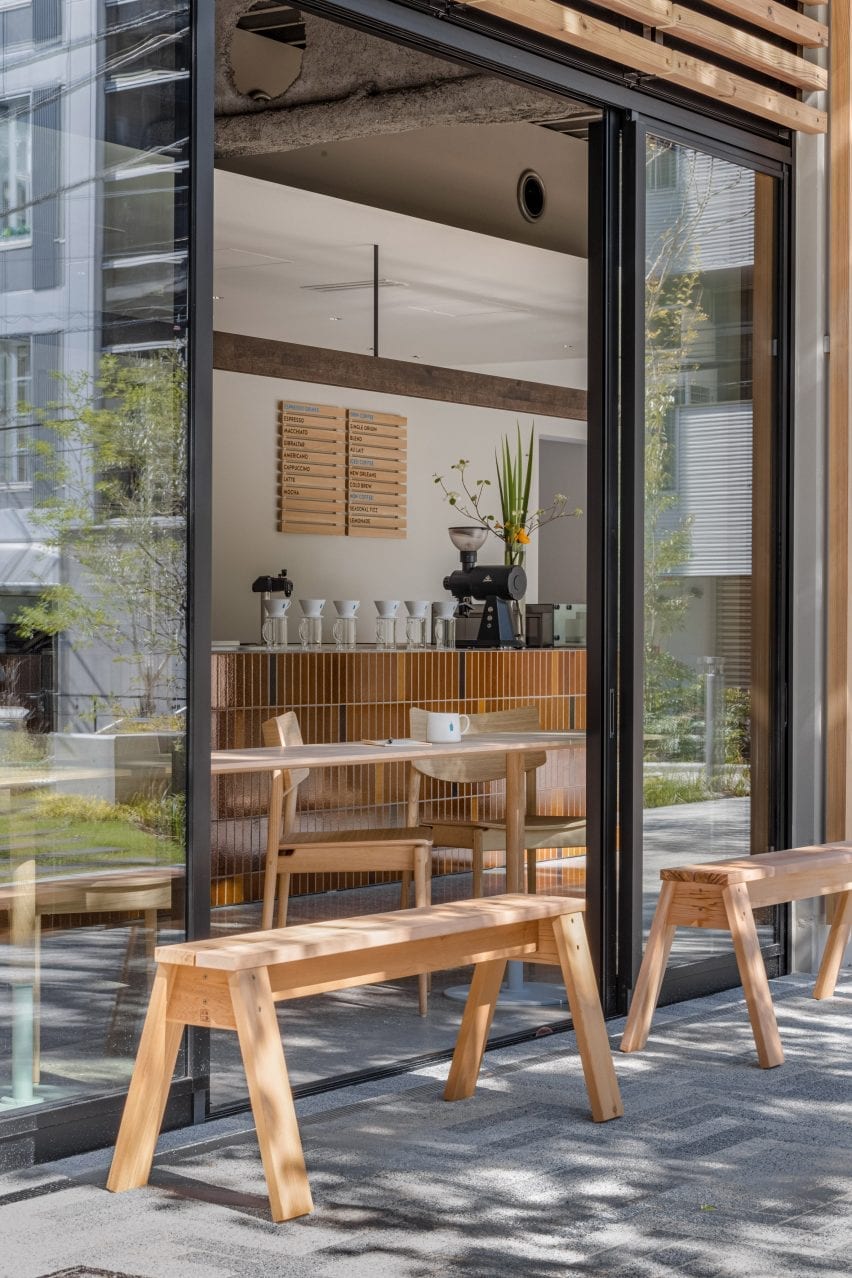
On Blue Bottle Coffee’s ground floor, tables are set at differing heights. The high counter with stools allows customers to watch the barista preparing their coffee, while the lower table provides a good view of the park.

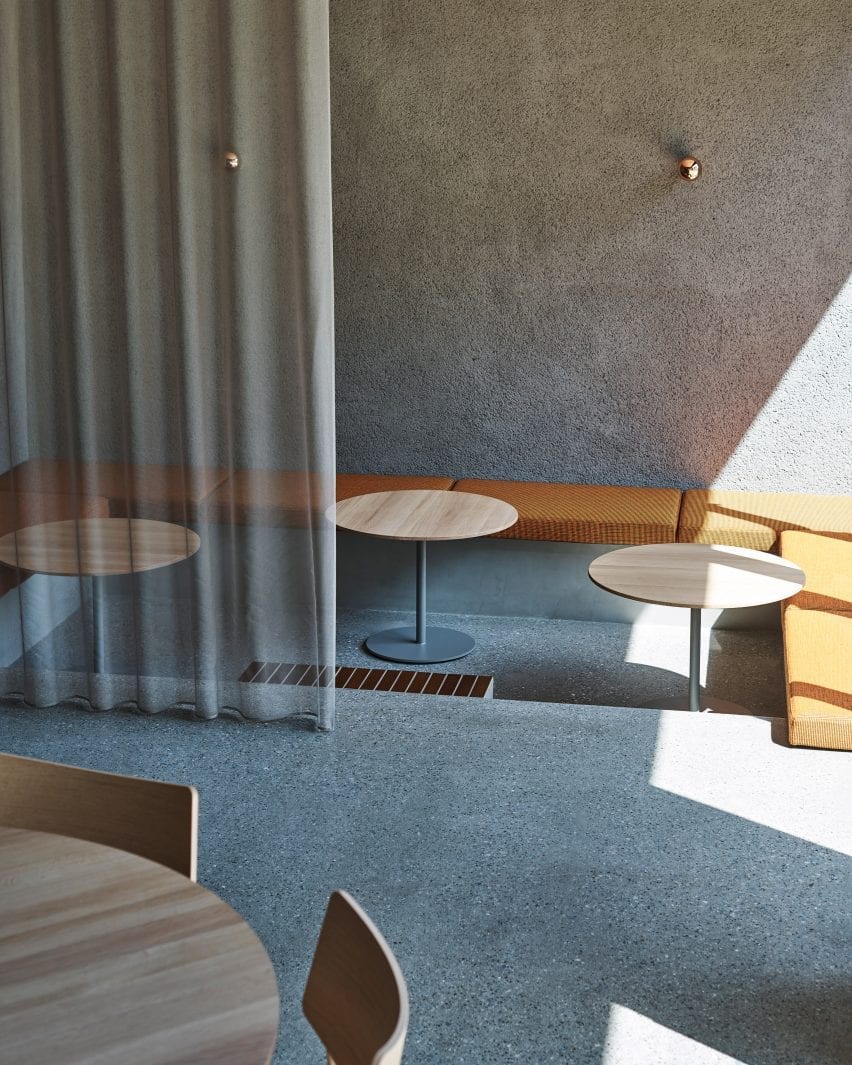
Sheer grey curtain over sunken seating area in Blue Bottle Coffee Shibuya
The seating area is obscured by a translucent grey curtain

More seating types are installed upstairs, including a lowered floor area with banquette seating upholstered in an autumnal orange textile. This space can be sectioned off from the main area by a grey, sheer curtain.

An oval dining table sits in the centre of the space providing a casual and communal dining option. A high counter table with a library-like light allows for quiet groups and singles to sit at the rear of the space.

Wooden benches outside coffee shop by Keiji Ashizawa Design
Wooden benches offer seating outside of the cafe

At the far end, a low, tiled coffee table is surrounded by comfortable lounge chairs and sofas upholstered in muted pink fabric.

A textured, brushed mortar finish has been applied to the cafe’s ceiling on the ground floor, and across a wall upstairs to help improve the acoustics in the space.

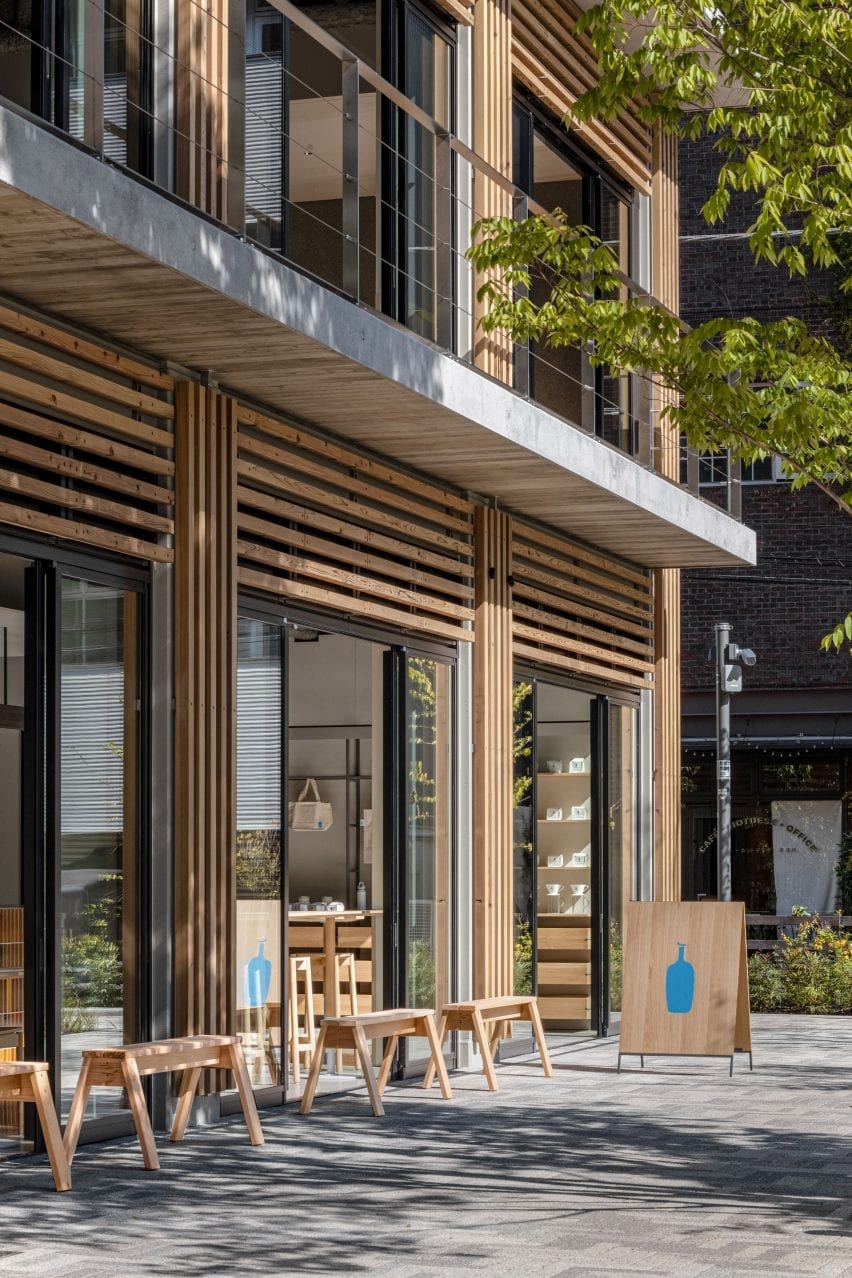
Timber-clad facade of Blue Bottle Coffee Shibuya
The furniture is in keeping with the buildings timber-clad facade

“When we plan cafes or restaurants, it is essential to think about acoustics,” said Ashizawa. “It is important that you can speak easily and that you can hear the music comfortably.”

“When we first saw the condition of the interior – the floor was made of concrete with glass walls. We definitely thought that we should leave the ceiling some kind of texture to promote sound absorption. At the same time, I thought that creating a feeling of touch in the space would have the effect of relaxing customers in the stressful city of Shibuya, like the greenery of a park.”

“We hope that visitors will enjoy the warm atmosphere as if they had been invited to visit the welcoming house of a close friend,” he concluded.

Photography is by Ben Richard and Masaaki Inoue.

Reference

Brunel University
CategoriesInterior Design

Made in Brunel; Above the Fold presents one hundred design solutions

Dezeen Promotion: Made in Brunel: Above the Fold is an exhibition by Brunel University design graduates taking place at The Bargehouse Gallery and Oxo Tower Gallery in London from 17 to 20 June 2021.


The exhibition presents 100 design solutions to everyday problems, including an app designed to help people with diabetes control their glucose levels, a personalised asthma management system and a tool to diagnose seasonal affective disorder (SAD).

Other projects include a mindful app made to help people living with rosacea and a system to manage medication that was designed for complex medical regimes.

Brunel University
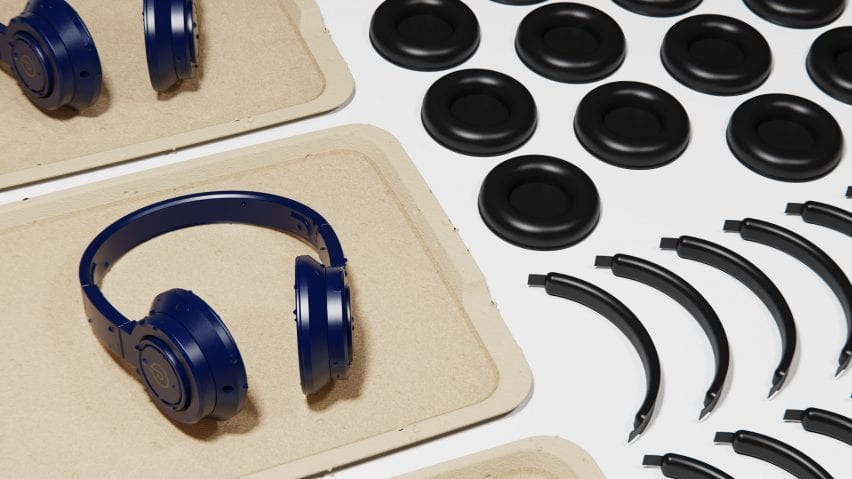
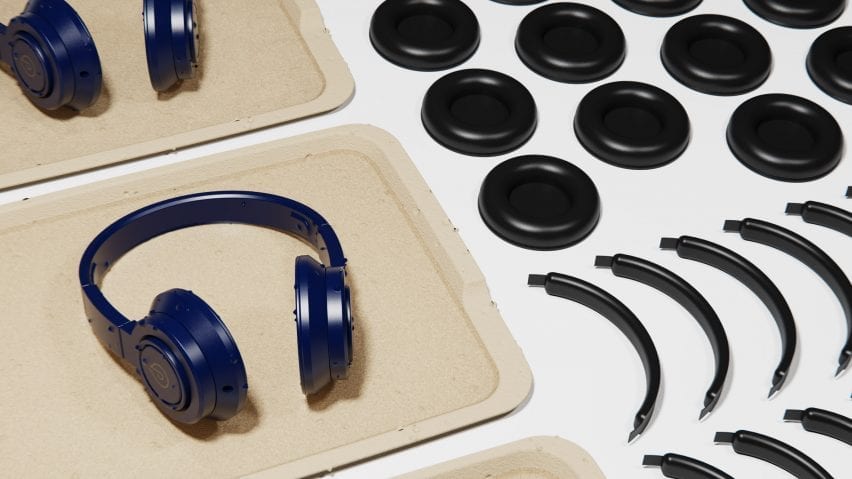
The Dampen headphones by Paramveer Bhachu feature replaceable water-soluble padding

Brunel designers are well versed in turning problems on their heads to develop effective solutions,” said the organisers.

“However, this year, students have taken these problem-solving skills one step further – discovering how to conduct remote user testing when face-to-face testing was impossible and mastering the poly-jet printers when indoor workshops were inaccessible, were just a few of the adaptations to the design process introduced in 2021.”

Brunel University
Omni by Andrew Nagel-Smith is a modular multi-tool with a range of attachments

As part of the final year programme, the students launched the brand Above the Fold, for which they created a podcast and blog to share “essential” design-related content.

“Above the Fold stems from the newspaper terminology denoting that the information on the top of a broadsheet newspaper front page is always visible when folded,” said the organisers.

“These events and initiatives have all been exciting ways to inspire and connect Brunel designers with each other, alumni and industry experts.”

Brunel University
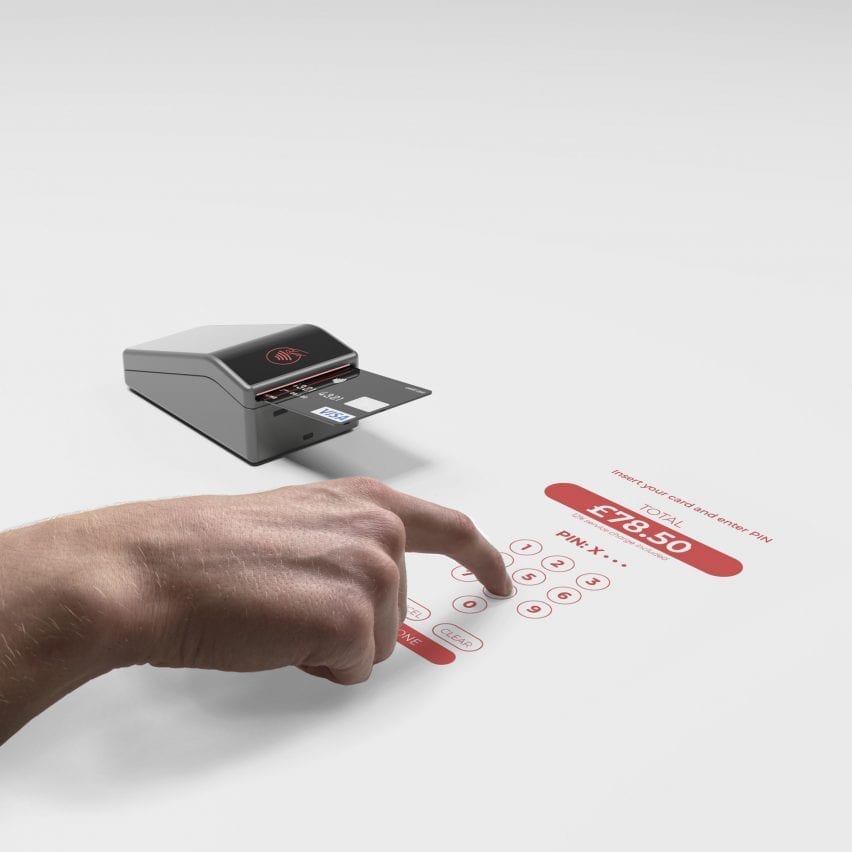
Pinteq portable card terminal by Gabriele Grigaite enables restaurant guests to make card payments safely

For their final year projects – and as part of Above the Fold – students chose their design briefs, or applied for briefs provided by external sources including the National Health Service and a range of private companies.

By being “immersed” in a range of real-life challenges, the projects aimed to enable students to develop problem-solving solutions.

Brunel University
Diawise by Alex Cummings is a non-invasive glucose monitor and app

Students also studied six design modules that supported the research and development activities of their final projects. The Human Factors module required students to develop a solution to a problem using human-centred design principles.

“Solutions ranged from quieting noisy popcorn eaters in cinemas to reducing self-contamination during the removal of PPE in intensive care units,” said the university.

Brunel University
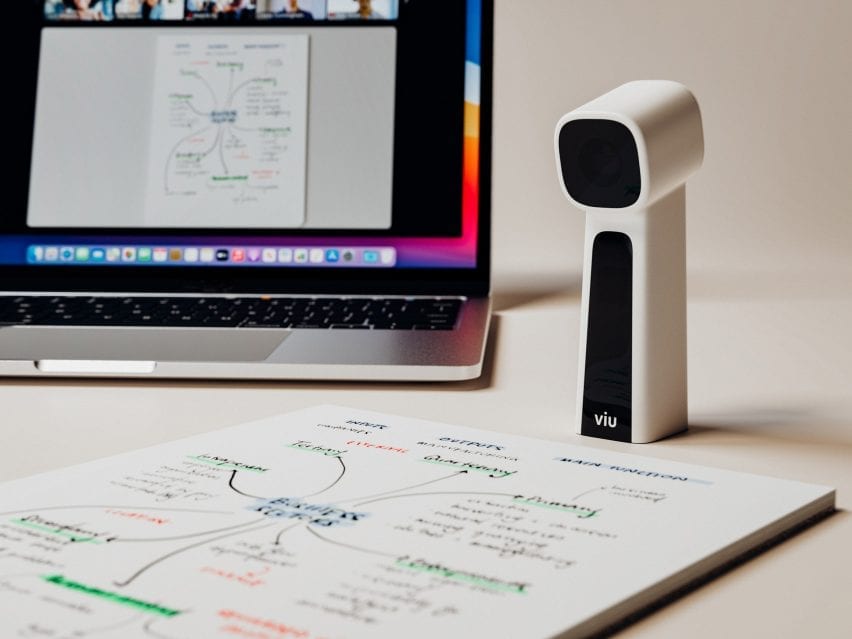
Viu by Alex D’Souza is a webcam that turns any flat physical surface into a shareable platform

Students who chose the Environmentally Sensitive Design module dismantled a product, conducted a life-cycle analysis on it, then redesigned it using eco-design strategies.

The lifecycle analysis of the redesign “revealed reductions in carbon emissions and energy consumption in production,” according to the organisers.

Brunel University
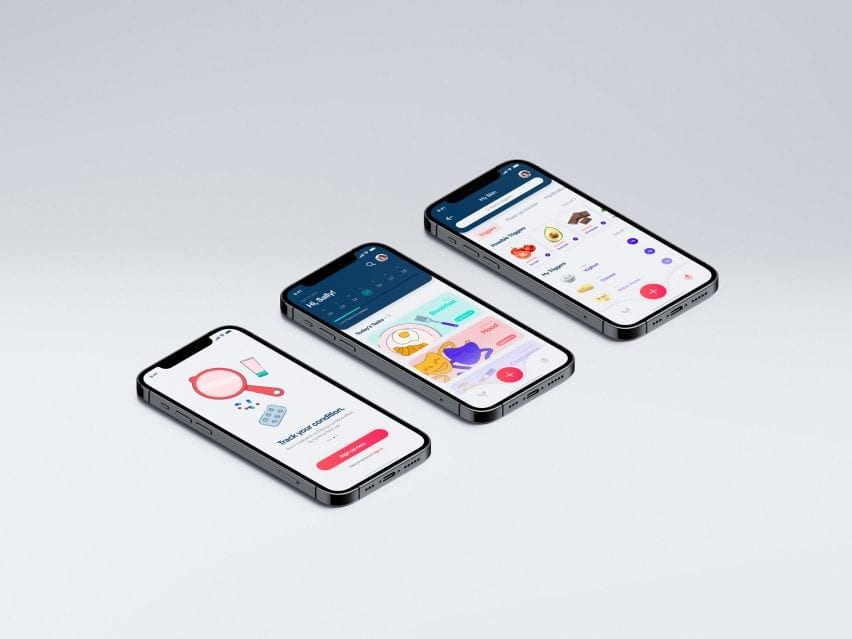
Rosette by Dani Cropley is a mindful app tailored to meet the needs of people with rosacea

In a third module, called Design and Innovation Management Processes, students designed a business model for their products and services.

“Specifying target markets and creative ways to reach them helped students understand the next steps in commercialising a product,” said the university.

Brunel University
Doset by Joe Ground is a smart medication management system

Students who chose the Computer-based Design Methods module were asked to “surface model a car of their choice, test its safety in Siemens Jack software and optimise the design through analysis in ANSYS“, according to the university.

For the Contextual Design module, students developed a product to solve real-world issues that might be prevalent in 10–15 years. In the Embedded Systems module, they developed projects “which used sensors and hardware components to carry out a function based on their studies of CCS C code, schematic layouts and printed circuit board design,” according to the university.

Brunel University
The Open-source electronics kit by Arthur Dean-Osgood aims to teach users electronics and circuit building using “intuitive” design methods

According to the organisers, the exhibition will showcase students’ response to these themes and offer an “opportunity to experience the incredible work their designers have created, fostering the next generation of innovative thinkers”.

“Something to look forward to will be the chorus of conversations throughout the gallery – we’re far too used to the silence of virtual meetings where only one person can be heard at a time,” said the organisers.

Brunel University
Nova Equino by Daniel Fredericks tracks mounted spotlight utilising daylight chips to create better quality lighting for indoor working spaces, to help Diagnosed Seasonal Affective Disorder

Tickets to Made in Brunel: Above the Fold are free and can be accessed on Eventbrite.

Industry members can also sign up here.

For more information visit the exhibition’s website.


Partnership content

This article was written by Dezeen for the Brunel University as part of a partnership. Find out more about Dezeen partnership content here.

Reference

10 interiors by Corcoran School of the Arts and Design undergrad students
CategoriesInterior Design

10 interiors by Corcoran School of the Arts and Design undergrad students

A clothing store that imitates an art gallery and an animal hostel designed to increase adoption rates are among the interiors projects presented by undergraduate students at the Corcoran School of the Arts and Design in our latest school show.


Other designs include an indoor park, a meditation space that uses the play between shadow and light to encourage meditative moments, and a micro-hotel designed to connect visitors with Colorado’s mountainous environment.

The projects are from students on the Interior Architecture BFA course at the Corcoran School of the Arts and Design at The George Washington University in Washington, DC, USA.


School: Corcoran School of the Arts and Design at George Washington University
Course: Interior Architecture BFA
Email: ciarc@gwu.edu

School statement:

“The undergraduate Interior Architecture (BFA) programme at the George Washington University’s Corcoran School of the Arts and Design in Washington, DC, offers students a unique opportunity to study, learn and create within a creative environment at a major research university.

“Our programme is the only Council for Interior Design Accreditation-accredited programme within DC and one of 10 interior programmes located at universities that rank in the top 70 of US News and World Report’s list of national research universities.

“Through our studio-based curriculum – the core of our programme – students learn to design three-dimensional environments through the use of dynamic concepts, cutting-edge materials, and innovative methods and techniques.”


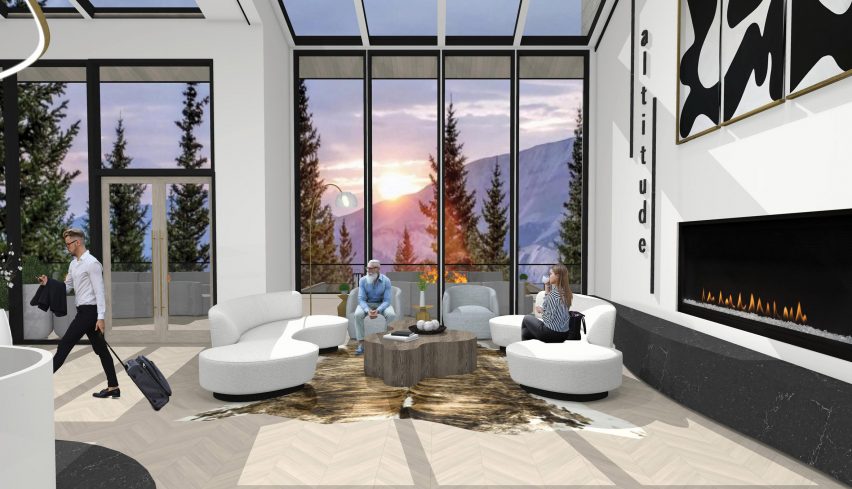
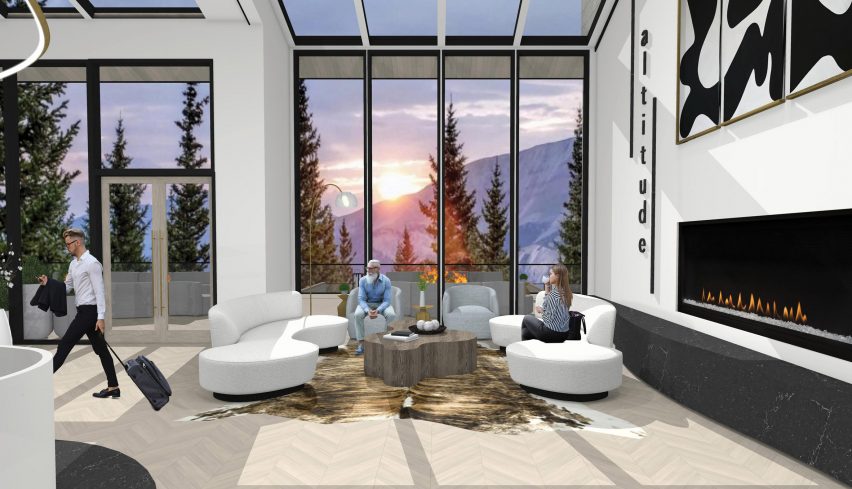
Altitude Micro Hotel by Sophia DeNezza

“Altitude Micro Hotel is a luxury ski-in, ski-out boutique micro-hotel. It is designed to create a luxurious yet practical vacation experience while connecting the interior spaces with the resort’s mountainous environment.

“Altitude will provide a comfortable stay away from the typical touristy resorts and will give guests a chance to unwind through the many accessible amenities on-site. The design revolves around the concept of altitude, which reflects the Colorado landscape and the feeling of movement while skiing.

“By utilizing the site’s existing architecture and creating a contemporary, conceptual and practical design, Altitude Micro Hotel is designed to provide guests with a luxurious and unforgettable experience.”

Student: Sophia DeNezza
Advisor: Karen Gioconda
Course: Studio 5 – undergraduate
Email: sophia.denezza@gmail.com


George Washington University

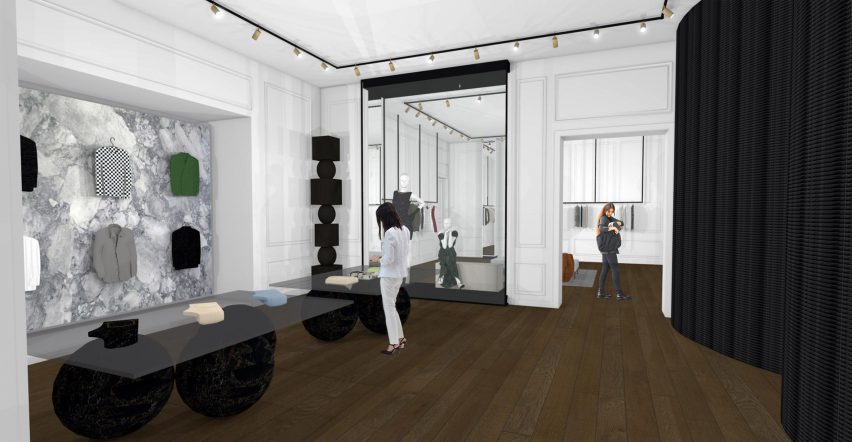
Clash by Victoria Gogick

“With fast-fashion retail stores having a hold on many people’s shopping habits, in recent years the world has seen soaring amounts of textile waste generated. Clash aims to break these bad habits and offers a limited selection of curated clothing pieces that behave in the store like art does in a gallery.

“The process of creating garments is an art form. Clash aims to showcase each piece, emphasising the clothing’s construction and quality, aiming to spark conversations about consumer overconsumption through the store’s design.”

Student: Victoria Gogick
Advisor: 
Karen Gioconda
Course:
Studio 5 – undergraduate
Email:
vgogick@gwu.edu


George Washington University

Ikhaya Women’s Shelter by Alexa Greig

“The Ikhaya Women’s Shelter provides a place of refuge and a support system for women and their children escaping domestic violence. The shelter aims to create an inclusive community by using an indoor/outdoor canopy that intersects with all of the 13 buildings on-site.

“The outdoor canopy provides a sense of connection between the buildings and partial shade from the hot South African sun, while the indoor canopies influence the layout and flow of the interiors.”

Student: Alexa Greig
Advisor:
Kristin Carleton
Course: 
Studio 5 – undergraduate
Email:
alexacgreig@gmail.com


George Washington University

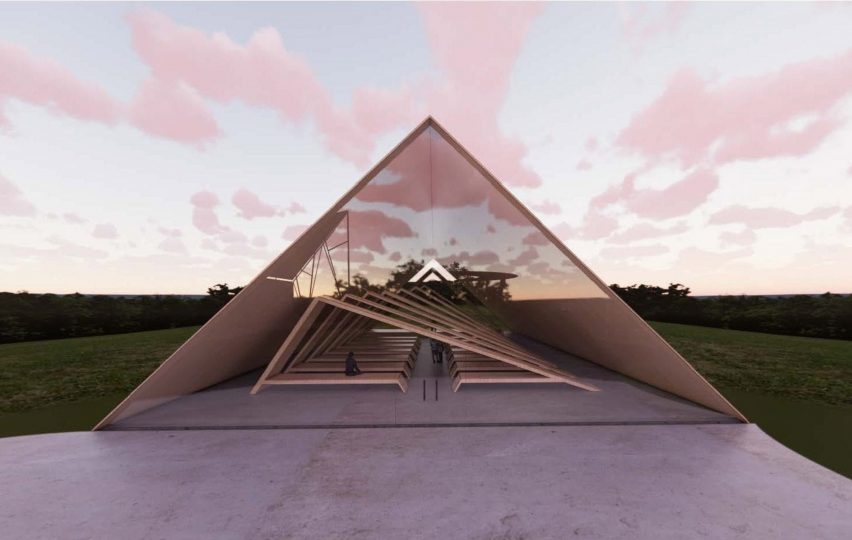
Luna Meditation Hall by Jana Khalil

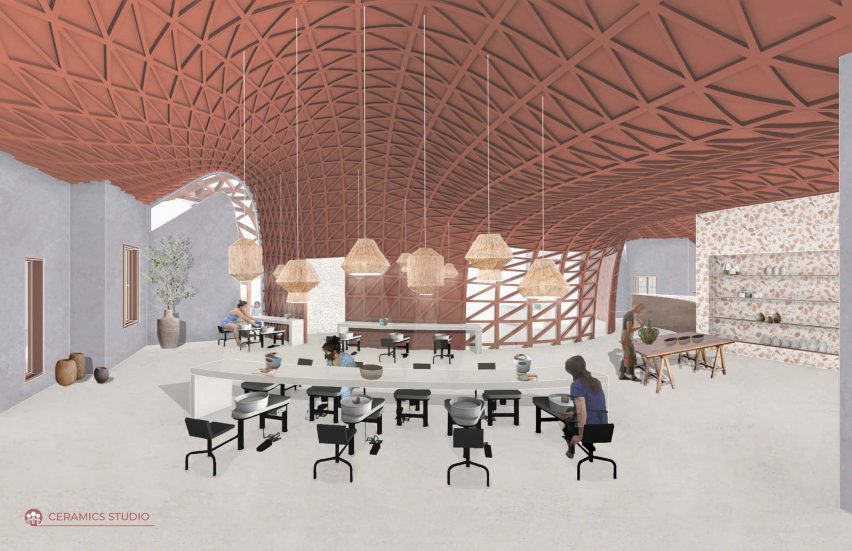
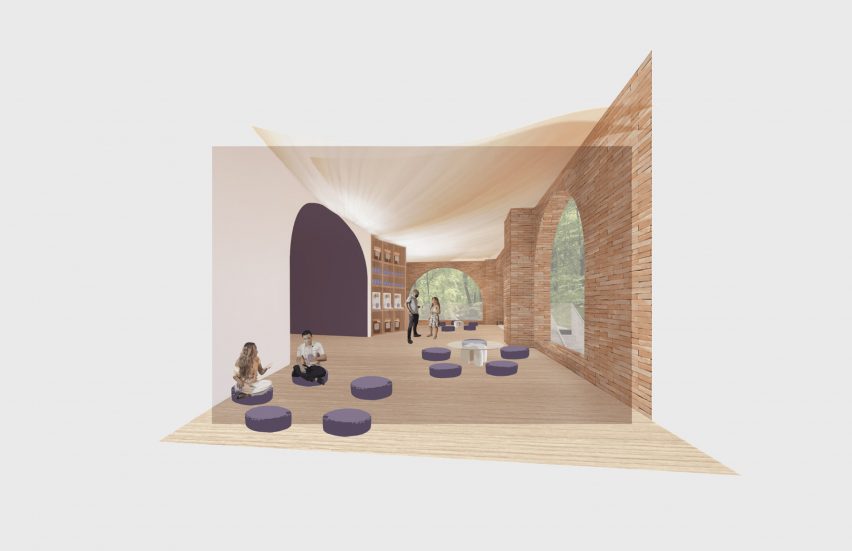
“Luna Meditation Hall is dedicated to creating an environment where people can come for an energetic reset. The hall is made up of a meditation hall, private meditation enclaves and classrooms. It is designed to encourage people to turn inward, either alone,  in connection with others or with guidance.

“The project takes reference from phases of the moon. The space focuses on layering and the play between light and shadow to reflect the journey inward during meditative moments.”

Student: Jana Khalil
Advisor:
Kristin Carleton
Course: 
Studio 5 – undergraduate
Email:
khaliljana99@gmail.com


George Washington University

Movie Theatre and Film History Museum by Caitlin MacGregor

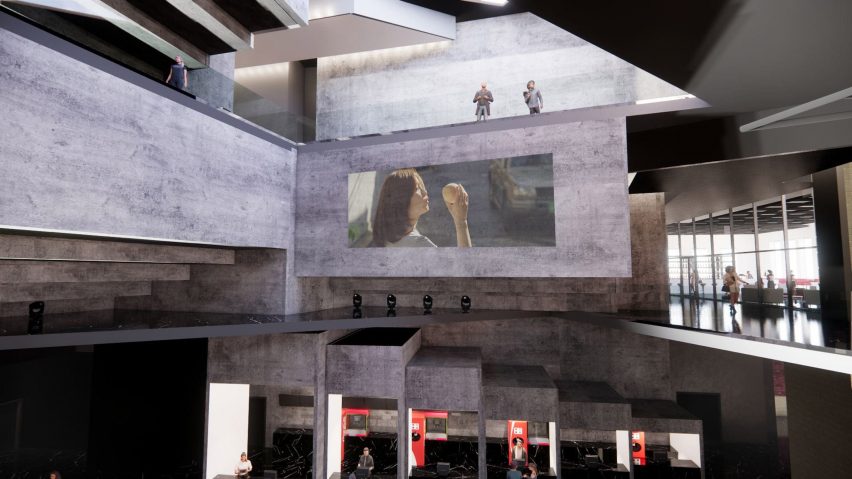
“The Movie Theatre and Film History Museum is designed for people to see parts of film history in the museum while also viewing new movies that could be a part of that same history someday.

“The site for the project is the Car Barn in Georgetown, D.C. The aperture of a movie camera inspired the main concept. The theatres are tucked away from sunlight, like film in the exposure compartment of a camera. But they are lit up by the screens inside the theatre, similar to film when exposed to light coming through the aperture of a camera.”

Student: Caitlin MacGregor
Course: 
Studio 5 – undergraduate


George Washington University

Farm Stay by Salli Mandel

“Farm Stay promotes slow food through an immersive retreat in Middleburg, Virginia. Guests learn sustainable farming practices and follow the path of produce from planting to cooking to eating. The life cycle starts in the main house, where cosy guest rooms cradle visitors as they begin their journey.

“Just as a plant grows into a seedling, the garage promotes growth and provides an opportunity for visitors to soak up new ideas. Finally, when the plant is fully grown and harvested, the guests dine at the restaurant and enjoy the feast. The life cycle continues when guests sow the seeds of knowledge with others.”

Student: Salli Mandel
Advisor:
Karen Gioconda
Course: 
Studio 5 – undergraduate
Email:
sallismandel@gmail.com


George Washington University

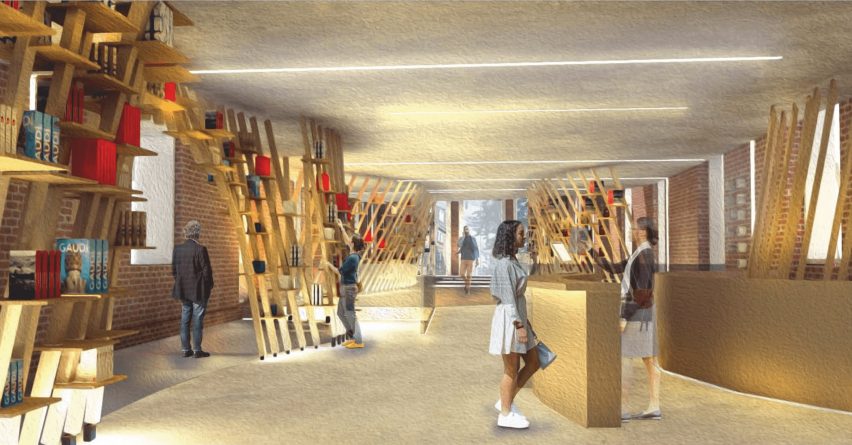
Books and Beyond by Sibyl Frances Natad

“Books and Beyond is designed for learning, socialization and a sense of community. The design is a dual concept of a bookstore, café and bar. The programme includes a writing centre for aspiring authors, a space for gatherings, and a communal work area.

“During the digital age, when information is easily accessible through the tap of a finger and people have a rapid lifestyle, it is fitting to create a space that is meant for an individual to slow down and enjoy perusing books leisurely. Books and Beyond is the best place to immerse oneself in literature and connect with others with a similar interest.”

Student: Sibyl Frances Natad
Advisor:
Kristin Carleton
Course: 
Studio 5 – undergraduate
Email: sibylfrances29@gwu.edu  


George Washington University

RE.turn: End of Life Centre by Grace Poillucci

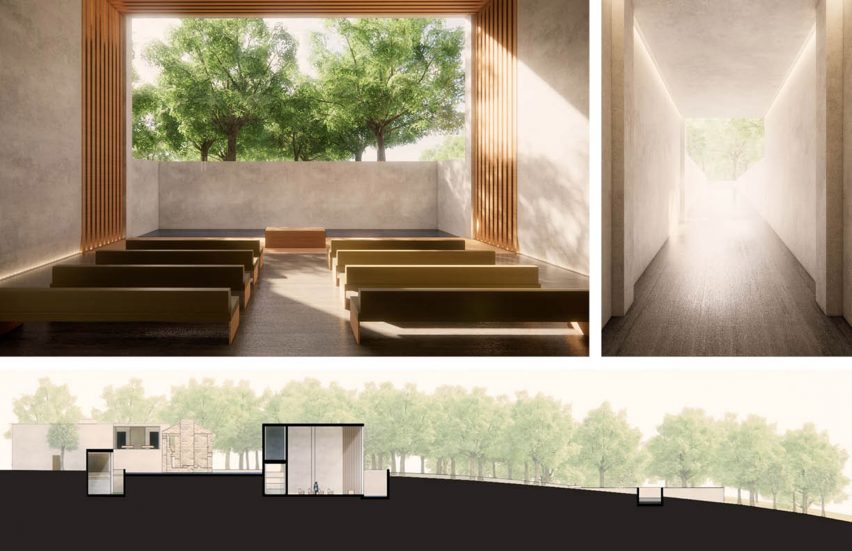
“RE.turn aims to utilize design to initiate cultural change around death. It looks to develop an experience that allows mourners to grieve in the ways best for them, erasing the standard of a quick ceremony and moving toward a multi-day process of renewal.

“By providing the facilities for an extended stay, RE.turn creates an environment in which friends and family can gather, grieve, and extol life. It looks to answer: What power does architecture have to initiate mass culture change? Does design have the ability to diminish the long-standing stigma around death and mourning in the United States?”

Student: Grace Poillucci
Advisor:
Karen Gioconda
Course: 
Studio 5 – undergraduate
Email:
gracepoillucci@gwu.edu


George Washington University

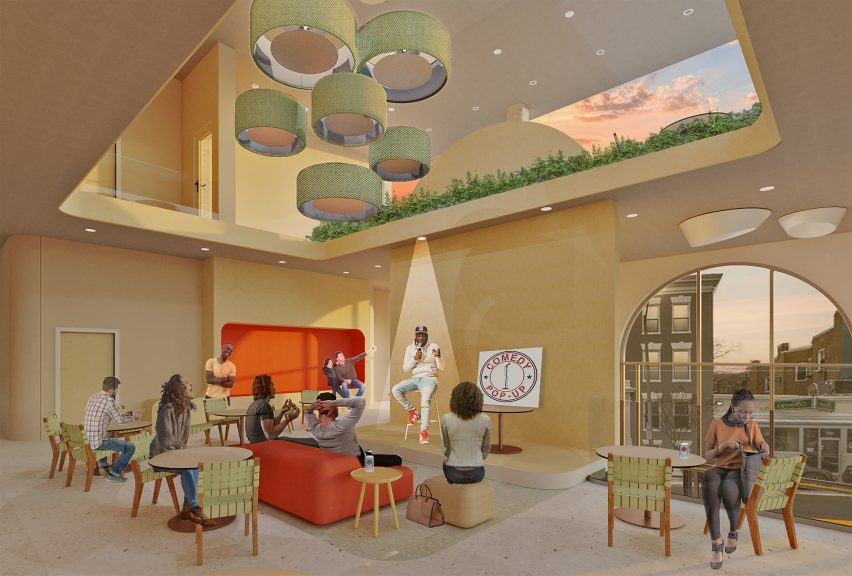
14th & U Street by Morgan Richmeier

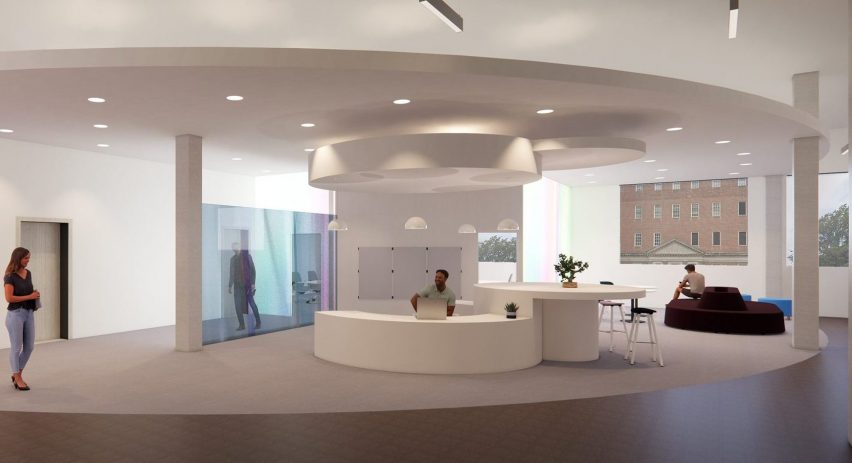
“Inspired by DC’s impressive array of parks and lively street culture, 14th & U Street is a public indoor park. With bike parking, short-term lockers, restrooms, and various fixed and unfixed seats, the indoor park caters to the heavy pedestrian and cyclist traffic.

“On the first floor, the resource area situates users and directs them to the functional programme. Connected through an atrium space, the second floor doubles as a reservable community space and social seating floor. Finally, the third floor is the most removed from the energy of the streetscape, featuring tranquil plant life and patio seating.”

Student: Morgan Richmeier
Advisor:
Karen Gioconda
Course: 
Studio 5 – undergraduate
Email:
mvrichme@me.com


George Washington University

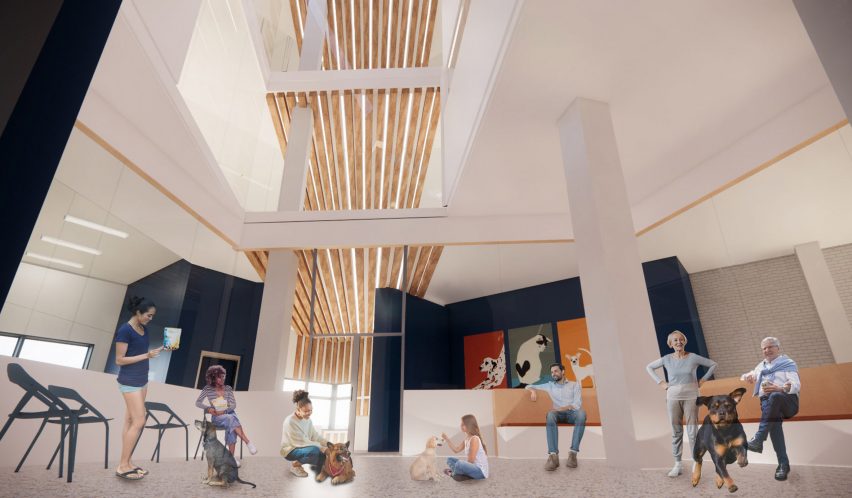
The Animal Hostel by Alaina Willard

“The Animal Hostel is a shelter focused on helping improve adoption rates by providing a safe, wellness-focused environment designed to enhance connections between the community, individuals, shelter staff and animals.

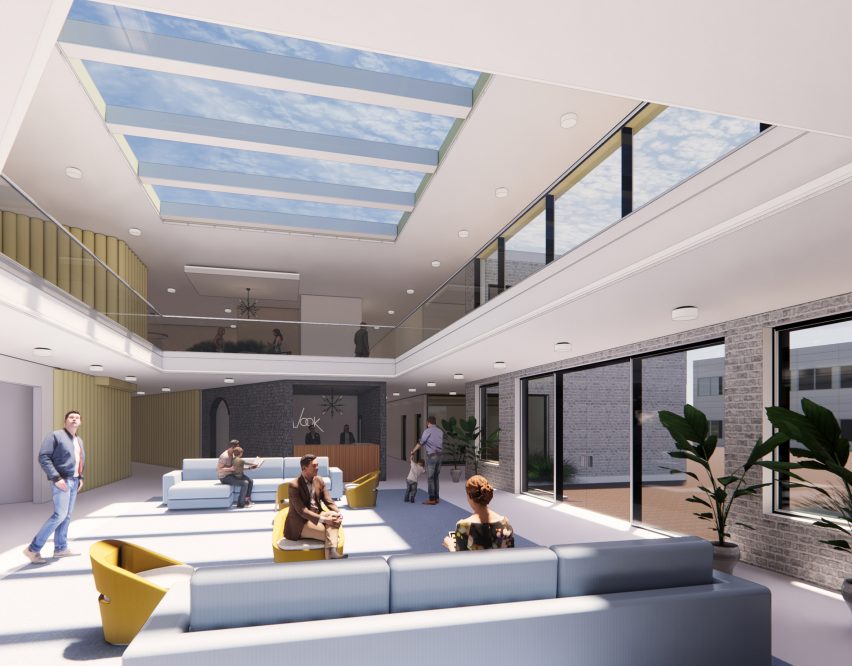
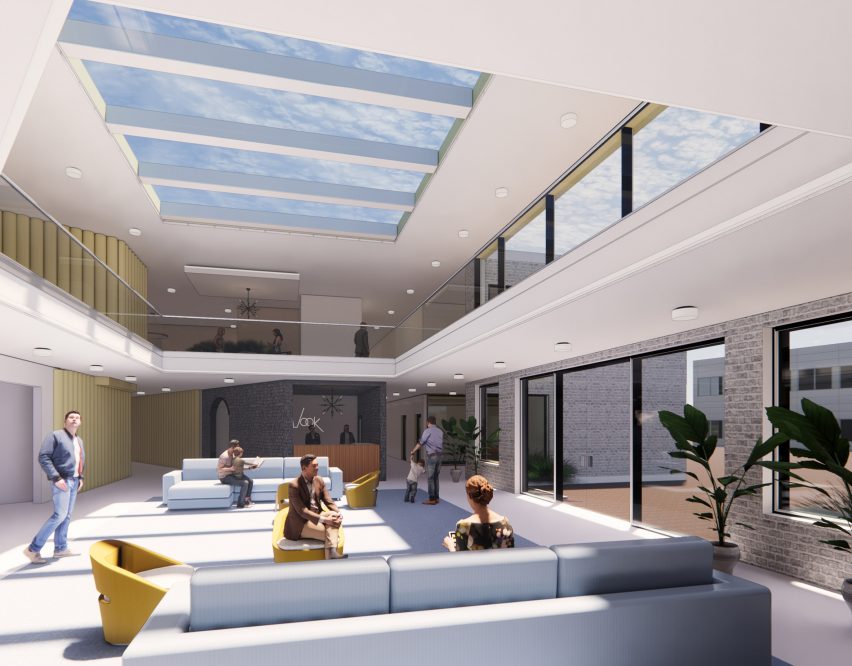
“Through the concept of unity, Animal Hostel incorporates interior and exterior design elements that encourage natural interaction between pet and potential owner and establish a connection to the neighbourhood, generating a positive outlet for residents, business owners and consumers.

“A central glass core unites the building’s verticality, providing natural light that is critical to the wellbeing of the animals and evoking a feeling of openness, freedom and transparency.”

Student: Alaina Willard
Advisor:
Kristin Carleton
Course: 
Studio 5 – undergraduate
Email:
awillard@gwu.edu


Partnership content

This school show is a partnership between Dezeen and the Corcoran School of the Arts & Design at the George Washington University. Find out more about Dezeen partnership content here.

Reference

George Washington University
CategoriesInterior Design

Ten interiors by Corcoran School of the Arts and Design masters students

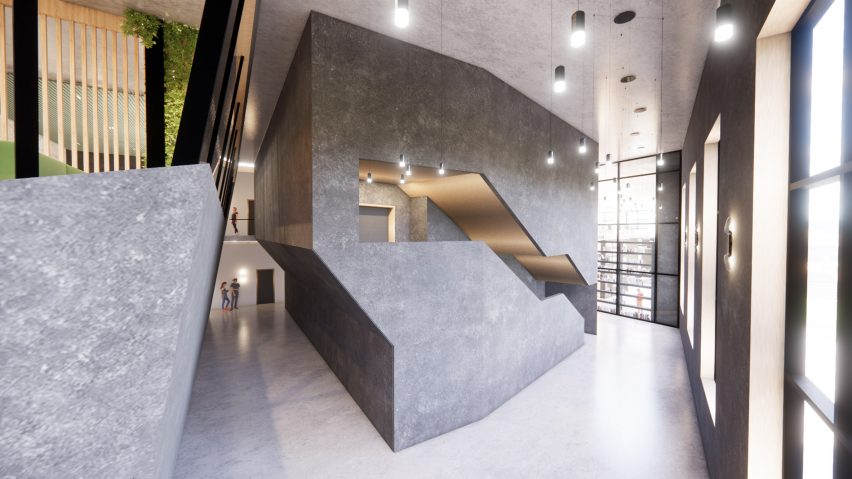
In this school show, masters students at the Corcoran School of the Arts and Design present interiors projects including a comforting dental office and a retail experience that encourages people to repurpose old clothes.


The projects are from students on the Interior Architecture MFA course at the Corcoran School of the Arts and Design at The George Washington University in Washington, DC, USA.


School: Corcoran School of the Arts & Design at The George Washington University
Course: Interior Architecture MFA
Email: ciarc@gwu.edu

School statement:

“The Interior Architecture Master of Fine Arts (MFA) at the George Washington University’s Corcoran School of the Arts & Design in Washington, DC, is the only Council for Interior Design Accreditation-accredited programme in the United States’ capital.

“It is designed for students who pursued a bachelor’s degree in a field other than interior design, interior architecture or architecture and are looking to follow a studio-based curriculum that will teach various aspects of interior design, theories and technicalities. We believe in fostering a community that encourages creativity and pushes the boundaries of design with an emphasis on conceptual thinking and the design process.”


George Washington University

ADHD Childcare and Community Centre by Edewede Akpesiri-Odia

“Children with attention deficit hyperactivity disorder, ADHD, often have difficulties with hyperactivity and self-control. This project aims to create order and organized activities for children with ADHD while also offering fun and wellness benefits.

“The existing building is located in a dense residential area of Arlington, Virginia. Within the building shell, a grid enables order and structure. Each programme block will have activities shifting the grid, creating movement and fluidity while maintaining its volume. Activities will encourage and strengthen neural networks in the brain and enable kids with ADHD to practise self-control.”

Student: Edewede Akpesiri-Odia
Advisor: Christina Filipescu
Course:
Studio 5 – graduate
Email: 
ede.odia@gmail.com


George Washington University

Remembrance Crematorium by Yi-Chen Chang

“Distinctive cultural responses to death inform how we process loss. Mourning rituals reflect the nature of the relationship with the deceased. As the solid stick fades to smoke, we connect to the sacred. We are reminded of the fragility of life and the importance of seizing the day.

“In this project, ruins of the McKinney homestead in Austin become a focal point for a crematorium complex. The symbolic omnipresence of death encourages us to cherish life and live deeply. References to death, burial, permanence/impermanence and the eternal are captured throughout the sequence of spaces providing quietude for reflection.”

Student: Yi-Chen Chang
Advisor: Christina Filipescu
Course:
Studio 5 – graduate
Email: changyichen@gwu.edu


George Washington University

U.commons: A physical place for virtual learning by Aileen Kim

“With higher education leaning deeper into digital technologies, academic satellite sites can serve commuting and online students by providing practical resources and social support, leading to student success and equity.

“The interplay of physical and virtual realities is explored through the overlap, where the context of one reality may be expressed more dominantly over the other. At times, the overlap is a threshold, encouraging users to become aware of moving in and out of spaces designed for digi-centric or physi-centric programming. These portals guide inhabitants through areas for individual focused work to spaces for collaboration and social connection.”

Student: Aileen Kim
Advisor: Christina Filipescu
Course:
Studio 5 – graduate


George Washington

Suzuki School of Music, NYC by Taylor Oosting

“Classical music education for K-12 students comes with proven developmental benefits, but unfortunately, arts education is often among the first programmes cut from a public school’s budget. This project envisions an after-school Suzuki Education Center for strings. It aims to bring accessible music education to urban communities and lower entry barriers to classical music education and enjoyment.

“Located in one of the most diverse communities in the nation, a New York City borough, this project serves as a blueprint for future accessible music institutions. Conceptually, the project is based on the practice of Kintsugi, a Japanese method of repairing broken pottery by mending the broken areas or reattaching cracked pieces with gold lacquer, embracing the damage as an opportunity to find beauty in the imperfections.”

Student: Taylor Oosting
Advisor:
Christina Filipescu
Course:
Studio 5 – graduate
Email:
tayloroost@gwu.edu


George Washington University

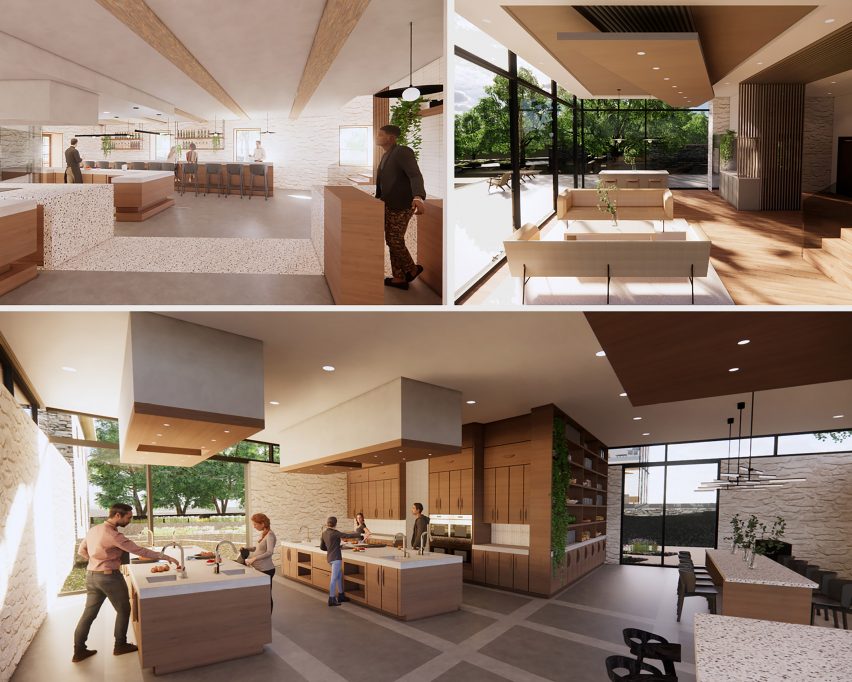
Peirce Mill: A Celebration of Food and Community by Brynn Jacoby Orban

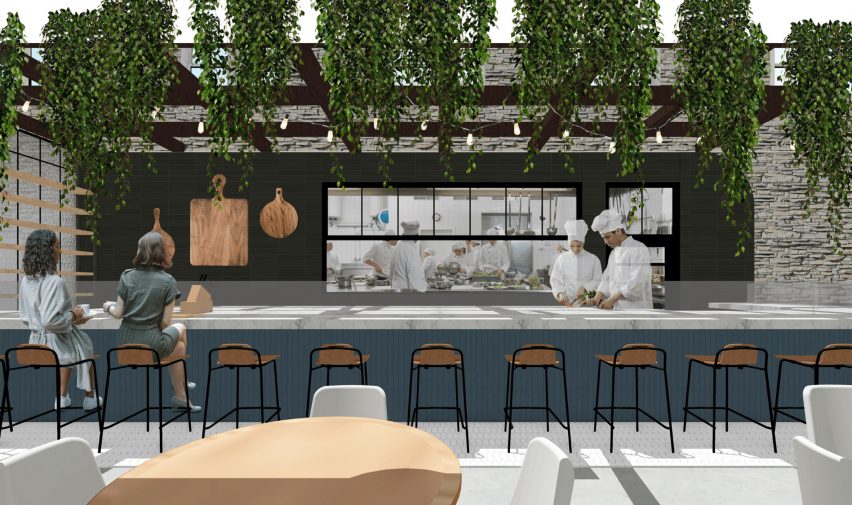
“The Peirce Mill is a food-focused wellness centre featuring a garden-to-table restaurant, cooking classes, and a health and wellness coaching clinic. These facilities strive to celebrate food as a resource that nourishes the body and brings the community together.

“Inspired by the transformative process of grain’s movement through a mill, the site plan and architecture of the mill will highlight spaces of learning. With the use of the existing grids of the historic mill and barn, situated askew from each other in their idyllic forested, creekside setting, a shifted grid will be employed to highlight these transformative spaces of growth.”

Student: Brynn Jacoby Orban
Advisor:
Christina Filipescu
Course:
Studio 5 – graduate
Email:
jacobybrynn@gmail.com


George Washington University

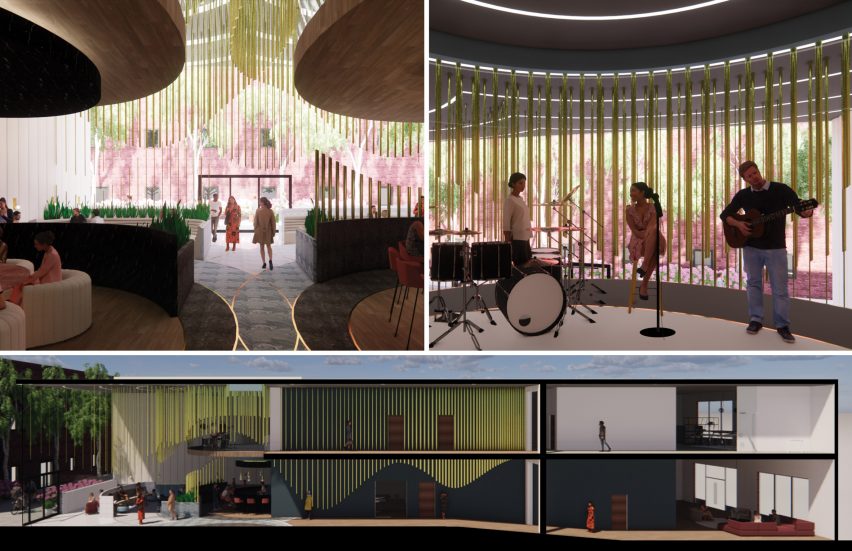
The Steady Beat Recording Studio by Hannah Shafer

“In music production and recording, women are often hindered by pay gaps, with limited mentorship and promotions opportunities while also confined to certain genres. The Steady Beat is a recording studio and artist social club in Washington DC designed with these limitations in mind – a space supportive of female excellence and collaboration.

“Inspired by sound waves, the space features undulating brass rods – a nod to musical instruments of the same material. As users cross the threshold where the historic building was once split into two, the waves become increasingly dynamic and the spaces more collaborative and creative.”

Student: Hannah Shafer
Advisor:
Christina Filipescu
Course:
Studio 5 – graduate
Email:
hannahcshafer@outlook.com


George Washington

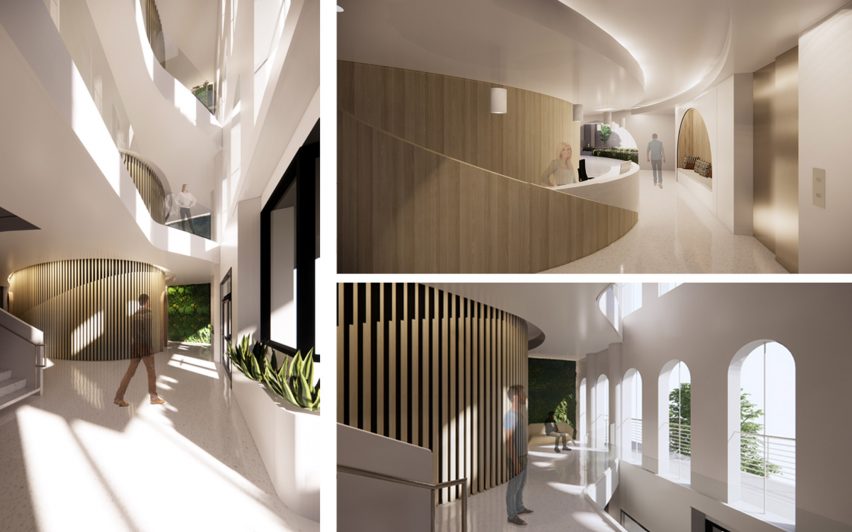
Dental Office by Vanessa Spencer

“It is estimated that 61 per cent of people have dentophobia, or fear of dentists, worldwide. This fear usually generates from past negative experiences or oral health concerns. To promote wellbeing, this project mimics nature’s process of protecting.

“A dental office is designed to bring comfort and a feeling of protection to the user by creating forms that are wrapped barriers of protection. These protected areas wrap around the spaces where the user might feel the most vulnerable. Biophilic tools are used throughout the design to connect the user with nature during their visit.”

Student: Vanessa Spencer
Advisor:
Christina Filipescu
Course:
Studio 5 – graduate
Email:
nessa31.vf3@gmail.com


George Washington University

Upcycling Retail Experience Store by Mengjiao Wang

“The fashion industry is the second-largest polluter in the world. Textile production requires significant natural resources, and the decomposition process produces greenhouse gas and leaches toxic chemicals into groundwater and soil.

“This project aims to increase people’s attention to this urgent environmental problem and to encourage people to participate in the process of upcycling clothing. Here, the old garments can be reinvented and start their new life. Drawing ideas from using ‘entropy increase’ to express the flow of time, the store will show the clothing’s journey and provide opportunities for customers to visit and join in.”

Student: Mengjiao Wang
Advisor:
Christina Filipescu
Course:
Studio 5 – graduate
Email:
mengjiaowang@gwu.edu


George Washington University

Education Co-op by Aidan Young

“In the current education system, undue emphasis is placed on academic content and standardized testing, leaving teachers with a substantial burden that consumes their mental bandwidth.

“To address the issue and to work toward a solution, this education centre will focus on one main reason students report dropping out of high school: a lack of positive peer and mentor relationships. The Education Co-op will provide students educational support in a space that cultivates and celebrates warmth and connection.”

Student: Aidan Young
Advisor:
Christina Filipescu
Course:
Studio 5 – graduate
Email:
young.aidan2015@gmail.com


Partnership content

This school show is a partnership between Dezeen and the Corcoran School of the Arts and Design. Find out more about Dezeen partnership content here.

Reference

Michael Young x Dezeen cafe and bar at Design Shanghai
CategoriesInterior Design

Dezeen presents cafe bar designed by Michael Young at Design Shanghai

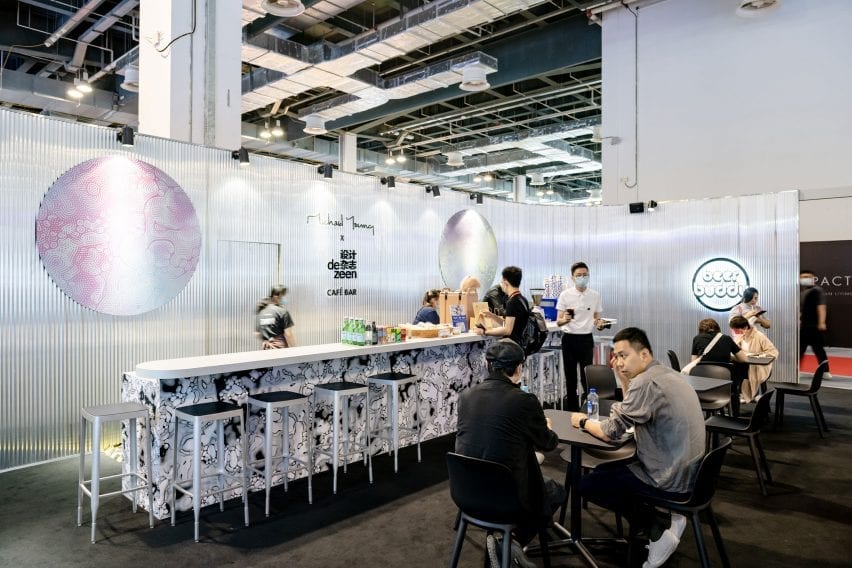
Dezeen has partnered with Design Shanghai to present a cafe and bar designed by Michael Young at the 2021 edition of the trade show, which opened in Shanghai this week.


The cafe and bar is located at booth K207 in Hall 2 at Design Shanghai 2021, which takes place at the Shanghai World Expo Exhibition and Convention Center in Shanghai, China, until 6 June.

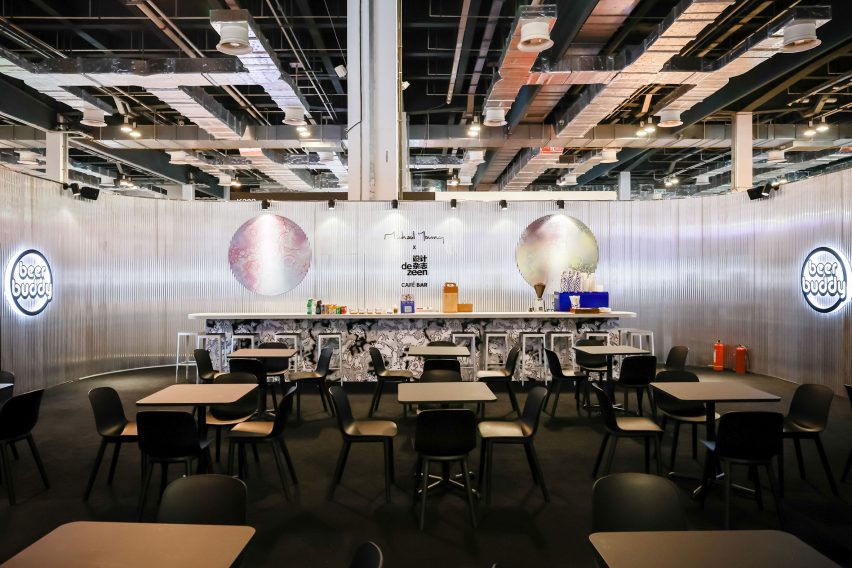
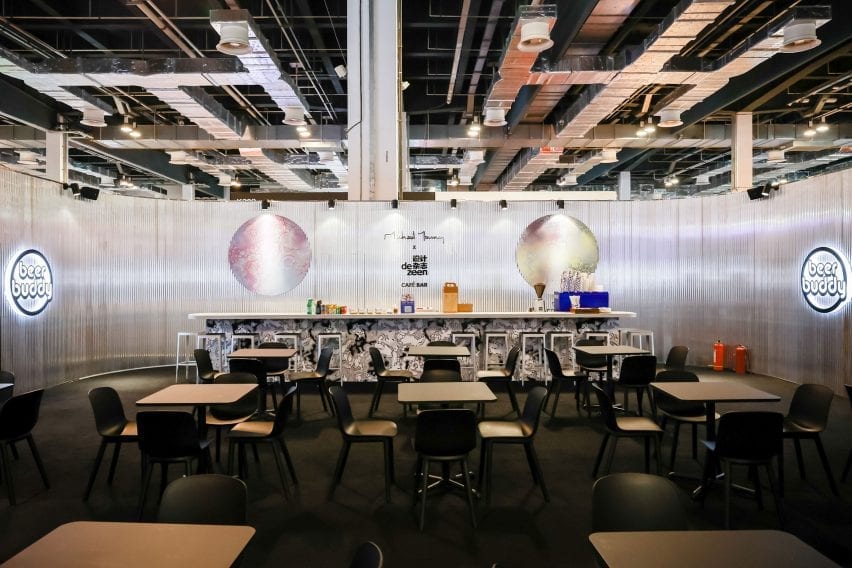
The space features grey corrugated walls with splashes of colour and is furnished with previews of furniture pieces designed by Young that will be launched later in the year.

Michael Young x Dezeen cafe and bar at Design Shanghai
Dezeen has partnered with Design Shanghai to present a cafe and bar designed by Michael Young

According to Young, the concept for the space is loosely based on a bar he created last year at his office in Shekou, Shenzhen.

“I ended up with an opportunity to create a bar last year beneath our studio but with only a few weeks to build the concept I decided to throw in anything I could get hold of – samples, prototypes and things from the studio that we have collected from around the world,” the Hong Kong-based British designer told Dezeen.

“I basically scavenged the studio together like a magpie so it became a real beer shack and a place that was not designed but created organically.”

The bar has grey walls
The bar features ribbed walls with splashes of colour and pattern

Citta Design has contributed pieces of Young’s new Acre Chair for the New Zealand brand, which will be launched in Auckland in September. The space is also furnished with new editions of Young’s Stool 4a for EOQ Design, which will be launched in December.

The bar is being used to launch Young’s new drinks brand Beer Buddy, which developed a new pilsner called House for the event.

The beer brand is specifically designed to connect creatives at events, trade shows and gatherings around Asia. Drinkers can scan a QR code on the beer packaging to connect with other creatives attending the event.

It is serving Beer Buddy
Young is launching his new Beer Buddy drinks brand at the bar

The dark grey exterior walls of the space are decorated with swirling patterns based on the graphics on the Beer Buddy cans and bottles.

Colourful versions of this pattern have been used to add splashes of colour to the interior walls and enclose private seating areas.

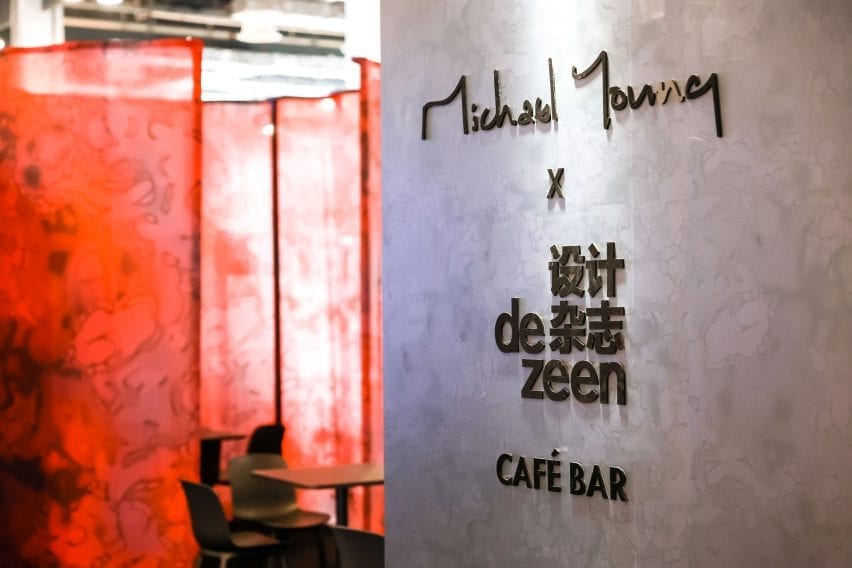
The space is co-branded with Young’s studio logo and the Chinese version of Dezeen’s logo. The walls also feature the QR code for people to follow Dezeen’s official WeChat account, which features news and features about the latest architecture, design and interiors written in Simplified Chinese.

Michael Young x Dezeen cafe and bar at Design Shanghai
The interior and exterior of the bar features swirling patterns based on the Beer Buddy packaging

Dezeen is a media partner for Design Shanghai 2021.

The show presents over 400 local and international brands across eight different sections alongside a programme of installations, exhibitions and the return of its annual talks programme, which this year explores the topic of regenerative design.

Design Shanghai takes place from 3 to 6 June at the Shanghai World Expo Exhibition and Convention Center. See Dezeen Events Guide for an up-to-date list of architecture and design events taking place around the world.

Reference