Sora for Architects: Will OpenAI's Text-to-Video Enhance and Streamline Future Design Practices?
CategoriesArchitecture

Sora for Architects: Will OpenAI’s Text-to-Video Enhance and Streamline Future Design Practices?

Architizer’s Tech Directory is a database of tech tools for architects — from the latest generative design and AI to rendering and visualization, 3D modeling, project management and many more. Explore the complete library of categories here.

As I opened the OpenAI website, the phrase “Creating video from text” immediately caught my attention. A video of colorful paper planes soaring like birds through the air made me pause momentarily. Could this be real? Is it truly possible to transform text into videos? Instantly, a flood of thoughts rushed through my mind.

What does this mean for the movie industry?

Could filmmakers simply submit scripts to OpenAI and produce movies without actors or sets?

Could a single prompt revolutionize television shows, commercials, and the work of videographers and photographers?

Is there potential for such technology to be exploited during election season?

The recent launch of Sora by OpenAI showcases a groundbreaking advancement in the field of artificial intelligence and its versatile application across various domains. At the rate of development, this AI tool is heading in the direction of becoming an indispensable asset that could offer architects unprecedented capabilities, potentially revolutionizing their approach to design.

With a background in architecture, I’m particularly intrigued by its potential to transform the day-to-day creative processes intrinsic to the work in the field. In the ever-evolving landscape of design and architecture, technological advancements continuously emerge, challenging conventional boundaries and fundamentally reshaping the essence of creativity. This piece will delve into how Sora could trigger transformative shifts in the world of architecture and design.

Sora as Design Partner

I don’t perceive Sora as a replacement for designers or architects; instead, I see it as a tool that could enhance their work by enriching the design process and serving as a collaborative design partner to amplify human creativity. Sora works by dissecting, compressing and assembling video segments, similar to solving a puzzle, to create realistic videos. It also excels at generating dynamic animations from text and animating still or extracted images from videos.

Architects could leverage Sora’s vast knowledge base and computational powers to explore a multitude of design possibilities. Similar to Midjourney, in generating imagery from prompts, Sora could provide an immediate and immersive representation of specific objects, designs and project sites, offering a highly realistic experience. For architects, this could mean no longer having to wait until the design process concludes for realistic renderings, VR video walkthroughs and virtual tours. Instead, it can provide realistic imagery that enhances the project as designs evolve during the process.

From Concept to Reality: Streamlining Design Processes

Traditionally, architects dedicate significant time and resources to conceptualizing and refining their design ideas. However, with Sora’s advanced generative design capabilities, this paradigm is set to change. By harnessing machine learning algorithms and predictive modeling, Sora could empower architects to generate complex design solutions tailored to specific requirements and constraints swiftly. Imagine how different the concept design phase will be when you can prompt Sora with precise materialities and construction techniques tailored to your building’s requirements. This capability could enable optimization of building performance, maximization of spatial efficiency and enhancement of sustainability instantaneously —  all with a single prompt.

During the early stages of conceptual design, this tool could facilitate rapid exploration of fundamental design concepts, commonly known as “massing studies.” It could enable the creation of initial design studies directly from conversations, streamlining the ideation process significantly. This could be a valuable source of inspiration for the design team during the brainstorming phases, where all imaginative ideas are welcomed.

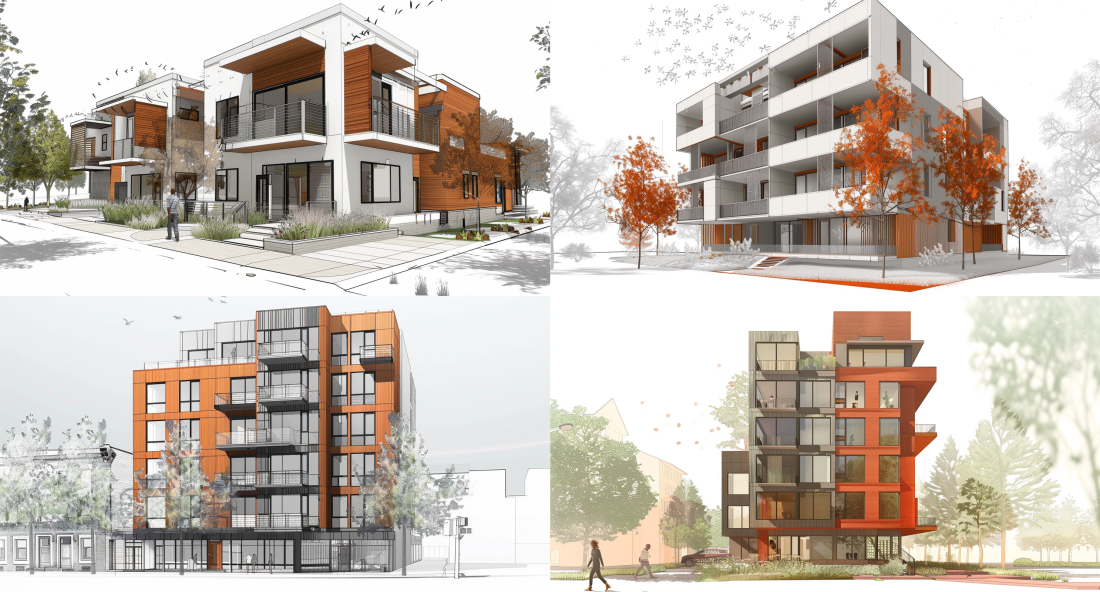
Here is an example of how I would approach using Sora by OpenAI:
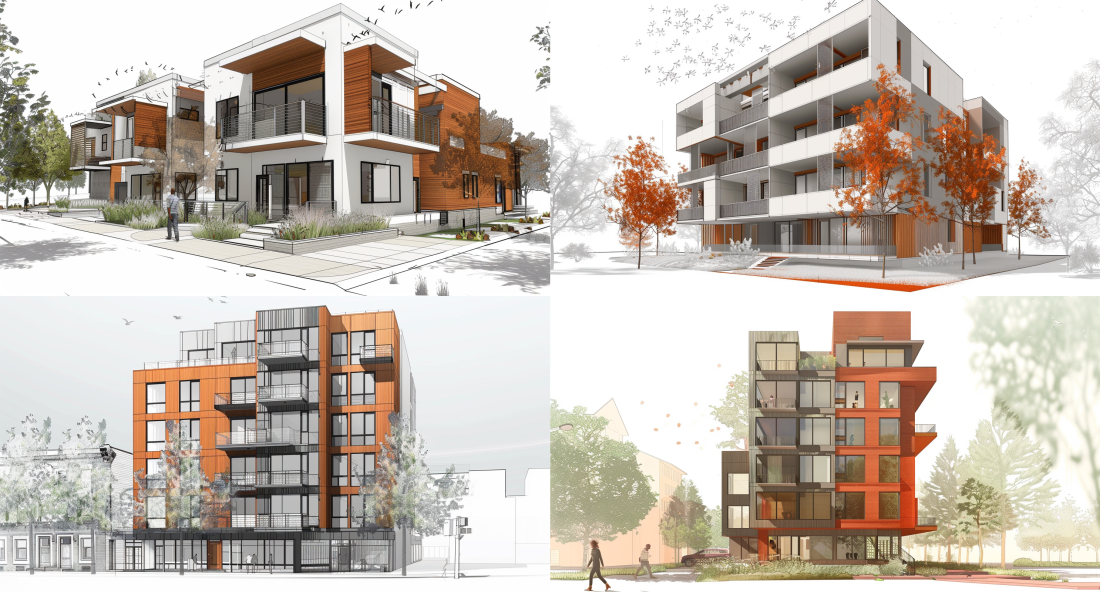
Image generated by Architizer via Midjourney

Prompt #1 (Highly unspecific, beginning to brainstorm):

“Sora, generate video clips exploring different building massing options for the site in downtown Los Angeles. Experiment with a series of heights, configurations, and styles to convey spatial qualities and design ideas. Incorporate contextual elements like landscaping and surrounding buildings. Provide animated transitions between iterations for visual clarity and to facilitate early design discussions.”

Prompt #2 (Slightly more specific, beginning the concept design phase):

“Sora, illustrate three distinct massing options for a mixed-use development on a 1-acre urban site in downtown Los Angeles. Include variations in building height, orientation, and architectural style, with animated transitions between iterations. Implement a design where the building progressively lowers its height towards the street level, fostering a pedestrian-friendly environment. Incorporate street-level retail, public plazas, and green spaces to provide contextual understanding. Ensure high-resolution rendering and clear annotations for stakeholder feedback.”

Prompt #3 (Highly specific, design development):

“Sora, showcase Massing Option 3 for the downtown Los Angeles development. Implement a design where the 10-story building progressively lowers its height towards the street level at both corners of the site, fostering a pedestrian-friendly environment. Emphasize a modernist architectural style with circular perforated metal panels in copper and warm-toned wood cladding. Use animated transitions to highlight the interplay of light and shadow on the façades, showcasing dynamic reflections and textures.

Detail street-level retail entrances with polished stainless steel finishes and large glass storefronts. Enhance upper-floor terraces with seamless indoor-outdoor transitions and integrated planters. Highlight the rooftop garden with lush greenery and contemporary seating. Ensure the video conveys sophistication and urban elegance with attention to materiality, colors and façade detailing.”
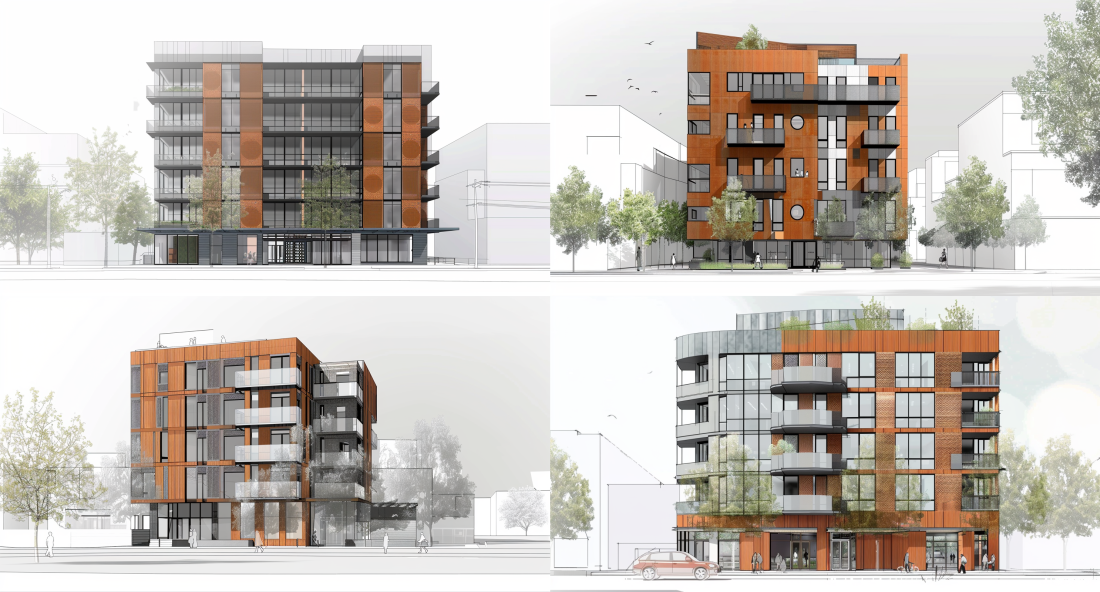
Image generated by Architizer via Midjourney

This design approach would not only speed up the creative iteration process but could also streamline interdisciplinary collaboration. Architects would be able to integrate input from various consultants, including engineers, urban planners, and environmental experts in later project phases, bringing architectural visions to life with striking realism.

Designing for Human Experience

At the heart of every architectural endeavor lies the goal of creating spaces that enrich the human experience. With Sora, architects could gain access to powerful tools for analyzing user behavior, preferences, and spatial interactions. By synthesizing vast amounts of data, including user feedback, environmental factors, and cultural influences, this technology could enable architects to design spaces that resonate with occupants on a profound level. Integrating Sora as a plugin within the commonly used Rhino 3D modeling software could empower architects to create detailed models with enhanced design capabilities. Whether helping craft immersive environments that foster creativity and well-being or optimizing building layouts for accessibility and inclusivity, Sora could be a tool to help architects prioritize human-centric design principles, ultimately enhancing the quality of the built environment and enriching the lives of those who inhabit it.

Design development

As concepts materialize and visions evolve, architects transition to refining details and perfecting the finer aspects of their creations, presenting an opportunity for Sora to emerge as a valued design partner. Client meetings could evolve into interactive sessions, leveraging Sora to promptly incorporate client feedback on the fly. With its ability to simulate materials, construction methods, and building performance, Sora could enable architects to refine every aspect of their designs with precision and efficiency, enabling clients to visualize the ongoing work and decision-making process in real-time.

Pushing the Boundaries of Sustainability
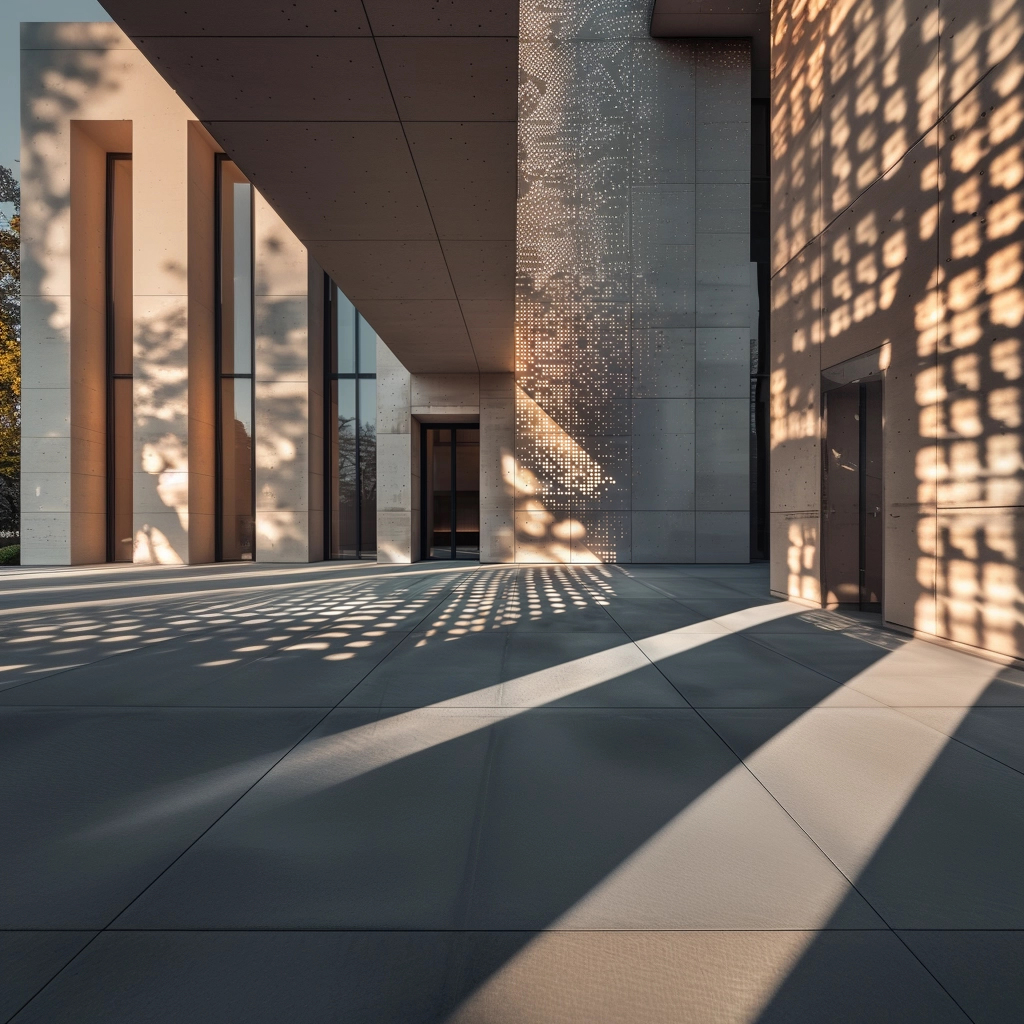
Image generated by Architizer via Midjourney

In an era defined by pressing environmental challenges, sustainability has emerged as a central concern in architectural practice. Here too, Sora stands to make a significant impact. An architect versed in sustainability could guide the integration of a passive solar design strategy and the optimization of material usage, facilitating the creation of eco-friendly buildings without compromising design integrity through data-driven energy performance simulation.

For instance, a key part of an architect’s job involves meticulously studying how light interacts with buildings, observing where the light hits and where shadows fall. Understanding the sun’s patterns and its influence on a design is essential. One might request simulations to optimize building orientation, window placement, and shading devices, with the aim of maximizing natural daylight, minimizing reliance on artificial lighting, and reducing energy consumption. Even wind simulations could be conducted, exploring various scenarios to understand how wind direction and intensity might impact the building on the site. Sora could empower architects to explore and assess sustainable design options, resulting in energy-efficient buildings that effectively harmonize with their surroundings.

Looking Toward the Future

The way I envision Sora is as a valuable addition to a team of talented designers, capable of delivering high quality results at high speed. While not all ideas or solutions may be optimal, Sora could undoubtedly spark new conversations and introduce novel concepts that others may not have considered, serving as a foundation for future design iterations.

As it continues to evolve, Sora’s data-driven approach could help architects push the boundaries, rethink design norms, and aide in designing spaces that inspire and last. It could facilitate informed decisions, streamline workflows, and even accelerate project timelines. With its boundless creative potential, Sora could serve as a catalyst for groundbreaking innovations in the creative world. Unlocking limitless possibilities, it has the potential to enhance and streamline the design process across all stages, revolutionizing future approaches and practices in design.

Architizer’s Tech Directory is a database of tech tools for architects — from the latest generative design and AI to rendering and visualization, 3D modeling, project management and many more. Explore the complete library of categories here.


Reference

Portrait of Nora Fehlbaum by Tom Ziora
CategoriesSustainable News

Vitra “willing to take risks” on changing products says CEO Nora Fehlbaum

Swiss furniture brand Vitra will prioritise reducing the environmental impact of its existing lines through material innovation, CEO Nora Fehlbaum tells Dezeen in this interview.

One of the industry’s best known and most influential manufacturers, Vitra‘s collections include iconic pieces such as Eames plastic shell chairs and Panton chairs.

Like its peers, the brand is under increasing pressure to reduce the ecological footprint of its operations in the face of worsening climate change.

Portrait of Nora Fehlbaum by Tom ZioraPortrait of Nora Fehlbaum by Tom Ziora
Nora Fehlbaum spoke to Dezeen at the Vitra Campus in Weil Am Rhein

Speaking to Dezeen at the Vitra Campus in Weil Am Rhein, Germany, Fehlbaum suggested that the company’s heritage as a high-end, design-focused furniture brand is inherently aligned with sustainability.

“Vitra’s greatest contribution to sustainability is its products with an above-average service life, which omit everything superfluous,” she told Dezeen.

“Our roots in modern design would allow nothing else.”

However, she claimed Vitra is “doing everything we can with all the means we have” to become more sustainable.

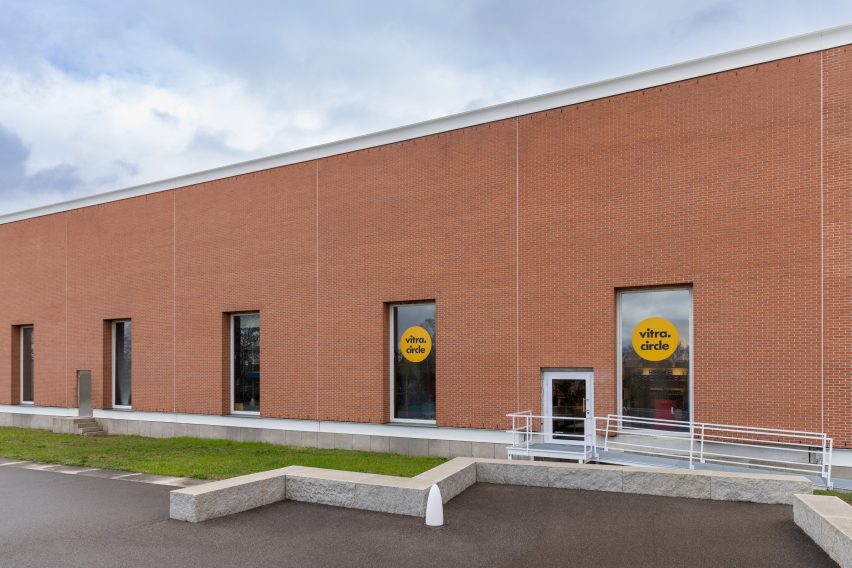
Alvaro Siza designed Factory at the Vitra Campus which has been partially converted to accommodate the new Vitra Circle StoreAlvaro Siza designed Factory at the Vitra Campus which has been partially converted to accommodate the new Vitra Circle Store
The Álvaro Siza-designed Factory at the Vitra Campus has been partially converted to accommodate a new Vitra Circle store (also top)

“Everybody at Vitra has understood our environmental mission,” she said. “We don’t have a sustainability officer – everybody has taken it as their own.”

Vitra’s stated goal is to be “a net-positive company based on all the indicators of its ecological footprint by 2030”.

It has a long way to go, with the company’s most recent sustainability report published in 2022 stating that its total emissions for the year were equivalent to nearly 141,000 tonnes of CO2.

Eames shell chairs now made from recycled plastic

The brand’s sustainability strategy is chiefly focused on its popular existing products, Fehlbaum said.

“We have the biggest impact if we change the products that we sell the most of already, rather than inventing one single sustainable product,” she argued.

“At Vitra, a product is never final, but continues to evolve.”

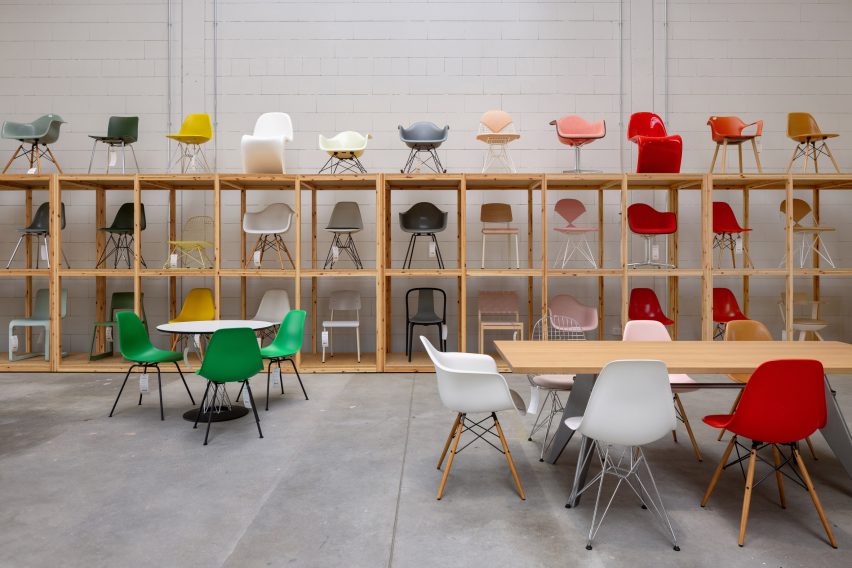
Eames shell chairs in the Vitra Circle storeEames shell chairs in the Vitra Circle store
The Vitra Circle store refurbishes and sells second hand Vitra products

As of January this year, the shells of the Eames plastic chairs manufactured by Vitra are now made exclusively from recycled post-consumer plastic.

“[The Eames shell chair] is probably the most iconic, most copied chair out there – and it won’t be available in virgin material,” said Fehlbaum.

The switch means the shells have a speckled finish that differs from the originals, but Fehlbaum is satisfied with this “recycled aesthetic”.

“It’s a different aesthetic, and of course we hope the consumer gets used to – and maybe even comes to love – this new aesthetic,” she said.

“That’s a risk that we’re taking and that we’re willing to take.”

speckled material next to originalspeckled material next to original
The RE plastic shells are noticeably more speckled (on the right) than the original plastic shell (on the left)

It follows earlier switches of products and parts from virgin to recycled plastic, starting with Barber Osgerby’s Tip Ton chair in 2020.

A number of accessories like Arik Levy’s Toolbox and Konstantin Grcic’s Locker Box have since followed. The entire HAL chair family, designed by Jasper Morrison, now also have their shells manufactured using recycled plastic.

The recycled plastic is taken from household recycling obtained through the German garbage collection programme Gelber Sack (Yellow Bag).

“Utilising this raw material instead of petroleum-based primary plastics generates fewer climate-damaging emissions and less primary energy consumption,” Fehlbaum claimed.

The role of recycling in solving the world’s plastic pollution crisis is contested among designers.

Some, including designer Richard Hutten and Belgian curator Jan Boelen, argue that big brands are using recycling to create an illusion of change while continuing to use virgin plastics.

Others, among them the CEO of the Ellen MacArthur Foundation Andrew Morlet, argue that durable, recyclable plastics can form part of a circular economy.

Many recycled plastic products involve the use of some virgin plastic or additive substances that then complicate or inhibit their own recyclability.

Vitra said its RE product, used for the Eames shells, does not contain any virgin plastic and can be fully recycled at the end of the product’s life thanks to the use of technical fillers, like glass fibres, rather than any additives that prevent onwards recycling.

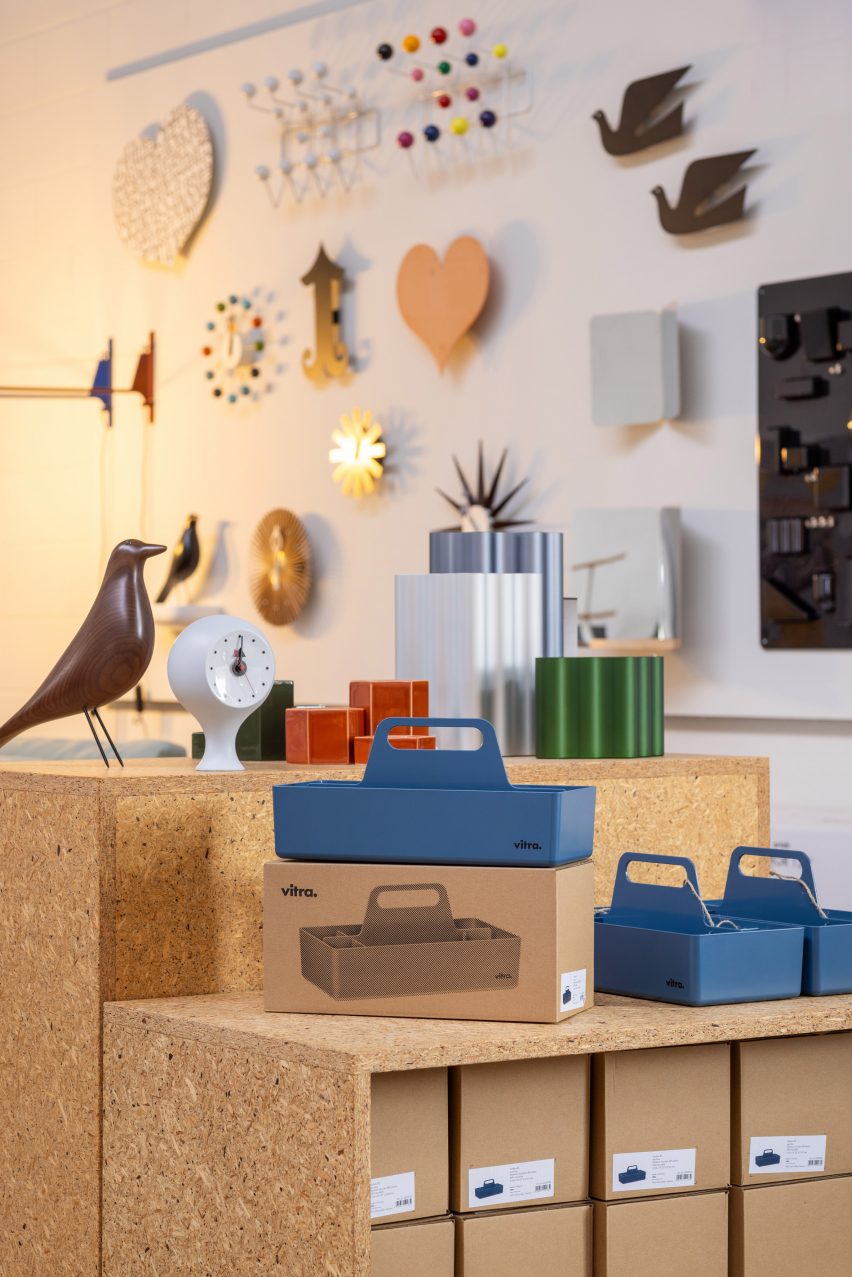
A selection of Vitra products on displayA selection of Vitra products on display
Vitra products are available to purchase at discounted rates at the new Circle Store

Another sustainability initiative is Vitra’s Circle Stores, which sell used furniture and accessories by Vitra and Artek, such as sample products and exhibition pieces, with prices depending on the condition of the products.

All products are tested for functionality and repaired if necessary so that a renewed product warranty can be granted.

The first Circle Store opened in Amsterdam in 2017 in response to questions from customers about second-hand Vitra products, with a second in Brussels.

A third recently “moved” from Frankfurt and opened in an adapted space at the Álvaro Siza-designed Vitra Campus factory building, with a service and repair area where customers can bring their products to receive a new lease of life.

“With the Circle Store, we can offer our environmentally conscious clients an even more environmentally conscious choice: namely that of a second-hand product,” said Fehlbaum.

Absence in Milan “really wasn’t such a huge deal”

The brand has also taken steps to rewild parts of the Vitra Campus. The Piet Oudolf garden was completed in 2020 and Vitra is working with Belgian landscape architect Bas Smets on a masterplan plan for fewer roads and more native trees on the site.

Fehlbaum acknowledges that some may be sceptical about the sustainability work it is doing within the context of widespread greenwashing.

“It’s impossible to get through this jungle of messaging,” she said.

“How do we talk about it to make sure that it is clear how thoroughly and authentically we’re really tackling this?”

Some other furniture brands have also reduced their presence at design fairs amid concerns about the significant emissions associated with shipping products around the world for temporary showstands.

Vitra has historically had a significant presence in Milan during the Italian city’s annual design week in April, but was noticeably absent in 2023.

However, Fehlbaum said that although she was asked about this a lot “it really wasn’t such a huge deal”.

“For us, it makes a lot of sense to use what we already have,” she said.

“We have the Vitra Campus and it’s not so far from Milan. We prefer to use and invest in something that can be around for five or 10 years rather than spending a lot of energy and resources on something that after five days we’re going to have to break down.”

It is yet to be seen if the brand will return to Milan design week this year.

“The way we think about it [showing at design fairs like Milan] is never black or white,” Fehlbaum explained.

“There might be a moment where we say Milan is exactly the right place at the right moment to talk about something, and then maybe we’ll be there.”

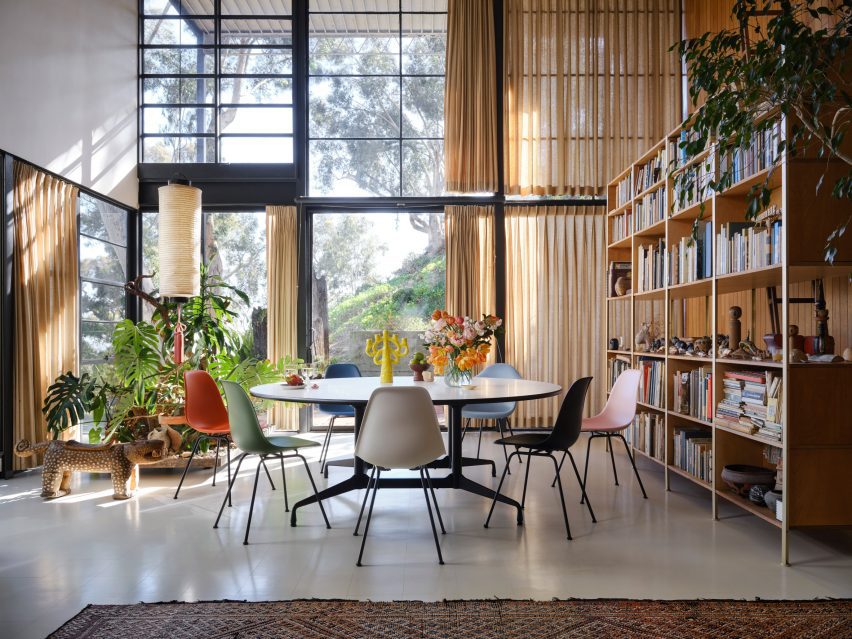
Staged at the Eames house, Pacific Palisades, California. Image © Eames Foundation, 2023.Staged at the Eames house, Pacific Palisades, California. Image © Eames Foundation, 2023.
The Eames Plastic Chair RE was photographed at the Eames house, Pacific Palisades, California. Photo by the Eames Foundation

Vitra was founded in 1950 by Nora Fehlbaum’s grandparents Willi and Erika Fehlbaum and has since grown to become one of the industry’s leading names.

Nora Fehlbaum succeeded her uncle, Rolf Fehlbaum, as CEO in 2016 and identifies improving the brand’s sustainability as her key mission.

“There is still a long way to go before reaching our environmental goals,” she acknowledged. “Things need to be tested, mistakes must be made, and in the process the company might sometimes overlook an important aspect or underestimate the impact of an activity.”

This is now a central part of the brand’s function as an industry leader, Fehlbaum suggests.

“The designer landscape has changed. In the past, it was a lot about iconic design and breaking the mould, building your own brand and your studio – new things – and now, the students that are graduating come with their own environmental mission,” she said.

“I see our role, together with these people and with the right suppliers and innovative companies, to find solutions that are, for lack of a better term, sustainable in the longer term.”

Other interviews recently published on Dezeen include the Kvadrat CEO saying sustainability is “not making our lives easier” and Iittala creative director Janni Vepsäläinen sharing her goal to help the brand “remain culturally relevant for another 100 years”.

The photography is courtesy of Vitra unless otherwise stated.

Dezeen In Depth
If you enjoy reading Dezeen’s interviews, opinions and features, subscribe to Dezeen In Depth. Sent on the last Friday of each month, this newsletter provides a single place to read about the design and architecture stories behind the headlines. 

Reference

Living space with a green marble feature wall
CategoriesInterior Design

Kingston Lafferty Design includes “sensual” red kitchen in home renovation

Dublin studio Kingston Lafferty Design has transformed the architecture and interiors of this family home in Cork, Ireland, which features 1970s-style shapes and colours informed by the work of designer Verner Panton.

Positioned on Lovers Walk hill overlooking the city of Cork, the townhouse – called Lovers Walk – was renovated by Kingston Lafferty Design.

Living space with a green marble feature wallLiving space with a green marble feature wall
Kingston Lafferty Design completed the renovation in Cork

The studio originally planned to just update the interiors, but decided that a more extensive architectural transformation was needed after discovering structural instabilities in the home.

Kingston Lafferty Design removed all of the floors, which lacked foundations and insulation in their concrete slab, and completely reconfigured the two-storey property’s layout.

Oak-lined hallway with colourful accentsOak-lined hallway with colourful accents
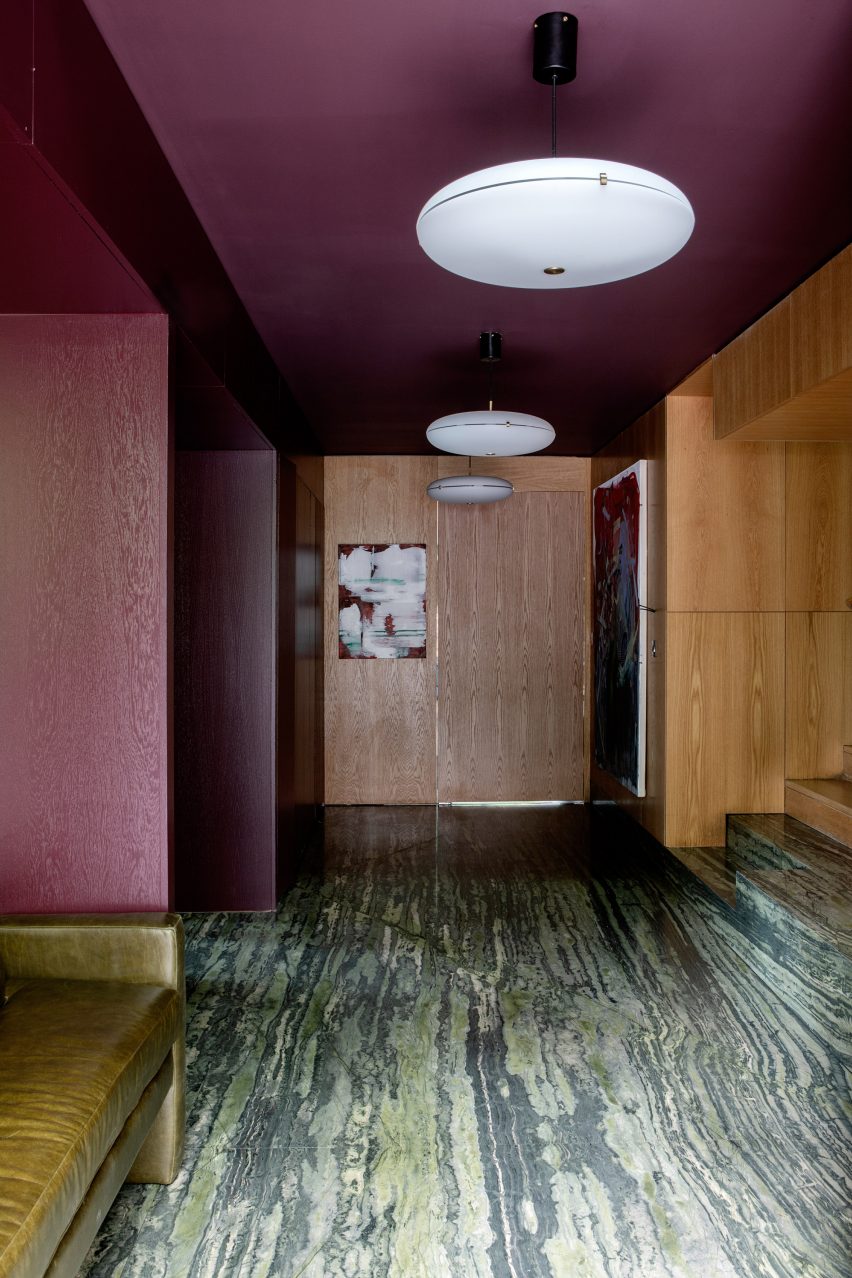
Rooms on the ground floor were designed around an oak-lined hallway

“As the building was originally built in the 1970s, we wanted to return to its roots,” studio founder Róisín Lafferty told Dezeen.

“We thrived on inspiration from Verner Panton with his use of strong clashing colour, playful shapes and oversized elements,” she added.

Quartzite-clad kitchen by Kingston Lafferty DesignQuartzite-clad kitchen by Kingston Lafferty Design
One of these spaces is a “sensual” red kitchen

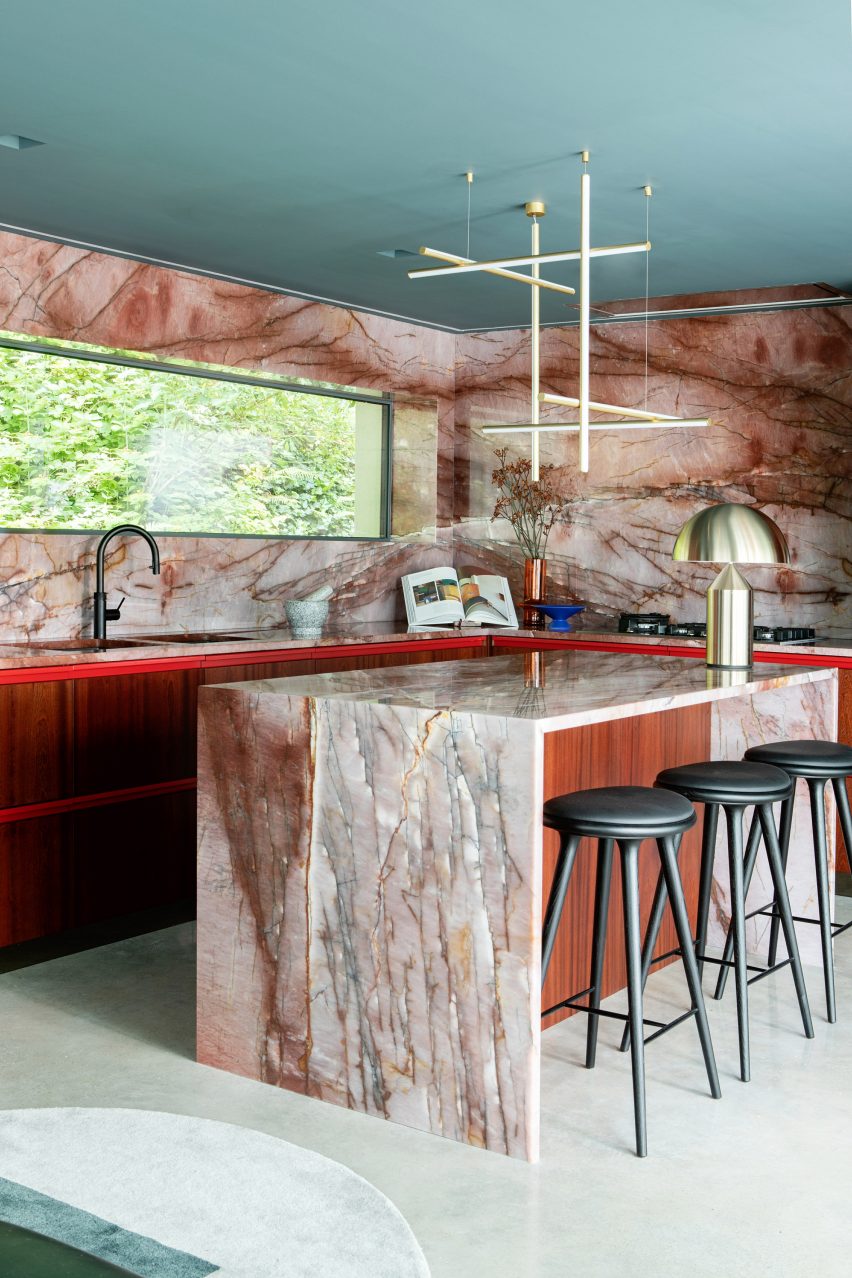
The ground floor was adapted to include an open-plan kitchen defined by a counter, island and splashback finished in veiny red quartzite.

Ruby-toned timber was used to create the geometric cabinets. When layered with the quartzite, “it sounds like a disaster, but it’s a delight,” said the designer.

Living space with floor-to-ceiling curtainsLiving space with floor-to-ceiling curtains
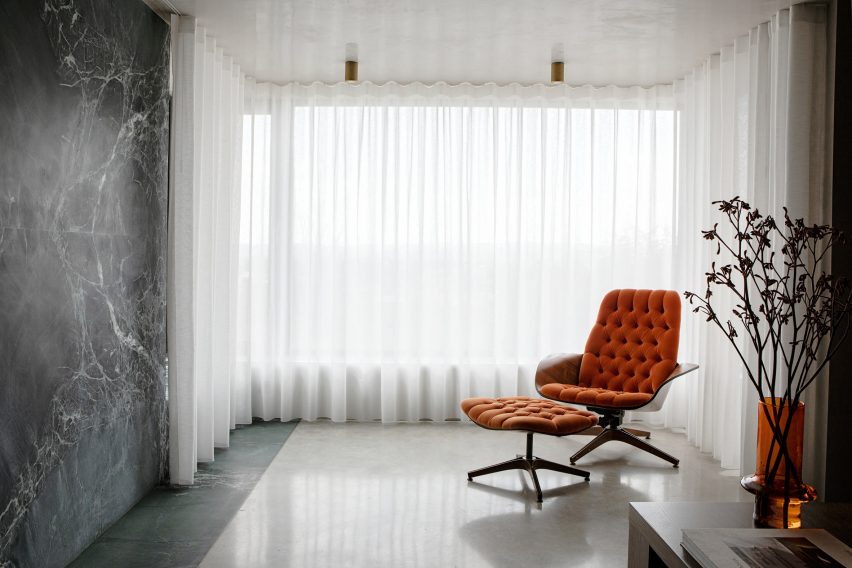
The living room follows a similar design to the kitchen

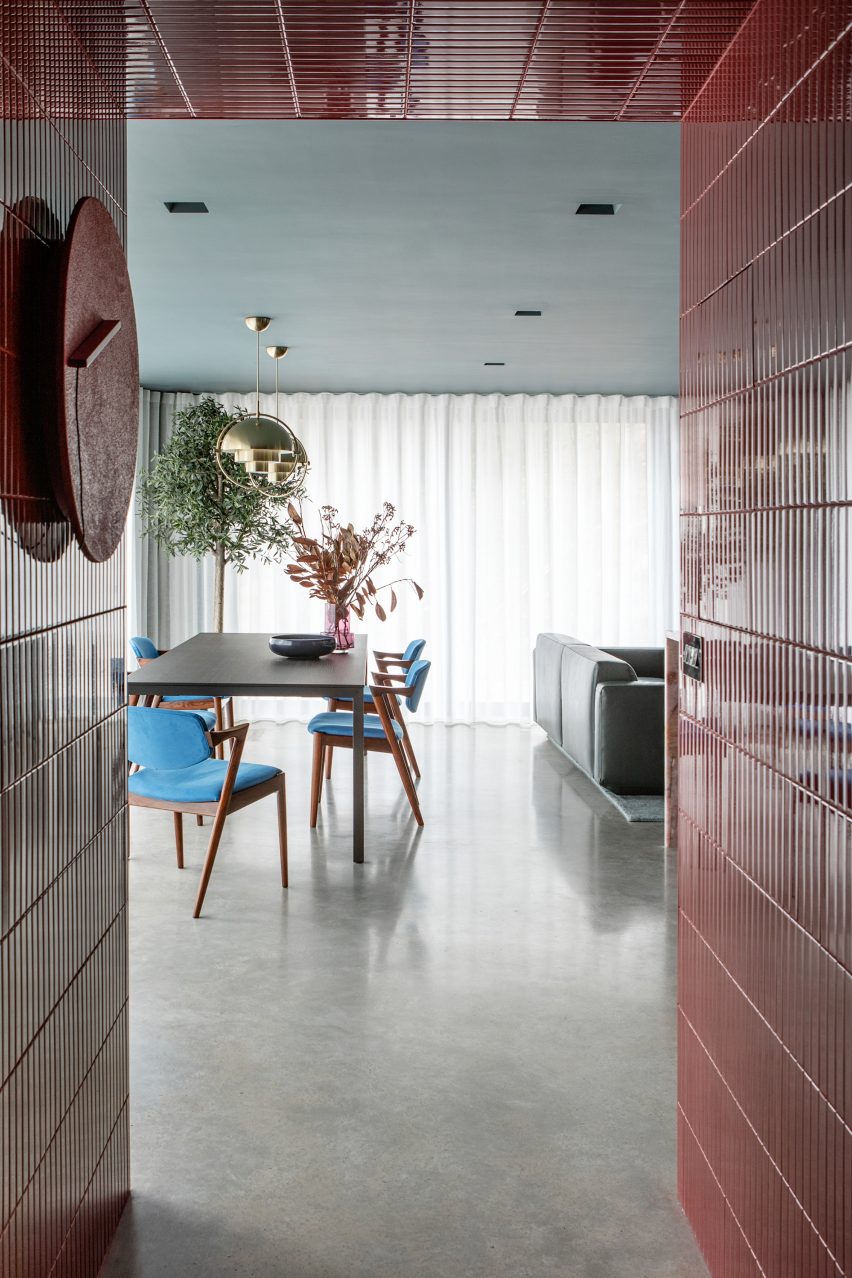
The space, described by the studio as a “sensual red-toned jewel kitchen”, is one of several rooms on the ground floor of Lovers Walk that were designed around the central, oak-lined hallway.

“We used the hallway as the core of the house, which grounded the space with pops of colour stemming from it. Each room leading from the core appears like a framed view or window of colour,” explained Lafferty.

Marble feature wall designed by Kingston Lafferty DesignMarble feature wall designed by Kingston Lafferty Design
It includes a green feature wall that takes cues from Mies van der Rohe’s iconic Barcelona Pavilion

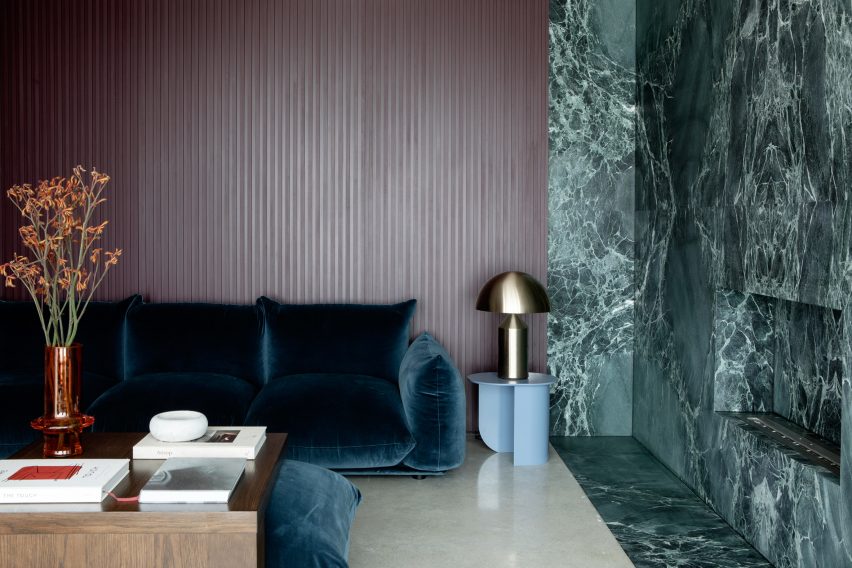
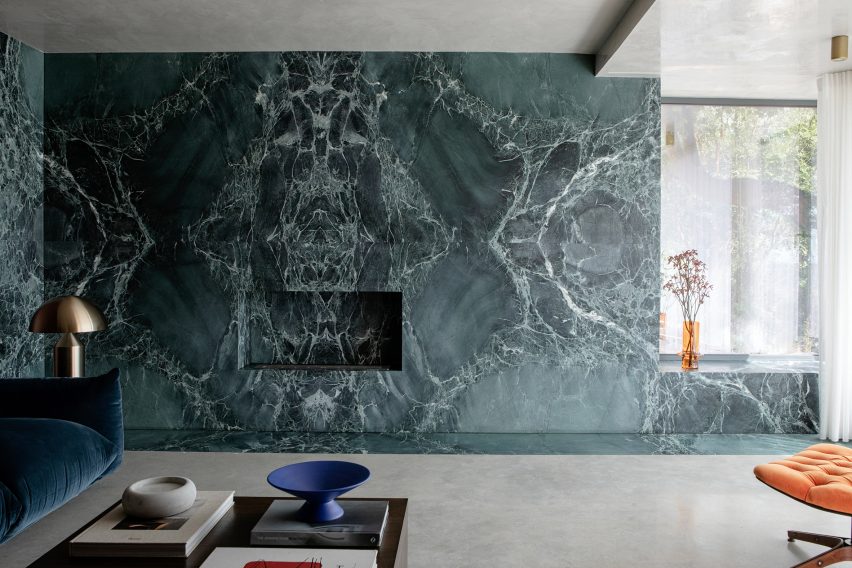
The living room includes blue velvet sofas and a green feature wall clad in swirly book-matched marble, which was fitted with an alcove reserved for a subtle fireplace.

When creating the polished stone wall, the studio took cues from the seminal Barcelona Pavilion, completed in 1929 by modernist architect Mies van der Rohe.

Green headboard in the main bedroomGreen headboard in the main bedroom
A floor-to-ceiling headboard takes centre stage in the main bedroom

“We used green as an overall thread throughout the house, inspired by the surrounding landscape,” added Lafferty.

“Although depending on the time of year, the colours tend to change and so we were able to add in other rich colours that anchor the green such as burgundies and bright oranges,” she added.

En-suite marble-clad bathroomEn-suite marble-clad bathroom
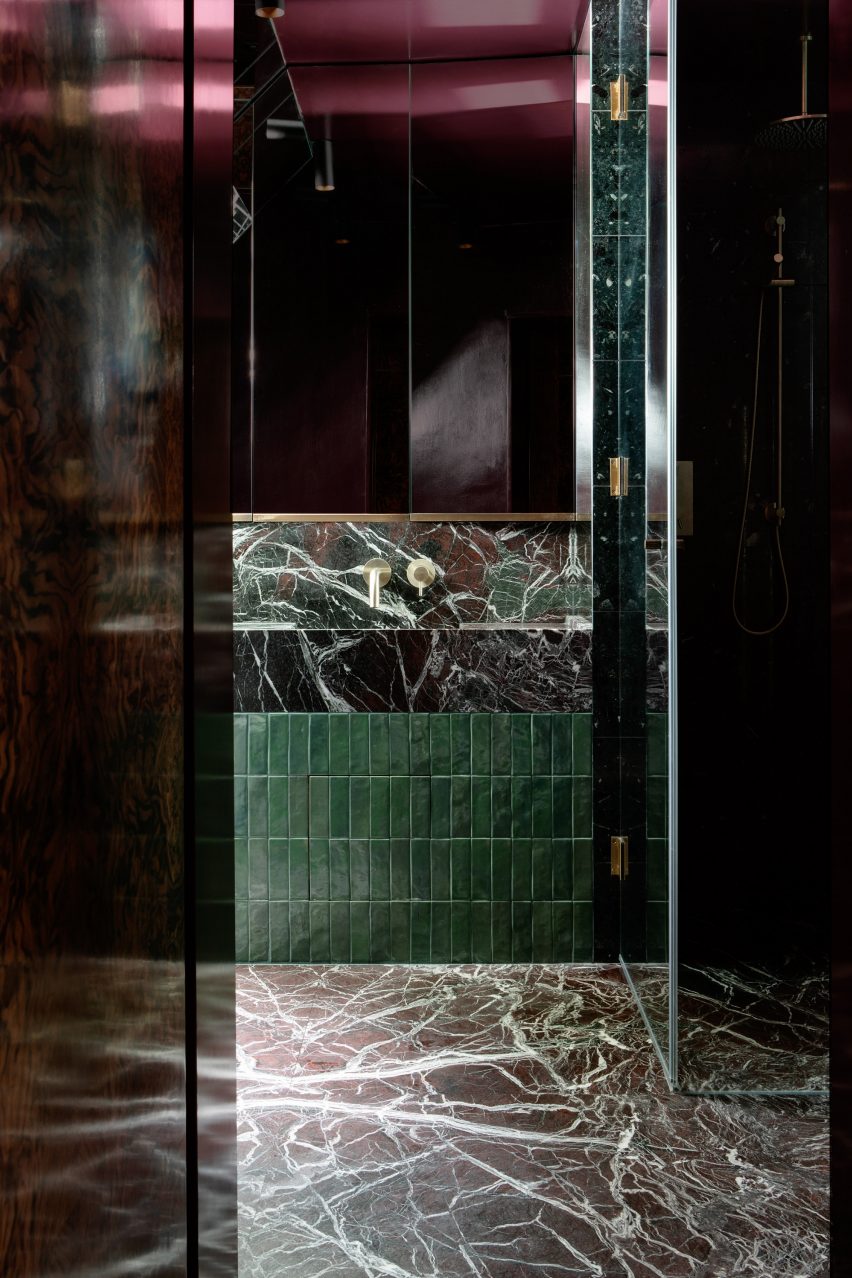
Stonework also defines the en-suite bathroom

“One would assume this mix of colours would clash, but we choose the tones and textures of each to ensure that all of them would blend harmoniously,” Lafferty said.

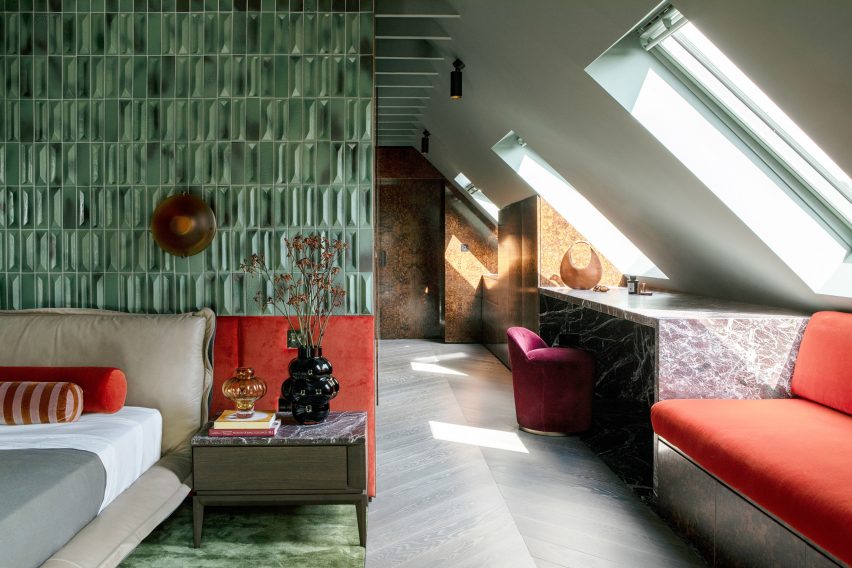
Upstairs, the main bedroom and en-suite bathroom were dressed in the same eclectic interiors as the communal spaces. A floor-to-ceiling headboard, finished in diamond-shaped green tiles originally designed by 20th-century architect Gio Ponti, frames the bed.

Playful bed design in Lovers Walk by Kingston Lafferty DesignsPlayful bed design in Lovers Walk by Kingston Lafferty Designs
A playful bed was added to the bedroom created for the occupants’ child

Balloon-like coloured glass vases were positioned on two bedside tables, which were topped with the same slabs of Rosso Levanto marble as the geometric vanity desk.

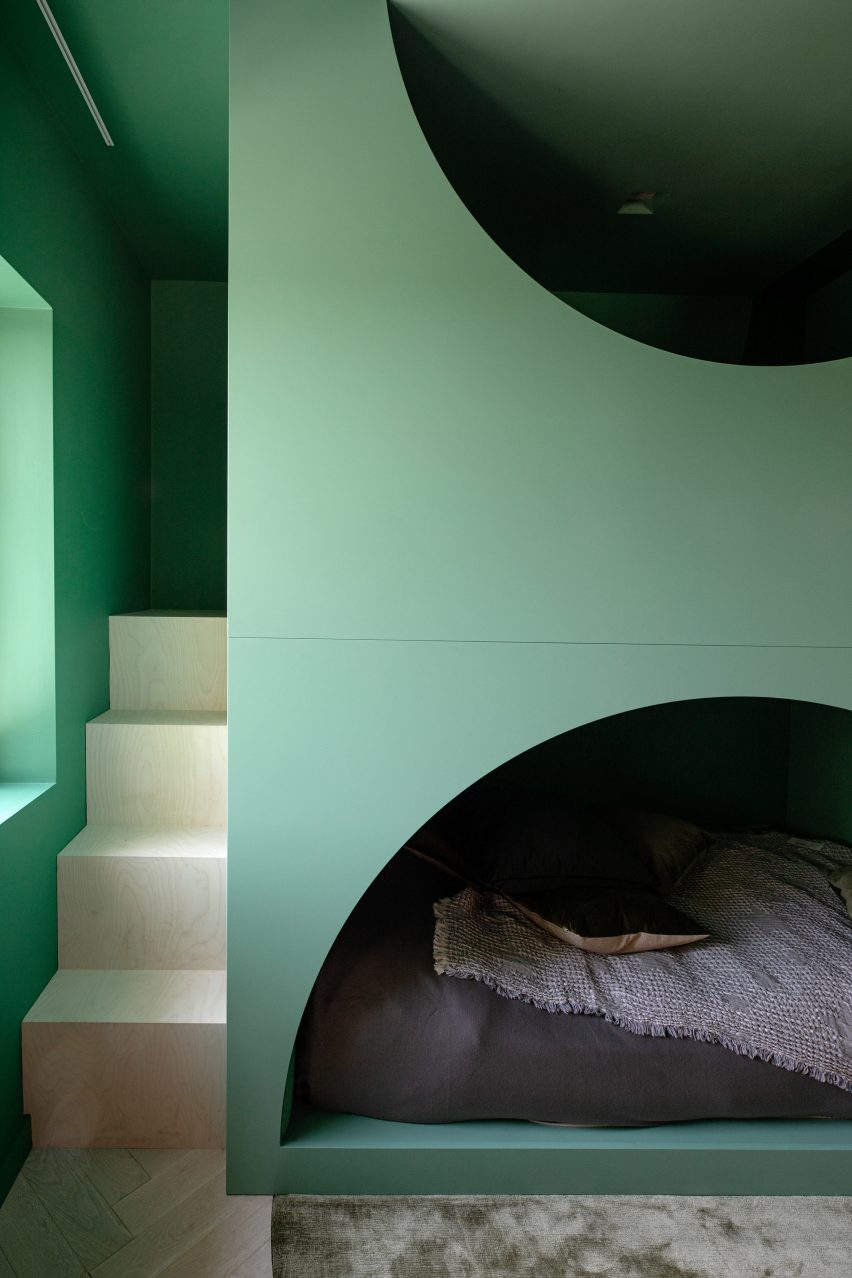
The bedroom designed for the occupants’ child features an alternative bed – a playful green structure with two stacked levels and half-moon openings that reveal a cosy sleeping area on the bottom level.

Other accents featured throughout the home include burl wood, terrazzo, plaster and brass. The repetition of 1970s-style thick pile carpets emphasises the dwelling’s textured material palette.

Lovers Walk is the studio’s “closest nod” to the work of Panton, explained Lafferty – “down to the selection of every tile, light fitting and exquisite piece of designer furniture”.

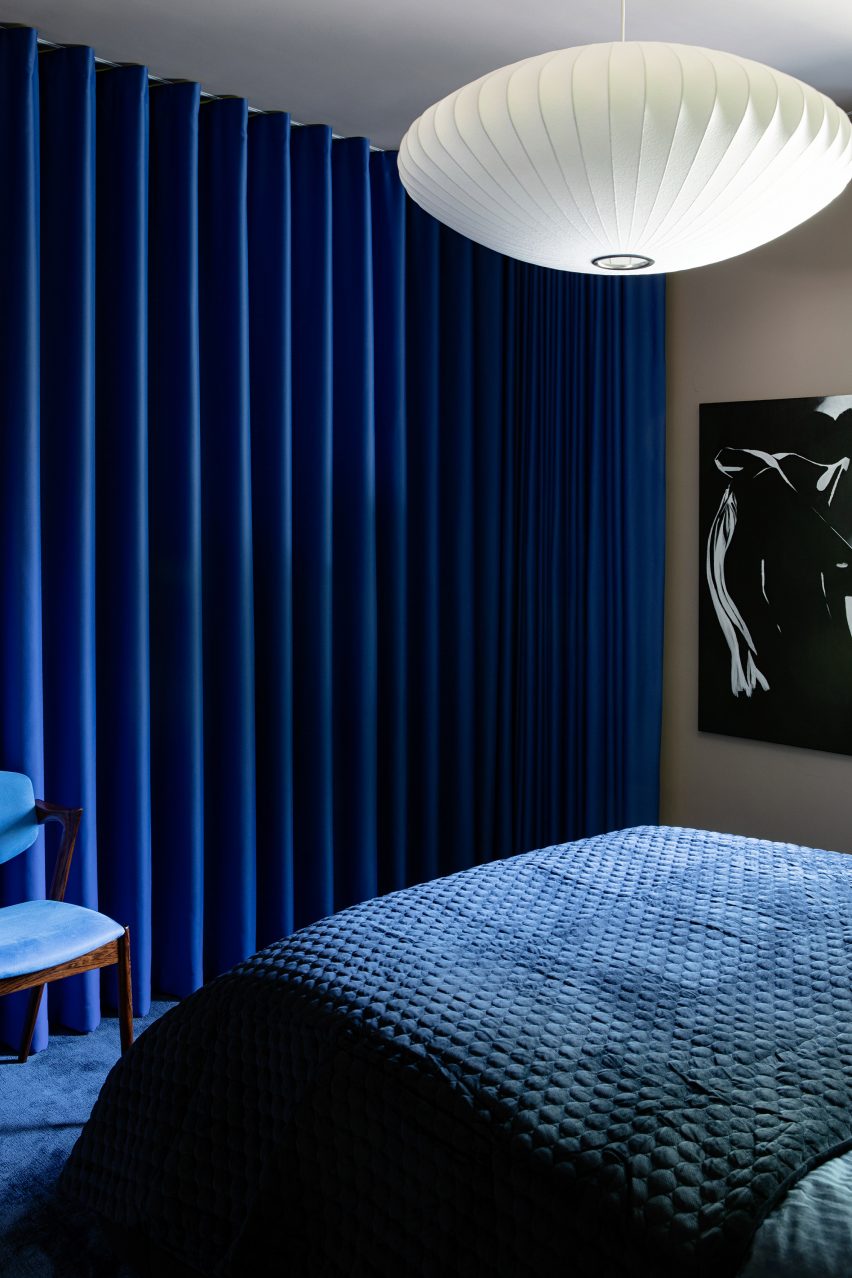
Deep blue-coloured guest bedroom by Kingston Lafferty DesignDeep blue-coloured guest bedroom by Kingston Lafferty Design
Deep blues characterise the guest bedroom

“Although there is such an array of materiality, it is balanced by repeated colour, shape and form,” she said.

“Every space in this house is an assault on the senses, in the best way possible.”

Lovers Walk by Kingston Lafferty DesignLovers Walk by Kingston Lafferty Design
Lovers Walk was informed by the work of Verner Panton

Founded in 2010, Kingston Lafferty Design has completed projects ranging from a Dublin restaurant with oversized lollipop-like lamps and a co-working office in Belfast that includes a yoga studio.

The photography is by Ruth Maria Murphy


Project credits:

Interior architecture and design: Kingston Lafferty Design
Woodwork: DFL
Stonework: Miller Brothers


Reference

alt="Revit Screenshot"
CategoriesArchitecture

Tech for Architects: 7 Top BIM Tools for Architectural Design

Architizer’s Tech Directory is a database of tech tools for architects — from the latest generative design and AI to rendering and visualization, 3D modeling, project management and many more. Explore the complete library of categories here.
For the past decade, the term “BIM” has come to dominate, fundamentally shaping how architectural practices operate. BIM design software surpasses traditional 3D modeling programs by incorporating digital models with different data sets, such as material specifications, finishes and even MEP (mechanical, electrical, and plumbing) systems. In other words, a wall designed in a BIM environment goes beyond the typical “3D extrusion”, carrying information that can be utilized throughout the duration of a design project — from inception to completion and even for future maintenance.

Initially invented in the 1980s, BIM is an all-in-one software package that includes features from digital representation to architectural visualization, data-driven design, construction documentation, and more. It is a piece of technology that greatly encourages collaborative architectural practices, offering a holistic approach to design projects.

Without further ado, here are the top seven BIM tools that unlock unprecedented capabilities in architectural design.


Best BIM Tool for Parametric Design

alt="Revit Screenshot"Admittedly, the most famous BIM software for architects is Revit, developed by Autodesk. It offers a comprehensive set of tools for designing, documenting and managing building projects. Central to Revit’s functionality is its parametric modeling capabilities, allowing architects to create intelligent 3D models that capture both the geometry and data of building elements. Supported by Autodesk, Revit also has an array of third-party plugins and libraries, providing architects with additional features.


Best BIM Tool for Real-Time 3D Modeling

alt="Archicad Screenshot"ArchiCAD is a BIM software specifically tailored for architects and designers. Its core strength lies in its intelligent virtual building model, which integrates both the visual and data aspects of a project. This model-based approach allows architects to efficiently explore design alternatives, simulate building performance, and generate accurate construction documentation. Additionally, ArchiCAD includes features such as BIMx for interactive 3D presentations and Open BIM for interoperability with other software platforms.


Best BIM Tool for Concept Design

Vectorworks is perhaps the most versatile BIM software for architecture. It has a simple and straightforward interface, which allows architects to effortlessly turn a sketch into a fully realized design. Vectorworks provides powerful tools for creating 2D and 3D designs, offering a flexible and intuitive platform for designers to bring their ideas to life. With features such as robust modeling capabilities, intelligent object libraries, and advanced rendering options, Vectorworks enables architects to develop their own tailored BIM workflow, without compromising their creative process.


Best BIM Tool for Beginners

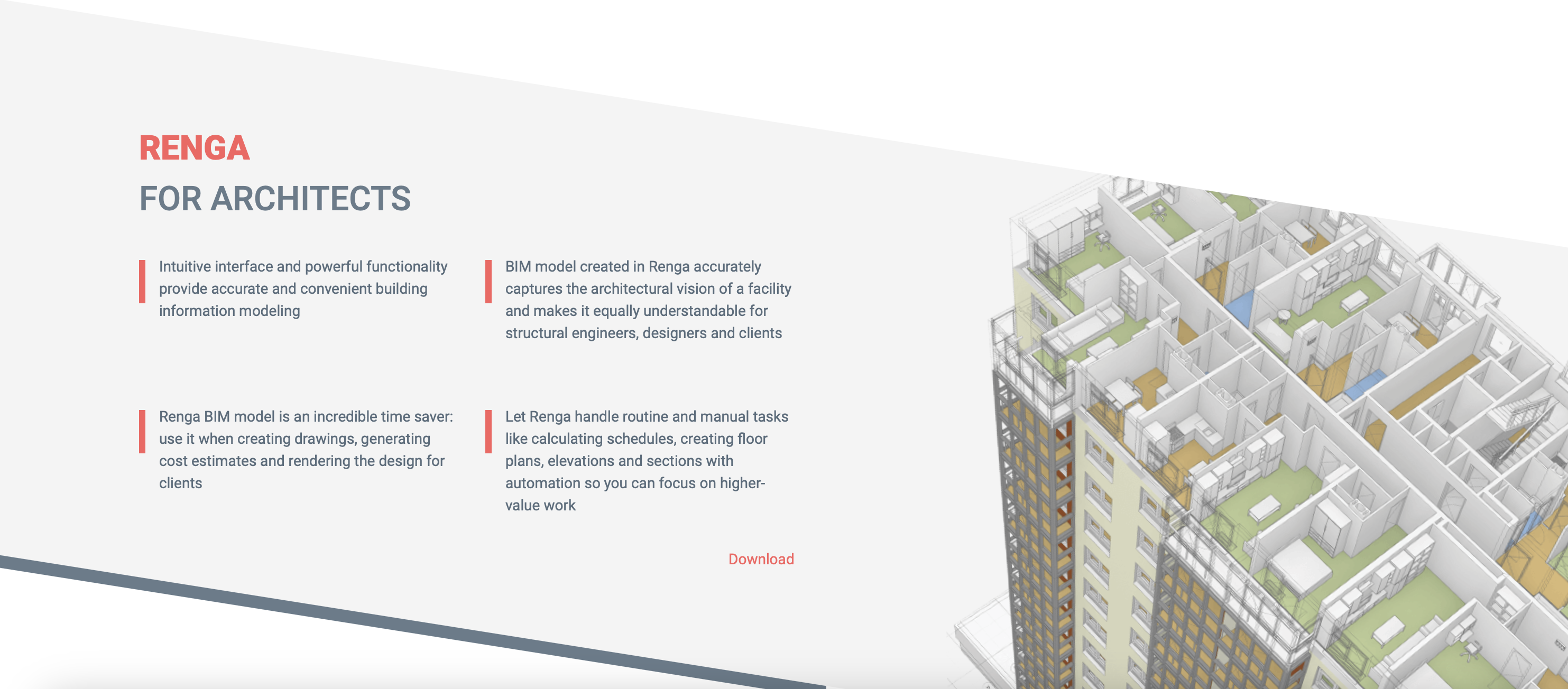
alt="Renga Screenshot"Renga is an architectural design and BIM software developed by ASCON Group. It offers a user-friendly interface and powerful tools such as parametric modeling, real-time rendering and an extensive object library as well as many interoperability options with other BIM software. Its comprehensive workflow as well as wide variety of assets that can handle routine tasks like calculating schedules or making cost estimations marks it as the perfect tool for architects to dive into BIM technology.


Best BIM Plug-in Tool for iPad

Codesign is a BIM plug-in tool for iPad. It seamlessly bridges the gap between pen, paper and BIM. Specifically used for concept design, Codesign offers tools such as rapid sketching, interactive 3D modeling as well as data-driven design — all through an iPad screen. It also includes features such as importing site context in order to sketch and iterate zoning and usage options. Finally, it incorporates AI generative capabilities, where architects can simply input their sketch or model followed by a text prompt to seamlessly visualize their designs.


Best BIM Plug-in Tool for Rhino

VisualARQ is an architectural design software that boosts Rhino’s capabilities by adding dynamic documentation tools and architecture object styling capabilities. It includes features such as Freeform Modeling – which converts any freeform geometry into an informed object — parametric design, an extensive object library, dynamic documentation, architectural visualization capabilities and finally, Grasshopper integration.


Best BIM Tool for Sustainable Design

alt="Babi Screenshot"Founded in 1972, Vabi is a plug-in software solution for BIM developed in the Netherlands, which advances simulation 3D models for energy and comfort within buildings. Its features include Vabi Assets that enable the calculation and management of energy labels as well as Vabi Elements that allow architects to facilitate simulations of heating loss or cooling load calculations. Finally, the Vabi EPA tool is used for feasibility studies to speed up the inspection processes for both residential and non-residential buildings.


How to Better Leverage BIM Tools in Architecture

The following tips and considerations will help you maximize the potential of BIM tools in architectural design, as well as avoiding common pitfalls associated with this fast-emerging technology.

Invest in Training: It is true that BIM is regarded as a rather complex software, oftentimes difficult to integrate with already established architectural design workflows. Consequently, it is important for any architect or architecture firm to familiarize themselves with features, tools, and best practices to maximize their efficiency and productivity. Either through hiring a BIM specialist, taking a course or diving into tutorials, it is important for architects to develop standardized templates, libraries and workflows to maintain consistency across projects. This includes naming conventions, layering systems, and file organization to streamline collaboration and project management.

Start Early with BIM: When using BIM for projects, it is important to introduce the software early in the design process, in order to reap its full benefits. By utilizing it for conceptual modeling to explore design ideas and make quick iterations, enables architects to progress more seamlessly to detailed design and documentation. In addition, using BIM software from the start of a project, will allow for better collaboration amongst other stakeholders. Using features such as cloud-based sharing, version control, and real-time editing will ensure clear communication and coordination between architects and engineers from idea to construction.

Utilize Parametric Modeling: BIM’s most powerful asset is pairing traditional digital modeling with design and construction data. The wide range of parametric modeling capabilities in BIM tools allows architects to create intelligent building components that can be easily modified and updated throughout the design process, leading to effortless design iterations. Nevertheless, architects need to be aware of the data they incorporate into their designs and maintain accurate and up-to-date information about building elements to support their decision-making in their projects.

Architizer’s Tech Directory is a database of tech tools for architects — from the latest generative design and AI to rendering and visualization, 3D modeling, project management and many more. Explore the complete library of categories here.
Reference

Sites – New Sites by Studio Anne Holtrop at Arab Design Now
CategoriesInterior Design

Ten highlights from Design Doha exhibition Arab Design Now

A disaster-proof chandelier from Lebanon and a towering sand dune-style stone installation feature in Arab Design Now, the main exhibition at the inaugural Design Doha biennial.

Arab Design Now was curated by Rana Beiruti to capture the spirit of contemporary design across the Middle East and North Africa (MENA), the curator told Dezeen ahead of the opening of the first Design Doha.

Set within the Qatari capital’s M7 building, the design biennial draws together a range of collectible design and installations.

Selected works from 74 participants paid homage to the MENA region’s “extremely harsh and unique geography” and investigated the “use of materials as a guiding principle,” explained Beiruti.

Here are 10 of Dezeen’s highlights from Arab Design Now, which is on display in Doha until early August.


Sites – New Sites by Studio Anne Holtrop at Arab Design NowSites – New Sites by Studio Anne Holtrop at Arab Design Now

Sites – New Sites by Studio Anne Holtrop

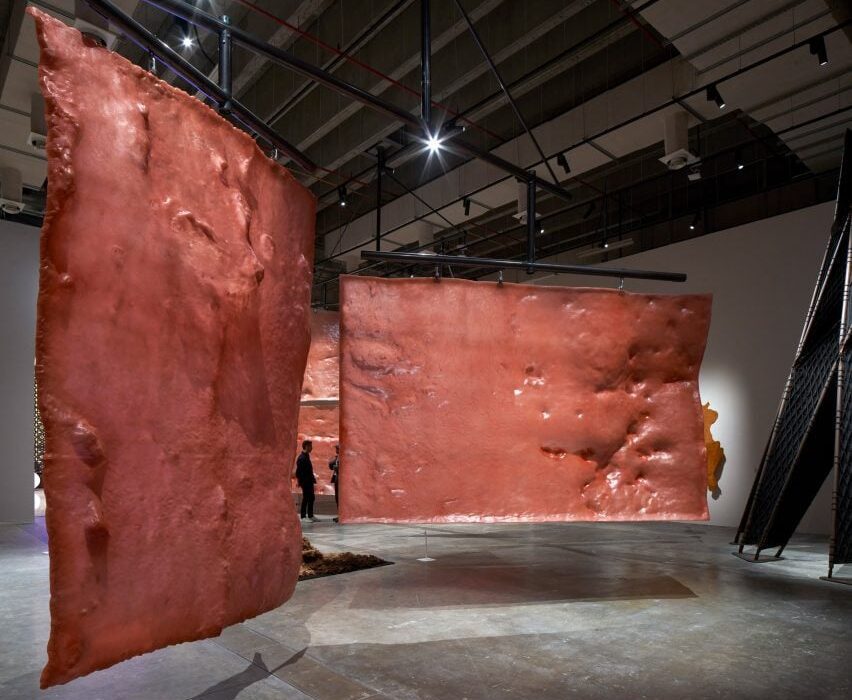
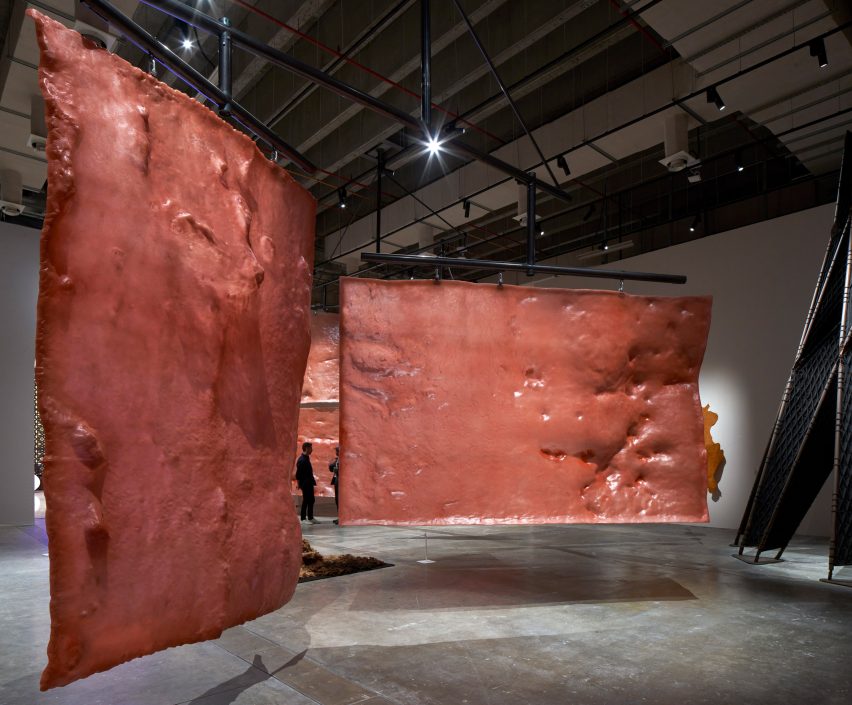
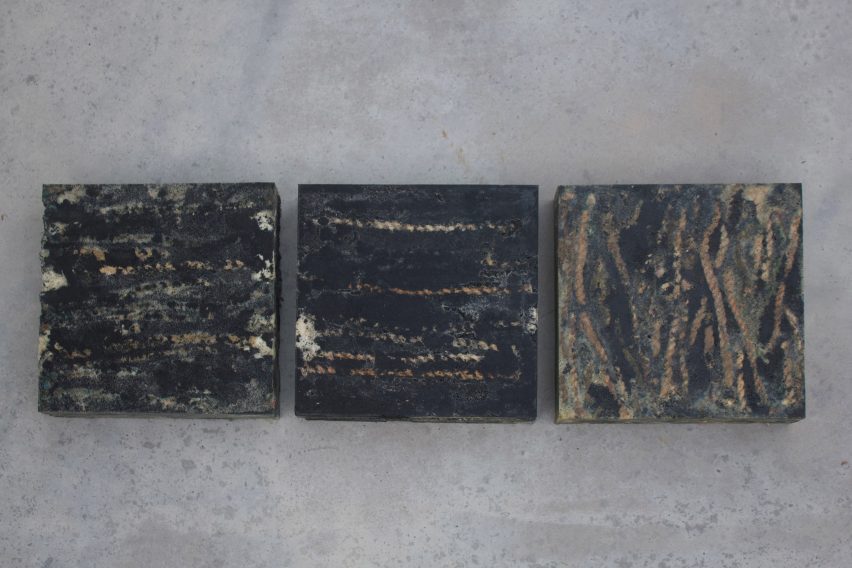
Bahrain- and Amsterdam-based architect Anne Holtrop has designed a cluster of large-scale mobiles made from vast slabs of lumpy resin.

Holtrop took casts of a series of manmade and natural sites that he found across Qatar to create the textured pieces, which hang from bearing mechanisms and can be manually rotated by visitors to produce continuously moving formations.


Constellations 2.0: Object. Light. Consciousness by Abeer SeikalyConstellations 2.0: Object. Light. Consciousness by Abeer Seikaly

Constellations 2.0: Object. Light. Consciousness by Abeer Seikaly

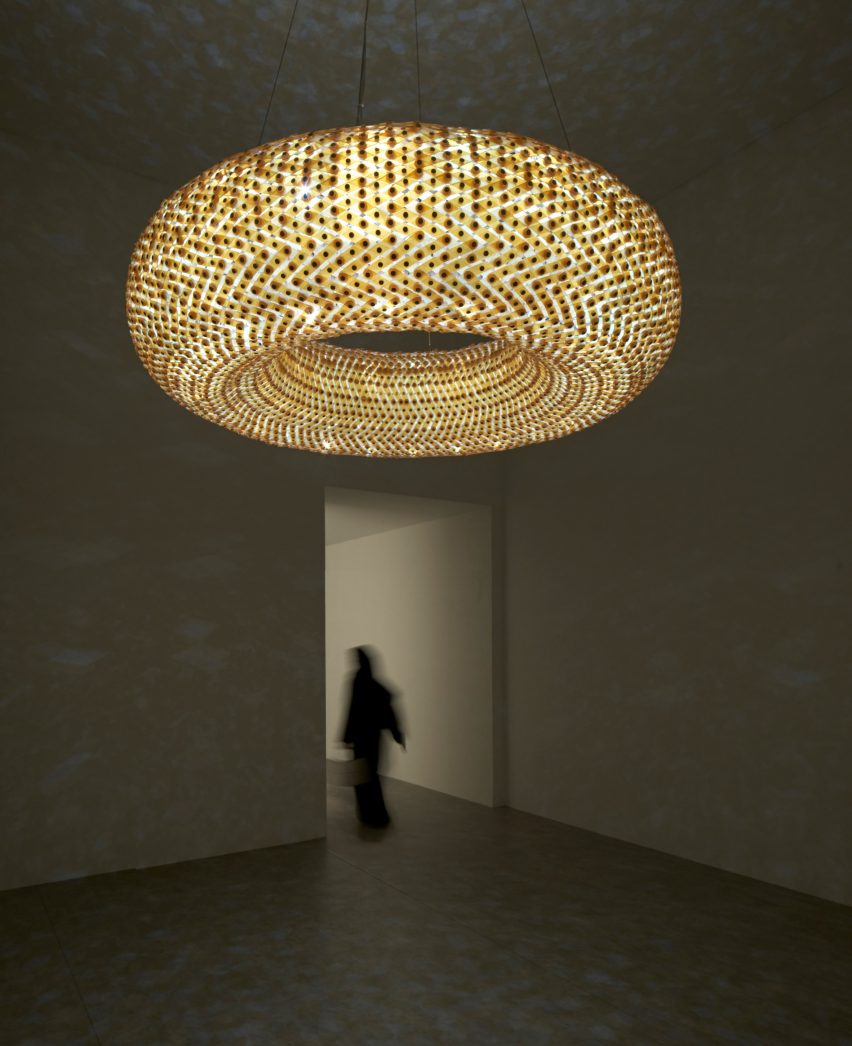
Over 5,000 pieces of Murano glass were woven together by Jordanian-Palestinian designer Abeer Seikaly to create this chandelier, which combines Bedouin weaving practices from Jordan with traditional Venetian glassmaking techniques.

Brass and stainless steel were also integrated into the lighting, made flexible by the glass mesh.

Once illuminated, the sculptural piece creates dramatic light patterns that nod to a starry night sky seen from the Badia desert, according to Seikaly.


House Between a Jujube Tree and a Palm Tree by Civil Architecture at Arab Design NowHouse Between a Jujube Tree and a Palm Tree by Civil Architecture at Arab Design Now

House Between a Jujube Tree and a Palm Tree by Civil Architecture

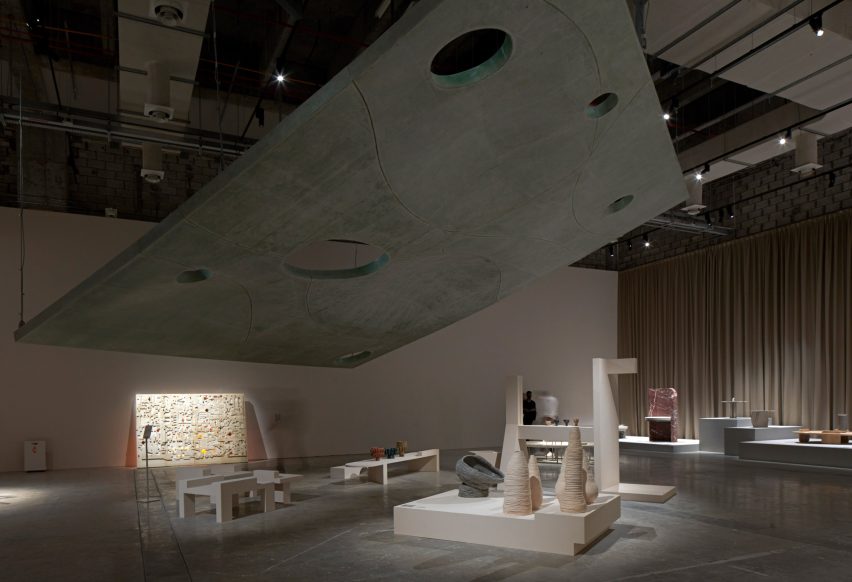
Kuwait and Bahrain-based office Civil Architecture has designed a looming fibreglass roof proposal for a majlis – the traditional term for an Arabic gathering space.

“It’s a 1:1 model of a roof of an actual house that we designed in Bahrain,” studio co-founder Hamed Bukhamseen told Deezen.

Supported by steel and suspended from tension cables, the majlis features openings designed to accommodate tall trees and was created to explore the “symbiotic but blurred” relationship between indoor and outdoor settings.


Nubia, Hathor and Gros Guillaume Stool by Omar ChakilNubia, Hathor and Gros Guillaume Stool by Omar Chakil
Photo courtesy of Design Doha

Nubia, Hathor and Gros Guillaume Stool by Omar Chakil

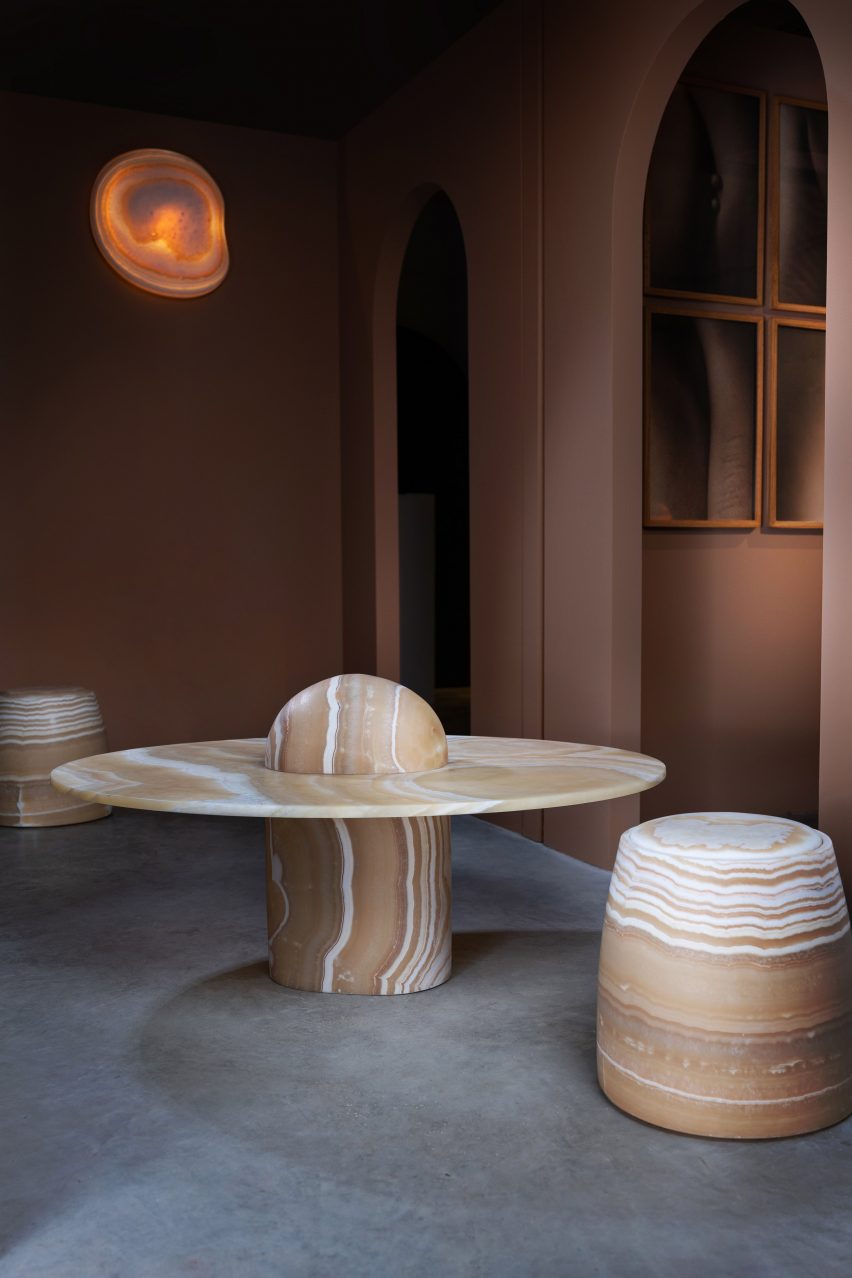
French-Egyptian-Lebanese designer Omar Chakil was informed by his father’s homeland of Egypt when he chose alabaster onyx to create this monolithic shelving, a bulbous coffee table and a stool that glides across the floor on wheels.

Taking cues from ancient practices, Chakil carved the rounded furniture from raw blocks of the material, which was sanded down over time using water rather than covered in varnish – something that the designer said had became common in Egypt, especially when making “cheap” souvenirs.

“The whole idea of the collection was to use Egyptian alabaster, which was a healing stone,” Chakil told Dezeen.

“The pharaohs used [the material], then it transformed it over time. It lost its soul. So I tried to put it in the contemporary context by using the shapes that healing emotions would take – so they are round and soft, even though they are very heavy,” he added.

“I see that people are afraid to, but I want them to touch the furniture.”


Tiamat by AAU AnastasTiamat by AAU Anastas

Tiamat by AAU Anastas

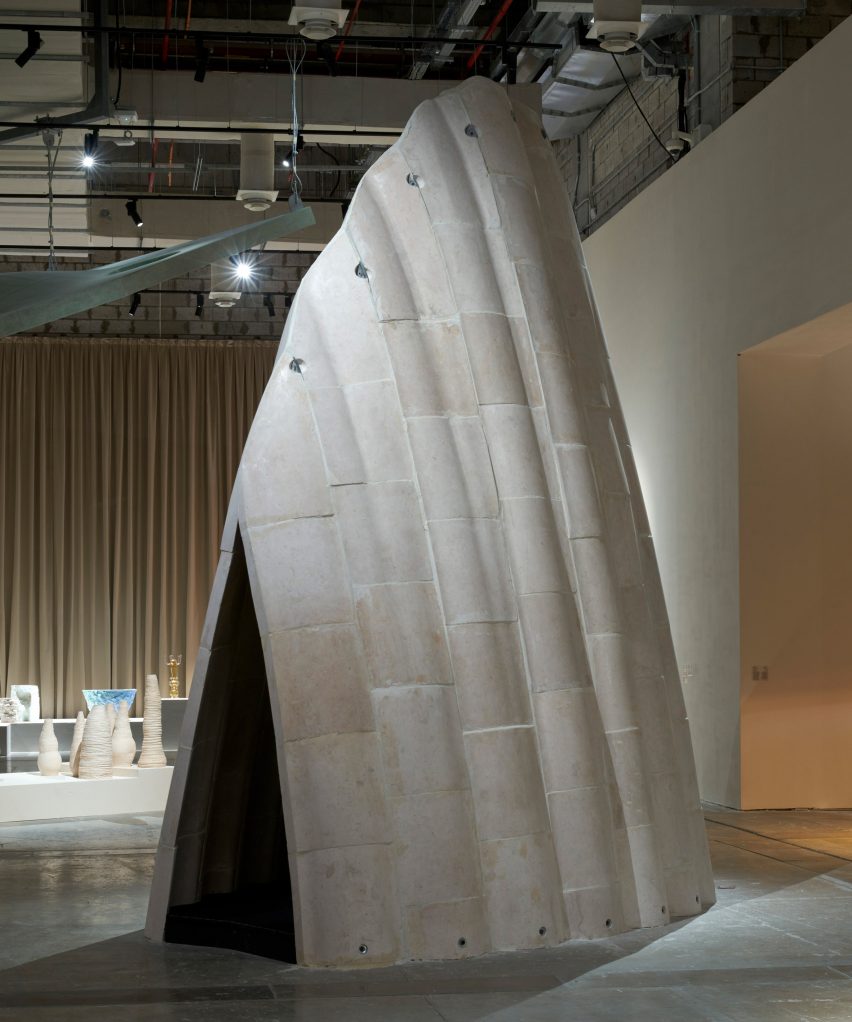
Palestinian architecture office AAU Anastas is presenting Tiamat, a dune-shaped installation that forms part of the studio’s ongoing project, Stone Matters, which explores the potential of combining historical stone building techniques with modern technologies to encourage the use of structural stone.

Positioned for visitors to walk through, the installation is a towering structure made of stone sourced from Bethlehem and informed by the Gothic-style architecture found across Palestine, Syria and Lebanon.

According to AAU Anastas, the light, sound reverberations and climate control within Tiamat’s internal space is unique to stone construction.


Clay in Context by Sama El Saket at Arab Design NowClay in Context by Sama El Saket at Arab Design Now

Clay in Context by Sama El Saket

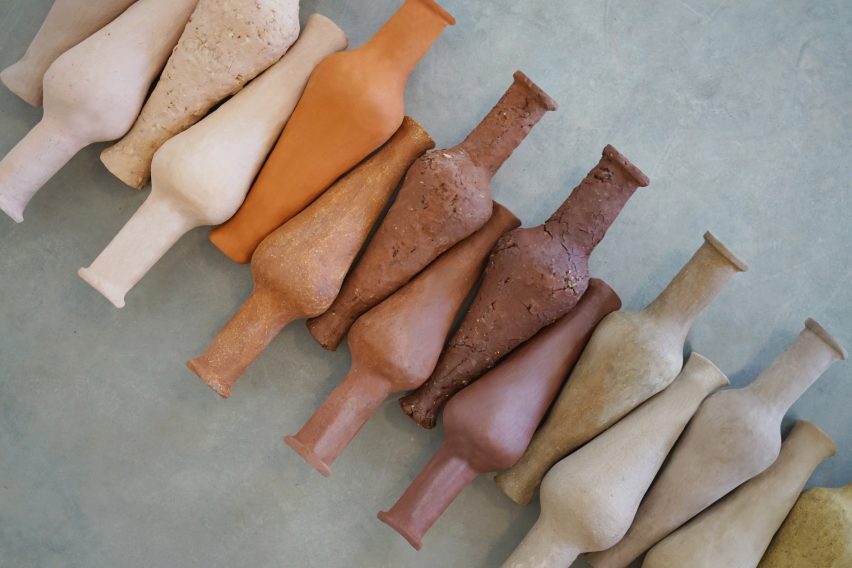
Jordan-born architect and ceramicist Sama El Saket took cues from her native landscape when creating this “taxonomy of Jordanian clays”.

The result is a set of spindle bottle-style vessels, each made of a different natural clay found across Jordan. This gives the pieces their distinctive colours, textures and character.

“These are all natural clays with no pigments added,” El Saket told Dezeen. “The colours are attributed to the different minerals that are found within the region. Some are sandier, some are rockier.”

The designer noted that while Jordan features an abundance of clay deposits and a rich history of ceramic production, today most Jordanian clay is imported.


Light Impact by Fabraca StudiosLight Impact by Fabraca Studios
Photo by Sabine Saadeh

Light Impact by Fabraca Studios

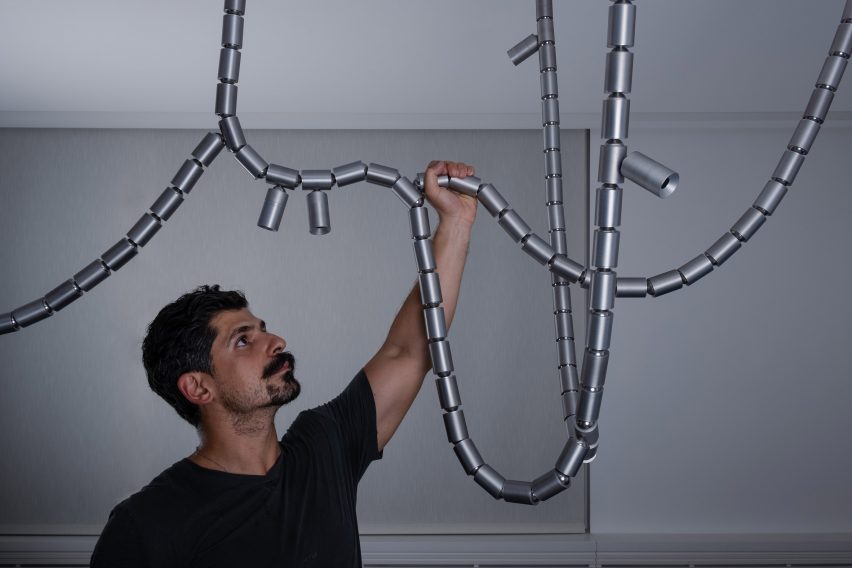
Lebanese industrial design brand Fabraca Studios has created Light Impact, a solid aluminium lighting fixture that was designed as an alternative chandelier, resembling durable ropes.

The piece was made to replace a glass chandelier that shattered in the aftermath of the 2020 Beiruit explosion, which destroyed a large part of Lebanon’s capital city.

Light Impact is defined by “flexible characteristics designed to withstand another disaster,” studio founder Samer Saadeh told Dezeen. He added that the piece, which includes internal brass components, was designed as an ode to Beirut’s adaptability and resilience.


Eleven by Sahel AlhiyariEleven by Sahel Alhiyari

Eleven by Sahel Alhiyari

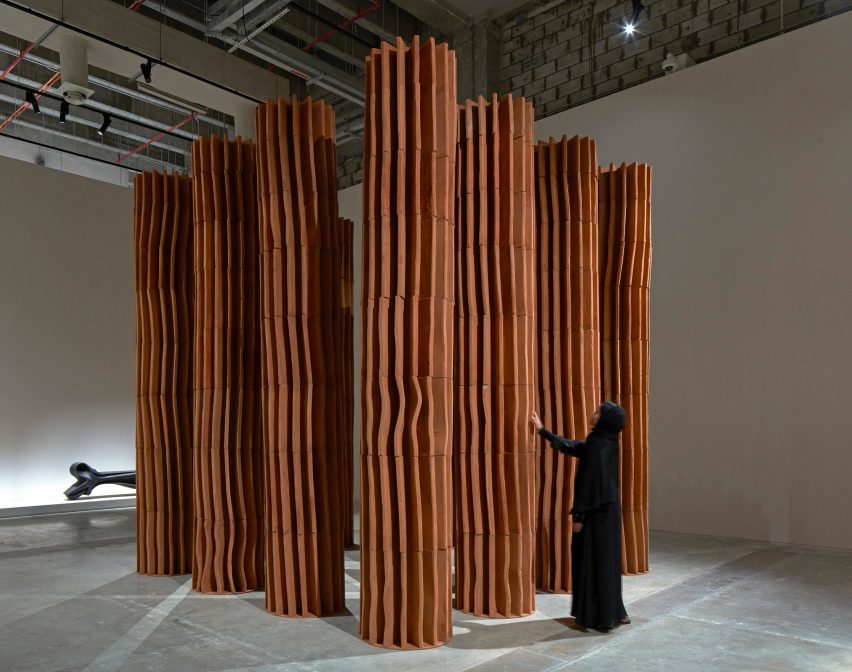
Eleven is a cluster of tall fluted terracotta columns by Jordanian architect Sahel Alhiyari that were made through moulding and forming rather than traditional cutting and carving.

The architect handcrafted the segments, which are vertically stacked, using a similar technique to pottery-making,

“As you twist and turn the material, it creates all of this stuff,” Alhiyari told Dezeen. The designer explained that the columns were deliberately created to celebrate imperfections, despite referencing classical architecture.


Sediments by Talin HazbarSediments by Talin Hazbar

Sediments by Talin Hazbar

UAE-based Syrian designer Talin Hazbar is featuring her Sediments project, which previously gained recognition at Dubai Design Week.

The work consists of blocky seating made from fishing ropes and fishing cage ropes extracted from the Persian Gulf with the assistance of the Dubai Voluntary Diving Team.

Also made up of recycled rubber grains, the heavily textured seating was created to serve as a reminder of how we might attempt to clean up damaged coastlines, according to Hazbar.


Whispers from the Deep by T SakhiWhispers from the Deep by T Sakhi

Whispers from the Deep by T Sakhi

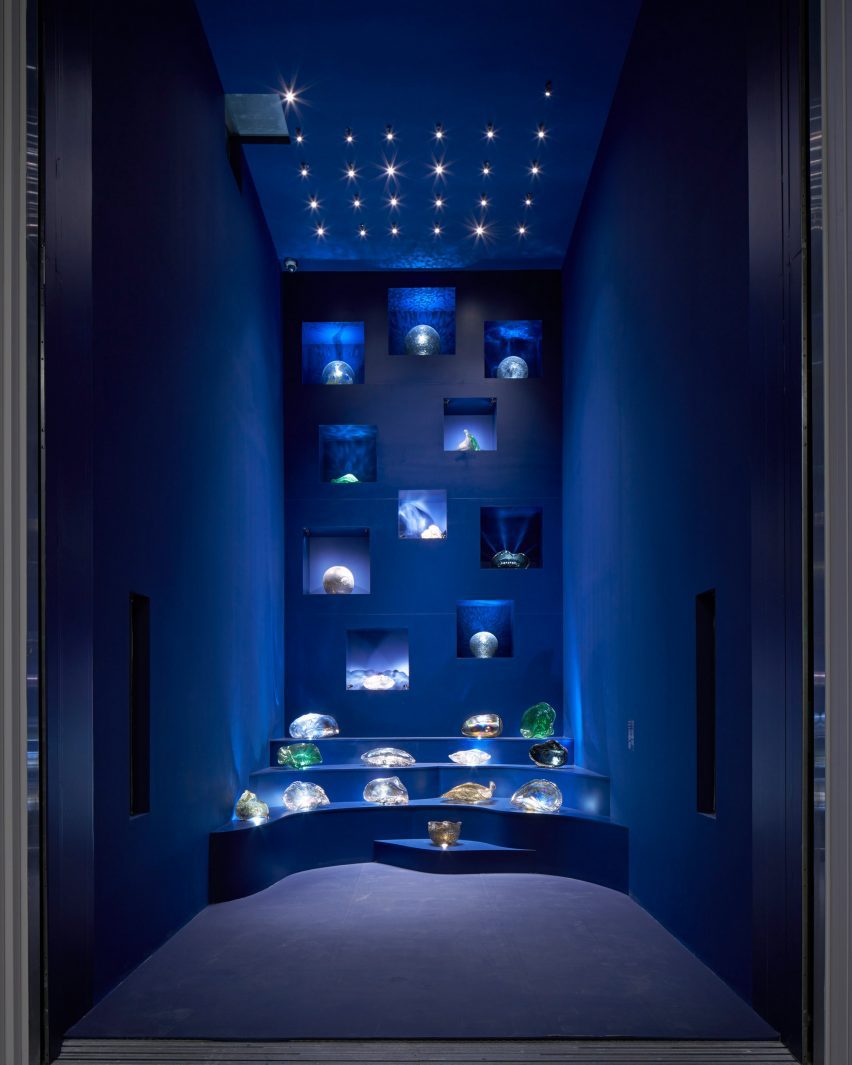
Lebanese-Polish sisters Tessa and Tara El Sakhi of the studio T Sakhi combined discarded metal salvaged from factories in Veneto, Italy, with Murano glass to create amorphous glassware that takes cues from underwater sea creatures.

These pieces were arranged atop dramatic shelving inside the elevator connecting the first and second floors of the Arab Design Now exhibition.

The result is a playful installation that draws together the Venetian lagoon and Lebanese glassblowing traditions.

The photography is by Edmund Sumner unless stated otherwise.

Arab Design Now takes place at Design Doha from 24 February to 5 August 2024 at M7 in Doha, Qatar. See Dezeen Events Guide for an up-to-date list of architecture and design events taking place around the world.


Reference

CategoriesArchitecture

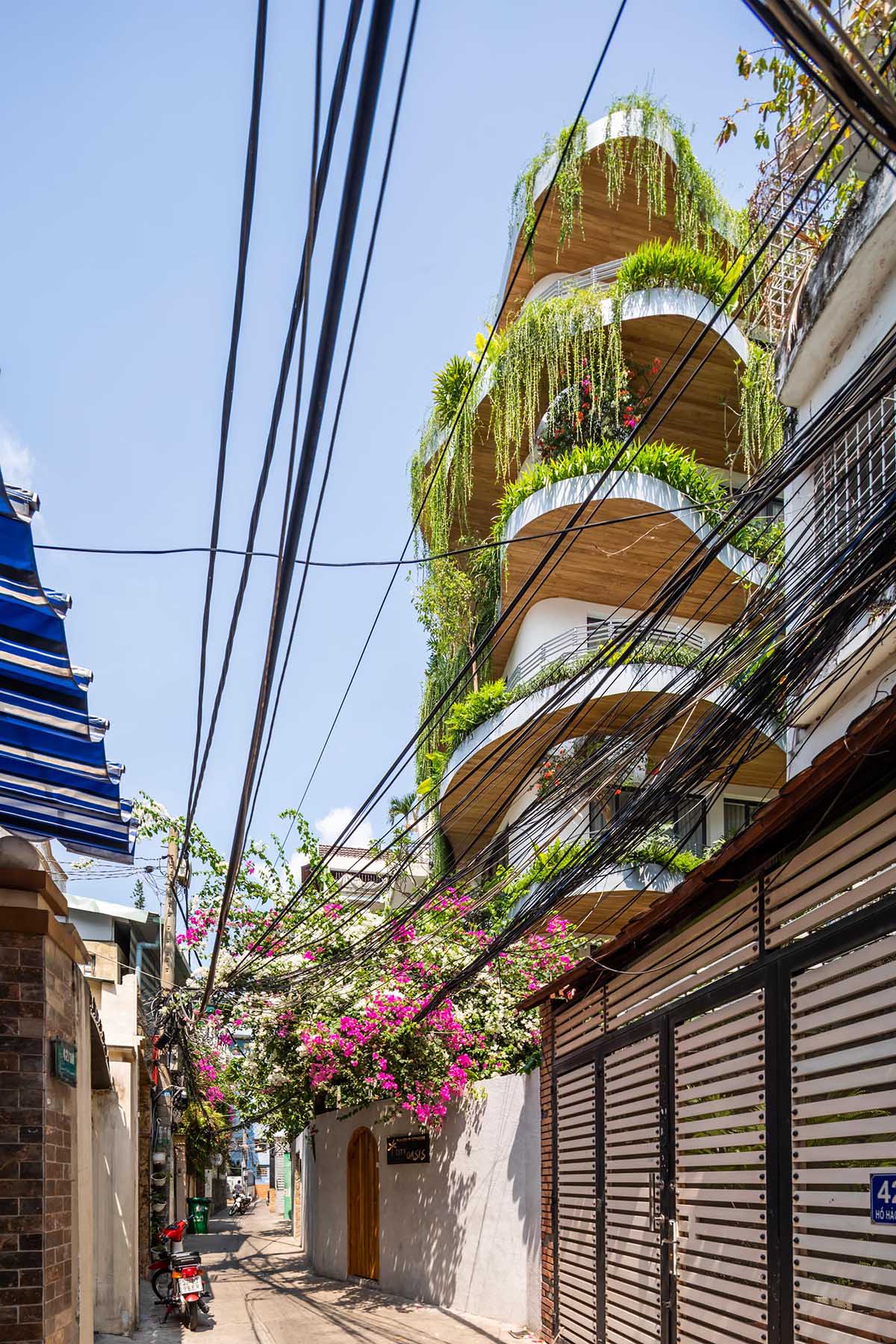
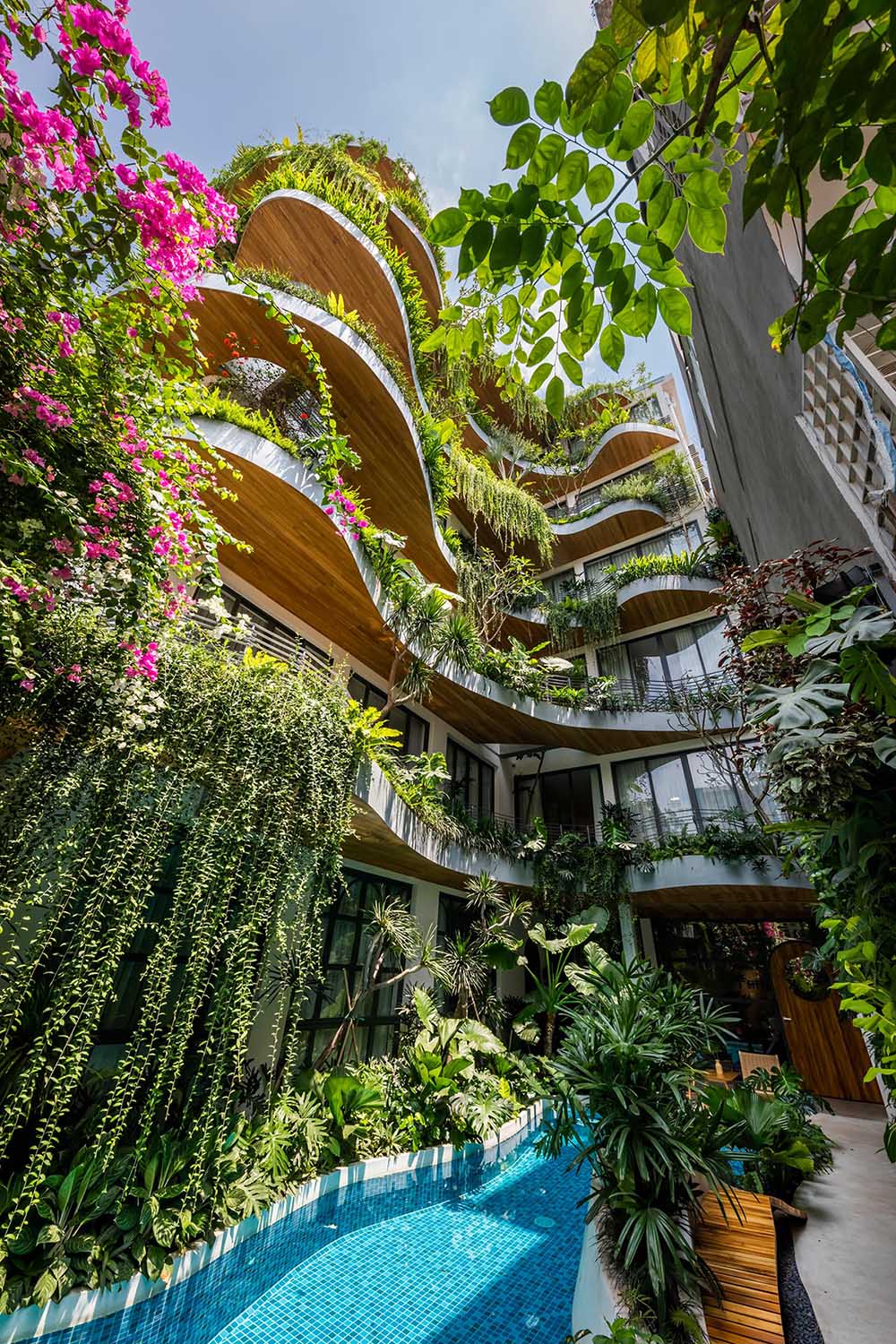
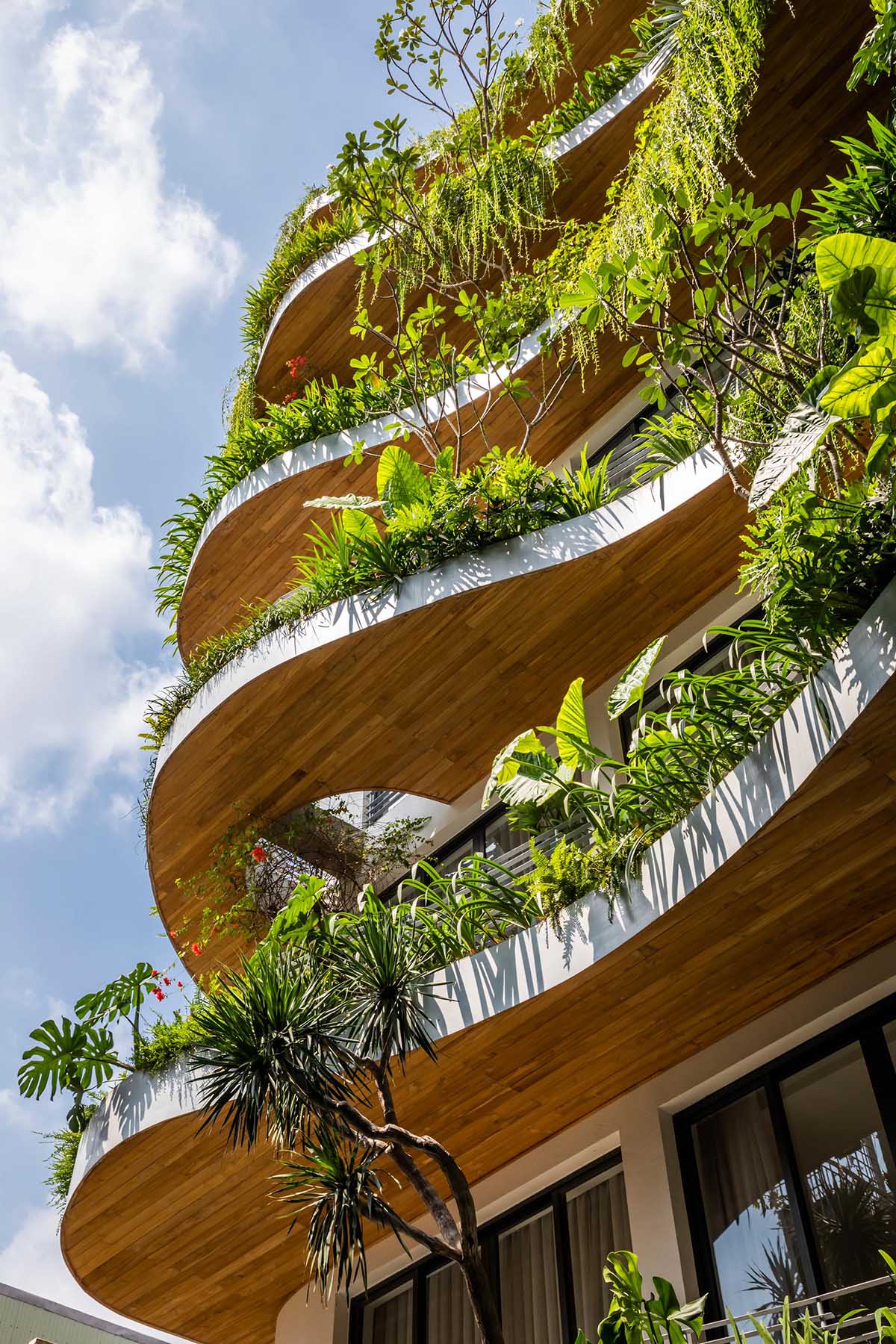
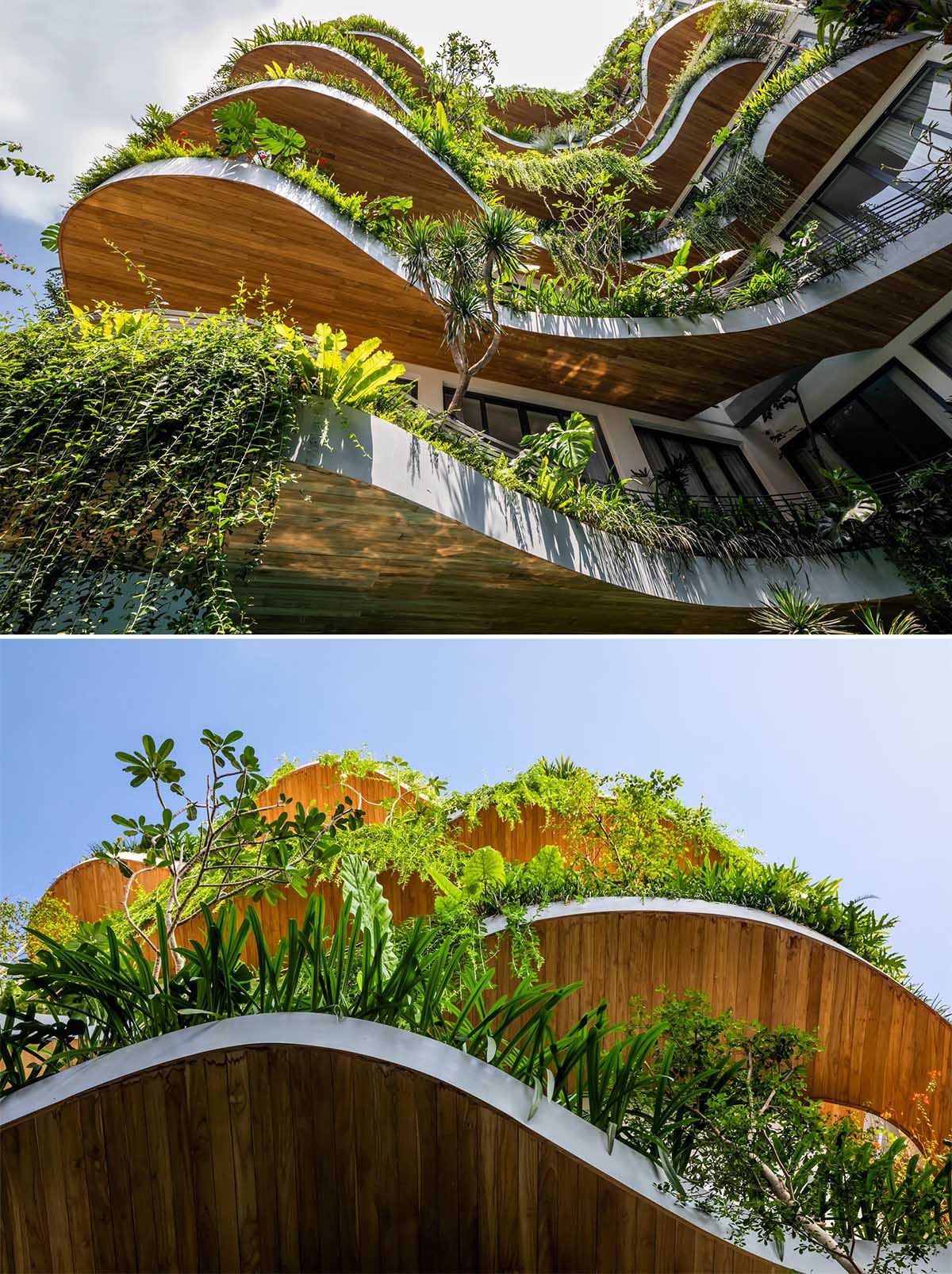
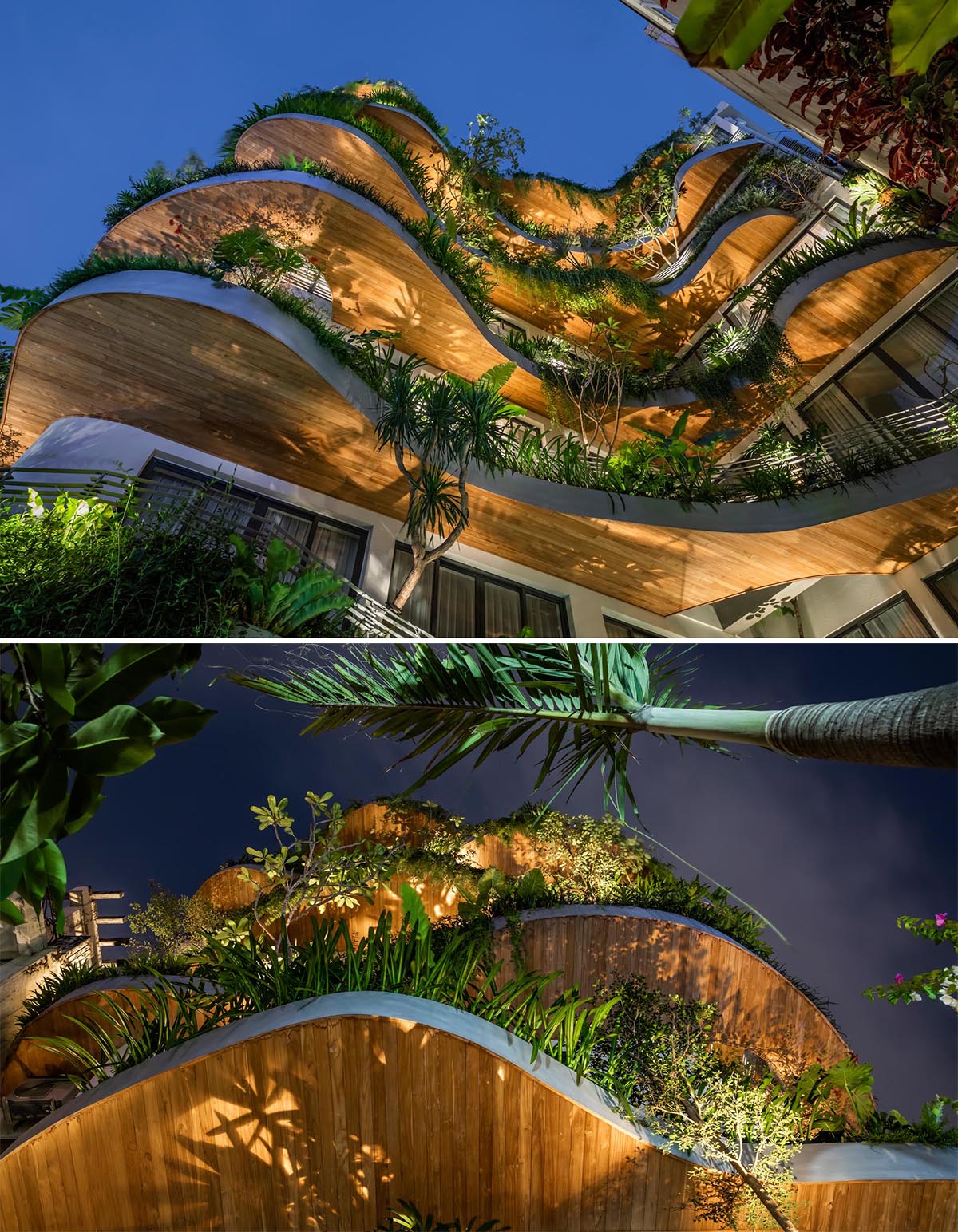
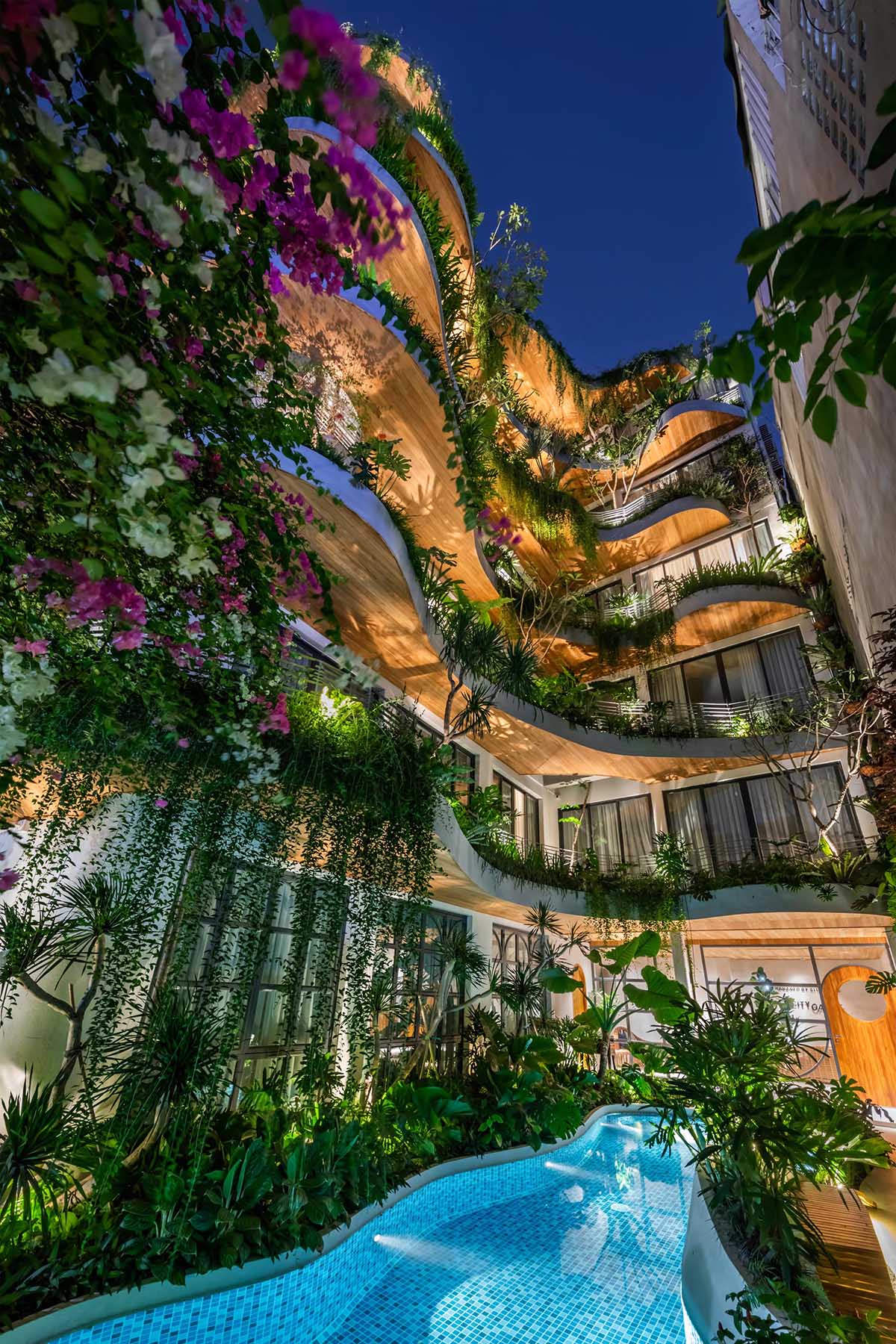
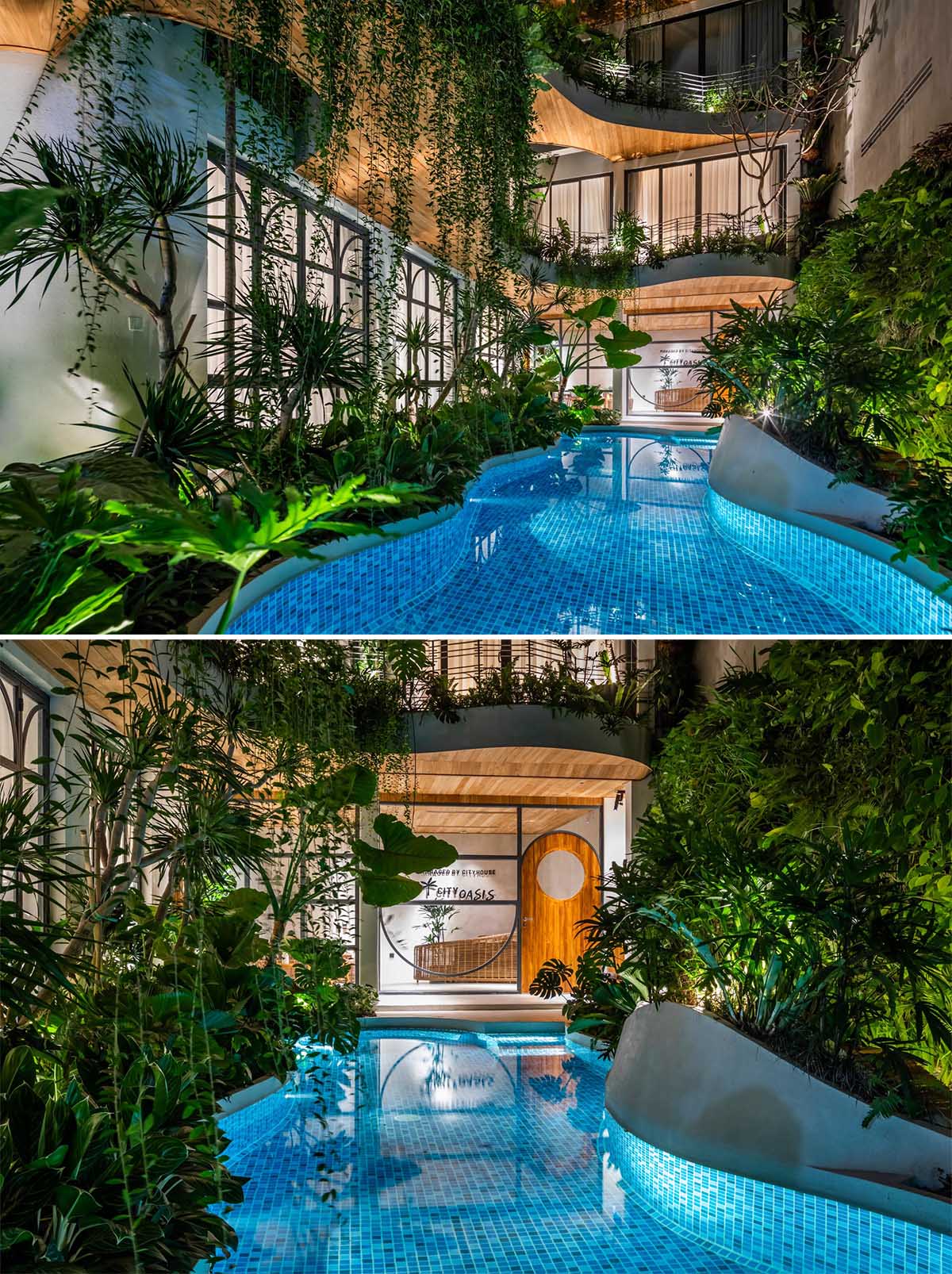
Wavy Balconies With Overhanging Plants Are A Design Feature On This Apartment Building

A modern building with curved balconies and overhanging plants.

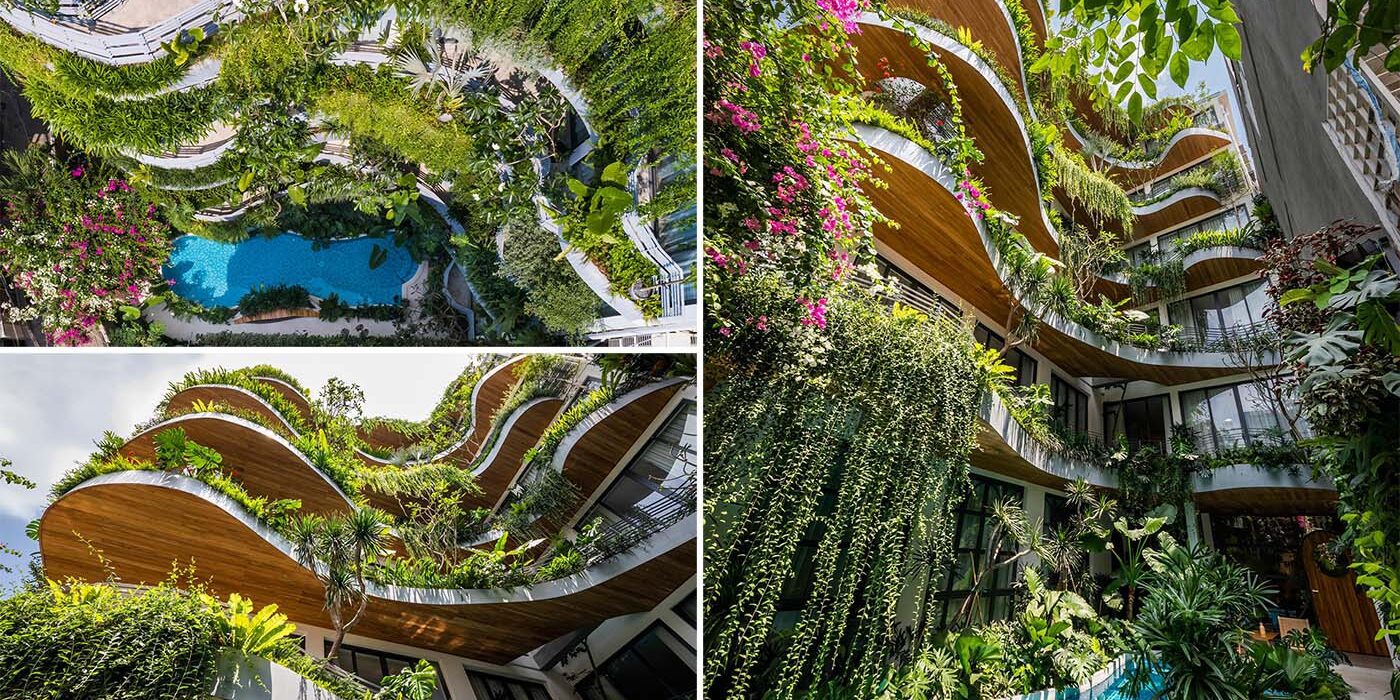
Architecture firm K.A Studio has designed the remodel of an apartment building in Ho Chi Minh City, Vietnam, that included the addition of green space.

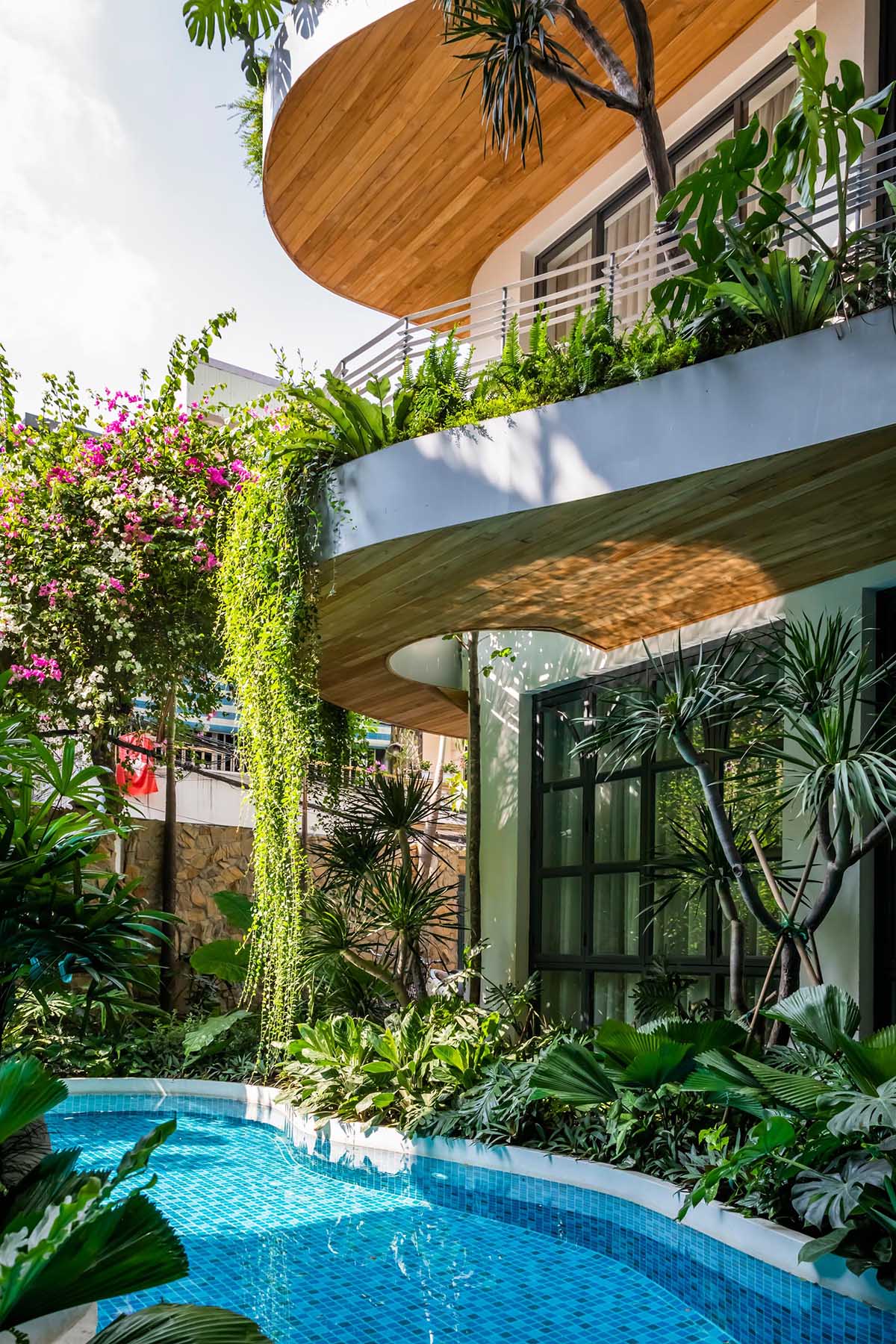
A modern building with curved balconies and overhanging plants.

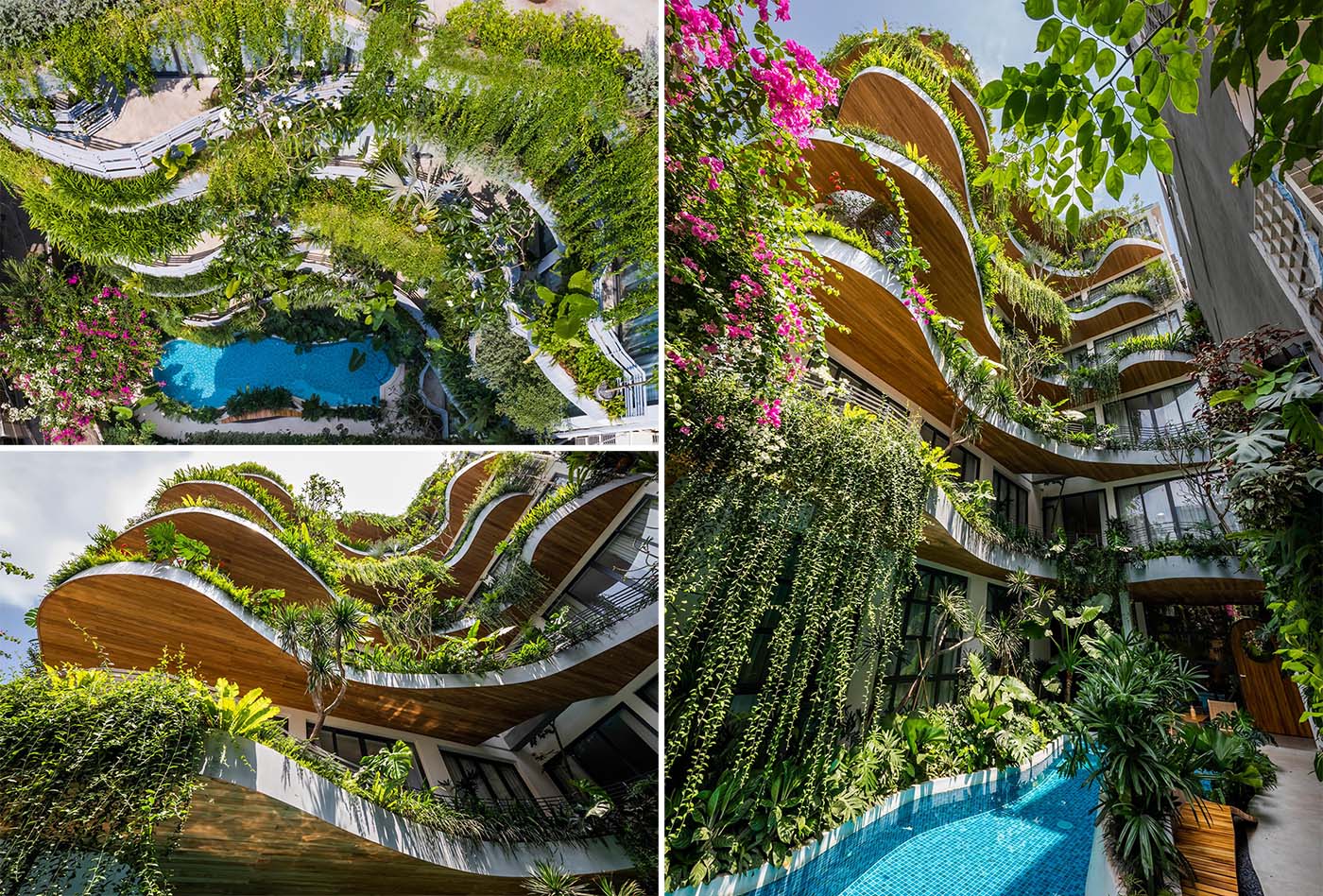
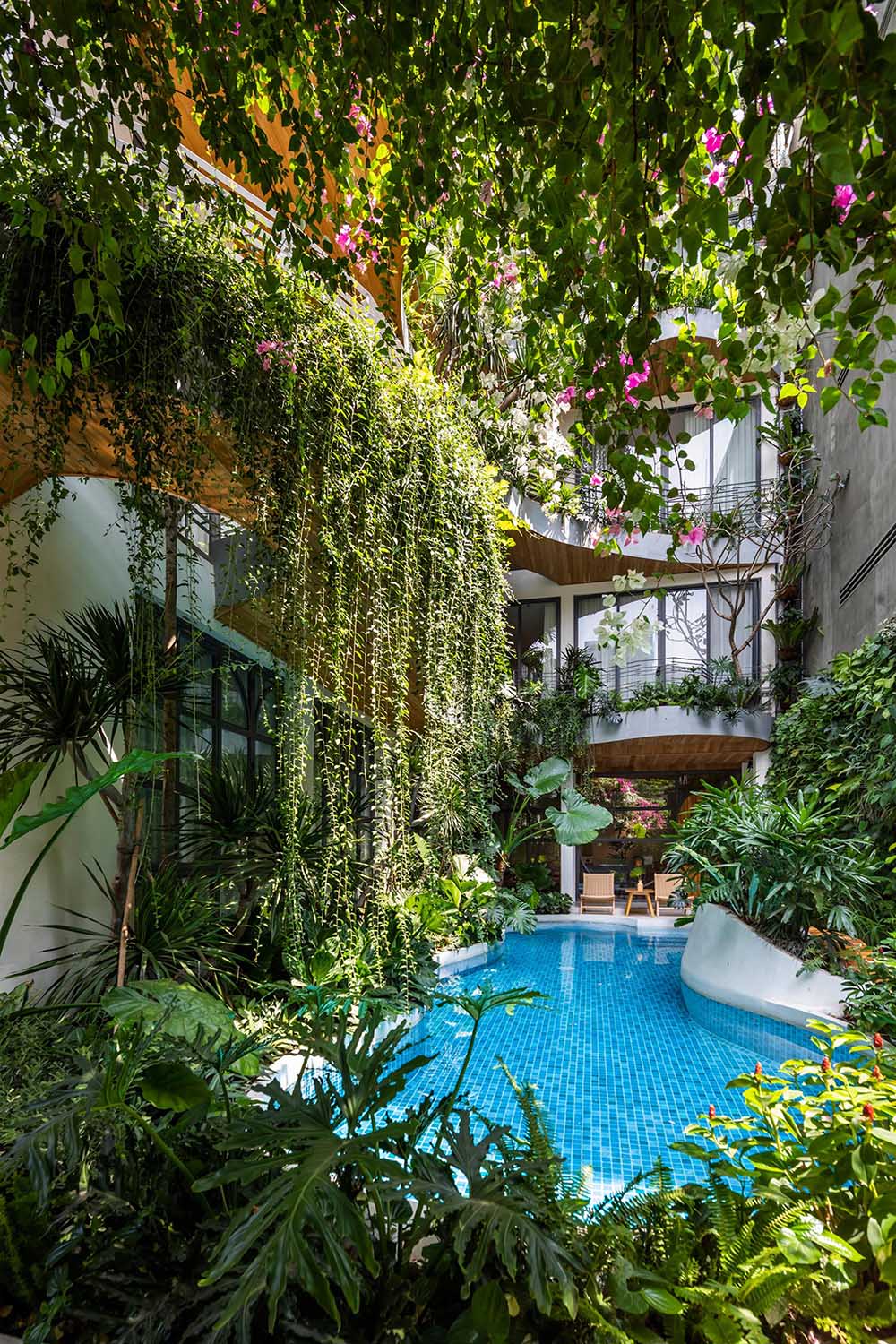
In an area filled with concrete and hard lines, this updated apartment building, which is now used for staycations, has been designed as an oasis in the city, with the curved balconies creating a soft edge on the facade.

A modern building with curved balconies and overhanging plants.

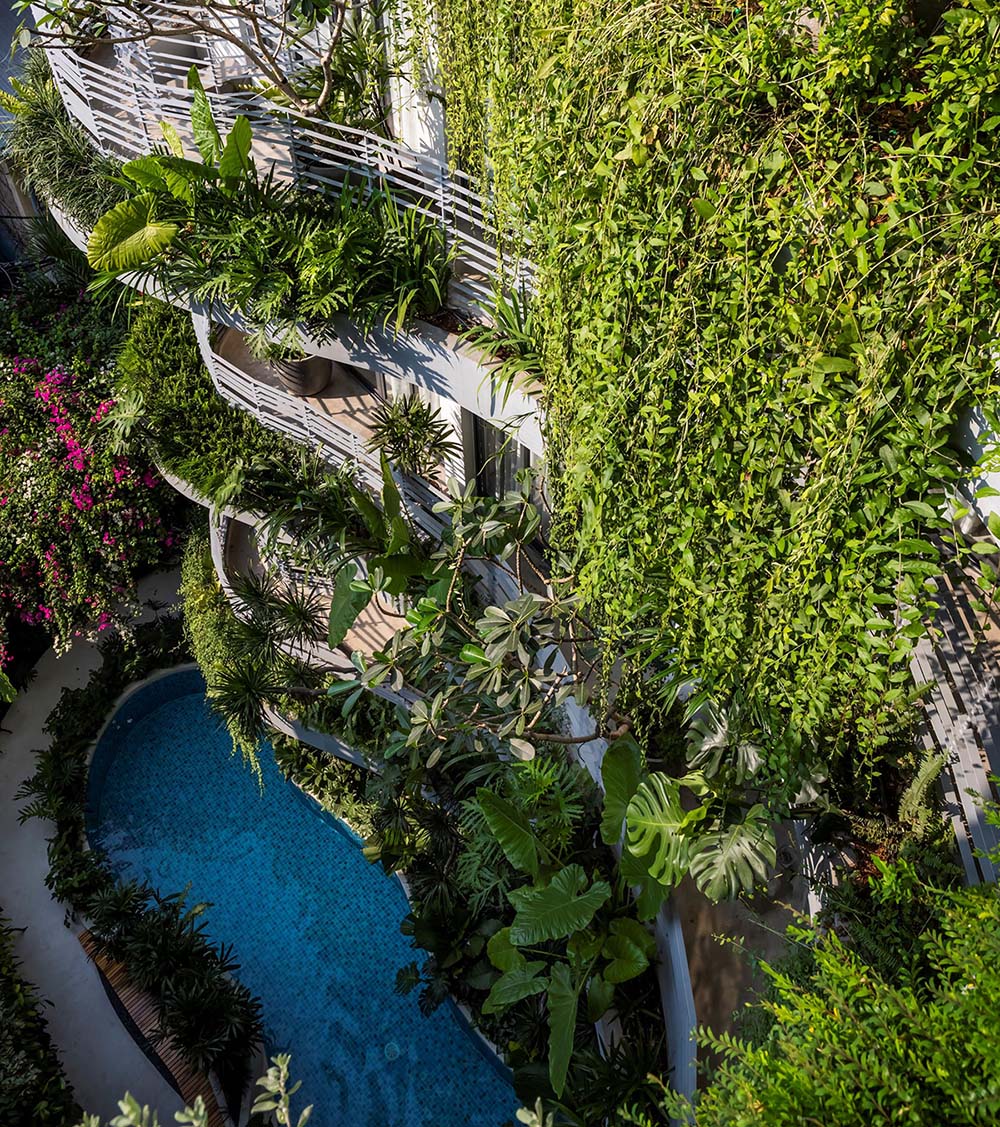
Overhanging plants cascade down the side of the building, while taller plants add different layers and grow up between the voids created by the balconies.

A modern building with curved balconies and overhanging plants.

The underside of the balconies is lined with wood, adding to the natural look of the building.

The underside of these balconies is lined with wood, adding to the natural look of the building.

At night, uplighting creates shadows on the balconies above.

At night, uplighting creates shadows on the balconies above.
A modern building with curved balconies and overhanging plants.

The balconies overlook a pool that’s located on the ground floor and has curves that mimic the exterior of the building.

A curved swimming pool complements the curved balconies above.
A modern building with curved balconies and overhanging plants.

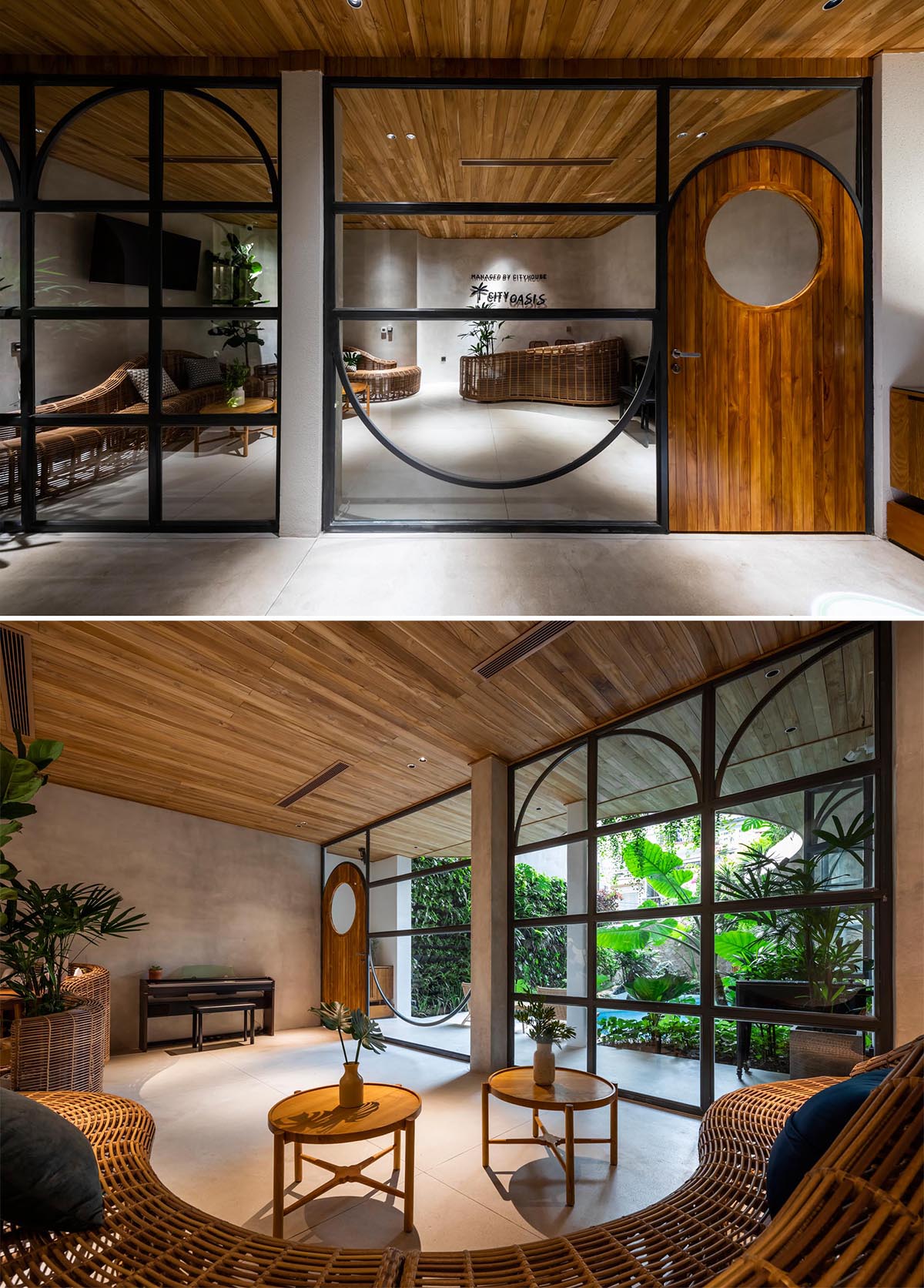
Throughout the building materials like woods, local split stones, concrete, terrazzo, and rattan are featured.

The interior of this building features materials like woods, local split stones, concrete, terrazzo, and rattan.

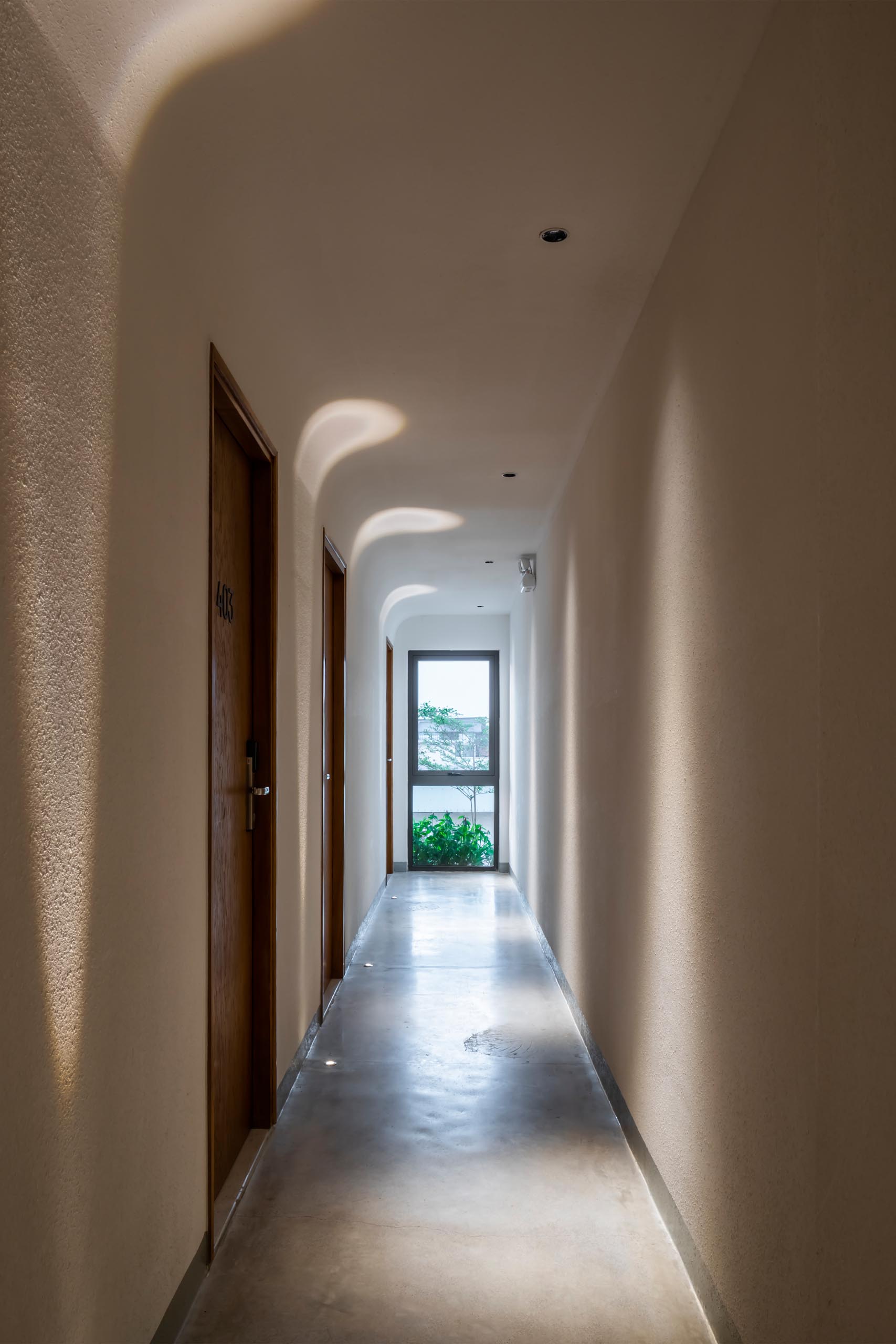
Bright hallways with lighting embedded in the concrete floors, and in the ceiling, guide guests to their private apartments.

Bright hallways with lighting embedded in the concrete floors, and in the ceiling, guides guests to their private apartments.

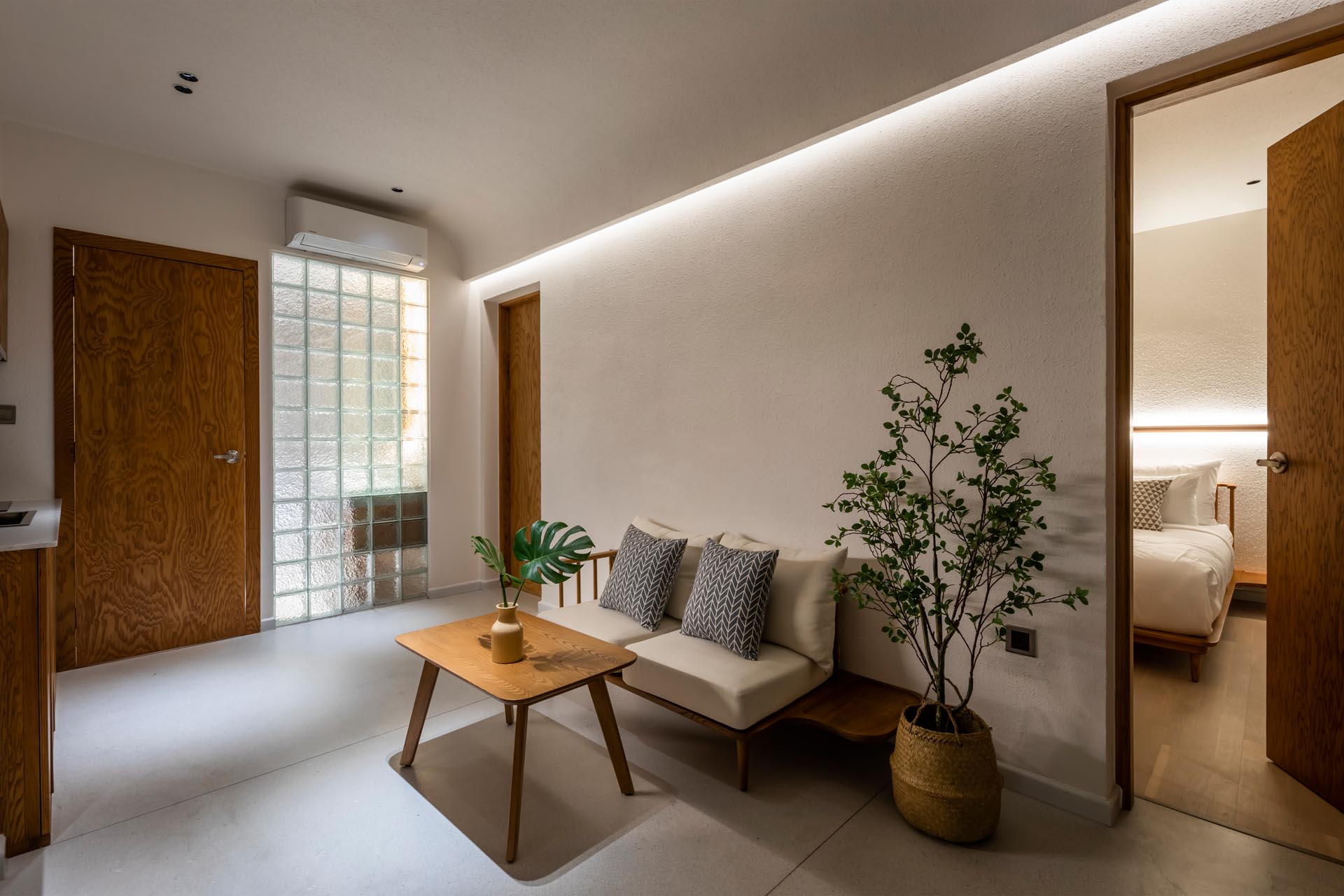
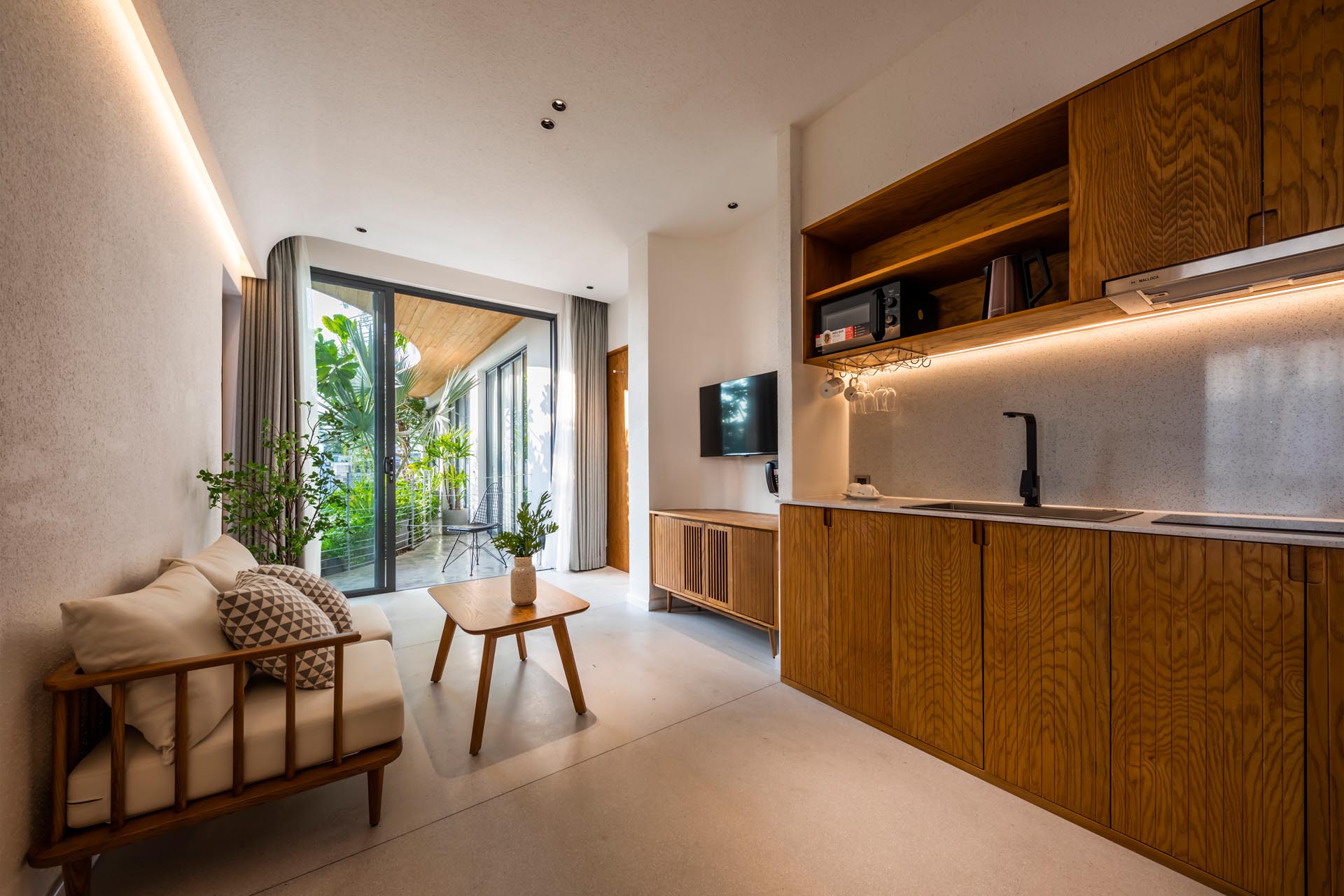
The apartments are minimal in their design, with simple wood furniture in the living room, and a kitchenette.

A minimalist apartment interior with LED lighting and a small living room.
A minimalist apartment interior with LED lighting, a small living room, and kitchenette.

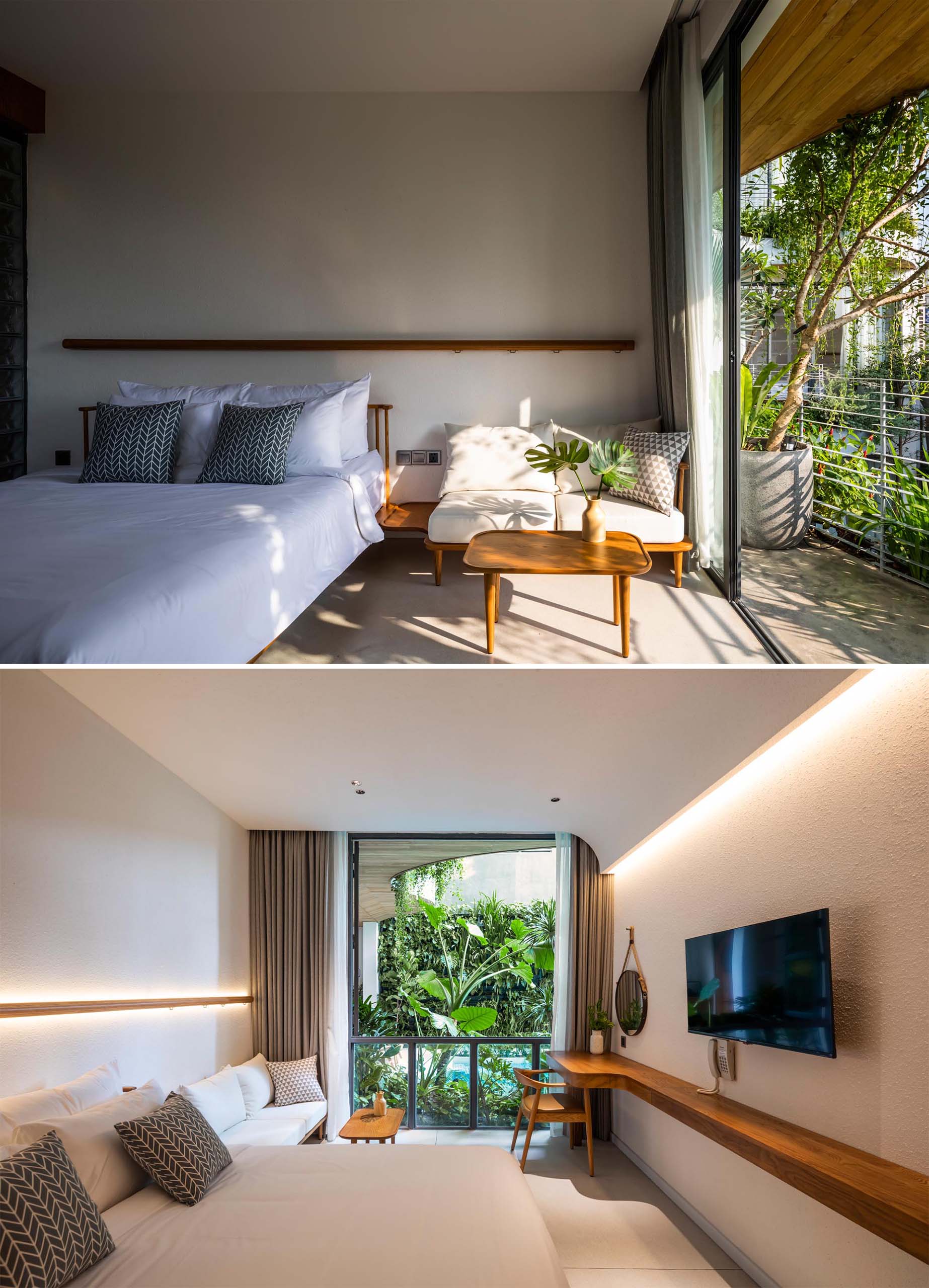
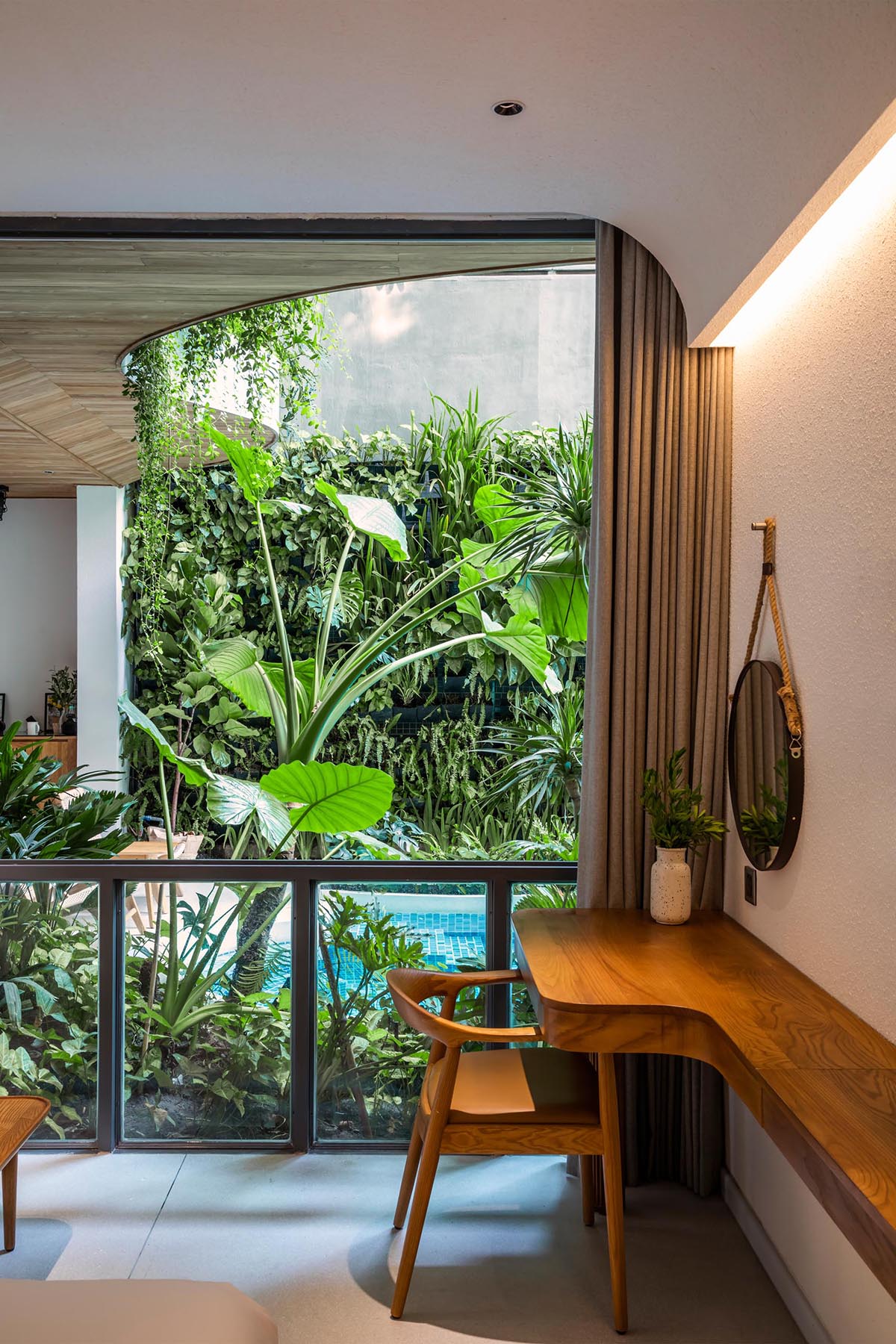
In the bedroom, a horizontal wood accent above the bed hides LED Lighting, which also complements the lighting on the opposite wall. There’s also a floating wood desk that lines the wall, and a sliding door opens to a balcony.

In this bedroom, a horizontal wood accent above the bed hides LED Lighting, which also complements the lighting on the opposite wall.
A floating wood desk.
Photograph: Hiroyuki Oki | Architects: K.A Studio | Lead Architects: Doan Quoc Khanh | Design team: Dang Anh Khoa, Hoang Anh Dung, Tran Quoc Nhat, Le Duc Duy | Construction: La Maison Du K

Source link

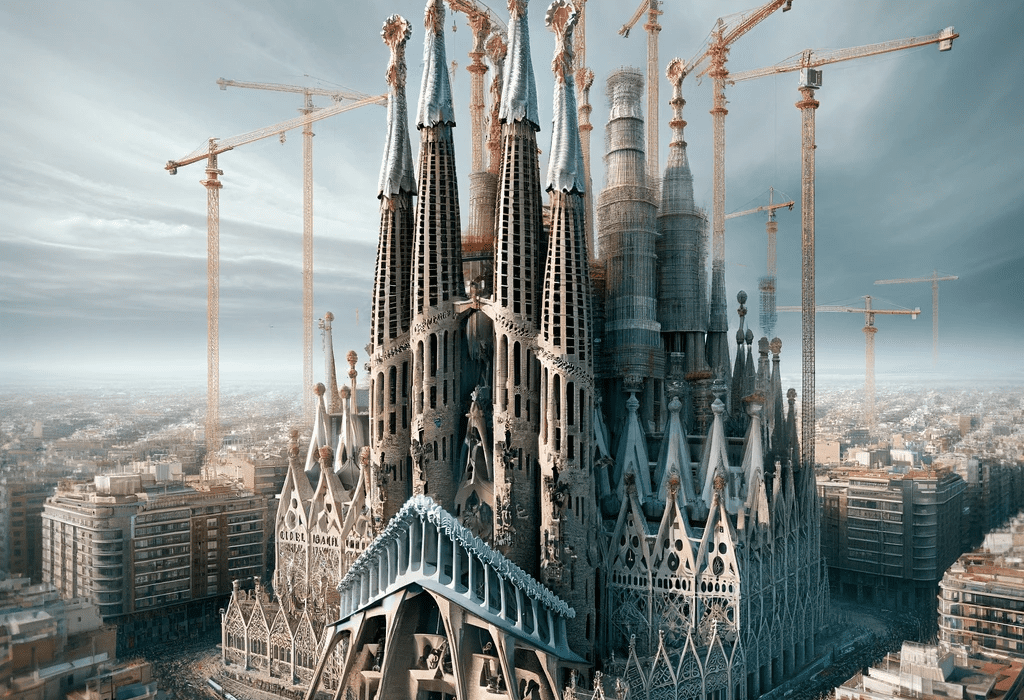
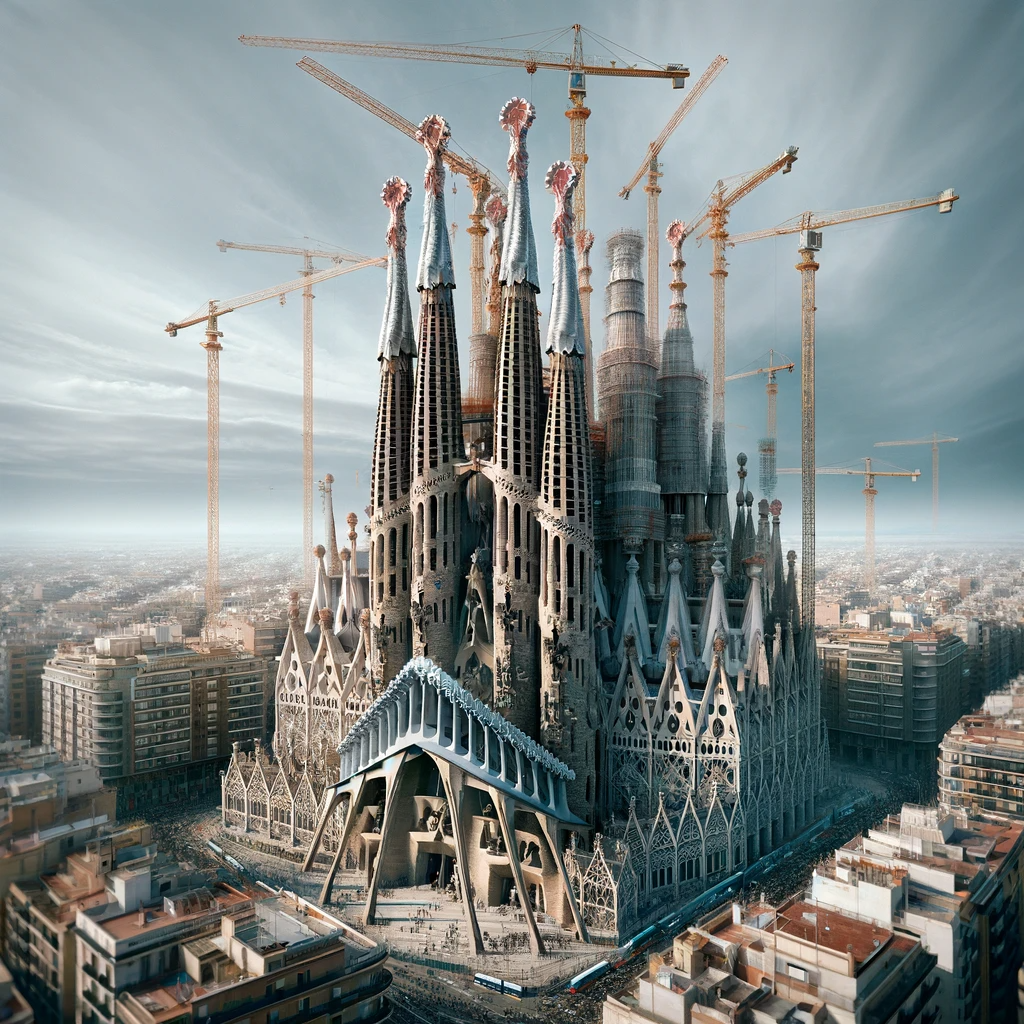
alt="Photo_of_the_Sagrada_Família_in_Barcelona,_by_ChatGPT_4.0,_Dall-E_3.0_(2024)"
CategoriesArchitecture

Human vs. Machine: Striking the Balance With AI in Architectural Design

Architizer’s Tech Directory is a database of tech tools for architects — from the latest generative design and AI to rendering and visualization, 3D modeling, project management and many more. Explore the complete library of categories here.

‘Will artificial intelligence (AI) replace architects?’

This question has been at the forefront of several discussions that have been vibrantly presenting many dystopic scenarios where big data, algorithms and machine learning will eventually replace human creativity and intuition. However, AI technology existed long before the AI bloom, rarely causing excessive panic within creative fields. So why is AI technology suddenly so threatening to the architectural profession?

Looking back at science fiction movies, AI was oftentimes presented as a human avatar that could accomplish assignments, make calculations and provide insightful information in unprecedented speeds. Nevertheless, it never performed extremely creative tasks. It was always depicted as a trusted artificial “advisor” capable of processing large amounts of data and automate complex procedures.

When platforms such as Midjourney, DALL-E and Stable Diffusion were introduced to the world, the creative skills and intuition necessary to visualize spaces and settings were abruptly redefined. Consequently, AI technology became a tool for generating impressive compositions and rapid design prototyping through the use of simple text prompts, eliminating the need for manual drawings or an overall architectural knowledge.

At the same time, a different set of tools was developed. AI apps such as qbiq and Laiout have the ability to process data, thus optimizing building sustainability and offer design solutions that are in accordance with local building codes. This type of AI software follows the more familiar pattern of speedy data processing, resulting in designs based purely on logical thinking. For the architectural profession, making this distinction between “creative” and “logical” AI algorithms is crucial.

Architizer’s new Tech Directory aggregates tech tools for architects, allowing you to search, compare and review AI softwares before selecting which to you in your next project:

Explore Architizer’s Tech Directory

On the one hand, even though “logical” AI tools are able to generate countless design iterations based on predetermined parameters, they lack the nuanced understanding of cultural context, emotional resonance, and human experience. There’s also a risk of homogenization, where buildings designed by AI algorithms may lack the diversity and richness that stem from individual human perspectives and cultural influences. Another challenge lies in the inherent biases embedded within AI algorithms.

Machine learning models are trained on historical data, which may reflect societal biases and perpetuate inequalities in architectural design. Without careful oversight and intervention, AI algorithms could inadvertently reinforce existing biases related to race, gender, socio-economic status, and accessibility, leading to inequitable outcomes in the built environment. Admittedly, the risks associated with data-driven AI technology and architectural design are well-known and somewhat obvious. In such a subjective discipline, logic alone is not enough to create spaces that are truly regarded as pieces of architecture. Design is partially an instinctive process that is unique for each individual architect and cannot be replicated by any intelligent machine.

“Creative” AI algorithms, however, pose a different type of challenge since they bring an ‘unpredictability factor’ to the table. Instead of relying purely on data, text-to-image generators produce designs based on subjective (human generated) prompts. Instead of spending numerous hours sketching, drawing and model making, “creative” AI apps can generate countless concepts in a matter of seconds by simply feeding them client briefs. Nevertheless, while they seem ideal for producing impressive concepts for early stage design, the images they create are fairly fictional. Ironically, they lack data.

Even during the initial brainstorming phase, architects do consider an array of objective as well as subjective information regarding their project. From climatological site conditions to potential present or future occupants and even immaterial data such as past histories, myths or cultural norms. This framework of complex interrelationships becomes the blueprint for designing for specific sites, people and cultures, adopting a holistic approach towards proposing creative and innovative solutions.

There is no doubt that both “logical” and “creative” AI algorithms have become ‘trusted advisors’ for many architects. “Creative” AI tools are ideal for showing design intention, representation and visualization. In other words, they bridge the communication gap between architects and clients. In parallel, “logical” AI tools can rapidly access and process information such as planning codes or material specifications and energy reports. During the technical and construction stages, many AI apps can automate processes and produce standardized drawings seamlessly and with minimal effort.

In short, both types of AI tools are two sides of the same coin, showing both promise and peril. Still, as long as architects are aware of AI limitations, integrating the technology into their workflow can provide valuable insights and inspiration, inform decision-making and ultimately enhance the practice of architecture. Architects have always been the mediators between logic and creativity, with AI being no exception. This paradigm shift presents an opportunity as well as a challenge, which — if navigated correctly — will enable architects to focus on what they do best: creating innovative, human-centered and culturally significant spaces.

Architizer’s Tech Directory is a database of tech tools for architects — from the latest generative design and AI to rendering and visualization, 3D modeling, project management and many more. Explore the complete library of categories here.
Reference

Photo of a bowl of pink-coloured rice viewed from above
CategoriesSustainable News

Scientists develop hybrid “beef rice” as future meat alternative

Scientists from South Korea’s Yonsei University have invented what they believe to be a sustainable, high-protein food in the form of “beef rice”, made by growing cow cells in grains of rice.

Tinged a pale pink from the cell culturing process, the hybrid food contains more protein and fat than standard rice while having a low carbon footprint, leading its creators to see it as a potential future meat alternative.

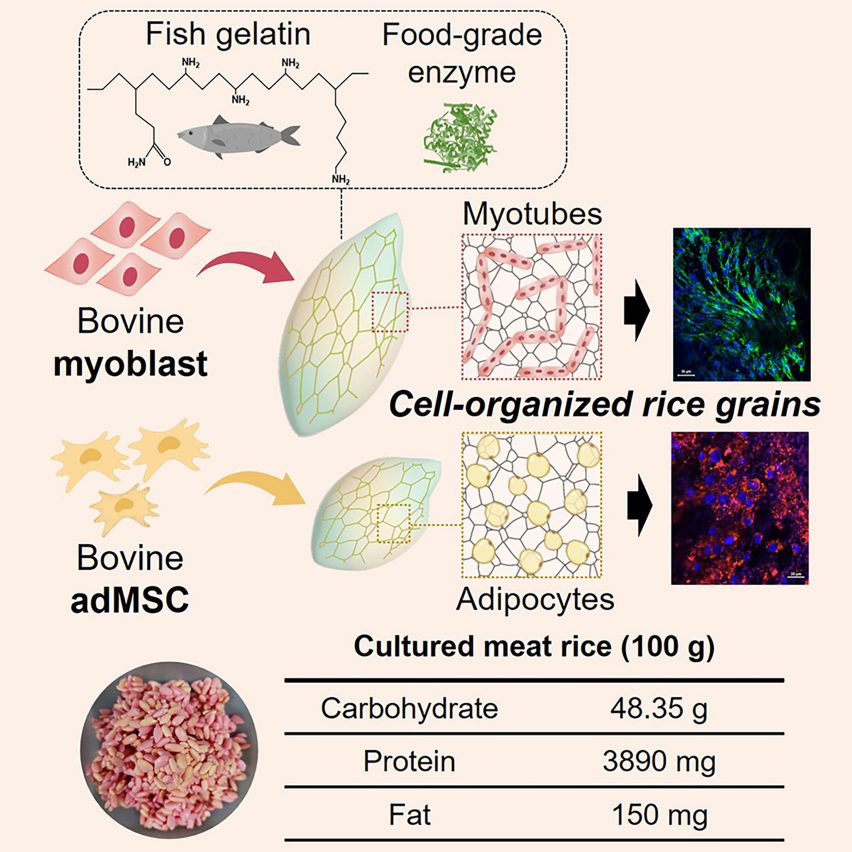
The beef rice was made by inserting muscle and fat stem cells from cows into grains of rice and leaving them to grow in a Petri dish.

Photo of a bowl of pink-coloured rice viewed from abovePhoto of a bowl of pink-coloured rice viewed from above
The hybrid “beef rice” is made by growing cow muscle and fat cells within rice grains

Because the rice grains are porous and have a rich internal structure, the cells can grow there in a similar way to how they would within an animal. A coating of gelatine – in this case, fish-derived – further helps the cells to attach to the rice.

Although beef rice might sound like a form of genetically modified food, there is no altering of DNA in the plants or animals. Instead, this process constitutes a type of cell-cultured or lab-grown meat but with the beef grown inside rice.

In a paper published in the journal Matter, the Yonsei University researchers explain that their process is similar to that used to make a product already sold in Singapore – a cultured meat grown in soy-based textured vegetable protein (TVP).

Soy and nuts are the first foods that have been used for animal cell culturing, they say, but their usefulness is limited because they are common allergens and do not have as much cell-holding potential as rice.

Complex graphic depicting bovine and fat cells inserted into rice grains and the nutritional content table for 100 grams of cultured meat riceComplex graphic depicting bovine and fat cells inserted into rice grains and the nutritional content table for 100 grams of cultured meat rice
It contains more fat and protein than standard rice

The nutritional gains for their beef rice are also currently small, but the researchers from Yonsei University’s Department of Chemical and Biomolecular Engineering say that with further optimisation, more cells and therefore more protein could be packed in.

The hybrid rice contains 3890 milligrams of protein and 150 milligrams of fat per 100 grams – just 310 milligrams more protein and 10 milligrams more fat than standard rice.

“Although hybrid rice grains still have a lower protein content than beef, advances in technology that can improve the cell capacity of rice grains will undoubtedly improve the nutritional content of hybrid rice,” the researchers said in their paper.

The scientists also believe the product could be inexpensively commercialised and tout the short time frame required to boost nutrition through culturing.

Whereas beef production usually takes one to three years and rice 95 to 250 days, they say their cell culturing process took less than 10 days.

“Imagine obtaining all the nutrients we need from cell-cultured protein rice,” said researcher Sohyeon Park. “I see a world of possibilities for this grain-based hybrid food. It could one day serve as food relief for famine, military ration or even space food.”

If commercialised, the hybrid grain is expected to have a low carbon footprint, similar to growing standard rice, because there would be no need to farm lots of animals. While the stem cells used for the process are extracted from live animals, they can proliferate indefinitely and don’t require animal slaughter.

An obstacle for some may be the taste; the cell culturing process slightly changes the texture and smell of the rice, making it more firm and brittle and introducing odour compounds related to beef, almonds, cream, butter and coconut oil.

Image of hybrid "beef rice" being grown in a petri dishImage of hybrid
The meat alternative was grown in a Petri dish

However, lead researcher Jinkee Hong told the Guardian that the foodstuff tastes “pleasant and novel”.

The team is now planning to continue their research and work to boost the nutritional value of the hybrid rice by stimulating more cell growth.

Lab-grown and cultivated meats have been a subject of great interest and investment since 2013 when the world’s first lab-grown burger was eaten live at a press conference.

However, scaling up production, clearing regulatory hurdles and creating an appealing taste and texture have proven a challenge, and there are few examples on sale anywhere in the world.

In the meantime, speculative designers have explored the issue. Leyu Li recently created three conceptual products that, similar to beef rice, combine lab-grown meat with vegetables, calling them Broccopork, Mushchicken and Peaf.

All images courtesy of Yonsei University.

Reference

Architects' Guide: How To Integrate Extended Reality (XR) Software Into a Design Workflow
CategoriesArchitecture

Architects’ Guide: How To Integrate Extended Reality (XR) Software Into a Design Workflow

Architizer’s Tech Directory is a database of tech tools for architects — from the latest generative design and AI to rendering and visualization, 3D modeling, project management and many more. Explore the complete library of categories here.
When the 2020 decade began, three pivotal events significantly redefined and remolded the relationship between humans and technology. The Covid-19 pandemic, which normalized concepts such as cross-world, virtual-based collaborations, the resurfacing of the digital platform “Metaverse” following Facebook’s rebranding to Meta in late 2021, and, finally, the rapid growth and popularity of AI technology.

These events carved out the need for reconstructing the digital world in a way that becomes more immersive, more malleable and more interactive with physical reality. This turned the spotlight on technologies such as virtual, augmented, and mixed reality, introducing tools that bridge the gap between the digital and the physical world and consequently breaking ground in the architectural field.

What Exactly is Extended Reality (XR)?

Extended Reality (XR) is a term used to describe immersive technologies. Under the XR umbrella are:

Virtual Reality (VR), which refers to a computer-generated simulation of a three-dimensional environment that can be explored by an individual, typically through the use of specialized electronic devices such as VR headsets. Users are immersed in a digital world that can simulate real or imaginary environments, allowing them to perceive and interact with the surroundings as if they were physically present. VR technology often employs a combination of advanced graphics, audio, and tracking sensors to create a sense of presence and immersion.

Augmented Reality (AR) on the other hand, is a technology that overlays digital information and computer-generated elements onto the real-world environment. Unlike virtual reality, augmented reality integrates digital content seamlessly with the physical world. AR is often experienced through devices such as smartphones, tablets, smart glasses or heads-up displays, allowing users to see both real-world objects and computer-generated elements simultaneously.

Finally, Mixed Reality (MR) is a technology that combines elements of both virtual and augmented reality to create a hybrid environment where physical and digital elements coexist and interact in real-time. In mixed reality experiences, digital objects are not only overlaid onto the real world but are also anchored and responsive to the physical environment. This technology enables users to interact with both real and virtual elements simultaneously, fostering a more seamless integration of the physical and digital realms.

How Can XR Technologies Be Used in Architecture and Design?

“VIRTUAL | REALITY” by Giangtien Nguyen, Afreen Ali, Aziz Alshayeb and Erik H Kusakariba, INVI LLC

From designing immersive virtual environments and prototypes to crafting a 1:1 scale client presentation and even setting up real-time construction simulations, XR technology brings architectural ideas into “reality” in a matter of hours. VR allows architects to visualize and experience their designs at a human scale. This aids in evaluating spatial relationships, testing design concepts, and identifying potential issues before the construction phase. At the same time, clients can experience the same designs through virtual walkthroughs, minimizing any confusion due to the limited understanding of traditional — and often complicated — architectural drawings.

For site planning and analysis, AR can be employed on-site to overlay digital information onto the physical environment. This helps architects and construction teams visualize how a proposed structure will fit into the existing landscape, assess potential challenges, and make informed decisions about site planning. Taking it a step further, site data analytics can be used to assess the environmental impact and energy efficiency of a design. By visualizing and analyzing how sunlight, shadows, and airflow interact with the building, architects are able to strategically produce sustainable and eco-friendly design solutions.

Finally, MR technology opens up a whole new world of techniques in both design and construction. For example, the ability to superimpose guided holograms as marking lines for building complicated geometries or seeing technical installations through walls, unlocks unprecedented possibilities for operating construction sites more efficiently. Furthermore, MR technology offers architects alternative ways of hands-on training in complex — and oftentimes chaotic — construction projects, while minimizing the risks of irreparable errors.

Architizer’s new Tech Directory aggregates tech tools for architects, allowing you to search, compare and review XR-related softwares before selecting which to you in your next project:

Explore Architizer’s Tech Directory

Which XR Softwares Do Architects Use?

In order to craft an Extended Reality experience, architects have to combine specific software with hardware technology. Architectural programs such as Enscape, Twinmotion, SketchUp Viewer and Gravity Sketch have features such as real-time rendering capabilities or augmented reality viewing that allow them to visualize the digital form of their designs. Some of them also act as Virtual Reality Plugins, which can be directly used through a VR headset. In parallel, this technology becomes “physically” accessible through smartphones and tablets as well as VR headsets, AR smart glasses, motion controllers and even gesture recognition devices. Oculus Rift, Microsoft HoloLens, Apple Vision Pro and Leap Motion are only a few examples of such hardware XR devices.

Whether architects use VR headsets to fully immerse in virtual environments, AR smart glasses to blend reality with digital content or motion controllers to physically manipulate both the virtual and material world, XR technology is gradually becoming an integral part of architecture. In its attempt to deal with space in truly imaginative ways, architecture has taken many forms over the years: ink on paper, bricks and mortar and more recently pixels and 3d meshes; Still, XR technology introduces a new, hybrid form of architectural design by merging both physical and digital tools and unlocking new realms of spatial explorations.

Architizer’s Tech Directory is a database of tech tools for architects — from the latest generative design and AI to rendering and visualization, 3D modeling, project management and many more. Explore the complete library of categories here.
Architizer Journal is reader-supported. When you buy through links on our site, we may earn an affiliate commission. Learn more.

Reference

Haiku Architecture: Poetic Simplicity Offers an Emotive Alternative to Minimalist Design
CategoriesArchitecture

Haiku Architecture: Poetic Simplicity Offers an Emotive Alternative to Minimalist Design

Last call: The clock is ticking as Architizer’s 12th Annual A+Awards enters its Extended Entry Deadline period. Submit your work before February 23rd for your chance at the global spotlight.  

.けぶりして露ふりて無我な在所哉
keburi shite tsuyu furite muga-na zaisho kana

dew turns to steam
trickling down selflessly…
farmhouse

Kobayashi Issa – 1811

Simplicity and suggestion are the foundation of a successful Haiku, a form of traditional Japanese poetry that strips away all but the essential words and uses them to beautifully convey a single moment in time. In the familiar 5-7-5 pattern of seventeen syllables that make up a Haiku, kigo (seasonal words) and kireji (cutting words) anchor the poem in a specific season, allowing the reader to engage their imagination to recreate a scenario the writer is retelling. Haiku often celebrates the beauty and impermanence of the natural world and invites readers to find profound meaning in nature and everyday experiences.
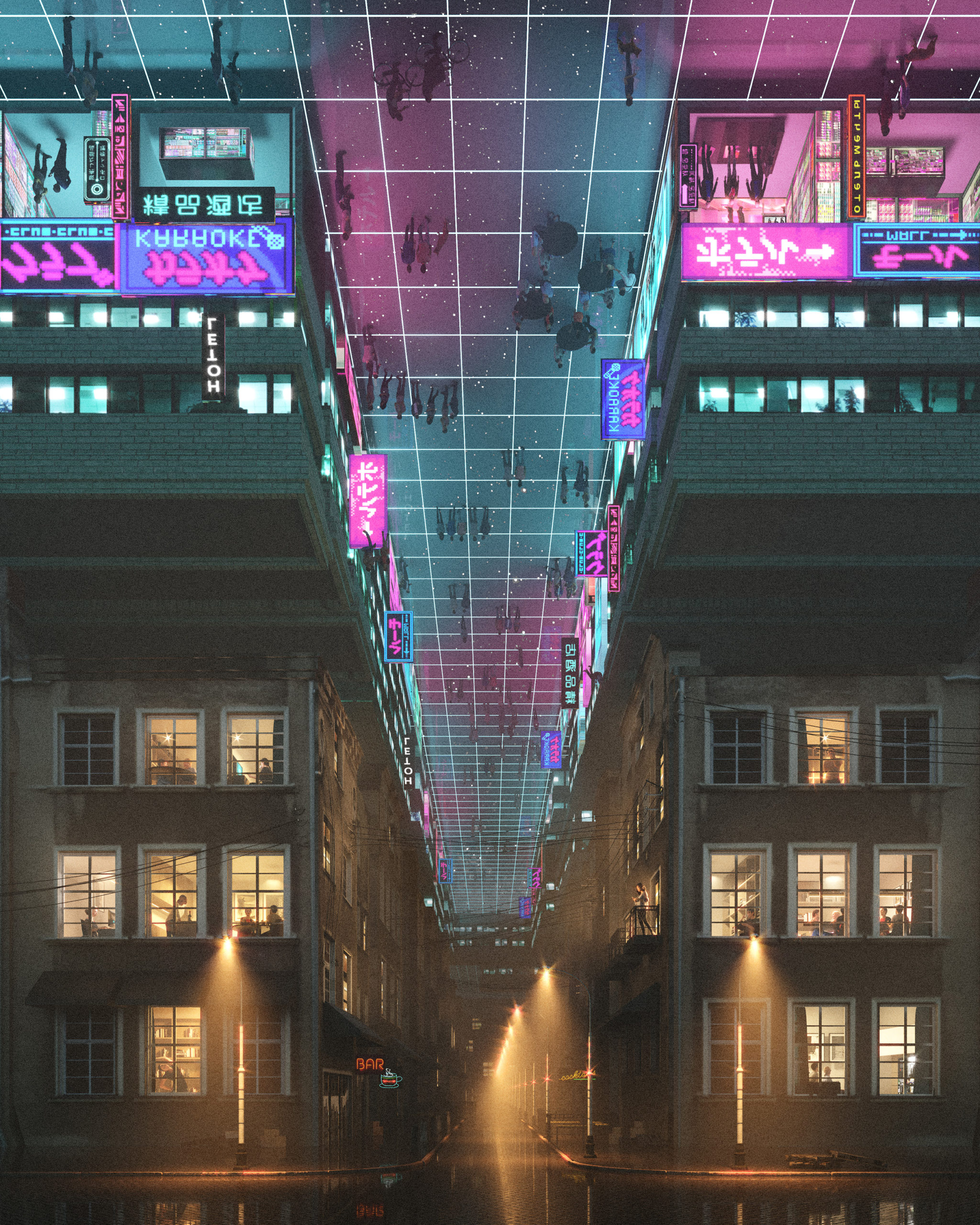
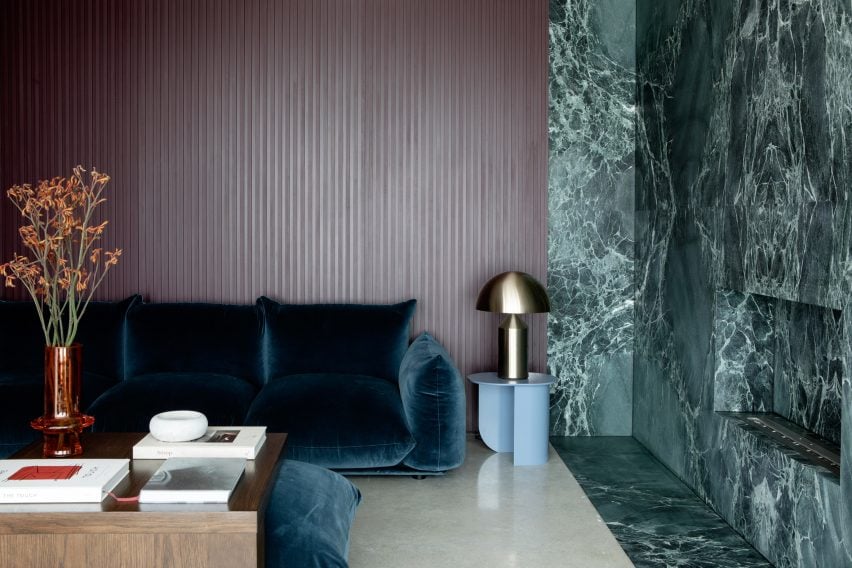
In architecture, this same principle has been adopted by a number of architects, finding a shared ethos with haiku in pursuit of simplicity, emotional resonance and the power of suggestion. Architects who embrace this ‘haiku approach’ often favor natural materials to celebrate the living world and play with light and shadow to connect occupants with the natural rhythms of the day while creating fluid spatial transitions that suggest rather than dictate how spaces should be used or lived in. It is a minimalist style that is deeply emotive.
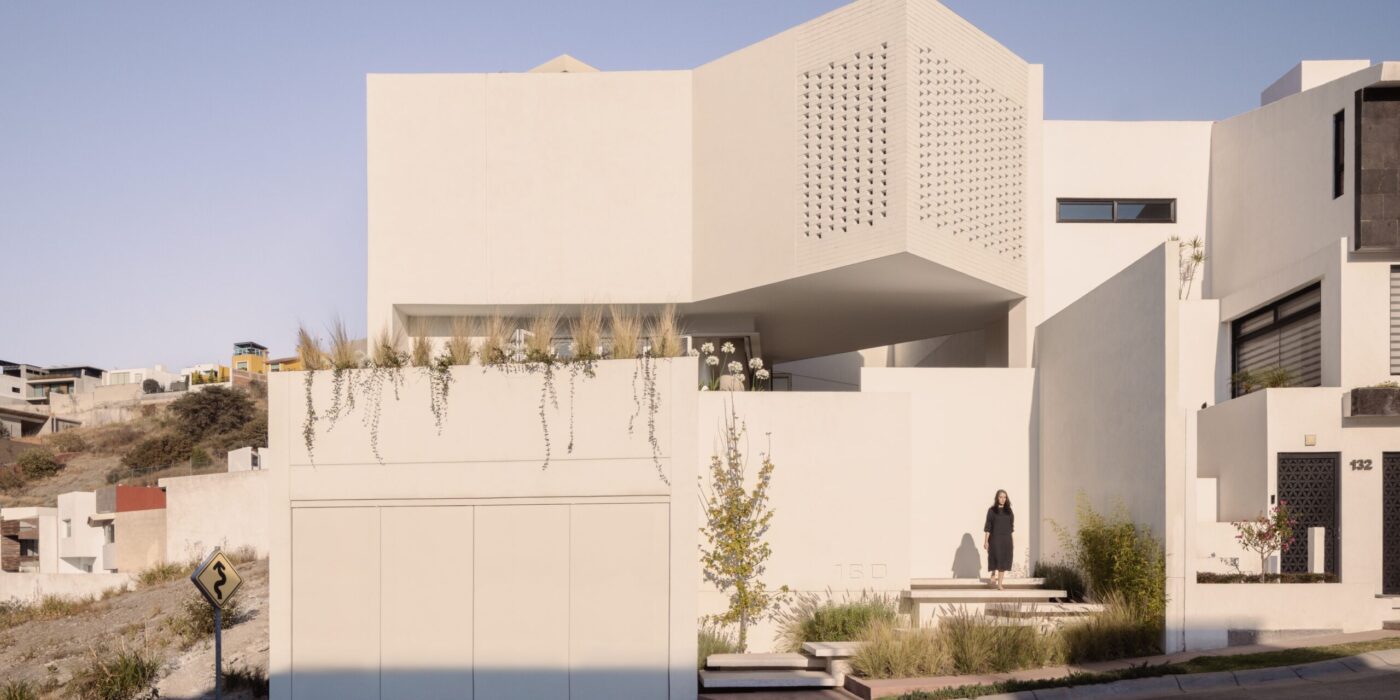
The goal of haiku principles in architecture is to build unique relationships between a building and its users that encourage a connection to the environment and each other. Just as haiku strips away all but the essential words to convey a moment, architectural haiku seeks to distill design to its most fundamental aspects — form, light, material and space — creating places that invite visitors to fill the space with their interpretations and emotions.


Casa Sexta

By All Arquitectura, CDMX, Mexico

Popular Choice Winner, 11th Annual A+Awards, Residential Interiors (>3000 sq ft)

Casa Sexta by All Arquitectura, CDMX, Mexico. Photographs by Zaickz Moz.

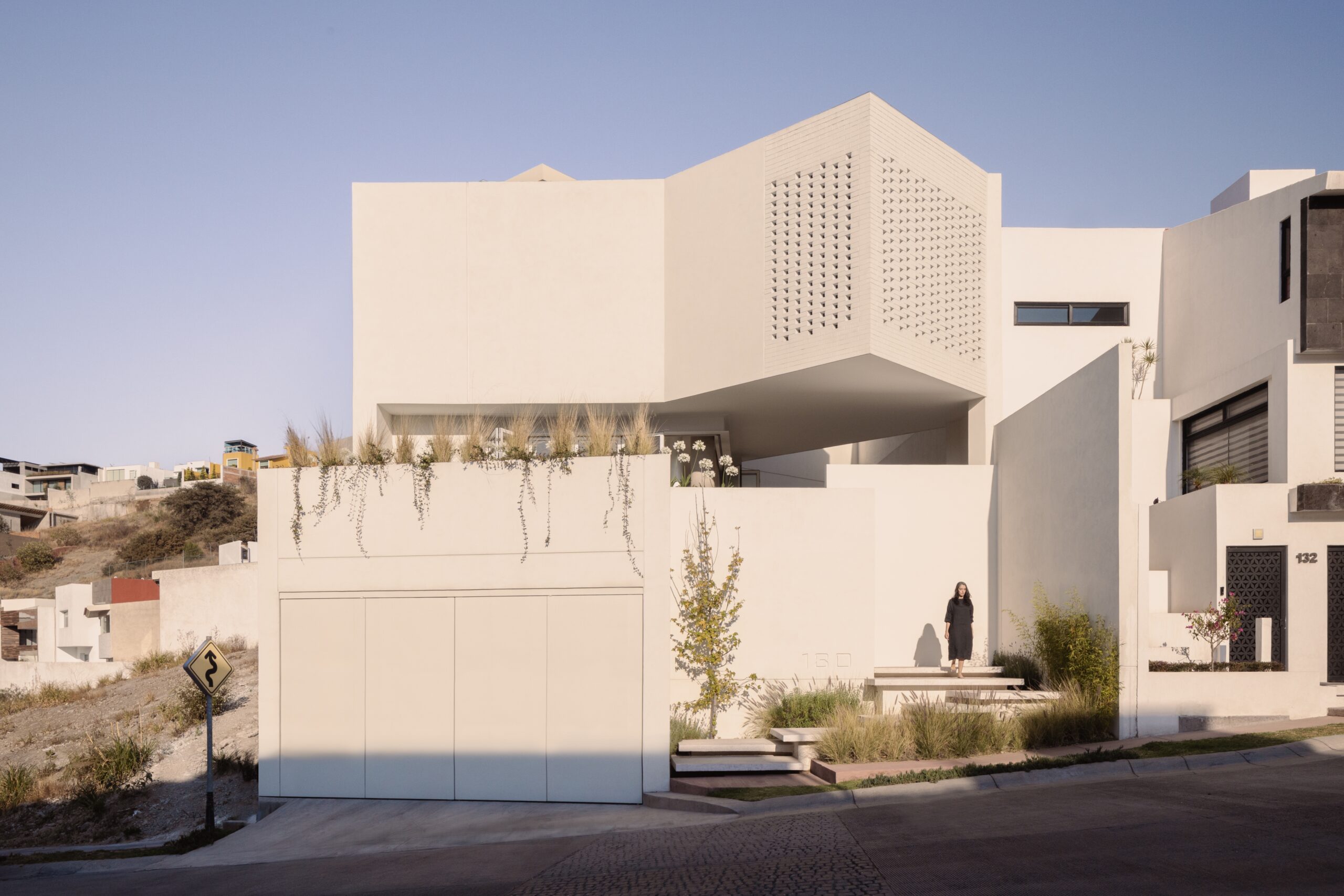
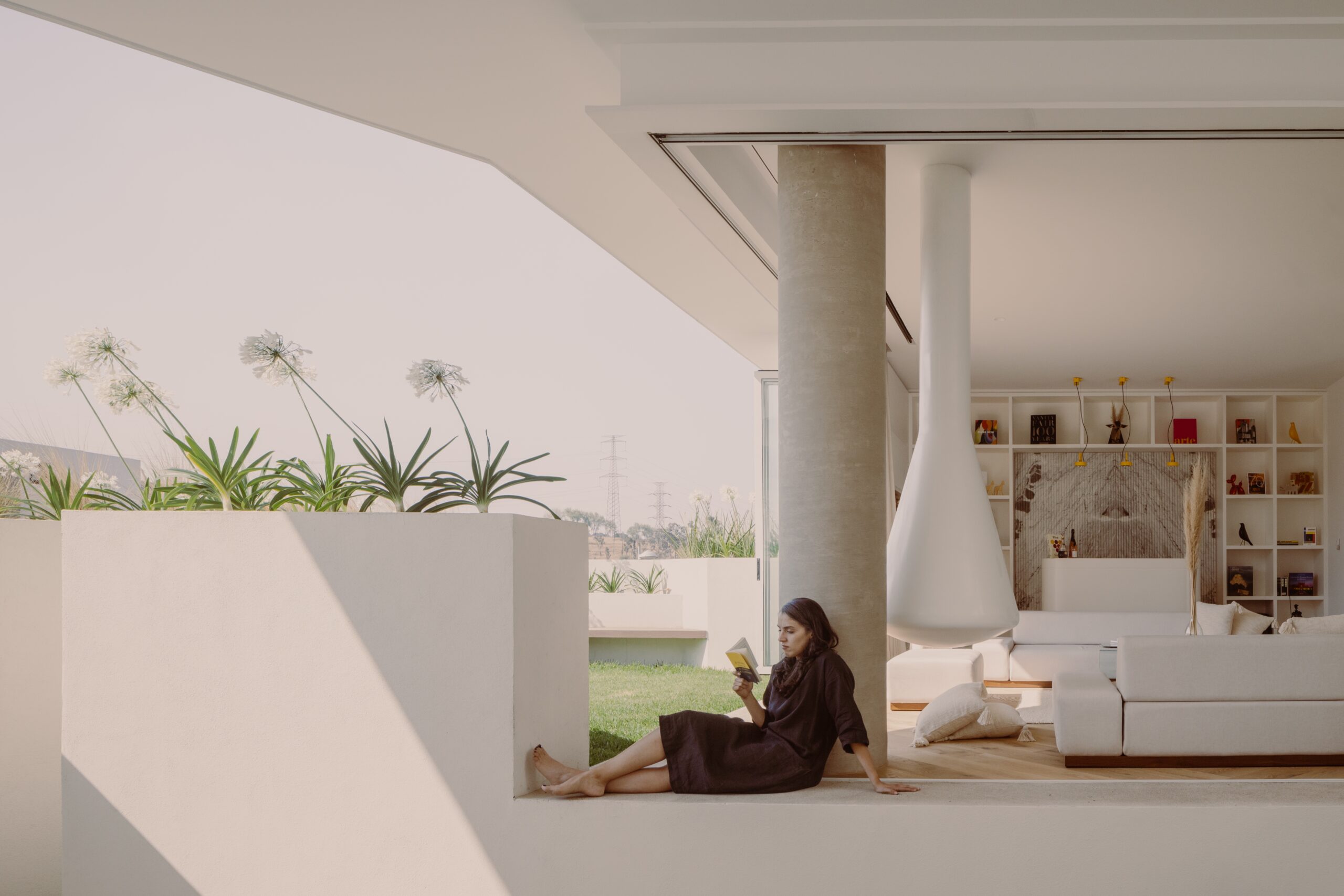
The white stucco, green foliage, warm tones and light woodwork of Casa Sexta, designed by All Arquitectura, serve as the perfect pallet to celebrate nature’s beauty and impermanence. An idea that is so fundamental in Haiku. The design of Casa Sexta suggests rather than dictates how spaces are to be inhabited. By developing the program across three levels and orienting the walls at a 45º angle to capture sunlight through ten patios, the structure of Casa Sexta encourages a fluid movement between the various spaces.

Each room benefits from natural lighting and ventilation that promote a harmonious flow. Allowing the inhabitants of the home to define their own experiences while always being connected to the natural rhythms of the day. The presence of a black acacia tree at the heart of the project deepens this connection. The living centerpiece links the various spaces of the house while also physically documenting the passage of time.


Panorama Penthouse

By Bureau Fraai, Netherlands

Jury Winner, 11th Annual A+Awards, Residential Interiors (>3000 sq ft)

Panorama Penthouse  by Bureau Fraai, Netherlands. Photographs by Flare Department.

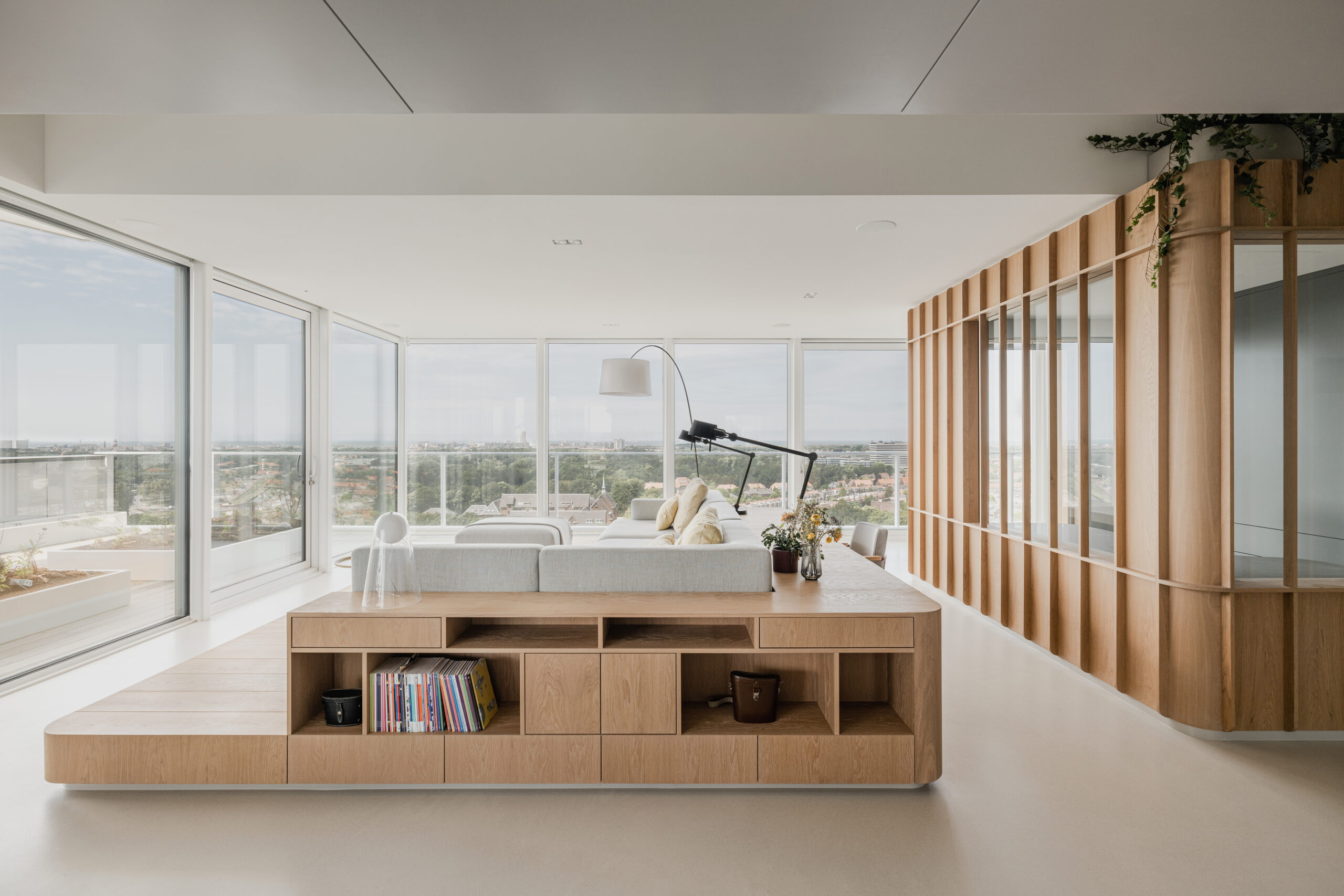
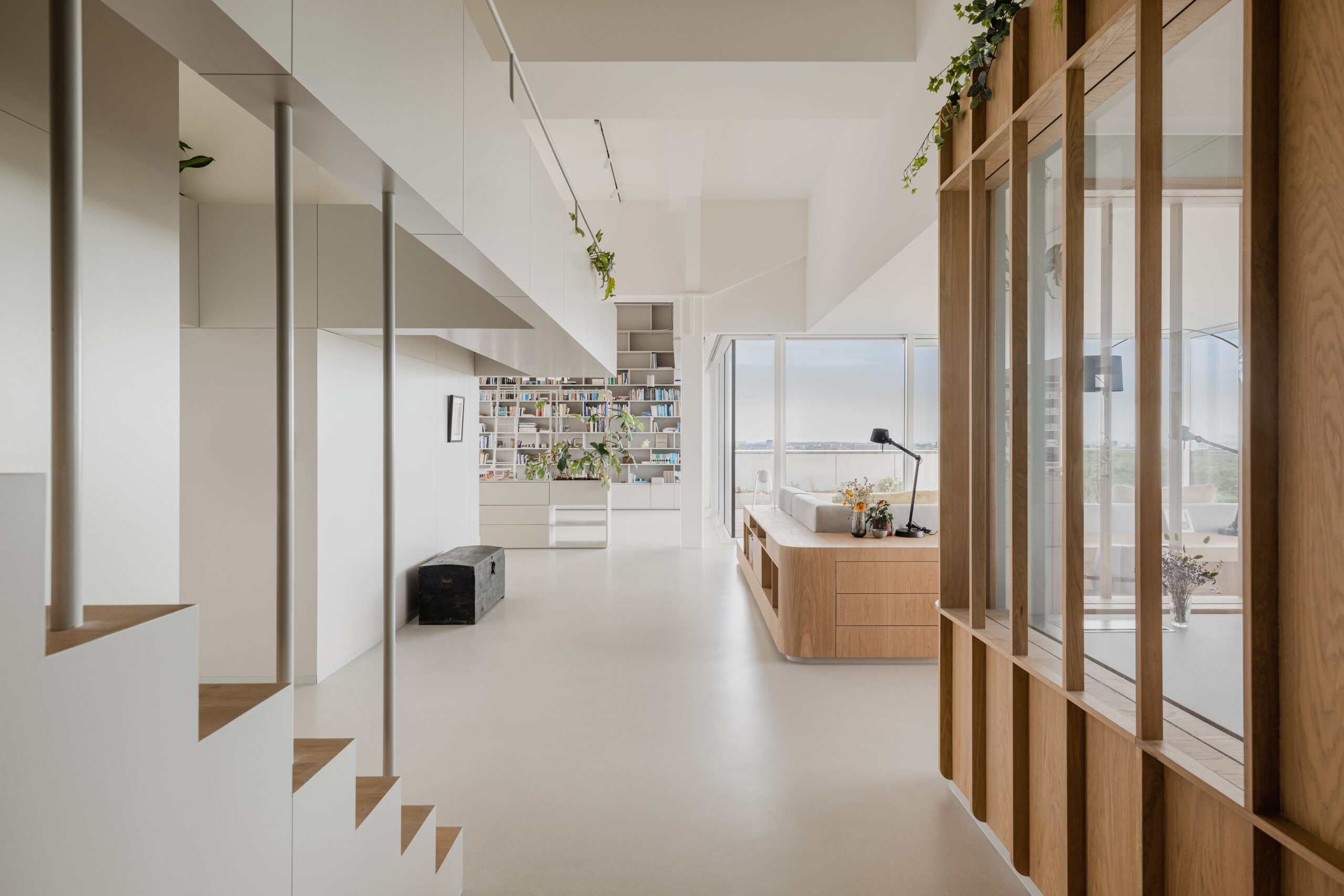
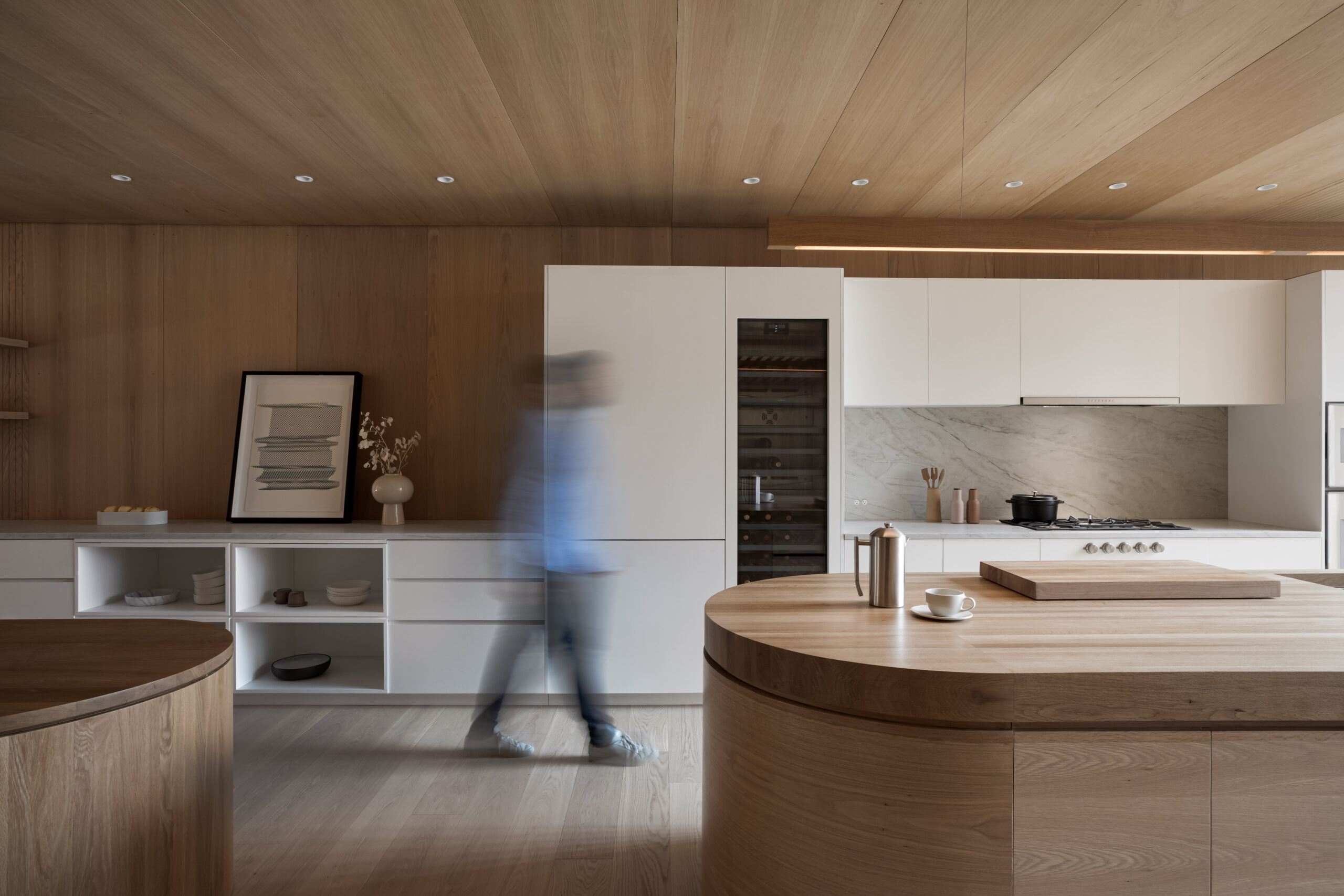
As suggested by its name, Panorama Penthouse was designed to amplify the relationship between the internal living space and the external skyline views. Opting for an open floor plan, the home provides unobstructed and simply breathtaking 180-degree panoramic views of the seaside and the city center. There are free-standing oak volumes that are built to house private areas such as the primary bathroom, office space and bedrooms in the evening. These structures add to the fluidity of the space while ensuring comfortable functionality.

The penthouse’s material palette was thoughtfully selected to reflect the visas beyond, echoing the haiku’s integration with nature. The light oak wood mirrors the dunes and beaches, while the muted grey cabinetry in the kitchen and dining room are intended to echo the distant city skyline. The design follows the capacity of a haiku to capture and convey the essence of a moment or scene – in this instance, the ever-changing colors of the skies, tides and urban landscape.


OG House

By Omar Gandhi Architects, Halifax, Canada

Jury Winner, 11th Annual A+Awards, Residential, Private House (M 2000 – 4000 sq ft) 

OG House by Omar Gandhi Architects, Halifax, Canada, Photographs by Ema Peter Photography.

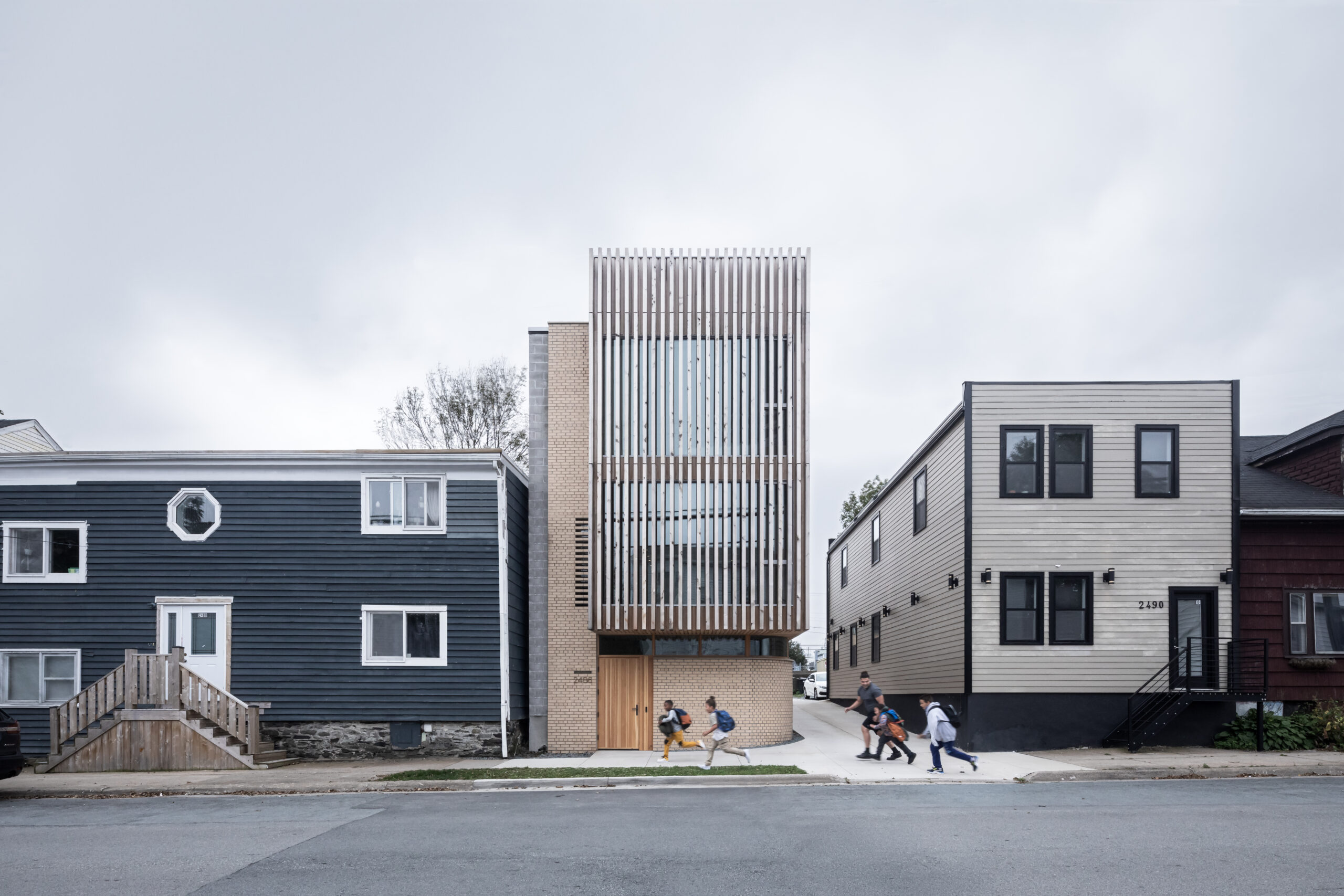
On a site with deep community ties, OG House and architect Omar Gandhi reflect the principle of haiku in the building by grounding in a specific moment and setting. The transformation of the ground floor of the standout structure into a community studio dedicated to local projects and for local residents takes into consideration the site’s history as well as its present needs, creating a space that is deeply embedded in its community.

The choice of local materials, such as eastern white cedar, buff-colored brick, and white oak paneling, speaks to the project’s commitment to material honesty and the celebration of natural textures — a core of haiku poetry. The weathered cedar façade that blends with the neighborhood’s textures acknowledges the city’s architectural heritage and exemplifies a design that is both of and for its environment.

Within the space, the repeated use of gentle, rounded corners and the incorporation of organic shapes in the stairwells and handrails demonstrate an attention to form that is evocative of haiku elegance and subtlety. These design elements gently guide movement and focus within the house, inviting exploration and reflection.


Empire Loft

By Raad Studio, New York City, New York

Popular Choice Winner, 11th Annual A+Awards, Residential Interiors (>3000 sq ft)

Empire Loft by Raad Studio, New York, NY, United States. Photography by Alan Tansey.



Through a series of deliberate spatial manipulations and material choices, Empire Loft is full of moments of elegance and unexpectedness. The dramatic cutaway of the second floor to introduce a suspended bridge is a bold spatial move that disrupts the traditional apartment layout, making the sinuous dark stone spiral staircase and the bridge focal points of movement and interaction, embodying the principle of simplicity in form yet complexity in experience that is fundamental in the creation of a haiku.

Mirrored elements throughout the apartment create illusions with the depth and boundary, inviting occupants and guests to reinterpret the apartment’s dimensions. Incorporating a recording studio wrapped in corrugated felt illustrates an understanding of sensory restraint—capturing haiku’s minimalist ethos. This thoughtful detail underlines the importance of not only visual comfort but also the management of all sensory experiences when striving for harmonious architecture.

Each design decision, from the layout to the material finishes, is part of a design strategy that aims to provide memorable moments of ordinary residential experience, elevating the every day through craftsmanship and creativity.

Last call: The clock is ticking as Architizer’s 12th Annual A+Awards enters its Extended Entry Deadline period. Submit your work before February 23rd for your chance at the global spotlight.  

Reference