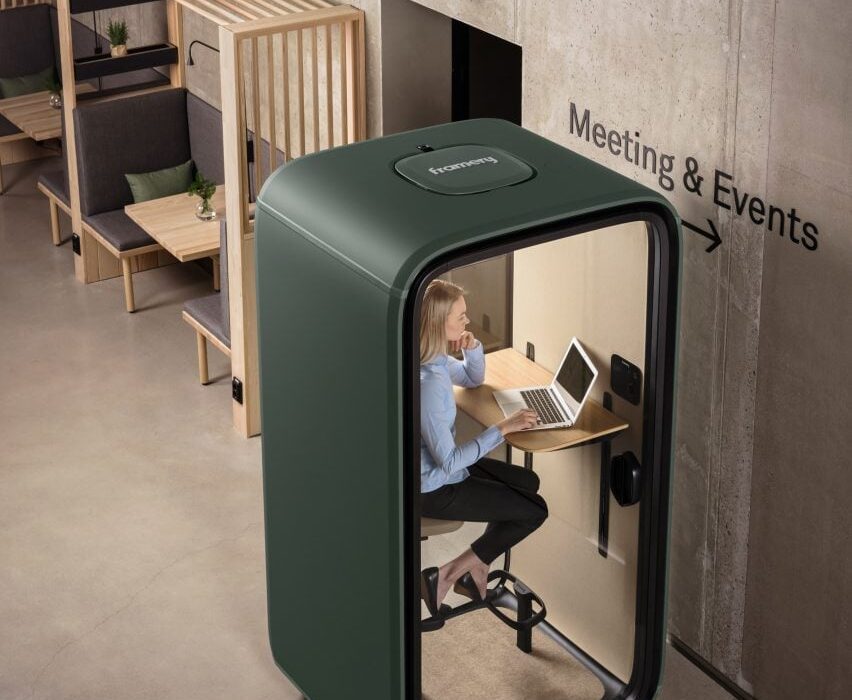
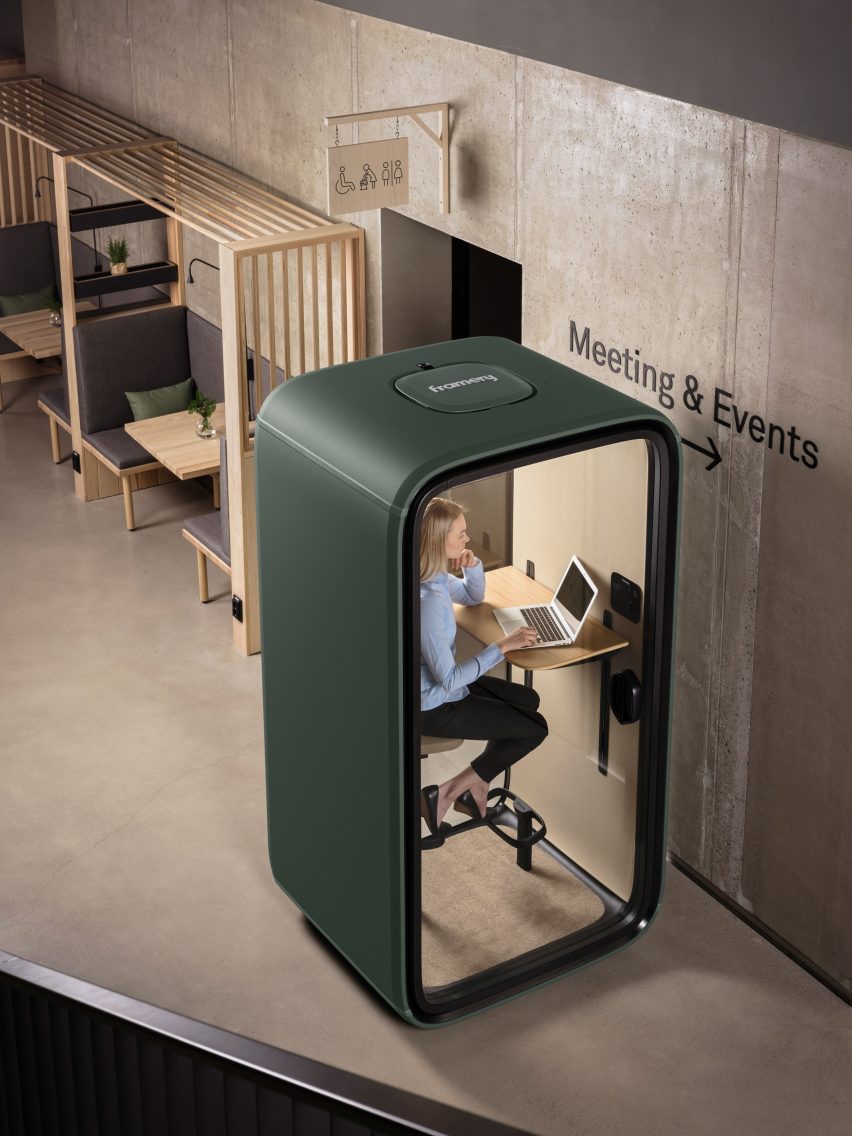
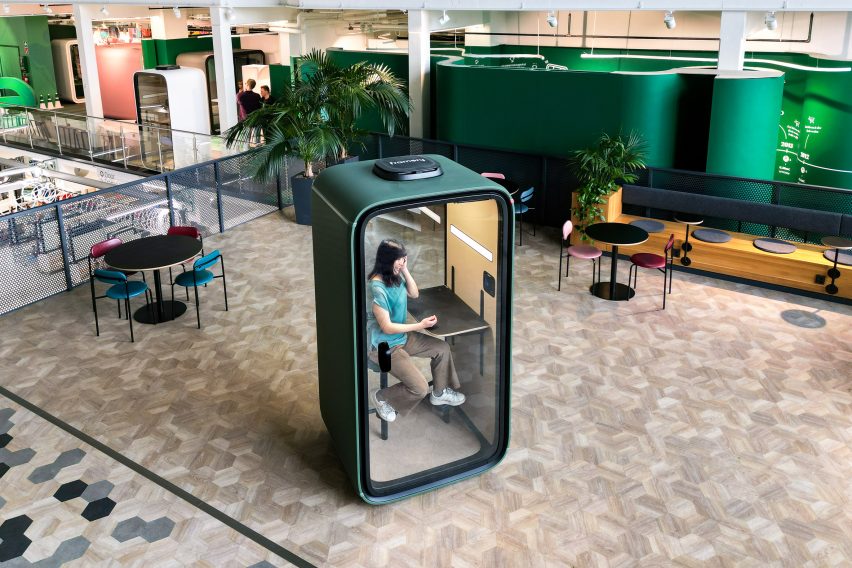
Photo of a woman sitting within a forest green-coloured single-person office pod working at a laptop. The pod sits within a modern office space surrounded by open workstations
CategoriesInterior Design

Framery predicts focus spaces to be key office design trend of 2024

Promotion: the need for well-considered focus spaces will come to the fore in workplace design in 2024, driven by the uptake of artificial intelligence, according to office pod brand Framery.

Framery says that the increase in AI in the workplace will result in it taking more responsibility for mundane, repetitive tasks, resulting in the need for additional focus spaces in open-plan offices to help support employees’ deep and focused tasks.

“If it happens how it’s expected and AI takes more responsibility for repetitive tasks, the office design should reflect this development and support deep, focused work,” said Tomi Nokelainen, head of Framery Labs, the company’s research and innovation unit.

Photo of a woman sitting within a forest green-coloured single-person office pod working at a laptop. The pod sits within a modern office space surrounded by open workstations
Framery predicts focus areas will be the key office design trend of 2024

According to Framery, while post-pandemic hybrid office design placed an emphasis on the creation of collaborative spaces and “flashy common areas embodying organisational culture”, the next phase of this evolution will centre on creating areas that minimise distraction and allow for focused work.

“It’s noteworthy that employees value focused working spaces beyond collaborative spaces,” said Nokelainen. “With work complexity on the rise, there is a heightened demand for both acoustic and visual privacy.”

The company points to the findings of research company Leesman, which has reported that workers are still choosing to stay at home for solitary work. Leeman’s research suggested that some working activities were “better supported at home” including individual-focused work and planned meetings.

However, Framery says that when employees have the option to work from home, that may not be sufficient to fulfil their productivity needs.

“It can’t be assumed that all employees have the luxury of a dedicated home office room, or are willing to invest in expensive desks or ergonomic chairs,” said Nokelainen.

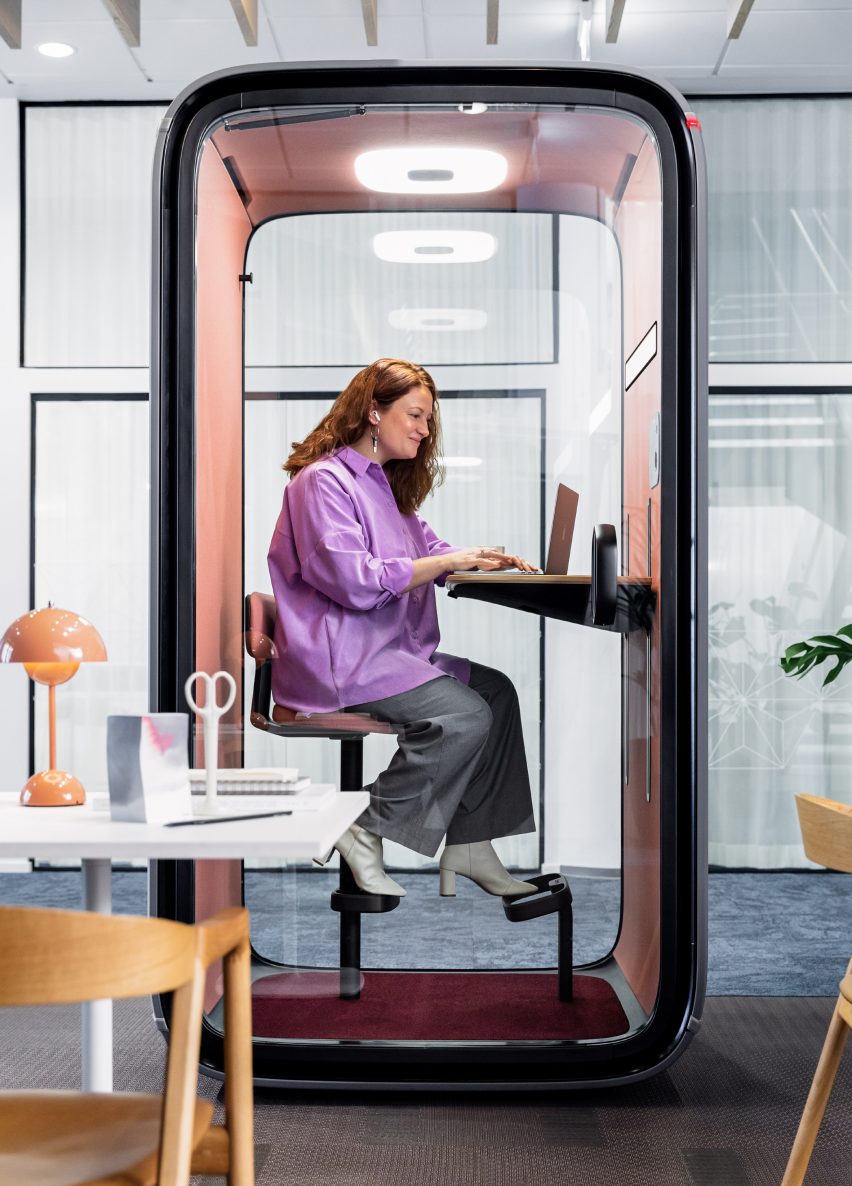
Photo of a woman working at a laptop within a closed office pod that has two transparent and two solid walls. The pod is located within a breakout space with more casual, open table seating
Office workers value focus areas more than collaborative spaces, Framery research finds

Framery, a Finnish brand, was one of the first to enter the office pods space in 2010, creating soundproof booths that drown out external distractions so that employees can undertake focused work or conduct video conferencing calls.

According to Framery Labs’ research, focus spaces are the number one desired perk for employees that would draw them into working in the office rather than at home and they address distractions to focused work, for example, noise.

Only 33 per cent of employees report finding noise levels satisfactory in their workplace and dissatisfaction with noise has the strongest correlation to an employee saying that the design of their workplace does not support their personal productivity.

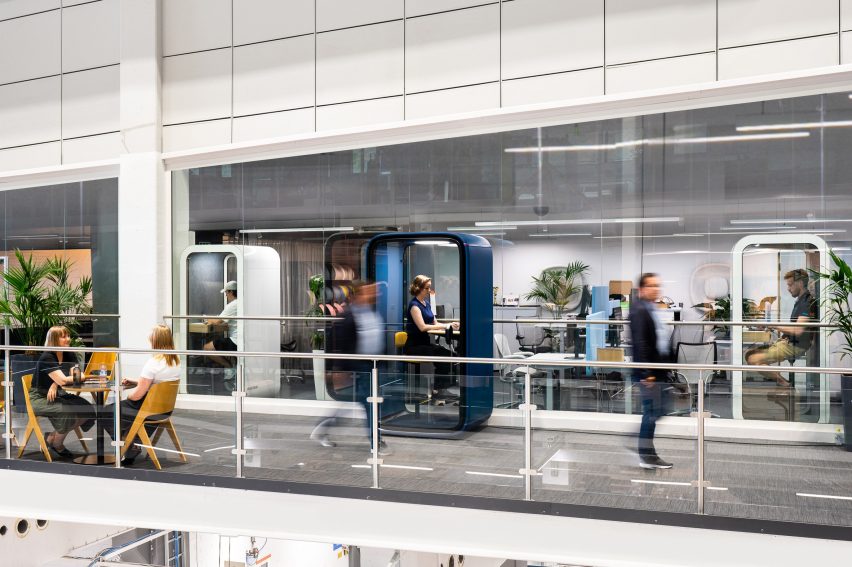
Photo or rendering of a modern, busy office incorporating several single-person work pods where people are working on their laptops in peace
The pods are soundproof so external noise is not a distraction

This can be especially consequential for neurodiverse people, who constitute around 15 to 20 per cent of the global population and who can have a greater sensitivity to sensory stimuli, according to the brand.

With workplaces becoming more inclusive, the next step will be to design them to function as “a catalyst not a barrier to productivity”, said Nokelainen, with a recognition that different people have different needs.

“There are no one-size-fits-all focus spaces – they can be everything from silent open areas, library-like spaces, private offices or pods,” said Nokelainen. “Each role and industry has their own special needs that must be taken into account.”

Photo or rendering of a forest green Framery One office pod within a contemporary office, placed within an otherwise open breakout space with cafe-style tables and chairs
The Framery One pod is Framery’s bestselling product

These considerations can be addressed with products like the Framery One, Framery’s bestselling office pod. A single-person workstation for focused work that is also optimised for virtual meetings, it includes soft lighting and adjustable ventilation to help create a personalised environment.

In a closed pod like this, neurodiverse people can apply “sensory integration techniques”, said Nokelainen which means incorporating the sensory tools or approaches that promote calm and focus for them.

There are also multi-person pods like the Framery Q Flow, one of the newest models. It is designed to help enable workers to achieve the “flow” state of mind, where work feels effortless and time switches off, and includes a height-adjustable electric table so that users can shift positions without interrupting their thought process.

The office pods come with Framery Connect, an integrated workplace management tool that supplies detailed data and analysis around how often and when they’re being used.

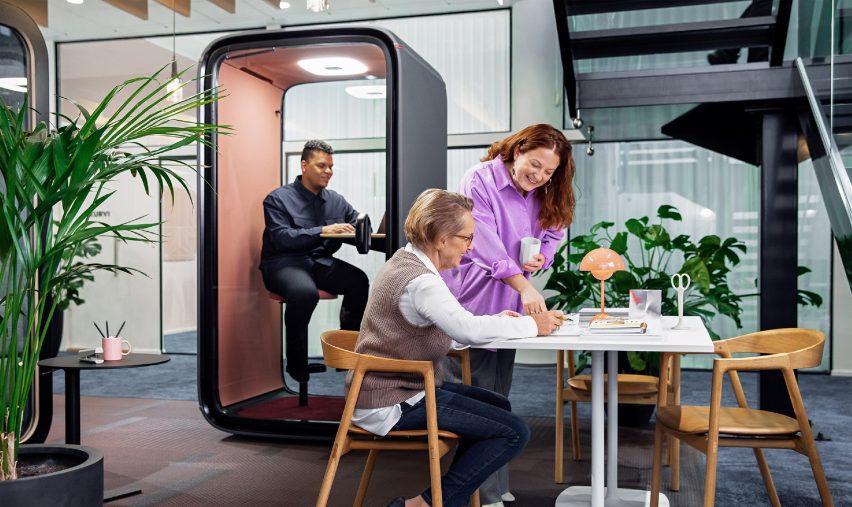
Photo of a man using the Framery One pod in an office while two women collaborate on a table outside
The pods include the Framery Connect workplace management system

Framery says it prides itself on the quality of its soundproof office pods, as well as having been among the first to bring the product category to the market. The company launched 13 years ago after its founder – Samu Hällfors – devised a solution to address the distraction caused by his boss’s loud phone calls.

“Our founder and CEO Samu Hällfors invented the office pod category in 2010,” said Framery. “Now we have over 200 competitors globally. To ensure we stay the market leader we are relentlessly innovating to engineer the most advanced pod in the world.”

Framery also has a sustainable and responsible ethos and has made a commitment to converting to a circular business model.

To find out more about Framery and its products, visit the brand’s website.

Partnership content

This article was written by Dezeen for Framery as part of a partnership. Find out more about Dezeen partnership content here.

Reference

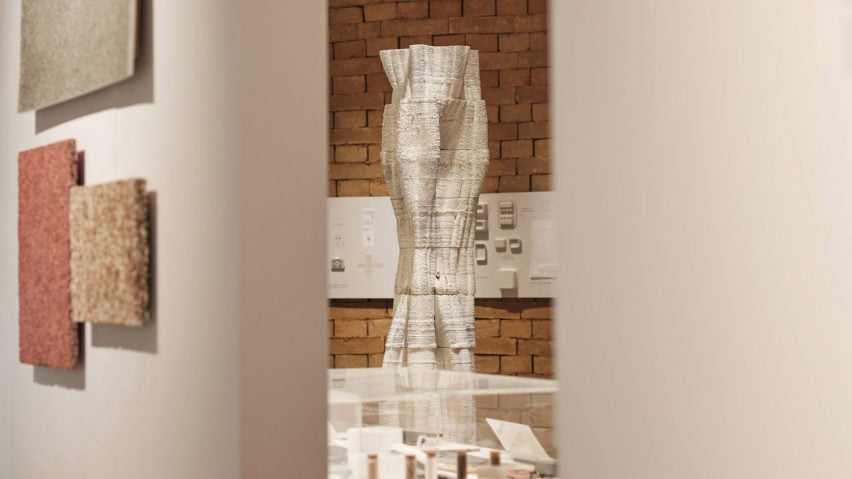
Photo of Blast Studio's Tree Column made of 3D-printed mycelium set within an exhibition
CategoriesSustainable News

Animal-centric interspecies design goes “beyond sustainability”

A new design trend prioritises the needs of bugs and animals above human beings. Rima Sabina Aouf finds out if “interspecies design” is the next step in creating more sustainable spaces and objects.

An exhibition designed to invite in animals, a garden optimised for the senses of pollinators rather than humans and architecture designed with nooks in which birds and insects can nestle form part of the novel approach.

“This is a subject that we have been more and more interested in,” the co-founder of London design practice Blast Studio Paola Garnousset told Dezeen.

Blast Studio started out by making 3D-printed structures from waste coffee cups where mycelium – the filamentous part of fungus that has applications as an architectural and design material – could grow.

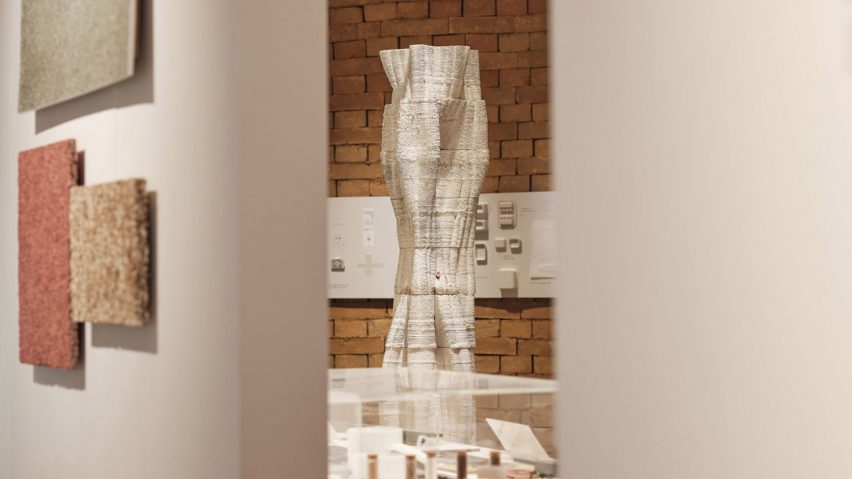
Photo of Blast Studio's Tree Column made of 3D-printed mycelium set within an exhibition
Blast Studio is now making its 3D-printed mycelium structures with thought to other species. Top photo is courtesy of Serpentine Gallery

But as the designers gradually optimised their designs with more folds and interstices that would meet the organism’s preference for darkness and humidity, they found themselves thinking about other species as well.

The studio is now working on an outdoor pavilion whose intricately structured columns will accommodate ladybirds, bees and birds.

“The 3D printing techniques that we use give us the possibility to create artefacts that are designed both at the micro scale of fungi and insects and the macro scale of human beings,” said Garnousset.

Interspecies design about “changing our level of respect” for other creatures

London’s Serpentine Gallery has hosted two projects that centred interspecies approaches in the last two years.

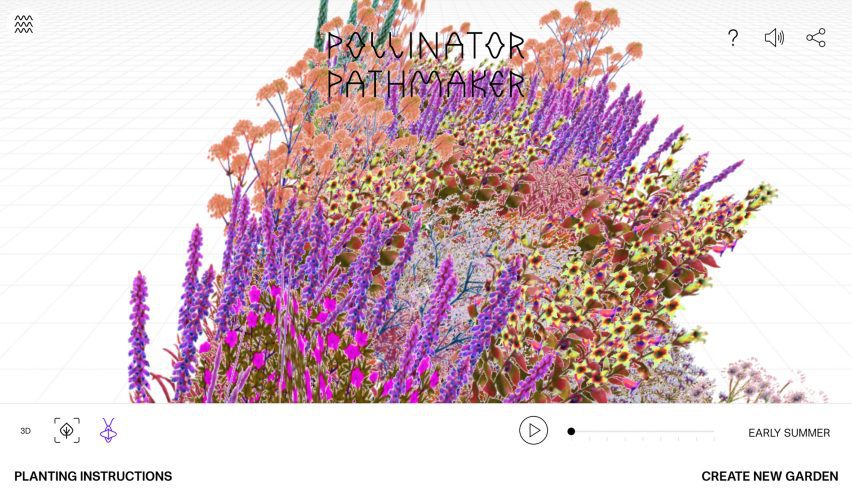
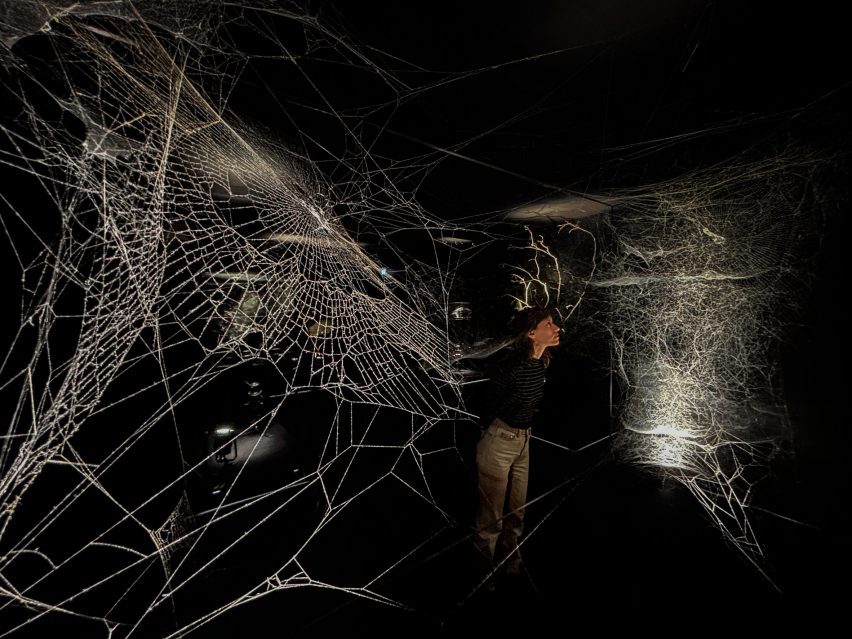
Alexandra Daisy Ginsberg’s Pollinator Pathmaker is an artificial-intelligence-powered tool that designs gardens to be as appealing as possible for bees and other pollinators, while Tomas Saraceno’s Web(s) of Life exhibition involved making several changes to the building so it would be welcoming for the animals and insects of the surrounding park.

Ginsberg considers the interspecies approach to be an attempt to create with empathy for other lifeforms. She came to it after spending several years researching the idea of what it means to make life “better”.

Screenshot of Alexandra Daisy Ginsberg's Pollinator Pathmaker tool designing a garden
Alexandra Daisy Ginsberg’s Pollinator Pathmaker project is about optimising gardens for the pleasure of pollinators

“Exploring how other species experience the world and – in the case of Pollinator Pathmaker – how they experience the things that humans create, opens up a world filled with empathy,” said Ginsberg.

“We need to think beyond sustainability towards prioritising the natural world.”

MoMA’s senior design curator Paola Antonelli has also developed an interest in interspecies design. She suspects the approach has a “very long history” but that it is reemerging in the West in line with the recuperation of indigenous knowledge and the rise of the rights of nature movement, which involves granting legal personhood to entities like rivers and mountains.

“I think that we get closest to real interspecies design when we think like that,” Antonelli told Dezeen. “When we change our level of respect and communication and really try to position ourselves in a different way, not as colonisers but rather as partners in crime, so to say.”

A “process” towards the impossible

True interspecies design, as Antonelli sees it, may be impossible since human designers have a fundamentally human-centric view of the world.

But Antontelli considers the term a useful umbrella for a range of works that call for an “unlearning and learning process”, dismantling the hierarchy that humans uphold between ourselves and other species.

Her version of the canon includes earlier works that attempt to find “a common language” with animals, like Sputniko!’s Crowbot Jenny, for which the designer, scientist and polymath created an instrument in order to communicate with crows.

Then there is Thomas Thwaites’ GoatMan project, for which the designer spent three days living as a goat.

Photo of Thomas Thwaites wearing a contraption that enables him to walk on four legs in a goat-like stance as part of his GoatMan project. He stands within a flock of goats on a steep hill and is appearing to converse with one of them
Thomas Thwaites spent three days living as a goat in his GoatMan project. Photo by Tim Bowditch

While Thwaites told Dezeen he doesn’t consider GoatMan to be a true work of interspecies design – “the impetus of GoatMan was my desire to have a holiday from being a human, so pretty selfish” – he does see the connection.

“Goatman was definitely intended to contribute to a shift in how we think of non-human creatures,” he said. “Goats are just as highly evolved as humans – there’s no hierarchy.”

“I feel that interspecies design is a process,” said Antonelli. “That it goes from designing for animals to designing with animals to – what’s the next step? Enabling animals to design for themselves?

“That would be the real gesture, right? If we were able to actually let go of the tools of production. That’s what I would like to see at some point.”

The thorny status of biodesign

A practice of creating together with organisms as they conduct their natural processes, known as biodesign, is emerging. It includes making mycelium bricks or bacteria-produced textiles.

These objects are created by human and non-human actors together, but different projects treat their creature-collaborators in varying ways.

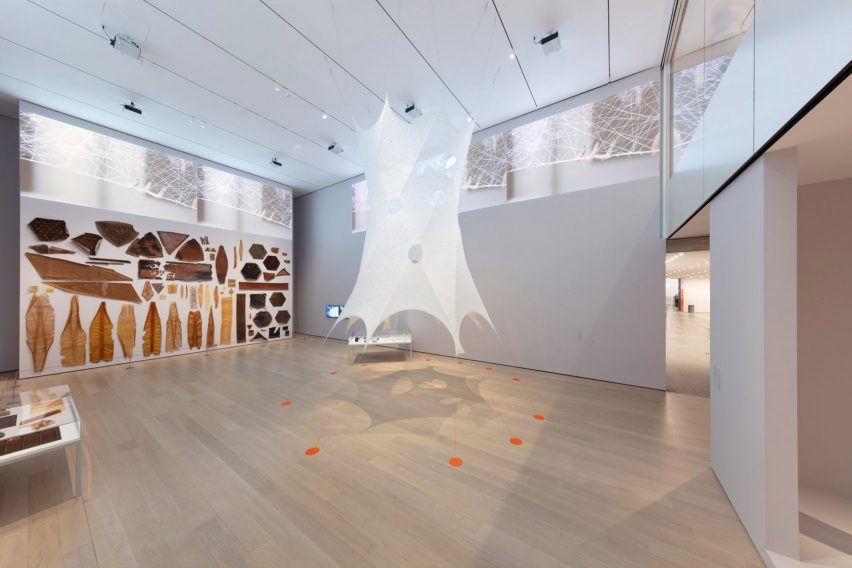
Antontelli considers Neri Oxman’s Silk Pavilions, a biodesign project created in collaboration with silkworms, as one of the closest examples yet to a true work of interspecies design.

Oxman studied silkworm behaviour in detail for the work and ended up finding a way to encourage the caterpillars to lay down their silk in sheets rather than cocoons, creating unusual structures.

Photo of Neri Oxman's Silk Pavilion II – a tall, ethereal tube of sheer white silk material suspended between the floor and ceiling in the Museum of Modern Art New York
Neri Oxman’s Silk Pavilion II was made by silkworms encouraged to lay down silk in a different shape

In contrast to traditional silk harvesting, the silkworms are not killed during this process but instead caught safely as they metamorphose and left to carry on living.

This level of care and symbiosis make the Silk Pavilions stand out as works of interspecies design, even if, in fact, we can’t know for sure that the silkworms are happy with this arrangement.

Curator Lucia Pietroiusti, who is head of ecologies at the Serpentine Gallery where Saraceno and Ginsberg’s works were presented, thinks the area of biodesign distils a key tension in the budding practice of interspecies design.

“Many completely legitimate, genuine and compassionate attempts to design with more-than-humans at heart also exist within capitalist consumerism, within a chain of production,” she said.

“No matter how you slice it, making more of something new is always going to be making more of something.”

And what is ultimately good for other species is probably that we make as little as possible.

A new look for sustainability

While it can be tempting to conclude that the best design for other species is no design at all, that downplays the role that projects like these can play in changing the way we think about production.

Pietroiusti sees interspecies design as part of an evolution of the idea of sustainability towards something more like “thrivability”, where we design for the planet to thrive, not just survive.

“Sustainability as a notion has been in too close a contact with zero-sum principles – this is sustainable because I do it and then I do something else to offset it,” she said. “In the maths of the planet, that is very rarely the case.”

Photo of a very dark gallery room with enormous spiderwebs at either end. A woman stands examinging one of them up close
Tomás Saraceno included consideration for the comfort of spiders in his environmentally focused Serpentine Galleries exhibition

“Are there situations in which certain projects or initiatives can think more ambitiously than sustainability or than reducing harm, and into ‘can we leave things actually better than they were before?'”

Seven years on from GoatMan, Thwaites believes that while the real shifts to recognise and protect non-human creatures need to come at the legislative level, design can contribute commentary and explore how the change might materialise.

“I hope people will one day look back once the cultural shift has happened and wonder at how we didn’t have interspecies design,” he said. “Like smoking in pubs and all the more important social shifts that have taken place over the decades.”

Dezeen In Depth
If you enjoy reading Dezeen’s interviews, opinions and features, subscribe to Dezeen In Depth. Sent on the last Friday of each month, this newsletter provides a single place to read about the design and architecture stories behind the headlines.

Reference

Architectural Drawings: Lithuania Reimagines Home Design in Plan
CategoriesArchitecture

Architectural Drawings: Lithuania Reimagines Home Design in Plan

Architects: Want to have your project featured? Showcase your work through Architizer and sign up for our inspirational newsletters.

Lithuania is home to breathtaking landscapes. From iconic sand dunes along the Curonian Spit to vast wetlands and primeval forests, the country is known for its beautiful and diverse countryside. Conscious of this context, Lithuania’s residential projects are designed to capture views and open up to the outdoors. Today, architects and designers are imagining new home designs in the “land of endless forests” for both rural and urban dwellings alike.

Exploring Lithuania’s inventive residential designs, the following projects showcase new approaches through plan drawings. Each house has a unique take on circulation and bringing people together, with residences found everywhere from the ancient forests of the Moletai region to Kaunas, Trakai and Vilnius. Reinventing traditional construction techniques and vernacular buildings traditions, these elegant homes make space for contemporary life and celebrate the beauty of Lithuania.


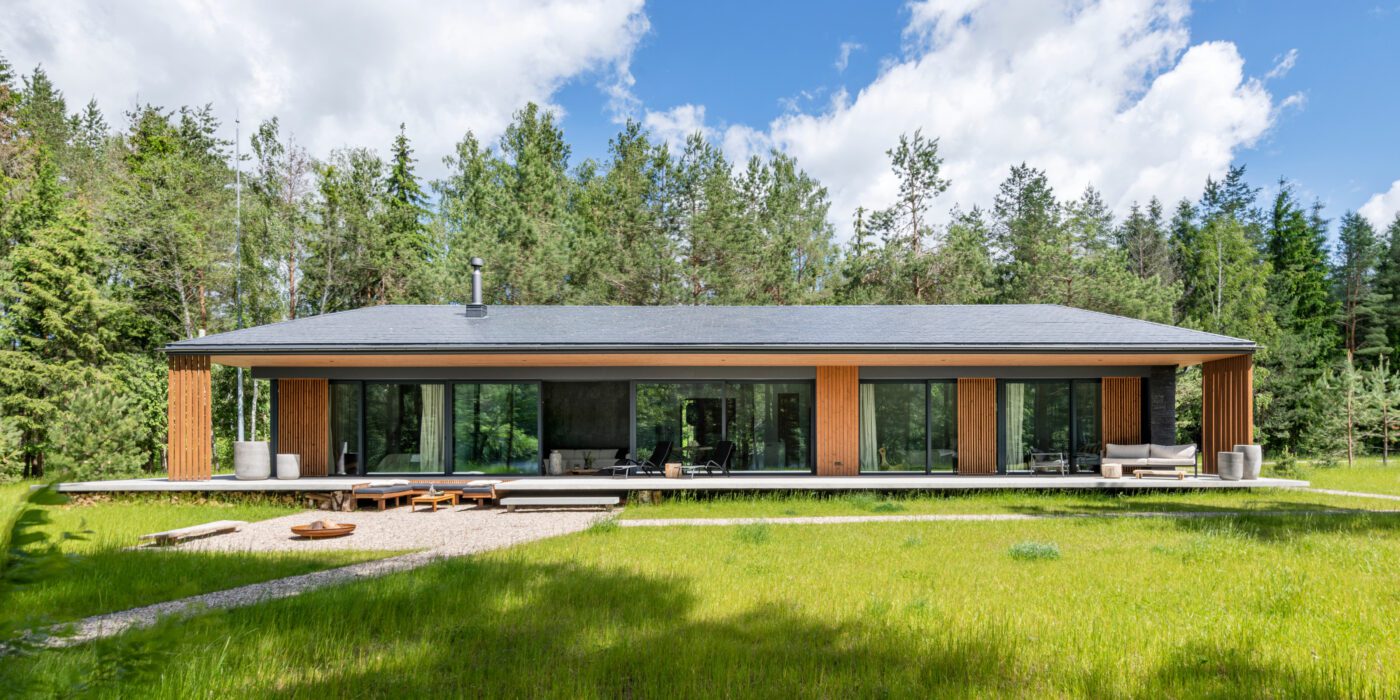
Villa The Lake

By Devyni architektai, Molėtai, Lithuania

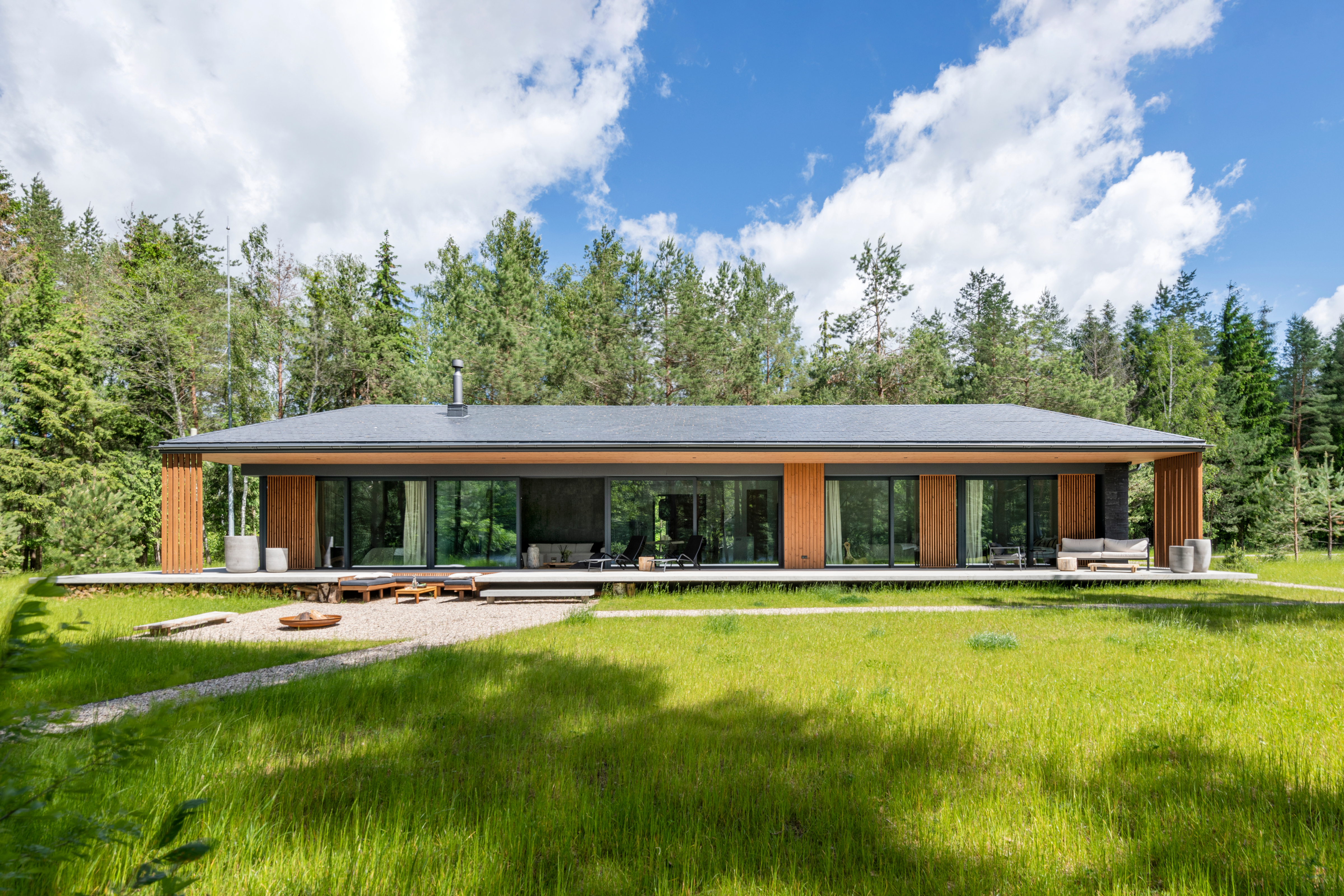
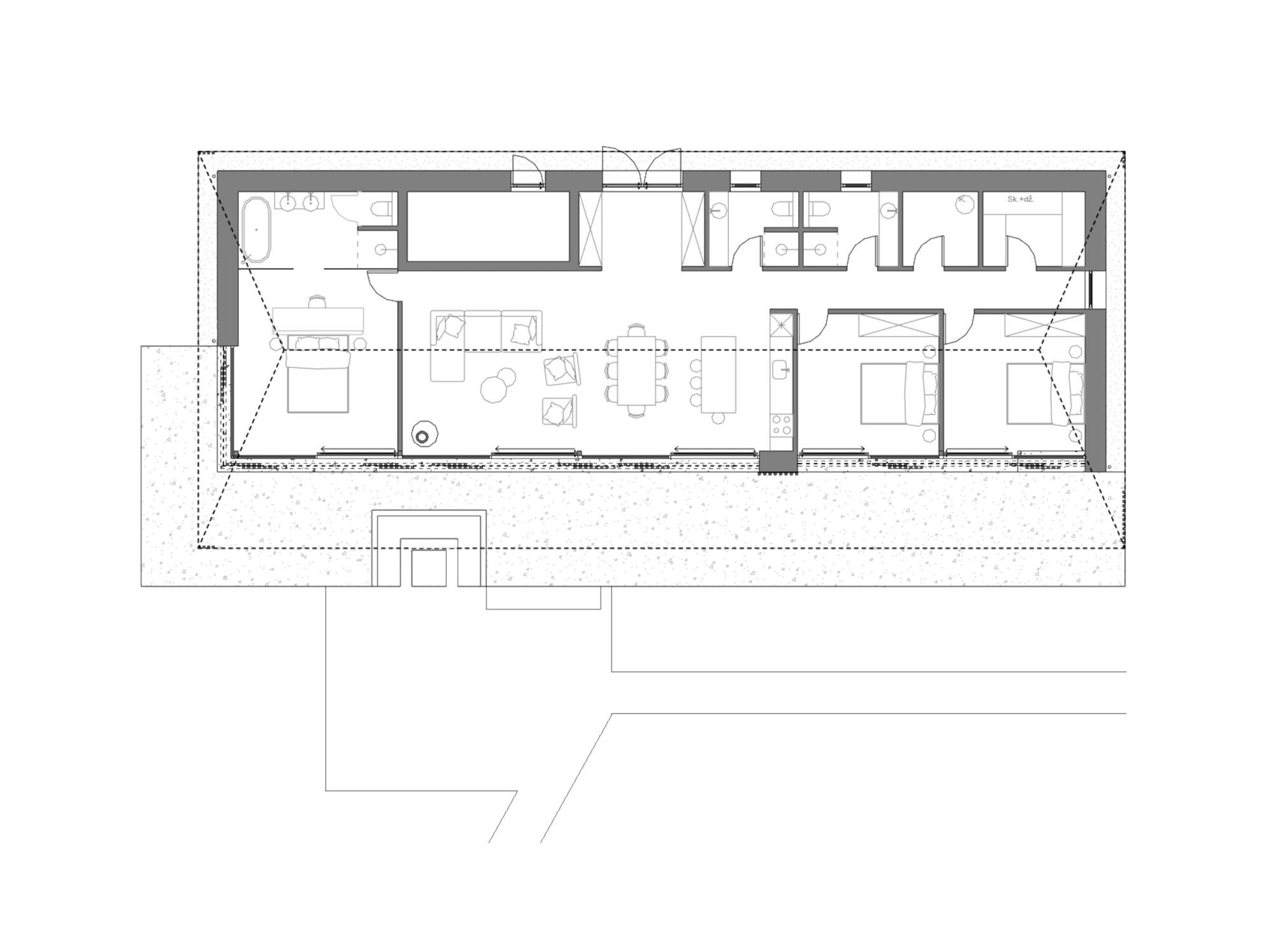
This residence was designed so that clients could enjoy the crystal-clear waters of a lake surrounded by ancient forests in the Moletai region of Lithuania. The villa consists of 4 bedrooms, 3 bathrooms and an open-concept dining area connected to the living room. Rectangular in plan, the dwelling has cutouts and sloped roofs that combine in a sculptural way. This layout prioritizes connection to the landscape and indoor-outdoor living.

Large windows and sliding doors connect the house’s rooms with concrete terrace, grassy property and the dock. As seen in plan, a series of frames and a simple layout direct the focus towards the lake. The building was also designed with materials that echo the region’s agrarian typologies. Three primary materials were used for the building: wood, which forms many of the walls; slate tiles, which are used in the exposed roof; and concrete for the terrace.


An Autograph Among The Pine Trees

By ARCHISPEKTRAS, Kaunas, Lithuania

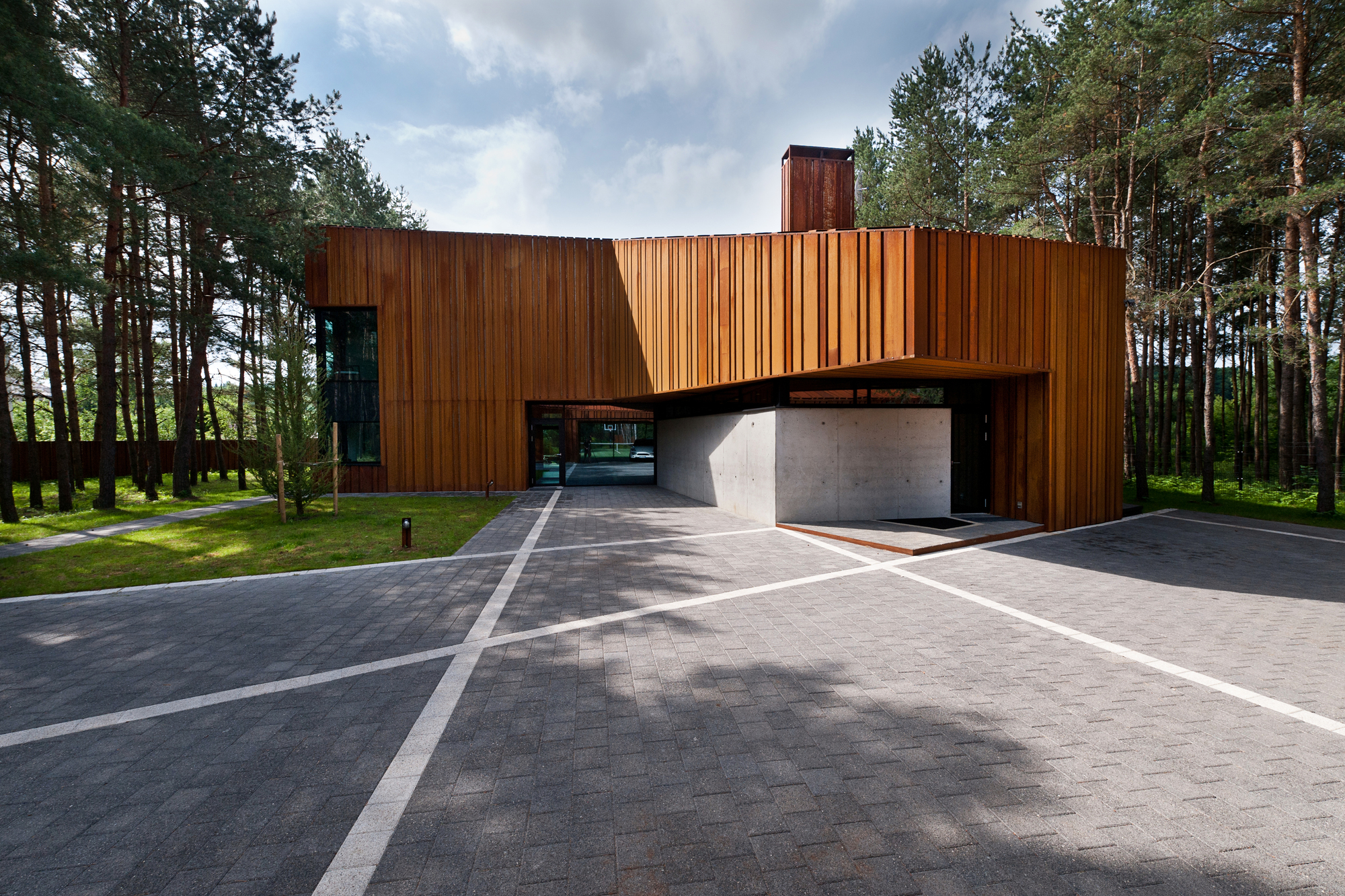
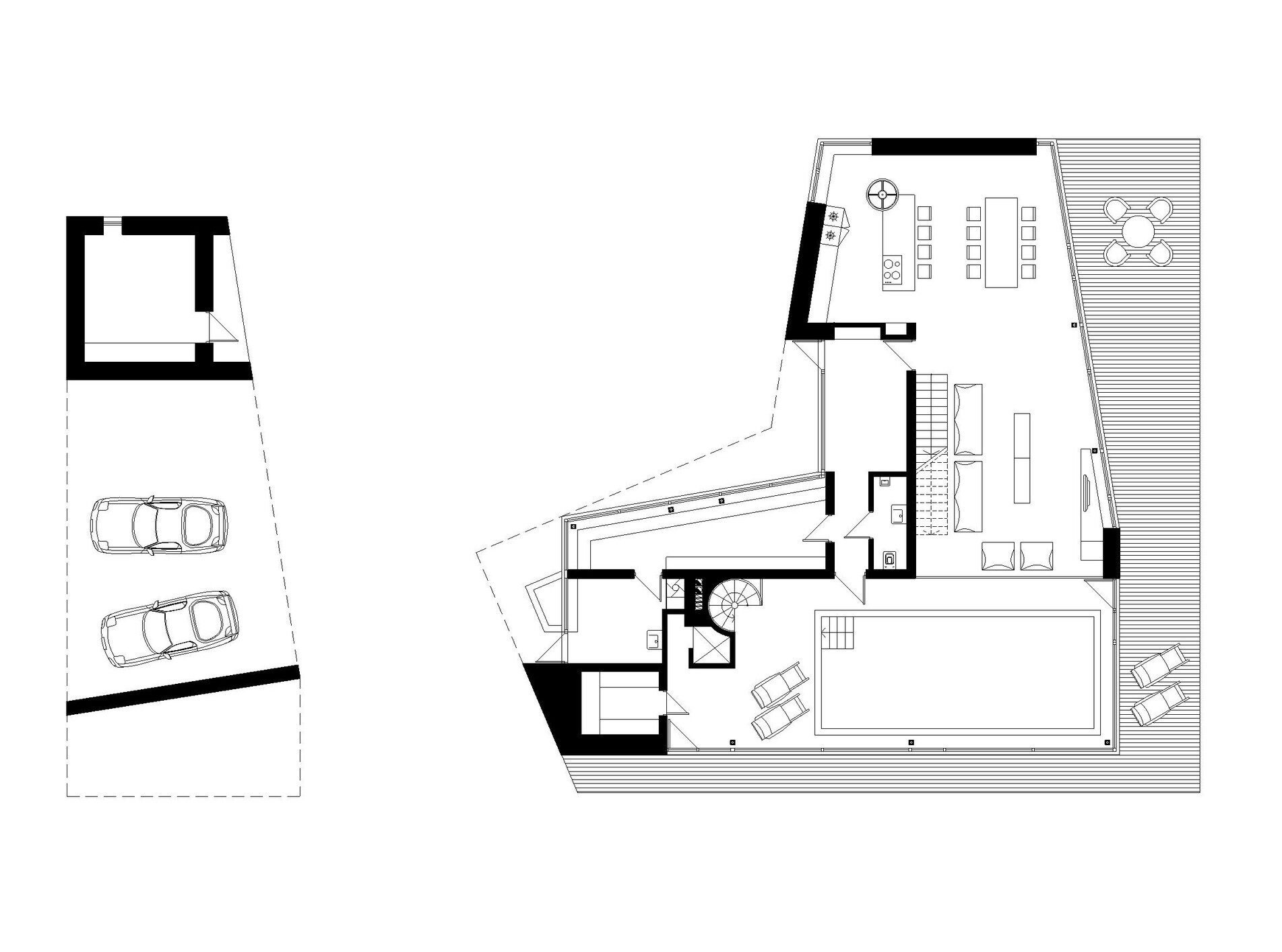
Situated on the river shore, this home was made of glass and rusted steel planes mounted in vertical segments. The plan is organized around this, opening up to the surroundings. For the materials, the idea is to have a metaphorical relation with the growing pine trees on the site. The rough concrete texture left by the formwork is the main interior expression. In addition, transparent and smooth glass surfaces ae widely used, making the interior feel visibly closer to nature.

Made as a counterbalance to the factory-like interior, natural wood elements were abundantly used. Solid oak appears throughout and is seen in the monumental kitchen on the ground floor, as well as stairwell walls, floors, ceilings, cabinets and doors. It extends to cabinets which, like solid wood boxes, are designed without handles, hinges or other elements in order to completely keep a minimalist style. Attention is focused on the beauty of natural materials.


House in Trakai

By Aketuri Architektai, Trakai, Lithuania

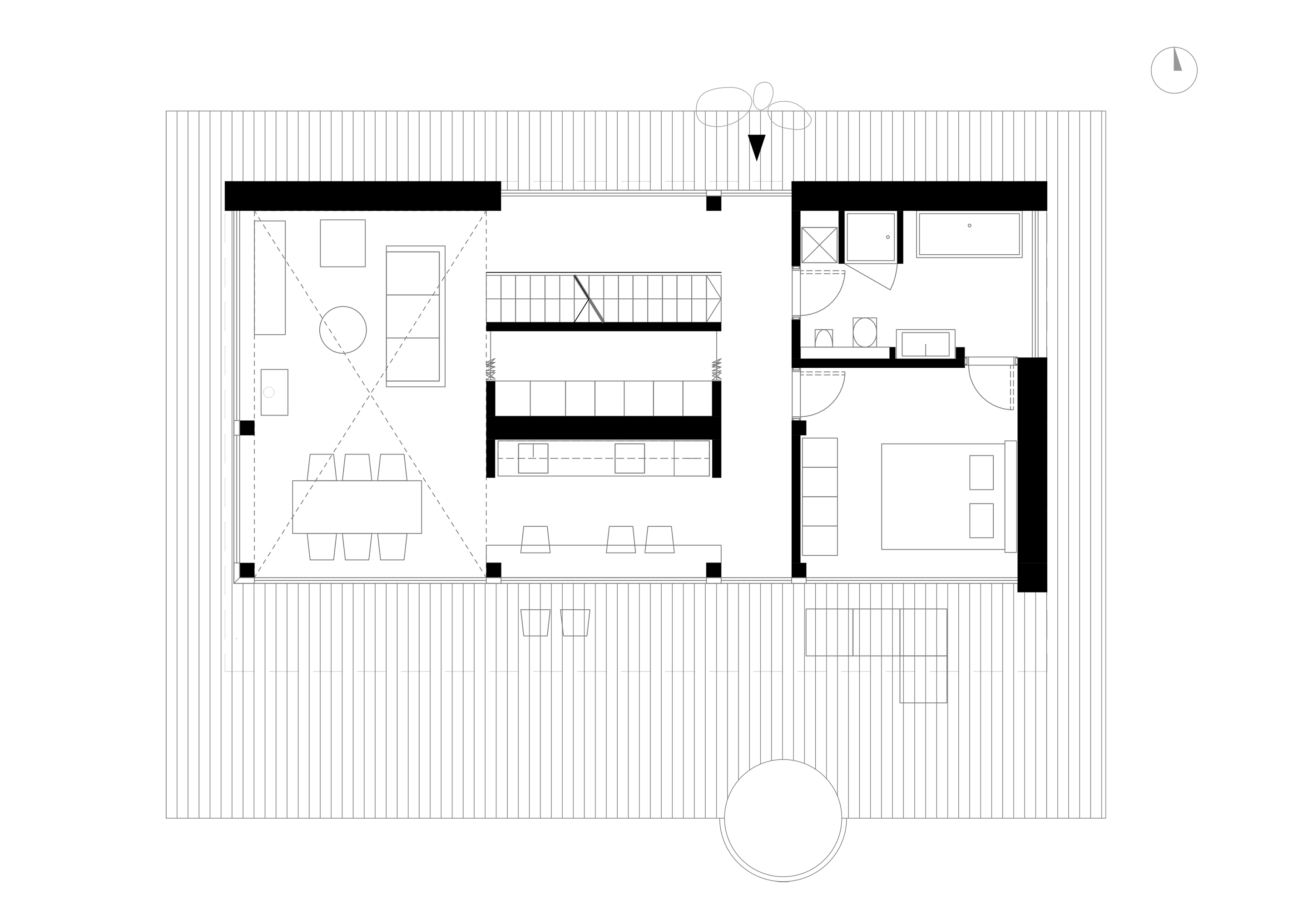
The House in Trakai was a study in clear geometry and vertical space. In Lithuania, there are clear depictions and traditions of the country-house. A vernacular idea, the design team wanted to make their own fresh take on this classic. In plan, this takes the shape of a rectangular footprint set on a deck, while the section is an extruded “house” profile with a steep roof pitch. “Everything that a family might need to relax in the natural surroundings fits into a modest archetypical volume with no sacrifice of comfort.”

For the team, the project is all about connecting with nature — the limit between the forest and the house disappears due to sliding translucent panels. For the materials, thermowood and shale require as little maintenance as possible, giving the residents more time to connect with their surroundings.


The L house

By PAO Architects, Vilnius, Lithuania

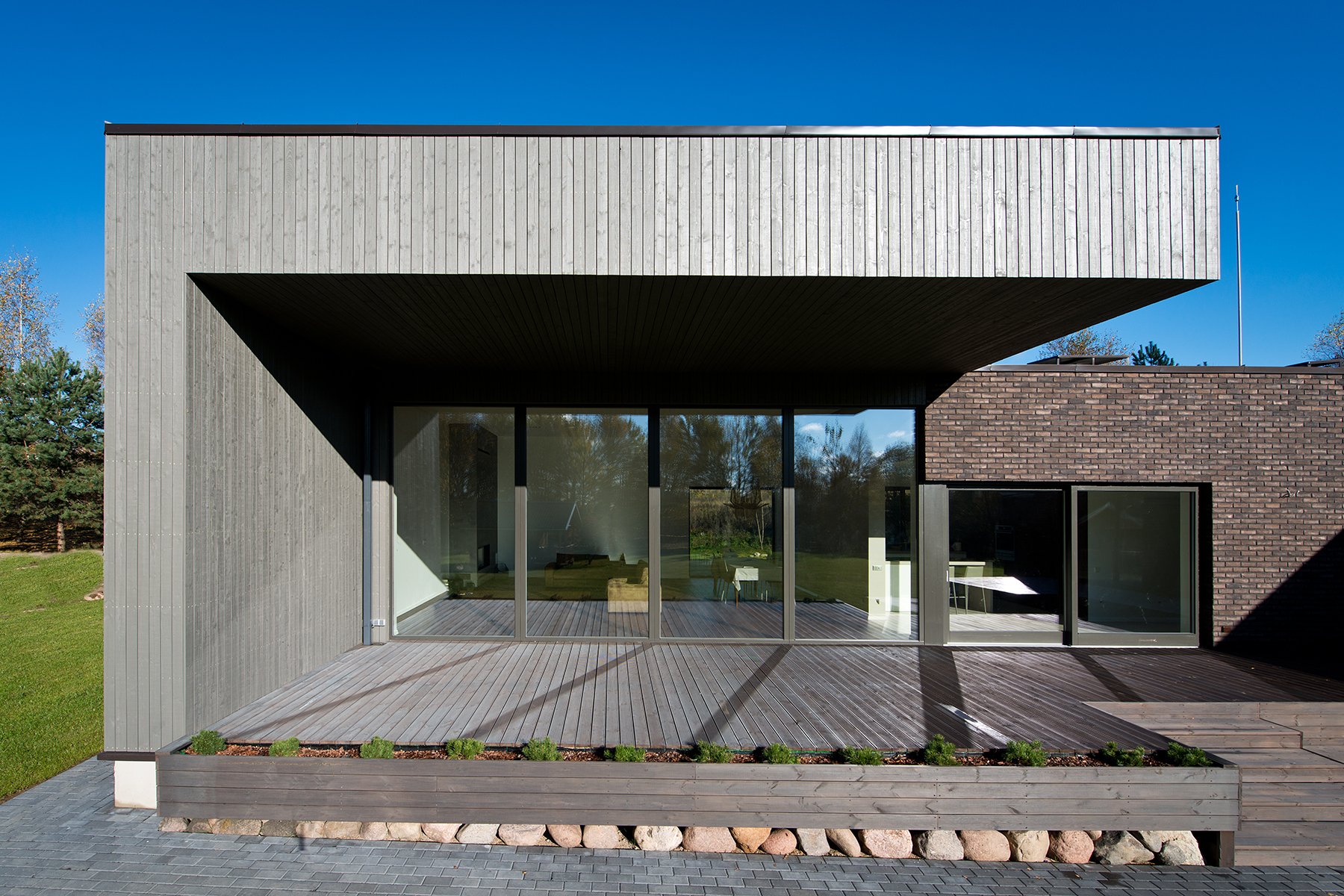
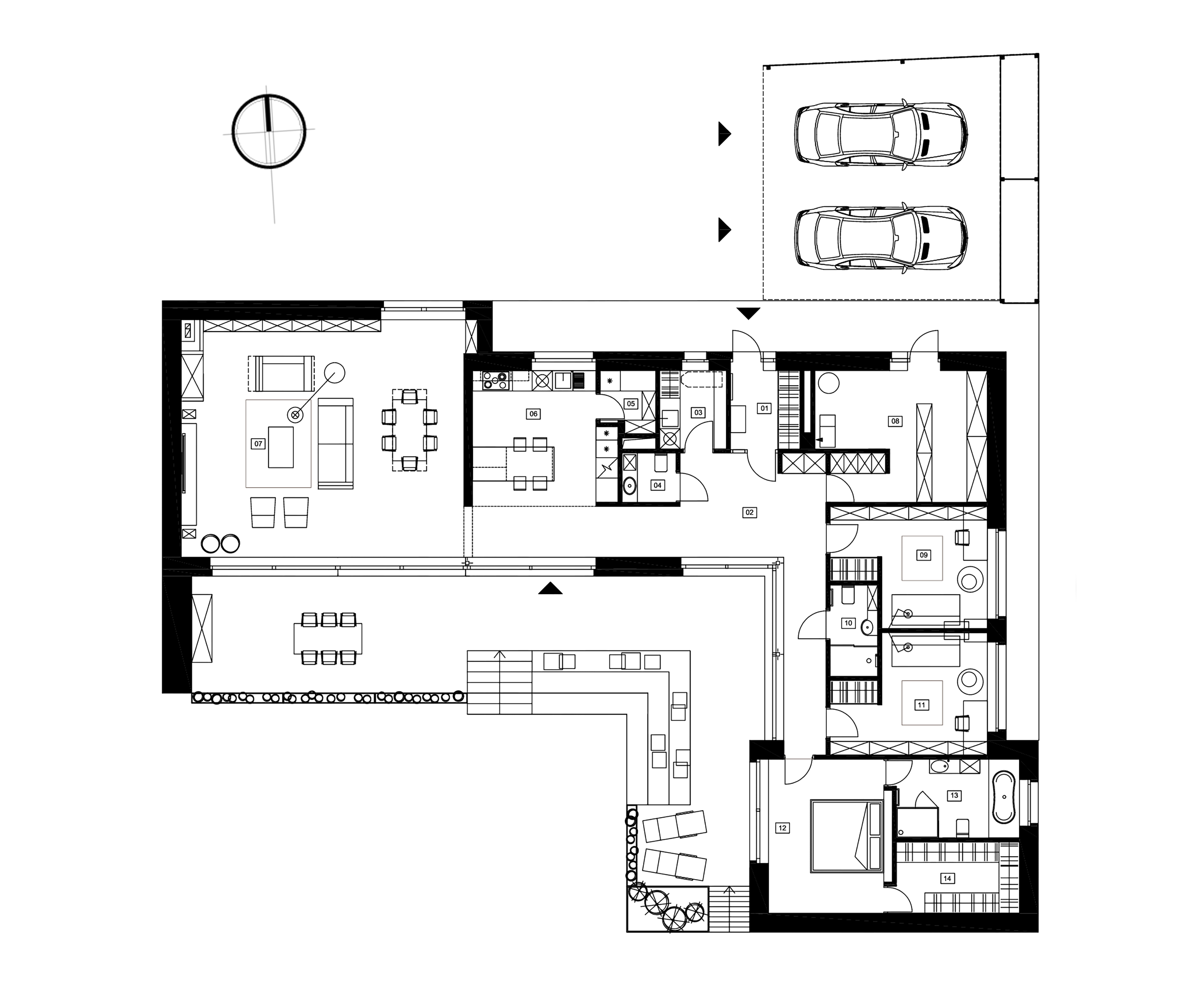
True to its name, the L House is directly tied to its shape in plan. The residence was built for a private client based in Vilnius, Lithuania. When the team started the project, the architects were inspired by the beauty of the site and its relationship with nature. The central concept and guiding principle was the desire to maintain a delicate balance between nature. The result is the subtle volume of the building, a single story house.

The design team used only natural finishes, bricks and wood to keep a contemporary and sustainable approach. Large windows keep a relationship between the environment and indoor spaces. Site volume and terraces above provide a unique expression of the entire building. The L-shaped structure of the house forms a functional connection between the building and landscape. In turn, the building is oriented such that the living room, kitchen and hall windows face the south, which is formed by a large courtyard.


Residential House in Palanga

By Architectural bureau G.Natkevicius and partners, Palanga, Lithuania

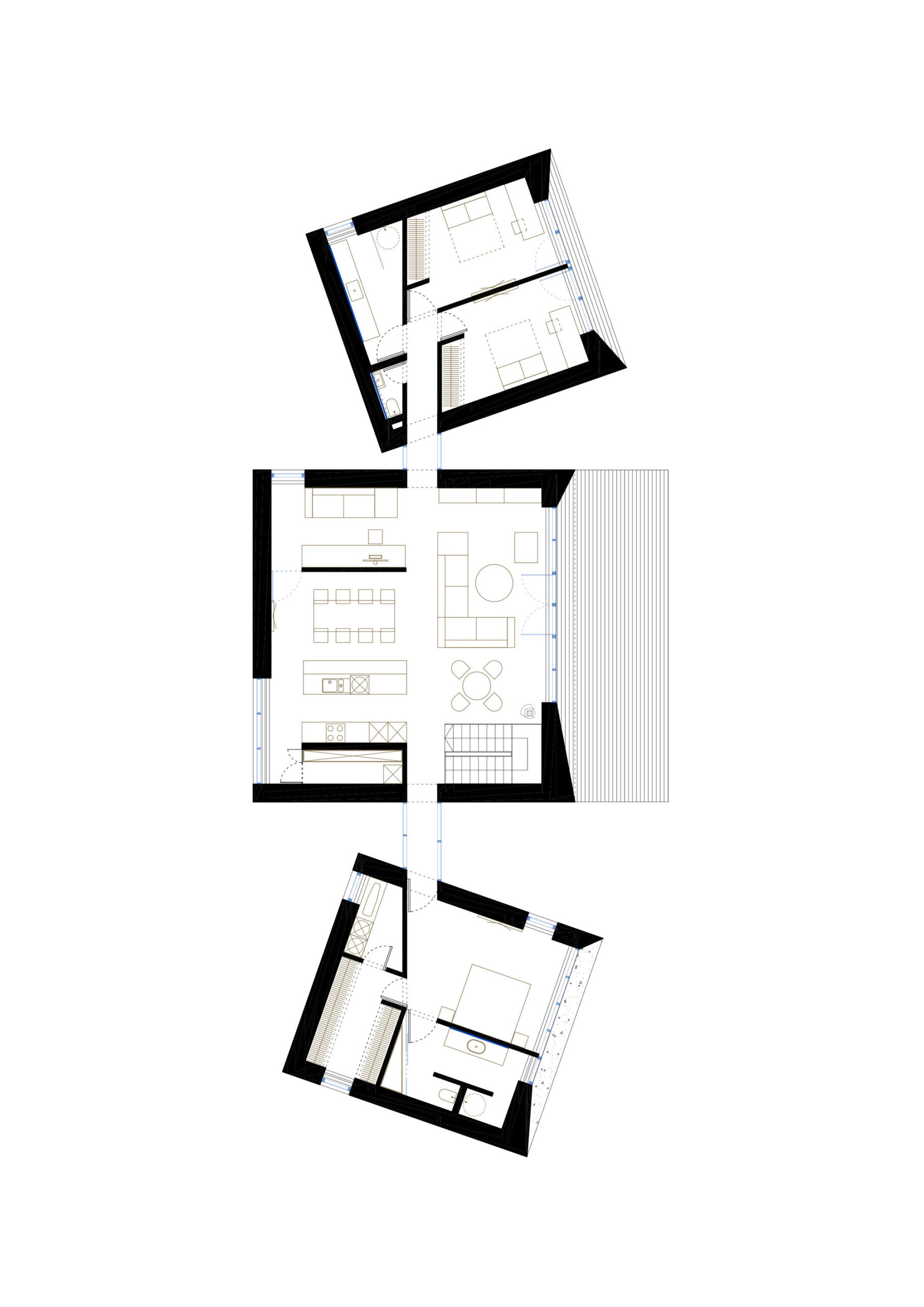
For this four-member family house, the project was located in the seaside resort town of Palanga. It features a slope and is framed by a forest wall on top of the hill. All living spaces are lifted above the street level and focused on the forest, while the utilitarian spaces are positioned on the lower level. The scheme was divided into three separate volumes corresponding with three functional zones.

Children rooms with a dedicated bathroom and washroom are situated firmly on the ground, while the parents’ zone — a master bedroom with ensuite facilities — is lifted on a tower leg, which serves as a storage space. The central zone houses a stairway, the main living areas on the first floor and a garage, an entrance hall and technical spaces on the ground floor. This dismantling of the scheme allowed for delicate adjustments of orientation across the residential plan.


Valley Villa

By arches, Vilnius, Lithuania

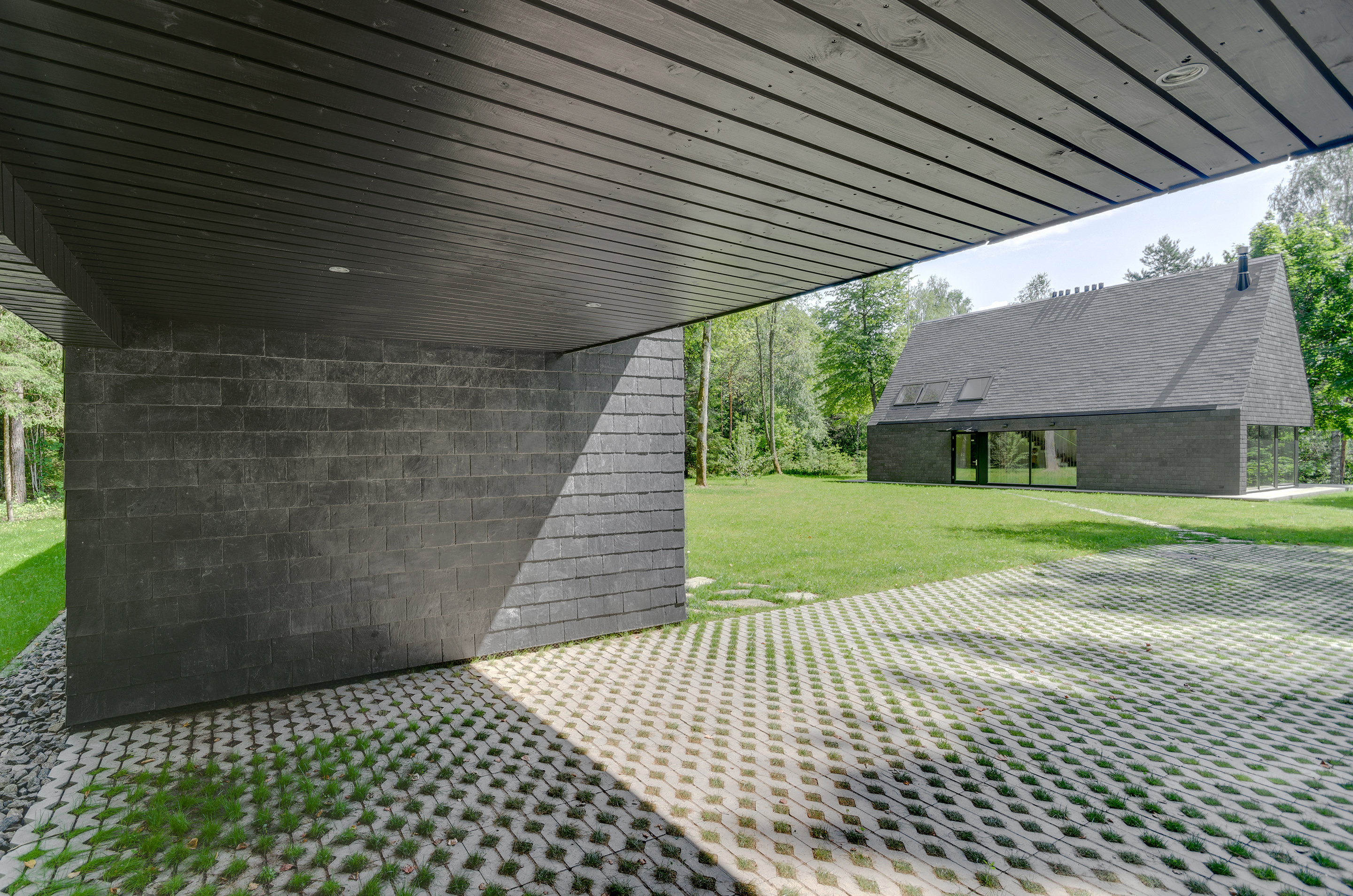
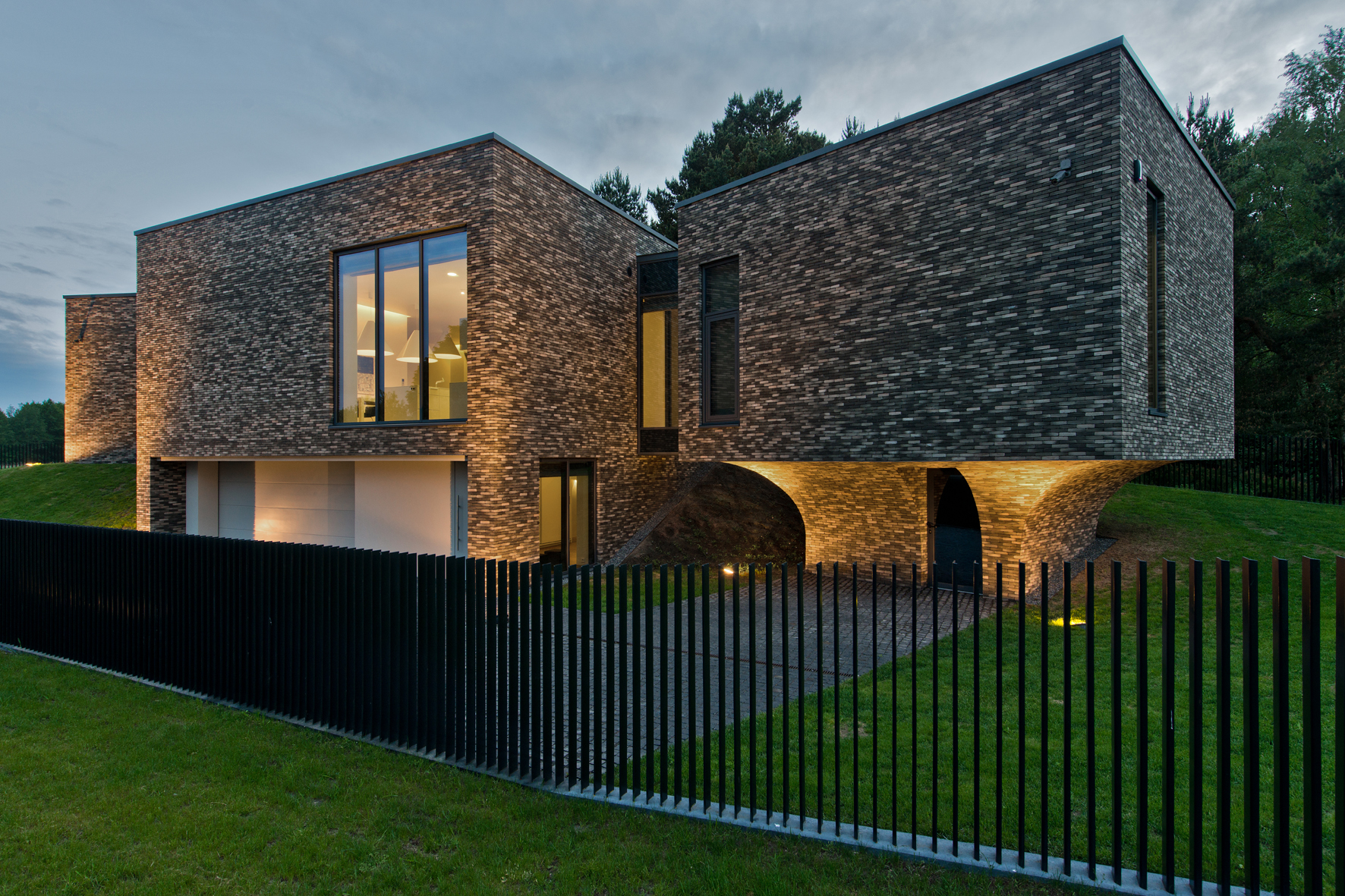
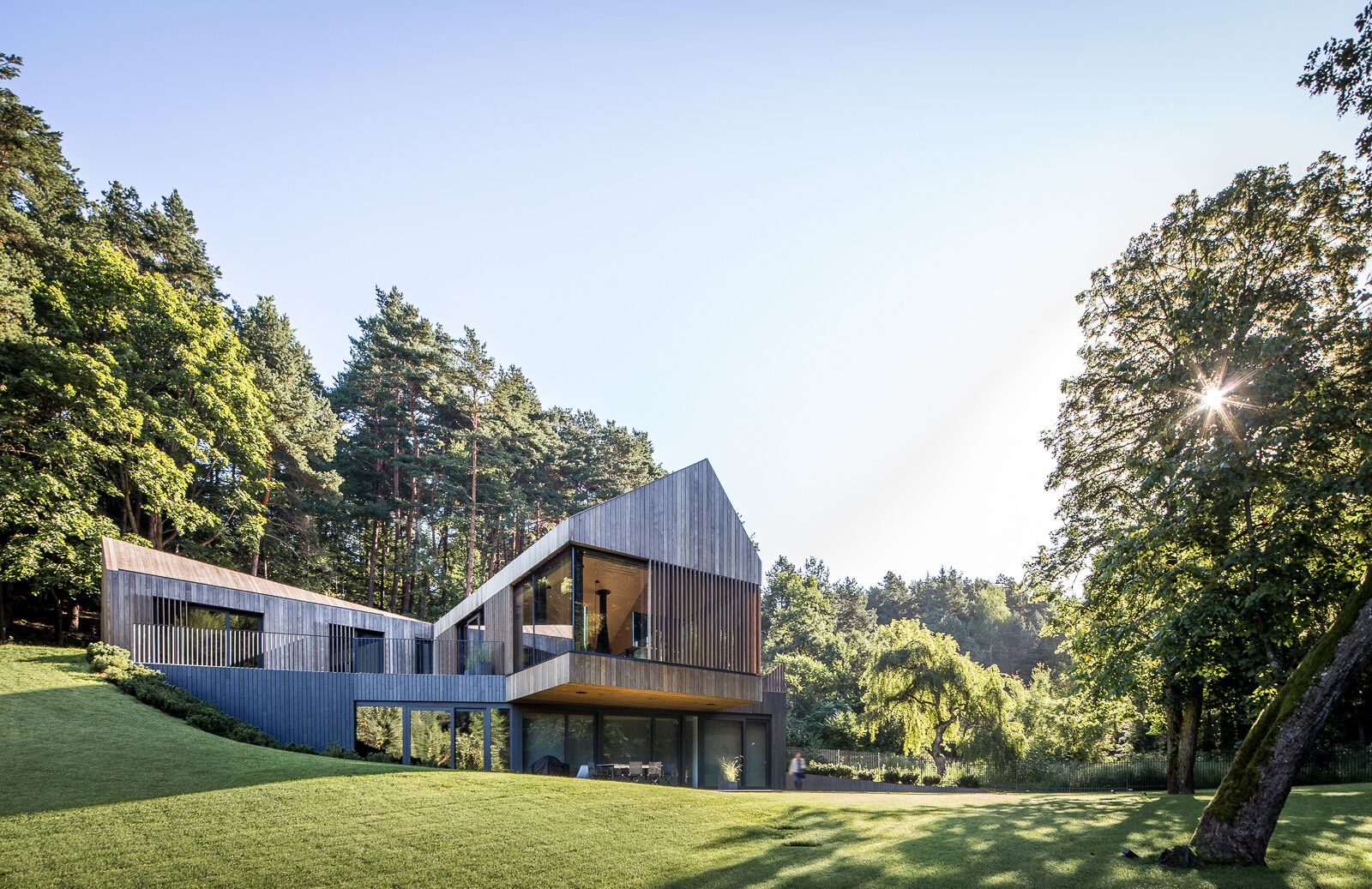
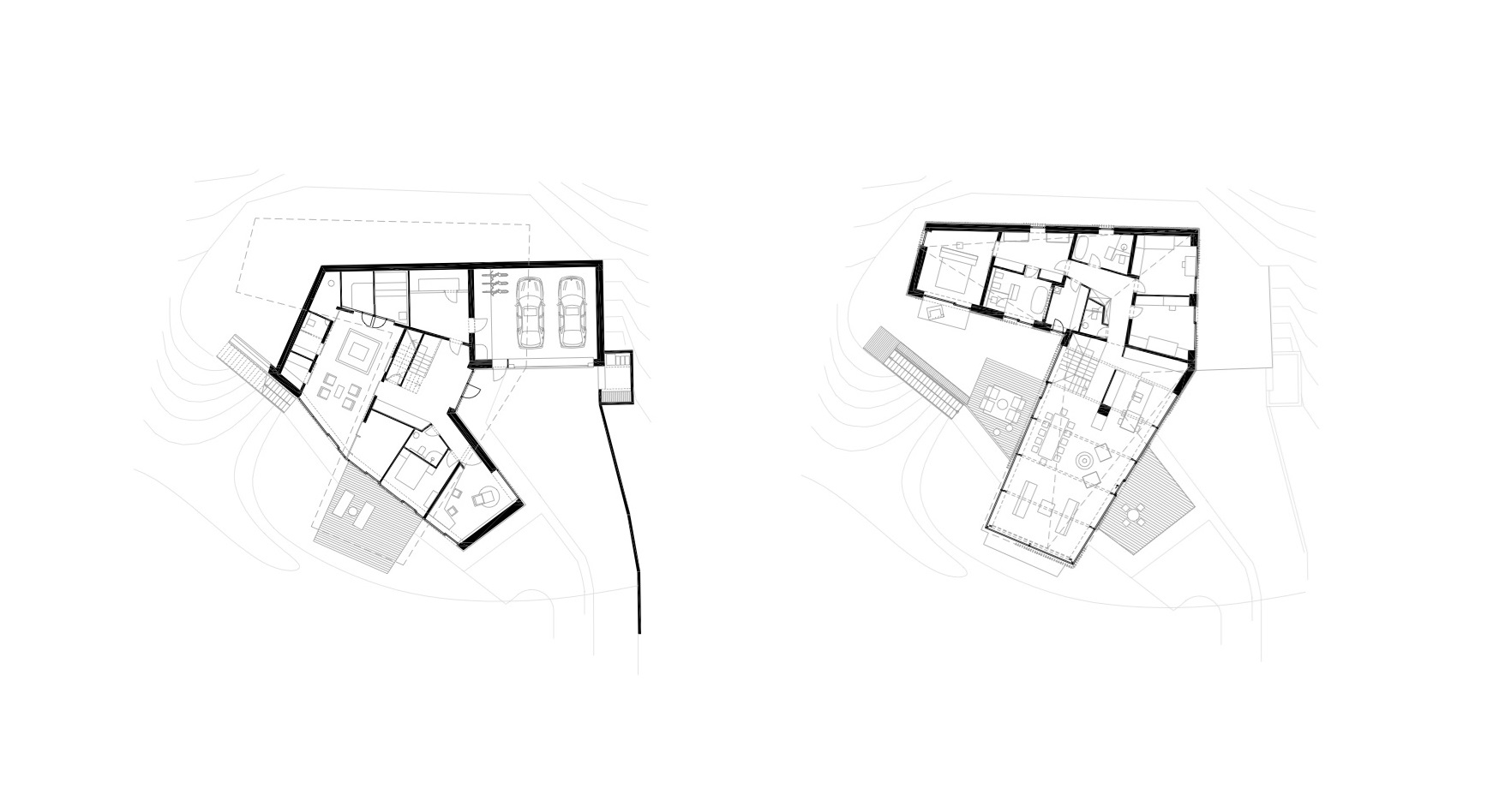
Valley Villa is an iconic home in Lithuania. Just a few hundred meters from an active city street, the home is located on a sunny slope near the outskirts of town. It is designed in place of a former farmstead. A key goal was to maintain the existing slope on site and to preserve as many trees as possible The idea of the building was to “hang” it over the valley and open the building up with continuous windows. Due to the black shale finish, the ground floor seemingly disappears in shadow.

With implications in plan, the design reinterprets the silhouette of a traditional sloped house. The divided volume, varying forms, human scale proportions, glass and wood all come together to create the impression of lightness. Interior spaces follow the forms of the volume, while a natural wood finish for the façades and roof creates the impression of solidity. By dividing the volume, micro-spaces and courtyards are created.


Birdhouse

By YCL studio, Vilnius, Lithuania

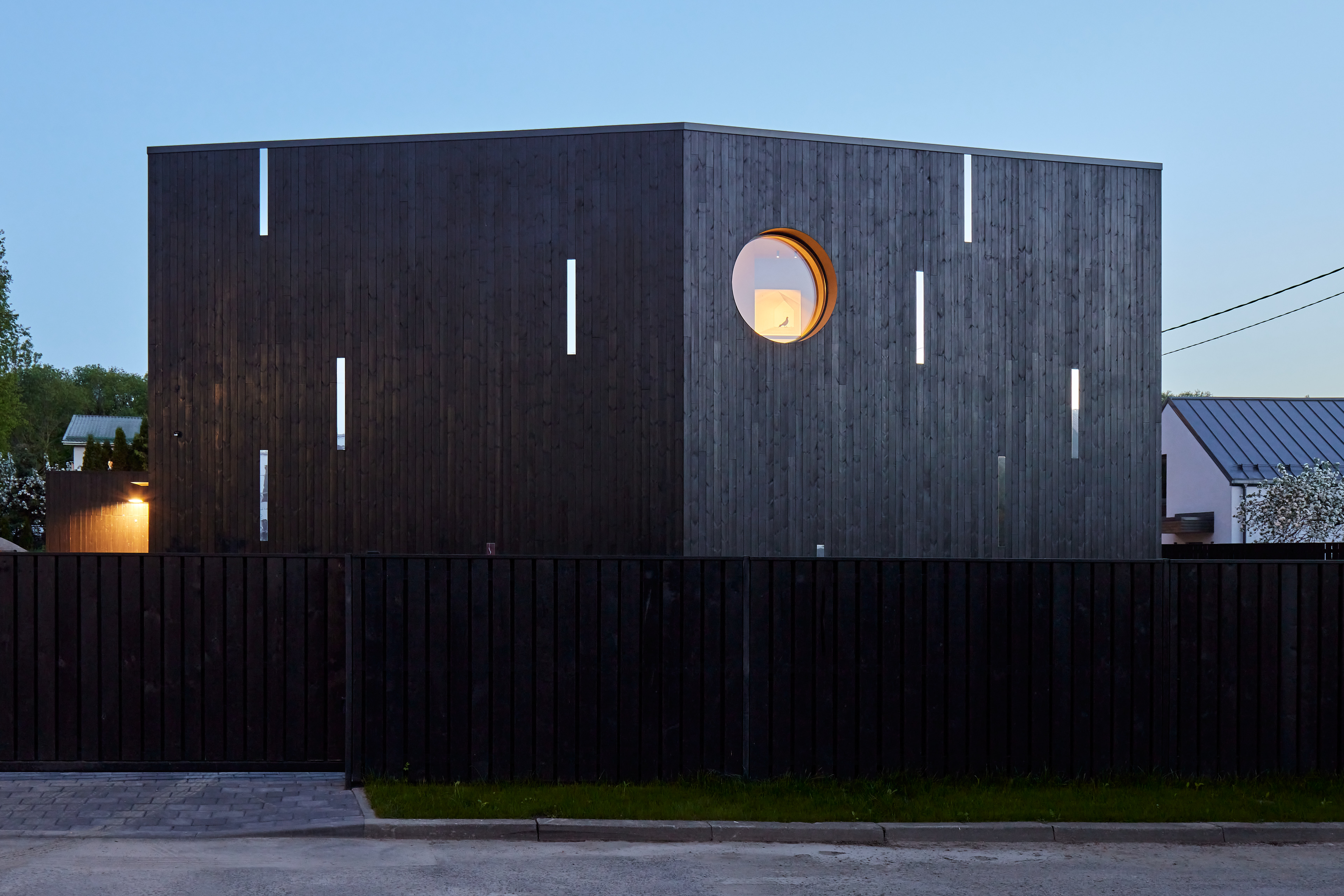
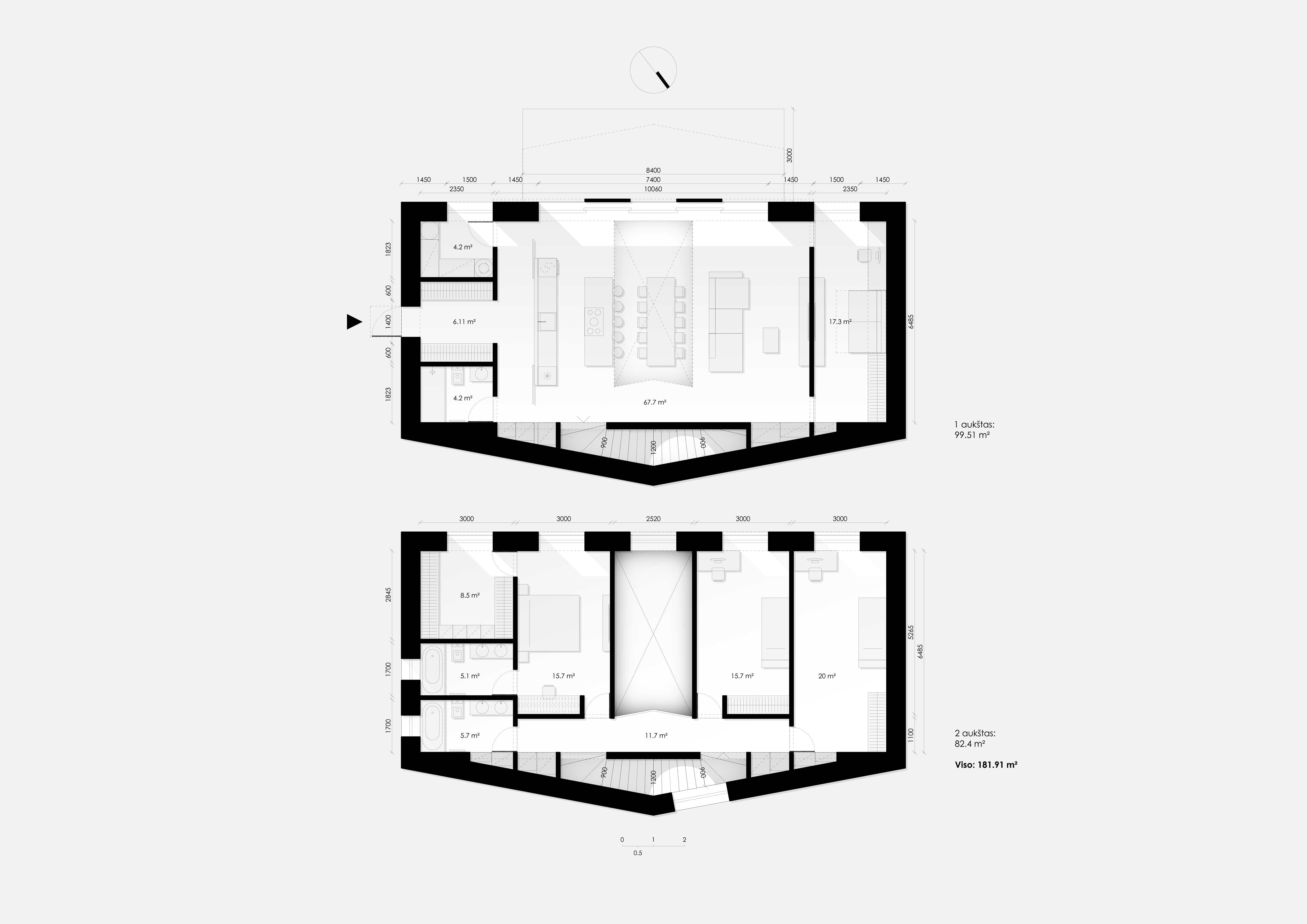
YCL’s Birdhouse residence is located among a dense block of private houses in Vilnius. The key wish from the clients was to have a big common space not divided by stairs in any way. So the team chose to move the stairs out of the main perimeter of the house, a guiding idea in plan. This creates a shape that looks different when walking around the house. The north part of the house with the stairs has just one round window, like a birdhouse that waits for its dwellers.

Mirrored details across the house were an illusion to reflect the changing surroundings. The dark wood façade also creates a color change to form a dialog with the surroundings. The garage volume formed a private separation from the neighboring plot, but at the same time it was not attractive to have that volume in a private yard. So the team mirrored it, and through another kind of illusion, extended the yard.


House in Kaunas

By Architectural bureau G.Natkevicius and partners, Kaunas, Lithuania

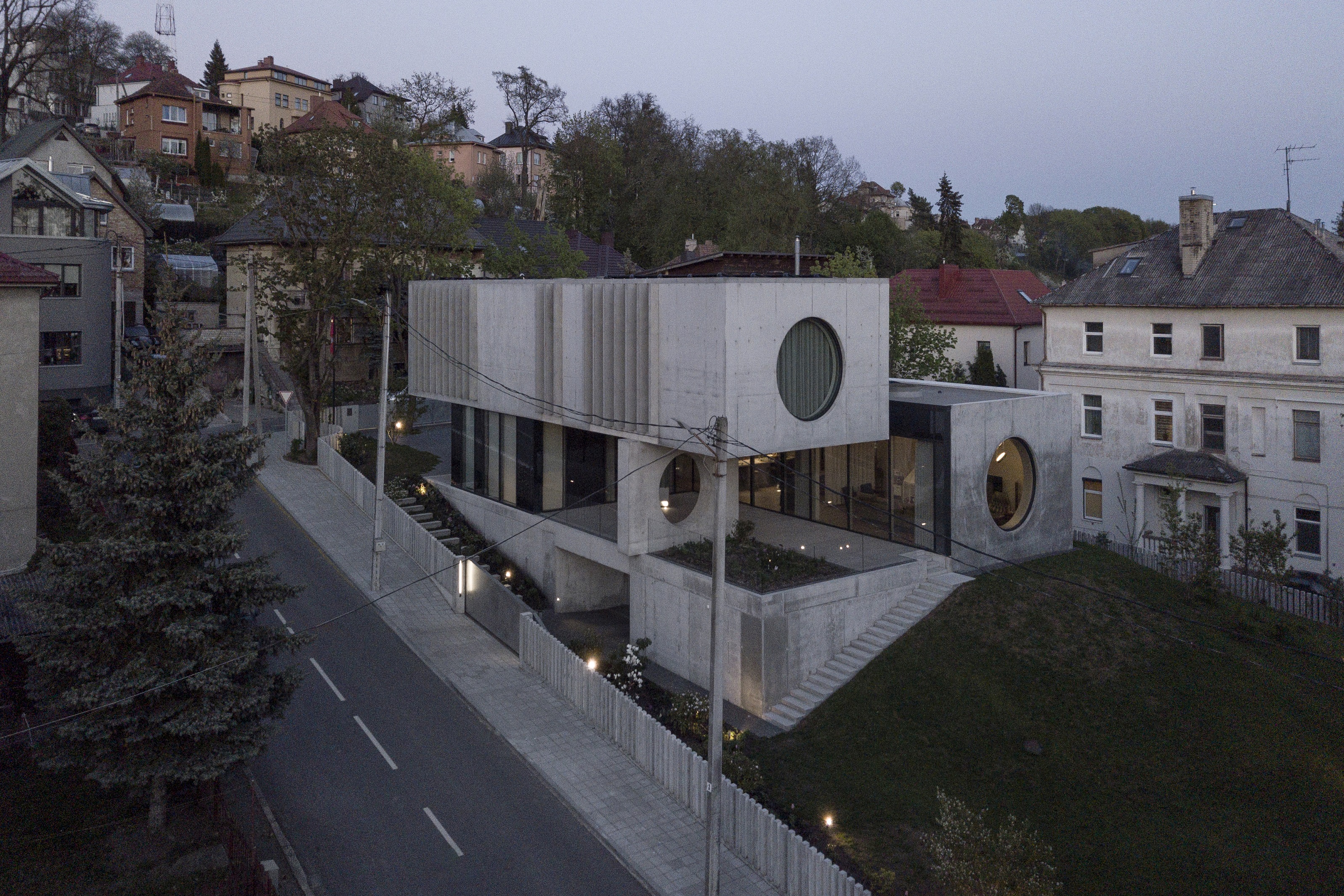
Understanding the potential of vertical living and monumental expression, this two-story home with a basement is located in the picturesque central district of Kaunas. The composition of the house keeps the spirit of Kaunas modernism alive as the circular windows in the concrete planes give the impression of modernism. At the same time, the two-volume reinforced house further highlights and accentuates the slope of the plot.

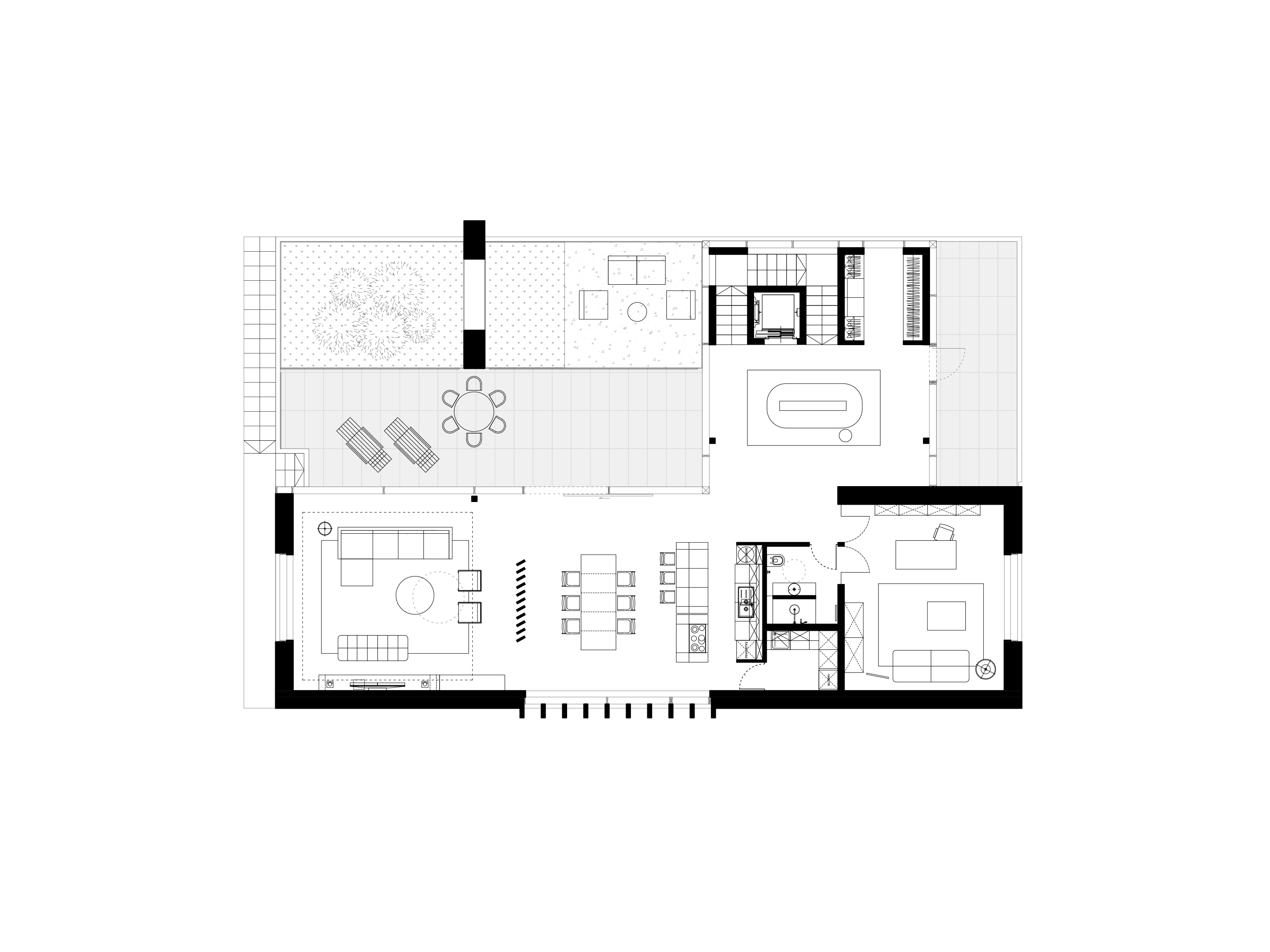
The volume of the building is divided into three floors. The first level is an access to the basement of the house, where a luxury garage for eight cars was designed. The staircase from the partially open basement leads to the first floor of the building and the inner space of the plot. Once entering the building the upper level and inner space opens – the inner yard and the terrace further enhance the impression of the levitating volume. The terrace is also designed with a rectangular concrete support with a circular opening that echoes the façade.

Architects: Want to have your project featured? Showcase your work through Architizer and sign up for our inspirational newsletters.

Reference

Seoul Design 2023
CategoriesSustainable News

Five innovative design projects from Seoul Design 2023

A modular shelter made from cardboard, a street bench made of recycled plastics and oyster shells and an inkless pencil are among the highlights of this year’s Seoul Design.

For its 10th anniversary, Seoul Design 2023 looked at what role design should play in creating a sustainable future under the theme of Valuable Life.

The annual event, which is hosted by the Seoul metropolitan government and organised by Seoul Design Foundation, combines the Seoul Design Week festival and tradeshow Design Launching Fair.

Seoul Design 2023
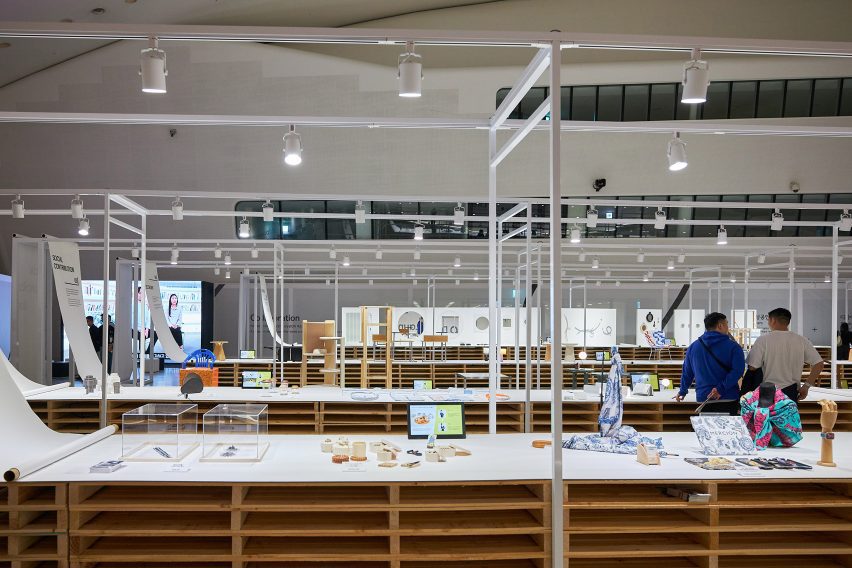
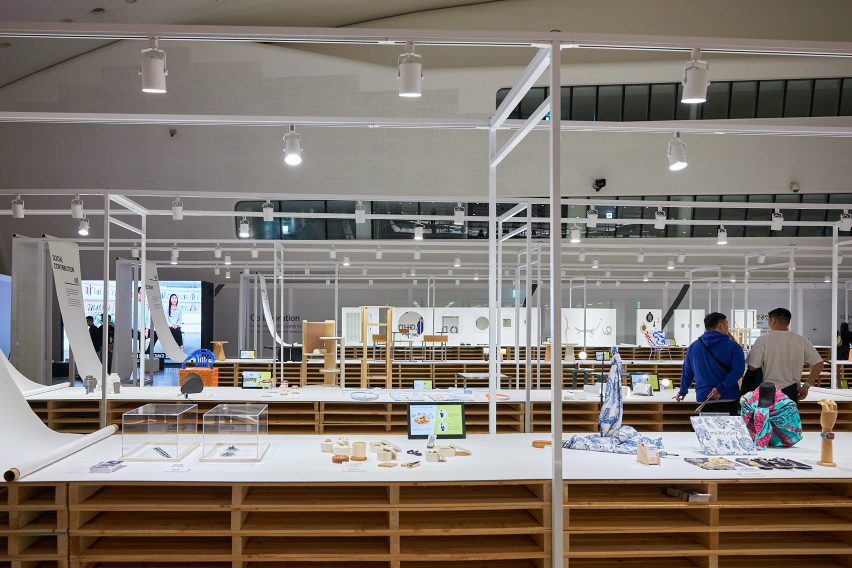
This year’s Seoul Design focused on sustainable design. Photo is courtesy of Seoul Design Foundation

This year, it focused on elevating Korean design brands to the global stage and had a strong environmental and sustainable angle.

“We want to open up our design industry to more businesses and distributors internationally, to make Korean design truly global, ” Seoul Design Foundation’s CEO Rhee Kyung-Don told Dezeen.

Read on for a roundup of five of projects that showcase Seoul Design 2023’s sustainable approach:


Seoul Design 2023 Shigeru Ban pavilion
Photo is courtesy of Shigeru Ban Architects

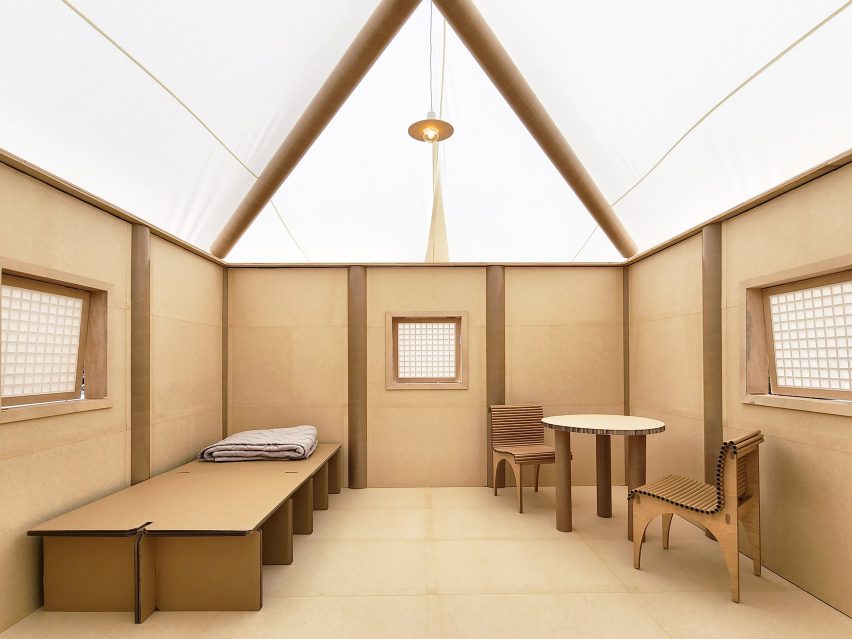
Disaster Temporary Housing Module by Shigeru Ban

Japanese architect Shigeru Ban has designed a version of his temporary shelters – which can be used to house people affected by war and environmental disasters – especially for Korea.

The prototype is a simple structure that uses cardboard tubes as columns. Honeycomb cardboard made from hanji, a Korean traditional paper, form the shelter’s modular wall panels, while cardboard tubes function as its roof structure.

The foundation was composed of makgeolli (Korean rice wine) crates, instead of steel or concrete, to minimise the environmental impact and keep costs low. By adding modular wall units and columns, the size of the shelter can be extended when necessary.

The shelter can be built without the help of skilled builders, since all the materials are lightweight, and was designed to be easy to assemble and disassemble for relocation.


Seoul Design 2023 Taesan Bench
Photo is courtesy of Lowlit Collective

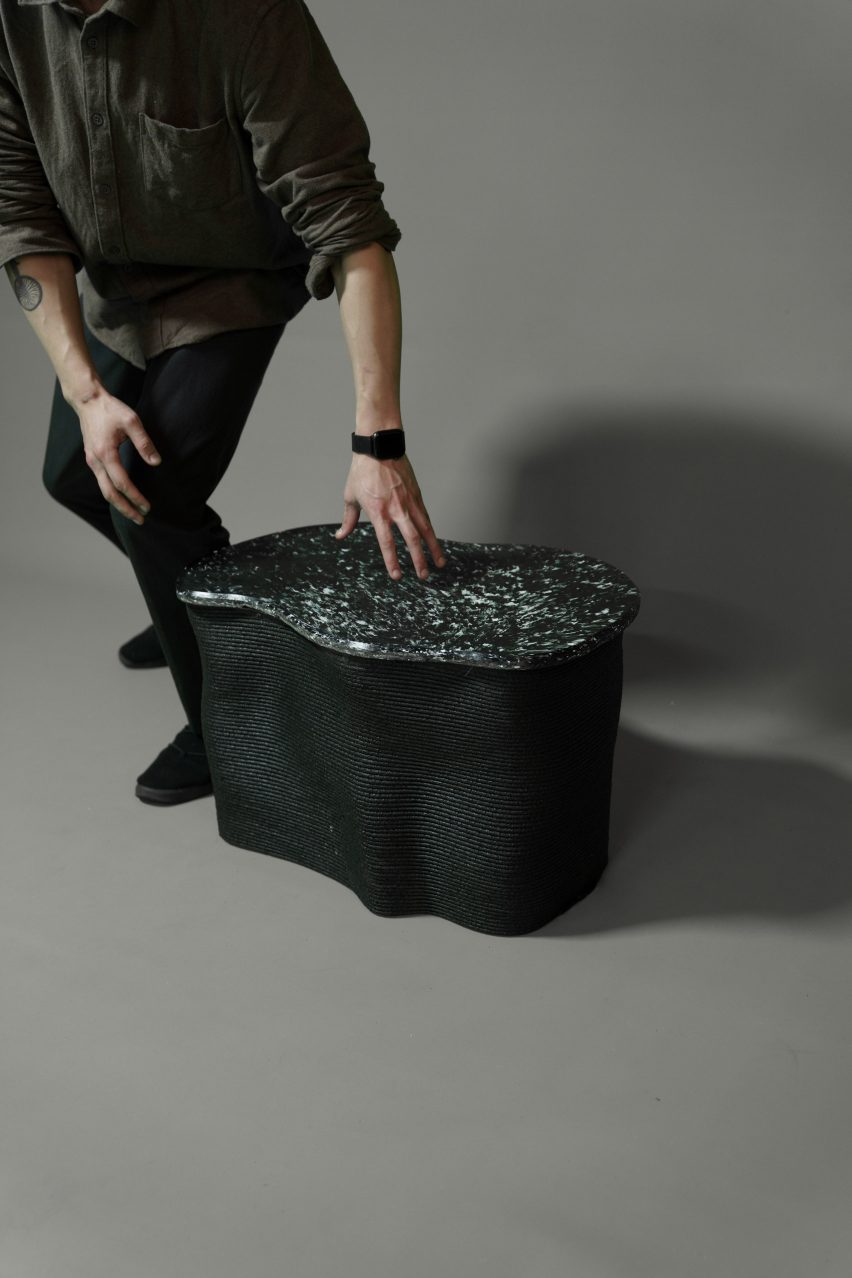
Taesan Bench by Lowlit Collective

Taesan Bench is a street-furniture range sourced and manufactured from Tikkle plastics. Made from discarded plastic, the bench was enhanced using biomaterials such as oyster shells and natural fibres.

Developed by Seoul-based design studio Lowlit Collective, the bench is the first piece in a wider collection and takes its inspiration both from Korea’s mountainous terrain and the practice of traditional sumukhwa – ink-wash painting. The recycled plastic was ground by hand, resulting in unique patterns and colours.


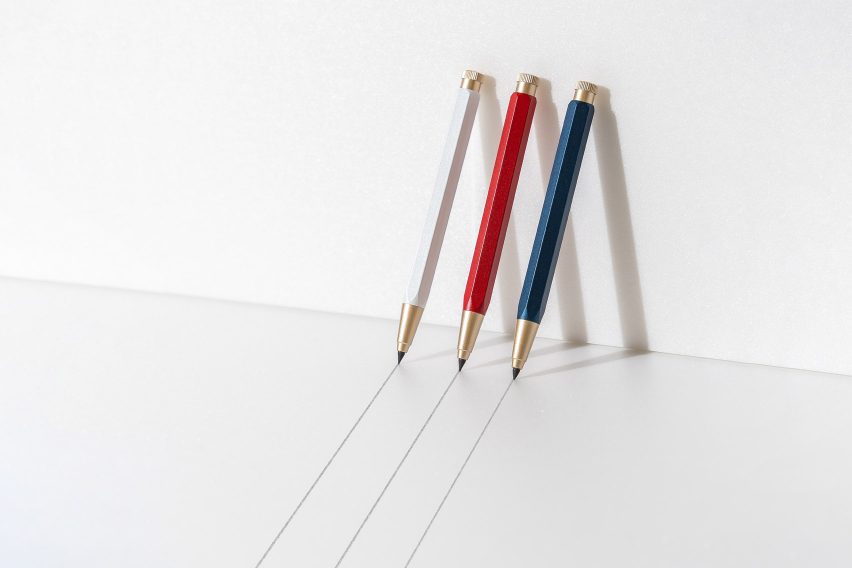
Seoul Design 2023 Zai pencils
Photo is courtesy of One+Design/MW

Zai pencils by One+Design/MW

Seoul-based design studio One+Design/MW has presented two types of pencils under the brand Zai that it claims will last a long time without sharpening.

According to the studio, the carbon-ink pencils never require any sharpening and would never break. It says this is because their ink core has been compressed 100 times more than a normal pencil.

The studio also showed an inkless silverpoint pencil, composed of metal alloy and silver, that it claims will last forever. The company aims to cut the cost and environmental impact of conventional wooden pencils.


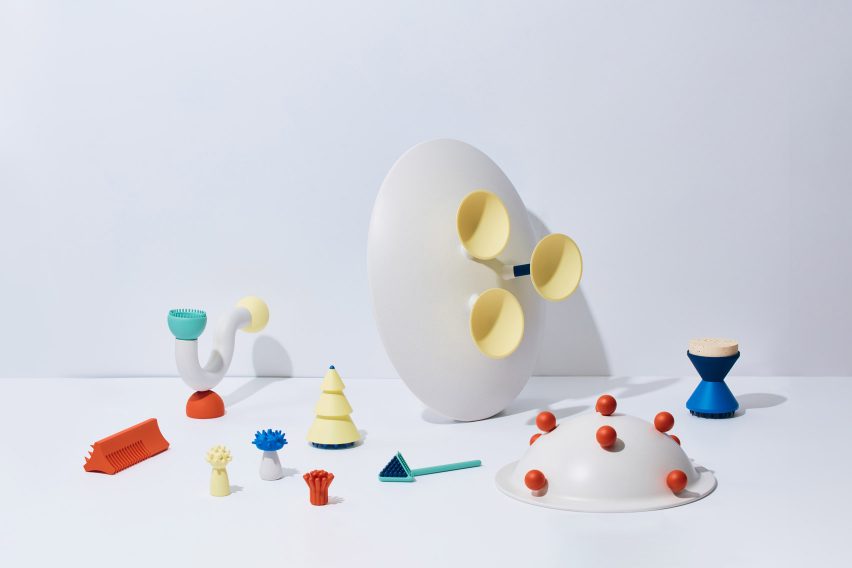
Seoul Design 2023
Photo is courtesy of University of Seoul

Hairbrushes by University of Seoul Industrial Design Department students and LABO-H

A team of four senior students from the University of Seoul Industrial Design Department has created eight different hairbrushes for a more fun and accessible hair-washing experience.

The students collaborated with shampoo brand LABO-H to explore how design can shape people’s basic daily behaviours and contribute to a positive social impact. Materials used in the brushes include silicon and plastics recycled from coconut shells.

Among the designs were a triangle-shaped hand-held brush suitable for washing a fringe of hair, and a set of three finger caps with different cap shapes to give a more intense hair-massage experience.

LABO-H held an online vote for the public to choose their favourite brush design and will manufacture the most popular one.


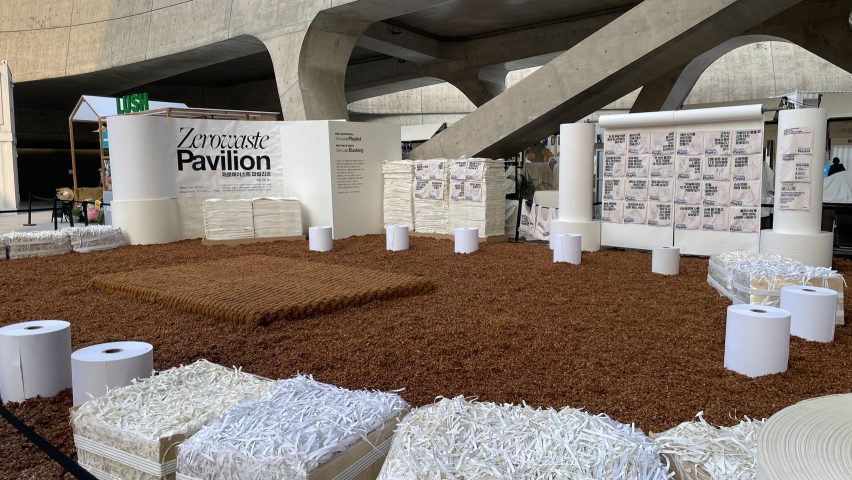
Seoul Design 2023 Zero Waste Pavilion
Photo is courtesy of ITM Architecture Office

Zero Waste Pavillion curated by Yoo Ehwa

Zero Waste Pavillion was a public resting area located at the central square of Dongdaemun Design Plaza (DDP). Curated by architect Yoo Ehwa from ITM Architecture Office in Seoul, the pavilion was built entirely with paper and sawdust supplied by local manufacturers.

Sawdust used for the floor was made of coconut chips from handmade floorboard specialist Kujung Maru, while paper rolls from paper company Hansol Paper were adapted into stools and presentation boards. All materials used in the pavilion will be recycled and reused after the exhibition.

Seoul Design 2023 took place from 24 October to 2 November 2023. See Dezeen Events Guide for an up-to-date list of architecture and design events taking place around the world.

Reference

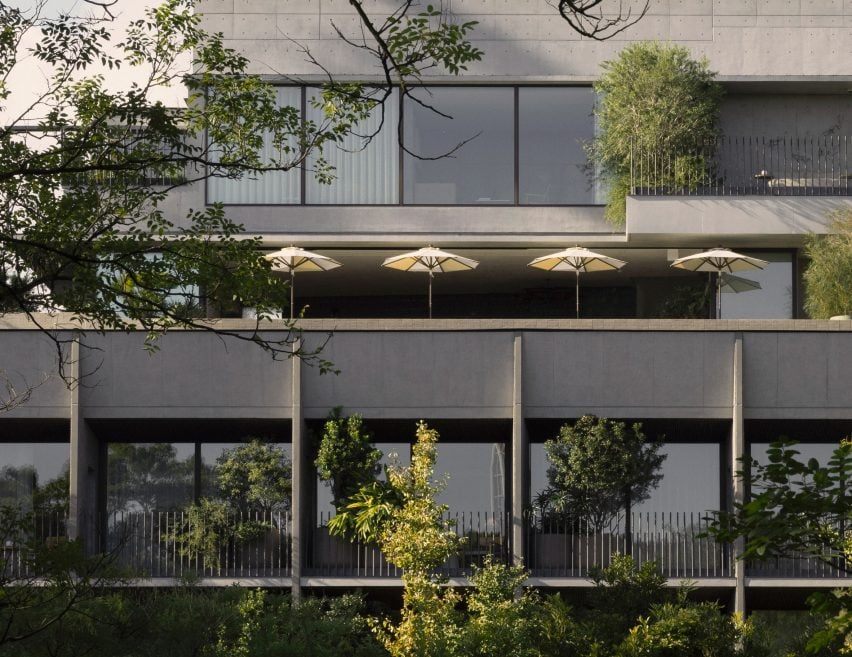
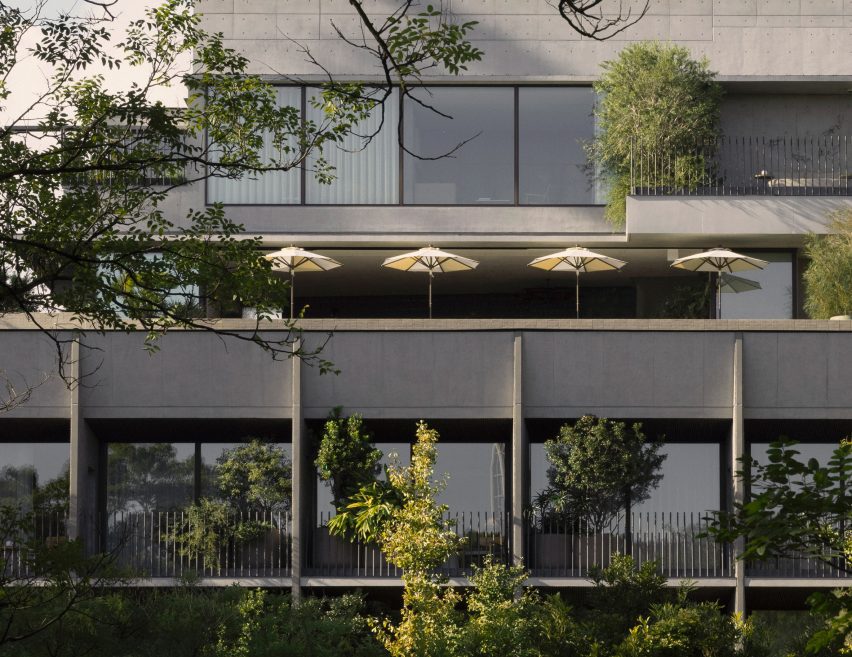
The raw concrete facade of Trunk Hotel Yoyogi Park
CategoriesInterior Design

Keiji Ashizawa Design and Norm Architects create Trunk Hotel in Tokyo

An exposed raw concrete facade fronts the Trunk Hotel Yoyogi Park, which Japanese studio Keiji Ashizawa Design and Danish firm Norm Architects conceived as a minimalist retreat in the heart of the city.

Marking the third location in a trio of Trunk hotels in Tokyo, the design of the boutique hotel was rooted in the concept of “urban recharge”, according to Trunk chief creative officer Masayuki Kinoshita.

The raw concrete facade of Trunk Hotel Yoyogi Park
Trunk Hotel Yoyogi Park features a raw concrete facade

The hotel group said the idea was to balance the opposing elements of tradition and modernity as well as nature and the city and the melding of both Japanese and European craft.

Keiji Ashizawa Design created a textured concrete aggregate facade for the seven-storey building, which is punctuated with steel-lined balconies and overlooks Yoyogi Park’s lush treetops.

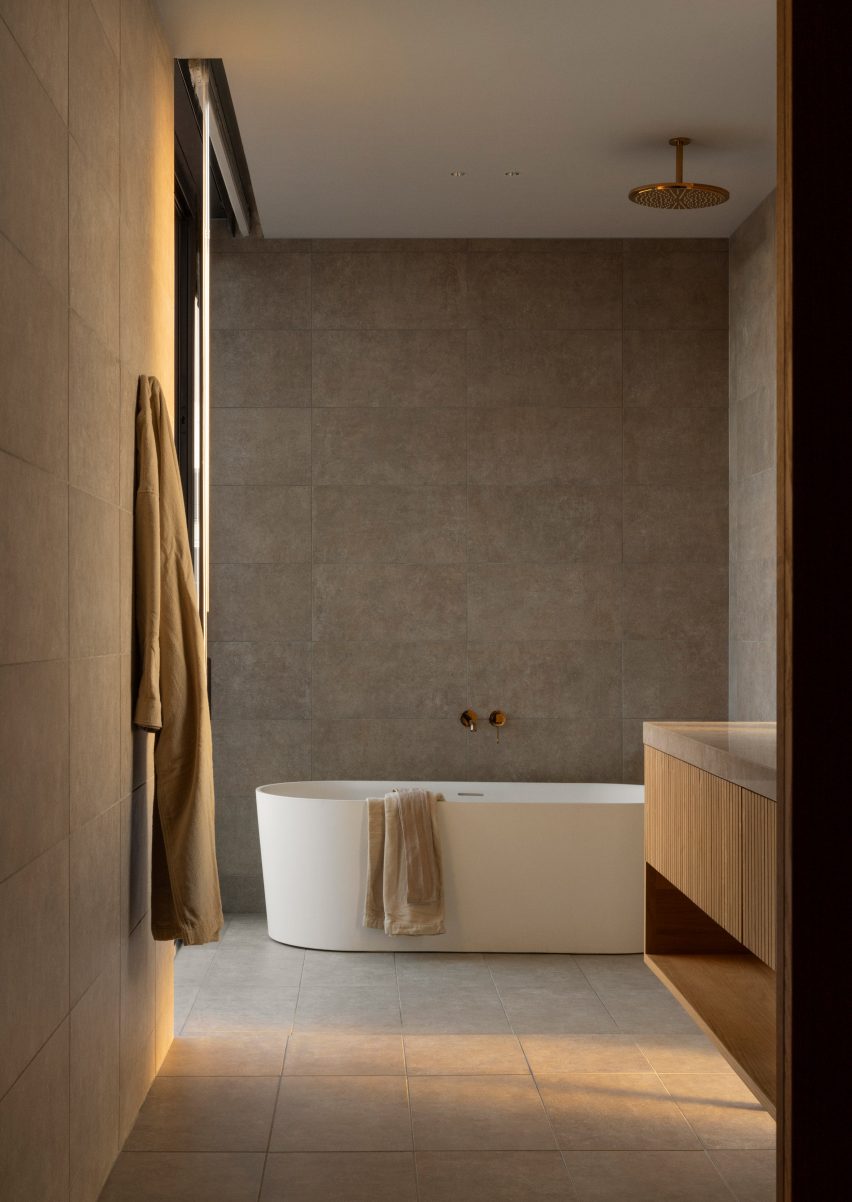
Neutral bathroom within Tokyo's Trunk Hotel
Guest rooms feature a muted colour and material palette

The studio worked with Norm Architects to design the minimalist interior, accessed via a copper-clad entrance.

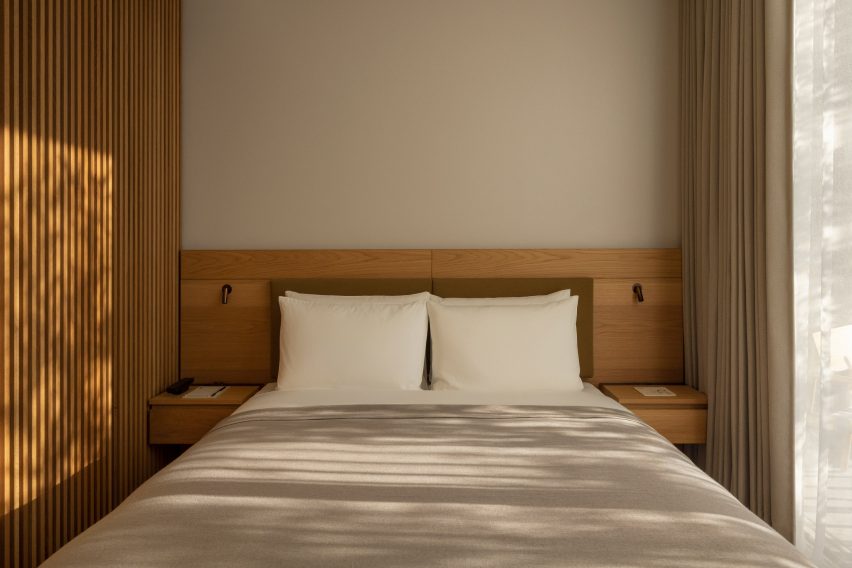
A total of 20 guest rooms and five suites were dressed in a muted colour and material palette featuring hardwood flooring and plush Hotta Carpet-designed rugs informed by traditional Japanese architecture.

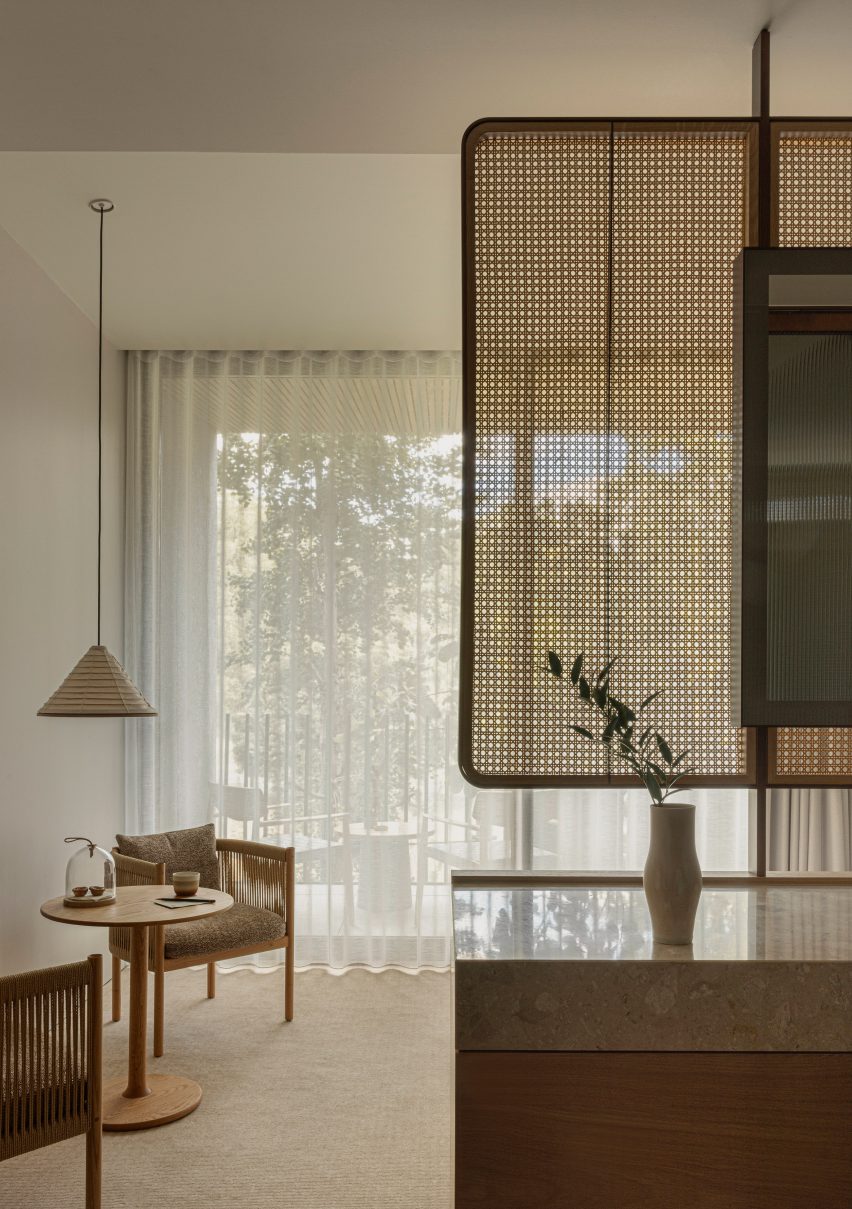
Paper-cord chairs and washi pendant lights at Trunk Hotel in Tokyo
Paper-cord chairs and tapered washi pendant lights contribute to the minimalist design

Delicate rattan partition walls delineate spaces within the rooms, which open out onto the building’s balconies that were fitted with slanted ceilings in order to encourage sunlight into each room “as if mimicking the gentle transitions of a day”.

“It’s been an interesting journey for us to find the right balance between a space that is relaxed and vibrant at the same time,” said Norm Architects co-founder Jonas Bjerre-Poulsen.

Minimalist neutral double bed within the Trunk Hotel in Tokyo
The interiors were designed to be both “relaxed and vibrant”

The rooms are also characterised by paper-cord chairs and tapered washi pendant lights as well as abstract artworks, amorphous vases and grainy floor-to-ceiling bathroom tiles.

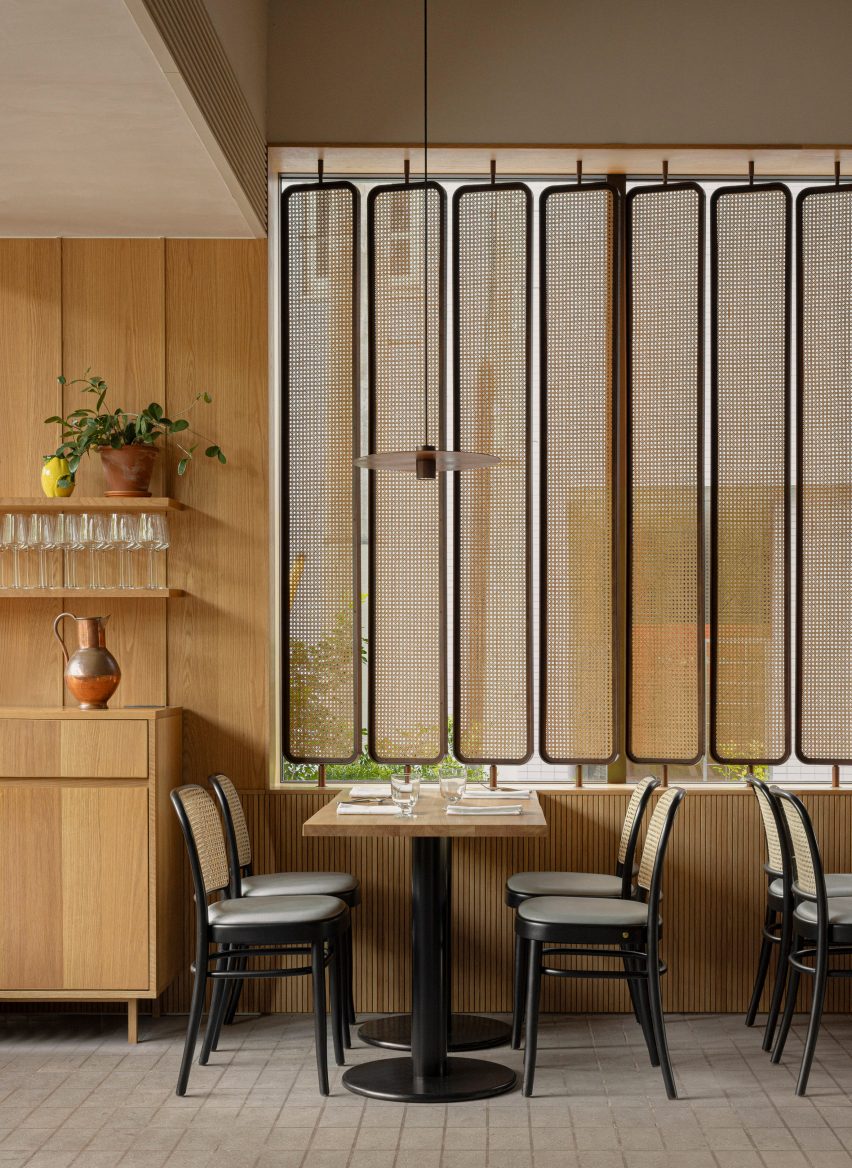
On the ground floor, oak seating designed by Norm Architects for Karimoku features in the hotel restaurant, which includes a striking copper-clad pizza oven and the same rattan accents that can be found in the guest rooms.

Rattan room dividers in the restaurant of Trunk Hotel
Rattan accents can also be found in the hotel restaurant

“It is a very unique and gratifying experience in the sense that the architecture, interior and furniture, as well as the attention to detail, have created a space with such a strong sense of unity,” said Keiji Ashizawa Design.

An open-air pool club is located on the sixth floor of the hotel.

Sand-blasted concrete flooring was paired with thin bluey-green tiles that make up the infinity swimming pool, which overlooks the park below.

A “glowing” firepit can also be set alight after dark, intended to create a soothing contrast with the bright Tokyo skyline.

Rooftop infinity pool overlooking Yoyogi Park
The Trunk Hotel features a rooftop infinity pool

The city’s first Trunk Hotel opened in Shibuya in 2017, while the second location is an offbeat one-room hotel in the metropolis’s Kagurazaka neighbourhood featuring its own miniature nightclub.

The photography is by Jonas Bjerre-Poulsen.

Reference

"We can't plead ignorance" on sustainability says panel of design experts
CategoriesSustainable News

“We can’t plead ignorance” on sustainability says panel of design experts

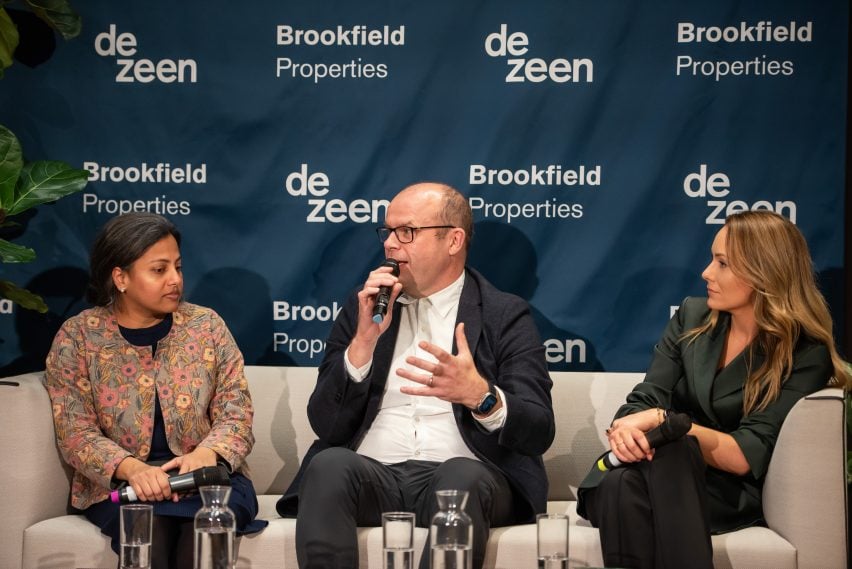
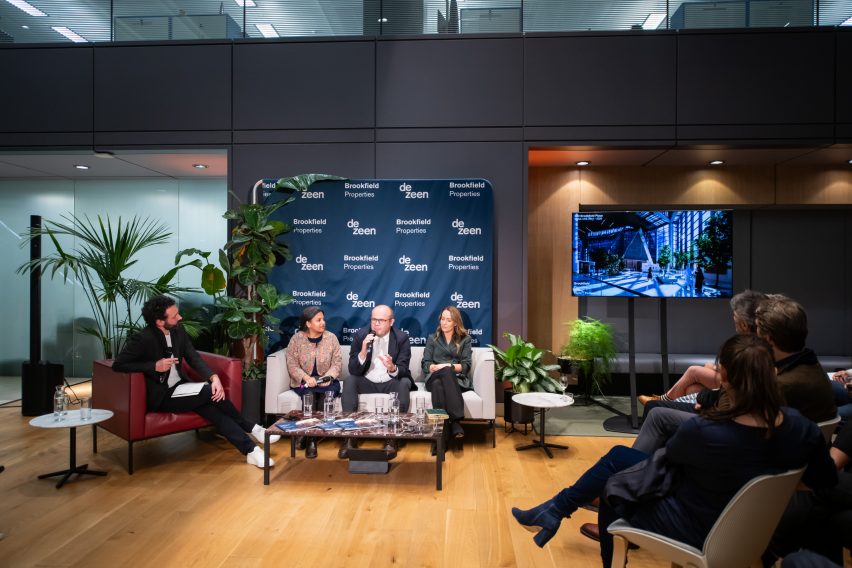
Architects need to listen to younger generations and take a collaborative approach to sustainability, according to a panel of design experts in this filmed talk hosted by Dezeen for developer Brookfield Properties.

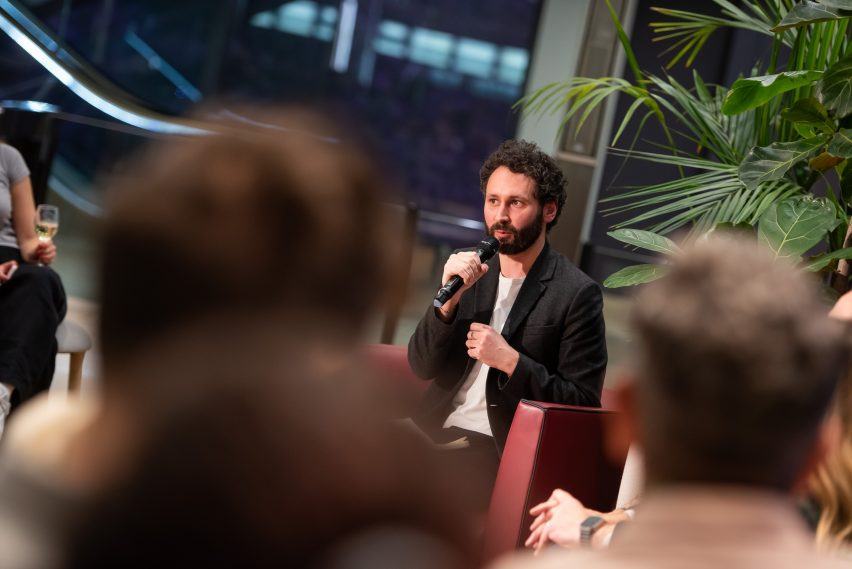
The panel included Brookfield Properties director of design Pragya Adukia, architecture studio Foster + Partners senior partner Dan Sibert and architecture studio BVN strategy director Esme Banks Marr. The talk was moderated by Dezeen co-CEO Ben Hobson.

The discussion followed the publication of a report commissioned by Brookfield Properties and Foster + Partners, which surveyed workers’ thoughts on the importance of sustainability in the workplace.

The panelists discussed how younger generations are increasingly more invested in furthering sustainable practices in their workplaces, with the report finding that 93 per cent of people working in an “environmentally friendly office” felt happier in their job.

The panelists was made up of experts in architectural design and strategy

“We want to make sure that we’re hearing what people say, which is why we co-commissioned this report with Foster + Partners – to listen to what the younger generation at work was saying, to give them a voice around their own sustainability, ideas and goals,” Adukia explained.

“The idea of sustainability is really a community-based thing,” added Sibert. “[There’s] a generational shift. People are no longer interested in just sitting and letting it happen to them, they actually want to be involved in it.”

“Our approach has always been ‘this is what can be realistically achieved’, it’s not just a fancy hashtag or a strapline,” continued Adukia.

“Let’s look at the data points, that’s very strong evidence, and then talk about what can be achieved, how we can future proof it.”

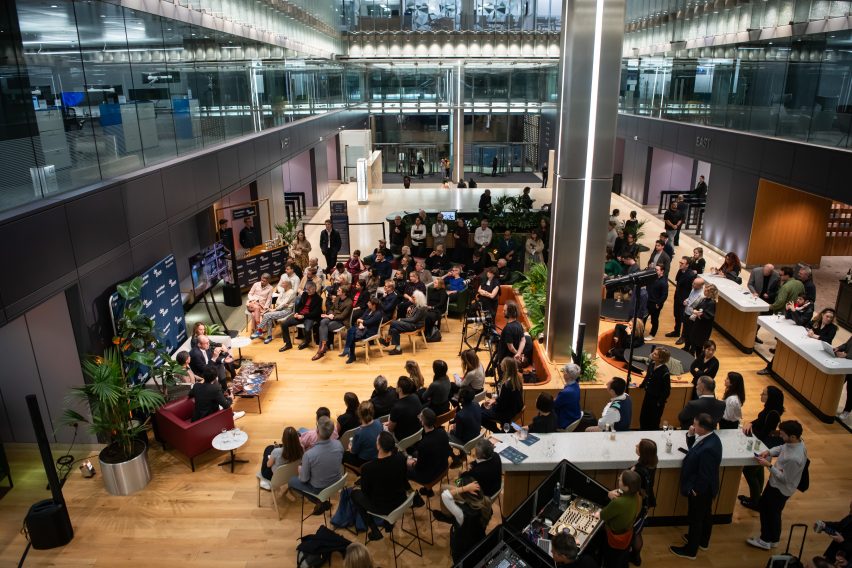
The talk took place in the public square of the 30 Fenchurch Street offices in London

“People are more vocal about their beliefs and what they’d like to see, it’s a good idea to involve these people in bigger conversations, and then take on board what they want to see,” she added.

“We can’t plead ignorance, none of us can plead ignorance anymore” said Banks Marr, echoing the importance of listening to public opinion around sustainability.

“There are some baseline things that we need to fundamentally just get right in buildings, new and existing, first and foremost. Sounds quite simple, but a lot of people still fail to do it,” she concluded.

The panel discussed the importance of qualitative data and community feedback during the design process

The panel also discussed how approaches such as biophilic design could help lead to more engagement with the environment and green policy-making.

Defining biophilic design, Banks Marr said “it’s not [just] putting plants into a space. Biophilic design is a term that’s been used for such a long time and in lots of different types of ways, when actually it means all of your senses, your experience with the space and your connection to nature.”

“It’s a stepping stone, or a starting point, to taking a really ecological world view of things,” she added.

“If I’m in these concrete jungle cities that do not have any connection to nature, and I don’t experience that on a daily basis, it doesn’t live in my psyche. So how am I expected to care about it and create real change?”

“There’s a desire across the board, not just in the city, to make sure we’ve got spaces to live and breathe in,” Adukia concluded.

Similarly, the panel noted the importance of creating long-lasting and future-proofed spaces.

“We need to get ourselves into that mindset where we actually think about things for a much longer term, and think and design them so they will change over time,” said Sibert. “So, can the building be designed for multiple lifespans rather than a single lifespan?”

“One has to take the overall sense of why you’re building in a city like this,” he added.

“Why do we build where, what does it mean for the overall picture of carbon and regeneration? What’s possible, but why would you make these choices as clients?”

Co-CEO Ben Hobson moderated the discussion

To conclude the talk, Hobson asked each of the speakers what they believed the key challenges the industry needed to overcome were.

“I think one thing we could definitely get better at, which we’re perhaps not currently doing enough, is knowing when to invite the real experts to the table. We don’t have to know everything,” answered Banks Marr.

“Data is absolutely key,” Sibert added. “If we could allow ourselves to find both the right dataset for the purposes of the buildings we have, and also then make the way we manufacture it be database based, I think that would be a massive step forward for us as an industry.”

“Our more successful projects have been where we’ve worked collaboratively and transparently. For any change to be implemented, I think it needs to be taken on board by all of its stakeholders. And that’s not just as landlords or developers – tenants, individuals, everyone has to be on board vocal about what they want out of it,” Adukia concluded.

The event was held at 30 Fenchurch Street, one of Brookfield Properties’ landmark office developments in the City of London.

Partnership content

This video was produced by Dezeen as part of a partnership with Brookfield Properties. Find out more about Dezeen partnership content here.

Reference

The A+List: Architizer’s Top Architecture and Design Firms to Watch in 2024
CategoriesArchitecture

The A+List: Architizer’s Top Architecture and Design Firms to Watch in 2024

Architizer’s global architectural awards program, the 12th Annual A+Awards, is now accepting submissions, with a Main Entry Deadline of December 15th, 2023. As well as celebrating some of the most innovative, recently completed projects around the globe, the A+Awards also serve as an incredible indicator of which designers will be at the forefront of innovation in the coming year.

In recognition of this fact, Architizer is delighted to present the much-anticipated fifth edition of the coveted A+List, an annual rundown of every firm that scooped an A+Award and A+Firm Award in the previous season. The A+List forms a comprehensive guide to the world’s best architecture firms and is refreshed each year based on the results of the annual A+Awards program. You can see last season’s A+List here.

The A+List is arranged alphabetically, with more information available by clicking on the link to each firm’s profile. We’ve also curated a selection of featured firms, providing some extra background on their A+Award triumphs.

Get Your Firm On the Next A+List

If you missed entering last season’s program and would like to secure your position on the next A+List, we encourage you to enter your firm’s recent projects in the 12th Annual A+Awards. Every winner features in this definitive directory of high-quality firms, and will also see their work published in a stunning, hardbound compendium on the World’s Best Architecture, as well as gaining continual publicity through our year-round global celebration of design.

Start Submission

Without further ado, explore the work of each of these immensely talented firms below, and good luck with your submissions to this year’s program!

AD ARCHITECTURE
Popular Vote Winner, 11th Annual A+Awards, Architecture +Art

Adjaye Associates
Jury Vote Winner, 11th Annual A+Awards, Multi Unit Housing – High Rise (16+ Floors)

Aidlin Darling Design
Jury Vote Winner, 11th Annual A+Awards, Mixed Use (S <25,000 sq ft.)
Jury Vote Winner, 11th Annual A+Awards, Private House (XL >6000 sq ft)

Alencar Arquitetura
Popular Vote Winner, 11th Annual A+Awards, Unbuilt – Multi-Unit Housing (S <10 Floors)

all(zone)
Jury Vote Winner, 11th Annual A+Awards, Architecture +Color

Altura Architects
Popular Vote Winner, 11th Annual A+Awards, Private House (S 1000 – 2000 sq ft)

ANT ARCH
Popular Vote Winner, 11th Annual A+Awards, Architecture +For Good
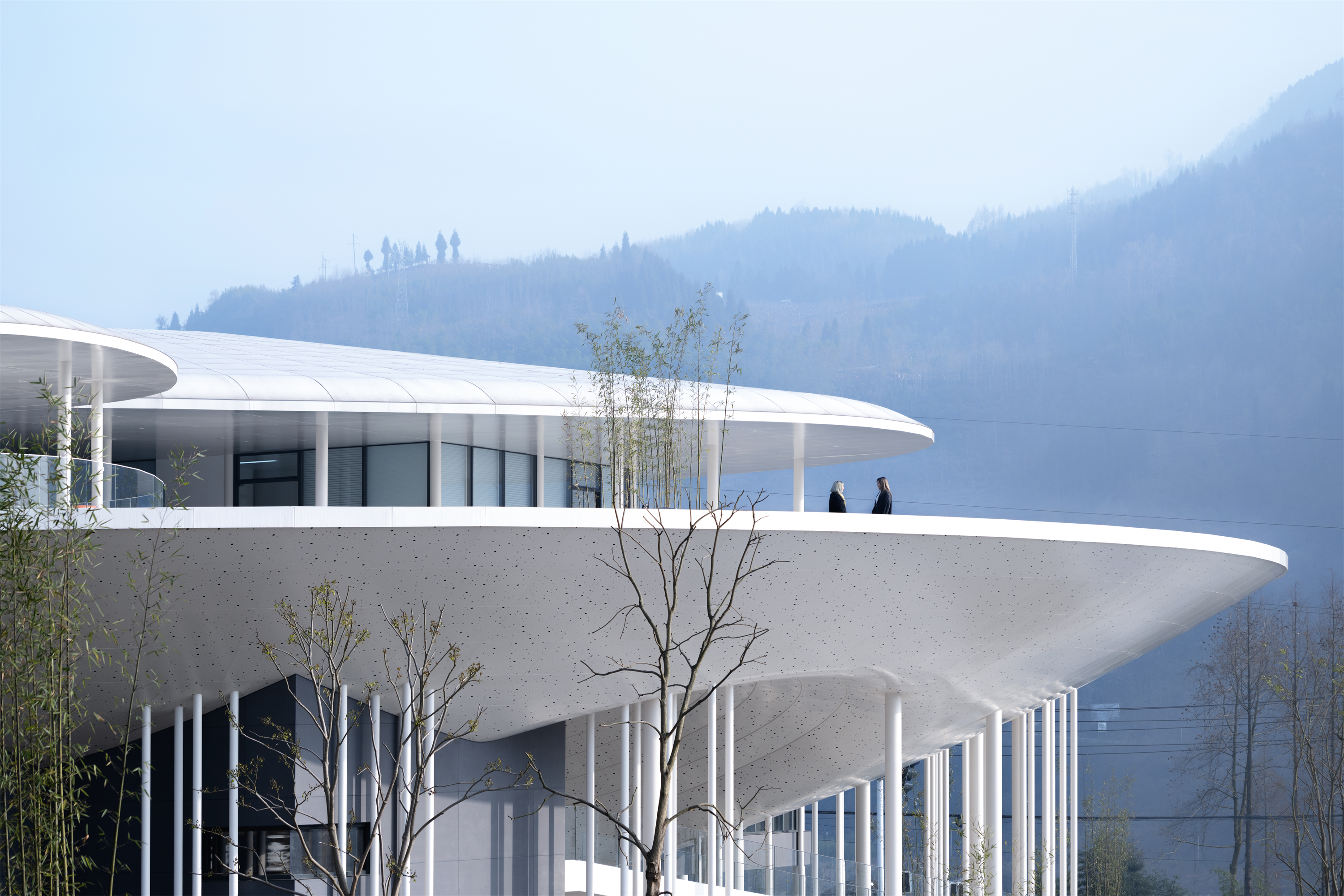

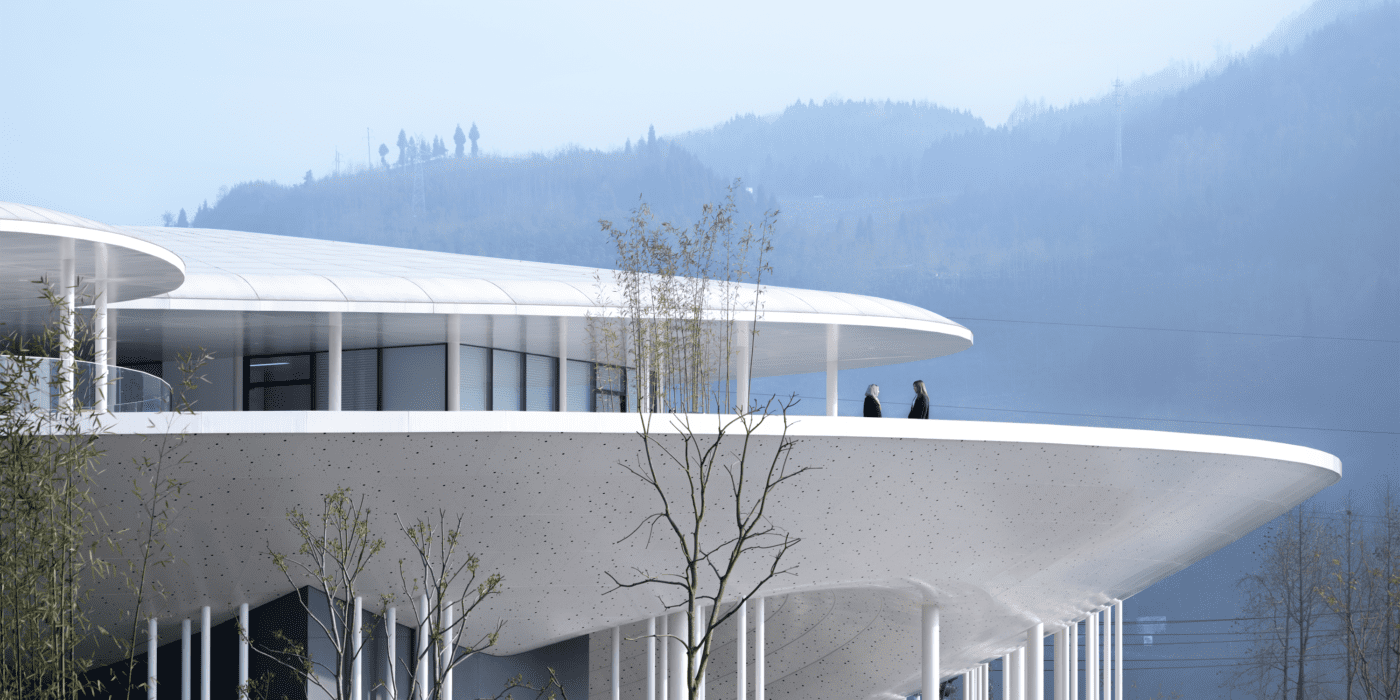
Longmenshan Town · Woyun Platform by Archermit, Peng Bai Lu, Peng Zhou Shi, Cheng Du Shi, China | Jury Vote Winner, 11th Annual A+Awards, Cultural & Expo Centers

Founded in 2015, this Chengdu-based firm has achieved a considerable amount before reaching its first decade milestone. Archermit’s  core concept is to create new multidimensional spatial experiences. This is evident in the poetic environments they create, which break the mold of traditional architectural forms and massing; theirs is an exploration of the contemporary and locality of Chinese architecture. Across their work is an emphasis on reconfiguring the relationship between building users and the surrounding environment. While embracing modern technology, the firm celebrates unique local architectural expression.


Archi-Tectonics
Jury Vote Winner, 11th Annual A+Awards, Architecture +Innovation

ARCHITECTS 49
Popular Vote Winner, 11th Annual A+Awards, Best Large Firm (41+ employees)

Arsh 4D Studio
Popular Vote Winner, 11th Annual A+Awards, Unbuilt – Multi-Unit Housing (L >10 Floors)

ASAS arkitektur AS
Popular Vote Winner, 11th Annual A+Awards, Multi Unit Housing – Low Rise (1 – 4 Floors)

ASPECT Studios
Popular Vote Winner, 11th Annual A+Awards, Best Landscape Design Firm

B² Architecture
Popular Vote Winner, 11th Annual A+Awards, Commercial Interiors (<25,000 sq ft.)
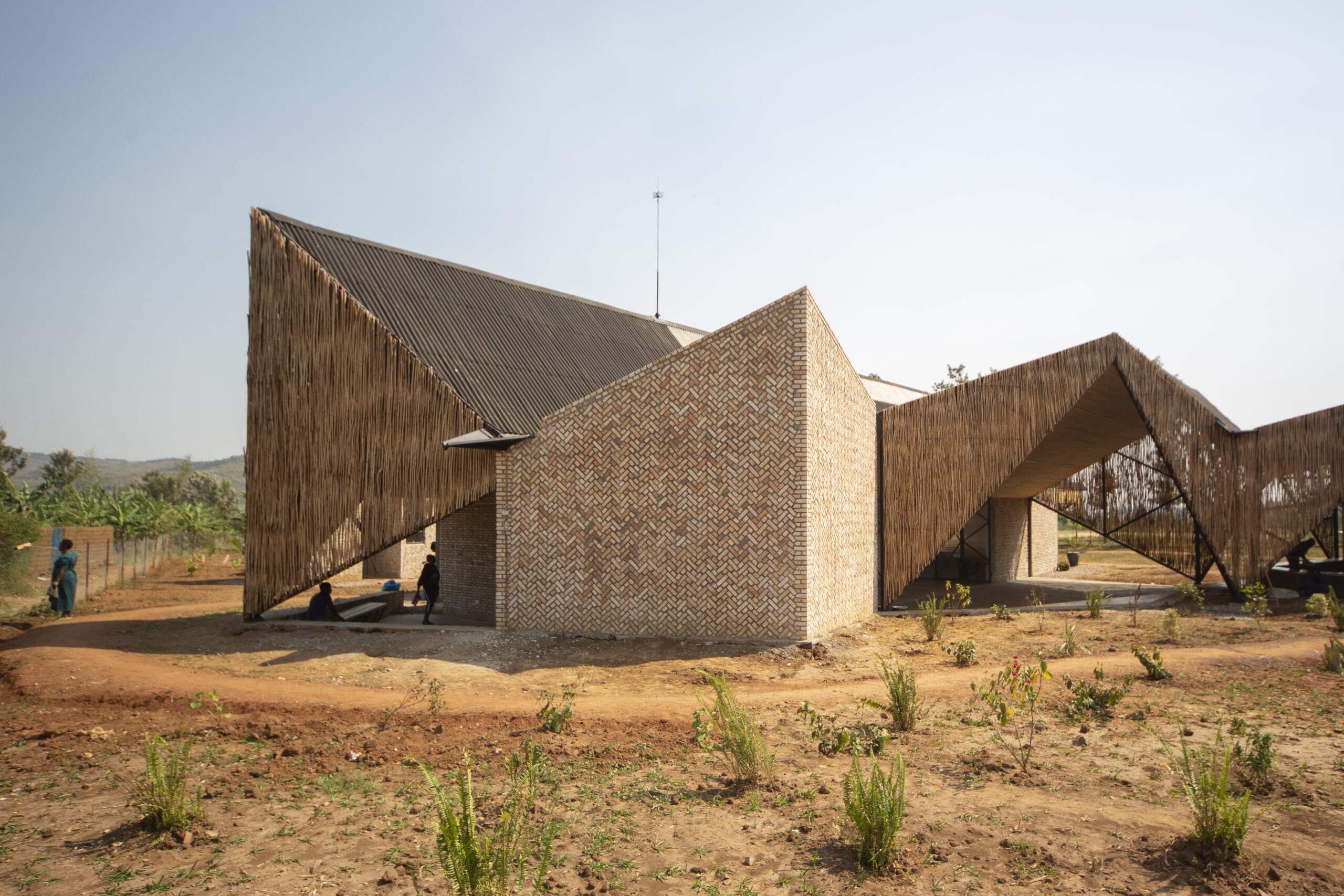

Komera Leadership Center by BE_Design, Rwanda | 11th Annual A+Awards: Jury Vote Winner in Architecture +For Good; Jury Vote & Popular Choice Winner in Architecture +Low Cost Design; Jury Vote Winner in Architecture +Community; Popular Vote Winner in Community Centers

After living in Rwanda for several years, Bruce Engel founded BE_DESIGN in 2016 upon his return to New York. The team comprises Alain Yves Twizeyimana, Emmanuel Havugimana, Aziz Farid Shyaka, and Marie Minerve Dukunde. Together, the five are creating progressive educational and community projects that serve rural and underprivileged areas in Rwanda, Tanzania, Kenya, and Ghana. The young firm is already garnering awards and recognition for their incredibly intricate fusion of local artistic traditions, talents and techniques with program brief and architectural form. Exemplified in the Komera Leadership Center, which swept at the 11th Annual A+Awards, this firm is one to keep a close eye on.


Beijing AN-Design Architects
Popular Vote Winner, 11th Annual A+Awards, Residential Renovations & Additions
Jury Vote Winner, 11th Annual A+Awards, Urban & Masterplan

Birdseye
Popular Vote Winner, 11th Annual A+Awards, Gallery & Exhibition Spaces

Blue Temple
Jury Vote Winner, 11th Annual A+Awards, Best X-Small Firm (1 – 5 employees)

BRAG Arquitectos
Popular Vote Winner, 11th Annual A+Awards, Multi Unit Housing – High Rise (16+ Floors)

Bureau Fraai
Jury Vote Winner, 11th Annual A+Awards, Residential Interiors (>3000 sq ft)

CAA
Popular Vote Winner, 11th Annual A+Awards, Sustainable Sports & Recreation Building

CAZA
Jury Vote Winner, 11th Annual A+Awards, Religious Buildings & Memorials

Cumulus Studio
Jury Vote Winner, 11th Annual A+Awards, Bars & Wineries
Popular Vote Winner, 11th Annual A+Awards, Cultural & Expo Centers

D/DOCK
Jury Vote Winner, 11th Annual A+Awards, Coworking Space
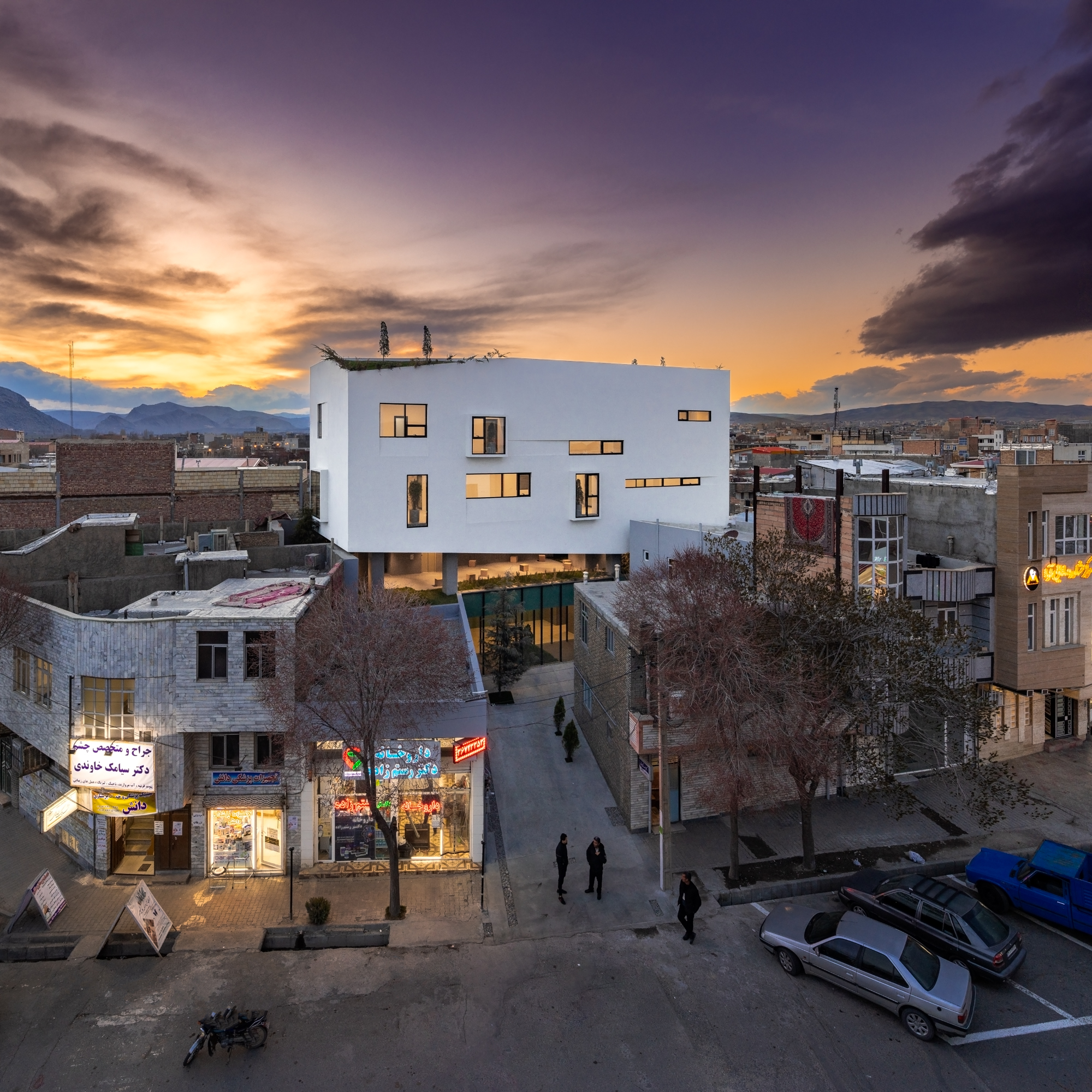

Kia Lab by Davood Boroojeni Office, West Azerbaijan Province, Iran | Popular Choice Winner, 11th Annual A+Awards, Hospitals & Healthcare Centers

Davood Boroojeni Office’s vast range of experience is evident in one look at the Tehran-based firm’s profile. With over 15 years of professional experience, their team has developed expertise in all areas of architectural production — from preliminary design ideas to schematic design and development, as well as producing submittal packages, visual presentations, construction documents, layouts and details through close dialogue with clients, producers and engineers. This multifaceted approach is evident in projects such as Kia Lab, which take a holistic view of the programmatic brief, embedding the building’s function with the broader urban and cultural environment.

Dedang Design
Jury Vote Winner, 11th Annual A+Awards, Community Centers

Design Workshop
Jury Vote Winner, 11th Annual A+Awards, Best Landscape Design Firm

Dubuisson
Popular Vote Winner, 11th Annual A+Awards, Gyms & Recreation Centers

DXA studio
Popular Vote Winner, 11th Annual A+Awards, Best Residential Firm

ECADI
Popular Vote Winner, 11th Annual A+Awards, Unbuilt Sports & Recreation

Edition Office
Jury Vote Winner, 11th Annual A+Awards, Multi Unit Housing – Low Rise (1 – 4 Floors)

EHDD
Jury Vote Winner, 11th Annual A+Awards, Sustainable Sports & Recreation Building
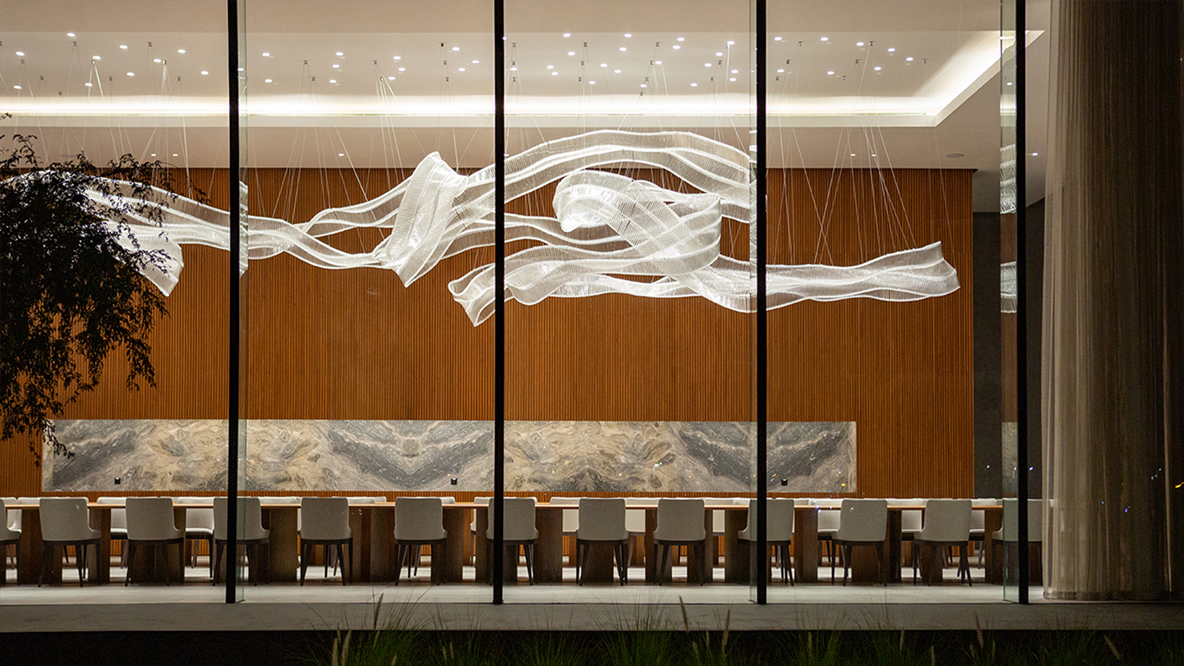

Ghaf Majlis by Etereo Design, Ajman, United Arab Emirates | 11th Annual A+Awards: Popular Vote Winner in Best Young Interior Design Firm; Popular Vote Winner in Mixed Use (S <25,000 sq ft.)

Etereo Design is both a singular studio with a unique output and a cosmopolitan firm of the 21st century, which is to say it draws strength from the intersection of cultures. As the firm puts it, “with an astute understanding of architecture, a vibrant and artistically abundant Italian heritage, dotted with influences from the Middle East and harmoniously brought together with passion, Etereo is born.” From this starting point, the firm creates breathtakingly elegant spaces that exude creative force and revel in an expert selection of materials and finishes, which are honored in the painstaking execution of their project’s finer details.

EYAC Arquitec
Popular Vote Winner, 11th Annual A+Awards, Architecture +Urban Transformation

Foster + Partners
Jury Vote Winner, 11th Annual A+Awards, Stadium & Arena
Jury Vote Winner, 11th Annual A+Awards, Sustainable Commercial Building
Popular Vote Winner, 11th Annual A+Awards, Architecture +Health

gad
Jury Vote Winner, 11th Annual A+Awards, Spa & Wellness

Gensler
Jury Vote Winner, 11th Annual A+Awards, Unbuilt Masterplan
Popular Vote Winner, 11th Annual A+Awards, Sustainable Commercial Building

GN Architects
Jury Vote Winner, 11th Annual A+Awards, Architecture +Small Projects

H Architecture
Popular Vote Winner, 11th Annual A+Awards, Government & Civic Buildings
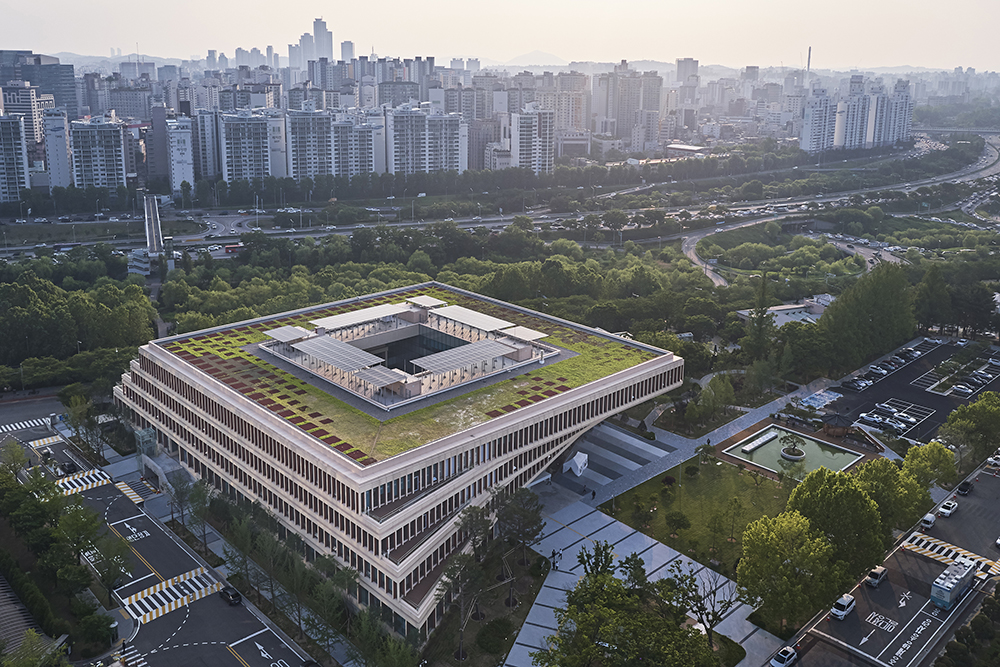

National Assembly Communication Building by HAEAHN Architecture and H-Architecture, Seoul, South Korea | Popular Vote Winner, 11th Annual A+Awards, Government & Civic Buildings

HAEAHN is the brainwork of over 1,300 employees, spread over offices across the world — from its headquarters in Seoul to new branches in Baghdad, Ho Chi Minh City, Riyadh and Savannah (Georgia) that came about through the firm’s alliance with H Architecture New York in 2011. This radical internationality translates to the broad expanse of the firm’s expertise: employees specialize in a range of fields, from architecture to environmental design to urban planning to interior design and more. Since it was founded in 1990, HAEAHN Architecture, has strove to design ambitious and impactful urban environmental projects, deeply rooted in a spirit of innovation.

HDR
Popular Vote Winner, 11th Annual A+Awards, Architecture +Health

Heatherwick Studio
Jury Vote & Popular Choice Winner, 11th Annual A+Awards, Shopping Center

HGA
Jury Vote Winner, 11th Annual A+Awards, Higher Education & Research Facilities

HLW
Popular Vote Winner, 11th Annual A+Awards, Architecture +Adaptive Reuse

HOK
Popular Vote Winner, 11th Annual A+Awards, Transportation Infrastructure

Hooba Design
Popular Vote Winner, 11th Annual A+Awards, Best Medium Firm (16 – 40 employees)

Inrestudio
Jury Vote Winner, 11th Annual A+Awards, Architecture +Brick
Jury Vote Winner, 11th Annual A+Awards, Office – Low Rise (1 – 4 Floors)

JSPA Design
Jury Vote & Popular Choice Winner, 11th Annual A+Awards, Factories & Warehouses

K-Studio
Jury Vote Winner, 11th Annual A+Awards, Architecture +Stone
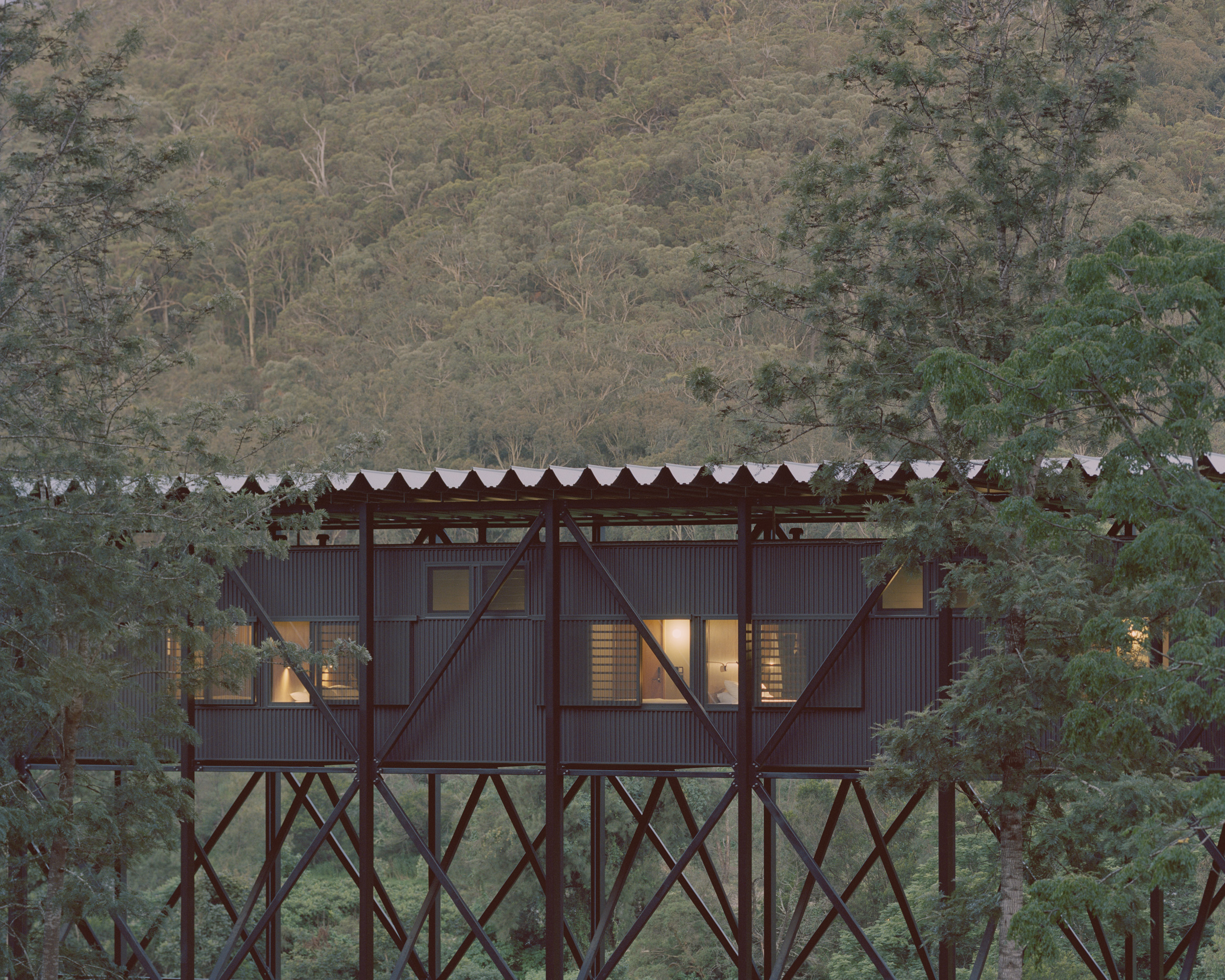

Bundanon Art Museum + Bridge by Kerstin Thompson Architects (KTA), Illaroo, Australia | 11th Annual A+Awards: Jury Vote Winner in Architecture +Environment; Jury Vote Winner in Sustainable Cultural/Institutional Building | Photo by Rory Gardiner

The output of Kerstin Thompson Architects (KTA) configures architecture as an inherently civic endeavor; to do so, each design has strong multidisciplinary foundations. Indeed, the team has forged strong relationships with engineers, emerging technology specialists and landscape and heritage consultants, and their expertise informs the approach to each project, injecting innovation and environmental sensitivity to the specificities of a given project whilst evolving the firm’s design approach for future commissions. The result is an oeuvre of sensitive, site-responsive architecture that synergize form and function with landscape, resulting in highly meaningful and resilient places.

Kosloff Architecture
Jury Vote Winner, 11th Annual A+Awards, Libraries
Popular Vote Winner, 11th Annual A+Awards, Architecture +Learning

LAAB Architects
Popular Vote Winner, 11th Annual A+Awards, Apartment
Popular Vote Winner, 11th Annual A+Awards, Architecture +Branding

Laguarda.Low Architects
Popular Vote Winner, 11th Annual A+Awards, Office – High Rise (16+ Floors)
Popular Vote Winner, 11th Annual A+Awards, Urban & Masterplan

Landao Design
Popular Vote Winner, 11th Annual A+Awards, Architecture +Landscape

Laney LA
Jury Vote Winner, 11th Annual A+Awards, Unbuilt – Private House (L >3000 sq ft)

Lazor/Office
Jury Vote Winner, 11th Annual A+Awards, Architecture +Wood
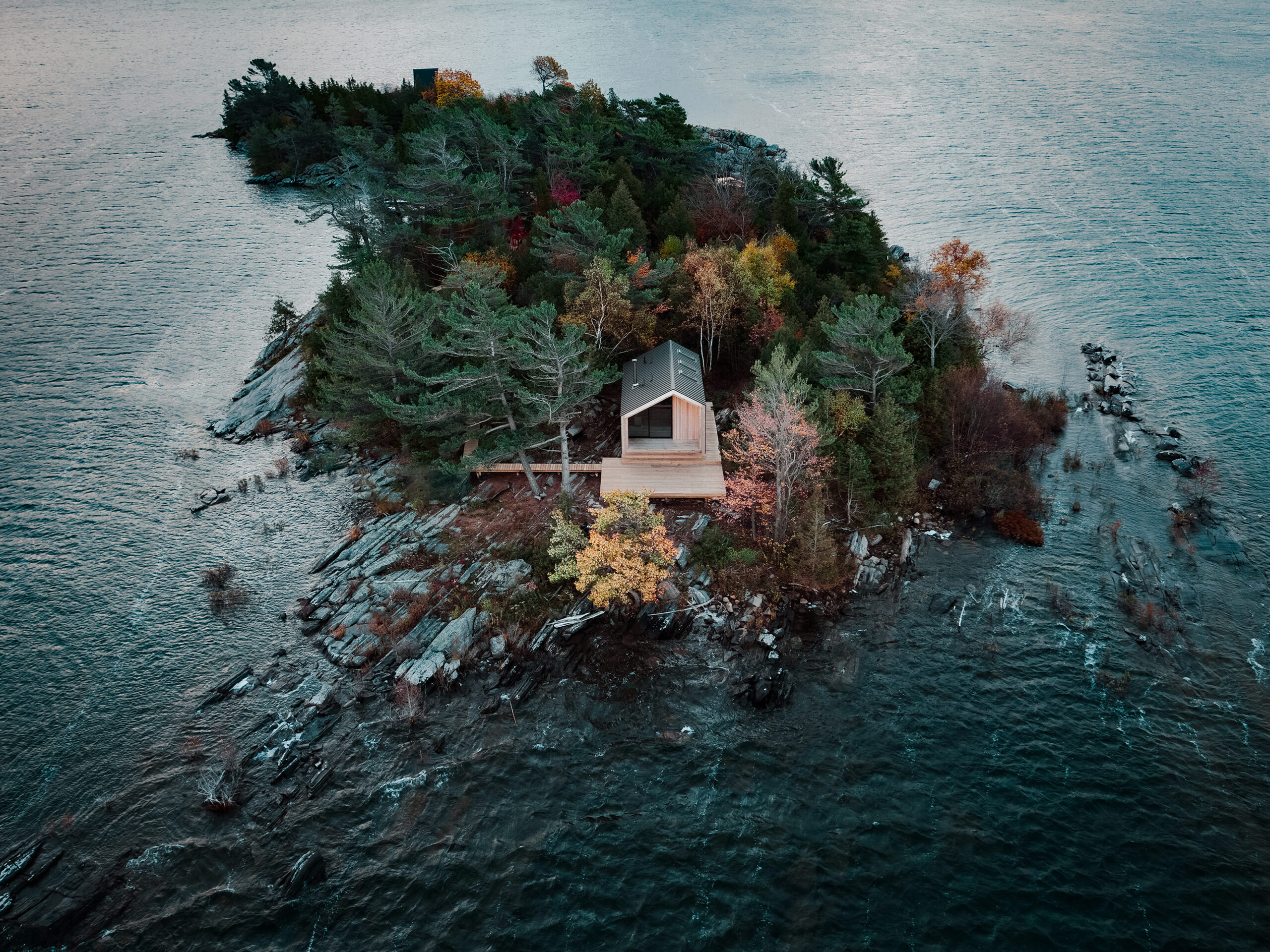

Backcountry Hut Company by Leckie Studio Architecture + Design | Popular Vote Winner, 11th Annual A+Awards, Best Young Firm

The Vancouver-based inter-disciplinary design studio was founded on ambition,  with the aim of “pushing the traditional boundaries of architectural practice as a catalyst for cultural change.” Designing across a variety of scales and media, the eighteen person team emphasizes highly collaborative approaches to project development. Impressively, their internal digital visualization lab creates an integrated workflow for testing and developing design ideas. Moreover, the team comprises a variety of specializations including interior design, prefabrication, mass-timber, industrial design, digital fabrication, graphic design and architectural visualization, allowing them to tackle projects of substantial size and complexity.


Leehong Kim Architects
Jury Vote Winner, 11th Annual A+Awards, Transportation Infrastructure
Jury Vote Winner, 11th Annual A+Awards, Architecture +Glass

LUO studio
Popular Vote Winner, 11th Annual A+Awards, Sustainable Interior Project

MAD Architects
Jury Vote Winner, 11th Annual A+Awards, Best Cultural Firm
Popular Vote Winner, 11th Annual A+Awards, Architecture +Concrete

MADO ARCHITECTS
Popular Vote Winner, 11th Annual A+Awards, Unbuilt Institutional

MARS Studio
Popular Vote Winner, 11th Annual A+Awards, Best Small Firm (6 – 15 employees)

McGregor Coxall
Jury Vote & Popular Choice Winner, 11th Annual A+Awards, Architecture +Teamwork
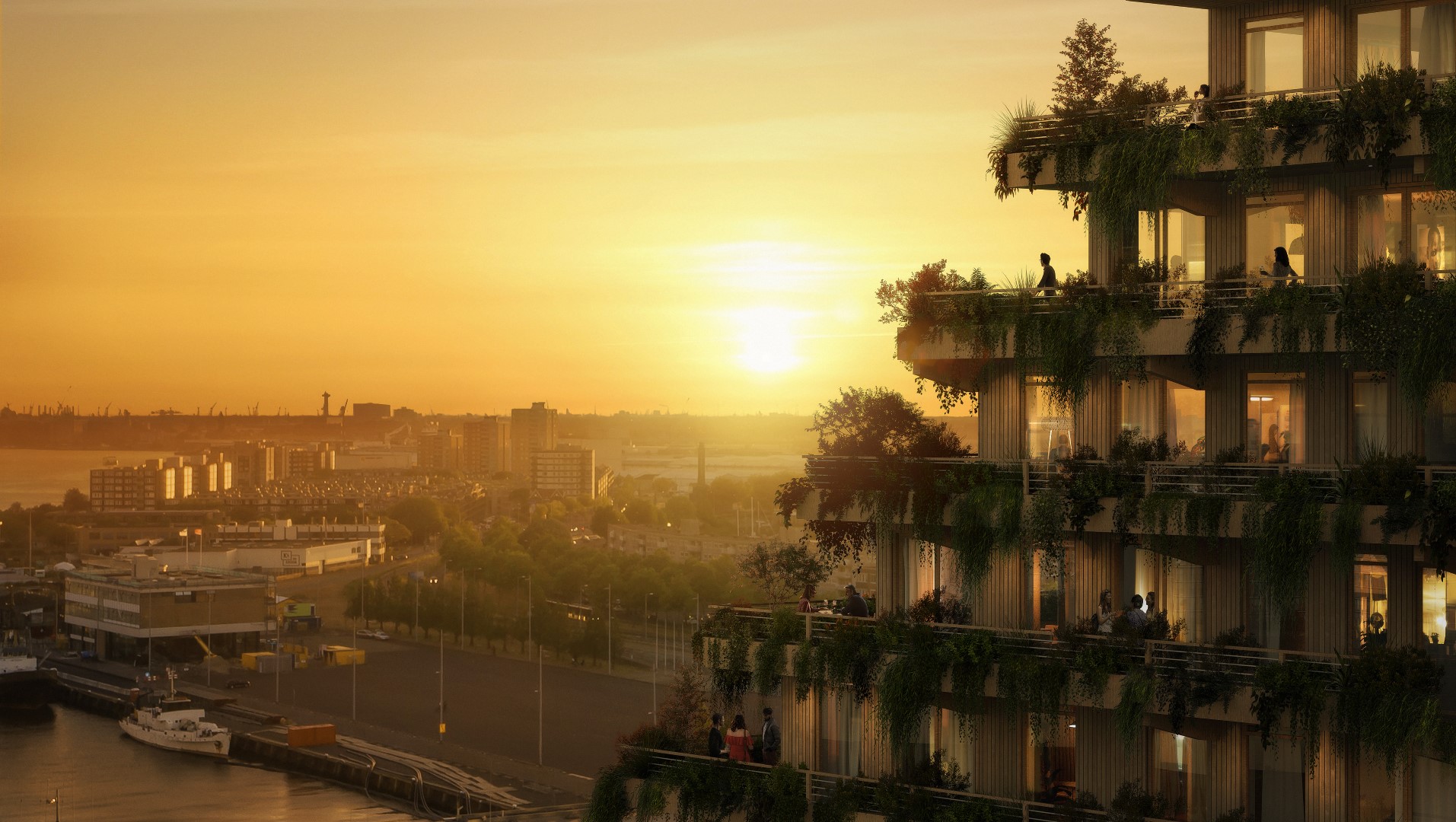

SAWA by Mei architects and planners, Rotterdam, Netherlands | Popular Vote Winner, 11th Annual A+Awards, Unbuilt Sustainable Residential Project

The word “environment” carries many associations, and for Mei architects and planners, the term serves as an anchor for all projects: the history of the location, the current context and future living environment. The Rotterdam-based office is structured around the knowledge divisions of Building Transformation, New Construction and Urban Development. With a dash of courage, the resulting design champion innovative technical applications and user concepts aimed at social and ecological sustainability. With the design and development of SAWA, a fully wooden residential building in Rotterdam, Mei established themselves as pioneers in creating future-proof, nature-inclusive housing.


MESH Architectures
Jury Vote Winner, 11th Annual A+Awards, Sustainable Multi-Unit Residential Building

Mix Architecture
Popular Vote Winner, 11th Annual A+Awards, Sustainable Hospitality Building

modus studio
Popular Vote Winner, 11th Annual A+Awards, Pavilions

Moneo Brock
Popular Vote Winner, 11th Annual A+Awards, Architecture +Community

Morphosis Architects
Jury Vote Winner, 11th Annual A+Awards, Architecture +Branding
Jury Vote Winner, 11th Annual A+Awards, Museum

MQ Architecture
Jury Vote Winner, 11th Annual A+Awards, Best Small Firm (6 – 15 employees)
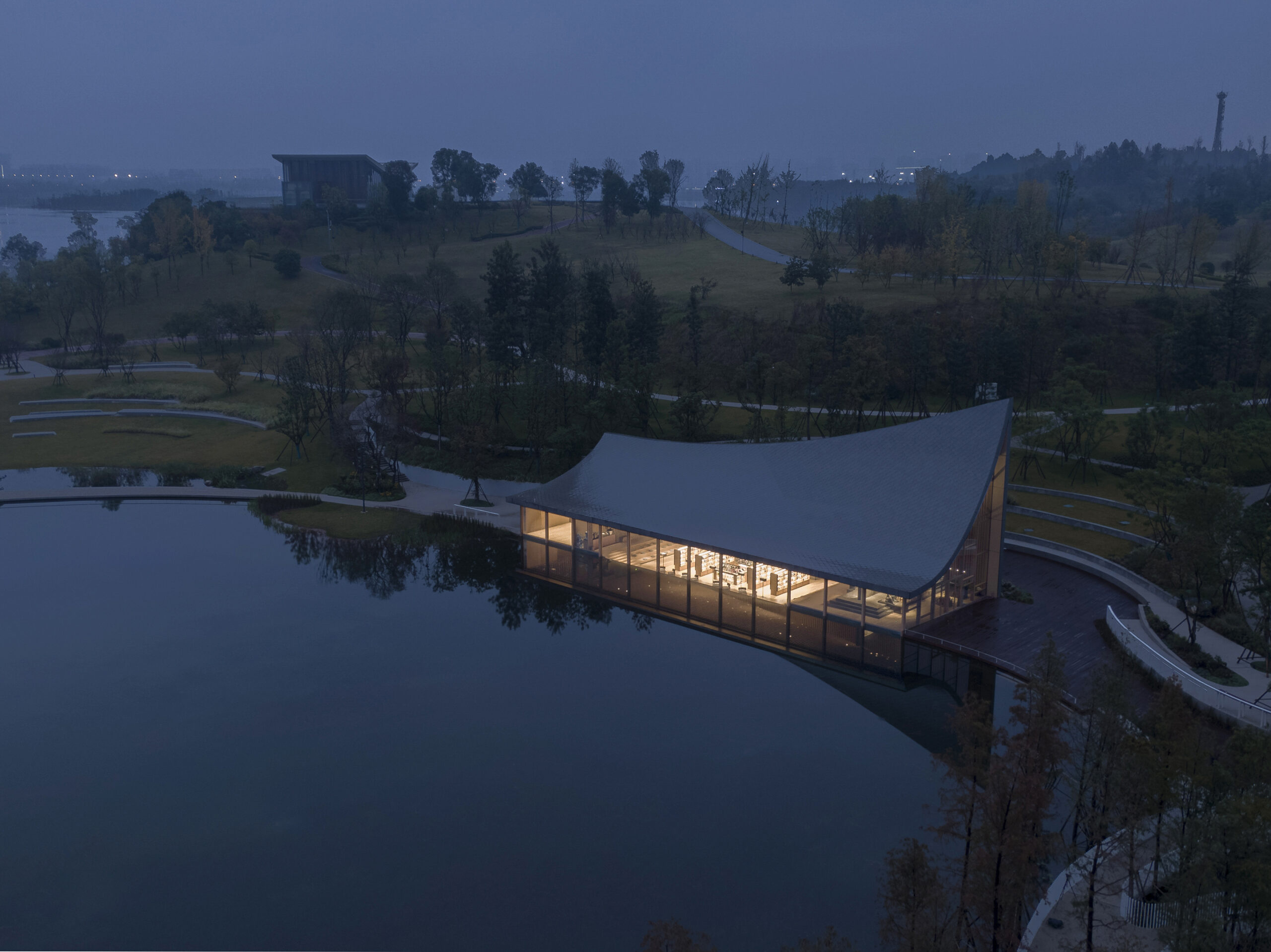

Xinglong Lake CITIC Bookstore by MUDA-Architects, Chengdu, China | Jury Vote Winner, 11th Annual A+Awards, Best Young Firm

MUDA-Architects are an exciting and daring young firm that has dominated the architectural landscape in recent years. The up-and-coming practice is keen to showcase its diverse talent on the global stage, and with a rapidly expanding portfolio of fascinating projects, the young team is already gaining recognition for its creativity and leadership. Initially founded in Boston, the US, in 2015 and currently based in Southwest China, MUDA-Architects occupies offices in Beijing and Chengdu. Their work in the public realm ranges from bookshops to hotels and is united by their dedication to finding the right solution without compromising aesthetics.


Multistudio
Popular Vote Winner, 11th Annual A+Awards, Libraries

Multitude Of Sins
Jury Vote Winner, 11th Annual A+Awards, Sustainable Interior Project

MVRDV
Jury Vote Winner, 11th Annual A+Awards, Architecture +Facades

NAPUR Architect
Popular Vote Winner, 11th Annual A+Awards, Museum
Popular Vote Winner, 11th Annual A+Awards, Architecture +Facades

NEWSUBSTANCE
Popular Vote Winner, 11th Annual A+Awards, Pop-Ups & Temporary

NICOLEHOLLIS
Popular Vote Winner, 11th Annual A+Awards, Residential Interiors (<3000 sq ft)

NIKKEN SEKKEI LTD
Jury Vote Winner, 11th Annual A+Awards, Transport Interiors
Jury Vote Winner, 11th Annual A+Awards, Primary & High Schools

NOA
Popular Vote Winner, 11th Annual A+Awards, Spa & Wellness

Noxon Giffen
Jury Vote & Popular Choice Winner, 11th Annual A+Awards, Architecture +Teamwork

Office AIO
Jury Vote Winner, 11th Annual A+Awards, Best Interior Design Firm
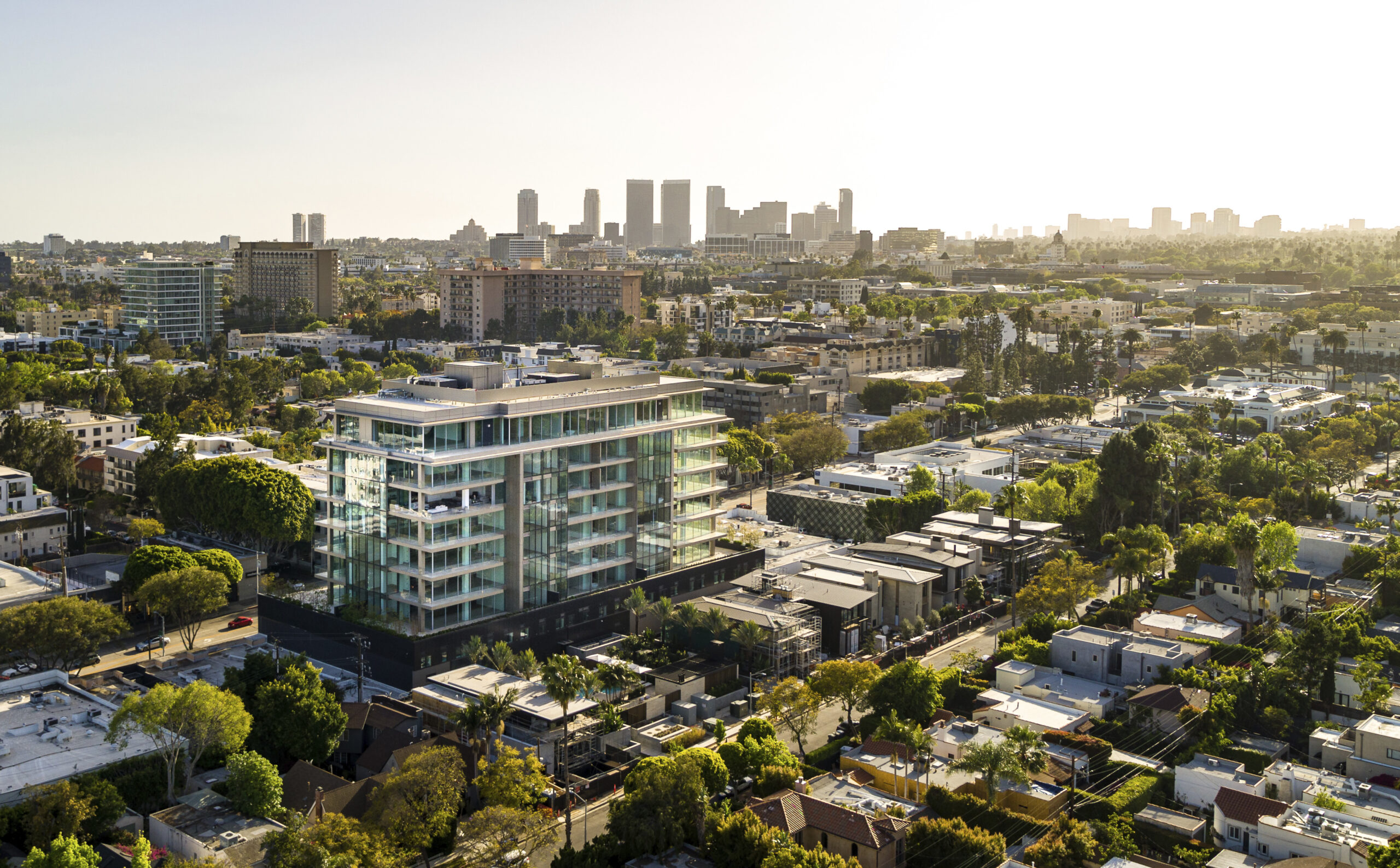

8899 Beverly Boulevard by Olson Kundig, West Hollywood, California | 11th Annual A+Awards: Jury Vote Winner in Best Large Firm (41+ employees); Jury Vote Winner in Gallery & Exhibition Spaces; 

The portfolio of Olson Kundig is vast, varied and captivating. The Seattle-based firm’s completed works read as a long list of distinctive projects that span more than fifteen countries across five continents. Founded by Jim Olson in 1966, the studio began its life exploring the relationship between dwelling and landscape — a provenance that remains at the heart of the company’s ethos that has since evolved, morphing in productive new directions as applied to a range of typologies and across dense urban and expansive rural settings. Every finished project manifests a “macro to micro” level of attention, from the big ideas to the smallest details.


Omar Gandhi Architects
Jury Vote Winner, 11th Annual A+Awards, Private House (M 2000 – 4000 sq ft)
Popular Vote Winner, 11th Annual A+Awards, Restaurants (L >1000 sq ft)

Orange Architects
Popular Vote Winner, 11th Annual A+Awards, Multi Unit Housing – Mid Rise (5 – 15 Floors)

PAN Cabins
Jury Vote Winner, 11th Annual A+Awards, Architecture +Metal

Park + Associates
Jury Vote Winner, 11th Annual A+Awards, Apartment
Popular Vote Winner, 11th Annual A+Awards, Restaurants (S <1000 sq ft)

Perkins&Will
Jury Vote Winner, 11th Annual A+Awards, Best Sustainable Firm

PPAG architects
Jury Vote Winner, 11th Annual A+Awards, Restaurants (L >1000 sq ft)
Jury Vote Winner, 11th Annual A+Awards, Sustainable Hospitality Building

Provencher_Roy
Jury Vote Winner, 11th Annual A+Awards, Hospitals & Healthcare Centers

RAAD Studio
Jury Vote Winner, 11th Annual A+Awards, Residential Interiors (<3000 sq ft)
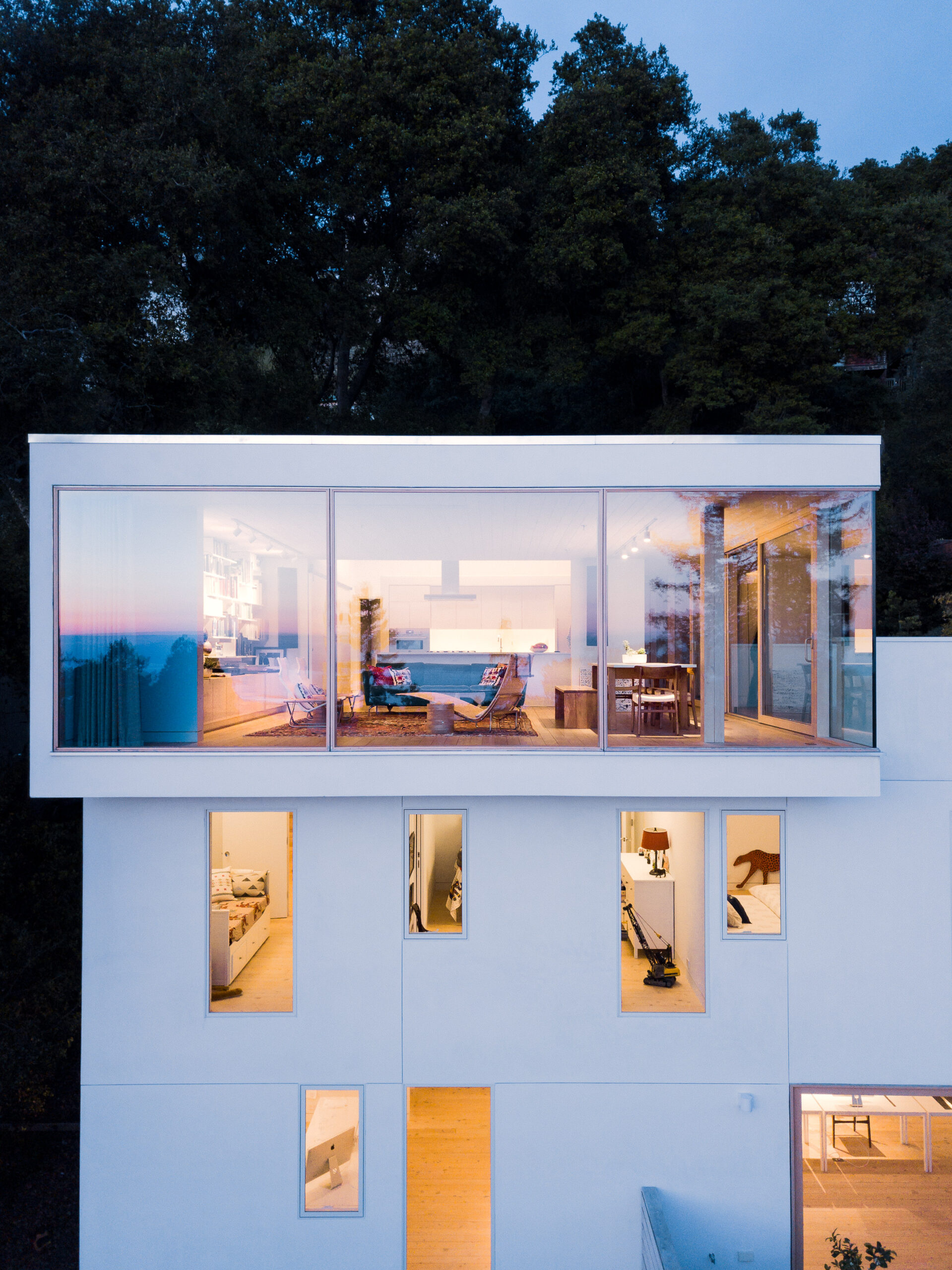

House of Light by Rangr Studio, Berkeley, CA, United States | Popular Vote Winner, 11th Annual A+Awards, Best X-Small Firm (1 – 5 employees) | Photo by Joe Fletcher Photography

Since 2004, Rangr Studio has deployed the principles of ancient design with contemporary materials and methods to find poetic and harmonious solutions to a wide variety of design challenges. Rather than imposing a structure on an environment, the studio creates essential architectural forms in harmony with the surrounding landscape — whether rural or urban in setting. Founder Jasmit Singh Rangr grew up on the coasts of India, and in the UK, was educated at Yale, and is currently bi-coastal between California and New York. His life experience and training inform Rangr Studio’s philosophy — an approach that is deeply sensitive to the interaction between climate, landscape, culture, and architecture.


RAU
Jury Vote Winner, 11th Annual A+Awards, Unbuilt Sustainable Residential Project

RIOS
Popular Vote Winner, 11th Annual A+Awards, Architecture +Workspace

RVAD STUDIO
Popular Vote Winner, 11th Annual A+Awards, Architecture +Models & Rendering

Sasaki
Popular Vote Winner, 11th Annual A+Awards, Sustainable Landscape/Planning Project


Featured Firm: SAVA
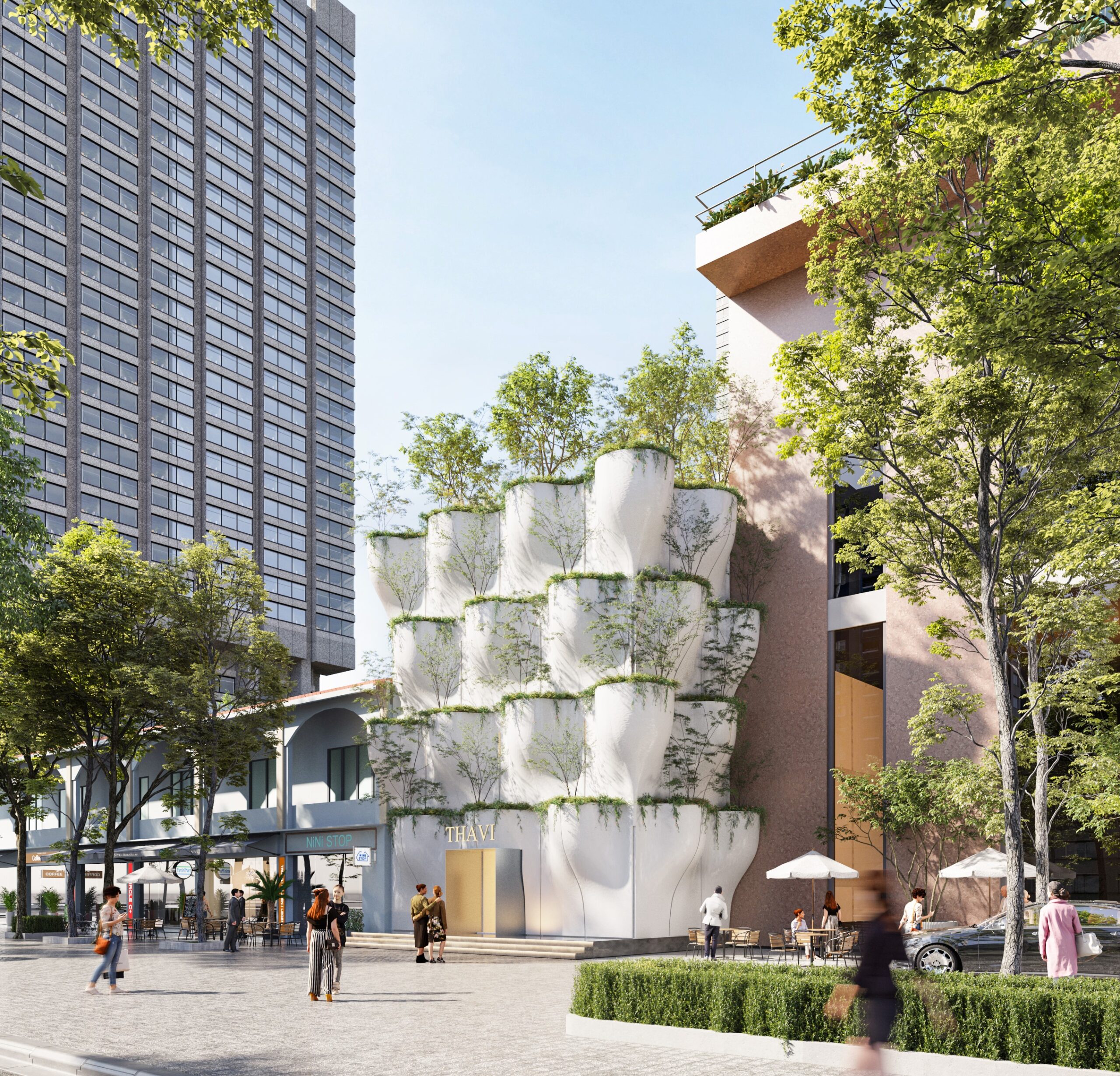
Thavi Cosmetics Showroom by SAVA, Vinh, Vietnam | Popular Vote Winner, 11th Annual A+Awards, Unbuilt Commercial (Also pictured in top image). 

With headquarters in Borneo, Malaysia and Danang, Vietnam, SAVA draws inspiration from mountains and coastlines. Committed to designing spaces for people from every walk of life, the firm consciously designs to harness locally-sourced materials and building techniques with the aim of bringing people closer to nature — especially those in an urban environment. Indeed, the firm draws on its past experience in masterplanning, housing and bamboo architecture in Asia and Europe to produce architecture that goes beyond aesthetics — even if the result is a visually playful array of perforated geometries with openings that create new relationships to the surrounding environment.

Shape Architecture
Popular Vote Winner, 11th Annual A+Awards, Unbuilt Sustainable Non-Residential Project

Shejin Space Design
Jury Vote Winner, 11th Annual A+Awards, Commercial Interiors (<25,000 sq ft.)

SkB Architects
Jury Vote Winner, 11th Annual A+Awards, Commercial Interiors (>25,000 sq ft.)

Sordo Madaleno
Jury Vote Winner, 11th Annual A+Awards, Restaurants (S <1000 sq ft)

SPARK
Jury Vote Winner, 11th Annual A+Awards, Retail


Featured Firm: STARH
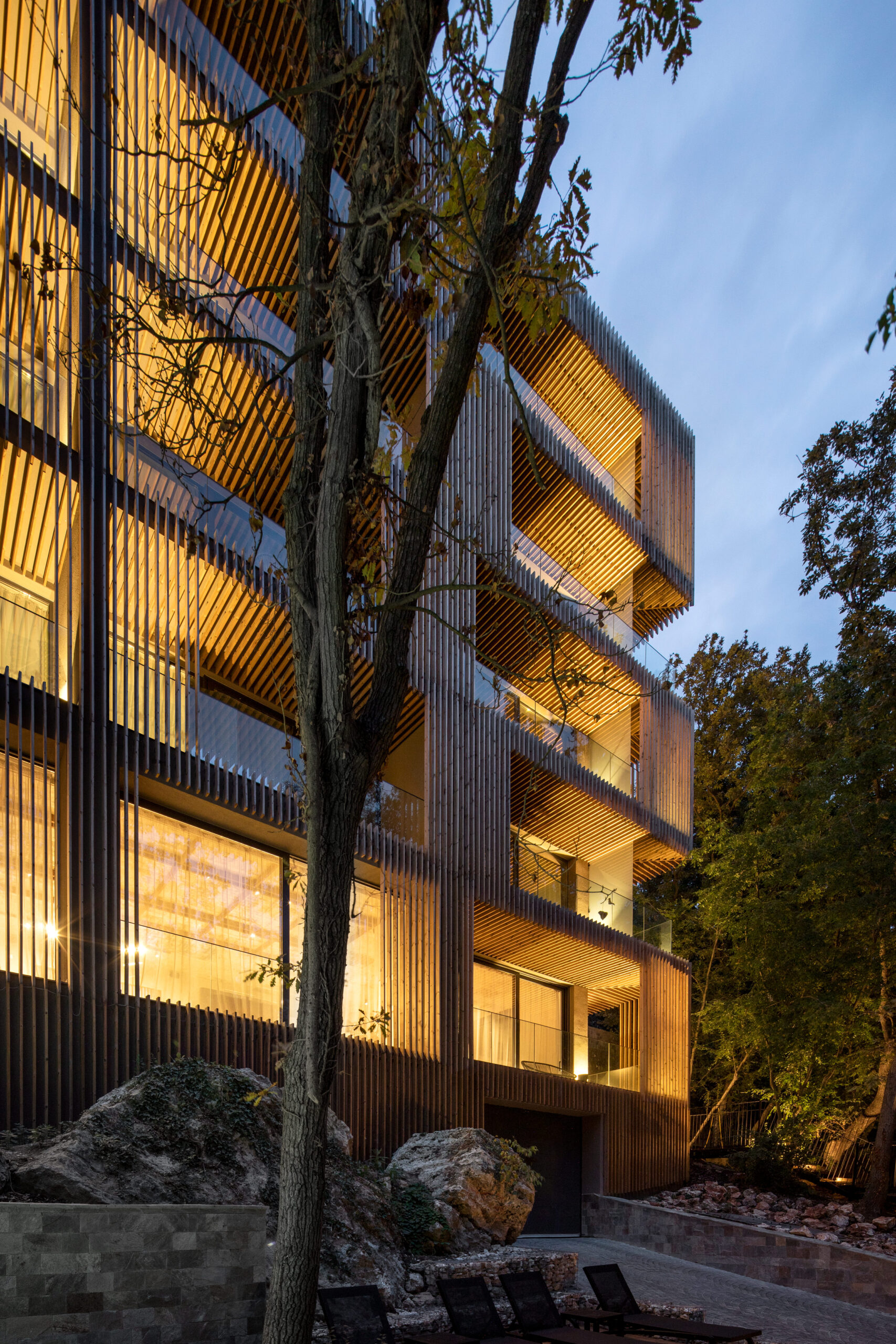
Umani Hotel by STARH, Varna, Bulgaria | Popular Vote Winner, 11th Annual A+Awards, Architecture +Environment Photo by Dian Stanchev 

STARH is an architecture studio with a mission to overcome stereotypes in the architectural environment. The Bulgarian studio has established a name for itself by creating high-quality designs, from both a functional and material standpoint, with a high level of attention to detail and longevity. Through this approach, the firm achieves innovative design solutions with a distinctive signature. STARH’s portfolio covers projects of different scales and complexity that are united by bold and rhythmic geometries resulting forceful formal statements.


STL Architects
Jury Vote Winner, 11th Annual A+Awards, Unbuilt Institutional

Studio FEI
Popular Vote Winner, 11th Annual A+Awards, Unbuilt Cultural

Studio Gang
Jury Vote Winner, 11th Annual A+Awards, Unbuilt – Multi-Unit Housing (L >10 Floors)

studio mk27
Popular Vote Winner, 11th Annual A+Awards, Private House (L 4000 – 6000 sq ft)
Jury Vote Winner, 11th Annual A+Awards, Architecture +Art

StudioPOD
Jury Vote Winner, 11th Annual A+Awards, Sustainable Transportation Project

Superbloom
Popular Vote Winner, 11th Annual A+Awards, Unbuilt Sustainable Non-Residential Project

Superkül
Jury Vote Winner, 11th Annual A+Awards, Educational Interiors

SWA GROUP
Popular Vote Winner, 11th Annual A+Awards, Public Parks & Green Spaces

temporary work
Jury Vote Winner, 11th Annual A+Awards, Architecture +Models & Rendering
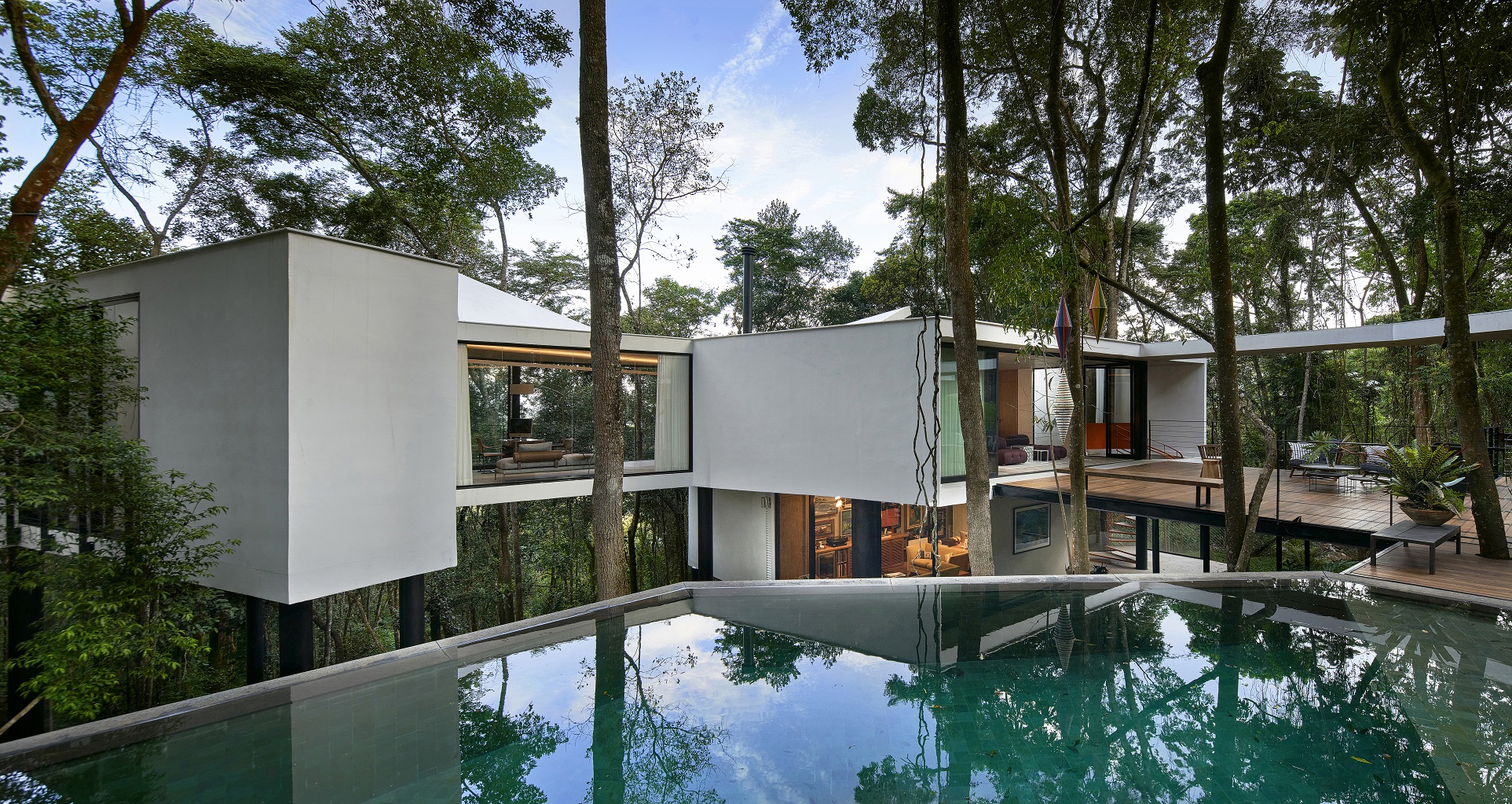

Açucena House by Tetro Arquitectura, Nova Lima, Brazil | Popular Vote Winner, 11th Annual A+Awards, Private House (M 2000 – 4000 sq ft)

Flowing roofs that soar over meandering structures are some of the hallmarks in the remarkable portfolio of this Brazilian firm. Based in Belo Horizonte, the office grounds its work in the careful study of the premises and conditions of the site. This approach is evident in the resulting structures, each highly unique and unrepeatable. In the words  of the firm, “fundamentals such as integration with nature, use of natural materials and exploration of architectural voids are characteristics that permeate every project, from urban scale to furniture design.” This is true across typologies, from museums and venues to commercial, residential and industrial buildings.

TM Light
Jury Vote Winner, 11th Annual A+Awards, Architecture +Light

tono
Jury Vote Winner, 11th Annual A+Awards, Sustainable Private House

Turner Arquitectos
Jury Vote & Popular Choice Winner, 11th Annual A+Awards, Mixed Use (L >25,000 sq ft.)

UNStudio
Popular Vote Winner, 11th Annual A+Awards, Sustainable Cultural/Institutional Building

West of West
Jury Vote Winner, 11th Annual A+Awards, Unbuilt – Multi-Unit Housing (S <10 Floors)

WOJR
Jury Vote Winner, 11th Annual A+Awards, Unbuilt – Private House (S <3000 sq ft)
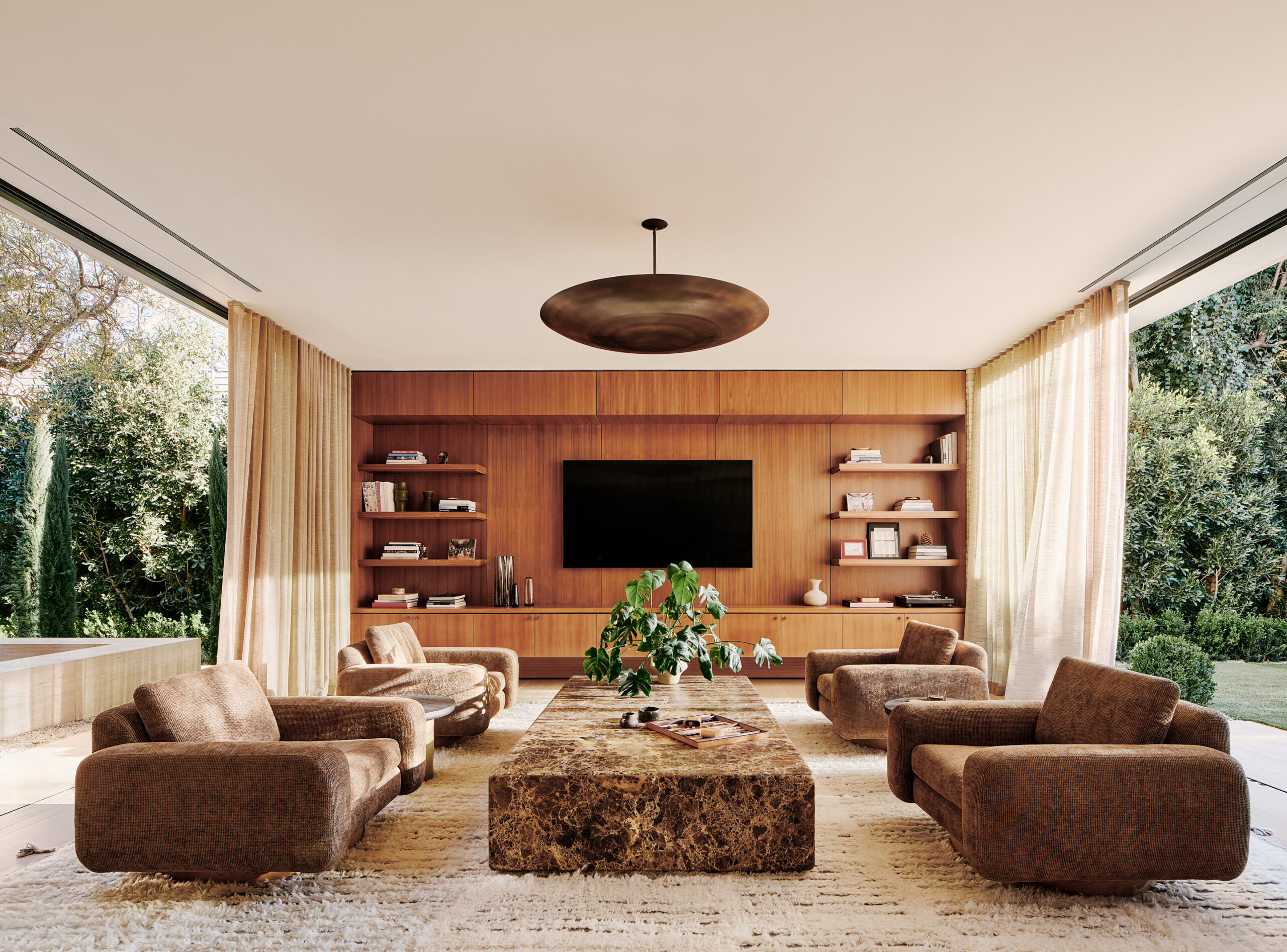

Twentieth by WOODS + DANGARAN, Santa Monica, California | Jury Vote Winner, 11th Annual A+Awards, Best Medium Firm (16 – 40 employees)

Woods + Dangaran’s portfolio boasts an array of warm, elegant residences that exude a timeless California cool and hinge on opening interiors to the outer world. However, going beyond buildings, this Los Angeles-based firm designs at every scale, and their work even includes custom furnishings.  The team prides itself on building collaborative relationships — whether with clients throughout the design process or tradespeople for working out uncompromising in craftsmanship.


XISUI Design
Popular Vote Winner, 11th Annual A+Awards, Architecture +Joy

XMArchitect
Jury Vote Winner, 11th Annual A+Awards, Architecture +Metaverse

ZGF Architects
Popular Vote Winner, 11th Annual A+Awards, Higher Education & Research Facilities

ZZYY Studio
Jury Vote Winner, 11th Annual A+Awards, Unbuilt Commercial
Jury Vote & Popular Choice Winner, 11th Annual A+Awards, Unbuilt Transportation


Great architecture comes to fruition through the work of talented teams and collaborators. There are numerous A+Award-winning companies that fall outside of the traditional architectural role, but that deserve recognition for their contributions. They include:

BR+A, L.F. Driscoll and Balfour Beatty (PennFIRST IPD Team)
Popular Vote Winner, 11th Annual A+Awards, Architecture +Health

Chongqing Qimo Architectural Design Consulting
Jury Vote Winner, 11th Annual A+Awards, Hotels & Resorts

Deed Studio (photography)
Popular Vote Winner, 11th Annual A+Awards, Architecture +Photography & Video

feinknopf (photography)
Jury Vote Winner, 11th Annual A+Awards, Architecture +Photography & Video

Shanghai Rail Transit Line 18 Development
Popular Vote Winner, 11th Annual A+Awards, Transport Interiors


You can check out previous editions of the A+List here: First Edition, Second Edition, Third Edition, Fourth Edition 

To secure your position on next year’s A+List, make sure to enter the 12th Annual A+Awards before the Main Entry Deadline on December 15th:

Enter the 12th Annual A+Awards

Reference

Centenniale coffee table
CategoriesSustainable News

Product Sustainability Framework launched by Finnish Design Shop

Retailer Finnish Design Shop has launched a tool to individually assess and rate the sustainability of more than 20,000 design products featured on its online store.

The retailer’s Product Sustainability Framework intends to support customers in making sustainable design purchases by scoring every item it sells according to a fixed set of criteria tailored specifically for design products.

Scores are determined through a survey directed towards the product manufacturers. The tool assesses five main categories: social responsibility, eco-friendly production, climate impact, sustainable materials, and circular design.

“Each category contains sustainability claims, for which the manufacturer can respond with either yes or no. In total, there are 69 claims,” Finnish Design Shop CEO Teemu Kiiski told Dezeen.

“Manufacturers answer each claim per product, and these claims are based on laws, international agreements, and initiatives.”

This often complex information is assessed and then rated. To make it understandable and comparable for customers, products are badged on the website with one, two or three green leaf symbols, representing good, very good or excellent.

A more detailed breakdown of the product’s score is included in the accompanying sustainability description.

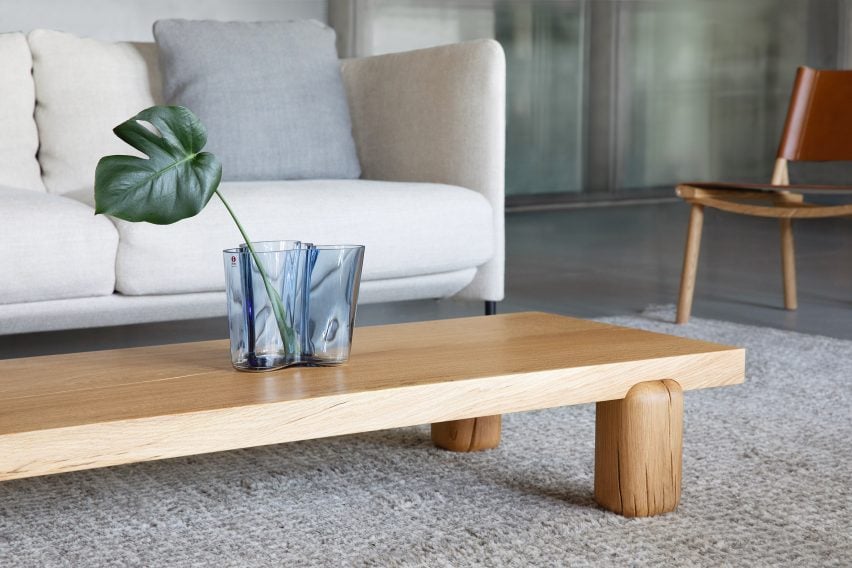
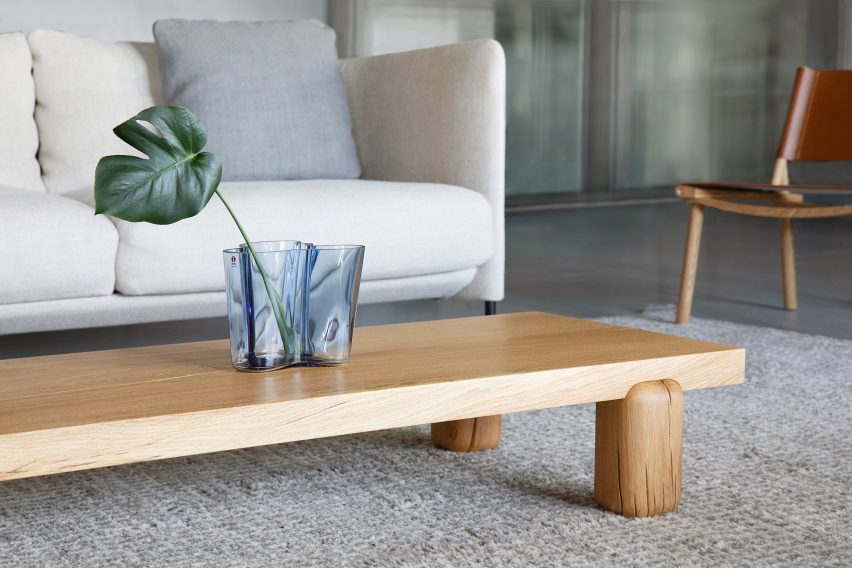
Centenniale coffee table
Nikari’s Centenniale coffee table scored full marks in the climate impact category. Photo is courtesy of Nikari

Explaining why the retailer launched this product-specific framework, Kiiski told Dezeen: “The first reason is the growing demand from customers and professionals for sustainability information regarding the design brands and products. This demand isn’t limited to Finnish Design Shop but extends to the entire design industry.”

“The second reason is that, as a retailer, we have limited means to influence the sustainability of the entire value chain of the products we sell,” he added.

“Through the framework, we can communicate our expectations for product sustainability to manufacturers and guide them towards enhanced sustainability. Simultaneously, we can establish a sustainability standard for the entire industry and lead the way in sustainability matters.”

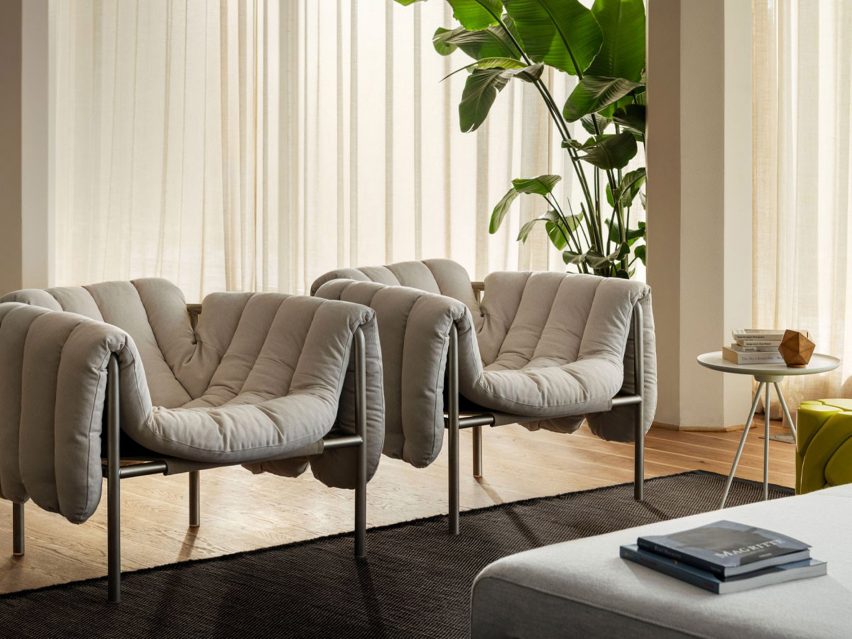
Puffy lounge chair
A puffy lounge chair by HEM scored highly in the eco-friendly production category. Photo is courtesy of HEM

The specific criteria for each product were developed over two years with Ethica, a Finnish circular design expert partner. They rely on the accuracy of the data supplied by each of their suppliers. “We validate it based on our own data, expertise, and experience,” says Kiiski.

While Finnish Design Shop places a high trust in its suppliers to provide it with accurate information regarding their sustainability practices, it also conducts random spot checks.

“We require product manufacturers to be capable of substantiating the authenticity of each sustainability claim,” Kiiski said.

“We do not conduct audits, and this framework is not a standard, certification, or similar entity; rather, it represents our own criteria for sustainable design.”

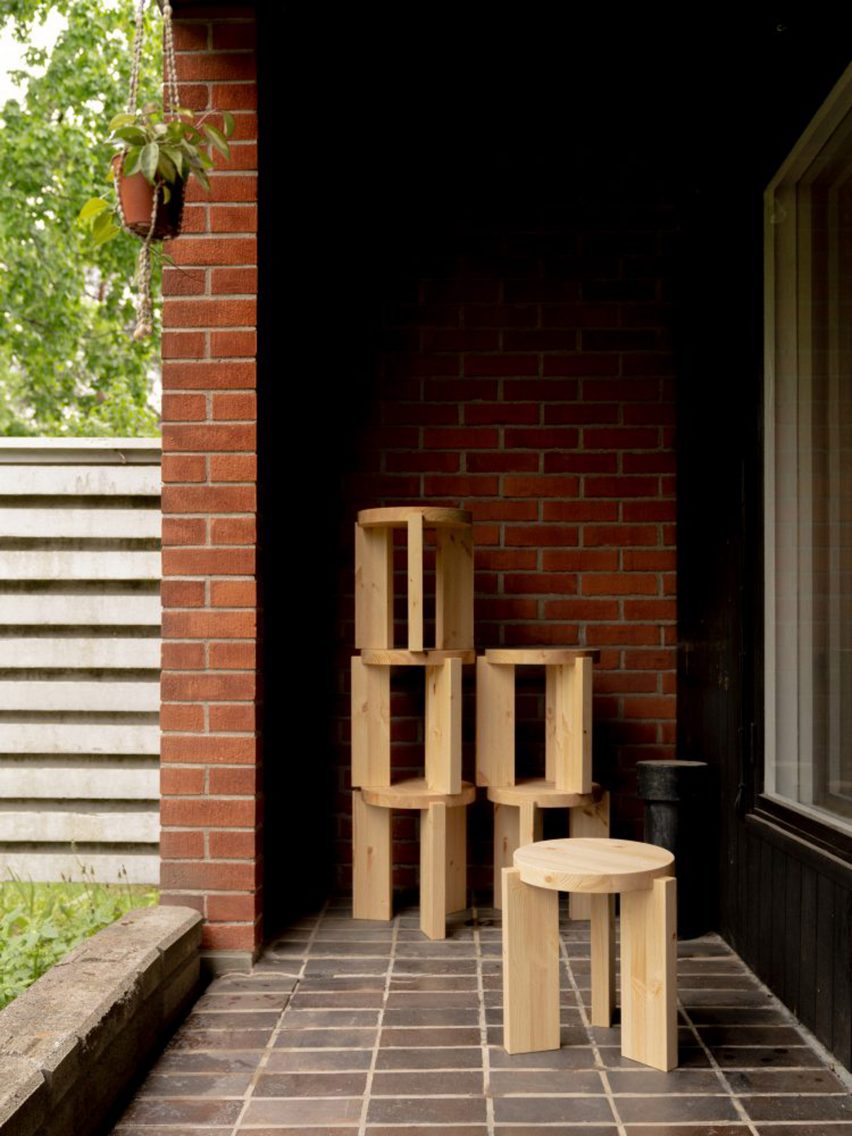
Vaarnii's 001 pine stool
Vaarnii’s 001 pine stool achieved 10/10 in the sustainable materials category. Photo is courtesy of Vaarnii

Some of the 24,000 products on the Finnish Retail Shop website don’t have a rating, which means they haven’t yet been assessed or they do not meet sufficient sustainability standards.

Products that score poorly on the Product Sustainability Framework could eventually be removed from the portfolio.

“If some products or manufacturers do not meet our minimum sustainability criteria over time, we have the option to remove them from our selection,” Kiiski said.

However, the retailer believes this could also serve as an incentive.

“The PSF also serves as an incentive for further sustainability improvement, and we hope it signals to the whole industry that sustainability must be taken seriously, leaving no room for irresponsible actions anymore,” Kiiski added.

He is hopeful of the change that the Product Sustainability Framework will bring.

“The framework and its sustainability claims inform our suppliers about what can be expected from their sustainability practices today,” Kiiski said.

“Sustainability is a hot topic in our industry, but finding concrete data on it can still be a challenge,” he added. “The Product Sustainability Framework is our answer to this.”

“Essentially, it’s a 69-step list on how manufacturers can enhance their sustainability. The fact that over 110 manufacturers have participated so far indicates a need for concrete actions.”

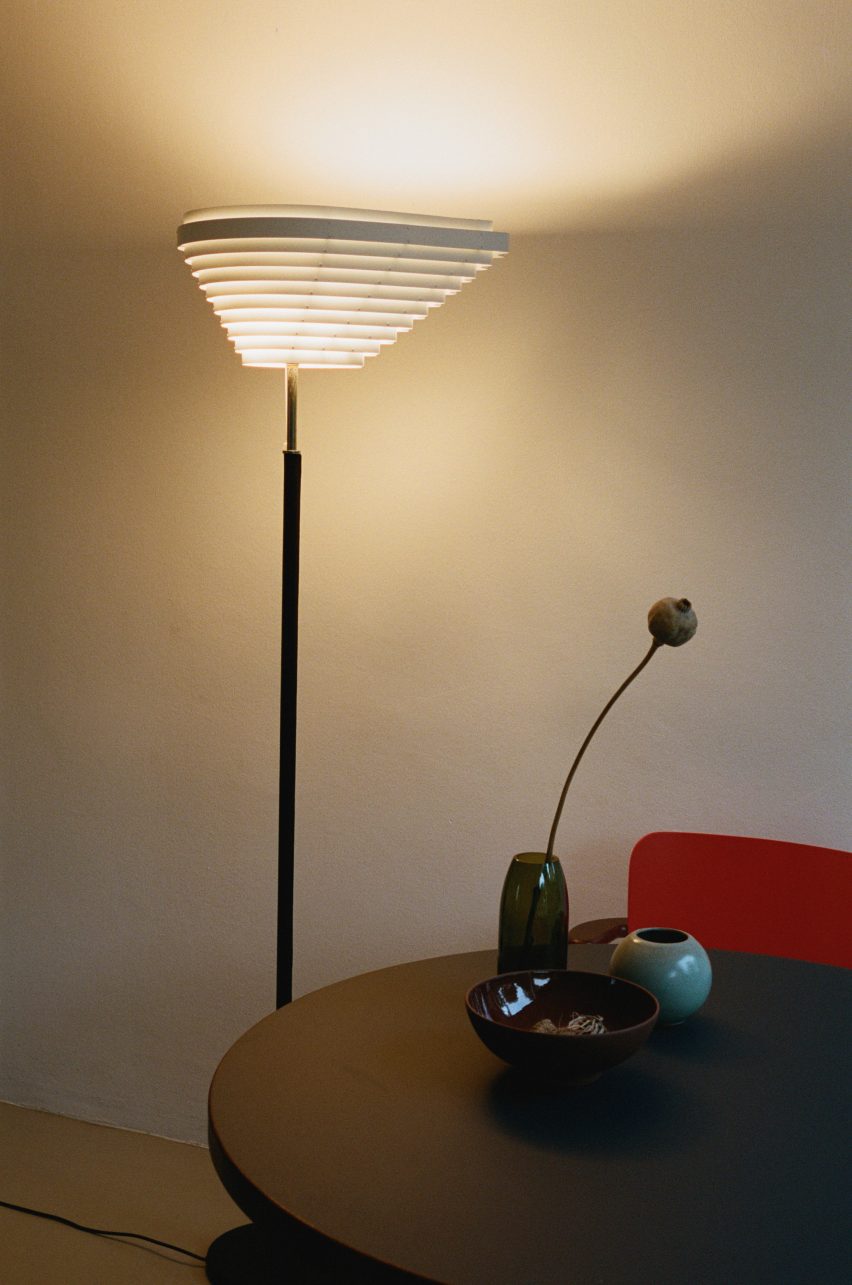
Artek lamp
The A805 floor lamp by Artek reached full marks in the circular design category. Photo is courtesy of Artek

The Product Sustainability Framework is part of Finnish Design Shop’s sustainability strategy. Launched during Helsinki Design Week in September 2023, visitors had the opportunity to explore an installation explaining the framework (pictured, top) and its criteria through five sample products.

Last year, the retailer unveiled a logistics centre in a forest that was designed to enable “a more sustainable future”. It has previously provided the furniture for a pop-up restaurant in New York made from recycled packaging.

The photography is courtesy of the products’ manufacturers. Main image courtesy of Finnish Design Shop.

Reference

Boston Coastal Flood Resilience Design Guidelines and Zoning Overlay District.
CategoriesArchitecture

Architects’ Guide: Short and Long Term Design Strategies for Flood Defense and Urban Resilience

Architizer’s 12th Annual A+Awards are officially underway! Sign up for key program updates and prepare your submission ahead of the Main Entry Deadline on  December 15th.  

With over half of the world’s megacities located along coastlines, many are at risk of experiencing rising sea levels and potential flooding. Projections suggest that by 2050, sea levels will increase by 0.25 inches (0.65 centimeters) per year. Cities around the globe are increasingly embracing comprehensive coastal resilience initiatives to address the urgent challenges of climate change. With climate change triggering a range of impacts, including the alarming rise in sea levels, extreme storm surges and high tides, urban areas are recognizing the need for proactive strategies to safeguard their coastal regions and the communities within them.

A diverse array of measures and actions — including nature-based and/or man-made defenses — are aimed at fortifying cities against the adverse consequences of coastal hazards. The impacts encompass not only the physical encroachment of water onto land but also the destructive effects on infrastructure, buildings, open spaces, and the well-being of urban populations.

Adapting the built environment to reduce the impact of flooding could include building codes, restricting construction in at-risk areas, and planning to live with water. Inevitably, moving away from the coastline will occur in some places. Proactive, managed retreats will have significantly lower social and economic impacts than forced, reactive retreats after the event of coastal flooding.

Fostering Resilience Through City Initiatives and Guiding Principles

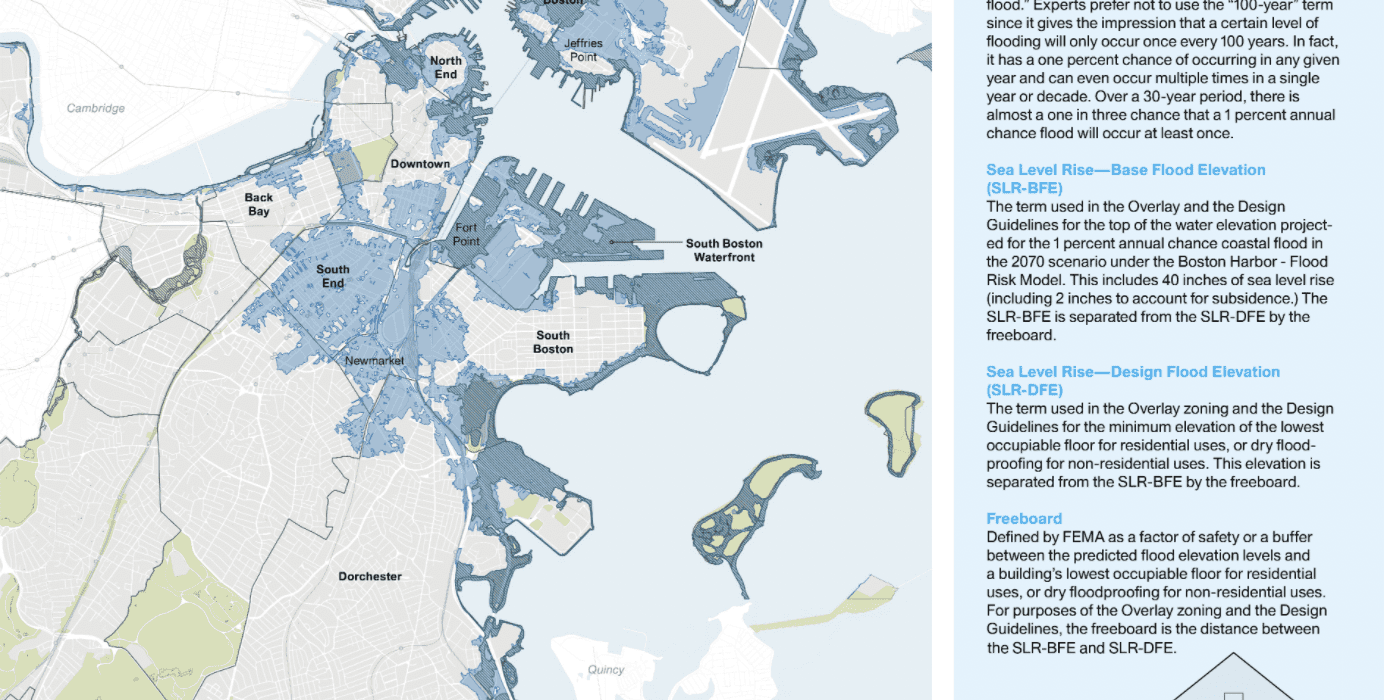
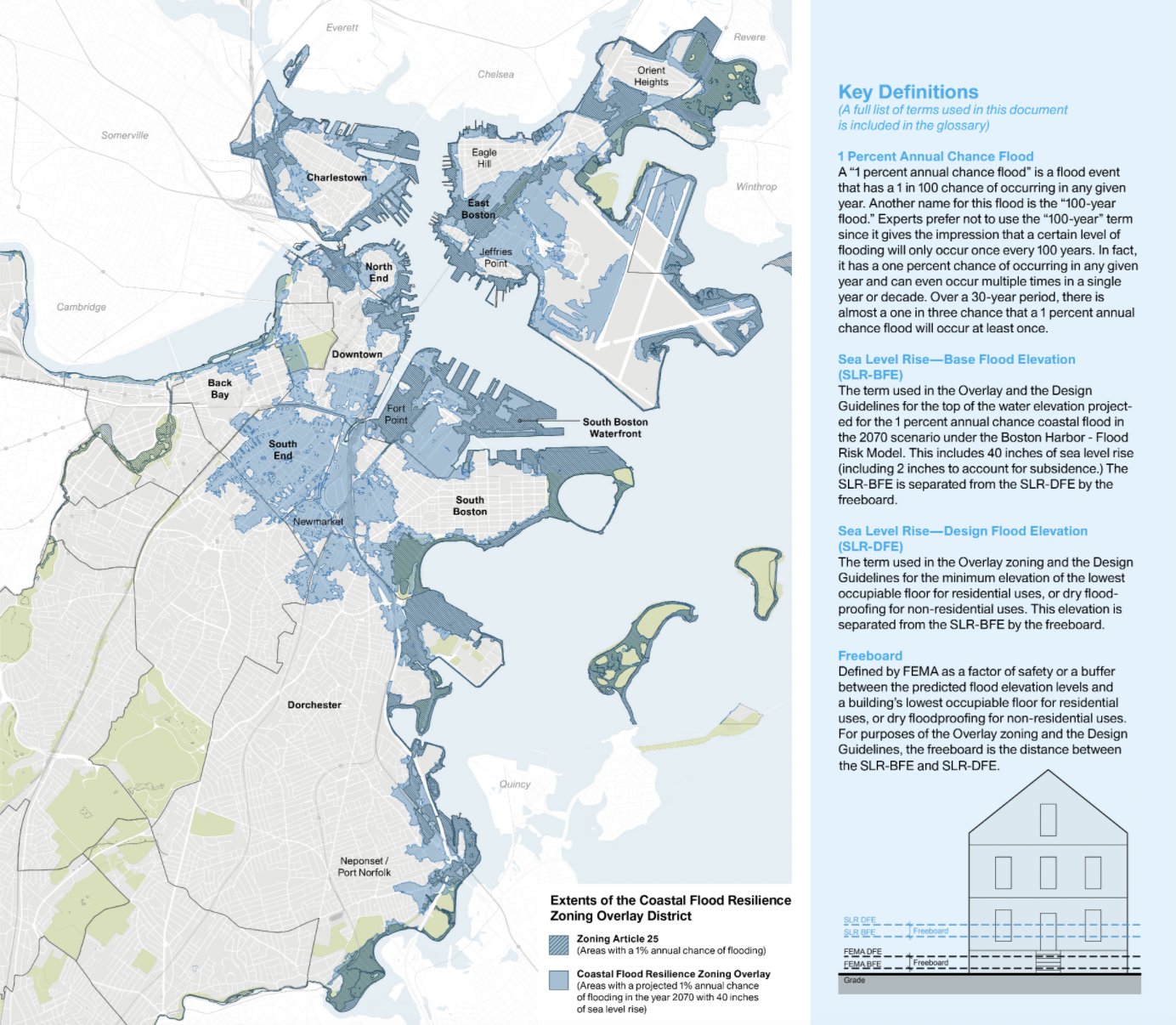
Boston Coastal Flood Resilience Design Guidelines and Zoning Overlay District.

Boston Coastal Flood Resilience Design Guidelines and Zoning Overlay District by Utile, Inc. Boston, Massachusetts, United States.

Resilient design principles serve as essential tools for municipal authorities, property owners and developers, facilitating informed, forward-looking decisions related to flood protection for existing structures and new construction. By following these guidelines, cities can minimize damage and disruption, all while fostering greater awareness among residents and businesses. The uniqueness of each at-risk location is considered in the design, tailoring strategies to the specific circumstances. For example, Boston has implemented initiatives like Climate Ready Boston and the city’s Coastal Flood Resilience Guidelines, which are exemplary instances of resilient design in action.

As a crucial component of the city’s Climate Ready Boston ongoing initiative, Utile spearheaded the creation of Boston’s first Coastal Flood Resilience Design Guidelines in collaboration with the Boston Planning and Development Agency. These guidelines, applicable to existing and forthcoming developments, ensure that structures are constructed or adapted to withstand the threats posed by sea level rise and storm surge. This initiative will be facilitated by a future zoning overlay, encompassing areas at a 1% risk of coastal flooding by 2070.

Working alongside Kleinfelder, Noble, Wickersham & Hart, LLP, and an advisory team featuring HDR and Offshoots, Inc., Utile employed a comprehensive project approach. This approach integrated national best practices, current regulations, analysis of Boston’s urban landscape, community input, and expertise in cutting-edge building technology. The Guidelines seamlessly complement various other initiatives within the Climate Ready Boston program, including neighborhood plans, public right-of-way guidance and existing zoning.

With a focus on retrofitting, the guidelines incorporate case studies outlining short- and long-term adaptation strategies tailored to the most common building types in flood-prone areas, effectively communicated through clear, concise graphics. Additionally, our zoning recommendations facilitate the implementation of these enhancements while striking a balance between private interests and their impact on the public domain.

Resilient Infrastructure: A Canvas for Innovative Design

Efforts to enhance flood defense and adapt to rising sea levels represent a design opportunity. These initiatives not only mitigate coastal hazards but also serve as remarkable engineering, architectural and urban creations. They blend aesthetics and functionality, fostering resilient, sustainable and visually appealing solutions that enhance urban landscapes while addressing climate challenges.

Located between St. Pauli Landungsbrücken and Baumwall in Hamburg, the new 2,050-feet (625-meter) Zaha Hadid Architects’ river promenade at Niederhafen is a vital component of the city’s upgraded flood protection system. Initially established in response to the catastrophic storm surge floods of 1962, which claimed 315 lives and displaced 60,000 residents, Hamburg’s flood barrier was erected between 1964 and 1968, reaching up to 24 feet (7 meters) above sea level.

Subsequent hydrological analysis and computer simulations pinpointed the necessity of raising the barrier by approximately 3 feet (1 meter) to fortify Hamburg against future winter storm surges and extreme high tides. Inspections in 2006 exposed overloaded supporting elements and foundation challenges, leading to a design competition and, eventually, the selection of Zaha Hadid Architects for the project.

The Niederhafen flood protection barrier occupies a prominent location encompassing Hamburg’s renowned riverside promenade — a tourist attraction and one of the city’s main public spaces. From its elevated position, the promenade provides unobstructed views of the Elbe River and the bustling port.

The finished project has reconnected Hamburg’s Niederhafen flood protection barrier with the city’s urban fabric, providing a popular riverside walkway and facilitating connections with nearby neighborhoods. The barrier’s eastern section stands 8.60 meters above sea level, while the western part reaches 8.90 meters, safeguarding the city from maximum winter storm surges and high tides. With a minimum width of ten meters (approximately 33 feet), the riverside promenade offers ample space for pedestrians, food vendors, cafes, shops, and public amenities at street level, enhancing its appeal as a vibrant public space.

Envisioning the Future: Flood Protection Infrastructure as Urban Catalyst

Next Tokyo 2045

Next Tokyo 2045 by Kohn Pedersen Fox Associates, Tokyo, Japan.

The potential of flood protection infrastructure goes beyond its primary role as a safeguard against inundation. It has the capacity to provide the groundwork for the creation of dynamic recreational open spaces and the expansion of high-density urban communities.

Next Tokyo 2045 envisions a resurgent megacity that that adapts to the challenges of climate change by establishing a high-density eco-district firmly underpinned by robust infrastructure. This archipelago of reclaimed land is planned to accommodate half a million residents, while fortifying Tokyo Bay against various water-related risks, such as rising sea levels, seismic activity and an increased frequency of typhoons.

Next Tokyo 2045 addresses the vulnerability of the low-elevation coastal zones around Tokyo Bay by implementing coastal defense infrastructure along the upper Tokyo Bay shoreline. Not only do these resilient infrastructural components enhance the city’s safety, but they also lay the groundwork for the creation of recreational open spaces and the development of high-density urban areas across the bay. This ambitious vision even includes the remarkable Sky Mile Tower, reaching over 5,250 feet (1,600 meters) in height.

As part of this development strategy, a share of the value generated from this newly coveted waterfront real estate will be allocated to support the essential municipal infrastructure required to sustain this urban transformation.

Safeguarding Cities: Resilience, Collaboration, and Urban Innovation

Qianhai’s Guiwan Park by Field Operations, Shenzhen, China | Jury Winner, 11th Annual A+Awards, Architecture +Urban Transformation

Cities are proactively implementing strategies not only to shield themselves from coastal hazards but also to create resilient, sustainable urban environments that can navigate the challenges of climate change. These coastal resilience initiatives aim at safeguarding current and future community well-being.

Collaboration and coordination among cities are pivotal, enhancing the effectiveness of actions and resource pooling, as the decisions of one location can affect neighboring areas. Coordinated efforts at various levels bolster regional climate resilience and promote the exchange of tools and knowledge. Moreover, community engagement is paramount to ensure inclusive action plans that address the needs of the most vulnerable populations.

The visionary Next Tokyo 2045 project demonstrates the potential of flood protection infrastructure extending beyond its core purpose. It not only safeguards against flooding but also serves as the foundation for the development of vibrant recreational open spaces and the growth of high-density urban communities. This innovative approach aligns resilience with urban expansion, showcasing how infrastructure can play a multifaceted role in shaping the future of cities.

Top image: Bai’etan Exhibition Center Landscape by Sasaki, Guangzhou, China Popular Choice Winner, 11th Annual A+Awards, Sustainable Landscape / Planning Project

Architizer’s 12th Annual A+Awards are officially underway! Sign up for key program updates and prepare your submission ahead of the Main Entry Deadline on  December 15th.  


Reference

kpf miami tower 36
CategoriesArchitecture

KPF approved for ‘tower 36’ in design district

a luxury office building to rise in miami


Miami, a rapidly growing city known lately for its diverse and innovative architecture, is about to welcome Kohn Pedersen Fox (KPF)‘s ‘Tower 36’ to its skyline. The luxury high-rise office building, developed by One Thousand Group together with architect of record ODP Architecture & Design, has just received unanimous approval to be realized in the heart of Miami’s Design District. This upcoming skyscraper will further redefine the city’s urban fabric and contribute to the area’s evolution into a mixed-use neighborhood. Rising 635 feet and covering 922,000-square-feet, it will become the tallest building in the neighborhood, promising sweeping views of Biscayne Bay, Miami Beach, and the Atlantic Ocean beyond.

kpf miami tower 36images © Atchain, courtesy KPF


the tapered tower by kohn pedersen fox (kpf)


One of the defining features of Miami’s Tower 36 is its glass facade, which the architects at Kohn Pedersen Fox (KPF) design to gracefully reveal terraces on every office floor. This arrangement creates a visual sense of movement and activity across the building, inviting occupants to connect with their surroundings and enjoy enhanced views. Accentuated by light bronze soffit accents, these outdoor spaces will provide tenants with an elevated office experience that celebrates the natural beauty of Miami’s sunny, coastal landscape.

KPF Design Principal Robert Whitlock comments:The architectural language of the tower utilizes an elegant, tapered form, sculpted to reveal outdoor terrace floors in a geometry that conveys a sense of activity and motion.’ 

kpf miami tower 36
as the tallest building in the neighborhood, Tower 36 will be a prominent addition to Miami’s evolving urban fabric


the urban garden at tower 36


Complementing the office floors above, the podium of KPF’s Tower 36 will host a curated selection of retail spaces. This podium will offer bicycle and car parking for tenants, and will be capped by a rooftop restaurant experience amidst carefully landscaped gardens. Moreover, the multi-story office amenity space boasts equally striking terraces that open up to breathtaking views of the bay and Downtown Miami. Unlike the strict, angular corners which define its neighbors, the podium of Tower 36 embraces gentle curves throughout its design. The northwest corner is intentionally truncated, revealing an arrival court with a naturally lit open-air oculus at the entrance to the office lobby.

kpf miami tower 36
a facade of aluminum panels and sculpted metal fins conveys a sense of motion


The podium’s facade, with its layered pattern of aluminum panels, suggests a sense of motion while naturally ventilating the parking garage within. The metal fins on the wall, a nod to Miami’s ubiquitous palm trees, feature a dual-toned design with a warm copper interior and a silver exterior. Geometric apertures thoughtfully inserted into the podium wall elevations at specific locations are designed to showcase the works of local and renowned artists, further enhancing the building’s connection with the artistic community of Miami Design District.

miami is growing up: kohn pedersen fox (KPF) approved for 'tower 36' in design districtdrivers arrive to the entrance lobby beneath a naturally lit, open-air oculus
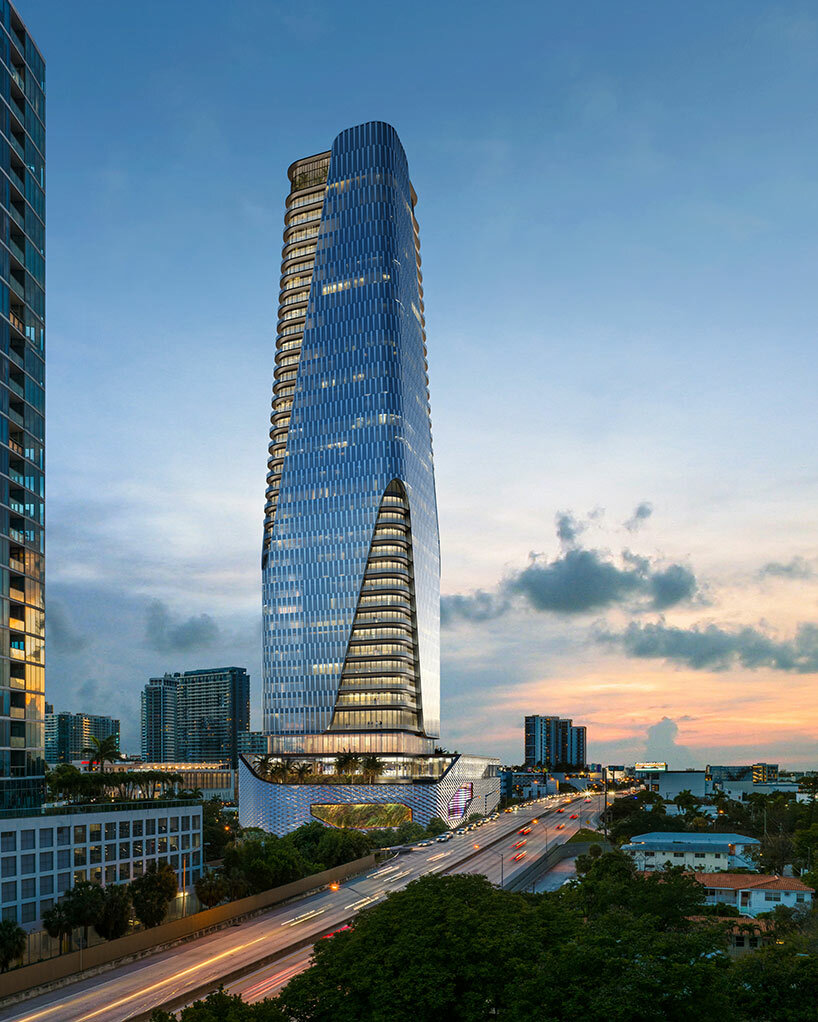


New York-based KPF was the logical choice for design architect of our newest planned tower, creating for Miami a true New York-caliber, Class-A luxury office tower, which currently does not exist in the market,’ said Kevin Venger, Co-Founder of Miami-based One Thousand Group.KPF is on the leading edge of high- rise office design in major business centers around the globe. In the past decade, Miami has grown to become one of these global cities and needs office product that keeps up with the latest market trends in order to be competitive in attracting companies to headquarter in Miami.

The project’s location at the intersection of Biscayne Boulevard and 36th Street marks the northern entrance to Miami’s high-rise district. The building is positioned as a true gateway to the city and its Edgewater neighborhood immediately adjacent to Miami’s Design District. Tower 36 also defines the entrance to the Julia Tuttle Causeway (I-195), which serves as the main point of access from Miami’s mainland to the heart of Miami Beach.’

miami is growing up: kohn pedersen fox (KPF) approved for 'tower 36' in design district
the tower’s massing is shaped by graceful curves, departing from the typical angular corners of its neighbors

Reference